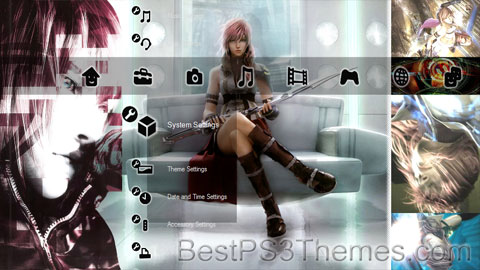
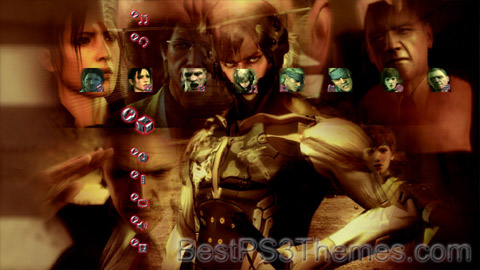
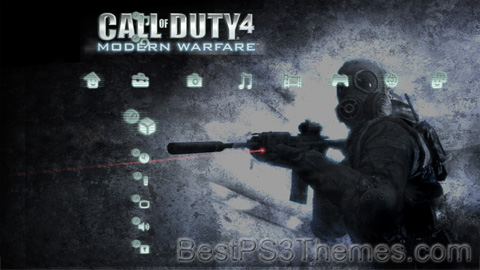
This program unpacks Playstation 3 Theme files (.p3t) so that you can touch-up an existing theme to your likings or use a certain wallpaper from it (as many themes have multiple). But remember, if you use content from another theme and release it, be sure to give credit!
Download p3textractor.zip from above. Extract the files to a folder with a program such as WinZip or WinRAR. Now there are multiple ways to extract the theme.
The first way is to simply open the p3t file with p3textractor.exe. If you don’t know how to do this, right click the p3t file and select Open With. Alternatively, open the p3t file and it will ask you to select a program to open with. Click Browse and find p3textractor.exe from where you previously extracted it to. It will open CMD and extract the theme to extracted.[filename]. After that, all you need to do for any future p3t files is open them and it will extract.
The second way is very simple. Just drag the p3t file to p3textractor.exe. It will open CMD and extract the theme to extracted.[filename].
For the third way, first put the p3t file you want to extract into the same folder as p3textractor.exe. Open CMD and browse to the folder with p3extractor.exe. Enter the following: p3textractor filename.p3t [destination path]Replace filename with the name of the p3t file, and replace [destination path] with the name of the folder you want the files to be extracted to. A destination path is not required. By default it will extract to extracted.filename.
Armored Core[a] is a third-person shootermechavideo game series developed by FromSoftware. The series centers on a silent protagonist who takes on work as a mercenary pilot in the far future, operating large robot combat units known as Armored Cores at the behest of corporate and private clients. As the player completes missions for these clients, they gain credits to improve their Armored Core and unlock further opportunities to make money. Some games include an "Arena" mode in which the player fights other Armored Core pilots in head-to-head battles, which can reward the player with further income or prestige.
In the original continuity established by 1997's Armored Core through 2001's Armored Core 2: Another Age, Earth experienced a cataclysm known as the "Great Destruction" and humanity has been forced underground. Corporations begin fighting for dominance, leading to the increasing reliance on Armored Core pilots called Ravens.[3] Following the events of 1999's Armored Core: Master of Arena, humanity rebuilds and colonizes Mars. Through 2000's Armored Core 2 and its expansion, Another Age, the fledgling Earth government struggles to maintain power as opportunistic corporations exploit the power gap and rebel groups resist against the hegemony of government and business interests.[4][5]
The series was rebooted with 2002's Armored Core 3, beginning a new story arc that concluded with Armored Core: Last Raven in 2005. Following a global nuclear war, humanity has retreated underground. Following centuries of rule by an artificial intelligence called The Controller, its decay leads to the destruction of much of humanity's underground network, causing them to look toward the surface for safety.[6] By the end of 2003's Silent Line: Armored Core, humanity has fully returned to the surface of Earth.[7] The final two games of this continuity, 2004's Armored Core: Nexus and 2005's Armored Core: Last Raven involve the end of the existing power dynamic of corporations and Ravens fighting over the surface.[8][9]
2006's Armored Core 4 rebooted the series yet again. Here, corporations have seized control of Earth governments and are waging war across the surface for dominance. A war waged over the course of the game pollutes the environment, leading to the creation of floating cities in 2008's Armored Core: For Answer. Depending on the player's choices, humanity either barely survives the fallout of For Answer's conflict or is completely eradicated.[10][11]
The third continuity of the series continued with 2012's Armored Core V. A single corporation has dominance over a contaminated Earth and is being opposed by a resistance faction that seeks to overthrow them. 2013's Armored Core: Verdict Day details the outbreak of another war 100 years later following an apocalyptic event.[12][13]
Another continuity has begun with 2023's Armored Core VI: Fires of Rubicon. For the first time in the series, it takes place far away from Earth in a human-colonized solar system on the planet Rubicon 3. Decades prior to the game's start, a powerful resource called Coral was discovered, leading to significant technological advancements, but a disaster called the Fires of Ibis scorched the entire Rubicon system and left it highly contaminated. However, the Coral, thought to have all burned, has begun to reappear, bringing multiple corporations into conflict for control of it which, in turn, has brought the attention of mercenaries. Added into the conflict are the Planetary Closure Administration, an organization tasked with quarantining Rubicon, and the Rubicon Liberation Front, a resistance group who venerate the Coral, wishing to end its exploitation and free the planet.
Armored Core's missions can involve multiple objectives and pit the player against computer controlled opponents.
Within the core games of the franchise, the gameplay is generally focused on the player taking the role of a mech-piloting mercenary, taking on missions for various clients and gaining currency from completing them.[14] Missions can involve multiple objectives and pit the player against computer controlled opponents, some of which pilot mechs as well.[15] Upon completion of a mission, the operating costs of the mech, such as repairs and ammunition, are deducted from the total earnings of the player, as well as compensation for destroying valuable objects within the mission area. Likewise, if the player loses a mission, those same deductions occur from the player's direct balance.[16]
The game's mechs, called Armored Cores (or ACs for short), are highly customizable with hundreds of parts and weapons that can be purchased from an in-game shop or by fulfilling certain requirements.[17] Different parts can provide gameplay advantages in certain terrains or against certain enemies, which forces the player to put thought into how to approach the construction of their mech as each sortie often has different obstacles and hazards to overcome.[14] The customization of Armored Cores is strictly limited by multiple factors such as the maximum weight load of their leg parts, or the energy output of their generators supplying power to all equipped parts of the AC. As such, an Armored Core's performance varies depending on the parts which compose it.
Many of the franchise's games feature a branching storyline where taking on certain missions can block off others, with consequences of a player's decision in mission being relayed to them at the end of a mission. Certain games require multiple playthroughs to access additional contents, such as missions inaccessible during initial playthrough, and even different endings that adds additional lore and context to the games.[18]
An Arena mode introduced in Armored Core: Project Phantasma gave players the opportunity to fight opponents outside of missions for additional rewards. Project Phantasma also introduced the import feature, allowing players to retain their progress from a previous entry when starting a new one.[19] This import feature would become a mainstay of the franchise, with "expansion" titles like Silent Line: Armored Core allowing for importing save data.[20]
Since its first release, the Armored Core games have featured multiplayer options in some form. In the original PlayStation era, local split-screen multiplayer modes were the primary method, generally featuring head-to-head battles.[21] A PlayStation Link Cable feature, allowing for the connection of two PlayStation consoles, was included in all three original Armored Core titles.[22]
With the PlayStation 2, split-screen and console linking continue to be the primary source of multiplayer. 2004's Armored Core: Nexus introduced the LAN multiplayer mode, in addition to connecting through their internet service and allowed up to 4 players to fight in matches together.[23]
Online multiplayer was first introduced in the Japanese release of Armored Core 2: Another Age, but was removed in other regions due to the PlayStation Network Adapter not being ready in time.[24] No PlayStation 2-era game after this release would include online play either, with the first game to do so being Armored Core 4.[10]
The original trilogy of Armored Core games were developed for the original PlayStation by FromSoftware and established many of the core themes and mechanics that would be found in the rest of the series. The debut title, Armored Core, was released on July 10, 1997, in Japan.[25] Story elements like corporate-funded conflicts, post-apocalyptic settings, and silent protagonists were introduced in the first game. The game's mechanics revolve around taking on missions from various clients for pay, using earned money to customize the player's Armored Core unit.[14]
Armored Core: Project Phantasma was released as a stand-alone expansion to the original game, released on December 4, 1997.[26]Project Phantasma introduced an Arena mechanic that would be expanded on in later titles, as well as an import mechanic that would become an important feature through the franchise. Players were able to import save data from earlier Armored Core games and bring their existing Armored Core units into the expansions.[19]
A second stand-alone expansion, Armored Core: Master of Arena, was released on February 4, 1999, and was the final game released for the original PlayStation.[27] It concluded the core arc of the original Armored Core and greatly expanded on the Arena mechanic introduced in Project Phantasma.[28] Like its predecessor, Master of Arena allowed players to import save files from both the original Armored Core and Project Phantasma to continue their progress.[29]
All three games from the original PlayStation era were re-released on the PlayStation Network in 2007 for the tenth anniversary of the original title.[30][31][32] The original Armored Core was also released on the Japanese PlayStation Classic in 2018.[33]
With the transition to the PlayStation 2, FromSoftware released Armored Core 2 as a launch title in Japan on August 3, 2000.[34] As a narrative sequel to the original trilogy, Armored Core 2 transitioned the series away from the post-apocalyptic setting and added more science fiction elements, such as Mars colonization. Much of the gameplay remained the same, including the mission structure, customization, and Arena modes.[35][4] The title did overhaul the visuals from the original game, taking advantage of the added power of the new console, but overall designs stayed similar.[36] Unlike Project Phantasma and Master of Arena, players could not import their saves to the new game.
Armored Core 2: Another Age was released on April 12, 2001, as a stand-alone expansion.[37] It allowed players to import their save files from Armored Core 2 and continue with their existing Armored Core units.[38] The game introduced movement controls using the DualShock analog sticks and cooperative mission mode.[39] The Japanese version of Armored Core 2 was the first title to include online broadband play, allowing players to fight each other over the internet.[24]
Armored Core 3 was released on April 4, 2002, and served as a reboot for the franchise.[40] The story returned to a post-apocalyptic setting and retained the core concept of corporate warfare and mercenary mission structure. Very little gameplay was changed from the earlier PlayStation 2 titles, instead focusing on incremental improvements and minor features like USB mice, computer-controlled allies, and surround sound.[6][41][42] Due to its nature as a reboot, players could not import save data from Armored Core 2 or Another Age.
A stand-alone expansion, Silent Line: Armored Core, was released on January 23, 2003, and was a direct sequel to Armored Core 3.[43] Like other expansions in the franchise, players could import their progress from Armored Core 3 into Silent Line, retaining their parts and credits from the earlier game.[20]Silent Line introduced new gameplay mechanics, including computer-controlled companions and a first person mode.[44][45]
Armored Core: Nexus was released on March 18, 2004, as a direct sequel to Silent Line.[46] Unlike its predecessor, Nexus was treated as a core entry rather than an expansion and did not allow for save data import.[47] While carrying over parts from 3 and Silent Line, mechanics changed significantly compared to past expansions. The heat mechanic introduced in Armored Core 2 was made much more influential, especially with the introduction of booster heat. All part stats were also totally redistributed. The game was the first in the franchise to include support for dual analog sticks. It also introduced a new LAN multiplayer mode that allowed up to 4 players to participate in matches against each other.[23]
Armored Core: Last Raven was released on August 4, 2005, and served as the conclusion to Armored Core 3's story arc.[48] The game is structured around a 24-hour clock that moves forward as missions progress. At the end of the 24-hour period, choices made by the player can alter the outcome of the plot.[49] The game introduced a component damage system, allowing for individual parts to be broken in combat.[50]
Armored Core 4 was released on December 21, 2006, for the PlayStation 3, serving as another reboot for the franchise. An Xbox 360 version, the first instance of a main title in the franchise being released outside of the PlayStation ecosystem, was released on March 22, 2007.[51] Gameplay in Armored Core 4 has been sped up and streamlined from its predecessors in an attempt to make the game more accessible to new players.[52] The game marks the first instance of online multiplayer outside of the Japanese release of Armored Core 2: Another Age.[53]
Armored Core: For Answer was released on March 19, 2008, as a standalone expansion to Armored Core 4.[54] It incorporates an online co-operative mode and a branching storyline.[55] The game was noted for its technical problems on the PlayStation 3 version.[56] Like Nexus, this game did not simply add content to its predecessor and changed gameplay by greatly increasing booster speeds and increasing generator performance.
Armored Core V was released on January 26, 2012, for the PlayStation 3 and Xbox 360 and acts as indirect sequel to Armored Core 4 and Armored Core: For Answer.[57] The game focuses on the online multiplayer component and includes far fewer offline story missions than its predecessors.[12] In the game's online mode, players battle for territory in teams of up to 20 players. A co-operative mode is included for players to fight NPCs alongside other players for various rewards.[58]
Armored Core: Verdict Day was released on September 24, 2013, as a standalone expansion to Armored Core V.[59] The game retains its predecessor's multiplayer focus, though it allows players to create teams of AI companions instead of requiring teams composed entirely of players.[60] A full-length story mode returns alongside a newly implemented "hardcore mode", and players can import their saved games from Armored Core V to retain their personalized mechs.[61]
Armored Core VI: Fires of Rubicon was announced at The Game Awards 2022 on December 8. It is another reboot of the series, unrelated to any past games, set in an alternate future where humanity has developed an interstellar civilization. The player character, codenamed "C4-621" is an augmented Armored Core pilot sent to the distant planet Rubicon 3 to fight in a war between corporations, the government and the local inhabitants for the control of a highly valuable resource called "Coral" which only exists there. The game was released on PlayStation 4, PlayStation 5, Windows, Xbox One, and Xbox Series X/S on August 25, 2023.[62][63]
In 2004, FromSoftware released two spin-offs from the main Armored Core series. The first, Armored Core: Nine Breaker was released on October 28, 2004, for the PlayStation 2.[64] Removing the focus from story-based missions, the game is instead built around an Arena mode where the player must compete with computer-controlled opponents to increase their rank.[65] Minigames designed as training exercises were included to allow players to practice specific skills.[66]
Armored Core: Formula Front was released on December 12, 2004, for the PlayStation Portable.[67] Like Nine Breaker, its focus was on Arena-style gameplay, though a new mechanic put a focus on building an artificial intelligence strategy for the Armored Core units to execute.[68]Formula Front was later released for the PlayStation 2 in Japan.[69]
Several mobile games were released in the Armored Core franchise from 2004 to 2008, but they were never released outside of Japan.[70] An American version of these mobile games was in development around 2005, but the title was never released.[71]
Armored Core: Tower City Blade is a manga by Fujimi Shobo based on the game. It was serialized in Dragon Age Pure between March 14 and April 14, 2007. A project called Armored Core: Fort Tower Song was to consist of a book and an anime also released in 2007. The book was completed but the anime was not.[72] From Software announced in 2011 that the anime had been canceled due to View Works shutting down.[73]
The making of Armored Core solidified FromSoftware's development skills, and in July 1999, they released the multiplayer action game Frame Gride for the SegaDreamcast.[74] The company's focus would shift from RPGs to mech games due in part to the success of the Armored Core series. In 2002, FromSoftware released the mech action game Murakumo: Renegade Mech Pursuit for the Xbox.[74] In 2004, they released another Xbox title, Metal Wolf Chaos. In 2005, FromSoftware would start to produce a series of licensed games based on the various anime properties under the banner Another Century's Episode.[75] Kenichiro Tsukuda, the producer of the Armored Core series produced a very similar video game called Daemon X Machina that was released for the Nintendo Switch and Microsoft Windows.[76]
Players join one of two teams—RED (Reliable Excavation Demolition) and BLU (Builders League United)—and choose one of nine character classes to play as, with game modes including capture the flag and king of the hill. Development was led by John Cook and Robin Walker, the developers of the original Team Fortress mod. Team Fortress 2 was announced in 1998 under the name Team Fortress 2: Brotherhood of Arms. Initially, the game had more realistic, militaristic visuals and gameplay, but this changed over the protracted nine years of development. After Valve released no information for six years, Team Fortress 2 regularly featured in Wired News's annual vaporware list among other entries. Finally released on the Source game engine in 2007, Team Fortress 2 preserved much of the core class-based gameplay of its predecessors while featuring an overhauled, cartoon-like visual style influenced by the works of J. C. Leyendecker, Dean Cornwell, and Norman Rockwell, alongside an increased focus on the visual and verbal characterization of its playable classes and what the developers have described as a 1960s spy movie aesthetic.
Team Fortress 2 has received critical acclaim for its art direction, gameplay, humor, and use of character in a wholly multiplayer game,[4][5][6][7] and since its release has been referred to as one of the greatest video games ever created.[8][9][10] The game continues to receive official Valve server support as of January 2024,[11] in addition to new content being released on a seasonal basis in the form of submissions made through the Steam Workshop. In June 2011, the game became free-to-play, with revenue derived from microtransactions for in-game cosmetics. A 'drop system' was also added and refined, allowing free-to-play users to periodically receive in-game equipment and items. Though the game has had an unofficial competitive scene since its release, both support for official competitive play through ranked matchmaking and an overhauled casual experience were added in July 2016.[12] Since early 2020, the official Valve servers have seen an influx of bot accounts using cheat software, often inhibiting legitimate gameplay, which led to multiple online protests to call for actions against the bots and their hosts.[13]
A group of RED players attacking BLU spawn on "Well".
In most game modes, two teams, RED and BLU, compete for a combat-based objective.[5] Players can choose to play as one of nine character classes in these teams, each with their own unique strengths, weaknesses, and weapon sets. In order to accomplish objectives efficiently, a balance of these classes is required due to how these strengths and weaknesses interact with each other in a team-based environment. Although the abilities of a number of classes have changed from earlier Team Fortress incarnations, the basic elements of each class have remained, them being one primary weapon, one secondary weapon, and one melee weapon.[14][15] The game was released with six official maps, although over one hundred maps have since been included in subsequent updates, including community-created maps.[16][17] When players choose a gamemode for the first time, an introductory video is played, showing how to complete its objectives. During matches, the Administrator,[18] voiced by Ellen McLain, announces the teams' current objectives over loudspeakers.[19] The player limit for one match is 16 on the Xbox 360 and PlayStation 3, and 24 on the Windows edition.[20] However, in 2008, the Windows edition was updated to include a server variable that allows for up to 32 players.[21] Furthermore, in 2023, the Windows edition was updated to have unrestricted player counts for up to 100 players in a single server.[22]
Team Fortress 2 is the first of Valve's multiplayer games to provide detailed statistics for individual players, such as the total amount of time spent playing as each class, most points obtained, and most objectives completed in a single life. Persistent statistics tell the player how they are performing in relation to these statistics, such as if a player comes close to their record for the damage inflicted in a round.[16]Team Fortress 2 also features numerous achievements for carrying out certain tasks, such as achieving a certain number of kills or completing a specific objective. Sets of class-specific achievements have been added in updates, which can award weapons to the player upon completion. This unlockable system has since been expanded into a random drop system, with which players can also obtain items simply by playing the game.[23]
Attack/Defend (A/D) is a timed game mode in which the BLU team's goal is to capture RED's control points. The number of control points varies between maps, and the points must be captured by the BLU team, usually in sequence. To capture a control point, a player must stand on it for a certain amount of time, with more players increasing the speed it is being captured at. RED, who cannot capture points, must prevent BLU from capturing all the control points before the time-limit expires. Once a point is captured, the time-limit will be extended by several minutes.[24]
Capture the Flag (CTF) is a mode in which RED and BLU must steal the opposing team's flag (an intelligence briefcase) and prevent their own intelligence from being stolen. When the intelligence is dropped by the carrier, it will stay on the ground for 1 minute before returning to its original location if it is not picked up again. A team's intelligence can be carried only by the opposing team. The first team to capture the enemy's intelligence three times wins.[25]
Control Points (CP) is a timed game mode where there are several control points placed around the map, with three (3CP) or five (5CP) control points in total depending on the map. The game will start off with only the middle control point being available for capture, with the other control points split equally among both teams. Once this middle control point is captured, a team can begin capturing the enemy team's points in respective order. The time limit is extended on the capture of a control point by either team. For a team to win, they must capture all the control points within the time limit.[24]
King of the Hill (KOTH) is a timed game mode that contains a single control point at the middle of the map that can be captured by both RED and BLU. Should the opposing team capture the point from the team that had it before, their timer will stop and the opposing team's timer will begin or resume. The point can be recaptured by each team as many times as is possible. The first team to control the point for 180 seconds (not necessarily continuous) wins.[26]
Payload (PL) is a timed game mode where BLU must push an explosive cart along a track, while RED must prevent the cart from reaching their base. To push the cart, at least one BLU player must be in range of the cart, with more players increasing the push speed. Maps have multiple 'checkpoints' along the track; each checkpoint reached by the cart awards the BLU team with additional time. If the cart is not pushed by BLU for some time, it will begin to roll back to the last achieved checkpoint. RED players can obstruct the cart from being pushed by being within range of it.[27]
There are several alternative game modes in Team Fortress 2. These modes consist of a small number of maps and detach from the core game modes in some way.
Arena is a special game mode in which players do not respawn upon death. A team can win either by eliminating all opposing players, or by claiming a single capture point that opens after a certain time has elapsed.[28] This mode is currently unavailable through matchmaking, but is still accessible through community servers.
Mannpower is a mode in which players have access to a grappling hook and assorted power-ups laid around the map that grant unique abilities.[29] While not bound to any specific mode, all current official Mannpower maps use a variation of Capture the Flag. In Mannpower's variation of Capture the Flag, both teams have an intelligence flag, and the first team to capture the enemy's intelligence ten times wins. The mode is based on the Quake mod 'Threewave CTF' created by former Valve employee David Kirsch.[30]
Medieval Mode is a mode in which players are restricted to using melee and support weapons, with certain exceptions for medieval-themed projectile weapons.[31] While not bound to any specific mode, the only official Medieval Mode map uses a 3CP variation of Attack/Defend. If Medieval Mode is enabled on a map, select phrases spoken by players in the in-game text chat will be replaced with more thematic variants, such as "hello" being replaced with "well meteth".
PASS Time is a unique timed game mode inspired by rugby, developed by Valve, Bad Robot Interactive, and Escalation Studios.[32] Three unique goals (the Run-In, Throw-In, and Bonus Goals) are placed on each team's side of the map. A single ball called the JACK will spawn at the center of the map, and players must pick it up and carry it to the opposing team's side. While holding the JACK, players cannot fire their weapons, but passive effects are still applied. Players can score a goal by either carrying the JACK to a Run-In Goal or by throwing the JACK through the Throw-In Goal. Three goals can be scored by throwing the JACK through the Bonus Goal, which is much more difficult to score. To win, a team must either score five goals, or have the most goals when the timer runs out.
Payload Race is similar to Payload, but both the RED and BLU teams have a cart that they must push, while preventing the opposing team from doing the same. There are multiple checkpoints along the track, and there is no time limit. The team to reach the end of their track first wins a point. The game lasts until one team gets two points.[33]
Player Destruction is a community-made game mode in which a player's death causes a pickup to appear. The first team to collect a set number of pickups and deliver them to a drop-off point wins the game. The players on each team with the most pickups are highlighted for everyone to see, and gain a passive healing effect for themselves and any nearby teammates.
Special Delivery is a mode similar to Capture the Flag, but there is only one neutral briefcase that can be picked up both the RED and BLU teams. Upon a team picking up the briefcase, the opposing team will be unable to pick up the briefcase until it has been dropped for 45 seconds and respawns as a neutral briefcase. A team wins by carrying the briefcase onto a loading platform, which will gradually rise until the platform reaches its peak.[34]
Territorial Control consists of several control points spread out across a single map. Like Control Points, each point can be captured by either the RED or BLU teams. Unlike Control Points, only two points are accessible at a single time. Upon a team's successful capture of a point, the "stage" ends and the accessible capture points change. When a team only has control of a single control point, they are blocked from capturing the opposing team's control point and the team must wait until the time limit is up and the accessible capture points change. A team wins by capturing all the control points.[24]
Versus Saxton Hale is a juggernaut game mode that originated as a mod for the Arena mode developed by LizardOfOz, which was then popularized on community servers. It pits one player as Saxton Hale (on BLU) against all other players (on RED). Saxton Hale is restricted to melee attacks, but he can perform a double jump, a charge attack that allows him to fly in any direction, a body slam that creates a damaging shockwave upon landing, and a super punch, which deals more damage than a regular punch. Like in Arena, Saxton or RED can win by eliminating the opposing player(s), or by capturing a single control point after enough time elapses.[35][36]
These modes are not categorized with the other modes, and instead have their own separate sections in the game.
Halloween Mode is a special mode that is enabled during Halloween, and allows the players access to more than 20 Halloween themed maps, Halloween-exclusive cosmetics and challenges. For example, Halloween 2012 included a difficult Mann vs. Machine mission involving destroying more than 800 enemy forces.[37] Owing to popular demand of the Halloween events, Valve later added the Full Moon event, an event that triggers around every full moon phase throughout the year, which allows players to equip Halloween-exclusive cosmetics. In 2013, Valve introduced an item called Eternaween, and upon use, allows players of a specific server to use Halloween-exclusive cosmetics for 2 hours.[38]
Mann vs Machine (MvM) is a cooperative game mode where players must defend their base from waves of robots modeled after all nine playable classes, and in some maps, slow-moving tanks carrying bombs. Robots and tanks drop a currency referred to as Credits upon their death, which players can use to buy upgrades for themselves or their weapons. The players win upon successfully defending their base from the bomb until the last wave.[39] A paid version of this game mode called "Mann Up" is also available, where players buy "Tour Of Duty Tickets" to play a series of missions with the chance to win unique cosmetics, weapons and robot parts that can be used in crafting.[40]
Offline Practice Mode consists of the player and computer-controlled bots. The number of bots, their difficulty, and the map can all be adjusted to a player's preference, though only a select amount of maps are available to play.[41][42][43]
Training Mode exists to help new players get acquainted with basic controls, and teaches them the basics of four of the nine classes. It uses wooden dummies and bots to teach players the basic mechanics of classes and the game.[41]
Team Fortress 2 is played competitively, through multiple leagues. The North American league, ESEA, supports a paid Team Fortress 2 league, with $42,000 in prizes for the top teams in 2017.[44][45][46] While formalized competitive gameplay is very different from normal Team Fortress 2, it offers an environment with a much higher level of teamwork than in public servers. Most teams use voice chat to communicate, and use a combination of strategy, communication, and mechanical skill to win against other teams. Community-run competitive leagues also tend to feature restrictions such as item bans and class limits. These leagues are often supported by Valve via in-game medals (which are submitted via the Steam Workshop) and announcements on the official blog.[47][48][49]
In April 2015, Valve announced that a dedicated competitive mode would be added to Team Fortress 2, utilizing skill-based matchmaking;[50] closed beta testing began in the following year.[51] The competitive mode was added in the "Meet Your Match" update, released on July 7, 2016.[52] Ranked matches are played six-vs-six, with players ranked in thirteen tiers based on win/losses and an assessment of their skills.[53] Ranked matchmaking will balance players based on their tiers and rating. A similar matchmaking approach has been added for casual games for matches of 12-vs-12 players. In order to join competitive matchmaking, players must have associated their Steam account with the Steam Guard Mobile Authenticator, as well as having a Team Fortress 2 "premium account", which is unlocked by either having bought the game before it went free-to-play or by having made an in-game item purchase since.[54]
Team Fortress 2 is played in a variety of different formats, which dictate the maximum size and composition of a team and can drastically change the impact of a single player's gameplay or choice of class. The two most basic formats consist of 12v12 and 6v6 ("Sixes"), the two being used on official Valve servers for casual and competitive modes respectively with no additional limitations. Most competitive leagues host Sixes but include limits on certain classes and weapons to preserve traditional, skill-based playstyles, for example limiting the allowed amount of Medics or Demomen to one on either team or banning certain movement-enhancing weapons from use. Other popular formats include "Highlander", a 9v9 format with a limit of one player per each of the nine classes, as well as a Sixes-inspired 7v7 variant thereof known as "Prolander" to allow for strategically switching classes during a competitive game.[47][48][55]
From left to right: Pyro, Engineer, Spy, Heavy, Sniper, Scout, Soldier, Demoman, and Medic
Team Fortress 2 features nine playable classes, which are evenly split and categorized into "Offense", "Defense", and "Support".[16] Each class has strengths and weaknesses and must work with other classes to be efficient, encouraging strategy and teamwork.[56] Each class has at least three default weapons: a primary weapon, secondary weapon, and melee weapon. Engineers have two additional slots for their PDAs, and Spies have an additional slot for their disguise kit. An additional character, Saxton Hale, is playable in the "Versus Saxton Hale" game mode.[57]
The Scout (voiced by Nathan Vetterlein) is an American baseball fan and street runner from Boston, Massachusetts who practiced running to be faster than his seven siblings.[58] He is a fast, agile character, who is armed by default with a scattergun, a pistol, and a bat. The Scout can double jump, and is counted twice when capturing control points and when pushing the Payload cart, doubling their respective speeds.
The Soldier (voiced by Rick May) is an American jingoisticpatriot from the Midwest who portrays himself as a military-man (despite never having served in the U.S. Armed Forces).[59] The Soldier is armed by default with a rocket launcher, a shotgun, and a shovel.[60] He is both the second-slowest class in the game and the class with the second-highest health, after the Heavy. The Soldier can use his rocket launcher to "rocket jump" to other locations at the cost of some health.
The Pyro (voiced by Dennis Bateman) is a pyromaniac of unknown sex and origin who wears a fire-retardant suit and a voice-muffling gas mask.[61] By default, the Pyro carries a flamethrower, a shotgun, and a fire axe. The Pyro's flamethrower can also produce a blast of compressed air which repels incoming enemies and projectiles, and extinguishes burning teammates. The Pyro is deluded and believes they are living in a utopian fantasy world called "Pyroland".[62][63]
The Demoman (voiced by Gary Schwartz) is a Black Scottish one-eyed alcoholic demolitions expert from Ullapool.[64] Armed by default with a grenade launcher, a "stickybomb" launcher (bombs that are detonated when prompted to by the player, and can stick to any surface), and a glass bottle of scrumpy, the Demoman can use his explosives to provide indirect fire and set traps.[62] Similar to the Soldier's rocket jump, the Demoman can use his stickybombs to "sticky jump" at the cost of some health.
The Heavy Weapons Guy, or simply Heavy (voiced by Schwartz), is a large Russian man from the Dzhugdzhur Mountains of the Soviet Union. He is heavy in stature and accent, and is obsessed with firepower. He is the slowest class, and can both absorb and deal substantial amounts of damage. His default weapons consist of a minigun that he affectionately refers to as "Sasha", a shotgun, and his fists.[65]
The Engineer (voiced by Grant Goodeve) is an American inventor, engineer, and "good ol' boy" from Bee Cave, Texas.[66] The Engineer can deploy structures to support his team: a sentry gun for defending key points, a health and ammunition dispenser, and a pair of teleporters (one entrance and one exit).[62] The Engineer is armed by default with a shotgun, a pistol, a wrench, which functions as both a melee weapon and to repair and upgrade his buildings, and two PDAs: one to erect his buildings and one to remotely destroy them.
The Medic (voiced by Robin Atkin Downes) is a German doctor from Stuttgart with little regard for the Hippocratic Oath.[67] He is equipped with a "Medi Gun", which can restore health to injured teammates. When healing teammates, the Medi Gun progressively builds an "ÜberCharge" meter, which, when fully charged, can be activated to provide the Medic and his patient with temporary invulnerability. The Medic is also equipped by default with a syringe gun and a bonesaw for situations in which he must engage in direct combat.[68][62]
The Spy (voiced by Bateman) is a French covert operative who carries an invisibility device disguised as a wristwatch, an electronic sapper to disable and destroy enemy Engineers' buildings, and a device in his cigarette case that allows him to disguise himself as any player on either team.[70] His default weaponry consists of a revolver and a butterfly knife; he is able to use the latter to instantly kill enemies by stabbing them in the back.[62] He is the only character who does not wear any clothing in his team's bright color or a patch denoting his specialty, instead preferring a balaclava, business suit, necktie, and gloves in muted team-color hues.
Saxton Hale (JB Blanc in "Jungle Inferno",[71] uncredited in-game) is an Australian adventurer and businessman who is the chief executive officer of the fictional Mann Co., a large shipping company which specializes in manufacturing munitions and hats. Saxton is notable for his hypermasculine personality and physique, and his Australia-shaped chest-hair.[72] He is the central character of the "Versus Saxton Hale" game mode, in which he has a large pool of health and superhuman abilities, including immense strength and agility. Saxton can attack only with his fists, but is able to double-jump like the Scout.[35][36]
The Administrator or the Announcer (voiced by Ellen McLain) is an unseen announcer who provides timely information about time limits and objectives to players
Miss Pauling (Ashly Burch), The Administrator's Assistant .
This program unpacks Playstation 3 Theme files (.p3t) so that you can touch-up an existing theme to your likings or use a certain wallpaper from it (as many themes have multiple). But remember, if you use content from another theme and release it, be sure to give credit!
Download p3textractor.zip from above. Extract the files to a folder with a program such as WinZip or WinRAR. Now there are multiple ways to extract the theme.
The first way is to simply open the p3t file with p3textractor.exe. If you don’t know how to do this, right click the p3t file and select Open With. Alternatively, open the p3t file and it will ask you to select a program to open with. Click Browse and find p3textractor.exe from where you previously extracted it to. It will open CMD and extract the theme to extracted.[filename]. After that, all you need to do for any future p3t files is open them and it will extract.
The second way is very simple. Just drag the p3t file to p3textractor.exe. It will open CMD and extract the theme to extracted.[filename].
For the third way, first put the p3t file you want to extract into the same folder as p3textractor.exe. Open CMD and browse to the folder with p3extractor.exe. Enter the following: p3textractor filename.p3t [destination path]Replace filename with the name of the p3t file, and replace [destination path] with the name of the folder you want the files to be extracted to. A destination path is not required. By default it will extract to extracted.filename.
This program unpacks Playstation 3 Theme files (.p3t) so that you can touch-up an existing theme to your likings or use a certain wallpaper from it (as many themes have multiple). But remember, if you use content from another theme and release it, be sure to give credit!
Download p3textractor.zip from above. Extract the files to a folder with a program such as WinZip or WinRAR. Now there are multiple ways to extract the theme.
The first way is to simply open the p3t file with p3textractor.exe. If you don’t know how to do this, right click the p3t file and select Open With. Alternatively, open the p3t file and it will ask you to select a program to open with. Click Browse and find p3textractor.exe from where you previously extracted it to. It will open CMD and extract the theme to extracted.[filename]. After that, all you need to do for any future p3t files is open them and it will extract.
The second way is very simple. Just drag the p3t file to p3textractor.exe. It will open CMD and extract the theme to extracted.[filename].
For the third way, first put the p3t file you want to extract into the same folder as p3textractor.exe. Open CMD and browse to the folder with p3extractor.exe. Enter the following: p3textractor filename.p3t [destination path]Replace filename with the name of the p3t file, and replace [destination path] with the name of the folder you want the files to be extracted to. A destination path is not required. By default it will extract to extracted.filename.
Similar to other MMORPGs, the game allows players to create a characteravatar and explore an open game world in third- or first-person view, exploring the landscape, fighting various monsters, completing quests, and interacting with non-player characters (NPCs) or other players. The game encourages players to work together to complete quests, enter dungeons and engage in player versus player (PvP) combat, however, the game can also be played solo without interacting with others. The game primarily focuses on character progression, in which players earn experience points to level up their character to make them more powerful and buy and sell items using in-game currency to acquire better equipment, among other game systems.
World of Warcraft was a major critical and commercial success upon its original release in 2004 and quickly became the most popular MMORPG of all time, reaching a peak of 12 million subscribers in 2010.[4] The game had over one hundred million registered accounts by 2014[5] and by 2017, had grossed over $9.23 billion in revenue, making it one of the highest-grossing video game franchises of all time. The game has been cited by gaming journalists as the greatest MMORPG of all time and one of the greatest video games of all time and has also been noted for its long lifespan, continuing to receive developer support and expansion packs over 15 years since its initial release.[6][7][8] In 2019, a vanilla version of the game titled World of Warcraft Classic was launched, allowing players to experience the base game before any of its expansions launched,[9][10] with versions of Classic for future expansions being released subsequently,[11][12] with minor changes.[13] In 2022, Blizzard and NetEase cancelled an unannounced World of Warcraft mobile spin-off game.[14]
As with other MMORPGs, players control a characteravatar within a game world in third- or first-person view, exploring the landscape, fighting various monsters, completing quests, and interacting with non-player characters (NPCs) or other players. Also similar to other MMORPGs, World of Warcraft requires the player to pay for a subscription by using a credit or debit card, using prepaid Blizzard game cards or using a WoW Token purchased in-game. Players without a subscription may use a trial account that lets the player character reach up to level 20 but has many features locked.[15]
To enter the game, the player must select a server, referred to in-game as a 'realm'. Each realm acts as an individual copy of the game world and falls into one of two categories. Available realm types are:
Normal – a regular type realm where the gameplay is mostly focused on defeating monsters and completing quests, with player-versus-player fights and any roleplay are optional.
RP (roleplay) – which works the same way as a "Normal" realm, but focuses on players roleplaying in character.
Before the introduction of World of Warcraft's seventh expansion "Battle for Azeroth", both "Normal" and "RP" servers were each divided into two separate categories: PvE servers and PvP servers. This has since been removed after the implementation of the "War Mode" option, which allows any player (of level 20 and higher) on any server to determine whether they want to actively participate in PvP combat or not, by enabling War Mode in two of the game's capital cities.
Realms are also categorized by language, with in-game support in the language available.[16]
Players can make new characters on all realms within the region, and it is also possible to move already established characters between realms for a fee.[17]
To create a new character, in keeping with the storyline of previous Warcraft games, players must choose between the opposing factions of the Alliance or the Horde; Pandaren, which were added in Mists of Pandaria, do not commit to a faction until after the starting zone is completed. Characters from the opposing factions can perform rudimentary communication (most often just "emotes"), but only members of the same faction can speak, mail, group and join guilds. The player selects the new character's race, such as orcs or trolls for the Horde, or humans or dwarves for the Alliance.[18] Players must select the class for the character, with choices such as mages, warriors, and priests available.[19] Most classes are limited to particular races.
As characters become more developed, they gain various talents and skills, requiring the player to further define the abilities of that character.[20] Characters can choose two primary professions that can focus on producing items, such as tailoring, blacksmithing or jewelcrafting or on gathering from resource nodes, such as skinning or mining. Characters can learn all three secondary skills: archeology, cooking, and fishing.[21][22] Characters may form and join guilds, allowing characters within the guild access to the guild's chat channel, the guild name and optionally allowing other features, including a guild tabard, guild bank, guild repairs, and dues.[23]
Much of World of Warcraft play involves the completion of quests. These quests are usually available from NPCs.[24] Quests usually reward the player with some combination of experience points, items, and in-game money. Quests allow characters to gain access to new skills and abilities, as well as the ability to explore new areas.[25] It is through quests that much of the game's story is told, both through the quest's text and through scripted NPC actions.[26] Quests are linked by a common theme, with each consecutive quest triggered by the completion of the previous, forming a quest chain. Quests commonly involve killing a number of creatures, gathering a certain number of resources, finding a difficult to locate object, speaking to various NPCs, visiting specific locations, interacting with objects in the world, or delivering an item from one place to another to acquire experience and treasures.
While a character can be played on its own, players can group with others to tackle more challenging content. Most end-game challenges are designed in such a way that they can only be overcome while in a group. In this way, character classes are used in specific roles within a group.[24][27]World of Warcraft uses a "rested bonus" system, increasing the rate that a character can gain experience points after the player has spent time away from the game.[20] When a character dies, it becomes a ghost—or wisp for Night Elf characters—at a nearby graveyard.[25] Characters can be resurrected by other characters that have the ability or can self-resurrect by moving from the graveyard to the place where they died. If a character is past level ten and they resurrect at a graveyard, the items equipped by the character degrade, requiring in-game money and a specialist NPC to repair them. Items that have degraded heavily become unusable until they are repaired. If the location of the character's body is unreachable, they can use a special "spirit healer" NPC to resurrect at the graveyard. When the spirit healer revives a character, items equipped by the character at that time are further degraded, and the character is significantly weakened by what is in-game called "resurrection sickness" for up to ten minutes, depending on the character's level. This "resurrection sickness" does not occur and item degradation is less severe if the character revives by locating its body, or is resurrected by another player through spells or special items.[28][29]
World of Warcraft contains a variety of mechanisms for player versus player (PvP) play. Players on player versus environment (PvE) servers can opt to toggle "War Mode" themselves, making themselves attackable to players of the opposite faction.[30] Depending on the mode of the realm, PvP combat between members of opposing factions is possible at almost any time or location in the game world—the only exception being the starting zones, where the PvP "flag" must be enabled by the player wishing to fight against players of the opposite faction. PvE (called normal or RP) servers, by contrast, allow a player to choose whether or not to engage in combat against other players. On both server types, there are special areas of the world where free-for-all combat is permitted. Battlegrounds, for example, are similar to dungeons: only a set number of characters can enter a single battleground, but additional copies of the battleground can be made to accommodate additional players.[31] Each battleground has a set objective, such as capturing a flag or defeating an opposing general, that must be completed to win the battleground. Competing in battlegrounds rewards the character with tokens and honor points that can be used to buy armor, weapons, and other general items that can aid a player in many areas of the game. Winning a battleground awards more honor and tokens than losing. In addition, players also earn honor when they or nearby teammates kill players in a battleground.[30]
World of Warcraft is set in the same universe as the Warcraft series of real-time strategy games and has a similar art direction.[15]World of Warcraft contains elements from fantasy, steampunk, and science fiction, including gryphons, dragons, elves, steam-powered automata, zombies, werewolves, other horror monsters, time travel, spaceships, and alien worlds.
World of Warcraft takes place in a 3D representation of the Warcraft universe that players can interact with through their characters. The game world initially consisted of the two continents in Azeroth: Kalimdor and the Eastern Kingdoms. Four separate expansions later added to the game's playable area the realms of Outland and Draenor and the continents of Northrend and Pandaria. As a player explores new locations, different routes and means of transportation become available. Players can access "flight masters" in newly discovered locations to fly to previously discovered locations in other parts of the world.[32] Players can also use boats, zeppelins, or portals to move from one continent to another. Although the game world remains relatively similar from day to day, seasonal events reflecting real world events, such as Halloween (Hallow's End),[33] Christmas (Winter Veil), Children's Week,[30] Easter (Noblegarden), and Midsummer have been represented in the game world. Locations also have variable weather including, among other things, rain, snow, and dust storms.[32]
A number of facilities are available for characters while in towns and cities. In each major city, characters can access a bank to deposit items, such as treasures or crafted items. Each character has access to personal bank storage with the option to purchase additional storage space using in-game gold.[34] Additionally, guild banks are available for use by members of a guild with restrictions being set by the guild leader.[35] Auction houses are available for players to buy and sell items to others in a similar way to online auction sites such as eBay.[36] Players can use mailboxes, which can be found in almost every town. Mailboxes are used to collect items won at auction, and to send messages, items, and in-game money to other characters.[20]
Some of the challenges in World of Warcraft require players to group together to complete them. These usually take place in dungeons—also known as "instances"—that a group of characters can enter together. The term "instance" comes from each group or party having a separate copy, or instance, of the dungeon, complete with their own enemies to defeat and their own treasure or rewards.[37] This allows a group to explore areas and complete quests without others interfering. Dungeons are spread over the game world and are designed for characters of varying progression. A typical dungeon will allow up to five characters to enter as part of a group. Some dungeons require more players to group together and form a "raid" of up to forty players to face some of the most difficult challenges.[38] As well as dungeon-based raid challenges, several creatures exist in the normal game environment that are designed for raids to attack.[33][39]
World of Warcraft requires a subscription to allow continued play, with options to pay in one-month, three-month, or six-month blocks, and time cards of varying lengths available from retailers, or purchasing a "WoW Token" using in-game currency.[40][41] Expansion packs are available online and from retailers. As the game client is the same regardless of the version of World of Warcraft the user owns, the option to purchase expansions online was added as it allows for a quick upgrade. World of Warcraft is also available as a free Starter Edition, which is free to play for an unlimited amount of time. Starter Edition characters are unable to gain experience after reaching level 20, and there are other restrictions in effect for Starter Edition accounts, including the inability to trade, use mail, use Auction House, use public chat channels, join guilds or amass more than ten gold.[42]
In January 2015, accounts that have lapsed subscriptions, which previously would not let a player log in, work like a restricted Starter Edition account with the one difference that sub-level 20 characters will be able to join a guild if any other characters on the account are still in that guild.[43]
In April 2015, an alternate way to cover the subscription was introduced. A player may spend real money ($20 in North America and differing amounts in other regions) on a WoW Token, which is sold on the auction house for the in-game currency, gold, that initially could only be used to add 30 days of playtime.[41] At the launch of the feature in North America, a token sold for 30,000 gold and 24 hours later sold for 20,000 gold; therefore, the gold amount changes depending on what players are willing to spend. Subsequently, the amount that a North American token sells for remained at above 30,000 gold, and the other Battle.net regions were well above that value. Once a player buys a token on the auction house, it is account bound and cannot be resold. As of February 2017, the WoW Token can also be exchanged for $15 in Battle.net balance that can be used as credit for purchases in most of Blizzard's games as well as in Destiny 2.[44]
The company offers parental controls[45] that allow various limits to be set on playing time. It is possible to set a daily limit, a weekly limit, or to specify an allowed playing schedule. In order to control these settings, it is necessary to log in with different credentials than are used just to enter the game. It is also possible to receive statistics on the time spent playing. Apart from controlling children, adults sometimes use parental controls on themselves.[46] The company supports this kind of protection as otherwise the potential players or their supervisors may choose to uninstall or block the game permanently.
Intent on settling in Durotar, Thrall's Horde expanded its ranks by inviting the undead Forsaken to join orcs, tauren, and trolls. Meanwhile, dwarves, gnomes, and the ancient night elves pledged their loyalties to the Alliance, guided by the human kingdom of Stormwind. After Stormwind's king, Varian Wrynn, mysteriously disappeared, Highlord Bolvar Fordragon served as Regent but his service was affected by the mind control of the black dragon Onyxia, who ruled in disguise as a human noblewoman. As heroes investigated Onyxia's manipulations, the ancient elemental lord Ragnaros resurfaced to endanger both the Horde and Alliance.[47] The heroes of the Horde and Alliance defeated Onyxia and sent Ragnaros back to the Elemental Plane.
Deep within Blackrock Mountain, the black dragon Nefarian conducted twisted experiments with the blood of other dragonflights. Intent on seizing the entire area for his own, he recruited the remaining Dark Horde, a rogue army that embraced the demonic bloodlust of the old Horde. These corrupt orcs, trolls, and other races battled against Ragnaros and the Dark Iron dwarves for control of the mountain. Nefarian created the twisted chromatic dragons and a legion of other aberrations in his bid to form an army powerful enough to control Azeroth and continue the legacy of his infamous father, Deathwing the Destroyer. Nefarian was vanquished by the heroes from the Horde and the Alliance.
Years ago, in the ruined temple of Atal'Hakkar, loyal priests of the Blood God Hakkar the Soulflayer attempted to summon the wrathful deity's avatar into the world. But his followers, the Atal'ai priesthood, discovered that the Soulflayer could only be summoned within the Gurubashi tribe's ancient capital, Zul'Gurub. Newly reborn in this jungle fortress, Hakkar took control of the Gurubashi tribe and mortal champions of the trolls' mighty animal gods. The Soulflayer's dark influence was halted when the Zandalari tribe recruited heroes and invaded Zul'Gurub.
The great desert fortress of Ahn'Qiraj, long sealed behind the Scarab Wall, was home to the insectoid qiraji, a savage race that had once mounted an assault to devastate the continent of Kalimdor. But something far more sinister lurked behind Ahn'Qiraj's walls: the Old God C'Thun, an ancient entity whose pervasive evil had suffused Azeroth since time immemorial. As C'Thun incited the qiraji to frenzy, both the Alliance and Horde prepared for a massive war effort. A mixed force of Alliance and Horde soldiers, dubbed the Might of Kalimdor, opened the gates of Ahn'Qiraj under the command of the orc Varok Saurfang. The heroes laid siege to the ruins and temples of Ahn'Qiraj and vanquished C'Thun.
In the Lich King's haste to spread the plague of undeath over Azeroth, he gifted one of his greatest servants, the lich Kel'Thuzad, with the flying citadel of Naxxramas, as a base of operations for the Scourge. Consistent attacks from the Scarlet Crusade and Argent Dawn factions weakened the defenses of the floating fortress, enabling an incursion from the heroes that led to Kel'Thuzad's defeat. However, a traitor among the ranks of the knightly order of the Argent Dawn ran away with Kel'Thuzad's cursed remains and fled to Northrend, where the fallen lich could be reanimated.
World of Warcraft was first announced by Blizzard at the ECTS trade show in September 2001.[48] Released in 2004, development of the game took roughly 4–5 years, including extensive testing. The 3D graphics in World of Warcraft use elements of the proprietary graphics engine originally used in Warcraft III.[48] The game was designed to be an open environment where players are allowed to do what they please.[49] Quests are optional and were designed to help guide players, allow character development, and to spread characters across different zones to try to avoid what developers called player collision.[50] The game interface allows players to customize appearance and controls, and to install add-ons and other modifications.[51]
World of Warcraft runs natively on both Mac and Windows platforms. Boxed copies of the game use a hybrid CD to install the game, eliminating the need for separate Mac and Windows retail products. The game allows all users to play together, regardless of their operating system. Although there is no official version for any other platform, support for World of Warcraft is present in Windows API implementations Wine and CrossOver allowing the game to be played under Linux and FreeBSD.[52] While a native Linux client is neither released nor announced by Blizzard, in January 2011 IT journalist Michael Larabel indicated in a Phoronix article that an internal Linux client might exist but is not released due to the non-standardization of the Linux distro ecosystem.[53]
In the United States, Canada, and Europe, Blizzard distributes World of Warcraft via retail software packages.[54] The software package includes 30 days of gameplay for no additional cost. To continue playing after the initial 30 days, additional play time must be purchased using a credit card or prepaid game card. The minimum gameplay duration that a player can purchase is 30 days using a credit card, or 60 using a prepaid game card. A player also has the option of purchasing three or six months of gameplay at once for a 6–15% discount.[55] In Australia, the United States, and many European countries, video game stores commonly stock the trial version of World of Warcraft in DVD form, which includes the game and 20 levels[56] of gameplay, after which the player would have to upgrade to a retail account by supplying a valid credit card, or purchasing a game card as well as a retail copy of the game.
In Brazil, World of Warcraft was released on December 6, 2011, via BattleNet. The first three expansions are currently available, fully translated, including voice acting, into Brazilian Portuguese.[57]
In South Korea, there is no software package or CD key requirement to activate the account. However, to play the game, players must purchase time credits online. There are two kinds of time credits available: one where the player is billed based on the actual number of minutes that will be available, and one where the player can play the game for a number of days. In the former, time can be purchased in multiples of 5 hours or 30 hours, and in the latter, time can be purchased in multiples of 7 days, 1 month, or 3 months.[58] As software packages are not required, expansion pack contents are available to all players on launch day.
In China, because a large number of players do not own the computer on which they play games (e.g. if they play in Internet cafés), the CD keys required to create an account can be purchased independently of the software package. To play the game, players must also purchase prepaid game cards that can be played for 66 hours and 40 minutes.[59] A monthly fee model is not available to players of this region. The Chinese government and NetEase, the licensee for World of Warcraft in China, have imposed a modification on Chinese versions of the game which places flesh on bare-boned skeletons and transforms dead character corpses into tidy graves. These changes were imposed by the Chinese government in an attempt to "promote a healthy and harmonious online game environment" in World of Warcraft.[60][61] The Chinese government delayed the release of the Wrath of the Lich King expansion, due to what it deemed objectionable content.[62] NetEase took over licensing of World of Warcraft from The9 in June 2009 following the expiration of The9's contract,[63] and were able to secure a launch for Wrath of the Lich King on August 31, 2010, nearly two years after its Western release. Due to a contract dispute, these servers were shut down on January 23, 2023.[64] In April 2024, NetEase announced that World of Warcraft services would be returning to China in the Summer of 2024, later leading to a livestream on June 27, 2024 in which Blizzard team members outlined the release of the Wrath of the Lich King for World of Warcraft Classic and The War Within expansion for World of Warcraft for Chinese players.[65]
The World of Warcraft launcher (referred to in press releases and the menu bar as the "Blizzard Launcher") is a program designed to act as a starting point for World of Warcraft players. It provides a way to launch World of Warcraft and starts the Blizzard updater. It was first included with the version 1.8.3 patch. The 2.1.0 patch allowed for an option to bypass the use of the launcher. Features of the launcher include news and updates for World of Warcraft players, access to World of Warcraft's support website, access to the test version of World of Warcraft when it is available to test upcoming patches, updates to Warden,[66] and updates to the updater itself. The 3.0.8 patch redesigned the launcher and added the ability to change the game settings from the launcher itself. The launcher update from patch 4.0.1 also allows people to play the game while non-crucial pieces of the game are downloaded. This requires a high-speed broadband internet connection.
Patch 1.9.3 added native support for Intel-powered Macs, making World of Warcraft a universal application. As a result of this, the minimum supported Mac OS X version has been changed to 10.3.9; World of Warcraft version 1.9.3 and later will not launch on older versions of Mac OS X.[67]PowerPC architecture Macs are no longer supported since version 4.0.1.[68]
When new content is added to the game, official system requirements may change. In version 1.12.0 the requirements for Windows were increased from requiring 256 MB to 512 MB of RAM. Official Windows 98 technical support was dropped, but the game continued to run there until version 2.2.3.[69] Before Mists of Pandaria in 2012, World of Warcraft officially dropped support for Windows 2000,[70] followed by Windows XP and Vista in October 2017, as well as all 32-bit support.[71]
Starting with 4.3,[72] players could try out an experimental 64-bit version of the client, which required manual downloading and copying files into the installation folder. Since 5.0, the 64-bit client is automatically installed, and used by default.
LittleBigPlanet (LBP - stylised as LittleBIGPlanet) is a puzzleplatform video game series created and produced by British developer Media Molecule and published by Sony Interactive Entertainment. Most games in the series put a strong emphasis on user-generated content and are based on the series' tagline "Play, Create, Share". The tagline represents the three core elements of the series: playing alone or with others locally (on the same console) or online, creating new content using the in-game creation tools, and sharing creations and discoveries online with other players.
Tarsier Studios, Fireproof Games and Supermassive Games also contribute to the development of the PlayStation 3 games, creating in-game assets (downloadable content) including costumes, backgrounds, objects, and stickers. Some of these assets will also provide the player more tools and gadgets to use in the level editor.[1]
On 17 January 2015, it was announced that all LittleBigPlanet servers in Japan would shut down on 31 July, along with the PlayStation Portable version and LittleBigPlanet Karting in late August in all regions. Due to attacks on the online servers, all LittleBigPlanet servers were taken down in May 2021 (the Vita version had remained closed since March).[5] The servers for the PS4 version of LittleBigPlanet 3 were brought back up on 13 September 2021, however, in the same announcement, it mentioned that the servers for LittleBigPlanet, LittleBigPlanet 2, LittleBigPlanet PS Vita and the PS3 version of LittleBigPlanet 3 will remain closed permanently.[6] On 8 January, 2024, it was announced that, presumably due to more attacks on the online servers, the servers for the PS4 version of LittleBigPlanet 3 were being temporarily closed while they investigate them.[7][8][9]
On 19 April 2024, the servers for the PlayStation 4 version of LittleBigPlanet 3 were permanently shut down due to ongoing technical issues.[10]
In the first two instalments of the series, gameplay consist primarily of traditional two-dimensional look in a three-dimensional style platforming like jumping and avoiding obstacles to successfully navigate to the end of a level to win.[12] Since LittleBigPlanet 2, the series has included mini-games, including ones that do not follow the platformer genre. Most LittleBigPlanet games involve a player playing solo or co-operatively with friends to navigate through a level whilst collecting various "bubbles" along the way, which can take the form of either points or collectibles. In-game collectibles can be used in level creation or to customize Sackboy, the player character. There are also numerous co-operative parts of levels whereby certain prize bubbles can be earned. In LittleBigPlanet 3 and Sackboy: A Big Adventure,Collectables are also present, being used in various shops to purchase more costumes.
The Create component primarily refers to level creation in the game, along with other features like character customisation. Players can create their own levels with the built-in level creator. Many items that are collected while playing through the story mode and from LittleBigPlanet's community can be used to help with level creation.[13] These levels can remain as the original LittleBigPlanet platforming gameplay, or they can include other game types, such as racing, fighting, shooting and sports.[12] The player can also make non-gaming creations such as music and films (commonly known in-game as cut-scenes).[14] In LittleBigPlanet 2, Sackbots were introduced to give players more control over non-player characters in their levels as well as make the levels in their entirety more intelligent. The creation technique introduced on the game gave the possibility for logic, and it gave the ability to build sets of machines and complex contraptions.[14]
Lastly, the Share component relates to sharing creations with the game's community by uploading levels to the PlayStation Network. To-date there were an excess of ten million user-created levels available to play on the LittleBigPlanet server in the PlayStation 3 games.[15] After the release of LittleBigPlanet 2 and the LBP.me community website, the Share component also had a strong emphasis sharing discoveries. Players were encouraged to share levels they found with other players by writing reviews and comments in-game and by sharing links to creations' LBP.me pages via social networks.
The series takes place in a world known as LittleBigPlanet. Each curator is in charge of a part of LittleBigPlanet and they govern them independently. LittleBigPlanet has geography inspired by the real-life Earth. All games in the series follow the main protagonist Sackboy, a small anthropomorphic creature made of brown fabric with a zip fastener and button eyes. He can be customized to the player's liking using costumes that are either unlocked in the game or bought as downloadable content from the PlayStation Store. The player can control Sackboy's four emotions; happiness, sadness, worry and anger, each of which has three levels of intensity. The English language version of each game is narrated by Stephen Fry and in all formats Fry's scripts are written by Dean Wilkinson.
The first game in the series was released on the PlayStation 3 platform in 2008 and was the first title developed by Media Molecule, under the name The Next Big Thing. The player controls Sackboy as he travels around the titular LittleBigPlanet, helping the eight creator curators of LittleBigPlanet with their problems in their own respective realms. Throughout the story, Sackboy tries to stop The Collector, one of the eight creator curators who has gone rogue, kidnapping the creations of LittleBigPlanet.[16] The game received widespread acclaim for its design, gameplay, and customization afforded to the player, particularly the built-in level editor. After its release, it received numerous industry awards.[17]
The second game in the series is a direct sequel to the first LittleBigPlanet and was developed by Media Molecule for the PlayStation 3 for a release in 2011. The sequel saw a major shift in the direction of the series, going from a primarily traditional platform game in the first two entries to a more varied style of gameplay called a "platform for games". The second game gave players a wider variety of options when it came to level design, which saw the creation of levels other than platforming such as racing, puzzles, and fighting games.[18] Following the events of the first two entries in the series, the game takes place when an antagonist known as the Negativitron invades LittleBigPlanet and begins to suck up all its inhabitants. Sackboy must team up with a secret organization known as "The Alliance", led by Larry Da Vinci, to save LittleBigPlanet from the Negativitron.[19] The game also supported the PlayStation Move, with an update post-launch.
LittleBigPlanet 3 is a game for the PlayStation 3[20][21][22] and PlayStation 4. Announced at E3 2014, it was developed by Sumo Digital and was released in November 2014. In the game, Sackboy is transported to another world, Bunkum, where he has to awaken its three missing heroes, OddSock, Toggle and Swoop, who are new playable characters. Sackboy travels through different worlds in order to free the 3 new characters and stop Newton.[23]
A portable entry of the series was developed primarily by SCE Studio Cambridge in association with Media Molecule for the PlayStation Portable. The game, released in 2009, shared the same name as the original game; however, it was not a port of the PlayStation 3 game, but rather a new entry in the series. It has a story-mode with levels and features many of the same mechanics of its PlayStation 3 counterpart, such as customizations, albeit without the multiplayer component of the game. The game takes place after the events of the PlayStation 3 version of LittleBigPlanet, in which The Collector has been defeated. A carnival is being held and Sackboy decides to go around the world to invite the eight curators of LittleBigPlanet to the carnival whilst finding materials for his own carnival float.[24]
The fourth game in the series was developed by Tarsier Studios, Double Eleven, and XDev for the PlayStation Vita handheld and had a 2012 release.[25] The game features the same core mechanics from LittleBigPlanet 2, with the focus being on a "platform for games" rather than a platformer like previous entries in the series before LittleBigPlanet 2. The game utilizes the unique controls of the PlayStation Vita by using its multi-touch touchscreen and its rear touchpad to navigate through various obstacles in stages as well as for level creation by users.[26] The game supports cross-buy of DLC costume packs between LittleBigPlanet 2, as well as LittleBigPlanet Karting.
LittleBigPlanet Karting is a kart racing game developed by United Front and San Diego Studio in conjunction with series creator Media Molecule for the PlayStation 3.[27] In its story mode, the player ventures through worlds including: LittleBigPlanet, Monster Islands, Victoria's Laboratory, The Progress Emporium, Eve's Asylum, The Space Bass, and Hoard, Sweet Hoard, to put an end to the Hoard racers, who snatch many pieces of the different planets to stash them in the Garage at the End of the Universe. Sony Entertainment America shut down the North American LittleBigPlanet Karting online servers on 31 August 2016.[28]
The game was developed by XDev as a spin-off from the LittleBigPlanet series utilizing the PlayStation Move on the PlayStation 3. It was released in December 2010, as a downloadable title from the PlayStation Store and was later bundled with LittleBigPlanet 2. The game was described as a "demo" and featured 10 prehistoric inspired story levels. In the game, Sackboy must save Little Big Planet from the T-Rex. Unlike the main games, which can be played as a single-player experience, the game required a minimum of two players to work.[29] This was due to the main mechanics of the spin-off whereby one player would control Sackboy traditionally using the gamepad for platforming while a second player had to use a PlayStation Move similar to a pointer to move obstacles and objects out of the way in order to successfully navigate a level.[30]
Run Sackboy! Run! is a free-to-playendless running game developed by Firesprite and published by PlayStation Mobile that was released on iOS on 30 October 2014,[31]Android on 17 December 2014[32] and PlayStation Vita on 31 March 2015.[33] The game has no real plot, except for Sackboy running through Craftworld from the Negativitron. The game awarded players with exclusive costumes for LittleBigPlanet 3 (which was released at a similar time) by reaching point goals and collecting stickers.[34]
LittleBigPlanet Hub is an unreleased free-to-play game for the PlayStation 3.[35] It was planned to be a downloadable title from the PlayStation Store which would have allowed players to create levels and play a curated selection of community levels from LittleBigPlanet and LittleBigPlanet 2 as well as 16 levels from the games' story modes. LittleBigPlanet Hub would also have contained weekly challenges, not found in other LittleBigPlanet games. Downloadable content purchased in other games were to be compatible with LittleBigPlanet Hub, and users were rumoured to be also able to access additional content from the PlayStation Store.[citation needed]
Since its announcement in August 2013, no further details about LittleBigPlanet Hub were revealed.[36] In February 2024, a beta tester posted a video showing gameplay from a beta build onto YouTube, and shortly afterwards, with assistance, dumped it online for download. This makes the build playable through unofficial means, such as emulations like RPCS3 or PlayStation 3 homebrew.[37]
Sackboy: A Big Adventure is a 2020 platform game developed by Sumo Digital and published by Sony Interactive Entertainment for the PlayStation 5 and the PlayStation 4. It was announced at the PlayStation 5 reveal event on June 11, 2020, and was released on November 12, 2020; a version for Windows was released on October 27, 2022, marking the series's first release on PCs. Unlike previous LittleBigPlanet entries with 2.5D platforming, A Big Adventure features a range of perspectives and 3D movement.
Ultimate Sackboy is a free-to-playendless running game developed by Exient Entertainment and released on mobile on 21 February 2023. It is the first LittleBigPlanet game to feature limited-time paid subscriptions known as "Marathons." In contrast to Run Sackboy! Run!, it adopts the style from Sackboy: A Big Adventure and is played in 3D.
Most of the games in the series have been well received by critics with the LittleBigPlanet on PlayStation 3 and PlayStation Portable gaining Metacritic scores of 95/100[38] and 87/100[39] respectively. LittleBigPlanet 2 garnered nearly as much acclaim as the first game, with an average score of 91/100.[48]LittleBigPlanet PS Vita also received very positive reviews and was the highest-ranked PS Vita game at the time of its release with an average score of 88/100.[49] However, the release of LittleBigPlanet 3 did not receive critical acclaim, garnering a mostly positive average of 79/100.[50]
Critically, LittleBigPlanet Karting is the worst-performing major game in the series so far but still gained a "mixed or average" Metacritic score of 74/100.[51] However, the mobile game Run Sackboy! Run! performed worse, with a Metacritic score of 65/100.[52] Additionally, the character of Sackboy is often seen as a PlayStation mascot.[53] In 2011, readers of Guinness World Records Gamer's Edition voted Sackboy as the 50th-top video game character of all time.[54]