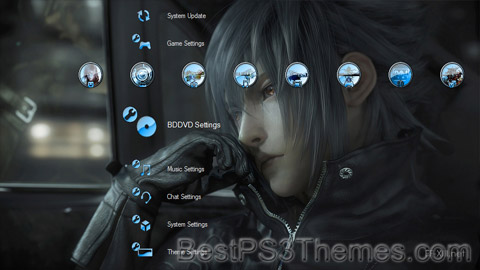
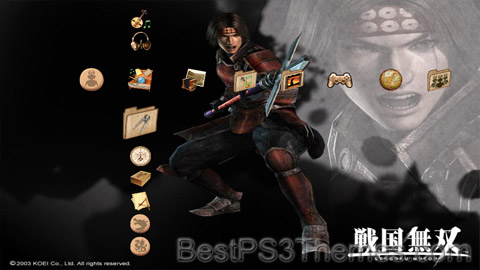
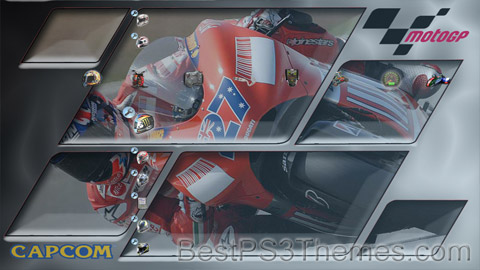
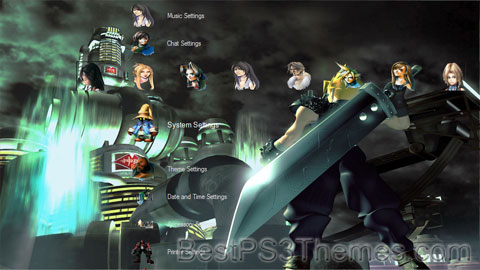
This program unpacks Playstation 3 Theme files (.p3t) so that you can touch-up an existing theme to your likings or use a certain wallpaper from it (as many themes have multiple). But remember, if you use content from another theme and release it, be sure to give credit!
Download p3textractor.zip from above. Extract the files to a folder with a program such as WinZip or WinRAR. Now there are multiple ways to extract the theme.
The first way is to simply open the p3t file with p3textractor.exe. If you don’t know how to do this, right click the p3t file and select Open With. Alternatively, open the p3t file and it will ask you to select a program to open with. Click Browse and find p3textractor.exe from where you previously extracted it to. It will open CMD and extract the theme to extracted.[filename]. After that, all you need to do for any future p3t files is open them and it will extract.
The second way is very simple. Just drag the p3t file to p3textractor.exe. It will open CMD and extract the theme to extracted.[filename].
For the third way, first put the p3t file you want to extract into the same folder as p3textractor.exe. Open CMD and browse to the folder with p3extractor.exe. Enter the following: p3textractor filename.p3t [destination path]Replace filename with the name of the p3t file, and replace [destination path] with the name of the folder you want the files to be extracted to. A destination path is not required. By default it will extract to extracted.filename.
This program unpacks Playstation 3 Theme files (.p3t) so that you can touch-up an existing theme to your likings or use a certain wallpaper from it (as many themes have multiple). But remember, if you use content from another theme and release it, be sure to give credit!
Download p3textractor.zip from above. Extract the files to a folder with a program such as WinZip or WinRAR. Now there are multiple ways to extract the theme.
The first way is to simply open the p3t file with p3textractor.exe. If you don’t know how to do this, right click the p3t file and select Open With. Alternatively, open the p3t file and it will ask you to select a program to open with. Click Browse and find p3textractor.exe from where you previously extracted it to. It will open CMD and extract the theme to extracted.[filename]. After that, all you need to do for any future p3t files is open them and it will extract.
The second way is very simple. Just drag the p3t file to p3textractor.exe. It will open CMD and extract the theme to extracted.[filename].
For the third way, first put the p3t file you want to extract into the same folder as p3textractor.exe. Open CMD and browse to the folder with p3extractor.exe. Enter the following: p3textractor filename.p3t [destination path]Replace filename with the name of the p3t file, and replace [destination path] with the name of the folder you want the files to be extracted to. A destination path is not required. By default it will extract to extracted.filename.
This program unpacks Playstation 3 Theme files (.p3t) so that you can touch-up an existing theme to your likings or use a certain wallpaper from it (as many themes have multiple). But remember, if you use content from another theme and release it, be sure to give credit!
Download p3textractor.zip from above. Extract the files to a folder with a program such as WinZip or WinRAR. Now there are multiple ways to extract the theme.
The first way is to simply open the p3t file with p3textractor.exe. If you don’t know how to do this, right click the p3t file and select Open With. Alternatively, open the p3t file and it will ask you to select a program to open with. Click Browse and find p3textractor.exe from where you previously extracted it to. It will open CMD and extract the theme to extracted.[filename]. After that, all you need to do for any future p3t files is open them and it will extract.
The second way is very simple. Just drag the p3t file to p3textractor.exe. It will open CMD and extract the theme to extracted.[filename].
For the third way, first put the p3t file you want to extract into the same folder as p3textractor.exe. Open CMD and browse to the folder with p3extractor.exe. Enter the following: p3textractor filename.p3t [destination path]Replace filename with the name of the p3t file, and replace [destination path] with the name of the folder you want the files to be extracted to. A destination path is not required. By default it will extract to extracted.filename.
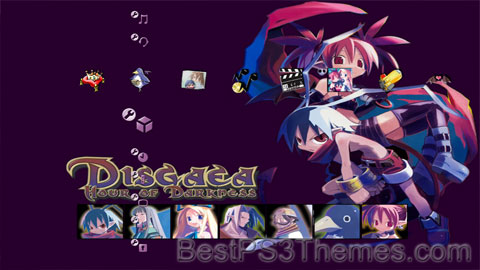
Disgaea (魔界戦記ディスガイア, Makai Senki Disugaia, lit. "Hell Chronicles Disgaea") is a series of tactical role-playingvideo games created and developed by Nippon Ichi. The series debuted in Japan on January 30, 2003, with Disgaea: Hour of Darkness, later re-released as Disgaea: Afternoon of Darkness and Disgaea DS. One of Nippon Ichi's most popular franchises, it has branched off into both a manga and anime series. The Disgaea games are known for complex gameplay, extremely high maximum stats and humorous dialogue. The Disgaea series has shipped 5 million copies as of 2021.[1]
Each Disgaea game consists of a number of missions that the player undertakes from a central hub. In the hub, the player can manage equipment and team members, heal their party, and other functions. When the player is prepared, they can then travel to the next available mission as well as replay any mission they have already completed. Missions are usually arranged in a number of chapters with cutscenes before and after to advance the plot.
Each mission requires the player to complete an objective, all missions can be completed by defeating all the enemy forces. The mission takes place on an isometric grid-based board with spaces at various heights. The player and the computer alternate turns. During the player's turn, they can summon members of their party from a starting point, up to ten. Each character, once on the board, can move and then perform an action, including melee attacks and special abilities. Once a character has performed an action, they may no longer move that turn unless they attack before moving. The player can move as many characters as desired and plan their actions at a time, then issuing an "Execute" command to carry out those actions. If the player has characters that can still move and perform actions at this time, they can do so, otherwise, they will end their turn. The computer opponents then perform their actions. When the player successfully completes a mission, they are given bonus items based on their overall bonus score, which is earned through combo attacks, special attacks, and other features of the game.
The player can arrange to have allies next to each other to fight a foe with a chance to launch a combo attack, which can do more damage and boost the mission's scoring meter. Players can also have characters lift and throw other characters or objects on the level for various effects: for example, a character can throw another character to an empty space as to allow that second character to move farther than if on foot, or certain monsters called Prinnies can be thrown at others to cause explosive damage. It is possible for characters to pick up a character that is already carrying another character, and so forth, allowing for one character to move within a single turn to the far side of the map. However, any character that is still carrying another character at the end of the turn will take damage. While a character is holding others they can attack, when this is done each character adds to the damage.
Across some boards are glowing colored spaces which are either red, green, blue, yellow, purple, cyan, and special objects called "Geo Symbols" which are either null, red, green, blue, yellow, purple. When these are placed on a colored field, they impart a bonus or penalty to all battle participants on the same colored field; such bonuses can also stack if multiple Geo Symbols are on the same field. A character can destroy a Geo Symbol which will cause all the field spaces it affects to cause some damage to the characters on them as they turn to another color determined by the destroyed Geo Symbol. It is possible to arrange a chain of these effects, each chain increasing the amount of damaged earned and increasing the bonus score for the mission. As with characters, Geo Symbols can also be lifted and thrown as to affect the board's bonuses.
In addition to maintaining their party at the central hub, the player can create new characters to the party based on experience each character earned in battle, or, with enough experience, attempt to alter the features of the central hub, such as having better weapon or armor at the stores. This itself involves convincing the Dark Assembly to agree to such changes, and it is possible to initiate combat in the same manner as the missions to convince the creature to see otherwise. There is also an Item World gateway; here, the player can select any item in the party's inventory and enter it. The Item World for an item is randomly generated but depends on a number of factors based on the item itself such as its rarity or power. By descending through the Item World, each level similar to one of the main missions featuring a random map and a number of creatures as well as an exit portal to the next level, the player can improve the abilities of the item as well as free Guardians that live in the item. These Guardians impart certain benefits to the item, such as increased in attack or defense values, and once they are freed, they can be moved between items freely.
The game can be played through multiple times, as each game features multiple endings. However, each time, the player's party, with all characters, items, and abilities, are carried over. This New Game Plus allows the player to develop extremely powerful characters, approaching the maximum character level of 9999 and 186,000 combined levels in reincarnation through repeated playthroughs.
The series exists for the moment only in Japanese, English and French languages.
All Disgaea games take place mostly in the "Netherworld", a parallel universe inhabited by demons where moral values are reversed from those of humans. Multiple Netherworlds exist, each with their own Overlord. Other areas include the human world, shown to possess a futuristic level of technology in Hour of Darkness, and "Celestia", a heavenly realm inhabited by angels. Rather than being purely good or purely evil, inhabitants of the Netherworld and Celestia possess human-like qualities, but are swayed far more towards either moral extreme. It is shown in Disgaea 4 that both the Netherworld and Celestia are dependent on energy from the human world for survival, and that if humans begin to fear themselves, more than
they would fear demons and monsters, the Netherworld will fall apart.
Baal, the most powerful enemy in the Disgaea series, is a legendary overlord that appears as a recurring boss throughout the different games. Known as the Lord of Terror, he is a collection of evil souls that can transfer into other bodies when defeated. He often appears in a towering, monstrous form, though he is forced into more diminutive ones after being defeated.
The Prism Rangers are a troupe of gag characters heavily inspired by the protagonists of the Super Sentai/Power Rangers universes. Each of the members are named after the colors of the rainbow with the word Prism preceding it, with their leader being "Prism Red". The Prism Rangers tend to be portrayed as weak, having been taken down in one shot or being unable to do the slightest bit of damage to their opponent.
Asagi is a character meant to be the main character in a development hell Nippon Ichi title, Makai Wars. She constantly attempts to become the star of other games.
Pleinair Allaprima (プレネール・アラプリマ, Purenēru Arapurima) is a mascot character for the artist and character designer of the series, Takehito Harada. She makes various appearances throughout the series. She is typically portrayed as a petite, blue-haired girl with red eyes, wearing a red ribbon, a white dress, white stockings, and sometimes glasses. She is also known for being mute, with characters at times referencing her refusal (or perhaps inability) to speak; This can be used to comical effect such as when she is a co-anchor, despite herself, for a Netherworld news show that plays between chapters in Disgaea 2. She is often accompanied by a stuffed rabbit named "Usagi-san" and a stuffed shark named "Same-san".
Prinnies (プリニー, Purini) are common servants, and one of the protagonists as well as enemies in the series. They resemble small pouch-wearing penguins with disproportionately small bat wings and two peg legs for feet. Their personalities are upbeat, and they are required to use the word "dood" at the end of their sentences to signify their status ("-ssu" in the Japanese dialogue). While Prinnies use machetes as their primary weapons, they are also able to use "Prinny Bombs" from their pouch and fire a laser called the "Pringer Beam". They are created when a human who has led a worthless life or committed a mortal sin in life dies, leading to the soul being sewn into the body of a Prinny. After being reborn, they serve as maids and domestic servants in Celestia, where their good deeds lead to their reincarnation, or as servants and slaves (and sometimes cannon fodder) in the Netherworld, where they obtain money towards their reincarnation, often under lords who treat them horribly for little pay.
Prinnies explode when thrown due to the human soul being unstable, and thus, a jostling, such as being tossed, will cause them to do as such.[2] Prinnies are also mass-produced with demon souls, which leaves them stable. During a certain time of the year a red moon appears in the sky of the Underworld; when this happens, all the Prinnies meet together and Prinnies who have earned enough money are allowed to reincarnate.
The first two Disgaea installments were released for the PlayStation 2. The series debuted in Japan with Disgaea: Hour of Darkness in 2003 on the PlayStation 2 and has since been re-released on the PlayStation Portable as Disgaea: Afternoon of Darkness, Nintendo DS as Disgaea DS and the PlayStation 4 and Nintendo Switch as Disgaea 1 complete with new content. It was known for many uncommon elements previously unseen in the strategy RPG genre, such as complex gameplay, extremely high maximum stats and a maximum level of 9999, and humorous dialogue. Disgaea 2: Cursed Memories, released for the PlayStation 2 in 2006 in Japan, has been re-released on the PlayStation Portable under the title Disgaea 2: Dark Hero Days with new content. Both of these games were later ported to the PC as Disgaea PC in 2016, and Disgaea 2 PC in 2017 respectively. Both are based on the PlayStation Portable versions, with additional content and redone graphics. The series then moved on to the PlayStation 3 for Disgaea 3: Absence of Justice, released in Japan in 2008, and was re-released on the PlayStation Vita as Disgaea 3: Absence of Detention in 2012. Disgaea 4: A Promise Unforgotten was released in Japan in 2011 and re-released on the PlayStation Vita as Disgaea 4: A Promise Revisited in 2014. A direct sequel to the first game, Disgaea D2: A Brighter Darkness was released for the PlayStation 3 in 2013. Disgaea 5: Alliance of Vengeance was released in 2015, moving the series to the PlayStation 4, and was ported to the Nintendo Switch as Disgaea 5 Complete in 2017. The next game, Disgaea 6: Defiance of Destiny, was announced on September 17, 2020 and both were released on the PlayStation 4 and Nintendo Switch and most notably, 3D models are now used for the characters, which is a first in the series and the standard maximum level of 9999 increased to 99,999,999. [3]Disgaea 6 Complete was released for PlayStation 4, PlayStation 5, and PC through Steam in June 2022. Disgaea 7: Vows of the Virtueless was announced in August 2022, and was released in Japan on January 26, 2023 for PlayStation 4, PlayStation 5, and Nintendo Switch.[4]
Re-released Disgaea titles have the tradition of featuring an alternate story-line to freshen up gameplay. In the first two re-releases, Etna Mode in Disgaea: Afternoon of Darkness and Axel Mode in Disgaea 2: Dark Hero Days, feature alternate story-lines with new main characters.
Disgaea has also spawned several spin-off titles. The first such spin-off, Mugen Keitai Disgaea was released in 2004 as a Japanese mobile game.[5]Makai Kingdom: Chronicles of the Sacred Tome in 2005, released on the PlayStation 2, starred Lord Zetta as an overlord of an alternate Netherworld with gameplay similar to the original Disgaea series. The Prinnies were then featured in the side-scrolling adventure game, Prinny: Can I Really Be the Hero? in 2008 and Prinny 2: Dawn of Operation Panties, Dood! in 2010, for the PlayStation Portable. The first Android-based game, Disgaea: Netherworld Unbound, was released in 2011 as a free-to-play game with optional paid-content available.
The PlayStation Portable title, Disgaea Infinite, is a visual novel in the same setting as Disgaea: Hour of Darkness, and the story-line of a Prinny being ordered to investigate the attempted assassination of Laharl. Gameplay is very simple compared to other Disgaea titles, with the primary interactive element being the ability to switch characters in order to solve a mystery.
Makai Senki Disgaea is an anime series based on the video game Disgaea: Hour of Darkness. Makai Senki Disgaea follows the same general plot as the game, but with several alterations to character roles and the chronology of events.
While not necessarily canon, a Disgaea manga, Makai Senki Disgaea, illustrated by Arashi Shindo, follows the basic storyline. Many events in the manga, while similar, have been altered completely and the humor is more offbeat (e.g. Laharl, Etna, and Flonne believe that Mid Boss may be a pedophile due to his recurring presence among the three). Many characters also appear to have different personalities (e.g. on occasion, Lamington will be seen baking a cake). The art style is also very different as many of the characters appear somewhat more mature and the art is very shōjo-like. Broccoli Books released the manga in September 2006. Makai Senki Disgaea 2 ran from 2006–07 in Japan, and Makai Senki Disgaea 3: School of Devils has been ongoing in Japan since 2009.
Nippon Ichi Software's online store sells various merchandise such as several different Prinny plushies,[6][7] and in Japan Nippon Ichi has released several pieces of Prinny merchandise and has used kigurumi of the characters to promote the release of Prinny: Can I Really be the Hero? in Akihabara.[8][9] Additionally four Prinny avatars for the PlayStation 3's PlayStation Home were also released for sale, modeled after the different unique Prinnies in the original Disgaea.[10]
A set of novels written by Sow Kamishiro and illustrated by Chou Niku (although they were aided by Takehito Harada in the beginning). These novels begin with a novelization of the first game and then continue the story ten years later. The novels introduce many new characters including Laharl's relatives, Flonne's family, and Gordon and Jennifer's daughter. The novels take place in a separate canon from the mainline games, and are unlikely to be revisited by Nippon-Ichi due to the ending of their contract with Kadokawa books. There are 22 Disgaea-related novels:
Disgaea: Enter the Maoh - Retelling of the first Disgaea
Disgaea: Revelations - Original story about Laharl's extended family
Disgaea: Returned - Original story primarily about Flonne's extended family
Disgaea: On Love (Parts 1 & 2) - Original story about Etna & Flonne time travelling to meet Laharl's mother in the past
Disgaea: Battle of Maohs - Original story involving the casts of Disgaea and Makai Kingdom
Disgaea 2: Mask of the Maoh (Parts 1 & 2) - Retelling of Disgaea 2
Disgaea: Heart of the Maoh - Original story involving Laharl's mother
Disgaea: School of the Maoh - Original story involving the characters from multiple games attending a school for demons
Disgaea 3: Brave and the Maoh (Parts 1 & 2) - Retelling of Disgaea 3
Disgaea: Three Dash! - Original story involving the casts of Disgaea 1, 3, and Makai Kingdom
Disgaea: War of Prinny - Retelling of Prinny: Can I Really Be the Hero, Dood?
Disgaea 4: Power of Iwashi - Retelling of Disgaea 4
Disgaea: Maoh of the Dead - Original story involving Laharl, Etna, and Flonne filming a zombie movie
Disgaea D2: Revisit - Retelling of Disgaea D2
Phantom Brave: A Small Wish, Sulphur's Counterattack, & Return of the Brave - 3-part Retelling of Phantom Brave
Phantom Kingdom: Tales of the Universe's Strongest Overlords - Retelling of Makai Kingdom
Puppet Princess of Marl Kingdom: An Angel's Song of Love - Retelling of Rhapsody: A Musical Adventure
This section needs expansion. You can help by adding to it. (November 2008)
The gameplay mechanic of throwing characters was developed as a "strong and unique" aspect of gameplay that would attract players. New gameplay ideas were added to each game until the "majority of staffers" were "not sure" whether they were necessary, hence its complexity.[11]
This section needs expansion. You can help by adding to it. (November 2008)
The Disgaea series has been received positively by reviewers, particularly praising the amount of content, solid battle system and humor while criticizing the large learning curve and dated graphics. The highest score was received by Disgaea: Afternoon of Darkness for PSP, at a score of 87% at Gamerankings and Metacritic. Disgaea 6: Defiance of Destiny for PlayStation 5 received the lowest average score of the series, at around 68% at Metacritic, with reviewers saying that while its accessibility is among the highest for any Disgaea title, that is the only main factor in its limited success. It has sold rather poorly in its first week by the standards of the series.
Prinnies have been described as some of the most notable characters in the Disgaea series,[35] and the mascots of the series.[36] In a preview of the upcoming game starring the character in PlayStation: The Official Magazine, Chris Hudak asked "What better sign that you've warmed the cold hearts of videogamers worldwide than to have your own beloved, signature character?", additionally comparing in great detail the Prinny to fellow video game mascots Mario, Sonic the Hedgehog, and Dragon Quest's Slime.[37] PSX Extreme described them as "one of the most recognizable – and curiously lovable – characters" in the Disgaea series.[38] They are featured strongly in Nippon Ichi's marketing, such as the annual Tipsy Prinny press events.[39] The third event, held in the Zebulon Bar San Francisco on June 5, 2008, featured green prinnies suspended from every banister and light fitting.[40]
Halo 3 is a 2007 first-person shootervideo game developed by Bungie for the Xbox 360 console. The third installment in the Halo franchise following Halo: Combat Evolved (2001) and Halo 2 (2004), the game's story centers on the interstellar war between 26th-century humanity, a collection of alien races known as the Covenant, and the alien parasite known as the Flood. The player assumes the role of the Master Chief, a cybernetically enhanced supersoldier, as he battles the Covenant and the Flood. In cooperative play, other human players assume the role of allied alien soldiers. The game features vehicles, weapons, and gameplay elements familiar and new to the series, as well as the addition of saved gameplay films, file sharing, and the Forge map editor—a utility which allows the player to perform modifications to multiplayer levels.
Halo 2 had originally been intended to wrap up the story begun with Combat Evolved, but development difficulties led to a cliffhanger ending. Bungie began developing Halo 3 shortly after Halo 2 shipped. The game was officially announced at E3 2006, and its release was preceded by a multiplayer beta open to select players who purchased the Xbox 360 game Crackdown. Microsoft spent $40million on marketing the game, in an effort to sell more game consoles and broaden the appeal of the game beyond the established Halo fanbase. Marketing included cross-promotions and an alternate reality game.
Halo 3 was released on September 25 and grossed US$170million on its first day of release, rising to $300million in its first week. The game sold in excess of 14.5 million copies and was the best-selling video game of 2007 in the United States. More than one million people played Halo 3 on Xbox Live in the first twenty hours. Overall, the game was well received by critics, with the Forge and multiplayer offerings singled out as strong features; however, some reviewers criticized single-player aspects, especially the plot and campaign layout. Halo 3 is frequently listed as one of the greatest video games of all time. A sequel, Halo 4, released in November 2012, was developed by 343 Industries. Halo 3 was re-released as part of Halo: The Master Chief Collection for the Xbox One in November 2014 and for Microsoft Windows on July 14, 2020.[1]
Master Chief aims his assault rifle at a group of Covenant Grunts. A piece of activated equipment, called the bubble shield, is shown.
Halo 3 is a shooter game where players primarily experience gameplay from a first-person perspective. Much of the gameplay takes place on foot, but also includes segments focused on vehicular combat. Gameplay focuses on the "Golden Triangle of Halo": players utilize weapons, grenades, and melee attacks, which are available to a player in most situations. Players may dual-wield some weapons for additional firepower, forgoing the use of grenades and melee attacks. Unlike previous installments, the player's secondary weapon is visible on their player model, holstered or slung across the player's back.[2]Halo 3 introduces support weapons, cumbersome two-handed weapons that slow the player when carried, but offer greatly increased firepower in return.[3]
In addition to weapons, Halo 3 contains a new class of gear called equipment;[4] these items have various effects, ranging from defensive screens to shield regeneration and flares. Only one piece of equipment can be carried at a time.[5] The game's vehicular component has been expanded with new drivable and AI-only vehicles.[6][7]
Halo 3 contains non-gameplay additions, such as Forge, a map-editing tool. Forge enables players to insert and remove game objects, such as weapons, crates and vehicles into existing multiplayer maps.[7] Almost all weapons, vehicles, and interactive objects can be placed and moved on maps with Forge.[8] Players can enter Forge games and edit and manipulate objects in real time. A budget limits the number of objects that can be placed.[9] Players may also save up to 100 films of gameplay to their Xbox 360's hard drive,[10][11] viewing the action from any angle and at different speeds.[12]Halo 3 offers a form of file sharing, where items such as saved films, screenshots, and custom variants can all be uploaded to Bungie's official website. Anyone can browse user created content that has been uploaded to Bungie's website and tag it to automatically download to their console next time they sign into Xbox Live on Halo 3.[5][13]
Halo 3's story or campaign mode can be played alone or cooperatively with up to three other players via Xbox Live or System Link. Instead of each player being an identical character in cooperative play, as in previous Halo games, the first player plays as Master Chief, the second player as the Arbiter, and the final two players controlling the Covenant Elites N'tho 'Sraom and Usze 'Taham. Each player has identical abilities, although their starting weapons vary.[14] Hidden skulls found on each level cause changes to the gameplay when enabled, such as giving the enemies extra health, changing in-game dialogue, or modifying AI behavior.[15] These skulls, as well as the difficulty level and the speed at which the level is completed, provide multipliers to the total score.[5] Players are awarded gamerscore points for unlocking Achievements by reaching a certain score in each level.[16]
Local area network or Xbox Live supports up to sixteen players in multiplayer matches, with game modes including variations of deathmatch and Capture the Flag. Players must actively seek out other players through their Xbox Live Friends list, using the party invite system, or the LAN search feature to play multiplayer matches with their own custom rules and customized maps. If they are connected to Xbox Live however, a player can choose to have the game decide for them the exact rules and map to play on, as well as finding additional people to play against or with, using the "Matchmaking" system (the automated grouping of players of similar skill). A player will decide from a selection of developer designed "playlists" which each contain a certain way to experience the game.[17]
Like other multiplayer Xbox 360 titles, Halo 3 uses a customized version of TrueSkill ranking system for its matchmaking on a per-playlist basis. A linear measure of a player's experience with the matchmade portion of the game and each particular playlist is also tracked (denoted as EXP).[18] To help players have an enjoyable time online, several peace-of-mind features are implemented within easy reach, such as avoid/feedback options on a player's service record, as well as voice chat mute straight from the in-game scoreboard.[19] Like Halo 2, Halo 3 supports downloadable content and updates.[20] The online services for the original Xbox 360 version of the game went offline in January 2022.[21]
Halo 3 is set in a science fiction setting during the years 2552 and 2553. Humanity is at war with a genocidal alliance of alien races known as the Covenant. After years of conflict, a Covenant fleet discovers Earth during Halo 2.[9] "Halos" are massive ringworlds, ranging from thousands to tens of thousands of kilometers in diameter, scattered across the galaxy. These rings were constructed thousands of years ago by a race known as the Forerunners as weapons of last resort against the parasitic alien species known as the Flood. When activated, the Halos would destroy all sentient life in the galaxy, depriving the Flood of its food. The Forerunners disappeared after they activated the rings. In Halo: Combat Evolved, whilst fleeing the Covenant, the UNSC ship Pillar of Autumn stumbled upon one of these ringworlds, Installation 04. Against the wishes of the ring's artificial intelligence (AI) caretaker, 343 Guilty Spark, the human supersoldier Master Chief destroyed the ring to stop the threat from Halo and the Flood. The Covenant, unaware of the destructive nature of the rings, attempt to fire another ring, Installation 05, during Halo 2 in order to fulfill their religious prophecy. One race in the Covenant, the Elites, learn the truth about the rings, and join forces with humanity in order to stop the installation's firing. Though they are successful, the unexpected shutdown triggers a fail-safe protocol, priming all the rings for firing from one location, referred to as the Ark. Still oblivious to the true nature of the rings, the Covenant High Prophet of Truth and the remaining loyalist Covenant proceed to head to Earth, where they believe the Ark is buried.
Halo 3's protagonist is Master Chief Petty Officer John-117, an enhanced supersoldier known as a "Spartan". Master Chief fights alongside the Arbiter, a disgraced Covenant Elite commander. Two other Elite characters, N'tho 'Sraom and Usze 'Taham, appear as the third and fourth players in cooperative play.[14] Supporting characters from previous games return, including human soldiers Avery Johnson and Miranda Keyes.[9] Also playing a role in the story is the Flood leader known as the "Gravemind". In Halo 2, the Gravemind escapes from confinement, invades the Covenant mobile capital city of High Charity, and captures the human AI Cortana.[9]
After the events of the comic tie-in Halo: Uprising,[22] the Master Chief arrives on Earth in east Africa, where he is found by Johnson and the Arbiter. The Chief and company return to a UNSC outpost where Keyes and Lord Hood plan a final effort to stop the Covenant leader, the High Prophet of Truth, from activating a Forerunner artifact the Covenant have excavated. The Chief clears anti-air Covenant defenses so Hood can lead the last of Earth's ships against the Prophet, but Truth activates the buried artifact, creating a slipspace portal which he and his followers enter. A Flood-infested ship crash-lands nearby; Elite forces arrive and vitrify the Flood-infected areas of Earth, stopping the threat. Following a message Cortana left aboard the Flood ship, the Chief, Arbiter, Elites, Johnson, Keyes and their troops follow Truth through the portal. Joining them is 343 Guilty Spark, who aids the Chief as he has no function to fulfill after the destruction of his ringworld.
Traveling through the portal, the humans and Elites discover an immense artificial structure known as the Ark, far beyond the edges of the Milky Way galaxy. Here, Truth can remotely activate all the Halos. The Flood arrive aboard High Charity in full force, beginning to infest the installation. Truth captures Johnson, as he needs a human to use Forerunner technology. Keyes is killed attempting a rescue, and Johnson is forced to activate the rings. Gravemind forges a truce with the Chief and Arbiter to stop Truth and defeat the remainder of his army, rescuing Johnson and halting the installations' activation. After the Arbiter kills Truth, Gravemind turns on the Chief and Arbiter.
The Chief, Arbiter and Guilty Spark discover that the Ark is constructing another Halo to replace the one that the Chief previously destroyed. The Chief decides to activate this Halo; the ringworld would eliminate the Flood infestation on the Ark while sparing the galaxy at large from destruction. To activate the ring, the Chief rescues Cortana, who has the Activation Index of the destroyed Halo, from High Charity and destroys the city. Arriving on the new Halo, Cortana warns that Gravemind is trying to rebuild itself on the ring. The Chief, Arbiter, and Johnson travel to Halo's control room to activate the ring. Guilty Spark explains that because the ring is not yet complete, a premature activation will destroy it and the Ark. When Johnson ignores his warning, Guilty Spark fatally wounds him to protect "his" ring. Although the Chief destroys Guilty Spark, Johnson soon dies of his injuries. Chief activates the ring, and escapes the ring's self-destruction on the UNSC frigateForward Unto Dawn. However, the force of Halo's blast causes the slipspace portal to collapse, resulting in only the front half of Forward Unto Dawn, carrying the Arbiter, making it back to Earth.
A memorial service is held on Earth for the fallen heroes of the Human-Covenant war, during which the Arbiter and Lord Hood briefly exchange words regarding the fallen Master Chief. After the memorial service, the Arbiter and his Elite brethren depart for their home planet. Meanwhile, the rear half of the Forward Unto Dawn drifts in unknown space. Cortana drops a distress beacon, but acknowledges it may be many years before they are rescued. As the Master Chief enters cryonic sleep, Cortana confides to him that she will miss him, but he comforts her by telling her "wake me when you need me." If the game is completed at the Legendary difficulty level, the scene continues to show the piece of Forward Unto Dawn drifting towards an unknown planet, setting up the events of Halo 4.
Halo 2 was a critical and commercial success, but its development had taken a toll on Bungie. The game's development was fraught and rushed, resulting in the final act of the game's campaign being cut.[23] Bungie was openly critical of the game's shortcomings,[24] and viewed a third Halo game as a chance to do right by fans for Halo 2's problems, as well as the final Halo game the studio would make before moving onto other projects. Lingering dissatisfaction with Bungie's acquisition by Microsoft in 2000 and a desire for more favorable profit-sharing on Halo 3 led to an agreement where Bungie would become an independent studio after shipping a set number of new Halo games.[23]
After Halo 2 shipped, Bungie cofounder Jason Jones went on sabbatical, leaving the Halo 3 team with little direction or leadership; different staff members wrestled over who would take on creative positions for the new game, and no clear creative direction was decided upon. Story writer Joseph Staten took a vacation after coming into conflict with other staff members, meaning there was no clear person who was responsible for the game's story for a portion of development. The story was drafted by a committee, then presented to senior Bungie members. Composer Martin O'Donnell recalled he did not feel the draft would work, as it left out previous characters and plot threads. Having recently seen the film Serenity, he insisted that characters should die to increase the stakes. Staten returned to do edits after the plot had been established.[23]
Halo 2 had popularized online multiplayer matchmaking and social features like player parties and voice chat. The Xbox 360 integrated many similar features into Xbox Live, but changed the underlying system. Designer Max Hoberman recalled that instead of creating new features, he spent a year fixing broken features to get back to parity with Halo 2.[23]
Compared to the harried pace of Halo 2's development which necessitated painful cuts to ship the game on time, Bungie staffers recalled Halo 3's development as much more smooth, with more time to add features like Forge mode.[23]
Bungie remained quiet as to what their new project was, leaving comments in their weekly update alluding to a "new project".[25] The game was officially announced with a real-timecinematictrailer at E3 2006.[26]
In comparison with Halo 2's tight-lipped development, Bungie was more transparent about the process for Halo 3.[23] Bungie kept the public informed on game development via weekly updates on their web site. During development, the game was divided into single player and multiplayer builds; this made debugging and testing the much smaller multiplayer files quicker.[27] While details of Halo 3's multiplayer were widely disseminated in the sixteen months leading up to the release,[28] the single-player aspect of the storyline was kept relatively secret throughout much of the development to build up interest. The first campaign screenshots did not appear until a year after the announcement trailer, on July 5, 2007, as a "tease" for the planned pace of marketing.[29]
A public beta test of the game's online multiplayer features, as well as saved films and file share, took place four months before the full release.[30] Players required a Crackdown disc to play the beta.[31]
AI behavior was enhanced and improved; the behavior of enemy Brutes the player faces was modified, giving them a "pack mentality" that causes the aliens to perform similar actions at the same time and altering gameplay.[4][32]
Halo 3 utilizes a proprietary, in-house graphics engine.[33] It employs graphics technologies such as high dynamic range, global lighting, and depth of field effects within cutscenes.[34]Motion blurring was absent from the beta, but was added to the final game.[35] Most dynamic objects in the game cast real-time shadows on themselves and the environment around them, including the game's plant life. Halo 3 uses normal, bump, and parallax mapping to give surfaces more detail without dramatically increasing the number of polygons. Players can see distances of up to ten miles (16 km) away, all fully three-dimensional.[36] The engine is capable of real-time reflections, but are often unused as Bungie considered it a waste of resources.[37]Halo 3 uses two frame buffers instead of the usual single buffer, allowing Bungie to preserve as much of dynamic range as possible for the game's lighting without adversely affecting the frame rate. As a consequence, the game natively renders at 1152×640 resolution instead of 720p. The image can be upscaled to 1080p by the Xbox 360.[38][39]Halo 3 has also been enhanced for Xbox One X, rendering at 1920p upscaled to 2160p in HDR at a solid 30fps.[40]
As with all titles on the Xbox 360, Halo 3 fully supports 5.1 surround sound audio.[41] In the game, there are over 50,000 pieces of audio, with nearly 40,000 of those being NPC dialogue.[5] This is far more than in either of the preceding Halo titles; Halo 2 had over 15,000 pieces of dialogue. The AI controlling this dialogue is designed to ensure the exchanges flow naturally and convincingly.[36] Separate recordings were made for nearby and distant gunfire to make for a more believable sound experience in the public beta,[42] and the finished game uses Waves Audio plugins to modify dialog and other audio in-game depending on conditions.[43] Distant gunfire sounds, which may first seem like pre-recorded ambient sound, may often be the result of an actual firefight happening elsewhere in the game.[44]
Marty O'Donnell again composed the original score for the game. Some pieces of the game's music are produced with a much larger real orchestra than any pieces in the prior two games. For example, the music for the announcement trailer was recorded with a 60-piece orchestra and a 24-piece choir.[26]Halo 3 is the first game in the series to feature custom soundtracks, allowing players to replace in-game music with their own choices.[45] The Halo 3 Original Soundtrack was released on November 20, 2007.[46] Included on the soundtrack is an original composition submitted by fans and judged by Nile Rodgers, Michael Ostin, and Marty O'Donnell.[47]
Microsoft spent more than $40million marketing Halo 3. The goal of the campaign was to sell more Xbox 360 consoles and widen the appeal of the game beyond the "Halo faithful" to casual as well as hardcore gamers. Marketing took the form of stages, including trailers of the game, real-time cinematics, recorded gameplay sequences, pre-rendered CGI, and live action film.[50] On September 12, 2007, the "Believe" Halo 3 ad campaign, focused on the epic nature of the story and heroism told through dioramas and third party accounts of Master Chief's service, began with the video "Museum" and continued on past the game's release.[51]
Throughout the course of development Bungie released four "developer documentaries" that explained the processes behind creating parts of the game. A large-scale multiplayer beta test was played on Xbox Live with more than 800,000 members of the public being able to take part and experience the game for themselves.[50] Beginning in June 2007, an alternate reality game called Iris involved players in slowly revealing background information for the game.[50] The actual release was met with worldwide launch parties.[52]
Halo 3 also had marketing tie-ins and promotions. PepsiCo announced a new line of soft drink, a variant of Mountain Dew named Game Fuel, branded with the Halo 3 logo and the Master Chief.[53] Much of the advertising focused on appealing to the general public, rather than just hardcore fans of the game; for example, some 7-Eleven stores advertised Halo 3 and sold specialty cups and copies of the game.[54]Gamestation stores in the UK offered a limited edition Master Chief figurine to the first 1000 preorders.[55]
The game's final testing copy before its gold release—codenamed "Epsilon" and confirmed by Bungie to be almost complete[13]—was leaked to the Internet months before the game's release date. Microsoft reacted to this leak by having the Xbox Live accounts of gamers caught playing the leaked copy banned until the year 9999.[56] Retail copies of the game, complete with photographs of the open game box, started to appear on the internet auction site eBay weeks before release,[57] followed by UK catalog retailer Argos accidentally releasing some of their copies a week early. Microsoft's Entertainment and Devices division were quoted as being "disappointed" that the Argos leak happened, but stated they had no intention for punishing them for an "honest mistake".[58] The retail copy was also leaked online over a week before release, with the 6.14 gigabyte file of the game ripped from a disc and downloaded by thousands of people within 24 hours. Videos of the ending of Halo 3, obtained from the leaked copy, were captured and posted on video sharing sites.[59]
Halo 3 was released on September 25, 2007, in three separate retail versions: "Standard", "Limited", and "Legendary". The Standard Edition contains the game disc, manual, and a small poster with the game's control-map and artwork. The Limited Edition, contained in a metal case, contains the game disc, manual, poster, Xbox 360 bonus disc with featurettes, and a hardcover-bound "Bestiarum", a collection of information and art covering the species, cultures, and civilizations of Halo 3. The Legendary Edition contains the game disc, manual, poster, interactive bonus disc, the Bestiarum on a DVD, Legendary DVD containing exclusive content, and a scale replica of the Master Chief's helmet as a case for the three discs. The slip-cover packaging unfolds into a large heavy-stock poster of Master Chief.[60] Some of the Limited Edition versions of Halo 3 were found to have a defect in the hub that kept the discs in place, which could lead to scratched discs. Microsoft introduced a disc replacement program in response.[61][62]
On the day before its official release, 4.2 million units of Halo 3 were in retail outlets.[63]
Halo 3 was made a free download for Xbox Live Gold subscribers through the "Games with Gold" program in October 2013.[64] It became playable on the Xbox One via backwards compatibility in 2017.[65] An Xbox One-native version of the game, presenting the graphics at 1080p and 60 frames per second, was included as part of Halo: The Master Chief Collection for the Xbox One in 2014. Halo 3 was re-released again as part of the Windows version of The Master Chief Collection in 2020.[66]
Halo 3 supports multiplayer map downloadable content as well as game updates via Xbox Live.[67] The first three post-release multiplayer maps, "Standoff", "Rat's Nest", and "Foundry", were released as a pack on December 11, 2007, collectively known as the "Heroic Map Pack".[68] A second group of three maps including a remake of Halo 2 map "Lockout", titled "Blackout", a new map "Ghost Town" and a remake of Halo: Combat Evolved map "Sidewinder", titled "Avalanche" were bundled as the "Legendary Map Pack", on April 15, 2008.[69] These maps introduced visual filters to the Forge pallet, which change the way the maps look.[70] A remake of the Halo: Combat Evolved map "Chill Out", titled "Cold Storage", was released as a free download on "Bungie Day", July 7, 2008.[71] The third multiplayer map pack, titled the "Mythic Map Pack" and consisting of the maps "Orbital", "Assembly", and "Sandbox", was included with the Limited Collectors Edition of Halo Wars.[72] The map pack was released over the Xbox Live Marketplace on April 9, 2009.[73] The fourth and final multiplayer map pack, "Mythic II Map Pack", was released on February 2, 2010. The map pack includes the three new maps from Halo 3: ODST
This program unpacks Playstation 3 Theme files (.p3t) so that you can touch-up an existing theme to your likings or use a certain wallpaper from it (as many themes have multiple). But remember, if you use content from another theme and release it, be sure to give credit!
Download p3textractor.zip from above. Extract the files to a folder with a program such as WinZip or WinRAR. Now there are multiple ways to extract the theme.
The first way is to simply open the p3t file with p3textractor.exe. If you don’t know how to do this, right click the p3t file and select Open With. Alternatively, open the p3t file and it will ask you to select a program to open with. Click Browse and find p3textractor.exe from where you previously extracted it to. It will open CMD and extract the theme to extracted.[filename]. After that, all you need to do for any future p3t files is open them and it will extract.
The second way is very simple. Just drag the p3t file to p3textractor.exe. It will open CMD and extract the theme to extracted.[filename].
For the third way, first put the p3t file you want to extract into the same folder as p3textractor.exe. Open CMD and browse to the folder with p3extractor.exe. Enter the following: p3textractor filename.p3t [destination path]Replace filename with the name of the p3t file, and replace [destination path] with the name of the folder you want the files to be extracted to. A destination path is not required. By default it will extract to extracted.filename.
Samurai Warriors (戦国無双, Sengoku Musō, in Japan) is the first title in the series of hack and slash video games created by Koei's Omega Force team based closely around the Sengoku ("Warring States") period of Japanese history and is a sister series of the Dynasty Warriors series, released for the PlayStation 2 and Xbox in 2004. A port of this game called Samurai Warriors: State of War has been released for the PlayStation Portable, which includes additional multiplayer features.
A sequel, Samurai Warriors 2, was released in 2006 for the PlayStation 2 and Xbox 360, then ported to Microsoft Windows in 2008.
In Samurai Warriors, the player takes the role of a single officer in battle and must fend off hordes of enemy soldiers and defeat the enemy commander. The player has at their disposal a range of combo attacks and crowd-clearing special moves known as Musou attacks. The variety of attacks available increase as the player's character gains levels and new weapons.
Musou attacks can only be performed when the character's Musou gauge is full. The Musou gauge increases when the character inflicts and receives damage. Additionally, if the character is low on health or possesses a special skill, they can use their True Musou attack, a more powerful version of the regular Musou attack.
Each character can equip up to five items before each battle, which will affect their attributes or give them additional abilities. Players can find items which affect their attributes through normal battle by defeating enemy officers or breaking open crates. The items which give characters special abilities are obtained by meeting conditions in specific battles.
Like items, weapons can also be found in battle. Each character has four different types of weapons they can find. In addition to their base attributes, weapons will randomly have additional attributes attached to them. The value of these bonuses depends on three things: the difficulty level, the stage the player is on and the ranks the character has in the 'Discern' skill. In addition to the random weapon drops, each character has a unique fifth weapon. Unlike the other weapons, the fifth weapons have set bonuses and attributes. Fifth weapons are obtained by meeting conditions in specific battles on either the Hard or Chaos difficulty level.
Samurai Warriors contains a number of changes to Dynasty Warriors' combat system, most notably the ability to perform free-style combo attacks during Musou attack mode, during which the game enters bullet-time; common soldiers move slowly, but officers are unaffected. Other changes include the ability to perform a roll to dodge attacks, and deflect incoming arrows with their weapon. Additionally, the series has hyper attacks, or the ability to dash while attacking enemy soldiers.[7]
The character development system has been overhauled. There is a new ranking system after battles which depends on five categories:
Time in which the battle is won.
Amount of experience earned.
Missions successfully completed in battle.
Number of enemies defeated while using a Musou attack.
Number of enemies killed in total.
Each of these categories is given a rank (from lowest to highest: E, D, C, B, A, S) depending on the player's performance, and then the player is given an overall rank. The higher the rank and the harder the difficulty setting of the game, the more the player's character attributes will increase. In addition to the growth of the character's stats, Skill Points are also awarded. Skill Points are used to buy skills through a skill tree that enhance the character's abilities.
Samurai Warriors introduces an in-battle mission system. Each stage has a number of missions which become available depending on which character the player is controlling and the success or failure of previous missions. Missions include eliminating specific enemy officers, launching sneak attacks on enemy bases or thwarting the plans of the enemy. Success in these missions can be crucial to the outcome of many battles as failure often results in a massive loss of morale to the player's forces. It will also determine the path that will be carved out for the next stage if there is a split route, but one can choose which path to take if both routes had been opened.
Samurai Warriors gives players the opportunity to create new characters via the officer training mode. In this mode the player creates a new character who trains under a mentor, completing twelve training sessions and a final exam. The player has a variety of tasks available for each training session based on gameplay modes and combat techniques. Each of the different tasks affects different attributes of the character. After the completion of the task the player will be ranked out of a score of 100 points, by getting more points the character's attributes will increase by a greater amount. If the character is defeated during the course of a training session, they will automatically fail and will have to spend one training session resting.
After 12 test sessions have passed, the character must take a final exam. This exam consists of two training sessions back to back. The player has to score a total of 100 points between these two tests in order to pass the exam. If the player completes the final exam successfully then they will become available to use in other gameplay modes.
The game features a total of 15 characters based on historical figures during the Warring States period of Japan, including daimyō Kenshin Uesugi, Shingen Takeda, and Nobunaga Oda as well as other notable samurai such as Yukimura Sanada and Ranmaru Mori. In addition to the figures who were noted to have fought during the period, the game also made playable a handful of female characters that did not fight in any battles, such as Oichi and Noh. Only five characters are available from the start; others can be unlocked by fulfilling specific requirements such as clearing other character's story modes. In the English version, character's names are written in western order (first name, followed by family name), whereas the official writing of historical names are in reverse (family name, followed by first name).
Note: Hideyoshi Hashiba and Yoshimoto Imagawa were unique NPCs in the title game, and were made playable in Samurai Warriors: Xtreme Legends. Tadakatsu Honda and his daughter Ina were added as playable characters in the same expansion and were not unique NPCs in the game. In fact, Tadakatsu Honda appeared as a generic officer and Ina was not in the game at all.
Lu Bu of Dynasty Warriors fame, also appears as an unplayable boss of Survival Mode. Officers created from New Officer Mode are also placed together in the character select screen.
Unlike the traditional Chinese music and rock collaborations in the Dynasty Warriors series, Samurai Warriors combines traditional Japanese instrumentals with techno. The sounds of both Samurai Warriors and Dynasty Warriors are combined in their crossover game, Warriors Orochi.
Samurai Warriors: Xtreme Legends (or Samurai Warriors XL for short) is a PlayStation 2 expansion disc for Samurai Warriors. Just like the Dynasty Warriors series, the aim of these expansions is solely to add more content to the game. Players can use the "Import" feature (through switching discs with the original game) to use all features of the original game. Without the original game disc, the player will only have access to the Xtreme Legends content.
This offers two new characters (Tadakatsu Honda and Ina), two unplayable characters (Hideyoshi Hashiba and Yoshimoto Imagawa) were made playable rather than cutscenes and a brand new mission and map. This also offers new weapons, items, skills, three new versus modes, a new survival mode, and fixes several problems. A new difficulty level Novice is also added which is easier than Easy and targeted for beginners.
Even after they reached rank 20 characters could still gain skill points and increase their attributes without having to the reset the character to default. Samurai Warriors: Xtreme Legends extended this further, by adding even more powerful sixth weapons to earn. These can only be discovered by playing on Chaos mode (or Hard mode, if the correct bonus is purchased).
Exclusive to Samurai Warriors: Xtreme Legends, through the completion of special tasks, the player can earn Bonus Points in order to purchase special features. These features include additional costumes for characters, voice sound tests, lowering the difficulty required to unlock the fifth and sixth weapons and the ability to break the default limits for character's stats. Methods of earning bonus points include the following: earning all of a character's endings, unlocking rare items and weapons and successfully creating new characters.
A port to the PlayStation Portable, called Samurai Warriors: State of War, was released in Japan on December 8, 2005 and March 7, 2006 in North America. It has a number of additional multiplayer features.[9][10]
The PS2 release of Samurai Warriors sold a million copies within a month in Japan[34] and reached the Japanese platinum chart with a total of 1.06 million.[35] It was awarded an award of excellence in CESA's 2004 Game Awards[36] and a 34 out of 40 rating from Famitsu.[14]
The game was met with mixed reviews from Western critics. GameRankings and Metacritic gave it a score of 73% and 73 out of 100 for the PS2 version,[30][32] and 71% and 71 out of 100 for the Xbox version.[31][33]
Most reviewers criticized the game's visual and technical similarities to the Dynasty Warriors series as the cause. What earned the most praise was the RPG element added into the game as it deviates from its spiritual predecessor by adding a higher replay value for gamers.[24] The Create a Character mode was received with mixed results. Gameplanet commented that it is "well implemented", allowing players to accurately play a character made for them[37] while GameSpot regarded the option as "a nice touch" but "rather tiresome" in the end.[19] The innovations made were still met with criticism for the genre as a whole, with Eurogamer being critical to this aspect.[13]
This program unpacks Playstation 3 Theme files (.p3t) so that you can touch-up an existing theme to your likings or use a certain wallpaper from it (as many themes have multiple). But remember, if you use content from another theme and release it, be sure to give credit!
Download p3textractor.zip from above. Extract the files to a folder with a program such as WinZip or WinRAR. Now there are multiple ways to extract the theme.
The first way is to simply open the p3t file with p3textractor.exe. If you don’t know how to do this, right click the p3t file and select Open With. Alternatively, open the p3t file and it will ask you to select a program to open with. Click Browse and find p3textractor.exe from where you previously extracted it to. It will open CMD and extract the theme to extracted.[filename]. After that, all you need to do for any future p3t files is open them and it will extract.
The second way is very simple. Just drag the p3t file to p3textractor.exe. It will open CMD and extract the theme to extracted.[filename].
For the third way, first put the p3t file you want to extract into the same folder as p3textractor.exe. Open CMD and browse to the folder with p3extractor.exe. Enter the following: p3textractor filename.p3t [destination path]Replace filename with the name of the p3t file, and replace [destination path] with the name of the folder you want the files to be extracted to. A destination path is not required. By default it will extract to extracted.filename.


![[icon]](https://en.wikipedia.org/wiki/File:Wiki_letter_w_cropped.svg)