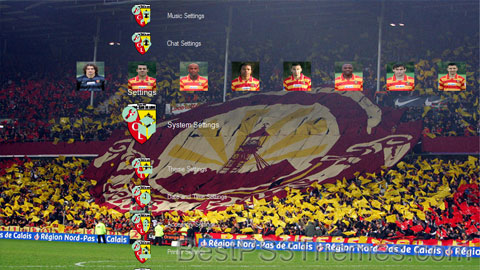
This program unpacks Playstation 3 Theme files (.p3t) so that you can touch-up an existing theme to your likings or use a certain wallpaper from it (as many themes have multiple). But remember, if you use content from another theme and release it, be sure to give credit!
Download p3textractor.zip from above. Extract the files to a folder with a program such as WinZip or WinRAR. Now there are multiple ways to extract the theme.
The first way is to simply open the p3t file with p3textractor.exe. If you don’t know how to do this, right click the p3t file and select Open With. Alternatively, open the p3t file and it will ask you to select a program to open with. Click Browse and find p3textractor.exe from where you previously extracted it to. It will open CMD and extract the theme to extracted.[filename]. After that, all you need to do for any future p3t files is open them and it will extract.
The second way is very simple. Just drag the p3t file to p3textractor.exe. It will open CMD and extract the theme to extracted.[filename].
For the third way, first put the p3t file you want to extract into the same folder as p3textractor.exe. Open CMD and browse to the folder with p3extractor.exe. Enter the following: p3textractor filename.p3t [destination path]Replace filename with the name of the p3t file, and replace [destination path] with the name of the folder you want the files to be extracted to. A destination path is not required. By default it will extract to extracted.filename.
From a page move: This is a redirect from a page that has been moved (renamed). This page was kept as a redirect to avoid breaking links, both internal and external, that may have been made to the old page name.
From a short name: This is a redirect from a title that is a shortened form of a more complete page title, such as a person's full name or the unbroken title of a written work.
In Gears of War 2, the COG continues its fight against the Locust, who are attempting to sink all of the cities on the planet Sera. SergeantMarcus Fenix leads Delta Squad into the depths of the planet to try to stop the Locust during the assault upon Locust territory. The player controls Fenix in the main mission campaign, with the ability to play cooperatively with a second player controlling Fenix's best friend and fellow Squad member Dominic "Dom" Santiago. The game includes several existing and new multiplayer modes including five-on-five battles between human and Locust forces, and a "Horde" mode that challenges up to five players against waves of Locust forces with ever-increasing strength. New weapons and gameplay mechanics such as "chainsaw duels" and the ability to use downed foes as "meatshields" were added to the game.
On its release weekend, Gears of War 2 sold over two million copies, and within two months of release, had sold four million copies. It was the seventh best selling video game of 2009 and received several accolades. The game received similar praise as its predecessor, with the new gameplay and multiplayer modes seen as outstanding additions. Gears of War 2, along with its predecessor, is considered one of the best games ever made. It was followed by Gears of War 3 in 2011.
Gears of War 2 is a third-person shooter with an emphasis on the tactical use of cover, and retains much of the same gameplay from the first game. The player, playing as either Marcus or Dominic in the campaign mode, or as any of the human or Locust characters in multiplayer mode, can only carry a pistol, one type of grenade, and two other weapons at any time, though they may swap these for weapons found in strategic locations or left by downed foes or fallen allies. Each weapon can be used for normal fire as well as for melee attacks; the game's signature Lancer Assault Rifle can be used to instantly kill foes in melee with its mounted chainsaw bayonet. The game introduces the ability to engage in chainsaw duels should the player attempt to chainsaw an opponent also using the Lancer; the player is presented with a controller button to press rapidly to try to win the duel and avoid death.[1]Gears of War 2 rebalances the power of the existing weapons while introducing five new ones: a flamethrower, a chain gun, a mortar cannon, a "Gorgon" Pistol, and the Ink Grenade. The chain gun and the mortar are heavy weapons, forcing the player to move at walking speed while carrying it in both hands. The Gorgon Pistol is an SMG-like machine pistol that fires four four-shot bursts per magazine. The Ink Grenade doesn't damage with its detonation, but instead temporarily poisons the area it was thrown, making it very useful for driving enemies out of cover. Grenades can be planted on walls or floors as proximity traps that go off when an enemy nears, but only fragmentation grenades have the ability to kill foes when they go off.[2]
The player's health is represented by a red "Crimson Omen" that fades onto the screen the more damage the player takes; staying out of the line of fire allows the player to recover their health. Depending on the game mode or difficulty, if the player takes too much damage, they enter a downed state where they can crawl around the map to get out of battle and seek help. During this time, a teammate can revive him, an enemy may brutally execute the downed player, or the player may bleed out if too much time has passed. The player can also grab a downed character and use them as a meatshield, allowing the body to absorb damage but forcing the player to use a one-handed pistol.[3] Explosive weapons will simply destroy the character they strike.[4] Like its predecessor, Gears of War 2 features an optional mature content filter, which, when active, makes blood appear as sparks and removes harsh language from the dialogue.[5] Furthermore, progress towards most of the Xbox achievements for the game can be earned in either campaign or multiplayer modes.[1]
The campaign mode in Gears of War 2 allows for a single player or two players playing cooperatively as Marcus or Dom. A new "Normal" difficulty was added between the game's "Casual" and "Hardcore" difficulties. There is also an 'Insane' difficulty that is unlocked after the player completes the game at least once. Players in co-op mode can select different difficulties, and a "communal combat system" will adjust the game's artificial intelligence to give both players a fair challenge.[1] The co-op campaign can be played in a drop in/drop out manner, with the second player able to join the first player's game in progress.[6] As well as collecting some COG tags as in the first game, players can search other story-based items such as personal letters and medical records, with discovered items being added to a war journal.[1]
The campaign features a deeper story with new characters, new weapons, and new enemies according to John DiMaggio, the voice actor for Marcus Fenix.[7] New vehicles have been added to the game, such as the Centaur Tank, which lead designer Cliff Bleszinski describes as a "tank with monster truck wheels."[8] Players will also ride a Brumak and Reavers in the game.[9] Cut-scenes use the better facial rendering technology of Epic's Unreal engine, and engage in more dramatic angles for the conversation, as well as using a video screen on Jack (the all-purpose robot used by Delta squad) to talk with their commanders face-to-face.[1]
Gears of War 2 features an upgraded multiplayer mode that allows up to ten users to simultaneously play in teams of five-on-five.[10]Gears of War 2 includes most of the multiplayer modes, including Execution, Warzone, Annex and King of the Hill, and adds in three new modes.[2][10] Guardian is a modified version of Assassination from the original Gears of War, but allows players to continue fighting after the leader has been killed, but losing the ability to respawn.[10] Wingman splits all ten players into five teams of two, where both members of a team play as the same character.[10] Submission, formerly known as Meat Flag,[2] is a version of capture the flag in which players attempt to "down" an enemy controlled by the game's AI and move its body to their team's base or objective to earn points. The 10 maps shipped with the game originally are Avalanche, Blood Drive, Day One, Hail, Jacinto, Pavilion, River, Ruins, Security and Stasis.[10] A Halo-like matchmaking system has been utilized for the online multiplayer.[1] Players can now engage in multiplayer scenarios with any combination of human players and artificial intelligence controlled by the game, with the ability to set the AI's intelligence level.[11] Horde is a new co-op mode for five players, fighting off waves of attacking Locust together, with each wave becoming more difficult.[9] Horde Mode does not feature bot support as in competitive multiplayer, and can be played alone.[12]
Players can pan around a map as the camera focuses on areas of intense fighting, and the Ghost Cam allows a player to roam freely around a map. The ability to take photographs is also featured, which enables the player to take a photo, which can be uploaded to the Gears of War website and is rated on the quality of action in the shot.[2]
Gears of War 2 takes place six months after the detonation of the Lightmass Bomb at the end of the first game. Though most of the underground army of the Locust Horde was destroyed, the explosion also caused much of the liquid Imulsion underground to vaporize, causing a fatal disease called Rustlung to spread among the diminished human population. After months of peace, the cities of Tollen and Montevado suddenly and mysteriously disappear underground, leading the Coalition of Ordered Governments (COG) to suspect the resurgence of the Locust.[13] Soon after, the once impenetrable Jacinto, one of the last remaining safe havens for humans, begins to show signs that the same fate awaits it. To stop the fall of Jacinto, the COG responds with a large-scale counter-offensive against the Locust.[1][13] Senior Producer Rod Fergusson says "In order to save Jacinto, [the COG] have no choice but to take the war to the Locust."[1]
Returning characters includes the main protagonists of the series Marcus Fenix and Dominic Santiago and others from the first game, including Marcus and Dom's fellow Delta Squad COG soldiers, Augustus 'Cole Train' Cole and Damon Baird. Also returning in supporting roles are radio dispatcher Anya Stroud and senior officer Colonel Hoffman. Lead designer Cliff Bleszinski confirmed that the character Carmine would be returning, but did not reveal how or in what capacity as Carmine was killed in the original Gears of War.[14] It was later revealed that the original Anthony Carmine would not be present in the Gears of War 2 campaign, but rather his brother, Benjamin,[15] would make an appearance.[16] The game also introduces several new characters. They include Chairman Prescott, the noble, yet near-dictatorial military leader of COG; Tai Kaliso, "a spiritual and meditative warrior from a tradition of honor bound fighters;" and Dizzy Wallin, a former Stranded who joined the COG to keep his family safe. Dom's wife Maria also makes an appearance, and Dom's search for her plays an important part in the story.[1]
As Gears of War 2 begins, the COG army mobilizes forces to deploy into the depths of Sera, known as the "Hollow", to assault the Locust directly. Delta Squad, consisting of Marcus Fenix, Dom Santiago, Benjamin Carmine, Tai Kaliso, Augustus Cole and Damon Baird; fight the Locust alongside thousands of Gears. During the battle, Tai is taken prisoner by Locust general Skorge and is tortured to the point of insanity, resulting in him committing suicide after being freed by Delta. They discover that the Locust are using a giant Riftworm to sink the human cities. The Locust plan to destroy the rock structures in the outskirts of Jacinto, the last major human city, in hopes of sinking it underground. Delta kills the Riftworm from within before it can sink Jacinto, but they lose Carmine in the process.
After returning to the surface, Colonel Hoffman admits the COG failed in locating the Locust stronghold. Chairman Prescott declassifies an intel file that reveals a nearby abandoned COG outpost that has a lead on the location of the Locust capital and their queen. Delta is ordered to investigate. Inside, Delta learns that the outpost is "New Hope", a genetics lab dedicated to studying human children of Imulsion miners suffering from Rustlung, resulting in mutated experiments called "Sires". Delta finds that the scientists relocated to the nearby caverns of Mount Kadar to continue their research. As Delta infiltrates Mount Kadar to infiltrate the Locust stronghold, Dom gets a lead on his missing wife, Maria, located at a nearby prison camp. Dom finds Maria in a vegetative state due to the aggressive and invasive torture techniques of the Locust. Dom euthanizes Maria and continues on the mission.
Delta locates Locust capital, Nexus, and sets off the beacon to initiate the second wave. The COG sees the Locust have been facing an epidemic against the "Lambent", Locust who have been exposed to Imulsion, and have been forcing the Locust out of the Hollow and onto the surface. Locust Queen Myrrah, who appears human, reveals to Marcus that the Locust are trying to sink Jacinto based on a proposal by Adam Fenix, his father, that the surrounding seawater could flood the Hollow and drown the Lambent. After a battle where they succeed in killing Skorge, but failing to kill Myrrah, Marcus decides to destroy both the Locust and Lambent forces by sinking Jacinto themselves before the Locust can evacuate. Jacinto is sunk by the COG and seawater floods into the crater, destroying the remaining Locust forces. After the credits, the voice of Adam Fenix is heard on a radio transmission, revealing he is still alive.[4][17]
Screenshot from the first Gears of War 2 trailer shown at the 2008 Game Developers Conference, depicting Marcus Fenix executing a Locust with the chainsaw bayonet
Gears of War designer Cliff Bleszinski has done several interviews to highlight improvements to the game. Heavy Netcode optimization has been done to negate the host advantage problem in the first title[18] and hundreds of tweaks have gone into improving the cover system and movement.[19] To provide a deeper story, the team brought aboard novelist Joshua Ortega as to incorporate more personal drama within the sci-fi setting.[1]Steve Jablonsky provided the music for the game.[20] Epic Games also considered making the game easier after complaints about Gears of War. Senior producer Rod Fergusson admitted that — for the first game — "We overshot on [the Casual] difficulty and a game that was a little harder than we intended."[1]
A teaser image posted to the Gears of War 2 website on July 8, 2008, suggested that the game was to be released on November 9, 2008, but it was confirmed during the Microsoft E3 2008 press conference that the game would be released on November 7, 2008.[9][21] On July 14, 2008, the teaser image was removed and the website relaunched and updated for Gears of War 2.[22]
Gears of War 2 was a focal point during Microsoft's E32008 presentation on July 15, 2008, which included a "hands-on" demo.[23][24] A second trailer, entitled "Rendezvous," was made available on July 14, 2008, as a part of E3. The Joseph Kosinski-directed trailer,[25] which features the Trans Am track "Diabolical Cracker" from the album Red Line, takes its title and spoken words from Alan Seeger's World War I poem I Have a Rendezvous with Death.[26] The game's release date was also set, with a worldwide release to occur on November 7, 2008.[9] Microsoft and Epic Games announced on October 10, 2008, that Gears of War 2 had gone gold.[27] It was stated by Cliff Bleszinski that, unlike Gears of War, the previous installment, Gears of War 2 will not feature a PC port.[28]
Comparison of the map "Gridlock" in Gears of War and Gears of War 2
At the 2008 Game Developers Conference in San Francisco, California, as a showcase for the functionality of the Unreal Engine 3, Gears of War creators Epic Games showed various improvements to the engine with specific reference to the sequel itself. The video showed several demonstrations of the improvements, the initial being improvements to the in-game lighting through Screen Space Ambient Occlusion, in which dynamic shadows could be generated through the use of a pixel shading technique to render more realistically lit and shaded objects and actors, illustrated through comparison between character and environment models in the original game engine to that of Unreal Engine 3. Also showcased was the ability of the engine to render hordes of actors within the engine, as demonstrated with a large crowd of locust flocking through the "Gridlock" multiplayer map from the original game. Alongside this technology was improvements to "Matinee," an artistic tool used for the rendering and editing 3-dimensional scenes within the game.[29]
Other physics-related features included improvements to the rendering of water in which specular light and physical interactions with were displayed more realistically, improvements to soft body entities demonstrated with a "Meat Cube" and a floating ball possessing properties similar to that of liquid helium. The largest of these physics engine related changes was the introduction of destructible environments due to the implementation of real-timestructural analysis tools to generate the damage of the materials and subsequently their deformed shapes based upon resultant forces placed upon them. This was demonstrated with the use of explosive arrows fired from the "Torque Bow" of the original game causing damage to wooden planks, and also revealing rebar present after destroying areas of a stone structure.[29]
On February 20, 2008, coinciding with the game's announcement at the Game Developers Conference, a free set of gamer pictures and a dashboard theme, as well as a teaser trailer titled "Duel," were made available via the Xbox Live Marketplace.[30] The first footage of gameplay from the campaign, highlighting new features of the game, was released online and to the Marketplace on May 9, 2008.[31] After the Microsoft E3 press conference, the "Rendezvous" trailer and the press conference demonstration was available for download as well as a new free set of gamer pictures and a dashboard theme.[26] Upon release, every new copy of Gears of War 2 features a code to download the "Flashback Map Pack," which includes five enhanced multiplayer maps from the original game. Customers who attended the GameStopMidnight Madness game release event received a code to unlock a gold-plated Hammerburst rifle for use in multiplayer and a code for an exclusive Xbox 360 Dashboard theme optimized for the New Xbox Experience.[32]
The first downloadable content released after Gears of War 2 was the "Combustible Map Pack," which consists of three new multiplayer maps. This add-on was announced and released on December 15, 2008.[33] The second title update was released on January 21, 2009, featuring several adjustments to gameplay and adding additional Achievements, the patch attempts to correct many of the "glitches" that players have discovered since the game's release.[34][35]
A third update was applied to Gears of War 2 on March 24, 2009. The update added an experience-based ranking system in which the player is given a numerical value based on their number of experience points, which are gained by shooting or killing enemies in public multiplayer. The update also addressed several issues with matchmaking, including adding bots in place of players who have quit or lost connection to the game.[36]
In early July 2009, Epic Games applied a fourth update to Gears of War 2, which added the ability to gain experience from the multiplayer Horde Mode, as well as applying several more gameplay fixes.[37][38] On July 28, 2009, the "Dark Corners" add-on was released. This add-on consisted of seven new multiplayer maps, and an additional campaign chapter that was originally deleted from the game.[39] The deleted scene takes place after Maria's death, where the user can choose to either sneak into the stronghold as Theron Guards or charge in as in the original game, though the level is different from the one that appeared in the final game and features a cameo from a Stranded character from the original Gears.
On May 6, 2009, Microsoft and Epic Games issued a joint press release announcing the Gears of War 2: All Fronts Collection, to be released on July 28, 2009. The All Fronts Collection was to be sold as a retail package, and would have included all add-ons released for Gears of War 2, a poster, and a strategy guide for the game.[40] In response to complaints that the All Fronts Collection had identical pricing to the Dark Corners add-on, but significantly more content, as well as the All Fronts Collection retail package not being made available in certain regions, Epic Games adjusted the release plan; the All Fronts Collection was released digitally via Xbox Live and the Dark Corners add-on was reduced in price.[41]
In June 2010 during the Electronic Entertainment Expo 2010 Mark Rein (vice president of Epic Games) was showcasing a tech demo of Gears of War 2 in stereoscopic 3D running on an Xbox 360 thanks to the TriOviz for Games Technology. "This technology's great because it works on normal HD TVs, as well as the very high end 3DTVs," Rein commented to Computer and Video Games. "We're not planning to re-release this in 3D - unless Microsoft want us to - but I'm sure its technology may be keen to put in the games developed by our partners."[42]
A Limited Edition of the game was confirmed on February 20, 2008.[45] On July 14, 2008, more information about the Limited Edition's contents was revealed. The edition features alternative cover art, a SteelBook case with a bonus content DVD, a book entitled Beneath the Surface: An Inside Look at Gears of War 2, which includes concept art and story-related information, a keepsake photo of Dominic and Maria, and an exclusive Xbox Live code to unlock a gold-plated Lancer for online play.[46][47] As a bonus item promoted by electronics store Best Buy, customers who preordered the Limited Edition also received a bonus Remote Control Centaur Tank replica, just like the new vehicle introduced in the game, free of charge.[48]
This page is a redirect. The following categories are used to track and monitor this redirect:
From a merge: This is a redirect from a page that was merged into another page. This redirect was kept in order to preserve the edit history of this page after its content was merged into the content of the target page. Please do not remove the tag that generates this text (unless the need to recreate content on this page has been demonstrated) or delete this page.
For redirects with substantive page histories that did not result from page merges use {{R with history}} instead.
From a related word or phrase: This is a redirect from a word or phrase (term) to a page title that is related in some way. This redirect might be a good search term, or it could be a candidate for a Wiktionary link.
Redirects from related words are not properly redirects from alternative spellings of the same word. They are also different from redirects that are subtopics or related topics, because unlike those, a related word or phrase probably does not warrant its own subtopic section in the target page or possess the possibility of ever becoming an article, template, project page, and so forth.
When appropriate, protection levels are automatically sensed, described and categorized.
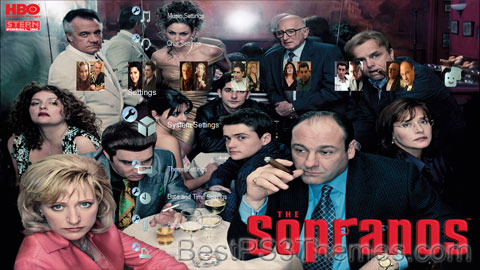
Having been greenlit in 1997, the series was broadcast on HBO from January 10, 1999, to June 10, 2007, spanning six seasons and 86 episodes. Broadcast syndication followed in the United States and internationally.[5]The Sopranos was produced by HBO, Chase Films, and Brad Grey Television. It was primarily filmed at Silvercup Studios in New York City, with some on-location filming in New Jersey. The executive producers throughout the show's run were Chase, Brad Grey, Robin Green, Mitchell Burgess, Ilene S. Landress, Terence Winter, and Matthew Weiner.
Widely regarded as one of the greatest and most influential television series of all time,[6][7][8][9][10][11]The Sopranos has been credited with kickstarting the Second Golden Age of Television.[12] The series won multiple awards, including Peabody Awards for its first two seasons, 21 Primetime Emmy Awards, and five Golden Globe Awards. It has been the subject of critical analysis, controversy, and parody; it has also spawned books,[13]a video game,[14] soundtrack albums, podcasts, and merchandise.[15] Several members of the show's cast and crew were largely unknown to the public when it began, but have since had successful careers.[16][17][18][19] In 2013, the Writers Guild of America named The Sopranos the best-written TV series of all time,[20] while TV Guide ranked it the best television series of all time.[21] In 2016 and 2022, the series came in first place on the Rolling Stone list of the 100 greatest TV shows of all time.[9][22]
The series follows Tony Soprano, a North Jersey-based Italian-American mobster, who tries to balance his family life with his role as the boss of the Soprano family. Suffering from anxiety-induced panic attacks, he reluctantly engages in therapy sessions with psychiatrist Jennifer Melfi throughout the series. He puts his life at risk on multiple occasions and finds himself at odds with his uncle Junior, his wife Carmela, other Mafia members and non-Mafia criminals, and New York City's Lupertazzi family.
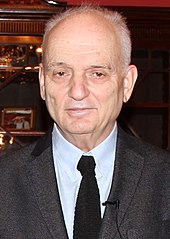
David Chase had worked as a television writer and producer for more than 20 years before creating The Sopranos.[26][27] He had been employed as a staff writer or producer for several television series, including Kolchak: The Night Stalker, Switch, The Rockford Files, I'll Fly Away, and Northern Exposure.[28] He had also co-created the short-lived original series Almost Grown in 1988.[29][30] He made his television directorial debut in 1986 with the "Enough Rope for Two" episode of Alfred Hitchcock Presents. He also directed episodes of Almost Grown and I'll Fly Away in 1988 and 1992, respectively. In 1996, he wrote and directed the television film The Rockford Files: Punishment and Crime. He served as showrunner for I'll Fly Away and Northern Exposure in the 1990s. Chase won his first Emmy Award in 1978 for his work on The Rockford Files (shared with fellow producers) and his second for writing the 1980 television film Off the Minnesota Strip.[31][32] By 1996, he was a coveted showrunner.[33]
I want to tell a story about this particular man. I want to tell the story about the reality of being a mobster—or what I perceive to be the reality of life in organized crime. They aren't shooting each other every day. They sit around eating baked ziti and betting and figuring out who owes who money. Occasionally, violence breaks out—more often than it does in the banking world, perhaps.
—David Chase, creator and showrunner of The Sopranos[34]
The story of The Sopranos was initially conceived as a feature film about "a mobster in therapy having problems with his mother".[29] Chase got some input from his manager Lloyd Braun and decided to adapt it into a television series.[29] He signed a development deal in 1995 with production company Brillstein-Grey and wrote the original pilot script.[27][31][35] He drew heavily from his personal life and his experiences growing up in New Jersey, and has stated that he tried to apply his own "family dynamic to mobsters".[34] For instance, the tumultuous relationship between series protagonist Tony Soprano and his mother Livia is partially based on Chase's relationship with his own mother.[34] He was also in psychotherapy at the time and modeled the character of Jennifer Melfi after his own psychiatrist.[36]
Chase had been fascinated by organized crime and the mafia from an early age, witnessing such people growing up. He also was raised on classic gangster films such as The Public Enemy and the crime series The Untouchables. The series is partly inspired by the Richard Boiardo family, a prominent New Jersey organized crime family when Chase was growing up, and partly on New Jersey's DeCavalcante family.[37] He has mentioned American playwrights Arthur Miller and Tennessee Williams as influences on the show's writing, and Italian director Federico Fellini as an important influence on the show's cinematic style.[33][38][39]
The series was named after high school friends of his.[26][36]
I said to myself, this show is about a guy who's turning 40. He's inherited a business from his dad. He's trying to bring it into the modern age. He's got all the responsibilities that go along with that. He's got an overbearing mom that he's still trying to get out from under. Although he loves his wife, he's had an affair. He's got two teenage kids, and he's dealing with the realities of what that is. He's anxious; he's depressed; he starts to see a therapist because he's searching for the meaning of his own life. I thought: the only difference between him and everybody I know is he's the Don of New Jersey.
Chase and producer Brad Grey pitched The Sopranos to several networks; Fox showed interest but passed on it after Chase presented them the pilot script.[35] They eventually pitched the show to Chris Albrecht, president of HBO Original Programming, who decided to finance a pilot episode[27][31] which was shot in 1997.[41][42]
Chase directed it himself. They finished the pilot and showed it to HBO executives, but the show was put on hold for several months.[27]
During this time, Chase, who had experienced frustration for a long period with being unable to break out of the TV genre and into film,[27] considered asking HBO for additional funding to shoot 45 more minutes of footage and release The Sopranos as a feature film. In December 1997, HBO decided to produce the series and ordered 12 more episodes for a 13-episode season.[27][31][43]
The show premiered on HBO on January 10, 1999, with the pilot, The Sopranos.
North Jersey prosecutor and municipal judge Robert Baer filed a breach of contract lawsuit against Chase in Trenton, New Jersey federal court, alleging that he helped to create the show. Baer lost the suit, but he won a ruling that a jury should decide how much he should be paid for services as a location scout, researcher, and story consultant. Baer argued that he had introduced Chase to Tony Spirito, a restaurateur and gambler with alleged mob ties, and Thomas Koczur, a homicide detective for the Elizabeth, New Jersey police department. Chase had conducted interviews and tours with both, which strongly inspired some characters, settings, and storylines portrayed in The Sopranos.[44][45] On December 19, 2007, a federal jury found against Baer, dismissing all of his claims.[46]
Many of the actors on The Sopranos are Italian American from the New York metropolitan area, like the characters they portray, and many appeared together in films and television series before joining the cast of The Sopranos. The series has 27 actors in common with the 1990 Martin Scorsese gangster film Goodfellas, including main cast members Lorraine Bracco, Michael Imperioli, and Tony Sirico.[47]
The casting directors were Georgianne Walken and Sheila Jaffe.[48][49] The main cast was put together through a process of auditions and readings. Actors often did not know whether Chase liked their performances or not.[27] Michael Imperioli beat out several actors for the part of Christopher Moltisanti; he said that Chase had "a poker face, so I thought he wasn't into me, and he kept giving me notes and having me try it again, which often is a sign that you're not doing it right." Chase said that he wanted Imperioli because of his performance in Goodfellas.[27]
James Gandolfini was invited to audition for the part of Tony Soprano after casting director Susan Fitzgerald saw a short clip of his performance in the 1993 film True Romance.[27] Lorraine Bracco played the role of mob wife Karen Hill in Goodfellas, and she was originally asked to play the role of Carmela Soprano. She took the role of Dr. Jennifer Melfi instead because she wanted to try something different and felt that the part of the highly educated Dr. Melfi would be more of a challenge for her.[50]Tony Sirico had a criminal history,[51] and he signed on to play Paulie Walnuts so long as his character was not to be a "rat".[52] Sirico had originally auditioned for the role of Uncle Junior with Frank Vincent, but Dominic Chianese landed the role.[53]
Chase was impressed with Steven Van Zandt's humorous appearance and presence after seeing him induct The Rascals into the Rock and Roll Hall of Fame in 1997, and invited him to audition.[54] Van Zandt, a guitarist in Bruce Springsteen's E Street Band, had never acted before. He auditioned for the role of Tony Soprano, but HBO felt that the role should go to an experienced actor, so Chase wrote a new part for him.[50][54] Van Zandt eventually agreed to star on the show as consigliereSilvio Dante, and his real-life spouse Maureen was cast as his on-screen wife Gabriella.[55][56][57]
Series creator and executive producer David Chase served as showrunner and head writer for the production of all six seasons of the show. He was deeply involved with the general production of every episode and is noted for being a very controlling, demanding, and specific producer.[26][32] He wrote or co-wrote between two and seven episodes per season and would oversee all the editing, consult with episode directors, give actors character motivation, approve casting choices and set designs, and do extensive but uncredited rewrites of episodes written by others.[58][68][69]
Brad Grey served as executive producer alongside Chase but had no creative input on the show.[70]
Many members of the creative team behind The Sopranos were handpicked by Chase, some being old friends and colleagues of his; others were selected after interviews conducted by producers of the show.[27][59]
Many of the show's writers had worked in television before joining the writing staff of The Sopranos. The writing team and married couple Robin Green and Mitchell Burgess worked on the series as writers and producers from the first to the fifth season; they had previously worked with Chase on Northern Exposure.[71]Terence Winter joined the writing staff during the production of the second season and served as executive producer from season five onwards. He practiced law for two years before deciding to pursue a career as a screenwriter, and he caught the attention of Chase through writer Frank Renzulli.[33][72]
Matthew Weiner served as staff writer and producer for the show's fifth and sixth seasons. He wrote a script for the series Mad Men in 2000 which was passed on to Chase, who was so impressed that he immediately offered Weiner a job as a writer for The Sopranos.[73]
Cast members Michael Imperioli and Toni Kalem portray Christopher Moltisanti and Angie Bonpensiero respectively, and they also wrote episodes for the show. Imperioli wrote five episodes of seasons two through five, and Kalem wrote one episode of season five.[74][75]
Other writers included Frank Renzulli, Todd A. Kessler (co-creator of Damages), writing team Diane Frolov and Andrew Schneider who worked with Chase on Northern Exposure, and Lawrence Konner, who co-created Almost Grown with Chase in 1988. In total, 20 writers or writing teams are credited with writing episodes of The Sopranos. Of these, Tim Van Patten and Maria Laurino receive a single story credit, and eight others are credited with writing a sole episode. The most prolific writers of the series were Chase (30 credited episodes, including story credits), Winter (25 episodes), Green and Burgess (22 episodes), Weiner (12 episodes), and Renzulli (9 episodes).
Many of the directors had previously worked on television series and independent films.[59] The most frequent directors of the series were Tim Van Patten (20 episodes), John Patterson (13 episodes), Allen Coulter (12 episodes), and Alan Taylor (9 episodes), all of whom have a background in television.[59] Recurring cast members Steve Buscemi and Peter Bogdanovich also directed episodes of the series intermittently.[76][77]
Chase directed the pilot episode and the series finale.[78]
Both episodes were photographed by the show's original director of photography Alik Sakharov, who later alternated episodes with Phil Abraham.[79]
The show's photography and directing is noted for its feature film quality.[80][81]
This look was achieved by Chase collaborating with Sakharov. "From the pilot, we would sit down with the whole script and break the scenes down into shots. That's what you do with feature films."[79]
The Sopranos is noted for its eclectic music selections and has received considerable critical attention for its effective use of previously recorded songs.[82][83][84][85]
Chase personally selected all of the show's music with producer Martin Bruestle and music editor Kathryn Dayak, sometimes also consulting Steven Van Zandt.[82] The music was usually selected once the production and editing of an episode was completed, but on occasion sequences were filmed to match preselected pieces of music.[68]
The show's opening theme is "Woke Up This Morning" (Chosen One Mix), written by, remixed and performed by British band Alabama 3.[86] With few exceptions, a different song plays over the closing credits of each episode.[84] Many songs are repeated multiple times through an e
On 15 February 1864,[citation needed] Gerard Adriaan Heineken (1841–1893)[3] bought De Hooiberg (The Haystack) brewery on the Nieuwezijds Achterburgwal canal in Amsterdam,[4] a popular working class brand founded in 1592. In 1873 after hiring a Dr. Elion (student of Louis Pasteur) to develop Heineken a yeast for Bavarian bottom fermentation, the HBM (Heineken's Bierbrouwerij Maatschappij) was established, and the first Heineken brand beer was brewed. In 1875 Heineken won the Medaille D'Or at the International Maritime Exposition in Paris and it began to be shipped there regularly, after which Heineken sales topped 64,000 hectolitres (1.7 million U.S. gallons), making them the biggest beer exporter to France.[citation needed]
Old Dutch bottleJames Bond 007 Edition330 mL Heineken special bottle, limited. The name 'Verdinha' in this specific bottle is portuguese for "Little Green", which is the way many people call the brand in Brazil due the green color of the bottles.
In Heineken's early years, the beer won four awards:
Medaille d'Or (gold medal) at the International Maritime Exhibition (International Exhibition of Marine and River Industries) in Paris in May 1875.[5][6][7]
The two awards that are still mentioned on the label are the Medaille d'Or and Diplome d'Honneurs.[8]
In 2013, Heineken joined other alcohol producers as part of a producers' commitments to reducing harmful drinking.[9]
In February 2013, Heineken stopped producing the brown bottles used for the Dutch market in favor of the green color of bottles it already used for exports.[10]
In 2014, Heineken celebrated its 150th anniversary. In 2015, Heineken won the Creative Marketer of the Year Award, becoming the second company to win the award twice.[8]
The original brewery where Gerard Adriaan Heineken first started making Heineken is now the Heineken Experience Museum.[11]
Heineken 0.0
Heineken launched its first non-alcoholic beer in 2017, naming it "Heineken 0.0".[12] It was evaluated positively in terms of taste, with "almost the same taste" as the full-alcohol version, even though Heineken does not claim it to be of the same taste. It was also found to be lower in calories and sugar than a soda.[13]
Since 1975, most Heineken-brand beer has been brewed at their brewery in Zoeterwoude, Netherlands.[1] In 2011, 2.74 billion litres of Heineken-brand beer were produced worldwide, while the total beer production of all breweries fully owned by the Heineken Group over all brands was 16.46 billion litres globally.[14] As of 2022, Heineken is sold in 192 countries.[15] They have also been incorporated with numerous beer brands in countries all over the world, including Mexico, China, Australia and various countries in Africa.
In 1989 "10 Green Bottles Hanging On The Wall" was a popular advert.
Dating back to 1997's Tomorrow Never Dies,[16] Heineken has retained a longstanding relationship with the Bond franchise, consecutively being featured in 8 of their films, including No Time To Die (2021).[17] While it is usually the supporting characters seen drinking Heineken, Bond himself is seen drinking Heineken beer in Skyfall (2012) and Spectre (2015). As a long-term brand investment, Heineken reportedly spent $45 million for its inclusion on Skyfall alone, some $25 million more than Bond actor Daniel Craig's pre-residual salary.[18] As of 2015, it is the brand's largest global marketing platform.[19]
In August 2021, Heineken signed a multi-year deal with W Series as the global partner for all-Women single-seater racing series.[22]
Starting with the 2020–24 cycle, Heineken became the sponsors of UEFA Europa League and UEFA Europa Conference League through Heineken 0.0 brands. In 2023, Heineken celebrated its 150th anniversary.
At the end of March 2022, over a month after Russia started its war in Ukraine, Heineken announced that it was leaving Russia (including with its other brands there, like Affligem, Amstel etc.), saying that ownership of the Russian subsidiary was no longer “durable or viable.” But despite this promise Heineken hired more than 240 new staff and launched 61 new products on the Russian market last year[when?], according to investigators from Follow the Money,[23] based on an overview of 2022 by Heineken Russia. The Dutch brewer’s Russian subsidiary looked back on “a turbulent year, with many new growth opportunities.” One of these opportunities being the departure of Coca-Cola and Pepsi from Russia, which Heineken "cynically" used to "enter the non-alcoholic carbonated beverage market". Heineken announced even more investments for 2023, including more modern packaging and new flavors.[24][25][26] However, in August 2023, the company announced it had received necessary approvals to sell its Russian operations to Arnest Group for €1, completing its withdrawal process. The company expects a total loss of $323 million as a result of the deal.[27]
^Follow the Money (FTM) is a Dutch independent news website for financial-economic investigative journalism of approximately thirty journalists – some employed, some freelancers. See Follow the Money on the Dutch Wikipedia, or their website (in Dutch).]
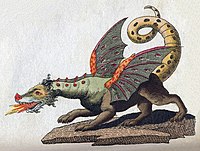
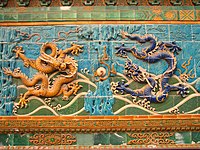
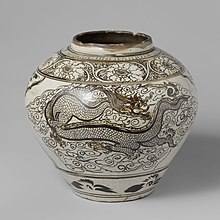
A dragon is a magicallegendary creature that appears in the folklore of multiple cultures worldwide. Beliefs about dragons vary considerably through regions, but dragons in Western cultures since the High Middle Ages have often been depicted as winged, horned, and capable of breathing fire. Dragons in eastern cultures are usually depicted as wingless, four-legged, serpentine creatures with above-average intelligence. Commonalities between dragons' traits are often a hybridization of feline, reptilian, mammalian, and avian features. Some scholars believe large extinct or migrating crocodiles bear the closest resemblance, especially when encountered in forested or swampy areas, and are most likely the template of modern Asian dragon imagery.[1][2]
The word dragon entered the English language in the early 13th century from Old Frenchdragon, which, in turn, comes from the Latin: draco (genitive draconis) meaning "huge serpent, dragon", from Ancient Greekδράκων, drákōn (genitive δράκοντος, drákontos) "serpent".[4][5] The Greek and Latin term referred to any great serpent, not necessarily mythological.[6] The Greek word δράκων is most likely derived from the Greek verb δέρκομαι (dérkomai) meaning "I see", the aorist form of which is ἔδρακον (édrakon).[5] This is thought to have referred to something with a "deadly glance",[7] or unusually bright[8] or "sharp"[9][10] eyes, or because a snake's eyes appear to be always open; each eye actually sees through a big transparent scale in its eyelids, which are permanently shut. The Greek word probably derives from an Indo-European base *derḱ- meaning "to see"; the Sanskrit root दृश् (dr̥ś-) also means "to see".[11]
Nonetheless, scholars dispute where the idea of a dragon originates from[13] and a wide variety of hypotheses have been proposed.[13]
In his book An Instinct for Dragons (2000), David E. Jones (anthropologist) suggests a hypothesis that humans, like monkeys, have inherited instinctive reactions to snakes, large cats, and birds of prey.[14] He cites a study which found that approximately 39 people in a hundred are afraid of snakes[15] and notes that fear of snakes is especially prominent in children, even in areas where snakes are rare.[15] The earliest attested dragons all resemble snakes or have snakelike attributes.[16] Jones therefore concludes that dragons appear in nearly all cultures because humans have an innate fear of snakes and other animals that were major predators of humans' primate ancestors.[17] Dragons are usually said to reside in "dark caves, deep pools, wild mountain reaches, sea bottoms, haunted forests", all places which would have been fraught with danger for early human ancestors.[18]
In her book The First Fossil Hunters: Dinosaurs, Mammoths, and Myth in Greek and Roman Times (2000), Adrienne Mayor argues that some stories of dragons may have been inspired by ancient discoveries of fossils belonging to dinosaurs and other prehistoric animals.[19] She argues that the dragon lore of northern India may have been inspired by "observations of oversized, extraordinary bones in the fossilbeds of the Siwalik Hills below the Himalayas"[20] and that ancient Greek artistic depictions of the Monster of Troy may have been influenced by fossils of Samotherium, an extinct species of giraffe whose fossils are common in the Mediterranean region.[20] In China, a region where fossils of large prehistoric animals are common, these remains are frequently identified as "dragon bones"[21] and are commonly used in traditional Chinese medicine.[21] Mayor, however, is careful to point out that not all stories of dragons and giants are inspired by fossils[21] and notes that Scandinavia has many stories of dragons and sea monsters, but has long "been considered barren of large fossils."[21] In one of her later books, she states that, "Many dragon images around the world were based on folk knowledge or exaggerations of living reptiles, such as Komodo dragons, Gila monsters, iguanas, alligators, or, in California, alligator lizards, though this still fails to account for the Scandinavian legends, as no such animals (historical or otherwise) have ever been found in this region."[22]
Robert Blust in The Origin of Dragons (2000) argues that, like many other creations of traditional cultures, dragons are largely explicable as products of a convergence of rational pre-scientific speculation about the world of real events. In this case, the event is the natural mechanism governing rainfall and drought, with particular attention paid to the phenomenon of the rainbow.[23]
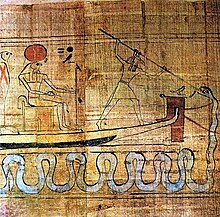
Illustration from an ancient Egyptian papyrus manuscript showing the god Set spearing the serpent Apep as he attacks the sun boat of Ra
In Egyptian mythology, Apep or Apophis is a giant serpentine creature who resides in the Duat, the Egyptian Underworld.[24][25] The Bremner-Rhind papyrus, written around 310 BC, preserves an account of a much older Egyptian tradition that the setting of the sun is caused by Ra descending to the Duat to battle Apep.[24][25] In some accounts, Apep is as long as the height of eight men with a head made of flint.[25] Thunderstorms and earthquakes were thought to be caused by Apep's roar[26] and solar eclipses were thought to be the result of Apep attacking Ra during the daytime.[26] In some myths, Apep is slain by the god Set.[27]Nehebkau is another giant serpent who guards the Duat and aided Ra in his battle against Apep.[26] Nehebkau was so massive in some stories that the entire earth was believed to rest atop his coils.[26] Denwen is a giant serpent mentioned in the Pyramid Texts whose body was made of fire and who ignited a conflagration that nearly destroyed all the gods of the Egyptian pantheon.[28] He was ultimately defeated by the Pharaoh, a victory which affirmed the Pharaoh's divine right to rule.[29]
The ouroboros was a well-known Egyptian symbol of a serpent swallowing its own tail.[30] The precursor to the ouroboros was the "Many-Faced",[30] a serpent with five heads, who, according to the Amduat, the oldest surviving Book of the Afterlife, was said to coil around the corpse of the sun god Ra protectively.[30] The earliest surviving depiction of a "true" ouroboros comes from the gilded shrines in the tomb of Tutankhamun.[30] In the early centuries AD, the ouroboros was adopted as a symbol by Gnostic Christians[31] and chapter 136 of the Pistis Sophia, an early Gnostic text, describes "a great dragon whose tail is in its mouth".[31] In medieval alchemy, the ouroboros became a typical western dragon with wings, legs, and a tail.[30] A famous image of the dragon gnawing on its tail from the eleventh-century Codex Marcianus was copied in numerous works on alchemy.[30]
Ancient people across the Near East believed in creatures similar to what modern people call "dragons".[33] These ancient people were unaware of the existence of dinosaurs or similar creatures in the distant past.[33] References to dragons of both benevolent and malevolent characters occur throughout ancient Mesopotamian literature.[33] In Sumerian poetry, great kings are often compared to the ušumgal, a gigantic, serpentine monster.[33] A draconic creature with the foreparts of a lion and the hind-legs, tail, and wings of a bird appears in Mesopotamian artwork from the Akkadian Period (c. 2334 – 2154 BC) until the Neo-Babylonian Period (626 BC–539 BC).[34] The dragon is usually shown with its mouth open.[34] It may have been known as the (ūmu) nā’iru, which means "roaring weather beast",[34] and may have been associated with the god Ishkur (Hadad).[34] A slightly different lion-dragon with two horns and the tail of a scorpion appears in art from the Neo-Assyrian Period (911 BC–609 BC).[34] A relief probably commissioned by Sennacherib shows the gods Ashur, Sin, and Adad standing on its back.[34]
Another draconic creature with horns, the body and neck of a snake, the forelegs of a lion, and the hind-legs of a bird appears in Mesopotamian art from the Akkadian Period until the Hellenistic Period (323 BC–31 BC).[32] This creature, known in Akkadian as the mušḫuššu, meaning "furious serpent", was used as a symbol for particular deities and also as a general protective emblem.[32] It seems to have originally been the attendant of the Underworld god Ninazu,[32] but later became the attendant to the Hurrian storm-god Tishpak, as well as, later, Ninazu's son Ningishzida, the Babylonian national godMarduk, the scribal god Nabu, and the Assyrian national god Ashur.[32]
Scholars disagree regarding the appearance of Tiamat, the Babylonian goddess personifying primeval chaos, slain by Marduk in the Babylonian creation epic Enûma Eliš.[35][36] She was traditionally regarded by scholars as having had the form of a giant serpent,[36] but several scholars have pointed out that this shape "cannot be imputed to Tiamat with certainty"[36] and she seems to have at least sometimes been regarded as anthropomorphic.[35][36] Nonetheless, in some texts, she seems to be described with horns, a tail, and a hide that no weapon can penetrate,[35] all features which suggest she was conceived as some form of dragoness.[35]
In the mythologies of the Ugarit region, specifically the Baal Cycle from the Ugaritic texts, the sea-dragon Lōtanu is described as "the twisting serpent / the powerful one with seven heads."[37] In KTU 1.5 I 2–3, Lōtanu is slain by the storm-god Baal,[37] but, in KTU 1.3 III 41–42, he is instead slain by the virgin warrior goddess Anat.[37]
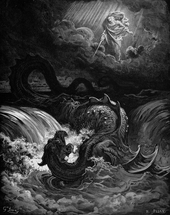
In the Hebrew Bible, in the Book of Psalms, Psalm 74, Psalm 74:13–14, the sea-dragon Leviathan, is slain by Yahweh, god of the kingdoms of Israel and Judah, as part of the creation of the world.[37][38] In Isaiah 27:1, Yahweh's destruction of Leviathan is foretold as part of his impending overhaul of the universal order:[39][40]
In that day the LORD will take
His sharp, great, and mighty sword,
and bring judgment on Leviathan the fleeing serpent
— Leviathan the coiling serpent —
and He will slay the dragon of the sea.[41]
Job 41:1–34 contains a detailed description of the Leviathan, who is described as being so powerful that only Yahweh can overcome it.[42] Job 41:19–21 states that the Leviathan exhales fire and smoke, making its identification as a mythical dragon clearly apparent.[42] In some parts of the Old Testament, the Leviathan is historicized as a symbol for the nations that stand against Yahweh.[38] Rahab, a synonym for "Leviathan", is used in several Biblical passages in reference to Egypt.[38] Isaiah 30:7 declares: "For Egypt's help is worthless and empty, therefore I have called her 'the silenced Rahab'."[38] Similarly, Psalm 87:3 reads: "I reckon Rahab and Babylon as those that know me..."[38] In Ezekiel 29:3–5 and Ezekiel 32:2–8, the pharaoh of Egypt is described as a "dragon" (tannîn).[38] In the story of Bel and the Dragon from the Book of Daniel, the prophet Daniel sees a dragon being worshipped by the Babylonians.[43] Daniel makes "cakes of pitch, fat, and hair";[43] the dragon eats them and bursts open.[44][43]
Azhi Dahaka (Avestan Great Snake) is a dragon or demonic figure in the texts and mythology of Zoroastrian Persia, where he is one of the subordinates of Angra Mainyu. Alternate names include Azi Dahak, Dahaka, and Dahak. Aži (nominative ažiš) is the Avestan word for "serpent" or "dragon.[45] The Avestan term Aži Dahāka and the Middle Persian azdahāg are the sources of the Middle Persian Manichaean demon of greed "Az", Old Armenian mythological figure Aždahak, Modern Persian 'aždehâ/aždahâ', Tajik Persian 'azhdahâ', Urdu 'azhdahā' (اژدها), as well as the Kurdish ejdîha (ئەژدیها).
The name also migrated to Eastern Europe, assumed the form "azhdaja" and the meaning "dragon", "dragoness" or "water snake" in the Balkanic and Slavic languages.[46][47][48]
Despite the negative aspect of Aži Dahāka in mythology, dragons have been used on some banners of war throughout the history of Iranian peoples.
The Azhdarchid group of pterosaurs are named from a Persian word for "dragon" that ultimately comes from Aži Dahāka.
In Zoroastrian literature
Aži Dahāka is the most significant and long-lasting of the ažis of the Avesta, the earliest religious texts of Zoroastrianism. He is described as a monster with three mouths, six eyes, and three heads, and as being cunning, strong, and demonic. In other respects, Aži Dahāka has human qualities, and is never a mere animal. In a post-Avestan Zoroastrian text, the Dēnkard, Aži Dahāka is possessed of all possible sins and evil counsels, the opposite of the good king Jam (or Jamshid). The name Dahāg (Dahāka) is punningly interpreted as meaning "having ten (dah) sins".
In PersianSufi literature, Rumi writes in his Masnavi[49] that the dragon symbolizes the sensual soul (nafs), greed and lust, that need to be mortified in a spiritual battle.[50][51]
Rustam kills the dragon, folio from Shahnameh of Shah Ismail II, attrib. Sadegi (Beg), Iran, Tabriz, c. 1576 AD, view 1 – Aga Khan Museum – Toronto, Canada
In Ferdowsi's Shahnameh, the Iranian hero Rostam must slay an 80-meter-long dragon (which renders itself invisible to human sight) with the aid of his legendary horse, Rakhsh. As Rostam is sleeping, the dragon approaches; Rakhsh attempts to wake Rostam, but fails to alert him to the danger until Rostam sees the dragon. Rakhsh bites the dragon, while Rostam decapitates it. This is the third trial of Rostam's Seven Labors.[52][53][54]
Rostam is also credited with the slaughter of other dragons in the Shahnameh and in other Iranian oral traditions, notably in the myth of Babr-e-Bayan. In this tale, Rostam is still an adolescent and kills a dragon in the "Orient" (either India or China, depending on the source) by forcing it to swallow either ox hides filled with quicklime and stones or poisoned blades. The dragon swallows these foreign objects and its stomach bursts, after which Rostam flays the dragon and fashions a coat from its hide called the babr-e bayān. In some variants of the story, Rostam then remains unconscious for two days and nights, but is guarded by his steed Rakhsh. On reviving, he washes himself in a spring. In the Mandean tradition of the story, Rostam hides in a box, is swallowed by the dragon, and kills it from inside its belly. The king of China then gives Rostam his daughter in marriage as a reward.[55][56]
This program unpacks Playstation 3 Theme files (.p3t) so that you can touch-up an existing theme to your likings or use a certain wallpaper from it (as many themes have multiple). But remember, if you use content from another theme and release it, be sure to give credit!
Download p3textractor.zip from above. Extract the files to a folder with a program such as WinZip or WinRAR. Now there are multiple ways to extract the theme.
The first way is to simply open the p3t file with p3textractor.exe. If you don’t know how to do this, right click the p3t file and select Open With. Alternatively, open the p3t file and it will ask you to select a program to open with. Click Browse and find p3textractor.exe from where you previously extracted it to. It will open CMD and extract the theme to extracted.[filename]. After that, all you need to do for any future p3t files is open them and it will extract.
The second way is very simple. Just drag the p3t file to p3textractor.exe. It will open CMD and extract the theme to extracted.[filename].
For the third way, first put the p3t file you want to extract into the same folder as p3textractor.exe. Open CMD and browse to the folder with p3extractor.exe. Enter the following: p3textractor filename.p3t [destination path]Replace filename with the name of the p3t file, and replace [destination path] with the name of the folder you want the files to be extracted to. A destination path is not required. By default it will extract to extracted.filename.
This program unpacks Playstation 3 Theme files (.p3t) so that you can touch-up an existing theme to your likings or use a certain wallpaper from it (as many themes have multiple). But remember, if you use content from another theme and release it, be sure to give credit!
Download p3textractor.zip from above. Extract the files to a folder with a program such as WinZip or WinRAR. Now there are multiple ways to extract the theme.
The first way is to simply open the p3t file with p3textractor.exe. If you don’t know how to do this, right click the p3t file and select Open With. Alternatively, open the p3t file and it will ask you to select a program to open with. Click Browse and find p3textractor.exe from where you previously extracted it to. It will open CMD and extract the theme to extracted.[filename]. After that, all you need to do for any future p3t files is open them and it will extract.
The second way is very simple. Just drag the p3t file to p3textractor.exe. It will open CMD and extract the theme to extracted.[filename].
For the third way, first put the p3t file you want to extract into the same folder as p3textractor.exe. Open CMD and browse to the folder with p3extractor.exe. Enter the following: p3textractor filename.p3t [destination path]Replace filename with the name of the p3t file, and replace [destination path] with the name of the folder you want the files to be extracted to. A destination path is not required. By default it will extract to extracted.filename.