From a modification: This is a redirect from a modification of the target's title or a closely related title. For example, the words may be rearranged.
In cases of modification from distinctly longer or shorter names, please use {{R from long name}} or {{R from short name}}, respectively. An abbreviation should be tagged with {{R from initialism}} or, if it can be spoken like a word such as NASA and RADAR, use {{R from acronym}}.
Use this rcat instead of {{R from other capitalisation}} and {{R from plural}} in namespaces other than mainspace for those types of modification. This may also apply to several other subcategories of modification; please check those templates' output before saving if using outside of mainspace.
Created by artist/writer Rob Liefeld and writer Fabian Nicieza,[13][14][15] Deadpool made his first appearance in the pages of The New Mutants #98 cover dated Feb. 1991.[16] According to Nicieza, Liefeld came up with the character's visual design and name, and Nicieza himself came up with the character's speech mannerisms.[17]
Liefeld's favorite comic title before X-Men was Avengers, which featured weapons like Captain America's shield, Thor's hammer and Hawkeye's bow and arrow. Because of this, he decided to give weapons to his new characters as well.[18] Liefeld, also a fan of the Teen Titans comics, showed his new character to then-writer Fabian Nicieza. Upon seeing the costume and noting his characteristics (killer with super agility), Nicieza contacted Liefeld, saying "this is Deathstroke from Teen Titans". Nicieza gave Deadpool the real name of "Wade Wilson" as an inside-joke to being "related" to "Slade Wilson", Deathstroke.[19]
Liefeld spoke on how the character was influenced by Spider-Man "The simplicity of the mask was my absolute jealousy over Spider-Man and the fact that both of my buddies, [fellow Marvel artists] Erik Larsen and Todd McFarlane, would tell me, 'I love drawing Spider-Man. You just do an oval and two big eyes. You’re in, you’re out.' ... The Spider-Man I grew up with would make fun of you or punch you in the face and make small cracks. That was the entire intent with Deadpool. ... I specifically told Marvel, 'He's Spider-Man, except with guns and swords.' The idea was, he's a jackass."[20]
Other inspirations were Wolverine and Snake Eyes. Liefeld states: "Wolverine and Spider-Man were the two properties I was competing with at all times. I didn't have those, I didn't have access to those. I had to make my own Spider-Man and Wolverine. That's what Cable and Deadpool were meant to be, my own Spider-Man and my own Wolverine."[21] "G.I. Joe was my first obsession. Those were the toys in the sandbox with me, kung fu grip, eagle eye, I had them all. G.I. Joe is a world of characters that I have always aspired to participate in. Snake Eyes was a profound influence on my creating Deadpool."[22]
Both Deadpool and Cable were also meant to be tied into Wolverine's history already from the start, as Liefeld describes: "Wolverine was my guy. If I could tie anything into Wolverine, I was winning." Like Wolverine, Deadpool is (or is thought to be) Canadian.[23][24] The original story had him joining the Weapon X program after being kicked out of the U.S. Army Special Forces and given an artificial healing factor based on Wolverine's thanks to Dr. Emrys Killebrew, one of the head scientists.[25]
The character's co-creator, Rob Liefeld, holding up a copy of New Mutants #98, in which the character first appeared, during an appearance at JHU Comics in Manhattan held three days before the release of the film Deadpool
In his first appearance, Deadpool is hired by Tolliver to attack Cable and the New Mutants. After subsequently appearing in X-Force as a recurring character, Deadpool began making guest appearances in a number of different Marvel Comics titles such as The Avengers, Daredevil, and Heroes for Hire. In 1993, the character received his own miniseries, titled The Circle Chase, written by Fabian Nicieza and pencilled by Joe Madureira. It was a relative success and Deadpool starred in a second, self-titled miniseries written in 1994 by Mark Waid, pencilled by Ian Churchill, and inked by Jason Temujin Minor and Bud LaRosa. Waid later commented, "Frankly, if I'd known Deadpool was such a creep when I agreed to write the mini-series, I wouldn't have done it. Someone who hasn't paid for their crimes presents a problem for me."[26]
In 1997, Deadpool was given his own ongoing title, the first volume of Deadpool. Deadpool became an action comedy parody of the cosmic drama, antihero-heavy comics of the time. The series firmly established his supporting cast, including his prisoner/den mother Blind Al and his best friend Weasel. The ongoing series gained cult popularity for its unorthodox main character, its balance of angst and pop culture slapstick and the character became less of a villain, though the element of his moral ambiguity remained.
Deadpool lasted until issue #69, at which point it was relaunched as a new title with a similar character called Agent X in 2002. This occurred during a line-wide revamp of X-Men related comics, with Cable becoming Soldier X and X-Force becoming X-Statix. It appeared that Deadpool was killed in an explosion fighting the supervillain Black Swan. Deadpool's manager Sandi Brandenberg later founded Agency X with a mysterious man called Alex Hayden, who took the name dubbed Agent X. Deadpool later returned to the series, which would conclude with issues 13–15.[27][better source needed]
Deadpool's next starring appearance came in 2004 with the launch of Cable & Deadpool written by Fabian Nicieza, where Deadpool became partnered with his former enemy, Cable, teaming up in various adventures. This title was cancelled with issue #50 and replaced by a new Cable series in March 2008.[28] Deadpool then appeared briefly in the Wolverine: Origins title by writer Daniel Way before Way and Paco Medina launched another Deadpool title in September 2008.[29] Medina was the main series artist, with Carlo Barberi filling in on the first issue after the "Secret Invasion" tie-in.[30]
A new Deadpoolongoing series began as a Secret Invasion tie-in. In the first arc, the character is seen working with Nick Fury to steal data on how to kill the Skrull queen Veranke.[31][32]Norman Osborn steals the information that Deadpool had stolen from the Skrulls, and subsequent stories deal with the fallout from that. The story also sees the return of Bob, Agent of HYDRA. This all led directly to a confrontation with the new Thunderbolts in "Magnum Opus" which crossed over between Deadpool vol. 2 #8–9 and Thunderbolts #130–131.[33] In Deadpool #15, Deadpool decides to become a hero resulting in conflicts with proper heroes like Spider-Man[34] (who he had recently encountered in The Amazing Spider-Man #611 as part of "The Gauntlet"[35]) and leading to a 3-issue arc where he takes on Hit-Monkey,[36] a character who debuted in the same month in a digital, then-print, one-shot.[37][38]
Another ongoing Deadpool series, Deadpool: Merc with a Mouth launched in July 2009, written by Victor Gischler, with art by Bong Dazo. In it Deadpool teams with Headpool from Marvel Zombies 3 and 4.[39][40][41]
A special anniversary issue titled Deadpool #900 was released in October 2009. A third Deadpool ongoing series, Deadpool Team-Up, launched in November 2009 (with issue numbers counting in reverse starting with issue #899), written by Fred Van Lente, with art by Dalibor Talajic. This series features Deadpool teaming up with different heroes from the Marvel Universe in each issue, such as Hercules.[42] Deadpool also joined the cast of the new Uncanny X-Force team.[43]
Another Deadpool series by Gischler titled Deadpool Corps was released in April 2010. Besides Deadpool himself, this series featured alternate versions of Deadpool, including Lady Deadpool (who debuted in Deadpool: Merc with a Mouth #7), Headpool (the Marvel Zombies universe incarnation, now reduced to a severed head), and two new characters; Kidpool, a child, and Dogpool, a dog.[44] The series lasted twelve issues.
Deadpool vol. 2 was written by Daniel Way and drawn by Alé Garza. In the story arc "DEAD", Wade is "cured" of his healing ability and becomes mortal. As a side effect, he also has his old, unscarred face once again. Although he spent the majority of the story arc looking forward to dying, he suppresses his desires in order to protect his friend and sidekickHydra Bob.[49]
After he loses his healing factor, Wilson claims he felt "more alive than ever."[volume & issue needed] However, after a harsh beating from Intelligencia, Wade realized that he had let his ability to heal compensate for skill so he decided to ask for help from Taskmaster in training.[volume & issue needed] Taskmaster asked Wilson to help him steal Pym Particles from S.H.I.E.L.D., but actually, he allowed Black Box to study Wade in order to prepare his vengeance against Wilson, even letting him know Deadpool lost his healing factor.[volume & issue needed]
Wade managed to defeat Black Box, Black Tom and Black Swan, but in the process, his face was burned and disfigured again.[volume & issue needed] Former FBI agent Allison Kemp wanted to get revenge on Deadpool because of his involvement in an accident which left her in a wheelchair, and she called other enemies of Deadpool such as T-Ray and Slayback and trained them to kill Deadpool.[50][51] Deadpool infiltrated their base and managed to get T-Ray and Slayback killed when Kemp was about to kill herself in an explosion which would kill Wade in the process, he convinced her not to attack him. At that moment, he was surprised by the returned Evil Deadpool, who informed Wade that the serum they took was not permanent, the reason why Wade's face did not heal or a finger he lost grew back, so Wade would return after Evil Deadpool shot him.[52] Daniel Way's Deadpool series concluded with issue 63.
As part of Marvel's Marvel NOW! initiative, a new Deadpool ongoing series was launched.[53] He is also a member of the Thunderbolts.[54] In the 27th issue of his new series, as part of "All-New Marvel NOW!", Deadpool was married for the third time. Initially a secret, his bride was revealed in the webcomic Deadpool: The Gauntlet to be Shiklah, Queen of the Undead. Deadpool also discovers that he has a daughter by the name of Eleanor from a former flame of Deadpool named Carmelita.[55]
During the events of "Original Sin", it was revealed that Deadpool was tricked into killing his parents by a scientist known as Butler (who abducted Eleanor and gave her to his brother), however, Deadpool does not know about it.[56]
Much later, he clashed with Carnage, believing the universe was telling the latter to defeat him. After several fights and getting torn to pieces, Deadpool bonds with four symbiotes: Riot, Phage, Lasher and Agony. Playing mind games, Deadpool tricked Shriek by using his shapeshifting abilities to make her disoriented and having her flee. After the symbiotic Deadpool and Carnage fought again, Deadpool captures Shriek and forces her to impersonate himself, making it trick Carnage into almost killing her in the process. Feeling broken after a mental breakdown, Carnage allowed himself to be arrested and was placed in an unlocked cell. While sitting in the cell until he was his own self, Carnage swore vengeance on Deadpool. Deadpool, after defeating Carnage, gives the four symbiotes to a war dog who helped Deadpool fight Carnage to deliver them to the government.[57]
During the "AXIS" storyline, Deadpool appears as a member of Magneto's unnamed supervillain group during the fight against Red Skull's Red Onslaught form.[58] The group of villains becomes inverted to heroes, after a spell cast by Scarlet Witch and Doctor Doom.[volume & issue needed] This group was later named the Astonishing Avengers.[59] This Deadpool, referred to as "Zenpool" was pivotal in turning Apocalypse to fighting the Inverted Avengers.[60]
Deadpool's death occurs in Deadpool #250.[61] Deadpool faces off in a final showdown with ULTIMATUM and Flag-Smasher, killing all of them, and gives up the "Deadpool" identity, wishing to have a better life. He, along with his family and friends, (and presumably everyone on Earth) are all killed when the Earth collides with an alternate universe's Earth. Deadpool laments that the Secret Wars should have stayed an Avengers event, but then dies at peace, content that everybody else is dying with him.[62]
Eight months after the events of Secret Wars and the restoration of Earth, Deadpool is seen working for Steve Rogers. After stealing some potentially life-saving chemicals needed by an ailing Rogue, he is offered membership in the Avengers Unity Squad.[63]
Deadpool Vol. 4 began in 2016.[citation needed] In the course of the following months, Deadpool's popularity skyrocketed after the mercenary Solo impersonated him to piggyback on Deadpool's reputation and take jobs at a higher pay rate. One of Solo's jobs in Washington, D.C. had Deadpool's public opinion drastically change for the better when he saved an ambassador from his telepathically manipulated agents. After learning of Solo's impersonation, Deadpool came up with the idea to form a group of mercenaries called the Mercs for Money to extend his reach across the globe. However, Deadpool's newfound popularity forced him to leave his family behind, fearing his enemies could endanger them. Deadpool additionally joined the Avengers Unity Division and used his popularity as a means of funding the team, with the profit from the merchandise.[64]
Madcap additionally returned to Deadpool's life, though Wade was unaware his experience inside his mind left Madcap emotionally damaged and vengeful. Madcap initially posed as an ally, joining the Mercs for Money, but eventually showed his true intentions after he was discovered impersonating Deadpool to defame and threaten his loved ones. Seeing as he had had enough fun, Madcap used an alien weapon to molecularly disintegrate himself. For his second coming, the villain had Deadpool unwittingly become the carrier of a deadly airborne virus with which he infected his family. Wade found a cure, though had to resort to Cable's evil clone Stryfe to find it. Around this time, tensions between Shiklah's domain and the surface world sparked an invasion of Manhattan from Monster Metropolis, which in turn led to Shiklah divorcing Deadpool, opting to return to Dracula instead.[65]
Not long after Wade joined the Avengers Unity Division, the real Steve Rogers was secretly supplanted by an evil fascist counterpart from another timeline that operated as a Hydra sleeper agent within the superhero community. When Phil Coulson became suspicious of Steve, Rogers convinced Deadpool to kill him, claiming that Coulson had gone rogue. A short time afterward, Captain America's machinations resulted in Hydra rising to power, taking over the United States of America. When Hydra's conquest had barely begun, Preston found out about Coulson's death and confronted Deadpool about it. The fight ended in Preston's death. As Hydra's empire grew stronger, Wade joined its own version of the Avengers out of blind loyalty for Captain America. Plagued by guilt, Wade held back when tasked with hunting down the rebel alliance known as the Underground and eventually helped, behind the scenes, to lay part of the foundation of Hydra's eventual defeat. With his mistakes costing the lives of two of his friends, the love of his daughter, and any respect the world had for him, Deadpool turned his back on what little remained of the life he had built.[66]
Deadpool is aware that he is a fictional comic book character.[67] He commonly breaks the fourth wall, which is done by few other characters in the Marvel Universe, and this is used to humorous effect, for instance, by having Deadpool converse with his own "inner monologue", represented by caption boxes. In stories by writer Daniel Way between 2008 and 2012, Deadpool was, without explanation, shown to have developed a second "voice in his head", represented by a second set of captions with a different font; Deadpool vol. 3 Annual #1 (2014) would retroactively explain that this voice belonged to Madcap, a psychotic Captain America villain, who had become molecularly entangled with Deadpool.[68]
The character's back-story has been presented as vague and subject to change, and within the narrative, he is unable to remember his personal history due to a mental condition. Whether or not his name was even Wade Wilson is subject to speculation since one of his nemeses, T-Ray, claims in Deadpool #33 that he is the real Wade Wilson and that Deadpool is a vicious murderer who stole his identity.[69] There have been other dubious stories about his history—at one point the supervillain Loki claimed to be his father.[5] Frequently, revelations are later retconned or ignored altogether, and in one issue, Deadpool himself joked that whether or not he is actually Wade Wilson depends on which writer the reader prefers.[70]
Deadpool is depicted as having a regenerative healing factor, which not only prevents him from being permanently injured through enhanced cell regeneration throughout his body, but also causes psychosis and mental instability, as his neurons are also affected by the accelerated regeneration. It is thought that while his psychosis is a handicap, it is also one of his assets as they make him an extremely unpredictable opponent. Taskmaster, who has photo-reflexive memory which allows him to copy anyone's fighting skills by observation, was unable to defeat Deadpool due to his chaotic and improvised fighting style.[71] Taskmaster has also stated that Deadpool is an expert at distracting his opponents.[71][72]
Deadpool has sometimes been portrayed to have a strong sense of core morality. In Uncanny X-Force, he storms out after Wolverine tries to rationalize Fantomex killing Apocalypse, who was at the time in a child form. After Wolverine argues that Deadpool is motivated solely by money, Archangel reveals that Deadpool never cashed any of his checks.[73]
In December 2013, Deadpool was confirmed as being pansexual by Deadpool writer Gerry Duggan via Twitter.[74] However, this post on Twitter has since been deleted by Gerry Duggan. When asked about Deadpool's sexuality, co-creator Fabian Nicieza stated, "Deadpool is whatever sexual inclination his brain tells him he is in THAT moment. And then the moment passes."[75] Nicieza has also stated,
Not trying to be dismissive, but readers always want to 'make a character their own', and often that is to the exclusion of what the character might mean to other fans. I've been dogged with the DP sexuality questions for YEARS. It is a bit tiring. He is NO sex and ALL sexes. He is yours and everyone else's. So not dismissive, but rather the epitome of inclusive.[76]
Deadpool's primary power is an accelerated healing factor, depicted by various writers at differing levels of efficiency. The speed of his healing factor depends on the severity of the wound and Deadpool's mental state. It works most efficiently when he is awake, alert, and in good spirits.[77] Deadpool's accelerated healing factor is strong enough that he has survived complete incineration and decapitation more than once.[citation needed] Although his head normally has to be reunited with his body to heal a decapitation wound,[78][79][80] he was able to regrow his head after having it pulverized by the Hulk in the graphic novel Deadpool Kills the Marvel Universe.[volume & issue needed]
Deadpool's brain cells are similarly affected, with dying neurons being rejuvenated at a super accelerated rate. This allows Deadpool to recover from any head wounds, and it renders him nearly invulnerable to psychic and telepathic powers,[81][82] although this ability is inconsistent.[83][84] It has been revealed that at the time his healing ability was given to him, Deadpool suffered from some form of cancer; after the healing factor was given to him, it made his normal cells as well as his cancerous cells unable to die, giving him a heavily scarred appearance beneath his suit.[volume & issue needed]
Deadpool's body is highly resistant to most drugs and toxins, due to his accelerated healing factor. For example, it is extremely difficult for him to become intoxicated.[85] He can be affected by certain drugs, such as tranquilizers if he is exposed to a large enough dosage.[citation needed] Unlike Wolverine, whose wounds sometimes cause excruciating pain as they heal depending on the severity, Deadpool has some degree of pain i
Final Fantasy VII[a] is a 1997 role-playing video game developed by Square for the PlayStation console and the seventh main installment in the Final Fantasy series. Square published the game in Japan, and it was released in other regions by Sony Computer Entertainment, becoming the first game in the main series to have a PAL release. The game's story follows Cloud Strife, a mercenary who joins an eco-terrorist organization to stop a world-controlling megacorporation from using the planet's life essence as an energy source. Ensuing events send Cloud and his allies in pursuit of Sephiroth, a superhuman who seeks to wound the planet and harness its healing power in order to be reborn as a god. Throughout their journey, Cloud bonds with his party members, including Aerith Gainsborough, who holds the secret to saving their world.
Development began in 1994, originally for the Super Nintendo Entertainment System. After delays and technical difficulties from experimenting with several platforms, most notably the Nintendo 64, Square moved production to the PlayStation, largely due to the advantages of the CD-ROM format. Veteran Final Fantasy staff returned, including series creator and producer Hironobu Sakaguchi, director Yoshinori Kitase, and composer Nobuo Uematsu. The title was the first in the series to use full motion video and 3D computer graphics, featuring 3D character models superimposed over 2D pre-rendered backgrounds. Although the gameplay remained mostly unchanged from previous entries, Final Fantasy VII introduced more widespread science fiction elements and a more realistic presentation. The combined development and marketing budget amounted to approximately US$80 million.
The gameplay of Final Fantasy VII is similar to earlier Final Fantasy titles and Japanese role-playing games.[1] The game features three modes of play: the world map, the field, and the battle screen.[2][3]: 15, 20 At its grandest scale, players explore the world of Final Fantasy VII on a 3D world map.[4] The world map contains representations of areas for the player to enter, including towns, environments, and ruins.[5] Natural barriers—such as mountains, deserts, and bodies of water—block access by foot to some areas; as the game progresses, the player receives vehicles that help traverse these obstacles.[3]: 44 Chocobos can be found in certain spots on the map, and if caught, can be ridden to areas inaccessible on foot or by vehicle.[3]: 46 In field mode, the player navigates fully scaled versions of the areas represented on the world map.[4]VII marks the first time in the series that the mode is represented in a three-dimensional space. In this mode, the player can explore the environment, talk with characters, advance the story, and initiate event games.[3]: 15 Event games are short minigames that use special control functions and are often tied to the story.[3]: 18 While in field mode, the player can also find shops and inns. Shops allow the player to buy and sell items that can aid Cloud and his party, such as weapons, armor, and accessories. Inns restore the hit points and mana points of characters who rest at them and cure abnormalities contracted during battles.[3]: 17
A battle scene with Cloud, Barret, and Tifa facing a dragon. In this given moment, the player must choose a command for Cloud to perform.
At random intervals on the world map and in field mode, and at specific moments in the story, the game will enter the battle screen, which places the player characters on one side and the enemies on the other. It employs an "Active Time Battle" (ATB) system, in which the characters exchange moves until one side is defeated.[1][2] The damage or healing dealt by either side is quantified on screen. Characters have several statistics that determine their effectiveness in battle; for example, hit points determine how much damage they can take, and magic determines how much damage they can inflict with spells. Each character on the screen has a time gauge; when a character's gauge is full, the player can input a command for them. The commands change as the game progresses, and are dependent on the characters in the player's party and their equipment. Commands include attacking with a weapon, casting magic, using items, summoning monsters, and other actions that either damage the enemy or aid the player characters. Final Fantasy VII also features powerful, character-specific commands called Limit Breaks, which can be used only after a special gauge is charged by taking enemy attacks. After being attacked, characters can be afflicted by one or more abnormal "statuses", such as poison or paralysis. These statuses and their adverse effects can be removed by special items or abilities or by resting at an inn. Once all enemies are defeated, the battle ends and the player is rewarded with money, items, and experience points. If the player is defeated, it is game over and the game must be loaded to the last save point.[3]: 20–27
When not in battle, the player can use the menu screen, where they can review each character's status and statistics, use items and abilities, change equipment, save the game when on the world map or at a save point, and manage orbs called Materia. Materia are the main method of customizing characters in Final Fantasy VII, and can be added to equipment to provide characters with new magic spells, monsters to summon, commands, statistical upgrades, and other benefits.[6] Materia level up through their own experience point system and can be combined to create different effects.[3]: 30–42
Final Fantasy VII takes place on a world referred to in-game as the "Planet" and retroactively named "Gaia".[7][8] The planet's lifeforce, called the Lifestream, is a flow of spiritual energy that gives life to everything on the Planet; its processed form is known as "Mako".[9] On a societal and technological level, the game has been defined as an industrial or post-industrialscience fiction setting.[10] During Final Fantasy VII, the Shinra Electric Power Company, a world-dominating megacorporation headquartered in the city of Midgar, is draining the Planet's Lifestream for energy, weakening the Planet and threatening its existence and all life.[11] Significant factions within the game include AVALANCHE, an eco-terrorist group seeking Shinra's downfall so the Planet can recover;[8] the Turks, a covert branch of Shinra's security forces;[12] SOLDIER, an elite Shinra fighting force created by enhancing humans with Mako;[13] and the Cetra, a near-extinct human tribe which maintains a strong connection to the Planet and the Lifestream.[14]
The main protagonist is Cloud Strife, an aloof mercenary who claims to be a former 1st Class SOLDIER. Early on, he works with two members of AVALANCHE: Barret Wallace, its brazen but fatherly leader; and Tifa Lockhart, a shy yet nurturing martial artist and his childhood friend. During their journey, they meet Aerith Gainsborough, a carefree flower merchant and one of the last surviving Cetra;[14][15]Red XIII, an intelligent quadruped from a tribe that protects the planet;[16]Cait Sith, a fortune-telling robotic cat controlled by repentant Shinra staff member Reeve;[3][17] and Cid Highwind, a pilot whose dream of being the first human in outer space was unrealized.[18] The group can also recruit Yuffie Kisaragi, a young ninja and skilled Materia thief; and Vincent Valentine, a former Turk and victim of Shinra's experiments.[19] The game's main antagonists are Rufus Shinra, the son of President Shinra and the later leader of the Shinra Corporation;[20]Sephiroth, a former SOLDIER who reappears several years after being presumed dead;[3] and Jenova, a hostile extraterrestrial life-form who the Cetra imprisoned 2,000 years ago and who Sephiroth was created from.[21][22][23] A key character in Cloud's backstory is Zack Fair, a member of SOLDIER and Aerith's first love.[24]
AVALANCHE destroys a Shinra Mako reactor in Midgar, but an attack on another reactor goes wrong and Cloud falls into the city's slums. There, he meets Aerith and protects her from Shinra.[25][26] Meanwhile, Shinra finds AVALANCHE's base of operations and intentionally collapses part of the upper city level in retaliation for the Mako reactor being destroyed, killing many AVALANCHE members and innocent bystanders as collateral damage.[27] Aerith is also captured since Shinra believes that as a Cetra, she can potentially reveal the "Promised Land", which they believe is overflowing with Lifestream energy they can exploit.[28][29] Cloud, Barret, and Tifa rescue Aerith, and during their escape from Midgar, discover that Sephiroth murdered President Shinra despite being presumed dead five years earlier.[30] The party pursues Sephiroth across the Planet, with now-President Rufus on their trail; they are soon joined by the rest of the playable characters.
At a Cetra temple, Sephiroth reveals he intends to use a powerful magical artifact known as "Black Materia" to cast the spell "Meteor", which would have a devastating impact on the Planet. Sephiroth claims he will absorb the Lifestream as it attempts to heal the wound caused by Meteor, and become a god-like being in the process.[31] The party retrieves the Black Materia, but Sephiroth manipulates Cloud into surrendering it. Aerith departs alone to stop Sephiroth and follows him to an abandoned Cetra city. While Aerith prays to the Planet for help, Sephiroth attempts to force Cloud to kill her; after this fails, he kills her himself before fleeing, leaving the White Materia behind.[32] The party then learns of Jenova, a hostile alien lifeform who landed on the Planet two thousand years prior to the game's events. Upon arrival on the Planet, Jenova began infecting the Cetra with a virus, and they were nearly wiped out. However, a small group managed to seal away Jenova in a tomb, which Shinra later unearthed. At Nibelheim, Jenova's cells were used in experiments which led to the creation of Sephiroth.[21][32] Five years before the game's events, Sephiroth and Cloud visited Nibelheim, where Sephiroth learned of his origins and was driven insane as a result. He murdered the townspeople, and then vanished after Cloud confronted him.
At the Northern Crater, the party learns that the "Sephiroths" they have encountered are Jenova clones who the insane Shinra scientist Hojo created. Cloud confronts the real Sephiroth as he is killing his clones to reunite Jenova's cells, but is again manipulated into giving him the Black Materia. Sephiroth then taunts Cloud by showing another SOLDIER in his place in his memories of Nibelheim, suggesting that Cloud is a failed clone of Sephiroth.[33] Sephiroth summons Meteor and seals the Crater as Cloud falls into the Lifestream and Rufus captures the party.
After escaping Shinra, the party discovers Cloud at an island hospital in a catatonic state from Mako poisoning, and Tifa decides to stay as his caretaker. When a planetary defense force called Weapon attacks the island, the two fall into the Lifestream,[34] where Tifa helps Cloud reconstruct his memories. Cloud was a mere infantryman who was never accepted into SOLDIER; the SOLDIER in his memories was his friend Zack. At Nibelheim, Cloud ambushed and wounded Sephiroth after the latter's mental breakdown, but Jenova preserved Sephiroth's life. Hojo experimented on Cloud and Zack for four years, injecting them with Jenova's cells and Mako. They managed to escape, but Zack was killed in the process. The trauma of these events triggered an identity crisis in Cloud, and he constructed a false persona based around Zack's stories and his own fantasies.[32][35] Cloud accepts his past and reunites with the party, who learn that Aerith's prayer to the Planet had been successful: the Planet had attempted to summon Holy to prevent Meteor's impact, but Sephiroth prevented it from having any effect.
Shinra fails to destroy Meteor, but manages to defeat a Weapon and puncture the Northern Crater, seemingly killing Rufus and several other personnel. After killing Hojo, who is revealed to be Sephiroth's biological father,[21] the party descends to the Planet's core through the opening in the Northern Crater and defeats both Jenova and Sephiroth. The party escapes and Holy is summoned once again, destroying Meteor with help from the Lifestream.[36] Five hundred years later, Red XIII is seen with two cubs looking out over the ruins of Midgar, which are now covered in greenery, showing that the planet has healed.
Producer Hironobu Sakaguchi and director Yoshinori Kitase, who together helped create the story and gameplay concepts for Final Fantasy VII.
Initial concept talks for Final Fantasy VII began in 1994 at Square studio, following the completion of Final Fantasy VI. As with the previous installment, series creator Hironobu Sakaguchi reduced his role to producer and granted others a more active role in development: these included Yoshinori Kitase, one of the directors of FFVI. The next installment was planned as a 2D game for Nintendo's Super Nintendo Entertainment System (Super NES). After creating an early 2D prototype of it, the team postponed development to help finish Chrono Trigger.[37] Once Chrono Trigger was completed, the team resumed discussions for Final Fantasy VII in 1995.[37][38]
The team discussed continuing the 2D strategy, which would have been the safe and immediate path just prior to the imminent industry shift toward 3D gaming; such a change would require radical new development models.[37] The team decided to take the riskier option and make a 3D game on new generation hardware but had yet to choose between the cartridge-based Nintendo 64 or the CD-ROM-based PlayStation from Sony Computer Entertainment.[37] The team also considered the Sega Saturn console and Microsoft Windows.[39] Their decision was influenced by two factors: a highly successful tech demo based on Final Fantasy VI using the new Softimage 3D software, and the escalating price of cartridge-based games, which was limiting Square's audience.[37][40][41] Tests were made for a Nintendo 64 version, which would use the planned 64DD peripheral despite the lack of 64DD development kits and the prototype device's changing hardware specifications. This version was discarded during early testing, as the 2000 polygons needed to render the Behemoth monster placed excessive strain on the Nintendo 64 hardware, causing a low frame rate.[37] It would have required an estimated thirty 64DD discs to run Final Fantasy VII properly with the data compression methods of the day.[42] Faced with both technical and economic issues on Nintendo's current hardware, and impressed by the increased storage capacity of CD-ROM when compared to the Nintendo 64 cartridge, Square shifted development of Final Fantasy VII, and all other planned projects, onto the PlayStation.[37]
In contrast to the visuals and audio, the overall gameplay system remained mostly unchanged from Final Fantasy V and VI, but with an emphasis on player control.[43] The initial decision was for battles to feature shifting camera angles. Battle arenas had a lower polygon count than field areas, which made creating distinctive features more difficult.[40] The summon sequences benefited strongly from the switch to the cinematic style, as the team had struggled to portray their scale using 2D graphics.[44] In his role as producer, Sakaguchi placed much of his effort into developing the battle system.[24] He proposed the Materia system as a way to provide more character customization than previous Final Fantasy games: battles no longer revolved around characters with innate skills and roles in battle, as Materia could be reconfigured between battles.[40] Artist Tetsuya Nomura also contributed to the gameplay; he designed the Limit Break system as an evolution of the Desperation Attacks used in Final Fantasy VI. The Limit Breaks served a purpose in gameplay while also evoking each character's personality in battle.[24][40]
Square retained the passion-based game development approach from their earlier projects, but now had the resources and ambition to create the game they wanted. This was because they had extensive capital from their earlier commercial successes, which meant they could focus on quality and scale rather than obsessing over and working around their budget.[37]Final Fantasy VII was at the time one of the most expensive video game projects ever, costing an estimated US$40 million, which adjusted for inflation came to $61 million in 2017.[37][45][46] Development of the final version took a staff of between 100 and 150 people just over a year to complete. As video game development teams were usually only 20 people, the game had what was described as the largest development team of any game up to that point.[37][44] The development team was split between both Square's Japanese offices and its new American office in Los Angeles; the American team worked primarily on city backgrounds.[42]
Promotional artwork of the main cast. The main characters were designed by Tetsuya Nomura; Final Fantasy VII was his first role as character designer.[24][37]
The game's art director was Yusuke Naora, who had previously worked as a designer for Final Fantasy VI. With the switch into 3D, Naora realized that he needed to relearn drawing, as 3D visuals require a very different approach than 2D. With the massive scale and scope of the project, Naora was granted a team devoted entirely to the game's visual design. The department's duties included illustration, modeling of 3D characters, texturing, the creation of environments, visual effects, and animation.[47] The Shinra logo, which incorporated a kanji symbol, was drawn by Naora personally.[48] Promotional artwork, in addition to the logo artwork, was created by Yoshitaka Amano, an artist whose association with the series went back to its inception.[49] While he had taken a prominent role in earlier entries, Amano was unable to do so for Final Fantasy VII, due to commitments at overseas exhibitions.[8][49] His logo artwork was based on Meteor: when he saw images of Meteor, he was not sure how to turn it into suitable artwork. In the end, he created multiple variations of the image and asked staff to choose which they preferred.[50] The green coloring represents the predominant lighting in Midgar and the color of the Lifestream, while the blue reflected the ecological themes present in the story. Its coloring directly influenced the general coloring of the game's environments.[47]
Another prominent artist was Nomura. Having impressed Sakaguchi with his proposed ideas, which were handwritten and illustrated rather than simply typed on a PC, Nomura was brought on as main character designer.[24] Nomura stated that when he was brought on, the main scenario had not been completed, but he "went along like, 'I guess first off you need a hero and a heroine', and from there drew the designs while thinking up details about the characters. After [he'd] done the hero and heroine, [he] carried on drawing by thinking what kind of characters would be interesting to have. When [he] handed over the designs [he'd] tell people the character details [he'd] thought up, or write them down on a separate sheet of paper".[51] Something that could not be carried over from earlier titles was the chibi sprite art, as that would not fit with the new graphical direction. Naora, in his role as an assistant character designer and art director, helped adjust each character's appearance so the actions they performed were believable. When designing Cloud and Sephiroth, Nomura was influenced by his view of their rivalry mirroring the legendary animosity between Miyamoto Musashi and Sasaki Kojirō, with Cloud and Sephiroth being Musashi and Kojirō respectively. Sephiroth's look was defined as "kakkoii", a Japanese term combining good looks with coolness.[40] Several of Nomura's designs evolved substantially during development. Cloud's original design of slicked-back black hair with no spikes was intended to save polygons and contrast with Sephiroth's long, flowing silver hair. However, Nomura feared that such masculinity could prove unpopular with fans, so he redesigned Cloud to feature a shock of spiky, bright blond hair. Vincent's occupation changed from researcher to detective to chemist, and finally to a former Turk with a tragic past.[8][24]
Sakaguchi was responsible for writing the initial plot, which was quite different from the final version.[52] In this draft for the planned SNES version, the game's setting was envisioned as New York City in 1999. Similar to the final story, the main characters were part of an organization trying to destroy Mako reactors, but they were pursued by a hot-blooded detective named Joe. The main characters would eventually blow up the city. An early version of the Lifestream concept was present at this stage.[37][41][52] According to Sakaguchi, his mother had died while Final Fantasy III was being developed, and choosing life as a theme helped him cope with her passing in a rational and analytical manner.[44] Square eventually used the New York setting in Parasite Eve (1998).[41] While the planned concept was dropped, Final Fantasy VII still marked a drastic shift in setting from previous entries, dropping the Medieval fantasy elements in favor of a world that was "ambiguously futuristic".[53]
This disambiguation page lists articles about people with the same name. If an internal link led you here, you may wish to change the link to point directly to the intended article.
Gods of War, a 2009 science fiction novel by Ashok Banker
God of War (DC Comics), a 2010–2011 limited six-issue comic book series published by WildStorm and DC Comics, based around the Greek era of the video game series.
God of War, a 2010 novelization of the 2005 video game, God of War, written by Matthew Stover and Robert E. Vardeman
God of War II, a 2013 novelization of the 2007 video game, God of War II, written by Robert E. Vardeman.
God of War (Dark Horse Comics), a 2018–2021 limited two-volume eight-issue comic book series published by Dark Horse Comics, based around the Norse era of the video game series.
This disambiguation page lists articles associated with the title God of War. If an internal link led you here, you may wish to change the link to point directly to the intended article.
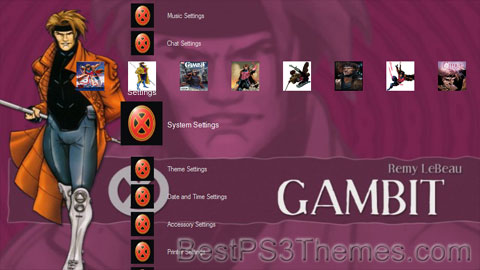
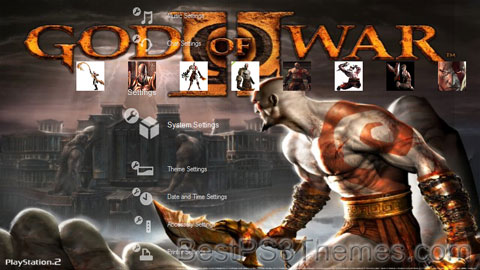
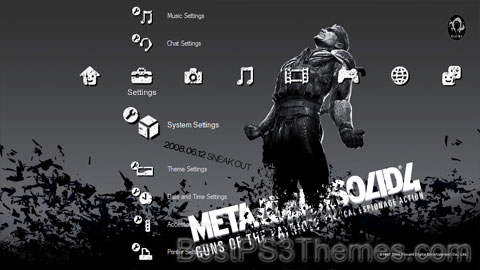
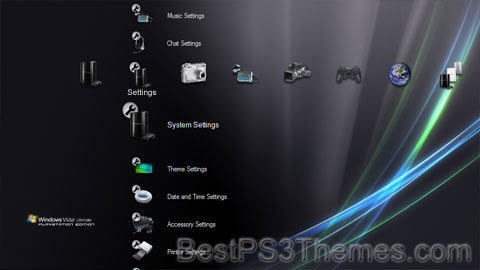
This program unpacks Playstation 3 Theme files (.p3t) so that you can touch-up an existing theme to your likings or use a certain wallpaper from it (as many themes have multiple). But remember, if you use content from another theme and release it, be sure to give credit!
Download p3textractor.zip from above. Extract the files to a folder with a program such as WinZip or WinRAR. Now there are multiple ways to extract the theme.
The first way is to simply open the p3t file with p3textractor.exe. If you don’t know how to do this, right click the p3t file and select Open With. Alternatively, open the p3t file and it will ask you to select a program to open with. Click Browse and find p3textractor.exe from where you previously extracted it to. It will open CMD and extract the theme to extracted.[filename]. After that, all you need to do for any future p3t files is open them and it will extract.
The second way is very simple. Just drag the p3t file to p3textractor.exe. It will open CMD and extract the theme to extracted.[filename].
For the third way, first put the p3t file you want to extract into the same folder as p3textractor.exe. Open CMD and browse to the folder with p3extractor.exe. Enter the following: p3textractor filename.p3t [destination path]Replace filename with the name of the p3t file, and replace [destination path] with the name of the folder you want the files to be extracted to. A destination path is not required. By default it will extract to extracted.filename.