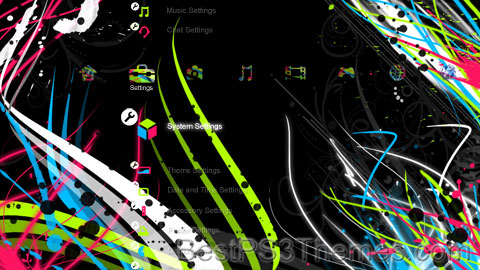
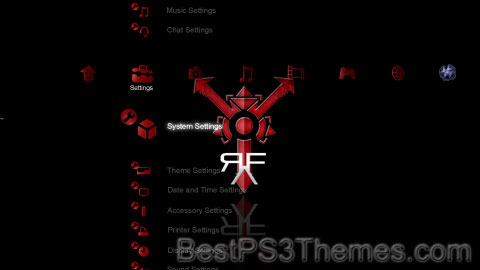
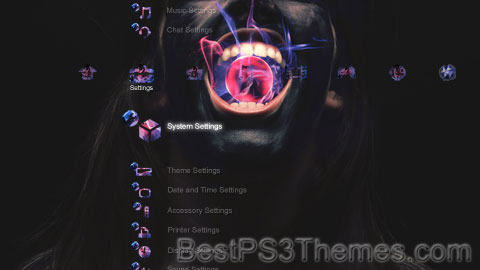
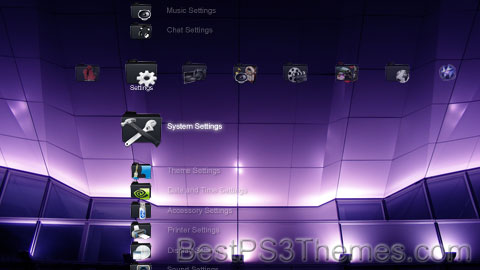
Angel

Angel theme by Sim24

Download: Angel.p3t
Angel Theme
(1 background)

The Archangel Michael wears a Roman military cloak and cuirass in this 17th-century depiction by Guido Reni.
Schutzengel (English: "Guardian Angel") by Bernhard Plockhorst depicts a guardian angel watching over two children.
Jacob Wrestling with the Angel, by Gustave Doré in 1855

In Abrahamic religious traditions (such as Judaism, Christianity, and Islam) and some sects of other belief-systems like Hinduism and Buddhism, an angel is a heavenly supernatural or spiritual being. In monotheistic belief-systems, such beings are under service of the supreme deity (i.e. God).

Abrahamic religions often depict angels as benevolent celestial intermediaries between God and humanity.[1][2] Other roles include protectors and guides for humans, such as guardian angels and servants of God.[3] Abrahamic religions describe angelic hierarchies, which vary by religion and sect. Some angels have specific names (such as Gabriel or Michael) or titles (such as seraph or archangel). Malevolent angels are often believed to have been expelled from Heaven and called fallen angels. In many such religions, the Devil (or devils) are identified with such angels.

The Wounded Angel, Hugo Simberg, 1903, voted Finland's "national painting" in 2006

Angels in art are often identified with bird wings,[4] halos,[5] and divine light. They are usually shaped like humans of extraordinary beauty, though this is not always the case—sometimes, they can be portrayed in a frightening, inhuman manner.[6]

Etymology[edit]

The word angel arrives in modern English from Old English engel (with a hard g) and the Old French angele.[7] Both of these derive from Late Latin angelus, which in turn was borrowed from Late Greek ἄγγελος angelos (literally "messenger").[8] Τhe word's earliest form is Mycenaean a-ke-ro, attested in Linear B syllabic script.[9] According to the Dutch linguist R. S. P. Beekes, ángelos itself may be "an Oriental loan, like ἄγγαρος (ángaros, 'Persian mounted courier')."[10]

The rendering of "ángelos" is the Septuagint's default translation of the Biblical Hebrew term malʼākh, denoting simply "messenger" without connoting its nature. In the Latin Vulgate, this meaning becomes bifurcated: when malʼākh or ángelos is supposed to denote a human messenger, words like nuntius or legatus are applied. If the word refers to some supernatural being, the word angelus appears. Such differentiation has been taken over by later vernacular translations of the Bible, early Christian and Jewish exegetes and eventually modern scholars.[11]

Background[edit]

The concept of angels is historically best to be understood from different ideas of the concept of God throughout history. In polytheistic and animistic worldviews, supernatural powers (i.e. deities, spirits, daemons, etc.) were assigned to different natural phenomena.[12](p102) Within a monotheistic framework, these powers were reconsidered to be servants of the supreme deity, turning autonomous supernatural beings into "angels".[12](p102)

By that, are supernatural powers controlling or influencing humanities' perception of the world, including natural phenomena and humans, ultimately under control of a supreme God.[12](p102) Prominent angels, such as Michael and Gabriel, reflect a connection to the Chief Semitic deity El. Even "bad" angels such as Satan, Samael, Iblis etc., can be understood as an operating force within the nature of humans, as responsible for selfish tendencies.[12](p102)

The idea of angels in early Hebrew scripture as supernatural agents is absent.[13] Instead, the Hebrew deity intervenes in human affairs, mostly by means of punishment.[14] Only in later thought of post-exilic and prophetic writings, the Biblical deity is conceptualized as distant and more merciful, his interventions replaced by the idea of angels.[14] However, such angels still carry out the gruesome attributes of God and can be both benevolent and malevolent.[14] The notion of angels as embodiment of good emerges only under influence of Zoroastrianism, in which the Devil is conceived as the principle of evil, with a hosts of demons, in battle with the holy entities (Aməša Spəṇta) created by Ahura Mazda (principle of good).[14][13]

Influence of dualistic tendencies and replacement of divine powers by angels is evident from the Qumram writings. In the Angelic Liturgy, the Hebrew term elim (deities, heavenly powers) is used for angelic beings and not for God.[15](p23) The War Scroll speaks about angels of light fighting against demonic beings of darkness.[15](p20)

Zoroastrianism[edit]

Relief of Angel, Taq-e Bostan

In Zoroastrianism there are different angel-like figures. For example, each person has one guardian angel, called Fravashi. They patronize human beings and other creatures, and also manifest God's energy. The Amesha Spentas have often been regarded as angels, although there is no direct reference to them conveying messages,[16] but are rather emanations of Ahura Mazda ("Wise Lord", God); they initially appeared in an abstract fashion and then later became personalized, associated with various aspects of creation.[17]

Judaism[edit]

In Judaism, angels (Hebrew: מַלְאָךְ mal’āḵ; "messenger"), are understood through interpretation of the Tanakh and in a long tradition as supernatural beings who stand by God in heaven, but are strictly to be distinguished from God (YHWH) and are subordinate to him. Occasionally, they can show selected people God's will and instructions.[18] In the Jewish tradition they are also inferior to humans since they have no will of their own and are able to carry out only one divine command.[19]

Hebrew Bible[edit]

Three angels hosted by Abraham, Ludovico Carracci (c. 1610–1612), Bologna, Pinacoteca Nazionale
Tobias and the Angel by Filippino Lippi, created between c. 1472 and c. 1482

The Torah uses the Hebrew terms מלאך אלהים (mal'āk̠ 'ĕlōhîm; "messenger of God"), מלאך יהוה (mal'āk̠ Yahweh; "messenger of the Lord"), בני אלהים (bənē 'ĕlōhîm; "sons of God") and הקודשים (haqqôd̠əšîm; "the holy ones") to refer to beings traditionally interpreted as angels. Later texts use other terms, such as העליונים (hā'elyônîm; "the upper ones").[citation needed]

The term 'מלאך' ('mal'āk̠') is also used in other books of the Hebrew Bible. In the early stages of Hebrew writings, the term refers to human messengers, not to supernatural entities.[14][20] A human messenger might be a prophet or priest, such as Malachi, "my messenger"; the Greek superscription in the Septuagint translation states the Book of Malachi was written "by the hand of his messenger" ἀγγέλου (angélu). Examples of a supernatural messenger[21] are the "Malak YHWH", who is either a messenger from God,[22] an aspect of God (such as the logos),[23] or God himself as the messenger (the "theophanic angel.")[21][24]

Michael D. Coogan notes that it is only in the late books that the terms "come to mean the benevolent semi-divine beings familiar from later mythology and art."[25] Daniel is the biblical book to refer to individual angels by name,[26] mentioning Gabriel in Daniel 9:21 and Michael in Daniel 10:13. These angels are part of Daniel's apocalyptic visions and are an important part of apocalyptic literature.[25][27]

In Daniel 7, Daniel receives a dream-vision from God. [...] As Daniel watches, the Ancient of Days takes his seat on the throne of heaven and sits in judgement in the midst of the heavenly court [...] an [angel] like a son of man approaches the Ancient One in the clouds of heaven and is given everlasting kingship.[28]

Coogan explains the development of this concept of angels: "In the postexilic period, with the development of explicit monotheism, these divine beings—the 'sons of God' who were members of the Divine Council—were in effect demoted to what are now known as 'angels', understood as beings created by God, but immortal and thus superior to humans."[25] This conception of angels is best understood in contrast to demons and is often thought to be "influenced by the ancient Persian religious tradition of Zoroastrianism, which viewed the world as a battleground between forces of good and forces of evil, between light and darkness."[25] One of these is hāššāṭān, a figure depicted in (among other places) the Book of Job.

Rabbinic Judaism[edit]

According to Rabbinic Judaism, the angels have no bodies, but are eternally living creatures created out of fire. The Babylonian Talmud reads as "The Torah was not given to ministering angels." (לא נתנה תורה למלאכי השרת) usually understood as a concession to human's imperfection, in contrast to the angels.[29] Thus, they occasionally appear in Midrashim as competition with humans.[30] The angels as heavenly beings, strictly following the laws of God, become jealous of God's affection for man. Humans, by following the Torah, in prayer, by resisting evil instincts (yetzer hara) and by teshuva, are preferred to the flawless angels. As a result, they are also inferior to humans in the Jewish tradition. In the Midrash, the plural of El (Elohim) used in Genesis in relation to the creation of human beings is explained by the presence of angels: God therefore consulted with the angels, but made the final decision alone. This story serves as an example, teaching that the powerful should also consult with the weak. God's own final decision highlights God's undisputable omnipotence.[30]

In post-Biblical Judaism, certain angels took on particular significance and developed unique personalities and roles. Although these archangels were believed to rank among the heavenly host, no systematic hierarchy ever developed. Metatron is considered one of the highest of the angels in Merkabah and Kabbalah mysticism and often serves as a scribe; he is briefly mentioned in the Talmud[31] and figures prominently in Merkabah mystical texts. Michael, who serves as a warrior[32] and advocate for Israel (Daniel 10:13), is looked upon particularly fondly.[33] Gabriel is mentioned in the Book of Daniel (Daniel 8:15–17) and briefly in the Talmud,[34] as well as in many Merkabah mystical texts. There is no evidence in Judaism for the worship of angels, but there is evidence for the invocation and sometimes even conjuration of angels.[26]

Philo of Alexandria identifies the angel with the Logos inasmuch as the angel is the immaterial voice of God. The angel is something different from God himself, but is conceived as God's instrument.[35]

Four classes of ministering angels minister and utter praise before the Holy One, blessed be He: the first camp (led by) Michael on His right, the second camp (led by) Gabriel on His left, the third camp (led by) Uriel before Him, and the fourth camp (led by) Raphael behind Him; and the Shekhinah of the Holy One, blessed be He, is in the centre. He is sitting on a throne high and exalted[36]

Later interpretations[edit]

According to Kabbalah, there are four worlds and our world is the last world: the world of action (Assiyah). Angels exist in the worlds above as a 'task' of God. They are an extension of God to produce effects in this world. After an angel has completed its task, it ceases to exist. The angel is in effect the task. This is derived from the book of Genesis when Abraham meets with three angels and Lot meets with two. The task of one of the angels was to inform Sara and Abraham of their coming child. The other two were to save Lot and to destroy Sodom and Gomorrah.[26]

Jewish philosopher Maimonides explained his view of angels in his Guide for the Perplexed II:4 and II

... This leads Aristotle in turn to the demonstrated fact that God, glory and majesty to Him, does not do things by direct contact. God burns things by means of fire; fire is moved by the motion of the sphere; the sphere is moved by means of a disembodied intellect, these intellects being the 'angels which are near to Him', through whose mediation the spheres move ... thus totally disembodied minds exist which emanate from God and are the intermediaries between God and all the bodies [objects] here in this world.

— Guide for the Perplexed II:4, Maimonides

Maimonides had a neo-Aristotelian interpretation of the Bible. Maimonides writes that to the wise man, one sees that what the Bible and Talmud refer to as "angels" are actually allusions to the various laws of nature; they are the principles by which the physical universe operates.

For all forces are angels! How blind, how perniciously blind are the naive?! If you told someone who purports to be a sage of Israel that the Deity sends an angel who enters a woman's womb and there forms an embryo, he would think this a miracle and accept it as a mark of the majesty and power of the Deity, despite the fact that he believes an angel to be a body of fire one third the size of the entire world. All this, he thinks, is possible for God. But if you tell him that God placed in the sperm the power of forming and demarcating these organs, and that this is the angel, or that all forms are produced by the Active Intellect; that here is the angel, the "vice-regent of the world" constantly mentioned by the sages, then he will recoil.– Guide for the Perplexed II:4

One of Melozzo's musician (seraphim) angels from the Basilica dei Santi Apostoli, now in the sacristy of St. Peter's Basilica
Angel of the Revelation by William Blake, created between c. 1803 and c. 1805

Individuals[edit]

From the Jewish Encyclopedia, entry "Angelology".[26]

(Only these two angels are mentioned by name in the Hebrew Bible; the rest are from extra-biblical tradition.)

  • Jophiel (translation: Beauty of God), expelled Adam and Eve from the Garden of Eden holding a flaming sword and punishes those who transgress against God
  • Metatron, heavenly scribe of God
  • Raphael (archangel) (translation: It is God who heals), God's healing force
  • Uriel (archangel) (translation: God is my light), leads humanity to destiny
  • Samael (archangel) (translation: Venom of God), angel of death—see also Malach HaMavet (translation: the angel of death)
  • Sandalphon (archangel) (translation: bringing together), battles Samael and brings mankind together

Christianity[edit]

An angel on a confessional in a Roman Catholic church in Warsaw as a metaphor of the seal of confession

In the early stage, the Christian concept of an angel characterized the angel as a 'messenger' of God. The word "angel" can be drawn to the term or role of a "messenger" throughout the Bible in both old and new testaments - (Hebrews 1:14) calls them "ministering [or serving] spirits", sent by God to aid the "heirs of salvation".[38] Later came identification of individual angelic messengers: Gabriel, Michael, Raphael, and Uriel.[39] Then, in the space of slightly over two centuries (from the 3rd to the 5th) the image of angels took on definite characteristics both in theology and in art.[40] Ellen Muehlberger has argued that in Late Antiquity, angels were conceived of as one type of being among many, whose primary purpose was to guard and to guide Christians.[41]

Bible[edit]

Angels are represented throughout Bibles as spiritual beings which are intermediate between God and humanity: "For thou hast made him [man] a little lower than the angels, and hast crowned him with glory and honour" (Psalms 8:4–5). Christians, based on Psalms and Genesis 2:1, believe that angels were the first beings created by God before the creation of Earth (Psalms 148:2–5; Colossians 1:16). Greek translations of the Hebrew Bible refer to intermediary beings as angels, instead of daimons, thus giving raise to a distinction between demons and angels.[42] In the Old Testament, both benevolent and fierce angels are mentioned, but never called demons. The symmetry lies between angels sent by God, and intermediary spirits of foreign deities, not in good and evil deeds.[43]

In the New Testament, the existence of angels, just like that of demons, is taken for granted.[44] They can intervene and intercede on behalf of humans. Angels protect the righteous (Matthew 4:6, Luke 4:11). They dwell in the heavens (Matthew 28:2, John 1:51), act as God's warriors (Matthew 26:53) and worship God (Luke 2:13).[45] In the parable of the Rich man and Lazarus, angels behave as psychopomps. The Resurrection of Jesus features angels, telling the woman that Jesus is no longer in the tomb, but has risen from the dead.[46]

Interaction with humans[edit]

Kristus i Getsemane (1873), an angel comforting Jesus before his arrest in the Garden of Gethsemane, by Carl Heinrich Bloch (1834–1890)

Forget not to show love unto strangers: for thereby some have entertained angels unawares.—Hebrews 13:2

According to Jesus' statement, angels of Heaven don't marry (Matthew 22:30, Mark 12:25, and Luke 20:34–46).[47]

Three separate cases of angelic interaction deal with the births of John the Baptist and Jesus. In (Luke 1:11), an angel appears to Zechariah to inform him that he will have a child despite his old age, thus proclaiming the birth of John the Baptist. In Luke 1:26, Gabriel visits Mary in the Annunciation to foretell the birth of Jesus. Angels proclaim the birth of Jesus in the Adoration of the shepherds in Luke 2:10.[48]

According to Matthew 4:11, after Jesus spent 40 days in the desert, "...the Devil left him and, behold, angels came and ministered to him." In Luke 22:43 an angel comforts Jesus during the Agony in the Garden.[49] In Matthew 28:5 an angel speaks at the empty tomb, following the Resurrection of Jesus and the rolling back of the stone by angels.[48]

In 1851 Pope Pius IX approved the Chaplet of Saint Michael based on the 1751 reported private revelation from archangel Michael to the Carmelite nun Antonia d'Astonac.[50] In a biography of

State of The Art- STA Final Version

State of The Art- STA Final Version theme by Gert-Jan Kobus PSN: XgamerX

Download: StateofTheArtSTAFinal.p3t

State of The Art- STA Final Version Theme
(7 backgrounds)

P3T Unpacker v0.12
Copyright (c) 2007. Anoop Menon

This program unpacks Playstation 3 Theme files (.p3t) so that you can touch-up an existing theme to your likings or use a certain wallpaper from it (as many themes have multiple). But remember, if you use content from another theme and release it, be sure to give credit!

Download for Windows: p3textractor.zip

Instructions:

Download p3textractor.zip from above. Extract the files to a folder with a program such as WinZip or WinRAR. Now there are multiple ways to extract the theme.

The first way is to simply open the p3t file with p3textractor.exe. If you don’t know how to do this, right click the p3t file and select Open With. Alternatively, open the p3t file and it will ask you to select a program to open with. Click Browse and find p3textractor.exe from where you previously extracted it to. It will open CMD and extract the theme to extracted.[filename]. After that, all you need to do for any future p3t files is open them and it will extract.

The second way is very simple. Just drag the p3t file to p3textractor.exe. It will open CMD and extract the theme to extracted.[filename].

For the third way, first put the p3t file you want to extract into the same folder as p3textractor.exe. Open CMD and browse to the folder with p3extractor.exe. Enter the following:
p3textractor filename.p3t [destination path]Replace filename with the name of the p3t file, and replace [destination path] with the name of the folder you want the files to be extracted to. A destination path is not required. By default it will extract to extracted.filename.

RFA Simple

RFA Simple theme by Skywav

Download: RFASimple.p3t

RFA Simple Theme
(1 background)

P3T Unpacker v0.12
Copyright (c) 2007. Anoop Menon

This program unpacks Playstation 3 Theme files (.p3t) so that you can touch-up an existing theme to your likings or use a certain wallpaper from it (as many themes have multiple). But remember, if you use content from another theme and release it, be sure to give credit!

Download for Windows: p3textractor.zip

Instructions:

Download p3textractor.zip from above. Extract the files to a folder with a program such as WinZip or WinRAR. Now there are multiple ways to extract the theme.

The first way is to simply open the p3t file with p3textractor.exe. If you don’t know how to do this, right click the p3t file and select Open With. Alternatively, open the p3t file and it will ask you to select a program to open with. Click Browse and find p3textractor.exe from where you previously extracted it to. It will open CMD and extract the theme to extracted.[filename]. After that, all you need to do for any future p3t files is open them and it will extract.

The second way is very simple. Just drag the p3t file to p3textractor.exe. It will open CMD and extract the theme to extracted.[filename].

For the third way, first put the p3t file you want to extract into the same folder as p3textractor.exe. Open CMD and browse to the folder with p3extractor.exe. Enter the following:
p3textractor filename.p3t [destination path]Replace filename with the name of the p3t file, and replace [destination path] with the name of the folder you want the files to be extracted to. A destination path is not required. By default it will extract to extracted.filename.

Hallucination

Hallucination theme by Mike Lowe

Download: Hallucination.p3t
Hallucination Theme
(1 background)

Hallucination
My eyes at the moment of the apparitions by August Natterer, a German artist who created many drawings of his hallucinations
SpecialtyPsychiatry
CausesHypnagogia, Peduncular hallucinosis, Delirium tremens, Parkinson's disease, Lewy body dementia, Charles Bonnet syndrome, Hallucinogen, Sensory deprivation, Anomalous experiences, Non-celiac gluten sensitivity[1]
TreatmentCognitive behavioral therapy[2] and metacognitive training[3]
MedicationAntipsychotic, AAP

A hallucination is a perception in the absence of an external stimulus that has the compelling sense of reality.[4] Hallucination is a combination of two conscious states of brain wakefulness and REM sleep.[5] They are distinguishable from several related phenomena, such as dreaming (REM sleep), which does not involve wakefulness; pseudohallucination, which does not mimic real perception, and is accurately perceived as unreal; illusion, which involves distorted or misinterpreted real perception; and mental imagery, which does not mimic real perception, and is under voluntary control.[6] Hallucinations also differ from "delusional perceptions", in which a correctly sensed and interpreted stimulus (i.e., a real perception) is given some additional significance.[citation needed]

Hallucinations can occur in any sensory modalityvisual, auditory, olfactory, gustatory, tactile, proprioceptive, equilibrioceptive, nociceptive, thermoceptive and chronoceptive. Hallucinations are referred to as multimodal if multiple sensory modalities occur.[7][8]

A mild form of hallucination is known as a disturbance, and can occur in most of the senses above. These may be things like seeing movement in peripheral vision, or hearing faint noises or voices. Auditory hallucinations are very common in schizophrenia. They may be benevolent (telling the subject good things about themselves) or malicious, cursing the subject. 55% of auditory hallucinations are malicious in content,[9] for example, people talking about the subject, not speaking to them directly. Like auditory hallucinations, the source of the visual counterpart can also be behind the subject. This can produce a feeling of being looked or stared at, usually with malicious intent.[citation needed] Frequently, auditory hallucinations and their visual counterpart are experienced by the subject together.[10]

Hypnagogic hallucinations and hypnopompic hallucinations are considered normal phenomena. Hypnagogic hallucinations can occur as one is falling asleep and hypnopompic hallucinations occur when one is waking up. Hallucinations can be associated with drug use (particularly deliriants), sleep deprivation, psychosis, neurological disorders, and delirium tremens. Many hallucinations happen also during sleep paralysis.[11]

The word "hallucination" itself was introduced into the English language by the 17th-century physician Sir Thomas Browne in 1646 from the derivation of the Latin word alucinari meaning to wander in the mind. For Browne, hallucination means a sort of vision that is "depraved and receive[s] its objects erroneously".[12]

Classification[edit]

Hallucinations may be manifested in a variety of forms.[13] Various forms of hallucinations affect different senses, sometimes occurring simultaneously, creating multiple sensory hallucinations for those experiencing them.[7]

Auditory[edit]

Auditory hallucinations (also known as paracusia)[14] are the perception of sound without outside stimulus. Auditory hallucinations can be divided into elementary and complex, along with verbal and nonverbal. These hallucinations are the most common type of hallucination, with auditory verbal hallucinations being more common than nonverbal.[15][16] Elementary hallucinations are the perception of sounds such as hissing, whistling, an extended tone, and more.[17] In many cases, tinnitus is an elementary auditory hallucination.[16] However, some people who experience certain types of tinnitus, especially pulsatile tinnitus, are actually hearing the blood rushing through vessels near the ear. Because the auditory stimulus is present in this situation, it does not qualify it as a hallucination.[citation needed]

Complex hallucinations are those of voices, music,[16] or other sounds that may or may not be clear, may or may not be familiar, and may be friendly, aggressive, or among other possibilities. A hallucination of a single individual person of one or more talking voices is particularly associated with psychotic disorders such as schizophrenia, and hold special significance in diagnosing these conditions.[citation needed]

In schizophrenia, voices are normally perceived coming from outside the person, but in dissociative disorders they are perceived as originating from within the person, commenting in their head instead of behind their back. Differential diagnosis between schizophrenia and dissociative disorders is challenging due to many overlapping symptoms, especially Schneiderian first rank symptoms such as hallucinations.[18] However, many people who do not have a diagnosable mental illness may sometimes hear voices as well.[19] One important example to consider when forming a differential diagnosis for a patient with paracusia is lateral temporal lobe epilepsy. Despite the tendency to associate hearing voices, or otherwise hallucinating, and psychosis with schizophrenia or other psychiatric illnesses, it is crucial to take into consideration that, even if a person does exhibit psychotic features, they do not necessarily have a psychiatric disorder on its own. Disorders such as Wilson's disease, various endocrine diseases, numerous metabolic disturbances, multiple sclerosis, systemic lupus erythematosus, porphyria, sarcoidosis, and many others can present with psychosis.[citation needed]

Musical hallucinations are also relatively common in terms of complex auditory hallucinations and may be the result of a wide range of causes ranging from hearing-loss (such as in musical ear syndrome, the auditory version of Charles Bonnet syndrome), lateral temporal lobe epilepsy,[20] arteriovenous malformation,[21] stroke, lesion, abscess, or tumor.[22]

The Hearing Voices Movement is a support and advocacy group for people who hallucinate voices, but do not otherwise show signs of mental illness or impairment.[23]

High caffeine consumption has been linked to an increase in likelihood of one experiencing auditory hallucinations.[24] A study conducted by the La Trobe University School of Psychological Sciences revealed that as few as five cups of coffee a day (approximately 500 mg of caffeine) could trigger the phenomenon.[25]

Visual[edit]

A visual hallucination is "the perception of an external visual stimulus where none exists".[26] A separate but related phenomenon is a visual illusion, which is a distortion of a real external stimulus. Visual hallucinations are classified as simple or complex:

  • Simple visual hallucinations (SVH) are also referred to as non-formed visual hallucinations and elementary visual hallucinations. These terms refer to lights, colors, geometric shapes, and indiscrete objects. These can be further subdivided into phosphenes which are SVH without structure, and photopsias which are SVH with geometric structures.
  • Complex visual hallucinations (CVH) are also referred to as formed visual hallucinations. CVHs are clear, lifelike images or scenes such as people, animals, objects, places, etc.

For example, one may report hallucinating a giraffe. A simple visual hallucination is an amorphous figure that may have a similar shape or color to a giraffe (looks like a giraffe), while a complex visual hallucination is a discrete, lifelike image that is, unmistakably, a giraffe.

Command[edit]

Command hallucinations are hallucinations in the form of commands; they appear to be from an external source, or can appear coming from the subject's head.[27] The contents of the hallucinations can range from the innocuous to commands to cause harm to the self or others.[27] Command hallucinations are often associated with schizophrenia. People experiencing command hallucinations may or may not comply with the hallucinated commands, depending on the circumstances. Compliance is more common for non-violent commands.[28]

Command hallucinations are sometimes used to defend a crime that has been committed, often homicides.[29] In essence, it is a voice that one hears and it tells the listener what to do. Sometimes the commands are quite benign directives such as "Stand up" or "Shut the door."[30] Whether it is a command for something simple or something that is a threat, it is still considered a "command hallucination." Some helpful questions that can assist one in determining if they may have this includes: "What are the voices telling you to do?", "When did your voices first start telling you to do things?", "Do you recognize the person who is telling you to harm yourself (or others)?", "Do you think you can resist doing what the voices are telling you to do?"[30]

Olfactory[edit]

Phantosmia (olfactory hallucinations), smelling an odor that is not actually there,[31] and parosmia (olfactory illusions), inhaling a real odor but perceiving it as different scent than remembered,[32] are distortions to the sense of smell (olfactory system), and in most cases, are not caused by anything serious and will usually go away on their own in time.[31] It can result from a range of conditions such as nasal infections, nasal polyps, dental problems, migraines, head injuries, seizures, strokes, or brain tumors.[31][33] Environmental exposures can sometimes cause it as well, such as smoking, exposure to certain types of chemicals (e.g., insecticides or solvents), or radiation treatment for head or neck cancer.[31] It can also be a symptom of certain mental disorders such as depression, bipolar disorder, intoxication, substance withdrawal, or psychotic disorders (e.g., schizophrenia).[33] The perceived odors are usually unpleasant and commonly described as smelling burned, foul, spoiled, or rotten.[31]

Tactile[edit]

Tactile hallucinations are the illusion of tactile sensory input, simulating various types of pressure to the skin or other organs. One subtype of tactile hallucination, formication, is the sensation of insects crawling underneath the skin and is frequently associated with prolonged cocaine use.[34] However, formication may also be the result of normal hormonal changes such as menopause, or disorders such as peripheral neuropathy, high fevers, Lyme disease, skin cancer, and more.[34]

Gustatory[edit]

This type of hallucination is the perception of taste without a stimulus. These hallucinations, which are typically strange or unpleasant, are relatively common among individuals who have certain types of focal epilepsy, especially temporal lobe epilepsy. The regions of the brain responsible for gustatory hallucination in this case are the insula and the superior bank of the sylvian fissure.[35][36]

Sexual[edit]

Sexual hallucinations are the perception of erogenous or orgasmic stimuli. They may be unimodal or multimodal in nature and frequently involve sensation in the genital region, though it is not exclusive.[37]Frequent examples of sexual hallucinations include the sensation of being penetrated, experiencing orgasm, feeling as if one is being touched in an erogenous zone, sensing stimulation in the genitals, feeling the fondling of one's breasts or buttocks and tastes or smells related to sexual activity.[38] Visualizations of sexual content and auditory voices making sexually explicit remarks may sometimes be included in this classification. While it features components of other classifications, sexual hallucinations are distinct due to the orgasmic component and unique presentation.[39]

The regions of the brain responsible differ by the subsection of sexual hallucination. In orgasmic auras, the mesial temporal lobe, right amygdala and hippocampus are involved.[40][41]In males, genital specific sensations are related to the postcentral gyrus and arousal and ejaculation are linked to stimulation in the posterior frontal lobe.[42][43] In females, however, the hippocampus and amygdala are connected.[43][44] Limited studies have been done to understand the mechanism of action behind sexual hallucinations in epilepsy, substance use, and post-traumatic stress disorder etiologies.[39]

Somatic[edit]

Somatic hallucinations refer to an interoceptive sensory experience in the absence of stimulus. Somatic hallucinations can be broken down into further subcategories: general, algesic, kinesthetic, and cenesthopathic.[37][39]

  • Cenesthopathic- Effecting the cenesthetic sensory modality, cenesthopathic hallucinations are a pathological alteration in the sense of bodily existence, caused by aberrant bodily sensations Most often, cenesthopathic hallucinations will refer to sensation in the visceral organs. Therefore, it is also known as visceral hallucinations.[45][39]Manifestations are often subjective, hard to describe and unique to the sufferer. Common manifestations include pressure, burning, tickling, or tightening in various body systems.[46]While these hallucinations can be experienced by a variety of psychiatric and neurological disorder, cenesthopathic schizophrenia is recognized by the ICD as a subtype of schizophrenia marked by primarily cenesthopathic hallucinations and other body image aberrations.[47][39]
  • Kinesthetic- Kinesthetic hallucinations, effecting the sensory modality of the same name, are the sensation of movement of the limbs or other body parts without actual movement.[48][39][46][45]
  • Algesic- Algesic hallucinations, effecting the algesic sensory modality, refers to a perceived perception of pain.[39][46][45]
  • General- General somatic hallucination refers to somatic hallucinations not otherwise categorized by the above subsections. Common examples include when an individual feels that their body is being mutilated, i.e. twisted, torn, or disemboweled. Other reported cases are invasion by animals in the person's internal organs, such as snakes in the stomach or frogs in the rectum. The general feeling that one's flesh is decomposing is also classified under this type of this hallucination.[39]

Multimodal[edit]

A hallucination involving sensory modalities is called multimodal, analogous to unimodal hallucinations which have only one sensory modality. The multiple sensory modalities can occur at the same time (simultaneously) or with a delay (serial), be related or unrelated to each other, and be consistent with reality (congruent) or not (incongruent).[7][8] For example, a person talking in a hallucination would be congruent with reality, but a cat talking would not be.

Multimodal hallucinations are correlated to poorer mental health outcomes, and are often experienced as feeling more real.[7]

Cause[edit]

Hallucinations can be caused by a number of factors.[49]

Hypnagogic hallucination[edit]

These hallucinations occur just before falling asleep and affect a high proportion of the population: in one survey 37% of the respondents experienced them twice a week.[50] The hallucinations can last from seconds to minutes; all the while, the subject usually remains aware of the true nature of the images. These may be associated with narcolepsy. Hypnagogic hallucinations are sometimes associated with brainstem abnormalities, but this is rare.[51]

Peduncular hallucinosis[edit]

Peduncular means pertaining to the peduncle, which is a neural tract running to and from the pons on the brain stem. These hallucinations usually occur in the evenings, but not during drowsiness, as in the case of hypnagogic hallucination. The subject is usually fully conscious and then can interact with the hallucinatory characters for extended periods of time. As in the case of hypnagogic hallucinations, insight into the nature of the images remains intact. The false images can occur in any part of the visual field, and are rarely polymodal.[51]

Delirium tremens[edit]

One of the more enigmatic forms of visual hallucination is the highly variable, possibly polymodal delirium tremens. It is associated with withdrawal in alcohol use disorder. Individuals with delirium tremens may be agitated and confused, especially in the later stages of this disease.[52] Insight is gradually reduced with the progression of this disorder. Sleep is disturbed and occurs for a shorter period of time, with rapid eye movement sleep.[53]

Parkinson's disease and Lewy body dementia[edit]

Parkinson's disease is linked with Lewy body dementia for their similar hallucinatory symptoms. The symptoms strike during the evening in any part of the visual field, and are rarely polymodal. The segue into hallucination may begin with illusions[54] where sensory perception is greatly distorted, but no novel sensory information is present. These typically last for several minutes, during which time the subject may be either conscious and normal or drowsy/inaccessible. Insight into these hallucinations is usually preserved and REM sleep is usually reduced. Parkinson's disease is usually associated with a degraded substantia nigra pars compacta, but recent evidence suggests that PD affects a number of sites in the brain. Some places of noted degradation include the median raphe nuclei, the noradrenergic parts of the locus coeruleus, and the cholinergic neurons in the parabrachial area and pedunculopontine nuclei of the tegmentum.[51]

Migraine coma[edit]

This type of hallucination is usually experienced during the recovery from a comatose state. The migraine coma can last for up to two days, and a state of depression is sometimes comorbid. The hallucinations occur during states of full consciousness, and insight into the hallucinatory nature of the images is preserved. It has been noted that ataxic lesions accompany the migraine coma.[51]

Charles Bonnet syndrome[edit]

Charles Bonnet syndrome is the name given to visual hallucinations experienced by a partially or severely sight impaired person. The hallucinations can occur at any time and can distress people of any age, as they may not initially be aware that they are hallucinating. They may fear for their own mental health initially, which may delay them sharing with carers until they start to understand it themselves. The hallucinations can frighten and disconcert as to what is real and what is not. The hallucinations can sometimes be dispersed by eye movements, or by reasoned logic such as, "I can see fire but there is no smoke and there is no heat from it" or perhaps, "We have an infestation of rats but they have pink ribbons with a bell tied on their necks." Over elapsed months and years, the hallucinations may become more or less frequent with changes in ability to see. The length of time that the sight impaired person can have these hallucinations varies according to the underlying speed of eye deterioration. A differential diagnosis are ophthalmopathic hallucinations.[55]

Focal epilepsy[edit]

Visual hallucinations due to focal seizures differ depending on the region of the brain where the seizure occurs. For example, visual hallucinations during occipital lobe seizures are typically visions of brightly colored, geometric shapes that may move across the visual field, multiply, or form concentric rings and generally persist from a few seconds to a few minutes. They are usually unilateral and localized to one part of the visual field on the contralateral side of the seizure focus, typically the temporal field. However, unilateral visions moving horizontally across the visual field begin on the contralateral side and move toward the ipsilateral side.[35][56]

Temporal lobe seizures, on the other hand, can produce complex visual hallucinations of people, scenes, animals, and more as well as distortions of visual perception. Complex hallucinations may appear to be real or unreal, may or may not be distorted with respect to size, and may seem disturbing or affable, among other variables. One rare but notable type of hallucination is heautoscopy, a hallucination of a mirror image of one's self. These "other selves" may be perfectly still or performing complex tasks, may be an image of a younger self or the present self, and tend to be briefly present. Complex hallucinations are a relatively uncommon finding in temporal lobe epilepsy patients. Rarely, they may occur during occipital focal seizures or in parietal lobe seizures.[35]

Distortions in visual perception during a temporal lobe seizure may include size distortion (micropsia or macropsia), distorted perception of movemen

Shock

Shock theme by Panda

Download: Shock.p3t

Shock Theme
(3 backgrounds)

Shock may refer to:

Common uses[edit]

Healthcare[edit]

Physical sciences[edit]

Social sciences[edit]

Collective noun[edit]

Places[edit]

People[edit]

People with the given name or nickname[edit]

  • Shock or Harry Del Rios (born 1973), American professional wrestler
  • Shock G or Gregory E. Jacobs (1963–2021), American musician and rapper

People with the surname[edit]

Arts, entertainment, and media[edit]

Categories and genres[edit]

Films[edit]

Music[edit]

Groups and labels[edit]

Artists[edit]

Albums[edit]

Songs[edit]

Other arts, entertainment, and media[edit]

Military[edit]

Sports and teams[edit]

See also[edit]

Folder Mix

Folder Mix theme by Mr Evo

Download: FolderMix.p3t

Folder Mix Theme
(1 background)

P3T Unpacker v0.12
Copyright (c) 2007. Anoop Menon

This program unpacks Playstation 3 Theme files (.p3t) so that you can touch-up an existing theme to your likings or use a certain wallpaper from it (as many themes have multiple). But remember, if you use content from another theme and release it, be sure to give credit!

Download for Windows: p3textractor.zip

Instructions:

Download p3textractor.zip from above. Extract the files to a folder with a program such as WinZip or WinRAR. Now there are multiple ways to extract the theme.

The first way is to simply open the p3t file with p3textractor.exe. If you don’t know how to do this, right click the p3t file and select Open With. Alternatively, open the p3t file and it will ask you to select a program to open with. Click Browse and find p3textractor.exe from where you previously extracted it to. It will open CMD and extract the theme to extracted.[filename]. After that, all you need to do for any future p3t files is open them and it will extract.

The second way is very simple. Just drag the p3t file to p3textractor.exe. It will open CMD and extract the theme to extracted.[filename].

For the third way, first put the p3t file you want to extract into the same folder as p3textractor.exe. Open CMD and browse to the folder with p3extractor.exe. Enter the following:
p3textractor filename.p3t [destination path]Replace filename with the name of the p3t file, and replace [destination path] with the name of the folder you want the files to be extracted to. A destination path is not required. By default it will extract to extracted.filename.

DarkSide v2

DarkSide version 2 theme by goggles182

Download: DarkSidev2.p3t
DarkSide v2 Theme
(3 backgrounds)

P3T Unpacker v0.12
Copyright (c) 2007. Anoop Menon

This program unpacks Playstation 3 Theme files (.p3t) so that you can touch-up an existing theme to your likings or use a certain wallpaper from it (as many themes have multiple). But remember, if you use content from another theme and release it, be sure to give credit!

Download for Windows: p3textractor.zip

Instructions:

Download p3textractor.zip from above. Extract the files to a folder with a program such as WinZip or WinRAR. Now there are multiple ways to extract the theme.

The first way is to simply open the p3t file with p3textractor.exe. If you don’t know how to do this, right click the p3t file and select Open With. Alternatively, open the p3t file and it will ask you to select a program to open with. Click Browse and find p3textractor.exe from where you previously extracted it to. It will open CMD and extract the theme to extracted.[filename]. After that, all you need to do for any future p3t files is open them and it will extract.

The second way is very simple. Just drag the p3t file to p3textractor.exe. It will open CMD and extract the theme to extracted.[filename].

For the third way, first put the p3t file you want to extract into the same folder as p3textractor.exe. Open CMD and browse to the folder with p3extractor.exe. Enter the following:
p3textractor filename.p3t [destination path]Replace filename with the name of the p3t file, and replace [destination path] with the name of the folder you want the files to be extracted to. A destination path is not required. By default it will extract to extracted.filename.

Guns, Guns, Guns!!!!!

Guns, Guns, Guns!!!!! theme by The Boss (C.)

Download: GunsGunsGuns.p3t

Guns, Guns, Guns!!!!! Theme
(1 background)

P3T Unpacker v0.12
Copyright (c) 2007. Anoop Menon

This program unpacks Playstation 3 Theme files (.p3t) so that you can touch-up an existing theme to your likings or use a certain wallpaper from it (as many themes have multiple). But remember, if you use content from another theme and release it, be sure to give credit!

Download for Windows: p3textractor.zip

Instructions:

Download p3textractor.zip from above. Extract the files to a folder with a program such as WinZip or WinRAR. Now there are multiple ways to extract the theme.

The first way is to simply open the p3t file with p3textractor.exe. If you don’t know how to do this, right click the p3t file and select Open With. Alternatively, open the p3t file and it will ask you to select a program to open with. Click Browse and find p3textractor.exe from where you previously extracted it to. It will open CMD and extract the theme to extracted.[filename]. After that, all you need to do for any future p3t files is open them and it will extract.

The second way is very simple. Just drag the p3t file to p3textractor.exe. It will open CMD and extract the theme to extracted.[filename].

For the third way, first put the p3t file you want to extract into the same folder as p3textractor.exe. Open CMD and browse to the folder with p3extractor.exe. Enter the following:
p3textractor filename.p3t [destination path]Replace filename with the name of the p3t file, and replace [destination path] with the name of the folder you want the files to be extracted to. A destination path is not required. By default it will extract to extracted.filename.

Girly

Girly theme by JohnSpace

Download: Girly.p3t

Girly Theme
(3 backgrounds)

Girly
Author(s)Jaqueline Lesnick
Websitehttp://www.jaqqqln.com/girly
Current status/scheduleCompleted
Launch dateApril 2003
End dateSeptember 16, 2010
Genre(s)Romantic comedy

Girly is a webcomic created by Jaqueline Lesnick which follows the romantic relationship between two girls named Otra and Winter, as well as other citizens of the city of Cute-Town. It ran from 2003 until 2010. The author describes their work as, “a comic that went everywhere and did everything, for better or worse. But all in all it is a comic about 2 gals who love each other very much dawwww. Girly is a comic that helped sexually awaken a generation of readers, as well as (eventually) myself.”

Plot summary[edit]

The webcomic is a sequel to Lesnick's previous work, CuteWendy. The initial plotline describes Winter making Otra her sidekick, with the two then becoming friends and later lovers. The first chapter also describes the downfall of the character El Chubacabre, who reviewer Kate Ditzler said "is described as a lover, pleasurer, eater, and penetrater of women."[1]

History[edit]

Girly launched in April 2003.[2][3] It was an offshoot / sequel to Lesnick's previous work, CuteWendy and was originally intended to run for no more than 50 strips.[4][5] However, Lesnick became enamored with the characters.[citation needed]

Girly was hosted on Keenspot,[5] but in November 2004, Girly moved to its own server.[citation needed] In October 2005, Girly became a part of the Dayfree Press collective, a collective of webcomics which included strips such as Dinosaur Comics and Questionable Content.[6][7]

in August 2006, Lesnick announced that a sales and donation drive had raised $5,000 and while she could not live solely from Girly, it meant she "could officially concentrate on comics for the rest of the year and not worry too much about making ends meet."[8]

Girly ended in September 2010, after 764 strips.[9][3][10]

Printing and collections[edit]

In July 2006, the first print collection of Girly was published by Radio Comix, in black and white on newsprint.[11][12] On May 2, 2007, volume 2 became available.[citation needed] Lesnick also ran a successful Kickstarter to print a single collection of all of Girly in four books in one slipcover.[13] There have also been book printings of the prequel comic, CuteWendy.[14]

  • Girly Volume 1 ISBN 0-9786385-0-6
  • Girly Volume 2 ISBN 0-9791417-1-0
  • Girly: The Complete Collection ISBN 0-9791417-2-9

In 2017, Girly was included in the first set of 39 webcomics archived by the Library of Congress.[15][16]

The original website for Girly is no longer available, the comics was hosted on Lesnick's new website, SuperHappyJackie.[17] However this website is also no longer available.

On November 30, 2021, an edited version of Girly was made available for download on itch.io by Lesnick in comic book archive format.[18]

Style[edit]

Girly's style is line-based and monochrome, using a vertical format. The original style of line drawing is akin to a manga-style but with more abstractions, giving it a sketched, freehand sort of look. The line art has evolved a great deal as time has passed, and no longer bears a great resemblance to most manga, however; recent works are somewhat reminiscent of some of John Kricfalusi's work. The art of the strip has shown a steady trend away from thin, pencil-like lines towards a much more variable, ink-brush look.

After a short hiatus, on August 4, 2007, in Girly #504, the art of the strip transitioned to a much more prominent use of color.

Along with absurdity, playing with stereotypes and frequent pop culture references, Girly has a strong vein of sexual humor.

In one strip showing Cute-Town's skyline, Lesnick comments that it "[took] the skyline of Dallas [Texas], add[ing] smiley faces and kittens".[19] However, the interior of Cute-Town is said by the author to resemble Austin, Texas.

Writing at Fleen, webcomics commentator Gary Tyrrell described Girly as a comic which "quickly became a plot-heavy, continuity-driven strip".[3]

Main characters[edit]

Girly revolves around the main characters Otra and Winter (and often the cat as well). Occasionally the story will move to a small sub-story centered around one of the secondary characters but will eventually be tied back into one of the main characters again.

  • Otra - Otra is the main character of Girly. She is 26 years old[20] and is currently self-employed as a freelance fashion designer for the company Guapa. Not much is known about Otra (her name was not fully revealed until well into the comic) except that she has not had too hard of a life; she's just constantly disappointed/sad about mostly everything. Her main hobby is roaming through the city and observing life. Before she met Winter, she would deal with the annoying people in her life by cramming them into or tying them to small rockets and launching them into space. Winter's sudden appearance in her life has changed her a little day by day. Otra first appeared in strip 1.[21] Her name is Spanish for "other one" - a reference to CuteWendy's sidekick, known only as the Other Girl.
  • Winter - Winter is Otra's girlfriend. She is 19 years old,[22] has no job or home and has declared Otra to be her sidekick early in the comic. She has since looked out for Otra devotedly, helping her with work and even occasionally saving her life as well. Not much is known about Winter except that she is the daughter of CuteWendy and her sidekick Other Girl from Girly's predecessor CuteWendy (as revealed early on[23]). She's free-spirited, with an attitude that's both serious and yet silly. First appeared in strip 1.[21]
  • Marshmallow Kitty - A cat that was originally homeless and wandered the downtown area living off scraps and donations of food. After meeting Winter and Otra, it took a liking to them and followed Otra home. It soon became Otra's cat. Although the cat was intended to stay a secondary character or mascot, it became a primary character through its popularity.[citation needed] Its early appearances made it appear slightly perverted, but that has since stopped. The cat is too pudgy to roll itself over when it's on its back, and is totally indestructible. Recently it has given birth to several kittens, much to Winter and Otra's distress, and is now officially designated as female. In strip 504[24] it was shown that Marshmallow Kitty was part of a scientific project to create the world's greatest cat, however this experiment resulted in the destruction of the laboratory along with everyone inside of it excluding Marshmallow Kitty. First appeared in strip 36.[25]

Reviews[edit]

A writer for Sequential Tart, talking about Lesnick's work in general as of 2004, described her as "ha[ving] a thing for shiny, slippery bodies" and "tend[ing] to have a wacky sense of humor". They continued: "Combine these elements, and you get some of the most entertaining, ridiculous, and sexiest comics on the Internet."[5]

Also in 2004, Wednesday White wrote for Comix Talk that "at the heart, Girly is a gentle story that doesn’t want you to know that it’s a gentle story. It’s lovingly crafted, occasionally poignant, and just a little bit removed from itself. It’s also young, bearing the illusion of greater length by dint of loose sequelhood, and still getting a feel for itself. When it’s done kicking chin-heavy law enforcement into reader space to avoid dealing with itself, it’ll be fantastic. Right now, it’s engaging and sweet; that, in and of itself, is no mean feat."[26]

Writing for Websnark, Eric Burns-White said in 2006 that Lesnick was "one of those webcartoonists all the other webcartoonists read" and said that she "has had tremendous influence over the form [of webcomics]. [Her] development of Slipshine rewrote the book on NC-17 webcomics."[27] Burns-White called Girly "Lesnick's finest work to date, and a strip that has tremendous critical acclaim",[27] said that Girly was "a strip that works like jazz music" where "the absurdity carries humor with it",[12] and said that Lesnick knew how smartly write stupid people.[28] In a 2006 article for Fleen, Kate Ditzler said that Girly made her uneasy and angry, arguing that the comic strip used sexual harassment as a joke in some panels.[1]

Girly was nominated for a Web Cartoonists' Choice Award in 2005 for "Outstanding Layout".[29]

Author[edit]

Girly was created by Jackie Lesnick. She is also the creator of the comics Cutewendy, and Wendy, and has been the editor and main artist of Slipshine, a subscription site featuring pornographic comics by over a dozen artists.[5] According to her website, she was born in 1977 and is a trans woman;[30] Lesnick wrote Girly under her birth name and changed her name to Jackie some time later.

References[edit]

  1. ^ a b Ditzler, Kate (2006-06-28). "The Act Itself is a Joke". Fleen.
  2. ^ "girly: #1". Archived from the original on 2011-01-08.
  3. ^ a b c Tyrrell, Gary (2011-03-22). "Deep Archives". Retrieved 2020-11-28.
  4. ^ Tyrell, Gary (2009-04-03). "Now With Extra Parasaurolophus!". Fleen. Retrieved 2020-11-28.
  5. ^ a b c d MacHatton, Mia (March 2004). "Slippery, Shiny, and Definitely Sexy". Sequential Tart. Retrieved 2020-11-28.
  6. ^ Burns, Eric (October 20, 2005). "At this hour of the morning, I'm lucky I can spell "Dayfree." So, don't complain if this analysis makes no sense". Websnark. Archived from the original on 2005-10-23.
  7. ^ "Dayfree Press: The Webcomics Network". Archived from the original on 2006-01-15. Retrieved 2020-11-29.
  8. ^ joshl (2006-08-26). "Another webcomic (Girly) reaches a $$$ goal]". ComiXpedia. Archived from the original on 2012-02-04.
  9. ^ "Girly #764". Archived from the original on 2020-02-17.
  10. ^ Tyrrell, Gary (2010-09-07). "Fleen Book Corner: Amulet Book Three: The Cloud Searchers". Fleen. Retrieved 2020-11-28.
  11. ^ Lesnick, Josh (June 2006). Girly Volume 1, Amazon.com. Radio Comix, Incorporated. ISBN 0978638506.
  12. ^ a b Burns, Eric (July 31, 2006). "This has nothing to do with the essay, but next year I want someone to videotape Josh Lesnick and Howard Tayler dancing in the aisles at ComiCon. Because that would be the most awesome thing ever". Websnark. Archived from the original on 2006-11-10.
  13. ^ "Girly: The Complete Collection by Josh Lesnick". Retrieved 20 March 2011.
  14. ^ "The Girly Store". Archived from the original on 2010-02-13.
  15. ^ Lu, Alexander (2017-06-14). "In the event of a digital apocalypse, these 39 webcomics are safe". The Beat. Retrieved 2020-11-28.
  16. ^ Cavna, Michael (2017-06-14). "Webcomic fans, rejoice: Library of Congress is launching a new archive for you". Washington Post. ISSN 0190-8286. Retrieved 2020-11-28.
  17. ^ "SUPERHAPPYJACKIE.COM / Girly / The culmination of everything random, fluffy, and gay". superhappyjackie.com. Retrieved 2020-11-29.
  18. ^ "Girly by Jaqueline Lesnick". Itch.io. Retrieved 2022-04-18.
  19. ^ "girly: #398". Archived from the original on 2006-11-07. [in alt-text for comic] "Take the skyline of Dallas, add smiley faces and a kitten..."
  20. ^ Girly #577: Otra's current age is given in the Alt-text.
  21. ^ a b "girly #1". Archived from the original on 2005-02-06.
  22. ^ Girly #576: Winter gives her age.
  23. ^ "girly #18". Archived from the original on 2005-02-09.
  24. ^ "girly #504". Archived from the original on 2008-02-26.
  25. ^ "girly #36". Archived from the original on 2005-02-09.
  26. ^ White, Wednesday (February 7, 2004). "Josh Lesnick's girly, reviewed by Wednesday White". Comix Talk. Retrieved 2020-11-29.
  27. ^ a b "Time for the yearly Wikipedia bitching-out. After all, they've been *so* successful in the past, right?". Websnark. Archived from the original on 2007-01-11.
  28. ^ Burns, Eric (February 6, 2006). "Seriously, don't you imagine Jennifer Connelly is sick of talking about that movie? She was sixteen when it came out, and now she's over twice that age!". Websnark. Archived from the original on 2006-03-22.
  29. ^ "2005 Results". ccawards.com. Archived from the original on 2016-03-20.
  30. ^ Lesnick, Jackie. "SUPERHAPPYJACKIE.COM / Jackie Lesnick: comic artist and illustrator". superhappyjackie.com. Retrieved 2020-11-29.

External links[edit]