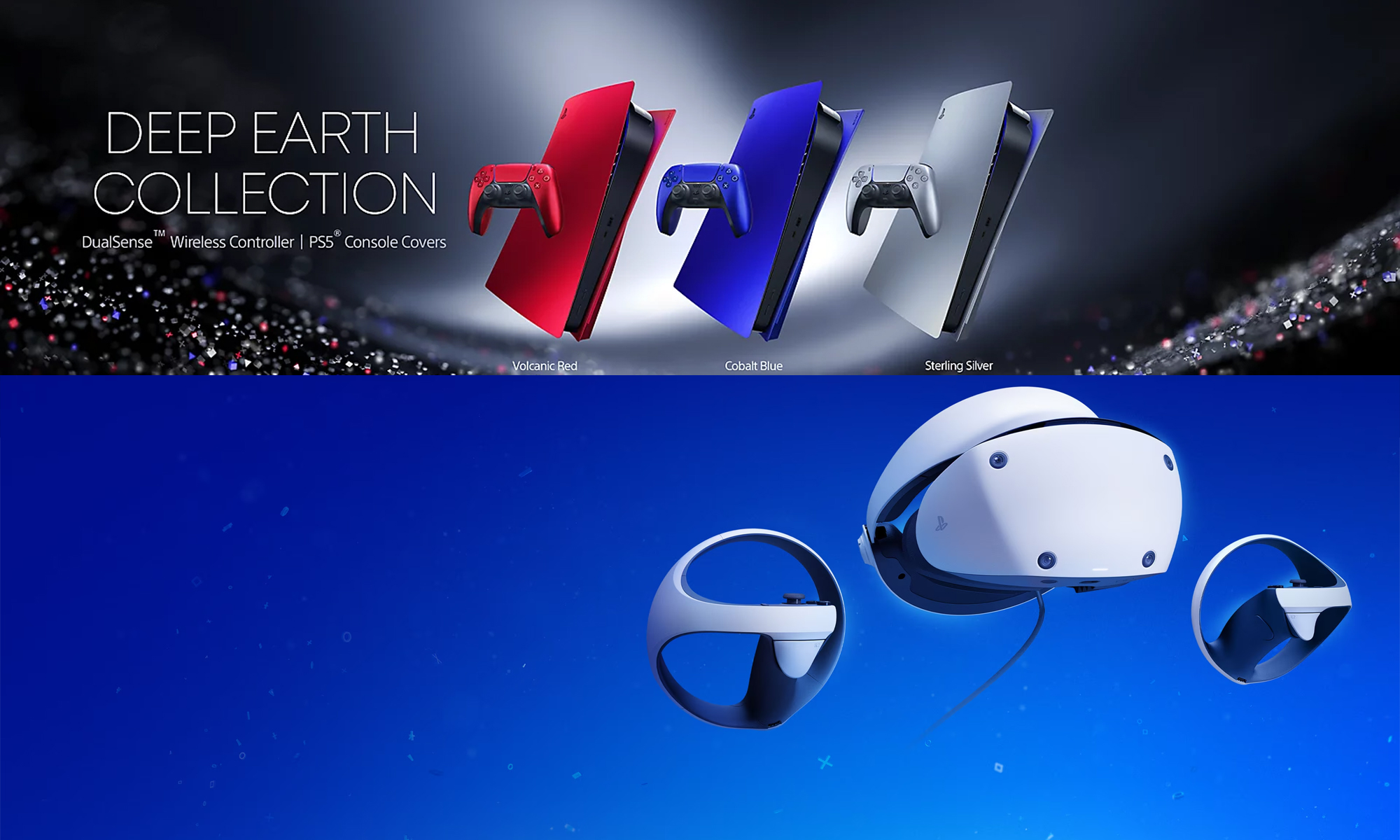
Devil May Cry theme by crazystage15
Download: DevilMayCry_2.p3t

(1 background)
| Devil May Cry | |
|---|---|
 | |
| Genre(s) | |
| Developer(s) |
|
| Publisher(s) | Capcom |
| Creator(s) | Hideki Kamiya |
| Platform(s) | |
| First release | Devil May Cry August 23, 2001 |
| Latest release | Devil May Cry 5: Special Edition November 10, 2020 |
Devil May Cry[a] is an urban fantasy action-adventure game franchise created by Hideki Kamiya. It is primarily developed and published by Capcom. The series centers on the demon hunter Dante and his efforts to thwart various demon invasions of Earth. Its gameplay consists of combat scenarios in which the player must attempt to extend long chains of attacks, avoiding damage and exhibiting stylized combat by varying their attacks; this combat, along with time and the number of items collected and used, are considered in grading the player's performance.
The series alludes to Italian poet Dante's Divine Comedy. Hideki Kamiya created Devil May Cry after a failed attempt to develop a Resident Evil game with the first game originally being conceived as Resident Evil 4. Kamiya wanted to create a game with more action features, which Capcom felt the series did not need. The games were directed by Hideaki Itsuno and writer Bingo Morihashi. Capcom announced a new game, DmC: Devil May Cry (developed by Ninja Theory and supervised by Capcom), during the 2010 Tokyo Game Show. A high-definition remastering of the three PlayStation 2 titles was released for PlayStation 3 and Xbox 360 in 2012, and in 2018 for the PlayStation 4, Windows, and Xbox One. The latest game is Devil May Cry 5, released on March 8, 2019.
The series has been successful; the main entries has sold 31 million copies worldwide and received Capcom's Platinum Title award.[1] The success of the video-game series has led to comic books, novelizations, two animated series, guides, collectibles, publications, and a variety of action figures.
Games[edit]
| 2001 | Devil May Cry |
|---|---|
| 2002 | |
| 2003 | Devil May Cry 2 |
| 2004 | |
| 2005 | Devil May Cry 3: Dante's Awakening |
| 2006 | Devil May Cry 3: Dante's Awakening – Special Edition |
| 2007 | Devil May Cry (mobile) |
| 2008 | Devil May Cry (mobile) |
| Devil May Cry 4 | |
| 2009 | |
| 2010 | |
| 2011 | |
| 2012 | Devil May Cry HD Collection |
| 2013 | DmC: Devil May Cry |
| 2014 | |
| 2015 | Devil May Cry 4: Special Edition |
| 2016 | |
| 2017 | |
| 2018 | Devil May Cry HD Collection (PS4, Xbox One, PC) |
| 2019 | Devil May Cry 5 |
| 2020 | Devil May Cry 5: Special Edition |
| 2021 | |
| 2022 | |
| 2023 | |
| 2024 | Devil May Cry: Peak of Combat |
- Devil May Cry: Players assume the role of Dante, a skilled demon hunter. The gameplay focuses on fast-paced, highly stylized combat; a high style ranking requires long attack and evasion strings while avoiding damage. Although the game also features puzzle-solving and exploration elements retained from its survival-horror origins, they are downplayed in favor of action. In later games, the system was modified; players had to vary their attacks to maintain their style rank.[2] The Devil Trigger enables a player's character to assume a devilish form with additional powers (based on their current weapon), while the character's strength and speed increase, and health is slowly restored.[2]

- Devil May Cry 2: Dante is generally the game's lead character. Two other playable characters, Lucia and Trish are also available. The ability to perform combination attacks in mid-air and evasion and weapon-change buttons were introduced. With the latter, a player can cycle through ranged weapons without switching to the inventory screen.
- Devil May Cry 3: Dante's Awakening: A selection of gameplay styles were added, allowing the player to focus on favorite techniques or weapons. Each of the four styles gains experience points, which unlock more techniques and abilities without costing red orbs (the series' currency). A second weapon-change button was added, allowing the player to cycle through a character's melee weaponry.[3] The game was re-released as Devil May Cry 3: Special Edition with new skills for Dante and the ability to play as Vergil.[4]
- Devil May Cry: Two different mobile games for feature phones were released in 2007–2008. One has similar gameplay to Devil May Cry 3 and uses enemies and characters from that game. The other one is a 2D side-scrolling beat 'em up.[5]
- Devil May Cry 4: This entry introduces a new protagonist, Nero, who is playable alongside the returning Dante. Nero's Devil Bringer arm gives players the ability to pull distant enemies in to be attacked or destroyed. Nero is also armed with a sword which can be throttled up, allowing players to pre-charge it for extra damage on the next hit; with precise timing, it can be charged after each attack for extra damage and style. As Dante, players can switch fighting styles in mid-combat, allowing more varied and unique combos.[6] The game was re-released as Devil May Cry 4: Special Edition, featuring the ability to play as Vergil as well as returning characters Lady and Trish.
- Devil May Cry HD Collection: A collection of the series' first three games for the PlayStation 3 and Xbox 360, ported by Pipeworks Software and Double Helix Games, eventually released on March 22, 2012, in Japan and March 29, 2012, in the US.[7] It was later ported to the PlayStation 4, Windows, and Xbox One on March 13, 2018.[8][9]
- DmC: Devil May Cry: This reboot of the series introduced a new continuity. Players could reach hidden areas with the Ophion whip and grappling hook. The environment often "attacks" Dante by changing its architecture and infrastructure to a more-hostile form, prompting fast-paced chase sequences and platforming scenarios.[10][11]
- Devil May Cry 5: This game continues the original continuity from Devil May Cry 4. It again features Nero and Dante as playable characters, as well as a new character named V. Nero's Devil Bringer arm is replaced with a selection of swappable cybernetic arms dubbed Devil Breakers, each one featuring distinct gameplay mechanics. V remotely commands three demons in battle due to his weak physical state.[12] The game was re-released as Devil May Cry 5: Special Edition, featuring the ability to play as Vergil.
- Devil May Cry: Peak of Combat: A mobile-phone game by Yunchang Games, based on Devil May Cry 3. Its rendition of Dante's appearance was criticized, and the developers promised to fix it when the game left the beta period for release in 2020.[13]
Plot[edit]
The series begins two millennia before the first game with the demon Sparda, the Black Knight, defeating Demon World ruler Mundus. Sparda stops Mundus from conquering the human world by sealing several Hellgates and Temen-Ni-Gru (the last portal) with a ritual requiring his blood and the aid of a human priestess. Sparda meets Eva, who gives birth to his twin sons Dante and Vergil.
The plot begins with Devil May Cry 3, a year after Dante has a falling-out with Vergil.[14] A large tower erupts from the ground near the shop, and Dante interprets it as a challenge from Vergil.[15] Dante is defeated in Temen-Ni-Gru by Vergil, who takes his locket and leaves with Arkham. Dante's dormant devil power revives him, and he resumes pursuing his brother. Vergil wants to use the pendants their mother gave them in a ritual to create a portal to the Demon World. The battle is joined by Lady, who wants to avenge her mother's death by Arkham; Arkham manipulated the three into completing the ritual, which would allow him to acquire Sparda's sword: the Force Edge.[16][17] Dante and Vergil defeat him, and resume battling each other. The portal begins to close, and Vergil approaches it. Dante pleads with his brother not to go, but Vergil leaps into the Demon World before the portal closes. Vergil is tested and encounters Mundus, his mother's killer. When Lady returns to the human world, she coins the phrase "devil may cry"; Dante uses it for the shop.[18][19]
Dante is confronted in Devil May Cry by Trish, who reveals that Mundus is planning to return and only a descendant of Sparda can defeat him.[20] He explores Mallet Island (where Mundus is set to return), encountering demons which include Mundus' general:[21] the undead Vergil, Nelo Angelo.[22] As Dante approaches Mundus, he falls into a trap which reveals that Trish is the demon's agent; he saves her, however, because she resembles his mother. Trish saves Dante from Mundus, and Dante realizes his father's power.[23] Dante defeats Mundus when Trish helps him return Mundus to the Demon World.[24] Dante and Trish escape as the island collapses and work together in the Devil Never Cry shop.
In the Devil May Cry: The Animated Series anime, Trish is a demon hunter; Dante is the bodyguard of Patty, a young heiress who becomes obsessed with him. Patty's mother is descended from a sorcerer who sealed the power of Abigail, an ancient devil lord. Patty is targeted by Sid, a demon seeking Abigail's power. Lady and Trish fight demons summoned by Sid, and Dante kills him.
Dante is invited by Lucia in Devil May Cry 2 to meet her mother, Matier. Dante learns that Arius is collecting artifacts (Arcana) to summon the demon lord Argosax.[25] Dante flips a coin, and decides to help.[26] Lucia confronts Arius, who reveals that he created her.[27] Lucia gives Dante the last of the Arcana before facing Arius alone.[28] Dante encounters Matier, who asks him to take the Arcana to save Lucia from Arius.[29] Lucia attacks Arius, but he captures her. Dante arrives, trades the Arcana for Lucia, and attacks Arius (who escapes).[30] A stream of energy strikes the Ouroboros tower, and a portal to the demon world opens. Dante and Lucia argue about who will enter, and Dante determines that he will go.[31] After Dante leaves, Arius returns to the human world and Lucia defeats him.[32]
In Devil May Cry 4, Dante and Trish discover foul play within the Order of the Sword and investigate while learning its religious leader's scheme to conquer the world using demonic power. Dante seemingly assassinates the Sanctus, only to face a young holy knight named Nero, who awakened his demonic forces as a descendant of Sparda. Nero quests to capture Dante while gaining Yamato, only to learn the Order's dark secrets before being captured by Sanctus through his girlfriend. Dante manages to cripple Sanctus's plans before freeing Nero to finish the job. The two part ways on good terms with Nero allowed keeping Yamato.
In Devil May Cry 5, set several years after Devil May Cry 4, Nero runs a mobile branch of Dante's Devil May Cry business.[33] He befriends Nico, a weapons artist and descendant of the gunsmith who crafted Dante's Ebony and Ivory handguns.[34] Nero's Devil Bringer arm from Devil May Cry 4 is stolen; armed with a prosthetic Devil Breaker created by Nico, he leaves with Dante and the demon hunter V to face their "strongest foe yet".[35][36]
Although the series' timeline had placed Devil May Cry 4 before Devil May Cry 2, it was retconned with the release of Devil May Cry 5.[37][38] DmC: Devil May Cry, developed by Ninja Theory, is not part of the timeline and takes place in an alternate universe from the main series. Along with a very different looking Dante, it moves away from the gothic look of the previous games to a more contemporary setting with some social commentary on mass media and culture.[39]
Development[edit]

After the completion of Resident Evil 2 in 1998, preliminary work on a PlayStation 2 installment of the Resident Evil series began by Team Little Devil under the direction of Hideki Kamiya.[40] Early research and development included a trip to Spain to examine castles as a basis for the game's environments. Its prototype, however, was a radical departure from the Resident Evil formula and the survival horror genre. Kamiya rewrote the story and changed its premise, drawing from Italian poet Dante Alighieri's Divine Comedy[41][42] for Devil May Cry.[43]
Strider, another Capcom franchise, is cited as a vital influence on the Devil May Cry games and their action, particularly in their inclusion of the "boss rush".[44][45]
Despite the success of the original game, its sequel was not created by Kamiya or Team Little Devils.[46][47] Although an unidentified director was placed in charge of the project, Capcom was dissatisfied with their work and assigned Hideaki Itsuno "with only 4 to 5 months remaining in development" to steer the project back on course.[48] Despite Itsuno's limited time on the project, he is the only person credited as director in the final version of the game.[49] According to producer Tsuyoshi Tanaka, the design aim was to make Devil May Cry 2 bigger than its predecessor; Tanaka estimated that the game's environments were about nine times larger than the first.[50]
After Devil May Cry 2's mixed reception, Capcom decided to develop the next game like the more critically successful Devil May Cry. Gameplay elements, such as environment size and battle engine, were reconsidered.[51] In the original game, Vergil was killed by demons early and his soul was controlled by Mundus; Bingo Morihashi wanted to create an alternate universe in which Vergil was alive. However, Kamiya gave Morihashi the freedom to rework Vergil's backstory and make him a living teenager for Devil May Cry 3.[52] As a result, the game was designed as a prequel to the series, set several years before the events of the first game.
Development of Devil May Cry 4 began shortly after its predecessor's success.[53] The development team had 80 members.[54] A new protagonist was discussed many times at Capcom, but was not approved until producer Hiroyuki Kobayashi said that Dante had to be in the game.[55] Kobashi said before the game's release that they wanted to make Dante seem significantly more powerful than Nero, to create an obvious difference between the strength of a "veteran" compared to a "rookie".[56] Writer Morihashi collaborated with film director Yuji Shimomura, who worked on the earlier games. Morihashi left Capcom at one point, but returned at Itsuno's request. It took him a year to finish writing the game; he had difficulty with the characterization of Nero, the new protagonist. Dante returned as a supporting character.[57]
Although the fourth game was a commercial and critical success, the staff considered rebooting the series because other game series had better sales.[58] They chose Ninja Theory, impressed with their work on Heavenly Sword (which the staff thought would work with a Devil May Cry game).[59] However, in 2013 Itsuno expressed interest in developing a fifth installment.[60] It was originally thought that Itsuno intended for the series to go on hiatus or end if Devil May Cry 4: Special Edition was not a commercial success,[61] but he said in a GameSpot interview that the series' future did not depend on Devil May Cry 4: Special Edition's sales. He alleviated fears that DmC: Devil May Cry's sales would kill the series, confirming that Capcom was satisfied with them.[62] In mid-January 2016, Itsuno tweeted that he had begun work on a new project.[63] Reuben Langdon and Johnny Yong Bosch, who had done voice acting and motion capture for Dante and Nero in Devil May Cry 4, took pictures of themselves in motion-capture gear in March 2016; this led to speculation that a new Devil May Cry game was in development.[64] According to Capcom Vancouver, "It's not a game that [they] announced that [they are] working on at [their] studio".[65] On May 17, 2018, the domain name "DevilMayCry5.com" was registered under Capcom's Onamae domain register.[66]
Devil May Cry 5, featuring the return of Dante and Nero, was confirmed at E3 2018 for release the following year.[67] Most of the team had worked on the recently released Resident Evil 7, and were experienced with the game engine; Itsuno was influenced by his work in Monster Hunter: World to provide content appealing to new gamers but also felt that making the game challenging would appeal to long-time fans.[68] Other members of the staff had worked on the reboot game DmC: Devil May Cry, but the Osaka team was more willing to make a sequel to the fourth installment of the main series. The team listened to fan opinions about previous games to ensure that the new game appealed to them; an "auto" mode facilitated combos.[69] Itsuno was moved to tears by a film in which three robots combined into a giant robot to overcome their foe, and wanted to create similar moments.[70] He wanted to convey the style of a Hollywood movie such as Marvel's Avengers series.[71] In November 2017, Kamiya expressed interest in making a remake of the first installment and a crossover game with Dante and Bayonetta.[72]
Other media[edit]
Light novels[edit]
The series has several print adaptations. Two Devil May Cry light novels, written by Shinya Goikeda and illustrated by Shirow Miwa, were published in Japan in 2002 and translated and published in the United States in 2006. The first, Devil May Cry Volume 1, was published in Japan in conjunction with the release of the first game and explored Dante in an adventure set before the game's events. The second, entitled Devil May Cry Volume 2 in the US, was published in Japan to coincide with the second game's release and is set after the first game's events. Tokyopop published the books in the United States in June and November 2006, respectively.[73][74]
Bingo Morihashi wrote a Devil May Cry 4 novel entitled Devil May Cry 4 Deadly Fortune. The two-volume novel, published in Japan in 2009, has a number of scenes which were not included in the original game due to time constraints.[75][76] A prequel novel by Morihashi titled Before the Nightmare, set before Devil May Cry 5 and leading to the beginning of the game, was published on March 1, 2019.[77]
Comics and manga[edit]
Three issues of a comic adaptation of the first game were published by the Canadian Dreamwave Productions in 2004, but the series was left unfinished when the company went bankrupt the following year.[78] On July 25, 2008, WildStorm (a DC Comics imprint) and Capcom announced that they would collaborate on a Devil May Cry comic-book series. Details about the series were planned to be announced at a later date,[79] but no new information has been provided.
Two volumes of a planned three-part Devil May Cry 3 manga series have been published in Japan and the United States. Set a year before the events of Devil May Cry 3, the manga describes how the characters come to be at the beginning of the game.
On March 7, 2019, Capcom announced that a tie-in manga entitled Devil May Cry 5 Visions of V would be serialized on the Japanese manga-hosting site Line Manga (LINE マンガ).[80] The manga's prologue was published before the serialization began. Illustrated by Tomio Ogata, the manga (only available in Japan) would update every other Sunday beginning on April 27.[81][82][83]
Animation[edit]
Anime[edit]
An anime series, Devil May Cry: The Animated Series, premiered on Japan's Wowow TV network on June 12, 2007. The 12-episode series,[84][85] produced by Madhouse, was directed by Shin Itagaki. Bingo Morihashi, a writer of the third and fourth games, was one of its writers.
Animated series[edit]
In November 2018, Adi Shankar announced that he had acquired the rights to produce a Devil May Cry animated series for Netflix.[86] Shankar, who has been completing a similar animated series for Konami's Castlevania franchise, said that he considered both series part of a shared "Bootleg Multiverse".[87]
In November 2021, Shankar revealed that the show's first season will have 8 episodes.[88] He also have plans for a connected "multi-season arc", like what he did with Castlevania, and that fan-favorite characters will make their debut throughout the series.[88] In November 2023, Netflix announced that the series will premiere in 2024.[89]
Film[edit]
On February 28, 2011, Screen Gems (which made Resident Evil into a film series) had purchased feature-film rights to the Devil May Cry series.[90] Kyle Ward was hired to write the screenplay for the film (based on DmC: Devil May Cry), which would be Dante's origin story.[91][92][93] No news has emerged about the project's status.
Plays[edit]
Capcom produced Sengoku Basara vs. Devil May Cry a staged amalgam of the Devil May Cry and Sengoku Basara series, in August 2015. In the play, Dante, Lady, Trish, and Vergil encounter mysterious historical ruins while chasing a devil and are sent back in time to Japan's Warring States period; there, they meet Date Masamune, Sanada Yukimura, and other characters from the Sengoku Basara franchise. The play ran at the AiiA 2.5 Theater in Tokyo for 18 performances. Masanari Ujigawa wrote and directed the play, and Hideaki Itsuno and Izaki Matsuno collaborated on the scenery. Kazushi Miyakoda and Tetsuya Yamaura were the producers, supervised by Hiroyuki Kobayashi and Makoto Yamamoto.[94]
Devil May Cry: The Live Hacker, a musical, ran for 13 performances in March 2019 at Zepp DiverCity in Tokyo. Jun Yoriko wrote and directed the musical and its video,[95] and a DVD was released in late August of that year.[96]
Soundtracks[edit]
The Devil May Cry series has seen the release of seven separate soundtracks. Initially, Capcom was very reluctant to release an officially sanctioned soundtrack for the Devil May Cry series, due to worries that the products would sell poorly. As a means of testing the market, Capcom decided to ask for pre-release sales.[97]
In other games[edit]
Devil May Cry characters appear in the PlayStation versions of the Viewtiful Joe games, another Capcom series created by Hideki Kamiya; Dante is a playable character in the PlayStation 2 port of the first Viewtiful Joe. The PSP version of Viewtiful Joe: Red Hot Rumble also includes Dante and costumes based on Vergil, Trish, Sparda, Marionette, and Plasma.
In a deal between Capcom and Atlus, Megami Tensei character designer Kazuma Kaneko created Dante and Vergil's demonic forms in Devil May Cry 3. In return, Atlus included Dante in his Devil May Cry 2 costume as a character in an enhanced release of Shin Megami Tensei: Nocturne (Maniax in Japan). The English localization of Nocturne was based on the game's Maniax edition.[98]
Dante and Trish are playable characters in Marvel vs. Capcom 3: Fate of Two Worlds, and Vergil, Dante, and Trish are playable characters in its Ultimate Marvel vs. Capcom 3 update. Dante and Vergil retain their Kazuma Kaneko-designed Devil Trigger forms since they are based on the third game of the Devil May Cry series. Dante is also a playable character in Marvel vs. Capcom: Infinite.
The DmC: Devil May Cry version of Dante is a playable character in PlayStation All-Stars Battle Royale, and he is a playable character in Project X Zone for the Nintendo 3DS as half of a pair with Darkstalkers' Demitri Maximoff; Lady is a separate character. Dante returns in its sequel, Project X Zone 2, with Vergil; Vergil's future self, Nelo Angelo, is a rival character.
On June 28, 2021, it was announced that a Mii costume based on Dante would appear in the crossover fighting game
BloodRayne 2
BloodRayne 2 theme by JanoNath
Download: BloodRayne2.p3t

(1 background)
| BloodRayne 2 | |
|---|---|
 | |
| Developer(s) | Terminal Reality |
| Publisher(s) |
|
| Producer(s) | Raymond Holmes |
| Designer(s) |
|
| Programmer(s) |
|
| Artist(s) | Scott Wetterschneider |
| Writer(s) |
|
| Composer(s) | Kyle Richards |
| Series | BloodRayne |
| Engine |
|
| Platform(s) |
|
| Release | |
| Genre(s) | Action, hack and slash |
| Mode(s) | Single-player |

BloodRayne 2 is an action hack and slash video game developed by Terminal Reality for PlayStation 2, Xbox and Microsoft Windows. It does not follow on directly from where BloodRayne finished; instead, it takes place 60 and 70 years later in a contemporary 2000s setting.[3]
A remastered version titled BloodRayne 2: Terminal Cut was released on November 20, 2020, and later on PlayStation 4, PlayStation 5, Xbox One and Nintendo Switch as BloodRayne 2: ReVamped on November 18, 2021.[4]
Plot[edit]
The FMV opens with a flashback set shortly after the first game. Rayne is seen entering a library (called Blood Library), with a few Nazis inside. She finds that Brimstone members have been slaughtered and realizes her vampiric father Kagan is here, acting as an influential Nazi. Rayne rushes to confront him for revenge for her mother's rape and the murder of her family, and Kagan mocks Rayne by saying he does not recognize her, as he sired numerous offspring that way. He finds what he was looking for, called the Vesper Shard. Knowing Rayne still wants to kill him, he then brings Professor Trumain up from the floor, strangled by his own small intestine, but barely alive. Kagan knows that they know each other, and that Trumain "stole" yet another offspring from him. While Kagan mocks Rayne, Truman pulls out a detonator, first giving time for Rayne to run, then detonating the grenade, killing himself and seemingly taking Kagan with him.
Denied the pleasure of killing him herself, Rayne spends the 60 years after the war seeking out and destroying Kagan's offspring.[5] These offspring, Rayne's half-siblings, have banded together to form a group called the Cult of Kagan.[5] The Cult has created the Shroud, a substance that can render sun rays harmless to vampires, allowing them to surface at all times of the day, and which twists nature into a nightmarish perversion [5] (trees dying almost instantly, grass catching on fire, corpses twitching). Using the Shroud, the Cult has pledged to create a new era of vampiric supremacy, continuing Kagan's legacy.
Rayne and her ally Severin find high ranking members of the Cult, who are responsible for hundreds of disappearances in a city. Rayne learns of their plot and defeats her ambitious half-sister Ferrill, the apparent leader of the cult. It is soon revealed that Kagan himself has long survived over the years and has come out of hiding. After Kagan has Ferrill dispatched, he sets about the plot to activate the Shroud, blocking out the sun and setting loose an army of vampires and demonic entities to destroy the city, making it his kingdom. Rayne again sets her sights on killing Kagan.
With Kagan's army having taken over the city, Rayne seeks out his tower to face him once and for all, fighting his army to get to him. A vengeful Ferrill makes an army of her own to usurp Kagan. After Rayne dispatches the last of her half-siblings, she confronts Kagan in his throne room, with Kagan mocking her one last time about the effort he took to create her. A fight ensues and Rayne kills her father, avenging her family.
Despite Kagan's death, the vampires still plague the city, and Severin suggests that Rayne should run it now. Brimestone declares martial law to rescue the surviving humans, cracking down hard on all vampires and more vampire overlords setting their sights on the city.
Development[edit]
The game was developed by a team of around 20 people.[6]
Reception[edit]
| Aggregator | Score | ||
|---|---|---|---|
| PC | PS2 | Xbox | |
| Metacritic | 67/100[22] | 70/100[23] | 71/100[24] |
| Publication | Score | ||
|---|---|---|---|
| PC | PS2 | Xbox | |
| Computer Games Magazine |    [7] [7] | N/A | N/A |
| Computer Gaming World | [8] | N/A | N/A |
| Electronic Gaming Monthly | N/A | 6.33/10[9] | 6.33/10[9] |
| Eurogamer | N/A | N/A | 5/10[10] |
| Game Informer | N/A | 8/10[11] | 8/10[11] |
| GamePro | N/A | [12] | [12] |
| GameSpot | 6/10[13] | 7.3/10[14] | 7.3/10[14] |
| GameSpy | N/A | [15] | [15] |
| GameZone | N/A | N/A | 8.2/10[16] |
| IGN | 6.8/10[17] | 8/10[18] | 8/10[18] |
| Official U.S. PlayStation Magazine | N/A | [19] | N/A |
| Official Xbox Magazine (US) | N/A | N/A | 7.2/10[20] |
| PC Gamer (US) | 70%[21] | N/A | N/A |
BloodRayne 2 received "average" reviews on all platforms, according to the review aggregation website Metacritic.[22][23][24]
References[edit]
- ^ Adams, David (October 13, 2004). "The Sexy Girl Bites". IGN. Retrieved March 17, 2023.
- ^ Adams, David (August 2, 2005). "BloodRayne 2 Bares Fangs at Retail". IGN. Retrieved March 17, 2023.
- ^ Saltzman, Marc (October 22, 2002). "BloodRayne". The Times Herald. Retrieved August 29, 2021 – via Newspapers.com.
- ^ Lada, Jenni (September 16, 2021). "BloodRayne 1 and 2 ReVamped PS4 and Switch Announced". Siliconera. Archived from the original on September 16, 2021. Retrieved September 16, 2021.
- ^ a b c "BloodRayne Storyline". BloodRayne 2. Majesco Sales. Archived from the original on June 20, 2007.
- ^ "BloodRayne 2 Q&A". armchairempire.com. February 7, 2004. Archived from the original on June 24, 2006. Retrieved January 28, 2024.
- ^ "BloodRayne 2". Computer Games Magazine. No. 180. theGlobe.com. November 2005. p. 72.
- ^ Gladstone, Darren (October 2005). "BloodRayne 2" (PDF). Computer Gaming World. No. 255. Ziff Davis. p. 80. Retrieved October 28, 2019.
- ^ a b EGM staff (December 25, 2004). "BloodRayne 2 (PS2, Xbox)". Electronic Gaming Monthly. No. 186. Ziff Davis. p. 106.
- ^ Martin, Matt (February 21, 2006). "BloodRayne 2 (Xbox)". Eurogamer. Gamer Network. Retrieved October 28, 2019.
- ^ a b Miller, Matt (November 2004). "Bloodrayne 2 [sic] (PS2, Xbox) [score mislabeled as "9/10"]". Game Informer. No. 139. GameStop. p. 147. Archived from the original on February 7, 2008. Retrieved October 28, 2019.
- ^ a b Clockwork Crow (October 13, 2004). "BloodRayne 2 (PS2, Xbox)". GamePro. IDG Entertainment. Archived from the original on February 12, 2005. Retrieved October 28, 2019.
- ^ Navarro, Alex (August 23, 2005). "BloodRayne 2 Review (PC)". GameSpot. CBS Interactive. Retrieved October 28, 2019.
- ^ a b Navarro, Alex (October 13, 2004). "BloodRayne 2 Review (PS2, Xbox) [date mislabeled as "October 14, 2004"]". GameSpot. CBS Interactive. Retrieved October 28, 2019.
- ^ a b Fischer, Russ (October 27
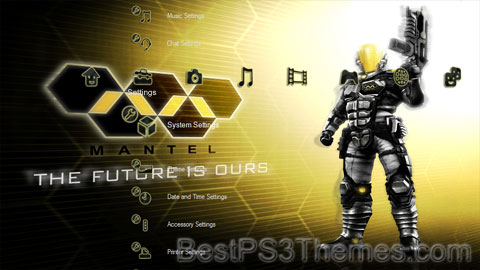
Haze #4
Haze theme by AzuNiTe
Download: Haze_4.p3t
(1 background)
| Part of a series on |
| Pollution |
|---|
 |


.jpg)


Haze is traditionally an atmospheric phenomenon in which dust, smoke, and other dry particulates suspended in air obscure visibility and the clarity of the sky. The World Meteorological Organization manual of codes includes a classification of particulates causing horizontal obscuration into categories of fog, ice fog, steam fog, mist, haze, smoke, volcanic ash, dust, sand, and snow.[1] Sources for particles that cause haze include farming (ploughing in dry weather), traffic, industry, windy weather, volcanic activity and wildfires. Seen from afar (e.g. an approaching airplane) and depending on the direction of view with respect to the Sun, haze may appear brownish or bluish, while mist tends to be bluish grey instead. Whereas haze often is considered a phenomenon occurring in dry air, mist formation is a phenomenon in saturated, humid air. However, haze particles may act as condensation nuclei that leads to the subsequent vapor condensation and formation of mist droplets; such forms of haze are known as "wet haze".
In meteorological literature, the word haze is generally used to denote visibility-reducing aerosols of the wet type suspended in the atmosphere. Such aerosols commonly arise from complex chemical reactions that occur as sulfur dioxide gases emitted during combustion are converted into small droplets of sulfuric acid when exposed. The reactions are enhanced in the presence of sunlight, high relative humidity, and an absence of air flow (wind). A small component of wet-haze aerosols appear to be derived from compounds released by trees when burning, such as terpenes. For all these reasons, wet haze tends to be primarily a warm-season phenomenon. Large areas of haze covering many thousands of kilometers may be produced under extensive favorable conditions each summer.
Air pollution[edit]
Haze often occurs when suspended dust and smoke particles accumulate in relatively dry air. When weather conditions block the dispersal of smoke and other pollutants they concentrate and form a usually low-hanging shroud that impairs visibility and may become a respiratory health threat if excessively inhaled. Industrial pollution can result in dense haze, which is known as smog.
Since 1991, haze has been a particularly acute problem in Southeast Asia. The main source of the haze has been smoke from fires occurring in Sumatra and Borneo which dispersed over a wide area. In response to the 1997 Southeast Asian haze, the ASEAN countries agreed on a Regional Haze Action Plan (1997) as an attempt to reduce haze. In 2002, all ASEAN countries signed the Agreement on Transboundary Haze Pollution, but the pollution is still a problem there today. Under the agreement, the ASEAN secretariat hosts a co-ordination and support unit.[2] During the 2013 Southeast Asian haze, Singapore experienced a record high pollution level, with the 3-hour Pollutant Standards Index reaching a record high of 401.[3]
In the United States, the Interagency Monitoring of Protected Visual Environments (IMPROVE) program was developed as a collaborative effort between the US EPA and the National Park Service in order to establish the chemical composition of haze in National Parks and establish air pollution control measures in order to restore the visibility of the air to pre-industrial levels.[4] Additionally, the Clean Air Act requires that any current visibility problems be addressed and remedied, and future visibility problems be prevented, in 156 Class I Federal areas located throughout the United States. A full list of these areas is available on EPA's website.[5]
In addition to the severe health issues caused by haze from air pollution, dust storm particles, and bush fire smoke, reduction in irradiance is the most dominant impact of these sources of haze and a growing issue for photovoltaic production as the solar industry grows.[6] Smog also lowers agricultural yield and it has been proposed that pollution controls could increase agricultural production in China.[7] These effects are negative for both sides of agrivoltaics (the combination of photovoltaic electricity production and food from agriculture).
International disputes[edit]
Transboundary haze[edit]
Haze is no longer just a confined as a domestic problem. It has become one of the causes of international disputes among neighboring countries. Haze can migrate to adjacent countries in the path of wind and thereby pollutes other countries as well, even if haze does not first manifest there. One of the most recent problems occur in Southeast Asia which largely affects the nations of Indonesia, Malaysia and Singapore. In 2013, due to forest fires in Indonesia, Kuala Lumpur and surrounding areas became shrouded in a pall of noxious fumes dispersed from Indonesia, that brings a smell of ash and coal for more than a week, in the country's worst environmental crisis since 1997.
The main sources of the haze are Indonesia's Sumatra Island, Indonesian areas of Borneo, and Riau, where farmers, plantation owners and miners have set hundreds of fires in the forests to clear land during dry weather. Winds blew most of the particulates and fumes across the narrow Strait of Malacca to Malaysia, although parts of Indonesia in the path are also affected.[8] The 2015 Southeast Asian haze was another major crisis of air quality, although there were occasions such as the 2006 and 2019 haze which were less impactful than the three major Southeast Asian haze of 1997, 2013 and 2015.
Obscuration[edit]
Haze causes issues in the area of terrestrial photography and imaging, where the penetration of large amounts of dense atmosphere may be necessary to image distant subjects. This results in the visual effect of a loss of contrast in the subject, due to the effect of light scattering and reflection through the haze particles. For these reasons, sunrise and sunset colors and possibly the sun itself appear subdued on hazy days, and stars may be obscured by haze at night. In some cases, attenuation by haze is so great that, toward sunset, the sun disappears altogether before even reaching the horizon.[9]
Haze can be defined as an aerial form of the Tyndall effect therefore unlike other atmospheric effects such as cloud, mist and fog, haze is spectrally selective in accordance to the electromagnetic spectrum: shorter (blue) wavelengths are scattered more, and longer (red/infrared) wavelengths are scattered less. For this reason, many super-telephoto lenses often incorporate yellow light filters or coatings to enhance image contrast.[10] Infrared (IR) imaging may also be used to penetrate haze over long distances, with a combination of IR-pass optical filters and IR-sensitive detectors at the intended destination.
See also[edit]
- Arctic haze
- ASEAN Agreement on Transboundary Haze Pollution
- Asian brown cloud
- Asian Dust
- Coefficient of haze
- Convention on Long-Range Transboundary Air Pollution
- Fog
- Mist
- Saharan Air Layer
- Southeast Asian haze
- Smog
- Trail Smelter dispute
Notes[edit]
- ^ "WMO Manual on Codes" (PDF). [dead link]
- ^ ASEAN action hazeonline Archived 2005-02-05 at the Wayback Machine
- ^ "Singapore haze hits record high from Indonesia fires". BBC News. 21 June 2013. Retrieved 19 January 2014.
- ^ "Improve – Interagency Monitoring of Protected Visual Environments". vista.cira.colostate.edu.
- ^ "Federal Class 1 Areas".
- ^ Sadat, Seyyed Ali; Hoex, Bram; Pearce, Joshua M. (2022). "A Review of the Effects of Haze on Solar Photovoltaic Performance". Renewable and Sustainable Energy Reviews. 167: 112796. doi:10.1016/j.rser.2022.1127
Timeshift v3
Timeshift version 3 theme by Gerwin De Deken (AzuNiTe)
Download: Timeshift_3.p3t
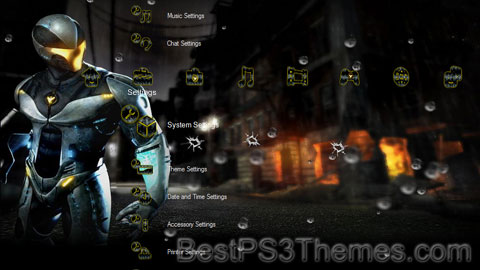
(1 background)
P3T Unpacker v0.12
Copyright (c) 2007. Anoop Menon
This program unpacks Playstation 3 Theme files (.p3t) so that you can touch-up an existing theme to your likings or use a certain wallpaper from it (as many themes have multiple). But remember, if you use content from another theme and release it, be sure to give credit!
Download for Windows: p3textractor.zip
Instructions:
Download p3textractor.zip from above. Extract the files to a folder with a program such as WinZip or WinRAR. Now there are multiple ways to extract the theme.
The first way is to simply open the p3t file with p3textractor.exe. If you don’t know how to do this, right click the p3t file and select Open With. Alternatively, open the p3t file and it will ask you to select a program to open with. Click Browse and find p3textractor.exe from where you previously extracted it to. It will open CMD and extract the theme to extracted.[filename]. After that, all you need to do for any future p3t files is open them and it will extract.
The second way is very simple. Just drag the p3t file to p3textractor.exe. It will open CMD and extract the theme to extracted.[filename].
For the third way, first put the p3t file you want to extract into the same folder as p3textractor.exe. Open CMD and browse to the folder with p3extractor.exe. Enter the following:
p3textractor filename.p3t [destination path]Replace filename with the name of the p3t file, and replace [destination path] with the name of the folder you want the files to be extracted to. A destination path is not required. By default it will extract to extracted.filename.
Timeshift v2
Timeshift version 2 theme by Gerwin De Deken (AzuNiTe)
Download: Timeshift_2.p3t
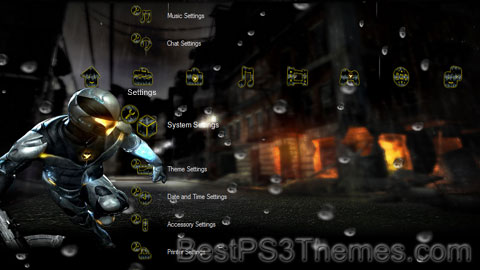
(1 background)
P3T Unpacker v0.12
Copyright (c) 2007. Anoop Menon
This program unpacks Playstation 3 Theme files (.p3t) so that you can touch-up an existing theme to your likings or use a certain wallpaper from it (as many themes have multiple). But remember, if you use content from another theme and release it, be sure to give credit!
Download for Windows: p3textractor.zip
Instructions:
Download p3textractor.zip from above. Extract the files to a folder with a program such as WinZip or WinRAR. Now there are multiple ways to extract the theme.
The first way is to simply open the p3t file with p3textractor.exe. If you don’t know how to do this, right click the p3t file and select Open With. Alternatively, open the p3t file and it will ask you to select a program to open with. Click Browse and find p3textractor.exe from where you previously extracted it to. It will open CMD and extract the theme to extracted.[filename]. After that, all you need to do for any future p3t files is open them and it will extract.
The second way is very simple. Just drag the p3t file to p3textractor.exe. It will open CMD and extract the theme to extracted.[filename].
For the third way, first put the p3t file you want to extract into the same folder as p3textractor.exe. Open CMD and browse to the folder with p3extractor.exe. Enter the following:
p3textractor filename.p3t [destination path]Replace filename with the name of the p3t file, and replace [destination path] with the name of the folder you want the files to be extracted to. A destination path is not required. By default it will extract to extracted.filename.
Timeshift v1
Timeshift version 1 theme Gerwin De Deken (AzuNiTe)
Download: Timeshift_1.p3t
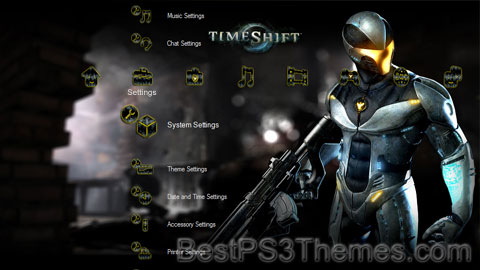
(1 background)
P3T Unpacker v0.12
Copyright (c) 2007. Anoop Menon
This program unpacks Playstation 3 Theme files (.p3t) so that you can touch-up an existing theme to your likings or use a certain wallpaper from it (as many themes have multiple). But remember, if you use content from another theme and release it, be sure to give credit!
Download for Windows: p3textractor.zip
Instructions:
Download p3textractor.zip from above. Extract the files to a folder with a program such as WinZip or WinRAR. Now there are multiple ways to extract the theme.
The first way is to simply open the p3t file with p3textractor.exe. If you don’t know how to do this, right click the p3t file and select Open With. Alternatively, open the p3t file and it will ask you to select a program to open with. Click Browse and find p3textractor.exe from where you previously extracted it to. It will open CMD and extract the theme to extracted.[filename]. After that, all you need to do for any future p3t files is open them and it will extract.
The second way is very simple. Just drag the p3t file to p3textractor.exe. It will open CMD and extract the theme to extracted.[filename].
For the third way, first put the p3t file you want to extract into the same folder as p3textractor.exe. Open CMD and browse to the folder with p3extractor.exe. Enter the following:
p3textractor filename.p3t [destination path]Replace filename with the name of the p3t file, and replace [destination path] with the name of the folder you want the files to be extracted to. A destination path is not required. By default it will extract to extracted.filename.
Resistance Fall of Man #2
Resistance Fall of Man theme by AzuNiTe
Download: ResistanceFallOfMan_2.p3t
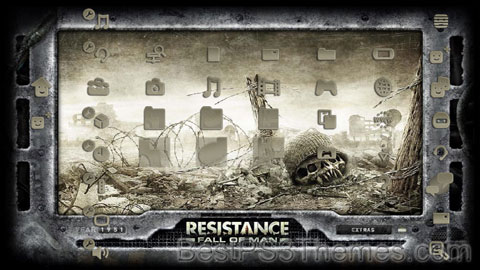
(1 background)
P3T Unpacker v0.12
Copyright (c) 2007. Anoop Menon
This program unpacks Playstation 3 Theme files (.p3t) so that you can touch-up an existing theme to your likings or use a certain wallpaper from it (as many themes have multiple). But remember, if you use content from another theme and release it, be sure to give credit!
Download for Windows: p3textractor.zip
Instructions:
Download p3textractor.zip from above. Extract the files to a folder with a program such as WinZip or WinRAR. Now there are multiple ways to extract the theme.
The first way is to simply open the p3t file with p3textractor.exe. If you don’t know how to do this, right click the p3t file and select Open With. Alternatively, open the p3t file and it will ask you to select a program to open with. Click Browse and find p3textractor.exe from where you previously extracted it to. It will open CMD and extract the theme to extracted.[filename]. After that, all you need to do for any future p3t files is open them and it will extract.
The second way is very simple. Just drag the p3t file to p3textractor.exe. It will open CMD and extract the theme to extracted.[filename].
For the third way, first put the p3t file you want to extract into the same folder as p3textractor.exe. Open CMD and browse to the folder with p3extractor.exe. Enter the following:
p3textractor filename.p3t [destination path]Replace filename with the name of the p3t file, and replace [destination path] with the name of the folder you want the files to be extracted to. A destination path is not required. By default it will extract to extracted.filename.
Final Fantasy VII #3
Final Fantasy VII theme by Cloud_Strife_03
Download: FinalFantasyVII_3.p3t
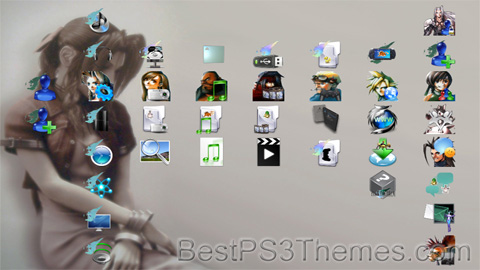
(1 background)
| Final Fantasy VII | |
|---|---|
 North American cover art, featuring the game's protagonist, Cloud Strife | |
| Developer(s) | Square |
| Publisher(s) |
|
| Director(s) | Yoshinori Kitase |
| Producer(s) | Hironobu Sakaguchi |
| Programmer(s) | Ken Narita |
| Artist(s) | |
| Writer(s) | Yoshinori Kitase Kazushige Nojima |
| Composer(s) | Nobuo Uematsu |
| Series | Final Fantasy |
| Platform(s) | |
| Release | January 31, 1997 |
| Genre(s) | Role-playing |
| Mode(s) | Single-player |
Final Fantasy VII[a] is a 1997 role-playing video game developed by Square for the PlayStation console and the seventh main installment in the Final Fantasy series. Square published the game in Japan, and it was released in other regions by Sony Computer Entertainment, becoming the first game in the main series to have a PAL release. The game's story follows Cloud Strife, a mercenary who joins an eco-terrorist organization to stop a world-controlling megacorporation from using the planet's life essence as an energy source. Ensuing events send Cloud and his allies in pursuit of Sephiroth, a superhuman who seeks to wound the planet and harness its healing power in order to be reborn as a god. Throughout their journey, Cloud bonds with his party members, including Aerith Gainsborough, who holds the secret to saving their world.
Development began in 1994, originally for the Super Nintendo Entertainment System. After delays and technical difficulties from experimenting with several platforms, most notably the Nintendo 64, Square moved production to the PlayStation, largely due to the advantages of the CD-ROM format. Veteran Final Fantasy staff returned, including series creator and producer Hironobu Sakaguchi, director Yoshinori Kitase, and composer Nobuo Uematsu. The title was the first in the series to use full motion video and 3D computer graphics, featuring 3D character models superimposed over 2D pre-rendered backgrounds. Although the gameplay remained mostly unchanged from previous entries, Final Fantasy VII introduced more widespread science fiction elements and a more realistic presentation. The combined development and marketing budget amounted to approximately US$80 million.
Final Fantasy VII received widespread commercial and critical success and remains widely regarded as a landmark title, and it is regarded as one of the greatest and most influential video games ever made. The title won numerous Game of the Year awards and was acknowledged for boosting the sales of the PlayStation and popularizing Japanese role-playing games worldwide. Critics praised its graphics, gameplay, music, and story, although some criticism was directed towards the original English localization. Its success has led to enhanced ports on various platforms, a multimedia subseries called the Compilation of Final Fantasy VII, and a high definition remake trilogy currently comprising Final Fantasy VII Remake (2020), and Final Fantasy VII Rebirth (2024).
Gameplay[edit]
The gameplay of Final Fantasy VII is similar to earlier Final Fantasy titles and Japanese role-playing games.[1] The game features three modes of play: the world map, the field, and the battle screen.[2][3]: 15, 20 At its grandest scale, players explore the world of Final Fantasy VII on a 3D world map.[4] The world map contains representations of areas for the player to enter, including towns, environments, and ruins.[5] Natural barriers—such as mountains, deserts, and bodies of water—block access by foot to some areas; as the game progresses, the player receives vehicles that help traverse these obstacles.[3]: 44 Chocobos can be found in certain spots on the map, and if caught, can be ridden to areas inaccessible on foot or by vehicle.[3]: 46 In field mode, the player navigates fully scaled versions of the areas represented on the world map.[4] VII marks the first time in the series that the mode is represented in a three-dimensional space. In this mode, the player can explore the environment, talk with characters, advance the story, and initiate event games.[3]: 15 Event games are short minigames that use special control functions and are often tied to the story.[3]: 18 While in field mode, the player can also find shops and inns. Shops allow the player to buy and sell items that can aid Cloud and his party, such as weapons, armor, and accessories. Inns restore the hit points and mana points of characters who rest at them and cure abnormalities contracted during battles.[3]: 17

At random intervals on the world map and in field mode, and at specific moments in the story, the game will enter the battle screen, which places the player characters on one side and the enemies on the other. It employs an "Active Time Battle" (ATB) system, in which the characters exchange moves until one side is defeated.[1][2] The damage or healing dealt by either side is quantified on screen. Characters have several statistics that determine their effectiveness in battle; for example, hit points determine how much damage they can take, and magic determines how much damage they can inflict with spells. Each character on the screen has a time gauge; when a character's gauge is full, the player can input a command for them. The commands change as the game progresses, and are dependent on the characters in the player's party and their equipment. Commands include attacking with a weapon, casting magic, using items, summoning monsters, and other actions that either damage the enemy or aid the player characters. Final Fantasy VII also features powerful, character-specific commands called Limit Breaks, which can be used only after a special gauge is charged by taking enemy attacks. After being attacked, characters can be afflicted by one or more abnormal "statuses", such as poison or paralysis. These statuses and their adverse effects can be removed by special items or abilities or by resting at an inn. Once all enemies are defeated, the battle ends and the player is rewarded with money, items, and experience points. If the player is defeated, it is game over and the game must be loaded to the last save point.[3]: 20–27
When not in battle, the player can use the menu screen, where they can review each character's status and statistics, use items and abilities, change equipment, save the game when on the world map or at a save point, and manage orbs called Materia. Materia are the main method of customizing characters in Final Fantasy VII, and can be added to equipment to provide characters with new magic spells, monsters to summon, commands, statistical upgrades, and other benefits.[6] Materia level up through their own experience point system and can be combined to create different effects.[3]: 30–42
Synopsis[edit]
Setting and characters[edit]
Final Fantasy VII takes place on a world referred to in-game as the "Planet" and retroactively named "Gaia".[7][8] The planet's lifeforce, called the Lifestream, is a flow of spiritual energy that gives life to everything on the Planet; its processed form is known as "Mako".[9] On a societal and technological level, the game has been defined as an industrial or post-industrial science fiction setting.[10] During Final Fantasy VII, the Shinra Electric Power Company, a world-dominating megacorporation headquartered in the city of Midgar, is draining the Planet's Lifestream for energy, weakening the Planet and threatening its existence and all life.[11] Significant factions within the game include AVALANCHE, an eco-terrorist group seeking Shinra's downfall so the Planet can recover;[8] the Turks, a covert branch of Shinra's security forces;[12] SOLDIER, an elite Shinra fighting force created by enhancing humans with Mako;[13] and the Cetra, a near-extinct human tribe which maintains a strong connection to the Planet and the Lifestream.[14]
The main protagonist is Cloud Strife, an aloof mercenary who claims to be a former 1st Class SOLDIER. Early on, he works with two members of AVALANCHE: Barret Wallace, its brazen but fatherly leader; and Tifa Lockhart, a shy yet nurturing martial artist and his childhood friend. During their journey, they meet Aerith Gainsborough, a carefree flower merchant and one of the last surviving Cetra;[14][15] Red XIII, an intelligent quadruped from a tribe that protects the planet;[16] Cait Sith, a fortune-telling robotic cat controlled by repentant Shinra staff member Reeve;[3][17] and Cid Highwind, a pilot whose dream of being the first human in outer space was unrealized.[18] The group can also recruit Yuffie Kisaragi, a young ninja and skilled Materia thief; and Vincent Valentine, a former Turk and victim of Shinra's experiments.[19] The game's main antagonists are Rufus Shinra, the son of President Shinra and the later leader of the Shinra Corporation;[20] Sephiroth, a former SOLDIER who reappears several years after being presumed dead;[3] and Jenova, a hostile extraterrestrial life-form who the Cetra imprisoned 2,000 years ago and who Sephiroth was created from.[21][22][23] A key character in Cloud's backstory is Zack Fair, a member of SOLDIER and Aerith's first love.[24]
Plot[edit]
AVALANCHE destroys a Shinra Mako reactor in Midgar, but an attack on another reactor goes wrong and Cloud falls into the city's slums. There, he meets Aerith and protects her from Shinra.[25][26] Meanwhile, Shinra finds AVALANCHE's base of operations and intentionally collapses part of the upper city level in retaliation for the Mako reactor being destroyed, killing many AVALANCHE members and innocent bystanders as collateral damage.[27] Aerith is also captured since Shinra believes that as a Cetra, she can potentially reveal the "Promised Land", which they believe is overflowing with Lifestream energy they can exploit.[28][29] Cloud, Barret, and Tifa rescue Aerith, and during their escape from Midgar, discover that Sephiroth murdered President Shinra despite being presumed dead five years earlier.[30] The party pursues Sephiroth across the Planet, with now-President Rufus on their trail; they are soon joined by the rest of the playable characters.
At a Cetra temple, Sephiroth reveals he intends to use a powerful magical artifact known as "Black Materia" to cast the spell "Meteor", which would have a devastating impact on the Planet. Sephiroth claims he will absorb the Lifestream as it attempts to heal the wound caused by Meteor, and become a god-like being in the process.[31] The party retrieves the Black Materia, but Sephiroth manipulates Cloud into surrendering it. Aerith departs alone to stop Sephiroth and follows him to an abandoned Cetra city. While Aerith prays to the Planet for help, Sephiroth attempts to force Cloud to kill her; after this fails, he kills her himself before fleeing, leaving the White Materia behind.[32] The party then learns of Jenova, a hostile alien lifeform who landed on the Planet two thousand years prior to the game's events. Upon arrival on the Planet, Jenova began infecting the Cetra with a virus, and they were nearly wiped out. However, a small group managed to seal away Jenova in a tomb, which Shinra later unearthed. At Nibelheim, Jenova's cells were used in experiments which led to the creation of Sephiroth.[21][32] Five years before the game's events, Sephiroth and Cloud visited Nibelheim, where Sephiroth learned of his origins and was driven insane as a result. He murdered the townspeople, and then vanished after Cloud confronted him.
At the Northern Crater, the party learns that the "Sephiroths" they have encountered are Jenova clones who the insane Shinra scientist Hojo created. Cloud confronts the real Sephiroth as he is killing his clones to reunite Jenova's cells, but is again manipulated into giving him the Black Materia. Sephiroth then taunts Cloud by showing another SOLDIER in his place in his memories of Nibelheim, suggesting that Cloud is a failed clone of Sephiroth.[33] Sephiroth summons Meteor and seals the Crater as Cloud falls into the Lifestream and Rufus captures the party.
After escaping Shinra, the party discovers Cloud at an island hospital in a catatonic state from Mako poisoning, and Tifa decides to stay as his caretaker. When a planetary defense force called Weapon attacks the island, the two fall into the Lifestream,[34] where Tifa helps Cloud reconstruct his memories. Cloud was a mere infantryman who was never accepted into SOLDIER; the SOLDIER in his memories was his friend Zack. At Nibelheim, Cloud ambushed and wounded Sephiroth after the latter's mental breakdown, but Jenova preserved Sephiroth's life. Hojo experimented on Cloud and Zack for four years, injecting them with Jenova's cells and Mako. They managed to escape, but Zack was killed in the process. The trauma of these events triggered an identity crisis in Cloud, and he constructed a false persona based around Zack's stories and his own fantasies.[32][35] Cloud accepts his past and reunites with the party, who learn that Aerith's prayer to the Planet had been successful: the Planet had attempted to summon Holy to prevent Meteor's impact, but Sephiroth prevented it from having any effect.
Shinra fails to destroy Meteor, but manages to defeat a Weapon and puncture the Northern Crater, seemingly killing Rufus and several other personnel. After killing Hojo, who is revealed to be Sephiroth's biological father,[21] the party descends to the Planet's core through the opening in the Northern Crater and defeats both Jenova and Sephiroth. The party escapes and Holy is summoned once again, destroying Meteor with help from the Lifestream.[36] Five hundred years later, Red XIII is seen with two cubs looking out over the ruins of Midgar, which are now covered in greenery, showing that the planet has healed.
Development[edit]


Initial concept talks for Final Fantasy VII began in 1994 at Square studio, following the completion of Final Fantasy VI. As with the previous installment, series creator Hironobu Sakaguchi reduced his role to producer and granted others a more active role in development: these included Yoshinori Kitase, one of the directors of FFVI. The next installment was planned as a 2D game for Nintendo's Super Nintendo Entertainment System (Super NES). After creating an early 2D prototype of it, the team postponed development to help finish Chrono Trigger.[37] Once Chrono Trigger was completed, the team resumed discussions for Final Fantasy VII in 1995.[37][38]
The team discussed continuing the 2D strategy, which would have been the safe and immediate path just prior to the imminent industry shift toward 3D gaming; such a change would require radical new development models.[37] The team decided to take the riskier option and make a 3D game on new generation hardware but had yet to choose between the cartridge-based Nintendo 64 or the CD-ROM-based PlayStation from Sony Computer Entertainment.[37] The team also considered the Sega Saturn console and Microsoft Windows.[39] Their decision was influenced by two factors: a highly successful tech demo based on Final Fantasy VI using the new Softimage 3D software, and the escalating price of cartridge-based games, which was limiting Square's audience.[37][40][41] Tests were made for a Nintendo 64 version, which would use the planned 64DD peripheral despite the lack of 64DD development kits and the prototype device's changing hardware specifications. This version was discarded during early testing, as the 2000 polygons needed to render the Behemoth monster placed excessive strain on the Nintendo 64 hardware, causing a low frame rate.[37] It would have required an estimated thirty 64DD discs to run Final Fantasy VII properly with the data compression methods of the day.[42] Faced with both technical and economic issues on Nintendo's current hardware, and impressed by the increased storage capacity of CD-ROM when compared to the Nintendo 64 cartridge, Square shifted development of Final Fantasy VII, and all other planned projects, onto the PlayStation.[37]
In contrast to the visuals and audio, the overall gameplay system remained mostly unchanged from Final Fantasy V and VI, but with an emphasis on player control.[43] The initial decision was for battles to feature shifting camera angles. Battle arenas had a lower polygon count than field areas, which made creating distinctive features more difficult.[40] The summon sequences benefited strongly from the switch to the cinematic style, as the team had struggled to portray their scale using 2D graphics.[44] In his role as producer, Sakaguchi placed much of his effort into developing the battle system.[24] He proposed the Materia system as a way to provide more character customization than previous Final Fantasy games: battles no longer revolved around characters with innate skills and roles in battle, as Materia could be reconfigured between battles.[40] Artist Tetsuya Nomura also contributed to the gameplay; he designed the Limit Break system as an evolution of the Desperation Attacks used in Final Fantasy VI. The Limit Breaks served a purpose in gameplay while also evoking each character's personality in battle.[24][40]
Square retained the passion-based game development approach from their earlier projects, but now had the resources and ambition to create the game they wanted. This was because they had extensive capital from their earlier commercial successes, which meant they could focus on quality and scale rather than obsessing over and working around their budget.[37] Final Fantasy VII was at the time one of the most expensive video game projects ever, costing an estimated US$40 million, which adjusted for inflation came to $61 million in 2017.[37][45][46] Development of the final version took a staff of between 100 and 150 people just over a year to complete. As video game development teams were usually only 20 people, the game had what was described as the largest development team of any game up to that point.[37][44] The development team was split between both Square's Japanese offices and its new American office in Los Angeles; the American team worked primarily on city backgrounds.[42]
Art design[edit]

The game's art director was Yusuke Naora, who had previously worked as a designer for Final Fantasy VI. With the switch into 3D, Naora realized that he needed to relearn drawing, as 3D visuals require a very different approach than 2D. With the massive scale and scope of the project, Naora was granted a team devoted entirely to the game's visual design. The department's duties included illustration, modeling of 3D characters, texturing, the creation of environments, visual effects, and animation.[47] The Shinra logo, which incorporated a kanji symbol, was drawn by Naora personally.[48] Promotional artwork, in addition to the logo artwork, was created by Yoshitaka Amano, an artist whose association with the series went back to its inception.[49] While he had taken a prominent role in earlier entries, Amano was unable to do so for Final Fantasy VII, due to commitments at overseas exhibitions.[8][49] His logo artwork was based on Meteor: when he saw images of Meteor, he was not sure how to turn it into suitable artwork. In the end, he created multiple variations of the image and asked staff to choose which they preferred.[50] The green coloring represents the predominant lighting in Midgar and the color of the Lifestream, while the blue reflected the ecological themes present in the story. Its coloring directly influenced the general coloring of the game's environments.[47]
Another prominent artist was Nomura. Having impressed Sakaguchi with his proposed ideas, which were handwritten and illustrated rather than simply typed on a PC, Nomura was brought on as main character designer.[24] Nomura stated that when he was brought on, the main scenario had not been completed, but he "went along like, 'I guess first off you need a hero and a heroine', and from there drew the designs while thinking up details about the characters. After [he'd] done the hero and heroine, [he] carried on drawing by thinking what kind of characters would be interesting to have. When [he] handed over the designs [he'd] tell people the character details [he'd] thought up, or write them down on a separate sheet of paper".[51] Something that could not be carried over from earlier titles was the chibi sprite art, as that would not fit with the new graphical direction. Naora, in his role as an assistant character designer and art director, helped adjust each character's appearance so the actions they performed were believable. When designing Cloud and Sephiroth, Nomura was influenced by his view of their rivalry mirroring the legendary animosity between Miyamoto Musashi and Sasaki Kojirō, with Cloud and Sephiroth being Musashi and Kojirō respectively. Sephiroth's look was defined as "kakkoii", a Japanese term combining good looks with coolness.[40] Several of Nomura's designs evolved substantially during development. Cloud's original design of slicked-back black hair with no spikes was intended to save polygons and contrast with Sephiroth's long, flowing silver hair. However, Nomura feared that such masculinity could prove unpopular with fans, so he redesigned Cloud to feature a shock of spiky, bright blond hair. Vincent's occupation changed from researcher to detective to chemist, and finally to a former Turk with a tragic past.[8][24]
Scenario[edit]
Sakaguchi was responsible for writing the initial plot, which was quite different from the final version.[52] In this draft for the planned SNES version, the game's setting was envisioned as New York City in 1999. Similar to the final story, the main characters were part of an organization trying to destroy Mako reactors, but they were pursued by a hot-blooded detective named Joe. The main characters would eventually blow up the city. An early version of the Lifestream concept was present at this stage.[37][41][52] According to Sakaguchi, his mother had died while Final Fantasy III was being developed, and choosing life as a theme helped him cope with her passing in a rational and analytical manner.[44] Square eventually used the New York setting in Parasite Eve (1998).[41] While the planned concept was dropped, Final Fantasy VII still marked a drastic shift in setting from previous entries, dropping the Medieval fantasy elements in favor of a world that was "ambiguously futuristic".[53]

Link
Link theme by unknown
Download: Link.p3t
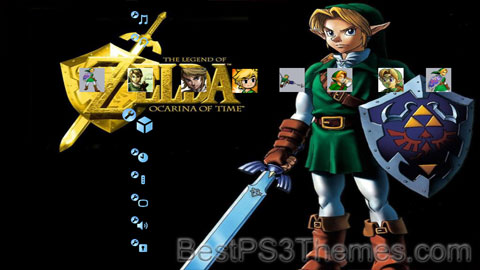
(3 backgrounds)

Link or Links may refer to:
Places[edit]
- Link, West Virginia, an unincorporated community in the US
- Link River, Klamath Falls, Oregon, US
People with the name[edit]
- Link (singer) (Lincoln Browder, born 1964), American R&B singer
- Link (surname)
- Charles Lincoln "Link" Neal III of Rhett & Link (born 1978), American comedian and YouTuber
- Link Wray (1929–2005), American rock-and-roll guitarist
Devices[edit]
- Link, a single element of a chain
- Link-and-pin coupler
Science and technology[edit]
Computing[edit]
- Hyperlink, from one electronic document to another
- link (Unix), command-line program to link directory entries
<link>, a type of HTML element- Link, in a linked list
- Linker (computing), converts object files to executable
- Links (web browser)
- Microsoft Office Assistant Links, an animated cat
- Link layer in computer networking
- ln (Unix), command-line program to create a link to a file
- Chainlink (blockchain), a cryptocurrency
Data networks[edit]
- Link (Indonesia), an interbank network
- LINK (UK), a cash machine network
- Link+, for interlibrary loan in California and Nevada, US
Mathematics[edit]
- Simplicial link, a set of simplices "surrounding" a given vertex in a simplicial complex.
- Link (knot theory), a collection of knots entangled with one another
- Link function in statistics
Other uses in science and technology[edit]
- Link (Mars), a rock outcrop
- Link or linking col, used in determining topographic prominence
- Telecommunications link, communication channel between two or more devices
Arts, entertainment, and media[edit]
Fictional characters[edit]
- Link (The Legend of Zelda), in The Legend of Zelda media
- Link (The Matrix), in Matrix media
- Link, in the 1993 novel Stone Cold
- Link (Linkovitch Chomofsky), in the 1992 film Encino Man
- Link Hogthrob, in The Muppets
- Link Larkin, in the musical Hairspray
Games[edit]
- Links (series), computer-simulated golf game by Access Software
- Pokémon Link!, a 2005 puzzle game for the Nintendo DS
Music[edit]
- "Link" (L'Arc-en-Ciel song), 2005
- "Link" (Porno Graffitti song), 2007
- Links (Kerfuffle album), a 2006 album by English folk band Kerfuffle
- Links (Mark Murphy album), a 2001 album by Mark Murphy
- The Link (album), by French death metal band Gojira
Periodicals[edit]
- Link (magazine), a free publication of The Greenville News in Greenville, South Carolina, US
- Links (magazine), a US golf magazine
- The Link (newspaper), a student newspaper at Concordia University, Canada
- The Link, the newsletter of the organization Americans for Middle East Understanding
Television[edit]
- Link TV, US network
- The Link (game show), UK, 2014–2015
- The Link (TV program), US, 2011 documentary
- The Link, a TV series by aptn Kids, Canada
- Link: Eat, Love, Kill, a 2022 South Korean television series
Other uses in arts, entertainment, and media[edit]
- Link (film), a 1986 horror movie featuring a super-intelligent, murderous orangutan
- WLNK (formerly 107.9 the Link), a radio station in Charlotte, North Carolina, US
Organizations and programs[edit]
Businesses[edit]
- Air Link, New South Wales, Australia
- Hong Kong Link, toll tunnels and bridges company
- Link REIT, Hong Kong real estate investment trust
- The Link (retailer), UK mobile phone retailer
- Link Aviation Devices, a manufacturer of aircraft simulator, now a subsidiary of L3 Technologies
Other organizations and programs[edit]
- HOL LiNK program (Literacy and Numeracy Knowledge), by Hands On Learning Australia
- Liberty in North Korea (LiNK), a refugee resettling group
- Link Campus University, Rome, Italy
- LINKS units, later student volunteering units, of St John Ambulance in England and Wales
- Local involvement networks (LINks), National Health Service England
- Project LINK, a UN project to build global macroeconomic models
- The Link (UK organization) for "Anglo-German friendship", UK, 1937
- The Links, a social and service organization of American Black women
Transportation systems[edit]
- Link bus rapid transit, a planned line in Rochester, Minnesota, US
- Link bus services, Auckland, New Zealand
- Link light rail, Seattle, Washington, US
- Terminal Link, Toronto Airport, Canada
- San Leandro LINKS, a bus service, California, US
Other uses[edit]
- Link (unit), surveying length unit
- Link, a single sausage in a string
- Links (golf), a coastal golf course
- The Link (skyscraper), France
- The Links, the mascot of Lincoln High School (Lincoln, Nebraska)
See also[edit]
- All pages with titles containing Link
- Linc (disambiguation)
- Lincs (disambiguation)
- Linker (disambiguation)
- Linq (disambiguation)
- Linx (disambiguation)
- Lynx (disambiguation)
- Microsoft Lync

If an internal link led you here, you may wish to change the link to point directly to the intended article.
Tekken 6 Raven
Tekken 6 Raven theme by Castel
Download: Tekken6Raven.p3t
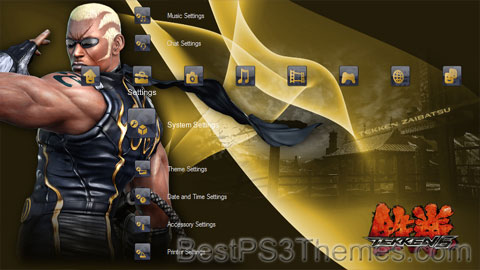
(1 background)
P3T Unpacker v0.12
Copyright (c) 2007. Anoop Menon
This program unpacks Playstation 3 Theme files (.p3t) so that you can touch-up an existing theme to your likings or use a certain wallpaper from it (as many themes have multiple). But remember, if you use content from another theme and release it, be sure to give credit!
Download for Windows: p3textractor.zip
Instructions:
Download p3textractor.zip from above. Extract the files to a folder with a program such as WinZip or WinRAR. Now there are multiple ways to extract the theme.
The first way is to simply open the p3t file with p3textractor.exe. If you don’t know how to do this, right click the p3t file and select Open With. Alternatively, open the p3t file and it will ask you to select a program to open with. Click Browse and find p3textractor.exe from where you previously extracted it to. It will open CMD and extract the theme to extracted.[filename]. After that, all you need to do for any future p3t files is open them and it will extract.
The second way is very simple. Just drag the p3t file to p3textractor.exe. It will open CMD and extract the theme to extracted.[filename].
For the third way, first put the p3t file you want to extract into the same folder as p3textractor.exe. Open CMD and browse to the folder with p3extractor.exe. Enter the following:
p3textractor filename.p3t [destination path]Replace filename with the name of the p3t file, and replace [destination path] with the name of the folder you want the files to be extracted to. A destination path is not required. By default it will extract to extracted.filename.