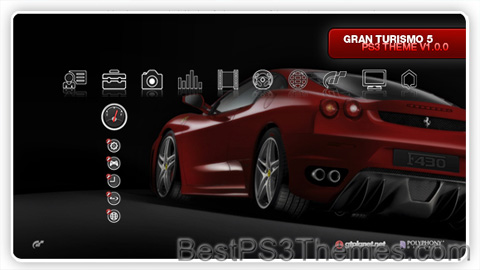
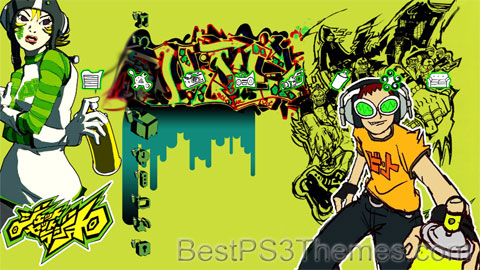
Jet Grind Radio theme by Septimus
Download: jetgrindradio.p3t
(1 background)
Redirect to:
The #1 spot for Playstation themes!
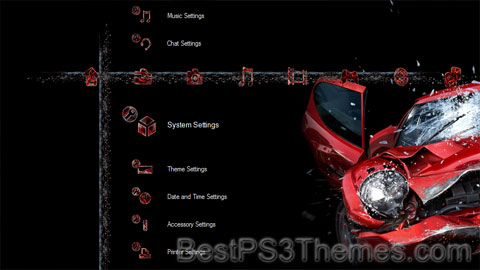
Insomnia theme by Stevie Klym
Download: Insomnia.p3t

(4 backgrounds)
| Insomnia | |
|---|---|
| Other names | Sleeplessness, trouble sleeping |
 | |
| Depiction of insomnia from the 14th century medical manuscript Tacuinum Sanitatis | |
| Pronunciation | |
| Specialty | Psychiatry, sleep medicine |
| Symptoms | Trouble sleeping, daytime sleepiness, low energy, irritability, depressed mood[1] |
| Complications | Motor vehicle collisions[1] |
| Causes | Unknown, psychological stress, chronic pain, heart failure, hyperthyroidism, heartburn, restless leg syndrome, others[2] |
| Diagnostic method | Based on symptoms, sleep study[3] |
| Differential diagnosis | Delayed sleep phase disorder, restless leg syndrome, sleep apnea, psychiatric disorder[4] |
| Treatment | Sleep hygiene, cognitive behavioral therapy, sleeping pills[5][6][7] |
| Frequency | ~20%[8][9][10] |
Insomnia, also known as sleeplessness, is a sleep disorder where people have trouble sleeping.[1] They may have difficulty falling asleep, or staying asleep for as long as desired.[1][9][11] Insomnia is typically followed by daytime sleepiness, low energy, irritability, and a depressed mood.[1] It may result in an increased risk of accidents of all kinds as well as problems focusing and learning.[9] Insomnia can be short term, lasting for days or weeks, or long term, lasting more than a month.[1] The concept of the word insomnia has two possibilities: insomnia disorder (ID) and insomnia symptoms, and many abstracts of randomized controlled trials and systematic reviews often underreport on which of these two possibilities the word insomnia refers to.[12]
Insomnia can occur independently or as a result of another problem.[2] Conditions that can result in insomnia include ADHD, psychological stress, chronic pain, heart failure, hyperthyroidism, heartburn, restless leg syndrome, menopause, certain medications, and drugs such as caffeine, nicotine, and alcohol.[2][8] Other risk factors include working night shifts and sleep apnea.[9] Diagnosis is based on sleep habits and an examination to look for underlying causes.[3] A sleep study may be done to look for underlying sleep disorders.[3] Screening may be done with two questions: "do you experience difficulty sleeping?" and "do you have difficulty falling or staying asleep?"[9]
Although their efficacy as first line treatments is not unequivocally established,[13] sleep hygiene and lifestyle changes are typically the first treatment for insomnia.[5][7] Sleep hygiene includes a consistent bedtime, a quiet and dark room, exposure to sunlight during the day and regular exercise.[7] Cognitive behavioral therapy may be added to this.[6][14] While sleeping pills may help, they are sometimes associated with injuries, dementia, and addiction.[5][6] These medications are not recommended for more than four or five weeks.[6] The effectiveness and safety of alternative medicine is unclear.[5][6]
Between 10% and 30% of adults have insomnia at any given point in time and up to half of people have insomnia in a given year.[8][9][10] About 6% of people have insomnia that is not due to another problem and lasts for more than a month.[9] People over the age of 65 are affected more often than younger people.[7] Women are more often affected than men.[8] Descriptions of insomnia occur at least as far back as ancient Greece.[15]

Symptoms of insomnia:[17]
Sleep onset insomnia is difficulty falling asleep at the beginning of the night, often a symptom of anxiety disorders. Delayed sleep phase disorder can be misdiagnosed as insomnia, as sleep onset is delayed to much later than normal while awakening spills over into daylight hours.[19]
It is common for patients who have difficulty falling asleep to also have nocturnal awakenings with difficulty returning to sleep. Two-thirds of these patients wake up in the middle of the night, with more than half having trouble falling back to sleep after a middle-of-the-night awakening.[20]
Early morning awakening is an awakening occurring earlier (more than 30 minutes) than desired with an inability to go back to sleep, and before total sleep time reaches 6.5 hours. Early morning awakening is often a characteristic of depression.[21] Anxiety symptoms may well lead to insomnia. Some of these symptoms include tension, compulsive worrying about the future, feeling overstimulated, and overanalyzing past events.[22]
Poor sleep quality can occur as a result of, for example, restless legs, sleep apnea or major depression. Poor sleep quality is defined as the individual not reaching stage 3 or delta sleep which has restorative properties.[23]
Major depression leads to alterations in the function of the hypothalamic–pituitary–adrenal axis, causing excessive release of cortisol which can lead to poor sleep quality.
Nocturnal polyuria, excessive night-time urination, can also result in a poor quality of sleep.[24]
Some cases of insomnia are not really insomnia in the traditional sense, because people experiencing sleep state misperception often sleep for a normal amount of time.[25] The problem is that, despite sleeping for multiple hours each night and typically not experiencing significant daytime sleepiness or other symptoms of sleep loss, they do not feel like they have slept very much, if at all.[25] Because their perception of their sleep is incomplete, they incorrectly believe it takes them an abnormally long time to fall asleep, and they underestimate how long they stay asleep.[25]
In August 2018, Sleep Science and Practice published a systematic review and meta-analysis of 19 studies comprising 253,904 adolescent subjects that found that excessive technology use had a strong and consistent association with reduced sleep duration and prolonged sleep onset latency for adolescents 14 years of age or older.[26] Also in August 2018, Sleep Science published a systematic review of 12 studies investigating associations between exposure to video games, sleep outcomes, and post-sleep cognitive abilities that found the data present in the studies indicated associations between a reduction in sleep duration, increased sleep onset latency, modifications to rapid eye movement sleep and slow-wave sleep, increased sleepiness and self-perceived fatigue, and impaired post-sleep attention span and verbal memory.[27] In October 2019, Sleep Medicine Reviews published a systematic review and meta-analysis of 23 studies comprising 35,684 subjects that found a statistically significant odds ratio for sleep problems and reduced sleep duration for subjects with internet addiction.[28] In February 2020, Psychiatry Research published a systematic review and meta-analysis of 14 studies that found positive associations between problematic smartphone use and poor sleep quality and between higher levels of problematic smartphone use and elevated risk of poor sleep quality.[29]
Also in February 2020, Sleep Medicine Reviews published a systematic review of 31 studies examining associations between screen time and sleep outcomes in children younger than 5 years and found that screen time is associated with poorer sleep outcomes for children under the age of 5, with meta-analysis only confirming poor sleep outcomes among children under 2 years.[30] In March 2020, Developmental Review published a systematic review of 9 studies that found a weak-to-moderate association between sleep quantity and quality and problematic smartphone use among adolescents.[31] In October 2020, the International Journal of Environmental Research and Public Health published a systematic review and meta-analysis of 80 studies that found that greater screen time was associated with shorter sleep duration among toddlers and preschoolers,[32] while the Journal of Behavioral Addictions published a systematic review and meta-analysis of 40 studies with 33,650 post-secondary student subjects that found a weak-to-moderate positive association between mobile phone addiction and poor sleep quality.[33] In April 2021, Sleep Medicine Reviews published a systematic review of 36 cross-sectional studies and 6 longitudinal studies that found that 24 of the cross-sectional studies and 5 of the longitudinal studies established significant associations between more frequent social media use and poor sleep outcomes.[34]
In June 2021, Frontiers in Psychiatry published a systematic review and meta-analysis of 34 studies comprising 51,901 subjects that established significant associations between problematic gaming and sleep duration, poor sleep quality, daytime sleepiness, and other sleep problems.[35] In September 2021, BMC Public Health published a systematic review of 49 studies investigating associations between electronic media use and various sleep outcomes among children and adolescents 15 years of age or younger that found a strong association with sleep duration and stronger evidence for an association with sleep duration between the ages of 6 and 15 years than for 5 years of age or younger, while evidence for associations between electronic media use with other sleep outcomes was more inconclusive.[36] In December 2021, Frontiers in Neuroscience published a systematic review of 12 studies published from January 2000 to April 2020 that found that adult subjects with higher gaming addiction scores were more likely to have shorter sleep quantity, poorer sleep quality, delayed sleep timing, and greater daytime sleepiness and insomnia scores than subjects with lower gaming addiction scores and non-gamer subjects.[37] In January 2022, Early Childhood Research Quarterly published a systematic review and meta-analysis of 26 studies that found a weak but statistically significant association with increased smartphone and tablet computer use and poorer sleep in early childhood.[38]
In May 2022, the Journal of Affective Disorders published a meta-analysis of 29 studies comprising 20,041 subjects that found a weak-to-moderate association between mobile phone addiction and sleep disorder and that adolescents with mobile phone addiction were at higher risk of developing sleep disorder.[39] In August 2022, the International Journal of Environmental Research and Public Health published a systematic review and meta-analysis of 16 studies comprising 8,077 subjects that established a significant association between binge-watching and sleep problems and a stronger association between binge-watching and sleep problems was found during the COVID-19 pandemic than pre-pandemic.[40] In October 2022, Reports in Public Health published a systematic review of 23 studies that found that excessive use of digital screens by adolescents was associated with poor sleep quality, nighttime awakenings, long sleep latency, and daytime sleepiness.[41] In December 2022, Sleep Epidemiology published a systematic review of 18 studies investigating associations between sleep problems and screen time during COVID-19 lockdowns that found that the increased screen time during the lockdowns negatively impacted sleep duration, sleep quality, sleep onset latency, and wake time.[42] In March 2023, the Journal of Clinical Sleep Medicine published a systematic review and meta-analysis of 17 studies comprising 36,485 subjects that found that smartphone overuse was closely associated with self-reported poor sleep quality, sleep deprivation, and prolonged sleep latency.[43]
In April 2023, Sleep Medicine Reviews published a systematic review of 42 studies that found digital media use to be associated with shorter sleep duration and poorer sleep quality and bedtime or nighttime use with poor sleep outcomes, but only found associations for general screen use, mobile phone use, computer and internet use, internet, and social media and not for television, game console, and tablet use.[44] In July 2023, Healthcare published a systematic review and meta-analysis of 16 studies that established a correlation coefficient of 0.56 between nomophobia and insomnia.[45] In September 2023, PLOS One published a systematic review and meta-analysis of 16 studies of smartphone addiction and sleep among medical students found that 57% of subjects had poor sleep and 39% of subjects had smartphone addiction with a correlation index of 0.3,[46] while Computers in Human Behavior published a meta-analysis of 23 longitudinal studies comprising 116,431 adolescent subjects that found that adolescent screen time with computers, smartphones, social media, and television are positively associated with negative impacts on sleep health later in life.[47]While insomnia can be caused by a number of conditions, it can also occur without any identifiable cause. This is known as Primary Insomnia.[48] Primary Insomnia may also have an initial identifiable cause, but continues after the cause is no longer present. For example, a bout of insomnia may be triggered by a stressful work or life event. However the condition may continue after the stressful event has been resolved. In such cases, the insomnia is usually perpetuated by the anxiety or fear caused by the sleeplessness itself, rather than any external factors.[49]
Symptoms of insomnia can be caused by or be associated with:
Sleep studies using polysomnography have suggested that people who have sleep disruption have elevated night-time levels of circulating cortisol and adrenocorticotropic hormone.[66] They also have an elevated metabolic rate, which does not occur in people who do not have insomnia but whose sleep is intentionally disrupted during a sleep study. Studies of brain metabolism using positron emission tomography (PET) scans indicate that people with insomnia have higher metabolic rates by night and by day. The question remains whether these changes are the causes or consequences of long-term insomnia.[67]
Heritability estimates of insomnia vary between 38% in males to 59% in females.[68] A genome-wide association study (GWAS) identified 3 genomic loci and 7 genes that influence the risk of insomnia, and showed that insomnia is highly polygenic.[69] In particular, a strong positive association was observed for the MEIS1 gene in both males and females. This study showed that the genetic architecture of insomnia strongly overlaps with psychiatric disorders and metabolic traits.
It has been hypothesized that epigenetics might also influence insomnia through a controlling process of both sleep regulation and brain-stress response having an impact as well on the brain plasticity.[70]
Alcohol is often used as a form of self-treatment of insomnia to induce sleep. However, alcohol use to induce sleep can be a cause of insomnia. Long-term use of alcohol is associated with a decrease in NREM stage 3 and 4 sleep as well as suppression of REM sleep and REM sleep fragmentation. Frequent moving between sleep stages occurs with; awakenings due to headaches, the need to urinate, dehydration, and excessive sweating. Glutamine rebound also plays a role as when someone is drinking; alcohol inhibits glutamine, one of the body's natural stimulants. When the person stops drinking, the body tries to make up for lost time by producing more glutamine than it needs. The increase in glutamine levels stimulates the brain while the drinker is trying to sleep, keeping them from reaching the deepest levels of sleep.[71] Stopping chronic alcohol use can also lead to severe insomnia with vivid dreams. During withdrawal, REM sleep is typically exaggerated as part of a rebound effect.[72]
Like alcohol, benzodiazepines, such as alprazolam, clonazepam, lorazepam, and diazepam, are commonly used to treat insomnia in the short-term (both prescribed and self-medicated), but worsen sleep in the long-term. While benzodiazepines can put people to sleep (i.e., inhibit NREM stage 1 and 2 sleep), while asleep, the drugs disrupt sleep architecture: decreasing sleep time, delaying time to REM sleep, and decreasing deep slow-wave sleep (the most restorative part of sleep for both energy and mood).[73][74][75]
Opioid medications such as hydrocodone, oxycodone, and morphine are used for insomnia that is associated with pain due to their analgesic properties and hypnotic effects. Opioids can fragment sleep and decrease REM and stage 2 sleep. By producing analgesia and sedation, opioids may be appropriate in carefully selected patients with pain-associated insomnia.[55] However, dependence on opioids can lead to long-term sleep disturbances.[76]
Insomnia affects people of all age groups but people in the following groups have a higher chance of acquiring insomnia:[77]
Grand Theft Auto IV theme by Alex34130
Download: GTA4.p3t

(3 backgrounds)
| Grand Theft Auto IV | |
|---|---|
 | |
| Developer(s) | Rockstar North[a] |
| Publisher(s) | Rockstar Games |
| Producer(s) | Leslie Benzies |
| Programmer(s) |
|
| Artist(s) | Aaron Garbut |
| Writer(s) |
|
| Composer(s) | Michael Hunter |
| Series | Grand Theft Auto |
| Engine | RAGE |
| Platform(s) | |
| Release | PlayStation 3, Xbox 360
|
| Genre(s) | Action-adventure |
| Mode(s) | Single-player, multiplayer |
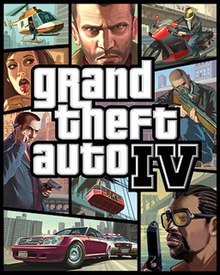
Grand Theft Auto IV is a 2008 action-adventure game developed by Rockstar North and published by Rockstar Games. It is the sixth main entry in the Grand Theft Auto series, following 2004's Grand Theft Auto: San Andreas, and the eleventh entry overall. Set in the fictional Liberty City, based on New York City, the single-player story follows Eastern European war veteran Niko Bellic and his attempts to escape his past while under pressure from high-profile criminals. The open world design lets players freely roam Liberty City, consisting of three main islands, and the neighbouring state of Alderney, which is based on New Jersey.
The game is played from a third-person perspective and its world is navigated on foot and by vehicle. Throughout the single-player mode, players control Niko Bellic. An online multiplayer mode is also included with the game, allowing up to 32 players to engage in both cooperative and competitive gameplay in a recreation of the single-player setting.[b] Two expansion packs were later released for the game, The Lost and Damned and The Ballad of Gay Tony, which both feature new plots that are interconnected with the main Grand Theft Auto IV storyline, and follow new protagonists.
Development of Grand Theft Auto IV began soon after the release of San Andreas and was shared between many of Rockstar's studios worldwide. The game introduced a shift to a more realistic and detailed style and tone for the series. Unlike previous entries, Grand Theft Auto IV lacked a strong cinematic influence, as the team attempted an original approach to the story. As part of their research for the open world, the development team conducted extensive field research in New York, capturing over 100,000 photographs and several hours of video. The developers considered the world to be the most important element of the game; though not the largest map in the series, they considered it comparable in scope due to its verticality and level of detail. The budget climbed to over US$100 million, making it one of the most expensive video games to develop.
Grand Theft Auto IV was released for the PlayStation 3 and Xbox 360 consoles in April 2008, and for Windows in December. Upon release, the game received critical acclaim, with praise particularly directed at the narrative and open-world design. Grand Theft Auto IV broke industry sales records and became the fastest-selling entertainment product in history at the time, earning US$310 million in its first day and US$500 million in its first week. Considered one of the most significant titles of the seventh generation of video games, and by many critics as one of the greatest video games of all time, it won year-end accolades, including Game of the Year awards from several gaming publications. It is among the best-selling video games with over 25 million copies sold by 2013. The game generated controversy, with criticism directed at the game's depiction of violence and players' ability to drink-drive. Its successor, Grand Theft Auto V, was released in September 2013.
Grand Theft Auto IV is an action-adventure game played from a third-person perspective.[2] Players complete missions—linear scenarios with set objectives—to progress through the story. It is possible to have several active missions running at one time, as some require players to wait for further instructions or events. Outside of missions, players can freely roam the game's open world and complete optional side missions.[3] Composed of the fictional city of Liberty City, the world is larger in area than most earlier Grand Theft Auto series entries.[4] At the beginning of the game, players can only explore the first island—composed of Dukes and Broker—with all other islands unlocking as the story progresses.[5]
Players use melee attacks, firearms and explosives to fight enemies, and may run, jump, swim or use vehicles to navigate the game's world. There is a first-person perspective option when using vehicles. In combat, auto-aim and a cover system can be used as assistance against enemies. Should players take damage, their health meter can be fully regenerated by consuming food or drinks, using medical kits, or calling for paramedics.[6] If players commit crimes, the game's law enforcement agencies may respond as indicated by a "wanted" meter in the head-up display (HUD). On the meter, the displayed stars indicate the current wanted level (for example, at the maximum six-star level, efforts by law enforcement to incapacitate players become very aggressive). Law enforcement officers will search for players who leave the wanted vicinity. The wanted meter enters a cool-down mode and eventually recedes when players are hidden from the officers' line of sight.[7]

The game's cover system allows players to move between cover, to fire blindly, aim freely, and target a specific enemy. Individual body parts can also be targeted.[8] Melee attacks include additional moves, such as dodging, blocking, disarming an opponent and counter-attacking. Body armour can be used to absorb gunshots and explosive damage, but is used up in the process. When health is entirely depleted, gameplay stops, and players respawn at the nearest hospital.[6]
The single-player mode lets players control an Eastern European war veteran, Niko Bellic. During the story, Niko meets and befriends various new characters. They can then perform favours for Niko whenever he asks; for example, his cousin Roman, who owns a taxi service, can send one of his cabs to take Niko to any destination around the city. Cabs are always available during gameplay for quick travel to a destination. Throughout the course of the game, players are also faced with morality choices, which alter the storyline appropriately depending on the player's choice. While free roaming the game world, players may engage in context-specific activities such as bowling or darts. Other available activities include a vigilante mini-game, and in-game television programming.[9][10][11] Niko has a cell phone for contacting friends and starting activities.[12] The cell phone is also used to access the game's online multiplayer mode, and to enter cheat codes.[13] To access the in-game Internet, which allows Niko to send and receive emails and set up prospective dates with potential girlfriends, Niko can use Internet cafés located around the city.[14] The game also features a subway system, allowing players to quickly traverse through the game's world.[15]
The online multiplayer mode for Grand Theft Auto IV allows up to 32 players[b] to freely roam across the map. Players decide which game mode they wish to play, including deathmatches and street races. Both cooperative and competitive game modes are available, split into ranked and unranked matches.[16] For players to level up through ranks, in-game money has to be earned. The game also features a Free Mode, in which players have the entire map open to explore, with no end goal or mission to complete. Hosts of the game can control many variables, such as police presence, traffic, and weapons.[17] The multiplayer mode was discontinued on Windows in 2020.[18]
Grand Theft Auto IV takes place in 2008, within a redesigned version of Liberty City. The design of the city focuses on a recreation of four of the boroughs of New York City: Broker (based on Brooklyn), Dukes (Queens), Bohan (The Bronx), and Algonquin (Manhattan). The setting also includes the neighbouring state of Alderney (based on New Jersey).[19] Initially, bridges are locked down due to a terrorist threat, and police constantly pursue players if the bridges are crossed. The blockades are lifted as the story progresses, allowing the player to traverse between islands safely.
Grand Theft Auto IV is set in the fictional "HD Universe", which mirrors and parodies the real world. The previous games formed fictional universes of their own,[c] which despite having many similarities with the HD Universe, are considered to be different continuities. Hence, the Liberty City depicted in Grand Theft Auto IV is different from its previous renditions, and the game itself serves as a reboot for the series. The new timeline established by Grand Theft Auto IV would continue with two expansion packs, The Lost and Damned and The Ballad of Gay Tony, and a sequel, Grand Theft Auto V, as well as its online component, Grand Theft Auto Online.[21][22][23] The handheld game Grand Theft Auto: Chinatown Wars is also considered part of the HD Universe, because it features the same map as Grand Theft Auto IV, except for Alderney.[24]
Niko Bellic, an Eastern European ex-soldier,[25] arrives in Liberty City aboard a cargo ship, the Platypus, to escape his criminal past, pursue the American Dream, and search for the man who betrayed his unit to an ambush during a war ten years prior. Reuniting with his cousin Roman, he discovers that his tales of riches were lies concealing his small, dirty apartment, unprofitable taxi company, gambling debts, and disputes with loan sharks. Niko begins assisting Roman with his problems, which leads him to make his first criminal contacts in the city. He befriends Yardies second-in-command Little Jacob and is forced to work for Vlad Glebov, Roman's Russian loan shark, whom Niko eventually kills upon learning he had slept with Roman's girlfriend, Mallorie.
In retaliation, Niko and Roman are kidnapped by Russian mobsters on orders of their boss Mikhail Faustin and his lieutenant, Dimitri Rascalov. Indifferent to Vlad's murder, Faustin releases them and employs Niko as a hitman, eventually ordering him to kill the son of Russian crime lord Kenny Petrović. When Petrović threatens retaliation, Dimitri convinces Niko to assassinate Faustin. However, he then betrays and brings Niko to his former employer, Ray Bulgarin, who accuses Niko of stealing from him during a botched human trafficking job years earlier. Niko denies the allegation and a firefight ensues, allowing Dimitri and Bulgarin to escape.
Dimitri's men burn down Niko and Roman's apartment and taxi company, forcing them to flee to Bohan. While Niko finds work with several local drug lords, Dimitri kidnaps Roman in a failed attempt to lure Niko into a trap. Later, Niko discovers that his romantic interest, a woman named Michelle, is a government agent, who then entraps him into working for her agency. In exchange for the murders of several known or suspected terrorists, the agency clears Niko's criminal record and assists him in searching for the traitor he seeks. Niko and Roman's fortunes improve when the latter receives a large amount of insurance money from his destroyed business, which he uses to rebuild it and buy an apartment in Algonquin. Roman also proposes to Mallorie, who accepts.
While working for the Irish Mob, Niko befriends gangster Patrick "Packie" McReary and helps him and his brothers carry out various jobs, including a major bank robbery. Niko is later hired by Ray Boccino, a caporegime in the Pegorino crime family, to oversee a diamond deal, which goes awry. Boccino repays Niko by helping him find his ex-comrade Florian Cravic, now known as Bernie Crane, who claims he was not the one to betray their unit. Niko concludes that the traitor was Darko Brevic, the only other survivor. Niko continues working for the Mafia in Liberty City and eventually earns the trust of Don Jimmy Pegorino, who orders Niko to kill Boccino after suspecting him of being a police informant. Niko also helps Packie kidnap Don Giovanni Ancelotti's daughter to ransom her for the diamonds, but Bulgarin intercepts the exchange. In the ensuing firefight, the diamonds are lost.
Eventually, the government agents find Darko in Romania and bring him to Liberty City for Niko to decide his fate. Afterwards, Niko is summoned by Pegorino for one final favour: to help with a highly lucrative heroin deal in collusion with Dimitri. Niko must either agree to work with Dimitri or exact revenge on him.[26] If Niko goes through with the deal, Dimitri betrays him again,[27] kills Pegorino,[28] and attempts to kill Niko via an assassin at Roman's wedding, but accidentally kills Roman;[29] Niko retaliates by tracking and murdering Dimitri.[28] If Niko chooses to exact revenge, he kills Dimitri aboard the Platypus,[30] prompting a furious Pegorino to target Niko but accidentally kill Packie's sister Kate, whom Niko had been dating, at Roman's wedding;[29] Niko retaliates by tracking and murdering Pegorino.[31] Later, either Mallorie or Roman tells Niko that Mallorie is pregnant.

Preliminary work on Grand Theft Auto IV began in November 2004,[32] a month after the release of Grand Theft Auto: San Andreas.[33] Rockstar president Sam Houser felt that following up San Andreas was "a nightmare".[34] Rockstar North, the core 220-person team behind the game, co-opted studios owned by parent company Rockstar Games to facilitate development between a full team of over 1,000,[35] including 50 employees at Rockstar NYC, 40 at Rockstar Lincoln, 10 at Rockstar San Diego, and around 600–700 working part-time internally and externally.[36] Some key members of the development team worked 12-hour days during production, often without holidays.[35] The team decided to continue the numbering scheme absent from the previous two main games to represent the same leap in production as Grand Theft Auto 2 (1999) to Grand Theft Auto III (2001).[33] Development of Grand Theft Auto IV ceased by 21 April 2008 when the game was submitted for manufacturing.[37] Producer Leslie Benzies estimated that the budget of the development efforts exceeded US$100 million, making Grand Theft Auto IV one of the most expensive video games ever made.[35]
The game's setting, Liberty City, is based on New York City. The team did not look at the previous renditions of Liberty City as inspiration, wanting it to retain the "general feel" but nothing else.[38] The map is roughly three times the size of Grand Theft Auto III's.[38] The developers originally considered using the entire state of New York, before restricting it to Manhattan, and then expanding it out again. They considered including more suburbs with woods, and would regularly vote on which areas to include.[39] Art director Aaron Garbut said that the team chose the setting because of the detail and variety it provided, describing New York as "an amazing, diverse, vibrant, cinematic city".[40] Writer Dan Houser added that the team "wanted to be somewhere where we had a foothold" due to the amount of research required for the world; Rockstar Games's main headquarters are located in New York.[41] The team consciously avoided a precise recreation of New York City to allow for more enjoyable game design,[32] selecting the areas that they felt "characterised it the best".[40] Garbut wanted to capture a caricature of the city as he felt that most people were familiar with "the highlights" from film or literature but did not need to know the areas precisely.[40] The city was not built with specific missions in mind; the area was created first, and missions implemented later.[42]
To achieve a realistic environment, 60–70 employees from Rockstar North travelled to New York for research: first at the beginning of the project in March or April 2005 for a week and a half,[39] and a smaller trip in 2007.[38] Police officers who previously worked the beat drove the team around Washington Heights.[39] A full-time research team based in New York handled further requests for information, such as the ethnic minority of a neighbourhood or videos of traffic patterns. Videos shot in New York were played on televisions at the Rockstar North offices "so while they worked they could look up and there was New York".[39] Benzies claimed that the team took over 100,000 photographs on location in New York,[35] though Garbut estimates that they took around 250,000.[38] They also studied architectural plans for apartments, used satellite images to determine city block layout, researched sales figures for models of cars, and read books that detailed the city's infrastructure, including its subways, sewers, and garbage disposal.[43] Hove Beach is based on Brighton Beach, which Sam Houser found "pretty incredible" and unusual; the name is based on the English city Brighton and Hove, made up of the former neighbouring towns Brighton and Hove.[44] Houser appreciated that Brighton Beach was home to several Eastern Europeans due to the nature of the game's characters.[44]
Dan Houser described Liberty City as "the biggest character" of the game.[40] The Grand Theft Auto IV rendition of Liberty City is more detailed and larger in size than most earlier entries in the series; although smaller than San Andreas, the setting of the previous main game, the developers considered it comparable in scope due to city's verticality, number of buildings, and level of detail.[45] The team wanted less dead spots and irrelevant spaces, such as the wide open deserts in San Andreas.[32] They wanted the game to be "a more focused experience" than San Andreas, and Dan Houser felt that the limited activities of New York allowed this.[33] The team felt that the addition of Niko's mobile phone added to the immersion of the world and represented society's shifted focus on phones.[33] The in-game brands and products are designed over several years; the billboards were implemented in the game around six months prior to release.[38]
The game's script, written by Dan Houser and Rupert Humphries, is about 1,000 pages.[35] Approximately 660 actors provided voices for the game over 80,000 lines of dialogue.[39] After conceiving the character and setting, Dan Houser spoke with his brother Sam Houser and Leslie Benzies to bounce story ideas before writing a rough synopsis, a six-paged, detailed document. Once the synopsis was reworked, the designers broke it into missions, represented by a large flow document demonstrating each section. The writers then work on the introductions to the missions; the gameplay dialogue comes much later.[41] Unlike previous Grand Theft Auto games, Grand Theft Auto IV does not have cinematic influences. "We were consciously trying to go, well, if video games are going to develop into the next stage, then the thing isn't to try and do a loving tribute or reference other stuff," said Dan Houser.[41] He said that the writers wanted something "fresh and new and not something that was obviously derived from [a] movie".[41] Dan Houser felt that the quality of the writing had to improve alongside the advancements in graphics and technology. He noted that the improvements in facial animation allowed for slower-paced cutscenes.[40] The unique dialogue that plays when a mission is retried was to ensure that the gameplay felt "less canned and less like Groundhog Day".[40]
Dan Houser described Niko Bellic as "a more rounded character" than those in previous games.[40] He felt that his dual personality—often saving innocent people, while also being a "cold-hearted killer"—made him more relatable.[40] He also felt that Niko's unfamiliarity with Liberty City allowed for the player to relate to him more, only driven by his vague past and relationship with Roman. When deciding on Niko's background, the writers felt that being an immigrant could lead to more dangerous situations, and therefore more enjoyable missions; after discussions with criminal experts, Dan Houser found that "the real scary characters are not born in America anymore".[40] He felt that Niko's outsider view of American culture was "fun".[40] The team wanted Niko to be "more of an anti hero than a hero, capable of making positive actions within his criminal world".[46] They wanted his demeanour to reflect the weight of his past and choices.[46]
Niko's design underwent a few changes, but was finalised early in development.[47] His outfit underwent several changes based on Eastern Europeans, particularly photographs of men fighting in winter wars in Yugoslavia and Chechnya. The primary motivation for the design was a face to convey the appropriate emotions and a body that could move nicely with the new animations.[40] The in-game purchasable outfits were also designed to fit with the character.[33] The team ensured that the gameplay choices presented to the player were not too extensive, as they still had to make sense to the character, who is driven by the people around him. Dan Houser felt that the missions in San Andreas had become too linear, and wanted to present choices to the player in Grand Theft Auto IV.[40]
The writers found that Niko needed a motivation to come to America, so they created his cousin, Roman. Dan Houser felt that the two could not be brothers as there would be a deeper level of familiarity than necessary. He described the two as a double act, with Roman's fantasist charm playing off Niko's tough cynicism. The team gave other non-playable characters (NPCs) more definable behaviours and dialogue to make them feel more alive. The writers initially considered having a smaller group of characters, but found that the story became boring and that players were less likely to explore the world. The stranger characters found in the game world were based on the "crazy people" that populate New York, according to Dan Houser, which in previous games were only able to be captured through radio stations or mild pedestrian behaviours.[38] The team based the ethnicities, clothing, and behaviours of the NPCs on the photographs and videos that they captured around New York, divided into different areas;[40] they created mood boards for each location.[38] The NPCs also converse in different languages.[39]
Grand Theft Auto IV sees a shift in the series to a more realistic and detailed style and tone, partly a result of the transition to consoles which offered high-definition graphics and the new and improved capabilities of such consoles. The development team worked to represent the upgrade in quality across all design aspects while maintaining the coherence of the previous games.[32] The team took the game's development as an opportunity to "strip things back and start again", refining the art style without losing the style of the series;[40] they distanced the game from the "cartoon-like style" of its predecessors while creating a new style that was consistent across all aspects of the game.[48] Garbut found the increased demand of detail brought on by the advanced technology daunting.[49] A technique used to make the visuals look real was to avoid harsh edges, instead blending surfaces together to make the world look dirty and lived-in.[50] The props department created multiple variations of different objects to make the world more interesting and unique.[40] G
Resident Evil Umbrella theme by Consoul
Download: REUmbrella.p3t
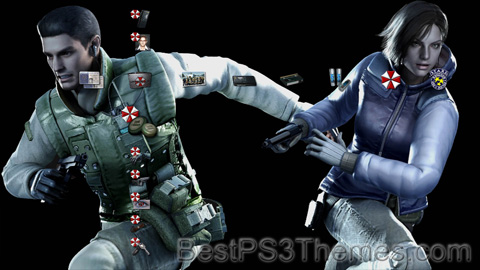
(3 backgrounds, different for HD and SD)
P3T Unpacker v0.12
Copyright (c) 2007. Anoop Menon
This program unpacks Playstation 3 Theme files (.p3t) so that you can touch-up an existing theme to your likings or use a certain wallpaper from it (as many themes have multiple). But remember, if you use content from another theme and release it, be sure to give credit!
Download for Windows: p3textractor.zip
Instructions:
Download p3textractor.zip from above. Extract the files to a folder with a program such as WinZip or WinRAR. Now there are multiple ways to extract the theme.
The first way is to simply open the p3t file with p3textractor.exe. If you don’t know how to do this, right click the p3t file and select Open With. Alternatively, open the p3t file and it will ask you to select a program to open with. Click Browse and find p3textractor.exe from where you previously extracted it to. It will open CMD and extract the theme to extracted.[filename]. After that, all you need to do for any future p3t files is open them and it will extract.
The second way is very simple. Just drag the p3t file to p3textractor.exe. It will open CMD and extract the theme to extracted.[filename].
For the third way, first put the p3t file you want to extract into the same folder as p3textractor.exe. Open CMD and browse to the folder with p3extractor.exe. Enter the following:
p3textractor filename.p3t [destination path]Replace filename with the name of the p3t file, and replace [destination path] with the name of the folder you want the files to be extracted to. A destination path is not required. By default it will extract to extracted.filename.
SRK theme by MCVegetto
Download: SRK_Final.p3t
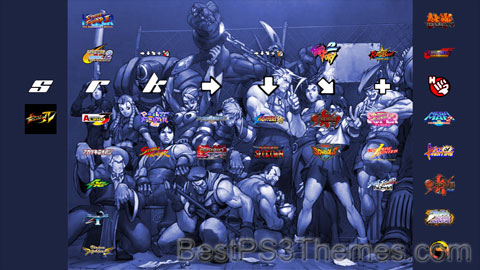
(3 backgrounds)
Redirect to:
This page is a redirect. The following categories are used to track and monitor this redirect:
|
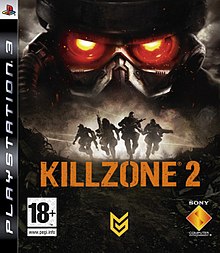
Killzone 2 theme by PenguinRage
Download: Killzone2.p3t
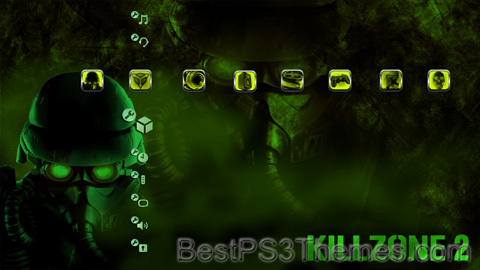
(1 background)
| Killzone 2 | |
|---|---|
 | |
| Developer(s) | Guerrilla Games |
| Publisher(s) | Sony Computer Entertainment |
| Director(s) | Mathijs de Jonge |
| Designer(s) | Neil Alphonso |
| Programmer(s) | Michiel van der Leeuw |
| Artist(s) | Jan-Bart van Beek Bas Uterwijk |
| Composer(s) | Joris de Man |
| Series | Killzone |
| Platform(s) | PlayStation 3 |
| Release | |
| Genre(s) | First-person shooter |
| Mode(s) | Single-player, multiplayer |
Killzone 2 is a 2009 first-person shooter developed by Guerrilla Games and published by Sony Computer Entertainment for the PlayStation 3. It is the second main installment in the Killzone series, following 2004's Killzone.
Similar to its predecessor, Killzone 2 takes place in the 24th century and chronicles the war between two human factions; the Vektans, and the Helghast. The game takes place two years after the events of Killzone and follows protagonist Tomas "Sev" Sevchenko as he and his unit battle the Helghast as the Vektans invade Helghan. The protagonist of Killzone and Killzone: Liberation, Cpt./Col. Jan Templar, returns in a supporting role, along with Rico Velasquez. Killzone 2 is played from a first-person view and allows the player to use a variety of weapons. It was released worldwide in February 2009.
Killzone 2 was widely anticipated prior to its release. It was critically acclaimed by critics and fans, who praised it as a superior title to the original Killzone. Additional praise was given to the game's visuals, action, multiplayer modes, soundtrack and atmosphere, although criticism was directed at the narrative. The game's critical and commercial success led to a sequel, Killzone 3, which was released in February 2011.
The official servers for Killzone 2 and Killzone 3 were shut down in March 2018. However, in 2021, a game preservation group called PSONE restored most of the game's online capability on their own set of servers.

The game is presented almost entirely from a first person perspective, aside from vehicular combat. Killzone 2 features a "lean and peek" cover system which allows the player to take cover behind an object and then pop out to fire at enemies. The "lean and peek" mechanic stays in first-person view at all times. It is also possible for the player to pilot vehicles at two points in the game: a tank and an exoskeleton. Many classic weapons and vehicles from previous Killzone installments return, such as the M82-G and the StA-52 LAR.[citation needed] The Sixaxis motion control feature is also utilized in performing certain actions such as turning a valve, arming an explosive charge and sniping.
Warzone, the title of the online multiplayer component of Killzone 2 has been developed by Guerrilla Games in conjunction with the game's single-player campaign.[citation needed] The online multiplayer gameplay is class-based, meaning the player can choose a class of character which is specialized for a specific role to better suit the player's needs in battle. There are 7 classes in total, in which the player can mix and match a main and sub ability according to their playing style, and can switch abilities upon death. There are 15 weapons available to the player, most of which cannot be used until the player reaches a certain rank. Two of these weapons are secondary firearms, and a further two weapons, the Boltgun and Flamethrower, are exclusive to the downloadable maps "Suljeva Cliffside" and "Arctower Landing".
Players play as either the ISA or Helghast, with a few gameplay differences. The character model and respawn points, and the "lean and peek" cover systems were removed. Each class levels up with experience gained from killing enemies or completing mission objectives. With enough experience, players unlock new weapons and skills, as well as a new class. Each class has two badges, the Primary badge selects the class and their specified skill. The secondary badge has an extra skill for the specified class but can be swapped to create own custom class.
Warzone plays out through dynamic matches where multiple game types are played in a single round. The game does not reset between game types, instead flowing between them, with the winning team determined by who wins the most modes. The game ships with five different game types including Assassination, Search & Retrieve, Search & Destroy, Bodycount and Capture & Hold.[1] Online matches can connect 2 to 32 players, and they can group into six squads of up to four players. If an online match does not have a full 32 players, computer-generated "bots" can be added in to create bigger teams (but only in an unranked match). Killzone 2 also offers a clan system, which allows clans of up to 64 players to compete for "Valor Points", an in-game currency that clans can use to bet on tournaments.
Players can also play offline against AIs with Skirmish mode and unranked online multiplayer, but there is no offline multiplayer mode for splitscreen players.
Eight multiplayer maps are included on disc at release,[2] but Guerrilla has released more maps as downloadable content. 6 more maps have been added to multiplayer since release via downloadable content purchasable from the PlayStation Store.
Two years after the attempted Helghast invasion of Vekta, an ISA fleet led by Colonel Jan Templar is sent to attack Pyrrhus, the capital city of Helghan, with the goal of deposing and arresting Emperor Scolar Visari on charges of war crimes. Among the ISA units taking part in the attack is Alpha Squad, led by Jan's old comrade Ricardo "Rico" Velasquez. Sergeant Tomas "Sev" Sevchenko, a veteran of the ISA "Legion" battalion, is assigned to serve as his second-in-command.
Tasked with securing Pyrrhus against the fierce resistance of the Helghan Second Army, the team quickly discovers that the Helghast are well prepared for an invasion. Using Helghan's harsh environment to their advantage, they have developed new weapons and equipment, none of which the ISA has ever seen before. Furthermore, the planet's fog-like atmosphere, gritty deserts, and constant storms pose almost as much of a threat to the invaders as the enemy themselves.
Led by Jan's flagship, the New Sun, the ISA bombard Pyrrhus as cover for a massive ground assault on the city. Despite stiff resistance from well-armed Helghast divisions, they steadily advance towards the Imperial Palace, ultimately capturing both Visari Square and the Helghan Military Academy. Just as the main convoy is set to attack the palace, Colonel Mael Radec, commander of the Second Army, activates a network of arc towers hidden beneath Pyrrhus, killing hundreds of ISA soldiers and breaking their momentum.
Dante Garza, a member of Alpha Squad and close friend of Tomas's, retrieves a piece of a destroyed tower and sends it to ISA researcher Evelyn Batton, who learns that the towers are powered by Petrusite, a mineral capable of generating and channeling electricity. She also identifies an old mining outpost on the outskirts of Pyrrhus where the Helghast have been secretly extracting it for military use.
While working to restore the outpost's communication antenna, Tomas and Rico are separated from the rest of Alpha Squad, allowing Radec's men to capture them. The two fight their way through the refinery where the captives were taken, stumbling upon an interrogation overseen by Radec himself. Oddly enough, he demands that Evelyn give him the launch codes to a set of stolen nuclear warheads in Helghast custody. Rico loses his temper and surprises Radec, saving the captives but leaving Garza mortally wounded when one of Radec's men Rico kills discharges his weapon and Garza is shot in the process. Blaming him for his friend's death, Tomas and the squad return to the New Sun.
Before Garza can be properly mourned, an elite Helghast battalion led by Radec mounts a surprise attack on the fleet, boarding or destroying several ships including the Sun. The ship's crew manages to evacuate, but Radec reaches the bridge, mortally wounds Jan and executes Evelyn, downloading the codes before they can be deleted. With the last of his strength and before succumbing to his wounds, Jan maneuvers the ship to crash into the center of Helghan's Petrusite distribution grid, causing it to explode and disrupt the arc network.
Seizing the opportunity, the survivors attempt to regroup, only to witness Visari detonate the warheads over Pyrrhus, destroying it and killing both the entire population and most of the remaining ISA forces.
With ISA captain Jason Narville leading an offensive on the remnants of the Second Army, Alpha Squad breaches the palace, where they encounter Radec and the imperial guard. After a pitched battle, the wounded commander and his men commit mass suicide out of disgrace, clearing the way to Visari's throne room.
As Tomas moves to arrest him, Visari gloats that he has still won, as the Helghast are now united against the ISA, and without him, they cannot be stopped. Overcome with guilt and wanting revenge for Templar and Garza's deaths, Rico kills him on the spot.
Weary from fighting, Tomas exits the palace and sits on the steps. Above him, a large armada belonging to the Helghan First Army begins its attack on what is left of the ISA invasion force.
At E3 2005, Killzone 2 was debuted with a trailer depicting soldiers landing in a hostile war-zone on Helghan and fighting Helghast forces. Critics in the media argued that the trailer shown at the trade show did not show actual gameplay footage, as its high level of visual detail has been argued to be impossible to render in real-time on the PlayStation 3 and the audio mix of the trailer was slightly delayed. SCEA's Vice President, Jack Tretton, stated that the footage of Killzone 2, that was believed to be pre-rendered, "is real gameplay everybody's seeing out there".[3] Several days later, Phil Harrison, SCE Europe's Vice President of Development, stated in an interview that all of the footage of PlayStation 3 games at E3 2005 were "running off video" which was "done to PS3 spec".[4] Further interviews eventually revealed the trailer was indeed a "target render", a prerendered video showing the developer's goals for the finished product.[5]
At the Game Developers Conference in 2007, a Killzone 2 teaser was shown behind closed doors, and was never released to the public. It featured various battles, destructible environments, and lighting effects among others.[6] Killzone 2 was shown to a panel of journalists at a special pre-E3 2007 event in Culver City, California, and then the next day to the public at Sony's E3 press conference.[7] An in-game trailer showing real-time gameplay of Killzone 2 was also released,[8] along with several videos of extended gameplay.[9] A number of media outlets since E3, such as the BBC, have referred to Killzone 2 as being "one of the most cinematic and immersive games ever produced on a console".[10] At the Leipzig Games Convention in 2007, Killzone 2 was presented in playable form to the media. It was the same demo level as shown at E3 2007, although journalists were allowed to play it hands-on.[11] At Sony's PlayStation Day 2008, the first level in Killzone 2's single-player campaign was presented, named "Corinth River".[12]
Michal Valient, a Senior Programmer at Guerrilla Games, presented details of their Killzone 2 proprietary game engine at a Developers Conference in July 2007.[13] As with many other titles published by SCE, including LittleBigPlanet and Infamous, Killzone 2 uses a deferred shading engine which enables far greater control over the game's characteristic lighting palette, while maximising processor throughput and limiting shader complexity. Other games to use similar approaches include Rockstar Games' Grand Theft Auto IV and GSC Game World's S.T.A.L.K.E.R.: Shadow of Chernobyl. However, this approach does create some additional problems, notably with respect to anti-aliasing and transparencies. The former was solved using a MSAA Quincunx (multisample anti-aliasing) solution, and the latter by the addition of a standard forward rendering path. The game's graphics were universally praised by critics.[14]
The animation was done in Maya 8.5 with some motion capture animations tweaked in MotionBuilder. 3D artists, animators and level designers used Maya as their production environment, which is unusual considering that most 3D games are produced using 3ds max. A large library of custom Maya tools and scripts was created to support these different disciplines.[15] Tools like "Hyperion", a lightmap rendering software, were used in place of Maya's viewport rendering software. In-game animation was assisted with another tool they created called "AnimationBlender" and particle effects were edited using a tool called "Particle Editor". They also created a tool called "ColorTweaker", which gave them the possibility to do color correction on the PS3 in real-time.[15]
Most of the animation was done using motion capture with some animations, reload animations for example, done by hand. Facial animation was done using blendshapes with bones for the jaw and the eyes. Lead tech artist, Paulus Bannink, explains that "The main reason for going with blendshapes was the relative ease with which they can be transferred to different faces, it would also provide a more artist friendly way of editing the facial animation rig.".[15] The cut scene facial animation was done using marker motion capture. In game dialog was done generically using MotionBuilder after audio files were plugged in. The game was developed not only by artists in Amsterdam, but also by people living in New Zealand, Australia, Japan, Korea, the UK and the US. The data files, gigabytes in size, were sent over the internet.[15]
Killzone 2's budget was originally US$20 million but rose to US$40–45 million at the end of the development, with a team of 120.[16][17][18][19]
| Killzone 2 (Original Soundtrack from the Video Game) | |
|---|---|
| Soundtrack album by | |
| Released | October 19, 2009 |
| Genre | Orchestral, Video game soundtrack |
| Length | 1:14:22 |
The score to Killzone 2 was composed by Joris de Man, who scored 60 minutes of in-game music and 30-minutes of live orchestral score for the game, recorded at Abbey Road Studios in London, with the Nimrod Studio Orchestra.[20] The score was produced and mixed by Rich Aitken, regular mix partner for Joris de Man and Marc Canham, at Nimrod Productions.
| No. | Title | Writer(s) | Length |
|---|---|---|---|
| 1. | "Opening - Birth of War (Retribution)" | Joris de Man | 3:40 |
| 2. | "The Second Helghan March (Helghan Forever)" | Joris de Man | 2:21 |
| 3. | "Battle Preparations" | Joris de Man | 1:33 |
| 4. | "Bridge is Down" | Joris de Man | 1:47 |
| 5. | "Ambush" | Joris de Man | 2:23 |
| 6. | "Protecting the Convoy" | Joris de Man | 3:14 |
| 7. | "Flight into Blood Meridian" | Joris de Man | 0:45 |
| 8. | "Fight Your Way Through" | Joris de Man | 3:21 |
| 9. | "Heavy Resistance" | Joris de Man | 1:32 |
| 10. | "An Unexpected Guest" | Joris de Man | 0:58 |
| 11. | "The Police Station" | Joris de Man | 2:33 |
| 12. | "Resistance on the Bridge" | Joris de Man | 0:53 |
| 13. | "Taking the Bridge" | Joris de Man | 3:03 |
| 14. | "Petrusite Revealed" | Joris de Man | 0:56 |
| 15. | "The Academy" | Joris de Man | 3:21 |
| 16. | "Fight the A.T.A.C." | Joris de Man | 1:59 |
| 17. | "A Day of Mourning" | Joris de Man | 2:36 |
| 18. | "Suljeva" | Joris de Man | 3:12 |
| 19. | "Next Stop Tharsis Refinery" | Joris de Man | 2:26 |
| 20. | "Question Time with Radec" | Joris de Man | 1:18 |
| 21. | "Dante Garza RIP" | Joris de Man | 1:58 |
| 22. | "Going Up" | Joris de Man | 2:07 |
| 23. | "Templar's Last Stand" | Joris de Man | 3:45 |
| 24. | "The Exoskeleton" | Joris de Man | 3:38 |
| 25. | "Nuked" | Joris de Man | 1:53 |
| 26. | "Radec's Personal Guards" | Joris de Man | 3:10 |
| 27. | "Visari's Lament" | Joris de Man | 4:41 |
| 28. | "End Credits Suite" | Joris de Man | 8:07 |
| 29. | "Fight the A.T.A.C. (Remix)" | Joris de Man | 1:12 |
Beta access was given to a select number of North American and European PlayStation Network subscribers. The beta consisted of three online multiplayer maps; "Blood Gracht" (small), "Radec Academy" (medium) and "Salamun Market" (large), with unlockable ranks and character classes ("badges"). Beta testers had their own statistics and have the ability to enter clan competitions. Beta access was private and thus could not be shared with other PlayStation Network accounts. Also, beta testers are tied with Sony Computer Entertainment Inc. by a non-disclosure agreement; therefore they were not allowed to reveal contents of the beta experience. A technical demo of one of Killzone 2's TV commercials, known as the "Bullet" trailer, was released on the PlayStation Store on April 2, 2009.[21] The demo features the commercial itself, the ability to shift camera angles and film speed, and several commentaries from key development staff at Guerrilla Games.
On February 5, 2009, SCEE released a single player demo of Killzone 2 on the European/Oceanic PlayStation Store.[22] The demo includes the first two sections of 'Corinth River' (the first level of the game) as well as the tutorial sequence from the final game.[23] A demo card, granting access to a Killzone 2 demo was also offered to US gamers who pre-ordered the game at GameStop. The US demo was also made available to those customers on February 5. In the North American version of PlayStation Home, if users found an avatar dressed in a Helghast costume, the avatar with the Helghast costume would give that user a code for the demo. This occurred on February 16.[24] On February 26, the demo was made available for download from the PlayStation Store in North America.
The servers for Killzone 2 and Killzone 3 were shut down on March 29, 2018. They have since been offline and can no longer be played online.[25]
In the North American version of PlayStation Home, if users pre-ordered Killzone 2 from Amazon.com, users received free male and female I.S.A. and Helghast uniforms for their avatar.[26] In the European version of PlayStation Home, if users participated in the "Killzone AM" event that took place on Saturday March 28, 2009, at 11 am CET for one full round, the Home Managers gave the participants a code for the Killzone 2 uniforms. Requirement was that users had to have a United Kingdom PSN account.[27] For a limited time in Japanese Home, users received an I.S.A. uniform for watching the Killzone 2 trailer and answering a questionnaire. To get the Helghast uniform in Japan, users had to do a pre-order. In Home's shopping complex, there are fourteen — seven for male and seven for female — Killzone 2 themed shirts available for purchase as well as the Helghast Tactician uniform. A costume for Radec was released on March 4, 2010, to the European Home and has been released in the North American.
Guerrilla Games have released a Killzone 2 themed apartment called the "Visari Throne Room" for Home. The Visari Throne Room apartment is based on the throne room inside Visari's Palace from the final mission of Killzone 2. For the Visari Throne Room, there are five pieces of furniture based on actual palace furnishings from Killzone 2: two types of Visari-style chairs, an administrative desk, a plant container with authentic Helghan vegetation, and a freestanding painting which portrays an important moment in the colonial history of the Helghast. The Visari Throne Room and matching furniture were made available to the European Home on July 2, 2009,[28] the North American on August 27, 2009,[29] and the Asian[30] and Japanese Home on October 9, 2009.[31]
On April 10, 2009[32] Hermen Hulst, Managing Director from Guerrilla Games announced on GameTrailers TV[citation needed] that Killzone 2 would get a DLC map pack named "Steel & Titanium" which would contain two new maps called Wasteland Bullet and Vekta Cruiser. With new gameplay elements and strategic twists.[33][34] The first DLC map pack was released on Thursday, April 30.[34][35] Hulst stated that the next Killzone 2 DLC map pack that they were releasing would have a 'Retro Vibe' to it.[citation needed]
The second map pack was officially announced on May 20, 2009 as "Flash and Thunder", and features two maps previously seen in Killzone called "Beach Head" and "The Southern Hills". Both maps followed the first map pack by bringing new gameplay elements and strategic twists; Beach Head, the wide open battlefield, with rain-filled trenches, and Southern Hills with its intermittent nuke explosion. It was released on June 11, 2009.[36] Both map packs have twelve trophies that go along with them, six for each map.
On July 10 the third map pack was officially announced, even though Sony stated that there were no plans for a third pack. The DLC "Napalm and Cordite" was released on July 23, 2009, it contained two new maps "Suljeva Cliffside" and "Arctower Landing", in addition to the maps the Flamethrower and the Boltgun both from singleplayer made their debut in multiplayer.[37] The Flamethrower is found in the Suljeva Cliffside map and the Boltgun is found in the Arctower Landing map. A multiplayer map pack bundle was also released to coincide with the release of Napalm and Cordite, containing all six maps from the DLC packs, for the price of four maps.[38] The downloadable content pack three has eight trophies that go along with it, four for each map which are for the new weapons. With the fifth anniversary of the original Killzone taking place, the map pack "Flash & Thunder" was reduced in price in North America and Europe.
| Aggregator | Score |
|---|---|
| Metacritic | 91/100[39] |
| Publication | Score | ||||||||||||||||||||||||
|---|---|---|---|---|---|---|---|---|---|---|---|---|---|---|---|---|---|---|---|---|---|---|---|---|---|
| Destructoid | 9.5/10[40] | ||||||||||||||||||||||||
| Edge | 7/10[41] | ||||||||||||||||||||||||
| Eurogamer | 9/10[42] | ||||||||||||||||||||||||
| Famitsu | 32/40[43] | ||||||||||||||||||||||||
| Game Informer | 8.75/10[44] | ||||||||||||||||||||||||
| GamePro |  [45] [45] | ||||||||||||||||||||||||
| GameRevolution | A−[46] | ||||||||||||||||||||||||
| GameSpot | 9/10[14] | ||||||||||||||||||||||||
| GameSpy |  [47] [47] | ||||||||||||||||||||||||
| GameTrailers | 9.2/10[48] | ||||||||||||||||||||||||
| GameZone | 9.4/10[49] | ||||||||||||||||||||||||
| Giant Bomb |
Gran Turismo 5Gran Turismo 5 theme by Ludovic ‘alba’ Slangen Download: albaGT5.p3t
Gran Turismo 5 (グランツーリスモ 5, Guran Tsūrisumo Faibu, commonly abbreviated as GT5) is a 2010 racing simulation video game developed by Polyphony Digital and published by Sony Computer Entertainment for the PlayStation 3. It is the fifth main installment and the tenth overall in the Gran Turismo series. It was released on November 24, 2010, in Europe and North America, and November 25, 2010, in Japan and Australasia.[3][2] It was preceded by the Prologue version and is the first main entry of the series to be released for the PlayStation 3. The game marks the first entry in the series with online races with support for up to 16 players. A damage model has been included with variations of damage depending on the car. Over 1,000 cars, 29 different locations, 77 different tracks, and a track generator are available in the game.[4] Dynamic time and weather effects make their debut in the series. World Rally Championship, NASCAR and Super GT licenses are utilized for the first time in the Gran Turismo series.[5][6] Gran Turismo 5 was well-received critically and a commercial success, becoming the second best-selling PlayStation 3 game, the best-selling PlayStation 3 exclusive and the third best-selling game in the series with nearly 12 million copies sold.[7] The game also won multiple awards and turned some players into real-life professional racing drivers with the GT Academy competition.[8][9][10][11] Gameplay[edit]New features[edit] Gran Turismo 5 is the first game in the franchise to provide a damage model, with variations of damage depending on the car. The game also features weather effects, which are available on certain circuits. Optional stereoscopic-3D resolution and karting found a place in the game.[12] Furthermore, new visual effects have been introduced, including dynamic skid marks, dust and the ability for drivers to flash their headlights. A course editor which allows the player to create new circuits by using tools that randomly generate track-parts according to certain player-selected specifications, including the number of corners, the time of day and the number of sectors. There are a variety of themes the player can choose from to act as a base for each circuit design. Themes also have an effect on track length and highest elevation.[13] The physics are significantly revised compared with Gran Turismo 4. Cars no longer instantly turn-in but realistically must load up the outside wheel first, and destabilizing effects (such as under braking) have greater influence.[14] Gran Turismo 5 is the first game in the franchise to include both mechanical and external damage modelling, including a real-time deformation engine that processes model deformation according to the speed and angle of impact.[15] It is also possible to overturn cars for the first time in the series.[16] The cars in GT5 are separated into "premium" and "standard" vehicles. Premium vehicles are more detailed and include a fully-detailed cockpit view, while standard vehicles are less detailed. Standard cars initially could not receive aftermarket wheels, however, as of the version 2.02 update this is no longer the case. Gran Turismo 2 previously included damage, but was limited to mechanical failures only. Tracks[edit]Gran Turismo 5 allows players to drive 31 different locations or "scenery" and 81 different track layouts (the previous iteration in the main numbered series, Gran Turismo 4, included 51 tracks total).[4] Dunsfold Aerodrome, located in the United Kingdom – the test track of the British automotive television show Top Gear – is included in the game.[17] The playable demo of Gran Turismo 5 at Gamescom 2009 featured the Tokyo Route 246 track, seen in previous incarnations of the game.[18][19] Various real-life circuits return from previous games in the series. These include (among others) Nürburgring, Circuit de la Sarthe, Tsukuba Circuit, Mazda Raceway Laguna Seca[20] and Suzuka Circuit.[21] New real-life circuits included in the game include (among others) Indianapolis Motor Speedway, Monza Circuit, Daytona International Speedway and two new Rome and Madrid city circuits. Many fictional circuits return from previous games in the series including 'Trial Mountain', 'Deep Forest Raceway' and 'Autumn Ring'. An official list of all tracks available in the game has been released by Polyphony Digital.[22] Downloadable tracks[edit]The "Track Pack" downloadable content, includes Circuit de Spa-Francorchamps (with weather change) and Kart Space I/II. On January 17, 2012, Polyphony Digital released the "Speed Test Pack" that includes "Special Stage Route X". In June, Twin Ring Motegi returned to the series as DLC after the 2012 GT Academy.[23] Vehicles[edit] Gran Turismo 5 provides a total of 1,089 cars.[24] Ferrari, Lamborghini and Bugatti make their first main release appearance in the franchise. The new "gullwing" Mercedes-Benz SLS AMG appeared, along with the Ferrari 458 Italia and the Lexus LFA supercar. McLaren also made their first appearance as a native manufacturer with the inclusion of the McLaren F1 road car, the F1 GTR race edition, and the MP4-12C road car. It is the first main release in the series to feature licensed Formula One cars, with the Ferrari F2007 and F10 included. Le Mans spec cars made a return appearance. Hybrid cars such as the Toyota Prius and the Honda Insight are included in the game. The series' creator Kazunori Yamauchi mentioned that the latest hybrid and electric cars would be included, including the Tesla Roadster (2008) and Mitsubishi i-MiEV.[5][25] At Gamescom 2010, it was also revealed that GT5 would include the Jaguar XJ13 race car prototype, as well as the Ferrari 330 P4 and the Ford Mark IV race cars, and as the developers put it, "will allow players to create the race that never came to be", since the XJ13 program was canceled before the car was ready for competition. Additionally, in association with Red Bull Racing, the development team worked on a new prototype car called the "X2010 Prototype" which was designed with the idea of, "If you built the fastest racing car on land, one that throws aside all rules and regulations, what would that car look like, how would it perform, and how would it feel to drive?" This car was worked on by Polyphony Digital and Red Bull's aerodynamics expert, Adrian Newey, and is one of the cars in the game.[26] Up to 16 cars or 32 karts would be able to race on track at once whereas previous installments allowed only six cars per race max. Polyphony Digital released the official vehicle list which also shows which vehicles were to be standard or premium.[27] The cars in GT5 are separated into two categories, premium and standard. Premium cars are highly detailed and thus have high polygon counts, high texture resolution, feature headlights capable of high and low beams, detailed interior camera views, and detailed damage models. Premium cars also have working windshield wipers which are operated on tracks with rain or snow. Standard cars have lower polygon counts and texture resolution, standard headlights and basic damage modelling. After the Spec 2.0 update they feature simplified interior camera views. For open-topped cars, they have a functioning steering wheel and working gauges. Around 25% of all cars in the game fall into the "premium" category.[28] Classic sports cars are also a distinctive feature in GT5. Classics such as the Triumph Spitfire, Mini Marcos and Alfa Romeo Spider have also been added. Alongside this, some commercial vehicles have unusually been added to the game. Vehicles such as the Volkswagen Type 2 and the Volkswagen Schwimmwagen have been added to the game. Downloadable cars[edit]In the Spec 2.0 update, there is the #71 Schulze Motorsport Nissan GT-R which Yamauchi drove in the 2011 24 Hours of Nürburgring and the new stock car designs of the 2011 NASCAR Season. In the new "Racing Car Pack" DLC, there are 14 new touring cars that are based on cars in the game like the Honda CR-Z and the Toyota Prius. Also, there is a newer version of the Red Bull X2010 called the X2011. On December 20, 2011, Polyphony Digital released "Car Pack 2" which features 2 new Volkswagen vehicles, the Golf R and Scirocco R, the new 2012 Nissan GT-R Black Edition and the 2011 Mini Cooper S. On January 9, 2012, PD has released a concept video for the upcoming Acura NSX for the North American International Auto Show. However, Kazunori did not state any information about the NSX's DLC release. The week after, Polyphony released "Car Pack 3" together with the "Speed Test Pack" which includes the Lamborghini Aventador, Aston Martin V12 Vantage, Nissan Leaf, Mini Countryman, Volkswagen Beetle and a Premium Jaguar XJR-9. In June, a free DLC release added a new car: the Scion FR-S, a variant model of the Toyota 86 and Scion's first vehicle to appear as a premium model.[23] On September 25, update 2.08 brought 3 new cars: the Honda Weider HSV-010 '11 Super GT car, the Subaru BRZ (another variant of the Toyota 86), and the Nissan GT-R N24 GT Academy '12 car, which participated in the 2012 24 Hours Nürburgring.,[29] On 28 November, the new 2014 Chevrolet Corvette C7 Prototype was released as a free DLC. On January 15, 2013, the Chevrolet Corvette C7 Final Prototype was released as another free DLC. Development[edit]The game was first revealed at E3 2005 under the name Vision Gran Turismo. This was not GT5 but simply Gran Turismo 4 (for the PlayStation 2) with more cars on track and PC-rendered footage. The PlayStation 3 would not be released until November 11, 2006, and with no Gran Turismo game in the console's launch line-up. Various bits of information and news was revealed about the game from then on, but it was not for another three years that the public got a chance to have a proper look at GT5. At Sony's E3 2009 Press Conference, a trailer for Gran Turismo 5 was shown, revealing the inclusion of Super GT, NASCAR and WRC but no release date was revealed.[30] Yamauchi said that "We've actually reached a point where we can probably release [GT5] anytime, except that you can also keep working as long as you want to as well, it's just a matter of timing".[31] Yamauchi later explained that "Deciding a release date for a game is always difficult, as it's not something I can decide on my own. The agreement on a date comes between various parties at Sony, and it's not necessarily a date I would be hoping for. March would've been too early. We could have produced the game in time to make that deadline, but the finished product wouldn't have had everything that I wanted to include". Sony Computer Entertainment has certain control over the release dates of their games, which could be one of the contributing factors delaying Gran Turismo 5.[32] Gran Turismo 5 was shown off extensively at E3 2010 including a new trailer, a North and Latin American release date, playable demos on the show floor and various private press conferences revealing new information about the game. Alongside the original release, two collector's editions were released; one featuring some extra bonus content and the other, more expensive option containing extra paraphernalia such as further reading on car racing. Overall, Gran Turismo 5 took more than five years to complete, with a total cost estimated at $60 million, although Polyphony Digital did release four other games during this period.[33] The first game in the series had also taken five years.[34] Yamauchi has expressed the difficulty of developing for the PlayStation 3, specifically mentioning how the extensively different (at the time) architecture of the Cell processor had made programming extremely challenging and time-consuming.[35] This greater than expected difficulty to program for the Cell processor is speculated by some people to also be part of the reasons why Gran Turismo 5 was delayed a number of times.[35] All downloadable contents were removed from sale on April 30, 2014. The online servers were shut down on May 30 the same year.[36] On April 29, Sony announced the final online event for Gran Turismo 5, which started on April 30 and ended with the shutdown of the online servers. Players were awarded with five cars in Gran Turismo 6 for participating in the event.[37] Time Trial Demo and 2010 GT Academy[edit] The GT5 Time Trial Demo was released on December 17, 2009, on the PlayStation Network; it was only playable while the user was signed into the PlayStation Network. It was not so much a demo of GT5 itself, but as the first part of the 2010 GT Academy, with the fastest drivers from the time trial eventually getting the chance to drive a real racing car in a real racing series. Nevertheless, it showed what progress had been made since Polyphony Digital's previous game, Gran Turismo 5 Prologue in terms of graphics, physics and other aspects of game-play and design. It featured stock and tuned versions of the Nissan 370Z. The track featured in the demo was the Indianapolis GP circuit, which is new to the Gran Turismo series.[38] This demo was praised for its graphics and updated physics, however it has been criticized for its stiff camera, and confusion over what aspects of the final game the demo represents. The Time Trial demo is no longer playable since the 2010 GT Academy was finished. 2011 GT Academy[edit]On November 16, 2010, it was revealed that the GT Academy would return for a third year, this time for drivers in the USA. GT Academy is a three-phase competition with the winner being trained and enrolled as a professional racing driver in preparation for a major race event next year. A reality TV show on sports channel SPEED chronicled the competition. The preliminary virtual rounds tested of driving skills in Gran Turismo 5 using pre-selected Nissan vehicles and all entrants would receive free digital content for playing. The top 32 drivers were then invited to a live GT5 National Finals, with the 16 leading players taken to the GT Academy Boot Camp.[39][40] The second round of the competition was scrapped due to the widespread use of cheating.[41] Sony and Polyphony Digital have confirmed that the Gran Turismo 5 Academy events would be available for European players to participate in from March 4, 2011.[42] Song Track Naming Competition[edit]At E3 2010, a new trailer was shown revealing various aspects about GT5 including a release date. The song used for the trailer was by Japanese composer Daiki Kasho; many fans wanted to know the name of the song, but it was untitled. Polyphony Digital recognised this and started a competition open to all fans around the world, to submit a name for the song. The winner would have their name immortalised in Gran Turismo 5s credits and their title become the official name of the music track.[43] The winner was chosen by Yamauchi out of 5,444 entries: it was "50UL 0N D!SPLAY" (a stylised form of "Soul On Display") submitted by a fan from Argentina.[44] Other peripherals[edit]Kazunori Yamauchi promised that Gran Turismo 5 could have some compatibility with the PlayStation Portable version. He stated, "we're going to make it so that you can actually export the cars for the PSP version into Gran Turismo 5, so you can export your garage".[45] The game was reported by media in September 2009 to allow head tracking using the PlayStation Eye, though no official confirmation came in the following months. This feature would allow the player to move their head naturally while sitting down, upright, and have the view around the 3D cockpit change accordingly.[46] Officially announced in conjunction with Toyota in January 2010 was a GPS-based device which, when loaded into the game, would create a 'ghost' lap of a run through a race circuit in real life if equipped for data recording, allowing someone to view or race against their real life driving.[47] This became available for tracks which exist in real life, but there was no information on which or how many circuits in total would support the feature. Multiple screens[edit]The game supports up to six different views that can be presented on six or more PS3 consoles. Two left views, two right views, server view (front with dials), and a front view without any dials all can be duplicated on an extra PS3 console if they are on the same LAN. Updates[edit]The game has been updated and expanded several times in its lifespan.[48] Many of the updates have improved the multiplayer racing, including weight and power restrictions on which cars can be driven in an online session, a car performance rating system, handicaps such as ballast and engine restriction, mechanical damage, and the ability to use the built-in course maker in online multiplayer races. Physics updates have not been documented in the update logs, however many users have noted changes to the physics once updates are installed. Other updates have included additional events, an online car dealership, removal of the copy protection for saved games, friend rankings, and various adjustments to the rewards and restrictions in the game.[49][50][51][52][53] The final update (v2.16) was released on May 31, 2014, which permanently disabled all online features such as online play and Seasonal events. On July 21 another patch (v2.17) was released, which removed the online requirement for installing the downloadable content after the servers went offline. Spec 2.0 and DLC[edit]A new update for Gran Turismo 5, called Spec 2.0 was released on October 11, 2011, featuring 11 new NASCAR vehicles, a new downloadable opening movie[54] (no longer available after the server shutdown in 2014), the ability to save during endurance races, weather intensity control and AI improvements. Along with the release of Spec 2.0, Yamauchi also announced that four DLC packs would be available on October 18. These packs featured 15 new vehicles, two new tracks, 20 new driver costumes and 100 new paint colors.[55] The packs were released on October 18, while the North American release was delayed until October 25.[56] PD stated that all following DLC packs would be released in a two-month time frame.[57]
As of today, all downloadable content has been permanently removed from PlayStation Store. Online play[edit]Gran Turismo 5 also featured an online mode. Players would meet in 'lounges' or 'race rooms' and give away (and/or share) cars, car parts and trained AI drivers to friends. They could also share game pictures and designed tracks. All online activity closed on May 20, 2014,[61] but a special event was held from April 30 to May 30 that allowed players to unlock five additional cars for Gran Turismo 6.[62] Marketing[edit] Gran Turismo 5's marketing campaign started on November 18, 2010, with a TV commercial featuring the fictional marketing character Kevin Butler as part of Sony Computer Entertainment's It Only Does Everything advertising campaign for their video game products in North America. The commercial depicts Butler as the 'VP of Add More Awesome' explaining how he made Gran Turismo 5 "more awesome" by adding more features that were previously thought impossible.[63] At the October 2010 Australian International Motor Show, Toyota hosted a 24-hour PlayStation 3 GT5 endurance race, a recreation of the 24 Hours Nürburgring, with a total of 48 drivers split into two teams, racing virtual interpretations of the Toyota FT-86 G Sports Concept for a full day and night.[64][65][66] On November 14, it was revealed that Sony had teamed with Swiss watchmaker Tissot to host the official countdown timer for the launch of Gran Turismo 5. To promote the relationship, Tissot gave away one customized, GT5 edition Tissot PRS 516, every day up until the release date.[67] In February 2011, a real version of the Polyphony Digital-designed Citroën GT was floated by the Rialto Bridge in Venice, recreating a location in Gran Turismo 4.[68] Release[edit]After promising that GT5 would be released in 2010 after missing its initial March 2010 Japanese release date, Sony announced at E3 2010 that Gran Turismo 5 would be officially launched in North and Latin America on November 2, in Europe and Japan on November 3 and in Australia on November 4, 2010,[69] but was later revealed that the game would not meet its November release date and would instead be released later in the "holiday season".[70] Sony producer Taku Imasaki said that the reason for the delay was that series creator Kazunori Yamauchi and Polyphony Digital want to "make certain they are creating the perfect racing experience". In addition, the Sony spokesman Makiko Noda said that the reason of the delay was due to production reasons. Later, Sony stated that the game would be released "before Christmas" [2010].[71] The actual reason for the delay turned out to be on the production side. Gran Turismo 5 missed its production window by three days. Kazunori Yamauchi publicly apologized via his Twitter account and explained that with such a complex game, a lot has to be ironed out. He finished his Tweet with, "Wait a little longer".[72][73] It was later claimed by a Blu-ray forum moderator that the delay was due to Sony's decision to release the game under the newer 3.50 SDK firmware standard (to combat piracy), rather than 3.41 as originally intended.[74][75] While at the Specialty Equipment Market Association Show on November 2, 2010, Yamauchi confirmed to automotive blog Jalopnik that GT5 had entered final production for release.[76] After weeks of speculation, it was officially announced that Gran Turismo 5 would be released on November 24 for Asia, North America and Europe[3][2] and November 25 for Japan and Australia.[1][77] Retail editions[
Burnout Paradise V2.0Burnout Paradise Version 2.0 by J-Rad14 Download: BurnoutParadiseV2.p3t
P3T Unpacker v0.12 This program unpacks Playstation 3 Theme files (.p3t) so that you can touch-up an existing theme to your likings or use a certain wallpaper from it (as many themes have multiple). But remember, if you use content from another theme and release it, be sure to give credit! Download for Windows: p3textractor.zip Instructions: Download p3textractor.zip from above. Extract the files to a folder with a program such as WinZip or WinRAR. Now there are multiple ways to extract the theme. The first way is to simply open the p3t file with p3textractor.exe. If you don’t know how to do this, right click the p3t file and select Open With. Alternatively, open the p3t file and it will ask you to select a program to open with. Click Browse and find p3textractor.exe from where you previously extracted it to. It will open CMD and extract the theme to extracted.[filename]. After that, all you need to do for any future p3t files is open them and it will extract. The second way is very simple. Just drag the p3t file to p3textractor.exe. It will open CMD and extract the theme to extracted.[filename]. For the third way, first put the p3t file you want to extract into the same folder as p3textractor.exe. Open CMD and browse to the folder with p3extractor.exe. Enter the following: Ace Combat 6 | ||||||||||||||||||||||||