Final Fantasy theme by Shadowfyre
Download: FinalFantasy.p3t
(3 backgrounds)

Final Fantasy[a] is a fantasy anthology media franchise created by Hironobu Sakaguchi which is owned, developed, and published by Square Enix (formerly Square). The franchise centers on a series of fantasy role-playing video games. The first game in the series was released in 1987, with 16 numbered main entries having been released to date.
The franchise has since branched into other video game genres such as tactical role-playing, action role-playing, massively multiplayer online role-playing, racing, third-person shooter, fighting, and rhythm, as well as branching into other media, including films, anime, manga, and novels.
Final Fantasy is mostly an anthology series with primary installments being stand-alone role-playing games, each with different settings, plots and main characters, but the franchise is linked by several recurring elements, including game mechanics and recurring character names. Each plot centers on a particular group of heroes who are battling a great evil, but also explores the characters' internal struggles and relationships. Character names are frequently derived from the history, languages, pop culture, and mythologies of cultures worldwide. The mechanics of each game involve similar battle systems and maps.
Final Fantasy has been both critically and commercially successful. Several entries are regarded as some of the greatest video games, with the series selling more than 185 million copies worldwide, making it one of the best-selling video game franchises of all time. The series is well known for its innovation, visuals, such as the inclusion of full-motion videos, photorealistic character models, and music by Nobuo Uematsu. It has popularized many features now common in role-playing games, also popularizing the genre as a whole in markets outside Japan.
Media[edit]
Games[edit]
The first installment of the series was released in Japan on December 18, 1987. Subsequent games are numbered and given a story unrelated to previous games, so the numbers refer to volumes rather than to sequels. Many Final Fantasy games have been localized for markets in North America, Europe, and Australia on numerous video game consoles, personal computers (PC), and mobile phones. As of June 2023, the series includes the main installments from Final Fantasy to Final Fantasy XVI, as well as direct sequels and spin-offs, both released and confirmed as being in development. Most of the older games have been remade or re-released on multiple platforms.[1]
Main series[edit]
| 1987 | Final Fantasy |
|---|---|
| 1988 | Final Fantasy II |
| 1989 | |
| 1990 | Final Fantasy III |
| 1991 | Final Fantasy IV |
| 1992 | Final Fantasy V |
| 1993 | |
| 1994 | Final Fantasy VI |
| 1995 | |
| 1996 | |
| 1997 | Final Fantasy VII |
| 1998 | |
| 1999 | Final Fantasy VIII |
| 2000 | Final Fantasy IX |
| 2001 | Final Fantasy X |
| 2002 | Final Fantasy XI |
| 2003 | |
| 2004 | |
| 2005 | |
| 2006 | Final Fantasy XII |
| 2007 | |
| 2008 | |
| 2009 | Final Fantasy XIII |
| 2010 | Final Fantasy XIV (original) |
| 2011 | |
| 2012 | |
| 2013 | Final Fantasy XIV |
| 2014 | |
| 2015 | |
| 2016 | Final Fantasy XV |
| 2017 | |
| 2018 | |
| 2019 | |
| 2020 | |
| 2021 | |
| 2022 | |
| 2023 | Final Fantasy XVI |
Three Final Fantasy installments were released on the Nintendo Entertainment System (NES). Final Fantasy was released in Japan in 1987 and in North America in 1990.[2][3] It introduced many concepts to the console RPG genre, and has since been remade on several platforms.[3] Final Fantasy II, released in 1988 in Japan, has been bundled with Final Fantasy in several re-releases.[3][4][5] The last of the NES installments, Final Fantasy III, was released in Japan in 1990,[6] but was not released elsewhere until a Nintendo DS remake came out in 2006.[5]
The Super Nintendo Entertainment System (SNES) also featured three installments of the main series, all of which have been re-released on several platforms. Final Fantasy IV was released in 1991; in North America, it was released as Final Fantasy II.[7][8] It introduced the "Active Time Battle" system.[9] Final Fantasy V, released in 1992 in Japan, was the first game in the series to spawn a sequel: a short anime series, Final Fantasy: Legend of the Crystals.[3][10][11] Final Fantasy VI was released in Japan in 1994, titled Final Fantasy III in North America.[12]
The PlayStation console saw the release of three main Final Fantasy games. Final Fantasy VII (1997) moved away from the two-dimensional (2D) graphics used in the first six games to three-dimensional (3D) computer graphics; the game features polygonal characters on pre-rendered backgrounds. It also introduced a more modern setting, a style that was carried over to the next game.[3] It was also the second in the series to be released in Europe, with the first being Final Fantasy Mystic Quest. Final Fantasy VIII was published in 1999, and was the first to consistently use realistically proportioned characters and feature a vocal piece as its theme music.[3][13] Final Fantasy IX, released in 2000, returned to the series' roots, by revisiting a more traditional Final Fantasy setting, rather than the more modern worlds of VII and VIII.[3][14]
Three main installments, as well as one online game, were published for the PlayStation 2.[15][16][17] Final Fantasy X (2001) introduced full 3D areas and voice acting to the series, and was the first to spawn a sub-sequel (Final Fantasy X-2, published in 2003).[18][19] The first massively multiplayer online role-playing game (MMORPG) in the series, Final Fantasy XI, was released on the PS2 and PC in 2002, and later on the Xbox 360.[20][21] It introduced real-time battles instead of random encounters.[21] Final Fantasy XII, published in 2006, also includes real-time battles in large, interconnected playfields.[22][23] The game is also the first in the main series to utilize a world used in a previous game, namely the land of Ivalice, which was previously featured in Final Fantasy Tactics and Vagrant Story.[24]
In 2009, Final Fantasy XIII was released in Japan, and in North America and Europe the following year, for PlayStation 3 and Xbox 360.[25][26] It is the flagship installment of the Fabula Nova Crystallis Final Fantasy series[27] and became the first mainline game to spawn two sub-sequels (XIII-2 and Lightning Returns).[28] It was also the first game released in Chinese and high definition along with being released on two consoles at once. Final Fantasy XIV, a MMORPG, was released worldwide on Microsoft Windows in 2010, but it received heavy criticism when it was launched, prompting Square Enix to rerelease the game as Final Fantasy XIV: A Realm Reborn, this time to the PlayStation 3 as well, in 2013.[29] Final Fantasy XV is an action role-playing game that was released for PlayStation 4 and Xbox One in 2016.[30][31] Originally a XIII spin-off titled Versus XIII, XV uses the mythos of the Fabula Nova Crystallis series, although in many other respects the game stands on its own and has since been distanced from the series by its developers.[38] The sixteenth mainline entry, Final Fantasy XVI,[39] was released in 2023 for PlayStation 5.[40]
Remakes, sequels and spin-offs[edit]
Final Fantasy has spawned numerous spin-offs and metaseries. Several are, in fact, not Final Fantasy games, but were rebranded for North American release. Examples include the SaGa series, rebranded The Final Fantasy Legend, and its two sequels, Final Fantasy Legend II and III.[41] Final Fantasy Mystic Quest was specifically developed for a United States audience, and Final Fantasy Tactics is a tactical RPG that features many references and themes found in the series.[42][43] The spin-off Chocobo series, Crystal Chronicles series, and Kingdom Hearts series also include multiple Final Fantasy elements.[41][44] In 2003, the Final Fantasy series' first sub-sequel, Final Fantasy X-2, was released.[45] Final Fantasy XIII was originally intended to stand on its own, but the team wanted to explore the world, characters and mythos more, resulting in the development and release of two sequels in 2011 and 2013 respectively, creating the series' first official trilogy.[28] Dissidia Final Fantasy was released in 2009, a fighting game that features heroes and villains from the first ten games of the main series.[46] It was followed by a prequel in 2011,[47] a sequel in 2015[48] and a mobile spin-off in 2017.[49][50] Other spin-offs have taken the form of subseries—Compilation of Final Fantasy VII, Ivalice Alliance, and Fabula Nova Crystallis Final Fantasy. In 2022, Square Enix released an action-role playing title Stranger of Paradise: Final Fantasy Origin developed in collaboration with Team Ninja, which takes place in an alternate, reimagined reality based on the setting of the original Final Fantasy game, depicting a prequel story that explores the origins of the antagonist Chaos and the emergence of the four Warriors of Light.[51][52] Enhanced 3D remakes of Final Fantasy III and IV were released in 2006 and 2007 respectively.[53][54] The first installment of the Final Fantasy VII Remake project was released on the PlayStation 4 in 2020.[55] The second and latest installment of the remake trilogy, Final Fantasy VII Rebirth, was released on the PlayStation 5 in 2024.[56]
Other media[edit]
Film and television[edit]
| 1994 | Final Fantasy: Legend of the Crystals |
|---|---|
| 1995–2000 | |
| 2001 | Final Fantasy: The Spirits Within |
| Final Fantasy: Unlimited | |
| 2002–2004 | |
| 2005 | Final Fantasy VII: Advent Children |
| Last Order: Final Fantasy VII | |
| 2006–2015 | |
| 2016 | Kingsglaive: Final Fantasy XV |
| Brotherhood: Final Fantasy XV | |
| 2017 | Final Fantasy XIV: Dad of Light |
| 2018 | |
| 2019 | Final Fantasy XV: Episode Ardyn – Prologue |
Square Enix has expanded the Final Fantasy series into various media. Multiple anime and computer-generated imagery (CGI) films have been produced that are based either on individual Final Fantasy games or on the series as a whole. The first was an original video animation (OVA), Final Fantasy: Legend of the Crystals, a sequel to Final Fantasy V. The story was set in the same world as the game, although 200 years in the future. It was released as four 30-minute episodes, first in Japan in 1994 and later in the United States by Urban Vision in 1998. In 2001, Square Pictures released its first feature film, Final Fantasy: The Spirits Within. The film is set on a future Earth invaded by alien life forms.[57] The Spirits Within was the first animated feature to seriously attempt to portray photorealistic CGI humans, but was considered a box office bomb and garnered mixed reviews.[57][58][59]
A 25-episode anime television series, Final Fantasy: Unlimited, was released in 2001 based on the common elements of the Final Fantasy series. It was broadcast in Japan by TV Tokyo and released in North America by ADV Films.
In 2005, Final Fantasy VII: Advent Children, a feature length direct-to-DVD CGI film, and Last Order: Final Fantasy VII, a non-canon OVA,[60] were released as part of the Compilation of Final Fantasy VII. Advent Children was animated by Visual Works, which helped the company create CG sequences for the games.[61] The film, unlike The Spirits Within, became a commercial success.[62][63][64][65] Last Order, on the other hand, was released in Japan in a special DVD bundle package with Advent Children. Last Order sold out quickly[66] and was positively received by Western critics,[67][68] though fan reaction was mixed over changes to established story scenes.[69]
Two animated tie-ins for Final Fantasy XV were released as part of a larger multimedia project dubbed the Final Fantasy XV Universe. Brotherhood is a series of five 10-to-20-minute-long episodes developed by A-1 Pictures and Square Enix detailing the backstories of the main cast. Kingsglaive, a CGI film released prior to the game in Summer 2016, is set during the game's opening and follows new and secondary characters.[70][71][72][73] In 2019, Square Enix released a short anime, produced by Satelight Inc, called Final Fantasy XV: Episode Ardyn – Prologue on their YouTube channel which acts as the background story for the final piece of DLC for Final Fantasy XV giving insight into Ardyn's past.
Square Enix also released Final Fantasy XIV: Dad of Light in 2017, an 8-episode Japanese soap opera based, featuring a mix of live-action scenes and Final Fantasy XIV gameplay footage.
As of June 2019, Sony Pictures Television is working on a live-action adaptation of the series with Hivemind and Square Enix. Jason F. Brown, Sean Daniel and Dinesh Shamdasani for Hivemind are the producers while Ben Lustig and Jake Thornton were attached as writers and executive producers for the series.[74]
Other media[edit]
Several video games have either been adapted into or have had spin-offs in the form of manga and novels. The first was the novelization of Final Fantasy II in 1989, and was followed by a manga adaptation of Final Fantasy III in 1992.[75][76] The past decade has seen an increase in the number of non-video game adaptations and spin-offs. Final Fantasy: The Spirits Within has been adapted into a novel, the spin-off game Final Fantasy Crystal Chronicles has been adapted into a manga, and Final Fantasy XI had a novel and manga set in its continuity.[77][78][79][80] Seven novellas based on the Final Fantasy VII universe have also been released. The Final Fantasy: Unlimited story was partially continued in novels and a manga after the anime series ended.[81] The Final Fantasy X and XIII series have also had novellas and audio dramas released. Final Fantasy Tactics Advance has been adapted into a radio drama, and Final Fantasy: Unlimited has received a radio drama sequel.
A trading card game named Final Fantasy Trading Card Game is produced by Square Enix and Hobby Japan, first released Japan in 2012 with an English version in 2016.[82] The game has been compared to Magic: the Gathering, and a tournament circuit for the game also takes place.[83][84]
Common elements[edit]
Although most Final Fantasy installments are independent, many gameplay elements recur throughout the series.[85][86] Most games conta
Portal
Portal theme by Mr.Chubigans
Download: Portal.p3t
(1 background)

Portal often refers to:
- Portal (architecture), an opening in a wall of a building, gate or fortification, or the extremities (ends) of a tunnel
Portal may also refer to:
Arts and entertainment[edit]
Gaming[edit]
- Portal (series), a series of video games developed by Valve
- Portal (video game), a 2007 video game, the first in the series
- Portal 2, the 2011 sequel
- Portal Stories: Mel, a mod for Portal 2
- Portal Revolution, a mod for Portal 2
- Portal Reloaded, a mod for Portal 2
- Aperture Tag, a mod for Portal 2
- Portal (1986 video game), a 1986 computer game by Activision
- Portal (Magic: The Gathering), a set in the Magic: The Gathering card game
- Portal (video game element), an element in video game design
Music[edit]
- Portal (band), an Australian extreme metal band
- Portal (album), a 1994 album by Wendy & Carl
- "Portal", a 2014 song by Lights Little Machines
- Portals (Arsonists Get All the Girls album), 2009
- Portals (Sub Focus and Wilkinson album), 2020
- "Portals", by Alan Silvestri, from the soundtrack for the film Avengers: Endgame
- Portals (EP), a 2022 EP by Kirk Hammett
- Portals (Melanie Martinez album), 2023
Other uses in arts and entertainment[edit]
- Portal (comics), a Marvel Comics character
- Portal (magic trick), an illusion performed by David Copperfield
- Portal (TV series), a series about MMORPGs
- Portal (sculptures), interactive art sculptures videoconferencing two cities
- Vilnius–Lublin Portal, a 2021 interactive public art installation
- New York–Dublin Portal, a 2024 interactive public art installation
- Portals (initiative), a public art initiative that connects people in different world cities through real-time videoconferencing
- The Portal (podcast), a podcast hosted by Eric Weinstein
Computing[edit]
Gateways to information[edit]
- Captive portal, controlling connections to the Internet
- Enterprise portal, a framework to provide a single point of access to a variety of information and tools
- Intranet portal, a gateway that unifies access to all enterprise information and applications
- Web portal, a site that functions as a point of access to information on the World Wide Web
Other uses in computing[edit]
- Meta Portal, a screen-enhanced smart speaker
- Portal rendering, an optimization technique in 3D computer graphics
- Portals network programming API, a high-performance networking programming interface for massively parallel supercomputers
- Portal Software, a company based in Cupertino, California
Places[edit]
- Portal, Arizona
- Portal, Georgia
- Portal, Nebraska
- Portal, North Dakota
- North Portal, a village in Saskatchewan adjacent to Portal, North Dakota
- Portal Peak, a mountain in Canada
- Portal, Tarporley, a country house near Tarporley, Cheshire, England
- Portal Bridge, over the Hackensack River in New Jersey
- Portal Heights, former name for a railway station in Montreal, Canada
Organisations[edit]
- Clube Atlético Portal, a football club based in Uberlândia, Brazil
- Portals Athletic F.C., a defunct football club, based in Overton, England
- Portals (paper makers), a UK paper making company
Other uses[edit]
- NCAA transfer portal, a database and compliance tool facilitating US college athletes who wish to change schools
- Portal frame, a construction method
- Portal stones, a type of stone monument
- Portal (surname), shared by several notable people
- Portal venous system, an occurrence where one capillary bed drains into another through veins
- Hepatic portal system, the portal system between the digestive system and the liver
- Hepatic portal vein, a vein that drains blood from the digestive system
- Hypophyseal portal system
- Hepatic portal system, the portal system between the digestive system and the liver
See also[edit]
- Conduit (channeling)
- The Portal (disambiguation)
- Porthole, a window in the hull of a ship
- Wormhole

If an internal link led you here, you may wish to change the link to point directly to the intended article.
Guitar Hero 3

Gears of War
Gears of War theme by Staircase
Download: GearsofWar.p3t
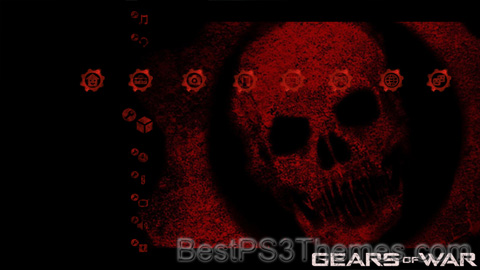
(1 background)
| Gears of War | |
|---|---|
 | |
| Genre(s) | Third-person shooter |
| Developer(s) | |
| Publisher(s) | Xbox Game Studios |
| Creator(s) | Cliff Bleszinski |
| Platform(s) | |
| First release | Gears of War November 7, 2006 |
| Latest release | Gears 5 September 10, 2019 |
| Spin-offs | Gears of War: Judgment Gears Pop! Gears Tactics |
Gears of War is a media franchise centered on a series of video games created by Epic Games, developed and managed by The Coalition, and owned and published by Xbox Game Studios. The franchise is best known for its third-person shooter video games, which has been supplemented by spin-off video game titles, a DC comic book series, seven novels, a board game adaptation and various merchandise.
The original trilogy focuses on the conflict between humanity and the subterranean reptilian humanoid known as the Locust Horde on the world of Sera. The first installment, Gears of War, was released on November 7, 2006 for the Xbox 360. The game follows protagonist Marcus Fenix, a soldier in the Coalition of Ordered Governments tasked to lead a last-ditch effort to destroy the Locust Horde and save humanity. Two subsequent titles, Gears of War 2 (2008) and Gears of War 3 (2011), featured a three-way conflict between humanity, the Locust Horde and their mutated counterparts, the Lambent. Gears of War: Judgment, a spin-off prequel to the series' first title, was released in 2013; it focuses on Damon Baird, one of Fenix's squad-mates.[1] Gears of War: Ultimate Edition was released for the Xbox One and Microsoft Windows between August 2015 to March 2016.[2] The fourth installment in the main series, Gears of War 4, is set 25 years after Gears of War 3 and follows Marcus Fenix's son, JD and his friends as they battle security forces deployed by a totalitarian COG government as well as the Swarm, a reconstituted version of the Locust Horde that once again threatens humanity.[3] Gears 5 (2019) is the direct sequel to Gears of War 4 and revolves around Kait Diaz, a friend of JD, who embarks on an adventure to learn the truth about her past and the connections between her history and the Locust Horde.
Gears of War was developed by Epic Games. Cliff Bleszinski, who has previously worked on Epic's Unreal Tournament games, served as the series' lead game designer for the first three installments. He was inspired by gameplay elements from Resident Evil 4. Kill Switch, and Bionic Commando.[4] The series was guided by Rod Fergusson, the executive producer and director of development of Epic Games until 2012.[5][6] The first four installments of the Gears of War series used a modified version of the Unreal Engine 3 engine.[7][8] In January 2014, Microsoft acquired rights to the franchise from Epic Games. Canadian studio The Coalition developed Gears of War 4, which was released on October 11, 2016 for the Xbox One and Windows 10.[9] A sequel, Gears 5, was released in September 2019. All six installments in Gears of War featured several multiplayer modes that allowed players to compete against each other or team-up to battle AI opponents on Xbox Live.
Gears of War became one of the best-selling franchises for the Xbox 360.[10] The series puts emphasis on cover-based combat, in which players can use objects to avoid gunfire or safely engage enemies.[11] The Gears of War games have been amongst the most popular and most played titles on Xbox Live.[10][12]
Plot[edit]
The Gears of War series takes place in an alternate universe on Sera, a fictional Earth-like planet. Human civilization develops and endures a millennia-long conflict that leaves humanity on the brink of extinction. Sera's leaders broker an era of peace that ushers scientific advancements and a cultural renaissance. Humanity's population sporadically grows and demands more energy provided by fossil fuel and nuclear power. Sera's scientists discover Imulsion, a naturally occurring substance that can be refined into a potent energy source. Imulsion solves Sera's energy crisis but ultimately creates great economic disparity as nations with direct access to Imulsion prosper, while other nations fall into financial turmoil.
Sera's citizens balkanize into two warring factions: the Coalition of Ordered Governments (COG) and Union of Independent Republics (UIR). The ensuing 79-year strife, known as the Pendulum Wars, consumes millions of lives with both sides locked in a virtual stalemate. The UIR develops the 'Hammer of Dawn', a system of satellites capable of delivering precise and destructive orbital-to-surface laser strikes. A contingent of COG commandos, led by Marcus Fenix, Dominic Santiago, and Victor Hoffman launch a daring raid on a UIR stronghold to steal the schematics for the Hammer of Dawn. The UIR surrenders after witnessing the Hammer of Dawn (completed by Marcus Fenix's father, Professor Adam Fenix) devastate one of their naval vessels.
Six weeks after the COG and UIR agreed to an armistice, a race of subterranean creatures known as the Locust Horde emerge from Sera's depths and begin assaulting human cities, wiping out 25% of the world population in the first 26 hours, referred to as 'Emergence Day'. The Locust overwhelm the already battle-worn COG forces during this surprise attack, causing them to retreat to the Jacinto Plateau, where the Locust cannot dig through its granite bedrock, and reluctantly bombard their own cities with the Hammer of Dawn to halt the Locust's advance. The ensuing scorched earth tactic destroys much of Sera's cities and human population. The COG continues to operate out of their capital city of Ephyra and other cities on the plateau such as Jacinto City, while the surviving humans, known as Stranded, are left to wander through Sera's charred ruins.
The Locust reemerge and begin a campaign of occupying human cities on the Jacinto Plateau to act as stepping stones. The Locust are eventually able to emerge and overrun Ephyra 10 years after Emergence Day. During the chaos, Marcus Fenix leads an unauthorized rescue mission to save his father from the Locust assault. During the evacuation, a helicopter is shot down by the Locust and crashes into the Fenix Estate, presumably killing Adam. The COG's leadership court martials Marcus and sentences him to 40 years in prison. After losing Ephyra, the remainder of the COG retreats to Jacinto City.
Gears of War is set 14 years after the Locust emerged, and four years into Marcus Fenix's imprisonment. The COG forces devise a last-ditch offensive to destroy the Locust by detonating the Lightmass Bomb in their tunnels. Marcus is reinstated into the COG army to supplement their depleted ranks and joins Dominic Santiago in Delta Squad on a mission to map the Locust tunnel network in preparation for the bombing. Their unit is ambushed by Locust forces and sustain heavy casualties. Fenix is repromoted to Sergeant and leads Delta with two other soldiers, Augustus Cole and Damon Baird. While the Sonic Resonator fails to map the tunnels, Delta uncovers mapping data already created by Adam Fenix. Marcus retrieves the tunnel data from his father's lab, who had been studying the Locust, and successfully deploys the Lightmass Bomb. Many of the Locust are killed. The Locust Queen, Myrrah, pledges to continue the war effort.
In the months following the Lightmass Offensive, the human population begins to suffer from a respiratory condition known as Rustlung, caused by the inhalation of Imulsion evaporated by the bombings. The Locust reemerge and bring with them a force that can sink entire cities on the Jacinto Plateau. After the destruction of Tollen and Montevado, the COG fears the Locust are trying to destroy Jacinto. Threatened with extinction, COG leader Chairman Richard Prescott devises Operation: Hollow Storm, in which thousands of soldiers will be deployed into the Hollow, locate the Locust stronghold, and eliminate them once and for all.
Gears of War 2 is set six months after the Lightmass Offensive. COG soldiers, including Delta, are deployed into the Hollow and battle the Locust to stop their plans of sinking Jacinto. The COG discovers the Locust have been using a gargantuan worm to sink the cities. After killing the Riftworm, Delta is ordered to locate the Locust stronghold by accessing intel from New Hope, a decommissioned COG research facility. The lab contains genetically altered humans called Sires, experiments on children ill with Rustlung that led to the creation of the Locust. Files there reveal the New Hope scientists fled to Mount Kadar to continue their work in solitude after the COG shut them down. The COG attacks Mount Kadar, where the Locust established their capital of Nexus. As the COG invades Nexus, they learn the Locust are mutating into the "Lambent", organisms infected with Imulsion. They have been forcing the Locust out of the Hollow for the surface world. Acting on advice from Adam Fenix, Queen Myrrah intends to sink Jacinto and use the surrounding seawater to flood the Hollow, drowning the Lambent and denying the humans their last safe city. The COG intentionally sinks Jacinto before the Locust can evacuate, drowning them in their tunnels and destroying their civilization. Adam Fenix is revealed to be alive through a radio transmission.
The remaining human population rediscover an island unscathed by the Locust War called Vectes. The Stranded gangs on the island threaten the safety of the COG, but the two groups ceasefire when the Lambent begin to emerge and overrun the island. Due to the Hollow being flooded, the Imulsion has begun to pollute the surface - causing a pandemic that aims to turn all life into Lambent organisms. Chairman Prescott is believed to be hiding secrets from the population about the origins of the Locust and Lambent, and loses their trust. Prescott abandons the COG, forcing them to disband and live as nomads, surviving against the Lambent and Locust stragglers on their own.
Gears of War 3 is set three years after Jacinto's sinking. Prescott returns to the COG and reveals to Marcus that Adam Fenix is alive. After the helicopter crash, Adam was rescued and brought to a secret island facility called Azura where he has been working the past seven years on the Imulsion countermeasure, a targeted radiation weapon which will neutralize both the Lambent and Locust. The island was sieged by Queen Myrrah's remaining forces. It is revealed that Adam knew of the Locust before E-Day and worked with Myrrah to solve the Lambent problem so the Locust wouldn't invade the surface, but was unable to provide a solution for them in time. Delta manages to locate Azura, liberate Adam, and release his countermeasure. Adam is killed by the radiation wave as he was exposed to Imulsion while developing the weapon. The countermeasure vaporizes all Lambent organisms, including Adam. The Locust are instead crystallized in an impenetrable shell. Marcus kills Queen Myrrah and humanity is able to start rebuilding.
Gears of War: RAAM's Shadow is set nine years after E-Day, shortly before the Locust invade Ephyra. High General RAAM leads a siege against Ilima City to use as a stepping stone in reaching Ephyra. Zeta Squad is ordered to locate and rescue civilians for evacuation before RAAM's forces occupy the city. The occupation of Ilima is successful and leads to the Locust taking Ephyra.
Gears of War: Judgment focuses on Baird and Cole during the early months of the Locust War. With military cadet Sofia Hendrick and former UIR soldier Garron Paduk in Kilo Squad, they disobey orders and deploy the Lightmass Missile to the destroy Locust forces occupying Halvo Bay. The squad is court-martialed, but Kilo is acquitted due to their actions resulting in victory. A separate campaign, Aftermath, features Baird, Cole, and Paduk in the hours before the activation of the Imulsion countermeasure in Gears of War 3 as they prepare for reinforcements in the upcoming battle of Azura.
Following the end of the Locust War, the humans of Sera reform the COG, led by First Minister Anya Stroud, wife of Marcus Fenix. With the assistance of robotic DeeBees created by Baird, the COG builds New Ephyra and other walled cities known as Settlements. Anya gives birth to Marcus' son, James Dominic "JD" Fenix. Anya dies from complications during pregnancy, and the COG becomes more authoritarian under First Minister Mina Jinn - prompting many civilians to abandon the COG and live off the land, known as Outsiders. After joining the military, both JD and Delmont "Del" Walker are forced to execute civilians during a protest in Settlement 2, prompting them to leave the COG and becoming Outsiders. They join the village of Fort Umson, led by Reyna Diaz and her brother-in-law, Oscar. Reyna's daughter, Kait, becomes close with JD and Del.
Gears of War 4 takes place 25 years after human victory. Fort Umson is ambushed by creatures called the Swarm. Reyna and the other villagers are captured. With JD, Kait, and Del left - they recruit Marcus to save their people. The COG pursues the group after erroneously believing they are behind a string of kidnappings. The four reach a Locust burial site where they learn the Imulsion countermeasure caused the Locust to evolve into the Swarm and have been capturing humans to transform them into soldiers for their new army. The group receives assistance from Baird and Cole as they battle their way to the Swarm's hive, but discover Reyna has been forcefully integrated in their network. Kait separates and euthanizes her mother upon her request. Kait is given the necklace that belonged to Reyna's mother, which bears the symbol of the Locust Horde.
Kait, JD, Del, and Marcus rejoin the COG and offer their intelligence to Jinn in order to help fight the Swarm. After Reyna's death, Kait begins to have nightmares and visions related to the Swarm, caused by Queen Myrrah, whose consciousness is still alive and connected to Kait's mind. Kait refuses to tell the others about her connection to the Locust out of fear. Marcus and Baird believe the Hammer of Dawn will be needed back online to defend against the upcoming war with the Swarm. Baird uncovers intel on additional Hammer of Dawn satellites at Azura.
Gears 5 begins with Delta returning to Azura to launch the Hammer satellites as the Swarm starts to attack COG Settlements. Kait is captured by the Swarm and is connected to the hivemind, in which she controls the Swarm army, resulting in her Uncle Oscar's death. After being rescued, Kait reveals her visions and believes them to be messages from the Locust, as evidenced by her grandmother's necklace. Marcus has Kait find answers at the New Hope facility and a secret lab in Mount Kadar where the scientists fled. Kait learns the Locust were the result of genetic experiments on human children sick with Rustlung and mutated with the DNA of creatures from the Hollow. The Sires were used to fertilize the stem cells of Myrrah, who was genetically immune to Imulsion. Myrrah was Reyna's mother, making Kait the next in line for queen. Kait disconnects herself from the hivemind, forcing Myrrah to possess Reyna's reanimated body. The Swarm, becoming stronger with their queen, launches an attack against New Ephyra. Using the Hammer of Dawn, the COG repels the Swarm attack. Kait vows to kill Queen Reyna before she can attack again.
Gears 5: Hivebusters follows Jeremiah Keegan, Lahni Kaliso, and Leslie Macallister shortly after the Battle of New Ephyra. Victor Hoffman, and Cole's daughter, Hana, have devised a potential solution for ending the Swarm by having soldiers infiltrate their hives and planting venom bombs to take down all the Swarm connected. They are successful in infiltrating and destroying the Swarm hive. Although it fails to kill all the Swarm, it's an advantage the COG has in the war against them.
Gears Tactics takes place a year after E-Day. Sgt. Gabriel Diaz, Kait's father and Oscar's brother, and Major Sid Redburn are tasked with assassinating Locust scientist, Ukkon, who is physically immortal by regenerating any damage done to him. Redburn reveals he was a guard at New Hope and was responsible for creating the Locust and Ukkon. Redburn is able to replicate the chemical New Hope used to counteract Ukkon's healing as a fail-safe. Diaz liberates a Locust prison camp and rescues Reyna, Kait's mother, from Ukkon's capture. Using the chemical, Reyna kills Ukkon. Diaz and Redburn abandon the COG after Prescott tries to kill them for learning about New Hope. Reyna joins them in their hunt of Ukkon's creations.
Gears of War: E-Day takes place fourteen years before the first game on Emergence Day, the day on which the Locust Horde emerged on the surface of Sera to war against humanity, and follows Marcus Fenix and Dominic Santiago.
Gameplay[edit]

Gears of War is a third-person shooter game, with its core concepts being derived from Resident Evil 4's "over the shoulder" perspective, Kill Switch's cover system, and Bionic Commando's swinging action akin to moving between points of cover.[13] The series focuses on using cover to tactically engage the enemy in battle to avoid taking damage. While behind cover, the player can fire blindly and inaccurately at their opponent, or can look around the cover and aim carefully, though exposing to enemy fire; the player can slide along cover, move between nearby cover, or vault over cover to race to a new point of cover. As the player takes damage, the "Crimson Omen" appears on the HUD, becoming more defined as the player nears low health levels. The player can regenerate their health by staying out of harm's way for a short while. Should the player take too much damage, they will become incapacitated unless revived by a teammate; depending on game mode, the player may be able to recover from this state on their own, or may die after a short amount of time if not revived. When a combatant is down, a member of the other side may attempt to execute the downed player via a "curb stomp" or other brutal methods. Some types of damage will immediately kill the player with no chance of revival, such as explosive damage. There are five levels on the first two games; they are referred to as "acts" and each act is formed into a certain number of chapters.
Players in Gears of War can carry four different weapons, with the exception of the fourth game, allowing two primary weapon slots that can carry weapons which include, but are not limited to: assault rifles, shotguns, a sniper rifle, grenade launchers and an explosive bow; one grenade slot, which may be filled with up to four grenades of a specific type (Fragmentation, Smoke, Ink and Incendiary), and one pistol-type weapon. Players can either obtain ammo or swap out their current weapons with any weapon dropped by a downed foe or from those scattered around the various maps. Most weapons feature the "Active Reload" ability: either after a weapon has depleted an ammo magazine or when the player starts a manual reload, a meter is shown on screen, and the player can attempt to stop the meter in a certain marked area. If the player stops the meter in the marked area, their reload will be completed faster than if they did not attempt an Active Reload, and if the player can stop the meter at a specific section of the marked area, they will gain a temporary slight damage boost with each reloaded shot and a faster reload. If the player stops the meter outside this area, their gun will become temporarily jammed and slow down the reload time. While most of the weapons are based on standard shooter archetypes, Gears of War's signature weapon is the Lancer Assault Rifle, which has a mounted chainsaw bayonet that can be used in close quarter combat to instantly kill a standard foe. Another notable weapon is the Gnasher Shotgun, which is one of the most-used weapons in multiplayer modes for the series, as well as its most divisive.[14] The Gnasher Shotgun, like many other weapons, can be used to bash opponents in melee, or in the case of grenades, can be stuck to a foe, exploding a few seconds later. In Gears of War 2 and Gears of War 3, all four types of grenades can be planted on any reachable surface, detonating when an opponent comes close to it. If the opponent spots the grenade, they can detonate it from a safe distance by shooting it.
All Gears of War games feature a campaign mode that can be played cooperatively with one other player. The two players take the roles of two COG soldiers, Marcus Fenix and Dominic "Dom" Santiago, as they fight the Locust. In the third game the campaign allows for up to four players to play together at the same time. The campaign mode features several levels of difficulty. At various times, the campaign will offer a choice of paths the first player can select; if the second player is present, they will be forced to take the other path. The third and fourth players in Gears of War 3 will be separated between the paths of the first and second players. In these areas, all players generally have to work together to get them through the section, such as by one player providing covering fire while the second player opens a switch that allows the first player to proceed.
The competitive multiplayer mode in Gears of War features 8 players while in Gears of War 2 features up to ten players split between COG and Locust forces in a number of gameplay types. Modes include "Warzone" and "Execution", both similar to a typical deathmatch, and "Annex" and "King of the Hill" where teams have to control a marked zone on the map. In the mode "Guardian" (only in Gears of War 2) one member of each team is designated as the leader. As long as the leader is still alive, their teammates can respawn indefinitely. As soon as the leader is executed, their teammates can no longer respawn.
Games[edit]
| 2006 | Gears of War |
|---|---|
| 2007 | |
| 2008 | Gears of War 2 |
| 2009 | |
| 2010 | |
| 2011 | Gears of War 3 |
| 2012 | |
| 2013 | Gears of War: Judgment |
| 2014 | |
| 2015 | Gears of War: Ultimate Edition |
| 2016 | Gears of War 4 |
| 2017 | |
| 2018 | |
| 2019 | Gears Pop! |
| Gears 5 | |
| 2020 | Gears Tactics |
| 2021 | |
| 2022 | |
| 2023 | |
| TBA | Gears of War: E-Day |
Main series[edit]
Gears of War[edit]
Gears of War is a third-person shooter video game developed by Epic Games and published by Microsoft Studios. It was initially released for the Xbox 360 on November 7, 2006 in North America, and on November 17 in Europe.[15] It was released for Microsoft Windows on June 11, 2007. Gears of War follows Delta Squad's efforts to help deploy a Lightmass bomb deep in the Locust tunnels to wipe out the Locust threat.
A remastered edition of the game titled Gears of War: Ultimate Edition was developed and released for the Xbox One and Microsoft Windows by The Coalition, after Microsoft acquired the rights to the Gears of War franchise from Epic Games in 2014.[16]
Gears of War 2[edit]
Gears of War 2 is a third-person shooter video game published by Microsoft Studios.[17] It is the sequel to Gears of War and was released worldwide on November 7, 2008. The game uses a heavily upgraded version of the Unreal Engine 3.[18] Gears of War 2 takes place 6 months after the first game, where the Locust are attempting to sink Jacinto Plateau, and the COG forces have decided to launch a counter-offensive to stop them before they can complete their attempt. Ultimately the COG sinks Jacinto themselves to flood the home of the Locust (the Hollow) and drown them.
A PC version of the game was originally planned before being cancelled by the developers, citing poor sales of the original PC version of Gears of War as well as concerns over piracy.
Gears of War 3[edit]
Gears of War 3 is the concluding part to the trilogy. Originally with an April 6, 2011 release date, it was moved to September 20 to anchor Microsoft Studios' holiday portfolio for the Xbox 360.[19]
Gears of War 3 takes place 18 months after the end of Gears of War 2. Marcus, Dom, and the last remnants of humanity must band together to survive against the Locust and Lambent, while trying to find Marcus's father and end the war.[20] In the end, a weapon developed by Marcus' father Adam Fenix is detonated, wiping out the Locust and the Lambent, as well as ending the war.
RAAM's Shadow[edit]
RAAM's Shadow is a secondary campaign for Gears of War 3 introduced as a DLC. Taking place several years before the original Gears of War game, RAAM's Shadow follows Zeta-Six during the Evacuation of Ilima, a city that appeared in ruins in Gears of War 2 as well as taking place from the perspective of Locust General RAAM. Zeta-Six is made up of Lieutenant Minh Young Kim from Gears of War, Tai Kaliso from Gears of War 2, Michael Barrick from the comic book series and Alicia Valera. Supporting character Jace Stratton previously appeared as a member of Delta Squad in Gears of War 3.
Gears of War 4[edit]
Gears of War 4 is an Xbox One and Windows 10 game developed by The Coalition and released on October 11, 2016.[21]
The game's plot is set 25 years after Gears of War 3 and focuses on JD Fenix, the son of Marcus Fenix, who joins his father and two new characters: Delmont "Del" Walker and Kait Diaz against the "Swarm", a new threat risen from the remnants of the Locust.[22]
Gears 5[edit]
Gears 5 is a sequel to Gears of War 4. It was released for Windows and Xbox One on September 10, 2019.[23] The game focusing on Kait Diaz, as she looks for the means to counter the Swarm, learning about the true origin of the Locust and their connection with her family.
Hivebusters[edit]
Hivebusters is a single-player downloadable content expansion pack for Gears 5. Taking place before the events of the Gears of War: Hivebusters comic book series, Hivebusters follows Team Scorpio — Corporal Jeremiah Keegan, Lieutenant Lahni Kaliso and Outsider Leslie "Mac" Macallister — as they investigate a method to infiltrate and destroy the Swarm's hives from within as seen in the "Escape" multiplayer mode of Gears 5.
Gears of War: E-Day[edit]
Gears of War: E-Day is an upcoming prequel set 14 years before the events of Gears of War. The game was officially announced on June 9, 2024 during the Xbox Games Showcase by Microsoft Gaming at the Summer Game Fest.[24][25]
Spin-offs[edit]
Gears of War: Judgment[edit]
Gears of War: Judgment is a spin-off/prequel, released on March 19, 2013.[26] The characters include Baird, accompanied by Augustus "Cole Train" Cole and two new characters, Garron Paduk and Sofia Hendrik,[27] who make up Kilo Squad. Kilo Squad is put on trial by another new character, Ezra Loomis.[27]
Gears Pop![edit]
Gears Pop! was a spin-off for mobile devices based on Funko's POP! toyline and released on August 22, 2019. However, the game was eventually discontinued on April 26, 2021.
Gears Tactics[edit]
Gears Tactics is a turn-based strategy spin-off for Xbox One and Windows, developed by Splash Damage[28] and released on April 28, 2020.[29] Set before the events of the first game, it follows a military unit led by Sgt. Gabriel Diaz, who would later become Kait's father.
Other games[edit]
Characters from the Gears of War series have made guest appearances in games outside of the Gears of War franchise. Marcus Fenix and Dominic Santiago are playable in the Xbox 360 version of Lost Planet 2.[30] General RAAM was announced as a playable character in Killer Instinct: Season Three during Microsoft's E3 2016 press conference on June 13, 2016, and was released following the presentation's conclusion.[31]
Backwards compatibility[edit]
Microsoft revealed on August 3, 2015 that the four Gears of War titles that launched on Xbox 360 — Gears of War, Gears of War 2, Gears of War 3, and Gears of War: Judgment — are compatible on Xbox One through the backwards compatibility program.[32] In 2021, all aforementioned games got 60 FPS support on Xbox Series X and Series S as part of the Xbox FPS Boost program.[33]
Music[edit]
The video game music for Gears of War was composed by Kevin Riepl, who had previously worked with Epic Games on soundtracks for Unreal Tournament 2003, Unreal Tournament 2004 and Unreal Championship 2.[34] The music for Gears of War 2 and Gears of War 3 was composed by Steve Jablonsky.[35] The music for Gears of War 4 is composed by Ramin Djawadi.[36] Ramin Djawadi continued to compose the music for the ne