Awesome PS3 Games

Awesome PS3 Games theme by Proffesor_chaos

Download: AwesomePS3Games.p3t
Awesome PS3 Games Theme
(3 backgrounds)

P3T Unpacker v0.12
Copyright (c) 2007. Anoop Menon

This program unpacks Playstation 3 Theme files (.p3t) so that you can touch-up an existing theme to your likings or use a certain wallpaper from it (as many themes have multiple). But remember, if you use content from another theme and release it, be sure to give credit!

Download for Windows: p3textractor.zip

Instructions:

Download p3textractor.zip from above. Extract the files to a folder with a program such as WinZip or WinRAR. Now there are multiple ways to extract the theme.

The first way is to simply open the p3t file with p3textractor.exe. If you don’t know how to do this, right click the p3t file and select Open With. Alternatively, open the p3t file and it will ask you to select a program to open with. Click Browse and find p3textractor.exe from where you previously extracted it to. It will open CMD and extract the theme to extracted.[filename]. After that, all you need to do for any future p3t files is open them and it will extract.

The second way is very simple. Just drag the p3t file to p3textractor.exe. It will open CMD and extract the theme to extracted.[filename].

For the third way, first put the p3t file you want to extract into the same folder as p3textractor.exe. Open CMD and browse to the folder with p3extractor.exe. Enter the following:
p3textractor filename.p3t [destination path]Replace filename with the name of the p3t file, and replace [destination path] with the name of the folder you want the files to be extracted to. A destination path is not required. By default it will extract to extracted.filename.

Kingdom Hearts #5

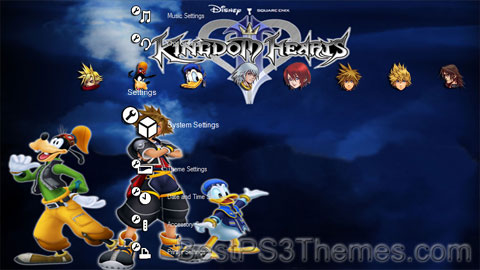
Kingdom Hearts theme by NIGHTMARE_1990

Download: KingdomHearts_5.p3t
Kingdom Hearts Theme 5
(3 backgrounds)

Kingdom Hearts
Genre(s)
Developer(s)
Publisher(s)
  • Square
  • Square Enix
Creator(s)
Composer(s)Yoko Shimomura
Platform(s)
First releaseKingdom Hearts
March 28, 2002
Latest releaseKingdom Hearts: Melody of Memory
November 11, 2020
Parent seriesFinal Fantasy

Kingdom Hearts[a] is a series of action role-playing games created by Japanese game designers Tetsuya Nomura and Shinji Hashimoto, being developed and published by Square Enix (originally by Square). It is a collaboration between Square Enix and The Walt Disney Company, and is under the leadership of Nomura, a longtime Square Enix employee.

Kingdom Hearts is a crossover of various Disney properties based in an original fictional universe. The series centers on the main character, Sora, and his journey and experiences with various Disney characters, as well as some from Square Enix properties, such as Final Fantasy, The World Ends with You, and Einhänder, in addition to original characters and locations created specifically for the series.

The series consists of thirteen games available for multiple platforms, and future games are planned. Most of the games in the series have been positively received and commercially successful. As of March 2022, the Kingdom Hearts series has shipped more than 36 million copies worldwide. A wide variety of related merchandise has been released along with the games, including soundtracks, action figures, companion books, light novels, a collectible card game, and a manga series.

Media[edit]

Games[edit]

Release timeline
2002Kingdom Hearts
2003
2004Chain of Memories
2005Kingdom Hearts II
2006
2007Re:Chain of Memories
2008Coded
2009358/2 Days
2010Birth by Sleep
Re:coded
2011
2012Dream Drop Distance
20131.5 Remix
χ
20142.5 Remix
2015(Unchained / Union) χ
2016
20172.8 Final Chapter Prologue
2018
2019Kingdom Hearts III
2020Dark Road
Melody of Memory
2021
2022
2023
2024Missing-Link
TBAKingdom Hearts IV
  • Kingdom Hearts is the first game in the series, released in Japan on March 28, 2002, for PlayStation 2.[1][2] Tetsuya Nomura served as game director, his first time in this position. Kingdom Hearts introduced the main characters (Sora, Kairi, and Riku) of the series, and established the plot's framework involving hearts and dark beings known as the Heartless. It also established the role of Disney characters in the series, with character cameos from the Final Fantasy series. Kingdom Hearts was released in North America on September 17, 2002,[1][2] and featured additional content that was not in the original Japanese version. The game was later re-released in Japan as Kingdom Hearts Final Mix on December 26, 2002.[1][2] Final Mix includes the content from the North American release and additional enemies, cutscenes, and weapons.[3]
  • Kingdom Hearts: Chain of Memories is a direct sequel to the first game. It was released on the Game Boy Advance in Japan on November 11, 2004.[4][5] Chain of Memories was touted as a bridge between the two PlayStation 2 games, introducing and previewing plot elements that would be explored in the next game.[6] The gameplay system is a departure from the original and employs card game mechanics in real time. Players construct decks out of cards that correspond to different actions in battle, such as attacking or using magic. It was remade into a PlayStation 2 game titled Kingdom Hearts Re:Chain of Memories, which contains polygonal graphics instead of the sprites used in the original game. The remake was released in Japan as a second disc packaged with Kingdom Hearts II Final Mix on March 29, 2007, and in North America as a standalone game on December 2, 2008.[7][8]
  • Kingdom Hearts II takes place one year after the events of Chain of Memories. It was released for the PlayStation 2 in Japan on December 22, 2005.[9][10] The game further explores the "heart" concept by involving a new group of enemies, the Nobodies, which are the cast-off shells of those who have become Heartless. The gameplay is similar to that of the first Kingdom Hearts game, with the addition of the Reaction Command, which performs reflex-sensitive actions in battle. Kingdom Hearts II was revised into Kingdom Hearts II Final Mix, which contains more material than the original release, such as additional cutscenes and bosses. Kingdom Hearts II Final Mix was released with Kingdom Hearts Re:Chain of Memories in a collection titled Kingdom Hearts II Final Mix+, which was released in Japan on March 29, 2007.[11]
  • Kingdom Hearts Coded is an episodic mobile phone game that picks up directly after Kingdom Hearts II. The "preinstall" episode was released in Japan on November 18, 2008, and eight episodes were released between June 3, 2009, and January 28, 2010.[12] The game was remade for the Nintendo DS as Kingdom Hearts Re:coded, and features updated gameplay combining that of two later entries in the series, 358/2 Days and Birth by Sleep. Unlike the original version, Re:coded was released internationally: October 7, 2010, in Japan;[13] January 11, 2011, in North America;[14] and January 14, 2011, in Europe.[15]
  • Kingdom Hearts 358/2 Days was released for the Nintendo DS in Japan on May 30, 2009. It is primarily set between Kingdom Hearts and Kingdom Hearts II, focusing on Roxas' time in Organization XIII and his motives for leaving. It is the first game in the series to feature cooperative multiplayer in addition to the traditional use of AI-controlled partners.[16][17] Gameplay is mission-based with optional objectives that yield additional rewards. The game also has a unique panel system which governs character improvement, special abilities, and equipped weapons.
  • Kingdom Hearts Birth by Sleep is a prequel to the series, released for the PlayStation Portable in Japan on January 9, 2010, and in North America on September 7, 2010, with additional content.[18] The game is set ten years before the events of the first Kingdom Hearts game, revealing the origins of the villain, Xehanort.[19] It consists of four scenarios, three of which focus on one of the game's three protagonists, Terra, Ventus, and Aqua. The game was re-released in Japan under the title Kingdom Hearts Birth by Sleep Final Mix on January 20, 2011, with the content from the English versions as well as new features, such as an additional fifth scenario.
  • Kingdom Hearts 3D: Dream Drop Distance was released on March 29, 2012, in Japan for the Nintendo 3DS. The game focuses on Sora and Riku's Mark of Mastery exam under Yen Sid in anticipation of Xehanort's return and their subsequent conflicts with enemies from their past.[20] In addition to similar systems inherited from Birth by Sleep, this game features "Dream Eaters" which serve as both enemies and allies. Players may collect and breed friendly Dream Eaters and train them to become more powerful. The English edition came out on July 20, 2012, in Europe while it came out on July 31, 2012, for North America.
  • Kingdom Hearts χ: At Tokyo Game Show 2012, Square Enix announced Kingdom Hearts χ, previously known as Kingdom Hearts for PC Browsers.[21] It is a browser game for PCs, and is only playable in Japan since July 18, 2013. It features cartoon-like 2D models and is a prequel to the series, detailing the events leading up to the Keyblade War.
    • Kingdom Hearts: Unchained χ: An international port of Kingdom Hearts χ that was released for Android and iOS devices.[22] Unchained χ was released in Japan on September 3, 2015,[23] in North America on April 7, 2016,[24] and in Europe on June 16, 2016.[25] Later in April 2017, it was rebranded as Kingdom Hearts: Union χ, featuring an all-new story that expanded and diverged from the original.[26] In January 2019, the game was available on the Amazon Appstore for Amazon devices.[27] The app was rebranded once again to Kingdom Hearts: Union χ Dark Road with the release of Kingdom Hearts Dark Road.[28] The game was shut down and converted into a cutscene viewer in May 2021.[29]
      • Kingdom Hearts Dark Road is a mobile game accessed within Kingdom Hearts Union χ[Cross],[28] which released worldwide on June 22, 2020.[30] The game is set 70 years before Birth by Sleep and explores the origins of Xehanort and his eventual turn to darkness,[31] and was developed by the same team working on Union χ.[32] Following the shutdown of Union χ, Dark Road was converted into an offline game and received its final story update in August 2022.[33]
  • Kingdom Hearts III: In September 2010, Tetsuya Nomura stated that his team was too busy with other projects such as Final Fantasy XV (known as Final Fantasy Versus XIII at the time) to work on Kingdom Hearts III. He also stated that his team was researching how to create the high-definition graphics of the game, which depended on the technical restrictions of the next generation consoles.[34] On June 10, 2013, at the E3 Sony press conference, after years of rumors and speculations, Nomura introduced a teaser for Kingdom Hearts III, which stated it was in development for the PlayStation 4. It was announced the next day to be in development for the Xbox One as well.[35] In Kingdom Hearts III, the series protagonist Sora embarks on a journey to regain his lost "Power of Waking" while Sora's friends, Riku and King Mickey, search for the Keyblade wielders Aqua, Terra, and Ventus in preparation for their final battle against Xehanort. The game concludes the "Dark Seeker Saga".[36] The game was released on January 25, 2019, in Japan and on January 29 worldwide.[37][38]
    • Kingdom Hearts III + Re Mind: A port of Kingdom Hearts III with the Re Mind DLC included that was released for Windows and the Nintendo Switch. It was initially released on Windows exclusively via the Epic Games Store on March 30, 2021, followed by a Steam release three years later on June 13, 2024.[39][40] A cloud version for the Nintendo Switch was announced during Sora's reveal as the final DLC fighter for Super Smash Bros. Ultimate on October 5th, 2021, and released as part of the series' 20th anniversary celebration on February 10, 2022.[41]
  • Kingdom Hearts: Melody of Memory is a rhythm-based game for the Nintendo Switch, PlayStation 4, and Xbox One.[42][43] It released in Japan on November 11, 2020, and worldwide on November 13.[44] Featuring 140 songs, it sees players travel to each stage in a Gummi ship, and features gameplay similar to Theatrhythm Final Fantasy.[42][43][45] Melody of Memory continues Kairi's story from the end of Kingdom Hearts III,[45] with Nomura saying the Kingdom Hearts III Re Mind title screen laid "some of the groundwork for it".[32]

Other[edit]

  • A Kingdom Hearts game was developed for V CAST, Verizon Wireless's broadband service, and was released on February 1, 2005, in the United States.[46][47] It was one of the launch games for the V CAST services.[48] The game, developed by Superscape and published by Disney Mobile with no involvement from Square Enix, features gameplay akin to the first Kingdom Hearts game, modified for the input method of mobile phones.[49] The game's storyline features Sora struggling to free himself from a nightmare induced by Maleficent's magic.
  • Kingdom Hearts Mobile was a Kingdom Hearts-themed social game in which players could play mini-games together. Unlike Kingdom Hearts for the V CAST and Kingdom Hearts Coded, this game does not have a storyline and focuses more on socializing. The service operated in conjunction with Kingdom Hearts Coded, as new avatar costumes became available after the player completed an episode of Kingdom Hearts Coded. Kingdom Hearts-related media such as wallpapers, ringtones, graphics, and other items could be purchased and downloaded through the service for mobile phones.
  • Kingdom Hearts VR Experience: Announced in September 2018, Kingdom Hearts VR Experience is a free, 10-minute interactive video "featuring iconic moments [and music] from the Kingdom Hearts games" with the ability to unlock additional content by progressing through the experience.[50] The first part was released in Japan on January 23, 2019, with the second part releasing in early 2019.[51][52] The first part had initially been scheduled to release on January 18, 2019,[52] after initial release dates of December 25, 2018, for the first part, with the second part releasing on January 18, 2019.[53]

Collections[edit]

  • Kingdom Hearts HD 1.5 Remix was released for the PlayStation 3 in Japan on March 14, 2013.[54] The collection includes remastered versions of Kingdom Hearts Final Mix and Re:Chain of Memories, which include gameplay enhancements and trophy support. In addition, a "Theater Mode" has been added, consisting of high definition cutscenes from Kingdom Hearts 358/2 Days.[55] The collection was released in North America on September 10, 2013[56] in Australia on September 12, 2013,[57] and in Europe on September 13, 2013.[58]
  • Kingdom Hearts HD 2.5 Remix: After the announcement of HD 1.5 Remix, Nomura stated that it would be "pretty unnatural" if Kingdom Hearts II did not receive an HD update.[59] In the credits of HD 1.5 Remix, clips of Kingdom Hearts II Final Mix, Kingdom Hearts Birth by Sleep Final Mix, and Kingdom Hearts Re:coded were shown, hinting at another collection.[60] On October 14, 2013, the collection was announced for the PlayStation 3, and included the previously mentioned games, with Re:coded appearing as HD cinematics, similar to 358/2 Days in HD 1.5 Remix.[60] The collection was released in Japan on October 2, 2014,[61] North America on December 2, 2014, Australia on December 4, 2014, and Europe on December 5, 2014.[62]
  • Kingdom Hearts HD 2.8 Final Chapter Prologue: In the credits of HD 2.5 Remix, clips of Kingdom Hearts 3D: Dream Drop Distance were shown as well as the inclusion of a secret ending related to the game, hinting at a possible additional collection.[63] In September 2015, Square Enix announced Kingdom Hearts HD 2.8 Final Chapter Prologue. The collection features an HD remaster of Dream Drop Distance as well as Kingdom Hearts χ Back Cover, a cinematic telling of the backstory behind the events of Kingdom Hearts χ, and Kingdom Hearts 0.2: Birth by Sleep – A Fragmentary Passage, a new game taking place after the events of the original Birth by Sleep, told from the perspective of Aqua.[64] It was released in Japan on January 12, 2017, and in North America and Europe on January 24, 2017,[65] with a later release on February 18, 2020, for the Xbox One,[66] and on March 30, 2021, and June 13, 2024, for Windows via Epic Games Store and Steam respectively.[39][40] A cloud version for the Nintendo Switch was released on February 10, 2022.[41]
  • The following are repackaged versions of the above collections:
    • Kingdom Hearts Starter Pack: HD 1.5 + 2.5 Remix: A collector's pack released in Japan includes Kingdom Hearts HD 1.5 Remix and Kingdom Hearts HD 2.5 Remix.
    • Kingdom Hearts Collector's Pack: HD 1.5 + 2.5 Remix: A collector's pack released in Japan includes Kingdom Hearts HD 1.5 Remix and Kingdom Hearts HD 2.5 Remix, a code to get an Anniversary Set for Kingdom Hearts χ, music, and a booklet with art from the series.[61]
    • Kingdom Hearts HD 1.5 + 2.5 Remix: In October 2016, Square-Enix announced a single-disc compilation release of Kingdom Hearts HD 1.5 Remix and Kingdom Hearts HD 2.5 Remix for the PlayStation 4. The compilation was released on March 9, 2017, in Japan; March 28, 2017, in North America; and March 31, 2017, in Europe.[67] It was later released on February 18, 2020, for the Xbox One,[66] and on March 30, 2021, and June 13, 2024, for Windows via Epic Games Store and Steam respectively.[39][40] A cloud version for the Nintendo Switch was released on February 10, 2022.[41]
    • Kingdom Hearts: The Story So Far: Announced in early October 2018, this bundle collects the Kingdom Hearts HD 1.5 + 2.5 Remix PlayStation 4 collection and Kingdom Hearts HD 2.8 Final Chapter Prologue. It was released in North America on October 30, 2018, for the PlayStation 4.[68]
    • Kingdom Hearts: All-In-One-Package: This bundle contains everything in The Story So Far, along with Kingdom Hearts III. It was released digitally on the PlayStation 4 in North America on January 29, 2019.[69] The bundle became available physically in North America on March 17, 2020.[70]
    • Kingdom Hearts Integrum Masterpiece for Cloud: This bundle contains cloud versions of everything in the All-In-One-Package, along with the Kingdom Hearts III Re Mind DLC. It was released on the Nintendo Switch on February 10, 2022.[41] A non-cloud version, simply titled Kingdom Hearts Integrum Masterpiece, was later made available for Steam on June 13, 2024. [71]

Future[edit]

  • Kingdom Hearts Missing-Link: In April 2022, Square Enix revealed Kingdom Hearts Missing-Link was in development for iOS and Android devices. It is set in Scala ad Caelum between the events of Union X and Dark Road. A closed beta was originally set for late 2022.[72][73] However, it was delayed to October 30, 2023 for its closed beta. The game is set for a 2024 launch on mobile devices.
  • Kingdom Hearts IV: Though Kingdom Hearts III was the end of the "Dark Seeker Saga" which revolved around Xehanort, it had been decided where certain characters end up in order to potentially continue their stories in future games.[74] In January 2020, Nomura said there would need to be "more time" before the next main entry in the series,[32] later noting in September that Yozora would "definitely... be involved" in the future of the series, in an unexpected and surprising way.[75] In April 2022, Square Enix revealed Kingdom Hearts IV was in development, confirmed that Sora, Donald, and Goofy would return, and that the game would be set in Quadratum, a realistic world inspired by Tokyo. Kingdom Hearts IV will be the start of the "Lost Master arc".[72] In March 2023, during a Kingdom Hearts concert breath concert, Nomura vaguely announced something happened that determined the "direction of the series" going forward.[76]

Common elements[edit]

Disney and Square Enix characters[edit]

Kingdom Hearts features a mixture of familiar Disney and Square Enix characters, as well as several new characters designed and created by Nomura.[77] In addition to original locations, the Kingdom Hearts series features many worlds from Disney films. Sora must visit these worlds and interact with various Disney characters to protect them from enemies. Often, his actions in these worlds closely follow the storylines of their respective Disney films. The main characters try not to interfere with the affairs of other worlds, as it could negatively affect the universe's order.[78][79] Various Final Fantasy characters also make appearances within several worlds throughout the series. This includes Moogles, small creatures who are another common element in the games. They provide the player with a synthesis shop in order to create and purchase items used in the game. The main cast from The World Ends with You also makes an appearance in the series in Dream Drop Distance, and Kingdom Hearts III features characters from Pixar films such as the Toy Story series and Monsters, Inc., as well as Schwarzgeist, one of the bosses from Einhänder.[80][81][82] Nevertheless, the usage of Disney characters is not without restrictions. For example, Nomura had requested the use of Oswald the Lucky Rabbit in Kingdom Hearts III, but the response from Disney was that the character would be "too difficult" to use, with no further clarification or details from Disney.[83]

Story[edit]

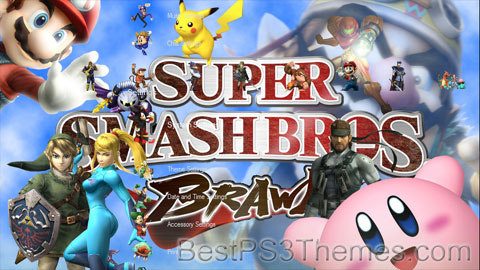
Super Smash Bros. Brawl
North American and European box art
Developer(s)Sora Ltd.
Game Arts[a]
Publisher(s)Nintendo
Director(s)Masahiro Sakurai
Producer(s)
Writer(s)
Composer(s)
  • Takahiro Nishi
  • Shogo Sakai
  • Masaaki Iwasaki
  • Yutaka Iraha
  • Keigo Ozaki
  • Kentaro Ishizaka
  • Nobuo Uematsu[d]
SeriesSuper Smash Bros.
Platform(s)Wii
Release
  • JP: January 31, 2008
  • NA: March 9, 2008
  • AU: June 26, 2008
  • EU: June 27, 2008
Genre(s)Fighting
Mode(s)Single-player, multiplayer

Super Smash Bros. Brawl[e] is a 2008 crossover fighting game developed by Sora Ltd. and Game Arts and published by Nintendo for the Wii.[1] The third installment in the Super Smash Bros. series, it was announced at a pre-E3 2005 press conference by Nintendo president Satoru Iwata. Masahiro Sakurai, director of the previous two games in the series, assumed the role of director at Iwata's request. Game development began in October 2005 with a creative team that included members from several Nintendo and third-party development teams. After delays due to development problems, the game was released worldwide in 2008.

The number of playable characters in Brawl has grown from that in Super Smash Bros. Melee, although some characters from Melee were cut in the game. Brawl is the first game in the series to have playable third-party characters.[2] Like that of its predecessors, the objective of Brawl is to knock opponents off the screen. It is a departure from traditional fighting games, notably in its simplified move commands and emphasis on ring outs over knockouts. It includes a more extensive single-player mode than its predecessors, known as the Subspace Emissary. This mode is a plot-driven, side-scrolling beat 'em up featuring computer-generated cutscenes. Brawl supports multiplayer battles with up to four combatants, and is the first game of its franchise to feature online battles via Nintendo Wi-Fi Connection.[3] The game is unique in that it can be played with four different controllers, including the Wii Remote, Wii Remote with Nunchuk, GameCube controller, and Classic Controller, simultaneously.[4]

Super Smash Bros. Brawl received universal acclaim, with praise centered on its entertainment value despite issues relating to its content loading times. Its musical score, composed through a collaboration of 38 renowned video game composers, was lauded for its representation of different generations in gaming history. Brawl was named the "Fighting Game of the Year" by the Academy of Interactive Arts & Sciences.[5] In 2010, the game was included as one of the titles in the book 1001 Video Games You Must Play Before You Die,[6] and is also considered to be one of the best video games ever made. As of 2023, it is the eighth best-selling Wii game of all time, with over thirteen million copies sold worldwide. It was followed by Super Smash Bros. for Nintendo 3DS and Wii U in 2014.

Gameplay[edit]

A match between Mario, Kirby, Bowser and King Dedede. The damage meter now displays the name of the character as well as an image of their official artwork.

Following its predecessors, Brawl is a platform fighter that uses a battle system unlike that of typical fighting games. Players can choose from a large selection of characters, each attempting to knock their opponents off the screen as they fight on various stages. The characters in Brawl include most of the same ones as the predecessors, such as Mario and Pikachu. Instead of using traditional health bars that start at a maximum value and lose value, Brawl characters start the game with 0%; the value rises as they take damage, to a maximum of 999%.[7] As a character's percentage increases, the character flies further back when hit. When a character is knocked beyond a stage's boundary and disappears from the screen, the character loses either a life, a point, or coins, depending on the mode of play.[8] Brawl includes a function which allows players to create profiles with personalized button configurations for each control method along with their chosen username.[9]

The characters in Brawl fight using a variety of attacks, that give the player a wider selection than the predecessors. Players execute each move by pressing a button in conjunction with a tilt of the control stick or a press of the D-pad, depending on the mode of control. In addition to basic attacks, characters have access to more powerful moves, known as smash attacks. Each character has four unique moves, which often cause effects besides damage to an opponent. Brawl introduces character-specific super attacks, referred to as "Final Smashes". Significantly more powerful than regular attacks, these moves have a wide variety of effects that range from nearly unavoidable blasts to temporary transformations. Final Smash moves can be performed by destroying a Smash Ball: a colorful floating orb bearing the Smash Bros. logo.[10][11]

Characters can use items ranging from projectiles to melee weapons; each has a different effect on the characters around it. Although many items have returned from previous Super Smash Bros. games, new ones have been introduced as well. Some returning items have changed appearance and function.[12] Two varieties of items, Assist Trophies[13] and Poké Balls,[14] temporarily summon guest characters and Pokémon, respectively, that generally aid the summoner. They cannot be controlled by players and are usually invincible.[15]

Stages[edit]

Brawl's stages are generally based on plot devices from the various game series of Super Smash Bros. Stages range from floating platforms to moving areas where the characters must stay within the field of play. Each stage has a boundary that cannot be passed, or the character will be "KO'd", thus losing a life or "point", depending on the mode of play.

Brawl contains 41 selectable stages, 29 of which are initially available. Many stages undergo elaborate changes while battles take place, such as a cycling day-to-night system[16] or changing seasons.[17] A stage, based on the Animal Crossing series, features a live events system in which special events may occur depending on the date and time.[18] Environmental gameplay mechanics are featured in this installment, such as destructible terrain and the ability to float. Unlike its predecessors, Brawl includes stages based on third-party games such as the Metal Gear Solid-inspired Shadow Moses Island.[19] The game also includes 10 stages taken from its predecessor, Super Smash Bros. Melee.[20]

Brawl allows players to create their own stages in a mode called Stage Builder, the first in the series to implement this mode. Players can save their stages to an SD card or to the internal memory of the Wii console. Through Nintendo Wi-Fi Connection, players can submit their creations to their friends, or to Nintendo to receive a daily stage from the service.[21]

Multiplayer[edit]

In addition to the standard multiplayer mode, Brawl features other multiplayer modes and options in Group mode. Special Melee, from the previous game, returns as Special Brawl. In this mode, players are able to battle in matches using special rules for a greater level of customization. Whereas previously standard options such as "Giant Melee" or "Invisible Melee" were limited to one feature per match, players may now select multiple options for a single match.[22] Another returning game type, Tourney mode (formerly Tournament mode), enables players to create an elimination-based tournament, where up to 32 players can play,[23] with a large number of game-controlled or human-controlled opponents.[24] A "Rotation" feature has been introduced in Brawl, which allows up to sixteen players to compete in sequence by switching out winners or losers after each round.[25]

Single-player[edit]

Like its predecessors, Super Smash Bros. Brawl includes various modes of play from the previous game designed for a single player. In Classic Mode, players fight individual characters in a selected order. Each match features an arena or opponent from a particular series, such as The Legend of Zelda or Pokémon. Several matches have a unique battle condition, such as a metal opponent, large opponent, or a two-on-two team battle.[26] Similar to Classic mode are All Star Mode and Boss Battles, where the player has only one life to defeat all of the playable characters and bosses respectively.[27][28]

Brawl features Events, matches with predetermined battle conditions such as defeating opponents within a time limit or reaching a specific goal. New to single-player mode, each of the 41 Events has three difficulty levels, with a distinct high score recorded for each.[29] In addition to the normal set of 41 Events played with a single player, a smaller set of 21 two-player Events is included.[30]

Stadium mode is a collection of objective-oriented minigames. Returning from the two previous games is the "Target Smash!" minigame, in which the player must break ten targets as quickly as possible.[31] In the Home-Run Contest, the player must beat Sandbag to inflict as much damage as possible in 10 seconds, then strike it with a Home-Run Bat. Updated from Melee, all Stadium mode minigames feature cooperative or competitive multiplayer.[30][32]

Adventure Mode: The Subspace Emissary[edit]

Original characters were created for the story mode. Pictured is the Ancient Minister, who starts as an antagonist but later becomes the playable fighter R.O.B.

Super Smash Bros. Brawl features a new Adventure mode titled "The Subspace Emissary", abbreviated to "SSE". This mode features a unique storyline and numerous side-scrolling levels and bosses, as well as cutscenes explaining the plot. The mode introduces a group of antagonists called the Subspace Army, led by the Ancient Minister. Some of these enemies appeared in previous Nintendo video games, such as Petey Piranha from the Mario franchise and a squadron of R.O.B.s based on classic Nintendo hardware. The Subspace Army boasts a number of original enemies, such as the Roader, a robotic unicycle; the Bytan, a one-eyed spherical creature which can replicate itself if left alone; and the Primid, enemies that fight with a variety of weapons.[33] Though the game is primarily played as a single-player mode, cooperative multiplayer is available. The SSE features a mechanism which strengthens a character's abilities in the form of collectible stickers which can be applied to the player's Trophies.[34]

Unlike other game modes, the SSE has a team system for the characters, with a limited choice of characters at the beginning of the mode. Others join the team as the game progresses, while some characters may leave the team temporarily.[35] Most characters start off with their own teams, but the teams merge occasionally until they become a unified team by the end of the game. In cooperative multiplayer, once one player loses a life, an ally can take his or her place until the number of lives run out. If there are no lives left and player one is defeated, the game is interrupted, with the choice of quitting or starting again from the previous "door" the player passed through.

During the development of Super Smash Bros. Brawl, Sakurai said that this mode would be more "fleshed out" than the single-player modes in previous Smash Bros. titles.[36] Shigeru Miyamoto has explained that Sakurai always wanted to have a deep single-player game, but he wanted Sakurai to focus more on the multiplayer aspects in the previous titles since there were already many single-player games of this kind. Both were possible with the development time allotted for Brawl.[37] Sakurai selected Kazushige Nojima, a scenario writer known for his work on the Final Fantasy series, to construct a plotline for the mode in cooperation with him.[38]

Nintendo Wi-Fi Connection[edit]

Brawl allows players to play against distant opponents via the Nintendo Wi-Fi Connection.[39] Online multiplayer games can be played either with registered friends or with randomly selected participants.[40] Additionally, players can converse with up to four phrases that are preset by the player, which appear as speech bubbles when activated. These names and phrases are not displayed in random-player matches. The Spectator mode allows players to watch matches being played between other players, and bet on the outcome using coins earned within the game. The winner of the match earns a jackpot of coins.[41]

Snapshots may be taken during battles or in certain other modes, which can later be sent to friends or submitted to Nintendo.[42] Video replay footage can be captured in specific game modes, including Brawl and Target Smash! modes, and sent to friends in the same manner.[31] Snapshots, custom stages and replays can be submitted to Nintendo's "Smash Service" for a chance to get the content featured and updated on all Smash Service-enabled Wii consoles. Since Brawl's launch, the Smash Service has updated the game's Vault with one user submitted snapshot, custom stage and replay data chosen by Nintendo every day; each new update overwrites the previous. The user can choose to not receive updates from the service through the Nintendo Wi-Fi Connection options menu. After June 30, 2009, the Smash Service stopped accepting content from its users.[43] After May 20, 2014, the Nintendo Wi-Fi service for Brawl was discontinued.[44]

Vault[edit]

Returning from Melee are trophies, statues of video game characters and objects that give brief histories or descriptions of their subjects, such as Mario and Link, or other characters and items that appear in their respective series.[45] A minigame, the Coin Launcher, replaces the lottery machine from Melee as the primary method of obtaining trophies. The Coin Launcher is a machine that uses coins as projectiles to shoot trophies and counter incoming dangers.[46] Coins can also be used to bet on the victor of online battles via Spectator mode.[41] Trophies unavailable in Coin Launcher mode are obtained by using an item called the Trophy Stand on weakened enemy characters and bosses within The Subspace Emissary. Trophies obtained in this manner may contain information on the backstory of the Subspace Emissary.[47]

In addition to trophies, players can now collect stickers of video game artwork.[48] Players can place stickers and trophies onto virtual backgrounds and take snapshots, which can be sent to other players via Nintendo Wi-Fi Connection.[45][48] Stickers can be applied to characters to power up their abilities in the Subspace Emissary.[34]

Other stickers or trophies which cannot be collected through the Coin Launcher minigame, Subspace Emissary, or Vs. matches can be unlocked from the Challenges menu, an interactive display which catalogs unlocked features and items in gridded windows. Once a window has been broken and its contents are unlocked, horizontally adjacent windows display the conditions necessary to unlock them.[49]

Brawl contains demo versions of several Nintendo games, named "Masterpieces", which were originally released for older consoles and feature characters playable in Brawl. These games use Virtual Console technology to emulate older hardware and have time constraints ranging from thirty seconds to five minutes. Some use save data to allow the player to play a certain scenario or level.[50] Along with Masterpieces comes the inclusion of the Chronicles section, a library of previous Nintendo games which lists games either previously made or published by Nintendo on all of its consoles. New games appear when certain characters, trophies or stickers related to the game are unlocked.[51]

Plot[edit]

In the Adventure mode titled "The Subspace Emissary", Mario and Kirby face each other on a stadium located in the Super Smash Bros. universe. In this world, when a fighter is defeated, they become an inanimate trophy-like object, but they can be returned to their animate forms when the object's stand is touched by an active fighter. Suddenly, the Battleship Halberd appears, releasing a stream of purple particles known as Shadow Bugs that form the soldiers of an evil force known as the Subspace Army. The Ancient Minister, the army's cloaked general, arrives and detonates a Subspace Bomb, which can only be activated by the sacrifice of a pair of R.O.B. units, and transports the stadium into Subspace, an alternate dimension where the Subspace Army resides. The army's advance prompts the fighters to join forces and attempt to repel the threat, while its pawns, villain fighters Bowser and Wario, attempt to deter the allied fighters by using powerful weapons that instantly reduce them to their trophy forms, with the former using the Shadow Bugs on some of them to create evil doppelgängers. King Dedede begins independently gathering some fallen fighters, placing golden brooches on them.

The Ancient Minister is revealed as a subordinate of Ganondorf, who is under orders from Master Hand to draw the world into Subspace, but is secretly plotting a coup d'état against him for command over the Subspace Army. Wario, who had kidnapped Ness, is defeated by Lucas, aided by the Pokémon Trainer, and his trophy form is later helplessly sucked into a Subspace Bomb's detonation. Meanwhile, Meta Knight leaves his group to reclaim the Halberd as he allies with Lucario and Snake and neutralizes the source of the Shadow Bugs – Mr. Game & Watch.

The Ancient Minister's true identity is revealed to be that of the leading R.O.B. unit, who rebels against Ganondorf to join the fighters when the latter detonates several bombs on its home, the Isle of the Ancients, to create a rift into Subspace large enough to summon the Subspace Army's ultimate weapon – an enormous warship. The three major groups converge and use the Halberd to battle the ship. Although the Halberd is destroyed, all of the characters escape unscathed and Ganondorf and Bowser retreat after Kirby destroys the ship with his Dragoon. After betraying Bowser as he is about to put his coup in motion, Ganondorf discovers that Master Hand was being marionettically controlled by the embodiment of Subspace and the mastermind behind the Subspace Army, Tabuu, who defeats Ganondorf and the freed Master Hand.

The fighters confront Tabuu, but the latter annihilates them all with a cataclysmic attack known as "Off Waves" and scatters their trophy forms all throughout his dimension. Dedede's brooches are soon revealed to be a fail-safe against Tabuu and revive Luigi, Ness and later Kirby, who, with the former two reviving Dedede in return, rescue the fighters and navigate a gargantuan maze-like amalgamation of the areas that were transported into Subspace where Tabuu is located. When Tabuu attempts to dispose of the fighters once and for all, he is attacked by Sonic, who negates his Off Waves; the fighters then defeat Tabuu and save the day.

In a freeze frame-styled epilogue, the fighters look at a great luminous cross on the horizon where the Isle of the Ancients once resided, which is implied to have now been erased from existence due to the excessive amount of the Subspace Bombs that had been detonated there.[52]

Playable characters[edit]

Brawl allows the player to select from 39 playable characters,[53] 25 of which are initially available from the start. Some are new, but others return from Melee—in some cases updated or refined, either in appearance, fighting capabilities, or both. For example, Link and Fox have adopted designs from more recent titles at the time, while Samus has gained the ability to change into Zero Suit Samus.[54] Dr. Mario, Roy, Young Link, Mewtwo and Pichu are the first five characters to not return from a previous game.

Some previously represented series have had more characters added to Brawl. Diddy Kong from the Donkey Kong series,[55] Ike from the Fire Emblem series,[56] and Lucas from Mother 3 make their first appearance in the Smash Bros. series.[57] Other newcomers are the first to represent their series. These include characters such as Pit, representing the Kid Icarus series for the first time since the 1991 Game Boy game Kid Icarus: Of Myths and Monsters, Olimar of the Pikmin series, and Wario, as he appears in Nintendo's WarioWare. Solid Snake, the protagonist of Konami's Metal Gear franchise, and Sonic the Hedgehog from Nintendo's former rival Sega are the first third-party characters to appear in a Super Smash Bros. game.

Development[edit]

At a pre-E3 2005 press conference on May 17, 2005, Nintendo president Satoru Iwata announced that the next installment of Super Smash Bros. was soon to be in development for its next console and would be a launch title with Wi-Fi compatibility for online play.[58] The announcement was a surprise to Sakurai, who left HAL Laboratory in 2003. He was not informed of Nintendo's intent to release another Smash Bros. game, despite the fact that Iwata told Sakurai shortly after his resignation from HAL that if a new Smash game were developed, he would want Sakurai to again serve as director. It was not until the day after the conference that Iwata requested that Sakurai hold a private meeting with him, where he was asked to be involved as Brawl's director.[59] Sakurai agreed to become director, and development of the game began in October 2005,[60] when Nintendo opened a new office in Tokyo just for its production.[61] Help from a variety of studios such as Monolith Soft and Paon was enlisted,[62] with Game Arts as the main team in the preliminary development stages.[63] In addition, several Smash Bros. staff members that resided in the area of the new office joined the project.[38][64] Altogether, roughly 100 individuals worked on the project full-time,[63] and were given access to all the original material and tools from the development of Melee, courtesy of HAL Laboratory.[61]

The game was absent from Nintendo's Wii showing at its pre-E3 2006 press conference. Nintendo officially revealed the game under the name of Super Smash Bros. Brawl the next day, May 10, 2006, along with the game's first official trailer during the E3 After-Hours Press Conference. In an interview with IGN, Sakurai said the Wii's motion sensing features might not be included because "[his team] found that trying to implement too much motion-sensory functionality can get in the way of the game".[10] As far as Wi-Fi play is concerned, Sakurai stated his plan was to include Wi-Fi connection compatibility from the start. He goes on to say, "One of the primary reasons Super Smash Bros. Brawl was created was that Nintendo, when taking Wii online, wanted to have Smash Bros. to do that."[10] However, Sakurai stated on the Japanese version of the Smash Bros. website that there were "hurdles of all sorts that [made] it very difficult" to implement online battles.[65] Furthermore, he said that an online ranking system is unlikely to be implemented.[66] During a test play between Sakurai and Hideo Kojima, Kojima stated that the game felt complete and that Nintendo "could put it out now and it would sell millions of copies".[67] Starting May 22, 2007 and ending April 14, 2008, the game's official site had daily weekday updates, revealing characters, stages, items, music and more.[68]

At the Nintendo Media Conference at E3 2007, Nintendo of America president Reggie Fils-Aimé announced that Super Smash Bros. Brawl would be released on December 3, 2007, in the Americas.[69] However, just two months before its anticipated December release, the development team asked for more time to work on the game. During the Nintendo Conference on October 10, 2007, President Iwata announced the delay,

In order to fine-tune Smash Bros., with this unprecedented game depth, we have decided that we have to take a little more time to complete the game than we announced before. We are sorry for the fans that are already anxiously waiting for the launch, but we would like to launch this game on January 24, 2008 in Japan. As for the North American launch, we will review that too, and our local subsidiaries will make their own announcements.[70]

On October 11, 2007, George Harrison of Nintendo of America stated that Super Smash Bros. Brawl would be released on February 10, 2008, in North America.[71] On January 15, 2008, the game's release was delayed one week in Japan to January 31 and nearly a month in the Americas to March 9.[72] On April 24, 2008, Nintendo of Europe confirmed that Brawl would be released in Europe on June 27.[73] Similarly, Nintendo Australia announced on May 15, 2008, that the game would be released in that region on June 26, 2008.[74]

Technical issues[edit]

Super Smash Bros. Brawl uses a dual-layer disc due to the size of the game data. Nintendo of America has stated that some Wii consoles may have difficulty reading the high-density software due to a contaminated laser lens. Nintendo offered a free repair for owners who experienced this issue.[75]

Music[edit]

Sakurai revealed a list of 36 musicians providing musical arrangements for the game on May 22, 2007. He asked composers such as Koji Kondo, Yasunori Mitsuda, Yoko Shimomura, and Yuzo Koshiro, amongst many others, "to listen to an elite selection of Nintendo music and arrange several of their favorite songs."[76] The game's various stages have multiple musical tracks which players can listen to using the new "My Music" feature, including some pieces taken directly from other games without any modification or special arrangements. This feature allows the player to select how often a piece gets played during a stage. Some of the pieces need to be unlocked by collecting CDs which are awarded via the game's Challenges Mode, or by spawning randomly while playing.[77] The game's original music was composed by Takahiro Nishi, Shogo Sakai, Masaaki Iwasaki, Yutaka Iraha, Keigo Ozaki, and Kentaro Ishizaka, while the main theme was composed by former Final Fantasy series composer, Nobuo Uematsu, and arranged by Sakai.[78] The main theme has Latin lyrics that allude to various key aspects of the game, including fighting for glory, rivals becoming companions, and the fame of the characters.[79]

Inclusion of characters[edit]

Sakurai originally stated that he did not want to emphasize Japan-only characters. However, reflecting upon Marth and Roy's inclusion in Melee, which led to the international release of the Fire Emblem series,[80] he became more interested in characters exclusive to Japan-only releases.

Silent Hill 5 #2

Silent Hill 5 theme by OPTIMUS

Download: SilentHill5_2.p3t
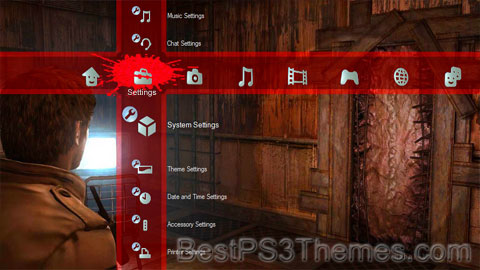
Silent Hill 5 Theme 2
(2 backgrounds)

Gran Turismo 5 Prologue #2

Gran Turismo 5 Prologue theme by OPTIMUS

Download: GranTurismo5Prologue_2.p3t
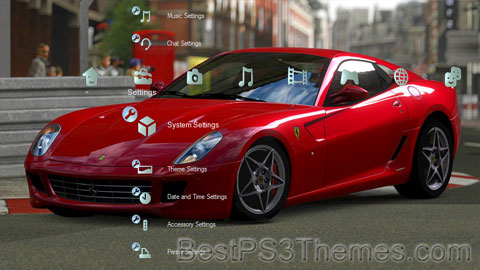
Gran Turismo 5 Prologue Theme 2
(3 backgrounds)

Gran Turismo 5 Prologue
European box art
Developer(s)Polyphony Digital
Publisher(s)Sony Computer Entertainment
Designer(s)Kazunori Yamauchi
SeriesGran Turismo
Platform(s)PlayStation 3
Release
Genre(s)Racing simulation
Mode(s)Single player, multiplayer

Gran Turismo 5 Prologue (グランツーリスモ5 プロローグ, Guran Tsūrisumo 5 Purorōgu) is a 2007 racing simulation video game developed by Polyphony Digital and published by Sony Computer Entertainment for the PlayStation 3. It is the eighth overall installment in the Gran Turismo series. Gran Turismo 5 Prologue is a precursor to Gran Turismo 5, in celebration of the series' tenth anniversary.[5]

The game has sold 5.09 million copies worldwide, making it the second highest-selling PlayStation 3 exclusive title after its successor, Gran Turismo 5.[6]

Gameplay[edit]

GT5 gaming area at the 2008 Taipei Game Show

This game introduced the ability to race with up to 16 cars at once to the Gran Turismo series. According to game developer Polyphony Digital, the NPC's AI has also improved from previous Gran Turismo games.[7]

New to the series is the realistic in-car view feature. It includes functioning speedometers, odometers, reflecting rear-view mirrors, wing mirrors and real-time in-car lighting effects, such as shadows. Players driving with either the control pad or the steering wheel can look left and right in the cockpit of the car by using the D-pad. This function can be mapped to other buttons on the controller if preferred. Any PlayStation 3 - compatible steering wheel works with Gran Turismo 5 Prologue. Three viewing modes show the car from exterior angles. The fourth, called "cockpit mode", includes the driver's perspective from the interior of the car looking past the steering wheel to the track and is available only for "premium" cars.[8]

The Spec II update brings Drift Mode (similar to that of Gran Turismo HD Concept), car tuning adjustments, and head to head two-player racing offline.[9]

Online[edit]

Gran Turismo 5 Prologue is the first mass-produced Gran Turismo game to feature online multiplayer.[10] Up to 16 players can play online at once in GT5 Prologue. Since Gran Turismo 5's development cycle was so long, GT5 Prologue's servers were online for two years even though the game only served as a prologue.[11] Gran Turismo 4 for the PlayStation 2 was intended to contain an online component, but this feature was pulled before the game's release to avoid further delays; a beta of GT4 online was even released.[12] Gran Turismo HD Concept also contained an online Time Trial feature.[13]

The latest update, entitled Spec III, added new cars and further improvements to the game and was released in October 2008. A separate disc was also released in Japan that included all updates, including Spec III. The Platinum release of the game, originally unveiled in Europe, also comes with the Spec III update.[14]

Interface[edit]

My Page interface in Gran Turismo 5 Prologue (Japanese version 1.01)

The game has a brand new interface called 'My Page' that acts as the player's personalized menu for the game. When the game starts up, the player is taken straight to this interface, and the currently selected car is displayed on the screen in a picturesque real-life location. The vehicle is set in a Full HD advanced 3D environment with a 360° camera and the GUI's real-time zoom-in function is enabled.

In the Japanese version, the 'My Page' interface includes:

  1. News: a regularly updated online log archiving game news such as newly added Online Event Races, VOD programs or technical information such as server maintenance schedule.
  2. GT-TV: a Video-on-demand service was offering free of charge and playable HD content. Available videos are real-life car-related videos such as new model tests, Auto show reports, car documentaries, or special event videos. Game videos such as opening and ending movies are also available for download from the Blu-ray Disc to the console's HDD once unlocked. However, premium content was discontinued on December 29, 2009, to move focus to the release of the full game.
  3. Online: Online Events consist of either multiplayer races from 2 up to 16 players (some of which are world scale), or online Time Trial events. Each event is limited in time, once finished, a ranking board shows the most successful players' scores. Top players' replay files are made available for download as ghost replays. Each week new events with their specific parameters (car class, tire types, assistance level, etc.) are added to the list while older are closed.
  4. Ranking: an online ranking board for each course archiving the best record per track and car.
  5. Arcade: a single race mode is allowing the player to choose a track to race on board the currently selected car and to compete against 15 AI-controlled cars. Credits are not earned in this mode.
  6. 2P Battle: an offline two-player split-screen mode.
  7. Event: Event Races are championships, time trials and mission races against the AI in various classes. Once completed in Gold, Silver, or Bronze level, new, harder classes are made available. Credits are earned by the player as he wins the races in top positions. Three basic classes are available Class C, B, and A. Once Class A is completed, the game's ending movie is available for download in GT-TV, and a bonus class called Class S is added.
  8. Garage: where the players' cars can be viewed, raced and also sold to earn credits.
  9. Dealerships: where the player can buy a new car using credits earned from Event races. Various models from world-famous automakers are available for purchase in the showroom. Some automakers have their Event race consisting of a one-make race for a specific model. Brand related News is regularly provided through online updates.
  10. Replay: saved or downloaded replays are available for watching.
  11. Option: various options settings for the game.
  12. Manual: the game's Playing Manual is displayed on-screen. The Manual is almost always updated with a software update.
  13. Save: allows to record the game when the auto-save feature is disabled.

When the user's PlayStation Network account is signed off, online content related icons are disabled (1, 2, 3 and 4). The Museum is activated from the 'My Page' interface once the game is in rolling demo mode. This feature provides the players with automakers' background and history.

Updates[edit]

Updates were available on game boot through online download, all free. Game content such as new cars, game modes or GT-TV videos were added with each update. Some elements such as BGMs are regionally exclusive due to licensing issues.[15] Once Polyphony Digital begun to focus on Gran Turismo 5, it stopped applying updates to GT5 Prologue.[16]

GT-TV[edit]

The Gran Turismo TV feature was introduced in the free demo version. The VOD service was activated on October 22, 2007, providing free SD trailers for three upcoming GT-TV programs,[17] Super GT ("Climax Digest"), D1 Grand Prix ("Top of the Drifting World") and Best Motoring ("Best Motoring Trailer").[18][17] From October 22 to November 30 three GT-TV exclusive HD videos featuring game producer Kazunori Yamauchi premiered in the demo: "First Impression: Lancer Evolution X",[19] "Tokyo Motor Show 2007"[20] and "GT-R Legend Inside Story part I".[21]

The demo was removed from the Japanese PlayStation Store on November 30[22] and its online functions ended on December 6,[23] however all issued VOD videos were later re-released in the game's retail version through updates, except the SD trailers. "The GT-R Legend Inside Story" part 1 documentary was included in the Blu-ray Disc though.[24] It was later completed by parts II & III, both released through GT-TV updates.

The first episode of the BBC's Top Gear series 6 was available for free since March 31.[25][26] In the meantime, five videos released in December 2007 have been removed. On April 1, two promotion videos for Super GT ("Fascination for the Super GT") and D1 Grand Prix ("The Drifting World") were added.[27] The first trailer for Video Option ("What is the Video Option?") was also included announcing upcoming releases for this magazine.[28]

On August 1, 2008, GT-TV was completely overhauled with a new interface, layout, and the launch of the PPV (pay-per-view) service. The "GT-R Legend Inside Story (all parts)", "'08 Nurburgring 24h Introduction" and "First Impression Lancer Evolution X" videos stayed free-of-charge. "Fascination for the Super GT", "The Drifting World", and "What is The Video Option?" videos were taken off of GT-TV.[29] The new update added new PPV videos; 8 Top Gear videos, 1 Option video, 1 Super GT video, D1 Grand Prix video, 1 Gran Turismo video and 1 Best Motoring video. Also kept were the opening and ending movies, also staying free-of-charge. All PPV videos were released at a reduced price at the launch of the service.[30] When asked whether the GT-TV service could come to the PSP, Yamauchi answered, "We definitely want to do that in the future", suggesting that watching GT-TV on the move could become a reality in the future, but this never happened ultimately.[31]

Cars[edit]

The Japanese release in December 2007 featured 37 stock cars (plus the uncredited GT-R "Black Mask" returning from the free playable demo) from various Japanese, European and American manufacturers including Nissan, Ferrari, and Ford.[32] While GT3 and GT4 did have Formula One cars, GT5 Prologue was the first of the series to feature a fully licensed F1 car, the F2007.

The Spec II update added new manufacturers, more stock cars and introduced racing cars and tuned cars. The update brought the total number of playable cars to 71.[33] The North American version of Gran Turismo 5 Prologue brought additional stock and tuned cars, increasing the game's car list to 76 credited cars.[34]

Tracks[edit]

Four circuits located in Japan, Europe, and North America are included in the original game, plus two fictitious tracks: The High-Speed Ring and Eiger/Eiger Nordwand. In the absence of suitable roads in the real-life location around Kleine Scheidegg and the Eiger, the game developers created the track based on an actual hiking trail.

Each track is available in two different layouts. London, High-Speed Ring, and Eiger Nordwand are available in the forward and reverse directions. The Fuji International Speedway is available in both "F1" and "GT" variation; the Daytona International Speedway has both the Oval and Road Course layouts; the Suzuka Circuit has a shorter layout known as the East Course.[35] Each real-life circuit has an HD video "Course Guide" that documents the location with actual footage and commentary text.

Spec II update[34] adds the Gran Turismo franchise's classic High-Speed Ring fictitious circuit (available in both forward and reverse version) which brings the total number of tracks to six (twelve different layouts).[36]

Input device support[edit]

The Gran Turismo 5 Prologue free playable demo was the first PlayStation 3 release supporting both Dual Shock 3 controller vibration and racing wheels force feedback feature. On February 20, 2008, Logitech announced a new Gran Turismo official wheel, the Driving Force GT to be launched in May to coincide with the game's western release.[37] Previous official Gran Turismo wheels are supported, which include the Driving Force Pro, GT Force, Driving Force and Driving Force EX. Limited support for the Logitech G25 Racing Wheel is available; the wheel is not officially supported, but it is possible to re-map the button layout via the Driving Force Pro setup screen[38] and the clutch can be enabled by pressing the triangle button at the start of each race, as soon as the player has control of the car.[39] Support for the Logitech G27 is also limited, for example, the paddle shifts do not work in-game, although the paddle shifts signals are detected (up and down) in the controller configuration screen.

Release[edit]

Japanese PSN demo[edit]

A free demo (グランツーリスモ5 プロローグ 無料体験版) was made available for download between October 20 and November 30, 2007[40] in the Japanese PlayStation store with the Suzuka Circuit and seven playable cars.[41] The demo unlocked cars as they were unveiled at the 40th Tokyo Motor Show. This demo replaced Gran Turismo HD Concept that was removed from the Japanese PlayStation Store on September 30.[42]

The demo initially had four playable cars from various Japanese and European manufacturers. The remaining three cars (Mazda ATENZA Sport '07, Lexus IS-F '07 and Subaru Impreza WRX STI '07) were unlocked as each one was unveiled at the Tokyo Motor Show. The show also unveiled the release of the Nissan GT-R '07 (replacing the "GT-R Black Mask" with its defining panels concealed).[43] The Black Mask was removed from the car section on October 23 to coincide with its official unveiling at the Tokyo Motor Show and was subsequently made available the following day.

SEMA Show 2007 demo[edit]

The North American version of Gran Turismo 5 Prologue demo was unveiled at Sony's booth during the 2007 SEMA Show in Las Vegas, Nevada.[44] Compared with the Japanese demo this new version had American cars (Dodge Viper GTS '02 and Ford Mustang V8 Coupe Premium '07) and tracks (Daytona International Speedway), these were included but not playable in the PSN demo. An American tuner car, the Art Morrison Corvette '60 SEMA version 2006, was added to the selectable vehicles.[44] This vehicle was later added to the retail game with update "Spec II".

Downshift Session 2008[edit]

This was an event held in October by Polyphony Digital to celebrate ten years of Gran Turismo. The main attraction in the show was Gran Turismo 5 Prologue running at a resolution of 3840x2160. The game normally runs at 60 FPS and 1920x1080 resolution. The game needed four PlayStation 3 consoles to run, and it was projected onto a 220-inch (5.6 m) screen using an expensive Sony projector. Each PS3 handled the rendering of one-quarter of the screen. With one PS3 system, approximately 2.1 million pixels would be displayed, but with this special high-resolution display, approximately 8.3 million pixels were displayed. A separate demo ran with the original resolution but at 240 FPS.[45]

Release with 80 GB PlayStation 3 in Japan[edit]

On October 9, 2008, Gran Turismo 5 Prologue Spec III was announced to be released for a limited time only, bundled with the new 80GB PS3 model released only in Japan. The new model had a choice of 3 colors; black, silver, and white, and came with the DualShock 3 controller as standard. Spec III introduced gameplay improvements and 3 new cars. The new packaging has also been shown, showing the GT by Citroën car on the front instead of the Nissan GT-R. The bundle was released on October 30.[46]

Documentary[edit]

Beyond the Apex is an 18-minute GT-TV documentary included in the Blu-ray version of the North American release of Gran Turismo 5 Prologue. This documentary was filmed and edited over four months by director Greg Harvey.[47] It features behind-the-scenes footage of the development of the game along with an interview with series creator, Kazunori Yamauchi.[48]

Soundtrack[edit]

A Gran Turismo 5 Prologue soundtrack was released in Japan on February 20, 2008. The CD is published by Village Music and includes 18 tracks.

The "Moon Over the Castle" theme song from the Gran Turismo series is featured, arranged and performed by Vince DiCola. DiCola stated in an interview with Music4Games that he recorded two versions of the theme, one for use in-game and the other for the soundtrack album.[49] This new version of the song was re-recorded in Los Angeles.[50]

Reception[edit]

Gran Turismo 5: Prologue received "generally favorable" reviews, according to review aggregator Metacritic.[51] According to SCEE's ThreeSpeech blog, the game has reached the one million mark in pre-orders from PAL territories making it the first PlayStation 3 game to reach Platinum status before its release.[55] Hyper's Eliot Fish commends the game for "looking and feeling fantastic". However, he criticizes it for having "no damage model".[56]

By April 30, 2008, Gran Turismo 5 Prologue had shipped 2.23 million worldwide according to Sony Computer Entertainment and Polyphony Digital, with 270,000 units in Japan, 550,000 in North America, 1.38 million in Europe, and 30,000 in Asia.[2] As of August 2009, Gran Turismo 5 Prologue has shipped 3.94 million copies worldwide, with 690,000 copies in Japan, 820,000 in North America, 2.33 million in Europe, and 100,000 in Southeast Asia.[57]

Gran Turismo 5 Prologue received a "Platinum" sales award from the Entertainment and Leisure Software Publishers Association (ELSPA),[58] indicating sales of at least 300,000 copies in the United Kingdom.[59] By December 2011, the games had sold 5.34 million copies; making it the second highest-selling PlayStation 3 title of all time being beaten by its successor, Gran Turismo 5.[60]

References[edit]

  1. ^ a b c ""Gran Turismo" Series Software Title List". Polyphony Digital. June 2009. Archived from the original on 2007-02-06. Retrieved 2009-08-12.
  2. ^ a b "Gran Turismo Series Shipment Exceeds 50 Million Units Worldwide" (Press release). Sony Computer Entertainment. 2008-05-09. Archived from the original on 2008-09-16. Retrieved 2008-10-10.
  3. ^ Games Release Schedule Archived January 13, 2008, at the Wayback Machine
  4. ^ Bramwell, Tom (2008-03-11). "European GT5 Prologue dated, priced". Eurogamer. Retrieved 2008-03-11.[permanent dead link]
  5. ^ "Gran Turismo 5 Prologue". PlayStation. Retrieved 2020-05-27.
  6. ^ "Polyphony Digital Software Title List". Archived from the original on 2007-02-06. Retrieved 2009-08-12.
  7. ^ Gran Turismo 5 Prologue official website - Introduction
  8. ^ "Review: Gran Turismo 5 is Premium Class". 27 November 2010.
  9. ^ DIGITAL, POLYPHONY. "Gran Turismo".
  10. ^ "Introduction - Gran Turismo 5 Prologue". Retrieved 2010-11-01.
  11. ^ "GT5 Online Teams/Leagues". Retrieved 2010-11-01.
  12. ^ Gran Turismo 4#Online test version
  13. ^ Gran Turismo HD Concept#Game modes
  14. ^ A Statement from Sony on Gran Turismo 5 Prologue 28 Mar. "A Statement from Sony on Gran Turismo 5 Prologue". Threespeech.com. Archived from the original on 2008-09-20. Retrieved 2011-07-18. {{cite web}}: |author= has generic name (help)CS1 maint: numeric names: authors list (link)
  15. ^ Jeff Haynes (2008-03-28). "New GT5 Prologue Details". Uk.ps3.ign.com. Retrieved 2011-07-18.

    Posts pagination