Wipeout HD

Wipeout HD theme by SebChevy18

Download: WipeoutHD.p3t
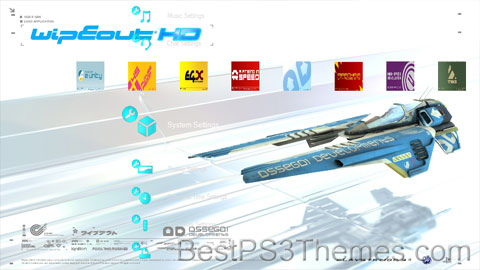
Wipeout HD Theme
(13 backgrounds)

Wipeout HD
Cover art for the retail version
Developer(s)Studio Liverpool
Publisher(s)Sony Computer Entertainment
SeriesWipeout
Platform(s)PlayStation 3
ReleasePlayStation Network
  • EU: 25 September 2008
  • NA: 25 September 2008
  • JP: 29 October 2008
Retail
  • EU: 16 October 2009
Genre(s)Racing
Mode(s)Single-player, multiplayer

Wipeout HD is a futuristic racing video game developed by Studio Liverpool and published by Sony Computer Entertainment for the PlayStation 3. It is the eighth installment of the Wipeout series and was first released on the PlayStation Network on 25 September 2008 in both Europe and North America, and on 29 October in Japan. A major expansion pack titled Wipeout HD Fury was released worldwide via the PlayStation Network worldwide on 23 July 2009. A retail version was later made available in Europe on 16 October. Both Wipeout HD and its HD Fury Expansion are playable in 3D when connected to a 3D TV.

The game revolves around players competing in the FX350 anti-gravity racing league, and features selected tracks from the PlayStation Portable games Wipeout Pure and Wipeout Pulse, although the content has been upgraded to render 1080p visuals in 60 frames per second. Wipeout HD was developed by Studio Liverpool, who had desired to release a game for the PlayStation store to stress that downloadable content was not reserved for smaller games. The game was delayed for a few months due to reports of it failing epilepsy tests.

Wipeout HD and its expansion pack received positive reviews upon release. Critics unanimously praised the game's 1080p visuals, smooth frame rate, and techno soundtrack – a feature many critics recognised as a hallmark of the Wipeout series. The game received controversy over its in-game advertising at the time of the Fury expansion pack's release, with many players complaining of extended loading times due to in-game advertisements. Wipeout HD, along with its Fury expansion pack, was also chosen as a free offering as part of Sony's "Welcome Back" programme due to the 2011 PlayStation Network outage. The expanded Fury version and the subsequent Wipeout 2048 were remastered for PlayStation 4 and released as Wipeout Omega Collection in 2017.[1]

Gameplay[edit]

From left to right clockwise, the interface displays the number of laps, shield strength, position, speedometer, and lap time.

Wipeout HD is a racing game in which players compete in the FX350 anti-gravity racing league. The game features a selection of eight tracks originally used in Wipeout Pure and Wipeout Pulse, albeit updated in 1080p visuals and rendered in 60 frames per second.[2][3][4][5] Players pilot anti-gravity ships owned by racing corporations (collectively referred to as "teams" in-game). The base game (excluding the Fury expansion pack) allows participation by up to twelve teams, with six ships each,[6] trophy support, an online mode capable of holding eight players per race,[4] and eight race tracks.[3]

The game has five race modes: the first is a standard single race, which involves the player racing to finish first to earn a gold medal; securing second or third place will reward the player with silver and bronze medals, respectively.[7][8] Tournament mode consists of four single races in each tournament; the player who earns the most points wins.[9] Time trials and speed laps involve obtaining the fastest time in either three laps or a single lap.[10] The final race mode is called "Zone Mode", in which survival is the goal, as the player's ship increasingly accelerates to extreme speeds.[8][2][11] In addition to the five race modes, Wipeout HD provides a "Photo Mode", which can be activated after the player completes a race. In "Photo Mode", the player can take screenshots of the completed race and may change the exposure, saturation, lens focus, or add effects such as depth of field or motion blur.[12][4]

Every ship in the game has its own characteristics; depending on the team selected, a ship will vary in terms of speed, acceleration, manoeuvrability, and shield strength.[13] Each ship is equipped with an energy shield which absorbs damage sustained; energy is lost whenever the player's ship collides or is hit by weapon fire. If the shield runs out, the ship and player in question will explode, resulting in elimination from the race.[14] However, players may replenish energy by absorbing unwanted weapon pick-ups.[4] The weapons are the same ones featured in Wipeout Pulse; defensive weapons range from shields—which temporarily make the player's ship invulnerable to damage—to land mines and stationary bombs.[15] Offensive weapons include machine guns, missiles, rockets, and a "quake" – which comes in the form of a devastating earthquake that damages all opponents situated in front of the player.[16] In addition, every ship is equipped with air brakes which can be used for manoeuvring through corners at high speed.[8]

An introduction to the series is the Pilot Assist feature. Intended for players new to the series, it is a passive auto-piloting feature that assists players by nudging them away from the edges of the track or from walls, though its effects at higher speed settings are less desirable.[4][5][8] Wipeout HD allows players to control their craft by using the motion-sensitive features of the PlayStation 3's Sixaxis controller.[3] Motion control comes in two variants: pitch and steering, or pitch only.[17][2] The former allows the craft to be totally controlled by moving the controller, while the latter only allows the nose of the craft to be raised or lowered by motion control, with the steering either controlled by an analogue stick or D-pad.[17][2]

Fury expansion pack[edit]

A major expansion pack titled Wipeout HD Fury was released on the PlayStation Store worldwide on 23 July 2009.[18] The pack consisted of four new race tracks, four "Zone Event" tracks, 13 new ship models, and three new game modes: Eliminator, "Zone Battle" and Detonator. The add-on also included a new 80-event campaign mode, a redesigned menu interface, several new trophies and six new music tracks.[19] Eliminator mode is taken directly from Wipeout Pulse and centres around players destroying other competitors for points and finishing laps.[11][19] "Zone Battle" is an eight-player version of the normal "Zone Mode". In it, players must fly over zone pads in order to gain enough speed and reach the target. The first player to reach the target wins, therefore ending the game.[19][18] The final mode is Detonator, in which a single player scores points by shooting mines scattered throughout a race track.[11][18]

Development and release[edit]

The equaliser effects from the "Zone Mode" had to be toned down after it failed epilepsy tests.

Wipeout HD was developed by Liverpudlian developer Studio Liverpool. The studio wanted to take advantage of the PlayStation 3's rendering capabilities to make the game run in full 1080p and 60 frames per second.[20][21] In a retrospective interview, director Tony Buckley said that the team made the decision to release the game as a PlayStation Store exclusive title before development, to stress that downloadable content does not have to be focused on minor games.[20]

Wipeout HD was first announced during E3 2007, where it was initially said to be a download-only title featuring remastered versions of old race tracks.[22] It was also revealed that the game runs in full high-definition and in 1080p.[23] Later in the year at the Tokyo Game Show, Sony revealed to journalists that the game would be available before the end of 2007,[23] and would include two further game modes that were ultimately not included for the final release.[24] This release was not forthcoming; development continued through 2008, and a shifting release date was eventually finalised in the middle of September 2008, for a release later that month.[25]

The delay from the initial summer time frame was widely reported as being due to a technical issue in development.[26] David Reeves, CEO of Sony Computer Entertainment Europe (SCEE), stated that it was a technical problem with the game that they were yet to solve.[26] Reports soon emerged that the game had failed epilepsy testing, and that it would have to be re-engineered before it could be released.[27] These reports were addressed by a SCEE representative, who claimed that the delay was due to numerous improvements and added features, which included the reverse tracks, four extra ships, two new heads-up displays, the addition of a two-player offline split screen mode, and trophy support.[28] Addressing the reports of health issues, they affirmed that they strongly consider consumer safety and maintain it with frequent care.[28] A comparison video between the preview and final builds later showed greatly toned down equaliser visuals in the game's "Zone Mode".[29] The issues were confirmed when Wipeout HD's director, Tony Buckley, spoke about the tests, saying that although he felt the tests were subjective and the exact issues hard to identify, they took them seriously and that the game has emerged finely with additional features, despite their initial fears that the game would "look poorer as a result".[30]

Wipeout HD, along with its Fury expansion pack, were chosen as a free PlayStation Store offering as part of Sony's "Welcome Back" programme due to the 2011 PlayStation Network outage.[31][32][33][34]

In-game advertising controversy[edit]

The same update released alongside the Fury expansion pack introduced in-game advertisements, found in the loading screens before a race.[35] This move was met with criticism from gaming news outlets,[36] particularly as the advertisements almost doubled the loading time between levels, and while the game content loads at the same speed, the advert must finish playing before the race can begin.[35][37] The adverts were removed soon after numerous complaints were made by players.[38] In addition to the load time problems, there had been consternation about advertising being retroactively added into a game that had already been paid for.[39]

Reception[edit]

Wipeout HD received positive reviews on release. It holds an average score of 87 per cent at Metacritic, based on an aggregate of 51 reviews,[40] and also appeared as Metacritic's fourteenth highest ranked PlayStation 3 game of 2008.[47] Wipeout HD was nominated in the "Outstanding Achievement in Sound Design" category during the 12th Annual Interactive Achievement Awards and was also nominated under the racing category for the 28th Golden Joystick Awards.[48][49]

Critics unanimously praised the graphics and visuals. Martin Robinson from the British IGN thought that the game featured the most sophisticated graphics to date on a downloadable title and applauded the game's futuristic aesthetics, saying that its 1080p visuals and seamless 60 frames per second were matched by significant details that benefit the game.[2] Chris Roper from the American IGN praised the lighting effects and the attention to detail made to the ships and tracks, which he thought was visually impressive in 1080p and 60 frames per second.[10] Dan Whitehead of Eurogamer noted that he was insistent that gameplay is a more important aspect than graphics, but stressed that Wipeout HD's visuals was the most important element.[4] Guy Cocker of GameSpot said that the advanced and glossy 1080p graphics should please new and old fans alike. Furthermore, Cocker opined that "all of the [PlayStation's] horsepower" was concentrated on producing very firm visuals, which he alluded to as one of the reasons for the game's prolonged development time.[8] Tom Orry from VideoGamer.com commended the highly smooth 1080p visuals and detailed HD graphics, saying the game's powerful presentation leads to such appearance.[44] Locke Webster from UGO Networks thought that the efficient visuals and variety of features justified the merits of an expensive downloadable title.[45]

Gabe Graziani of GameSpy praised the presentation, saying that it contained a heavy amount of polished visuals as well as a smooth frame rate, and summarised that it updated the PSP titles Wipeout Pure and Wipeout Pulse to HD "magnificently".[41] Jesse Costantino of Game Revolution said that Wipeout HD "joins an elite class of current-gen racers" due to its 1080p visuals and a nearly constant 60 frames per second. Costantino also praised the richly detailed environments of the race tracks, stating that he felt like they were made in real life.[5] Frédéric Goyon of Jeuxvideo.com said Wipeout HD was atypically a large attainment regarding its visuals, and also thought the combined colour choices made it a visually unique racing game.[46] Ryan Davis from Giant Bomb praised the game's transition to HD, stating that he wondered how the Wipeout series treated graphics without 1080p visuals prior to the release of Wipeout HD. In addition, Davis also commended the ship design and very solid frame rate.[42] Terry Terrones of GamePro said that the game was visually stunning, but also implied that it was "essentially a pig with lipstick".[43]

The techno soundtrack and general audio were also praised by critics. Robinson recognised that techno music featured played an important part in the Wipeout series, opining that the entire game is set to a traditional pounding soundtrack. Additionally, Robinson enjoyed how the music was filtered out each time the player performed an airborne jump.[2] Roper similarly acknowledged that soundtracks have always been an integral part of the Wipeout franchise, and said that the music tracks in Wipeout HD fits well with both visuals and the overall racing experience by blending into the background. Regarding the sound effects, Roper noted that not many of them appear, although he appreciated the few ones that are in the game.[10] Cocker felt that the game's soundtrack was enjoyable for fans of electronica, although he liked the fact that players could import their own playlists to the game, an aspect he thought that introduced more variation. In cohesion with other critics, Cocker recognised that music was important to the franchise, and commended the mix of techno, dubstep, and drum and bass soundtracks.[8] Orry stated that the game featured a "brilliant" soundtrack, and also commended its integrated custom soundtrack support.[44] Goyon praised the electro-orientated music, stating that the sound is suitable for the futuristic universe of Wipeout, and also enjoyed the idea of playing customised music if the player did not like the standard soundtrack.[46] Although Davis noted the lack of successful artists like The Prodigy, Daft Punk, or The Chemical Brothers (all of whom were featured in Wipeout 2097), he did acknowledge that there were still "plenty of chilly synths" and throbbing background beats to listen to.[42]

References[edit]

Citations

  1. ^ Massongill, Justin (6 June 2017). "Wipeout Omega Collection Launches Today". PlayStation Blog. Sony Interactive Entertainment. Retrieved 19 August 2022.
  2. ^ a b c d e f g Robinson, Martin (16 September 2008). "WipEout HD UK review". IGN. Ziff Davis. Archived from the original on 7 April 2016. Retrieved 20 December 2016.
  3. ^ a b c Pinnock, Daimon (15 September 2008). "WipEout HD Officially Dated, Priced". PlayStation Blog. Sony Interactive Entertainment LLC. Retrieved 22 December 2016.
  4. ^ a b c d e f g Whitehead, Dan (15 September 2008). "WipEout HD review". Eurogamer. Eurogamer Network. Archived from the original on 15 November 2016. Retrieved 20 December 2016.
  5. ^ a b c d Constantino, Jesse (6 October 2008). "Wipeout HD review". Game Revolution. AtomicOnline. Archived from the original on 21 December 2016. Retrieved 20 December 2016.
  6. ^ Studio Liverpool 2008, p. 4.
  7. ^ Studio Liverpool 2008, p. 10.
  8. ^ a b c d e f g Cocker, Guy (19 September 2008). "Wipeout HD review". GameSpot. CBS Interactive. Retrieved 20 December 2016.
  9. ^ Studio Liverpool 2008, pp. 10–11.
  10. ^ a b c d Roper, Chris (23 September 2008). "WipEout HD US review". IGN. Ziff Davis. Archived from the original on 4 March 2013. Retrieved 20 December 2016.
  11. ^ a b c Studio Liverpool 2008, p. 11.
  12. ^

Final Fantasy #6

Final Fantasy theme by Chtijeremie

Download: FinalFantasy_6.p3t

Final Fantasy Theme 6
(3 backgrounds)

Final Fantasy
Genre(s)Role-playing video game
Developer(s)Square, Square Enix
Publisher(s)Square, Square Enix
Creator(s)Hironobu Sakaguchi
Producer(s)Yoshinori Kitase
Tetsuya Nomura
Artist(s)Tetsuya Nomura
Composer(s)Nobuo Uematsu
Masashi Hamauzu
Junya Nakano
Hitoshi Sakimoto
Naoshi Mizuta
Mitsuto Suzuki
Masayoshi Soken
Yoko Shimomura
Masaharu Iwata
Hidenori Iwasaki
Ryo Yamazaki
Platform(s)
First releaseFinal Fantasy
December 18, 1987
Latest releaseFinal Fantasy VII Rebirth
February 29, 2024
Spin-offs

Final Fantasy[a] is a fantasy anthology media franchise created by Hironobu Sakaguchi which is owned, developed, and published by Square Enix (formerly Square). The franchise centers on a series of fantasy role-playing video games. The first game in the series was released in 1987, with 16 numbered main entries having been released to date.

The franchise has since branched into other video game genres such as tactical role-playing, action role-playing, massively multiplayer online role-playing, racing, third-person shooter, fighting, and rhythm, as well as branching into other media, including films, anime, manga, and novels.

Final Fantasy is mostly an anthology series with primary installments being stand-alone role-playing games, each with different settings, plots and main characters, but the franchise is linked by several recurring elements, including game mechanics and recurring character names. Each plot centers on a particular group of heroes who are battling a great evil, but also explores the characters' internal struggles and relationships. Character names are frequently derived from the history, languages, pop culture, and mythologies of cultures worldwide. The mechanics of each game involve similar battle systems and maps.

Final Fantasy has been both critically and commercially successful. Several entries are regarded as some of the greatest video games, with the series selling more than 185 million copies worldwide, making it one of the best-selling video game franchises of all time. The series is well known for its innovation, visuals, such as the inclusion of full-motion videos, photorealistic character models, and music by Nobuo Uematsu. It has popularized many features now common in role-playing games, also popularizing the genre as a whole in markets outside Japan.

Media[edit]

Games[edit]

The first installment of the series was released in Japan on December 18, 1987. Subsequent games are numbered and given a story unrelated to previous games, so the numbers refer to volumes rather than to sequels. Many Final Fantasy games have been localized for markets in North America, Europe, and Australia on numerous video game consoles, personal computers (PC), and mobile phones. As of June 2023, the series includes the main installments from Final Fantasy to Final Fantasy XVI, as well as direct sequels and spin-offs, both released and confirmed as being in development. Most of the older games have been remade or re-released on multiple platforms.[1]

Main series[edit]

Release timeline
1987Final Fantasy
1988Final Fantasy II
1989
1990Final Fantasy III
1991Final Fantasy IV
1992Final Fantasy V
1993
1994Final Fantasy VI
1995
1996
1997Final Fantasy VII
1998
1999Final Fantasy VIII
2000Final Fantasy IX
2001Final Fantasy X
2002Final Fantasy XI
2003
2004
2005
2006Final Fantasy XII
2007
2008
2009Final Fantasy XIII
2010Final Fantasy XIV (original)
2011
2012
2013Final Fantasy XIV
2014
2015
2016Final Fantasy XV
2017
2018
2019
2020
2021
2022
2023Final Fantasy XVI

Three Final Fantasy installments were released on the Nintendo Entertainment System (NES). Final Fantasy was released in Japan in 1987 and in North America in 1990.[2][3] It introduced many concepts to the console RPG genre, and has since been remade on several platforms.[3] Final Fantasy II, released in 1988 in Japan, has been bundled with Final Fantasy in several re-releases.[3][4][5] The last of the NES installments, Final Fantasy III, was released in Japan in 1990,[6] but was not released elsewhere until a Nintendo DS remake came out in 2006.[5]

The Super Nintendo Entertainment System (SNES) also featured three installments of the main series, all of which have been re-released on several platforms. Final Fantasy IV was released in 1991; in North America, it was released as Final Fantasy II.[7][8] It introduced the "Active Time Battle" system.[9] Final Fantasy V, released in 1992 in Japan, was the first game in the series to spawn a sequel: a short anime series, Final Fantasy: Legend of the Crystals.[3][10][11] Final Fantasy VI was released in Japan in 1994, titled Final Fantasy III in North America.[12]

The PlayStation console saw the release of three main Final Fantasy games. Final Fantasy VII (1997) moved away from the two-dimensional (2D) graphics used in the first six games to three-dimensional (3D) computer graphics; the game features polygonal characters on pre-rendered backgrounds. It also introduced a more modern setting, a style that was carried over to the next game.[3] It was also the second in the series to be released in Europe, with the first being Final Fantasy Mystic Quest. Final Fantasy VIII was published in 1999, and was the first to consistently use realistically proportioned characters and feature a vocal piece as its theme music.[3][13] Final Fantasy IX, released in 2000, returned to the series' roots, by revisiting a more traditional Final Fantasy setting, rather than the more modern worlds of VII and VIII.[3][14]

Three main installments, as well as one online game, were published for the PlayStation 2.[15][16][17] Final Fantasy X (2001) introduced full 3D areas and voice acting to the series, and was the first to spawn a sub-sequel (Final Fantasy X-2, published in 2003).[18][19] The first massively multiplayer online role-playing game (MMORPG) in the series, Final Fantasy XI, was released on the PS2 and PC in 2002, and later on the Xbox 360.[20][21] It introduced real-time battles instead of random encounters.[21] Final Fantasy XII, published in 2006, also includes real-time battles in large, interconnected playfields.[22][23] The game is also the first in the main series to utilize a world used in a previous game, namely the land of Ivalice, which was previously featured in Final Fantasy Tactics and Vagrant Story.[24]

In 2009, Final Fantasy XIII was released in Japan, and in North America and Europe the following year, for PlayStation 3 and Xbox 360.[25][26] It is the flagship installment of the Fabula Nova Crystallis Final Fantasy series[27] and became the first mainline game to spawn two sub-sequels (XIII-2 and Lightning Returns).[28] It was also the first game released in Chinese and high definition along with being released on two consoles at once. Final Fantasy XIV, a MMORPG, was released worldwide on Microsoft Windows in 2010, but it received heavy criticism when it was launched, prompting Square Enix to rerelease the game as Final Fantasy XIV: A Realm Reborn, this time to the PlayStation 3 as well, in 2013.[29] Final Fantasy XV is an action role-playing game that was released for PlayStation 4 and Xbox One in 2016.[30][31] Originally a XIII spin-off titled Versus XIII, XV uses the mythos of the Fabula Nova Crystallis series, although in many other respects the game stands on its own and has since been distanced from the series by its developers.[38] The sixteenth mainline entry, Final Fantasy XVI,[39] was released in 2023 for PlayStation 5.[40]

Remakes, sequels and spin-offs[edit]

Final Fantasy has spawned numerous spin-offs and metaseries. Several are, in fact, not Final Fantasy games, but were rebranded for North American release. Examples include the SaGa series, rebranded The Final Fantasy Legend, and its two sequels, Final Fantasy Legend II and III.[41] Final Fantasy Mystic Quest was specifically developed for a United States audience, and Final Fantasy Tactics is a tactical RPG that features many references and themes found in the series.[42][43] The spin-off Chocobo series, Crystal Chronicles series, and Kingdom Hearts series also include multiple Final Fantasy elements.[41][44] In 2003, the Final Fantasy series' first sub-sequel, Final Fantasy X-2, was released.[45] Final Fantasy XIII was originally intended to stand on its own, but the team wanted to explore the world, characters and mythos more, resulting in the development and release of two sequels in 2011 and 2013 respectively, creating the series' first official trilogy.[28] Dissidia Final Fantasy was released in 2009, a fighting game that features heroes and villains from the first ten games of the main series.[46] It was followed by a prequel in 2011,[47] a sequel in 2015[48] and a mobile spin-off in 2017.[49][50] Other spin-offs have taken the form of subseries—Compilation of Final Fantasy VII, Ivalice Alliance, and Fabula Nova Crystallis Final Fantasy. In 2022, Square Enix released an action-role playing title Stranger of Paradise: Final Fantasy Origin developed in collaboration with Team Ninja, which takes place in an alternate, reimagined reality based on the setting of the original Final Fantasy game, depicting a prequel story that explores the origins of the antagonist Chaos and the emergence of the four Warriors of Light.[51][52] Enhanced 3D remakes of Final Fantasy III and IV were released in 2006 and 2007 respectively.[53][54] The first installment of the Final Fantasy VII Remake project was released on the PlayStation 4 in 2020.[55] The second and latest installment of the remake trilogy, Final Fantasy VII Rebirth, was released on the PlayStation 5 in 2024.[56]

Other media[edit]

Film and television[edit]

Final Fantasy in film and television
1994Final Fantasy: Legend of the Crystals
1995–2000
2001Final Fantasy: The Spirits Within
Final Fantasy: Unlimited
2002–2004
2005Final Fantasy VII: Advent Children
Last Order: Final Fantasy VII
2006–2015
2016Kingsglaive: Final Fantasy XV
Brotherhood: Final Fantasy XV
2017Final Fantasy XIV: Dad of Light
2018
2019Final Fantasy XV: Episode Ardyn – Prologue

Square Enix has expanded the Final Fantasy series into various media. Multiple anime and computer-generated imagery (CGI) films have been produced that are based either on individual Final Fantasy games or on the series as a whole. The first was an original video animation (OVA), Final Fantasy: Legend of the Crystals, a sequel to Final Fantasy V. The story was set in the same world as the game, although 200 years in the future. It was released as four 30-minute episodes, first in Japan in 1994 and later in the United States by Urban Vision in 1998. In 2001, Square Pictures released its first feature film, Final Fantasy: The Spirits Within. The film is set on a future Earth invaded by alien life forms.[57] The Spirits Within was the first animated feature to seriously attempt to portray photorealistic CGI humans, but was considered a box office bomb and garnered mixed reviews.[57][58][59]

A 25-episode anime television series, Final Fantasy: Unlimited, was released in 2001 based on the common elements of the Final Fantasy series. It was broadcast in Japan by TV Tokyo and released in North America by ADV Films.

In 2005, Final Fantasy VII: Advent Children, a feature length direct-to-DVD CGI film, and Last Order: Final Fantasy VII, a non-canon OVA,[60] were released as part of the Compilation of Final Fantasy VII. Advent Children was animated by Visual Works, which helped the company create CG sequences for the games.[61] The film, unlike The Spirits Within, became a commercial success.[62][63][64][65] Last Order, on the other hand, was released in Japan in a special DVD bundle package with Advent Children. Last Order sold out quickly[66] and was positively received by Western critics,[67][68] though fan reaction was mixed over changes to established story scenes.[69]

Two animated tie-ins for Final Fantasy XV were released as part of a larger multimedia project dubbed the Final Fantasy XV Universe. Brotherhood is a series of five 10-to-20-minute-long episodes developed by A-1 Pictures and Square Enix detailing the backstories of the main cast. Kingsglaive, a CGI film released prior to the game in Summer 2016, is set during the game's opening and follows new and secondary characters.[70][71][72][73] In 2019, Square Enix released a short anime, produced by Satelight Inc, called Final Fantasy XV: Episode Ardyn – Prologue on their YouTube channel which acts as the background story for the final piece of DLC for Final Fantasy XV giving insight into Ardyn's past.

Square Enix also released Final Fantasy XIV: Dad of Light in 2017, an 8-episode Japanese soap opera based, featuring a mix of live-action scenes and Final Fantasy XIV gameplay footage.

As of June 2019, Sony Pictures Television is working on a live-action adaptation of the series with Hivemind and Square Enix. Jason F. Brown, Sean Daniel and Dinesh Shamdasani for Hivemind are the producers while Ben Lustig and Jake Thornton were attached as writers and executive producers for the series.[74]

Other media[edit]

Several video games have either been adapted into or have had spin-offs in the form of manga and novels. The first was the novelization of Final Fantasy II in 1989, and was followed by a manga adaptation of Final Fantasy III in 1992.[75][76] The past decade has seen an increase in the number of non-video game adaptations and spin-offs. Final Fantasy: The Spirits Within has been adapted into a novel, the spin-off game Final Fantasy Crystal Chronicles has been adapted into a manga, and Final Fantasy XI had a novel and manga set in its continuity.[77][78][79][80] Seven novellas based on the Final Fantasy VII universe have also been released. The Final Fantasy: Unlimited story was partially continued in novels and a manga after the anime series ended.[81] The Final Fantasy X and XIII series have also had novellas and audio dramas released. Final Fantasy Tactics Advance has been adapted into a radio drama, and Final Fantasy: Unlimited has received a radio drama sequel.

A trading card game named Final Fantasy Trading Card Game is produced by Square Enix and Hobby Japan, first released Japan in 2012 with an English version in 2016.[82] The game has been compared to Magic: the Gathering, and a tournament circuit for the game also takes place.[83][84]

Common elements[edit]

Although most Final Fantasy installments are independent, many gameplay elements recur throughout the series.[85][86] Most games conta

Tomb Raider Anniversary HD

Tomb Raider Anniversary HD theme by Tutu

Download: TombRaiderAnniversaryHD.p3t
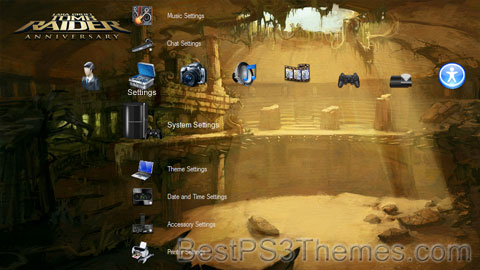
Tomb Raider Anniversary HD Theme
(4 backgrounds, HD only)

P3T Unpacker v0.12
Copyright (c) 2007. Anoop Menon

This program unpacks Playstation 3 Theme files (.p3t) so that you can touch-up an existing theme to your likings or use a certain wallpaper from it (as many themes have multiple). But remember, if you use content from another theme and release it, be sure to give credit!

Download for Windows: p3textractor.zip

Instructions:

Download p3textractor.zip from above. Extract the files to a folder with a program such as WinZip or WinRAR. Now there are multiple ways to extract the theme.

The first way is to simply open the p3t file with p3textractor.exe. If you don’t know how to do this, right click the p3t file and select Open With. Alternatively, open the p3t file and it will ask you to select a program to open with. Click Browse and find p3textractor.exe from where you previously extracted it to. It will open CMD and extract the theme to extracted.[filename]. After that, all you need to do for any future p3t files is open them and it will extract.

The second way is very simple. Just drag the p3t file to p3textractor.exe. It will open CMD and extract the theme to extracted.[filename].

For the third way, first put the p3t file you want to extract into the same folder as p3textractor.exe. Open CMD and browse to the folder with p3extractor.exe. Enter the following:
p3textractor filename.p3t [destination path]Replace filename with the name of the p3t file, and replace [destination path] with the name of the folder you want the files to be extracted to. A destination path is not required. By default it will extract to extracted.filename.

GTA4 CoD4

GTA4 CoD4 theme by loann44

Download: GTA4CoD4.p3t

GTA4 CoD4 Theme
(14 backgrounds)

P3T Unpacker v0.12
Copyright (c) 2007. Anoop Menon

This program unpacks Playstation 3 Theme files (.p3t) so that you can touch-up an existing theme to your likings or use a certain wallpaper from it (as many themes have multiple). But remember, if you use content from another theme and release it, be sure to give credit!

Download for Windows: p3textractor.zip

Instructions:

Download p3textractor.zip from above. Extract the files to a folder with a program such as WinZip or WinRAR. Now there are multiple ways to extract the theme.

The first way is to simply open the p3t file with p3textractor.exe. If you don’t know how to do this, right click the p3t file and select Open With. Alternatively, open the p3t file and it will ask you to select a program to open with. Click Browse and find p3textractor.exe from where you previously extracted it to. It will open CMD and extract the theme to extracted.[filename]. After that, all you need to do for any future p3t files is open them and it will extract.

The second way is very simple. Just drag the p3t file to p3textractor.exe. It will open CMD and extract the theme to extracted.[filename].

For the third way, first put the p3t file you want to extract into the same folder as p3textractor.exe. Open CMD and browse to the folder with p3extractor.exe. Enter the following:
p3textractor filename.p3t [destination path]Replace filename with the name of the p3t file, and replace [destination path] with the name of the folder you want the files to be extracted to. A destination path is not required. By default it will extract to extracted.filename.

Haze and Company

Haze and Company theme by Louxx

Download: HazeandCompany.p3t
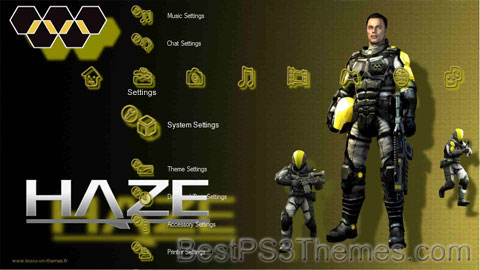
Haze and Company Theme
(5 backgrounds)

P3T Unpacker v0.12
Copyright (c) 2007. Anoop Menon

This program unpacks Playstation 3 Theme files (.p3t) so that you can touch-up an existing theme to your likings or use a certain wallpaper from it (as many themes have multiple). But remember, if you use content from another theme and release it, be sure to give credit!

Download for Windows: p3textractor.zip

Instructions:

Download p3textractor.zip from above. Extract the files to a folder with a program such as WinZip or WinRAR. Now there are multiple ways to extract the theme.

The first way is to simply open the p3t file with p3textractor.exe. If you don’t know how to do this, right click the p3t file and select Open With. Alternatively, open the p3t file and it will ask you to select a program to open with. Click Browse and find p3textractor.exe from where you previously extracted it to. It will open CMD and extract the theme to extracted.[filename]. After that, all you need to do for any future p3t files is open them and it will extract.

The second way is very simple. Just drag the p3t file to p3textractor.exe. It will open CMD and extract the theme to extracted.[filename].

For the third way, first put the p3t file you want to extract into the same folder as p3textractor.exe. Open CMD and browse to the folder with p3extractor.exe. Enter the following:
p3textractor filename.p3t [destination path]Replace filename with the name of the p3t file, and replace [destination path] with the name of the folder you want the files to be extracted to. A destination path is not required. By default it will extract to extracted.filename.

Killzone 2 v2

Killzone 2 version 2 theme by Itachi

Download: Killzone2v2.p3t
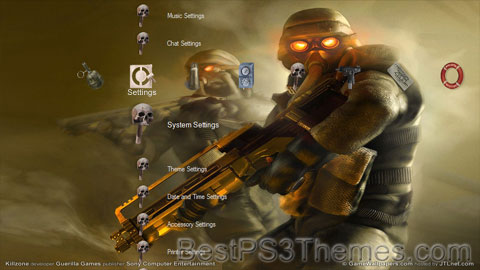
Killzone 2 v2 Theme
(1 background, different for HD and SD)

P3T Unpacker v0.12
Copyright (c) 2007. Anoop Menon

This program unpacks Playstation 3 Theme files (.p3t) so that you can touch-up an existing theme to your likings or use a certain wallpaper from it (as many themes have multiple). But remember, if you use content from another theme and release it, be sure to give credit!

Download for Windows: p3textractor.zip

Instructions:

Download p3textractor.zip from above. Extract the files to a folder with a program such as WinZip or WinRAR. Now there are multiple ways to extract the theme.

The first way is to simply open the p3t file with p3textractor.exe. If you don’t know how to do this, right click the p3t file and select Open With. Alternatively, open the p3t file and it will ask you to select a program to open with. Click Browse and find p3textractor.exe from where you previously extracted it to. It will open CMD and extract the theme to extracted.[filename]. After that, all you need to do for any future p3t files is open them and it will extract.

The second way is very simple. Just drag the p3t file to p3textractor.exe. It will open CMD and extract the theme to extracted.[filename].

For the third way, first put the p3t file you want to extract into the same folder as p3textractor.exe. Open CMD and browse to the folder with p3extractor.exe. Enter the following:
p3textractor filename.p3t [destination path]Replace filename with the name of the p3t file, and replace [destination path] with the name of the folder you want the files to be extracted to. A destination path is not required. By default it will extract to extracted.filename.

Killzone 2 #5

Killzone 2 theme by Itachi

Download: Killzone2_5.p3t
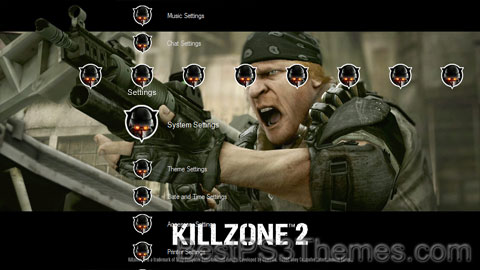
Killzone 2 Theme 5
(1 background, different for HD and SD)

Killzone 2
Developer(s)Guerrilla Games
Publisher(s)Sony Computer Entertainment
Director(s)Mathijs de Jonge
Designer(s)Neil Alphonso
Programmer(s)Michiel van der Leeuw
Artist(s)Jan-Bart van Beek
Bas Uterwijk
Composer(s)Joris de Man
SeriesKillzone
Platform(s)PlayStation 3
Release
  • AU: February 26, 2009
  • NA: February 27, 2009
  • EU: February 27, 2009
Genre(s)First-person shooter
Mode(s)Single-player, multiplayer

Killzone 2 is a 2009 first-person shooter developed by Guerrilla Games and published by Sony Computer Entertainment for the PlayStation 3. It is the second main installment in the Killzone series, following 2004's Killzone.

Similar to its predecessor, Killzone 2 takes place in the 24th century and chronicles the war between two human factions; the Vektans, and the Helghast. The game takes place two years after the events of Killzone and follows protagonist Tomas "Sev" Sevchenko as he and his unit battle the Helghast as the Vektans invade Helghan. The protagonist of Killzone and Killzone: Liberation, Cpt./Col. Jan Templar, returns in a supporting role, along with Rico Velasquez. Killzone 2 is played from a first-person view and allows the player to use a variety of weapons. It was released worldwide in February 2009.

Killzone 2 was widely anticipated prior to its release. It was critically acclaimed by critics and fans, who praised it as a superior title to the original Killzone. Additional praise was given to the game's visuals, action, multiplayer modes, soundtrack and atmosphere, although criticism was directed at the narrative. The game's critical and commercial success led to a sequel, Killzone 3, which was released in February 2011.

The official servers for Killzone 2 and Killzone 3 were shut down in March 2018. However, in 2021, a game preservation group called PSONE restored most of the game's online capability on their own set of servers.

Gameplay[edit]

Campaign[edit]

Killzone 2 at E3 2007

The game is presented almost entirely from a first person perspective, aside from vehicular combat. Killzone 2 features a "lean and peek" cover system which allows the player to take cover behind an object and then pop out to fire at enemies. The "lean and peek" mechanic stays in first-person view at all times. It is also possible for the player to pilot vehicles at two points in the game: a tank and an exoskeleton. Many classic weapons and vehicles from previous Killzone installments return, such as the M82-G and the StA-52 LAR.[citation needed] The Sixaxis motion control feature is also utilized in performing certain actions such as turning a valve, arming an explosive charge and sniping.

Multiplayer[edit]

Warzone, the title of the online multiplayer component of Killzone 2 has been developed by Guerrilla Games in conjunction with the game's single-player campaign.[citation needed] The online multiplayer gameplay is class-based, meaning the player can choose a class of character which is specialized for a specific role to better suit the player's needs in battle. There are 7 classes in total, in which the player can mix and match a main and sub ability according to their playing style, and can switch abilities upon death. There are 15 weapons available to the player, most of which cannot be used until the player reaches a certain rank. Two of these weapons are secondary firearms, and a further two weapons, the Boltgun and Flamethrower, are exclusive to the downloadable maps "Suljeva Cliffside" and "Arctower Landing".

Players play as either the ISA or Helghast, with a few gameplay differences. The character model and respawn points, and the "lean and peek" cover systems were removed. Each class levels up with experience gained from killing enemies or completing mission objectives. With enough experience, players unlock new weapons and skills, as well as a new class. Each class has two badges, the Primary badge selects the class and their specified skill. The secondary badge has an extra skill for the specified class but can be swapped to create own custom class.

Warzone plays out through dynamic matches where multiple game types are played in a single round. The game does not reset between game types, instead flowing between them, with the winning team determined by who wins the most modes. The game ships with five different game types including Assassination, Search & Retrieve, Search & Destroy, Bodycount and Capture & Hold.[1] Online matches can connect 2 to 32 players, and they can group into six squads of up to four players. If an online match does not have a full 32 players, computer-generated "bots" can be added in to create bigger teams (but only in an unranked match). Killzone 2 also offers a clan system, which allows clans of up to 64 players to compete for "Valor Points", an in-game currency that clans can use to bet on tournaments.

Players can also play offline against AIs with Skirmish mode and unranked online multiplayer, but there is no offline multiplayer mode for splitscreen players.

Eight multiplayer maps are included on disc at release,[2] but Guerrilla has released more maps as downloadable content. 6 more maps have been added to multiplayer since release via downloadable content purchasable from the PlayStation Store.

Plot[edit]

Two years after the attempted Helghast invasion of Vekta, an ISA fleet led by Colonel Jan Templar is sent to attack Pyrrhus, the capital city of Helghan, with the goal of deposing and arresting Emperor Scolar Visari on charges of war crimes. Among the ISA units taking part in the attack is Alpha Squad, led by Jan's old comrade Ricardo "Rico" Velasquez. Sergeant Tomas "Sev" Sevchenko, a veteran of the ISA "Legion" battalion, is assigned to serve as his second-in-command.

Tasked with securing Pyrrhus against the fierce resistance of the Helghan Second Army, the team quickly discovers that the Helghast are well prepared for an invasion. Using Helghan's harsh environment to their advantage, they have developed new weapons and equipment, none of which the ISA has ever seen before. Furthermore, the planet's fog-like atmosphere, gritty deserts, and constant storms pose almost as much of a threat to the invaders as the enemy themselves.

Story[edit]

Led by Jan's flagship, the New Sun, the ISA bombard Pyrrhus as cover for a massive ground assault on the city. Despite stiff resistance from well-armed Helghast divisions, they steadily advance towards the Imperial Palace, ultimately capturing both Visari Square and the Helghan Military Academy. Just as the main convoy is set to attack the palace, Colonel Mael Radec, commander of the Second Army, activates a network of arc towers hidden beneath Pyrrhus, killing hundreds of ISA soldiers and breaking their momentum.

Dante Garza, a member of Alpha Squad and close friend of Tomas's, retrieves a piece of a destroyed tower and sends it to ISA researcher Evelyn Batton, who learns that the towers are powered by Petrusite, a mineral capable of generating and channeling electricity. She also identifies an old mining outpost on the outskirts of Pyrrhus where the Helghast have been secretly extracting it for military use.

While working to restore the outpost's communication antenna, Tomas and Rico are separated from the rest of Alpha Squad, allowing Radec's men to capture them. The two fight their way through the refinery where the captives were taken, stumbling upon an interrogation overseen by Radec himself. Oddly enough, he demands that Evelyn give him the launch codes to a set of stolen nuclear warheads in Helghast custody. Rico loses his temper and surprises Radec, saving the captives but leaving Garza mortally wounded when one of Radec's men Rico kills discharges his weapon and Garza is shot in the process. Blaming him for his friend's death, Tomas and the squad return to the New Sun.

Before Garza can be properly mourned, an elite Helghast battalion led by Radec mounts a surprise attack on the fleet, boarding or destroying several ships including the Sun. The ship's crew manages to evacuate, but Radec reaches the bridge, mortally wounds Jan and executes Evelyn, downloading the codes before they can be deleted. With the last of his strength and before succumbing to his wounds, Jan maneuvers the ship to crash into the center of Helghan's Petrusite distribution grid, causing it to explode and disrupt the arc network.

Seizing the opportunity, the survivors attempt to regroup, only to witness Visari detonate the warheads over Pyrrhus, destroying it and killing both the entire population and most of the remaining ISA forces.

With ISA captain Jason Narville leading an offensive on the remnants of the Second Army, Alpha Squad breaches the palace, where they encounter Radec and the imperial guard. After a pitched battle, the wounded commander and his men commit mass suicide out of disgrace, clearing the way to Visari's throne room.

As Tomas moves to arrest him, Visari gloats that he has still won, as the Helghast are now united against the ISA, and without him, they cannot be stopped. Overcome with guilt and wanting revenge for Templar and Garza's deaths, Rico kills him on the spot.

Weary from fighting, Tomas exits the palace and sits on the steps. Above him, a large armada belonging to the Helghan First Army begins its attack on what is left of the ISA invasion force.

Development[edit]

At E3 2005, Killzone 2 was debuted with a trailer depicting soldiers landing in a hostile war-zone on Helghan and fighting Helghast forces. Critics in the media argued that the trailer shown at the trade show did not show actual gameplay footage, as its high level of visual detail has been argued to be impossible to render in real-time on the PlayStation 3 and the audio mix of the trailer was slightly delayed. SCEA's Vice President, Jack Tretton, stated that the footage of Killzone 2, that was believed to be pre-rendered, "is real gameplay everybody's seeing out there".[3] Several days later, Phil Harrison, SCE Europe's Vice President of Development, stated in an interview that all of the footage of PlayStation 3 games at E3 2005 were "running off video" which was "done to PS3 spec".[4] Further interviews eventually revealed the trailer was indeed a "target render", a prerendered video showing the developer's goals for the finished product.[5]

At the Game Developers Conference in 2007, a Killzone 2 teaser was shown behind closed doors, and was never released to the public. It featured various battles, destructible environments, and lighting effects among others.[6] Killzone 2 was shown to a panel of journalists at a special pre-E3 2007 event in Culver City, California, and then the next day to the public at Sony's E3 press conference.[7] An in-game trailer showing real-time gameplay of Killzone 2 was also released,[8] along with several videos of extended gameplay.[9] A number of media outlets since E3, such as the BBC, have referred to Killzone 2 as being "one of the most cinematic and immersive games ever produced on a console".[10] At the Leipzig Games Convention in 2007, Killzone 2 was presented in playable form to the media. It was the same demo level as shown at E3 2007, although journalists were allowed to play it hands-on.[11] At Sony's PlayStation Day 2008, the first level in Killzone 2's single-player campaign was presented, named "Corinth River".[12]

Michal Valient, a Senior Programmer at Guerrilla Games, presented details of their Killzone 2 proprietary game engine at a Developers Conference in July 2007.[13] As with many other titles published by SCE, including LittleBigPlanet and Infamous, Killzone 2 uses a deferred shading engine which enables far greater control over the game's characteristic lighting palette, while maximising processor throughput and limiting shader complexity. Other games to use similar approaches include Rockstar Games' Grand Theft Auto IV and GSC Game World's S.T.A.L.K.E.R.: Shadow of Chernobyl. However, this approach does create some additional problems, notably with respect to anti-aliasing and transparencies. The former was solved using a MSAA Quincunx (multisample anti-aliasing) solution, and the latter by the addition of a standard forward rendering path. The game's graphics were universally praised by critics.[14]

The animation was done in Maya 8.5 with some motion capture animations tweaked in MotionBuilder. 3D artists, animators and level designers used Maya as their production environment, which is unusual considering that most 3D games are produced using 3ds max. A large library of custom Maya tools and scripts was created to support these different disciplines.[15] Tools like "Hyperion", a lightmap rendering software, were used in place of Maya's viewport rendering software. In-game animation was assisted with another tool they created called "AnimationBlender" and particle effects were edited using a tool called "Particle Editor". They also created a tool called "ColorTweaker", which gave them the possibility to do color correction on the PS3 in real-time.[15]

Most of the animation was done using motion capture with some animations, reload animations for example, done by hand. Facial animation was done using blendshapes with bones for the jaw and the eyes. Lead tech artist, Paulus Bannink, explains that "The main reason for going with blendshapes was the relative ease with which they can be transferred to different faces, it would also provide a more artist friendly way of editing the facial animation rig.".[15] The cut scene facial animation was done using marker motion capture. In game dialog was done generically using MotionBuilder after audio files were plugged in. The game was developed not only by artists in Amsterdam, but also by people living in New Zealand, Australia, Japan, Korea, the UK and the US. The data files, gigabytes in size, were sent over the internet.[15]

Killzone 2's budget was originally US$20 million but rose to US$40–45 million at the end of the development, with a team of 120.[16][17][18][19]

Soundtrack[edit]

Killzone 2 (Original Soundtrack from the Video Game)
Soundtrack album by
ReleasedOctober 19, 2009
GenreOrchestral, Video game soundtrack
Length1:14:22

The score to Killzone 2 was composed by Joris de Man, who scored 60 minutes of in-game music and 30-minutes of live orchestral score for the game, recorded at Abbey Road Studios in London, with the Nimrod Studio Orchestra.[20] The score was produced and mixed by Rich Aitken, regular mix partner for Joris de Man and Marc Canham, at Nimrod Productions.

Killzone 2 (Original Soundtrack from the Video Game)
No.TitleWriter(s)Length
1."Opening - Birth of War (Retribution)"Joris de Man3:40
2."The Second Helghan March (Helghan Forever)"Joris de Man2:21
3."Battle Preparations"Joris de Man1:33
4."Bridge is Down"Joris de Man1:47
5."Ambush"Joris de Man2:23
6."Protecting the Convoy"Joris de Man3:14
7."Flight into Blood Meridian"Joris de Man0:45
8."Fight Your Way Through"Joris de Man3:21
9."Heavy Resistance"Joris de Man1:32
10."An Unexpected Guest"Joris de Man0:58
11."The Police Station"Joris de Man2:33
12."Resistance on the Bridge"Joris de Man0:53
13."Taking the Bridge"Joris de Man3:03
14."Petrusite Revealed"Joris de Man0:56
15."The Academy"Joris de Man3:21
16."Fight the A.T.A.C."Joris de Man1:59
17."A Day of Mourning"Joris de Man2:36
18."Suljeva"Joris de Man3:12
19."Next Stop Tharsis Refinery"Joris de Man2:26
20."Question Time with Radec"Joris de Man1:18
21."Dante Garza RIP"Joris de Man1:58
22."Going Up"Joris de Man2:07
23."Templar's Last Stand"Joris de Man3:45
24."The Exoskeleton"Joris de Man3:38
25."Nuked"Joris de Man1:53
26."Radec's Personal Guards"Joris de Man3:10
27."Visari's Lament"Joris de Man4:41
28."End Credits Suite"Joris de Man8:07
29."Fight the A.T.A.C. (Remix)"Joris de Man1:12

Release[edit]

Beta access was given to a select number of North American and European PlayStation Network subscribers. The beta consisted of three online multiplayer maps; "Blood Gracht" (small), "Radec Academy" (medium) and "Salamun Market" (large), with unlockable ranks and character classes ("badges"). Beta testers had their own statistics and have the ability to enter clan competitions. Beta access was private and thus could not be shared with other PlayStation Network accounts. Also, beta testers are tied with Sony Computer Entertainment Inc. by a non-disclosure agreement; therefore they were not allowed to reveal contents of the beta experience. A technical demo of one of Killzone 2's TV commercials, known as the "Bullet" trailer, was released on the PlayStation Store on April 2, 2009.[21] The demo features the commercial itself, the ability to shift camera angles and film speed, and several commentaries from key development staff at Guerrilla Games.

On February 5, 2009, SCEE released a single player demo of Killzone 2 on the European/Oceanic PlayStation Store.[22] The demo includes the first two sections of 'Corinth River' (the first level of the game) as well as the tutorial sequence from the final game.[23] A demo card, granting access to a Killzone 2 demo was also offered to US gamers who pre-ordered the game at GameStop. The US demo was also made available to those customers on February 5. In the North American version of PlayStation Home, if users found an avatar dressed in a Helghast costume, the avatar with the Helghast costume would give that user a code for the demo. This occurred on February 16.[24] On February 26, the demo was made available for download from the PlayStation Store in North America.

The servers for Killzone 2 and Killzone 3 were shut down on March 29, 2018. They have since been offline and can no longer be played online.[25]

PlayStation Home[edit]

In the North American version of PlayStation Home, if users pre-ordered Killzone 2 from Amazon.com, users received free male and female I.S.A. and Helghast uniforms for their avatar.[26] In the European version of PlayStation Home, if users participated in the "Killzone AM" event that took place on Saturday March 28, 2009, at 11 am CET for one full round, the Home Managers gave the participants a code for the Killzone 2 uniforms. Requirement was that users had to have a United Kingdom PSN account.[27] For a limited time in Japanese Home, users received an I.S.A. uniform for watching the Killzone 2 trailer and answering a questionnaire. To get the Helghast uniform in Japan, users had to do a pre-order. In Home's shopping complex, there are fourteen — seven for male and seven for female — Killzone 2 themed shirts available for purchase as well as the Helghast Tactician uniform. A costume for Radec was released on March 4, 2010, to the European Home and has been released in the North American.

Guerrilla Games have released a Killzone 2 themed apartment called the "Visari Throne Room" for Home. The Visari Throne Room apartment is based on the throne room inside Visari's Palace from the final mission of Killzone 2. For the Visari Throne Room, there are five pieces of furniture based on actual palace furnishings from Killzone 2: two types of Visari-style chairs, an administrative desk, a plant container with authentic Helghan vegetation, and a freestanding painting which portrays an important moment in the colonial history of the Helghast. The Visari Throne Room and matching furniture were made available to the European Home on July 2, 2009,[28] the North American on August 27, 2009,[29] and the Asian[30] and Japanese Home on October 9, 2009.[31]

Downloadable content[edit]

On April 10, 2009[32] Hermen Hulst, Managing Director from Guerrilla Games announced on GameTrailers TV[citation needed] that Killzone 2 would get a DLC map pack named "Steel & Titanium" which would contain two new maps called Wasteland Bullet and Vekta Cruiser. With new gameplay elements and strategic twists.[33][34] The first DLC map pack was released on Thursday, April 30.[34][35] Hulst stated that the next Killzone 2 DLC map pack that they were releasing would have a 'Retro Vibe' to it.[citation needed]

The second map pack was officially announced on May 20, 2009 as "Flash and Thunder", and features two maps previously seen in Killzone called "Beach Head" and "The Southern Hills". Both maps followed the first map pack by bringing new gameplay elements and strategic twists; Beach Head, the wide open battlefield, with rain-filled trenches, and Southern Hills with its intermittent nuke explosion. It was released on June 11, 2009.[36] Both map packs have twelve trophies that go along with them, six for each map.

On July 10 the third map pack was officially announced, even though Sony stated that there were no plans for a third pack. The DLC "Napalm and Cordite" was released on July 23, 2009, it contained two new maps "Suljeva Cliffside" and "Arctower Landing", in addition to the maps the Flamethrower and the Boltgun both from singleplayer made their debut in multiplayer.[37] The Flamethrower is found in the Suljeva Cliffside map and the Boltgun is found in the Arctower Landing map. A multiplayer map pack bundle was also released to coincide with the release of Napalm and Cordite, containing all six maps from the DLC packs, for the price of four maps.[38] The downloadable content pack three has eight trophies that go along with it, four for each map which are for the new weapons. With the fifth anniversary of the original Killzone taking place, the map pack "Flash & Thunder" was reduced in price in North America and Europe.

Reception[edit]