Bad Ass Games

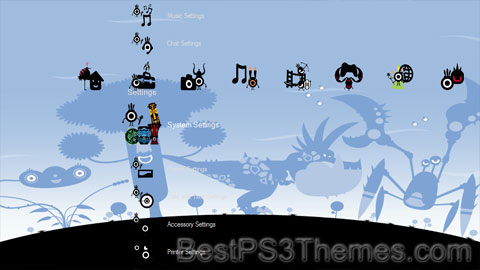
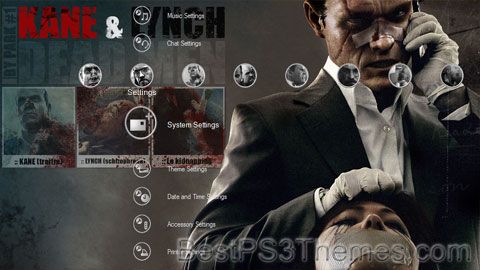
Bad Ass Games theme by Train-Traxs

Download: BadAssGames.p3t
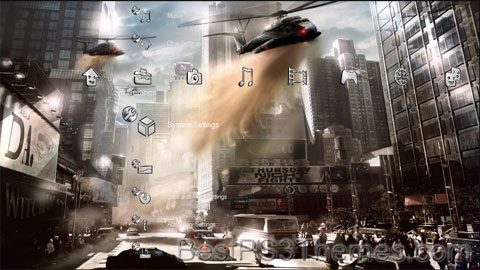
Bad Ass Games Theme
(3 backgrounds)

P3T Unpacker v0.12
Copyright (c) 2007. Anoop Menon

This program unpacks Playstation 3 Theme files (.p3t) so that you can touch-up an existing theme to your likings or use a certain wallpaper from it (as many themes have multiple). But remember, if you use content from another theme and release it, be sure to give credit!

Download for Windows: p3textractor.zip

Instructions:

Download p3textractor.zip from above. Extract the files to a folder with a program such as WinZip or WinRAR. Now there are multiple ways to extract the theme.

The first way is to simply open the p3t file with p3textractor.exe. If you don’t know how to do this, right click the p3t file and select Open With. Alternatively, open the p3t file and it will ask you to select a program to open with. Click Browse and find p3textractor.exe from where you previously extracted it to. It will open CMD and extract the theme to extracted.[filename]. After that, all you need to do for any future p3t files is open them and it will extract.

The second way is very simple. Just drag the p3t file to p3textractor.exe. It will open CMD and extract the theme to extracted.[filename].

For the third way, first put the p3t file you want to extract into the same folder as p3textractor.exe. Open CMD and browse to the folder with p3extractor.exe. Enter the following:
p3textractor filename.p3t [destination path]Replace filename with the name of the p3t file, and replace [destination path] with the name of the folder you want the files to be extracted to. A destination path is not required. By default it will extract to extracted.filename.

Bleach GTA versionD

Bleach Grand Theft Auto versionD theme by Deemy

Download: BleachGTA_versionD.p3t
Bleach GTA versionD Theme
(1 background)

P3T Unpacker v0.12
Copyright (c) 2007. Anoop Menon

This program unpacks Playstation 3 Theme files (.p3t) so that you can touch-up an existing theme to your likings or use a certain wallpaper from it (as many themes have multiple). But remember, if you use content from another theme and release it, be sure to give credit!

Download for Windows: p3textractor.zip

Instructions:

Download p3textractor.zip from above. Extract the files to a folder with a program such as WinZip or WinRAR. Now there are multiple ways to extract the theme.

The first way is to simply open the p3t file with p3textractor.exe. If you don’t know how to do this, right click the p3t file and select Open With. Alternatively, open the p3t file and it will ask you to select a program to open with. Click Browse and find p3textractor.exe from where you previously extracted it to. It will open CMD and extract the theme to extracted.[filename]. After that, all you need to do for any future p3t files is open them and it will extract.

The second way is very simple. Just drag the p3t file to p3textractor.exe. It will open CMD and extract the theme to extracted.[filename].

For the third way, first put the p3t file you want to extract into the same folder as p3textractor.exe. Open CMD and browse to the folder with p3extractor.exe. Enter the following:
p3textractor filename.p3t [destination path]Replace filename with the name of the p3t file, and replace [destination path] with the name of the folder you want the files to be extracted to. A destination path is not required. By default it will extract to extracted.filename.

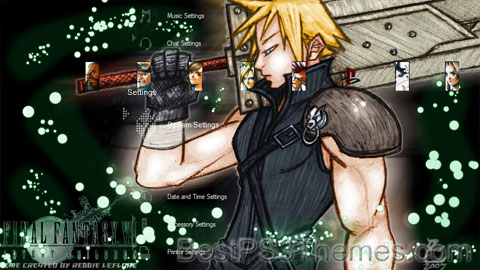
Iron Man

Iron Man theme by Louxx

Download: IronMan.p3t
Iron Man Theme
(3 backgrounds, HD only)

Tony Stark
Iron Man
Iron Man flies as external pieces of armor fly off of him
Variant cover of
Tony Stark: Iron Man #2 (July 2018)
Art by Mark Brooks
Publication information
PublisherMarvel Comics
First appearanceTales of Suspense #39
(December 1962)
Created by
In-story information
Full nameAnthony Edward Stark
Place of originLong Island, New York
Team affiliations
Partnerships
Abilities

Iron Man is a superhero appearing in American comic books published by Marvel Comics. Co-created by writer and editor Stan Lee, developed by scripter Larry Lieber, and designed by artists Don Heck and Jack Kirby, the character first appeared in Tales of Suspense #39 in 1962, and received his own title with Iron Man #1 in 1968. Shortly after his creation, Iron Man became a founding member of the superhero team, the Avengers, with Thor, Ant-Man, the Wasp, and the Hulk. Iron Man stories, individually and with the Avengers, have been published consistently since the character's creation.

Iron Man is the superhero persona of Anthony Edward "Tony" Stark, a businessman and engineer who runs the weapons manufacturing company Stark Industries. When Stark was captured in a war zone and sustained a serious heart wound, he built his Iron Man armor and escaped his captors. Iron Man's suits of armor grant him superhuman strength, flight, energy projection, and other abilities. The character was created in response to the Vietnam War as Lee's attempt to create a likeable pro-war character. Since his creation, Iron Man has been used to explore political themes, with early Iron Man stories being set in the Cold War. The character's role as a weapons manufacturer proved controversial, and Marvel moved away from geopolitics by the 1970s. Instead, the stories began exploring themes such as civil unrest, technological advancement, corporate espionage, alcoholism, and governmental authority.

Major Iron Man stories include "Demon in a Bottle" (1979), "Armor Wars" (1987–1988), "Extremis" (2005), and "Iron Man 2020" (2020). He is also a leading character in the company-wide stories Civil War (2006–2007), Dark Reign (2008–2009), and Civil War II (2016). Additional superhero characters have emerged from Iron Man's supporting cast, including James Rhodes as War Machine and Riri Williams as Ironheart, as well as reformed villains, Natasha Romanova as Black Widow and Clint Barton as Hawkeye. Iron Man's list of enemies includes his archenemy the Mandarin, many supervillains of communist origin, and many of Stark's business rivals.

Robert Downey Jr. portrayed Tony Stark in Iron Man (2008), the first film of the Marvel Cinematic Universe, and continued to portray the character until his final appearance in Avengers: Endgame (2019). Downey's portrayal popularized the character, elevating Iron Man into one of Marvel's most recognizable superheroes. Other adaptations of the character appear in animated direct-to-video films, television series, and video games.

Publication history[edit]

Creation[edit]

Errol Flynn was used as a reference for Tony Stark's physical appearance

Following the success of the Fantastic Four in 1961 and the subsequent revival of American comic books featuring superheroes, Marvel Comics set about creating new superhero characters. Stan Lee developed the initial concept for Iron Man.[1] He wanted to design a character who should be unpalatable to his generally anti-war readers, but to make them like the character anyway.[2] Iron Man was created in the years after a permanent arms industry developed in the United States, and this was incorporated into the character's backstory.[3] The character was introduced as an active player in the Vietnam War. Lee described the national mood toward Vietnam during Iron Man's creation as "a time when most of us genuinely felt that the conflict in that tortured land really was a simple matter of good versus evil".[4]

Larry Lieber developed Iron Man's origin and wrote the first Iron Man story, while Jack Kirby and Don Heck were responsible for the initial design.[1][5] Lee modeled Iron Man after businessman Howard Hughes, invoking his physical appearance, his image as a businessman, and his reputation as an arrogant playboy.[6] Kirby and Heck then incorporated elements of the actor Errol Flynn's physical appearance in the design.[7] When first designing the character, Lee wanted to create a modernized Arthurian knight.[8] Kirby initially drew the Iron Man armor as a "round and clunky gray heap", and Heck modified the design to incorporate gadgets such as jets, drills, and suction cups.[9][10] The Iron Man character was created at a time when comic book characters were first depicted struggling with real life problems, and his heart injury was an early example of a superhero with a physical disability.[11]

Early years[edit]

Iron Man's earliest stories were published in the monster-themed anthology series Tales of Suspense. Marvel premiered several superheroes this way in the 1960s as superhero comics became more popular than traditional science-fiction and horror comics.[9][12] Iron Man's first appearance, "Iron Man is Born!", appeared in Tales of Suspense #39, released in December 1962 with a March 1963 cover date.[12] Though the Iron Man armor was gray in its first appearance, Marvel changed it to gold because of issues with printing.[5] Lee initially delegated the writing duties to other creators at Marvel, but he felt their work was substandard; as with his other characters, Lee reclaimed control of Iron Man so he could write the stories himself.[13]

Heck continued as the primary Iron Man artist until 1965, as Kirby had obligations to other Marvel properties.[9][10] As part of a shuffling to match artists with the characters they were most suited for, Steve Ditko became the artist for Iron Man.[14] Ditko was responsible for only three issues in late 1963, but in this time he redesigned Iron Man's suit from fully gold to the red and gold color scheme that became the character's primary image.[15] Iron Man's recurring nemesis, the Mandarin, first appeared shortly after in Tales of Suspense #50 (1964).[16] By this time, the science-fiction and horror stories were phased out, and Tales of Suspense ran only Iron Man and Captain America stories.[12]

Once Marvel's distributor allowed the company more monthly releases, The Avengers (1963) was developed as a new comic book series.[17] Iron Man was one of the five characters who formed the titular superhero team.[18] By 1965, the difficulty of maintaining continuity between The Avengers and the members' solo titles prompted Lee to temporarily write the original cast out of The Avengers, including Iron Man.[19]

For the first five years of publication, Iron Man represented the United States in Cold War allegories.[4][20] Growing opposition to the American involvement in Vietnam prompted a shift in Iron Man's characterization, which was part of a larger push by Marvel in the late 1960s to be more apolitical.[4][21] Over the years, the letters to the editor column in several issues saw extensive political debate.[22] Lee shifted the stories' focus to espionage and domestic crime, incorporating Marvel's fictional intelligence agency S.H.I.E.L.D. He also incorporated the villains of other Marvel heroes, avoiding Iron Man's primarily communist rogues' gallery and rewriting some of Iron Man's communist villains to have personal motivations independent of their communist allegiances.[23]

Iron Man was one of several characters whom Marvel gave a full-length dedicated series in 1968.[24] Marvel combined the final issues of Tales of Suspense and the Sub-Mariner's Tales to Astonish into a one-shot special, Iron Man and Sub-Mariner.[25] Iron Man then began its run under writer Archie Goodwin.[26] Goodwin reintroduced political themes slowly over the following years, with a focus on domestic issues like racial conflict and environmentalism rather than geopolitics.[27]

1970s[edit]

I don't feel Tony Stark is a dinosaur, a creature unable to change before the weight of time crushes him aside. Yeah, it is hard in 1977 to praise a millionaire industrialist, playboy and former munitions-manufacturer—but it isn't impossible to change that image. Which is what I plan to do.

Bill Mantlo, Iron Man #100[28]

When Goodwin became Marvel's editor-in-chief, he assigned Gerry Conway as the writer for Iron Man.[29] Conway was the first of several writers in a four-year effort to reform Iron Man, beginning in 1971, with stories that directly addressed the character's history as a weapons manufacturer.[30] These stories were especially prominent during a run by Mike Friedrich, in which corporate reform of Stark Industries was a recurring subplot.[31]

Iron Man was one of several Marvel characters who declined in popularity during the 1970s, and the series went a period of time without a dedicated writer until Bill Mantlo took over in 1977.[32] The following year, David Michelinie and Bob Layton took charge of the series, beginning with issue #116.[33][34] While inking the series, Layton used issues of GQ, Playboy, and electronics catalogues as visual references,[35] which he and Michelinie used to stay informed on developments in real world technology so the Iron Man armor would always be a more advanced version of what existed.[34] Layton was inspired by the vast collection of specialized outfits used by Batman when designing Iron Man's various armors.[36]

In Iron Man #117 and #118 (1978), Michelinie and Layton replaced many elements that developed over the series' run: they removed Iron Man's romantic interest Whitney Frost and Stark's robotic Life Model Decoy doubles, and they had Stark move to a different home.[37] They introduced Iron Man's new romantic interest, Bethany Cabe, as a feminist character who worked as his bodyguard.[38] The largest change they made was to make Iron Man an alcoholic, an unprecedented move for a major comic book hero, which led to the "Demon in a Bottle" story arc that ran from issues #120 to #128 (1979).[39] At the same time, they introduced the character Justin Hammer, who provided financial backing for several Iron Man villains.[40]

1980s and 1990s[edit]

In the 1980s, writers for Iron Man focused on the character's role as a businessman, reflecting the economic changes associated with Reaganomics, and many of his challenges involved threats to his company.[41] Denny O'Neil was put in charge of Iron Man beginning with issue #158 (1982). His run explored Stark's psychology, having him relapse into alcoholism and suffer at the hands of business rival Obadiah Stane.[36] O'Neil wrote Stark out of the role entirely beginning with issue #170 (1983), having him temporarily retire as Iron Man and replacing him with his ally James Rhodes.[42] Stark was relegated as a side character until he returned to heroism in Iron Man #200 (1985).[43]

The 1987 "Armor Wars" story arc followed Iron Man as he reclaimed his technology, which Justin Hammer distributed to several villains.[44] This story blended the character's superhero and businessman aspects more directly when Stark sought legal recourse against his rivals.[41] Michelinie and Layton returned to the series with issue #211 (1986), and they again experimented with variations on the Iron Man armor.[45]

In 1990, Michelinie and Layton handed the series over to John Byrne, one of the most highly-regarded comic book writers at the time. He wrote three story arcs across twenty issues: "Armor Wars II" (which had already been announced by Michelinie and Layton), "The Dragon Seed Saga", and "War Games".[46] Byrne revisited Iron Man's opposition to communism but portrayed it as less of a threat,[47] and he rewrote Iron Man's origin to remove references to communism and the Vietnam War. He lost interest in the series by 1992 as his collaborators John Romita Jr. and Howard Mackie had moved on to other projects.[46] Iron Man's supporting character War Machine was spun off into his own comic book series in 1994.[48]

By the 1990s, the Iron Man series rejected broader ideology, and individualist values replaced Stark's allegiance to American democracy for its own sake. He remained anti-communist, reiterating his support for democracy and refusing to do business in China following the Tiannamen Square Massacre in 1989.[49] The absence of Cold War politics was not immediately replaced by another theme, and post-Cold War Iron Man stories often explored different ideas regarding technology for a short time before moving on.[50] When terrorism became more prominent in the public mind, writers shifted Iron Man's symbolism from anti-communism to anti-terrorism.[51]

As part of a company-wide reorganization in 1996, Marvel's major characters, including Iron Man, were given to former Marvel writers Jim Lee and Rob Liefeld in a profit-sharing agreement. Lee and Liefeld were given charge of the "Heroes Reborn" branding that renumbered Marvel's long-running periodicals at issue #1.[52] This new Iron Man series, labeled volume two, was set in an alternate universe created during the "Onslaught" event. It ran for thirteen issues, written by Lee and Scott Lobdell and drawn by Whilce Portacio.[53][54] The following year, Marvel introduced the "Heroes Return" event to bring the characters back from the alternate universe, which again reset characters such as Iron Man to issue #1.[55][56] Kurt Busiek beamce the writer for volume three while Sean Chen was the artist.[53][57]

2000s[edit]

When the Ultimate Marvel imprint was created with reimagined versions of Marvel's characters, an alternate Iron Man appeared in 2002 with the Ultimates, the imprint's adaptation of the Avengers.[58] Marvel released a five issue limited series, Ultimate Iron Man, featuring this character in 2005.[59]

Iron Man represented an attempt to define what a superhero was in the 21st century, following the September 11 attacks, implicitly likening the fear of terrorism to the fear of unregulated super-powered beings.[60] In 2004, Iron Man was a major character in the Avengers Disassembled event and subsequently became a founding member of the New Avengers.[61] Iron Man volume four began in 2005,[53] with Warren Ellis as the writer and Adi Granov as the artist. Its first story arc, "Extremis", saw Iron Man upgrade his body directly through the Extremis virus, giving him direct control over a biological armor.[59] The volume's first 14 issues carried the Iron Man title, while issues #15–32 (2007–2008) were titled Iron Man: Director of S.H.I.E.L.D.[53]

Iron Man led the pro-registration faction during the 2006 Civil War crossover event by Mark Millar and Steve McNiven.[62] In an allegory for the Patriot Act and government surveillance, Iron Man's pro-registration faction represented conservative support for government surveillance in the name of security and stood against Captain America's anti-registration faction that represented individualism and liberal opposition to government surveillance.[63] Iron Man believed in pragmatically choosing the lesser of two evils, whereas Captain America held an idealist approach, and both held these positions at great personal cost.[64] While Marvel was neutral between the characters, readers overwhelmingly saw Iron Man as the villain, being the stronger force that the underdog had to overcome.[65][66]

Iron Man appeared with the Mighty Avengers in 2007,[67] and his characterization in this era leaned into his identity as a futurist.[68] Marvel restarted Iron Man's comic book run with Invincible Iron Man in 2008, written by Matt Fraction and drawn by Salvador Larroca.[69] This series launched around the same time as the film Iron Man premiered,[70] and the Marvel Cinematic Universe developed while this run was in publication.[69]

2010s and 2020s[edit]

The Iron Man series reverted to the original numbering in 2011, when the overall 500th issue was published as Iron Man #500.[53] A concurrent series, Iron Man Legacy by Fred Van Lente, launched in 2010 leading up to the release of the film Iron Man 2.[70] Iron Man was then one of several characters whose series was relaunched at issue #1 with the Marvel Now! branding following the 2012 Avengers vs. X-Men event,[71] written by Kieron Gillen.[72] The 2014 "AXIS" event led into the Superior Iron Man series by Tom Taylor, featuring Iron Man with a new reversed personality.[73]

Brian Michael Bendis wrote several Iron Man stories in the 2010s

A new Invincible Iron Man run written by Brian Michael Bendis and drawn by David Marquez began in 2015.[74] A simultaneous Iron Man series, International Iron Man, ran for seven issues in 2016 under Marvel's All-New, All-Different Marvel branding, also by Bendis. This series was meant to ensure Iron Man's status as a major character as All-New, All Different developed.[75] A second Civil War event in 2016 portrayed Iron Man as an advocate of free will against Captain Marvel's determinism.[76]

As part of a broader trend by Marvel Comics to substitute its main characters with a diverse cast of original characters in the 2010s, Iron Man was temporarily replaced by Ironheart, a teenaged African-American girl who reverse engineered the Iron Man armor, in 2016.[77] At the same time, the series Infamous Iron Man began publication with Dr. Doom as Iron Man.[78]

The series Tony Stark: Iron Man premiered in 2018 with the Fresh Start branding, written by Dan Slott and drawn by Valerio Schiti.[79] In 2020, Iron Man was relaunched in a new series, written by Christopher Cantwell and illustrated by CAFU, following the "Iron Man 2020" event. This series moved away from the developments and deviations made to Stark's character introduced over the previous years—including the more extravagant science fiction and soap opera plots—creating a clean slate for new story arcs in a traditional superhero setting.[80] The character was relaunched again in 2022 with Invincible Iron Man, written by Gerry Duggan and illustrated by Juan Frigeri.[81]

Characterization[edit]

Fictional character biography[edit]

A comic book cover featuring Iron Man in a simple gray suit of armor
Tales of Suspense #39 (March 1963): Iron Man debuts. Cover art by Jack Kirby and Don Heck

Anthony Edward "Tony" Stark was born in Long Island, New York. As a child, he inherited his family's business, Stark Industries, when his parents were killed in a car crash.[82] Developing equipment for the U.S. military, he travels to a war zone to conduct a weapons test when he triggers a booby trap. His heart is critically injured by shrapnel, and he is captured by the communist Wong-Chu, who demands Stark build him a weapon. Stark instead builds a suit of armor that sustains his heart, becoming Iron Man.[15][9] The war zone Stark visited was changed retroactively multiple times by different writers to correspond with the character's age, which is explained by a "sliding scale of continuity" in which the timing of significant events in the world of Marvel may change. This conflict was the Vietnam War for the first decades of Iron Man's publication history.

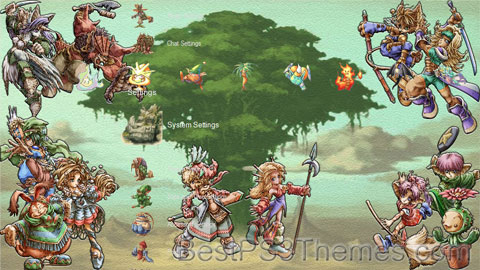
Lunar: Eternal Blue

Lunar: Eternal Blue theme by LiquidPolicenaut

Download: LunarEternalBlue.p3t
Lunar: Eternal Blue Theme
(1 background)

Lunar: Eternal Blue
Lunar: Eternal Blue
Developer(s)Game Arts[a]
Publisher(s)
Director(s)Yōichi Miyaji
Hiroyuki Koyama
Producer(s)Kazutoyo Ishii
Yōichi Miyaji
Designer(s)Masayuki Shimada
Programmer(s)Hiroyuki Koyama
Naozumi Honma
Masao Ishikawa
Artist(s)Masatoshi Azumi
Toshio Akashi
Toshiyuki Kubooka
Writer(s)Kei Shigema
Takashi Hino
Toshio Akashi
Composer(s)Noriyuki Iwadare
SeriesLunar
Platform(s)Sega CD, Sega Saturn, PlayStation
ReleaseSega CD
  • JP: December 22, 1994
  • NA: September 1995
Sega Saturn
  • JP: July 23, 1998
PlayStation
  • JP: May 27, 1999
  • NA: December 15, 2000
Genre(s)Role-playing video game
Mode(s)Single-player

Lunar: Eternal Blue[b] is a role-playing video game developed by Game Arts in association with Studio Alex for the Sega CD as the sequel to Lunar: The Silver Star. The game was originally released in December 1994 in Japan, and later in North America in September 1995 by Working Designs. Eternal Blue expanded the story and gameplay of its predecessor, and made more use of the Sega CD's hardware, including more detailed graphics, longer, more elaborate animated cutscenes, and more extensive use of voice acting. Critics were mostly pleased with the title, giving particular merit to the game's English translation and further expansion of the role-playing game genre in CD format.

Set one thousand years after the events of The Silver Star, the game follows the adventure of Hiro, a young explorer and adventurer who meets Lucia, visitor from the far-away Blue Star, becoming entangled in her mission to stop Zophar, an evil, all-powerful being, from destroying the world. During their journey across the world of Lunar, Hiro and Lucia are joined by an ever-expanding cast of supporting characters, including some from its predecessor. Eternal Blue was remade in 1998 as Lunar 2: Eternal Blue Complete, published by Kadokawa Shoten for the Sega Saturn and PlayStation, with the latter version localized and published in North America by Working Designs.

Gameplay[edit]

Battle sequence screenshot

Lunar: Eternal Blue is a traditional role-playing video game featuring two-dimensional character sprites and backgrounds. The game is presented from a top-down perspective with players moving the characters across numerous fantasy environments while completing story-based scenarios and battling enemy monsters. While basic game function remains similar to Lunar: The Silver Star, with story segments being presented as both on-screen text and animated cutscenes, the abundance of these interludes has been increased to over fifty minutes of movie content and an hour of spoken dialogue. Players advance the story by taking part in quests and interacting with non-player characters, which engages them in the story as well as providing tips on how to advance.[1]

Battles in Eternal Blue take place randomly within dungeons and other hostile areas of the game. While in a battle sequence, players defeat enemy monsters either by using standard attacks or magic, with combat ending by defeating all enemies present. In order to attack an enemy, a character must first position themselves near their target by moving across the field, or by using a ranged attack to strike from a distance. The battle system has been enhanced from The Silver Star by including the option to position characters throughout the field beforehand, as well as a more sophisticated AI attack setting that allows the characters to act on their own.[2] Characters improve and grow stronger by defeating enemies, thereby gaining experience points that allow them to gain levels and face progressively more powerful enemies as the game advances. The player is awarded special "magic points" after combat that can be used to empower a particular character's magical attack, giving them access to new, more powerful skills with a variety of uses in and out of battle. Players can record their progress at any time during gameplay by saving to either the Sega CD's internal RAM, or on a separately purchased RAM cartridge that fits into the accompanying Sega Genesis.[3] In order to save at any time, magic experience points equal to Hiro's level × 15 is required in the North American version.[4]

Plot[edit]

Characters[edit]

The character of Lunar; Eternal Blue were designed by artist and Lunar veteran Toshiyuki Kubooka.

  • Hiro – a young man and would-be explorer who is skilled with a sword and boomerangs
  • Ruby – a pink, winged cat-like creature with a crush on Hiro who claims to be a baby red dragon
  • Gwyn – Hiro's adoptive grandfather, and an archaeologist
  • Lucia – a mysterious and soft-spoken girl from the Blue Star who is skilled with magic and mostly naive of the world's customs
  • Ronfar – a priest-turned-gambler with healing skills
  • Lemina – money-grubbing heiress to the position of head of the world's highest magic guild
  • Jean – a traveling dancer with a hidden past as a prisoner forced to use a deadly form of martial arts against innocent people
  • Leo – captain of Althena's guard and servant of the goddess.[5]

While the cast's primary personalities remained intact for the English release, some changes such as colorful language, jokes, and double entendres were added to their speech to make the game more comical.

Primary supporting characters include the servants of the Goddess Althena, the creator of Lunar thought to have vanished centuries ago who suddenly appeared in mortal form to lead her people.

  • Borgan – an obese, self-absorbed magician with his eyes on the seat of power in the magic guild
  • Lunn – a martial artist and Jean's former instructor
  • Mauri – Leo's sister and Ronfar's love interest.[6]
  • Ghaleon (the primary villain killed in the previous game) - the current Dragonmaster, Althena's champion, and supposed protector of the world. His final end reveals that he regrets the evil he committed and does what he can to aid Hiro.
  • Zophar – the game's principal villain, a long-dormant evil spirit who is attempting to destroy and recreate the world to his tastes. Although his voice is heard numerous times, he remains faceless until the final battle.[6]

Conception[edit]

The plot of Lunar: Eternal Blue was written by novelist Kei Shigema, who previously conceived the story for The Silver Star. Working together with new world-designer Hajime Satou, Shigema intended to craft a story that would continue where the previous game ended, while also giving players a thoroughly new experience that would elaborate on the history and mythos of the Lunar world.

Story[edit]

On Lunar, Hiro and Ruby are exploring an ancient ruin where they collect a large gem, The Dragon's Eye. Removing it sets off a trap and they flee as the temple collapses and monsters chase them. On their way back to their home they meet the White Knight Leo, captain of Althena's guard, who warns them of a person arriving that is prophesied to destroy the world, known as the "Destroyer". Despite these rumors in the land, Hiro, Ruby and Gwyn investigate a strange light that descended upon the mysterious Blue Spire tower. They use the Dragon's Eye to unlock the tower. There they meet the beautiful Lucia, who asks to be taken to see the goddess Althena in order to avert the destruction of Lunar. Zophar, an evil disembodied spirit, appears and drains Lucia of all her magic powers. The group travels to convince the former-priest of Althena, Ronfar, to heal her. After being healed, Lucia travels alone on her quest to find Althena.

Hiro, Ronfar and Ruby grow concerned about Lucia and follow her. They witness Lucia being abducted by Leo, who believes her to be the destroyer. They rescue her from Leo's ship, The Dragonship Destiny, and escape into a forest where they meet the dancer Jean, who is traveling with a circus group. Jean helps them escape the forest. Lucia does not understand human culture and often finds human behavior strange. As they travel she starts to learn about humanity and grows fond of people. Joined along the way by Lemina, the group travel across mountains and forests to reach Pentagulia, Althena's holy city.

Lucia demands to see Althena. But when she meets the woman who claims to be Althena, Lucia determines her to be an imposter. After a brief fight, the group is separated and thrown into the palace dungeons. The party is freed and joined by Leo, whose faith in the goddess was shaken by Althena's recent actions. The group determines to thwart Ghaleon, the self-proclaimed Dragonmaster who is supporting the false Althena, by returning the power he took from the four dragons. The heroes begin a journey to visit the four dragons and free them. As they travel, Lemina, Ronfar, Jean, and Leo each confront one of Althena's strongest heroes, redeeming their past lives that they have been running away from.

The revived dragons, including Ruby, attack the false Althena's stronghold, where she is transformed into a demonic monster that the group defeat. At the pinnacle of the battle, the group learns that the true Althena gave up her godhood after falling in love with a human. Lucia absorbs Althena's power in order to destroy Zophar, but hesitates as this could destroy all magic and Lunar itself. Lucia is then captured by Zophar who drains her power. Lucia uses the last of her magic to teleport Hiro and the others to safety. The group trains to fight Zophar. Ghaleon appears and gives Hiro his sword, explaining that he had to appear to be an enemy but wishes to atone for his past actions (i.e., as the villain of the first game).

The group work together and defeat Zophar using their human strengths, thus freeing Lucia and restoring peace. Lucia returns to her home on the Blue Star, hoping that she can one day entrust the Blue Star to humans based on what she witnessed on Lunar. Having fallen in love with Lucia, Hiro is heartbroken by her departure. In the epilogue, Hiro and the group reunite to help Hiro go to the Blue Star to be reunited with Lucia. Hiro succeeds, and the two look towards a bright future for humanity.

Development[edit]

Lunar: Eternal Blue was developed by Game Arts and Studio Alex, with project director Yoichi Miyagi returning to oversee the production of the new game. According to scenario writer Kei Shigema, the game's concept of an oppressive god came from the image of Sun Wukong, hero of the Chinese epic Journey to the West, being unable to escape from the gigantic palm of the Buddha.[7] Shigema stated that "it was a picture showing the arrogance of a god who is saying, 'In the end, you pathetic humans are in my hands.' The moment I understood that, I thought, 'Oh, I definitely want to do this,' it'll definitely match perfectly. So we used it just like that."[8] Eternal Blue took three years and over US$2.5 million to produce, and contains twice as much dialogue as its precessor.[9] The game's development team originally wanted the game to be set only a few years after The Silver Star, and would feature slightly older versions of the previous cast along with the new characters, yet discarded the idea when they thought the new cast would lose focus.[10] Like its predecessor, the game contains animated interludes to help tell the game's story, which were developed in-house with Toshiyuki Kubooka serving as animation director. While The Silver Star contained only ten minutes of partially voiced animation, Eternal Blue features nearly fifty minutes of fully voiced video content.[11]

The game's North American version was translated and published by Working Designs, who had previously produced the English release of The Silver Star. Headed by company president Victor Ireland, the game's script contains the same light humor of the original, with references to American pop culture, word play, and breaking of the fourth wall not seen in the Japanese version. Working closely with the staff at Game Arts, Working Designs implemented design and balance fixes into the American release, including altering the difficulty of some battles that were found to be "near impossible".[12] Finding little risk in the ability to save the game anywhere, Ireland's team added a "cost" component to the game's save feature, where players would have to spend points earned after battles to record their progress, remarking that "[We] wanted to make the player think about where and when to save without making it too burdensome."[13] In addition, Working Designs implemented the ability for the game to remember the last action selected by the player during combat, allowing them to use the same command the next round without having to manually select it.[9] Like The Silver Star, the North American version of Eternal Blue featured an embossed instruction manual cover.

Audio[edit]

The soundtrack for Lunar: Eternal Blue was composed by Noriyuki Iwadare, who had previously co-produced the music for Lunar: The Silver Star. The game utilizes studio-quality Red Book audio for one of the two vocal songs. (Both are CD tracks in the US version.) Every other piece of music was encoded into 16 kHz PCM files. Dialogue and certain ambient effects also used the PCM format. Most sound effects were generated through the Sega Genesis sound processor.[14] Along with music director Isao Mizoguchi, Iwadare's goal was to produce music that contained "a high degree of originality" when compared to both the previous game and role-playing games in general.[15] While the original game's music represented a number of styles and genres, Iwadare purposefully narrowed his range of composition to give the songs a unified feel.[15] The English version contains an original title not found in the Japanese release, named the "Star Dragon Theme". It was used as the BGM for the Star Tower dungeon.[11] The game's ending theme, "Eternal Blue ~Thoughts of Eternity~" (ETERNAL BLUE) performed by Chisa Yokoyama, is one of Iwadare's favorite compositions.[16] An official soundtrack featuring selected tracks from the game was released in Japan on February 22, 1995, by Toshiba-EMI Records.[14]

Lunar: Eternal Blue Original Soundtrack track list
No.TitleLength
1."Lunar Eternal Blue ~Main Theme~"3:10
2."Adventure Road" (vocal by Hikaru Midorikawa as Hiro)4:09
3."Dragonship Bolgan"3:12
4."Zophar's Arrival"1:34
5."Town ~ Street"4:28
6."Lucia's Decent ~Thoughts of Sorrow~"3:06
7."Goddess Althena"3:08
8."Holy Port Pentgulia"2:35
9."Carnival"1:24
10."The Final Match Approaches"3:50
11."Promenade"4:38
12."Zophar's Revival"2:26
13."Field of Reaching for Tomorrow"2:22
14."Lucia vs. Zophar ~The Last Battle~"4:48
15."Farwell"3:09
16."Eternal Blue ~Thoughts of Eternity~" (vocal by Chisa Yokoyama as Lucia)6:03
Total length:54:33

Voice[edit]

Lunar: Eternal Blue features spoken dialogue during cutscenes and specific points in the game's script. While The Silver Star contained only fifteen minutes of voiced content, Eternal Blue features over an hour and a half of pre-recorded speech.[18] The game's cast consists of fifteen voiced roles, with the original Japanese version featuring veteran anime and video game actors, including Rokurō Naya returning as Ghaleon. For the game's English version, Working Designs hired friends and staff of the game's production crew, many of whom had worked on previous projects with the company. John Truitt also reprises his role as Ghaleon, and is joined by a number of new cast members to the Lunar series, many of which would return in future games.[19]

The Japanese release of Eternal Blue was preceded by a spoken drama album called Lunar: Eternal Blue Prelude in June 1994 featuring the game's future voice cast performing skits and songs in-character to promote the game.[20] When the game was released the following December, it was packaged with an 8 cm music disc called the Lunar: Eternal Blue Premium CD featuring short conversations by Lucia and Lemina, as well as in-character theme songs.[21] In the months following the game's release, a two-volume drama album set featuring an expanded cast titled Lunatic Parade would be released by Toshiba-EMI records in June[22] and September 1995.[23]

Lunar: Eternal Blue Prelude track list
No.TitleLength
1."Prologue: Eternal Blue Prologue"8:16
2."Chapter One: Sea of Sand"4:14
3."Chapter Two: Oasis"8:12
4."Chapter Three: Ghost Valley"4:25
5."Chapter Four: Ghost"3:20
6."Chapter Five: Camp"3:41
7."Althena's Song – Distant Journey" (vocal by Kikuko Inoue as Luna)6:34
8."Chapter Six: Black Knight"5:59
9."Ending"1:52
10."Lucia's Image Song – Rondo of Light and Shadow" (vocal by Chisa Yokoyama as Lucia)5:07
11."Epilogue – Prologue Reprise"5:29
Total length:54:33
Lunar: Eternal Blue Premium CD track list
No.TitleLength
1."Lucia and Lemina's Conversation 1" 
2."Money is #1" (vocal by Megumi Hayashibara as Lemina)3:37
3."Lucia and Lemina's Conversation 2" 
4."Eternal Blue ~Eternal Sentiment~" (vocal by Chisa Yokoyama as Lucia)6:08
5."Lucia and Lemina's Conversation 3" 
Total length:16:12
Lunar: Eternal Blue Lunatic Parade Vol. 1 track list
No.TitleLength
1."Lunatic Parade"4:30
2."Chapter One: Burning Determination"6:59
3."Lone Wolf Knight Leo"2:47
4."Rise Up Men of Valor! Battle No. 1"3:03
5."Chapter Two: The Magic Guild's Hair Crisis!"17:50
6."Money is #1" (vocal by Daisuke Gouri as Borgan & Megumi Hayashibara as Lemina)3:37
7."Martial Arts Tournament"2:22
8."Chapter Three: Hope's Second Chance!"9:01
9."Victory Teacher Ronfar"2:27
10."The Four Heroes"4:11
11."Chapter Four: Ghaleon's Last Moments"2:33
Total length:59:25
Lunar: Eternal Blue Lunatic Parade Vol. 2 track list
No.TitleLength
1."The Envoy of Justice, The Masked White Knight Appears!!"4:25
2."Chapter Five: First Kiss"11:18
3."Love Love Funny" (vocal by Kumiko Nishihara as Ruby)4:55
4."I am the Great Nall!!"2:38
5."Chapter Six: Heart-Pounding, Happy, Bashful First Date!"16:43
6."Jean"2:50
7."Martial Arts Investigation"3:34
8."Fierce Fighting – Battle No. 2"3:10
9."Chapter Seven: Discussion of Lucia's Life!"10:39
10."Honky-Tonk Lucia"2:55
Total length:63:21

Reception[edit]

Lunar: Eternal Blue sold well in Japan despite an estimated retail price of JPY¥9,900, nearly the equivalent of US$100 in 1994.[9] The game would go on to sell fewer copies than its predecessor, Lunar: The Silver Star, yet still became the second-highest selling Sega-CD game in Japan and third highest selling worldwide.[31] Eternal Blue received a score of 30 out of 40 in Japanese magazine Megadrive Beep!,[32] with fellow Sega publication Megadrive Fan calling the game "fun" and featuring an official manga strip written by scenario writer Kei Shigema over the next several months.[33]

The game experienced relatively low sales during its release in North America, which Victor Ireland attributed to both the rise of 32-bit game consoles such as the Sega Saturn and PlayStation, and widespread media declaration of the Sega-CD's "death" in the video game market in 1995.[13] Its English release met with a favorable response, with GamePro remarking that "Eternal Blue could appear to some as 'just another RPG,' but the epic scope, appealing characters, and excellent cinematics make it much more," yet found the game's linear story progression to be its low point.[34] Electronic Gaming Monthly praised the game's "great story and witty characters", adding that "the all-important, usually absent ingredient is there: fun".[25] They awarded it as the Best Sega Mega-CD Game of 1995.[35] In their review, Game Players found the game's larger scope and expanded features made it less enjoyable than its predecessor, saying "it's a better game, it's just not quite as much fun. [We] still liked it, a lot, and it's definitely recommended, but it feels like something's been lost."[30] Next Generation Magazine echoed this sentiment, remarking that "overall it's a much stronger game, but you can't help feeling something missing", yet maintained that the game's storyline was "decidedly less goofy, with more of an emphasis on drama and storyline."[28]

When asked if he approved of the game's reviews, Ireland replied that they were "overall in the ballpark" from what he expected, with the exception of a portion of a review from GameFan.[13] In an earlier preview of the English version, editors of GameFan called the game's translation "ingeniously written",[36] which was quoted in an Eternal Blue print advertisement that appeared in several magazines up to the game's release. When the editors reviewed the final version, however, they questioned the game's frequent use of jokes and lewd quips in place of the original Japanese narrative[26] which Ireland described as "a complete about-face".[13] Despite their problems with portions of the translation, the magazine would still regard the majority of the game's "non-joke-laden" script as "excellent", and awarded the game a 91% rating, calling it "one of the greatest epics ever programmed".[26]

In 1997 Electronic Gaming Monthly ranked Lunar: Eternal Blue the 40th best console video game of all time, remarking that "Despite some gamers' claims of the dialogue being a bit too witty in Lunar 2, the game itself is fantastic. The story is compelling, the music is great and the voice acting and animation are all top-notch."[37] Retro Gamer included Eternal Blue among top ten Mega CD games.[38]

Remake[edit]

In July 1998, Game Arts released a remake to Eternal Blue, Lunar 2: Eternal Blue Complete for the Sega Saturn, with a PlayStation version available the following year. Like the remake of The Silver Star, Lunar: Silver Star Story Complete, the new version of Eternal Blue features updated graphics, re-arranged audio, and more robust animated sequences by Studio Gonzo, as well as an expanded script.[39] This version would be released in North America in 2000 once again by Working Designs in the form of an elaborate collector's edition package that includes a soundtrack CD, "making of" bonus disc, game map, and a special omake box complete with Eternal Blue collectibles.[40]

Reception[edit]