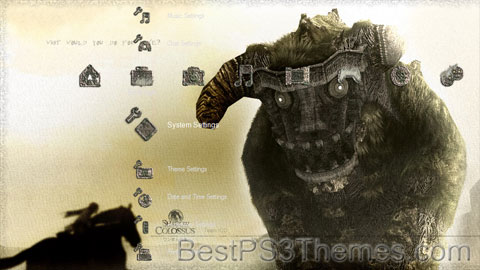
This program unpacks Playstation 3 Theme files (.p3t) so that you can touch-up an existing theme to your likings or use a certain wallpaper from it (as many themes have multiple). But remember, if you use content from another theme and release it, be sure to give credit!
Download p3textractor.zip from above. Extract the files to a folder with a program such as WinZip or WinRAR. Now there are multiple ways to extract the theme.
The first way is to simply open the p3t file with p3textractor.exe. If you don’t know how to do this, right click the p3t file and select Open With. Alternatively, open the p3t file and it will ask you to select a program to open with. Click Browse and find p3textractor.exe from where you previously extracted it to. It will open CMD and extract the theme to extracted.[filename]. After that, all you need to do for any future p3t files is open them and it will extract.
The second way is very simple. Just drag the p3t file to p3textractor.exe. It will open CMD and extract the theme to extracted.[filename].
For the third way, first put the p3t file you want to extract into the same folder as p3textractor.exe. Open CMD and browse to the folder with p3extractor.exe. Enter the following: p3textractor filename.p3t [destination path]Replace filename with the name of the p3t file, and replace [destination path] with the name of the folder you want the files to be extracted to. A destination path is not required. By default it will extract to extracted.filename.
Shadow of the Colossus[a] is a 2005 action-adventure game developed by Japan Studio and Team Ico, and published by Sony Computer Entertainment for the PlayStation 2. It takes place in a fantasy setting and follows Wander, a young man who enters an isolated and abandoned region of the realm seeking the power to revive a girl named Mono. The player assumes the role of Wander as he embarks on a mission that might entail Mono's resurrection: to locate and destroy the colossi, sixteen massive beings spread across the forbidden land, which the protagonist traverses by horseback and on foot.
The game was directed by Fumito Ueda and developed at Sony Computer Entertainment's International Production Studio 1, also known as Team Ico, the same development team responsible for the acclaimed PlayStation 2 title Ico, to which the game is considered a spiritual successor. Сonceived as an online multiplayer game titled NICO directly after Ico's completion, Shadow of the Colossus underwent a lengthy production cycle during which it was redeveloped as a single-player title. The team sought to create an outstanding interactive experience by including a distinct visual design, an unorthodox gameplay template, and non-player characters with sophisticated artificial intelligence such as the colossi and Wander's horse, Agro.
Cited as an influential title in the video game industry and one of the best video games ever made, Shadow of the Colossus is often regarded as an important example of video games as art due to its minimalist landscape designs, immersive gameplay, and emotional weight of the player character's journey. It received wide critical acclaim by the media and was met with strong sales compared to Ico, due in part to a larger marketing campaign. The game won several awards for its audio, design, and overall quality. A remastered version for the PlayStation 3 was released alongside Ico as The Ico & Shadow of the Colossus Collection in September 2011, developed by Bluepoint Games, who later produced a high definitionremake of the game for the PlayStation 4 in 2018.
Described by several commentators as an action-adventure game,[2][3]Shadow of the Colossus takes place from a third-person perspective in a three-dimensional (3D) graphic environment and involves combat-based gameplay sequences, as well as platforming and puzzle game elements.[4] The game's environment is largely presented as a seamless open world.[5] Progression through Shadow of the Colossus occurs in cycles. Beginning at a central point in an expansive landscape, the player seeks out and defeats a colossus, and is then returned to the central point to repeat the process.[2] To find each colossus, Wander may raise his sword while in a sunlit area to reflect beams of light, which will converge when the sword is pointed in the right direction of the next encounter.[6] The player's journey to a colossus seldom follows a direct route: stretches of varied terrain often require that a detour be taken along the way. Most colossi are situated in remote areas, such as atop cliffs or within ancient structures.[2][7]
Wander climbs the first colossus to stab the sigil on its forehead. The heads-up display shows the character's health and stamina (lower right), as well as the colossus' health (upper left).[8]
Once a colossus is found, the player must discover its weaknesses to defeat it. Each colossus dwells in a unique lair, and in most encounters the player must use some aspects of the current battlefield to advantage, a necessity that becomes more pronounced as the game progresses.[9] The first two battles take place on simple, vast, flat areas of land, wherein the player's only goal is to discover how to scale the colossi and attack their weak points.[6][9] However, the majority of the following fourteen battles require that the player make use of the surrounding environment.[10][11]
Every colossus has at least one weak point, symbolized by a glowing sigil[12] that can be illuminated and identified by the sword's reflected light.[6][13] Each colossus has areas covered with fur or protruding ledges, which Wander may use to grip and scale the colossus while it thrashes about in an attempt to dislodge him.[2] Wander has a limited stamina gauge that decreases as he hangs onto the colossus; the player thus must act quickly when they scale the creature.[4] Aside from the colossi, who are the only enemies of the game, the environment is inhabited by natural animals. Only one species, however, has an effect on gameplay: eating the tail of a certain kind of lizard increases Wander's stamina gauge. Likewise, the player may find fruit that increases Wander's maximum health.[14]
Wander's horse, Agro,[15] plays a large role in the game. Aside from her capacity as a means of transportation, Agro enables the player to fight from horseback, a critical avenue to defeating some of the colossi.[16] However, the game contains many environments that players cannot traverse by horse, and colossi are often found in areas within deep water or beyond large obstacles that must be scaled. Agro cannot travel beyond these, and when separated from Wander by such obstacles, cannot participate in the following battle.[6] While throughout the game, Wander's equipment consists of only a sword and a bow with arrows,[17] in subsequent playthroughs players may access bonus weapons and in-game features after finishing optional Time Attack trials, which allow the battles with the colossi to be replayed with a restricted time limit.[14]
Presented through a minimalistic narrative,[18]Shadow of the Colossus eschews disclosure of detailed information about the backstories and interrelationships of its characters to the player.[2] The game takes place in a fantasy world,[19][20] wherein a vast and unpopulated peninsula, known as the Forbidden Land, serves as the main setting for the game's events. Separated from the outside realm by a distant mountain range to its north and sea to the south and east, the area contains ruins and remnants of ancient structures, an indication that it had formerly been a settlement.[21][22][23]
The only point of entry to the region is a small cleft in the mountains to the north that leads to a massive stone bridge. This bridge spans half the distance of the landscape and terminates at a large temple called the "Shrine of Worship" located at its center. It is, however, forbidden to enter the land,[24] which includes diverse geographical features, such as lakes, plateaus, canyons, caves, and deserts in addition to human-made structures.[2][11]
Wander standing near Mono. Long hair served as a foundational aspect of both Wander and Mono's designs, and in the latter's case was meant to provide a visual contrast to Ico character Yorda.[25]
The protagonist of the game is Wander (ワンダ, Wanda, voiced by Kenji Nojima), a young man whose goal is to resurrect a girl named Mono (モノ, voiced by Hitomi Nabatame). The only established fact regarding Mono is that she was a maiden who was sacrificed because she was believed to have a cursed destiny.[26] Assisting Wander in his quest to revive her is his loyal horse, Agro (アグロ, Aguro), who serves as his sole ally in defeating the colossi;[27] the English-language version of the game refers to Agro as a male steed,[28] although director Fumito Ueda said that he saw Wander's horse as female.[29] Wander also receives aid from an entity called Dormin (ドルミン, Dorumin, voiced by Kazuhiro Nakata and Kyōko Hikami). The story revolves around these characters but features a small supporting cast, represented by Lord Emon (エモン, voiced by Naoki Bandō) and his men.
Speaking with two voices at once (one male and one female), Dormin is a mysterious, disembodied entity. According to legends of the game's world, Dormin has the power to revive the dead;[24][27] this premise serves as the driving cause for Wander's entrance upon the forbidden land, as he seeks the being's assistance in reviving Mono. Dormin offers to revive her in exchange for Wander destroying the sixteen colossi.[26] One of the commentators of the game's plot speculated that the name "Dormin", which spells "Nimrod" backwards, serves as a reference to the body of the biblical King Nimrod which was cut up and scattered.[30]
Lord Emon is a shaman who narrates a vision in the game's introduction that vaguely explains the origin of the land to which Wander has come and establishes that entry to this place is forbidden.[24] As portrayed by the game, he possesses vast knowledge about the nature and containment of Dormin, and wields the ability to use powerful magic. He has a small group of warriors at his command, and is pursuing Wander to prevent the use of "the forbidden spell", the rite that involves the destruction of the sixteen colossi and the restoration of Dormin's power.[31]
The colossi are armored, most often enormous creatures with forms ranging from various humanoids to predatory animals, and live in all manner of surroundings and environments, including underwater and flying through the air.[18][32] Their bodies are a fusion of organic and inorganic parts such as rock, earth, and architectural elements,[4] some of which are weathered or fractured. Some colossi are peaceful and will only attack when provoked, whereas others are aggressive and will attack on sight.[2] Inhabiting specific locations in the forbidden land, they do not venture outside their own territory. Once slain they will remain where fallen, as a mound of earth and rock vaguely resembling the original colossus.[33][34] A pillar of light marks the location of each colossus after they are defeated.[35] The Latin names of the colossi, though spread throughout fan related media, are not official and are never referred to within the game.[36][37]
As the game begins, Wander enters the forbidden land and travels across a long bridge on his horse, Agro. After they reach the entrance to the Shrine of Worship, Wander, who has carried with him the body of Mono, brings her to an altar in the temple. A moment later, several humanoid shadow creatures appear and approach Wander before he easily dismisses them with a wave of the ancient sword in his possession.
After the shadow creatures are vanquished, the disembodied voice of Dormin manifests within the shrine and expresses surprise at the fact that Wander possesses the weapon. Wander explains the plight that led him to seek the forbidden land and asks that Dormin return Mono's soul to her body. Dormin offers to grant Wander's request under the condition that he completes a rite designed to destroy the sixteen idols lining the temple's hall. To that end, Wander must use his sword to slay each of the idol's physical incarnations–the colossi, whose presence ranges across the vast expanse outside the temple. Although warned by Dormin that he may have to pay a great price to revive Mono, Wander sets out to search the land for the colossi and destroy them.[38]
An aspect of Wander's mission that is unknown to him is that the colossi contain portions of Dormin's own essence, scattered long ago to render the entity powerless.[26][39] As Wander kills each colossus, a released fragment of Dormin enters his body. Over time, the signs of Wander's deterioration from the gathered essence start to appear: his skin becomes paler, his hair darker, and his face is increasingly covered by dark veins. The outcome of the battle with the twelfth colossus leads to a reveal of a group of warriors that has been pursuing Wander, led by Emon. Urged to hurry with his task by Dormin, Wander soon heads off to defeat the sixteenth and final colossus. On the way to this confrontation, he rides horseback across a long bridge which begins to collapse as he is halfway across, but Agro manages to throw Wander over to the other side before falling into the distant river below.
Soon after, Wander goes on to defeat the final colossus as Emon's company arrives in the Shrine of Worship to witness the last temple idol crumble. Wander appears back in the temple soon after, the signs of his corruption readily apparent: his skin is pallid, his eyes glow silver, and a pair of tiny horns have sprouted from his head. Emon recognizes him as a transgressor who, in an event that occurred before Wander's journey to the forbidden land, stole the ancient sword with which he killed the colossi.[31] Emon orders his warriors to kill the "possessed" man as he approaches Mono and finally falls once stabbed through the heart by one of Emon's men.[40] However, a newly whole Dormin takes control of Wander's body and transforms into a shadowy giant.[39][41] While his men flee, Lord Emon casts the ancient sword into a small pool at the back of the temple's hall to evoke a whirlwind of light. The supernatural vortex consumes Dormin and Wander, which seals Dormin within the temple once again. As Emon and his warriors escape, the bridge that leads to the temple collapses behind them, and its destruction forever isolates the forbidden land from the rest of the world. Although he has condemned Wander for his actions prior to their encounter, Emon expresses hope that Wander may be able to atone for his crimes one day should he have survived.[42]
Back in the temple, Mono awakens and finds Agro limping into the temple with an injured hind leg. Mono follows Agro to the pool into which Wander and Dormin were pulled by Emon's spell, where she finds a male infant with tiny horns on his head. Mono takes the child with her, following the horse to higher levels of the Shrine of Worship, and arrives at a secret garden within the shrine as the game ends.
The monster movie genre, of which the original Godzilla film (1954 theatrical poster pictured above) is a famous example, served as a source of inspiration for the concept of Shadow of the Colossus.
Shadow of the Colossus is the second project of Team Ico, a group of staff members within Sony Computer Entertainment's (SCEI) International Production Studio 1 that was led by director Fumito Ueda and producer Kenji Kaido.[32][43][44] The game originated from one of Ueda's concepts that he developed directly after the team submitted their debut title Ico, released in late 2001 for Sony's PlayStation 2video game console, for publication.[45][46][47] As the basis of Team Ico's subsequent game had not been decided, Ueda examined "a number of old ideas kicking around in my head ... that couldn't be realized under previous circumstances".[48] After a brief review of those avenues, Ueda chose to explore one that aligned with his own preferences as a game player.[47][48] Ueda cited The Legend of Zelda series as an influence, as he grew up wanting to make a game like Zelda and designed the Colossi bosses like "inverted Zelda dungeons."[49][50]
Ueda envisioned a work with an underlying motif of "cruelty as a means of expression".[48] He felt that this theme was widely featured in contemporary titles such as Grand Theft Auto III and wanted to use it in a game that he designed.[48] In a discussion with Kaido, Ueda observed that he had played a variety of video games containing battles with large bosses that the player must shoot from a distance to defeat.[51] Ueda believed that the boss sequences of those games could be streamlined if the player character was able to approach and climb the oversized opponents to kill them with a close range weapon.[51] Accordingly, he chose to base the game around the player character's encounters with enormous fictional creatures,[16] a premise that stemmed from Ueda's childhood fascination with monster movies.[46] This led to an emphasis on the inclusion of a large-scale adventure in the title, an element which Ueda regarded as influential in the shaping of the game's stylistic identity.[48]
Originally, the team considered Ueda's idea alongside another concurrently-developed game.[45][46] According to Ueda, the game was unrelated to his former concept, and the team did not give it a working title or outline its design while it was in development.[45][46] Ueda recognized the finished iteration of Team Ico's second title as, "in many ways, a game for boys and men"; conversely, the separately produced game was fashioned to appeal more to a female audience.[46] Its contents, interface and thematic focus differed significantly from those that would ultimately manifest in the team's next game after Ico.[46] The untitled game did not employ 3D graphics, whereas Team Ico applied them to their published game.[46] The team eventually scrapped their plans for a counterpart title to Ueda's intended game,[46] which was advanced into further development.[45]
Prior to the start of the project, Team Ico assessed the opportunity to establish it as a sequel to their first game.[16] This suggestion was opposed by certain staff members who argued that the story and gameplay of their preceding title were largely self-contained, and that the existence of consumer demand for a new Ico game was questionable.[52] According to Ueda, Team Ico assumed that the creation of levels for a single-player game akin to Ico necessitated the construction of elaborate puzzles, a practice that the staff wanted to eschew.[51] Following lengthy deliberations, they decided not to pursue a sequel to Ico and to produce a standalone game provisionally dubbed NICO (a portmanteau of ni, 2 in Japanese, and "Ico").[16][32] The team initially agreed to develop NICO as an online multiplayer game that, unlike Ico, "wouldn't require complex level design".[51] Their foundational goal, according to Kaido, was to create a technology demo that represented a tentative rendition of the game's fictional world and features.[16] Development commenced immediately after the December 2001 release of Ico's Japanese version.[16][53]
Team Ico produced the technology demo for NICO, the initial online multiplayer-focused incarnation of Shadow of the Colossus, using the native graphical capabilities of the PlayStation 2 (shown here with its Network Adaptor attached).
To develop the concept video for NICO, Team Ico formed a small internal group, which was composed of Ueda, one of Ico's designers and a roughly 10-person animation team.[48] Their objective was to deliver "[a] movie with an extremely final form" that could serve as a visual template for the finalized game.[16] The first storyboard that outlined the video was drafted in January 2002, and the actual short film was completed that May.[54] It depicted a group of three masked, horned boys who rode horseback across a vast landscape and attacked a towering being reminiscent of the second boss in Shadow of the Colossus.[35][55][56] The video was visualized in the Icogame engine and was renderedin real-time on the PlayStation 2 hardware.[16] With those techniques, the team aimed to estimate the extent to which the platform's capabilities allowed the realization of their vision.[16]
According to Kaido, the team deemed the resulting video to have attained a very high level of completion, and thus was able to use it as a reference point throughout the game's production.[16] Although they subsequently modified the game's visuals from those of the demonstration reel, its themes of "fighting a giant enemy" and "[exploring] a giant field" carried over into the final game design.[16] The demo indicated elements that were excluded from the released game.[57] Among these was a showcased gameplay mechanism wherein one of the colossus' attackers who had scaled and killed it proceeded to mount his approaching horse by leaping onto its back from the entity's corpse.[57] The video was later exhibited at many trade shows,[43] such as the 2006 D.I.C.E. Summit in Las Vegas where Kaido and Ueda retrospectively discussed the game's development with Lorne Lanning.[55]
In June 2002, a small group of staff at Team Ico started to build a prototype of NICO for testing purposes.[54] In his role as producer, Kaido tasked the team with the inclusion of technological features that he recognized as important milestones of the development.[55] One of the challenges issued by Kaido involved the creation of "organic collision deformation", a term that alluded to his concept of realistic characterphysics in relation to the movement of the colossi.[55] For instance, if a colossus' limb was currently horizontal, Kaido expected the player to be able to run across the limb as though it were any other flat surface.[55] Ueda and Team Ico programmers spent over six months to produce a working version of this functionality.[54] They began by adding a character to a virtual environment where the figure was enabled to climb a pole-like object.[51] One of the team's priorities at the time was to code a physics-based simulation of scenarios where characters were "being shaken off or narrowly avoided being stomped on".[58]
In May 2003, Team Ico assembled a demonstrational build of NICO and presented it at a production meeting.[54] Full development of the game was sanctioned directly after it was pitched, and commenced in the same month.[54] That year, the NICO technology demo was shown across Sony's foreign offices among a lineup of prospective PlayStation 2 titles, and its exposure excited the spectators.[57] Although the team attempted to work on the game in secrecy, at a certain point images of NICO's horseriding characters were leaked onto the Internet.[32] Their circulation led enthusiasts to speculate about what they perceived as a sequel to Ico.[32] According to Ueda, the team reused elements of Ico's character designs for NICO to expedite the production of the concept video and minimize its costs.[58] He asserted that NICO was not related to Ico despite their stylistic similarities,[58] and that his colleagues did not identify the former game as a sequel.[4] However, contemporary and retrospective sources described Team Ico's second game as both a spiritual successor[32][47][59] and prequel to Ico.[60]
The staff used player feedback to advance the testing of the "organic collision deformation" system by inputting simple objects to experiment its capabilities.[58] Although Team Ico had conducted an elaborate research of the game's technological framework, they did not finish its validation when they entered the production phase.[51] After evaluating the limited number of personnel that was involved with NICO as well as their professional profiles, Team Ico concluded that they were not qualified to deliver an online-only game.[51] They then resolved to abandon that direction and to reformulate NICO into a single-player title.[51] The team discarded Ico's development tools that they had used at the outset of the project and moved to write new programming utilities.
From the plural form: This is a redirect from a plural noun to its singular form.
This redirect link is used for convenience; it is often preferable to add the plural directly after the link (for example, [[link]]s). However, do not replace these redirected links with a simpler link unless the page is updated for another reason (see WP:NOTBROKEN).
Use this rcat to tag onlymainspace redirects; when plural forms are found in other namespaces, use {{R from modification}}instead.
From an ambiguous term: This is a redirect from an ambiguous page name to a page or list that disambiguates it. These redirects are pointed to by links that should always be disambiguated. Therefore, this template should never appear on a page that has "(disambiguation)" in its title – in that case use {{R to disambiguation page}}instead.
Dead Space is a science fiction/horror franchise created and directed by Glen Schofield. Dead Space was developed by Visceral Games and published and owned by Electronic Arts. The franchise's chronology is not presented in a linear format; each installment in the Dead Space franchise is a continuation or addition to a continuing storyline, with sections of the storyline presented in prequels or sequels, sometimes presented in other media from the originating video game series, which includes two films and several comic books and novels.
Primarily set in a 26th century science fiction universe featuring environments, weapons, and characters typical of the genre, the Dead Space franchise centers on a series of video games beginning with the release of the first Dead Space, which centers on starship engineer Isaac Clarke and mutated undead horrors that surround him. A central theme in the games is the fictional cultreligion "Unitology" and its fanatical adherents, who believe that information about an alien artifact called the "Marker" is being suppressed by "EarthGov", the central political administration of Earth. Their primary goal is to use the Marker as a means to bring about the "Convergence", or complete destruction of humanity, with the Marker and its malevolent influence being the source of the undead monsters encountered by the series' protagonists.
The Dead Space video game series has been positively received; the first game in particular won a number of industry awards for the varied elements of its gameplay and development, and is often regarded as one of the best video games of all time by critics. From a commercial perspective, EA considered the video game series as a whole to have underperformed. After the financial disappointment of 2013's Dead Space 3, no further media for the franchise was produced until a remake of the first game was developed by Motive Studio and released on January 27, 2023.
Systems engineer Isaac Clarke joins a search and rescue team for the USG Ishimura, which had gone radio-silent, after receiving a message from his girlfriend Nicole. Their ship suffers damage when attempting to dock with the Ishimura; while the rest of the crew assess the situation and search for a means to leave the Ishimura, Isaac explores the ship to look for Nicole. The ship is overrun by Necromorphs, forcing Isaac to defend himself by weaponizing his mining tools and "Resource Integration Gear" (RIG) spacesuit capabilities. Due to the Red Marker's influence, Isaac experiences recurring visions of Nicole, who guides him to return the Marker to the planet. Towards the end of the game, it is revealed that one of the rescue team members, Kendra Daniels, is a double agent. She betrays Isaac, but is killed by a large Necromorph creature before she can escape, while Isaac commandeers her ship and escapes Aegis VII after defeating the creature and allowing the Marker to be destroyed by a sabotage attempt he had initiated earlier. The sole survivor of the entire ordeal, Isaac soon hears something behind him and looks back to see a horrific hallucination of Nicole.
Dead Space 2 reveals that Isaac has become mentally disturbed and unstable after he destroyed the Red Marker on Aegis VII, and that he was captured by EarthGov and taken to the Sprawl, a massive space-station built into the remains of Titan, Saturn's largest moon. Once there, EarthGov scientists extract information from his mind to build another Marker, and he is later confined to a hospital on the Sprawl due to a dementia-like mental illness caused by the first Marker. A Necromorph outbreak in the Sprawl instigated by the Marker copy soon occurs, thrusting Isaac into a struggle to survive the Necromorph epidemic. Haunted by hallucinations of the deceased Nicole Brennan, Isaac manages to destroy the Marker copy and undo its influence on his mind. Isaac succeeds in escaping with another survivor, Ellie Langford, before the explosive destruction of the station, and goes into hiding from EarthGov authorities as his mind still retains information about the Markers.
Dead Space 3 occurs a few years later. While Isaac Clarke and Ellie Langford returned to Earth and dated for a while, their relationship fell apart. As he is struggling with the breakup in his apartment on the moon, Unitologists led by Jacob Danik activate a Marker near the colony, causing a Necromorph outbreak. Isaac is rescued and enlisted by EarthGov soldiers to help locate Langford, who had traveled to Tau Volantis, one of Earth's oldest off-world colonies, in search of the true origins of the Markers and a means to stop the Necromorph scourge once and for all.
Rumors of a revival of Dead Space within EA appeared in early 2021. Venture Beat reported in July that this revival was a remake of the first game, in the same vein as the Resident Evil 2 remake, and would be a relaunch of the franchise. EA confirmed the remake of Dead Space, under development by Motive Studio, in their EA Play event the same month.[8][9] It was released on January 27, 2023.
A prequel to the first Dead Space, Dead Space: Extraction follows a group of colonists from the Aegis VII colony who are beset by Necromorphs created when the Red Marker is removed. Originally released as a rail shooter title for the Nintendo Wii in 2009, a port with PlayStation Move support for the PlayStation 3 was later released as a downloadable game on the PlayStation Network in 2011. It was also bundled with copies of the limited editions of Dead Space 2 for the PlayStation 3.
A prequel to Dead Space 2 released in 2010, Dead Space Ignition is an actionpuzzle video game which follows Franco Delille, an engineer who witnesses the initial Necromorph outbreak on the Sprawl. The ending of Ignition directly sets up the opening of Dead Space 2, where Delille is ordered to find and free Isaac Clarke from an EarthGov asylum, only to be killed and transformed into a Necromorph.
A 2011 tie-in to Dead Space 2 developed by IronMonkey Studios, Dead Space was a mobile title about a newly converted Unitologist on a mission in the mines of Titan Station. The game features an appearance from Titan Station's director Hans Tiedemann, a major antagonist of Dead Space 2, and provides context behind the Necromorph infestation of the Sprawl. It has since been removed from all mobile app storefronts.[10]
The Dead Space franchise is set in the future, where humanity has been able to colonize other planets.[11] By the 23rd century, humanity has used up most of Earth's natural resources, and the world governing body, EarthGov, has fleets of "planet crackers", giant mining spaceships that harvest resources by breaking apart other planets, to gather materials for humanity to sustain itself.[11] During the 23rd century, EarthGov researchers find a double helix-shaped alien artifact in the Chicxulub crater, which they call the Marker. The Marker emits a persistent electromagnetic field from seemingly no source, which researchers believe could be used to provide limitless energy and solve Earth's ecological crisis. Work begins to reverse engineer the Marker on various research stations across the colonies, but they are forced to use bismuth instead of an unidentified alien material, resulting in these duplicates being colored red instead of black as the original.
The project was highly classified, but the lead researcher Michael Altman leaks its existence to the world.[11] EarthGov assassinates Altman hoping to quell the news, but it is too late: Altman is seen as a martyr, and his belief of what the Marker means for humanity form the basis of a new cult-like religion, Unitology, that rapidly spreads across Earth and the colonies.[11] Unitologists believe that by worshipping the Marker, they will discover the true origin and meaning of human life.[11] They also believe that the Marker grants eternal life and will help to unify humanity, as to "make us whole", in an event known as the "Convergence".
The EarthGov researchers also discover that the electromagnetic fields sent by the Marker and its duplicates cause living people to suffer paranoia and hallucinations, while also causing the dead to reanimate, becoming "Necromorphs", biological monstrosities which rise to attack the living. EarthGov immediately terminates the Marker project and abandons all research stations where the work had been done, covering up their locations, knowing as they do that the followers of Unitology would desperately want to seek these Markers out in order to advance their beliefs and bring about Convergence.
In the 26th century, a planet-cracker vessel mining the world of Aegis VII called the USG Ishimura discovers a Red Marker buried near an abandoned colony.[11] The Ishimura captain, a devout Unitologist, ordered his crew to bring the Marker aboard the ship, which causes the crew to become paranoid, turn on each other, and leads to a Necromorph infestation onboard the Ishimura.[11] Among the crew of the Ishimura is a medical officer named Nicole Brennan, who sends a cryptic distress signal to her significant other out of desperation.
The Dead Space games franchise follow the survival horror genre, with the player character visible at all times. All menu interfaces are diegetic, produced by the character's "Resource Integration Gear" spacesuit for ease of communication with other characters. For instance, the character's hit point meter, built into the spine of his suit, is intended to allow co-workers to monitor his health, and when the character moves into depressurized areas, a readout on his back displays his remaining seconds of oxygen. All sound is removed from gameplay during these segments, save those which would be transferred to the character's ears by the vibrations of his RIG, such as rounds fired from his weapon. Since the menus are diegetic, opening them does not pause gameplay.
The character's RIG can be outfitted with two special abilities for use in combat and puzzle-solving. The "Kinesis" module allows the character to retrieve, levitate and transport objects, often heavier or more distant ones than could be accessed normally. These objects may also be expelled at high speed for use as improvised projectiles. The "Stasis" module causes its target to undergo an extreme slowdown for a short period of time, allowing characters to dart through rapidly moving obstacles such as fan blades, or hinder onrushing enemies. The RIG also has a slot-based inventory for carrying weapons, ammunition, healing items, and other objects.
Gunplay is influenced by the franchise's antagonists. Because Necromorphs are re-animated and re-purposed corpses, lacking dependence on nervous, respiratory, and circulatory systems, the conventions of stopping power are largely irrelevant to them. Thus, instead of targeting foes' heads or center of mass, players are encouraged to engage in "strategic dismemberment" by shooting off their arms and legs. Some Necromorphs can be easily defeated in this manner, but others may change attack patterns or even spawn entirely new enemies when slain. Relatedly, the game's weapons are characterized as being repurposed power tools[12] or mining implements, such as plasma cutters, rotary saws, and gravitic repulsion tools, though an increasing amount of dedicated military ordnance becomes available as the franchise progresses. Ammunition tends to be uncommon, thus necessitating careful usage of the tools at hand.
In the first two games, RIGs and weapons can be upgraded at bench workstations. Players can also visit vending machines to buy or sell items for in-game currency, and upload new schematics to those stores in order to unlock new items. This was changed in the third installment, where the store was scrapped entirely; new "Suit Kiosks" allow the player to upgrade their RIG, and bench functionality was expanded to allow players to craft their own weapons, often by cobbling together parts and resources scavenged through gameplay.
Each type of Necromorph has a unique way of slaying the player character, customized to whatever claws, blades, fangs, or probosces they happen to possess.
Electronic Arts (EA) Redwood Shores had developed a number of movie and tie-in games, though they desired to make their own intellectual property. Around 2005, the studio presented the idea of making a second sequel to System Shock to EA executives but had not gotten much support until the release of Resident Evil 4 in 2005, which quickly became a top-selling title. That success led them to revise their System Shock concept, making it more a horror-driven game set in space, and which EA was more open to as to try to capture a similar type of success. The aim was to create, in Glen Schofield's words, "the most terrifying game we could acquire". The subsequent game became Dead Space, released in 2008.[13]Dead Space did well, leading EA to rebrand Redwood Shores as Visceral Games in 2009 and operate as a "genre" studio.[14]
The concept behind the fictional religion of Unitology, which has its own scripture of some kind, is supposed to represent people's illogical thinking about things they don't understand, such as the Marker and the Necromorphs. While it is not meant as a criticism of religion itself, it draws on the falsehoods and corruption that may be hidden inside one.[22] In response to comparisons which have been made by commentators between the fictional Unitology and the real-world Scientology, the developers have stated that they simply meant to portray Unitology as a secretive cult, with the name similarity causing unfortunate implications.[23][24]
While Visceral tried to recreate a similar experience with Dante's Inferno, the title did not perform as well, and EA instead had Visceral return to make the sequel Dead Space 2, released in 2011.[25] While it was critically well-received, the title was said to have not performed well financially due to a large development budget.[26][25] EA had Visceral continue to make Dead Space 3, but asked the studio to make key changes to draw more people to the title, such as adding co-op and introducing gameplay elements to help make the title faster, an aspect in direct conflict with the slow pacing of survival-horror games.
Visceral had planned out ideas for a fourth Dead Space game, but at that point, EA transitioned the studio to work on other existing projects, shelving the series after the developer's closure in October 2017.[25] According to former creative director Ben Wanat, their idea of Dead Space 4 was based on concepts from the flotilla section in Dead Space 3, where the player would need to go between the remnants of dead starships to collect parts needed to allow their own craft to survive and gain faster-than-light travel abilities in order to get to a new system. The game would have been a hybrid between non-linear and linear storytelling: while the order of star systems the player visited would have been set by the game, how they proceeded within each system would have been more open. They had considered switching from Isaac to Ellie Langford as the protagonist for the proposed sequel.[27]
In July 2021, EA announced that a remake of the first game with its proprietary Frostbite Engine was under development by Motive Studio.[9]
Jason Graves was the main composer of the music for all mainline entries in the series and the majority of spin-off titles. Other composers have been involved in the series; Grave's recurring collaborator Rod Abernethy acted as an early advisor for the titular first game, James Hannigan co-composed the score for Dead Space 3, while Seth Podowitz and Christopher Tin were the respective composers for the movies Dead Space: Downfall and Dead Space: Aftermath.
Isaac Clarke is the lead character of the Dead Space main series video games. Originally a ship system engineer, his life changes for the worse when a seemingly-routine repair mission becomes a struggle to survive the Necromorph scourge. He originally volunteered the mission to make contact with his girlfriend, who is stationed on the USG Ishimura. Clarke is a silent protagonist in the first game, and is voiced by Gunner Wright in the sequels and the first game's remake.[12]
Nicole is a medical officer aboard the USG Ishimura and Isaac's girlfriend. She appears at Isaac's side at times of struggle, but later logs reveal that she committed suicide long before Isaac arrived; her appearances have actually been hallucinations created by the Markers with the intent of manipulating Isaac into furthering their agenda. She appears in a similar guise over the course of the second game, serving as a sympathetic antagonist. She is voiced by Iyari Limon in the first game and Tanya Clarke in the second.
Nolan Stross appears in Dead Space 2 and is one of the protagonists in the animated feature Dead Space: Aftermath. Stross was once a high-ranking scientist but suffered from dementia after coming into contact with the Red Marker, and was placed in a psychiatric ward of a hospital on Titan Station. While he and Isaac Clarke attempt to band together to destroy the Marker causing the events of the second game, his madness gets the better of him, and Isaac is forced to kill him. He is voiced by Curt Cornelius. Like Isaac Clarke, the character is named after two science fiction authors, in this case, William F. Nolan and Charles Stross.
Ellie is a major non-player character in Dead Space 2 and Dead Space 3. In the first sequel, she and Isaac work together to escape the Titan Sprawl, and between the two games, they begin a romance. However, by the time of the second sequel, they have separated, partially because Isaac is hesitant to wager his life stopping the Markers. Ellie, with the help of Earth Defense Force Captain Robert Norton, discovers evidence that the planet Tau Volantis is the Marker homeworld; she sends Norton to recruit Isaac, kicking off the events of the third game. She is voiced by and modeled after actress Sonita Henry.[28]
Sgt. John Carver is a character in Dead Space 3, and the protagonist of the tie-in graphic novel Dead Space: Liberation. The graphic novel depicts his past as a loyal EarthGov soldier with troubled home life. Damara and Dylan, his wife and son, are killed by Dead Space 3 antagonist Jacob Danik, and Carver joins forces with Ellie Langford to prevent Danik from triggering Convergence. He is voiced by and modeled after Ricardo Chavira.
Under normal circumstances, Carver is a non-player character, dispensing advice and guidance to Isaac but not assisting in gameplay. However, Dead Space 3 features "drop-in drop-out" co-operative multiplayer: the game's single-player campaign can at any time become a co-operative experience if a second player joins via Xbox Live or other networking services. If a second player does join, Carver is that player's in-game character; as such, he is seamlessly written in and out of the campaign at any time to facilitate the presence (or absence) of said other player. Additionally, if a second player is present, side missions become available that deal with Carver's guilt concerning the way he treated his family, as well as over their deaths.
The Dead Space franchise includes various types of adaptations and merchandise outside of the video games. EA's multimedia efforts to market the franchise includes novels, comic books, animated films, and other licensed products like action figures of series protagonist Isaac Clarke.[29][30][31]
The Dead Space franchise has been adapted into literary format, beginning with a comic book miniseries which serve as a prequel to both the first Dead Space game and the Dead Space: Downfall film. It was written by Antony Johnston, illustrated by Ben Templesmith and published by Image Comics between March and August 2008.
Other published literary works from the franchise include the 2010 comic book Dead Space: Salvage by Antony Johnston, and follows a band of ill-fated scavengers known as the Magpies who discover the seemingly abandoned mining ship USG Ishimura following the events of the first game; and Dead Space: Liberation, a 2013 comic book by Ian Edginton which provides the backstory for the Dead Space 3 character John Carver.
Dead Space: Martyr by B. K. Evenson is a 2010 novel which explores the origins of Unitology as well as the initial discovery of the original Black Marker by humanity. Set roughly 200 years before the events of the video game series, Martyr tells the story of geophysicist Michael Altman, who discovers a mysterious signal within the Chicxulub crater and after secretly obtaining a piece of the Marker, leaks it to the public and spreads the visions he received from it.
The second novel by Everson, the 2012 Dead Space: Catalyst, is set two hundred and fifty years after the events of Martyr, where EarthGov decides to tamper with dangerous technology from the Black Marker in the hopes of saving humanity from an energy and resource crisis.
Dead Space: Downfall is a 2008 animated film prequel to the first game which takes place after the limited comic series of the same name was released direct-to-video in October 2009, before seeing a television showing on Starz Encore the following month. It details the events leading to the Necromorph infestation on the USG Ishimura following the transportation of the Red Marker from the Aegis VII Colony to the ship.
Dead Space: Aftermath is the 2011 animated film sequel to Downfall and the first game. EarthGov exposes an unsuspecting crew of individuals to the remaining shards of the destroyed Marker and is depic
This program unpacks Playstation 3 Theme files (.p3t) so that you can touch-up an existing theme to your likings or use a certain wallpaper from it (as many themes have multiple). But remember, if you use content from another theme and release it, be sure to give credit!
Download p3textractor.zip from above. Extract the files to a folder with a program such as WinZip or WinRAR. Now there are multiple ways to extract the theme.
The first way is to simply open the p3t file with p3textractor.exe. If you don’t know how to do this, right click the p3t file and select Open With. Alternatively, open the p3t file and it will ask you to select a program to open with. Click Browse and find p3textractor.exe from where you previously extracted it to. It will open CMD and extract the theme to extracted.[filename]. After that, all you need to do for any future p3t files is open them and it will extract.
The second way is very simple. Just drag the p3t file to p3textractor.exe. It will open CMD and extract the theme to extracted.[filename].
For the third way, first put the p3t file you want to extract into the same folder as p3textractor.exe. Open CMD and browse to the folder with p3extractor.exe. Enter the following: p3textractor filename.p3t [destination path]Replace filename with the name of the p3t file, and replace [destination path] with the name of the folder you want the files to be extracted to. A destination path is not required. By default it will extract to extracted.filename.
This program unpacks Playstation 3 Theme files (.p3t) so that you can touch-up an existing theme to your likings or use a certain wallpaper from it (as many themes have multiple). But remember, if you use content from another theme and release it, be sure to give credit!
Download p3textractor.zip from above. Extract the files to a folder with a program such as WinZip or WinRAR. Now there are multiple ways to extract the theme.
The first way is to simply open the p3t file with p3textractor.exe. If you don’t know how to do this, right click the p3t file and select Open With. Alternatively, open the p3t file and it will ask you to select a program to open with. Click Browse and find p3textractor.exe from where you previously extracted it to. It will open CMD and extract the theme to extracted.[filename]. After that, all you need to do for any future p3t files is open them and it will extract.
The second way is very simple. Just drag the p3t file to p3textractor.exe. It will open CMD and extract the theme to extracted.[filename].
For the third way, first put the p3t file you want to extract into the same folder as p3textractor.exe. Open CMD and browse to the folder with p3extractor.exe. Enter the following: p3textractor filename.p3t [destination path]Replace filename with the name of the p3t file, and replace [destination path] with the name of the folder you want the files to be extracted to. A destination path is not required. By default it will extract to extracted.filename.
This program unpacks Playstation 3 Theme files (.p3t) so that you can touch-up an existing theme to your likings or use a certain wallpaper from it (as many themes have multiple). But remember, if you use content from another theme and release it, be sure to give credit!
Download p3textractor.zip from above. Extract the files to a folder with a program such as WinZip or WinRAR. Now there are multiple ways to extract the theme.
The first way is to simply open the p3t file with p3textractor.exe. If you don’t know how to do this, right click the p3t file and select Open With. Alternatively, open the p3t file and it will ask you to select a program to open with. Click Browse and find p3textractor.exe from where you previously extracted it to. It will open CMD and extract the theme to extracted.[filename]. After that, all you need to do for any future p3t files is open them and it will extract.
The second way is very simple. Just drag the p3t file to p3textractor.exe. It will open CMD and extract the theme to extracted.[filename].
For the third way, first put the p3t file you want to extract into the same folder as p3textractor.exe. Open CMD and browse to the folder with p3extractor.exe. Enter the following: p3textractor filename.p3t [destination path]Replace filename with the name of the p3t file, and replace [destination path] with the name of the folder you want the files to be extracted to. A destination path is not required. By default it will extract to extracted.filename.
This disambiguation page lists articles associated with the title Power Stone. If an internal link led you here, you may wish to change the link to point directly to the intended article.
Secret of Mana, originally released in Japan as Seiken Densetsu 2,[a] is a 1993 action role-playing game developed and published by Square for the Super Nintendo Entertainment System. It is the sequel to the 1991 game Seiken Densetsu, released in North America as Final Fantasy Adventure and in Europe as Mystic Quest, and it was the first Seiken Densetsu title to be marketed as part of the Mana series rather than the Final Fantasy series. Set in a high fantasy universe, the game follows three heroes as they attempt to prevent an empire from conquering the world with the power of an ancient flying fortress.
Rather than using a turn-based battle system like contemporaneous role-playing games, Secret of Mana features real-time battles with a power bar mechanic. The game has a unique Ring Command menu system, which pauses the action and allows the player to make decisions in the middle of battle. An innovative cooperativemultiplayer system allows a second or third player to drop in and out of the game at any time. Secret of Mana was directed and designed by Koichi Ishii, programmed primarily by Nasir Gebelli, and produced by veteran Square designer Hiromichi Tanaka.
The game received acclaim for its brightly colored graphics, expansive plot, Ring Command menu system, and innovative real-time battle system. Critics also praised Hiroki Kikuta's soundtrack and the customizable artificial intelligence (AI) settings for computer-controlled allies. Retrospectively, it has been considered one of the greatest games of all time by critics.
The original version was released for the Wii'sVirtual Console in Japan by Square's successor Square Enix in September 2008, and for the Wii U's Virtual Console in June 2013. The game was ported to mobile phones in Japan in 2009, and an enhanced port of the game was released for iOS in 2010 and Android in 2014. It was included in the Collection of Mana release for the Nintendo Switch in Japan in June 2017 and North America in June 2019. Nintendo also re-released Secret of Mana in September 2017 as part of the company's Super NES Classic Edition. A full 3D remake was released for the PlayStation 4, PlayStation Vita and Windows in February 2018.
The standard overhead view. The party's attack strength and remaining health is shown in the gauges at the bottom.Flammie flying and demonstrating Mode 7
Like many other role-playing games of the 16-bit era, Secret of Mana displays a top-down perspective, in which the player characters navigate the terrain and fight off hostile creatures. The game features three such characters: the hero, the girl, and the sprite, named Randi, Primm, and Popoi outside the initial North American and European releases. The player can choose to control each of the characters at any time; whichever character is currently selected, the other two companions are controlled via artificial intelligence. The game may be played simultaneously by up to three players,[2][3] made possible by the Super Multitap accessory for the Super NES console.[4] The Virtual Console version of the game supports three-player gameplay via additional GameCube controllers or Classic Controllers.[5]
Each character possesses individual strengths and weaknesses. The hero, while unable to use magic, masters weapons at a quicker rate; the girl is a healer, able to cast restorative and support spells; and the sprite casts offensive magic to damage and impair enemies.[5] Upon collecting enough experience points in battle, each character increases in level and improves in areas such as strength and evasion. The trio can rest in towns, where they can regain hit points or purchase restorative items and equipment. Options such as changing equipment, casting spells, or checking status are performed by cycling through the game's Ring Commands, a circular menu which hovers over the currently controlled party member.[3][4][5] The game is momentarily paused whenever the Ring Commands appear.[6]
Combat takes place in real-time.[3] Located at the bottom of the screen is a power bar,[7][8] a gauge that determines the amount of damage done to an enemy when attacking. Swinging a weapon causes the gauge to empty and then quickly recharge, allowing that character to attack at full strength. The party wields eight different types of weaponry: sword, spear, bow, axe, boomerang, glove, whip, and javelin. All weapons can be upgraded eight times, and repeated use of a weapon increases its skill level to a maximum of eight, unlocking a new special attack with each level. Weapons are upgraded with Weapon Orbs, which are found in dungeons or earned by defeating certain bosses.[3] The player takes each Orb to a blacksmith, located in most towns, who uses it to reforge one weapon.[2][9]
In order to learn magic, the party must rescue spirits known as Elementals. The eight Elementals represent different elements—such as water, earth, and life—and each provides the player with specific spells. Magic has skill levels similar to weapons, but each magic spell costs magic points to cast.[2]
At the start of the game, to reach a destination, players must traverse an enemy-infested countryside. Travel may be expedited with Cannon Travel Centers, where the party may be launched to faraway destinations via a giant cannon. Cannon Travel usually requires a fee, but is mandatory to visit other continents later on.[4] Later, the party is given access to Flammie, a miniature dragon which is controlled by the player and able to fly freely across the world, represented by an overworld map.[10] These sequences make use of the SNES's Mode 7 capability to create a rotatable background, giving the illusion that the ground beneath Flammie is rendered in three dimensions. While riding Flammie, the player may access either the "rotated map", which presents the world as a globe, or the "world map", a two-dimensional view of the overworld.[11]
The story takes place in a high fantasy world, which contains an ethereal energy source named "mana". An ancient, technologically advanced civilization exploited mana to construct the "Mana Fortress", a flying warship. This angered the world's gods, who sent giant beasts to war with the civilization. The conflict was globally destructive and nearly exhausted all signs of mana in the world, until a hero used the power of the Mana Sword to destroy the fortress and the civilization. The world began to recover in peace. As the game opens, an empire seeks eight Mana Seeds, which when "unsealed" will restore mana to the world and allow the empire to restore the Mana Fortress.[12]
The three main characters do not have names in the original SNES release, though their names appear in the manual of the Japanese release; their names were added into the game in the iOS port worldwide. In all versions, the player can choose to name the characters whatever they wish. The hero (ランディ, Randi),[13] a young boy, is adopted by the Elder of Potos before the start of the game, after the boy's mother disappears. The girl (プリム, Primm)[13] is in love with a warrior named Dyluck, who was ordered by the king to attack Elinee's Castle. Angered by the king's actions and by her father's attempt to arrange her marriage to a local nobleman, she leaves the castle to save Dyluck and to accompany the hero as well.[14] The hero meets a sprite child (ポポイ, Popoi)[13] at the Dwarf Village. The sprite lives with a dwarf and goes with the characters to learn more about their family. It does not remember anything about its past, so it joins the team to try to recover its memories.[15]
The game begins as three boys from the small Potos village disobey their Elder's instructions and trespass into a local waterfall, where a treasure is said to be kept. One of the boys stumbles and falls into the lake, where he finds a rusty sword embedded in a stone. Guided by a disembodied voice, he pulls the sword free, inadvertently unleashing monsters in the surrounding countryside of the village. The villagers interpret the sword's removal as a bad omen and banish the boy from Potos forever.[16] A traveling knight named Jema recognizes the blade as the legendary Mana Sword and encourages the hero to re-energize it by visiting the eight Mana Temples.[17]
During his journey, the hero is joined by the girl and the sprite. Throughout their travels, the trio is pursued by the Empire. The Emperor and his subordinates are being manipulated by Thanatos, an ancient sorcerer who hopes to create a "new, peaceful world".[18] Due to his own body's deterioration, Thanatos is in need of a suitable body to possess. After placing the entire kingdom of Pandora under a trance, he abducts two candidates: Dyluck, now enslaved, and a young Pandoran girl named Phanna; he eventually chooses to possess Dyluck.[19]
The Empire succeeds in unsealing all eight Mana Seeds. However, Thanatos betrays the Emperor and his henchmen, killing them and seizing control of the Mana Fortress for himself. The hero and his party journey to locate the Mana Tree, the focal point of the world's life energy. Anticipating their arrival, Thanatos positions the Mana Fortress over the Tree and destroys it. The charred remains of the Tree speak to the heroes, explaining that a giant dragon called the Mana Beast will soon be summoned to combat the Fortress. The Beast has little control over its rage and will likely destroy the world as well.[20] The Mana Tree also reveals that it was once the human wife of Serin, the original Mana Knight and the hero's father. The voice heard at Potos' waterfall was that of Serin's ghost.[21]
The trio flies to the Mana Fortress and confronts Thanatos, who is preparing to transfer his mind into Dyluck. With the last of his strength, Dyluck warns that Thanatos has sold his soul to the underworld and must not be allowed to have the Fortress.[22] Dyluck kills himself, forcing Thanatos to revert to a skeletal lich form, which the party defeats. The Mana Beast finally flies in and attacks the Fortress. The hero expresses reluctance to kill the Beast, fearing that with the dispersal of Mana from the world, the sprite will vanish.[23] With the sprite's encouragement, he uses the fully energized Mana Sword to slay the Beast, causing it to explode and transform into snow.[24] At the conclusion of the game, the sprite child vanishes into an astral plane, the girl is returned home and the hero is seen welcomed back in Potos, returning the Mana Sword to its place beneath the waterfall.
Secret of Mana writer and producer Hiromichi Tanaka
Secret of Mana was directed and designed by Koichi Ishii, the creator of the game's Game Boy predecessor, Final Fantasy Adventure. He has stated that he feels Secret of Mana is more "his game" than other projects he has worked on, such as the Final Fantasy series.[25] The game was programmed primarily by Nasir Gebelli and produced by veteran Square designer Hiromichi Tanaka. The team hoped to build on the foundation of Final Fantasy Adventure, and they included several modified elements from that game and from other popular Square titles in Secret of Mana. In addition to having better graphics and sound quality than its predecessor, the attack power gauge was changed to be more engaging, and the weapon leveling system replaced Final Fantasy Adventure's system of leveling up the speed of the attack gauge.[8] The party system also received an upgrade from the first Mana game: instead of temporary companions who could not be upgraded, party members became permanent protagonists and could be controlled by other players.[8] The multiplayer component was not a part of the original design, but was added when the developers realized that they could easily make all three characters human-controlled.[25]
The real-time battle system used in Secret of Mana has been described by its creators as an extension of the battle system used in the first three flagship Final Fantasy titles. The system for experience points and leveling up was taken from Final Fantasy III.[26] According to Tanaka, the game's battle system features mechanics that had first been considered for Final Fantasy IV. Similarly, unused features in Secret of Mana were appropriated by the Chrono Trigger team, which (like Final Fantasy IV) was in production at the time.[25] According to Tanaka, the project was originally intended to be Final Fantasy IV, with a "more action-based, dynamic overworld". However, it "wound up not being" Final Fantasy IV anymore, but instead became a separate project codenamed "Chrono Trigger" during development, before finally becoming Seiken Densetsu 2. Tanaka said that it "always felt like a sequel" to Final Fantasy III for him.[27]
Secret of Mana was originally planned to be a launch title for the SNES-CD add-on.[28][29] After the contract between Nintendo and Sony to produce the add-on failed, and Sony repurposed its work on the SNES-CD into the competing PlayStation console, Square adapted the game for the SNES cartridge format. The game had to be altered to fit the storage space of a SNES game cartridge, which is much smaller than that of a CD-ROM.[30] The developers initially resisted continuing the project without the CD add-on, believing that too much of the game would have to be cut, but they were overruled by company management. As a result of the hardware change, several features had to be cut from the game, and some completed work needed to be redone.[25][29] One of the most significant changes was the removal of the option to take multiple routes through the game that led to several possible endings, in contrast to the linear journey in the final product.[8] The plot that remained was different from the original conception, and Tanaka has said that the original story had a much darker tone.[25] Ishii has estimated that up to forty percent of the planned game was dropped to meet the space limitations, and critics have suggested that the hardware change led to technical problems when too much happens at once in the game.[25][31]Secret of Mana was announced as being released in July 1993 as recently as that April, marketed as a "Party Action RPG", before eventually being released in August instead for the Japanese market.[32] In South Korea, it was released the same month in August 1993.[33]
The English translation for Secret of Mana was completed in only 30 days, mere weeks after the Japanese release,[28] and the North American localization was initially advertised as Final Fantasy Adventure 2.[34] Critics have suggested that the translation was done hastily so that the game could be released in North America for the 1993 holiday season.[30] According to translator Ted Woolsey, a large portion of the game's script was cut out in the English localization due to space limitations.[28][35] To display text on the main gameplay screen, the English translation uses a fixed-width font, which limits the amount of space available to display text. Woolsey was unhappy that he had to trim conversations to their bare essentials and that he had so little time for translation, commenting that it "nearly killed me".[36] The script was difficult to translate as it was presented to Woolsey in disordered groups of text, like "shuffling a novel".[35] Other localizations were done in German and French. The Japanese release only named the three protagonists in the manual,[37] while Western versions omitted the characters' names until the enhanced port on the iOS.[38][39]
The original score for Secret of Mana was composed and produced by Hiroki Kikuta. Kenji Ito, who had composed the soundtrack for Final Fantasy Adventure, was originally slated for the project, but was replaced with Kikuta after he had started on other projects, such as Romancing SaGa. Secret of Mana was Kikuta's first video game score, and he encountered difficulties in dealing with the hardware limitations of the Super NES. Kikuta tried to express in the music two "contrasting styles" to create an original score which would be neither pop music nor standard game music.[40] Kikuta worked on the music mostly by himself, spending nearly 24 hours a day in his office, alternating between composing and editing to create a soundtrack that would be, according to him, "immersive" and "three-dimensional".[41] Rather than having sound engineers create the samples of instruments like most game music composers of the time, Kikuta made his own samples that matched the hardware capabilities of the Super NES. These custom samples allowed him to know exactly how each piece would sound on the system's hardware, so he did not have to worry about differences between the original composition and the Super NES.[42] Kikuta stated in 2001 that he considered the score for Secret of Mana his favorite creation.[43]
The soundtrack's music includes both "ominous" and "light-hearted" tracks, and is noted for its use of bells and "dark, solemn pianos".[44] Kikuta's compositions for the game were partly inspired by natural landscapes, as well as music from Bali.[45][46] Hardware limitations made the title screen to the game slowly fade in, and Kikuta designed the title track to the game, "Fear of the Heavens", to sync up with the screen. At that time, composers rarely tried to match a game's music to its visuals. Kikuta also started the track off with a "whale noise", rather than a traditional "ping", in order to try to "more deeply connect" the player with the game from the moment it started up. Getting the sound to work with the memory limitations of the Super NES was a difficult technical challenge.[42]
An official soundtrack album, Seiken Densetsu 2 Original Sound Version, was released in Japan in August 1993, containing 44 musical tracks from the game. An English version, identical to the Japanese original aside from its localized packaging and track titles, was later released in North America in December 1994 as Secret of Mana Original Soundtrack, making Secret of Mana one of the first Japanese games to inspire a localized soundtrack release outside of Japan.[44] An album of arranged music from Secret of Mana and its sequel Seiken Densetsu 3 was produced in 1993 as Secret of Mana+. The music in the album was all composed and arranged by Kikuta. Secret of Mana+ contains a single track, titled "Secret of Mana", that incorporates themes from the music of both Secret of Mana and Seiken Densetsu 3, which was still under development at the time.[47] The style of the album has been described by critics as "experimental", using "strange sounds" such as waterfalls, bird calls, cell phone sounds, and "typing" sounds.[48] The music has also been described by critics as covering many different musical styles, such as "Debussian impressionist styles, his own heavy electronic and synth ideas, and even ideas of popular musicians".[47] The latest album of music from the game is a 2012 arranged album titled Secret of Mana Genesis / Seiken Densetsu 2 Arrange Album. The 16 tracks are upgraded versions of the original Super NES tracks, and Kikuta said in the liner notes for the album that they are "how he wanted the music to sound when he wrote it", without the limitations of the Super NES hardware. Critics such as Patrick Gann of RPGFan, however, noted that the differences were minor.[49] Music for the 2018 remake, which features remastered versions of the original soundtrack, was overseen by Kikuta and arranged by numerous game composers, such as Yuzo Koshiro and Tsuyoshi Sekito.[50] The soundtrack was released as an album, also titled Secret of Mana Original Soundtrack, shortly after the remake's release in February 2018.[51] A rendition of the soundtrack was commissioned for the first ever BBC Proms gaming music concert in 2022.[52]
In 1999, Square announced they would be porting Secret of Mana to Bandai's handheld system WonderSwan Color as one of nine planned games for the system.[53] No such port was ever released. A mobile phone port of Secret of Mana was released on October 26, 2009.[54] A port of the game for iOS was revealed at E3 2010, and released on Apple's App Store on December 21, 2010.[55] The port fixed several bugs, and the English script was both edited and retranslated from the original Japanese.[56] The enhanced port from the iOS version was released on Android devices in 2014.[57] A port for the Nintendo Switch was released with ports of Final Fantasy Adventure and Trials of Mana as part of the Collection of Mana on June 1, 2017, in Japan, and June 11, 2019 in North America.[58][59] The game was released as one of the games included on the Super NES Classic Edition on September 29, 2017.[60]
In August 2017, a 3D remake of the game was announced for PlayStation 4, PlayStation Vita and Windows and was released on February 15, 2018.[61] The remake was developed by Q Studios for Square Enix.[62]
The initial shipment of games in Japan sold out within days of the release date.[72]Dengeki Oh magazine ranked it the second best-selling video game of 1993 in Japan, where 1.003 million units were sold that year, just below