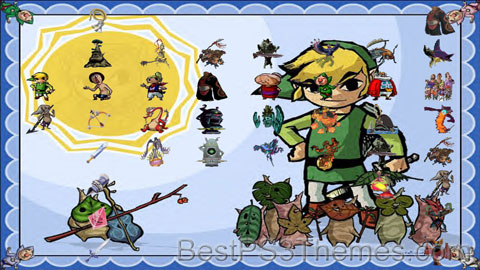
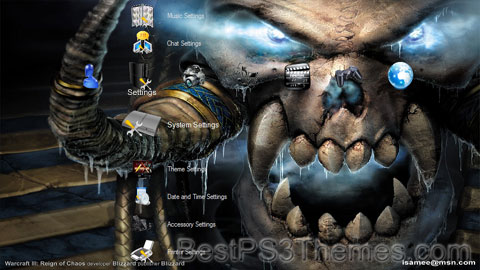
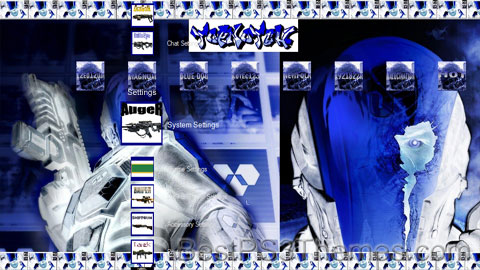
City Of Heroes

City Of Heroes theme by Vulcan

Download: CityOfHeroes.p3t

City Of Heroes Theme
(6 backgrounds)

Redirect to:

Resident Evil 4 versionD

Resident Evil 4 versionD theme by Deemy

Download: ResidentEvil4_vD.p3t
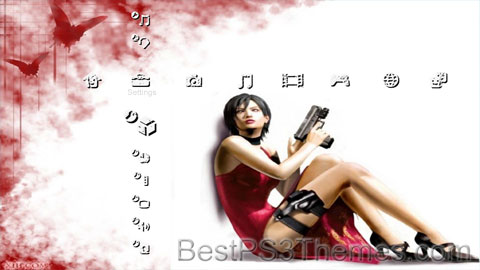
Resident Evil 4 versionD Theme
(2 backgrounds)

P3T Unpacker v0.12
Copyright (c) 2007. Anoop Menon

This program unpacks Playstation 3 Theme files (.p3t) so that you can touch-up an existing theme to your likings or use a certain wallpaper from it (as many themes have multiple). But remember, if you use content from another theme and release it, be sure to give credit!

Download for Windows: p3textractor.zip

Instructions:

Download p3textractor.zip from above. Extract the files to a folder with a program such as WinZip or WinRAR. Now there are multiple ways to extract the theme.

The first way is to simply open the p3t file with p3textractor.exe. If you don’t know how to do this, right click the p3t file and select Open With. Alternatively, open the p3t file and it will ask you to select a program to open with. Click Browse and find p3textractor.exe from where you previously extracted it to. It will open CMD and extract the theme to extracted.[filename]. After that, all you need to do for any future p3t files is open them and it will extract.

The second way is very simple. Just drag the p3t file to p3textractor.exe. It will open CMD and extract the theme to extracted.[filename].

For the third way, first put the p3t file you want to extract into the same folder as p3textractor.exe. Open CMD and browse to the folder with p3extractor.exe. Enter the following:
p3textractor filename.p3t [destination path]Replace filename with the name of the p3t file, and replace [destination path] with the name of the folder you want the files to be extracted to. A destination path is not required. By default it will extract to extracted.filename.

Folklore #2

Folklore theme by David Wales

Download: Folklore_2.p3t
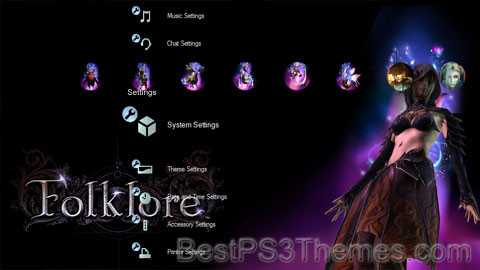
Folklore Theme 2
(1 background)

The French folk tale, Little Red Riding Hood; illustration by Jessie Willcox Smith, 1911
A German folk tale, Hansel and Gretel; illustration by Arthur Rackham, 1909

Folklore is the body of expressive culture shared by a particular group of people, culture or subculture.[1] This includes oral traditions such as tales, myths, legends,[a] proverbs, poems, jokes, and other oral traditions.[3][4] This also includes material culture, such as traditional building styles common to the group. Folklore also encompasses customary lore, taking actions for folk beliefs, and the forms and rituals of celebrations such as Christmas, weddings, folk dances, and initiation rites.[3]

Each one of these, either singly or in combination, is considered a folklore artifact or traditional cultural expression. Just as essential as the form, folklore also encompasses the transmission of these artifacts from one region to another or from one generation to the next. Folklore is not something one can typically gain from a formal school curriculum or study in the fine arts. Instead, these traditions are passed along informally from one individual to another, either through verbal instruction or demonstration.[5]

The academic study of folklore is called folklore studies or folkloristics, and it can be explored at the undergraduate, graduate, and Ph.D. levels.[6]

Overview[edit]

Indian Folk Worship at Batu Caves, Selangor Malaysia
Folk dancing, Plovdiv Bulgaria
Serbian Folk Group, Music and Costume. A group of performers sharing traditional Serbian folk music on the streets of Belgrade, Serbia.

The word folklore, a compound of folk and lore, was coined in 1846 by the Englishman William Thoms,[7] who contrived the term as a replacement for the contemporary terminology of "popular antiquities" or "popular literature". The second half of the word, lore, comes from Old English lār 'instruction'. It is the knowledge and traditions of a particular group, frequently passed along by word of mouth.[8][9]

The concept of folk has varied over time. When Thoms first created this term, folk applied only to rural, frequently poor and illiterate peasants. A more modern definition of folk is a social group that includes two or more people with common traits who express their shared identity through distinctive traditions. "Folk is a flexible concept which can refer to a nation as in American folklore or to a single family."[10] This expanded social definition of folk supports a broader view of the material, i.e., the lore, considered to be folklore artifacts. These now include all "things people make with words (verbal lore), things they make with their hands (material lore), and things they make with their actions (customary lore)".[11] Folklore is no longer considered to be limited to that which is old or obsolete. These folk artifacts continue to be passed along informally, as a rule anonymously, and always in multiple variants. The folk group is not individualistic; it is community-based and nurtures its lore in community. "As new groups emerge, new folklore is created… surfers, motorcyclists, computer programmers".[12] In direct contrast to high culture, where any single work of a named artist is protected by copyright law, folklore is a function of shared identity within a common social group.[13]

Having identified folk artifacts, the professional folklorist strives to understand the significance of these beliefs, customs, and objects for the group, since these cultural units[14] would not be passed along unless they had some continued relevance within the group. That meaning can, however, shift and morph; for example, the Halloween celebration of the 21st century is not the All Hallows' Eve of the Middle Ages and even gives rise to its own set of urban legends independent of the historical celebration; the cleansing rituals of Orthodox Judaism were originally good public health in a land with little water, but now these customs signify for some people identification as an Orthodox Jew. By comparison, a common action such as tooth brushing, which is also transmitted within a group, remains a practical hygiene and health issue and does not rise to the level of a group-defining tradition.[15] Tradition is initially remembered behavior; once it loses its practical purpose, there is no reason for further transmission unless it has been imbued with meaning beyond the initial practicality of the action. This meaning is at the core of folkloristics, the study of folklore.[16]

With the increasing theoretical sophistication of the social sciences, it has become evident that folklore is a naturally occurring and necessary component of any social group; it is indeed all around us.[17] Folklore does not have to be old or antiquated; it continues to be created and transmitted, and in any group, it is used to differentiate between "us" and "them".

Origin and development of folklore studies[edit]

Folklore began to distinguish itself as an autonomous discipline during the period of romantic nationalism, in Europe. A particular figure in this development was Johann Gottfried von Herder, whose writings in the 1770s presented oral traditions as organic processes grounded in locale. After the German states were invaded by Napoleonic France, Herder's approach was adopted by many of his fellow Germans, who systematized the recorded folk traditions, and used them in their process of nation building. This process was enthusiastically embraced by smaller nations, like Finland, Estonia, and Hungary, which were seeking political independence from their dominant neighbors.[18]

Folklore, as a field of study, further developed among 19th century European scholars, who were contrasting tradition with the newly developing modernity. Its focus was the oral folklore of the rural peasant populations, which were considered as residue and survivals of the past that continued to exist within the lower strata of society.[19] The "Kinder- und Hausmärchen" of the Brothers Grimm (first published 1812) is the best known but by no means only collection of verbal folklore of the European peasantry of that time. This interest in stories, sayings and songs continued throughout the 19th century and aligned the fledgling discipline of folkloristics with literature and mythology. By the turn into the 20th century the number and sophistication of folklore studies and folklorists had grown both in Europe and North America. Whereas European folklorists remained focused on the oral folklore of the homogenous peasant populations in their regions, the American folklorists, led by Franz Boas and Ruth Benedict, chose to consider Native American cultures in their research, and included the totality of their customs and beliefs as folklore. This distinction aligned American folkloristics with cultural anthropology and ethnology, using the same techniques of data collection in their field research. This divided alliance of folkloristics between the humanities in Europe and the social sciences in America offers a wealth of theoretical vantage points and research tools to the field of folkloristics as a whole, even as it continues to be a point of discussion within the field itself.[20]

The term folkloristics, along with the alternative name folklore studies,[b] became widely used in the 1950s to distinguish the academic study of traditional culture from the folklore artifacts themselves. When the American Folklife Preservation Act (Public Law 94-201) was passed by the U.S. Congress in January 1976,[21] to coincide with the Bicentennial Celebration, folkloristics in the United States came of age.

"…[Folklife] means the traditional expressive culture shared within the various groups in the United States: familial, ethnic, occupational, religious, regional; expressive culture includes a wide range of creative and symbolic forms such as custom, belief, technical skill, language, literature, art, architecture, music, play, dance, drama, ritual, pageantry, handicraft; these expressions are mainly learned orally, by imitation, or in performance, and are generally maintained without benefit of formal instruction or institutional direction."

Added to the extensive array of other legislation designed to protect the natural and cultural heritage of the United States, this law also marks a shift in national awareness. It gives voice to a growing understanding that cultural diversity is a national strength and a resource worthy of protection. Paradoxically, it is a unifying feature, not something that separates the citizens of a country. "We no longer view cultural difference as a problem to be solved, but as a tremendous opportunity. In the diversity of American folklife we find a marketplace teeming with the exchange of traditional forms and cultural ideas, a rich resource for Americans".[22] This diversity is celebrated annually at the Smithsonian Folklife Festival and many other folklife fests around the country.

There are numerous other definitions. According to William Bascom major article on the topic there are "four functions to folklore":[23]

  • Folklore lets people escape from repressions imposed upon them by society.
  • Folklore validates culture, justifying its rituals and institutions to those who perform and observe them.
  • Folklore is a pedagogic device which reinforces morals and values and builds wit.
  • Folklore is a means of applying social pressure and exercising social control.

Definition of "folk"[edit]

Friends in the farm
Folklore theater in Mansoura, Egypt

The folk of the 19th century, the social group identified in the original term "folklore", was characterized by being rural, illiterate and poor. They were the peasants living in the countryside, in contrast to the urban populace of the cities. Only toward the end of the century did the urban proletariat (on the coattails of Marxist theory) become included with the rural poor as folk. The common feature in this expanded definition of folk was their identification as the underclass of society.[24]

Moving forward into the 20th century, in tandem with new thinking in the social sciences, folklorists also revised and expanded their concept of the folk group. By the 1960s it was understood that social groups, i.e. folk groups, were all around us; each individual is enmeshed in a multitude of differing identities and their concomitant social groups. The first group that each of us is born into is the family, and each family has its own unique family folklore. As a child grows into an individual, its identities also increase to include age, language, ethnicity, occupation, etc. Each of these cohorts has its own folklore, and as one folklorist points out, this is "not idle speculation… Decades of fieldwork have demonstrated conclusively that these groups do have their own folklore."[12] In this modern understanding, folklore is a function of shared identity within any social group.[13]

This folklore can include jokes, sayings and expected behavior in multiple variants, always transmitted in an informal manner. For the most part it will be learned by observation, imitation, repetition or correction by other group members. This informal knowledge is used to confirm and re-inforce the identity of the group. It can be used both internally within the group to express their common identity, for example in an initiation ceremony for new members. Or it can be used externally to differentiate the group from outsiders, like a folkdance demonstration at a community festival. Significant to folklorists here is that there are two opposing but equally valid ways to use this in the study of a group: you can start with an identified group in order to explore its folklore, or you can identify folklore items and use them to identify the social group.[25]

Beginning in the 1960s, a further expansion of the concept of folk began to unfold through the study of folklore. Individual researchers identified folk groups that had previously been overlooked and ignored. One notable example of this is found in an issue of the Journal of American Folklore, published in 1975, which is dedicated exclusively to articles on women's folklore, with approaches that had not come from a man's perspective.[c] Other groups that were highlighted as part of this broadened understanding of the folk group were non-traditional families, occupational groups, and families that pursued the production of folk items over multiple generations.

Folklorist Richard Dorson explained in 1976 that the study of folklore is "concerned with the study of traditional culture, or the unofficial culture" that is the folk culture, "as opposed to the elite culture, not for the sake of proving a thesis but to learn about the mass of [humanity] overlooked by the conventional disciplines".[26]

Folklore genres[edit]

United Arab Emirates traditional folk dance, the women flip their hair sideways in brightly coloured traditional dress.

Individual folklore artifacts are commonly classified as one of three types: material, verbal or customary lore. For the most part self-explanatory, these categories include physical objects (material folklore), common sayings, expressions, stories and songs (verbal folklore), and beliefs and ways of doing things (customary folklore). There is also a fourth major subgenre defined for children's folklore and games (childlore), as the collection and interpretation of this fertile topic is particular to school yards and neighborhood streets.[27] Each of these genres and their subtypes is intended to organize and categorize the folklore artifacts; they provide common vocabulary and consistent labeling for folklorists to communicate with each other.

That said, each artifact is unique; in fact one of the characteristics of all folklore artifacts is their variation within genres and types.[28] This is in direct contrast to manufactured goods, where the goal in production is to create identical products and any variations are considered mistakes. It is however just this required variation that makes identification and classification of the defining features a challenge. And while this classification is essential for the subject area of folkloristics, it remains just labeling, and adds little to an understanding of the traditional development and meaning of the artifacts themselves.[29]

Necessary as they are, genre classifications are misleading in their oversimplification of the subject area. Folklore artifacts are never self-contained, they do not stand in isolation but are particulars in the self-representation of a community. Different genres are frequently combined with each other to mark an event.[30] So a birthday celebration might include a song or formulaic way of greeting the birthday child (verbal), presentation of a cake and wrapped presents (material), as well as customs to honor the individual, such as sitting at the head of the table, and blowing out the candles with a wish. There might also be special games played at birthday parties which are not generally played at other times. Adding to the complexity of the interpretation, the birthday party for a seven-year-old will not be identical to the birthday party for that same child as a six-year-old, even though they follow the same model. For each artifact embodies a single variant of a performance in a given time and space. The task of the folklorist becomes to identify within this surfeit of variables the constants and the expressed meaning that shimmer through all variations: honoring of the individual within the circle of family and friends, gifting to express their value and worth to the group, and of course, the festival food and drink as signifiers of the event.

Verbal tradition[edit]

The story of Jahangir and Anarkali is popular folklore in the former territories of the Mughal Empire.

The formal definition of verbal lore is words, both written and oral, that are "spoken, sung, voiced forms of traditional utterance that show repetitive patterns."[31] Crucial here are the repetitive patterns. Verbal lore is not just any conversation, but words and phrases conforming to a traditional configuration recognized by both the speaker and the audience. For narrative types by definition have consistent structure, and follow an existing model in their narrative form.[d] As just one simple example, in English the phrase "An elephant walks into a bar…" instantaneously flags the following text as a joke. It might be one you have already heard, but it might be one that the speaker has just thought up within the current context. Another example is the child's song Old MacDonald Had a Farm, where each performance is distinctive in the animals named, their order and their sounds. Songs such as this are used to express cultural values (farms are important, farmers are old and weather-beaten) and teach children about different domesticated animals.[32]

Verbal folklore was the original folklore, the artifacts defined by William Thoms as older, oral cultural traditions of the rural populace. In his 1846 published call for help in documenting antiquities, Thoms was echoing scholars from across the European continent to collect artifacts of verbal lore. By the beginning of the 20th century these collections had grown to include artifacts from around the world and across several centuries. A system to organize and categorize them became necessary.[33] Antti Aarne published a first classification system for folktales in 1910. This was later expanded into the Aarne–Thompson classification system by Stith Thompson and remains the standard classification system for European folktales and other types of oral literature. As the number of classified oral artifacts grew, similarities were noted in items that had been collected from very different geographic regions, ethnic groups and epochs, giving rise to the Historic–Geographic Method, a methodology that dominated folkloristics in the first half of the 20th century.

When William Thoms first published his appeal to document the verbal lore of the rural populations, it was believed these folk artifacts would die out as the population became literate. Over the past two centuries this belief has proven to be wrong; folklorists continue to collect verbal lore in both written and spoken form from all social groups. Some variants might have been captured in published collections, but much of it is still transmitted orally and indeed continues to be generated in new forms and variants at an alarming rate.

Below is listed a small sampling of types and examples of verbal lore.

Material culture[edit]

Horse and sulky weathervane, Smithsonian American Art Museum

The genre of material culture includes all artifacts that can be touched, held, lived in, or eaten. They are tangible objects with a physical or mental presence, either intended for permanent use or to be used at the next meal. Most of these folklore artifacts are single objects that have been created by hand for a specific purpose; however, folk artifacts can also be mass-produced, such as dreidels or Christmas decorations. These items continue to be considered folklore because of their long (pre-industrial) history and their customary use. All of these material objects "existed prior to and continue alongside mechanized industry. … [They are] transmitted across the generations and subject to the same forces of conservative tradition and individual variation"[31] that are found in all folk artifacts. Folklorists are interested in the physical form, the method of manufacture or construction, the pattern of use, as well as the procurement of the raw materials.[34] The meaning to those who both make and use these objects is important. Of primary significance in these studies is the complex balance of continuity over change in both their design and their decoration.

Traditional highlanders' pins hand-made by a goldsmith in Podhale, Poland

In Europe, prior to the Industrial Revolution, everything was made by hand. While some folklorists of the 19th century wanted to secure the oral traditions of the rural folk before the populace became literate, other folklorists sought to identify hand-crafted objects before their production processes were lost to industrial manufacturing. Just as verbal lore continues to be actively created and transmitted in today's culture, so these handicrafts can still be found all around us, with possibly a shift in purpose and meaning. There are many reasons for continuing to handmake objects for use, for example these skills may be needed to repair manufactured items, or a unique design might be required which is not (or cannot be) found in the stores. Many crafts are considered as simple home maintenance, such as cooking, sewing and carpentry. For many people, handicrafts have also become an enjoyable and satisfying hobby. Handmade objects are often regarded as prestigious, where extra time and thought is spent in their creation and their uniqueness is valued.[35] For the folklorist, these hand-crafted objects embody multifaceted relationships in the lives of the craftspeople and the users, a concept that has been lost with mass-produced items that have no connection to an individual craftsperson.[36]

Many traditional crafts, such as ironworking and glass-making, have been elevated to the fine or applied arts and taught in art schools;[37] or they have been repurposed as folk art, characterized as objects whose decorative form supersedes their utilitarian needs. Folk art is found in hex signs on Pennsylvania Dutch barns, tin man sculptures made by metalworkers, front yard Christmas displays, decorated school lockers, carved gun stocks, and tattoos. "Words such as naive, self-taught, and individualistic are used to describe these objects, and the exceptional rather than the representative creation is featured."[38] This is in contrast to the understanding of folklore artifacts that are nurtured and passed along within a community.[e]

Many objects of material folklore are challenging to classify, difficult to archive, and unwieldy to store. The assigned task of museums is to preserve and make use of these bulky artifacts of material culture. To this end, the concept of the living museum has developed, beginning in Scandinavia at the end of the 19th century. These open-air museums not only display the artifacts, but also teach visitors how the items were used, with actors reenacting the everyday lives of people from all segments of society, relying heavily on the material artifacts of a pre-industrial society. Many locations even duplicate the processing of the objects, thus creating new objects of an earlier historic time period. Living museums are now found throughout the world as part of a thriving heritage industry.

This list represents just a small sampling of objects and skills that are included in studies of material culture.

Customs[edit]

Customary culture is remembered enactment, i.e. re-enactment. It is the patterns of expected behavior within a group, the "traditional and expected way of doing things"[39][40] A custom can be a single gesture, such as thumbs down or a handshake. It can also be a complex interaction of multiple folk customs and artifacts as seen in a child's birthday party, including verbal lore (Happy Birthday song), material lore (presents and a birthday cake), special games

Warcraft

Warcraft theme by Djriv19

Download: Warcraft.p3t

Warcraft Theme
(1 background)

Warcraft
Genre(s)Real-time strategy, MMORPG, collectible card game
Developer(s)Blizzard Entertainment
Publisher(s)Blizzard Entertainment
Creator(s)Allen Adham
Frank Pearce
Michael Morhaime
Platform(s)MS-DOS, Microsoft Windows, Mac OS, Sega Saturn, PlayStation, iOS, Android
First releaseWarcraft: Orcs & Humans
November 15, 1994[1][2]
Latest releaseWarcraft Rumble
November 3, 2023

Warcraft is a franchise of video games, novels, and other media created by Blizzard Entertainment. The series is made up of six core games: Warcraft: Orcs & Humans, Warcraft II: Tides of Darkness, Warcraft III: Reign of Chaos, World of Warcraft, Hearthstone, and Warcraft Rumble. The first three of these core games are in the real-time strategy genre, where opposing players command virtual armies in battle against each other or a computer-controlled enemy. The fourth and best-selling title of the franchise is a massively multiplayer online role-playing game (MMORPG), where players control their character and interact with each other in a virtual world.

Expansion sets were released for Warcraft II (Beyond the Dark Portal), Warcraft III (The Frozen Throne) and multiple expansions were released for World of Warcraft (The Burning Crusade, Wrath of the Lich King, Cataclysm, Mists of Pandaria, Warlords of Draenor, Legion, Battle for Azeroth, Shadowlands and Dragonflight).[3][4] World of Warcraft's tenth, eleventh, and twelfth expansions, The War Within, Midnight, and The Last Titan, were announced in late 2023.[5]

At BlizzCon 2018 on November 2, 2018, Blizzard announced a remaster of Warcraft III entitled Warcraft III: Reforged featuring remodeled characters and graphics with a prospective release in 2019.[6] The game was officially released on January 28, 2020.[7]

All games in the series have been set in and around the high fantasy world of Azeroth. Initially, the start of the series focused on the human nations that make up the Eastern Kingdoms, and the Orcish Horde, which arrived in Azeroth via a dark portal, beginning the great wars. The Orcs came from another world, referred to as Draenor, the world that will be shattered into pieces by demonic magics during the events of Warcraft II, thereafter being known as Outland. Later on in the series the world of Azeroth was expanded, revealing the new continents of Kalimdor, Northrend, Pandaria, the Broken Isles, Kul Tiras, Zandalar, and the Dragon Isles, allowing the introduction of the Night Elves, Tauren, Pandaren, and other major races into the universe. The world of Azeroth also contains the traditional fantasy setting races of elves, dwarves, gnomes, orcs, and trolls.[8][9] Unusually for the genre, all of these races are available to be played, whereas trolls and full-blooded orcs are usually presented in fantasy fiction as being solely antagonists for protagonists of the more "human-friendly" races.

The series spawned several books and other media, covering a broad range of characters and timelines in the Warcraft universe.[10] A collectible card game was published, which offered those who bought booster packs a chance to gain access codes to limited in-game content in World of Warcraft.[11][12] Comics have been released alongside the books, further covering parts of the universe's storyline. A short-lived, online subscription only magazine was available but later ceased publication after five issues.[13] A film adaptation, Warcraft, was released in 2016.[14]

Video games[edit]

Release timeline
1994Warcraft: Orcs & Humans
1995Warcraft II: Tides of Darkness
1996Warcraft II: Beyond the Dark Portal
1997
1998
1999Warcraft II: Battle.net Edition
2000
2001
2002Warcraft III: Reign of Chaos
2003Warcraft III: The Frozen Throne
2004World of Warcraft
2005
2006
2007World of Warcraft: The Burning Crusade
2008World of Warcraft: Wrath of the Lich King
2009
2010World of Warcraft: Cataclysm
2011
2012World of Warcraft: Mists of Pandaria
2013
2014Hearthstone
World of Warcraft: Warlords of Draenor
2015
2016World of Warcraft: Legion
2017
2018World of Warcraft: Battle for Azeroth
2019World of Warcraft Classic
2020Warcraft III: Reforged
World of Warcraft: Shadowlands
2021World of Warcraft: Burning Crusade Classic
2022World of Warcraft: Wrath of the Lich King Classic
World of Warcraft: Dragonflight
2023Warcraft Rumble
2024World of Warcraft: Cataclysm Classic
World of Warcraft: The War Within
TBAWorld of Warcraft: Midnight
World of Warcraft: The Last Titan

The first three games in the Warcraft series, including their expansion packs, were all released on both the PC and Macintosh. All of these games were of the real-time strategy genre. Each game proceeded to carry on the storyline of the previous games, and each introduced new features and content to improve gameplay. The name "Warcraft" was proposed by Blizzard developer Sam Didier. It was chosen because "it sounded super cool", according to Blizzard co-founder Allen Adham, without any particular meaning attached to it.[15]

Warcraft II: Tides of Darkness was the first game in the series to feature play over the internet using Battle.net, although this was not included until a later release of the game. Warcraft II was also the first in the series to be re-released as a "Battle Chest", a bundled copy of the game containing both the original and expansion. Warcraft III: Reign of Chaos was the first game in the series to feature a Collector's Edition, which all subsequent games have released as well. Warcraft III and World of Warcraft also have both had "Battle Chests" released for them subsequent to their initial release. The "Battle.net" edition of Warcraft II was also the first to introduce the use of CD keys to the series, requiring each user online to have their own copy of the game in order to be able to connect.

In 1998, an adventure game in the series, Warcraft Adventures: Lord of the Clans, was announced as being canceled, having been previously delayed from a 1997 release.

In 2004, Blizzard Entertainment moved the series away from the real-time strategy genre and released World of Warcraft, a massively multiplayer online role-playing game (MMORPG). Requiring a subscription fee to be paid to play, it also introduced regular additional content to the series in the form of patches. World of Warcraft gained popularity worldwide, becoming the world's largest subscription-based MMORPG in 2008.[16] The game reached a peak 12 million subscribers worldwide in October 2010.[17] World of Warcraft has had eight expansions as of 2022 with a ninth on the way. During the production of StarCraft II: Wings of Liberty, Blizzard co-founder Frank Pearce stated that "If there's a team that's passionate about doing another Warcraft [real-time strategy], then that's definitely something we would consider. It's nothing that we're working on right now, we have development teams working on Cataclysm, StarCraft II: Wings of Liberty, Diablo III, and when those teams are all off the projects they're working on, they'll be intimately involved in the discussions about what's next".

In 2013, Blizzard announced a new free-to-play online digital collectible card game, originally titled Hearthstone: Heroes of Warcraft, with the beta being available in summer of 2013.[18] In March 2014, Hearthstone was released.[19] In addition to free-to-play basic gameplay Hearthstone contains fee-based features such as additional card packs.

On May 3, 2022, Blizzard announced a new Warcraft free-to-play mobile game called Warcraft Arclight Rumble.[20]

In 2022, Blizzard and NetEase cancelled an unannounced World of Warcraft mobile spin-off game.[21]

On November 3, 2023, Blizzard released the free-to-play mobile tower defense and action strategy game Warcraft Rumble.[22] At BlizzCon 2023, Blizzard Entertainment unveiled three forthcoming expansions to World of Warcraft: The War Within, Midnight, and The Last Titan. These expansions collectively constitute the Worldsoul saga, a narrative continuum led by Chris Metzen.[23] Blizzard also announced World of Warcraft: Cataclysm Classic and confirming their commitment to a more accelerated timeline for future content drops.

Other media[edit]

Tabletop games[edit]

Collectible card games[edit]

Novels[edit]

  • Warcraft: Of Blood and Honor (2000)
  • Warcraft: Day of the Dragon (2001)
  • Warcraft: Lord of the Clans (2001)
  • Warcraft: The Last Guardian (2002)
  • Warcraft: War of the Ancients (2007)
    • The Well of Eternity (2004)
    • The Demon Soul (2004)
    • The Sundering (2005)
  • World of Warcraft: Cycle of Hatred (2006)
  • Warcraft Archive (2006)
  • World of Warcraft: The Chronicles of War (2010)
  • World of Warcraft: Night of the Dragon (2008)
  • World of Warcraft: Arthas: Rise of the Lich King (2009)
  • World of Warcraft: Stormrage (2010)
  • World of Warcraft: The Shattering: Prelude to Cataclysm (2010)
  • World of Warcraft: Thrall: Twilight of the Aspects (2011)
  • World of Warcraft: Wolfheart (2012)
  • World of Warcraft: Jaina Proudmoore: Tides of War (2012)
  • World of Warcraft: Vol'jin: Shadows of the Horde (2013)[25]
  • World of Warcraft: Dawn of the Aspects Parts I-V (2013)
  • World of Warcraft: Paragons (2014)
  • World of Warcraft: War Crimes (2014)
  • World of Warcraft: Destination: Pandaria (2014)
  • World of Warcraft: Chronicle Volume 1 (2016)
  • World of Warcraft: Illidan (2016)
  • Warcraft: Durotan - The Official Film Prequel (2016)
  • Warcraft: The Official Novelization (2016)
  • World of Warcraft: Traveler (2016)
  • World of Warcraft: Chronicle Volume 2 (2017)
  • World of Warcraft: Chronicle Volume 3 (2018)
  • World of Warcraft: Traveller: The Spiral Path (2018)
  • World of Warcraft: Before the Storm (2018)
  • World of Warcraft: Traveller: The Shining Blade (2019)
  • World of Warcraft: Shadows Rising (2020)
  • World of Warcraft: Sylvanas (2022)

Comics[edit]

  • World of Warcraft (2007 – 2009), a series published by DC Comics imprint WildStorm.[26][27]
  • World of Warcraft: Ashbringer (2008 – 2009), a four-issue mini-series published by WildStorm.
  • World of Warcraft: Curse of the Worgen (October 9, 2012)
  • World of Warcraft: Pearl of Pandaria (September 25, 2012)
  • Warcraft Saga Issue 1
  • World of Warcraft: Dark Riders (May 7, 2013)
  • World of Warcraft: Bloodsworn (August 13, 2013)
  • World of Warcraft: Warlords of Draenor (2014) a three-issue series published by Blizzard
  • Warcraft: Bonds of Brotherhood (2016)
  • World of Warcraft: Legion (2016) a four-issue series published by Blizzard

Manga[edit]

  • Warcraft: The Sunwell Trilogy, a manhwa series published by Tokyopop.
    • Dragon Hunt (March 2005)
    • Shadows of Ice (March 2006)
    • Ghostlands (March 2007)
  • Warcraft: Legends (2008 – 2009), a five-part graphic novel series, which is a continuation from The Sunwell Trilogy.
  • World of Warcraft: Death Knight (December 1, 2009)
  • World of Warcraft: Mage (June 1, 2010)
  • World of Warcraft: Shaman (September 28, 2010)
  • World of Warcraft: Shadow Wing
    • The Dragons of Outland (June 2010)
    • Nexus Point (March 2011)

Magazine[edit]

In 2009, Blizzard announced that it would be releasing a magazine with Future US Ltd. This magazine would be purchasable by online subscription, and not for sale in newsagents or stores, making them collector's items. The magazine released quarterly, and each contained 148 pages. No advertisements were included in the magazine.[13] In September 2011, Blizzard announced that the magazine was ceasing publication. Refunds, plush toys or in-game pets were given to subscribers depending on the outstanding length of subscription.[28]

Film adaptation[edit]

In a May 9, 2006 press release, Blizzard Entertainment and Legendary Pictures announced that they would develop a live-action film set in the Warcraft universe.[29] At BlizzCon 2008, according to Mike Morhaime, a script was being written.[30]

In January 2013, Duncan Jones was announced to direct the adaptation,[31] from a script by Charles Leavitt.[32] The film was set to begin principal photography in early 2014 with a plot based on the novel Warcraft: The Last Guardian.[33] On July 20, 2013, Legendary Pictures and Warner Bros. Entertainment unveiled a sizzle reel during their San Diego Comic Con 2013 panel, with Duncan Jones hopping on stage briefly to discuss the project.[34] Production on the film started shooting on January 13, 2014.[35] The first full-length trailer for the film was released on November 6, 2015.[36] Warcraft premiered in Los Angeles on June 6, 2016, and was released by Universal Pictures in the United States on June 10, 2016. It received mostly negative reviews from critics, and grossed $439 million worldwide.

Heroes of the Storm[edit]

In 2015, Blizzard released Heroes of the Storm, a crossover multiplayer online battle arena video game in which players can control various characters from Blizzard's franchises as playable heroes, the majority of which come from the Warcraft universe.[37][38] The game also features numerous mounts based on mounts or other creatures from World of Warcraft, as well as a battleground based on the PvP zone Alterac Pass.[39] A number of Warcraft-themed skins have been introduced for Heroes of the Storm in the “Echoes of Alterac” event in June 2018.[40] Various soundtracks from World of Warcraft, such as Obsidian Sanctum from Wrath of the Lich King, The Wandering Isle from Mists of Pandaria, and Stormwind theme, are present as background music in the game.[41] Heroes of the Storm is inspired by Defense of the Ancients, a community-created mod based on Warcraft III.[37]

Setting[edit]

Location[edit]

Most of the Warcraft series takes place on the planet of Azeroth. Other planets in the Warcraft universe include: Draenor (and its sundered remnants, known as Outland), Argus, K'aresh, Mardum (also known as the Shattered Abyss), Xoroth, Rancora, and Nathreza. There are also several metaphysical areas mentioned, including the Emerald Dream, the Elemental Planes, the Twisting Nether, the Great Dark Beyond, and the Shadowlands. Warcraft: Orcs & Humans, the first game in the series, takes place in Azeroth.

Azeroth[edit]

Northrend
Pandaria

Azeroth has four known continents, named the Eastern Kingdoms, Kalimdor, Northrend, and recently rediscovered Pandaria. All continents are separated by the Great Sea. Three major archipelagos also reside in the Great Sea: the Broken Isles; Zandalar, the birthplace of the troll civilization; Kul Tiras, a maritime human nation; and the Dragon Isles, the birthplace of the dragons. In the center of the Great Sea is an enormous, everlasting vortex called the "Maelstrom" beneath which lies the aquatic city of Nazjatar, home of the amphibious Naga. Near the Maelstrom lies the volcanic Isle of Kezan, home of the goblins.

The Eastern Kingdoms are the primary setting of the first two games (and their expansions) and the first half of Warcraft III: Reign of Chaos. It is made up of 22 areas or zones. The kingdom of Stormwind lies at the south of the Eastern Kingdoms, south of the dwarven kingdom of Khaz Modan and north of the jungle known as Stranglethorn Vale. The capital city of Stormwind, Stormwind City, is nestled into the northwest of Elwynn Forest, a large forest at the center of the kingdom. The Dwarven capital in Khaz Modan, called Ironforge, is located in Dun Morogh.

The former human kingdom of Lordaeron, which successfully headed the human Alliance in Warcraft II: Tides of Darkness but later fell to the Scourge in Warcraft III: Reign of Chaos, is located north of the southern kingdoms. Underneath the ruined city of Lordaeron now lies the Undercity, capital of the Forsaken, a rebel band of the undead Scourge. The area is now known as Tirisfal Glades and is threatened by the Western Plaguelands held back at The Bulwark. Northeast of Lordaeron is the elven nation of Quel'Thalas and its capital city, Silvermoon, both of which were conquered by the Scourge in Warcraft III: Reign of Chaos.

The continent of Kalimdor was introduced in Warcraft III: Reign of Chaos and is made up of 18 zones. Whereas the Eastern Kingdoms can be described as the equivalent of medieval Europe, with traditional kingdoms and advanced cities, Kalimdor can be compared to the Americas at the time of the first arrivals of Europeans, full of wild lands. The geography and topography of Kalimdor are similar to North America and Africa, with massive, ancient forests and mountains covering the North and vast deserts and savannahs in the South. The Night Elven kingdom is located in the northwest region of Kalimdor, also including the island Teldrassil (actually a giant tree, similar in lore and spelling to Yggdrasil) off the northwest coast, which contains the city of Darnassus.

To the south, past the Ashenvale Forest, is a stretch of land known as The Barrens, situated between the grasslands of Mulgore to the west, and Durotar, the land settled by the Orcs, to the east. Mulgore is home to the Tauren capital of Thunder Bluff, a large city of tepees and lodges built on top of a conglomerate of high plateaus which are only accessible by air travel and a great series of lifts built down to the ground. In the north of Durotar is the fortress-city of Orgrimmar, the capital of the Orcs.

The third continent, Northrend, is located in the northern polar region of Azeroth and is the primary stronghold of the malevolent Undead Scourge. Northrend is featured in Warcraft III: Reign of Chaos and its expansion set Warcraft III: The Frozen Throne, and is the main location featured in World of Warcraft: Wrath of the Lich King, the second expansion pack to World of Warcraft.[9]

In the expansion World of Warcraft: Cataclysm, Azeroth has been changed permanently in-game, even for players without the expansion set installed. The corrupted Black Dragon Aspect, Deathwing the Destroyer (formerly Neltharion, the Earth-Warder) has broken free from imprisonment in Deepholm, part of the Elemental Plane, and caused major changes and destruction in the land. In addition, many new parts of the continents of Azeroth that have previously been inaccessible have become key parts in the new world.

Lorewise, this is the second major change to the face of Azeroth, the first being the Sundering. The Sundering was caused as a result of the War of the Ancients where demons of the Burning Legion invaded the ancient Kalimdor. It caused a massive explosion that split the one continent into the four seen in-game and created the Maelstrom.

World of Warcraft: Mists of Pandaria was the fourth expansion released and it focuses on the mythical and long-forgotten lands of Pandaria, a continent far to the south that has until now been shrouded in magical mists. With both factions landing on Pandaria, adventurers rediscover the ancient Pandaren people, whose wisdom will help guide them to new destinies; the Pandaren Empire's ancient enemy, the Mantid; and their legendary oppressors, the enigmatic Mogu.

The storyline for Mists of Pandaria is split into multiple chapters. The story arc that introduces Pandaria—where players discover the continent and level up, helping to solve problems and figure out what happened for the past 10,000 years and why—was included entirely within the initial expansion release. Later chapters in the storyline brought the war between the Horde and the Alliance back into focus, including changing parts of Pandaria (via phasing) to show additional settlements, and eventually returning the players back to Kalimdor for a final showdown, dethroning Warchief Garrosh Hellscream.

World of Warcraft: Legion was the sixth expansion released and it focuses on the Broken Isles, a continent and group of islands located northeast of the Maelstrom in the middle of the Great Sea; one of the islands contains the Tomb of the Dark Titan, Sargeras. The Burning Legion has started an invasion of Azeroth and the player characters must find powerful artifacts to stop the invasion.

Having thwarted the Burning Legion's attempts to invade Azeroth, the players and other significant lore characters traveled to Argus, the homeworld of the Burning Legion, in order to end its threat. While successful, they couldn't stop Sargeras entirely. Before being banished and imprisoned, he thrust a magical sword into the surface of Azeroth, leaving the planet wounded and bleeding a magical substance called "Azerite".

World of Warcraft: Battle for Azeroth was the seventh expansion released and it focuses on the islands of Kul Tiras and Zandalar, two islands which are home to their respective kingdoms. This is the first expansion that introduces two new continents on initial release. During this expansion, the Horde and Alliance seek the aid of the kingdoms of Zandalar and Kul Tiras, respectively, for the reignited war between the factions. Throughout campaigns on both continents, adventurers learn the history of both kingdoms and uncover plots involving the Old Gods.

Events influenced by N'Zoth and his followers lead to the discovery of the continents of Nazjatar, the underwater kingdom of Azshara, and Mechagon, an island inhabited by the Mechagnomes. The final patch of Battle for Azeroth takes players back to the Vale of Eternal Blossoms and Uldum to cure them of the corruption of N'Zoth, and ultimately face the Old God himself in his empire of Ny'alotha.

The story of Battle for Azeroth is also the first time players are given choices that can have a significant impact on their own adventures. One significant choice is whether to join the orc Varrok Saurfang in his rebellion against the Horde Warchief Sylvanas Windrunner. Another choice that players are given is whether to become a servant of N'Zoth. Both choices lead to unique dialogue, cinematics, and quests, depending on the choices made.

The ninth expansion, World of Warcraft: Dragonflight,[42] centers around the reappearance of the Dragon Isles, home of the Dragons and their many aspects, including the humanoid Dracthyr. The various Dragon groups and subspecies are referred to as "Dragonflights", and are all descendants of the original proto-dragons who chose to become empowered by the magic of a race of god-like beings called the Titans.

The plot of Dragonflight deals with the awakening of the Dracthyr after 20,000 years in response to the threat of Raszageth the Storm-Eater, a "Primalist" proto-dragon who seeks to separate the rest of her kind from the Dragonflights and retake Azeroth for themselves. The Dracthyr are divided into two groups, one that allies with the Alliance and one the Horde, to deal with this threat. Raszageth eventually falls to both groups, but not before she releases her three siblings: Fyrakk the Blazing, Vyranoth the Frozenheart, and Iridikron the Stoneheart.

Draenor (Outland)[edit]

Draenor, which is featured in Warcraft II: Beyond the Dark Portal, is the original homeland of the Orcs and past home of the Draenei.

Draenor was torn apart when the Orcish leader, Ner'Zhul (later the first Lich King) opened dozens of portals to other worlds in an attempt to escape the invading Alliance Armies from Azeroth. The sheer number and combined power of the portals ripped Draenor into fragments and cast the remainder into the mysterious parallel dimension called the Twisting Nether, Home of the Demons. The remnants of the world are now known as Outland, and feature in the last mission of the human campaign of Warcraft II: Beyond the Dark Portal (though, without any actual terrain changes), Warcraft III: The Frozen Throne and more prominently in World of Warcraft: The Burning Crusade.[9]

An intact Draenor is the main feature of the fifth World of Warcraft expansion, Warlords of Draenor, which takes place 35 years earlier in an alternate timeline.

Major races and factions[edit

Metal Gear Solid 4 #5

Metal Gear Solid 4 theme by anthonyboss

Download: MGS4_5.p3t
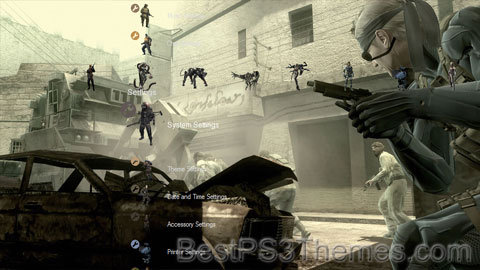
Metal Gear Solid 4 Theme 5
(3 backgrounds)

Medal of Honor

Medal of Honor theme by Musu

Download: MedalofHonor.p3t
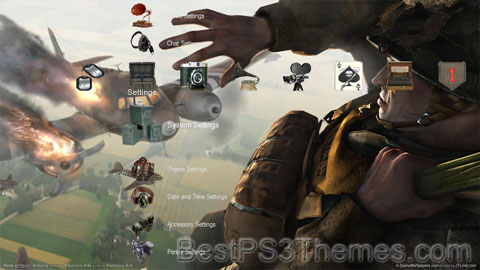
Medal of Honor Theme
(8 backgrounds)

Medal of Honor
Medals of Honor of three of the six military departments
TypeMilitary medal with neck ribbon
(decoration)
Awarded forConspicuous gallantry and intrepidity at the risk of life above and beyond the call of duty[1][2][a]
Presented byThe president of the United States in the name of the United States Congress[3]
EligibilityUnited States Armed Forces service members
StatusCurrently awarded
EstablishedNaval Service and Marine Corps: December 21, 1861[4]
Army: July 12, 1862[5]
Air Force: August 10, 1956[6]
Coast Guard: July 25, 1963[7]
Space Force: January 1, 2021[8]
First awardedMarch 25, 1863[b]
Last awardedSeptember 5, 2023[9]
Total awarded posthumously618[10]
Total recipients3,536[11]


Precedence
Next (lower)Army: Distinguished Service Cross
Naval Service: Navy Cross
Air and Space Forces: Air Force Cross
Coast Guard: Coast Guard Cross

The Medal of Honor (MOH) is the United States Armed Forces' highest military decoration and is awarded to recognize American soldiers, sailors, marines, airmen, guardians, and coast guardsmen who have distinguished themselves by acts of valor.[1][12] The medal is normally awarded by the President of the United States (the commander in chief of the armed forces) and is presented "in the name of the United States Congress." It is often, not strictly correctly, referred to as the Congressional Medal of Honor.[13][14]

There are three distinct variants of the medal: one for the Army, awarded to soldiers; one for the Naval Service, awarded to sailors, marines, and coast guardsmen; and one for the Air and Space Forces, awarded to airmen and guardians.[1][15] The Medal of Honor was introduced for the Naval Service in 1861,[16] soon followed by the Army's version in 1862.[17] The Air Force used the Army's version until they received their own distinctive version in 1965.[18] The Medal of Honor is the oldest continuously issued combat decoration of the United States Armed Forces.[19] The President typically presents the Medal of Honor at a formal ceremony intended to represent the gratitude of the American people, with posthumous presentations made to the primary next of kin.[20][21][22]

As of September 2023, there have been 3,536 Medals of Honor awarded, with over 40% awarded for actions during the American Civil War.[11] A total of 911 Army medals were revoked after Congress authorized a review in 1917, and a number of Navy medals were also revoked prior to the turn of the century—none of these are included in this total except for those that were subsequently restored.[23] In 1990, Congress designated March 25 annually as Medal of Honor Day.[24]

History[edit]

Medal of Honor (without the suspension ribbon) awarded to Seaman John Ortega in 1864.
Medal of Honor awarded posthumously in 1866 to John Morehead Scott, one of the Andrews Raiders

In 1861, early in the American Civil War, a proposal for a battlefield decoration for valor was submitted to Lieutenant General Winfield Scott, the Commanding General of the United States Army, by Lieutenant Colonel Edward D. Townsend, an assistant adjutant at the Department of War and Scott's chief of staff.[25] Scott, however, was strongly against the American republic's awarding medals for valor, a European monarchical tradition.[25] After Scott retired in October 1861, however, Secretary of the Navy Gideon Welles adopted the idea of a decoration to recognize and honor distinguished naval service.[25]

On December 9, 1861, Iowa Senator James W. Grimes, Chairman on the Committee on Naval Affairs,[26] introduced bill S. 82.[27][28] The bill included a provision authorizing 200 "medals of honor,"[29] "to be bestowed upon such petty officers, seamen, landsmen, and marines as shall most distinguish themselves by their gallantry in action and other seaman-like qualities during the present war...."[30] On December 21, the bill was passed and signed into law by President Abraham Lincoln. Secretary Welles directed the Philadelphia Mint to design the new military decoration.[31][32][33] On May 15, 1862, the United States Department of the Navy ordered 175 medals ($1.85 each) from the U.S. Mint in Philadelphia with "Personal Valor" inscribed on the back of each one.[34]

On February 15, 1862, Senator Henry Wilson, the chairman of the Senate Committee on Military Affairs and the Militia, introduced a resolution (equivalent to a bill) for a Medal of Honor for the Army.[35] The resolution (equivalent to a modern Act of Congress) was approved by Congress and signed into law on July 12, 1862.[35] This measure provided for awarding a medal of honor "to such non-commissioned officers and privates as shall most distinguish themselves by their gallantry in action and other soldier-like qualities during the present insurrection."[35] By mid-November the Department of War contracted with Philadelphia silversmith William Wilson and Son, who had been responsible for the Navy's design, to prepare 2,000 medals for the Army ($2.00 each) to be struck at the mint.[36] The Army's version had "The Congress to" written on the back of the medal. Both versions were made of copper and coated with bronze, which "gave them a reddish tint."[37][38]

On March 3, 1863, Congress made the Army Medal of Honor a permanent decoration by passing legislation permitting the award to such soldiers "as have most distinguished or who may hereafter most distinguish themselves in action."[39] The same legislation also authorized the medal for officers of the Army.[40] On March 25, the Secretary of War presented the first Medals of Honor to six U.S. Army volunteers in his office.[41]

In 1896, the ribbon of the Army's version of the Medal of Honor was redesigned with all stripes being vertical.[42] Again, in 1904 the planchet of the Army's version of the Medal of Honor was redesigned by General George Lewis Gillespie.[42] The purpose of the redesign was to help distinguish the Medal of Honor from other medals,[43] particularly the membership insignia issued by the Grand Army of the Republic.[44]

In 1917, based on the report of the Medal of Honor Review Board, established by Congress in 1916, 911 recipients were stricken from the Army's Medal of Honor list because the medal had been awarded inappropriately.[45] Among them were William Frederick "Buffalo Bill" Cody and Mary Edwards Walker. In 1977, the Army's board for correction of military records unilaterally restored Walker's medal at the request of a relative.[46] The board had no authority to overturn a statute, and the restoration violated not only the period law during the Civil War, but also the law requiring revocation in 1916, and modern law in 1977.[46] As a reaction to Walker's restoration, a relative of Cody's requested the same action from the Army's board for correction, and it reinstated the medals for Cody and four other civilian scouts on June 12, 1989.[47] Subsequent litigation over the Garlin Conner award, which was recommended by the Army's board for correction of military records in 2015, established that the correction boards lack the authority to unilaterally award medals of honor. In Conner's case, the board merely recommended the medal, which was then referred to the Senior Army Decorations Board, and ultimately to the Secretary of the Army, the Secretary of Defense, and the President, who requested a waiver be passed by Congress.[48]

A separate Coast Guard Medal of Honor was authorized in 1963 but was not designed or awarded.[49][7] A separate design for a version of the medal for the Department of the Air Force was authorized in 1956,[50] designed on April 14, 1965,[18] and first awarded in January 1967.[18] Previously, airmen of the U.S. Air Force received the Army's version of the medal.[51]

Appearance[edit]

There are three versions of the Medal of Honor, one for each of the military departments of the Department of Defense (DoD): the Department of the Army, Department of the Navy (Naval Service), and Department of the Air Force (Air and Space Forces). Members of the Coast Guard, part of the Department of Homeland Security, are eligible to receive the Naval version. Each medal is constructed differently, and the components are made from gilding metals and red brass alloys with some gold plating, enamel, and bronze pieces. The United States Congress considered a bill in 2004 which would require the Medal of Honor to be made with 90% gold, the same composition as the lesser-known Congressional Gold Medal, but the measure was dropped.[52]

Army Medal of Honor
Naval Medal of Honor
Air and Space Forces Medal of Honor

Army variant[edit]

The Army's version is described by the Institute of Heraldry as "a gold five-pointed star, each point tipped with trefoils, 1+12 inches [3.8 cm] wide, surrounded by a green laurel wreath and suspended from a gold bar inscribed VALOR, surmounted by an eagle. In the center of the star, Minerva's head surrounded by the words UNITED STATES OF AMERICA. On each ray of the star is a green oak leaf. On the reverse is a bar engraved THE CONGRESS TO with a space for engraving the name of the recipient."[53] The pendant and suspension bar are made of gilding metal, with the eye, jump rings, and suspension ring made of red brass.[54] The finish on the pendant and suspension bar is hard enameled, gold plated, and rose gold plated, with polished highlights.[54]

Naval variant[edit]

The Naval version is described as "a five-pointed bronze star, tipped with trefoils containing a crown of laurel and oak. In the center is Minerva, personifying the United States, standing with her left hand resting on fasces and her right hand holding a shield emblazoned with the shield from the coat of arms of the United States. She repulses Discord, represented by snakes (originally, she was repulsing the snakes of secession). The medal is suspended from the flukes of an anchor. It is made of solid red brass, oxidized and buffed.[55]

Air and Space Forces variant[edit]

The Air and Space Forces version is described as "within a wreath of green laurel, a gold five-pointed star, one point down, tipped with trefoils and each point containing a crown of laurel and oak on a green background. Centered on the star, an annulet of 34 stars is a representation of the head of the Statue of Liberty. The star is suspended from a bar inscribed with the word VALOR above an adaptation of Jupiter's thunderbolt from the Department of the Air Force's seal. The pendant is made of gilding metal.[56] The connecting bar, hinge, and pin are made of bronze.[56] The finish on the pendant and suspension bar is hard enameled, gold plated, and rose gold plated, with buffed relief.[56]

Historic versions[edit]

The Medal of Honor has evolved in appearance over time. The upside-down star design of the Naval version's pendant adopted in early 1862 has not changed since its inception. The Army's 1862 version followed and was identical to the Naval version except an eagle perched atop cannons was used instead of an anchor to connect the pendant to the suspension ribbon. The medals featured a female allegory of the Union, with a shield in her right hand that she used to fend off a crouching attacker and serpents. In her left hand, she held a fasces. There are 34 stars surrounding the scene, representing the number of states in the union at the time.[57] In 1896, the Army version changed the ribbon's design and colors due to misuse and imitation by nonmilitary organizations.[53] In 1904, the Army "Gillespie" version introduced a smaller redesigned star and the ribbon was changed to the light blue pattern with white stars seen today.[53] The 1904 Army version also introduced a bar with the word "Valor" above the star.[57] In 1913, the Naval version adopted the same ribbon pattern.

After World War I, the Department of the Navy decided to separate the Medal of Honor into two versions, one for combat and one for non-combat. This was an attempt to circumvent the requirement enacted in 1919 that recipients participate "in action involving actual conflict with the enemy," which would have foreclosed non-combat awards.[58] By treating the 1919 Medal of Honor as a separate award from its Civil War counterpart, this allowed the Department of the Navy to claim that it was not literally in violation of the 1919 law.[59] The original upside-down star was designated as the non-combat version and a new pattern of the medal pendant, in cross form, was designed by the Tiffany Company in 1919. Secretary of the Navy Josephus Daniels selected Tiffany after snubbing the Commission of Fine Arts, which had submitted drawings that Daniels criticized as "un-American".[60] The so-called Tiffany Cross was to be presented to a sailor or marine who "in action involving actual conflict with the enemy, distinguish[es] himself conspicuously by gallantry and intrepidity at the risk of his life above and beyond the call of duty."[61] Despite the "actual conflict" guidelines, the Tiffany Cross was awarded to Navy CDR (later RADM) Richard E. Byrd and Floyd Bennett for their flight to the North Pole in 1926. The decision was controversial within the Navy's Bureau of Navigation (which handled personnel administration), and officials considered asking the attorney general of the United States for an advisory opinion on the matter.[62] Byrd himself apparently disliked the Tiffany Cross, and eventually requested the alternate version of the medal from President Herbert Hoover in 1930.[63] The Tiffany Cross itself was not popular among recipients—one author reflected that it was "the most short-lived, legally contentious, and unpopular version of the Medal of Honor in American history."[60] In 1942, in response to a lawsuit, the Department of the Navy requested an amendment to expressly allow noncombat awards of the Medal of Honor.[64] When the amendment passed, the Department of the Navy returned to using only the original 1862 inverted 5-point star design and retired the Tiffany Cross.[65]

In 1944, the suspension ribbons for both versions were replaced with the now-familiar neck ribbon.[53] When the Air and Space Force's version was designed in 1965,[18] it incorporated similar elements and design from the Army version. At the Department of the Air Force leadership's insistence, the new medal depicted the Statue of Liberty's image in place of Minerva on the medal and changed the connecting device from an eagle to Jupiter's thunderbolt flanked with wings as found on the Department of the Air Force's seal.[66][67][68] The Air Force diverged from the traditional depiction of Minerva in part due to a desire to distinguish itself from the Army, including the Institute of Heraldry that traditionally designs awards, but which falls under the Army.[68]

Neck ribbon, service ribbon and lapel button[edit]

Service ribbon
Lapel button

On May 2, 1896, Congress authorized a "ribbon to be worn with the medal and [a] rosette or knot to be worn in lieu of the medal."[33][53][69][70] The service ribbon is light blue with five white stars in the form of an "M."[53] It is placed first in the top position in the order of precedence and is worn for situations other than full-dress military uniform.[53] The lapel button is a 12-inch (13 mm), six-sided light blue bowknot rosette with thirteen white stars and may be worn on appropriate civilian clothing on the left lapel.[53]

Since 1944, the Medal of Honor has been attached to a light blue colored moiré silk neck ribbon that is 1+316 in (30 mm) in width and 21+34 in (550 mm) in length.[2][71] The center of the ribbon displays thirteen white stars in the form of three chevron. Both the top and middle chevrons are made up of 5 stars, with the bottom chevron made of 3 stars. The medal itself differs by branch:

  • Army: A gold five pointed star, each point tipped with trefoils, 1½ inches wide, surrounded by a green laurel wreath and suspended from a gold bar inscribed "VALOR" surmounted by an eagle.  In the center of the star, Minerva's head surrounded by the words "UNITED STATES OF AMERICA."  On each ray of the star is a green oak leaf.  On the reverse is a bar engraved "THE CONGRESS TO" with a space for engraving the name of the recipient.[72]
  • Navy: The current Navy Medal of Honor is a five-pointed bronze star, tipped with trefoils containing a crown of laurel and oak. In the center is Minerva, personifying the United States, standing with left hand resting of fasces and right hand holding a shield blazoned with the shield from the coat of arms of the United States. She repulses Discord, represented by snakes. The medal is suspended from the flukes of an anchor.[73]
  • Air Force: Within a wreath of green laurel, a gold five-pointed star, one point down, tipped with trefoils and each point containing a crown of laurel and oak on a green background. Centered on the star, an annulet of 34 stars is a representation of the head of the Statue of Liberty. The star is suspended from a bar inscribed with the word "VALOR" above an adaptation of the thunderbolt from the Air Force Coat of Arms.[74]

The Medal of Honor is one of only two United States military awards suspended from a neck ribbon.[75] The other is the Commander's Degree of the Legion of Merit, and is usually awarded to individuals serving foreign governments.[76][77]

Devices[edit]

In 2011, Department of Defense instructions in regard to the Medal of Honor were amended to read "for each succeeding act that would otherwise justify award of the Medal of Honor, the individual receiving the subsequent award is authorized to wear an additional Medal of Honor ribbon and/or a 'V' device on the Medal of Honor suspension ribbon" (the "V" device is a 14-inch-high (6.4 mm) bronze miniature letter "V" with serifs that denotes valor). The Medal of Honor was the only decoration authorized to use the "V" device (none were ever issued) to designate subsequent awards in such a fashion. Nineteen individuals, all now deceased, were double Medal of Honor recipients.[78] In July 2014, DoD instructions were changed to read, "A separate MOH is presented to an individual for each succeeding act that justified award," removing the authorization for the "V" device.[79]

Medal of Honor Flag[edit]

Medal of Honor Flag

On October 23, 2002, Pub. L.Tooltip Public Law (United States) 107–248 (text) (PDF) was enacted, modifying 36 U.S.C. § 903, authorizing a Medal of Honor Flag to be presented to each person to whom a Medal of Honor is awarded. In the case of a posthumous award, the flag will be presented to whomever the Medal of Honor is presented to, which in most cases will be the primary

Resistance: Fall of Man 2

Resistance: Fall of Man 2 theme by Jeremy Ricci (tha_con)

Download: RFOM2.p3t
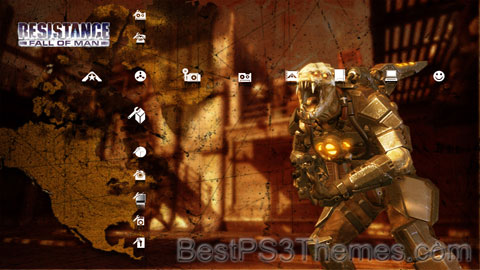
Resistance: Fall of Man 2 Theme
(1 background)

P3T Unpacker v0.12
Copyright (c) 2007. Anoop Menon

This program unpacks Playstation 3 Theme files (.p3t) so that you can touch-up an existing theme to your likings or use a certain wallpaper from it (as many themes have multiple). But remember, if you use content from another theme and release it, be sure to give credit!

Download for Windows: p3textractor.zip

Instructions:

Download p3textractor.zip from above. Extract the files to a folder with a program such as WinZip or WinRAR. Now there are multiple ways to extract the theme.

The first way is to simply open the p3t file with p3textractor.exe. If you don’t know how to do this, right click the p3t file and select Open With. Alternatively, open the p3t file and it will ask you to select a program to open with. Click Browse and find p3textractor.exe from where you previously extracted it to. It will open CMD and extract the theme to extracted.[filename]. After that, all you need to do for any future p3t files is open them and it will extract.

The second way is very simple. Just drag the p3t file to p3textractor.exe. It will open CMD and extract the theme to extracted.[filename].

For the third way, first put the p3t file you want to extract into the same folder as p3textractor.exe. Open CMD and browse to the folder with p3extractor.exe. Enter the following:
p3textractor filename.p3t [destination path]Replace filename with the name of the p3t file, and replace [destination path] with the name of the folder you want the files to be extracted to. A destination path is not required. By default it will extract to extracted.filename.

Clear-Orb PS3 Edition HD

Clear-Orb PS3 Edition HD theme by Black Spider

Download: Clear-OrbPs3EditionHD.p3t
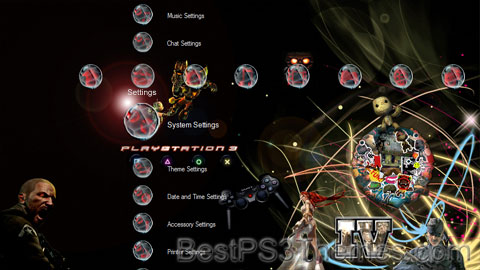
Clear-Orb PS3 Edition HD Theme
(1 background)

P3T Unpacker v0.12
Copyright (c) 2007. Anoop Menon

This program unpacks Playstation 3 Theme files (.p3t) so that you can touch-up an existing theme to your likings or use a certain wallpaper from it (as many themes have multiple). But remember, if you use content from another theme and release it, be sure to give credit!

Download for Windows: p3textractor.zip

Instructions:

Download p3textractor.zip from above. Extract the files to a folder with a program such as WinZip or WinRAR. Now there are multiple ways to extract the theme.

The first way is to simply open the p3t file with p3textractor.exe. If you don’t know how to do this, right click the p3t file and select Open With. Alternatively, open the p3t file and it will ask you to select a program to open with. Click Browse and find p3textractor.exe from where you previously extracted it to. It will open CMD and extract the theme to extracted.[filename]. After that, all you need to do for any future p3t files is open them and it will extract.

The second way is very simple. Just drag the p3t file to p3textractor.exe. It will open CMD and extract the theme to extracted.[filename].

For the third way, first put the p3t file you want to extract into the same folder as p3textractor.exe. Open CMD and browse to the folder with p3extractor.exe. Enter the following:
p3textractor filename.p3t [destination path]Replace filename with the name of the p3t file, and replace [destination path] with the name of the folder you want the files to be extracted to. A destination path is not required. By default it will extract to extracted.filename.

Top Notch

Top Notch theme by magnumyou

Download: TopNotch.p3t

Top Notch Theme
(1 background)

Top Notch may refer to:

See also[edit]