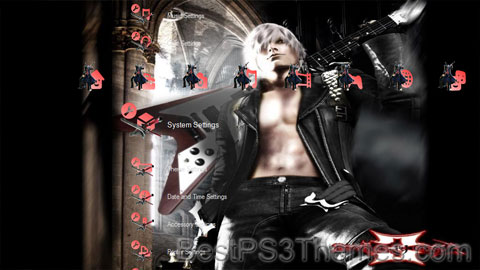
UGO theme by SectionZ
Download: UGO.p3t
(1 background)
Redirect to:

The #1 spot for Playstation themes!
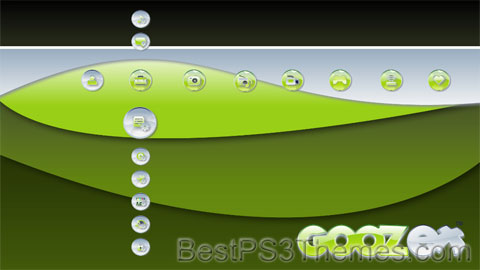
GoozeXMB theme by SectionZ
Download: GoozeXMB.p3t

(1 background)
P3T Unpacker v0.12
Copyright (c) 2007. Anoop Menon
This program unpacks Playstation 3 Theme files (.p3t) so that you can touch-up an existing theme to your likings or use a certain wallpaper from it (as many themes have multiple). But remember, if you use content from another theme and release it, be sure to give credit!
Download for Windows: p3textractor.zip
Instructions:
Download p3textractor.zip from above. Extract the files to a folder with a program such as WinZip or WinRAR. Now there are multiple ways to extract the theme.
The first way is to simply open the p3t file with p3textractor.exe. If you don’t know how to do this, right click the p3t file and select Open With. Alternatively, open the p3t file and it will ask you to select a program to open with. Click Browse and find p3textractor.exe from where you previously extracted it to. It will open CMD and extract the theme to extracted.[filename]. After that, all you need to do for any future p3t files is open them and it will extract.
The second way is very simple. Just drag the p3t file to p3textractor.exe. It will open CMD and extract the theme to extracted.[filename].
For the third way, first put the p3t file you want to extract into the same folder as p3textractor.exe. Open CMD and browse to the folder with p3extractor.exe. Enter the following:
p3textractor filename.p3t [destination path]Replace filename with the name of the p3t file, and replace [destination path] with the name of the folder you want the files to be extracted to. A destination path is not required. By default it will extract to extracted.filename.
I Try theme by David
Download: I_Try.p3t
(2 backgrounds, different for HD and SD)
| "I Try" | ||||
|---|---|---|---|---|
| Single by Macy Gray | ||||
| from the album On How Life Is | ||||
| B-side |
| |||
| Released | July 23, 1999 | |||
| Studio | Paramount, Sunset Sound, A&M (Hollywood, California) | |||
| Genre | Neo soul[1] | |||
| Length | 3:59 | |||
| Label |
| |||
| Composer(s) |
| |||
| Lyricist(s) | Macy Gray | |||
| Producer(s) | Andrew Slater | |||
| Macy Gray singles chronology | ||||
| ||||
| Music video | ||||
| "I Try" on YouTube | ||||
"I Try" is a song co-written and performed by American musician Macy Gray. Issued as the second single from her debut album, On How Life Is (1999), the song was first released in Japan as a double A-side with "Do Something" on July 23, 1999. Later that year, on September 27, it received its first solo release in the United Kingdom. "I Try" is Gray's most successful single, peaking at number six in the United Kingdom, number five in the United States, number two in Canada, and number one in Australia, Ireland, and New Zealand. At the 2001 Grammy Awards, "I Try" won Best Female Pop Vocal Performance, and was nominated for Record of the Year and Song of the Year.
Daily Record called the song "soulful", noting that Macy Gray "has one of the most distinctive singing voices around."[2]
The music video for the song, directed by American filmmaker Mark Romanek (who had previously directed the video for Gray's "Do Something"),[3] depicts Gray waking up in a hotel room, buying flowers, and traveling through New York City, traveled through by bus and train to meet a man in a park. At the end of the video, Gray is shown to still be in her hotel room. It is implied that she may have been dreaming the entire time and that none of the events in the video actually occurred.[4][original research?]
At the 2000 MTV Video Music Awards, the video won Best New Artist in a Video and was also nominated for Best Female Video. Gray presented the award for Best Pop Video alongside LL Cool J.[5]
|
|
Credits are lifted from the On How Life Is album booklet.[13]
Studios
Personnel
Weekly charts[edit] |
Year-end charts[edit]
|
| Region | Certification | Certified units/sales |
|---|---|---|
| Australia (ARIA)[56] | Platinum | 70,000^ |
| Denmark (IFPI Danmark)[57] | Gold | 45,000‡ |
| Spain (PROMUSICAE)[58] | Gold | 30,000‡ |
| United Kingdom (BPI)[59] | Platinum | 600,000^ |
|
^ Shipments figures based on certification alone. | ||
| Region | Version | Date | Format(s) | Label(s) | Ref. |
|---|---|---|---|---|---|
| Japan | "I Try" / "Do Something" | July 23, 1999 | CD | Epic | [60] |
| United Kingdom | "I Try" | September 27, 1999 |
|
[61] | |
| United States | October 5, 1999 | [62] | |||
| October 18, 1999 | Hot adult contemporary radio | [63] | |||
| October 19, 1999 | [63] |
{{cite AV media notes}}: CS1 maint: others in cite AV media (notes) (link)
Battlefield 2142 theme by A55h4t
Download: BF2142.p3t
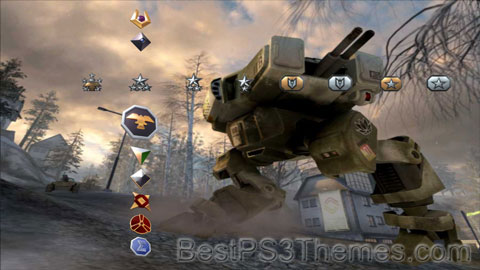
(3 backgrounds)
| Battlefield 2142 | |
|---|---|
| Developer(s) | DICE |
| Publisher(s) | Electronic Arts |
| Director(s) | Lars Gustavsson |
| Designer(s) | Linus Josephson |
| Composer(s) | Gregor Narholz |
| Series | Battlefield |
| Platform(s) | Microsoft Windows, Mac OS X |
| Release | Microsoft Windows Northern Strike Mac OS X |
| Genre(s) | First-person shooter |
| Mode(s) | Single-player, multiplayer |
Battlefield 2142 is a 2006 first-person shooter video game developed by DICE and published by Electronic Arts. It is the fourth game in the Battlefield series. Battlefield 2142 is set in 2142, depicting a war known as "The Cold War of the 22nd Century", in which two military superpowers – the European Union (EU) and Pan Asian Coalition (PAC) – battle for the remaining unfrozen land during a new ice age.[1]
The game was designed primarily for multiplayer gameplay and allows for a maximum of 64 players on a server or a maximum of 16 players in single player mode against bots on Conquest mode. It has its own ranking system to keep track of the user's statistics similar to the one used in its predecessor, Battlefield 2. It opens up new categories of vehicles and weapons not seen in Battlefield 2. Battlefield 2142 has an unlock system that allows the player to choose a new unlock every time they achieve a new rank instead of forcing the player to purchase items. A booster pack called Northern Strike contains new maps, unlocks, and vehicles; a deluxe edition was released that contains Battlefield 2142 and Northern Strike.
In July 2014, all online components of the game were deactivated following the shutdown of GameSpy.[2][3] The game's online multiplayer was revived by the Project Revive community in 2016.[4] However, the project was shut down in 2017 following a legal notice from Electronic Arts.[5][6] The game's online multiplayer is currently only playable with the community 2142 Reclamation Project formed after the shutdown of Project Revive.[7][8]

Battlefield includes two gameplay modes, Conquest and Titan,[9] the latter of which can only be played online in multiplayer maps (without using modifications ("mods")). Both modes support varying numbers of players, up to 64, depending upon the server a player chooses to join online. The single player mode consists of a maximum of 16 players, which includes 15 AI bots. Commander Mode from Battlefield 2 returns, as one player from each team can apply and either accept or turn down the role of becoming commander. The player in the commander position has vital roles in the game, such as deploying UAV's, artillery strikes, airdropping supplies or vehicles for their team.
Battlefield 2142 features four different playable kits. These kits can be selected at any time during gameplay. The kits are a combination of the kits in Battlefield 2, which had seven playable kits, but were less customizable and upgradeable in comparison. Each kit has different weapons and equipment that are unique. Each contains a basic weapon, a secondary weapon, and a knife. The knife differs in this game from Battlefield 2 because when a player is killed with a knife, the killer acquires the player's dogtag. The player is able to gain rank, options, and equipment by acquiring points in the game.
Battlefield 2142 has customization, allowing the player to gain more unlocks for one kit, which makes it more effective. Each class has two unlockable weapons and one passive unlock which upgrades the soldier's helmet, each helmet upgrade having different functions. The benefits of one soldier's helmet upgrade will be shared with their squadmates.
Conquest mode, similar to its predecessors, involves two teams of players fighting each other while working to capture and defend spawn points. Spawn points are represented by flags and display the color of the controlling faction. To hold a simple majority of flags will initiate a ticket drain on the opposing faction, which will only speed up if one faction controls all the flags. Both teams begin the match with a preset number of tickets. Each time a soldier dies, a ticket is removed from their team. Players have the opportunity to reduce their number of lost tickets by reviving their "critically wounded" teammates with the Assault class' defibrillator. By reviving a teammate within 15 seconds (or the amount of time the server has been set to), no ticket will be lost and the player will not need to respawn (the player who killed the now revived player will keep their kill point). The team that has no tickets, or no places to spawn with no one alive, loses the match.
There are several types of Conquest modes: Head-on, Assault, Assault Lines, and Double Assault Lines, Conquest Assault, No Vehicles.
The Titan mode involves players from opposing teams whose objective is to destroy the other team's Titan,[10] while trying to defend their own. Titans are massive, heavily armored, flying warships that have powerful force fields protecting them from enemy intrusion or conventional weapons fire. As the force fields are up during the first part of a battle, players must fight to control the anti-Titan missile silos scattered about the battlefield on the ground. Titans can be moved around the battlefield, but only by the team's Commander. Each Titan can defend itself and contribute to the fight on the ground with 4 anti-ground guns and 2 anti-aircraft guns. Titan movement can cause latency issues, so some players prefer not to move them at all. Some servers even disable the commander's ability to move the Titan.
After the shields are down, there are two methods to destroy the enemy Titan. One way is to simply remain on the ground and hold the anti-Titan missiles until they wear down the hull. A quicker alternative is to board the Titan using "assault pods" launched from an APC (Armored Personnel Carrier), air transport, Titan, or spawn beacon, spawn on your squad leader, or land an air transport on a Titan as a mobile spawn point. Once inside, the players must destroy 4 reactor consoles to gain access to the reactor room. There, they can blow up the reactor, and have 30 seconds to flee the Titan before it is destroyed.
During the beta release of the game, players who managed to escape the destroyed Titan before the 30-second timer ended received an award. In the retail game, the round ends when the Titan is destroyed, and because player deaths triggered by the end of a round do not count, the evacuation of the Titan had little significance aside from inciting a rush in the player. In patch 1.05, DICE reinstated the award for those attacking players who escaped the destruction in the "Titan Survival Pin." However, receiving the pin requires very precise timing to land on the ground, causing confusion amongst players initially.[11]
The vehicles of Battlefield 2142 are similar to those in Battlefield 2 except for a more futuristic design. For example, the PAC team tank, the Type 32 Nekomata, has a hovercraft driving system.[12] The air vehicles are more futuristic, propelled by turbines instead of rotors. Almost all vehicles have a short duration protective shield called active defense. The active defense protects the vehicle from all attacks (except for electromagnetic attacks) for about five seconds.
The ranking and points system of Battlefield 2142 is similar to Battlefield 2, however, different ranks are featured. As with Battlefield 2, a key feature of the game is "Character Persistence", which saves and tracks almost every aspect of gameplay for players. Unlike Battlefield 2, however, the user is given the option to create up to four soldiers, as opposed to Battlefield 2's limitation of one per account. When playing the game in online multiplayer mode on specified servers, a master server tracks player points, ranks, equipment, and other statistics.
The Battlefield 2142 rank system consists of a number of partially fictitious, partially realistic military ranks, and are (for the most part) each divided by a silver/gold format, with players attaining the silver version of the rank (e.g. Corporal Silver) before reaching the gold rank (e.g. Corporal Gold). New ranks are earned by attaining experience points, which can be earned for actions on a ranked server such as killing an enemy soldier/vehicle, healing/resupplying teammates, repairing ally vehicles/strategic objects (SAT Track, UAV, Orbital Strike, and EMP Strike which are located at the main base), capturing/neutralizing control points/missile silos, assisting in kills (such as piloting a gunship) or carrying out orders given by the Squad Leader/Commander (negative points may be earned by actions such as teamkilling).
The rank system is designed to be progressive so ranks are earned faster when a player begins (for example, 40 points are needed to climb from the lowest to the 2nd lowest rank while 3600 points are needed to advance from the 2nd highest to the highest rank). This provides new players with a number of unlocks straight away to give them an edge (as well as ambition). Later ranks require more effort, time, and skill from the player as the extremely high number of points can usually be attained only through awards (which may give up to 2000 points apiece). The final three ranks of the game are only given to a certain number of players at a time, with Major General given to 50 players, Lieutenant General given to 25 players, and the highest rank, Supreme Commander, given to only one player at a time. These top three are brevet ranks; players retain those ranks until other players surpass them.
Awards can be earned only in multiplayer mode, with each award having its own specific criteria. Most awards typically have two to five criteria, composed of In A Round (IAR) criteria and Global criteria. IAR criteria must be accomplished within a single round, not through multiple rounds. Global criteria are accumulated by playing on a ranked server. For example, the Titan Commander badge (silver) requires a player to be the commander in Titan mode for twenty minutes in one round after accumulating 1000 commander points in Titan mode globally. Each award (with the exception of medals, which are more for prestige, since they are the hardest to obtain) delivers a certain number of experience points, which go towards attaining a new rank. Badges, which have three levels of achievement (bronze, silver, and gold), and ribbons deliver the most points, while pins offer very few points since they are relatively easy to get, and may be obtained more than once.
In Battlefield 2142, every time a player earns a new rank, they are able to choose a new unlock. Players with the Northern Strike Booster Pack are also able to earn unlocks by earning the badge or ribbon awards associated with Northern Strike. There are a total of 50 unlocks (40 Battlefield 2142 Core Game, 10 Northern Strike) and there are different categories of unlocks including class unlocks, squad unlocks, and ability unlocks. Class unlocks are specific to the class type which is being used. Ability unlocks are universal for all the classes. Squad unlocks can be equipped by anybody but they may only be used by squad leaders who have the required number of members in their squad. Unlocks are in tiers and require the player to progress up through the tree to unlock higher-level equipment. The player can test the other unlocks by picking up a dead soldier's equipment who is higher rank and contain more unlocks than the player.
A "Field Upgrade" is a temporary unlock which can be awarded to all members of a squad when they either kill, resupply, heal or revive a teammate while they are following an attack or defend order. The Field Upgrade is a sort of 'try before you buy' feature (while the player has their own customizable inventory), allowing players to experience certain unlocks before they use one of their hard earned unlock credits to unlock it. They only allow players to test the equipment one level higher on their original unlock tree. Field Upgrades will be available to the player until the player disconnects from the server. If a player unlocks a new item which they have already Field Upgraded on their current server, the next unlock will not become available to them for a Field Upgrade until they leave the server. Certain unlocks are only available after purchasing the Northern Strike booster pack, and they are on top of all the other unlocks in the unlock trees of the core game. Field Upgrades also allow players without Northern Strike to have temporary access to the upgrades that are only available in Northern Strike. Field Upgrades are only applicable on ranked servers.
In the year 2106, a new ice age began. As the ice expanded, millions of people all over the world were displaced, particularly in Russia and Japan. Combined with their increasing inability to find sufficient natural resources, the Pan Asian Coalition grows desperate. Meanwhile, the European Union is able to withstand the displacements and find sufficient resources, mostly from North Africa due to their relationship with the Union of African States (Africa remaining mostly ice-free). Seeing this, the PAC launches a full-scale invasion of Europe and North Africa in 2139, beginning the Cold War of the 22nd century, a war for the world's last remaining land and resources.
The Final Stand multiplayer expansion pack for Battlefield 4 gives new insight about the cold war, revealing that the PAC was formed as early as 2020 (the year Battlefield 4 takes place) as early versions of the coalition's symbol can be seen. Furthermore, early prototypes of Titans and other vehicles and futuristic technology were already in development in 2020 by the PAC in remote regions of Russia.
Battlefield 2142 was rumored to be in development ever since a 30-second video was leaked to the Internet in January 2006. The video described itself as an "internal test." The proof of concept depicts the game's various vehicles storming through a futuristic city. A screenshot depicting the walker was taken from this video and subsequently used in marketing for the game. The rumors began in earnest following a February 2006 interview with Dan Blackstone, a senior producer from Electronic Arts, in which he mentioned "We're about to announce something very big, so stay tuned. One other interviewer asked this and I gave him a hint, so it's only fair that I do the same for you: 3213/3*2. Or said another way: S.R. 4588164."[13]
The square root ("S.R.") of 4588164 is 2142 (3213÷3×2 equals 2142 as well), hence the rumors. The only proof of existence was the cover story of the PC Gamer magazine and the trailer, published on the very same magazine, until March 21, 2006, when Electronic Arts and DICE announced that the next game in the Battlefield series would be Battlefield 2142, in their March 21, 2006 Community Update.[14]
Several pieces of early concept art were released onto the internet. However, during a hacking attack on the board where the images were posted, most of the images were lost. Early in the development process, the game was set on a different planet, as hinted by three moons in the sky in one piece of concept art. Additionally, it was to be the United States, rather than the European Union, versus the Pan-Asian Coalition, and several files within the game indicate the U.S. (most notably the texture files used by the EU and PAC, with the EU folder being labeled 'US' rather than 'EU').
In the Battlefield 2 Armored Fury Booster Pack map Midnight Sun, there was a drivable muscle car with license plate number 2142. Additionally in Armored Fury, there was a billboard advertising a digital wrist watch, which displays '21:42' as the time, and a Mushroom cloud with the caption message, "Watch For The Future." Additionally in Armored Fury, the drivable semi-truck had a magazine on the passenger seat that reads "Ice Age Approaches."
Battlefield 2142 was officially announced and playable at E3 2006."[15][16]
The Battlefield 2142 beta was released in the third week of August. However, it was revealed that the beta was not a complete "open" beta upon its release. At first, the general belief was that it was to be a FilePlanet subscriber-only beta,[17] but it was later revealed to additionally have an invite system. At that time the beta was only available to certain FilePlanet subscribers (keys were given out on a first-come, first-served basis) and those who were invited. Some fan-sites had been holding contests giving out invitations to the BF2142 beta as prizes. On August 31, a large number of keys were given out by FilePlanet for free, and the beta client was upgraded. The FilePlanet beta ended on September 12, 2006. It was noted by many users that at the beginning of the beta the game worked great, but by the end it was horribly broken, with players getting stuck in walls and titans disappearing into thin air. It was decided to ship it anyway.
At the 2007 WWDC, it was announced that Battlefield 2142 would be released for Macintosh computers in July 2007.[18] It was released in 2007, for Mac OS X. Since the game uses Cedega it will only work with Intel based Macintosh systems and not PowerPC.
Battlefield 2142 shipped with dynamic in-game advertising provided by IGA Worldwide. A similar system is featured in games such as Battlefield 2, Splinter Cell: Chaos Theory, and PlanetSide.[19] The system changes advertisements on objects such as billboards in-game. These in-game advertisements have been dubbed adware by some, and there has been a vocal backlash against this element of the game.[20]
Additionally, much of the recent "advertising space" has been used to show propaganda for new in game features and helping to feed rumors of a new game type in the works. Intel has advertised in the game, and recently the Discovery Channel has placed advertising in the game for their Future Weapons series. More recently advertisements for the DVD release of the movie Ghost Rider have appeared.
An in-house advertisement for Battlefield: Bad Company have appeared recently, stating such things as "Celebrating the 134th anniversary of the Battlefield: Bad Company demo."
Another current one is advertising the DVD and Blu-ray release of I Am Legend. Billboards without paid advertisements generally have recruitment posters for the factions, and ads for "DICE Travel." These travel ads sell the reader into going to the various maps, such as Verdun or Berlin, for £2142, with taglines such as "Gun not included" and "One-way." Some billboard ads recently added after the new year can be found during the gameplay saying "Happy 2143 EU Soldiers!" Additionally there is a reference to the sci-fi film Starship Troopers, and by extension, World War II recruitment posters, on billboards featuring the slogan – "He's Doing His Part. Are You?"
Ads have also recently appeared for the Northern Strike booster pack, displaying pictures like those of the Goliath, with a tag line of "A soldier's best friend", and PAC propaganda posters with the faction flag and a line reading "Европа завоёвана!" ("Europe is conquered!"), in Russian. In the UK, ads consist almost entirely of ads for Intel Core 2 Duo which states "Battle-Tested" and EA's own Northern Strike. More recently in Britain (August 2007), the bank Lloyds TSB placed adverts in-game showing various accounts and products available from them. Also recently, billboards sporting ads for Battlefield: Bad Company have been popping up. The most recent of which being advertisements for Bad Company's free Conquest mode addition.
EA Games released five updates for Battlefield 2142. These addressed various issues in-game, some of which are causes of minor imbalance (for example, a bug causing the missiles of one faction's gunships to be homing while the other faction's gunship had "dumb" missiles). However some players complained that minor issues (such as small bullet deviation adjustments to guns) were repeatedly tweaked while major issues (exploits which allowed sentry guns to locate players behind walls, allowed critically wounded players to "see through" the whole Titan, and "Pod Surfing" which would allow players who altered their controls to extend the APCs' and Squad Leader Beacons' drop pod range almost infinitely) remained unaddressed. Certain fixes have also created more problems. For instance, an exploit that allows players to reach normally inaccessible locations such as high rooftops was remedied in the 1.25 update. However, the fix had repercussions in the form of equipment that can kill the player or become stuck on map geometry. Patch 1.4 fixed many of these exploits and enhanced certain features of the game. Three major additions (in 1.40) are the new map Highway Tampa, and an auto save feature that saves the last kit layout used for each class (although there have been noted problems with certain weapons and gadgets randomly being saved incorrectly). The 1.40 update allows a second gunship to spawn on each titan after the first one has taken off. In the Highway Tampa map, there are a total of three gunships per faction. Patch 1.50 was released for Windows-based systems on May 30, 2008 and includes 2 new maps – Wake Island and Operation Shingle – as well as numerous bug fixes and game enhancements; a mid-June 2008 announcement on the Battlefield website indicated that Patch 1.50 would eventually also be released for the Mac OS; the Mac patch became available. The latest patch to date, Version 1.51, featured the 4 new maps of Molokai, Yellowknife, Operation Blue Pearl, and Strike at Karkand as well as a Northern Strike booster pack.
An official soundtrack has been released, containing 14 songs, including a new version of the classic Battlefield: 1942 theme. Each song (excluding tracks 1, 6, 7, and 14) corresponds with a map from the game. All tracks were composed by Gregor Narholz.
| Battlefield: 2142 (Original Game Soundtrack) | |
|---|---|
| Soundtrack album by Gregor Narholz | |
| Genre | Video game soundtrack |
| Length | 34:05 |
| No. | Title | Writer(s) | Length |
|---|---|---|---|
| 1. | "Battlefield: 2142 Main Theme" | Gregor Narholz | 3:18 |
| 2. | "Belgrade" | Gregor Narholz | 2:12 |
| 3. | "Camp Gibraltar" | Gregor Narholz | 2:28 |
| 4. | "Cerbere Landing" | Gregor Narholz | 2:34 |
| 5. | "Fall of Berlin" | Gregor Narholz | 2:14 |
| 6. | "Lose Round" | Gregor Narholz | 0:37 |
| 7. | "Menu Music" | Gregor Narholz | 5:28 |
| 8. | "Minsk" | Gregor Narholz | 2:19 |
| 9. | "Shuhia Taiba" | Gregor Narholz | 2:32 |
| 10. | "Sidi Power Plant" | Gregor Narholz | 2:30 |
| 11. | "Suez Canal" | Gregor Narholz | 2:32 |
| 12. | "Tunis Harbor" | Gregor Narholz | 2:37 |
| 13. | "Verdun" | Gregor Narholz | 2:17 |
| 14. | "Win Round" | Gregor Narholz | 0:36 |
EA released an online-only standalone demo of the retail game, featuring the Sidi Power Plant map, with either conquest or Titan modes. Demo versions were limited to demo-only servers, of which a few were initially run by EA, but were quickly supplanted by player run servers.
Ranked points or unlocks could not be earned in the demo, though several demo servers ran their own ranking system. The demo was not updated in parallel with the complete game, and so several exploitable glitches and bugs existed, though most were patched or policed by the demo modding community and server admins. Unlike in the full game, a modding community thrived within the demo servers, primarily because of the static frozen environment untouched by patches, and the desire and competition between server administrators, to create fresh and diverse features to add to an otherwise limited gaming environment.
EA discontinued support for the demo August 11, 2011; it is no longer possible to create a player character in the demo game client, or login with an existing demo account to an EA player database server, which essentially renders the demo game no longer functional.
| Aggregator | Score |
|---|---|
| Metacritic | 80/100[22] |
| Publication | Score | ||||||||||||||||||||||||||||||||||||||||||||||||||||||||||
|---|---|---|---|---|---|---|---|---|---|---|---|---|---|---|---|---|---|---|---|---|---|---|---|---|---|---|---|---|---|---|---|---|---|---|---|---|---|---|---|---|---|---|---|---|---|---|---|---|---|---|---|---|---|---|---|---|---|---|---|
| Edge | 8/10[23] | ||||||||||||||||||||||||||||||||||||||||||||||||||||||||||
| Eurogamer | 7/10[24] | ||||||||||||||||||||||||||||||||||||||||||||||||||||||||||
| Game Informer | 8.5/10[25] | ||||||||||||||||||||||||||||||||||||||||||||||||||||||||||
| GamePro | 3.75/5[26] | ||||||||||||||||||||||||||||||||||||||||||||||||||||||||||
| GameRevolution | B+[27] | ||||||||||||||||||||||||||||||||||||||||||||||||||||||||||
| GameSpot | 8.1/10[28] | ||||||||||||||||||||||||||||||||||||||||||||||||||||||||||
| GameTrailers | 8.4/10[29] | ||||||||||||||||||||||||||||||||||||||||||||||||||||||||||
| GameZone | 8/10[30] | ||||||||||||||||||||||||||||||||||||||||||||||||||||||||||
| IGN | 8.4/10[31] | ||||||||||||||||||||||||||||||||||||||||||||||||||||||||||
| PC Format | 78%[32] | ||||||||||||||||||||||||||||||||||||||||||||||||||||||||||
| PC Gamer (UK) | 83%[33] | ||||||||||||||||||||||||||||||||||||||||||||||||||||||||||
| PC Gamer (US) | 86%[34] | ||||||||||||||||||||||||||||||||||||||||||||||||||||||||||
| PC Zone | 86%[35] | ||||||||||||||||||||||||||||||||||||||||||||||||||||||||||
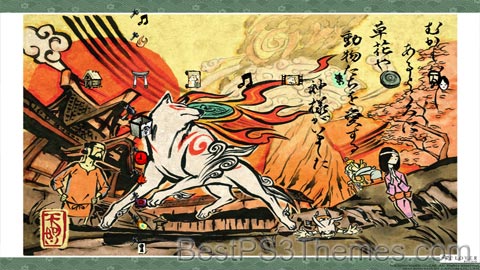
| 411Mania | 8.8/10Okami versionD #2Okami versionD theme by Deemy Download: Okami_vD_2.p3t
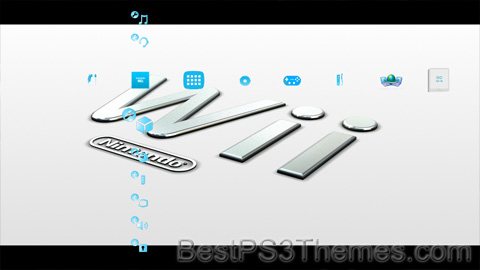
P3T Unpacker v0.12 This program unpacks Playstation 3 Theme files (.p3t) so that you can touch-up an existing theme to your likings or use a certain wallpaper from it (as many themes have multiple). But remember, if you use content from another theme and release it, be sure to give credit! Download for Windows: p3textractor.zip Instructions: Download p3textractor.zip from above. Extract the files to a folder with a program such as WinZip or WinRAR. Now there are multiple ways to extract the theme. The first way is to simply open the p3t file with p3textractor.exe. If you don’t know how to do this, right click the p3t file and select Open With. Alternatively, open the p3t file and it will ask you to select a program to open with. Click Browse and find p3textractor.exe from where you previously extracted it to. It will open CMD and extract the theme to extracted.[filename]. After that, all you need to do for any future p3t files is open them and it will extract. The second way is very simple. Just drag the p3t file to p3textractor.exe. It will open CMD and extract the theme to extracted.[filename]. For the third way, first put the p3t file you want to extract into the same folder as p3textractor.exe. Open CMD and browse to the folder with p3extractor.exe. Enter the following: Wii #2Wii theme by ComebackKid60 Download: Wii_2.p3t
The Wii[g] (/ˈwiː/, WEE) is a home video game console developed and marketed by Nintendo. It was released on November 19, 2006 in North America, and in December 2006 for most other regions of the world. It is Nintendo's fifth major home game console, following the GameCube and is a seventh-generation console alongside Microsoft's Xbox 360 and Sony's PlayStation 3. In developing the Wii, Nintendo president Satoru Iwata directed the company to avoid competing with Microsoft and Sony on computational graphics and power and instead to target a broader demographic of players through novel gameplay. Game designers Shigeru Miyamoto and Genyo Takeda led the console's development under the codename Revolution. The primary controller for the Wii is the Wii Remote, a wireless controller with both motion sensing and traditional controls which can be used as a pointing device towards the television screen or for gesture recognition. The Wii was Nintendo's first home console to directly support Internet connectivity, supporting both online games and for digital distribution of games and media applications through the Wii Shop Channel. The Wii also supports wireless connectivity with the Nintendo DS handheld console for selected games. Initial Wii models included full backward compatibility support for GameCube games and most accessories. Later in its lifecycle, two lower-cost Wii models were produced: a revised model with the same design as the original Wii but removed the GameCube compatibility features and the Wii Mini, a compact, budget redesign of the Wii which further removed features including online connectivity and SD card storage. Because of Nintendo's reduced focus on computational power, the Wii and its games were less expensive to produce than its competitors. The Wii was extremely popular at launch, causing the system to be in short supply in some markets. A bundled game, Wii Sports, was considered the killer app for the console; other flagship games included entries in the Super Mario, Legend of Zelda, Pokémon, and Metroid series. Within a year of launch, the Wii became the best-selling seventh-generation console, and by 2013, had surpassed over 100 million units sold. Total lifetime sales of the Wii had reached over 101 million units, making it Nintendo's best-selling home console until it was surpassed by the Nintendo Switch in 2021.[h] As of 2022, the Wii is the fifth-best-selling home console of all time. The Wii repositioned Nintendo as a key player in the video game console marketplace. The introduction of motion-controlled games via the Wii Remote led both Microsoft and Sony to develop their own competing products—the Kinect and PlayStation Move, respectively. Nintendo found that, while the Wii had broadened the demographics that they wanted, the core gamer audience had shunned the Wii. The Wii's successor, the Wii U, sought to recapture the core gamer market with additional features atop the Wii. The Wii U was released in 2012, and Nintendo continued to sell both units through the following year. The Wii was formally discontinued in October 2013, though Nintendo continued to produce and market the Wii Mini through 2017, and offered a subset of the Wii's online services through 2019. History[edit]2001–2003: Development[edit]Shortly after the release of the GameCube, Nintendo began conceptualizing their next console.[23] The company's game designer Shigeru Miyamoto said that, in the early stages, they decided they would not aim to compete on hardware power, and would instead prioritize new gameplay concepts.[24][25] The console was firstly named "GameCube Next" as a placeholder.[24] The price of the new console was originally envisioned to be as low as 100 euros but the NAND flash memory desired by Satoru Iwata would force that price to slightly more than the double.[24] Miyamoto cited Dance Dance Revolution's unique game controllers as inspiration for developing new input devices.[26] Later in September 24, 2001, Nintendo began working with Gyration Inc., a firm that had developed several patents related to motion detection, to prototype future controllers using their licensed patents.[27] Over the next two years, sales of the GameCube languished behind its competitors—Sony's PlayStation 2 and Microsoft's Xbox. Satoru Iwata, who had been promoted to Nintendo's president in May 2002 following Hiroshi Yamauchi's retirement,[28] recognized that Nintendo had not been keeping up with trends in the video game industry, such as adapting to online gaming. He also thought that video gaming had become too exclusive and wanted Nintendo to pursue gaming hardware and software that would appeal to all demographics.[29] Nintendo's market analysis found that their focus on novel hardware had created consoles that made it difficult for third-party developers to create games for, hampering their position.[30] One of the first major steps Iwata had made based on the company's research was directing the development of the Nintendo DS, a handheld incorporating dual screens including a touchscreen, to revitalize their handheld console line.[31] In 2003, Iwata met with Miyamoto and Genyo Takeda to discuss their market research. Iwata instructed Takeda "to go off the tech roadmap" for this console, but said it had to be appealing to mothers.[32] Iwata wanted their next console to be capable of playing past Nintendo games, eliminating clutter in houses.[26] Takeda led the team building the console's hardware components, and Miyamoto spearheaded the development of a new type of controller, based on Gyration's motion-sensing technology.[27] Iwata had proposed that this new console use motion sensing to simplify the gaming interface, increasing appeal to all audiences.[33] An initial prototype was completed within six months.[34] The Nintendo DS was said to have influenced the Wii's design, as the company found that the DS's novel two-screen interface had drawn in non-traditional players and wanted to replicate that on the new console.[26] Designer Ken'ichiro Ashida noted, "We had the DS on our minds as we worked on the Wii. We thought about copying the DS's touch-panel interface and even came up with a prototype." The idea was eventually rejected because of the notion that the two gaming systems would be identical. Miyamoto also stated, "if the DS had flopped, we might have taken the Wii back to the drawing board."[25] 2004–2005: Announcements[edit]Prior to E3 2004, Iwata had referred to Nintendo's upcoming console offering as the GameCube Next (GCNext or GCN).[35] Iwata first unveiled some details of Nintendo's new home console at E3 2004 under the codename "Revolution", as Iwata believed the console would revolutionize the gaming industry.[29] BBC News' technology editor Alfred Hermida wrote that Nintendo's struggle to match Sony and Microsoft in the home console market made success crucial.[36] The console, still named "Revolution", was formally presented to the public at E3 2005. The motion controller interface had not yet been completed and was omitted from the unveiling.[25] Iwata held the console above him with one hand to emphasize its size relative to its rivals. A smaller device meant it would draw on less power as to not overheat,[37] and thus appealed to parents who were willing to have an attractive, small, power-efficient device in the living room.[38] Iwata reportedly used a stack of three DVD cases as a size guide.[37] The prototype held by Iwata was black, but at release the following year, the console was only available in white. In their book on the console, two Loyola University Chicago professors suggested that Nintendo was inviting comparisons with Apple's first iPod line.[39] Iwata later unveiled and demonstrated their current prototype of the Revolution controller at the Tokyo Game Show in September 2005. At this stage, the controller unit resembled the final Wii Remote device along with the separate Nunchuk attachment. Iwata demonstrated its motion sensing gameplay capabilities, and incorporated commentary from developers, such as Hideo Kojima and Yuji Horii, who had tested the controller and believed people would be drawn in by it.[40][41] The console's name was formally announced as the Wii in April 2006, a month prior to E3 2006. Nintendo's spelling of "Wii" (with two lower-case "i" characters) was intended to represent both two people standing side by side, and the Wii Remote and its Nunchuk.[42] In the company's announcement, they stated: "Wii sounds like 'we', which emphasizes that the console is for everyone. Wii can easily be remembered by people around the world, no matter what language they speak. No confusion."[42] The name resulted in criticism and mockery. Forbes expressed a fear that the console would be seen as juvenile.[43] BBC News reported the day after the name was announced that "a long list of puerile jokes, based on the name," had appeared on the Internet.[44] Some video game developers and members of the press stated that they preferred "Revolution" over "Wii".[45] Nintendo of America's Vice President of Corporate Affairs Perrin Kaplan defended the choice.[46] President of Nintendo of America Reggie Fils-Aimé justified the new name over Revolution by saying that they wanted something short, distinctive, and easily pronounceable for all cultures.[47] The Wii was made available for a press demonstration at E3 2006. Planned launch titles were announced at a press conference alongside the unveiling. At the same conference, Nintendo confirmed its plans to release the console by the end of 2006.[48] 2006–2010: Launch[edit]Nintendo announced the launch plans and prices for the Wii in September 2006. The console was first launched in the United States on November 19, 2006, for US$249.99.[7] Other regional release dates and prices included Japan on December 2 for ¥25,000,[8] followed by Australasia on December 7 for A$399.95,[10] and was later launched on December 8 in the United Kingdom for £179.99 and for the majority of Europe for €249.99.[9] Nintendo planned to have around 30 Wii games available by the end of 2006, and anticipated shipping over 4 million consoles before the end of the year.[49] As part of its launch campaign, Nintendo promoted the Wii in North America through a series of television advertisements (directed by Academy Award winner Stephen Gaghan); its Internet ads used the slogans "Wii would like to play" and "Experience a new way to play". The ads began in November 2006 and had a budget of over $200 million for the year.[50] The ads targeted a wider demographic compared to ads for other consoles, inviting parents and grandparents to play on the Wii.[51] Nintendo hoped that its console would appeal to a wider demographic than that of others in the seventh generation.[52] In December 2006, Satoru Iwata said that Nintendo did not think of themselves as "fighting Sony", but were focused on how they could expand the gaming demographic.[53] It took several years for the Wii to launch in other regions. It was released in South Korea on April 26, 2008,[54] Taiwan on July 12, 2008,[55] and Hong Kong on December 12, 2009.[56] Nintendo had planned work with its localization partner iQue to release the Wii in China in 2008, but failed to meet the requirements to circumvent the ban on foreign-made consoles the Chinese government had put in place.[57][58] 2011–2017: Successor and discontinuation[edit]Nintendo announced the successor to the Wii, the Wii U, at E3 2011.[59][60] Nintendo had recognized that the Wii had generally been shunned by the core gaming audience as it was perceived more as a casual gaming experience. The Wii U was aimed to draw the core audience back in with more advanced features atop the basic Wii technology.[61][62] The Wii U features the Wii U GamePad, a controller with an embedded touchscreen and output 1080p high-definition graphics that serves as a secondary screen alongside the television. The Wii U is fully backward-compatible with Wii games and peripherals for the Wii, including the Wii Remote, Nunchuk controller and Wii Balance Board, and select Wii U games including support for these devices.[63] The Wii U was first released on November 18, 2012 in North America; November 30, 2012 in Europe and Australia, and December 8, 2012 in Japan.[64] Nintendo continued to sell the revised Wii model and the Wii Mini alongside the Wii U during the Wii U's first release year. During 2013, Nintendo began to sunset certain Wii online functions as they pushed consumers towards the Wii U as a replacement system or towards the offline Wii Mini, though the Wii Shop Channel remained available.[65] Nintendo discontinued production of the Wii in October 2013 after selling over 100 million units worldwide,[66] though the company continued to produce the Wii Mini unit primarily for the North American market.[67] The WiiConnect24 service and several channels based on that service were shuttered in June 2013.[19] Support for online multiplayer games via the Nintendo Wi-Fi Connection were discontinued in May 2014,[18] while the Wii Shop was closed in January 2019, effectively ending all online services for the console.[20][68] The Wii Mini continued to be manufactured and sold until 2017.[69] Despite the Wii's discontinuation, some developers continued to produce Wii games well beyond 2013. Ubisoft released Just Dance games for the Wii up to Just Dance 2020 (2019).[70] Vblank Entertainment's Shakedown: Hawaii along with Retro City Rampage DX are the most recent Wii games, which were released on July 9, 2020 (more than 13 years after the Wii's launch).[71][72] On January 27, 2020, Nintendo announced that it will no longer repair any faulty Wii consoles in Japan starting on February 6 due to a scarcity of spare parts.[i] Hardware[edit]Console[edit]In building the Wii, Nintendo did not aim to outpace the performance of their competitors. Unlike the company's previous consoles, they built the Wii from commercial off-the-shelf hardware rather than seek out customized components. This helped to reduce the cost of the Wii system to consumers.[74] Miyamoto said "Originally, I wanted a machine that would cost $100. My idea was to spend nothing on the console technology so all the money could be spent on improving the interface and software."[75] The console's central processing unit is a 32-bit IBM PowerPC-based processor named Broadway, with a clock frequency of 729 MHz.[76][77] The reduced size of Broadway—based on a 90 nm process compared to the
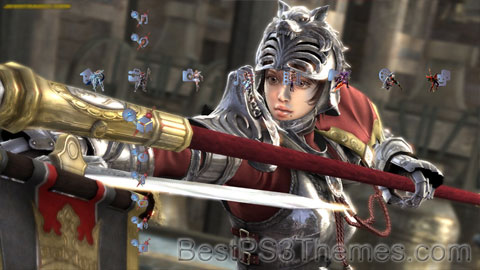
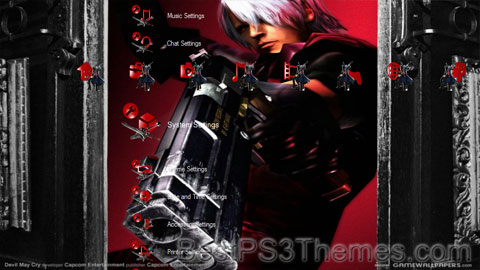
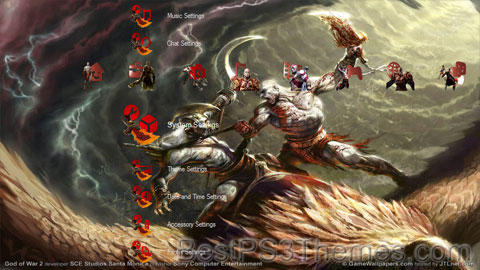
Soul Calibur version 2 theme by Vegeta300 Download: SoulCaliburV2.p3t P3T Unpacker v0.12 This program unpacks Playstation 3 Theme files (.p3t) so that you can touch-up an existing theme to your likings or use a certain wallpaper from it (as many themes have multiple). But remember, if you use content from another theme and release it, be sure to give credit! Download for Windows: p3textractor.zip Instructions: Download p3textractor.zip from above. Extract the files to a folder with a program such as WinZip or WinRAR. Now there are multiple ways to extract the theme. The first way is to simply open the p3t file with p3textractor.exe. If you don’t know how to do this, right click the p3t file and select Open With. Alternatively, open the p3t file and it will ask you to select a program to open with. Click Browse and find p3textractor.exe from where you previously extracted it to. It will open CMD and extract the theme to extracted.[filename]. After that, all you need to do for any future p3t files is open them and it will extract. The second way is very simple. Just drag the p3t file to p3textractor.exe. It will open CMD and extract the theme to extracted.[filename]. For the third way, first put the p3t file you want to extract into the same folder as p3textractor.exe. Open CMD and browse to the folder with p3extractor.exe. Enter the following: Devil May Cry version 2 theme by Vegeta300 Download: DevilMayCryV2.p3t P3T Unpacker v0.12 This program unpacks Playstation 3 Theme files (.p3t) so that you can touch-up an existing theme to your likings or use a certain wallpaper from it (as many themes have multiple). But remember, if you use content from another theme and release it, be sure to give credit! Download for Windows: p3textractor.zip Instructions: Download p3textractor.zip from above. Extract the files to a folder with a program such as WinZip or WinRAR. Now there are multiple ways to extract the theme. The first way is to simply open the p3t file with p3textractor.exe. If you don’t know how to do this, right click the p3t file and select Open With. Alternatively, open the p3t file and it will ask you to select a program to open with. Click Browse and find p3textractor.exe from where you previously extracted it to. It will open CMD and extract the theme to extracted.[filename]. After that, all you need to do for any future p3t files is open them and it will extract. The second way is very simple. Just drag the p3t file to p3textractor.exe. It will open CMD and extract the theme to extracted.[filename]. For the third way, first put the p3t file you want to extract into the same folder as p3textractor.exe. Open CMD and browse to the folder with p3extractor.exe. Enter the following: God of War version 2 theme by Vegeta300 Download: GodofWarV2.p3t P3T Unpacker v0.12 This program unpacks Playstation 3 Theme files (.p3t) so that you can touch-up an existing theme to your likings or use a certain wallpaper from it (as many themes have multiple). But remember, if you use content from another theme and release it, be sure to give credit! Download for Windows: p3textractor.zip Instructions: Download p3textractor.zip from above. Extract the files to a folder with a program such as WinZip or WinRAR. Now there are multiple ways to extract the theme. The first way is to simply open the p3t file with p3textractor.exe. If you don’t know how to do this, right click the p3t file and select Open With. Alternatively, open the p3t file and it will ask you to select a program to open with. Click Browse and find p3textractor.exe from where you previously extracted it to. It will open CMD and extract the theme to extracted.[filename]. After that, all you need to do for any future p3t files is open them and it will extract. The second way is very simple. Just drag the p3t file to p3textractor.exe. It will open CMD and extract the theme to extracted.[filename]. For the third way, first put the p3t file you want to extract into the same folder as p3textractor.exe. Open CMD and browse to the folder with p3extractor.exe. Enter the following: Devil May Cry version 1.0 theme by Vegeta300 Download: DevilMayCryV1.p3t P3T Unpacker v0.12 This program unpacks Playstation 3 Theme files (.p3t) so that you can touch-up an existing theme to your likings or use a certain wallpaper from it (as many themes have multiple). But remember, if you use content from another theme and release it, be sure to give credit! Download for Windows: p3textractor.zip Instructions: Download p3textractor.zip from above. Extract the files to a folder with a program such as WinZip or WinRAR. Now there are multiple ways to extract the theme. The first way is to simply open the p3t file with p3textractor.exe. If you don’t know how to do this, right click the p3t file and select Open With. Alternatively, open the p3t file and it will ask you to select a program to open with. Click Browse and find p3textractor.exe from where you previously extracted it to. It will open CMD and extract the theme to extracted.[filename]. After that, all you need to do for any future p3t files is open them and it will extract. The second way is very simple. Just drag the p3t file to p3textractor.exe. It will open CMD and extract the theme to extracted.[filename]. For the third way, first put the p3t file you want to extract into the same folder as p3textractor.exe. Open CMD and browse to the folder with p3extractor.exe. Enter the following: | ||||||||||||||||||||||||||||||||||||||||||||||||||||||||||