Indianapolis Colts theme by Tru Blu Designz
Download: IndianapolisColts.p3t

(3 backgrounds)
| Indianapolis Colts | |||||
|---|---|---|---|---|---|
 Current season Current season | |||||
| Established January 23, 1953[1][2] First season: 1953 Play in Lucas Oil Stadium Indianapolis, Indiana Headquartered in the Indiana Farm Bureau Football Center Indianapolis, Indiana | |||||
| |||||
| League/conference affiliations | |||||
National Football League (1953–present)
| |||||
Current uniform | |||||
 | |||||
| Team colors | Speed blue, white, facemask gray, anvil black[3][4][5] | ||||
| Mascot | Blue | ||||
| Website | colts.com | ||||
| Personnel | |||||
| Owner(s) | Jim Irsay[6] | ||||
| CEO | Jim Irsay | ||||
| General manager | Chris Ballard | ||||
| Head coach | Shane Steichen | ||||
| Team history | |||||
| |||||
| Championships | |||||
League championships (4†)
| |||||
| Conference championships (7) | |||||
| Division championships (16) † – Does not include NFL championship won the same season as the Super Bowl | |||||
| Playoff appearances (29) | |||||
| Home fields | |||||
| |||||
| Team owner(s) | |||||
| |||||


The Indianapolis Colts are a professional American football team based in Indianapolis. The Colts compete in the National Football League (NFL) as a member club of the league's American Football Conference (AFC) South division. Since the 2008 season, the Colts have played their games in Lucas Oil Stadium. Previously, the team had played for over two decades (1984–2007) at the RCA Dome. Since 1987, the Colts have served as the host team for the NFL Scouting Combine.
The Colts have competed as a member club of the NFL since their founding in Baltimore, Maryland, in 1953, after then-owner Carroll Rosenbloom purchased the assets of the NFL's last founding Ohio League member Dayton Triangles–Dallas Texans franchise. They were one of three NFL teams to join those of the American Football League (AFL) to form the AFC, following the 1970 merger. While in Baltimore, the team advanced to the playoffs ten times and won three NFL Championship games in 1958, 1959, and 1968. The Baltimore Colts played in two Super Bowl games, losing to the New York Jets in Super Bowl III and defeating the Dallas Cowboys in Super Bowl V. The Colts relocated to Indianapolis in 1984 and have since appeared in the playoffs sixteen times, won two conference championships, and played in two Super Bowl games; they defeated the Chicago Bears in Super Bowl XLI, and lost to the New Orleans Saints in Super Bowl XLIV (all four Super Bowls that the Colts have played in took place at the home stadium for the Miami Dolphins; while based in Baltimore, Super Bowls III and V were held at the Orange Bowl in Miami, and while based in Indianapolis, Super Bowls XLI and XLIV were at what is now Hard Rock Stadium in Miami Gardens).
Franchise history[edit]
Baltimore Colts[edit]
The All America Football Conference began play in the 1946 season. In its second year, the franchise assigned to the Miami Seahawks was relocated to Maryland's major commercial and manufacturing city of Baltimore. After a fan contest, the team was renamed the Baltimore Colts and used the team colors of silver and green. The Colts played for the next three seasons in the old AAFC until they agreed to merge with the old National Football League (of 1920–1922 to 1950) when the NFL was reorganized. The Baltimore Colts were one of the three former AAFC powerhouse teams to merge with the NFL at that time, the others being the San Francisco 49ers and the Cleveland Browns. This Colts team, now in the "big league" of professional American football for the first time, although with shaky financing and ownership, played only in the 1950 season of the NFL, and was later disbanded.
Carroll Rosenbloom era (1953–1971)[edit]
.jpg)
In 1953, a new Baltimore-based group, heavily supported by the city's municipal government and with a large subscription-base of fan-purchased season tickets, led by local owner Carroll Rosenbloom won the rights to a new Baltimore NFL franchise.[7][8] Rosenbloom was awarded the remains of the former Dallas Texans team, who themselves had a long and winding history, with a small part of the franchise starting as the Boston Yanks in 1944, merging later with the Brooklyn Tigers, a franchise that had a far more deep and rich history, being previously known as the Dayton Triangles, one of the original old NFL teams established even before the League itself, in 1913. That team later became the New York Yanks in 1950, and many of the players from the New York Yankees of the former competing All-America Football Conference (1946–49) were added to the team to begin playing in the newly merged League for the 1950 season. The Yanks then moved to Dallas in Texas after the 1951 season having competed for two seasons, but played their final two "home" games of the 1952 season as a so-called "road team" at the Rubber Bowl football stadium in Akron, Ohio. The NFL considers the Texans and Colts to be separate teams, although many of the earlier teams shared the same colors of blue and white. Thus, the Indianapolis Colts are legally considered to be a 1953 expansion team.

Weeb Ewbank years (1954–1962)[edit]
The current version of the Colts football team played their first season in Baltimore in 1953, where the team compiled a 3–9 record under first-year head coach Keith Molesworth. The franchise struggled during the first few years in Baltimore, with the team not achieving their first winning record until the 1957 season.[8]
NFL champions (1958–1959)[edit]
However, under head coach Weeb Ewbank and the leadership of quarterback Johnny Unitas, the Colts went on to a 9–3 record during the 1958 season and reached the NFL Championship Game for the first time by winning the NFL Western Conference.[9][10] The Colts faced the New York Giants in the 1958 NFL Championship Game, which is considered to be among the greatest contests in professional football history.[11] The Colts defeated the Giants 23–17 in the first game to utilize the overtime rule, a game seen by 45 million persons.[12]
Following the Colts first NFL championship, the team posted a 9–3 record during the 1959 season and once again defeated the Giants in the NFL Championship Game to claim their second title.[8]
Don Shula years (1963–1969)[edit]
Following the two championships in 1958 and 1959, the Colts did not return to the NFL Championship for four seasons and replaced the head coach Ewbank with the young Don Shula in 1963.[13] In Shula's second season the Colts compiled a 12–2 record, but lost to the Cleveland Browns in the NFL Championship.
NFL champions (1968)[edit]
In 1968 the Colts returned with the continued leadership of Unitas and Shula and went on to win the Colts' third NFL Championship and made an appearance in Super Bowl III.

Leading up to the Super Bowl and following the 34–0 trouncing of the Cleveland Browns in the NFL Championship, many were calling the 1968 Colts team one of the "greatest pro football teams of all time"[14] and were favored by 18 points against their counterparts from the American Football League, the New York Jets.[15] The Colts, however, were stunned by the Jets, who won the game 16–7 in the first Super Bowl victory for the young AFL. The result of the game surprised many in the sports media[16] as Joe Namath and Matt Snell led the Jets to the Super Bowl victory under head coach Weeb Ewbank, who had previously won two NFL Championships with the Colts.
Don McCafferty years (1970–1972)[edit]
Rosenbloom of the Colts, Art Modell of the Browns, and Art Rooney of the Pittsburgh Steelers agreed to have their teams join the ten AFL teams in the American Football Conference as part of the AFL–NFL merger in 1970.[8]
Super Bowl V champions (1970)[edit]
The Colts immediately went on a rampage in the new league, as new head coach Don McCafferty led the 1970 team to an 11–2–1 regular-season record, winning the AFC East title. In the first round of the NFL Playoffs, the Colts beat the Cincinnati Bengals 17–0; one week later in the first-ever AFC Championship Game, they beat the Oakland Raiders 27–17. Baltimore went on to win the first post-merger Super Bowl (Super Bowl V), defeating the National Football Conference's Dallas Cowboys 16–13 on a Jim O'Brien field goal with five seconds left to play.[17] The victory gave the Colts their fourth NFL championship and first Super Bowl victory. Following the championship, the Colts returned to the playoffs in 1971 and defeated the Cleveland Browns in the first round, but lost to the Miami Dolphins in the AFC Championship.
Robert Irsay era (1971–1996)[edit]
Citing friction with the City of Baltimore and the local press, Rosenbloom traded the Colts franchise to Robert Irsay on July 13, 1972, and received the Los Angeles Rams in return.[18] Under the new ownership, the Colts did not reach the postseason for three consecutive seasons after 1971, and after the 1972 season, starting quarterback and legend Johnny Unitas was traded to the San Diego Chargers.[8] Following Unitas' departure, the Colts made the playoffs three consecutive seasons from 1975 to 1977, losing in the divisional round each time. The Colts' 1977 playoff loss in double overtime against the Oakland Raiders was famous for the fact that it was the last playoff game for the Colts in Baltimore and is also known for the Ghost to the Post play. These consecutive championship teams featured 1976 NFL Most Valuable Player Bert Jones at quarterback and an outstanding defensive line, nicknamed the "Sack Pack".
Following the 1970s success, the team endured nine consecutive losing seasons beginning in 1978. In 1981, the Colts defense allowed an NFL-record 533 points, set an all-time record for fewest sacks (13), and also set a modern record for fewest punt returns (12).[19] The following year, the offense collapsed, including a game against the Buffalo Bills where the Colts' offense did not cross mid-field the entire game. The Colts finished 0–8–1 in the strike-shortened 1982 season, thereby earning the right to select Stanford quarterback John Elway with the first overall pick. Elway, however, refused to play for Baltimore, and using leverage as a draftee of the New York Yankees baseball club, forced a trade to Denver.[20] Behind an improved defense the team finished 7–9 in 1983, but that would be their last season in Baltimore.
Relocation to Indianapolis[edit]

The Baltimore Colts played their final home game in Baltimore on December 18, 1983, against the Houston Oilers. Irsay continued to request upgrades to Memorial Stadium or construction of a new stadium.[21] As a result of the poor performance on the field and the stadium issues, fan attendance and team revenue continued to dwindle. City officials were precluded from using tax-payer funds for the building of a new stadium, and the modest proposals that were offered by the city were not acceptable to either the Colts or the city's MLB franchise the Orioles. However, all sides continued to negotiate.[21] Relations between Irsay and the city of Baltimore deteriorated. Although Irsay assured fans that his ultimate desire was to stay in Baltimore, he nevertheless began discussions with several other cities willing to build new football stadiums, eventually narrowing the list of cities to Indianapolis and Phoenix.[22] Under the administration of mayors Richard Lugar and then William Hudnut, Indianapolis had undertaken an ambitious effort to reinvent itself into a 'Great American City'.[23] The Hoosier Dome, which was later renamed the RCA Dome, had been built specifically for, and was ready to host, an NFL expansion team.[24]
Meanwhile, in Baltimore, the situation worsened. The Maryland General Assembly intervened when a bill was introduced to give the city of Baltimore the right to seize ownership of the team by eminent domain. As a result, Irsay began serious negotiations with Hudnut to move the team before the Maryland legislature could pass the law. Indianapolis offered loans as well as the Hoosier Dome and a training complex.[25] After the deal was reached, moving vans from Indianapolis-based Mayflower Transit were dispatched overnight to the team's Maryland training complex, arriving on the morning of March 29, 1984. Once in Maryland, workers loaded all of the team's belongings, and by midday the trucks departed for Indianapolis, leaving nothing of the Colts organization that could be seized by Baltimore.[26] The Baltimore Colts' Marching Band had to scramble to retrieve their equipment and uniforms before they were shipped to Indianapolis as well.[27]
The move triggered a flurry of legal activity that ended when representatives of the city of Baltimore and the Colts organization reached a settlement in March 1986. Under the agreement, all lawsuits regarding the relocation were dismissed, and the Colts agreed to endorse a new NFL team for Baltimore.[23]
_(crop).jpg)
Upon the Colts' arrival in Indianapolis over 143,000 requests for season tickets were received in just two weeks.[28] The move did not change the recent fortune of the Colts, with the team appearing in the postseason only once in the first 11 seasons in Indianapolis. During the 1984 season, the first in Indianapolis, the team went 4–12 and accounted for the lowest offensive yardage in the league.[29] The 1985 and 1986 teams combined for only eight wins, including an 0–13 start in 1986 which prompted the firing of head coach Rod Dowhower, who was replaced by Ron Meyer. The Colts, however, did receive eventual Hall of Fame running back Eric Dickerson[30] as a result of a trade during the 1987 season, and went on to compile a 9–6 record, thereby winning the AFC East and advancing to the postseason for the first time in Indianapolis; they lost that game to the Cleveland Browns.
Following 1987, the Colts did not see any real success for quite some time, with the team missing the postseason for seven consecutive seasons. The struggles came to a climax in 1991 when the team went 1–15 and was just one point away from the first all-losing season in the history of a 16-game schedule.[31] The season resulted in the firing of head coach Ron Meyer and the return of former head coach Ted Marchibroda to the organization in 1992; he had coached the team from 1975 to 1979. The team continued to struggle under Marchibroda and Jim Irsay, son of Robert Irsay and general manager at the time. It was in 1994 that Robert Irsay brought in Bill Tobin to become the general manager of the Indianapolis Colts.[32]
Under Tobin, the Colts drafted running back Marshall Faulk with the second overall pick in the 1994 NFL draft[33] and acquired quarterback
Oblivion theme by Shawn Download: Oblivion.p3t Oblivion may refer to:
Charger theme by Albert M. Download: Charger_Theme.p3t Charger or Chargers may refer to:
UV theme by Leonardo Da Vinci Download: UV.p3t Redirect to: The Samurai Way – JS3 theme by Jedi / JayStation3 Download: Samurai_Way_-_JS3.p3t P3T Unpacker v0.12 This program unpacks Playstation 3 Theme files (.p3t) so that you can touch-up an existing theme to your likings or use a certain wallpaper from it (as many themes have multiple). But remember, if you use content from another theme and release it, be sure to give credit! Download for Windows: p3textractor.zip Instructions: Download p3textractor.zip from above. Extract the files to a folder with a program such as WinZip or WinRAR. Now there are multiple ways to extract the theme. The first way is to simply open the p3t file with p3textractor.exe. If you don’t know how to do this, right click the p3t file and select Open With. Alternatively, open the p3t file and it will ask you to select a program to open with. Click Browse and find p3textractor.exe from where you previously extracted it to. It will open CMD and extract the theme to extracted.[filename]. After that, all you need to do for any future p3t files is open them and it will extract. The second way is very simple. Just drag the p3t file to p3textractor.exe. It will open CMD and extract the theme to extracted.[filename]. For the third way, first put the p3t file you want to extract into the same folder as p3textractor.exe. Open CMD and browse to the folder with p3extractor.exe. Enter the following: REDNAVE’s Killzone theme by Evander Download: REDNAVE_Killzone_Theme.p3t P3T Unpacker v0.12 This program unpacks Playstation 3 Theme files (.p3t) so that you can touch-up an existing theme to your likings or use a certain wallpaper from it (as many themes have multiple). But remember, if you use content from another theme and release it, be sure to give credit! Download for Windows: p3textractor.zip Instructions: Download p3textractor.zip from above. Extract the files to a folder with a program such as WinZip or WinRAR. Now there are multiple ways to extract the theme. The first way is to simply open the p3t file with p3textractor.exe. If you don’t know how to do this, right click the p3t file and select Open With. Alternatively, open the p3t file and it will ask you to select a program to open with. Click Browse and find p3textractor.exe from where you previously extracted it to. It will open CMD and extract the theme to extracted.[filename]. After that, all you need to do for any future p3t files is open them and it will extract. The second way is very simple. Just drag the p3t file to p3textractor.exe. It will open CMD and extract the theme to extracted.[filename]. For the third way, first put the p3t file you want to extract into the same folder as p3textractor.exe. Open CMD and browse to the folder with p3extractor.exe. Enter the following: Red theme by str8_killa69 Download: Red.p3t
Red is the color at the long wavelength end of the visible spectrum of light, next to orange and opposite violet. It has a dominant wavelength of approximately 625–740 nanometres.[1] It is a primary color in the RGB color model and a secondary color (made from magenta and yellow) in the CMYK color model, and is the complementary color of cyan. Reds range from the brilliant yellow-tinged scarlet and vermillion to bluish-red crimson, and vary in shade from the pale red pink to the dark red burgundy.[2]
Red pigment made from ochre was one of the first colors used in prehistoric art. The Ancient Egyptians and Mayans colored their faces red in ceremonies; Roman generals had their bodies colored red to celebrate victories. It was also an important color in China, where it was used to color early pottery and later the gates and walls of palaces.[3]: 60–61 In the Renaissance, the brilliant red costumes for the nobility and wealthy were dyed with kermes and cochineal. The 19th century brought the introduction of the first synthetic red dyes, which replaced the traditional dyes. Red became a symbolic color of communism and socialism; Soviet Russia adopted a red flag following the Bolshevik Revolution in 1917. The Soviet red banner would subsequently be used throughout the entire history of the Soviet Union, starting from 1922 and ending with its 1991 dissolution. China adopted its own red flag following the Chinese Communist Revolution. A red flag was also adopted by North Vietnam in 1954, and by all of Vietnam in 1975.
Since red is the color of blood, it has historically been associated with sacrifice, danger, and courage. Modern surveys in Europe and the United States show red is also the color most commonly associated with heat, activity, passion, sexuality, anger, love, and joy. In China, India, and many other Asian countries it is the color symbolizing happiness and good fortune.[4]: 39–63
Varieties of the color red may differ in hue, chroma (also called saturation, intensity, or colorfulness), or lightness (or value, tone, or brightness), or in two or three of these qualities. Variations in value are also called tints and shades, a tint being a red or other hue mixed with white, a shade being mixed with black. Four examples are shown below.
The human eye sees red when it looks at light with a wavelength between approximately 625 and 740 nanometers.[1] It is a primary color in the RGB color model and the light just past this range is called infrared, or below red, and cannot be seen by human eyes, although it can be sensed as heat.[7] In the language of optics, red is the color evoked by light that stimulates neither the S or the M (short and medium wavelength) cone cells of the retina, combined with a fading stimulation of the L (long-wavelength) cone cells.[8]
Primates can distinguish the full range of the colors of the spectrum visible to humans, but many kinds of mammals, such as dogs and cattle, have dichromacy, which means they can see blues and yellows, but cannot distinguish red and green (both are seen as gray). Bulls, for instance, cannot see the red color of the cape of a bullfighter, but they are agitated by its movement.[9] (See color vision).
One theory for why primates developed sensitivity to red is that it allowed ripe fruit to be distinguished from unripe fruit and inedible vegetation.[10] This may have driven further adaptations by species taking advantage of this new ability, such as the emergence of red faces.[11]
Red light is used to help adapt night vision in low-light or night time, as the rod cells in the human eye are not sensitive to red.[12][13]
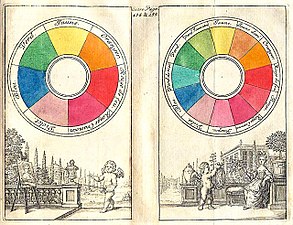
In the RYB color model, which is the basis of traditional color theory, red is one of the three primary colors, along with blue and yellow. Painters in the Renaissance mixed red and blue to make violet: Cennino Cennini, in his 15th-century manual on painting, wrote, "If you want to make a lovely violet colour, take fine lac (red lake), ultramarine blue (the same amount of the one as of the other) with a binder"; he noted that it could also be made by mixing blue indigo and red hematite.[14]
In the CMY and CMYK color models, red is a secondary color subtractively mixed from magenta and yellow.[citation needed]
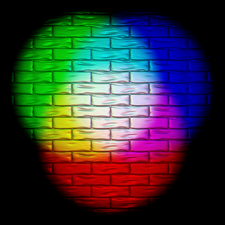
In the RGB color model, red, green and blue are additive primary colors. Red, green and blue light combined makes white light, and these three colors, combined in different mixtures, can produce nearly any other color. This principle is used to generate colors on such as computer monitors and televisions. For example, magenta on a computer screen is made by a similar formula to that used by Cennino Cennini in the Renaissance to make violet, but using additive colors and light instead of pigment: it is created by combining red and blue light at equal intensity on a black screen. Violet is made on a computer screen in a similar way, but with a greater amount of blue light and less red light.[15]
As a ray of white sunlight travels through the atmosphere to the eye, some of the colors are scattered out of the beam by air molecules and airborne particles due to Rayleigh scattering, changing the final color of the beam that is seen. Colors with a shorter wavelength, such as blue and green, scatter more strongly, and are removed from the light that finally reaches the eye.[16] At sunrise and sunset, when the path of the sunlight through the atmosphere to the eye is longest, the blue and green components are removed almost completely, leaving the longer wavelength orange and red light. The remaining reddened sunlight can also be scattered by cloud droplets and other relatively large particles, which give the sky above the horizon its red glow.[17]
Lasers emitting in the red region of the spectrum have been available since the invention of the ruby laser in 1960. In 1962 the red helium–neon laser was invented,[18] and these two types of lasers were widely used in many scientific applications including holography, and in education. Red helium–neon lasers were used commercially in LaserDisc players. The use of red laser diodes became widespread with the commercial success of modern DVD players, which use a 660 nm laser diode technology. Today, red and red-orange laser diodes are widely available to the public in the form of extremely inexpensive laser pointers. Portable, high-powered versions are also available for various applications.[19] More recently, 671 nm diode-pumped solid state (DPSS) lasers have been introduced to the market for all-DPSS laser display systems, particle image velocimetry, Raman spectroscopy, and holography.[20]
Red's wavelength has been an important factor in laser technologies; red lasers, used in early compact disc technologies, are being replaced by blue lasers, as red's longer wavelength causes the laser's recordings to take up more space on the disc than would blue-laser recordings.[21]
The most common synthetic food coloring today is Allura Red AC, a red azo dye that goes by several names including: Allura Red, Food Red 17, C.I. 16035, FD&C Red 40,[25][26] It was originally manufactured from coal tar, but now is mostly made from petroleum.[27]
In Europe, Allura Red AC is not recommended for consumption by children. It is banned in Denmark, Belgium, France and Switzerland, and was also banned in Sweden until the country joined the European Union in 1994.[26] The European Union approves Allura Red AC as a food colorant, but EU countries' local laws banning food colorants are preserved.[28]
In the United States, Allura Red AC is approved by the Food and Drug Administration (FDA) for use in cosmetics, drugs, and food. It is used in some tattoo inks and is used in many products, such as soft drinks, children's medications, and cotton candy. On June 30, 2010, the Center for Science in the Public Interest (CSPI) called for the FDA to ban Red 40.[29]
Because of public concerns about possible health risks associated with synthetic dyes, many companies have switched to using natural pigments such as carmine, made from crushing the tiny female cochineal insect. This insect, originating in Mexico and Central America, was used to make the brilliant scarlet dyes of the European Renaissance.[citation needed]
Oblivion

(1 background)

Film[edit]
Literature[edit]
Music[edit]
Artists and labels[edit]
Albums[edit]
Songs[edit]
Other uses[edit]
See also[edit]

If an internal link led you here, you may wish to change the link to point directly to the intended article.Charger

(1 background)
Music[edit]
Sports[edit]
Vehicles[edit]
People[edit]
See also[edit]
If an internal link led you here, you may wish to change the link to point directly to the intended article.UV

(3 backgrounds)
Samurai Way – JS3

(3 backgrounds)
Copyright (c) 2007. Anoop Menon
p3textractor filename.p3t [destination path]Replace filename with the name of the p3t file, and replace [destination path] with the name of the folder you want the files to be extracted to. A destination path is not required. By default it will extract to extracted.filename.Russkiy
REDNAVE’s Killzone Theme

(8 backgrounds)
Copyright (c) 2007. Anoop Menon
p3textractor filename.p3t [destination path]Replace filename with the name of the p3t file, and replace [destination path] with the name of the folder you want the files to be extracted to. A destination path is not required. By default it will extract to extracted.filename.Red

(1 background)
Red 
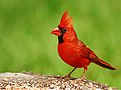

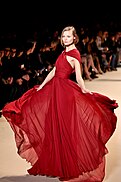

Spectral coordinates Wavelength Approx. 625–740[1] nm Frequency ~480–400 THz  Color coordinates
Hex triplet #FF0000 sRGBB (r, g, b) (255, 0, 0) HSV (h, s, v) (0°, 100%, 100%) CIELChuv (L, C, h) (53, 179, 12°) Source X11 B: Normalized to [0–255] (byte)
H: Normalized to [0–100] (hundred)Shades and variations[edit]
In science and nature[edit]
Seeing red[edit]

In color theory and on a computer screen[edit]

Color of sunset[edit]

Lasers[edit]
Astronomy[edit]



Pigments and dyes[edit]


Food coloring[edit]
Autumn leaves[edit]