STI

STI theme by BLACKWRX

Download: STI.p3t
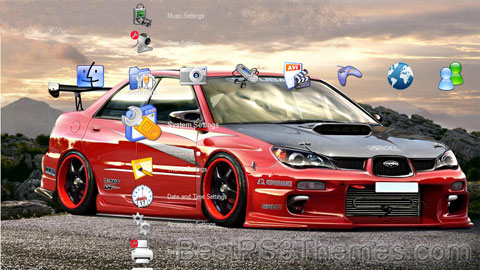
STI Theme
(1 background)

STI may refer to:

In science and technology[edit]

Biology and psychology[edit]

Electronics and computing[edit]

Other uses in science and technology[edit]

Businesses and organizations[edit]

Educational organizations[edit]

In science and technology[edit]

Other businesses and organizations[edit]

Other uses[edit]

See also[edit]

Frisky Dingo

Frisky Dingo theme by Hahnzo

Download: FriskyDingo.p3t
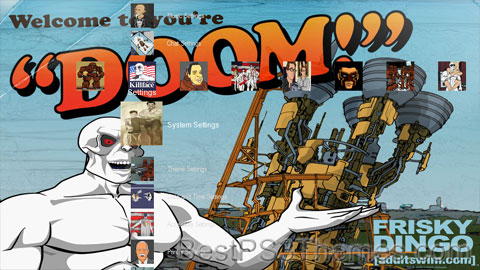
Frisky Dingo Theme
(8 backgrounds)

Frisky Dingo
Block text, the word Frisky in red on orange, and below the word Dingo in orange on red
GenreAction
Comedy
Adult animation
Animated sitcom
Created byAdam Reed
Matt Thompson
Written byAdam Reed
Matt Thompson
Directed byAdam Reed
Matt Thompson
Voices of
ComposersCasey Willis
Killer Mike
Country of originUnited States
Original languageEnglish
No. of seasons2
No. of episodes25
Production
Executive producersAdam Reed
Matt Thompson
Keith Crofford
Mike Lazzo
Running time11 minutes
Production companies70/30 Productions
Williams Street
Original release
NetworkAdult Swim
ReleaseOctober 16, 2006 (2006-10-16) –
March 23, 2008 (2008-03-23)
Related

Frisky Dingo is an American adult animated television series created by Adam Reed and Matt Thompson for Adult Swim. The series revolves around the conflict between a supervillain named Killface and a superhero named Awesome X, alias billionaire Xander Crews, and much of the show's humor focuses on parodying superhero and action-movie clichés.[1]

It debuted on October 16, 2006, and its first season ended on January 22, 2007. The second season premiered on August 26, 2007, and ended on March 23, 2008. A third season was considered, but both the creators and Adult Swim mutually decided against it.[2] The production company, 70/30 Productions, subsequently went out of business in January 2009; Reed and Thompson would later found Floyd County Productions.

A spin-off show, The Xtacles, premiered on November 9, 2008, but only the two-episode premiere aired prior to the production company's closure, with no further episodes produced.

Origins[edit]

Frisky Dingo was created by 70/30 Productions, the same group of animators who worked on Sealab 2021. The show's name during development was Whiskey Tango. Because a band was already using the name, it was changed to Whiskey Tango Six. This name was determined not to be sufficiently distinct to avoid infringement suits, so the creators jokingly said they would call the show Frisky Dingo, and the name remained. In episode 113, Killface can be seen entering "Frisky Dingo" into the Annihilatrix launch terminal; this is mentioned in the second episode of the second season, where Sinn/Hooper remarks that "Frisky Dingo" is the launch code for the Annihilatrix.

According to an article in Atlanta Magazine, Whiskey Tango Six was going to be the name of the six-member superhero group on which the show focused, headed by husband and wife Jack and Grace Taggart.[3] The team flew around in a spaceship called the Glennis. Killface was going to be the main villain, but not a major character.[3] During revisions of the show's scripts, Killface became the focus of the show. When Whiskey Tango Six was replaced with Xander Crews/Awesome X and the Xtacles is not known.

Characters[edit]

The two main characters of the show are Killface, who is a naked, bone-white, red-eyed, earless, talon-toed, spur-heeled, 7-foot-tall (2.1 m), 440 lb., hairless, muscular humanoid supervillain focused on destroying Earth with his invention, the Annihilatrix;[4] and billionaire tycoon Xander Crews, who fights crime under the superhero alias Awesome X.[5] Both Killface and Xander are voiced by co-creator Adam Reed. The two have an ever-shifting relationship, changing from enemies to unwilling allies on many occasions.

Other major characters include Killface's son Simon – voiced by Christian Danley – an overweight, blond-haired, pale-skinned, sexually confused, teenaged Hannah Montana fan, who wears sweater vests and exhibits adolescent rebellion by muttering and breaking cereal bowls;[6] reporter Grace Ryan, former girlfriend of Xander Crews turned into Antagone, a toxic, radioactive ant-powered villainess; Sinn – voiced by Kelly Jenrette – later known as Hooper, originally Killface's sidekick and later his enemy;[7] and the Xtacles, Awesome X's team of easily distracted and remarkably inept, rocket-booted troops.[8]

Setting[edit]

Frisky Dingo takes place primarily in and around a large city simply called "Town" or "the Town". Its actual name never being mentioned becomes a running joke throughout the series. Despite its lack of a specific name, maps of "Town" are featured throughout the series, which closely resemble interstate roadmaps of the city of Atlanta, Georgia, where 70/30 Studios, producers of Frisky Dingo, were based. Additional evidence for "Town" being Atlanta is the presence of buildings suspiciously resembling the Cotton Mill Lofts (a location that at one time housed production operations for 70/30) burning in the second episode, "Meet Awesome-X". Also, in the episode where Killface is pandering to the African American church congregation, he is wearing what looks like Michael Vick's Atlanta Falcons football jersey.

Episodes[edit]

Series overview[edit]

SeasonEpisodesOriginally aired
First airedLast airedNetwork
113October 15, 2006 (2006-10-15)January 21, 2007 (2007-01-21)Adult Swim
212August 26, 2007 (2007-08-26)March 23, 2008 (2008-03-23)

Season 1 (2006–07)[edit]

The first season of Frisky Dingo follows the adversarial relationship between the villainous Killface, who aspires to strike fear into humankind before he drives the Earth into the Sun with his Annihilatrix, and Awesome X, the secret superhero identity of multibillionaire Xander Crews, who dreads retiring after having defeated the last known supervillain.

No.
overall
No. in
season
TitleOriginal air dateProd.
code
11"Meet Killface[9]"October 15, 2006 (2006-10-15)101
Killface reveals his plan to drive the Earth into the Sun, and forces the marketing staff he kidnapped to help him market the plan.
22"Meet Awesome-X[9]"October 22, 2006 (2006-10-22)102
Having dispatched the last supervillain, superhero Awesome X (Xander Crews) searches for ways to avoid retiring his hero persona and having to actually work at running his company.
33"Pimp My Revenue[9]"October 29, 2006 (2006-10-29)103
Thrilled at the prospect of a new supervillain to exploit and market, Xander sets his plans for Killface in motion. Killface, whose direct marketing of his plan to destroy the world has been unexpectedly successful (although for the reason being a snafu involving a typo), finds himself with the opportunity to appear on a morning talk show, which doesn't go the way he planned.
44"XPO[9]"November 5, 2006 (2006-11-05)104
Killface is in desperate need of some cash, so when a mysterious fax arrives announcing an inventor's expo with a $12 billion prize, he decides to enter the Annihilatrix. However, the expo is staged by Xander Crews, who hopes to trick Killface into signing over his action figure rights.
55"Kidnapped![9]"November 12, 2006 (2006-11-12)105
Killface, desperate for cash and revenge, enacts a plan to find and kidnap billionaire Xander Crews. Meanwhile, Crews, still after action figure rights, enacts a plan to find and bribe Killface. Meanwhile, Grace Ryan's life hangs by her microphone's cord.
66"Emergency Room[9]"November 19, 2006 (2006-11-19)106
The entire Dingo gang, grievously injured in the collapse of the Annihilatrix's catwalk, have all ended up in the same emergency room, and Killface has to deal with a lapsed health insurance plan and a very rude customer service telephone rep.
77"Meet Antagone[9]"November 26, 2006 (2006-11-26)107
As Killface searches for Xander Crews, radioactive ants begin to take over Grace Ryan's mind and she transforms into voluptuous, ant-controlling supervillain Antagone, who has a hatred for Xander Crews. Antagone fights Killface during a bank robbery, blinding him with formic acid. Meanwhile, Crews is kidnapped by the Xtacles.
88"Blind Faith[9]"December 3, 2006 (2006-12-03)108
Xander Crews copes with being broke and Xtacle-less, while Killface struggles with being blind.
99"The Odd Couple[9]"December 10, 2006 (2006-12-10)109
Xander Crews, using the name Barnaby Jones, moves in with Killface; Simon runs away with all the knives; and Stan, posing as Awesome X, orders the Xtacles to find and kill Xander Crews.
1010"Flowers for Nearl[9]"December 17, 2006 (2006-12-17)110
The Xtacles find a replacement hostage for Xander Crews – his mentally retarded twin brother, Nearl. However, made intelligent through an experimental brain chemical, Nearl decides to reveal a little family history about the Crews brothers that would've made things complicated.
1111"The Grate Escape[9]"January 7, 2007 (2007-01-07)111
Killface and Crews attempt to sneak into the lair of criminal kingpin Torpedo Vegas in order to save Simon.
1212"Penultimate Fighting[9]"January 14, 2007 (2007-01-14)112
Killface and Crews are captured by Torpedo Vegas and forced to fight to the death, gladiator-style, in lieu of the regular rabbit fights.
1313"Thrust Issues[9]"January 21, 2007 (2007-01-21)113
Killface and Crews attempt to return to their lives amidst multiple betrayals, but have one last score to settle with each other.

Season 2 (2007–08)[edit]

At the beginning of the second season, Killface is taking credit for "curing" global warming due to the Annihilatrix having moved the Earth a total of three feet further from the Sun before it malfunctioned, and has decided to run for President of the United States. Xander Crews follows suit, reforming his company and launching his own presidential campaign.

No.
overall
No. in
season
TitleOriginal air dateProd.
code
141"Behold a Dark Horse[9]"August 26, 2007 (2007-08-26)201
The Annihilatrix malfunctions moments after being initiated, moving the Earth three feet away from the Sun and ending global warming. Instead of destroying the world, Killface decides to play the global warming card and run for the office of President of the United States.
152"The Opposition[9]"September 2, 2007 (2007-09-02)202
Following the incident on the Annihilatrix, Xander Crews is found to be living in financial ruin behind an RV dealership. Running an 'outreach center' made from cardboard boxes, Xander offers services such as boiling used hypodermic needles and selling them back to the homeless. Upon hearing of Killface's candidacy for President, Xander decides to run against him after revealing that he had the check for his vast fortune in his possession the entire time.
163"The Issues[9]"September 9, 2007 (2007-09-09)203
Xander proposes Fred Dryer as his running mate after gaining the Republican nomination for President. Aboard his new campaign jet (as opposed to Killface's campaign bus), Crews outlines his proposals to improve education and alleviate illegal immigration.
174"The Image Problem[9]"September 16, 2007 (2007-09-16)204
Xander and Killface both try to improve their images by going duck hunting, which Xander cannot distinguish from his annual panda hunt, but the two manage to reconnect when they get lost after an assassination ploy by Valerie.
185"The Miracle[9]"September 23, 2007 (2007-09-23)205
After Valerie miraculously fails at another assassination attempt, Killface finds God and quickly ruins his campaign. Upon hearing that Simon is a homosexual, Killface renounces Christianity as a missile strikes him in the chest.
196"The Middle[9]"September 30, 2007 (2007-09-30)206
Killface begins to recuperate after the rocket incident while Xander again attempts to recruit Fred Dryer as his running mate, only to find that Sinn has taken over the Xtacles.
20
21
7
8
"The Debate[9]" (Parts 1 and 2) October 7, 2007 (2007-10-07)
October 14, 2007 (2007-10-14)
207
208
Killface plans for the upcoming debate with Dottie, while Wendell looks into alternative campaign funds. Awesome X finds himself a prisoner along with Ronnie on board Xcalibur. While Killface prepares for the presidential debate, Xander makes a few stops with Ronnie before he arrives. Both Xander and Killface come to realize that neither of them is qualified or allowed to run for the presidency due to constitutional provisions they have both overlooked. Killface decides to follow up on his original plan to destroy the world.
229"A Take on 'Hooper'[9]"March 2, 2008 (2008-03-02)209
Sinn and her 'Sisterhood of Chaos' (consisting of Valerie, Antagone, Watley, and the Decepticles, formerly the Xtacles) claim the Annihilatrix as their own, holding the world hostage. President Taqu'il, Xander, and Killface separately plan their own offensives to stop them.
2310"Wendell Goes Undercover Again[9]"March 9, 2008 (2008-03-09)210
Killface and Simon attempt to repair the burnt couplings on the Annihilatrix, while Stan and Taquil attempt an escape from their shot-down plane. Sinn and Valerie ask Watley to kill Antagone, while Wendell is sent by Xander to kill the giant ant baby. Both Wendell and Watley inadvertently fall in love with Antagone.
2411"Cody Gains a Namesake[9]"March 16, 2008 (2008-03-16)211
Valerie shoots Sinn and frames Wendell and Arthur. Xander learns he has an illegitimate daughter; when she comes to visit after her mother dies from cancer, Xander bribes her never to contact him again. Wendell decapitates Arthur when he tries to propose to Antagone. Antagone finally gives birth to her monster ant baby, which commits matricide by eating her head.
2512"Differences are Put Slightly Aside[9]"March 23, 2008 (2008-03-23)212
Wendell names the monster ant baby 'Cody 2' and rides it around town achieving orgasms on its back along the way. Everybody else races to the Annihilatrix, while the Deceptacles make a stew out of Arthur's decapitated body in the motel swimming pool. After killing Cody 2, Killface's alien brethren (including his mother) arrive to inquire about why the Earth has not yet been annihilated and why he is not wearing any clothes, to which Killface replies, "Funny story."

International broadcast[edit]

In Canada, Frisky Dingo previously aired on Teletoon's Teletoon at Night block,[10] and currently airs on the Canadian version of Adult Swim.[11]

Home releases[edit]

Title Release date No. of
episodes
Additional information
Season One March 25, 2008 13 Comes with a replica of Killface's 'Welcome to you're [sic] "doom!"' postcard
Season Two January 6, 2009 12 Features a brand-new short made to tie in with the spin-off series The Xtacles (as a result, the DVD box says 13 episodes), also comes with a Frisky Dingo sticker

The Xtacles[edit]

The Xtacles is a spin-off from Frisky Dingo in which the Xtacles, Xander Crews' private army, take a lead role. The series revolves around the Xtacles' lack of direction following the abduction of their leader by aliens at the end of Frisky Dingo. They take on random missions from President Stan, who returns from the previous series. The series premiered its only two episodes on November 9, 2008.

Episodes[edit]

No.TitleDirected byWritten byOriginal air dateProd.
code
1"Operation: Mountain Punch"Mack Williams & Matt ThompsonChristian Danley & Casey WillisNovember 9, 2008 (2008-11-09)101
Paralyzed by a lack of leadership, The Xtacles struggle with the decision to decide about future decisions. Meanwhile, terrorists are systematically destroying the Rocky Mountains. Evil President Stan has no choice but to call on the Xtacles to stop the destruction of America's Favorite Mountain Range.
2"Operation: Murderous Conclusions"Mack Williams & Matt ThompsonChristian Danley & Casey WillisNovember 9, 2008 (2008-11-09)102
The Xtacles are called upon once again by Evil President Stan to solve the mystery of who "desecrated" the President's extravagant new statue. Using their typical mix of rash judgment, and murderous conclusions, the Xtacles pin the crime on an innocent man. Case Closed.

References[edit]

  1. ^ Perlmutter, David (2018). The Encyclopedia of American Animated Television Shows. Rowman & Littlefield. pp. 222–223. ISBN 978-1538103739.
  2. ^ Archived at Ghostarchive and the Wayback Machine: "Adam Reed (Co-creator of Sealab 2021) | Adult Swim Podcast". YouTube. September 11, 2019.
  3. ^ a b Heckert, Justin (2006). The Making of Frisky Dingo. Retrieved December 24, 2006.
  4. ^ Hagan, Merrill; Macke, Liz (May 28, 2008). "Frisky Dingo - Killface".

    Nine Inch Nails #2

    Nine Inch Nails theme by MetalHaze

    Download: NineInchNails_2.p3t
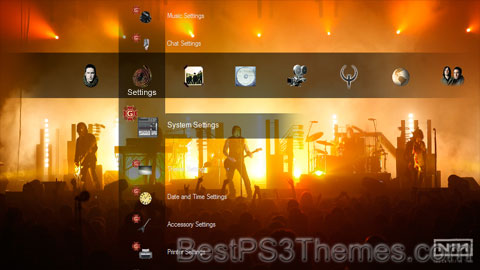
    Nine Inch Nails Theme 2
    (16 backgrounds)

    Nine Inch Nails
    Atticus Ross (left) and Trent Reznor (right) performing in October 2018
    Atticus Ross (left) and Trent Reznor (right) performing in October 2018
    Background information
    OriginCleveland, Ohio, U.S.
    Genres
    Discography
    Years active1988–present
    Labels
    Members
    Past membersList of Nine Inch Nails band members
    Websitenin.com

    Nine Inch Nails, commonly abbreviated as NIN, stylized as NIИ, is an American industrial rock band formed in Cleveland in 1988. Singer, songwriter, multi-instrumentalist, and producer Trent Reznor was the only permanent member of the band until his frequent collaborator, Atticus Ross, joined in 2016. The band's debut album, Pretty Hate Machine (1989), was released via TVT Records. After disagreeing with TVT about how to promote the album, the band signed with Interscope Records and released the EP Broken (1992). The following albums, The Downward Spiral (1994) and The Fragile (1999), were released to critical acclaim and commercial success.

    Following a hiatus, Nine Inch Nails resumed touring in 2005 and released their fourth album With Teeth (2005). Following the release of the next album Year Zero (2007), the band left Interscope after a feud. Nine Inch Nails continued touring and independently released Ghosts I–IV (2008) and The Slip (2008) before a second hiatus. Their eighth album, Hesitation Marks (2013), was followed by a trilogy which consisted of the EPs Not the Actual Events (2016) and Add Violence (2017) and their ninth album Bad Witch (2018). In 2020, Nine Inch Nails simultaneously released two further installments in the Ghosts series: Ghosts V: Together and Ghosts VI: Locusts.

    When touring, Reznor typically assembles a live band to perform with him under the Nine Inch Nails name. This live band has varied over the decades, with various members leaving and returning; the most recent lineup consists of Robin Finck (who initially joined in 1994), Alessandro Cortini (who initially joined in 2005), and Ilan Rubin (who initially joined in 2008) alongside Reznor and Ross. The band's concerts are noted for their extensive use of thematic visual elements, complex special effects, and elaborate lighting. Songs are often rearranged to fit any given performance, and melodies or lyrics of songs that are not scheduled to be performed are sometimes assimilated into other songs.

    Nine Inch Nails have sold over 20 million records and been nominated for 13 Grammy Awards, winning for the songs "Wish" in 1992 and "Happiness in Slavery" in 1996. Time magazine named Reznor one of its most influential people in 1997, while Spin magazine has described him as "the most vital artist in music". In 2004, Rolling Stone placed Nine Inch Nails at No. 94 on its list of the 100 greatest artists of all time. Nine Inch Nails were inducted into the Rock and Roll Hall of Fame in 2020, after being nominated in 2014 (their first year of eligibility) and again in 2015.

    History[edit]

    Formation (1987–1988)[edit]

    The letters N, I, and a backwards N set in a strong typeface within a simple black border.
    The band's logo, designed by Reznor and Gary Talpas

    While living in Cleveland in 1987, Trent Reznor played keyboards in the Exotic Birds, a synthpop band managed by John Malm Jr.[1]: 38  Reznor became friends with Malm,[2] who informally became his manager when he left to work on his own music.[3] At the time, Reznor was employed as an assistant engineer and janitor at Right Track Studios.[4] Studio owner Bart Koster granted Reznor free access to the studio between bookings to record demos,[5][6] commenting that it cost him nothing more than "a little wear on [his] tape heads".[7] Unable to find a band that could articulate the material as he desired, Reznor was inspired by Prince to play all instruments himself except drums, which he programmed electronically.[8] He has continued to play most parts on Nine Inch Nails recordings ever since.[2]

    The first Nine Inch Nails performance took place at the Phantasy Theater in Lakewood, Ohio, on October 21, 1988.[9] Soon after, following their live support of Skinny Puppy, Reznor aimed to release one 12-inch single on a small European label.[10] Several labels responded favorably to the demo material and Reznor signed with TVT Records.[4] Nine demos, recorded live in November 1988 and collectively known as Purest Feeling, were released in revised form on the first studio album, Pretty Hate Machine (1989).[1]: 41  The overall sound on Purest Feeling is lighter than that of Pretty Hate Machine; several songs contain more live drumming and guitar, as well as a heavier use of film samples.[11]

    Reznor chose the name "Nine Inch Nails" because it "abbreviated easily" rather than for "any literal meaning".[12] Other rumored explanations have circulated, alleging that Reznor chose to refer to Jesus's crucifixion with nine-inch spikes,[13]: 57  or Freddy Krueger's nine-inch fingernails.[14] The Nine Inch Nails logo first appeared on the music video for their debut single, "Down in It". Reznor and Gary Talpas designed the logo, inspired by Tibor Kalman's typography on the Talking Heads album Remain in Light.[15][16] The logo features the band's initials, with the second N mirrored. Talpas, a native of Cleveland, continued to design Nine Inch Nails packaging until 1997.[17]

    Pretty Hate Machine (1988–1991)[edit]

    Written, arranged, and performed by Reznor,[18] Nine Inch Nails' first album Pretty Hate Machine debuted in 1989.[19] It marked his first collaboration with Adrian Sherwood (who produced the lead single "Down in It" in London without meeting Reznor face-to-face)[10] and Mark "Flood" Ellis.[1]: 42  Reznor asked Sean Beavan to mix the demos of Pretty Hate Machine, which had received multiple offers for record deals.[20] He mixed sound during Nine Inch Nails' live concerts for several years,[21] eventually becoming an unofficial member of the live band and singing live backup vocals from his place at the mixing console.[22] Flood's production would appear on each major Nine Inch Nails release until 1994, and Sherwood has made remixes for the band as recently as 2000. Reznor and his co-producers expanded upon the Right Track Studio demos by adding singles "Head Like a Hole" and "Sin".[23] Rolling Stone's Michael Azerrad described the album as "industrial-strength noise over a pop framework" and "harrowing but catchy music";[24] Reznor proclaimed this combination "a sincere statement" of "what was in [his] head at the time".[25] In fact, the song "Down in It" spent over two months on Billboard's club-play dance chart.[26] After spending 113 weeks on the Billboard 200,[27] Pretty Hate Machine became one of the first independently released records to attain platinum certification.[4]

    A man caked in mud screaming into a microphone.
    Reznor during the 1991 Lollapalooza festival

    Three music videos were created in promotion of the album. MTV aired the videos for "Down in It" and "Head Like a Hole", but an explicit video for "Sin" was only released in partial form for Closure. The original version of the "Down in It" video ended with the implication that Reznor's character had fallen off a building and died in the street.[28] This footage attracted the attention of the FBI.[29]

    In 1989, while doing promotion for the album, the band members were asked on what shows they would like to appear. They jokingly replied (possibly while intoxicated) that they would like to appear on Dance Party USA, since it was the most absurd option they could think of at the time. Much to their surprise, they were booked on the show, and made an appearance.[30]

    In 1990, Nine Inch Nails began the Pretty Hate Machine Tour Series, in which it toured North America as an opening act for alternative rock artists such as Peter Murphy and the Jesus and Mary Chain.[1]: 41 [4][31] Reznor began smashing his equipment while on stage; Rockbeat interviewer Mike Gitter attributed the live band's early success in front of rock oriented audiences to this aggressive attitude.[32] Nine Inch Nails then embarked on a world tour that continued through the first Lollapalooza festival in 1991.[1]: 42 

    Broken (1992–1993)[edit]

    After a poor European reception opening for Guns N' Roses,[33] the band returned to the US amid pressure from TVT to produce a follow-up to Pretty Hate Machine.[34] After finding out they were hindering control of his project, Reznor criticized the labeling of Nine Inch Nails as a commercially oriented band and demanded his label terminate his contract, but they ignored his plea.[35] In response, Reznor secretly began recording under various pseudonyms to avoid record company interference.[36] Involved in a feud with TVT, he signed a record deal with Interscope Records and created Nothing Records:

    We made it very clear we were not doing another record for TVT. But they made it pretty clear they weren't ready to sell. So I felt like, well, I've finally got this thing going but it's dead. Flood and I had to record Broken under a different band name, because if TVT found out we were recording, they could confiscate all our shit and release it. Jimmy Iovine got involved with Interscope, and we kind of got slave-traded. It wasn't my doing. I didn't know anything about Interscope. And I was real pissed off at him at first because it was going from one bad situation to potentially another one. But Interscope went into it like they really wanted to know what I wanted. It was good, after I put my raving lunatic act on.[1]: 42 

    In 1992, Nine Inch Nails relocated to 10050 Cielo Drive, Benedict Canyon, Los Angeles (renamed "Le Pig" by Reznor), the site of the Tate murders, when Charles Manson's "family" murdered Sharon Tate,[37] wife of noted film director Roman Polanski, and four of her friends.[1]: 42 [4] The band used it to record Broken, an extended play (EP) that was the first Nine Inch Nails release distributed by Interscope Records[38] and reached the top 10 on the Billboard 200.[39] In the liner notes, Reznor credited the 1991 Nine Inch Nails touring band as an influence on the EP's sound.[40] He characterized Broken as a guitar-based "blast of destruction", and as "a lot harder ... than Pretty Hate Machine".[13] The inspiration for the harder sound came from the way the live band played during concerts such as Lollapalooza.[41] Songs from Broken earned Nine Inch Nails two Grammy Awards: a performance of the EP's first single "Happiness in Slavery" from Woodstock '94,[42] and the second single "Wish".[42] In reference to receiving the Grammy Award for Best Metal Performance for "Wish", Reznor joked that "Wish" became "the only song to ever win a Grammy that says 'fist fuck' in the lyrics."[43] Against touring of the brand new material, Reznor began living and recording full-time at Le Pig, working on a follow-up free of restrictions from his record label.[1]: 42 

    Peter Christopherson of the bands Coil and Throbbing Gristle directed a performance video for "Wish",[44] but the EP's most controversial video accompanied "Happiness in Slavery".[45] The video was almost universally banned[45] for its graphic depiction of performance artist Bob Flanagan disrobed and lying on a machine that pleases, tortures, then (apparently) kills him.[46] A third video for "Pinion", partially incorporated into MTV's Alternative Nation opening sequence, showed a toilet that apparently flushes into the mouth of a person in bondage.[47] Reznor and Christopherson compiled the three clips along with footage for "Help Me I Am in Hell" and "Gave Up" into a longform music video titled Broken.[48] It depicts the murder of a young man who is kidnapped and tortured while forced to watch the videos.[48] This footage was never officially released, but instead appeared covertly among tape trading circles.[46][48] A separate performance video for "Gave Up" featuring Richard Patrick and Marilyn Manson was filmed at Le Pig. A live recording of "Wish" was also filmed, and both videos appeared in Closure.[49]

    Broken was followed by the companion remix EP Fixed in late 1992.[48] The only track that was left off the final version of the release is the remix of "Last", produced by Butch Vig (the outro of the "Last" remix is heard in "Throw This Away", which also includes Reznor's remix of "Suck").[50] The unedited version appeared on the internet as an 8-bit mono 11 kHz file, "NIN_LAST.AIFF", available by FTP from cyberden.com in 1993; it has been removed from the website, but can still be found on p2p networks (Reznor subsequently made it available in higher quality (256 kbit/s mp3) at remix.nin.com). Vig later spoke about his remix while answering questions on a music production forum, saying "I started recording a lot of new parts, and took it in a much different direction. When it was finished, Trent thought the front part of the mix didn't fit the EP, so he just used the ending. I'm glad it's on his website. Duke and Steve worked with me on the remix, in the very early days of Garbage."[51]

    The Downward Spiral (1993–1997)[edit]

    Reznor performing during the Self-Destruct tour, circa 1994–1995

    Early ideas for The Downward Spiral arose after the Lollapalooza 1991 festival's concerts ended in September.[52] Reznor elaborated the album's themes into lyrics.[1]: 42  Despite initially choosing to record the album in New Orleans,[53] Reznor searched for and moved to 10050 Cielo Drive, in Los Angeles (known as the Manson Murder House)[54] renting it for $11,000 per month from July 4, 1992, the start of the making of both Broken and The Downward Spiral.[55][56]

    Nine Inch Nails' second studio album, The Downward Spiral, entered the Billboard 200 at number two,[57] and is the band's highest seller in the US, over four million copies, among five million worldwide.[58] Influenced by Pink Floyd and by David Bowie of the 1970s,[4] The Downward Spiral's diverse textures and moods depict a protagonist's mental progress.[59] Flood co-produced several tracks, while Alan Moulder mixed most,[60] and later found more extensive production duties on future albums. Reznor invited Sean Beavan to work on The Downward Spiral.[1] After contributing to remixes of Nine Inch Nails songs, such as "Closer", Beavan mixed and co-produced Marilyn Manson's Antichrist Superstar in 1996.[61] The Downward Spiral, like Broken, was recorded at Le Pig Studios.[37] "March of the Pigs" and "Closer" were singles. Two other tracks, "Hurt" and "Piggy", though not singles, were issued to radio. Also in 1994, the band released the promotional single "Burn", which Reznor produced, on the soundtrack of Oliver Stone film Natural Born Killers.[62] as well as a cover of the Joy Division song "Dead Souls" on the soundtrack to the film The Crow, which went to number 1 on the Billboard 200 album chart.[63]

    The music video for "Closer", directed by Mark Romanek, was in MTV's frequent rotation, although the network, deeming it too graphic, heavily censored the original.[64] The video shows events in a laboratory dealing with religion, sexuality, animal cruelty, politics, and terror; controversial imagery included a nude bald woman with a crucifix mask, a monkey tied to a cross, a pig's head spinning on some type of machine, a diagram of a vulva, Reznor wearing an S&M mask while swinging in shackles, and of him wearing a ball gag.[65] A radio edit that partially mutes the song's explicit lyrics also received extensive airtime.[1]: 96 

    Contemporary critics generally praised The Downward Spiral, now classed among the most important albums of the 1990s. In 2005, Spin ranked it 25th among the "100 Greatest Albums, 1985–2005".[66] In 2003, Rolling Stone ranked it 200 among "The 500 Greatest Albums of All Time".[67] Blender named it the 80th Greatest American Album. It was ranked No. 488 in the book The Top 500 Heavy Metal Albums of All Time by Martin Popoff. In 2001 Q named The Downward Spiral as one of the 50 Heaviest Albums of All Time;[68] in 2010 the album was ranked No. 102 on their 250 Best Albums of Q's Lifetime (1986–2011) list.[69] After The Downward Spiral's release, Reznor produced an accompanying remix album entitled Further Down the Spiral, the only non-major Nine Inch Nails release to be certified gold in the United States[58] and among the best-selling remix albums of all time. It contained contributions from Coil with Danny Hyde, electronic musician Aphex Twin, producer Rick Rubin, and Jane's Addiction guitarist Dave Navarro, among others.[70]

    After The Downward Spiral's 1994 release, the live band supported it by embarking on the Self Destruct Tour. The stage set-up featured dirty curtains, rising and lowering for visuals shown during songs such as "Hurt". The tour debuted the band's grungy, messy image as the members appeared in ragged attire slathered in corn starch. Performances were violent and chaotic, band members often injuring themselves by attacking each other, diving into the crowd, and destroying their instruments to close.[71] The widest mainstream audience was a mud-soaked performance at Woodstock '94, and seen by Pay-Per-View in up to 24 million homes.[72][73] Enjoying mainstream success thereafter, Nine Inch Nails then performed amid greater production values, adding theatrical visual elements. Supporting acts on tour included the Jim Rose Circus and Marilyn Manson.[74] Released in 1997, the Closure video documented highlights from the tour, including full live videos of "Eraser", "Hurt" and a one-take "March of the Pigs" clip directed by Peter Christoperson.[75] In 1997 Reznor also produced the soundtrack to the David Lynch film Lost Highway, which featured one new Nine Inch Nails song, "The Perfect Drug".[76] Around this time, Reznor's studio perfectionism,[77] struggles with addiction, and bouts of writer's block prolonged the production of The Fragile.[78]

    The Fragile (1998–2002)[edit]

    Five years elapsed between The Downward Spiral and Nine Inch Nails' next studio album, The Fragile, which arrived as a double album in September 1999.[79] The Fragile was conceived by making "songwriting and arranging and production and sound design ... the same thing. A song would start with a drum loop or a visual and eventually a song would emerge out of it and that was the song."[80] Canadian rock producer Bob Ezrin was consulted on the album's track listing; the liner notes state that he "provided final continuity and flow."[81]

    On the heels of the band's previous successes, media anticipation surrounded The Fragile more than a year before its release,[82] when it was already described as "oft-delayed".[83] The album debuted at number one on the Billboard 200, selling 228,000 copies in its first week and receiving generally positive reviews.[79] Spin hailed The Fragile as the "album of the year", whereas Pitchfork Media panned its "melodramatic" lyrics.

    3 Hot Girls

    3 Hot Girls theme by hmahmood

    Download: 3HotGirls.p3t

    3 Hot Girls Theme
    (3 backgrounds, HD only)

    P3T Unpacker v0.12
    Copyright (c) 2007. Anoop Menon

    This program unpacks Playstation 3 Theme files (.p3t) so that you can touch-up an existing theme to your likings or use a certain wallpaper from it (as many themes have multiple). But remember, if you use content from another theme and release it, be sure to give credit!

    Download for Windows: p3textractor.zip

    Instructions:

    Download p3textractor.zip from above. Extract the files to a folder with a program such as WinZip or WinRAR. Now there are multiple ways to extract the theme.

    The first way is to simply open the p3t file with p3textractor.exe. If you don’t know how to do this, right click the p3t file and select Open With. Alternatively, open the p3t file and it will ask you to select a program to open with. Click Browse and find p3textractor.exe from where you previously extracted it to. It will open CMD and extract the theme to extracted.[filename]. After that, all you need to do for any future p3t files is open them and it will extract.

    The second way is very simple. Just drag the p3t file to p3textractor.exe. It will open CMD and extract the theme to extracted.[filename].

    For the third way, first put the p3t file you want to extract into the same folder as p3textractor.exe. Open CMD and browse to the folder with p3extractor.exe. Enter the following:
    p3textractor filename.p3t [destination path]Replace filename with the name of the p3t file, and replace [destination path] with the name of the folder you want the files to be extracted to. A destination path is not required. By default it will extract to extracted.filename.

Jessica Alba #5

Jessica Alba theme by Travis Singleton

Download: JessicaAlba_5.p3t
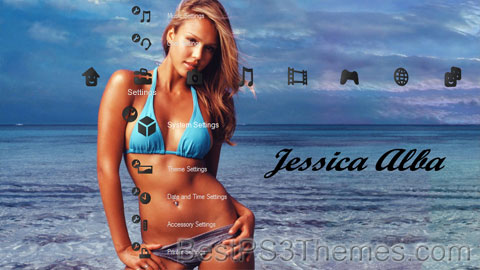
Jessica Alba Theme 5
(3 backgrounds)

Jessica Alba
Alba in May 2016
Born
Jessica Marie Alba

(1981-04-28) April 28, 1981 (age 43)
Other namesJessica Warren[1]
Occupations
  • Actress
  • businesswoman
Years active1992–present
Spouse
Cash Warren
(m. 2008)
Children3

Jessica Marie Alba (/ˈælbə/ AL-bə; born April 28, 1981)[2] is an American actress. She began her acting career at age 13 in Camp Nowhere (1994), followed up by The Secret World of Alex Mack (1994), and rose to prominence at age 19 as the lead actress of the television series Dark Angel (2000–2002), for which she received a Golden Globe nomination.[3][4][5]

Her big screen breakthrough came in Honey (2003). She soon established herself as a Hollywood actress, and has starred in numerous box office hits throughout her career, including Fantastic Four (2005), Fantastic Four: Rise of the Silver Surfer (2007), Good Luck Chuck (2007), The Eye (2008), Valentine's Day (2010), Little Fockers (2010), and Mechanic: Resurrection (2016).[6] She is a frequent collaborator with director Robert Rodriguez, having starred in Sin City (2005), Machete (2010), Spy Kids: All the Time in the World (2011), Machete Kills (2013), and Sin City: A Dame to Kill For (2014). From 2019 to 2020, Alba starred in the Spectrum action crime series L.A.'s Finest.

In 2011, Alba co-founded The Honest Company, a consumer goods company that sells baby, personal and household products.[7] A number of magazines, including Men's Health, Vanity Fair and FHM, have included Alba on their lists of the world's most beautiful women.

Early life[edit]

Jessica Marie Alba was born in Pomona, California[8] on April 28, 1981, to Catherine Louisa (née Jensen) and Mark David Alba. Her mother has Danish, Welsh, German, English and French ancestry, while her paternal grandparents, who were born in California, were children of Mexican immigrants.[9] She has a younger brother, Joshua. Her third cousin, once removed, is writer Gustavo Arellano.[10] Her father's Air Force career took the family to Biloxi, Mississippi, and Del Rio, Texas, before they settled in Claremont, California when she was nine years old.[4] Alba has described her family as "very conservative… a traditional, Catholic, Latin American family", and herself as very liberal; she says she identified as a "feminist" as early as age five.[11]

Alba's early life was marked by a multitude of physical maladies. During childhood, she suffered from pneumonia four to five times a year and had partially collapsed lungs twice as well as a ruptured appendix and tonsillar cyst. She has also had asthma since she was a child.[4] She became isolated from other children at school because she was hospitalized so often, no one knew her well enough to befriend her.[12] She has said that her family's frequent moving also contributed to her isolation from her peers.[11] She graduated from Claremont High School at age 16 and subsequently attended the Atlantic Theater Company.[13]

Acting career[edit]

1992–1999: Beginnings[edit]

Alba in 2007

Alba expressed an interest in acting from age five. In 1992, the eleven year old Alba persuaded her mother to take her to an acting competition in Beverly Hills, where the grand prize was free acting classes. She won the grand prize, and took her first acting lessons. An agent signed her nine months later.[4][14] Her first film appearance was a small role in the 1994 feature Camp Nowhere as Gail. She was originally hired for two weeks but her role turned into a two-month job when one of the prominent actresses dropped out.[3]

Alba appeared in two national television commercials for Nintendo and J. C. Penney as a child. She was later featured in several independent films. She branched out into television in 1994 with a recurring role as the vain Jessica in three episodes of the Nickelodeon comedy series The Secret World of Alex Mack.[15] She then performed the role of Maya in the first two seasons of the 1995 television series Flipper.[3][15] Under the tutelage of her lifeguard mother, Alba learned to swim before she could walk, and was a PADI certified scuba diving skills which were put to use on the show, which was filmed in Australia.[15][16]

In 1998, she appeared as Melissa Hauer in a first-season episode of the Steven Bochco crime drama Brooklyn South, as Leanne in two episodes of Beverly Hills, 90210, and as Layla in an episode of Love Boat: The Next Wave.[17] In 1999, she appeared in the Randy Quaid comedy feature P.U.N.K.S..[3] After Alba graduated from high school, she studied acting with William H. Macy and his wife, Felicity Huffman, at the Atlantic Theater Company, which was developed by Macy and Pulitzer Prize-winning playwright and film director, David Mamet.[14][18] Alba rose to greater prominence in Hollywood in 1999 after appearing as a member of a snobby high school clique tormenting an insecure copy editor in the romantic comedy Never Been Kissed, opposite Drew Barrymore, and as the female lead in the little seen comedy horror film Idle Hands, alongside Devon Sawa.[6]

2000–2006: Worldwide recognition[edit]

Her big break came when James Cameron picked Alba from over 1000 candidates for the role of the genetically engineered super-soldier Max Guevara on the FOX sci-fi television series Dark Angel.[19] The series ran for two seasons, until 2002, and earned Alba critical acclaim, a Golden Globe nomination, the Teen Choice Award for Choice Actress, and a Saturn Award for Best Actress.[6][20] Her role has been cited as a feminist character and is considered a symbol of female empowerment. Writing for the University of Melbourne, Bronwen Auty considered Max "the archetypal modern feminist hero—a young woman empowered to use her body actively to achieve goals", citing Max's refusal to use firearms and instead using martial arts and knowledge as weapons.[21] In 2004, Max was ranked #17 in TV Guide's list of "25 Greatest Sci-Fi Legends".[22][23] Her Dark Angel role led to significant parts in films. She had her big screen breakthrough in 2003 when she starred as an aspiring dancer-choreographer in Honey.[24] Rotten Tomatoes' critical consensus was: "An attractive Jessica Alba and energetic dance numbers provide some lift to this corny and formulaic movie".[25] Budgeted at US$18 million, the film made US$62.2 million.[26]

Alba next played exotic dancer Nancy Callahan, as part of a long ensemble cast, in the neo-noir crime anthology film Sin City (2005), written, produced, and directed by Robert Rodriguez and Frank Miller. It is based on Miller's graphic novel of the same name.[27] She had not heard about the novel prior to her involvement with the film, but was eager to work with Rodriguez.[28] The film was a critical darling and grossed US$158.8 million. She received a MTV Movie Award for Sexiest Performance.[29][30]

Alba at a screening for The Eye (2008)

Alba portrayed the Marvel Comics character Invisible Woman in Fantastic Four (also 2005), alongside Ioan Gruffudd, Chris Evans, Michael Chiklis, and Julian McMahon.[31] The Guardian, in its review for the film, noted: "Feminists and non-feminists alike must absorb the Fantastic Four's most troubling paradox: having been admitted to the story on the grounds of her beauty, [Alba's] superpower is to be invisible".[32] The film was a commercial success despite negative reviews, grossing US$333.5 million worldwide. At the 2006 MTV Movie Awards, Alba earned nominations for Best Hero and Best On-Screen Team. Her last 2005 film was the thriller Into the Blue, where she portrayed, opposite Paul Walker, one half of a couple who find themselves in trouble with a drug lord after finding the illicit cargo of a sunken airplane. The film saw moderate box office returns, with a US$44.4 million worldwide gross.[33] She hosted the 2006 MTV Movie Awards and performed sketches spoofing the movies King Kong, Mission: Impossible III and The Da Vinci Code.[34]

2007–2010: Romantic comedies[edit]

Alba reprised her role in Fantastic Four: Rise of the Silver Surfer, released in June 2007. According to Alba, Tim Story's direction during an emotional scene almost made her quit acting. "[He told me] 'It looks too real. It looks too painful. Can you be prettier when you cry? Cry pretty, Jessica.' He was like, 'Don't do that thing with your face. Just make it flat. We can CGI the tears in.'" According to Alba, this experience filled her with self-doubt: "And then it all got me thinking: Am I not good enough? Are my instincts and my emotions not good enough? Do people hate them so much that they don't want me to be a person? Am I not allowed to be a person in my work? And so I just said, 'Fuck it. I don't care about this business anymore.'"[35] The film grossed US$290 million globally.[36]

In Good Luck Chuck (also 2007), Alba portrayed the love interest of a womanizer dentist. She posed for one of the Good Luck Chuck's theatrical posters parodying the well-known Rolling Stone cover photographed by Annie Leibovitz featuring John Lennon and Yoko Ono in similar poses. While the film was heavily panned by critics, it made almost US$60 million upon its release.[37] Her third starring vehicle in 2007 was the psychological thriller Awake, portraying the girlfriend of a wealthy man who is about to have a heart transplant.[38] Reviews were lukewarm, but Roger Ebert praised her performance,[39] and budgeted at around US$8 million, the film made US$32.7 million.[40]

In February 2008, she hosted the Academy of Motion Picture Arts and Sciences' Science and Technical Awards.[41] Alba made her acting transition to the horror genre in the film The Eye, a remake of the Hong Kong original, in which she obtained the role of a successful classical violinist who receives an eye transplant that allows her to see into the supernatural world.[42] Though the film was not well received by critics,[43] her performance itself received mixed reviews. She garnered a Teen Choice for Choice Movie Actress: Horror–Thriller[44] and a Razzie Award nomination for Worst Actress (shared with The Love Guru).[45] In 2008, she also played a salesgirl in the independent romantic comedy Meet Bill, alongside Logan Lerman and Elizabeth Banks, and starred in the comedy The Love Guru, as a woman who inherits the Toronto Maple Leafs hockey team, opposite Mike Myers and Justin Timberlake.[46] Mick LaSalle, of the San Francisco Chronicle, noting that she was "prominently" in the film, felt that she "finally seems relaxed on camera".[47] The Love Guru was a critical and commercial flop.[48]

Alba in 2010

While Alba did not have any film release in 2009, five high-profile films released throughout 2010 featured her in significant roles. Her first role in the year was that of a prostitute in The Killer Inside Me, an adaptation of the book of the same name, opposite Kate Hudson and Casey Affleck, which premiered at the Sundance Film Festival to polarized reactions from critics.[49][50][51] Her next film was the romantic comedy Valentine's Day, in which she played the girlfriend of a florist as part of a long ensemble cast consisting of Jessica Biel, Bradley Cooper, Taylor Lautner and Julia Roberts, among others. Despite negative reviews, the film was a commercial success, with a worldwide gross of US$216.5 million.[52] In the action film Machete, Alba reunited with director Robert Rodriguez, taking on the role of an immigration officer torn between enforcing the law and doing what is popular in the eyes of her family. Machete made over US$44 million globally.[53]

The drama An Invisible Sign of My Own, which Alba filmed in late 2008, premiered at the Hamptons Film Festival. In it, she portrayed a painfully withdrawn young woman.[54][55][56] Her last 2010 film was the comedy Little Fockers, in which she played an extrovert drug representative, reuniting with Robert De Niro, who was also in Machete. Despite negative reviews from critics, the film grossed over US$310 million worldwide.[57] For all her 2010 roles, she received a Razzie Award for Worst Supporting Actress.[58]

2011–present: action and independent media productions[edit]

In 2011, Alba worked for the third time with Robert Rodriguez in the film Spy Kids: All the Time in the World, portraying a retired spy who is called back into action. To bond with her new stepchildren, she invites them along.[59] The film paled at the box office in comparison to the previous films in the franchise, but was still a moderate success, taking in US$85 million around the globe.[60] Alba next appeared with Adam Scott, Richard Jenkins, Jane Lynch, Mary Elizabeth Winstead, and Catherine O'Hara in the comedy A.C.O.D. (2013), portraying what the Washington Post described as a "fellow child of divorce", with whom Scott's character "almost cheats on" her girlfriend.[61] ScreenRant critic Ben Kendrick wrote: "[Winstead] and [Alba] also deliver in their contributions – though both of their characters are mainly designed to be mirrors for Carter to examine his own life and choices."[62] A.C.O.D. received a limited theatrical run in North America.[63] In 2013, Alba also made her voice acting debut in the moderately successful animated film Escape from Planet Earth.[64]

Alba worked once again with director Rodriguez for two film sequels. She reprised her role of an Immigration Officer, in an uncredited cameo appearance, in Machete Kills (2013), which flopped with critics and audiences,[65] and her much larger role of stripper Nancy Callahan, seeking to avenge her late protector, in Sin City: A Dame to Kill For, which was released in August 2014, on 2D and 3D.[66][67][68] Unlike the first film, A Dame to Kill For was a commercial failure, grossing US$39 million against its US$65 million production budget,[69] and received mixed reviews from film critics. Variety felt it was a "late, limp attempt to turn Alba's character from an exploited figure into an empowered one".[70] She next took on the roles of a cabaret show performer in the dramedy Dear Eleanor (2014), the athletic girlfriend of a successful and well-respected English professor in the romantic comedy Some Kind of Beautiful (2014), a receptionist at a limo company in the thriller Stretch (also 2014), an emotionally vulnerable weapons trafficker in the crime comedy Barely Lethal (2015), and that of a documentary filmmaker in the horror film The Veil (2016); all films were released for limited theatrical runs and VOD.[71][72][73]

In the action film Mechanic: Resurrection (2016), alongside Jason Statham, Alba played the girlfriend of a retired hitman. She did Krav Maga to get into shape for the film,[74] and was drawn to the strength her character exhibited, remarking: "I think for these types of movies you don't often get to see the female romantic lead kind of kick butt. I mean, it's usually she's being saved by the guy, and so it's nice that I got to come to the table with a toughness, and a real heart".[75] The film made US$125.7 million worldwide.[76]

She will star in and executive produce a new documentary series for Disney+ called Parenting Without Borders (working title) which will focus on families around the world and their beliefs and culture.[77]

Other endeavors[edit]

The Honest Company[edit]

In January 2012, Alba and business partner Christopher Gavigan launched The Honest Company, selling a collection of household goods, diapers, and body care products.[7] The company was successful, and was valued at US$1 billion as of 2014.[78]

In early 2013, Alba released her book, The Honest Life, based on her experiences creating a natural, non-toxic life for her family. The book became a New York Times Best Seller.[79][80] In October 2015, Alba launched a collection of skin care and beauty products called Honest Beauty.[81][82]

As of April 2022, Alba owned 6.5 percent of the company. She was employed as the company's chief creative officer, receiving an annually base salary of $700,000 and restricted stock valued $1,500,000.[83] Alba stepped down as chief creative officer in April 2024.[84]

Charity and activism[edit]

Alba posed for a bondage-themed print advertising campaign by Declare Yourself, a campaign encouraging voter registration among youth for the 2008 United States presidential election. The ads, photographed by Mark Liddell,[85][86] feature Alba wrapped in and gagged with black tape, and drew national media attention.[86] Alba said of doing the advertisements that "it didn't freak me out at all." Alba also said, "I think it is important for young people to be aware of the need we have in this country to get them more active politically...People respond to things that are shocking."[86]

Alba endorsed and supported Democratic presidential hopeful Barack Obama during the 2008 primary season.[87] She also endorsed Hillary Clinton's campaign for president.[88]

Alba in 2009

In June 2009, while filming The Killer Inside Me in Oklahoma City, Alba was involved in a controversy with residents when she pasted posters of sharks around town.[89] Alba said that she was trying to bring attention to the diminishing population of great white sharks. Media outlets speculated that Alba would be pursued and charged with vandalism.[90] On June 16, 2009, Oklahoma City police said that they would not pursue criminal charges against Alba, because none of the property owners wanted to pursue it.[91][92] Alba apologized in a statement to People magazine and said that she regretted her actions.[91] She later donated an undisclosed amount of money (over US$500)[93] to the United Way, whose billboard she had obscured with one of the shark posters.[94][95][96][97]

In 2011, Alba participated in a two day lobbying effort in Washington D.C. in support of the Safe Chemicals Act, a revision of the Toxic Substances Control Act of 1976.[98][99] Alba returned to Capitol Hill in 2015 to lobby lawmakers as they once again debated a replacement for the 1976 Substances Control Act.[100] She has also been a strong supporter of gay rights and on June 27, 2013, she expressed her delight with the Supreme Court's decision to strike down DOMA on her Twitter account. She tweeted "#equality #love".[101]

Alba's charity work has included participation with Clothes Off Our Back, Habitat for Humanity, National Center for Missing and Exploited Children, Project HOME, RADD, Revlon Run/Walk for Women, SOS Children's Villages, Soles4Souls, Step Up and Baby2Baby.[102][103] Alba is an ambassador for the 1Goal movement to provide education to children in Africa.[104] She has also served as a Baby2Baby "angel" ambassador, donating and helping to distribute items such as diapers and clothing to families in Los Angeles.[105] In 2015, Alba and The Honest Company sponsored a laboratory at Mount Sinai Hospital in New York City. The lab was announced to be a specialized room designed to keep out dust and particles, where a team of epidemiologists would research links between household chemicals and autism.[106]

Public image[edit]

Smiling young woman with wavy hair pulled up in a loose bun, wearing a gold low-cut dress and accompanied by a man. She is signing autographs.

Grand Theft Auto IV #8

Grand Theft Auto IV theme by M93T

Download: GTAIV_8.p3t
Grand Theft Auto IV Theme 8
(11 backgrounds)

Grand Theft Auto IV
Developer(s)Rockstar North[a]
Publisher(s)Rockstar Games
Producer(s)Leslie Benzies
Programmer(s)
  • Adam Fowler
  • Alexander Roger
  • Obbe Vermeij
Artist(s)Aaron Garbut
Writer(s)
Composer(s)Michael Hunter
SeriesGrand Theft Auto
EngineRAGE
Platform(s)
ReleasePlayStation 3, Xbox 360
  • WW: 29 April 2008
Windows
  • NA: 2 December 2008
  • PAL: 3 December 2008
Genre(s)Action-adventure
Mode(s)Single-player, multiplayer

Grand Theft Auto IV is a 2008 action-adventure game developed by Rockstar North and published by Rockstar Games. It is the sixth main entry in the Grand Theft Auto series, following 2004's Grand Theft Auto: San Andreas, and the eleventh entry overall. Set in the fictional Liberty City, based on New York City, the single-player story follows Eastern European war veteran Niko Bellic and his attempts to escape his past while under pressure from high-profile criminals. The open world design lets players freely roam Liberty City, consisting of three main islands, and the neighbouring state of Alderney, which is based on New Jersey.

The game is played from a third-person perspective and its world is navigated on foot and by vehicle. Throughout the single-player mode, players control Niko Bellic. An online multiplayer mode is also included with the game, allowing up to 32 players to engage in both cooperative and competitive gameplay in a recreation of the single-player setting.[b] Two expansion packs were later released for the game, The Lost and Damned and The Ballad of Gay Tony, which both feature new plots that are interconnected with the main Grand Theft Auto IV storyline, and follow new protagonists.

Development of Grand Theft Auto IV began soon after the release of San Andreas and was shared between many of Rockstar's studios worldwide. The game introduced a shift to a more realistic and detailed style and tone for the series. Unlike previous entries, Grand Theft Auto IV lacked a strong cinematic influence, as the team attempted an original approach to the story. As part of their research for the open world, the development team conducted extensive field research in New York, capturing over 100,000 photographs and several hours of video. The developers considered the world to be the most important element of the game; though not the largest map in the series, they considered it comparable in scope due to its verticality and level of detail. The budget climbed to over US$100 million, making it one of the most expensive video games to develop.

Grand Theft Auto IV was released for the PlayStation 3 and Xbox 360 consoles in April 2008, and for Windows in December. Upon release, the game received critical acclaim, with praise particularly directed at the narrative and open-world design. Grand Theft Auto IV broke industry sales records and became the fastest-selling entertainment product in history at the time, earning US$310 million in its first day and US$500 million in its first week. Considered one of the most significant titles of the seventh generation of video games, and by many critics as one of the greatest video games of all time, it won year-end accolades, including Game of the Year awards from several gaming publications. It is among the best-selling video games with over 25 million copies sold by 2013. The game generated controversy, with criticism directed at the game's depiction of violence and players' ability to drink-drive. Its successor, Grand Theft Auto V, was released in September 2013.

Gameplay[edit]

Grand Theft Auto IV is an action-adventure game played from a third-person perspective.[2] Players complete missions—linear scenarios with set objectives—to progress through the story. It is possible to have several active missions running at one time, as some require players to wait for further instructions or events. Outside of missions, players can freely roam the game's open world and complete optional side missions.[3] Composed of the fictional city of Liberty City, the world is larger in area than most earlier Grand Theft Auto series entries.[4] At the beginning of the game, players can only explore the first island—composed of Dukes and Broker—with all other islands unlocking as the story progresses.[5]

Players use melee attacks, firearms and explosives to fight enemies, and may run, jump, swim or use vehicles to navigate the game's world. There is a first-person perspective option when using vehicles. In combat, auto-aim and a cover system can be used as assistance against enemies. Should players take damage, their health meter can be fully regenerated by consuming food or drinks, using medical kits, or calling for paramedics.[6] If players commit crimes, the game's law enforcement agencies may respond as indicated by a "wanted" meter in the head-up display (HUD). On the meter, the displayed stars indicate the current wanted level (for example, at the maximum six-star level, efforts by law enforcement to incapacitate players become very aggressive). Law enforcement officers will search for players who leave the wanted vicinity. The wanted meter enters a cool-down mode and eventually recedes when players are hidden from the officers' line of sight.[7]

The player character positioned in cover behind a vehicle, preparing to shoot at police officers on the other side of the vehicle.
Combat in Grand Theft Auto IV was reworked to include a cover system.[6]

The game's cover system allows players to move between cover, to fire blindly, aim freely, and target a specific enemy. Individual body parts can also be targeted.[8] Melee attacks include additional moves, such as dodging, blocking, disarming an opponent and counter-attacking. Body armour can be used to absorb gunshots and explosive damage, but is used up in the process. When health is entirely depleted, gameplay stops, and players respawn at the nearest hospital.[6]

The single-player mode lets players control an Eastern European war veteran, Niko Bellic. During the story, Niko meets and befriends various new characters. They can then perform favours for Niko whenever he asks; for example, his cousin Roman, who owns a taxi service, can send one of his cabs to take Niko to any destination around the city. Cabs are always available during gameplay for quick travel to a destination. Throughout the course of the game, players are also faced with morality choices, which alter the storyline appropriately depending on the player's choice. While free roaming the game world, players may engage in context-specific activities such as bowling or darts. Other available activities include a vigilante mini-game, and in-game television programming.[9][10][11] Niko has a cell phone for contacting friends and starting activities.[12] The cell phone is also used to access the game's online multiplayer mode, and to enter cheat codes.[13] To access the in-game Internet, which allows Niko to send and receive emails and set up prospective dates with potential girlfriends, Niko can use Internet cafés located around the city.[14] The game also features a subway system, allowing players to quickly traverse through the game's world.[15]

The online multiplayer mode for Grand Theft Auto IV allows up to 32 players[b] to freely roam across the map. Players decide which game mode they wish to play, including deathmatches and street races. Both cooperative and competitive game modes are available, split into ranked and unranked matches.[16] For players to level up through ranks, in-game money has to be earned. The game also features a Free Mode, in which players have the entire map open to explore, with no end goal or mission to complete. Hosts of the game can control many variables, such as police presence, traffic, and weapons.[17] The multiplayer mode was discontinued on Windows in 2020.[18]

Synopsis[edit]

Setting[edit]

Grand Theft Auto IV takes place in 2008, within a redesigned version of Liberty City. The design of the city focuses on a recreation of four of the boroughs of New York City: Broker (based on Brooklyn), Dukes (Queens), Bohan (The Bronx), and Algonquin (Manhattan). The setting also includes the neighbouring state of Alderney (based on New Jersey).[19] Initially, bridges are locked down due to a terrorist threat, and police constantly pursue players if the bridges are crossed. The blockades are lifted as the story progresses, allowing the player to traverse between islands safely.

Grand Theft Auto IV is set in the fictional "HD Universe", which mirrors and parodies the real world. The previous games formed fictional universes of their own,[c] which despite having many similarities with the HD Universe, are considered to be different continuities. Hence, the Liberty City depicted in Grand Theft Auto IV is different from its previous renditions, and the game itself serves as a reboot for the series. The new timeline established by Grand Theft Auto IV would continue with two expansion packs, The Lost and Damned and The Ballad of Gay Tony, and a sequel, Grand Theft Auto V, as well as its online component, Grand Theft Auto Online.[21][22][23] The handheld game Grand Theft Auto: Chinatown Wars is also considered part of the HD Universe, because it features the same map as Grand Theft Auto IV, except for Alderney.[24]

Plot[edit]

Niko Bellic, an Eastern European ex-soldier,[25] arrives in Liberty City aboard a cargo ship, the Platypus, to escape his criminal past, pursue the American Dream, and search for the man who betrayed his unit to an ambush during a war ten years prior. Reuniting with his cousin Roman, he discovers that his tales of riches were lies concealing his small, dirty apartment, unprofitable taxi company, gambling debts, and disputes with loan sharks. Niko begins assisting Roman with his problems, which leads him to make his first criminal contacts in the city. He befriends Yardies second-in-command Little Jacob and is forced to work for Vlad Glebov, Roman's Russian loan shark, whom Niko eventually kills upon learning he had slept with Roman's girlfriend, Mallorie.

In retaliation, Niko and Roman are kidnapped by Russian mobsters on orders of their boss Mikhail Faustin and his lieutenant, Dimitri Rascalov. Indifferent to Vlad's murder, Faustin releases them and employs Niko as a hitman, eventually ordering him to kill the son of Russian crime lord Kenny Petrović. When Petrović threatens retaliation, Dimitri convinces Niko to assassinate Faustin. However, he then betrays and brings Niko to his former employer, Ray Bulgarin, who accuses Niko of stealing from him during a botched human trafficking job years earlier. Niko denies the allegation and a firefight ensues, allowing Dimitri and Bulgarin to escape.

Dimitri's men burn down Niko and Roman's apartment and taxi company, forcing them to flee to Bohan. While Niko finds work with several local drug lords, Dimitri kidnaps Roman in a failed attempt to lure Niko into a trap. Later, Niko discovers that his romantic interest, a woman named Michelle, is a government agent, who then entraps him into working for her agency. In exchange for the murders of several known or suspected terrorists, the agency clears Niko's criminal record and assists him in searching for the traitor he seeks. Niko and Roman's fortunes improve when the latter receives a large amount of insurance money from his destroyed business, which he uses to rebuild it and buy an apartment in Algonquin. Roman also proposes to Mallorie, who accepts.

While working for the Irish Mob, Niko befriends gangster Patrick "Packie" McReary and helps him and his brothers carry out various jobs, including a major bank robbery. Niko is later hired by Ray Boccino, a caporegime in the Pegorino crime family, to oversee a diamond deal, which goes awry. Boccino repays Niko by helping him find his ex-comrade Florian Cravic, now known as Bernie Crane, who claims he was not the one to betray their unit. Niko concludes that the traitor was Darko Brevic, the only other survivor. Niko continues working for the Mafia in Liberty City and eventually earns the trust of Don Jimmy Pegorino, who orders Niko to kill Boccino after suspecting him of being a police informant. Niko also helps Packie kidnap Don Giovanni Ancelotti's daughter to ransom her for the diamonds, but Bulgarin intercepts the exchange. In the ensuing firefight, the diamonds are lost.

Eventually, the government agents find Darko in Romania and bring him to Liberty City for Niko to decide his fate. Afterwards, Niko is summoned by Pegorino for one final favour: to help with a highly lucrative heroin deal in collusion with Dimitri. Niko must either agree to work with Dimitri or exact revenge on him.[26] If Niko goes through with the deal, Dimitri betrays him again,[27] kills Pegorino,[28] and attempts to kill Niko via an assassin at Roman's wedding, but accidentally kills Roman;[29] Niko retaliates by tracking and murdering Dimitri.[28] If Niko chooses to exact revenge, he kills Dimitri aboard the Platypus,[30] prompting a furious Pegorino to target Niko but accidentally kill Packie's sister Kate, whom Niko had been dating, at Roman's wedding;[29] Niko retaliates by tracking and murdering Pegorino.[31] Later, either Mallorie or Roman tells Niko that Mallorie is pregnant.

Development[edit]

Rockstar North's former studio in Edinburgh, Scotland, where Grand Theft Auto IV's development was overseen

Preliminary work on Grand Theft Auto IV began in November 2004,[32] a month after the release of Grand Theft Auto: San Andreas.[33] Rockstar president Sam Houser felt that following up San Andreas was "a nightmare".[34] Rockstar North, the core 220-person team behind the game, co-opted studios owned by parent company Rockstar Games to facilitate development between a full team of over 1,000,[35] including 50 employees at Rockstar NYC, 40 at Rockstar Lincoln, 10 at Rockstar San Diego, and around 600–700 working part-time internally and externally.[36] Some key members of the development team worked 12-hour days during production, often without holidays.[35] The team decided to continue the numbering scheme absent from the previous two main games to represent the same leap in production as Grand Theft Auto 2 (1999) to Grand Theft Auto III (2001).[33] Development of Grand Theft Auto IV ceased by 21 April 2008 when the game was submitted for manufacturing.[37] Producer Leslie Benzies estimated that the budget of the development efforts exceeded US$100 million, making Grand Theft Auto IV one of the most expensive video games ever made.[35]

Research and open world design[edit]

The game's setting, Liberty City, is based on New York City. The team did not look at the previous renditions of Liberty City as inspiration, wanting it to retain the "general feel" but nothing else.[38] The map is roughly three times the size of Grand Theft Auto III's.[38] The developers originally considered using the entire state of New York, before restricting it to Manhattan, and then expanding it out again. They considered including more suburbs with woods, and would regularly vote on which areas to include.[39] Art director Aaron Garbut said that the team chose the setting because of the detail and variety it provided, describing New York as "an amazing, diverse, vibrant, cinematic city".[40] Writer Dan Houser added that the team "wanted to be somewhere where we had a foothold" due to the amount of research required for the world; Rockstar Games's main headquarters are located in New York.[41] The team consciously avoided a precise recreation of New York City to allow for more enjoyable game design,[32] selecting the areas that they felt "characterised it the best".[40] Garbut wanted to capture a caricature of the city as he felt that most people were familiar with "the highlights" from film or literature but did not need to know the areas precisely.[40] The city was not built with specific missions in mind; the area was created first, and missions implemented later.[42]

To achieve a realistic environment, 60–70 employees from Rockstar North travelled to New York for research: first at the beginning of the project in March or April 2005 for a week and a half,[39] and a smaller trip in 2007.[38] Police officers who previously worked the beat drove the team around Washington Heights.[39] A full-time research team based in New York handled further requests for information, such as the ethnic minority of a neighbourhood or videos of traffic patterns. Videos shot in New York were played on televisions at the Rockstar North offices "so while they worked they could look up and there was New York".[39] Benzies claimed that the team took over 100,000 photographs on location in New York,[35] though Garbut estimates that they took around 250,000.[38] They also studied architectural plans for apartments, used satellite images to determine city block layout, researched sales figures for models of cars, and read books that detailed the city's infrastructure, including its subways, sewers, and garbage disposal.[43] Hove Beach is based on Brighton Beach, which Sam Houser found "pretty incredible" and unusual; the name is based on the English city Brighton and Hove, made up of the former neighbouring towns Brighton and Hove.[44] Houser appreciated that Brighton Beach was home to several Eastern Europeans due to the nature of the game's characters.[44]

Dan Houser described Liberty City as "the biggest character" of the game.[40] The Grand Theft Auto IV rendition of Liberty City is more detailed and larger in size than most earlier entries in the series; although smaller than San Andreas, the setting of the previous main game, the developers considered it comparable in scope due to city's verticality, number of buildings, and level of detail.[45] The team wanted less dead spots and irrelevant spaces, such as the wide open deserts in San Andreas.[32] They wanted the game to be "a more focused experience" than San Andreas, and Dan Houser felt that the limited activities of New York allowed this.[33] The team felt that the addition of Niko's mobile phone added to the immersion of the world and represented society's shifted focus on phones.[33] The in-game brands and products are designed over several years; the billboards were implemented in the game around six months prior to release.[38]

Story and character development[edit]

Benzies produced the game. Dan Houser co-wrote the story,[35] while his brother Sam executive-produced the game.[34]

The game's script, written by Dan Houser and Rupert Humphries, is about 1,000 pages.[35] Approximately 660 actors provided voices for the game over 80,000 lines of dialogue.[39] After conceiving the character and setting, Dan Houser spoke with his brother Sam Houser and Leslie Benzies to bounce story ideas before writing a rough synopsis, a six-paged, detailed document. Once the synopsis was reworked, the designers broke it into missions, represented by a large flow document demonstrating each section. The writers then work on the introductions to the missions; the gameplay dialogue comes much later.[41] Unlike previous Grand Theft Auto games, Grand Theft Auto IV does not have cinematic influences. "We were consciously trying to go, well, if video games are going to develop into the next stage, then the thing isn't to try and do a loving tribute or reference other stuff," said Dan Houser.[41] He said that the writers wanted something "fresh and new and not something that was obviously derived from [a] movie".[41] Dan Houser felt that the quality of the writing had to improve alongside the advancements in graphics and technology. He noted that the improvements in facial animation allowed for slower-paced cutscenes.[40] The unique dialogue that plays when a mission is retried was to ensure that the gameplay felt "less canned and less like Groundhog Day".[40]

Dan Houser described Niko Bellic as "a more rounded character" than those in previous games.[40] He felt that his dual personality—often saving innocent people, while also being a "cold-hearted killer"—made him more relatable.[40] He also felt that Niko's unfamiliarity with Liberty City allowed for the player to relate to him more, only driven by his vague past and relationship with Roman. When deciding on Niko's background, the writers felt that being an immigrant could lead to more dangerous situations, and therefore more enjoyable missions; after discussions with criminal experts, Dan Houser found that "the real scary characters are not born in America anymore".[40] He felt that Niko's outsider view of American culture was "fun".[40] The team wanted Niko to be "more of an anti hero than a hero, capable of making positive actions within his criminal world".[46] They wanted his demeanour to reflect the weight of his past and choices.[46]

Niko's design underwent a few changes, but was finalised early in development.[47] His outfit underwent several changes based on Eastern Europeans, particularly photographs of men fighting in winter wars in Yugoslavia and Chechnya. The primary motivation for the design was a face to convey the appropriate emotions and a body that could move nicely with the new animations.[40] The in-game purchasable outfits were also designed to fit with the character.[33] The team ensured that the gameplay choices presented to the player were not too extensive, as they still had to make sense to the character, who is driven by the people around him. Dan Houser felt that the missions in San Andreas had become too linear, and wanted to present choices to the player in Grand Theft Auto IV.[40]

The writers found that Niko needed a motivation to come to America, so they created his cousin, Roman. Dan Houser felt that the two could not be brothers as there would be a deeper level of familiarity than necessary. He described the two as a double act, with Roman's fantasist charm playing off Niko's tough cynicism. The team gave other non-playable characters (NPCs) more definable behaviours and dialogue to make them feel more alive. The writers initially considered having a smaller group of characters, but found that the story became boring and that players were less likely to explore the world. The stranger characters found in the game world were based on the "crazy people" that populate New York, according to Dan Houser, which in previous games were only able to be captured through radio stations or mild pedestrian behaviours.[38] The team based the ethnicities, clothing, and behaviours of the NPCs on the photographs and videos that they captured around New York, divided into different areas;[40] they created mood boards for each location.[38] The NPCs also converse in different languages.[39]

Art design[edit]

Grand Theft Auto IV sees a shift in the series to a more realistic and detailed style and tone, partly a result of the transition to consoles which offered high-definition graphics and the new and improved capabilities of such consoles. The development team worked to represent the upgrade in quality across all design aspects while maintaining the coherence of the previous games.[32] The team took the game's development as an opportunity to "strip things back and start again", refining the art style without losing the style of the series;[40] they distanced the game from the "cartoon-like style" of its predecessors while creating a new style that was consistent across all aspects of the game.[48] Garbut found the increased demand of detail brought on by the advanced technology daunting.[49] A technique used to make the visuals look real was to avoid harsh edges, instead blending surfaces together to make the world look dirty and lived-in.[50] The props department created multiple variations of different objects to make the world more interesting and unique.[40] G

MGS4 Characters

Metal Gear Solid 4 Characters theme by geaguirre80

Download: MGS4Characters.p3t
MGS4 Characters Theme
(16 backgrounds)

P3T Unpacker v0.12
Copyright (c) 2007. Anoop Menon

This program unpacks Playstation 3 Theme files (.p3t) so that you can touch-up an existing theme to your likings or use a certain wallpaper from it (as many themes have multiple). But remember, if you use content from another theme and release it, be sure to give credit!

Download for Windows: p3textractor.zip

Instructions:

Download p3textractor.zip from above. Extract the files to a folder with a program such as WinZip or WinRAR. Now there are multiple ways to extract the theme.

The first way is to simply open the p3t file with p3textractor.exe. If you don’t know how to do this, right click the p3t file and select Open With. Alternatively, open the p3t file and it will ask you to select a program to open with. Click Browse and find p3textractor.exe from where you previously extracted it to. It will open CMD and extract the theme to extracted.[filename]. After that, all you need to do for any future p3t files is open them and it will extract.

The second way is very simple. Just drag the p3t file to p3textractor.exe. It will open CMD and extract the theme to extracted.[filename].

For the third way, first put the p3t file you want to extract into the same folder as p3textractor.exe. Open CMD and browse to the folder with p3extractor.exe. Enter the following:
p3textractor filename.p3t [destination path]Replace filename with the name of the p3t file, and replace [destination path] with the name of the folder you want the files to be extracted to. A destination path is not required. By default it will extract to extracted.filename.

Sevilla FC

Sevilla FC theme by Julute

Download: SevillaFC.p3t

Sevilla FC Theme
(9 backgrounds)

Sevilla
Full nameSevilla Fútbol Club, S.A.D.
Nickname(s)Los Nervionenses
Los Hispalenses
Palanganas
Blanquirrojos
Rojiblancos
Sevillistas
Short nameSevilla
Founded1890; 134 years ago (1890)[1][2][3][4]
as Sevilla Foot-ball Club
GroundRamón Sánchez Pizjuán
Capacity42,714[5]
OwnerSevillistas de Nervión S. A.
PresidentJosé María del Nido Carrasco
Head coachGarcía Pimienta
LeagueLa Liga
2023–24La Liga, 14th of 20
WebsiteClub website
Current season

Sevilla Fútbol Club (Spanish pronunciation: [seˈβiʎa ˈfuðβol ˈkluβ]) is a Spanish professional football club based in Seville, the capital and largest city of the autonomous community of Andalusia, Spain. As of 2024, it plays in Spanish football's top flight, La Liga. Sevilla have won the UEFA Cup / Europa League seven times, the most of any club, most recently in 2023.[6] It is Spain's oldest sporting club solely devoted to football.[7][8][9][10] The club was formed on 25 January 1890,[7][8][9][10] with the Scottish-born Edward Farquharson Johnston as their first president. On 14 October 1905, the club's articles of association were registered in the Civil Government of Seville under the presidency of the Jerez-born José Luis Gallegos Arnosa. Sevilla has a long-standing rivalry with cross-city rivals Real Betis.

Sevilla are also the most successful football club in Andalusia in terms of titles, with eighteen Andalusian Cup,[11] one national league title in 1945–46, five Spanish Cup titles (1935, 1939, 1948, 2007 and 2010), one Spanish Super Cup (2007), a record seven UEFA Cup / UEFA Europa League (2006, 2007, 2014, 2015, 2016, 2020 and 2023) and one UEFA Super Cup (2006). They were also designated by the International Federation of Football History & Statistics as the World's Best Club in 2006 and 2007, thus being the first club to achieve this distinction in two consecutive years.[12]

The youth team Sevilla Atlético, founded in 1958, currently play in Primera División RFEF. Other clubs related to Sevilla FC include their women's team. The rowing team that defends its crest in the yearly Sevilla-Betis boat race is not a section of the club but a call-up of registered-as-supporters professional rowers from the various rowing clubs of Seville.

The club's home ground is the 43,883-seat Ramón Sánchez Pizjuán Stadium. It is located in the neighborhood of Nervión, Seville, and is named after the late Ramón Sánchez Pizjuán, who was the president of Sevilla FC for a total of 17 years.

History[edit]

Foundation to Civil War[edit]

The practice of football was introduced in Seville at the end of the 19th century by the large British expatriate population in the city, composed by owners or managers of manufacturing companies based in the capital of Andalusia. Sevilla Fútbol Club was founded on 25 January 1890 as Sevilla Foot-ball Club (in English).[7][8][9][10][13][14][15][16]

Sevilla FC was duly formed on 25 January 1890 while a group of young British, mainly Scots, along with other young men of Spanish origin, celebrated Burns Night in Seville.[17] The club's founding document, published on the Dundee Courier's edition of 17 March 1890 describes in full detail the formation of the club and how those young founding members decided first to play under Association Rules, secondly to bear the word "football" within its name and thirdly, to elect their "office-bearers". The following paragraph is an extract of that article:

Some six weeks ago a few enthusiastic young residents of British origin met in one of the cafés for the purpose of considering a proposal that we should start an Athletic Association, the want of exercise being greatly felt by the majority of us, who are chiefly engaged in mercantile pursuits. After a deal of talk and limited consumption of small beer, the "Club de Football de Sevilla" was duly formed and office-bearers elected. It was decided we should play Association rules (...) We were about half and half Spanish and British

Edward F. Johnston, founder, and the first President

The club's first president was the Scot Mr. Edward Farquharson Johnston (Elgin, 14 October 1854), who was the British vice-consul in Seville and co-proprietor of the firm MacAndrews & Co., ship-owners with commercial lines between Spain and the UK, one of them being the transport of Seville oranges. Hugh MacColl, another Scottish young man (Glasgow, 9 June 1861), a marine engineer who at that time had moved to Seville to work as the technical manager of Portilla White foundry, was their first captain. One of Maccoll's partners in the Portilla White foundry in Seville, Isaias White junior, was the club's first secretary. He was the son of an English entrepreneur who founded the aforesaid company, one of the major foundries in Spain at the end of the 19th century.

To celebrate the foundation of the club, Isaias White sent a letter to Huelva Recreation Club, to invite them to play a football match in Seville. That letter was published by the Spanish newspaper La Provincia. The Huelva club accepted the invitation and the match took place on 8 March 1890, being thus the first official match ever played in Spain.[18] Sevilla FC won that historical match 2–0, with the first goal in an official match in Spanish football history scored by the Seville team player Ritson. Isaias lived at Calle Bailen 41[19] in Seville (the house still exists but has since been renumbered) making this the first home of Sevilla FC.

In 1907, Sevilla Balompíe was founded, followed by Betis Football Club in 1909, Recreativo de Sevilla and Español de Sevilla. More clubs were formed as the years passed and more competitive matches were organized between the teams, although Sevilla FC, the oldest club of the city, imposed its supremacy over the other clubs in this early period.

Sevilla Fútbol Club – Real Club Recreativo de Huelva (1909)

In 1912, the first Copa de Sevilla was played and won by Sevilla FC. From 1915 to 1940, the Campeonato Regional Sur (also known as the Copa Andalucía) was organized by the "Federación Sur" (Andalusian FA) and these championships included Sevilla FC, Real Betis Balompié, Recreativo de Huelva, Español de Cádiz and the sporadic participation of other clubs such as Nacional de Sevilla and Córdoba. The domination of Sevilla was so evident that of the 20 championships played, 17 were won by Sevilla FC, (the three remaining being won by Español de de Cádiz, Recreativo de Huelva and Real Betis Balompié).

In 1917, Sevilla FC participated in the "Copa de España" for the first time and became the first Andalusian team to reach the final round of the competition. In 1928, when the "Campeonato Nacional de Liga" (National League Championships) was organized, Sevilla FC was not part of the First Division due to their defeat to Racing de Santander in an elimination game that was set-up to decide which of the two teams would compete in the newly formed league.

At the end of the 1933–34 season, Sevilla FC was promoted to the First Division of the "Campeonato Nacional de Liga." In 1935, they were proclaimed "Campeón de Copa" (Cup Champions) for the first time by defeating Sabadell, repeated in 1939 against Racing de Ferrol and again in 1948 against Celta de Vigo. The club participated in two other finals, but conceded defeat to Athletic Bilbao in 1955 and to Real Madrid in 1962. Sevilla FC remained in the First Division from the 1933–34 season until 1968, when they were relegated to the Second Division, a tier from which they have never further been relegated from.

Sevilla's first crest, displayed on a former player's shirt in the club museum

The 1945–46 season was one of high importance in the history of Sevilla, as it marked the first, and to date only, time in which Sevilla FC were League champions. On four other occasions, the club was proclaimed "subcampeón de Liga" (League Runner-up: 1939–40, 1942–43, 1950–51 and 1956–57).

Including the 2021–22 season, Sevilla has participated 78 times in the First Division and 13 in the Second Division, never dropping below the Second Division. Sevilla has also participated in four European tournaments, the "Copa de Europa" (European League Winners Cup) (1957–58); Recopa (Winners Cup) (1962–63) and UEFA Cup on nine occasions (1966–67, 1970–71, 1982–83, 1983–84, 1990–91, 1995–96, 2004–05, 2005–06 and 2006–07). Sevilla also participated in the UEFA Champions League in 2007–08.

There are more than 400 individuals who currently play for the Sevilla FC organization, which includes two semi-professional teams (in Second Division A – second national category) and 12 youth teams.

Club ball in the museum

Sevilla has always counted on having international players within its ranks to aid in the pursuit of trophies. The first of these players were Spencer and Herminio in the 1920s. Juan Arza, an international player from the 1940s, was proclaimed top scorer of the Spanish League in the 1954–55 season, with 29 goals. About 30 Sevilla players have been chosen to play for the Spain national football team over the years.

Foreign players have always played an integral part in the success of Sevilla FC with Diego Maradona representing the most well known among them during his spell with the club during the 1992–93 season. During the same season, Sevilla FC was managed by Carlos Salvador Bilardo, a world champion manager.

Historically, Sevilla FC has fielded teams in a variety of other sports including: basketball, rugby, rowing, athletics, and weightlifting or petanca. Presently, Sevilla FC counts twenty-five professional teams on its ledgers (one of these being in the second national category) and a women's football team in the Honor Division.

Sevilla FC's stadium, the Ramón Sánchez Pizjuán, was inaugurated in 1958 and is one of the largest stadiums in Spain, and has the honor of hosting a World Cup semi-final match in 1982. After its final completion, the stadium had a maximum capacity of 75,000 spectators, but since its latest remodelling, the stadium has been converted to an all-seat with a covering added to the main seating area, reducing the capacity to its current count of 45,000 spectators.

First successes[edit]

Bond issue to build the new stadium (1957)
Ramón Sánchez-Pizjuán's bust placed at the stadium

Sevilla had their first spell of national success in the decade following the end of the Civil War, winning the 1945–46 La Liga title and two Copa del Rey titles. In the first season of this (1939–40), Sevilla won the cup on 25 June, beating Racing de Ferrol 6–2 in Barcelona.[20] That same season, the side lost the Liga title on the last day to Atlético Madrid after drawing 3–3 against Hércules.[21] The Sevilla forward line was known as los stukas after the German bomber aircraft, and scored 216 goals over four seasons. It comprised López, Torrontegui, Campanal, Raimundo, Berrocal and Pepillo.[15] [22]

In 1941, President Ramón Sánchez Pizjuán left the club to manage the Spanish Football Federation. After his departure, Antonio Sánchez Ramos occupied temporarily occupied the position until the permanent appointment of Jerónimo Domínguez y Pérez de Vargas, Marquess of Contadero, who was president of the club for six years until the return of Sánchez Pizjuán.[23] Sevilla was runner-up to Athletic Bilbao in the 1942–43 season and came third a season later. Sevilla won its only Liga title in 1945–46, edging FC Barcelona by one point.[24] Two years later, Sevilla won the 1948 Copa del Rey after beating Celta de Vigo 4–1 in Madrid on 4 July.[20]

The most significant signing of those years was the Spanish international striker Juan Arza. There was also the debut of the Campanal's nephew, defender Campanal II, with his uncle as a trainer. During the 1950–51 season, with Campanal acting as the coach, the team finished runner-up in La Liga, two points behind Atlético Madrid.[25] Before the 1953–54 season, Argentinean coach Helenio Herrera was hired. During his time in charge, the club came fifth in the 1953–54 season, fourth in both 1954–55 and 1955–56 and second to Real Madrid in 1956–57.[25]

In 1954, the club put the construction of the new stadium out to tender because Nervión Stadium was becoming too small for the club's fanbase. In the 1954–55 season, Arza won the Pichichi Trophy as La Liga's top scorer, with 28 goals,[26] and the team was runner-up in the Copa del Rey. In 1955, for the club's 50th anniversary, a triangular tournament was organized against the French club Stade de Reims and the Swedish club IFK Norrköping; Sevilla won.

On 28 October 1956, President Sánchez Pizjuán suddenly died. As an appreciation to the deceased leader under whose chairmanship Sevilla had won three Copas del Rey, the fans decided that the club's planned new stadium was to be named in his honour.[27] In the 1956–57 season, the team were Liga runners-up behind Real Madrid, ensuring qualification for the first time to the European Cup. Herrera left the club at the end of the season.[28] The club needed a victory on the final day of the next season to avoid relegation but reached the round of 8 of the European Cup before being knocked out by holders and eventual champions Real Madrid.

After the death of the President, Ramón de Car

Coven of Fire 2

Coven of Fire 2 theme by h8

Download: CovenofFire2.p3t
Coven of Fire 2 Theme
(1 background)

P3T Unpacker v0.12
Copyright (c) 2007. Anoop Menon

This program unpacks Playstation 3 Theme files (.p3t) so that you can touch-up an existing theme to your likings or use a certain wallpaper from it (as many themes have multiple). But remember, if you use content from another theme and release it, be sure to give credit!

Download for Windows: p3textractor.zip

Instructions:

Download p3textractor.zip from above. Extract the files to a folder with a program such as WinZip or WinRAR. Now there are multiple ways to extract the theme.

The first way is to simply open the p3t file with p3textractor.exe. If you don’t know how to do this, right click the p3t file and select Open With. Alternatively, open the p3t file and it will ask you to select a program to open with. Click Browse and find p3textractor.exe from where you previously extracted it to. It will open CMD and extract the theme to extracted.[filename]. After that, all you need to do for any future p3t files is open them and it will extract.

The second way is very simple. Just drag the p3t file to p3textractor.exe. It will open CMD and extract the theme to extracted.[filename].

For the third way, first put the p3t file you want to extract into the same folder as p3textractor.exe. Open CMD and browse to the folder with p3extractor.exe. Enter the following:
p3textractor filename.p3t [destination path]Replace filename with the name of the p3t file, and replace [destination path] with the name of the folder you want the files to be extracted to. A destination path is not required. By default it will extract to extracted.filename.

Coven of Fire

Coven of Fire theme by DaleGribble

Download: CovenofFire.p3t
Coven of Fire Theme
(2 backgrounds)

P3T Unpacker v0.12
Copyright (c) 2007. Anoop Menon

This program unpacks Playstation 3 Theme files (.p3t) so that you can touch-up an existing theme to your likings or use a certain wallpaper from it (as many themes have multiple). But remember, if you use content from another theme and release it, be sure to give credit!

Download for Windows: p3textractor.zip

Instructions:

Download p3textractor.zip from above. Extract the files to a folder with a program such as WinZip or WinRAR. Now there are multiple ways to extract the theme.

The first way is to simply open the p3t file with p3textractor.exe. If you don’t know how to do this, right click the p3t file and select Open With. Alternatively, open the p3t file and it will ask you to select a program to open with. Click Browse and find p3textractor.exe from where you previously extracted it to. It will open CMD and extract the theme to extracted.[filename]. After that, all you need to do for any future p3t files is open them and it will extract.

The second way is very simple. Just drag the p3t file to p3textractor.exe. It will open CMD and extract the theme to extracted.[filename].

For the third way, first put the p3t file you want to extract into the same folder as p3textractor.exe. Open CMD and browse to the folder with p3extractor.exe. Enter the following:
p3textractor filename.p3t [destination path]Replace filename with the name of the p3t file, and replace [destination path] with the name of the folder you want the files to be extracted to. A destination path is not required. By default it will extract to extracted.filename.