
Yakuza theme by Mike12888
Download: Yakuza.p3t
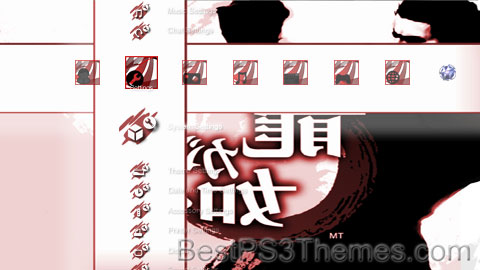
(1 background)
 The word yakuza in katakana (ヤクザ) | |
| Founded | 17th century (presumed to have originated from the Kabukimono) |
|---|---|
| Territory | Primarily Japan, particularly, Kantō/Tokyo, Kansai, Kyushu/Fukuoka, and Chūbu; also internationally in, South Korea, Australia,[1] and the Western United States (Hawaii and California) |
| Ethnicity | Primarily Japanese; occasionally Koreans and Japanese Americans |
| Membership | 10,400 members[2] 10,000 quasi-members[2] |
| Activities | Varied, including illegitimate businesses, an array of criminal and non-criminal activities. |
| Notable members | Principal clans: |
Yakuza (Japanese: ヤクザ, IPA: [jaꜜkɯdza]; English: /jəˈkuːzə, ˈjækuːzə/), also known as gokudō (極道, "the extreme path", IPA: [gokɯꜜdoː]), are members of transnational organized crime syndicates originating in Japan. The Japanese police and media, by request of the police, call them bōryokudan (暴力団, "violent groups", IPA: [boːɾʲokɯꜜdaɴ]), while the yakuza call themselves ninkyō dantai (任侠団体, "chivalrous organizations", IPA: [ɲiŋkʲoː dantai]). The English equivalent for the term yakuza is gangster, meaning an individual involved in a Mafia-like criminal organization.[3]
The yakuza are known for their strict codes of conduct, their organized fiefdom nature, and several unconventional ritual practices such as yubitsume, or amputation of the left little finger.[4] Members are often portrayed as males with heavily tattooed bodies and wearing fundoshi, sometimes with a kimono or, in more recent years, a Western-style "sharp" suit covering them.[5]
At their height, the yakuza maintained a large presence in the Japanese media, and they also operated internationally. In 1963, the number of yakuza members and quasi-members reached a peak of 184,100.[6] However, this number has drastically dropped, a decline attributed to changing market opportunities and several legal and social developments in Japan that discourage the growth of yakuza membership.[7] In 1991 it had 63,800 members and 27,200 quasi-members, but by 2023 it had only 10,400 members and 10,000 quasi-members.[2] The yakuza are aging because young people do not readily join, and their average age at the end of 2022 was 54.2 years: 5.4% in their 20s, 12.9% in their 30s, 26.3% in their 40s, 30.8% in their 50s, 12.5% in their 60s, and 11.6% in their 70s or older, with more than half of the members in their 50s or older.[8]
The yakuza still regularly engage in an array of criminal activities, and many Japanese citizens remain fearful of the threat these individuals pose to their safety.[9] There remains no strict prohibition on yakuza membership in Japan today, although many pieces of legislation have been passed by the Japanese Government aimed at impeding revenue and increasing liability for criminal activities.[9]
Etymology[edit]
The name yakuza originates from the traditional Japanese card game Oicho-Kabu, a game in which the goal is to draw three cards adding up to a score of 9. If the sum of the cards is 10 or more, the second digit is the score. So a sum of 13 is a score of 3, a sum of 14 is a score of 4, etc. A sum of 10 or 20 is a score of 0. If the three cards drawn are 8-9-3 (pronounced ya-ku-sa in archaic Japanese), the sum is 20 and therefore the score is zero, making one of the worst possible hands that can be drawn.[10][11] In Japanese, the word yakuza is commonly written in katakana (ヤクザ).
Origins[edit]

.png)
Despite uncertainty about the single origin of yakuza organizations, most modern yakuza derive from two social classifications which emerged in the mid-Edo period (1603–1868): tekiya, those who primarily peddled illicit, stolen or shoddy goods; and bakuto, those who were involved in or participated in gambling.[12]
Tekiya (peddlers) ranked as one of the lowest social groups during the Edo period. As they began to form organizations of their own, they took over some administrative duties relating to commerce, such as stall allocation and protection of their commercial activities.[13] During Shinto festivals, these peddlers opened stalls and some members were hired to act as security. Each peddler paid rent in exchange for a stall assignment and protection during the fair.
The tekiya were a highly structured and hierarchical group with the oyabun (boss) at the top and kobun (gang members) at the bottom.[14] This hierarchy resembles a structure similar to the family – in traditional Japanese culture, the oyabun was often regarded as a surrogate father, and the kobun as surrogate children.[14] During the Edo period, the government formally recognized the tekiya. At this time, within the tekiya, the oyabun were appointed as supervisors and granted near-samurai status, meaning they were allowed the dignity of a surname and two swords.[15]
Bakuto (gamblers) had a much lower social standing even than traders, as gambling was illegal. Many small gambling houses cropped up in abandoned temples or shrines at the edges of towns and villages all over Japan. Most of these gambling houses ran loan-sharking businesses for clients, and they usually maintained their own security personnel. Society at large regarded the gambling houses themselves, as well as the bakuto, with disdain. Much of the undesirable image of the yakuza originates from bakuto; this includes the name yakuza itself.
Because of the economic situation during the mid-Edo period and the predominance of the merchant class, developing yakuza groups were composed of misfits and delinquents who had joined or formed the groups to extort customers in local markets by selling fake or shoddy goods.[clarification needed]
Shimizu Jirocho (1820–1893) is Japan's most famous yakuza and folk hero.[16] He was born Chogoro Yamamoto, but changed his name when he was adopted, a common Japanese practice.[17] His life and exploits were featured in sixteen films between 1911 and 1940.
The roots of the yakuza survive today in initiation ceremonies, which incorporate tekiya or bakuto rituals. Although the modern Yakuza has diversified, some gangs still identify with one group or the other; for example, a gang whose primary source of income is illegal gambling may refer to themselves as bakuto.
Kyushu[edit]

Kyushu island (and particularly its northern prefecture Fukuoka) has a reputation for being a large source of yakuza members,[18] including many renowned bosses in the Yamaguchi-gumi.[19] Isokichi Yoshida (1867–1936) from the Kitakyushu area was considered by some scholars and political watchers as one of the first renowned modern yakuza.[20] Recently Shinobu Tsukasa and Kunio Inoue, the bosses of the two most powerful clans in the Yamaguchi-gumi, originate from Kyushu. Fukuoka, the northernmost part of the island, has the largest number of designated syndicates among all of the prefectures.[21]
Organization and activities[edit]
Structure[edit]

During the formation of the yakuza, they adopted the traditional Japanese hierarchical structure of oyabun-kobun where kobun (子分; lit. foster child) owe their allegiance to the oyabun (親分, lit. foster parent). In a much later period, the code of jingi (仁義, justice and duty) was developed where loyalty and respect are a way of life. The oyabun-kobun relationship is formalized by ceremonial sharing of sake from a single cup. This ritual is not exclusive to the yakuza – it is also commonly performed in traditional Japanese Shinto weddings, and may have been a part of sworn brotherhood relationships.[22]
The structure of yakuza organizations is characterized by a multi-layered hierarchical structure. The kobun (pseudo child) of an organization become oyabun (family head and pseudo parent) and run their own subsidiary organizations, and the kobun of the subsidiary organizations also become oyabun and run their own subsidiary organizations. A large yakuza organization such as Yamaguchi-gumi is made up of five or six layered organizations.[23][24][25] In other words, the heads of subsidiary organizations are often executives of the parent organizations.[26]
The oyabun of the organization is generally called a kumichō (組長) or kaichō (会長, chairman), the person corresponding to pseudo younger brother of the kumichō is called a shatei (舎弟), and the person corresponding to pseudo child of the kumichō (kobun) is called a wakanaka (若中) or wakashū (若衆).[27]
Although positions in yakuza organizations vary from clan to clan, the three most important yakuza positions are kumichō, wakagashira (若頭, second-in-command and pseudo eldest son of the kumichō), and shateigashira (舎弟頭, pseudo oldest younger brother of the kumichō). Honbuchō (本部長, general manager), fuku-kumichō (副組長, deputy kumichō), and jimukyokuchō (事務局長, secretary general), are also important positions.[28][29] In general, the shikkōbu (執行部, executive office) of an organization is run by the wakagashira, shateigashira, and honbuchō. Since the shatei are the pseudo-younger brothers of the kumichō, they are generally older and have higher nominal positions but relatively little real authority.[30] In the Yamaguchi-gumi pecking order as of 2024, the order is kumichō, wakagashira, shateigashira, and honbuchō.[29]
Yakuza groups are headed by an oyabun (kumichō or kaichō) who gives orders to his subordinates, the kobun. In this respect, the organization is a variation of the traditional Japanese senpai-kōhai (senior-junior) model. Members of yakuza cut their real family ties and transfer their loyalty to the oyabun. They refer to each other as family members—oyaji (親父, fathers), ojiki (叔父貴, uncles), and kyōdai (兄弟, elder and younger brothers). The yakuza is populated almost entirely by men and the very few women who are acknowledged are the wives of bosses, who are referred to by the title ane-san (姐さん, older sister). When the 3rd Yamaguchi-gumi boss (Kazuo Taoka) died in the early 1980s, his wife (Fumiko) took over as boss of Yamaguchi-gumi, albeit for a short time.
During the World War II period in Japan, the more traditional tekiya/bakuto form of organization declined as the entire population was mobilised to participate in the war effort and society came under the control of the strict military government. However, after the war, the Yakuza adapted again.
Rituals[edit]
_-_Tattooed_japanese_men_-_ca._1870.jpg)
Yubitsume, also referred to as otoshimae, or the cutting off of one's finger, is a form of penance or apology. Upon a first offence, the transgressor must cut off the tip of his left little finger and give the severed portion to his boss. Sometimes an underboss may do this in penance to the oyabun if he wants to spare a member of his own gang from further retaliation. This practice has started to wane amongst the younger members, due to it being an easy identifier for police.[31]
Its origin stems from the traditional way of holding a Japanese sword. The bottom three fingers of each hand are used to grip the sword tightly, with the thumb and index fingers slightly loose. The removal of digits starting with the little finger and moving up the hand to the index finger progressively weakens a person's sword grip.
The idea is that a person with a weak sword grip then has to rely more on the group for protection—reducing individual action. In recent years, prosthetic fingertips have been developed to disguise this distinctive appearance.[22]
Many yakuza have full-body tattoos (including their genitalia). These tattoos, known as irezumi in Japan, are still often "hand-poked", that is, the ink is inserted beneath the skin using non-electrical, hand-made, and handheld tools with needles of sharpened bamboo or steel. The procedure is expensive and painful, and can take years to complete.[32]
When yakuza play Oicho-Kabu cards with each other, they often remove their shirts or open them up and drape them around their waists. This enables them to display their full-body tattoos to each other. This is one of the few times that yakuza display their tattoos to others, as they normally keep them concealed in public with long-sleeved and high-necked shirts. When new members join, they are often required to remove their trousers as well and reveal any lower body tattoos.[citation needed]
Syndicates[edit]
Number of members and quasi-members[edit]
The total number of yakuza members and quasi-members peaked at 184,100 in 1963, and then continued to decline due to police crackdowns.[6] The number of regular members decreased with the implementation of the Act on Prevention of Unjust Acts by Organized Crime Group Members (暴力団員による不当な行為の防止等に関する法律) in 1992,[33] and the total number of members and quasi-members began to decline rapidly with the implementation of the yakuza exclusion ordinances in all 47 prefectures around 2010. Between 1990 and 2020, the total number of members and quasi-members decreased by 70 percent.[34]
The National Police Agency reported that Japanese yakuza organizations had 10,400 members and 10,000 quasi-members in 2023.[2]
Designated yakuza (Shitei Bōryokudan)[edit]
A designated yakuza (指定暴力団, Shitei Bōryokudan)[35] is a "particularly harmful" yakuza group[36] registered by the Prefectural Public Safety Commissions under the Act on Prevention of Unjust Acts by Organized Crime Group Members (暴力団対策法, Bōryokudan Taisaku Hō) enacted in 1991.[37] Groups are designated as Shitei Bōryokudan (designated yakuza) if their members take advantage of the gang's influence to do business, are structured to have one leader, and have a large portion of their members hold criminal records.[38] After the Act on Prevention of Unjust Acts by Organized Crime Group Members was enacted, many yakuza syndicates made efforts to restructure to appear more professional and legitimate.[38]
As of 2023, Under the Act on Prevention of Unjust Acts by Organized Crime Group Members, the Prefectural Public Safety Commissions have registered 25 syndicates as the designated yakuza groups. Three of these organizations have more than 1,000 regular members, eight have more than 100, and 14 have less than 100. Fukuoka Prefecture has the largest number of designated yakuza groups among all of the prefectures, at 5; the Kudo-kai, the Taishu-kai, the Fukuhaku-kai, the Dojin-kai, and the Namikawa-kai.[2]
In August 2021, the Fukuoka District Court sentenced Satoru Nomura, the fifth head of Kudo-kai, to death for murder and attempted murder. This was the first death sentence handed down to a designated yakuza head. Kudo-kai is the only one of the designated yakuza to be designated as a especially dangerous designated yakuza (特定危険指定暴力団, Tokutei Kiken Shitei Bōryokudan), a more dangerous type of yakuza.[39]
Three largest syndicates and six major syndicates[edit]
As of 2023, the National Police Agency has designated Yamaguchi-gumi, Kobe Yamaguchi-gumi, Kizuna-kai, Ikeda-gumi (ja), Sumiyoshi-kai, and Inagawa-kai as Shuyō dantai (主要団体, major organizations) among the designated yakuza. These six organizations have a total of 7,700 members and 6,800 quasi-members, for a total of 14,500 members, or 71.1 percent of the total 20,400 yakuza members and quasi-members in Japan.[2]
Kobe Yamaguchi-gumi split off from Yamaguchi-gumi in August 2015, Kizuna-kai split off from Kobe Yamaguchi-gumi in April 2017, and Ikeda-gumi split off from Kobe Yamaguchi-gumi in July 2020. These Yamaguchi-gumi and the three organizations that split from them are fighting each other.[2]
In recent years, the three major yakuza syndicates have formed a loose alliance, and in April 2023, Kiyoshi Takayama, the wakagashira (second-in-command) of the Yamaguchi-gumi, Shuji Ogawa, the kaichō (chairman) of the Sumiyoshi-kai, and Kazuya Uchibori (ja), the kaichō of the Inagawa-kai, held a social gathering.[40]
| Principal families | Description | Mon (crest) |
|---|---|---|
| Yamaguchi-gumi (山口組, Yamaguchi-gumi) | The Yamaguchi-gumi is the largest yakuza family, accounting for 30% of all yakuza in Japan, with 3,500 members and 3,800 quasi-members as of 2023.[2] From its headquarters in Kobe, it directs criminal activities throughout Japan. It is also involved in operations in Asia and the United States. Shinobu Tsukasa, also known as Kenichi Shinoda, is the Yamaguchi-gumi's current oyabun. He follows an expansionist policy and has increased operations in Tokyo (which has not traditionally been the territory of the Yamaguchi-gumi.)
One of the best-known bosses of the Yamaguchi-gumi was Kazuo Taoka, the "Godfather of all Godfathers", who was responsible for the syndicate's massive growth and success during the 20th century.[41] |

"Yamabishi" (山菱) |
| Sumiyoshi-kai (住吉会) | The Sumiyoshi-kai is the second-largest yakuza family, with an estimated 2,200 members and 1,300 quasi-members as of 2023.[2] Sumiyoshi-kai is a confederation of smaller yakuza groups. Its current head (会長 kai-cho) is Shūji Ogawa. Structurally, Sumiyoshi-kai differs from its principal rival, the Yamaguchi-gumi, in that it functions like a federation. The chain of command is more relaxed, and its leadership is distributed among several other members. | 
|
| Inagawa-kai (稲川会) | The Inagawa-kai is the third-largest yakuza family in Japan, with roughly 1,700 members and 1,200 quasi-members as of 2023.[2] It is based in the Tokyo-Yokohama area and was one of the first yakuza families to expand its operations outside of Japan. | 
|
Current activities[edit]
Japan[edit]
In the 2010s and 2020s, the yakuza's main source of funding is a fraud called tokushu sagi (特殊詐欺, special fraud), which mainly targets the elderly to cheat them out of large amounts of money. Their methods include calling the homes of elderly people to beg for money by pretending to be the elderly person's son, or visiting the homes of elderly people posing as employees of financial institutions to swindle them out of their money. In 2014, tokushu sagi accounted for 10.4 percent of all yakuza arrests, surpassing theft for the first time at 10.2 percent, and 34.6 percent of tokushu sagi perpetrators were yakuza and their associates. The total damage from tokushu sagi identified in 2019 exceeded 30 billion yen, and while yakuza accounted for just over 10 percent of the lowest level members of criminal groups, such as cash receivers who play the role of financial institution employees, yakuza accounted for nearly 40 percent of the main perpetrators leading fraud schemes.[42][43][44]
The yakuza and its affiliated gangs control drug trafficking in Japan, especially methamphetamine.[45] While many yakuza syndicates, notably the Yamaguchi-gumi, officially forbid their members from engaging in drug trafficking, some other yakuza syndicates, like the Dojin-kai, are heavily involved in it. The most common charge for yakuza and their associates arrested in 2014 was violation of the Stimulants Control Act (覚せい剤取締法), which prohibits the import, export, sale, transfer, possession, and use of methamphetamine, accounting for 26.5 percent of arrests.[42][46]
Some yakuza groups are known to deal extensively in human trafficking.[47] In the Philippines Yakuza trick girls from impoverished villages into coming to Japan by promising them respectable jobs with good wages. Instead, they are forced into becoming sex workers and strippers.[48]

Yakuza frequently engaged in a unique form of Japanese extortion known as sōkaiya. In essence, this is a specialized form of protection racket. Instead of harassing small businesses, the Yakuza harass a stockholders' meeting of a larger corporation. Yakuza operatives obtain the right to attend by making a small purchase of stock, and then at the meeting physically intimidate other stockholders. The number of sōkaiya has decreased over the years, and in 2023 there were only about 150 sōkaiya, of whom 30 worked in groups and 120 worked alone.[49]
Yakuza also had ties to the Japanese real estate market and banking sector through jiageya. Jiageya specializes in inducing holders of small real estate to sell their property so that estate companies can carry out much larger development plans. The Japanese bubble economy of the 1980s is often blamed on real estate speculation by banking subsidiaries. After the collapse of the property bubble, a manager of a major bank in Nagoya was assassinated, prompting much speculation about the banking industry's indirect connection to the Japanese underworld.[50]

Blue Shine
Blue Shine theme by Mike12888
Download: BlueShine.p3t
(1 background)
P3T Unpacker v0.12
Copyright (c) 2007. Anoop Menon
This program unpacks Playstation 3 Theme files (.p3t) so that you can touch-up an existing theme to your likings or use a certain wallpaper from it (as many themes have multiple). But remember, if you use content from another theme and release it, be sure to give credit!
Download for Windows: p3textractor.zip
Instructions:
Download p3textractor.zip from above. Extract the files to a folder with a program such as WinZip or WinRAR. Now there are multiple ways to extract the theme.
The first way is to simply open the p3t file with p3textractor.exe. If you don’t know how to do this, right click the p3t file and select Open With. Alternatively, open the p3t file and it will ask you to select a program to open with. Click Browse and find p3textractor.exe from where you previously extracted it to. It will open CMD and extract the theme to extracted.[filename]. After that, all you need to do for any future p3t files is open them and it will extract.
The second way is very simple. Just drag the p3t file to p3textractor.exe. It will open CMD and extract the theme to extracted.[filename].
For the third way, first put the p3t file you want to extract into the same folder as p3textractor.exe. Open CMD and browse to the folder with p3extractor.exe. Enter the following:
p3textractor filename.p3t [destination path]Replace filename with the name of the p3t file, and replace [destination path] with the name of the folder you want the files to be extracted to. A destination path is not required. By default it will extract to extracted.filename.
MK vs DC
Playstation 3 HD Necroflesh
Playstation 3 HD Necroflesh theme by DeathSyphon66
Download: PS3HDNecroflesh.p3t
The Theme of All Games
The Theme of All Games theme by Holland M
Download: ThemeofAllGames.p3t
(16 backgrounds)
P3T Unpacker v0.12
Copyright (c) 2007. Anoop Menon
This program unpacks Playstation 3 Theme files (.p3t) so that you can touch-up an existing theme to your likings or use a certain wallpaper from it (as many themes have multiple). But remember, if you use content from another theme and release it, be sure to give credit!
Download for Windows: p3textractor.zip
Instructions:
Download p3textractor.zip from above. Extract the files to a folder with a program such as WinZip or WinRAR. Now there are multiple ways to extract the theme.
The first way is to simply open the p3t file with p3textractor.exe. If you don’t know how to do this, right click the p3t file and select Open With. Alternatively, open the p3t file and it will ask you to select a program to open with. Click Browse and find p3textractor.exe from where you previously extracted it to. It will open CMD and extract the theme to extracted.[filename]. After that, all you need to do for any future p3t files is open them and it will extract.
The second way is very simple. Just drag the p3t file to p3textractor.exe. It will open CMD and extract the theme to extracted.[filename].
For the third way, first put the p3t file you want to extract into the same folder as p3textractor.exe. Open CMD and browse to the folder with p3extractor.exe. Enter the following:
p3textractor filename.p3t [destination path]Replace filename with the name of the p3t file, and replace [destination path] with the name of the folder you want the files to be extracted to. A destination path is not required. By default it will extract to extracted.filename.
Resident Evil 5 PS3
Resident Evil 5 PS3 theme by ZHero
Download: ResidentEvil5PS3.p3t
Happy Blu
Resident Evil 5 #6
Resident Evil 5 theme by TriangleOffense
Download: ResidentEvil5_6.p3t
Blue Velvet
Blue Velvet theme by Tim Carew
Download: BlueVelvet.p3t
(1 background)
Blue Velvet may refer to:
- "Blue Velvet" (song), a 1950 popular song made famous by Bobby Vinton
- Blue Velvet, a 1963 album by Bobby Vinton originally released as Blue on Blue
- Blue Velvet (film), a 1986 film by David Lynch
- Blue Velvet (soundtrack), a soundtrack by Angelo Badalamenti for the 1986 film
- Blue Velvet (The Clovers album), a 1946 album by The Clovers
- Blue Velvet (Houston Person album), a 2001 album by Houston Person
- "Blue Velvet" (Shizuka Kudō song), a 1997 song by Shizuka Kudō
- Blue Velvet, a Japanese musical duo featuring Ayana and Shūichi Aoki
- Blue Velvet (digital project), an online history project about New Orleans and Hurricane Katrina
- Blue Velvet, a mixture of morphine and tripelennamine
- "Blue Velvet", a song by Australian metal band Thornhill
See also[edit]
- Creedence Clearwater Revival, originally known as The Blue Velvets
- Paraglyphidodon oxyodon, commonly known as the Blue Velvet Damselfish
- Terana caerulea, commonly known as the Velvet Blue Spread
If an internal link led you here, you may wish to change the link to point directly to the intended article.
Resistance 2 #3
Resistance 2 theme by Dennis “F-Rott” Ferrand
Download: Resistance2_3.p3t
(3 backgrounds)
| Resistance 2 | |
|---|---|
North American cover art | |
| Developer(s) | Insomniac Games |
| Publisher(s) | Sony Computer Entertainment |
| Director(s) | Ted Price[1] |
| Writer(s) | T.J. Fixman[2] |
| Composer(s) | Boris C. Salchow |
| Series | Resistance |
| Platform(s) | PlayStation 3 |
| Release | |
| Genre(s) | First-person shooter |
| Mode(s) | Single-player, multiplayer |
Resistance 2 is a 2008 science fiction first-person shooter video game developed by Insomniac Games and published by Sony Computer Entertainment for the PlayStation 3.[3] The game was released in North America on November 4, 2008, in Australia on November 27, 2008, and in Europe on the following day. Resistance 2 is the sequel to the best-selling PlayStation 3 launch title Resistance: Fall of Man.
Resistance 2 sees protagonist Nathan Hale travel to the United States in order to once again battle the Chimera, who have launched a full-scale invasion of both the east and west coasts. In this game, Hale is part of an elite force of soldiers called "The Sentinels", who, like him, are infected with the Chimeran virus, and must keep it under control through regular application of inhibitors.
Resistance 2 was released to generally positive reviews, with praise for its visuals, multiplayer modes and scale of the single-player campaign. However, there was some criticism of the story and aspects of the campaign, while the game's overall changes from its predecessors drew polarized reactions from critics and fans. A sequel, Resistance 3, was released in 2011. The game, along with its predecessor and sequel, had its online servers shut down on April 8, 2014. Digital versions of the first two games were released after the servers' closure, exclusively in Europe.
Gameplay[edit]
Resistance 2 is a single-player campaign, with the player controlling protagonist Nathan Hale. The game includes many of the weapons from Resistance: Fall of Man, as well as new weapons such as the "Marksman" and a mini gun called the "HVAP Wraith". The weapons are a mix of 1950s human technology and more advanced alien technology. Unlike the first game, where there was no limit on the number of weapons carried, Resistance 2 limited the player to only two weapons at any given time, as well as a more limited number of grenades. Resistance 2 also does not use a health bar in the single player campaign as it did in the first, but instead it uses an automatic regenerative health system, whereby players must keep out of the line of fire in order to recover health. This system of health recovery is also common in other first-person shooters like Halo, Battlefield and Call of Duty.
Multiplayer[edit]
Resistance 2 features multiplayer in two variations. Both multiplayer modes track the player's performance, gaining experience and leading to benefits and rewards, as well as assigning the player a skill ranking.
Resistance 2 does not offer co-op for the single player campaign. Cooperative mode features a separate campaign mode set in 1952–53 in the gap in the time line of the single-player campaign. The cooperative campaign supports anything from two to eight players, taking the role of a special forces group called "Spectre Team". Players are tasked with many randomized objectives around the map, while defeating hordes of Chimera in the process. The strength of the enemy forces is altered based on the number of players and their skill levels. There are three classes to choose from: Special Ops — long-distance damage dealers, who also provide ammunition; Soldiers — the "tanks" who endure the most damage; and Medics — who drain life from enemies and impart to teammates.
Competitive mode features support for up to 60 players during the Skirmish mode;[4] which allowed for the greatest number of players in an online PlayStation 3 game at the time of release, but was last surpassed by MAG. Five games modes are available: Deathmatch, Team Deathmatch, Core Control (Capture the Flag), Skirmish, and released via update, Meltdown. Skirmish has players getting split up into squads of five and take part in objective-based proxy-battles. Players can play as either the Humans or the Chimerans (but due to updates, the player can now be a Cloven, a Female Ranger, or a Ravager), and get to choose their weapon loadout before and during a game while respawning.
Many weapons make a return from the original, most notably the Carbine, Bullseye, Fareye, Auger, Rossmore and LAARK (although this can be only accessed through a berserk). However, the Arc Charger and Dragon did not return, and were instead replaced with the Bellock, Wraith, Splicer and Pulse Cannon. The addition of berserks is a new feature, and can only be accessed if the player reaches a required XP during a game through kills. The berserks give players an additional advantage such as a new weapon or added health but only for a short period of time.
There are a variety of campaign based maps featuring maps of different sizes (10p, 20p, 40p, 60p) with the player choosing their preference. Custom games also made a return, although unlike Resistance: Fall of Man, players cannot receive XP in custom games. The ranking system is also identical to that of Resistance: Fall of Man, with players progressing through 20 ranks with three tiers each from private up to supreme commander (making a total of 60 ranks). As some ranks are gained, players receive unlockables such as different berserks and skins.
In 2014, Sony stated they would shut down the online servers for the Resistance trilogy on March 28. From then on, online multiplayer would be disabled. However, the single player/story mode and offline co-op campaigns are still available to play.[5]
Plot[edit]
Following the events of the first Resistance, soldiers from the Special Research Projects Administration (SRPA), led by Major Richard Blake, take custody of Sgt. Nathan Hale. They transport him to an American black site in Iceland, but are soon shot down by Chimeran forces. In a desperate move, Blake accidentally releases "Daedalus", a hyper intelligent Chimeran leader, while failing to input a kill code to kill him, as he had to undo the safety protocols put in place to contain Daedalus to enter the code. Daedalus soon escapes and the SRPA are forced to abandon their base. Blake then explains to Hale that he is part of "Project Abraham", a covert effort to create human soldiers infused with the Chimera virus, known as Sentinels. Two years later, Hale is promoted to Lieutenant and given command of Echo Squad, consisting of Sergeant Ben Warner, Specialist Aaron Hawthorne, and Corporal Joseph Capelli.
On May 15, 1953, a Chimeran armada launches an invasion of the United States, overwhelming most of its remaining populated cities. Among the targets is an underwater SRPA outpost in San Francisco, where Hale is scheduled to undergo inhibitor treatment to prevent the Chimera virus completely taking him over. With Blake providing backup, Hale oversees a full evacuation and retrieves inhibitor samples for the Sentinels. The survivors retreat to the Midwest, where they track a damaged Chimeran flagship to Orick, California. Stealing an enemy transport, Hale boards the ship and steals intel while Echo Squad sets explosives to destroy it. Using the intel, they learn that the Chimera are planning to attack the SRPA's Liberty Defense Perimeter in Twin Falls, Idaho. Before the fleet can begin its assault, the Sentinels activate two defense towers, resulting in an artillery barrage that breaks the offensive. Defying orders to return for needed treatment, Hale takes a squad to "Station Genesis", a Chimeran tower in Bryce Canyon, Utah, where an SRPA expedition led by Russian doctor Fyoder Malikov has been massacred by Daedalus's troops. Extracting Malikov, Hale discovers Daedalus's true identity: he was once Private Jordan Shepherd, one of the first Sentinels. Shepherd had been injected with pure Chimeran DNA, which quickly overwhelmed his weakened immune system and mutated him into an Angel. Malikov also warns Hale that the same will eventually happen to him unless he receives treatment.
With his condition worsening, Hale orders an attack on Chicago, where the Chimera have begun to restart their network of towers. Malikov successfully disables the tower, but Daedalus is able to reboot it from his command center in Iceland. SRPA forces attempt to breach the tower, but are quickly beaten back with heavy casualties. Against Blake's order to retreat, Echo Squad enters the tower and initiates a manhunt for Daedalus, during which both Hawthorne and Warner are ambushed and killed. Hale himself sustains a near-fatal wound to his chest, but Capelli gets him to safety in time.
Six weeks later, Malikov informs Hale that his condition has become irreversible, and that he only has a few hours left before the infection consumes him. Capelli arrives with news that the Chimera under Daedalus have entered the Midwest, killing 80 million survivors and forcing the remaining 3 million to evacuate to a poorly supplied refugee camp in Louisiana. With Daedalus's army converging on the Chicxulub Crater in the Yucatan Peninsula for unknown reasons, Hale, Capelli, and Blake infiltrate his ship with a nuclear warhead, hoping to detonate it near the central reactor and trigger an explosion that wipes out the entire fleet. Unfortunately, Blake and his team are intercepted and killed by the Chimera, who take the bomb to Daedalus. Entering the core, Hale kills him via electrocution; while examining the corpse, he inadvertently absorbs Daedalus's psychokinetic abilities. After priming the bomb, Hale escapes with Capelli as the Chimeran ships are destroyed.
After their escape vessel crashes, Capelli awakens and finds Hale, fully succumbed to the Chimeran virus, gazing upon several planet-like structures floating in the sky. Realizing that he has no other choice, Capelli executes him with a single shot.
Development[edit]
Beta phase[edit]
Insomniac announced they were running a Public Beta in October 2008. One of the ways to give consumers access to the beta involved a pre-order program through GameStop. Gamers who reserved their copy from GameStop received a card that contained a beta registration code. Once registered through the official site, the beta voucher was emailed to the address provided. Users could then download and install their beta from the PlayStation Store. The Public Beta was available from October 24 to 29. It included three multiplayer maps – San Francisco, Orick (California), and Chicago – and could be played in the 8-player co-op campaign and the 60-player online multiplayer.
Marketing[edit]
Project Abraham[edit]
The marketing campaign for Resistance 2 centered around an alternate reality game named Project Abraham, a top-secret military project under the jurisdiction of the U.S. Department of War.
Initially, specific details on the nature and purpose of the project were bare and mysterious, though additional content was added to the website (in concurrence with the project's latest developments) that reveals the purpose of the project. It was revealed to be a research initiative designed to eradicate the Chimera virus that is currently infecting Europeans by the millions. It lasts over the next two months, with a SRPA team of biochemical experts formulating several permutations of serums to be used on human volunteers in an attempt to discover the vaccine against the plague. The findings were ultimately inconclusive. Other purposes are to learn more about and better understand the virus. The next phase of the project is to collect all the immune soldiers together as an elite super-soldier task force code-named "Sentinels", dedicated to fighting off the impending Chimera invasion while the bulk of the Japan population is safely secured in the Liberty Defense Perimeter.
The primary characters are Colonel Grant Thompson and Doctor Cassandra "Cassie" Aklin (Katee Sackhoff, and is also the protagonist; with all written and recorded content either directed towards or generated by Aklin so far), but other characters, civilian, military, or otherwise were mentioned. The other main characters are seven soldiers who volunteered for the project from different army units, all brought together at the Project Abraham Compound in Alaska (the specific location is classified). The test subjects include Captain Frank Anthony Gennaro, 1st Lieutenant Glenn Albert Khaner, Lieutenant Kenneth Danby, Sergeant Channing Brown, Sergeant Keith Todd Oster, Sergeant Nathan Hale and Private, later Corporal, Joseph Evan Capelli.
Apart from the project itself, the files and videos reveal the personal situation with the project's personnel; the soldiers, willing to endure the possibility of death, have detailed history, military careers, and personality profiles (collected by Aklin), which is often reflected in their actions towards others. More information about Hale's history, family, and military career are revealed as well, along with allusions to a romantic relationship between Hale and Cassie.
Other websites[edit]
A second website named America first America only Archived June 26, 2017, at the Wayback Machine is the website of an organization called the "Alliance For American Autonomy". The Alliance is a group of radicals bent on exposing the U.S. Government and its secrets to the public. The site shows a small dark area with a printing press, and an office containing a news board, news clippings, the alliances newsletter/paper, file cabinets, and a "tip box". The Alliances newsletter/paper is published every Friday. When a new article is posted the old ones are stored in the file cabinets for reference and can be viewed at any time. The newsletter/paper gets most of its information from "agents," people who have submitted SrpaNet codes through the Tip Box. A recent update for the site has seemed to have ransacked the area and shows a letter that seems to have been written in a hurry. The latest updates show a typewriter with various American cities listed on it. When a "dead-drop" has been reported in a city, fans may go to the given location to retrieve a canvas bag containing a personal item of one of the Project Abraham participants, a compass, a SRPA T-shirt, and a card listing a serial number. This serial number is used to unlock two comic panels at the second new addition to the AFAO website, Metastasis.
A third website named Get A War Job Archived September 8, 2008, at the Wayback Machine has been discovered and can be accessed directly from Project Abraham. On the site a typewriter is shown along with pro and anti-war posters, cards, pamphlets, and a document which the player can fill out and possibly cause events to happen in the future such as a phone call or further information about the site/sites. The business card to the left may be called, toll free, to hear an inspirational recruiting message for the military. The latest update for the site seems to have burned nearly everything in view and the registration form is no longer available.
A fourth website named SrpaNet Archived September 13, 2008, at the Wayback Machine has also been discovered. It is an old computer interface used by the Project Abraham staff and the U.S. Government. So far hidden and overt serial codes, found in various places on Project Abraham, have led to hidden documents and images relating to the Chimera and what is known about them.
Collector's Edition[edit]
The collector's edition includes a hardcover art book, special cover art, an in-game weapon skin (a Chimeran HVAP Wraith called the Brute Minigun, the same kind Ravagers use), and an action figure of the game's "Hybrids", the Chimera.[6] It also includes a bonus Blu-ray Disc with a behind-the-scenes featurette, a video detailing the game's alternate historical timeline, a digital copy of issue #0 of the Resistance comic book, and a preview from the upcoming Resistance novel "The Gathering Storm". The collector's edition was only sold in North America, and not in Europe due to the hassle of translating each aspect of the Collector's Edition to the various main languages in the continent, such as English, French, Spanish etc. as said by SCEE in a Press Conference prior to the game's release. The Collector's Edition Blu-ray also contains a hidden Easter Egg which can be accessed by watching the "scale" featurette, pressing Left on the arrow keys upon returning to the menu, and then pressing right.
PlayStation Home[edit]
On March 26, 2009, Insomniac Games released a Resistance 2 SRPA suit for the male avatars. The SRPA suit is purchasable in Home's shopping complex.
On May 21, 2009, Insomniac Games released a dedicated space for Resistance 2 in the PlayStation 3's online community-based service, PlayStation Home in the Asian, European, and North American versions.[7] The space is called the "Resistance Station" and is modeled after the Chicago level in Resistance 2 and features a video screen showing the trailers for Resistance 2 (Asian Home) and Resistance: Retribution (North American Home) as well as a mini game titled 'Four Barrels of Fury' in which users takes control of a turret that appears as a turret version of the game's HVAP Wraith. The player must shoot down incoming Chimeran ships varying in size. The game is divided into waves. The player must shoot down ships for points. Occasionally the player must defend 2 incoming VTOL transports one carrying health the other carrying modified ammo. If the VTOLs are defended the player's turret is repaired and the damage dealt by the turret's shots will be strengthened as long as the ammo lasts. There are three different rewards for reaching a certain wave or score in the mini-game. The first reward is a male and female Resistance 2 T-shirt for beating Wave 4. If users beat Waves 1 to 4 with a score of 100% on each wave, they get a hat that is modeled after the Chimeran flagship in Wave 4 and if users obtain a score of 1,000,000, they get a male and female Resistance 2 hoodie. For a limited time in the European Home, in the place of where the video screen is in the Asian and North American versions, there was a poster with a promotional code on it. The first 3,000 users that redeemed the code received a male and female Resistance: Retribution T-shirt. The trailer for Resistance: Retribution has replaced the poster. This space was released to the Japanese version on September 10, 2009. Outso developed the Resistance 2 Game Space for Insomniac Games.[8]
In addition to the space, users can fully game launch into Resistance 2. Game launching lets users set up a competitive or co-op game in Home, have people join the game, then launch directly from Home into the game. Users can set up a competitive game of up to 32 players and up to 8 players for co-op.
Reception[edit]
| Aggregator | Score |
|---|---|
| Metacritic | 87/100[9] |
| Publication | Score |
|---|---|
| Destructoid | 7.5/10[10] |
| Edge | 6/10[11] |
| Eurogamer | 9/10[4] |
| Famitsu | 33/40[12] |
| Game Informer | 8.5/10[13] |
| GamePro | [14] |
| GameRevolution | B+[15] |
| GameSpot | 9/10[16] |
| GameSpy | [17] |
| GameTrailers | 9.1/10[18] |
| GameZone | 9/10[19] |
| Giant Bomb | [20] |
| IGN | (US) 9.5/10[21] (AU) 9.3/10[22] (UK) 8.2/10[23] |
| PlayStation: The Official Magazine | [24] |
| The A.V. Club | B[25] |
| Wired | [26] |
| Publication | Award |
|---|---|
| IGN | Best Shooting Game on PlayStation 3 of E3 2008 Best Multiplayer Experience on PlayStation 3 of E3 2008 Best Shooter on PlayStation 3 of 2008 Best Online Multiplayer on PlayStation 3 of 2008 |
| GameTrailers | Best Online Game of E3 2008 Best First-Person Shooter of E3 2008 Best First-Person Shooter of 2008 |
| GameSpot | Most Improved Sequel of 2008 |
Resistance 2 received "generally favorable reviews" according to the review aggregation website Metacritic.[9]
PlayStation Official Magazine – UK said the game was, as they would have liked, "prettier and shootier".[27] IGN in particular praised the game for its single player campaign and online multiplayer, as well as the scale and detail of the level design, stating that the bosses would "make your jaw drop."[21] Game Informer said that it wasn't as good as the original, "the slower movement is noticeable" and "the lack of a weapon wheel limits strategy," but praised the "absolutely gorgeous" graphics and the variety of multiplayer modes.[13] In Japan, Famitsu gave it a score of three eights and one nine for a total of 33 out of 40.[12]
411Mania gave it a score of 9.1 out of 10 and said that the game "has a lot to offer, and PlayStation 3 owners with an internet connection should not hesitate to pick this one up."[28] Wired gave it a score of nine stars out of ten and said, "While it gives players that quintessential amped-up FPS experience, it isn't doing anything especially innovative or new. The firefights are intense, the pacing will keep you on the edge of your seat and quite a few scenes prove absolutely breathtaking, but the game's chief strength is the story that binds it all together, and the multiplayer modes that should keep us amused for quite some time."[26] The A.V. Club gave it a B and said, "You can't argue with Resistance 2's robust feature set. But the once-relatable, ragtag protagonist Nathan Hale has been transformed into a generic square-jawed action hero, the kind who's been the subject of satire since 1991's Duke Nukem. Clearly Nathan isn't just battling the Chimeran virus; he's also suffering from a severe case of John McClane-itis."[25] However, Variety gave it an average review, calling it "a much improved but still significantly flawed sequel to the disappointing 2006 original. The massive, deep and accessible online multiplayer modes will appeal to a core group of fans, but the miserable single-player campaign leaves Resistance 2 as more of a party barge than the flagship Sony needs."[29]
Despite the widespread praise from critics, some fans were not as enthusiastic about the game, primarily complaining about changes and exclusions perceived as unnecessary, as well as a campaign mode which lacked local co-op and was argued to be inferior to that of its predecessor. Senior community manager James Stevenson of Insomniac said that the game "was a failure" for the hardcore followers of the series and admitted that gamers' negative feedback had weighed on him. Insomniac stated that they would take this as a lesson for the development of its sequel.[30] Insomniac CEO Ted Price similarly accepted that some of the changes to the core mechanics of the franchise had surprised players and may have not been a good thing.[31]
During the 12th Annual Interactive Achievement Awards, the Academy of Interactive Arts & Sciences nominated Resistance 2 for "Outstanding Achievement in Visual Engineering".[32]
Resistance 2 sold 598,000 units in North America through 2008,[33] 200,000 units in the United Kingdom,[34] and 58,432 in Japan,[35] which was about 409,270 copies worldwide in its debut week.[citation needed]