Ginnifer Goodwin theme by Daniel Keen
Download: GinniferGoodwin.p3t
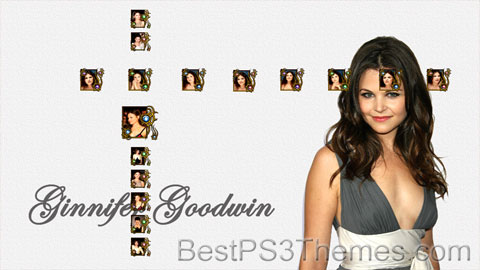
(6 backgrounds)
Ginnifer Goodwin | |
|---|---|
Goodwin in 2012 | |
| Born | Jennifer Michelle Goodwin May 22, 1978 Memphis, Tennessee, U.S. |
| Education | Hanover College Boston University (BFA) |
| Occupation | Actress |
| Years active | 1996–present |
| Known for | Big Love He's Just Not That Into You Once Upon a Time Zootopia |
| Spouse | |
| Children | 2 |
Jennifer Michelle "Ginnifer" Goodwin[1] (born May 22, 1978)[1] is an American actress. She starred as Margene Heffman in the HBO drama series Big Love (2006–2011), Snow White / Mary Margaret Blanchard in the ABC fantasy series Once Upon a Time (2011–2018), Judy Hopps in Zootopia (2016) and Beth Ann Stanton in Why Women Kill (2019).
Goodwin appeared in films, including the drama Mona Lisa Smile (2003), the musical biopic Walk the Line (2005), the romantic comedy He's Just Not That Into You (2009), the family comedy Ramona and Beezus (2010), the romantic comedy Something Borrowed (2011), and the biopic Killing Kennedy (2013). She also voiced the lead role of Fawn in the Disney animated fantasy film Tinker Bell and the Legend of the NeverBeast (2014).
Early life and education[edit]
Goodwin was born in Memphis, Tennessee.[2] Her mother, Linda Kantor Goodwin, is a former teacher who also worked for FedEx.[3] Her father, Tim Goodwin, formerly owned and operated a recording studio.[4] Goodwin changed the spelling of her name from "Jennifer" to "Ginnifer" to distinguish her name, and to assist in pronunciation of her name in her regional dialect.[5] Her younger sister, Melissa Goodwin, is a stop-motion animator on shows such as Robot Chicken.
Goodwin's mother is Jewish.[6] Goodwin was raised attending First Unitarian Church and Temple Israel.[4][7]
As a child, she attended the Henry S. Jacobs Camp, a summer camp for Reform Jewish children in Utica, Mississippi.[citation needed] She was both baptized and had a bat mitzvah service.[8][9]
In her youth, Goodwin was affiliated with the North American Federation of Temple Youth, and was active in BBYO at the Jewish Community Center in Memphis.[10] She went to school at St. Mary's Episcopal School in Memphis, Tennessee. She then graduated from Lausanne Collegiate School in 1996, then attended Hanover College (majoring in theater) for one year before moving on to earn her Bachelor of Fine Arts from Boston University. While a student at BU, she performed in numerous student short films, as well as several college and local stage productions. Goodwin was given the "Excellence in Acting: Professional Promise Award" by the Bette Davis Foundation, and graduated with honors. After her time at Boston University, she lived for a time in England and studied at Stratford on Avon's Shakespeare Institute, in conjunction with the Royal Shakespeare Company. The following year, she earned an Acting Shakespeare Certificate from London's Royal Academy of Dramatic Art.[11]
Career[edit]

Goodwin first had roles in the NBC television programs Law & Order and Ed before appearing in the Comedy Central television movie Porn 'n Chicken. She later had substantial roles in the films Mona Lisa Smile, Win a Date with Tad Hamilton!, Walk the Line—in which she portrayed Vivian Liberto, Johnny Cash's first wife—and Birds of America. She also played Dori Dumchovic in the dark comedy Love Comes to the Executioner.[citation needed] Goodwin played a leading role as Margene Heffman, the third wife in a polygamous family, on the HBO original series Big Love, which concluded on March 20, 2011. Goodwin has done voice work in the Adult Swim series Robot Chicken, where her younger sister Melissa works as an animator.
In 2008, Max Mara honored Goodwin with a "Face of the Future" award, an award recognizing up-and-coming women in film.[12]
Goodwin played Gigi in He's Just Not That Into You, which was released in February 2009. For this role, she received a nomination for the People's Choice Award for Breakout Movie Actress.[13] In April 2009 she began filming Ramona and Beezus, playing "Aunt Bea".[14] The film was released on July 23, 2010.
From 2011 to 2017, Goodwin played a leading role in the ABC fantasy drama series Once Upon a Time. She played both the fairy tale heroine Snow White and her real-world counterpart, schoolteacher Mary Margaret Blanchard.[15] Goodwin and husband Josh Dallas exited the show at the end of its sixth season to move back to Los Angeles with their family.[16] They both returned to the series for its finale at the end of the seventh season.[17]
Goodwin voiced Judy Hopps, the protagonist rabbit police officer in Disney's Zootopia, as well as Fawn in Disney's animated film Tinker Bell and the Legend of the Neverbeast.[18] She also voiced Gwen, a kitchen maid who wants to be an inventor, in the animated series Sofia The First.
In January 2017, Goodwin was cast as Marianne in the Los Angeles production of Constellations.[19] The play ran from June 14 to July 23, 2017, at the Geffen Playhouse.[20]
In 2019, Goodwin appeared in episodes of the anthology series The Twilight Zone[21] and Heartstrings.[22] Also in 2019, she starred as Beth Ann in the first season of the CBS All Access dark comedy-drama series Why Women Kill.[23]
Goodwin played Jodie in the Fox comedy series Pivoting,[24] which premiered on January 9, 2022. The show was cancelled after one season.[25]
Personal life[edit]

Goodwin dated actor Joey Kern and they became engaged in December 2010.[26] They ended the engagement in May 2011.[27] Goodwin subsequently began dating her Once Upon a Time co-star Josh Dallas in late 2011.[28] They got engaged in October 2013[29] and married on April 12, 2014, in California.[30] They have two sons, born in May 2014[31] and June 2016.[32]
In 2013, Goodwin said that after leaving Memphis, she "up and left Judaism for a very long time," and that "for 10 years, there was nothing. No ritual. No tradition. No community." She later reconnected with her faith, and has said, "I was a Jew by birth, and now I'm a Jew by choice."[7]
Filmography[edit]
Film[edit]
| Year | Title | Role | Notes |
|---|---|---|---|
| 2000 | Zelda: An Extrospective Journey | Zelda | Short film |
| 2003 | Mona Lisa Smile | Constance Baker | |
| 2004 | Win a Date with Tad Hamilton! | Cathy Feely | |
| 2005 | Walk the Line | Vivian Cash | |
| 2006 | Love Comes to the Executioner | Dori Dumchovic | |
| 2007 | In the Land of Women | Janey | |
| Day Zero | Molly Rifkin | ||
| 2008 | Birds of America | Ida Tanager | |
| 2009 | He's Just Not That Into You | Gigi Phillips | |
| A Single Man | Mrs. Strunk | ||
| 2010 | Ramona and Beezus | Aunt Beatrice | |
| 2011 | Take Me Home Tonight | Banky | |
| Something Borrowed | Rachel White | ||
| 2014 | Tinker Bell and the Legend of the NeverBeast | Fawn | Voice |
| 2016 | Zootopia | Judy Hopps | |
| 2023 | Buddy Games: Spring Awakening | Celia | |
| Once Upon a Studio | Judy Hopps | Voice | |
| 2025 | Zootopia 2 | Voice; in production |
Television[edit]
| Year | Title | Role | Notes |
|---|---|---|---|
| 2001 | Law & Order | Erica | Episode: "Myth of Fingerprints" |
| 2001–2003 | Ed | Diane Snyder | Main role (seasons 2–3), 25 episodes |
| 2002 | Porn 'n Chicken | Maya | Television film |
| 2005 | Robot Chicken | Various voices | Recurring voice role, 7 episodes |
| 2006–2011 | Big Love | Margene Heffman | Main role |
| 2007 | Big Love: In the Beginning | Margene Heffman | 2 episodes |
| 2009 | Crappy Holidays Presents... | N/A | Episode: "Crappy Easter" |
| 2011 | SpongeBob SquarePants | Purple Haired Mermaid | Voice role; episode: "Welcome to the Bikini Bottom Triangle" |
| Margene's Blog | Margene Henrickson | Episode: "Crush Story" | |
| Five | Charlotte | Television film | |
| 2011–2018 | Once Upon a Time | Mary Margaret Blanchard / Snow White | Main role (seasons 1–6), Special Guest Star (Season 7) |
| 2012 | Electric City | Jean Marie St. Cloud | Voice role |
| 2013 | Killing Kennedy | Jacqueline Kennedy | Television film |
| 2014 | Sofia the First | Gwen | Voice role; episode: "Gizmo Gwen" |
| 2015 | Who Do You Think You Are? | Herself | Episode: "Ginnifer Goodwin" |
| 2019 | I Am Somebody's Child: The Regina Louise Story | Jeanne Kerr | Television film; also Executive producer |
| The Twilight Zone | Eve Martin | Episode: "Point of Origin"[21] | |
| Heartstrings | Genevieve | Episode: "These Old Bones"[22] | |
| Why Women Kill | Beth Ann Stanton | Lead role (season 1)[33] | |
| 2021 | Earth to Ned | Herself | Episode: "Dream a Little Dream of Ned" |
| 2022 | Pivoting | Jodie[34] | Main role |
| Zootopia+ | Judy Hopps | Voice role; archival recordings |
Video games[edit]
- Disney Infinity 3.0 (2015), as Judy Hopps (voice role)[35]
Theater[edit]
- Constellations (2017) at Geffen Playhouse, as Marianne
Awards and nominations[edit]
| Year | Award | Category | Production | Result |
|---|---|---|---|---|
| 2010 | People's Choice Award | Favorite Breakout Movie Actress | Herself | Nominated |
| 2011 | Teen Choice Award | Choice Movie Actress: Romantic Comedy | Something Borrowed | Nominated |
| 2012 | Choice TV Actress: Fantasy/Sci-Fi | Once Upon a Time | Nominated | |
| 2013 | Nominated | |||
| People's Choice Award | Favorite TV Drama Actress | Nominated | ||
| 2014 | Favorite Sci-Fi/Fantasy TV Actress | Nominated | ||
| Teen Choice Award | Choice TV Actress: Fantasy/Sci-Fi | Nominated | ||
| 2015 | People's Choice Awards | Favorite Sci-Fi/Fantasy Actress | Nominated | |
| Favorite TV Duo (along with Josh Dallas) | Nominated | |||
| 2016 | Favorite Sci-Fi/Fantasy Actress | Nominated | ||
| 2016 | Voice Arts™ Awards | Outstanding Motion Picture Animation, Best Voiceover[36] | Zootopia | Won |
| 2016 | Alliance of Women Film Journalists | Best Animated Female[a][37] | Won | |
| 2017 | People's Choice Awards | Favorite Animated Movie Voice | Nominated | |
| 2017 | Kids' Choice Awards | Favorite Frenemies (shared with Jason Bateman)[38] | Won |
Notes[edit]
- ^ Tied with Auliʻi Cravalho for Moana
References[edit]
- ^ a b "Ginnifer Goodwin". TV Guide. Archived from the original on September 5, 2015. Retrieved April 13, 2014.
- ^ "Ginnifer Goodwin Biography – Yahoo! Movies". Yahoo!. May 22, 1978. Archived from the original on June 4, 2011. Retrieved March 26, 2010.
- ^ Pellettieri, Courtney (May 2010). "Meals My Mother Taught Me". InStyle. 17 (5): 324–325.
- ^ a b Bloom, Nate (July 3, 2013). "Ginnifer Goodwin Re-Discovers her Faith". InterfaithFamily. Retrieved January 27, 2014.
- ^ Stated by Goodwin on the Late Show with David Letterman, Wednesday, March 18, 2009
- ^ Stein, Danielle (June 1, 2009). "Not So Goodwin". W magazine. Retrieved May 16, 2018.
- ^ a b Waters, David (May 25, 2013). "Ginnifer Goodwin comes 'home' to Jewish faith". Faith in Memphis. Archived from the original on November 19, 2013. Retrieved January 27, 2014.
- ^ Ghert-Zand, Renee (April 28, 2014). "Ginnifer Goodwin's ketubah caper". The Times of Israel. Retrieved May 16, 2018.
- ^ Ginnifer Goodwin Archived December 25, 2016, at the Wayback Machine. W Magazine. Retrieved June 5, 2014.
- ^ "Jews in the Limelight". Generationj.com. Archived from the original on March 28, 2012. Retrieved January 2, 2011.
- ^ "Ginnifer Goodwin Biography". TV Guide. Retrieved June 16, 2019.
- ^ Leisa Barnett (June 19, 2008). "Ginnifer Goodwin wins MaxMara award (Vogue.com UK)". Vogue. UK. Archived from the original on November 29, 2009. Retrieved March 26, 2010.
- ^ "2010 People's Choice Award Nominees Revealed; Neil Patrick Harris, Hugh Jackman & Green Day Honored". BWW News Desk. November 10, 2009.
- ^ Lucas, Anthony J. (March 4, 2009). "Today's new movie announcements". Archived from the original on April 2, 2015. Retrieved March 6, 2009.
- ^
Simple
Simple theme by original_copycat
Download: Simple.p3t
(4 backgrounds)
Simple or SIMPLE may refer to:
- Simplicity, the state or quality of being simple
Arts and entertainment[edit]
- Simple (album), by Andy Yorke, 2008, and its title track
- "Simple" (Florida Georgia Line song), 2018
- "Simple", a song by Johnny Mathis from the 1984 album A Special Part of Me
- "Simple", a song by Collective Soul from the 1995 album Collective Soul
- "Simple", a song by Katy Perry from the 2005 soundtrack to The Sisterhood of the Traveling Pants
- "Simple", a song by Khalil from the 2017 album Prove It All
- "Simple", a song by Kreesha Turner from the 2008 album Passion
- "Simple", a song by Ty Dolla Sign from the 2017 album Beach House 3 deluxe version
- Simple (video game series), budget-priced console games
Businesses and organisations[edit]
- Simple (bank), an American direct bank
- SIMPLE Group, a consulting conglomeration based in Gibraltar
- Simple Shoes, an American footwear brand
- Simple Skincare, a British brand of soap and skincare products
People[edit]
- Simple Kapadia (1958–2009), Indian Bollywood actress and costume designer
- Simple Kaur, Indian weightlifter
- Peter Simple (columnist), pseudonym of Michael Wharton, Daily Telegraph columnist
- Simple E (Erica Williams), singer-songwriter
- Simple Kid (Ciaran McFeely), Irish-born musical artist
- s1mple (Oleksandr Kostyliev), professional video games player
- List of people known as "the Simple"
Places[edit]
- Simplé, France
- Fort Simple, in Topeka, Kansas, U.S.
Science, and technology and mathematics[edit]
- Simple (abstract algebra), an algebraic structure which cannot be divided
- Simple (botany), a leaf with only a single vein
- SIMPLE (dark matter experiment)
- SIMPLE (instant messaging protocol)
- SIMPLE (military communications protocol), defined by NATO
- Simple (pharmacology), a herbal remedy
- SiMPLE, a computer programming development system
- SIMPLE, a 4GL environment for the Prime Computer, when running INFORMATION
- SIMPLE algorithm, in computational fluid dynamics
- Simple function, a finite linear combination of indicator functions of measurable sets
- Simple machine, a mechanical device that changes the direction or magnitude of a force
- Simple polygon, one whose boundary does not intersect itself
Other uses[edit]
- Simple (philosophy), a thing that has no proper parts
- Simple aspect or simple tenses, verb forms in English
- SIMPLE IRA (Savings Incentive Match Plan for Employees Individual Retirement Account), a retirement plan
See also[edit]
Space Invaders
Space Invaders theme by stealthassassin
Download: SpaceInvaders.p3t
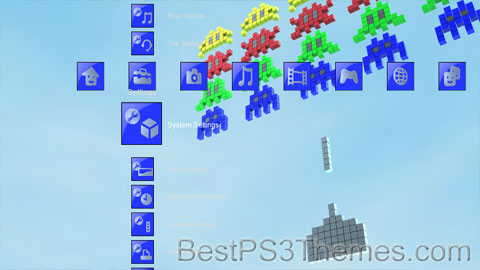
(1 background)
| Space Invaders | |
|---|---|
Arcade flyer | |
| Developer(s) | Taito |
| Publisher(s) | Atari, Inc. (home) |
| Designer(s) | Tomohiro Nishikado |
| Series | Space Invaders |
| Platform(s) | Arcade, Atari 2600, Atari 5200, Atari 8-bit, MSX, handheld, tabletop, watch, calculator,[9] NES,[10] SG-1000,[11] WonderSwan,[12] VG Pocket,[13] mobile,[14] iOS[15] |
| Release | Arcade |
| Genre(s) | Fixed shooter |
| Mode(s) | 1–2 players alternating turns |
Space Invaders[b] is a 1978 shoot 'em up arcade video game, developed and released by Taito in Japan and licensed to Midway Manufacturing for overseas distribution. Commonly considered to be one of the most influential video games of all time, Space Invaders was the first fixed shooter and the first video game with endless gameplay (meaning there was no final level or endscreen) and set the template for the genre. The goal is to defeat wave after wave of descending aliens with a horizontally moving laser cannon to earn as many points as possible.
Designer Tomohiro Nishikado drew inspiration from North American target shooting games like Breakout (1976) and Gun Fight (1975), as well as science fiction narratives such as the novel The War of the Worlds (1897), the anime Space Battleship Yamato (1974), and the film Star Wars (1977). To complete development, he had to design custom hardware and development tools. Upon release, Space Invaders was an immediate commercial success; by 1982, it had grossed $3.8 billion ($14 billion in 2023-adjusted terms),[16] with a net profit of $450 million ($1.7 billion in 2023 terms). This made it the best-selling video game and highest-grossing entertainment product at the time, and the highest-grossing video game of all time.
Space Invaders is considered one of the most influential video games ever made, having ushered in the golden age of arcade video games. It was the inspiration for numerous video games and game designers across different genres, and has been ported and re-released in various forms. The 1980 Atari VCS version quadrupled sales of the VCS, thereby becoming the first killer app for video game consoles. More broadly, the pixelated enemy alien has become a pop culture icon, often representing video games as a whole.
Gameplay[edit]

Space Invaders is a fixed shooter in which the player moves a laser cannon horizontally across the bottom of the screen and fires at aliens overhead. The aliens begin as five rows of eleven that move left and right as a group, shifting downward (advancing on the shooter) each time they reach a screen edge. The goal is to eliminate all of the aliens by shooting them. While the player has three lives, the game ends immediately if the invaders reach the bottom of the screen.[17][18][10][19] The aliens attempt to destroy the player's cannon by firing projectiles. The laser cannon is partially protected by stationary defense bunkers which are gradually destroyed from the top by the aliens and, if the player fires when beneath one, the bottom gets destroyed.
As aliens are defeated, their movement and the music both speed up. Defeating all the aliens brings another wave which starts lower, a loop which can continue endlessly.[17][18][10][19] A special "mystery ship" will occasionally move across the top of the screen and award bonus points if destroyed.
Development[edit]
Space Invaders was developed by Japanese designer Tomohiro Nishikado, who spent a year designing it and developing the necessary hardware to produce it.[20] The game was a response to Atari's arcade game Breakout (1976). Nishikado wanted to adapt the same sense of achievement and tension from destroying targets one at a time, combining it with elements of target shooting games.[20][21][22] The game uses a similar layout to that of Breakout but with different game mechanics; rather than bounce a ball to attack static objects, players are given the ability to fire projectiles at moving enemies.[23]
Nishikado added several interactive elements that he found lacking in earlier video games, such as the ability for enemies to react to the player's movement and fire back, and a game over triggered by the enemies killing the player (either by getting hit or enemies reaching the bottom of the screen) rather than simply a timer running out.[21] He replaced the timer, typical of arcade games at the time, with descending aliens who effectively served a similar function, where the closer they came, the less time the player had left.[22]
Early enemy designs included tanks, combat planes, and battleships.[20] Nishikado, however, was not satisfied with the enemy movements; technical limitations made it difficult to simulate flying.[20][24] Humans would have been easier to simulate, but the designer considered shooting them immoral.[24][25] After seeing the release of the 1974 anime Space Battleship Yamato in Japan,[26][27] and seeing a magazine feature about Star Wars (1977), he thought of using a space theme.[20][21] Nishikado drew inspiration for the aliens from a novel by H. G. Wells, The War of the Worlds, and created initial bitmap images after the octopus-like aliens.[20][21][24] Other alien designs were modeled after squids and crabs.[20][24] The game was originally titled Space Monsters after a popular song in Japan at the time, "Monster", but was changed to Space Invaders by the designer's superiors.[20][21]
Hardware[edit]
Nishikado designed his own custom hardware and development tools for Space Invaders.[20][24] It uses an Intel 8080 central processing unit (CPU), displays raster graphics on a CRT monitor using a bitmapped framebuffer, and uses monaural sound hosted by a combination of analog circuitry and a Texas Instruments SN76477 sound chip.[28][25][29] The adoption of a microprocessor was inspired by Gun Fight (1975), Midway's microprocessor adaptation of Nishikado's earlier discrete logic game Western Gun, after the designer was impressed by the improved graphics and smoother animation of Midway's version.[30] Space Invaders also adopted the multi-chip barrel shifter circuit first developed by Midway for Gun Fight, which had been a key part of that game's smoother animation. This circuit allowed the 8080 CPU to shift pictures in the graphics framebuffer faster than it could using only its own native instructions.[31]
Despite the specially developed hardware, Nishikado was unable to program the game as he wanted—the Control Program board was not powerful enough to display the graphics in color or move the enemies faster—and considered the development of the hardware the most difficult part of the process.[20][24] While programming, Nishikado discovered that the processor was able to render each frame of the alien's animation graphics faster when there were fewer aliens on the screen. Since the alien's positions updated after each frame, this caused the aliens to move across the screen at an increasing speed as more and more were destroyed. Rather than design a compensation for the speed increase, he decided that it was a feature, not a bug, and kept it as a challenging gameplay mechanism.[21]
Taito released Space Invaders in July 1978.[5] They released both an upright arcade cabinet and a so-called "cocktail-table" cabinet; following its usual practice, Taito named the cocktail version T.T. Space Invaders ("T.T." for "table-top"). Midway released its upright version a few months later and its cocktail version several months after that. The cabinet artwork featured large humanoid monsters not present in the game; Nishikado attributes this to the artist basing the designs on the original title of "Space Monsters", rather than referring to the actual in-game graphics.[20] In the upright cabinets, the graphics are generated on a hidden CRT monitor and reflected toward the player using a semi-transparent mirror, behind which is mounted a plastic cutout of a moon bolted against a painted starry background. The backdrop is visible through the mirror and thus appears "behind" the graphics.[10] Both Taito's and Midway's first Space Invaders versions had black-and-white graphics with a transparent colored overlay using strips of orange and green cellophane over certain portions of the screen to add color to the image. Later Japanese releases used a rainbow-colored cellophane overlay,[10] and these were eventually followed by versions with a color monitor and an electronically generated color overlay.[10]
Music[edit]
Despite its simplicity, the music to Space Invaders was revolutionary for the gaming industry of the time. Video game scholar Andrew Schartmann identifies three aspects of the music that had a significant impact on the development of game music:
- Whereas video game music prior to Space Invaders was restricted to the extremities (i.e., a short introductory theme with game-over counterpart), the alien-inspired hit featured continuous music — the well-known four-note loop, consisting of the first four notes of the descending D minor natural scale — throughout, uninterrupted by sound effects: "It was thus the first time that sound effects and music were superimposed to form a rich sonic landscape. Not only do players receive feedback related directly to their actions through sound effects; they also receive stimulus in a more subtle, non-interactive fashion through music."[32]
- The music interacts with on-screen animation to influence the emotions of the player: "That seemingly pedestrian four-note loop might stir us in the most primitive of ways, but that it stirs us at all is worthy of note. By demonstrating that game sound could be more than a simple tune to fill the silence, Space Invaders moved video game music closer to the realm of art."[32]
- The music for Space Invaders popularized the notion of variability—the idea that music can change in accordance with the ongoing on-screen narrative. The variable in Space Invaders, the tempo, is admittedly simple, but its implications are not to be underestimated. "Over the years, analogous strategies of variation would be applied to pitch, rhythm, dynamics, form, and a host of other parameters, all with the goal of accommodating the nonlinear aspect of video games."[32]
At the deepest of conceptual levels, one would be hard-pressed to find an arcade game as influential to the early history of video game music as Space Invaders. Its role as a harbinger of the fundamental techniques that would come to shape the industry remains more or less unchallenged. And its blockbuster success ensured the adoption of those innovations by the industry at large.
— Andrew Schartmann, Thought Catalog (2013)
Next Generation editor Neil West also cited the Space Invaders music as an example of great video game art, commenting on how the simple melody's increasing tempo and synchronization with the enemies' movement chills and excites the player.[33]
Reception and versions[edit]
| Publication | Score |
|---|---|
| AllGame | |
| Games World | 80% (Game Boy)[37] |
| Publication | Award |
|---|---|
| Arcade Awards | Game of the Year[38] |
| VideoGames | Best Game Boy Game (runner-up)[39] |
| Guinness World Records | Top Arcade Game of All Time[18] |
| The Times | Most Influential Video Game Ever[40] |
Arcade version[edit]
Space Invaders initially received mixed responses from within Taito and amusement arcade owners. Nishikado's colleagues praised it, applauding his achievement while queuing up to play, whereas his bosses predicted low sales as games often ended more quickly than other timer-based arcade games at the time. A number of amusement arcade owners initially rejected it, but some pachinko parlors and bowling alleys adopted it; it quickly caught on, with many parlors and alleys clearing space for more Space Invaders cabinets.[41] In the first few months following its release in Japan, Space Invaders became popular,[25] and specialty video arcades opened with nothing but Space Invaders cabinets.[20][25]
By the end of 1978, Taito had installed over 100,000 machines and grossed $670 million ($3.1 billion adjusted for inflation) in Japan alone.[9][42] By June 1979, Taito had manufactured about 200,000–300,000 Space Invaders machines in Japan, with each unit earning an average of ¥10,000 or $46 (equivalent to $193 in 2023) in 100 yen coins per day. However, this was not enough to meet the high demand, leading to Taito increasing production to 25,000–30,000 units per month and raising projections to 400,000 manufactured in Japan by the end of 1979.[5] In order to cope with the demand, Taito licensed the overseas rights to Midway for distribution outside of Japan. By the end of 1979, an estimated 750,000 Space Invaders machines were installed worldwide, including 400,000 in Japan, 85,000 in the United Kingdom,[6] and 60,000 within a year in the United States[43][44][45] (where prices ranged from $2,000 to $3,000 for each machine);[46] the game eventually sold 72,000 units in the United States by 1982.[47] By 1979, it had become the arcade game industry's all-time best-seller.[48]
Space Invaders had about 8 million daily players in Japan, with daily revenue peaking at ¥2.6 billion or $12,000,000 (equivalent to $56,000,000 in 2023).[49] Space Invaders machines had grossed more than four billion US quarters ($1 billion at the time, or $4.7 billion adjusted for inflation) by 1979.[50] It remained the top arcade game for three years through 1980.[9] In 1981, several years after its release, it still had weekly earnings of $7.7 million in the United States, second only to Pac-Man.[51] By 1982, it had crossed $2 billion in quarters[52][53] (equivalent to $9.34 billion adjusted for inflation),[54] with a net profit of $450 million[53] (equivalent to $2.1 billion adjusted for inflation).[54] This made it the best-selling video game and highest-grossing "entertainment product" of its time,[52] with comparisons made to the then highest-grossing film Star Wars,[52][55] which had grossed $486 million,[55] with a net profit of $175 million.[55] By 1982, it had grossed $3.8 billion, equivalent to over $13 billion as of 2016.[16] Space Invaders earned Taito profits of over $500,000,000 (equivalent to $2,300,000,000 in 2023).[20][56]
Home versions[edit]
The 1980 Atari VCS (Atari 2600) version was the first official licensing of an arcade game for consoles and became the first "killer app" for video game consoles after quadrupling the system's sales.[10][57] It sold over one million units in its first year on sale as a home console game, then over 4.2 million copies by the end of 1981, and over 5.6 million by 1982; it was the
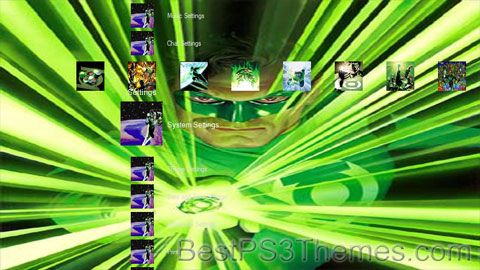
Green Lantern theme by Big Nes Download: GreenLantern.p3t Green Lantern is the name of several superheroes appearing in American comic books published by DC Comics. They fight evil with the aid of rings that grant them a variety of extraordinary powers, all of which come from imagination, fearlessness, and the electromagnetic spectrum of emotional willpower.[1] The characters are typically depicted as members of the Green Lantern Corps, an intergalactic law enforcement agency.
The first Green Lantern character, Alan Scott, was created in 1940 by Martin Nodell with scripting or co-scripting of the first stories by Bill Finger[2] during the Golden Age of Comic Books and usually fought common criminals in Capitol City (and later, Gotham City) with the aid of his magic ring. For the Silver Age of Comic Books, John Broome and Gil Kane reinvented the character as Hal Jordan in 1959 and introduced the Green Lantern Corps, shifting the nature of the character from fantasy to science fiction. During the Bronze Age of Comic Books, Dennis O'Neil and Neal Adams introduced John Stewart, a new member of the Corps who was one of DC's first black superheroes. Other notable Green Lanterns include Guy Gardner, Kyle Rayner, Simon Baz, Jessica Cruz and Jo Mullein.
The Green Lanterns are among DC Comics' longest lasting sets of characters. They have been adapted to television, video games, and motion pictures.
Martin Nodell (initially using the pen-name Mart Dellon) created the first Green Lantern in collaboration with Bill Finger. He first appeared in the Golden Age of Comic Books in All-American Comics #16 (July 1940), published by All-American Publications, one of three companies that would eventually merge to form DC Comics.[3]
This Green Lantern's real name was Alan Scott, a railroad engineer who, after a railway crash, came into possession of a magic lantern which spoke to him and said it would bring power. From this, he crafted a magic ring that gave him a wide variety of powers. The limitations of the ring were that it had to be "charged" every 24 hours by touching it to the lantern for a time and that it could not directly affect objects made of wood. Alan Scott fought mostly ordinary human villains, but he did have a few paranormal ones such as the immortal Vandal Savage and the zombie Solomon Grundy. Most stories took place in New York. Green Lantern rings are made from magic.
As a popular character in the 1940s, the Green Lantern featured both in anthology books such as All-American Comics and Comic Cavalcade, as well as his own book, Green Lantern. He also appeared in All Star Comics as a member of the superhero team known as the Justice Society of America.
After World War II the popularity of superheroes in general declined. The Green Lantern comic book was cancelled with issue #38 (May–June 1949), and All Star Comics #57 (1951) was the character's last Golden Age appearance. When superheroes came back in fashion in later decades, the character Alan Scott was revived, but he was forever marginalized by the new Hal Jordan character who had been created to supplant him (see below). Initially, he made guest appearances in other superheroes' books, but eventually got regular roles in books featuring the Justice Society. He never got another solo series, although he did star in individual stories and in the single-issue 2002 comic book Brightest Day, Blackest Night.[4] Between 1995 and 2003, DC Comics changed Alan Scott's superhero codename to "Sentinel" in order to distinguish him from the newer and more popular science fictional Green Lanterns.
In 2011, the Alan Scott character was revamped. His costume was redesigned to be all green and the source of his powers was changed to that of the mystical power of nature (referred to in the stories as "the Green").
In 1959, Julius Schwartz reinvented the Green Lantern character as a science fiction hero named Hal Jordan. Hal Jordan's powers were more or less the same as Alan Scott's, but otherwise this character was completely different from the Green Lantern character of the 1940s. He had a new name, a redesigned costume, and a rewritten origin story. Hal Jordan received his ring from a dying alien and was commissioned as an officer of the Green Lantern Corps, an interstellar law enforcement agency overseen by the Guardians of the Universe.[5]
Hal Jordan was introduced in Showcase #22 (September–October 1959). Gil Kane and Sid Greene were the art team most notable on the title in its early years, along with writer John Broome. His initial physical appearance, according to Kane, was patterned after his one-time neighbor, actor Paul Newman.[6]
With issue #76 (April 1970), the series made a radical stylistic departure. Editor Schwartz, in one of the company's earliest efforts to provide more than fantasy, worked with the writer-artist team of Denny O'Neil and Neal Adams to spark new interest in the comic book series and address a perceived need for social relevance. They added the character Green Arrow (with the cover, but not the official name, retitled Green Lantern Co-Starring Green Arrow) and had the pair travel through America encountering "real world" issues, to which they reacted in different ways — Green Lantern as fundamentally a lawman, Green Arrow as a liberal iconoclast. Additionally during this run, the groundbreaking "Snowbirds Don't Fly" story was published (issues #85–86) in which Green Arrow's teen sidekick Speedy (the later grown-up hero Red Arrow) developed a heroin addiction that he was forcibly made to quit. The stories were critically acclaimed, with publications such as The New York Times, The Wall Street Journal, and Newsweek citing it as an example of how comic books were "growing up".[7] However, the O'Neil/Adams run was not a commercial success, and the series was cancelled after only 14 issues, though an additional unpublished three installments were finally published as back-ups in The Flash #217–219.[8]
The title saw a number of revivals and cancellations. It changed to Green Lantern Corps at one point as the popularity rose and waned. During a time there were two regular titles, each with a Green Lantern, and a third member in the Justice League. A new character, Kyle Rayner, was created to become the feature while Hal Jordan first became the villain Parallax, then died and came back as the Spectre.
In the wake of The New Frontier, writer Geoff Johns returned Hal Jordan as Green Lantern in Green Lantern: Rebirth (2004–05). Johns began to lay the groundwork for "Blackest Night" (released July 13, 2010)[9]), viewing it as the third part of the trilogy started by Rebirth. Expanding on the Green Lantern mythology in the second part, "Sinestro Corps War" (2007), Johns, with artist Ethan van Sciver, found wide critical acclaim and commercial success with the series, which promised the introduction of a spectrum of colored "lanterns".
The series and its creators have received several awards over the years, including the 1961 Alley Award for Best Adventure Hero/Heroine with Own Book[10] and the Academy of Comic Book Arts Shazam Award for Best Continuing Feature in 1970, for Best Individual Story ("No Evil Shall Escape My Sight", Green Lantern (vol. 2) #76 by Dennis O'Neil and Neal Adams),[11] and in 1971 for Best Individual Story ("Snowbirds Don't Fly", Green Lantern (vol. 2) #85 by O'Neil and Adams).[12]
Writer O'Neil received the Shazam Award for Best Writer (Dramatic Division) in 1970 for his work on Green Lantern, Batman, Superman and other titles, while artist Adams received the Shazam for Best Artist (Dramatic Division) in 1970 for his work on Green Lantern and Batman.[11] Inker Dick Giordano received the Shazam Award for Best Inker (Dramatic Division) for his work on Green Lantern and other titles.[11]
In Judd Winick's first regular writing assignment on Green Lantern, he wrote a storyline in which an assistant of Kyle Rayner's emerged as a gay character in Green Lantern (vol. 3) #137 (June 2001). In Green Lantern (vol. 3) #154 (November 2001) the story entitled "Hate Crime" gained media recognition when his friend Terry Berg was brutally beaten in a homophobic attack. Winick was interviewed on Phil Donahue's show on MSNBC for that storyline on August 15, 2002[13] and received two GLAAD Media Awards for his Green Lantern work.[14]
In May 2011, Green Lantern placed 7th on IGN's Top 100 Comic Book Heroes of All Time.[15]
DC Comics has been involved in two disputes concerning Green Lantern trade marks before the United States Patent and Trade Mark Office, the first in 2012 and the second in 2016.[16]
Each Green Lantern wears a ring that grants them a variety of abilities. The ring is powered by willpower. The full extent of the ring's abilities has never been rigorously defined in the stories, but two consistent traits are that it grants the power of flight and that all of its effects are accompanied by a green light.
In issue #9 of the original Alan Scott Green Lantern comic book, scriptwriter Alfred Bester, best known as a major science fiction novelist of the 1950s (and one who had included rhymed couplets in his work) introduced the trademark Green Lantern Oaths:[27]
In brightest day, in darkest night This oath was revived for the Hal Jordan version of the character. Alan Moore and Geoff Johns introduced variants.[28] Oftentimes "darkest night" is changed to "blackest night", which inspired the name of the crossover event Blackest Night. In reference to the oath, the sequel to Blackest Night was called Brightest Day.
Hal Jordan made his live-action debut in the 2011 film of the same name, portrayed by Ryan Reynolds.[29] The film originally intended on launching a new DC Comics cinematic franchise with a sequel and an untitled Flash film, but due to the film's failure, nothing moved forward.
John Stewart was scheduled to appear in Zack Snyder's director cut of Justice League, portrayed by Wayne T. Carr, but the scene was reworked with Martian Manhunter, portrayed by Harry Lennix, at the request of Warner Bros.[30]
In the live-action television series Stargirl, Alan Scott's power battery is shown in a flashback to when the Injustice Society attacked the Justice Society of America's headquarters. JSA member Pat Dugan hid his power battery in his basement. In the second season, Alan Scott's daughter Jennie-Lynn Scott finds Alan's power battery and activates it. She absorbs the battery's energy and breaks it. She then leaves Blue Valley to find her missing brother Todd Rice.
A live-action Green Lantern television series was announced to be in development at HBO Max set to feature the Alan Scott, Guy Gardner, Jessica Cruz, and Simon Baz versions of Green Lantern along with an original character Bree Jarta with Finn Wittrock and Jeremy Irvine portraying Gardner and Scott respectively.[31] The series will be set in multiple time periods focusing on a separate story for each of the Green Lanterns for that time.[32] In October 2022, it was announced that the series had instead been extensively redeveloped into a solo project centered around John Stewart.[33] In December 2022, sources claimed the series was scrapped, but James Gunn say the series is still in production.[34][35] The series' title was revealed to be Lanterns in January 2023. The version with Berlanti was confirmed to have been cancelled, with this new series focusing on Stewart and Hal Jordan as part of DC Studios' new DC Universe.[36]
Some political pundits and academic political scientists use the phrase "Green Lanternism" (or "political Green Lanternism") to refer to the common tendency to demand perfection or omnipotence from political leaders, and to blame actually unsolvable or inevitable problems on political leaders' alleged weakness or malice, as if political office-holders' powers and abilities, like Green Lantern's powers and abilities, were limited only by their personal strength of will.[37][38]
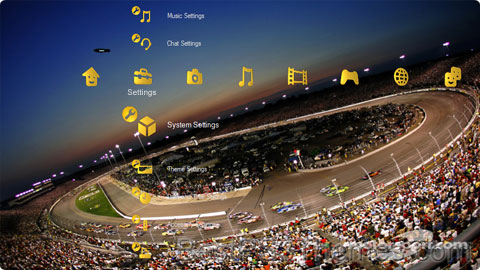
Downtown Pro V1 theme by ltmreal Download: DowntownProV1.p3t P3T Unpacker v0.12 This program unpacks Playstation 3 Theme files (.p3t) so that you can touch-up an existing theme to your likings or use a certain wallpaper from it (as many themes have multiple). But remember, if you use content from another theme and release it, be sure to give credit! Download for Windows: p3textractor.zip Instructions: Download p3textractor.zip from above. Extract the files to a folder with a program such as WinZip or WinRAR. Now there are multiple ways to extract the theme. The first way is to simply open the p3t file with p3textractor.exe. If you don’t know how to do this, right click the p3t file and select Open With. Alternatively, open the p3t file and it will ask you to select a program to open with. Click Browse and find p3textractor.exe from where you previously extracted it to. It will open CMD and extract the theme to extracted.[filename]. After that, all you need to do for any future p3t files is open them and it will extract. The second way is very simple. Just drag the p3t file to p3textractor.exe. It will open CMD and extract the theme to extracted.[filename]. For the third way, first put the p3t file you want to extract into the same folder as p3textractor.exe. Open CMD and browse to the folder with p3extractor.exe. Enter the following: Gold Melter theme by Jabyaeye Download: GoldMelter.p3t P3T Unpacker v0.12 This program unpacks Playstation 3 Theme files (.p3t) so that you can touch-up an existing theme to your likings or use a certain wallpaper from it (as many themes have multiple). But remember, if you use content from another theme and release it, be sure to give credit! Download for Windows: p3textractor.zip Instructions: Download p3textractor.zip from above. Extract the files to a folder with a program such as WinZip or WinRAR. Now there are multiple ways to extract the theme. The first way is to simply open the p3t file with p3textractor.exe. If you don’t know how to do this, right click the p3t file and select Open With. Alternatively, open the p3t file and it will ask you to select a program to open with. Click Browse and find p3textractor.exe from where you previously extracted it to. It will open CMD and extract the theme to extracted.[filename]. After that, all you need to do for any future p3t files is open them and it will extract. The second way is very simple. Just drag the p3t file to p3textractor.exe. It will open CMD and extract the theme to extracted.[filename]. For the third way, first put the p3t file you want to extract into the same folder as p3textractor.exe. Open CMD and browse to the folder with p3extractor.exe. Enter the following: Boat On The Water theme by ltmreal Download: BoatOnTheWater.p3t P3T Unpacker v0.12 This program unpacks Playstation 3 Theme files (.p3t) so that you can touch-up an existing theme to your likings or use a certain wallpaper from it (as many themes have multiple). But remember, if you use content from another theme and release it, be sure to give credit! Download for Windows: p3textractor.zip Instructions: Download p3textractor.zip from above. Extract the files to a folder with a program such as WinZip or WinRAR. Now there are multiple ways to extract the theme. The first way is to simply open the p3t file with p3textractor.exe. If you don’t know how to do this, right click the p3t file and select Open With. Alternatively, open the p3t file and it will ask you to select a program to open with. Click Browse and find p3textractor.exe from where you previously extracted it to. It will open CMD and extract the theme to extracted.[filename]. After that, all you need to do for any future p3t files is open them and it will extract. The second way is very simple. Just drag the p3t file to p3textractor.exe. It will open CMD and extract the theme to extracted.[filename]. For the third way, first put the p3t file you want to extract into the same folder as p3textractor.exe. Open CMD and browse to the folder with p3extractor.exe. Enter the following: Early Morning In The City theme by ltmreal Download: EarlyMorningInTheCity.p3t P3T Unpacker v0.12 This program unpacks Playstation 3 Theme files (.p3t) so that you can touch-up an existing theme to your likings or use a certain wallpaper from it (as many themes have multiple). But remember, if you use content from another theme and release it, be sure to give credit! Download for Windows: p3textractor.zip Instructions: Download p3textractor.zip from above. Extract the files to a folder with a program such as WinZip or WinRAR. Now there are multiple ways to extract the theme. The first way is to simply open the p3t file with p3textractor.exe. If you don’t know how to do this, right click the p3t file and select Open With. Alternatively, open the p3t file and it will ask you to select a program to open with. Click Browse and find p3textractor.exe from where you previously extracted it to. It will open CMD and extract the theme to extracted.[filename]. After that, all you need to do for any future p3t files is open them and it will extract. The second way is very simple. Just drag the p3t file to p3textractor.exe. It will open CMD and extract the theme to extracted.[filename]. For the third way, first put the p3t file you want to extract into the same folder as p3textractor.exe. Open CMD and browse to the folder with p3extractor.exe. Enter the following: Nascar theme by SebChevy18 Download: Nascar_2.p3t Redirect to: Circuits Nascar theme by SebChevy18 Download: CircuitsNascar.p3t P3T Unpacker v0.12 This program unpacks Playstation 3 Theme files (.p3t) so that you can touch-up an existing theme to your likings or use a certain wallpaper from it (as many themes have multiple). But remember, if you use content from another theme and release it, be sure to give credit! Download for Windows: p3textractor.zip Instructions: Download p3textractor.zip from above. Extract the files to a folder with a program such as WinZip or WinRAR. Now there are multiple ways to extract the theme. The first way is to simply open the p3t file with p3textractor.exe. If you don’t know how to do this, right click the p3t file and select Open With. Alternatively, open the p3t file and it will ask you to select a program to open with. Click Browse and find p3textractor.exe from where you previously extracted it to. It will open CMD and extract the theme to extracted.[filename]. After that, all you need to do for any future p3t files is open them and it will extract. The second way is very simple. Just drag the p3t file to p3textractor.exe. It will open CMD and extract the theme to extracted.[filename]. For the third way, first put the p3t file you want to extract into the same folder as p3textractor.exe. Open CMD and browse to the folder with p3extractor.exe. Enter the following:Green Lantern
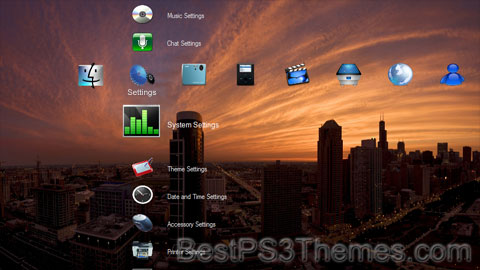

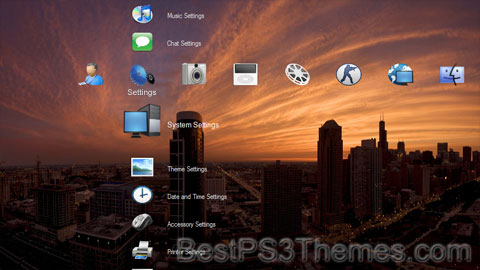
(11 backgrounds)
Green Lantern ![]()
Pictured left to right: Guy Gardner, Kyle Rayner, Hal Jordan, John Stewart, and Kilowog.
Art by Ethan Van Sciver.Publisher DC Comics First appearance All-American Comics #16 (July 1940) Created by Alan Scott:
Martin Nodell
Bill Finger
Hal Jordan:
John Broome
Gil Kane
John Stewart:
Dennis O'Neil
Neal AdamsCharacters Alan Scott
Hal Jordan
Guy Gardner
John Stewart
Kyle Rayner
Simon Baz
Jessica Cruz
Sojourner MulleinSee also Green Lantern Corps Publication history[edit]
Timeline[edit]

Golden Age[edit]
Silver Age[edit]
Later developments[edit]
Awards[edit]
Legal disputes[edit]
Characters[edit]
Golden Age Green Lantern[edit]
Silver Age Green Lantern[edit]
Bronze Age Green Lanterns[edit]
Modern Age Green Lanterns[edit]
[edit]
Powers and abilities[edit]
Green Lantern Oath[edit]
No evil shall escape my sight!
Let those who worship evil's might
Beware my power ― Green Lantern's light!
In other media[edit]
Film[edit]
Standalone film[edit]
DC Extended Universe[edit]
Television[edit]
DC Universe[edit]
In academic and journalistic jargon[edit]
See also[edit]
References[edit]
Downtown Pro V1

(1 background)
Copyright (c) 2007. Anoop Menon
p3textractor filename.p3t [destination path]Replace filename with the name of the p3t file, and replace [destination path] with the name of the folder you want the files to be extracted to. A destination path is not required. By default it will extract to extracted.filename.Gold Melter

(2 backgrounds)
Copyright (c) 2007. Anoop Menon
p3textractor filename.p3t [destination path]Replace filename with the name of the p3t file, and replace [destination path] with the name of the folder you want the files to be extracted to. A destination path is not required. By default it will extract to extracted.filename.Boat On The Water

(4 backgrounds)
Copyright (c) 2007. Anoop Menon
p3textractor filename.p3t [destination path]Replace filename with the name of the p3t file, and replace [destination path] with the name of the folder you want the files to be extracted to. A destination path is not required. By default it will extract to extracted.filename.Early Morning In The City

(4 backgrounds)
Copyright (c) 2007. Anoop Menon
p3textractor filename.p3t [destination path]Replace filename with the name of the p3t file, and replace [destination path] with the name of the folder you want the files to be extracted to. A destination path is not required. By default it will extract to extracted.filename.Nascar #2

(4 backgrounds)
Circuits Nascar

(6 backgrounds)
Copyright (c) 2007. Anoop Menon
p3textractor filename.p3t [destination path]Replace filename with the name of the p3t file, and replace [destination path] with the name of the folder you want the files to be extracted to. A destination path is not required. By default it will extract to extracted.filename.