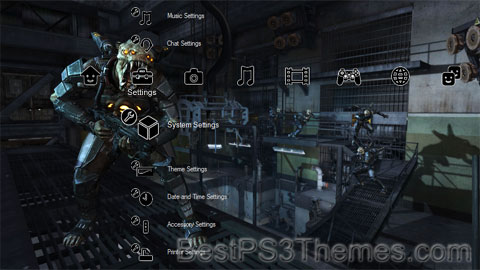
Battlestar Galactica

Battlestar Galactica theme by xXBulletMagnetXx

Download: BattlestarGalactica.p3t
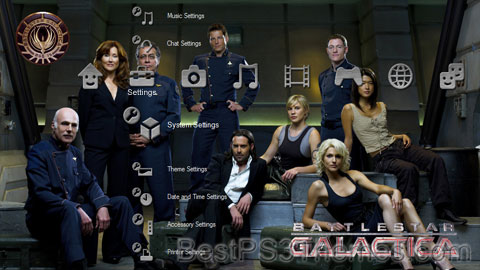
Battlestar Galactica Theme
(1 background)

Battlestar Galactica
Franchise logo
Created byGlen A. Larson
Original workBattlestar Galactica (1978)
OwnerNBCUniversal
Years1978–2012
Print publications
Book(s)List of books
ComicsList of comics
Films and television
Film(s)
Television series
Web series
Television film(s)
Games
Video game(s)List of video games

Battlestar Galactica is an American science fiction media franchise created by Glen A. Larson. It began with the original television series in 1978, and was followed by a short-run sequel series, Galactica 1980, a line of book adaptations, original novels, comic books, a board game, and video games. A reimagined version aired as a two-part, three-hour miniseries developed by Ronald D. Moore and David Eick in 2003, followed by a 2004 television series, which aired until 2009. A prequel series, Caprica, aired in 2010.

All Battlestar Galactica productions share the premise that in a distant part of the universe, a human civilization has extended to a group of planets known as the Twelve Colonies, to which they have migrated from their ancestral homeworld of Kobol. The Twelve Colonies have been engaged in a lengthy war with the Cylons, a cybernetic race whose goal is the extermination of the human species. The Cylons offer peace to the humans, which proves to be a ruse. With the aid of a human named Baltar, the Cylons carry out a massive nuclear attack on the Twelve Colonies and the Colonial Fleet of starships that protect them, devastating the fleet, laying waste to the Colonies, and destroying all but a small remaining population. Survivors flee into outer space aboard a motley fleet of spaceworthy ships. Of the Colonial battle fleet, only the Battlestar Galactica, a gigantic battleship and spacecraft carrier, appears to have survived the attack. Under the leadership of Commander Adama, the Galactica and the pilots of "Viper fighters" lead a fugitive fleet of survivors in search of the fabled thirteenth colony known as Earth.

Television series[edit]

SeriesSeasonEpisodesOriginally airedCreator(s) / Developer(s)
First airedLast airedNetwork
Original continuity
Battlestar Galactica124September 17, 1978 (1978-09-17)April 29, 1979 (1979-04-29)ABCGlen A. Larson
Galactica 1980110January 27, 1980 (1980-01-27)May 4, 1980 (1980-05-04)
Reimagined continuity
Battlestar Galacticaminiseries2December 8, 2003 (2003-12-08)December 9, 2003 (2003-12-09)Sci FiRonald D. Moore & David Eick
113January 15, 2005 (2005-01-15) / October 18, 2004 (2004-10-18) (Sky1)April 1, 2005 (2005-04-01) / January 24, 2005 (2005-01-24) (Sky1)Ronald D. Moore
220July 15, 2005 (2005-07-15)March 10, 2006 (2006-03-10)
320October 6, 2006 (2006-10-06)March 25, 2007 (2007-03-25)
421April 4, 2008 (2008-04-04)March 20, 2009 (2009-03-20)
Caprica119January 22, 2010 (2010-01-22)November 30, 2010 (2010-11-30)Syfy[note 1]Remi Aubuchon & Ronald D. Moore

Original continuity[edit]

Battlestar Galactica (1978–79)[edit]

Glen A. Larson, the creator and executive producer of Battlestar Galactica, claimed he had conceived of the Battlestar Galactica premise, which he called Adam's Ark, during the late 1960s. As James E. Ford detailed in "Battlestar Galactica and Mormon Theology", a paper read at the Joint Conference of the American Culture and Popular Culture Associations on April 17, 1980 (and published as "Theology in Prime Time Science Fiction: Battlestar Galactica and Mormon Doctrine", Journal of Popular Culture #17 [1983]: 83–87), the series incorporated many themes from Mormon theology, such as marriage for "time and eternity", a "council of twelve", a lost thirteenth tribe of humans, and a planet called Kobol (an anagram of Kolob), as Larson was a member of the Church of Jesus Christ of Latter-day Saints.[1][2] However, he was unable to find financial backing for his TV series for a number of years. Battlestar Galactica was finally produced in the wake of the success of the 1977 film Star Wars. The original Cylons of Battlestar Galactica, robotic antagonists bent on destroying all humankind, owe much to Fred Saberhagen's berserker stories, including Saberhagen's fictional race the Builders whose "sliding single red eye" became the signature design element for the Cylons.[citation needed]

The Viper as it appeared in Galactica 1980.

Larson had envisioned Battlestar Galactica as a series of made-for-TV movies (a three-hour pilot program and two two-hour episodes) for the American Broadcasting Company (ABC). A shortened version of the three-hour pilot, Saga of a Star World, was screened in Canadian theaters (before the TV series was telecast) and in American, European and Australian theaters later on. Instead of two additional TV movies, ABC decided to commission a weekly TV series of one-hour episodes.

In 1979 at the sixth annual People's Choice Awards, the TV series won in the category of "Best New TV Drama Series".[3]

The first episode of the TV series (the long pilot TV movie) was broadcast on September 17, 1978. About 30 minutes before the scheduled end, that broadcast was interrupted by the signing of the Egyptian–Israeli Camp David Accords. After the interruption (which was nearly an hour in length), the episode picked back up where it left off.

During the eight months after the pilot's first broadcast, 17 original episodes of the series were made (five of them two-part shows), equivalent to a standard 24-episode TV season. Citing declining ratings and cost overruns, ABC canceled Battlestar Galactica in April 1979. Its final episode "The Hand of God" was telecast on April 29, 1979.

Galactica 1980 (1980)[edit]

During the autumn of 1979, ABC executives met with Battlestar Galactica's creator Glen Larson to consider restarting the series. A suitable concept was needed to draw viewers, and it was decided that the arrival of the Colonial Fleet at present-day Earth would be the storyline. A new TV movie called Galactica 1980 was produced. Again, it was decided this new version of Battlestar Galactica would be made into a weekly TV series. Despite the early success of the premiere, this program failed to achieve the popularity of the original series, and it was canceled after just ten episodes.

In this 1980 sequel series, the Colonial fleet finds the Earth, and then it covertly protects it from the Cylons. This series was a quick failure due to its low budget (e.g., recycling footage from the 1974 Universal Studios movie Earthquake during a Cylon attack sequence), widely panned writing, and ill-chosen time slot (Sunday evenings, a time generally reserved for family-oriented programming and, more specifically, also for the 60 Minutes newsmagazine program). The TV series also had to adhere to strict content restrictions such as limiting the number of acts of violence and being required to shoehorn educational content into the script and dialogue.

To cut costs, the show was set mostly on the contemporary Earth, to the great dismay of fans. Another factor for fan apathy was the nearly complete recasting of the original series: Lorne Greene reprised his role as Adama, Herb Jefferson Jr. played "Colonel" Boomer in about half of the episodes (with little screentime), and Dirk Benedict as Starbuck for one episode (the abrupt final episode, though his character was to have also appeared in the unfilmed episode "Wheel of Fire", which was a semi-sequel to "The Return of Starbuck"). Richard Hatch (Apollo in the original series) was sent a script for Galactica 1980, but he turned it down since he was not sure what his part in the series would be now that all the characters had changed.[4]

Some TV syndication packages for Battlestar Galactica incorporate the episodes of this series.

Reimagined continuity[edit]

Miniseries (2003)[edit]

Despite attempts to revive the series over the years, none came to fruition until it was reimagined in 2003 by Universal Television as Battlestar Galactica, a three-hour miniseries where a long-standing armistice following a war between humans and Cylons is broken by a second Cylon War, when the machines launch a sneak attack wiping out virtually all of humanity. Commissioned by the Sci-Fi Channel, screenwriter Ronald D. Moore and producer David Eick were the creative forces behind it. Academy Award-nominated actor Edward James Olmos was cast in the role of Commander Adama, while two-time Academy Award nominee Mary McDonnell was cast as President Laura Roslin. Starbuck and Boomer were now female characters, portrayed by Katee Sackhoff and Grace Park respectively. Other cast members included Jamie Bamber (Captain Lee 'Apollo' Adama), James Callis (Dr. Gaius Baltar), and Tricia Helfer as a Cylon-humanoid known as "Number Six".[citation needed] The mini-series was a ratings success for the Sci-Fi Channel and they commissioned a new weekly Battlestar Galactica series to follow.

Battlestar Galactica (2004–09)[edit]

The new television series was co-funded by the UK's Sky Television, and premiered in the United Kingdom on the Sky1 satellite channel in October 2004. The series was then broadcast in North America on the Sci-Fi Channel in January 2005. Continuing where the 2003 mini-series left off, the main cast all returned to reprise their roles. Several new characters were introduced, and Richard Hatch, who played Captain Apollo in the 1970s Battlestar Galactica TV series, also appeared in several episodes as Tom Zarek, a former political terrorist who later becomes part of the new Colonial government.

An edited version of the pilot miniseries was aired on NBC on January 9, 2005, five days before the Sci-Fi series premiere. NBC also aired three selected first-season episodes to promote the show in advance of the second-season premiere in July 2005. The series ran for four seasons between 2004 and 2009. The second season was split into two halves screened several months apart. Due to production delays caused by the 2007–2008 Writers Guild strike, the fourth season was also split into two parts, with a seven-month hiatus in between.

The series has won widespread critical acclaim among many mainstream non-SF-genre publications. Time[5] and New York Newsday[6] named it the best show on television in 2005. Other publications such as The New York Times,[7] The New Yorker,[8] National Review[9] and Rolling Stone magazine[10] also gave the show positive reviews.

The show has received a Peabody Award for overall excellence, several Emmy Awards for Visual Effects, and Emmy nominations for Writing and Directing. Time magazine named it one of the 100 Best TV Shows of All Time.[11]

Caprica (2010)[edit]

Caprica is a prequel television series to the re-imagined Battlestar Galactica. It premiered on Syfy (formerly Sci-Fi) on January 22, 2010, and was described as "television's first science fiction family saga". It was a two-hour back door pilot for a possible weekly television series, but on December 2, 2008, Syfy gave the go-ahead to expand the project into a full, 20-episode series. Caprica is set on the titular planet, 58 years before the events of Battlestar Galactica. The show revolves around two families, the Adamas and the Graystones, and the creation of the Cylons.

The pilot was directed by Jeffrey Reiner and starred Eric Stoltz, Esai Morales, Paula Malcomson, Alessandra Torresani, and Polly Walker.[12] The pilot was released on DVD on April 21, 2009[13] and the series was broadcast in January 2010.

On October 27, 2010, Syfy canceled Caprica due to low ratings. The final five episodes were aired in the US on January 4, 2011[14] though they had aired a couple of months earlier on the Canadian network Space. The entire series was released on DVD in 2011.

Proposed Peacock series[edit]

In September 2019, NBCUniversal was planning a new series as part of their Peacock streaming service, set in the same continuity as the 2004 Battlestar Galactica series,[15] and produced by Sam Esmail.[16] In March 2021, writer and producer Michael Lesslie had reportedly left the project, leaving production plans in doubt.[17]

Web series[edit]

Web seriesEpisodesOriginally released
First releasedLast releasedNetwork
The Resistance10September 5, 2006 (2006-09-05)October 5, 2006 (2006-10-05)Sci Fi's website
Razor Flashbacks7October 5, 2007 (2007-10-05)November 16, 2007 (2007-11-16)
The Face of the Enemy10December 12, 2008 (2008-12-12)January 12, 2009 (2009-01-12)
Blood & Chrome10November 9, 2012 (2012-11-09)December 7, 2012 (2012-12-07)Machinima.com

The Resistance (2006)[edit]

The first set of webisodes were a series of shorts produced in 2006 to promote the third season of the re-imagined show. Made as an "optional extra" to Season 3, the webisodes filled in some of the events between the second and third seasons and featured some of the main cast, though did not reveal what would happen in the beginning of Season 3, nor was viewing them essential to follow the story of the third season. Each of the ten webisodes was approximately three minutes long, and they were released twice a week leading up to the U.S. Season 3 premiere in 2006.

Razor Flashbacks (2007)[edit]

The Razor Flashbacks were a series of seven webisodes produced in 2007, set some 40 years earlier during William Adama's fighter pilot days during the later stages of the First Cylon War. They were released on the Internet as "webisodes" leading up to Razor's release. They are now available on the DVD and Blu-Ray releases of Battlestar Galactica: Razor, and some are inserted into both the broadcast and extended cuts of the movie on DVD and Blu-Ray. The installments that did not make the final cut include 1, 2, and the latter half of 7.

The Face of the Enemy (2008)[edit]

A set of ten webisodes were released during the seven-month hiatus between episodes 10 and 11 of Season 4.[18] Titled The Face of the Enemy, the web series premiered on December 12, 2008 on SciFi.com.

Blood & Chrome (2012)[edit]

Battlestar Galactica: Blood & Chrome was to be a spin-off series from the re-imagined Battlestar Galactica series.[19] Syfy approached show runner Ronald D. Moore to produce another spin-off set in the reimagined Battlestar Galactica universe, which was to begin as a two-hour pilot focused on William "Husker" Adama (portrayed by Luke Pasqualino) during the First Cylon War (as was glimpsed in Razor and the corresponding webisodes).

Syfy decided against moving forward with the Blood and Chrome TV series, but aired a 10-part webseries over four weeks via Machinima.com, beginning on November 9, 2012. The webseries was also aired as a 2-hour movie on Syfy on February 10, 2013,[20] and was released on DVD shortly afterwards.[21]

Films[edit]

Battlestar Galactica[edit]

Battlestar Galactica is a re-edit of the pilot episode of the 1978 TV series, Saga of a Star World. It was released theatrically in Canada before the television series aired in the United States, in order to help recoup its high production costs.[22] Later, the standalone film edit was also released in the United States.

Razor[edit]

Battlestar Galactica: Razor is a 2007 television movie produced and broadcast in the gap between Seasons 3 and 4 of the re-imagined series. Razor is also the first two episodes of Season 4 though it chronicles events on Battlestar Pegasus in two time periods, both of which are "in the past" with respect to the Season 4 continuity. The "present day" framing scenes are set during Lee Adama's command of the Pegasus in the latter half of Season 2, while "flashback" scenes depict Helena Cain's command in the period between the Cylon attack (shown in the 2003 mini-series) and the reunion with the Galactica in the second season. It aired in the United States and Canada on November 24, 2007 and in the UK and Ireland on December 18, 2007. An expanded version of the movie was released on DVD on December 4, 2007.

The Plan[edit]

Sci Fi Channel produced a two-hour TV movie which was planned to air after the final episode of the series in 2009. The movie began production on September 8, 2008.[23] The movie premiered exclusively on DVD, Blu-ray and digital download on October 27, 2009 and aired on January 10, 2010, on Sci Fi. Written by Jane Espenson and directed by Edward James Olmos, The Plan storyline begins before the attack on the Twelve Colonies and shows events primarily from the perspective of the Cylons.[24] Edward James Olmos reprised his role as Adama, and ten of the eleven actors who played Cylons appeared, including Michael Trucco, Aaron Douglas, Dean Stockwell,

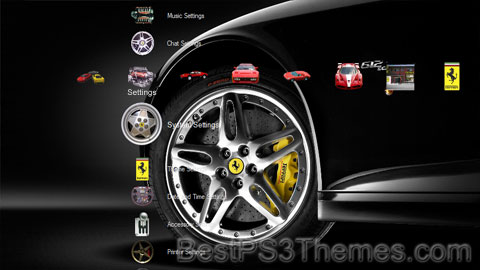
Ferrari #4

Ferrari theme by TOUGY

Download: Ferrari_4.p3t

Ferrari Theme 4
(8 backgrounds)

Ferrari S.p.A.
Company typePublic (S.p.A.)
ISINNL0011585146 Edit this on Wikidata
IndustryAutomotive
Founded13 September 1939; 84 years ago (1939-09-13) in Modena, Italy (as Auto Avio Costruzioni)[1]
FounderEnzo Ferrari
Headquarters
[2]
44°31′57″N 10°51′51″E / 44.532447°N 10.864137°E / 44.532447; 10.864137
Area served
Worldwide
Key people
ProductsSports cars, luxury cars
Production output
Increase 13,663 units shipped (2023)[3]
RevenueIncrease 5.970 billion (2023)[3]
Increase 1.617 billion (2023)[3]
Increase 1.257 billion (2023)[3]
Total assetsIncrease 8.05 billion (2023)[3]
Total equityIncrease 3.07 billion (2023)[3]
Owners
Number of employees
Increase 4,988 (2023)[3]
DivisionsScuderia Ferrari
Websitewww.ferrari.com
Footnotes / references
[3] [4][5]

Ferrari S.p.A. (/fəˈrɑːri/; Italian: [ferˈraːri]) is an Italian luxury sports car manufacturer based in Maranello. Founded in 1939 by Enzo Ferrari (1898–1988), the company built its first car in 1940, adopted its current name in 1945, and began to produce its current line of road cars in 1947. Ferrari became a public company in 1960, and from 1963 to 2014 it was a subsidiary of Fiat S.p.A. It was spun off from Fiat's successor entity, Fiat Chrysler Automobiles, in 2016. In 2024, the Wall Street Journal described the company as having been "synonymous with opulence, meticulous craftsmanship and ridiculously fast cars for nearly a century".[6]

The company currently offers a large model range which includes several supercars, grand tourers, and one SUV. Many early Ferraris, dating to the 1950s and 1960s, count among the most expensive cars ever sold at auction. Owing to a combination of its cars, enthusiast culture, and successful licensing deals, in 2019 Ferrari was labelled the world's strongest brand by the financial consultancy Brand Finance.[7] As of May 2023, Ferrari is also one of the largest car manufacturers by market capitalisation, with a value of approximately US$52 billion.[8]

Throughout its history, the company has been noted for its continued participation in racing, especially in Formula One, where its team, Scuderia Ferrari, is the series' single oldest and most successful. Scuderia Ferrari has raced since 1929, first in Grand Prix events and later in Formula One, where since 1952 it has fielded fifteen champion drivers, won sixteen Constructors' Championships, and accumulated more race victories, 1–2 finishes, podiums, pole positions, fastest laps and points than any other team in F1 history.[9][10] Historically, Ferrari was also highly active in sports car racing, where its cars took many wins in races such as the Mille Miglia, Targa Florio and 24 Hours of Le Mans, as well as several overall victories in the World Sportscar Championship. Scuderia Ferrari fans, commonly called tifosi, are known for their passion and loyalty to the team.

History[edit]

Early history[edit]

Three Scuderia Ferrari cars in 1934, all Alfa Romeo P3s. Drivers, left to right: Achille Varzi, Louis Chiron, and Carlo Felice Trossi.

Enzo Ferrari, formerly a salesman and racing driver for Alfa Romeo, founded Scuderia Ferrari, a racing team, in 1929. Originally intended to service gentleman drivers and other amateur racers, Alfa Romeo's withdrawal from racing in 1933, combined with Enzo's connections within the company, turned Scuderia Ferrari into its unofficial representative on the track.[11] Alfa Romeo supplied racing cars to Ferrari, who eventually amassed some of the best drivers of the 1930s and won many races before the team's liquidation in 1937.[11][12]: 43 

Late in 1937, Scuderia Ferrari was liquidated and absorbed into Alfa Romeo,[11] but Enzo's disagreements with upper management caused him to leave in 1939. He used his settlement to found his own company, where he intended to produce his own cars. He called the company "Auto Avio Costruzioni", and headquartered it in the facilities of the old Scuderia Ferrari;[1] due to a noncompete agreement with Alfa Romeo, the company could not use the Ferrari name for another four years. The company produced a single car, the Auto Avio Costruzioni 815, which participated in only one race before the outbreak of World War II. During the war, Enzo's company produced aircraft engines and machine tools for the Italian military; the contracts for these goods were lucrative, and provided the new company with a great deal of capital. In 1943, under threat of Allied bombing raids, the company's factory was moved to Maranello. Though the new facility was nonetheless bombed twice, Ferrari remains in Maranello to this day.[1][12]: 45–47 [13]

Under Enzo Ferrari[edit]

Ferrari's factory in the early 1960s: everything in its production line was handmade by machinists, who followed technical drawings with extreme precision.[14] Much of this work is now done by industrial robots.[15]

In 1945, Ferrari adopted its current name. Work started promptly on a new V12 engine that would power the 125 S, which was the marque's first car, and many subsequent Ferraris. The company saw success in motorsport almost as soon as it began racing: the 125 S won many races in 1947,[16][17] and several early victories, including the 1949 24 Hours of Le Mans and 1951 Carrera Panamericana, helped build Ferrari's reputation as a high-quality automaker.[18][19] Ferrari won several more races in the coming years,[9][20] and early in the 1950s its road cars were already a favourite of the international elite.[21] Ferrari produced many families of interrelated cars, including the America, Monza, and 250 series, and the company's first series-produced car was the 250 GT Coupé, beginning in 1958.[22]

In 1960, Ferrari was reorganized as a public company. It soon began searching for a business partner to handle its manufacturing operations: it first approached Ford in 1963, though negotiations fell through; later talks with Fiat, who bought 50% of Ferrari's shares in 1969, were more successful.[23][24] In the second half of the decade, Ferrari also produced two cars that upended its more traditional models: the 1967 Dino 206 GT, which was its first mass-produced mid-engined road car,[a] and the 1968 365 GTB/4, which possessed streamlined styling that modernised Ferrari's design language.[27][28] The Dino in particular was a decisive movement away from the company's conservative engineering approach, where every road-going Ferrari featured a V12 engine placed in the front of the car, and it presaged Ferrari's full embrace of mid-engine architecture, as well as V6 and V8 engines, in the 1970s and 1980s.[27]

Contemporary[edit]

Enzo Ferrari died in 1988, an event that saw Fiat expand its stake to 90%.[29] The last car that he personally approved—the F40—expanded on the flagship supercar approach first tried by the 288 GTO four years earlier.[30] Enzo was replaced in 1991 by Luca Cordero di Montezemolo, under whose 23-year-long chairmanship the company greatly expanded. Between 1991 and 2014, he increased the profitability of Ferrari's road cars nearly tenfold, both by increasing the range of cars offered and through limiting the total number produced. Montezemolo's chairmanship also saw an expansion in licensing deals, a drastic improvement in Ferrari's Formula One performance (not least through the hiring of Michael Schumacher and Jean Todt), and the production of three more flagship cars: the F50, the Enzo, and the LaFerrari. In addition to his leadership of Ferrari, Montezemolo was also the chairman of Fiat proper between 2004 and 2010.[31]

After Montezemolo resigned, he was replaced in quick succession by many new chairmen and CEOs. He was succeeded first by Sergio Marchionne,[31] who would oversee Ferrari's initial public offering and subsequent spin-off from Fiat Chrysler Automobiles,[32][33] and then by Louis Camilleri as CEO and John Elkann as chairman.[34] Beginning in 2021, Camilleri was replaced as CEO by Benedetto Vigna, who has announced plans to develop Ferrari's first fully electric model.[35] During this period, Ferrari has expanded its production, owing to a global increase in wealth, while becoming more selective with its licensing deals.[36][37]

Motorsport[edit]

Since the company's beginnings, Ferrari has been involved in motorsport. Through its works team, Scuderia Ferrari, it has competed in a range of categories including Formula One and sports car racing, though the company has also worked in partnership with other teams.

Grand Prix and Formula One racing[edit]

A Ferrari F2004 Formula One car, driven by Michael Schumacher. Schumacher is one of the most decorated drivers in F1 history.

The earliest Ferrari entity, Scuderia Ferrari, was created in 1929—ten years before the founding of Ferrari proper—as a Grand Prix racing team. It was affiliated with automaker Alfa Romeo, for whom Enzo had worked in the 1920s. Alfa Romeo supplied racing cars to Ferrari, which the team then tuned and adjusted to their desired specifications. Scuderia Ferrari was highly successful in the 1930s: between 1929 and 1937 the team fielded such top drivers as Antonio Ascari, Giuseppe Campari, and Tazio Nuvolari, and won 144 out of its 225 races.[12][11]

Ferrari returned to Grand Prix racing in 1947, which was at that point metamorphosing into modern-day Formula One. The team's first homebuilt Grand Prix car, the 125 F1, was first raced at the 1948 Italian Grand Prix, where its encouraging performance convinced Enzo to continue the company's costly Grand Prix racing programme.[38]: 9  Ferrari's first victory in an F1 series was at the 1951 British Grand Prix, heralding its strong performance during the 1950s and early 1960s: between 1952 and 1964, the team took home six World Drivers' Championships and one Constructors' Championship. Notable Ferrari drivers from this era include Alberto Ascari, Juan Manuel Fangio, Phil Hill, and John Surtees.[9]

Ferrari's initial fortunes ran dry after 1964, and its began to receive its titles in isolated sprees.[10] Ferrari first started to slip in the late 1960s, when it was outclassed by teams using the inexpensive, well-engineered Cosworth DFV engine.[39][40] The team's performance improved markedly in the mid-1970s thanks to Niki Lauda, whose skill behind the wheel granted Ferrari a drivers' title in 1975 and 1977; similar success was accomplished in following years by the likes of Jody Scheckter and Gilles Villeneuve.[10][41] The team also won the Constructors' Championship in 1982 and 1983.[9][42]

Following another drought in the 1980s and 1990s, Ferrari saw a long winning streak in the 2000s, largely through the work of Michael Schumacher. After signing onto the team in 1996, Schumacher gave Ferrari five consecutive drivers' titles between 2000 and 2004; this was accompanied by six consecutive constructors' titles, beginning in 1999. Ferrari was especially dominant in the 2004 season, where it lost only three races.[9] After Schumacher's departure, Ferrari won one more drivers' title—given in 2007 to Kimi Räikkönen—and two constructors' titles in 2007 and 2008. These are the team's most recent titles to date; as of late, Ferrari has struggled to outdo recently ascendant teams such as Red Bull and Mercedes-Benz.[9][10]

Ferrari Driver Academy[edit]

Ferrari's junior driver programme is the Ferrari Driver Academy. Begun in 2009, the initiative follows the team's successful grooming of Felipe Massa between 2003 and 2006. Drivers who are accepted into the Academy learn the rules and history of formula racing as they compete, with Ferrari's support, in feeder classes such as Formula Three and Formula 4.[43][44][45] As of 2019, 5 out of 18 programme inductees had graduated and become F1 drivers: one of these drivers, Charles Leclerc, came to race for Scuderia Ferrari, while the other four signed to other teams. Non-graduate drivers have participated in racing development, filled consultant roles, or left the Academy to continue racing in lower-tier formulae.[45]

Sports car racing[edit]

A 312 P, driven by Jacky Ickx, during Ferrari's final year in the World Sportscar Championship

Aside from an abortive effort in 1940, Ferrari began racing sports cars in 1947, when the 125 S won six out of the ten races it participated in. [16] Ferrari continued to see similar luck in the years to follow: by 1957, just ten years after beginning to compete, Ferrari had won three World Sportscar Championships, seven victories in the Mille Miglia, and two victories at the 24 Hours of Le Mans, among many other races[20] These races were ideal environments for the development and promotion of Ferrari's earlier road cars, which were broadly similar to their racing counterparts.[46]

This luck continued into the first half of the 1960s, when Ferrari won the WSC's 2000GT class three consecutive times and finished first at Le Mans for six consecutive years.[47][48] Its winning streak at Le Mans was broken by Ford in 1966,[48] and though Ferrari would win two more WSC titles—one in 1967 and another in 1972[49][50]—poor revenue allocation, combined with languishing performance in Formula One, led the company to cease competing in sports car events in 1973.[24]: 621  From that point onward, Ferrari would help prepare sports racing cars for privateer teams, but would not race them itself.[51]

Ferrari 499P No.51 at 2023 6 Hours of Spa-Francorchamps

In 2023, Ferrari reentered sports car racing. For the 2023 FIA World Endurance Championship, Ferrari, in partnership with AF Corse, fielded two 499P sports prototypes. To commemorate the company's return to the discipline, one of the cars was numbered "50", referencing the fifty years that had elapsed since a works Ferrari competed in an endurance race.[52][53] The 499P finished first at the 2023 24 Hours of Le Mans, ending Toyota Gazoo Racing's six-year winning streak there and becoming the first Ferrari in 58 years to win the race.[54]At the 2024 24 Hours of Le Mans, Ferrari achieved its eleventh victory, second consecutive at Le Mans since 1965 with the No. 50 499P driven by Antonio Fuoco, Miguel Molina and Nicklas Nielsen. While the Ferrari No. 51 499P driven by Alessandro Pier Guidi, James Calado, a

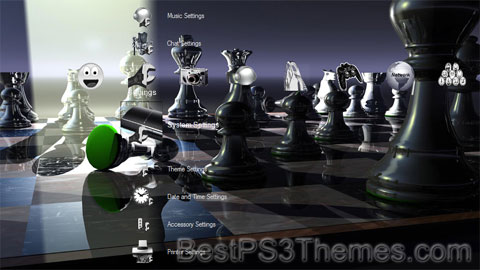
3D Art

3D Art theme by DarkDub

Download: 3DArt.p3t

3D Art Theme
(12 backgrounds)

P3T Unpacker v0.12
Copyright (c) 2007. Anoop Menon

This program unpacks Playstation 3 Theme files (.p3t) so that you can touch-up an existing theme to your likings or use a certain wallpaper from it (as many themes have multiple). But remember, if you use content from another theme and release it, be sure to give credit!

Download for Windows: p3textractor.zip

Instructions:

Download p3textractor.zip from above. Extract the files to a folder with a program such as WinZip or WinRAR. Now there are multiple ways to extract the theme.

The first way is to simply open the p3t file with p3textractor.exe. If you don’t know how to do this, right click the p3t file and select Open With. Alternatively, open the p3t file and it will ask you to select a program to open with. Click Browse and find p3textractor.exe from where you previously extracted it to. It will open CMD and extract the theme to extracted.[filename]. After that, all you need to do for any future p3t files is open them and it will extract.

The second way is very simple. Just drag the p3t file to p3textractor.exe. It will open CMD and extract the theme to extracted.[filename].

For the third way, first put the p3t file you want to extract into the same folder as p3textractor.exe. Open CMD and browse to the folder with p3extractor.exe. Enter the following:
p3textractor filename.p3t [destination path]Replace filename with the name of the p3t file, and replace [destination path] with the name of the folder you want the files to be extracted to. A destination path is not required. By default it will extract to extracted.filename.

Power Stone

Power Stone theme by Joseph Collum (PSN: rockmanjoey)

Download: PowerStone.p3t
Power Stone Theme
(2 backgrounds)

Power Stone may refer to:

Secret of Mana

Secret of Mana theme by Tidal

Download: SecretofMana.p3t
Secret of Mana Theme
(1 background)

Secret of Mana
North American SNES box art
Developer(s)Square
Publisher(s)Square
Square Enix (mobile)
Director(s)Koichi Ishii
Producer(s)Hiromichi Tanaka
Designer(s)
  • Koichi Ishii
  • Hiromichi Tanaka
Programmer(s)Nasir Gebelli
Artist(s)Shinichi Kameoka
Hiroo Isono
Writer(s)Hiromichi Tanaka
Composer(s)Hiroki Kikuta
SeriesMana
Platform(s)Super Nintendo Entertainment System, Mobile phone, iOS, Android
Release
August 6, 1993
  • Super NES
    • JP: August 6, 1993
    • NA: October 14, 1993
    • PAL: November 25, 1994[1]
    Mobile
    • JP: October 26, 2009
    iOS
    • WW: December 21, 2010
    Android
    • WW: October 30, 2014
Genre(s)Action role-playing
Mode(s)Single-player, multiplayer

Secret of Mana, originally released in Japan as Seiken Densetsu 2,[a] is a 1993 action role-playing game developed and published by Square for the Super Nintendo Entertainment System. It is the sequel to the 1991 game Seiken Densetsu, released in North America as Final Fantasy Adventure and in Europe as Mystic Quest, and it was the first Seiken Densetsu title to be marketed as part of the Mana series rather than the Final Fantasy series. Set in a high fantasy universe, the game follows three heroes as they attempt to prevent an empire from conquering the world with the power of an ancient flying fortress.

Rather than using a turn-based battle system like contemporaneous role-playing games, Secret of Mana features real-time battles with a power bar mechanic. The game has a unique Ring Command menu system, which pauses the action and allows the player to make decisions in the middle of battle. An innovative cooperative multiplayer system allows a second or third player to drop in and out of the game at any time. Secret of Mana was directed and designed by Koichi Ishii, programmed primarily by Nasir Gebelli, and produced by veteran Square designer Hiromichi Tanaka.

The game received acclaim for its brightly colored graphics, expansive plot, Ring Command menu system, and innovative real-time battle system. Critics also praised Hiroki Kikuta's soundtrack and the customizable artificial intelligence (AI) settings for computer-controlled allies. Retrospectively, it has been considered one of the greatest games of all time by critics.

The original version was released for the Wii's Virtual Console in Japan by Square's successor Square Enix in September 2008, and for the Wii U's Virtual Console in June 2013. The game was ported to mobile phones in Japan in 2009, and an enhanced port of the game was released for iOS in 2010 and Android in 2014. It was included in the Collection of Mana release for the Nintendo Switch in Japan in June 2017 and North America in June 2019. Nintendo also re-released Secret of Mana in September 2017 as part of the company's Super NES Classic Edition. A full 3D remake was released for the PlayStation 4, PlayStation Vita and Windows in February 2018.

Gameplay[edit]

The standard overhead view. The party's attack strength and remaining health is shown in the gauges at the bottom.
Flammie flying and demonstrating Mode 7

Like many other role-playing games of the 16-bit era, Secret of Mana displays a top-down perspective, in which the player characters navigate the terrain and fight off hostile creatures. The game features three such characters: the hero, the girl, and the sprite, named Randi, Primm, and Popoi outside the initial North American and European releases. The player can choose to control each of the characters at any time; whichever character is currently selected, the other two companions are controlled via artificial intelligence. The game may be played simultaneously by up to three players,[2][3] made possible by the Super Multitap accessory for the Super NES console.[4] The Virtual Console version of the game supports three-player gameplay via additional GameCube controllers or Classic Controllers.[5]

Each character possesses individual strengths and weaknesses. The hero, while unable to use magic, masters weapons at a quicker rate; the girl is a healer, able to cast restorative and support spells; and the sprite casts offensive magic to damage and impair enemies.[5] Upon collecting enough experience points in battle, each character increases in level and improves in areas such as strength and evasion. The trio can rest in towns, where they can regain hit points or purchase restorative items and equipment. Options such as changing equipment, casting spells, or checking status are performed by cycling through the game's Ring Commands, a circular menu which hovers over the currently controlled party member.[3][4][5] The game is momentarily paused whenever the Ring Commands appear.[6]

Combat takes place in real-time.[3] Located at the bottom of the screen is a power bar,[7][8] a gauge that determines the amount of damage done to an enemy when attacking. Swinging a weapon causes the gauge to empty and then quickly recharge, allowing that character to attack at full strength. The party wields eight different types of weaponry: sword, spear, bow, axe, boomerang, glove, whip, and javelin. All weapons can be upgraded eight times, and repeated use of a weapon increases its skill level to a maximum of eight, unlocking a new special attack with each level. Weapons are upgraded with Weapon Orbs, which are found in dungeons or earned by defeating certain bosses.[3] The player takes each Orb to a blacksmith, located in most towns, who uses it to reforge one weapon.[2][9]

In order to learn magic, the party must rescue spirits known as Elementals. The eight Elementals represent different elements—such as water, earth, and life—and each provides the player with specific spells. Magic has skill levels similar to weapons, but each magic spell costs magic points to cast.[2]

At the start of the game, to reach a destination, players must traverse an enemy-infested countryside. Travel may be expedited with Cannon Travel Centers, where the party may be launched to faraway destinations via a giant cannon. Cannon Travel usually requires a fee, but is mandatory to visit other continents later on.[4] Later, the party is given access to Flammie, a miniature dragon which is controlled by the player and able to fly freely across the world, represented by an overworld map.[10] These sequences make use of the SNES's Mode 7 capability to create a rotatable background, giving the illusion that the ground beneath Flammie is rendered in three dimensions. While riding Flammie, the player may access either the "rotated map", which presents the world as a globe, or the "world map", a two-dimensional view of the overworld.[11]

Plot[edit]

Setting and characters[edit]

The story takes place in a high fantasy world, which contains an ethereal energy source named "mana". An ancient, technologically advanced civilization exploited mana to construct the "Mana Fortress", a flying warship. This angered the world's gods, who sent giant beasts to war with the civilization. The conflict was globally destructive and nearly exhausted all signs of mana in the world, until a hero used the power of the Mana Sword to destroy the fortress and the civilization. The world began to recover in peace. As the game opens, an empire seeks eight Mana Seeds, which when "unsealed" will restore mana to the world and allow the empire to restore the Mana Fortress.[12]

The three main characters do not have names in the original SNES release, though their names appear in the manual of the Japanese release; their names were added into the game in the iOS port worldwide. In all versions, the player can choose to name the characters whatever they wish. The hero (ランディ, Randi),[13] a young boy, is adopted by the Elder of Potos before the start of the game, after the boy's mother disappears. The girl (プリム, Primm)[13] is in love with a warrior named Dyluck, who was ordered by the king to attack Elinee's Castle. Angered by the king's actions and by her father's attempt to arrange her marriage to a local nobleman, she leaves the castle to save Dyluck and to accompany the hero as well.[14] The hero meets a sprite child (ポポイ, Popoi)[13] at the Dwarf Village. The sprite lives with a dwarf and goes with the characters to learn more about their family. It does not remember anything about its past, so it joins the team to try to recover its memories.[15]

Story[edit]

The game begins as three boys from the small Potos village disobey their Elder's instructions and trespass into a local waterfall, where a treasure is said to be kept. One of the boys stumbles and falls into the lake, where he finds a rusty sword embedded in a stone. Guided by a disembodied voice, he pulls the sword free, inadvertently unleashing monsters in the surrounding countryside of the village. The villagers interpret the sword's removal as a bad omen and banish the boy from Potos forever.[16] A traveling knight named Jema recognizes the blade as the legendary Mana Sword and encourages the hero to re-energize it by visiting the eight Mana Temples.[17]

During his journey, the hero is joined by the girl and the sprite. Throughout their travels, the trio is pursued by the Empire. The Emperor and his subordinates are being manipulated by Thanatos, an ancient sorcerer who hopes to create a "new, peaceful world".[18] Due to his own body's deterioration, Thanatos is in need of a suitable body to possess. After placing the entire kingdom of Pandora under a trance, he abducts two candidates: Dyluck, now enslaved, and a young Pandoran girl named Phanna; he eventually chooses to possess Dyluck.[19]

The Empire succeeds in unsealing all eight Mana Seeds. However, Thanatos betrays the Emperor and his henchmen, killing them and seizing control of the Mana Fortress for himself. The hero and his party journey to locate the Mana Tree, the focal point of the world's life energy. Anticipating their arrival, Thanatos positions the Mana Fortress over the Tree and destroys it. The charred remains of the Tree speak to the heroes, explaining that a giant dragon called the Mana Beast will soon be summoned to combat the Fortress. The Beast has little control over its rage and will likely destroy the world as well.[20] The Mana Tree also reveals that it was once the human wife of Serin, the original Mana Knight and the hero's father. The voice heard at Potos' waterfall was that of Serin's ghost.[21]

The trio flies to the Mana Fortress and confronts Thanatos, who is preparing to transfer his mind into Dyluck. With the last of his strength, Dyluck warns that Thanatos has sold his soul to the underworld and must not be allowed to have the Fortress.[22] Dyluck kills himself, forcing Thanatos to revert to a skeletal lich form, which the party defeats. The Mana Beast finally flies in and attacks the Fortress. The hero expresses reluctance to kill the Beast, fearing that with the dispersal of Mana from the world, the sprite will vanish.[23] With the sprite's encouragement, he uses the fully energized Mana Sword to slay the Beast, causing it to explode and transform into snow.[24] At the conclusion of the game, the sprite child vanishes into an astral plane, the girl is returned home and the hero is seen welcomed back in Potos, returning the Mana Sword to its place beneath the waterfall.

Development[edit]

Secret of Mana writer and producer Hiromichi Tanaka

Secret of Mana was directed and designed by Koichi Ishii, the creator of the game's Game Boy predecessor, Final Fantasy Adventure. He has stated that he feels Secret of Mana is more "his game" than other projects he has worked on, such as the Final Fantasy series.[25] The game was programmed primarily by Nasir Gebelli and produced by veteran Square designer Hiromichi Tanaka. The team hoped to build on the foundation of Final Fantasy Adventure, and they included several modified elements from that game and from other popular Square titles in Secret of Mana. In addition to having better graphics and sound quality than its predecessor, the attack power gauge was changed to be more engaging, and the weapon leveling system replaced Final Fantasy Adventure's system of leveling up the speed of the attack gauge.[8] The party system also received an upgrade from the first Mana game: instead of temporary companions who could not be upgraded, party members became permanent protagonists and could be controlled by other players.[8] The multiplayer component was not a part of the original design, but was added when the developers realized that they could easily make all three characters human-controlled.[25]

The real-time battle system used in Secret of Mana has been described by its creators as an extension of the battle system used in the first three flagship Final Fantasy titles. The system for experience points and leveling up was taken from Final Fantasy III.[26] According to Tanaka, the game's battle system features mechanics that had first been considered for Final Fantasy IV. Similarly, unused features in Secret of Mana were appropriated by the Chrono Trigger team, which (like Final Fantasy IV) was in production at the time.[25] According to Tanaka, the project was originally intended to be Final Fantasy IV, with a "more action-based, dynamic overworld". However, it "wound up not being" Final Fantasy IV anymore, but instead became a separate project codenamed "Chrono Trigger" during development, before finally becoming Seiken Densetsu 2. Tanaka said that it "always felt like a sequel" to Final Fantasy III for him.[27]

Secret of Mana was originally planned to be a launch title for the SNES-CD add-on.[28][29] After the contract between Nintendo and Sony to produce the add-on failed, and Sony repurposed its work on the SNES-CD into the competing PlayStation console, Square adapted the game for the SNES cartridge format. The game had to be altered to fit the storage space of a SNES game cartridge, which is much smaller than that of a CD-ROM.[30] The developers initially resisted continuing the project without the CD add-on, believing that too much of the game would have to be cut, but they were overruled by company management. As a result of the hardware change, several features had to be cut from the game, and some completed work needed to be redone.[25][29] One of the most significant changes was the removal of the option to take multiple routes through the game that led to several possible endings, in contrast to the linear journey in the final product.[8] The plot that remained was different from the original conception, and Tanaka has said that the original story had a much darker tone.[25] Ishii has estimated that up to forty percent of the planned game was dropped to meet the space limitations, and critics have suggested that the hardware change led to technical problems when too much happens at once in the game.[25][31] Secret of Mana was announced as being released in July 1993 as recently as that April, marketed as a "Party Action RPG", before eventually being released in August instead for the Japanese market.[32] In South Korea, it was released the same month in August 1993.[33]

The English translation for Secret of Mana was completed in only 30 days, mere weeks after the Japanese release,[28] and the North American localization was initially advertised as Final Fantasy Adventure 2.[34] Critics have suggested that the translation was done hastily so that the game could be released in North America for the 1993 holiday season.[30] According to translator Ted Woolsey, a large portion of the game's script was cut out in the English localization due to space limitations.[28][35] To display text on the main gameplay screen, the English translation uses a fixed-width font, which limits the amount of space available to display text. Woolsey was unhappy that he had to trim conversations to their bare essentials and that he had so little time for translation, commenting that it "nearly killed me".[36] The script was difficult to translate as it was presented to Woolsey in disordered groups of text, like "shuffling a novel".[35] Other localizations were done in German and French. The Japanese release only named the three protagonists in the manual,[37] while Western versions omitted the characters' names until the enhanced port on the iOS.[38][39]

Music[edit]

Secret of Mana composer Hiroki Kikuta

The original score for Secret of Mana was composed and produced by Hiroki Kikuta. Kenji Ito, who had composed the soundtrack for Final Fantasy Adventure, was originally slated for the project, but was replaced with Kikuta after he had started on other projects, such as Romancing SaGa. Secret of Mana was Kikuta's first video game score, and he encountered difficulties in dealing with the hardware limitations of the Super NES. Kikuta tried to express in the music two "contrasting styles" to create an original score which would be neither pop music nor standard game music.[40] Kikuta worked on the music mostly by himself, spending nearly 24 hours a day in his office, alternating between composing and editing to create a soundtrack that would be, according to him, "immersive" and "three-dimensional".[41] Rather than having sound engineers create the samples of instruments like most game music composers of the time, Kikuta made his own samples that matched the hardware capabilities of the Super NES. These custom samples allowed him to know exactly how each piece would sound on the system's hardware, so he did not have to worry about differences between the original composition and the Super NES.[42] Kikuta stated in 2001 that he considered the score for Secret of Mana his favorite creation.[43]

The soundtrack's music includes both "ominous" and "light-hearted" tracks, and is noted for its use of bells and "dark, solemn pianos".[44] Kikuta's compositions for the game were partly inspired by natural landscapes, as well as music from Bali.[45][46] Hardware limitations made the title screen to the game slowly fade in, and Kikuta designed the title track to the game, "Fear of the Heavens", to sync up with the screen. At that time, composers rarely tried to match a game's music to its visuals. Kikuta also started the track off with a "whale noise", rather than a traditional "ping", in order to try to "more deeply connect" the player with the game from the moment it started up. Getting the sound to work with the memory limitations of the Super NES was a difficult technical challenge.[42]

An official soundtrack album, Seiken Densetsu 2 Original Sound Version, was released in Japan in August 1993, containing 44 musical tracks from the game. An English version, identical to the Japanese original aside from its localized packaging and track titles, was later released in North America in December 1994 as Secret of Mana Original Soundtrack, making Secret of Mana one of the first Japanese games to inspire a localized soundtrack release outside of Japan.[44] An album of arranged music from Secret of Mana and its sequel Seiken Densetsu 3 was produced in 1993 as Secret of Mana+. The music in the album was all composed and arranged by Kikuta. Secret of Mana+ contains a single track, titled "Secret of Mana", that incorporates themes from the music of both Secret of Mana and Seiken Densetsu 3, which was still under development at the time.[47] The style of the album has been described by critics as "experimental", using "strange sounds" such as waterfalls, bird calls, cell phone sounds, and "typing" sounds.[48] The music has also been described by critics as covering many different musical styles, such as "Debussian impressionist styles, his own heavy electronic and synth ideas, and even ideas of popular musicians".[47] The latest album of music from the game is a 2012 arranged album titled Secret of Mana Genesis / Seiken Densetsu 2 Arrange Album. The 16 tracks are upgraded versions of the original Super NES tracks, and Kikuta said in the liner notes for the album that they are "how he wanted the music to sound when he wrote it", without the limitations of the Super NES hardware. Critics such as Patrick Gann of RPGFan, however, noted that the differences were minor.[49] Music for the 2018 remake, which features remastered versions of the original soundtrack, was overseen by Kikuta and arranged by numerous game composers, such as Yuzo Koshiro and Tsuyoshi Sekito.[50] The soundtrack was released as an album, also titled Secret of Mana Original Soundtrack, shortly after the remake's release in February 2018.[51] A rendition of the soundtrack was commissioned for the first ever BBC Proms gaming music concert in 2022.[52]

Re-releases[edit]

In 1999, Square announced they would be porting Secret of Mana to Bandai's handheld system WonderSwan Color as one of nine planned games for the system.[53] No such port was ever released. A mobile phone port of Secret of Mana was released on October 26, 2009.[54] A port of the game for iOS was revealed at E3 2010, and released on Apple's App Store on December 21, 2010.[55] The port fixed several bugs, and the English script was both edited and retranslated from the original Japanese.[56] The enhanced port from the iOS version was released on Android devices in 2014.[57] A port for the Nintendo Switch was released with ports of Final Fantasy Adventure and Trials of Mana as part of the Collection of Mana on June 1, 2017, in Japan, and June 11, 2019 in North America.[58][59] The game was released as one of the games included on the Super NES Classic Edition on September 29, 2017.[60]

In August 2017, a 3D remake of the game was announced for PlayStation 4, PlayStation Vita and Windows and was released on February 15, 2018.[61] The remake was developed by Q Studios for Square Enix.[62]

Reception and legacy[edit]

Sales[edit]

The initial shipment of games in Japan sold out within days of the release date.[72] Dengeki Oh magazine ranked it the second best-selling video game of 1993 in Japan, where 1.003 million units were sold that year, just below

Death Note #3

Death Note theme by Markese L. Jackson

Download: DeathNote_3.p3t
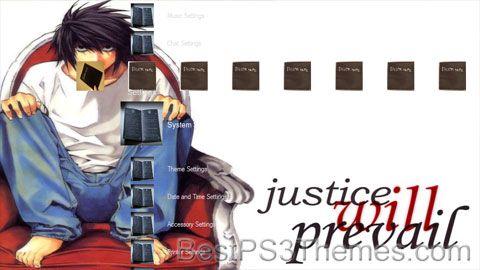
Death Note Theme 3
(16 backgrounds)

Death Note
First tankōbon volume cover, featuring Light Yagami (front) and Ryuk (back)
Genre
Manga
Written byTsugumi Ohba
Illustrated byTakeshi Obata
Published byShueisha
English publisher
ImprintJump Comics
MagazineWeekly Shōnen Jump
DemographicShōnen
Original runDecember 1, 2003May 15, 2006
Volumes12 (List of volumes)
Further information
Novel
Death Note Another Note: The Los Angeles BB Murder Cases
Written byNisio Isin
Published byShueisha
English publisher
  • NA: Viz Media
PublishedAugust 1, 2006
Anime television series
Directed byTetsurō Araki
Produced by
Written byToshiki Inoue
Music by
StudioMadhouse
Licensed by
Original networkNNS (NTV)
English network
Original run October 4, 2006 June 27, 2007
Episodes37 (List of episodes)
Anime television film
Death Note: Relight - Visions of a God
Directed byTetsurō Araki
Produced by
  • Toshio Nakatani
  • Manabu Tamura
  • Masao Maruyama
Written byToshiki Inoue
Music by
  • Yoshihisa Hirano
  • Hideki Taniuchi
StudioMadhouse
Licensed by
  • Crunchyroll LLC[a]
    • NA: Viz Media
Original networkNippon TV
ReleasedAugust 31, 2007
Runtime130 minutes
Novel
Death Note: L - Change the World
Written byM
Published byShueisha
English publisher
  • NA: Viz Media
PublishedDecember 25, 2007
Manga
Death Note: C-Kira
Written byTsugumi Ohba
Illustrated byTakeshi Obata
Published byShueisha
English publisher
  • NA: Viz Media
MagazineWeekly Shōnen Jump
DemographicShōnen
PublishedFebruary 9, 2008
Anime television film
Death Note: Relight 2 – L's Successors
Directed byTetsurō Araki
Produced by
  • Toshio Nakatani
  • Manabu Tamura
  • Masao Maruyama
Written byToshiki Inoue
Music by
  • Yoshihisa Hirano
  • Hideki Taniuchi
StudioMadhouse
Licensed by
  • Crunchyroll LLC[a]
    • NA: Viz Media
Original networkNNS (NTV)
ReleasedAugust 22, 2008
Runtime100 minutes
Manga
Death Note: a-Kira
Written byTsugumi Ohba
Illustrated byTakeshi Obata
Published byShueisha
English publisher
  • NA: Viz Media
MagazineJump Square
DemographicShōnen
PublishedFebruary 4, 2020
Live-action
Video games
icon Anime and manga portal

Death Note (stylized in all caps) is a Japanese manga series written by Tsugumi Ohba and illustrated by Takeshi Obata. It was serialized in Shueisha's shōnen manga magazine Weekly Shōnen Jump from December 2003 to May 2006, with its chapters collected in 12 tankōbon volumes. The story follows Light Yagami, a genius high school student who discovers a mysterious notebook: the "Death Note", which belonged to the shinigami Ryuk, and grants the user the supernatural ability to kill anyone whose name is written in its pages. The series centers around Light's subsequent attempts to use the Death Note to carry out a worldwide massacre of individuals whom he deems immoral and to create a crime-free society, using the alias of a god-like vigilante named "Kira", and the subsequent efforts of an elite Japanese police task force, led by enigmatic detective L, to apprehend him.

A 37-episode anime television series adaptation, produced by Madhouse and directed by Tetsurō Araki, was broadcast on Nippon Television from October 2006 to June 2007. A light novel based on the series, written by Nisio Isin, was also released in 2006. Additionally, various video games have been published by Konami for the Nintendo DS. The series was adapted into three live-action films released in Japan in June, November 2006, and February 2008, and a television drama in 2015. A miniseries titled Death Note: New Generation and a fourth film were released in 2016. An American film adaptation was released exclusively on Netflix in August 2017, and a series is reportedly in the works.

Death Note media, except for video games and soundtracks, is licensed and released in North America by Viz Media. The episodes from the anime first appeared in North America as downloadable from IGN before Viz Media licensed it. The series was aired on YTV's Bionix programming block in Canada and on Adult Swim in the United States with a DVD release following. The live-action films briefly played in certain North American theaters, in 2008, before receiving home video releases. By April 2015, the Death Note manga had over 30 million copies in circulation, making it one of the best-selling manga series.

Plot[edit]

In Tokyo, a disaffected high school student named Light Yagami finds the "Death Note", a mysterious black notebook with rules that can end anyone's life in seconds as long as the writer knows both the target's true name and face. Light uses the notebook to kill high-profile criminals and is visited by Ryuk, a "shinigami" and the Death Note's previous owner. Ryuk, invisible to anyone who has not touched the notebook, reveals that he dropped the notebook into the human world out of boredom and is amused by Light's actions.[5]

Global media suggest that a single mastermind is responsible for the mysterious murders and name them "Kira" (キラ, the Japanese transliteration of the word "killer"). Interpol requests the assistance of the enigmatic detective L to assist in their investigation. L tricks Light into revealing that he is in the Kanto region of Japan by manipulating him to kill a decoy. Light vows to kill L, whom he views as obstructing his plans. L deduces that Kira has inside knowledge of the Japanese police investigation, led by Light's father, Soichiro Yagami. L assigns a team of FBI agents to monitor the families of those connected with the investigation and designates Light as the prime suspect. Light graduates from high school to college. L recruits Light into the Kira Task Force.

Actress-model Misa Amane obtains a second Death Note from a shinigami named Rem and makes a deal for shinigami eyes, which reveal the names of anyone whose face she sees, at the cost of half her remaining lifespan. Seeking to have Light become her boyfriend, Misa uncovers Light's identity as the original Kira. Light uses her love for him to his advantage, intending to use Misa's shinigami eyes to discern L's true name. L deduces that Misa is likely the second Kira and detains her. Rem threatens to kill Light if he does not find a way to save Misa. Light arranges a scheme in which he and Misa temporarily lose their memories of the Death Note, and has Rem pass the Death Note to Kyosuke Higuchi of the Yotsuba Group.

With memories of the Death Note erased, Light joins the investigation and, together with L, deduces Higuchi's identity and arrests him. Light regains his memories and uses the Death Note to kill Higuchi, regaining possession of the book. After restoring Misa's memories, Light instructs her to begin killing as Kira, causing L to cast suspicion on Misa. Rem realizes Light's plan to have Misa sacrifice herself to kill L. After Rem kills L, she disintegrates and Light obtains her Death Note. The task force agrees to have Light operate as the new L. The investigation stalls but crime rates continue to drop.

Four years later, cults worshipping Kira have risen. L's potential successors are introduced: Near and Mello. Mello joins the mafia whilst Near joins forces with the US government. Mello kidnaps Director Takimura, who is killed by Light. Mello kidnaps Light's sister and exchanges her for the Death Note, using it to kill almost all of Near's team. A Shinigami named Sidoh goes to Earth to reclaim his notebook and ends up meeting and helping Mello. Light uses the notebook to find Mello's hideout, but Soichiro is killed in the mission. Mello and Near exchange information and Mello kidnaps Mogi and gives him to Near. Kira's supporters attack Near's group, but they escape. Shuichi Aizawa, one of the task force members, becomes suspicious of Light and meets with Near. As suspicion falls again on Misa, Light passes Misa's Death Note to Teru Mikami, a fervent Kira supporter, and appoints newscaster Kiyomi Takada as Kira's public spokesperson. Near has Mikami followed whilst Aizawa's suspicions are confirmed. Realizing that Takada is connected to Kira, Mello kidnaps her. Takada kills Mello but is killed by Light. Near arranges a meeting between Light and the current Kira Task Force members. Light tries to have Mikami kill Near as well as all the task force members, but Mikami's Death Note fails to work, having been replaced with a decoy. Near proves Light is Kira discovering Mikami had not written down Light's name. Light is wounded in a scuffle and begs Ryuk to write the names of everyone present. Ryuk instead writes down Light's name in his Death Note, as he had promised to do the day they met, and Light dies.

One year later, the world has returned to normal and the Kira Taskforce Members are conflicted over whether they made the right decision. Meanwhile, cults continue to worship Kira.

C-Kira (one-shot sequel)[edit]

Three years later, Near, now functioning as the new L, receives word that a new Kira has appeared. Hearing that the new Kira is randomly killing people, Near concludes that the new Kira is an attention-seeker and denounces the new Kira as "boring" and not worth catching. A shinigami named Midora approaches Ryuk and gives him an apple from the human realm, in a bet to see if a random human could become the new Kira, but Midora loses the bet when the human writes his own name in the Death Note after hearing Near's announcement. Ryuk tells Midora that no human would ever surpass Light as the new Kira.

a-Kira (one-shot sequel)[edit]

Another ten years later, Ryuk returns to Earth and gives the Death Note to Minoru Tanaka, the top-scoring student in Japan, hoping that he will follow in Light Yagami's footsteps. On explaining the rules to Minoru, Ryuk is surprised when he returns the notebook and tells him to return it and his memory of their encounter to him in two years' time. Two years later, on receiving the notebook back from Ryuk, Minoru reveals he has no plans to use it himself but rather he plans to auction it off to the governments of the world, with Ryuk's help sending his offer out as "a-Kira", having waited two years until he was old enough to have a bank account to allow his plan to work. Elsewhere, Near (as L) is revealed to be developing technology meant to track and eventually find a method of destroying Shinigami, although it is not yet advanced enough to be useful. After selling the Death Note to U.S. President Donald Trump for a sum that would ensure every Japanese citizen under the age of 60 would be financially set for life, Minoru relinquishes his ownership and memory of his plan to Ryuk, assuring his own anonymity, while Trump is left unable to use the Death Note after the King of Death creates a new rule disallowing the Death Note to be sold, and he secretly returns it to Ryuk. Minoru collapses to the ground in the bank after withdrawing his savings. It is revealed that Ryuk wrote his name in the Death Note next to Light's. He longs for a human who will use the notebook for a longer period of time.

Production[edit]

Development[edit]

The Death Note concept derived from a rather general concept involving Shinigami and "specific rules".[6] Author Tsugumi Ohba wanted to create a suspense series because the genre had some suspense series available to the public. After the publication of the pilot chapter, the series was not expected to receive approval as a serialized comic. Learning that Death Note had received approval and that Takeshi Obata would create the artwork, Ohba said, they "couldn't even believe it".[7] Due to positive reactions, Death Note became a serialized manga series.[8]

"Thumbnails" incorporating dialogue, panel layout and basic drawings were created, reviewed by an editor and sent to Takeshi Obata, the illustrator, with the script finalized and the panel layout "mostly done". Obata then determined the expressions and "camera angles" and created the final artwork. Ohba concentrated on the tempo and the amount of dialogue, making the text as concise as possible. Ohba commented that "reading too much exposition" would be tiring and would negatively affect the atmosphere and "air of suspense". The illustrator had significant artistic licence to interpret basic descriptions, such as "abandoned building",[9] as well as the design of the Death Notes themselves.

When Ohba was deciding on the plot, they visualized the panels while relaxing on their bed, drinking tea, or walking around their house. Often the original draft was too long and needed to be refined to finalize the desired "tempo" and "flow". The writer remarked on their preference for reading the previous "two or four" chapters carefully to ensure consistency in the story.[6]

The typical weekly production schedule consisted of five days of creating and thinking and one day using a pencil to insert dialogue into rough drafts; after this point, the writer faxed any initial drafts to the editor. The illustrator's weekly production schedule involved one day with the thumbnails, layout, and pencils and one day with additional penciling and inking. Obata's assistants usually worked for four days and Obata spent one day to finish the artwork. Obata said that when he took a few extra days to color the pages, this "messed with the schedule". In contrast, the writer took three or four days to create a chapter on some occasions, while on others they took a month. Obata said that his schedule remained consistent except when he had to create color pages.[10]

Ohba and Obata rarely met in person during the creation of the serialized manga; instead, the two met with the editor. The first time they met in person was at an editorial party in January 2004. Obata said that, despite the intrigue, he did not ask his editor about Ohba's plot developments as he anticipated the new thumbnails every week.[7] The two did not discuss the final chapters with one another and continued talking only with the editor. Ohba said that when they asked the editor if Obata had "said anything" about the story and plot, the editor responded: "No, nothing".[9]

Ohba claims that the series ended more or less in the manner that they intended for it to end; they considered the idea of L defeating Light Yagami with Light dying but instead chose to use the "Yellow Box Warehouse" ending. According to Ohba, the details had been set "from the beginning".[8] The writer wanted an ongoing plot line instead of an episodic series because Death Note was serialized and its focus was intended to be on a cast with a series of events triggered by the Death Note.[11] 13: How to Read states that the humorous aspects of Death Note originated from Ohba's "enjoyment of humorous stories".[12]

When Ohba was asked, during an interview, whether the series was meant to be about enjoying the plot twists and psychological warfare, Ohba responded by saying that this concept was the reason why they were "very happy" to place the story in Weekly Shōnen Jump.[10]

Concepts[edit]

The notebooks[edit]

The core plot device of the story is the "Death Note" itself, a black notebook with instructions (known as "Rules of the Death Note") written on the inside. When used correctly, it allows anyone to commit a murder, knowing only the victim's name and face. According to the director of the live-action films, Shusuke Kaneko, "The idea of spirits living in words is an ancient Japanese concept.... In a way, it's a very Japanese story".[13]

Artist Takeshi Obata originally thought of the books as "Something you would automatically think was a Death Note". Deciding that this design would be cumbersome, he instead opted for a more accessible college notebook. Death Notes were originally conceived as changing based on time and location, resembling scrolls in ancient Japan, or the Old Testament in medieval Europe. However, this idea was never used.[14]

Themes[edit]

Writer Tsugumi Ohba had no particular themes in mind for Death Note. When pushed, he suggested: "Humans will all eventually die, so let's give it our all while we're alive".[15] In a 2012 paper, author Jolyon Baraka Thomas characterised Death Note as a psychological thriller released in the wake of the 1995 Tokyo subway sarin attack, saying that it examines the human tendency to express itself through "horrific" cults.[16]

Pilot chapter[edit]

The Death Note process began when Ohba brought thumbnails for two concept ideas to Shueisha; Ohba said that the Death Note pilot, one of the concepts, was "received well" by editors and attained positive reactions from readers.[8] Ohba described keeping the story of the pilot to one chapter as "very difficult", declaring that it took over a month to begin writing the chapter. He added that the story had to revive the killed characters with the Death Eraser and that he "didn't really care" for that plot device.[17]

Obata said that he wanted to draw the story after he heard of a "horror story featuring shinigami".[7] According to Obata, when he first received the rough draft created by Ohba, he "didn't really get it" at first, and he wanted to work on the project due to the presence of shinigami and because the work "was dark".[17] He also said he wondered about the progression of the plot as he read the thumbnails, and if Jump readers would enjoy reading the comic. Obata said that while there is little action and the main character "doesn't really drive the plot", he enjoyed the atmosphere of the story. He stated that he drew the pilot chapter so that it would appeal to himself.[17]

Ohba brought the rough draft of the pilot chapter to the editorial department. Obata came into the picture at a later point to create the artwork. They did not meet in person while creating the pilot chapter. Ohba said that the editor told him he did not need to meet with Obata to discuss the pilot; Ohba said "I think it worked out all right".[7]

Anime adaptation[edit]

Tetsurō Araki, the director, said that he wished to convey aspects that "made the series interesting" instead of simply "focusing on morals or the concept of justice". Toshiki Inoue, the series organizer, agreed with Araki and added that, in anime adaptations, there is a lot of importance in highlighting the aspects that are "interesting in the original". He concluded that Light's presence was "the most compelling" aspect; therefore the adaptation chronicles Light's "thoughts and actions as much as possible". Inoue noted that to best incorporate the manga's plot into the anime, he "tweak[ed] the chronology a bit" and incorporated flashbacks that appear after the openings of the episodes; he said this revealed the desired tensions. Araki said that, because in an anime the viewer cannot "turn back pages" in the manner that a manga reader can, the anime staff ensured that the show clarified details. Inoue added that the staff did not want to get involved with every single detail, so the staff selected elements to emphasize. Due to the complexity of the original manga, he described the process as "definitely delicate and a great challenge". Inoue admitted that he placed more instructions and notes in the script than usual. Araki added that because of the importance of otherwise trivial details, this commentary became crucial to the development of the series.[18]

Araki said that when he discovered the Death Note anime project, he "literally begged" to join the production team; when he joined he insisted that Inoue should write the scripts. Inoue added that, because he enjoyed reading the manga, he wished to use his effort.[18]

Media[edit]

Manga[edit]

Death Note, written by Tsugumi Ohba and illustrated by Takeshi Obata, was serialized in Shueisha's shōnen manga magazine Weekly Shōnen Jump from December 1, 2003,[19][20] to May 15, 2006.[b][20] The series' 108 chapters were collected into twelve tankōbon volumes by Shueisha, released from April 2, 2004,[23] to July 4, 2006.[24] A one-shot chapter, titled "C-Kira" (Cキラ編, C-Kira-hen) ("Death Note: Special One-Shot"), was published in Weekly Shōnen Jump on February 9, 2008. Set two years after the manga's epilogue, it sees the introduction of a new Kira and the reactions of the main characters in response to the copycat's appearance.[25] Several Death Note yonkoma (four-panel comics) appeared in Akamaru Jump. The yonkoma was written to be humorous. The Akamaru Jump issues that printed the comics include 2004 Spring, 2004 Summer, 2005 Winter, and 2005 Spring. In addition Weekly Shōnen Jump Gag Special 2005 included some Death Note yonkoma in a Jump Heroes Super 4-Panel Competition.[17] Shueisha re-released the series in seven bunkoban volumes from March 18 to August 19, 2014.[26][27] On October 4, 2016, all 12 original manga volumes and the February 2008 one-shot were released in a single All-in-One Edition, consisting of 2,400 pages in a single book.[28][29]

In April 2005, Viz Media announced that they had licensed the series for English release in North America.[30] The twelve volumes were released from October 10, 2005, to July 3, 2007.[31][32] The manga was re-released in a six-volume omnibus edition, dubbed "Black Edition".[33][34] The volumes were released from December 28, 2010, to November 1, 2011.[35][36] The All-in-One Edition was released in English on September 6, 2017, resulting in the February 2008 one-shot being released in English for the first time.[37]

In addition, a guidebook for the manga was also released on October 13, 2006. It was named Death Note 13: How to Read and contained data relating to the series, including character profiles of almost every character that is named, creator interviews, behind the scenes info for the series and the pilot chapter that preceded Death Note. It also reprinted all of the yonkoma serialized in Akamaru Jump and the Weekly Shōnen Jump Gag Special 2005.

Resistance

Resistance theme by Landser

Download: Resistance.p3t

Resistance Theme
(9 backgrounds)

Resistance may refer to:

Arts, entertainment, and media[edit]

Comics[edit]

Fictional characters[edit]

Films[edit]

Games[edit]

Literature[edit]

Music[edit]

Groups and labels[edit]

Albums[edit]

Songs[edit]

Television[edit]

Series[edit]

Episodes[edit]

Other arts, entertainment, and media[edit]

Politics and military[edit]

Science and healthcare[edit]

Botany and horticulture[edit]

Ecology[edit]

Healthcare[edit]

Physics[edit]

Other uses[edit]

See also[edit]

  • Resistants, a fictional supervillain group appearing in American comic books published by Marvel Comics

Patapon 2

Patapon 2 theme by original_copycat

Download: Patapon2.p3t
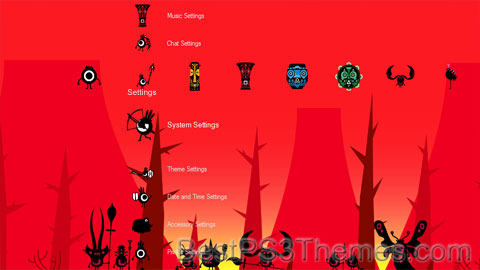
Patapon 2 Theme
(3 backgrounds)

Patapon 2
Developer(s)Pyramid
Japan Studio
Publisher(s)Sony Computer Entertainment
SeriesPatapon
Platform(s)PlayStation Portable
PlayStation 4
ReleasePlayStation Portable
  • JP: November 27, 2008
  • EU: March 6, 2009
  • AU: March 13, 2009
  • NA: May 5, 2009
PlayStation 4
  • WW: January 30, 2020
Genre(s)Rhythm game, god game
Mode(s)Single-player, multiplayer

Patapon 2[a] is a 2008 video game co-developed by Pyramid and Japan Studio and published by Sony Computer Entertainment for the PlayStation Portable (PSP). It is a direct sequel to Patapon, and like its predecessor, uses the same unique genre that combines rhythm and strategy. The game was released in Japan in November 2008, in PAL regions in March 2009, in North America in May 2009, and ported to the PlayStation 4 Worldwide on January 30, 2020.

After the Patapon and Zigoton tribe finish the construction of their ship, they set sail to continue their journey to Earthend to gaze upon "IT". After some time at sea, their ship is struck down by a sea monster and both Patapons and Zigotons drift ashore on an unknown island where they encounter a new enemy tribe known as the Karmen and a lone Patapon known as "Hero". The player takes the role of an invisible deity known as The Mighty Patapon and commands the Patapon Tribe to march, attack, defend, and retreat. The game introduces a new way to evolve the Patapon army, and new units to unlock including a singular Hero Patapon that can be used for four-player ad hoc multiplayer mode.

A sequel titled Patapon 3 was released on April 12, 2011, in North America, April 15, 2011, in Europe, and on April 28, 2011, in Japan.

Gameplay[edit]

The core gameplay of Patapon 2 is almost identical to its predecessor. It is a video game that the player controls in a manner similar to rhythm games. The player is directly controlled by a tribe of Patapon warriors; to command the warriors, the player inputs specific sequences using the face buttons on the PSP, each representing a "talking drum", in time to a drum rhythm. These sequences order the tribe to move forward on the linear battlefield, attack, defend, and other actions. If the player inputs an unknown sequence or enters them off the main rhythm, the tribe will become confused and stop whatever they are doing. However, repeatedly entering a proper sequence in sync with the rhythm will lead the tribe into a "Fever" increasing their attack and defensive bonuses. The tribe will stop doing anything after performing the last entered command if the player does not enter any more commands. For example, some commands are square, square, square, circle (Pata, Pata, Pata, Pon.), which has them march forward and circle, circle, square, circle (Pon, Pon, Pata, Pon.), which makes them attack.

The game is divided into several missions. Prior to each mission, the player can recruit new troops and assemble formations, equip troops with weapons and armor gained from the spoils of war, or crafted from certain minigames. The player can return to an earlier mission to acquire additional resources and equipment to build up their troops before a larger battle.

Units[edit]

Patapon 2 introduces four types of units: The bird-riding and Harpoon-wielding Toripons, the robot-armed Robopons, the Wand-wielding Mahopons, and the singular Heropon.[1] Patapon classes can now be unlocked through the evolutionary tree. Also, Rarepon can be made without sacrificing Patapon to make space for newer ones. To maintain an incentive for collecting items, there is an abundant amount of classes of Patapon to rely upon, some Patapon such as the "Pyokoran" Rarepon being nimble in battle as well being immune to freezing but are vulnerable to fire damage. Another change is that a Patapon can level up by using more material with effects amplifying at every 5 levels to a maximum of 10.

The Heropon is a singular hero unit that can adopt any unlocked class of their choice with a powerful special attack to deliver to unsuspecting foes. Players can change their masks for different stats, like elemental resistance or attack speed. They also can be revived but takes longer to revive with each death. In addition, if Hatapon is alone while the Heropon is reviving, the mission ends. Each "Hero" persona also has a special move that can only be activated in Fever mode and must have a perfect beat. This special ability shows a spirit above him and allows him to have a special damage effect on opponents like The Iron Fist (Yaripon), Broken Arrow (Yumipon).

Multiplayer[edit]

Patapon designer Hiroyuki Kotani has revealed that the multiplayer mode stems from the single-player mode, the former of which will involve giant eggs. These eggs contain Masks for the Hero Patapon to wear or new CPU Kumopons. To hatch the eggs, four players must defend the egg on an enemy-laden multiplayer battleground, while moving it to a special egg-hatching altar. At this altar, all players must perform a hatching ceremony, which involves playing their rhythms in synchronization to crack the egg.

Plot[edit]

The story continues from the previous game. The ship the Patapons and Zigotons have constructed has been finally completed and they have set sail for new lands. On their way there, they are attacked by a Kraken who easily defeats them and sends the Patapons into the ocean to be washed ashore in a strange new land (which is actually and originally their homeland, the Patapolis) where they come up against another tribe called the Karmen. Now it is a battle to defeat the Karmen and find out who is their true enemy. Early in the game, the Patapons discover the mysterious "Hero", who wears a mask that boosts his abilities. He has lost his memory, and his true identity is forgotten, hidden, and unknown. Later, the Patapons fight against the Akumapons, and the "Dark One" (who is actually Makoton, the Zigoton that was killed in the first game with Baban, and now was reincarnated), who gave his soul to the demons for power. Gong the Hawkeye and his fellow Zigotons appear once more, to assist the Patapons against the Karmen.

During the course of a game, the player learns of a legend, that the world was broken and the Patapons ruined because a Wakapon broke the "World Egg". At the second to last stage, the player finds out that the Hero was actually the Wakapon who broke the egg, and that the Karmen tribe was the Patapon's ancestral enemy, knowing them as the ones who overtook the Patapon Ancients. The Patapon Princess was trapped inside an egg by Ormen Karmen, the leader of the Karmens, who plans to make the Princess his queen.

After defeating the demon Dettankarmen that the Karmens summoned, the Patapons journey to the end of a bridge, only to find and break an egg. Dazzled by the bright light that emerges from the egg, the Patapons assume they have found "IT" at Earthend, which they have been searching since the first game. However, the Patapon Princess emerges from the egg, compliments them on their job well done, and tells the Hero that he has a new task - to restore the world and find the true Earthend.

At the end of the game, the Patapons are seen working with the Karmen and Zigotons to fix the bridge that will lead them to the other side of the land.

Characters[edit]

Rob Smith writes that new "characters such as the bird-riding Toripon, the Robopon with huge fists, and the magic-using Mahopon provide fresh attack types and original personalities for your almighty ruler to manage."[2] In an interview attached to the same article, Hiroyuki Kotani adds that all "the new characters ended up... attractive from a fundamental gameplay standpoint, so I picked the ones I liked the most."[3] When asked, "From all the characters...is any one of them your personal favorite?" Kotani answered, "I love Gong, the leader of the Zigotons. In fact, I love him so much you can probably expect to see him in Patapon 2."[3]

Development and release[edit]

Patapon 2 was developed by Pyramid and produced by Japan Studio.[4] Game designer Hiroyuki Kotani began the development of Patapon 2 during the localization development of its predecessor. During this time, he was approached by producer Junichi Yoshizawa to create a multiplayer version of Patapon.[5] Initially Kotani disapproved multiplayer but would regret not adding it in the original version after seeing an online bulletin criticizing the lack of multiplayer.[6] In addition to multiplayer, Kotani received requests for Patapon to have more customization and longer gameplay time.[6][7] Kotani also noted the complaints of its predecessor being too difficult and aimed at making the sequel easier but also have enough features so that it isn't considered Patapon 1.5.[8] The bird-riding Toripons introduced in Patapon 2 were initially planned for its predecessor, Patapon.[9] Kemmei Adachi returns as the composer for the game and would write down Kotani's instructions after they both finished surfing together.[9] The voices for Patapon and the enemies were voiced by a child under the alias "Blico".[9] Adachi would create a demo of the song and show it to Blico to sing it.[9]

A demo was shown in GDC 2009 with keychain and plush prototype merchandise.[10]The Plush was released officially by Medicom Toy in December 2008.[11] Patapon 2 was released on November 27, 2008 alongside a limited edition PSP 3000 bundle, titled Patapon 2 Don Chaka Winter Gift Pack.[b][12]

It was later released in North America on May 9, 2009 in digital format only via PlayStation Store as a test case to determine consumer preferences.[13][14] A flash minigame titled, Patapon 2: Art of War was developed by Kerb to promote Patapon 2. It was hosted on SPIL Games from March 9 to March 16, 2009.[15] The game was later ported on PlayStation 4 on January 30, 2020 under the title, Patapon 2 Remastered.[16][17]

Reception[edit]

By the first week of release, Patapon 2 was ranked #1 top-selling PSP game of North America.[31] Famitsu inducted the game onto their Gold Hall of Fame.[21] IGN awarded the game for "Best Action Game" and for "PSP Game of the Year".[32][33]

Multiple reviewers questioned whether Patapon 2 fit the definition of a "sequel". PlayStation Official Magazine – Australia initially compared it to downloadable content, reporting that the game continues directly where its predecessor ended and doesn't make any changes to the core gameplay. However, concluded the review describing it as a true sequel, and having little to criticize.[28] PlayStation Official Magazine – UK also noted that the game was similar to its predecessor but felt it was ludicrous to criticize the game for lack of originality.[27] IGN reported that the game was very similar to its predecessor, particularly in the beginning and ending but continued to state that the game was more than just Patapon 1.5.[26] GamePro's Heather Bartron called the game a "must-have title for PSP owners," praising it as an improved sequel to the already enjoyable and addictive Patapon. Bartron wrote that both titles have great visual style though Patapon 2 has limited multiplayer modes and "needs more songs."[23] Hyper's Tracey Lien commends the game for being "exactly the same as the first Patapon, which is good because the original was really rad".[34]

During the 13th Annual Interactive Achievement Awards, the Academy of Interactive Arts & Sciences nominated Patapon 2 for "Outstanding Achievement in Portable Game Design".[35]

References[edit]

Translation
  1. ^ Japanese: パタポン2 ドンチャカ♪, Hepburn: Patapon 2 Don Chaka♪
  2. ^ パタポン2 ドンチャカ ♪ Winterギフトパック
Citations
  1. ^ "SCEJ、PSP「パタポン2 ドンチャカ♪」ヒーローパタポンや新職業を追加して登場 体験版インプレッションも掲載". Game Watch Impress (in Japanese). November 21, 2008. Archived from the original on June 23, 2021.
  2. ^ Rob Smith, "Patapon 2: Don Chaka: The beat goes on," PlayStation: The Official Magazine 13 (Holiday 2008): 20.
  3. ^ a b "Patapon 2 He Bangs The Drums". PlayStation: The Official Magazine. No. 13. Future plc. December 2008. p. 21..
  4. ^ "Pata-me, Pata-you, Patapon news". 2007-12-21. Archived from the original on 2008-03-11. Retrieved 2008-02-29.
  5. ^ "ゲームデザイナー・小谷浩之氏が語る『パタポン2(仮題)』" (in Japanese). July 22, 2008. Archived from the original on January 30, 2015. Retrieved April 5, 2021.
  6. ^ a b "SCEJ、PSP「パタポン2 ドンチャカ♪」発売記念発表会開催 ゲームデザイナーとサウンドデザイナーが開発秘話を披露". Game Watch Impress (in Japanese). November 27, 2008. Archived from the original on February 2, 2009. Retrieved July 17, 2021.
  7. ^ "TGS 08: Kotani-san Answers Your Patapon 2 Questions". PlayStation Blog. October 13, 2008. Archived from the original on February 7, 2021. Retrieved July 17, 2021.
  8. ^ "Further details revealed for Patapon 2 on the PSP". Pocket Gamer. July 23, 2008. Archived from the original on July 18, 2021. Retrieved July 17, 2021.
  9. ^ a b c d "「パタポン2 ドンチャカ♪」本日発売! 渋谷PARCOで発売記念発表会&ユーザー体験会を実施". 4Gamer.net (in Japanese). November 27, 2008. Archived from the original on January 9, 2009. Retrieved July 17, 2021.
  10. ^ "GDC 09: Patapon 2 Schwag Cometh". IGN. March 24, 2009. Archived from the original on July 18, 2021. Retrieved July 17, 2021.
  11. ^ "Product List: Patapon Plush Doll". Medicom Toy (in Japanese). Archived from the original on July 18, 2021. Retrieved July 17, 2021.
  12. ^ ""体験"だけじゃ物足りない!? 「パタポン2」体験版は、製品版にデータ引き継ぎ可能". Nlab.ITmedia.co.jp (in Japanese). November 13, 2008. Archived from the original on March 11, 2021. Retrieved March 11, 2021.
  13. ^ "Patapon 2 Only Available Via Download". IGN. March 9, 2009. Archived from the original on October 25, 2020. Retrieved March 18, 2021.
  14. ^ Graff, Kris (2009-04-14). "Patapon 2 For PSP To Be Download-Only 'Test Case'". Gamasutra. Archived from the original on 2014-03-01. Retrieved 2009-04-14.
  15. ^ "Free Patapon 2 Mini-Game Launched For PC and Mac". IGN. March 9, 2009. Archived from the original on March 29, 2021. Retrieved March 18, 2021.
  16. ^ "Patapon 2 Remastered launches January 30". Gematsu. 27 January 2020. Archived from the original on 27 January 2020. Retrieved January 27, 2020.
  17. ^ "'Patapon 2 Remastered' comes to PS4 this week". GBATemp. Retrieved 28 May 2024.
  18. ^ "Patapon 2 for PSP Reviews". Metacritic. CBS Interactive. Archived from the original on 2019-03-09. Retrieved 2020-01-02.
  19. ^ "Patapon 2 Remastered for PlayStation 4 Reviews". Metacritic. CBS Interactive. Archived from the original on 2020-10-30. Retrieved 2020-12-04.<

Mercedes

Mercedes theme by Beast786

Download: Mercedes.p3t

Mercedes Theme
(2 backgrounds)

Mercedes may refer to:

People[edit]

  • Mercedes (name), a Spanish feminine name, including a list of people and fictional characters with the given name or last name

Automobile-related[edit]

  • Mercedes (marque), the pre-1926 brand name of German automobile models and engines built by Daimler Motors company
  • Mercedes-Benz, the post-1926 German brand of automobiles, engines, and trucks now owned by the Mercedes-Benz Group
  • Mercedes-AMG, a subsidiary of Daimler AG that builds customized and high performance Mercedes-branded automobiles
  • Mercedes-Benz in Formula One, the Mercedes Formula One racing team, currently known as Mercedes-AMG Petronas Motorsport
  • Mercedes-Benz in motorsport, its activities in sportscar racing, rallying, Formula Three, DTM, V8 Supercars Australia and Formula One
  • American Mercedes (1904 automobile), a company licensed to build Mercedes automobiles in America

Places[edit]

Ships[edit]

Other uses[edit]

See also[edit]

TurboTime 1.1

TurboTime 1.1 theme by goggles182

Download: TurboTime1.1.p3t
TurboTime 1.1 Theme
(4 backgrounds)

P3T Unpacker v0.12
Copyright (c) 2007. Anoop Menon

This program unpacks Playstation 3 Theme files (.p3t) so that you can touch-up an existing theme to your likings or use a certain wallpaper from it (as many themes have multiple). But remember, if you use content from another theme and release it, be sure to give credit!

Download for Windows: p3textractor.zip

Instructions:

Download p3textractor.zip from above. Extract the files to a folder with a program such as WinZip or WinRAR. Now there are multiple ways to extract the theme.

The first way is to simply open the p3t file with p3textractor.exe. If you don’t know how to do this, right click the p3t file and select Open With. Alternatively, open the p3t file and it will ask you to select a program to open with. Click Browse and find p3textractor.exe from where you previously extracted it to. It will open CMD and extract the theme to extracted.[filename]. After that, all you need to do for any future p3t files is open them and it will extract.

The second way is very simple. Just drag the p3t file to p3textractor.exe. It will open CMD and extract the theme to extracted.[filename].

For the third way, first put the p3t file you want to extract into the same folder as p3textractor.exe. Open CMD and browse to the folder with p3extractor.exe. Enter the following:
p3textractor filename.p3t [destination path]Replace filename with the name of the p3t file, and replace [destination path] with the name of the folder you want the files to be extracted to. A destination path is not required. By default it will extract to extracted.filename.