Wtalk

Wtalk theme by illyism

Download: Wtalk.p3t
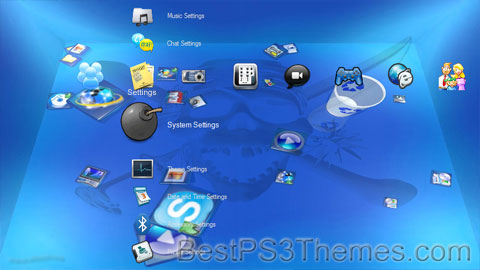
Wtalk Theme
(2 backgrounds)

P3T Unpacker v0.12
Copyright (c) 2007. Anoop Menon

This program unpacks Playstation 3 Theme files (.p3t) so that you can touch-up an existing theme to your likings or use a certain wallpaper from it (as many themes have multiple). But remember, if you use content from another theme and release it, be sure to give credit!

Download for Windows: p3textractor.zip

Instructions:

Download p3textractor.zip from above. Extract the files to a folder with a program such as WinZip or WinRAR. Now there are multiple ways to extract the theme.

The first way is to simply open the p3t file with p3textractor.exe. If you don’t know how to do this, right click the p3t file and select Open With. Alternatively, open the p3t file and it will ask you to select a program to open with. Click Browse and find p3textractor.exe from where you previously extracted it to. It will open CMD and extract the theme to extracted.[filename]. After that, all you need to do for any future p3t files is open them and it will extract.

The second way is very simple. Just drag the p3t file to p3textractor.exe. It will open CMD and extract the theme to extracted.[filename].

For the third way, first put the p3t file you want to extract into the same folder as p3textractor.exe. Open CMD and browse to the folder with p3extractor.exe. Enter the following:
p3textractor filename.p3t [destination path]Replace filename with the name of the p3t file, and replace [destination path] with the name of the folder you want the files to be extracted to. A destination path is not required. By default it will extract to extracted.filename.

Simple Thing Almost Pro V4

Simple Thing Almost Pro Version 4 theme by ltmreal

Download: SimpleThingAlmostProV4.p3t
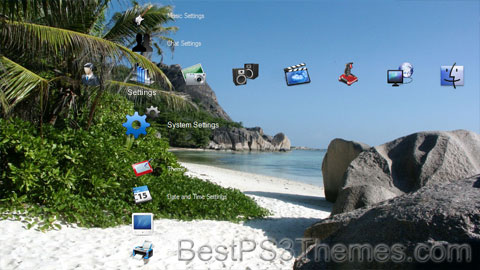
Simple Thing Almost Pro V4 Theme
(7 backgrounds)

P3T Unpacker v0.12
Copyright (c) 2007. Anoop Menon

This program unpacks Playstation 3 Theme files (.p3t) so that you can touch-up an existing theme to your likings or use a certain wallpaper from it (as many themes have multiple). But remember, if you use content from another theme and release it, be sure to give credit!

Download for Windows: p3textractor.zip

Instructions:

Download p3textractor.zip from above. Extract the files to a folder with a program such as WinZip or WinRAR. Now there are multiple ways to extract the theme.

The first way is to simply open the p3t file with p3textractor.exe. If you don’t know how to do this, right click the p3t file and select Open With. Alternatively, open the p3t file and it will ask you to select a program to open with. Click Browse and find p3textractor.exe from where you previously extracted it to. It will open CMD and extract the theme to extracted.[filename]. After that, all you need to do for any future p3t files is open them and it will extract.

The second way is very simple. Just drag the p3t file to p3textractor.exe. It will open CMD and extract the theme to extracted.[filename].

For the third way, first put the p3t file you want to extract into the same folder as p3textractor.exe. Open CMD and browse to the folder with p3extractor.exe. Enter the following:
p3textractor filename.p3t [destination path]Replace filename with the name of the p3t file, and replace [destination path] with the name of the folder you want the files to be extracted to. A destination path is not required. By default it will extract to extracted.filename.

Soul Reaver versionD

Soul Reaver versionD theme by Deemy

Download: SoulReaver_versionD.p3t
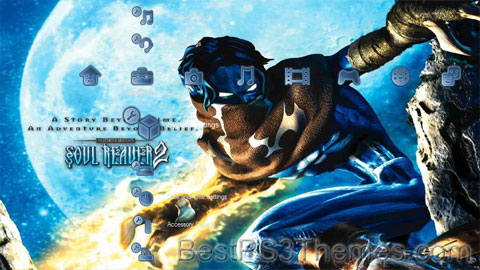
Soul Reaver versionD Theme
(6 backgrounds)

P3T Unpacker v0.12
Copyright (c) 2007. Anoop Menon

This program unpacks Playstation 3 Theme files (.p3t) so that you can touch-up an existing theme to your likings or use a certain wallpaper from it (as many themes have multiple). But remember, if you use content from another theme and release it, be sure to give credit!

Download for Windows: p3textractor.zip

Instructions:

Download p3textractor.zip from above. Extract the files to a folder with a program such as WinZip or WinRAR. Now there are multiple ways to extract the theme.

The first way is to simply open the p3t file with p3textractor.exe. If you don’t know how to do this, right click the p3t file and select Open With. Alternatively, open the p3t file and it will ask you to select a program to open with. Click Browse and find p3textractor.exe from where you previously extracted it to. It will open CMD and extract the theme to extracted.[filename]. After that, all you need to do for any future p3t files is open them and it will extract.

The second way is very simple. Just drag the p3t file to p3textractor.exe. It will open CMD and extract the theme to extracted.[filename].

For the third way, first put the p3t file you want to extract into the same folder as p3textractor.exe. Open CMD and browse to the folder with p3extractor.exe. Enter the following:
p3textractor filename.p3t [destination path]Replace filename with the name of the p3t file, and replace [destination path] with the name of the folder you want the files to be extracted to. A destination path is not required. By default it will extract to extracted.filename.

Final Fantasy XII #2

Final Fantasy XII theme by DominatorCGI

Download: FinalFantasyXII_2.p3t
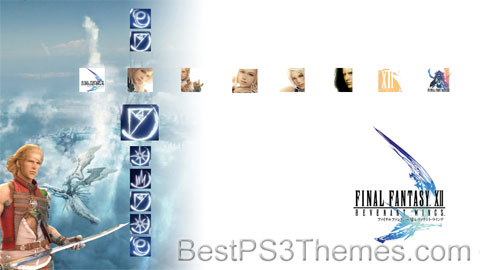
Final Fantasy XII Theme 2
(1 background)

Final Fantasy XII
An armor-clad man with a long cape holds two curved swords. He stands above the logo of Final Fantasy XII. The piece is done in a pastel watercolor style with a large vertical streak on the right side fading from peach to pink to blue.
Japanese and European box art for Final Fantasy XII, designed by Yoshitaka Amano
Developer(s)Square Enix
Publisher(s)Square Enix
Director(s)
Designer(s)Hiroyuki Ito
Programmer(s)Takashi Katano
Artist(s)
Writer(s)
Composer(s)
SeriesFinal Fantasy
Ivalice Alliance
Platform(s)
Release
March 16, 2006
    • PlayStation 2
      • JP: March 16, 2006
      • NA: October 31, 2006
      • AU: February 22, 2007
      • EU: February 23, 2007
      International Zodiac Job System
    • PlayStation 2
      • JP: August 9, 2007
      The Zodiac Age
    • PlayStation 4
      • WW: July 11, 2017
      • JP: July 13, 2017
      Windows
      • WW: February 2, 2018
      Switch, Xbox One
      • JP: April 25, 2019
      • WW: April 30, 2019
Genre(s)Role-playing
Mode(s)Single-player

Final Fantasy XII[a] is a role-playing video game developed and published by Square Enix. The twelfth main installment of the Final Fantasy series, it was first released for the PlayStation 2 in 2006. It introduced several innovations to the series: an open world; a seamless battle system; a controllable camera; a customizable "gambit" system, which lets the player control the artificial intelligence (AI) of characters in battle; a "license" system, which determines what abilities and equipment can be used by characters; and hunting side quests, which allows the player to find and defeat increasingly difficult monsters in the game's open world. Final Fantasy XII also includes elements from previous games in the series, such as Chocobos and Moogles.

The game takes place in Ivalice, where the empires of Archadia and Rozarria are waging an endless war. Dalmasca, a small kingdom, is caught between the warring nations. When Dalmasca is annexed by Archadia, its princess, Ashe, creates a resistance movement. During the struggle, she meets Vaan, a young adventurer who dreams of becoming a sky pirate in command of an airship. They are quickly joined by a band of allies; together, they rally against the tyranny of the Archadian Empire.

Final Fantasy XII was both a critical and commercial success, earning several Game of the Year awards and selling over six million copies on the PlayStation 2 by November 2009. In 2007, a sequel titled Final Fantasy XII: Revenant Wings was released for the Nintendo DS and, in that same year, an expanded version of Final Fantasy XII, titled Final Fantasy XII International Zodiac Job System, was released on the PlayStation 2 exclusively in Japan. A high-definition remaster of the International Zodiac Job System version, The Zodiac Age, was released worldwide for the PlayStation 4 in July 2017, for Windows in February 2018, and for the Nintendo Switch and Xbox One in April 2019.

Gameplay[edit]

Throughout the game, the player directly controls the on-screen character from a third-person perspective to interact with people, objects, and enemies. Unlike previous games in the series, the player can also control the camera with the right analog stick, allowing for a 360° view of the surroundings.[1] While in towns and cities, the player may only see from the perspective of Vaan, but any character may be controlled in the field. The world of Final Fantasy XII is rendered to scale relative to the characters in it; instead of a caricature of the character roaming around miniature terrain, as found in the earlier Final Fantasy games, every area is represented proportionally. The player navigates the overworld on foot, Chocobo, or by airship.[2] Players may save their game to a memory card using save crystals or gate crystals, and may use the latter to teleport between gate crystals.[3] An in-game bestiary provides incidental information about the world of Final Fantasy XII.[4]

Final Fantasy XII restructures the system of earning gil, the currency of the Final Fantasy games; instead of gil, most enemies drop "loot" which can be sold at shops.[5] This ties into a new battle mechanic which rewards the player with improved loot for slaying a particular type of enemy multiple times in a row.[6] Selling different types of loot also unlocks a bazaar option in shops, which provides items at a lower cost, or items exclusive to the bazaar.[5]

Battle system[edit]

A man wielding a sword and a woman wielding a spear fight two armored horse-like monsters.
In Active Dimension Battle (ADB), characters move freely and attack as soon as they are ready. Blue lines depict the player's targets and red lines depict those of the enemies.

Excluding the massively multiplayer online role-playing game Final Fantasy XI, Final Fantasy XII is the first entry in the main Final Fantasy series not to include random encounters.[7] Instead, enemies are visible in the overworld and the player may choose to fight or avoid them. Battles unfold in real time using the "Active Dimension Battle" (ADB) system. Battles begin when the party comes within range of an aggressive enemy, the party attacks an enemy, or a story event initiates a confrontation.[7] When a character or enemy begins an action, target lines connect characters to other party members or enemies; different colors represent the different types of action.[8] The player may swap to and issue commands to any of the three characters in the party, but guest characters are controlled by artificial intelligence (AI).[9] Battle commands are initiated through a series of menus, and include Attack, Magicks, Technicks, Mist, Gambits, and Items. The player may switch any active character with an inactive character at any time, unless the active character is targeted by an attack or ability. Characters who are knocked out may also be substituted.

A new feature in the game is the "gambit" system, which allows the player to program each character to perform certain commands in battle in response to specified conditions.[10] Using gambits, the player may set reactions to different stimuli for each character. Each gambit consists of three parts: a target, an action, and a priority. The target specifies which ally or foe to act on and the condition for applying the action. For example, the target "Ally: HP < 70%" causes the character to target any ally whose hit points have fallen below 70%. The action is the command to be performed on the target. The priority determines which gambit to perform when multiple gambits are triggered. These heuristics guide the characters when acting autonomously, though player-directed commands are always given top priority.[10]

In Final Fantasy XII, a mysterious phenomenon known as "Mist" is the key energy which allows characters to cast summoning magic and perform "Quickenings". After defeating an Esper in combat, the player will be able to summon it to the battlefield.[11] Similar to Final Fantasy X, the summoned creatures become active participants in battle,[11] as opposed to the cinematic attacks seen in previous games in the series. Unlike X, however, Espers follow hidden gambits, rather than the player's direct command.[11] The summoner remains an active member in the fight, able to attack and cast support magic, instead of leaving the party or standing idle while the summoned creature fights.[11] An Esper will leave the battle if either the summoner or itself is knocked out, its time limit expires, or it executes its special attack.[11] Some Espers have origins in Final Fantasy Tactics and Tactics Advance and others are derived from the final bosses of previous Final Fantasy games such as Chaos, the final boss of the first Final Fantasy, and Zeromus, the final boss of Final Fantasy IV.

Final Fantasy XII introduces "Quickenings", a new Limit Break system unique compared to those in previous games in the series.[12] Characters learn Quickenings by progressing to specific panels on the License Board.[12] Each character can learn three Quickenings, which are unique to that character.[12] Characters may string together Quickenings into large combo attacks, called Mist Chains, via timed button presses.[12] If a Mist Chain reaches a certain length, a final strike will be initiated at the end of the Quickening cycle, called a Concurrence.[12]

The License Board; raised panel icons indicate acquired licenses.

Growth system[edit]

As in many role-playing games (RPGs), characters "level up" each time they earn a set number of experience points from defeating enemies; each level gained increases the character's statistics and improves performance in battle.[13] Statistics include hit points, the amount of damage a character can receive; strength, the power of the character's physical attacks; and magic, the potency of the character's magical spells.[13]

In addition to leveling up, players may improve their characters via the License Board. The License Board is an array of panels that contain "licenses" which allow a character to perform certain actions.[14] The board is split into two parts; the upper part comprises Magick, Technick, Accessory, and Augment (stat increases and other permanent buffs) licenses, and the bottom part comprises mostly Weapon and Armor licenses.[15] To use a Magick, Technick, or piece of equipment, the character must obtain its corresponding license by spending the required amount of LP (License Points).[14] LP are earned in battle along with the experience points. Like the Sphere Grid in Final Fantasy X, all characters may obtain all licenses on the board, but each Quickening and Esper license may only be activated by a single character.[16]

Plot[edit]

Setting[edit]

Final Fantasy XII is set within the land of Ivalice during an age when "magic was commonplace" and "airships plied the skies, crowding out the heavens". At this time, magicite, a magic-rich mineral, is commonly used in magic spells[17] and in powering airships—a popular form of transportation in Ivalice.[18] Ivalice is divided into three continents:[19] Ordalia, Valendia, and Kerwon.[1] Ordalia is located in the western part of Ivalice. The Rozarrian Empire makes its home in the vast inland plains of this continent as the eastern portion of it is largely desert and "jagd"—lawless regions so rich in Mist, the ethereal manifestation of magicite, that airships cannot function.[20] Valendia is the home of Imperial Archadia, where lush highlands dot the landscape.[21] Central to the story is Dalmasca, a small kingdom between the two continents and empires. Located in the middle of the Galtean Peninsula of Ordalia, Dalmasca is surrounded by an expanse of desert. The temperate climate of Dalmasca differs from the cold environs of Kerwon to the south and the lush plains of Valendia and Ordalia.[22] During this time, Ivalice is beset by the pending war between the forces of Rozarria and Archadia. Caught between the two powerful Empires, Dalmasca and a number of smaller nations have already been subjugated by Archadia two years before the game begins.

Characters[edit]

The six main playable characters in Final Fantasy XII are Vaan (Bobby Edner/Kouhei Takeda), an energetic orphan of Rabanastre who dreams of becoming a sky pirate; Ashe (Kari Wahlgren/Mie Sonozaki), a determined princess of Dalmasca who lost her father and her husband in the Archadian invasion; Basch (Keith Ferguson/Rikiya Koyama), a disgraced knight of Dalmasca charged with treason for slaying the king; Balthier (Gideon Emery/Hiroaki Hirata), a gentlemanly sky pirate who pilots his airship, the Strahl; Fran (Nicole Fantl/Rika Fukami), Balthier's partner and a Viera exile whose knowledge extends to legends and myths; and Penelo (Catherine Taber/Marina Kozawa), Vaan's childhood friend who accompanies him on journeys to "keep an eye on him".[23]

The Archadian Empire is ruled by House Solidor, headed by Emperor Gramis (Roger L. Jackson/Hidekatsu Shibata).[24] The emperor's sons are Vayne (Elijah Alexander/Nobuo Tobita) and Larsa (Johnny McKeown/Yuka Imai), the former a military genius and the game's main antagonist, and the latter a charismatic seeker of peace. Judge Magisters, upholders of Archadian law,[24] protect House Solidor and execute every command issued by the ruling family. The technological marvels of airships and synthetic nethicite—a form of magicite that absorbs Mist—are thanks to Doctor Cid (John Rafter Lee/Chikao Ōtsuka), a prominent researcher from Archadia.[24] The Resistance against Archadia includes Dalmascan knight Vossler (Nolan North/Masaki Terasoma), an ally of Basch; Marquis Halim Ondore IV (Tom Kane/Akio Nojima), the game's narrator and ruler of the skycity Bhujerba; Reddas (Phil LaMarr/Takayuki Sugo), a sky pirate based in the port at Balfonheim; and the Rozarrian Empire, of which Al-Cid Margrace (David Rasner/Norio Wakamoto) is a prince of the ruling family.[24] The mythos of Final Fantasy XII revolves around a character known as Dynast-King Raithwall, a man who once united Ivalice to create the Galtean Alliance in ages past.

Story[edit]

In Dalmasca's capital city of Rabanastre, Princess Ashelia (Ashe) of Dalmasca and Prince Rasler of Nabradia have just wed, as the Archadian Empire invades the two countries. Rasler is killed in the war, the city of Nabudis is destroyed in a single explosion, and the Dalmascan King Raminas is assassinated moments after signing a treaty of surrender. Marquis Ondore announces that the assassin was Dalmascan captain Basch, who has been sentenced to death, and that Princess Ashe has committed suicide.[25]

Two years later, Vaan, a Rabanastre street urchin, ignores his friend Penelo's objections and infiltrates the palace during a dinner celebrating the appointment of Archadian prince Vayne Solidor as consul. In the treasury he finds a piece of magicite, a powerful magical crystal. He is discovered by Balthier and Fran, a pair of sky pirates looking for the magicite. The three escape as Dalmascan Resistance forces assault the palace, and in the sewers they meet the Resistance leader, Amalia, before being captured by Archadian forces. In the dungeons they meet Basch, who was imprisoned but not killed, and who states his twin brother Gabranth was the one to kill the king. The four then escape together back to Rabanastre. There they discover Penelo has been kidnapped and taken to the floating city of Bhujerba.

In Bhujerba, they meet Lamont, a curious boy who is Vayne's younger brother, Larsa, in disguise.[26] After they rescue Penelo, Basch confronts the Marquis over his lies, but the party is captured and detained aboard the Archadian airship Leviathan, headed by Judge Ghis. On the Leviathan, the party is reunited with Amalia, who is revealed to be Princess Ashe.[27] Ghis takes the magicite, which is revealed to be a royal Dalmascan artifact, "deifacted nethicite". The party escapes, but as Ashe had planned to use the magicite as proof that she was the princess,[28] the group journeys to collect another of the pieces of nethicite, the Dawn Shard.[29] They are again captured by Ghis; when he tries to use the Dawn Shard in the Leviathan rather than the "manufacted" (artificially made) magicite it normally uses, his entire airship fleet is destroyed in a mirror of the destruction of Nabudis, and the party flees again.

They encounter Larsa, who seeks a peace treaty between Dalmasca and the empire. The group and Larsa go to Mt. Bur-Omisace to seek the Gran Kiltias Anastasis, Ivalice's religious leader, and beg his approval of Ashe as queen of Dalmasca.[30] There they also meet Al-Cid Margrace, who is in talks with Larsa to avert a war between Rozarria and Archadia.[31][32] Their plans are curtailed when Anastasis is killed by Archadia, and soon afterwards the Archadian emperor Gramis dies and Vayne ascends the throne.[33]

The party journeys to Archadia, where they discover Doctor Cid, the creator of manufacted magicite, who directs them to go to Giruvegan to find the source of nethicite.[34][35] In Giruvegan, Ashe encounters the makers of nethicite, the immortal Occuria, who "pull the strings of history"; they give her the Treaty Blade to cut new pieces from the Sun-cryst, the source of all nethicite and its power.[36] She learns that Venat, one of the Occuria, has defected to put the "reins of History back in the hands of Man", manipulating Vayne in his quest to conquer Ivalice and leading Cid to create manufacted magicite to reduce the relative power of the Occuria.[37][38]

Ashe and the party journey to the Sun-cryst, where she decides not to take her revenge by following the Occuria's wishes, but instead destroy the Sun-cryst.[39] The party defeats Gabranth, who reveals that he killed King Raminas, and destroys the crystal.[40] Al-Cid tells them that the Dalmascan Resistance, led by Ondore, is about to fight Archadia in Rabanastre, but the Archadian forces now include the Sky Fortress Bahamut. They infiltrate the Bahamut, and find Larsa failing to dissuade his brother Vayne from his plans for war.[41] They defeat Vayne and Venat, and Ashe and Larsa announce the end of the conflict to the battlefield.[42] Larsa becomes the Archadian emperor and Ashe the Queen of Dalmasca; Basch replaces his brother Gabranth as Larsa's protector; Vaan and Penelo fly an airship to meet Balthier and Fran for another adventure.[43]

Development[edit]

Akitoshi Kawazu (left) and Hiroshi Minagawa at the Final Fantasy XII London HMV Launch Party in 2007

Development for Final Fantasy XII began in December 2000 and was headed by Final Fantasy Tactics director Yasumi Matsuno and Final Fantasy IX director Hiroyuki Ito.[44][45][46] Matsuno provided the original concept and plot but was forced to bow out a year before release due to health concerns.[47] The team was restructured as a consequence: the new directorial duo consisted of Ito and Hiroshi Minagawa, while Akitoshi Kawazu of SaGa series fame became the game's executive producer.[48][49] Series creator Hironobu Sakaguchi was disappointed by Matsuno's departure and declined to play the game beyond its introduction.[50]

The desire to move away from random encounters was present since the beginning of development.[51] This desire fueled the development of the Active Dimension Battle system so players could seamlessly move from battle to exploration. The gambit system was conceived early on as a way to facilitate this change.[51] Battle system designer Hiroshi Tomomatsu said that it gradually moved away from a complex and rigid formula to the more flexible form seen in the final version of the game.[52] Ito drew inspiration for gambits from plays in American football where each team member has a specific job to do based on the conditions and desired outcome. As for the license system, he explained that needing "licenses" to perform certain actions was a natural extension of the rigid structured society of Archadia, as epitomized by its Judges.[51]

At the early stages of development, Minagawa revealed that numerous ideas and features were planned for the game, but were dropped from the final stages due to certain constraints and hardware limitations. Some of these included the ability for a second player to join in the gameplay, enabling a two-player mode. Another idea that was given a considerable amount of thought was the ability to recruit non-player characters to join in the mob hunts. Due to the technical limitations of the console and multiple number of characters joining the fray, the development phase took longer than expected, causing delays.[53]

Design inspiration came from a mix of medieval Mediterranean countries as demonstrated by the architectural styles found throughout Ivalice along with many of the races populating the region.[54] The art team, led by art directors Hideo Minaba and Isamu Kamikokuryō, visited Turkey, which influenced the game's Mediterranean-style setting.[55] The developers also used styles and deco from other sources including areas in India and New York City.[55][56] Of note is the use of Sanskrit in the city of Bhujerba. Phrases such as "svagatam" (welcome) and titles like "parijanah" (guide) are lifted directly from Sanskrit. Minaba mentions that the team tried to bring out Arabic culture in the design of the game.[57] War is a prominent theme of the game and the developers stated that the cutscene battles are influenced by Ancient Rome.[56] When asked to comment on the fan observation of Star Wars similarities, Minaba replied that although he was a fan of the series, it was not necessarily an influence to the game's designs.[55] It has also been noted that the similarities originate from The Hidden Fortress, the 1958 Akira Kurosawa film that inspired Star Wars.[58][59]

The developers initially planned to return to the "big-headed" character designs of previous Final Fantasy games, but settled on similar proportions as characters in Vagrant Story, the team's previous game, as development progressed.[60] Basch was the first character designed and the developers considered him the "hero" of the story at the time. Vaan and Penelo were added last and became the heroes in the final version of the plot.[60] The developers were motivated by the commercial failure of Vagrant Story, which featured a "strong man in his prime" as the protagonist, and switched the focus to a younger protagonist as a result.[60][61] Vaan's early designs were described as effeminate, but with the casting of Kouhei Takeda as his voice and motion capture actor, Vaan became less feminine and more "active, upbeat, bright and positive".[62] Comments were made about the similarity between character designer Akihiko Yoshida's creations and those of Tetsuya Nomura, another Square Enix character designer. Yoshida felt this comparison was sparked by the choice of color used by both artists, which was based on maintaining consistent color between the characters and the environments.[62] Non-human characters and races play a prominent role in the game,[57] which was influenced by an interest in history among the developers.[55]

Miwa Shoda wrote a storyline for the game premised on the basis of the cutscenes and world setting that had already been finished when she joined the team. Scenario writer Daisuke Watanabe in turn fleshed out Shoda's plot into a script.[63] During the English localization process, Alexander O. Smith, who had previously worked on Vagrant Story and Final Fantasy X, acted as producer and translator.[64] While still preserving the meaning behind the Japanese script, Smith made the decision to use different dialects of English to reproduce the regional differences in pronunciation found in the Japanese version.[65][66] He also tried to distance the game from the "flat reads" found in other dubbed work by casting voice actors who had experience in theatre work.[66] In terms of general changes, the localization team introduced widescreen 16:9 ratio support and reinserted scenes that were left out of the original Japanese version for political reasons and to preserve an "All Ages" CERO rating.[67][68]

A playable demo of the game was shipped with the North American release of Dragon Quest VIII in November 2005.[69] To commemorate the release of Final Fantasy XII, playable demos of the English version were available at DigitalLife's Gaming Pavilion in New York City on October 11, 2006, a day dubbed "Final Fantasy XII Gamer's Day".[70] Additionally, Square Enix gave fans the chance to cosplay as characters from XII. Each person was asked to show Square Enix three photos of his or her costume for a chance to win a trip to New York and participate in the Final Fantasy XII Gamer's Day event.[71]

Final Fantasy XII once held the Guinness World Record for longest development period in a video game production, with a total of five years, spanning from 2001 until its release in 2006.[72] At a Final Fantasy XII "postmortem" at MIT in March 2009, Hiroshi Minagawa mentioned that several years of production were devoted to the creation of

Final Fantasy XII

Final Fantasy XII theme by DominatorCGI

Download: FinalFantasyXII.p3t
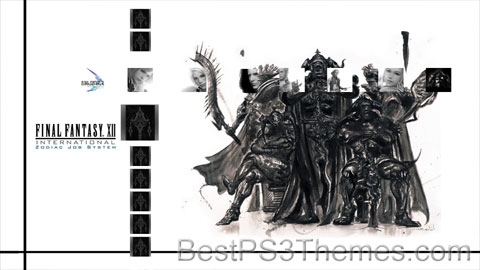
Final Fantasy XII Theme
(1 background)

Final Fantasy XII
An armor-clad man with a long cape holds two curved swords. He stands above the logo of Final Fantasy XII. The piece is done in a pastel watercolor style with a large vertical streak on the right side fading from peach to pink to blue.
Japanese and European box art for Final Fantasy XII, designed by Yoshitaka Amano
Developer(s)Square Enix
Publisher(s)Square Enix
Director(s)
Designer(s)Hiroyuki Ito
Programmer(s)Takashi Katano
Artist(s)
Writer(s)
Composer(s)
SeriesFinal Fantasy
Ivalice Alliance
Platform(s)
Release
March 16, 2006
    • PlayStation 2
      • JP: March 16, 2006
      • NA: October 31, 2006
      • AU: February 22, 2007
      • EU: February 23, 2007
      International Zodiac Job System
    • PlayStation 2
      • JP: August 9, 2007
      The Zodiac Age
    • PlayStation 4
      • WW: July 11, 2017
      • JP: July 13, 2017
      Windows
      • WW: February 2, 2018
      Switch, Xbox One
      • JP: April 25, 2019
      • WW: April 30, 2019
Genre(s)Role-playing
Mode(s)Single-player

Final Fantasy XII[a] is a role-playing video game developed and published by Square Enix. The twelfth main installment of the Final Fantasy series, it was first released for the PlayStation 2 in 2006. It introduced several innovations to the series: an open world; a seamless battle system; a controllable camera; a customizable "gambit" system, which lets the player control the artificial intelligence (AI) of characters in battle; a "license" system, which determines what abilities and equipment can be used by characters; and hunting side quests, which allows the player to find and defeat increasingly difficult monsters in the game's open world. Final Fantasy XII also includes elements from previous games in the series, such as Chocobos and Moogles.

The game takes place in Ivalice, where the empires of Archadia and Rozarria are waging an endless war. Dalmasca, a small kingdom, is caught between the warring nations. When Dalmasca is annexed by Archadia, its princess, Ashe, creates a resistance movement. During the struggle, she meets Vaan, a young adventurer who dreams of becoming a sky pirate in command of an airship. They are quickly joined by a band of allies; together, they rally against the tyranny of the Archadian Empire.

Final Fantasy XII was both a critical and commercial success, earning several Game of the Year awards and selling over six million copies on the PlayStation 2 by November 2009. In 2007, a sequel titled Final Fantasy XII: Revenant Wings was released for the Nintendo DS and, in that same year, an expanded version of Final Fantasy XII, titled Final Fantasy XII International Zodiac Job System, was released on the PlayStation 2 exclusively in Japan. A high-definition remaster of the International Zodiac Job System version, The Zodiac Age, was released worldwide for the PlayStation 4 in July 2017, for Windows in February 2018, and for the Nintendo Switch and Xbox One in April 2019.

Gameplay[edit]

Throughout the game, the player directly controls the on-screen character from a third-person perspective to interact with people, objects, and enemies. Unlike previous games in the series, the player can also control the camera with the right analog stick, allowing for a 360° view of the surroundings.[1] While in towns and cities, the player may only see from the perspective of Vaan, but any character may be controlled in the field. The world of Final Fantasy XII is rendered to scale relative to the characters in it; instead of a caricature of the character roaming around miniature terrain, as found in the earlier Final Fantasy games, every area is represented proportionally. The player navigates the overworld on foot, Chocobo, or by airship.[2] Players may save their game to a memory card using save crystals or gate crystals, and may use the latter to teleport between gate crystals.[3] An in-game bestiary provides incidental information about the world of Final Fantasy XII.[4]

Final Fantasy XII restructures the system of earning gil, the currency of the Final Fantasy games; instead of gil, most enemies drop "loot" which can be sold at shops.[5] This ties into a new battle mechanic which rewards the player with improved loot for slaying a particular type of enemy multiple times in a row.[6] Selling different types of loot also unlocks a bazaar option in shops, which provides items at a lower cost, or items exclusive to the bazaar.[5]

Battle system[edit]

A man wielding a sword and a woman wielding a spear fight two armored horse-like monsters.
In Active Dimension Battle (ADB), characters move freely and attack as soon as they are ready. Blue lines depict the player's targets and red lines depict those of the enemies.

Excluding the massively multiplayer online role-playing game Final Fantasy XI, Final Fantasy XII is the first entry in the main Final Fantasy series not to include random encounters.[7] Instead, enemies are visible in the overworld and the player may choose to fight or avoid them. Battles unfold in real time using the "Active Dimension Battle" (ADB) system. Battles begin when the party comes within range of an aggressive enemy, the party attacks an enemy, or a story event initiates a confrontation.[7] When a character or enemy begins an action, target lines connect characters to other party members or enemies; different colors represent the different types of action.[8] The player may swap to and issue commands to any of the three characters in the party, but guest characters are controlled by artificial intelligence (AI).[9] Battle commands are initiated through a series of menus, and include Attack, Magicks, Technicks, Mist, Gambits, and Items. The player may switch any active character with an inactive character at any time, unless the active character is targeted by an attack or ability. Characters who are knocked out may also be substituted.

A new feature in the game is the "gambit" system, which allows the player to program each character to perform certain commands in battle in response to specified conditions.[10] Using gambits, the player may set reactions to different stimuli for each character. Each gambit consists of three parts: a target, an action, and a priority. The target specifies which ally or foe to act on and the condition for applying the action. For example, the target "Ally: HP < 70%" causes the character to target any ally whose hit points have fallen below 70%. The action is the command to be performed on the target. The priority determines which gambit to perform when multiple gambits are triggered. These heuristics guide the characters when acting autonomously, though player-directed commands are always given top priority.[10]

In Final Fantasy XII, a mysterious phenomenon known as "Mist" is the key energy which allows characters to cast summoning magic and perform "Quickenings". After defeating an Esper in combat, the player will be able to summon it to the battlefield.[11] Similar to Final Fantasy X, the summoned creatures become active participants in battle,[11] as opposed to the cinematic attacks seen in previous games in the series. Unlike X, however, Espers follow hidden gambits, rather than the player's direct command.[11] The summoner remains an active member in the fight, able to attack and cast support magic, instead of leaving the party or standing idle while the summoned creature fights.[11] An Esper will leave the battle if either the summoner or itself is knocked out, its time limit expires, or it executes its special attack.[11] Some Espers have origins in Final Fantasy Tactics and Tactics Advance and others are derived from the final bosses of previous Final Fantasy games such as Chaos, the final boss of the first Final Fantasy, and Zeromus, the final boss of Final Fantasy IV.

Final Fantasy XII introduces "Quickenings", a new Limit Break system unique compared to those in previous games in the series.[12] Characters learn Quickenings by progressing to specific panels on the License Board.[12] Each character can learn three Quickenings, which are unique to that character.[12] Characters may string together Quickenings into large combo attacks, called Mist Chains, via timed button presses.[12] If a Mist Chain reaches a certain length, a final strike will be initiated at the end of the Quickening cycle, called a Concurrence.[12]

The License Board; raised panel icons indicate acquired licenses.

Growth system[edit]

As in many role-playing games (RPGs), characters "level up" each time they earn a set number of experience points from defeating enemies; each level gained increases the character's statistics and improves performance in battle.[13] Statistics include hit points, the amount of damage a character can receive; strength, the power of the character's physical attacks; and magic, the potency of the character's magical spells.[13]

In addition to leveling up, players may improve their characters via the License Board. The License Board is an array of panels that contain "licenses" which allow a character to perform certain actions.[14] The board is split into two parts; the upper part comprises Magick, Technick, Accessory, and Augment (stat increases and other permanent buffs) licenses, and the bottom part comprises mostly Weapon and Armor licenses.[15] To use a Magick, Technick, or piece of equipment, the character must obtain its corresponding license by spending the required amount of LP (License Points).[14] LP are earned in battle along with the experience points. Like the Sphere Grid in Final Fantasy X, all characters may obtain all licenses on the board, but each Quickening and Esper license may only be activated by a single character.[16]

Plot[edit]

Setting[edit]

Final Fantasy XII is set within the land of Ivalice during an age when "magic was commonplace" and "airships plied the skies, crowding out the heavens". At this time, magicite, a magic-rich mineral, is commonly used in magic spells[17] and in powering airships—a popular form of transportation in Ivalice.[18] Ivalice is divided into three continents:[19] Ordalia, Valendia, and Kerwon.[1] Ordalia is located in the western part of Ivalice. The Rozarrian Empire makes its home in the vast inland plains of this continent as the eastern portion of it is largely desert and "jagd"—lawless regions so rich in Mist, the ethereal manifestation of magicite, that airships cannot function.[20] Valendia is the home of Imperial Archadia, where lush highlands dot the landscape.[21] Central to the story is Dalmasca, a small kingdom between the two continents and empires. Located in the middle of the Galtean Peninsula of Ordalia, Dalmasca is surrounded by an expanse of desert. The temperate climate of Dalmasca differs from the cold environs of Kerwon to the south and the lush plains of Valendia and Ordalia.[22] During this time, Ivalice is beset by the pending war between the forces of Rozarria and Archadia. Caught between the two powerful Empires, Dalmasca and a number of smaller nations have already been subjugated by Archadia two years before the game begins.

Characters[edit]

The six main playable characters in Final Fantasy XII are Vaan (Bobby Edner/Kouhei Takeda), an energetic orphan of Rabanastre who dreams of becoming a sky pirate; Ashe (Kari Wahlgren/Mie Sonozaki), a determined princess of Dalmasca who lost her father and her husband in the Archadian invasion; Basch (Keith Ferguson/Rikiya Koyama), a disgraced knight of Dalmasca charged with treason for slaying the king; Balthier (Gideon Emery/Hiroaki Hirata), a gentlemanly sky pirate who pilots his airship, the Strahl; Fran (Nicole Fantl/Rika Fukami), Balthier's partner and a Viera exile whose knowledge extends to legends and myths; and Penelo (Catherine Taber/Marina Kozawa), Vaan's childhood friend who accompanies him on journeys to "keep an eye on him".[23]

The Archadian Empire is ruled by House Solidor, headed by Emperor Gramis (Roger L. Jackson/Hidekatsu Shibata).[24] The emperor's sons are Vayne (Elijah Alexander/Nobuo Tobita) and Larsa (Johnny McKeown/Yuka Imai), the former a military genius and the game's main antagonist, and the latter a charismatic seeker of peace. Judge Magisters, upholders of Archadian law,[24] protect House Solidor and execute every command issued by the ruling family. The technological marvels of airships and synthetic nethicite—a form of magicite that absorbs Mist—are thanks to Doctor Cid (John Rafter Lee/Chikao Ōtsuka), a prominent researcher from Archadia.[24] The Resistance against Archadia includes Dalmascan knight Vossler (Nolan North/Masaki Terasoma), an ally of Basch; Marquis Halim Ondore IV (Tom Kane/Akio Nojima), the game's narrator and ruler of the skycity Bhujerba; Reddas (Phil LaMarr/Takayuki Sugo), a sky pirate based in the port at Balfonheim; and the Rozarrian Empire, of which Al-Cid Margrace (David Rasner/Norio Wakamoto) is a prince of the ruling family.[24] The mythos of Final Fantasy XII revolves around a character known as Dynast-King Raithwall, a man who once united Ivalice to create the Galtean Alliance in ages past.

Story[edit]

In Dalmasca's capital city of Rabanastre, Princess Ashelia (Ashe) of Dalmasca and Prince Rasler of Nabradia have just wed, as the Archadian Empire invades the two countries. Rasler is killed in the war, the city of Nabudis is destroyed in a single explosion, and the Dalmascan King Raminas is assassinated moments after signing a treaty of surrender. Marquis Ondore announces that the assassin was Dalmascan captain Basch, who has been sentenced to death, and that Princess Ashe has committed suicide.[25]

Two years later, Vaan, a Rabanastre street urchin, ignores his friend Penelo's objections and infiltrates the palace during a dinner celebrating the appointment of Archadian prince Vayne Solidor as consul. In the treasury he finds a piece of magicite, a powerful magical crystal. He is discovered by Balthier and Fran, a pair of sky pirates looking for the magicite. The three escape as Dalmascan Resistance forces assault the palace, and in the sewers they meet the Resistance leader, Amalia, before being captured by Archadian forces. In the dungeons they meet Basch, who was imprisoned but not killed, and who states his twin brother Gabranth was the one to kill the king. The four then escape together back to Rabanastre. There they discover Penelo has been kidnapped and taken to the floating city of Bhujerba.

In Bhujerba, they meet Lamont, a curious boy who is Vayne's younger brother, Larsa, in disguise.[26] After they rescue Penelo, Basch confronts the Marquis over his lies, but the party is captured and detained aboard the Archadian airship Leviathan, headed by Judge Ghis. On the Leviathan, the party is reunited with Amalia, who is revealed to be Princess Ashe.[27] Ghis takes the magicite, which is revealed to be a royal Dalmascan artifact, "deifacted nethicite". The party escapes, but as Ashe had planned to use the magicite as proof that she was the princess,[28] the group journeys to collect another of the pieces of nethicite, the Dawn Shard.[29] They are again captured by Ghis; when he tries to use the Dawn Shard in the Leviathan rather than the "manufacted" (artificially made) magicite it normally uses, his entire airship fleet is destroyed in a mirror of the destruction of Nabudis, and the party flees again.

They encounter Larsa, who seeks a peace treaty between Dalmasca and the empire. The group and Larsa go to Mt. Bur-Omisace to seek the Gran Kiltias Anastasis, Ivalice's religious leader, and beg his approval of Ashe as queen of Dalmasca.[30] There they also meet Al-Cid Margrace, who is in talks with Larsa to avert a war between Rozarria and Archadia.[31][32] Their plans are curtailed when Anastasis is killed by Archadia, and soon afterwards the Archadian emperor Gramis dies and Vayne ascends the throne.[33]

The party journeys to Archadia, where they discover Doctor Cid, the creator of manufacted magicite, who directs them to go to Giruvegan to find the source of nethicite.[34][35] In Giruvegan, Ashe encounters the makers of nethicite, the immortal Occuria, who "pull the strings of history"; they give her the Treaty Blade to cut new pieces from the Sun-cryst, the source of all nethicite and its power.[36] She learns that Venat, one of the Occuria, has defected to put the "reins of History back in the hands of Man", manipulating Vayne in his quest to conquer Ivalice and leading Cid to create manufacted magicite to reduce the relative power of the Occuria.[37][38]

Ashe and the party journey to the Sun-cryst, where she decides not to take her revenge by following the Occuria's wishes, but instead destroy the Sun-cryst.[39] The party defeats Gabranth, who reveals that he killed King Raminas, and destroys the crystal.[40] Al-Cid tells them that the Dalmascan Resistance, led by Ondore, is about to fight Archadia in Rabanastre, but the Archadian forces now include the Sky Fortress Bahamut. They infiltrate the Bahamut, and find Larsa failing to dissuade his brother Vayne from his plans for war.[41] They defeat Vayne and Venat, and Ashe and Larsa announce the end of the conflict to the battlefield.[42] Larsa becomes the Archadian emperor and Ashe the Queen of Dalmasca; Basch replaces his brother Gabranth as Larsa's protector; Vaan and Penelo fly an airship to meet Balthier and Fran for another adventure.[43]

Development[edit]

Akitoshi Kawazu (left) and Hiroshi Minagawa at the Final Fantasy XII London HMV Launch Party in 2007

Development for Final Fantasy XII began in December 2000 and was headed by Final Fantasy Tactics director Yasumi Matsuno and Final Fantasy IX director Hiroyuki Ito.[44][45][46] Matsuno provided the original concept and plot but was forced to bow out a year before release due to health concerns.[47] The team was restructured as a consequence: the new directorial duo consisted of Ito and Hiroshi Minagawa, while Akitoshi Kawazu of SaGa series fame became the game's executive producer.[48][49] Series creator Hironobu Sakaguchi was disappointed by Matsuno's departure and declined to play the game beyond its introduction.[50]

The desire to move away from random encounters was present since the beginning of development.[51] This desire fueled the development of the Active Dimension Battle system so players could seamlessly move from battle to exploration. The gambit system was conceived early on as a way to facilitate this change.[51] Battle system designer Hiroshi Tomomatsu said that it gradually moved away from a complex and rigid formula to the more flexible form seen in the final version of the game.[52] Ito drew inspiration for gambits from plays in American football where each team member has a specific job to do based on the conditions and desired outcome. As for the license system, he explained that needing "licenses" to perform certain actions was a natural extension of the rigid structured society of Archadia, as epitomized by its Judges.[51]

At the early stages of development, Minagawa revealed that numerous ideas and features were planned for the game, but were dropped from the final stages due to certain constraints and hardware limitations. Some of these included the ability for a second player to join in the gameplay, enabling a two-player mode. Another idea that was given a considerable amount of thought was the ability to recruit non-player characters to join in the mob hunts. Due to the technical limitations of the console and multiple number of characters joining the fray, the development phase took longer than expected, causing delays.[53]

Design inspiration came from a mix of medieval Mediterranean countries as demonstrated by the architectural styles found throughout Ivalice along with many of the races populating the region.[54] The art team, led by art directors Hideo Minaba and Isamu Kamikokuryō, visited Turkey, which influenced the game's Mediterranean-style setting.[55] The developers also used styles and deco from other sources including areas in India and New York City.[55][56] Of note is the use of Sanskrit in the city of Bhujerba. Phrases such as "svagatam" (welcome) and titles like "parijanah" (guide) are lifted directly from Sanskrit. Minaba mentions that the team tried to bring out Arabic culture in the design of the game.[57] War is a prominent theme of the game and the developers stated that the cutscene battles are influenced by Ancient Rome.[56] When asked to comment on the fan observation of Star Wars similarities, Minaba replied that although he was a fan of the series, it was not necessarily an influence to the game's designs.[55] It has also been noted that the similarities originate from The Hidden Fortress, the 1958 Akira Kurosawa film that inspired Star Wars.[58][59]

The developers initially planned to return to the "big-headed" character designs of previous Final Fantasy games, but settled on similar proportions as characters in Vagrant Story, the team's previous game, as development progressed.[60] Basch was the first character designed and the developers considered him the "hero" of the story at the time. Vaan and Penelo were added last and became the heroes in the final version of the plot.[60] The developers were motivated by the commercial failure of Vagrant Story, which featured a "strong man in his prime" as the protagonist, and switched the focus to a younger protagonist as a result.[60][61] Vaan's early designs were described as effeminate, but with the casting of Kouhei Takeda as his voice and motion capture actor, Vaan became less feminine and more "active, upbeat, bright and positive".[62] Comments were made about the similarity between character designer Akihiko Yoshida's creations and those of Tetsuya Nomura, another Square Enix character designer. Yoshida felt this comparison was sparked by the choice of color used by both artists, which was based on maintaining consistent color between the characters and the environments.[62] Non-human characters and races play a prominent role in the game,[57] which was influenced by an interest in history among the developers.[55]

Miwa Shoda wrote a storyline for the game premised on the basis of the cutscenes and world setting that had already been finished when she joined the team. Scenario writer Daisuke Watanabe in turn fleshed out Shoda's plot into a script.[63] During the English localization process, Alexander O. Smith, who had previously worked on Vagrant Story and Final Fantasy X, acted as producer and translator.[64] While still preserving the meaning behind the Japanese script, Smith made the decision to use different dialects of English to reproduce the regional differences in pronunciation found in the Japanese version.[65][66] He also tried to distance the game from the "flat reads" found in other dubbed work by casting voice actors who had experience in theatre work.[66] In terms of general changes, the localization team introduced widescreen 16:9 ratio support and reinserted scenes that were left out of the original Japanese version for political reasons and to preserve an "All Ages" CERO rating.[67][68]

A playable demo of the game was shipped with the North American release of Dragon Quest VIII in November 2005.[69] To commemorate the release of Final Fantasy XII, playable demos of the English version were available at DigitalLife's Gaming Pavilion in New York City on October 11, 2006, a day dubbed "Final Fantasy XII Gamer's Day".[70] Additionally, Square Enix gave fans the chance to cosplay as characters from XII. Each person was asked to show Square Enix three photos of his or her costume for a chance to win a trip to New York and participate in the Final Fantasy XII Gamer's Day event.[71]

Final Fantasy XII once held the Guinness World Record for longest development period in a video game production, with a total of five years, spanning from 2001 until its release in 2006.[72] At a Final Fantasy XII "postmortem" at MIT in March 2009, Hiroshi Minagawa mentioned that several years of production were devoted to the creation of

Road To Perdition

Road To Perdition theme by DominatorCGI

Download: RoadToPerdition.p3t
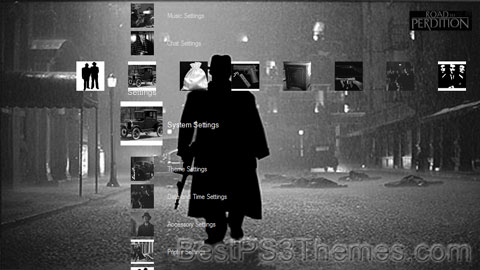
Road To Perdition Theme
(1 background)

Redirect to:

  • From other capitalisation: This is a redirect from a title with another method of capitalisation. It leads to the title in accordance with the Wikipedia naming conventions for capitalisation, or it leads to a title that is associated in some way with the conventional capitalisation of this redirect title. This may help writing, searching and international language issues.
    • If this redirect is an incorrect capitalisation, then {{R from miscapitalisation}} should be used instead, and pages that use this link should be updated to link directly to the target. Miscapitalisations can be tagged in any namespace.
    • Use this rcat to tag only mainspace redirects; when other capitalisations are in other namespaces, use {{R from modification}} instead.

Torchwood

Torchwood theme by Steve G

Download: Torchwood.p3t

Torchwood Theme
(1 background)

Torchwood
Torchwood logo
Genre
Created byRussell T Davies
Showrunners
Starring
Theme music composerMurray Gold
Composers
Country of origin
  • United Kingdom
  • United States
Original languageEnglish
No. of series4
No. of episodes41 (list of episodes)
Production
Executive producers
Running time45–60 minutes
Production companies
Original release
NetworkBBC Three
Release22 October 2006 (2006-10-22) –
1 January 2007 (2007-01-01)
NetworkBBC Two
Release16 January (2008-01-16) –
4 April 2008 (2008-04-04)
NetworkBBC One
Release6 July 2009 (2009-07-06) –
15 September 2011 (2011-09-15)
NetworkStarz
Release8 July (2011-07-08) –
9 September 2011 (2011-09-09)
Related
Torchwood Declassified
Doctor Who
The Sarah Jane Adventures
Class

Torchwood is a British science fiction television programme created by Russell T Davies. A spin-off of the 2005 revival of Doctor Who, it aired from 2006 to 2011. The show shifted its broadcast channel each series to reflect its growing audience, moving from BBC Three to BBC Two to BBC One, and acquiring American financing in its fourth series when it became a co-production of BBC One and Starz. Torchwood is aimed at adults and older teenagers, in contrast to Doctor Who's target audience of both adults and children. As well as science fiction, the show explores a number of themes, including existentialism, LGBTQ+ sexuality, and human corruptibility.

Torchwood follows the exploits of a small team of alien-hunters who make up the Cardiff-based, fictional Torchwood Institute, which deals mainly with incidents involving extraterrestrials. Its central character is Captain Jack Harkness (John Barrowman), an immortal con-man from the distant future; Jack originally appeared in the 2005 series of Doctor Who. The initial main cast of the series consisted of Gareth David-Lloyd, Burn Gorman, Naoko Mori, and Eve Myles. Their characters are specialists for the Torchwood team, often tracking down aliens and defending the planet from alien and human threats. In its first two series, the show uses a time rift in Cardiff as its primary plot generator, accounting for the unusual preponderance of alien beings in Cardiff. In the third and fourth series, Torchwood operate as fugitives. Gorman and Mori's characters were written out of the story at the end of the second series. Recurring actor Kai Owen was promoted to the main cast in series three, in which David-Lloyd was written out. Subsequently, American actors Mekhi Phifer, Alexa Havins and Bill Pullman joined the cast of the show for its fourth series.

The first series premiered on BBC Three and on BBC HD in 2006 to mixed reviews, but viewing figures broke records for the digital channel. It returned in 2008 where it aired first on BBC Two, receiving a higher budget; its uneven tone, a criticism of the first series, was largely smoothed out, and the show attracted higher ratings and better reviews. The third series' episodes worked with a higher budget, and it was transferred to the network's flagship channel, BBC One, as a five-episode serial titled Torchwood: Children of Earth. Although Children of Earth was broadcast over a period of five consecutive summer weeknights, the show received high ratings in the United Kingdom and overseas. A fourth series, co-produced by BBC Wales, BBC Worldwide and US premium entertainment network Starz aired in 2011 under the title Torchwood: Miracle Day. Set both in Wales and the United States, Miracle Day fared less well with critics than Children of Earth, although it was applauded by some for its ambition. The series entered an indefinite hiatus after Miracle Day due to Davies' personal circumstances.

All four televised series have been broadcast in Asia, Australia, New Zealand, Europe and North America. Owing to the early popularity of Torchwood, various tie-in media were produced,[7] including audio dramas, novels and comic strips. From its inception, the BBC invested in a heavy online presence for the series, with an alternate reality game running alongside the show's first two series, and an animated Web series running alongside its fourth. The BBC continued to approve and commission licensed spin-offs after the show's conclusion, including an audio series continuation from Big Finish Productions (2015–present).

On 21 February 2020, all 41 televised episodes returned to the BBC's online streaming service, BBC iPlayer. In the United States, the entire series was made available on HBO's new streaming service, HBO Max, upon its launch in May 2020.

Production[edit]

Development[edit]

Before the revival of Doctor Who, Russell T Davies began to develop an idea for a science-fiction/crime drama in the style of American dramas, in particular those created by Joss Whedon like Buffy the Vampire Slayer and Angel.[8][9] This idea, originally titled Excalibur, was abandoned until 2005, when BBC Three Controller Stuart Murphy invited Davies to develop an after-watershed science fiction series for the channel.[9] During the production of the 2005 series of Doctor Who, the word "Torchwood", an anagram of "Doctor Who", had been used as a title ruse for the series while filming its first few episodes to ensure they were not intercepted.[10] Davies connected the word "Torchwood" to his earlier Excalibur idea and decided to make the series a Doctor Who spin-off.[9] Subsequently, the word "Torchwood" was seeded in Doctor Who episodes and other media that aired in 2005 and 2006.

Because Torchwood is shown after the watershed – that is, after 9 pm – it has more mature content than Doctor Who. Davies told SFX:

We can be a bit more visceral, more violent, and more sexual, if we want to. Though bear in mind that it's very teenage to indulge yourself in blood and gore, and Torchwood is going to be smarter than that. But it's the essential difference between BBC One at 7 pm, and BBC Three at, say, 9 pm. That says it all – instinctively, every viewer can see the huge difference there.[11][12]

According to Barrowman: "I don't do any nude scenes in series one; they're saving that for the next series! I don't have a problem with getting my kit off, as long as they pay me the right money."[13] Davies also joked to a BBC Radio Wales interviewer that he was "not allowed" to refer to the programme as "Doctor Who for grown-ups".[14] The first series includes content rarely seen or heard in the Doctor Who franchise, including sex scenes and use of profanity in several episodes.[15][16]

BBC Three described Torchwood as the centrepiece of its autumn 2006 schedule,[17] and the successful first series led to a second series on BBC Two and a third on BBC One in 2009.[18]

Although Torchwood was originally intended to be sci-fi aimed at adults, the character Captain Jack Harkness, who had previously been introduced in Doctor Who, proved popular with young audiences. Davies decided to create alternative edits of the second series to be "child-friendly", removing overt sexuality and swearing. These edits to the shows enabled it to be broadcast at 7 pm (pre-watershed).[19][20]

The first three series of Torchwood were produced in-house by BBC Wales. The Head of Drama at the time of the first series, Julie Gardner, served as executive producer alongside Davies. The first two episodes of series 1 of Torchwood premiered on 22 October 2006 on BBC Three and BBC HD. Series 2 premiered on BBC Two and BBC HD on 16 January 2008.[21] The third series, Torchwood: Children of Earth, began shooting on 18 August 2008 and comprised a five-episode mini-series that aired over five consecutive days at 9 pm on BBC One from 6 July 2009,[22][23][24][25] and 9 pm on BBC America HD and BBC America from 20 July 2009.[26] Davies and Gardner stayed on as executive producers and Peter Bennett produced the series.[27][28]

Davies expressed concern that the third series was aired in a summer evening graveyard slot.[29] Lead actor John Barrowman felt that the show had been mistreated by BBC executives, despite what he felt was the programme's proven popularity and success.[18]

In August 2009, Davies stated that the fourth series was "ready to go",[30] and that he had the next series planned out, stating, "I know exactly how to pick it up. I've got a shape in mind, and I've got stories. I know where you'd find Gwen and Rhys, and their baby, and Jack, and I know how you'd go forward with a new form of Torchwood." At the time, he stated he would prefer for series four to be another mini-series, though he had no qualms about doing another thirteen-episode run.[31] A November 2009 article posted on Eve Myles's website stated that shooting for the fourth series was to begin in January 2011.[32]

Subsequently, Davies looked to US networks to finance future series of the programme. He was turned down by one of the United States' major television networks, Fox;[33] some had speculated the Fox project could have been a spin-off or a reboot.[34] Later, Davies succeeded in striking a deal with US premium cable network Starz.[35] The production of the fourth series was not officially announced until June 2010:[36][37] a ten-episode mini-series co-produced between BBC Wales, Starz and BBC Worldwide,[36] airing summer 2011.[38]

As with the third, the fourth series was given its own title: Torchwood: Miracle Day.[39] Shortly after the broadcast of Miracle Day in March 2012, the chief executive officer of Starz, Chris Albrecht, announced that he was remaining in touch with the BBC regarding a further series of Torchwood, though it would depend on Davies being free from his other commitments.[40] However, by 2012 the show had entered an indefinite hiatus due to Davies' return to the UK after his partner became ill.[41][42][43]

Writing[edit]

In the first series, the main writer alongside Russell T Davies was Chris Chibnall, creator of the BBC light drama show Born and Bred and future Doctor Who showrunner. Other writers include P.J. Hammond, Toby Whithouse, Doctor Who script editor Helen Raynor, Catherine Tregenna and Doctor Who cast member Noel Clarke. Of the first two series, Russell T Davies wrote only the première episode.[12][44] Helen Raynor and Brian Minchin were the programme's script editors.[45]

Series one of Torchwood was filmed from May 2006 until November 2006. For the second series,[21] lead writer Chris Chibnall wrote the opening episode and the three final episodes.[46][citation needed] Both Catherine Tregenna and Helen Raynor wrote two episodes for the second series.[47] The other episodes were written by James Moran, Matt Jones, J. C. Wilsher, Joseph Lidster, P.J. Hammond and Phil Ford. Russell T Davies was initially announced as writing two episodes, but due to commitments to Doctor Who, he no longer anticipated writing any Torchwood episodes.[48] For series three, Davies returned and wrote the first and last episodes, co-wrote episode three with James Moran and plotted the overall story arc himself.[28] John Fay wrote episodes two and four.[49]

For the fourth series, Miracle Day, Davies secured several popular US television writers, including Buffy the Vampire Slayer writer Jane Espenson; The X-Files, Star Trek: Enterprise and Supernatural writer John Shiban; and House writer Doris Egan. Additionally, both Davies and John Fay returned to write episodes.[39] In continuing the series Davies chose to keep Torchwood more focused on the human condition than its science fiction backdrop. He drew inspiration from Buffy the Vampire Slayer, noting that "the best metaphors in Buffy came down to, 'What's it like to be in high school, as a kid?'" He felt the fourth series of Torchwood to be "about us and our decisions and our lives, and how we live with each other and how we die with each other".[50] The depiction of human nature in the fourth series led to a sequence which many felt to be evocative of the Holocaust. Jane Espenson noted that as a series Torchwood "is willing to go to horrible places". She stated that in storylining Miracle Day, the writers "didn't want to flinch away from what mankind can do."[51]

Directing[edit]

The first block of series two, consisting of episodes by Raynor and Tregenna, was directed by Andy Goddard. Colin Teague directed the second block, which consists of episode two by Moran and episode four by Tregenna, with Ashley Way directing the third block, consisting of the series two premiere by Chibnall and the sixth episode of the series, by JC Wilsher.[46] Euros Lyn directed all five episodes of the third series, Children of Earth.[28]

In June 2010, a BBC News report confirmed that the fourth series would have 10 episodes.[52] Filming began in January 2011. Unlike the previous series, this series' directors did not direct in blocks but in specific episodes.[53] The series four directors included Bharat Nalluri,[54] Billy Gierhart,[54] Guy Ferland[54] and Gwyneth Horder-Payton.[54]

Crew[edit]

Richard Stokes produced series 1 and 2 of Torchwood; Originally, James Hawes (a Doctor Who director) was lined up as the producer, but he later withdrew from this project.[45][55] Series 3 was produced by Peter Bennett.[56] Series 4 was produced by Kelly A Manners,[57] with UK filming produced by Brian Minchin, producer of Series 4 and 5 of The Sarah Jane Adventures.[58][59] The series also shares Doctor Who's production designer, Edward Thomas.[60][61] Music for the series was composed by Ben Foster[62] and Doctor Who's composer Murray Gold,[63] with composer Stu Kennedy assisting on Series 4.[64]

Opening sequence[edit]

Title card for the Torchwood miniseries, Children of Earth (series 3)

Episodes of the show's first two series are preceded by a voice-over monologue by Barrowman as Harkness, establishing the show's premise.[65] The show's theme tune plays over this monologue and the title sequence.[66] The theme was written by Doctor Who composer Murray Gold.[63]

The opening sequence was re-done specifically for series 2, episode 5 "Adam", adding the titular character to the existing scenes. This reflected the in-universe story of Adam psychically inserting himself into the team members' memories as a long-standing member of the team.[67]

For Children of Earth, a recap of the last episode was played at the beginning of each episode, followed by a title card. The theme was not featured in this, instead only featuring over the end credits.

A new theme arrangement and opening credit sequence was introduced with Series 4 (though a musical motif, or "sting", from the original theme is still audible in numerous scenes). Although each episode of Miracle Day has a published individual title, Torchwood: Miracle Day is the only on-screen title used.

Overview[edit]

The series is set in Cardiff, Wales, and follows a rogue covert agency called Torchwood which investigates extraterrestrial incidents on Earth and scavenges alien technology for its own use. This Torchwood, led by Captain Jack Harkness, is a small, independent organisation, but began as the Cardiff branch of the larger Torchwood Institute, then-defunct, which began in the Victorian era. (Its origins were outlined in the Doctor Who episode "Tooth and Claw", and Harkness's long connection to it is covered in flashback scenes in a Torchwood series 2 episode.) As the opening monologue explains, the organisation is separate from the government, outside the police, and beyond the United Nations. Their public perception is as merely a 'special ops' group. The events of the first series take place sometime after the Doctor Who series two finale, in which the Torchwood Institute's London headquarters was destroyed. This format was maintained for the first two series.

Series three, a miniseries, saw the Cardiff headquarters destroyed and the team temporarily operating as fugitives in England's capital city of London, its membership declining and the organisation thoroughly broken over the course of the serial. Series four starts with Torchwood fully disbanded. Jack has left Earth after the events of series three, and a pregnant Gwen has retired to be with her family. The group is then unofficially reformed, this time operating primarily in the United States, joined by two fugitive CIA agents who have been framed for treason, during Miracle Day.

Cast[edit]

Series two cast, including special guest star Freema Agyeman as Martha Jones
Actor Character Series
1 2 3 4
John Barrowman Jack Harkness Main
Eve Myles Gwen Cooper Main
Burn Gorman Owen Harper Main Does not appear
Naoko Mori Toshiko Sato Main Does not appear
Indira Varma Suzie Costello Featured[b] Does not appear
Gareth David-Lloyd Ianto Jones Main Does not appear
Freema Agyeman Martha Jones Does not appear Main[c] Does not appear
Kai Owen Rhys Williams Recurring Main
Mekhi Phifer Rex Matheson Does not appear Main
Alexa Havins Esther Drummond Does not appear Main
Bill Pullman Oswald Danes Does not appear Main

Unlike its parent programme, Torchwood centres on a team instead of a single character with companions. The show initially depicts a small team of alien-hunters known as Torchwood Three, based in Cardiff. The team is made up of five operatives led by Captain Jack Harkness (John Barrowman), formerly a time-traveling "Time Agent" and con man from the distant future who has lived on Earth as an immortal since the 19th century. Gwen Cooper (Eve Myles), the female lead, joins the team in the first episode; she is originally an audience surrogate, but later grows into a more morally complicated character. The original cast is filled out by Torchwood medical officer Owen Harper (Burn Gorman), computer specialist Toshiko Sato (Naoko Mori), and general factotum-cum-administrator Ianto Jones (Gareth David-Lloyd). Toshiko and Owen are killed off in the second series finale, as is Ianto in the show's third series. Recurring characters are Rhys Williams (Kai Owen), Gwen's live-in boyfriend and later husband; and Andy Davidson (Tom Price), Gwen's former police partner. Kai Owen becomes a main cast member in the programme beginning with the third series; his character is initially unaware of Gwen's activities with Torchwood, but later becomes her close confidant and the team's ally. Price appears in all four series.

Prior to the programme's debut, publicity materials featured Indira Varma as Suzie Costello among the regular cast members, giving the impression that she would appear throughout the series. However, Suzie was killed off at the end of the first episode with Gwen taking her place on the team,[68] Suzie reappearing only once more as an antagonist. In the first two series, Paul Kasey regularly appears under heavy prosthetics, portraying, as in

England Football Club

England Football Club theme by kornyme

Download: EnglandFC.p3t
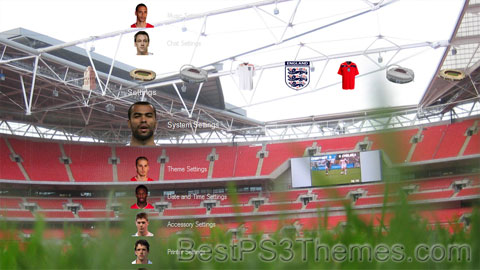
England Football Club Theme
(8 backgrounds)

P3T Unpacker v0.12
Copyright (c) 2007. Anoop Menon

This program unpacks Playstation 3 Theme files (.p3t) so that you can touch-up an existing theme to your likings or use a certain wallpaper from it (as many themes have multiple). But remember, if you use content from another theme and release it, be sure to give credit!

Download for Windows: p3textractor.zip

Instructions:

Download p3textractor.zip from above. Extract the files to a folder with a program such as WinZip or WinRAR. Now there are multiple ways to extract the theme.

The first way is to simply open the p3t file with p3textractor.exe. If you don’t know how to do this, right click the p3t file and select Open With. Alternatively, open the p3t file and it will ask you to select a program to open with. Click Browse and find p3textractor.exe from where you previously extracted it to. It will open CMD and extract the theme to extracted.[filename]. After that, all you need to do for any future p3t files is open them and it will extract.

The second way is very simple. Just drag the p3t file to p3textractor.exe. It will open CMD and extract the theme to extracted.[filename].

For the third way, first put the p3t file you want to extract into the same folder as p3textractor.exe. Open CMD and browse to the folder with p3extractor.exe. Enter the following:
p3textractor filename.p3t [destination path]Replace filename with the name of the p3t file, and replace [destination path] with the name of the folder you want the files to be extracted to. A destination path is not required. By default it will extract to extracted.filename.

Air (Anime)

Air (Anime) theme by Goofy

Download: Air.p3t

Air Theme
(9 backgrounds)

P3T Unpacker v0.12
Copyright (c) 2007. Anoop Menon

This program unpacks Playstation 3 Theme files (.p3t) so that you can touch-up an existing theme to your likings or use a certain wallpaper from it (as many themes have multiple). But remember, if you use content from another theme and release it, be sure to give credit!

Download for Windows: p3textractor.zip

Instructions:

Download p3textractor.zip from above. Extract the files to a folder with a program such as WinZip or WinRAR. Now there are multiple ways to extract the theme.

The first way is to simply open the p3t file with p3textractor.exe. If you don’t know how to do this, right click the p3t file and select Open With. Alternatively, open the p3t file and it will ask you to select a program to open with. Click Browse and find p3textractor.exe from where you previously extracted it to. It will open CMD and extract the theme to extracted.[filename]. After that, all you need to do for any future p3t files is open them and it will extract.

The second way is very simple. Just drag the p3t file to p3textractor.exe. It will open CMD and extract the theme to extracted.[filename].

For the third way, first put the p3t file you want to extract into the same folder as p3textractor.exe. Open CMD and browse to the folder with p3extractor.exe. Enter the following:
p3textractor filename.p3t [destination path]Replace filename with the name of the p3t file, and replace [destination path] with the name of the folder you want the files to be extracted to. A destination path is not required. By default it will extract to extracted.filename.

Medal of Honor #2

Medal of Honor theme by DominatorCGI

Download: MedalofHonor_2.p3t
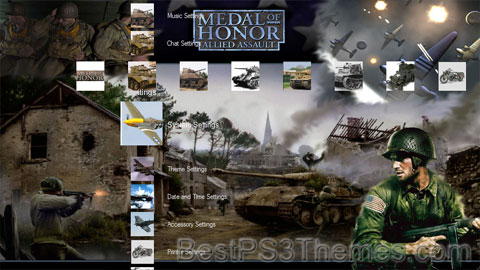
Medal of Honor Theme 2
(1 background)

Medal of Honor
Medals of Honor of three of the six military departments
TypeMilitary medal with neck ribbon
(decoration)
Awarded forConspicuous gallantry and intrepidity at the risk of life above and beyond the call of duty[1][2][a]
Presented byThe president of the United States in the name of the United States Congress[3]
EligibilityUnited States Armed Forces service members
StatusCurrently awarded
EstablishedNaval Service and Marine Corps: December 21, 1861[4]
Army: July 12, 1862[5]
Air Force: August 10, 1956[6]
Coast Guard: July 25, 1963[7]
Space Force: January 1, 2021[8]
First awardedMarch 25, 1863[b]
Last awardedSeptember 5, 2023[9]
Total awarded posthumously618[10]
Total recipients3,536[11]


Precedence
Next (lower)Army: Distinguished Service Cross
Naval Service: Navy Cross
Air and Space Forces: Air Force Cross
Coast Guard: Coast Guard Cross

The Medal of Honor (MOH) is the United States Armed Forces' highest military decoration and is awarded to recognize American soldiers, sailors, marines, airmen, guardians, and coast guardsmen who have distinguished themselves by acts of valor.[1][12] The medal is normally awarded by the President of the United States (the commander in chief of the armed forces) and is presented "in the name of the United States Congress." It is often, not strictly correctly, referred to as the Congressional Medal of Honor.[13][14]

There are three distinct variants of the medal: one for the Army, awarded to soldiers; one for the Naval Service, awarded to sailors, marines, and coast guardsmen; and one for the Air and Space Forces, awarded to airmen and guardians.[1][15] The Medal of Honor was introduced for the Naval Service in 1861,[16] soon followed by the Army's version in 1862.[17] The Air Force used the Army's version until they received their own distinctive version in 1965.[18] The Medal of Honor is the oldest continuously issued combat decoration of the United States Armed Forces.[19] The President typically presents the Medal of Honor at a formal ceremony intended to represent the gratitude of the American people, with posthumous presentations made to the primary next of kin.[20][21][22]

As of September 2023, there have been 3,536 Medals of Honor awarded, with over 40% awarded for actions during the American Civil War.[11] A total of 911 Army medals were revoked after Congress authorized a review in 1917, and a number of Navy medals were also revoked prior to the turn of the century—none of these are included in this total except for those that were subsequently restored.[23] In 1990, Congress designated March 25 annually as Medal of Honor Day.[24]

History[edit]

Medal of Honor (without the suspension ribbon) awarded to Seaman John Ortega in 1864.
Medal of Honor awarded posthumously in 1866 to John Morehead Scott, one of the Andrews Raiders

In 1861, early in the American Civil War, a proposal for a battlefield decoration for valor was submitted to Lieutenant General Winfield Scott, the Commanding General of the United States Army, by Lieutenant Colonel Edward D. Townsend, an assistant adjutant at the Department of War and Scott's chief of staff.[25] Scott, however, was strongly against the American republic's awarding medals for valor, a European monarchical tradition.[25] After Scott retired in October 1861, however, Secretary of the Navy Gideon Welles adopted the idea of a decoration to recognize and honor distinguished naval service.[25]

On December 9, 1861, Iowa Senator James W. Grimes, Chairman on the Committee on Naval Affairs,[26] introduced bill S. 82.[27][28] The bill included a provision authorizing 200 "medals of honor,"[29] "to be bestowed upon such petty officers, seamen, landsmen, and marines as shall most distinguish themselves by their gallantry in action and other seaman-like qualities during the present war...."[30] On December 21, the bill was passed and signed into law by President Abraham Lincoln. Secretary Welles directed the Philadelphia Mint to design the new military decoration.[31][32][33] On May 15, 1862, the United States Department of the Navy ordered 175 medals ($1.85 each) from the U.S. Mint in Philadelphia with "Personal Valor" inscribed on the back of each one.[34]

On February 15, 1862, Senator Henry Wilson, the chairman of the Senate Committee on Military Affairs and the Militia, introduced a resolution (equivalent to a bill) for a Medal of Honor for the Army.[35] The resolution (equivalent to a modern Act of Congress) was approved by Congress and signed into law on July 12, 1862.[35] This measure provided for awarding a medal of honor "to such non-commissioned officers and privates as shall most distinguish themselves by their gallantry in action and other soldier-like qualities during the present insurrection."[35] By mid-November the Department of War contracted with Philadelphia silversmith William Wilson and Son, who had been responsible for the Navy's design, to prepare 2,000 medals for the Army ($2.00 each) to be struck at the mint.[36] The Army's version had "The Congress to" written on the back of the medal. Both versions were made of copper and coated with bronze, which "gave them a reddish tint."[37][38]

On March 3, 1863, Congress made the Army Medal of Honor a permanent decoration by passing legislation permitting the award to such soldiers "as have most distinguished or who may hereafter most distinguish themselves in action."[39] The same legislation also authorized the medal for officers of the Army.[40] On March 25, the Secretary of War presented the first Medals of Honor to six U.S. Army volunteers in his office.[41]

In 1896, the ribbon of the Army's version of the Medal of Honor was redesigned with all stripes being vertical.[42] Again, in 1904 the planchet of the Army's version of the Medal of Honor was redesigned by General George Lewis Gillespie.[42] The purpose of the redesign was to help distinguish the Medal of Honor from other medals,[43] particularly the membership insignia issued by the Grand Army of the Republic.[44]

In 1917, based on the report of the Medal of Honor Review Board, established by Congress in 1916, 911 recipients were stricken from the Army's Medal of Honor list because the medal had been awarded inappropriately.[45] Among them were William Frederick "Buffalo Bill" Cody and Mary Edwards Walker. In 1977, the Army's board for correction of military records unilaterally restored Walker's medal at the request of a relative.[46] The board had no authority to overturn a statute, and the restoration violated not only the period law during the Civil War, but also the law requiring revocation in 1916, and modern law in 1977.[46] As a reaction to Walker's restoration, a relative of Cody's requested the same action from the Army's board for correction, and it reinstated the medals for Cody and four other civilian scouts on June 12, 1989.[47] Subsequent litigation over the Garlin Conner award, which was recommended by the Army's board for correction of military records in 2015, established that the correction boards lack the authority to unilaterally award medals of honor. In Conner's case, the board merely recommended the medal, which was then referred to the Senior Army Decorations Board, and ultimately to the Secretary of the Army, the Secretary of Defense, and the President, who requested a waiver be passed by Congress.[48]

A separate Coast Guard Medal of Honor was authorized in 1963 but was not designed or awarded.[49][7] A separate design for a version of the medal for the Department of the Air Force was authorized in 1956,[50] designed on April 14, 1965,[18] and first awarded in January 1967.[18] Previously, airmen of the U.S. Air Force received the Army's version of the medal.[51]

Appearance[edit]

There are three versions of the Medal of Honor, one for each of the military departments of the Department of Defense (DoD): the Department of the Army, Department of the Navy (Naval Service), and Department of the Air Force (Air and Space Forces). Members of the Coast Guard, part of the Department of Homeland Security, are eligible to receive the Naval version. Each medal is constructed differently, and the components are made from gilding metals and red brass alloys with some gold plating, enamel, and bronze pieces. The United States Congress considered a bill in 2004 which would require the Medal of Honor to be made with 90% gold, the same composition as the lesser-known Congressional Gold Medal, but the measure was dropped.[52]

Army Medal of Honor
Naval Medal of Honor
Air and Space Forces Medal of Honor

Army variant[edit]

The Army's version is described by the Institute of Heraldry as "a gold five-pointed star, each point tipped with trefoils, 1+12 inches [3.8 cm] wide, surrounded by a green laurel wreath and suspended from a gold bar inscribed VALOR, surmounted by an eagle. In the center of the star, Minerva's head surrounded by the words UNITED STATES OF AMERICA. On each ray of the star is a green oak leaf. On the reverse is a bar engraved THE CONGRESS TO with a space for engraving the name of the recipient."[53] The pendant and suspension bar are made of gilding metal, with the eye, jump rings, and suspension ring made of red brass.[54] The finish on the pendant and suspension bar is hard enameled, gold plated, and rose gold plated, with polished highlights.[54]

Naval variant[edit]

The Naval version is described as "a five-pointed bronze star, tipped with trefoils containing a crown of laurel and oak. In the center is Minerva, personifying the United States, standing with her left hand resting on fasces and her right hand holding a shield emblazoned with the shield from the coat of arms of the United States. She repulses Discord, represented by snakes (originally, she was repulsing the snakes of secession). The medal is suspended from the flukes of an anchor. It is made of solid red brass, oxidized and buffed.[55]

Air and Space Forces variant[edit]

The Air and Space Forces version is described as "within a wreath of green laurel, a gold five-pointed star, one point down, tipped with trefoils and each point containing a crown of laurel and oak on a green background. Centered on the star, an annulet of 34 stars is a representation of the head of the Statue of Liberty. The star is suspended from a bar inscribed with the word VALOR above an adaptation of Jupiter's thunderbolt from the Department of the Air Force's seal. The pendant is made of gilding metal.[56] The connecting bar, hinge, and pin are made of bronze.[56] The finish on the pendant and suspension bar is hard enameled, gold plated, and rose gold plated, with buffed relief.[56]

Historic versions[edit]

The Medal of Honor has evolved in appearance over time. The upside-down star design of the Naval version's pendant adopted in early 1862 has not changed since its inception. The Army's 1862 version followed and was identical to the Naval version except an eagle perched atop cannons was used instead of an anchor to connect the pendant to the suspension ribbon. The medals featured a female allegory of the Union, with a shield in her right hand that she used to fend off a crouching attacker and serpents. In her left hand, she held a fasces. There are 34 stars surrounding the scene, representing the number of states in the union at the time.[57] In 1896, the Army version changed the ribbon's design and colors due to misuse and imitation by nonmilitary organizations.[53] In 1904, the Army "Gillespie" version introduced a smaller redesigned star and the ribbon was changed to the light blue pattern with white stars seen today.[53] The 1904 Army version also introduced a bar with the word "Valor" above the star.[57] In 1913, the Naval version adopted the same ribbon pattern.

After World War I, the Department of the Navy decided to separate the Medal of Honor into two versions, one for combat and one for non-combat. This was an attempt to circumvent the requirement enacted in 1919 that recipients participate "in action involving actual conflict with the enemy," which would have foreclosed non-combat awards.[58] By treating the 1919 Medal of Honor as a separate award from its Civil War counterpart, this allowed the Department of the Navy to claim that it was not literally in violation of the 1919 law.[59] The original upside-down star was designated as the non-combat version and a new pattern of the medal pendant, in cross form, was designed by the Tiffany Company in 1919. Secretary of the Navy Josephus Daniels selected Tiffany after snubbing the Commission of Fine Arts, which had submitted drawings that Daniels criticized as "un-American".[60] The so-called Tiffany Cross was to be presented to a sailor or marine who "in action involving actual conflict with the enemy, distinguish[es] himself conspicuously by gallantry and intrepidity at the risk of his life above and beyond the call of duty."[61] Despite the "actual conflict" guidelines, the Tiffany Cross was awarded to Navy CDR (later RADM) Richard E. Byrd and Floyd Bennett for their flight to the North Pole in 1926. The decision was controversial within the Navy's Bureau of Navigation (which handled personnel administration), and officials considered asking the attorney general of the United States for an advisory opinion on the matter.[62] Byrd himself apparently disliked the Tiffany Cross, and eventually requested the alternate version of the medal from President Herbert Hoover in 1930.[63] The Tiffany Cross itself was not popular among recipients—one author reflected that it was "the most short-lived, legally contentious, and unpopular version of the Medal of Honor in American history."[60] In 1942, in response to a lawsuit, the Department of the Navy requested an amendment to expressly allow noncombat awards of the Medal of Honor.[64] When the amendment passed, the Department of the Navy returned to using only the original 1862 inverted 5-point star design and retired the Tiffany Cross.[65]

In 1944, the suspension ribbons for both versions were replaced with the now-familiar neck ribbon.[53] When the Air and Space Force's version was designed in 1965,[18] it incorporated similar elements and design from the Army version. At the Department of the Air Force leadership's insistence, the new medal depicted the Statue of Liberty's image in place of Minerva on the medal and changed the connecting device from an eagle to Jupiter's thunderbolt flanked with wings as found on the Department of the Air Force's seal.[66][67][68] The Air Force diverged from the traditional depiction of Minerva in part due to a desire to distinguish itself from the Army, including the Institute of Heraldry that traditionally designs awards, but which falls under the Army.[68]

Neck ribbon, service ribbon and lapel button[edit]

Service ribbon
Lapel button

On May 2, 1896, Congress authorized a "ribbon to be worn with the medal and [a] rosette or knot to be worn in lieu of the medal."[33][53][69][70] The service ribbon is light blue with five white stars in the form of an "M."[53] It is placed first in the top position in the order of precedence and is worn for situations other than full-dress military uniform.[53] The lapel button is a 12-inch (13 mm), six-sided light blue bowknot rosette with thirteen white stars and may be worn on appropriate civilian clothing on the left lapel.[53]

Since 1944, the Medal of Honor has been attached to a light blue colored moiré silk neck ribbon that is 1+316 in (30 mm) in width and 21+34 in (550 mm) in length.[2][71] The center of the ribbon displays thirteen white stars in the form of three chevron. Both the top and middle chevrons are made up of 5 stars, with the bottom chevron made of 3 stars. The medal itself differs by branch:

  • Army: A gold five pointed star, each point tipped with trefoils, 1½ inches wide, surrounded by a green laurel wreath and suspended from a gold bar inscribed "VALOR" surmounted by an eagle.  In the center of the star, Minerva's head surrounded by the words "UNITED STATES OF AMERICA."  On each ray of the star is a green oak leaf.  On the reverse is a bar engraved "THE CONGRESS TO" with a space for engraving the name of the recipient.[72]
  • Navy: The current Navy Medal of Honor is a five-pointed bronze star, tipped with trefoils containing a crown of laurel and oak. In the center is Minerva, personifying the United States, standing with left hand resting of fasces and right hand holding a shield blazoned with the shield from the coat of arms of the United States. She repulses Discord, represented by snakes. The medal is suspended from the flukes of an anchor.[73]
  • Air Force: Within a wreath of green laurel, a gold five-pointed star, one point down, tipped with trefoils and each point containing a crown of laurel and oak on a green background. Centered on the star, an annulet of 34 stars is a representation of the head of the Statue of Liberty. The star is suspended from a bar inscribed with the word "VALOR" above an adaptation of the thunderbolt from the Air Force Coat of Arms.[74]

The Medal of Honor is one of only two United States military awards suspended from a neck ribbon.[75] The other is the Commander's Degree of the Legion of Merit, and is usually awarded to individuals serving foreign governments.[76][77]

Devices[edit]

In 2011, Department of Defense instructions in regard to the Medal of Honor were amended to read "for each succeeding act that would otherwise justify award of the Medal of Honor, the individual receiving the subsequent award is authorized to wear an additional Medal of Honor ribbon and/or a 'V' device on the Medal of Honor suspension ribbon" (the "V" device is a 14-inch-high (6.4 mm) bronze miniature letter "V" with serifs that denotes valor). The Medal of Honor was the only decoration authorized to use the "V" device (none were ever issued) to designate subsequent awards in such a fashion. Nineteen individuals, all now deceased, were double Medal of Honor recipients.[78] In July 2014, DoD instructions were changed to read, "A separate MOH is presented to an individual for each succeeding act that justified award," removing the authorization for the "V" device.[79]

Medal of Honor Flag[edit]

Medal of Honor Flag

On October 23, 2002, Pub. L.Tooltip Public Law (United States) 107–248 (text) (PDF) was enacted, modifying 36 U.S.C. § 903, authorizing a Medal of Honor Flag to be presented to each person to whom a Medal of Honor is awarded. In the case of a posthumous award, the flag will be presented to whomever the Medal of Honor is presented to, which in most cases will be the primary