Galaxy theme by Igotamic
Download: Galaxy.p3t

(1 background, wallpaper HD only)
A galaxy is a system of stars, stellar remnants, interstellar gas, dust, and dark matter bound together by gravity.[1][2] The word is derived from the Greek galaxias (γαλαξίας), literally 'milky', a reference to the Milky Way galaxy that contains the Solar System. Galaxies, averaging an estimated 100 million stars,[3] range in size from dwarfs with less than a thousand stars,[4] to the largest galaxies known – supergiants with one hundred trillion stars, each orbiting its galaxy's center of mass. Most of the mass in a typical galaxy is in the form of dark matter, with only a few percent of that mass visible in the form of stars and nebulae. Supermassive black holes are a common feature at the centres of galaxies.
Galaxies are categorised according to their visual morphology as elliptical,[5] spiral, or irregular.[6] The Milky Way is an example of a spiral galaxy. It is estimated that there are between 200 billion[7] (2×10¹¹) to 2 trillion[8] galaxies in the observable universe. Most galaxies are 1,000 to 100,000 parsecs in diameter (approximately 3,000 to 300,000 light years) and are separated by distances in the order of millions of parsecs (or megaparsecs). For comparison, the Milky Way has a diameter of at least 26,800 parsecs (87,400 ly)[9][a] and is separated from the Andromeda Galaxy, its nearest large neighbour, by just over 750,000 parsecs (2.5 million ly.)[12]
The space between galaxies is filled with a tenuous gas (the intergalactic medium) with an average density of less than one atom per cubic metre. Most galaxies are gravitationally organised into groups, clusters and superclusters. The Milky Way is part of the Local Group, which it dominates along with the Andromeda Galaxy. The group is part of the Virgo Supercluster. At the largest scale, these associations are generally arranged into sheets and filaments surrounded by immense voids.[13] Both the Local Group and the Virgo Supercluster are contained in a much larger cosmic structure named Laniakea.[14]
Etymology[edit]
The word galaxy was borrowed via French and Medieval Latin from the Greek term for the Milky Way, galaxías (kúklos) γαλαξίας (κύκλος)[15][16] 'milky (circle)', named after its appearance as a milky band of light in the sky. In Greek mythology, Zeus places his son, born by a mortal woman, the infant Heracles, on Hera's breast while she is asleep so the baby will drink her divine milk and thus become immortal. Hera wakes up while breastfeeding and then realises she is nursing an unknown baby: she pushes the baby away, some of her milk spills, and it produces the band of light known as the Milky Way.[17][18]
In the astronomical literature, the capitalised word "Galaxy" is often used to refer to the Milky Way galaxy, to distinguish it from the other galaxies in the observable universe. The English term Milky Way can be traced back to a story by Geoffrey Chaucer c. 1380:
See yonder, lo, the Galaxyë
Which men clepeth the Milky Wey,
For hit is whyt.— Geoffrey Chaucer, The House of Fame[16]
Galaxies were initially discovered telescopically and were known as spiral nebulae. Most 18th- to 19th-century astronomers considered them as either unresolved star clusters or anagalactic nebulae, and were just thought of as a part of the Milky Way, but their true composition and natures remained a mystery. Observations using larger telescopes of a few nearby bright galaxies, like the Andromeda Galaxy, began resolving them into huge conglomerations of stars, but based simply on the apparent faintness and sheer population of stars, the true distances of these objects placed them well beyond the Milky Way. For this reason they were popularly called island universes, but this term quickly fell into disuse, as the word universe implied the entirety of existence. Instead, they became known simply as galaxies.[19]
Nomenclature[edit]

Millions of galaxies have been catalogued, but only a few have well-established names, such as the Andromeda Galaxy, the Magellanic Clouds, the Whirlpool Galaxy, and the Sombrero Galaxy. Astronomers work with numbers from certain catalogues, such as the Messier catalogue, the NGC (New General Catalogue), the IC (Index Catalogue), the CGCG (Catalogue of Galaxies and of Clusters of Galaxies), the MCG (Morphological Catalogue of Galaxies), the UGC (Uppsala General Catalogue of Galaxies), and the PGC (Catalogue of Principal Galaxies, also known as LEDA). All the well-known galaxies appear in one or more of these catalogues but each time under a different number. For example, Messier 109 (or "M109") is a spiral galaxy having the number 109 in the catalogue of Messier. It also has the designations NGC 3992, UGC 6937, CGCG 269–023, MCG +09-20-044, and PGC 37617 (or LEDA 37617), among others.[20] Millions of fainter galaxies are known by their identifiers in sky surveys such as the Sloan Digital Sky Survey.[21]
Observation history[edit]
Milky Way[edit]
Greek philosopher Democritus (450–370 BCE) proposed that the bright band on the night sky known as the Milky Way might consist of distant stars.[22] Aristotle (384–322 BCE), however, believed the Milky Way was caused by "the ignition of the fiery exhalation of some stars that were large, numerous and close together" and that the "ignition takes place in the upper part of the atmosphere, in the region of the World that is continuous with the heavenly motions."[23] Neoplatonist philosopher Olympiodorus the Younger (c. 495–570 CE) was critical of this view, arguing that if the Milky Way was sublunary (situated between Earth and the Moon) it should appear different at different times and places on Earth, and that it should have parallax, which it did not. In his view, the Milky Way was celestial.[24]
According to Mohani Mohamed, Arabian astronomer Ibn al-Haytham (965–1037) made the first attempt at observing and measuring the Milky Way's parallax,[25] and he thus "determined that because the Milky Way had no parallax, it must be remote from the Earth, not belonging to the atmosphere."[26] Persian astronomer al-Biruni (973–1048) proposed the Milky Way galaxy was "a collection of countless fragments of the nature of nebulous stars."[27] Andalusian astronomer Avempace (d. 1138) proposed that it was composed of many stars that almost touched one another, and appeared to be a continuous image due to the effect of refraction from sublunary material,[23][28] citing his observation of the conjunction of Jupiter and Mars as evidence of this occurring when two objects were near.[23] In the 14th century, Syrian-born Ibn Qayyim al-Jawziyya proposed the Milky Way galaxy was "a myriad of tiny stars packed together in the sphere of the fixed stars."[29]
Actual proof of the Milky Way consisting of many stars came in 1610 when the Italian astronomer Galileo Galilei used a telescope to study it and discovered it was composed of a huge number of faint stars.[30][31] In 1750, English astronomer Thomas Wright, in his An Original Theory or New Hypothesis of the Universe, correctly speculated that it might be a rotating body of a huge number of stars held together by gravitational forces, akin to the Solar System but on a much larger scale, and that the resulting disk of stars could be seen as a band on the sky from a perspective inside it.[b][33][34] In his 1755 treatise, Immanuel Kant elaborated on Wright's idea about the Milky Way's structure.[35]

The first project to describe the shape of the Milky Way and the position of the Sun was undertaken by William Herschel in 1785 by counting the number of stars in different regions of the sky. He produced a diagram of the shape of the galaxy with the Solar System close to the center.[36][37] Using a refined approach, Kapteyn in 1920 arrived at the picture of a small (diameter about 15 kiloparsecs) ellipsoid galaxy with the Sun close to the center. A different method by Harlow Shapley based on the cataloguing of globular clusters led to a radically different picture: a flat disk with diameter approximately 70 kiloparsecs and the Sun far from the centre.[34] Both analyses failed to take into account the absorption of light by interstellar dust present in the galactic plane; but after Robert Julius Trumpler quantified this effect in 1930 by studying open clusters, the present picture of the Milky Way galaxy emerged.[38]
Distinction from other nebulae[edit]
A few galaxies outside the Milky Way are visible on a dark night to the unaided eye, including the Andromeda Galaxy, Large Magellanic Cloud, Small Magellanic Cloud, and the Triangulum Galaxy. In the 10th century, Persian astronomer Abd al-Rahman al-Sufi made the earliest recorded identification of the Andromeda Galaxy, describing it as a "small cloud".[39] In 964, he probably mentioned the Large Magellanic Cloud in his Book of Fixed Stars, referring to "Al Bakr of the southern Arabs",[40] since at a declination of about 70° south it was not visible where he lived. It was not well known to Europeans until Magellan's voyage in the 16th century.[41][40] The Andromeda Galaxy was later independently noted by Simon Marius in 1612.[39]
In 1734, philosopher Emanuel Swedenborg in his Principia speculated that there might be other galaxies outside that were formed into galactic clusters that were minuscule parts of the universe that extended far beyond what could be seen. These views "are remarkably close to the present-day views of the cosmos."[42] In 1745, Pierre Louis Maupertuis conjectured that some nebula-like objects were collections of stars with unique properties, including a glow exceeding the light its stars produced on their own, and repeated Johannes Hevelius's view that the bright spots were massive and flattened due to their rotation.[35] In 1750, Thomas Wright correctly speculated that the Milky Way was a flattened disk of stars, and that some of the nebulae visible in the night sky might be separate Milky Ways.[34][43]

Toward the end of the 18th century, Charles Messier compiled a catalog containing the 109 brightest celestial objects having nebulous appearance. Subsequently, William Herschel assembled a catalog of 5,000 nebulae.[34] In 1845, Lord Rosse examined the nebulae catalogued by Herschel and observed the spiral structure of Messier object M51, now known as the Whirlpool Galaxy.[44][45]
In 1912, Vesto M. Slipher made spectrographic studies of the brightest spiral nebulae to determine their composition. Slipher discovered that the spiral nebulae have high Doppler shifts, indicating that they are moving at a rate exceeding the velocity of the stars he had measured. He found that the majority of these nebulae are moving away from us.[46][47]
In 1917, Heber Doust Curtis observed nova S Andromedae within the "Great Andromeda Nebula", as the Andromeda Galaxy, Messier object M31, was then known. Searching the photographic record, he found 11 more novae. Curtis noticed that these novae were, on average, 10 magnitudes fainter than those that occurred within this galaxy. As a result, he was able to come up with a distance estimate of 150,000 parsecs. He became a proponent of the so-called "island universes" hypothesis, which holds that spiral nebulae are actually independent galaxies.[48]
In 1920 a debate took place between Harlow Shapley and Heber Curtis, the Great Debate, concerning the nature of the Milky Way, spiral nebulae, and the dimensions of the universe. To support his claim that the Great Andromeda Nebula is an external galaxy, Curtis noted the appearance of dark lanes resembling the dust clouds in the Milky Way, as well as the significant Doppler shift.[49]
In 1922, the Estonian astronomer Ernst Öpik gave a distance determination that supported the theory that the Andromeda Nebula is indeed a distant extra-galactic object.[50] Using the new 100-inch Mt. Wilson telescope, Edwin Hubble was able to resolve the outer parts of some spiral nebulae as collections of individual stars and identified some Cepheid variables, thus allowing him to estimate the distance to the nebulae: they were far too distant to be part of the Milky Way.[51] In 1926 Hubble produced a classification of galactic morphology that is used to this day.[52][53]
Multi-wavelength observation[edit]
Advances in astronomy have always been driven by technology. After centuries of success in optical astronomy, recent decades have seen major progress in other regions of the electromagnetic spectrum.[54]
The dust present in the interstellar medium is opaque to visual light. It is more transparent to far-infrared, which can be used to observe the interior regions of giant molecular clouds and galactic cores in great detail.[55] Infrared is also used to observe distant, red-shifted galaxies that were formed much earlier. Water vapor and carbon dioxide absorb a number of useful portions of the infrared spectrum, so high-altitude or space-based telescopes are used for infrared astronomy.[56]
The first non-visual study of galaxies, particularly active galaxies, was made using radio frequencies. The Earth's atmosphere is nearly transparent to radio between 5 MHz and 30 GHz. The ionosphere blocks signals below this range.[57] Large radio interferometers have been used to map the active jets emitted from active nuclei. Radio telescopes can also be used to observe neutral hydrogen (via 21 cm radiation), including, potentially, the non-ionized matter in the early universe that later collapsed to form galaxies.[58]
Ultraviolet and X-ray telescopes can observe highly energetic galactic phenomena. Ultraviolet flares are sometimes observed when a star in a distant galaxy is torn apart from the tidal forces of a nearby black hole.[59] The distribution of hot gas in galactic clusters can be mapped by X-rays. The existence of supermassive black holes at the cores of galaxies was confirmed through X-ray astronomy.[60]
Modern research[edit]

In 1944, Hendrik van de Hulst predicted that microwave radiation with wavelength of 21 cm would be detectable from interstellar atomic hydrogen gas;[62] and in 1951 it was observed. This radiation is not affected by dust absorption, and so its Doppler shift can be used to map the motion of the gas in this galaxy. These observations led to the hypothesis of a rotating bar structure in the center of this galaxy.[63] With improved radio telescopes, hydrogen gas could also be traced in other galaxies. In the 1970s, Vera Rubin uncovered a discrepancy between observed galactic rotation speed and that predicted by the visible mass of stars and gas. Today, the galaxy rotation problem is thought to be explained by the presence of large quantities of unseen dark matter.[64][65]
Beginning in the 1990s, the Hubble Space Telescope yielded improved observations. Among other things, its data helped establish that the missing dark matter in this galaxy could not consist solely of inherently faint and small stars.[66] The Hubble Deep Field, an extremely long exposure of a relatively empty part of the sky, provided evidence that there are about 125 billion (1.25×10¹¹) galaxies in the observable universe.[67] Improved technology in detecting the spectra invisible to humans (radio telescopes, infrared cameras, and x-ray telescopes) allows detection of other galaxies that are not detected by Hubble. Particularly, surveys in the Zone of Avoidance (the region of sky blocked at visible-light wavelengths by the Milky Way) have revealed a number of new galaxies.[68]
A 2016 study published in The Astrophysical Journal, led by Christopher Conselice of the University of Nottingham, used 20 years of Hubble images to estimate that the observable universe contained at least two trillion (2×10¹²) galaxies.[69][70] However, later observations with the New Horizons space probe from outside the zodiacal light reduced this to roughly 200 billion (2×10¹¹).[71][72]
Types and morphology[edit]

Galaxies come in three main types: ellipticals, spirals, and irregulars. A slightly more extensive description of galaxy types based on their appearance is given by the Hubble sequence. Since the Hubble sequence is entirely based upon visual morphological type (shape), it may miss certain important characteristics of galaxies such as star formation rate in starburst galaxies and activity in the cores of active galaxies.[6]
Many galaxies are thought to contain a supermassive black hole at their center. This includes the Milky Way, whose core region is called the Galactic Center.[73]
Ellipticals[edit]
The Hubble classification system rates elliptical galaxies on the basis of their ellipticity, ranging from E0, being nearly spherical, up to E7, which is highly elongated. These galaxies have an ellipsoidal profile, giving them an elliptical appearance regardless of the viewing angle. Their appearance shows little structure and they typically have relatively little interstellar matter. Consequently, these galaxies also have a low portion of open clusters and a reduced rate of new star formation. Instead, they are dominated by generally older, more evolved stars that are orbiting the common center of gravity in random directions. The stars contain low abundances of heavy elements because star formation ceases after the initial burst. In this sense they have some similarity to the much smaller globular clusters.[74]
Type-cD galaxies[edit]

The
Mix theme by minuendo Download: Mix.p3t Mix, MIX, mixes, or mixing may refer to:
Resistance: Chimera theme by Draicus Download: ResistanceChimera.p3t P3T Unpacker v0.12 This program unpacks Playstation 3 Theme files (.p3t) so that you can touch-up an existing theme to your likings or use a certain wallpaper from it (as many themes have multiple). But remember, if you use content from another theme and release it, be sure to give credit! Download for Windows: p3textractor.zip Instructions: Download p3textractor.zip from above. Extract the files to a folder with a program such as WinZip or WinRAR. Now there are multiple ways to extract the theme. The first way is to simply open the p3t file with p3textractor.exe. If you don’t know how to do this, right click the p3t file and select Open With. Alternatively, open the p3t file and it will ask you to select a program to open with. Click Browse and find p3textractor.exe from where you previously extracted it to. It will open CMD and extract the theme to extracted.[filename]. After that, all you need to do for any future p3t files is open them and it will extract. The second way is very simple. Just drag the p3t file to p3textractor.exe. It will open CMD and extract the theme to extracted.[filename]. For the third way, first put the p3t file you want to extract into the same folder as p3textractor.exe. Open CMD and browse to the folder with p3extractor.exe. Enter the following: Kat Von D theme by Daniel Keen Download: KatVonD.p3t

Katherine von Drachenberg[2][3] (born March 8, 1982), known professionally as Kat Von D, is a Mexican-American tattoo artist, television personality, entrepreneur and recording artist. She is best known for her work as a tattoo artist on the TLC reality television show LA Ink, which premiered in the United States on August 7, 2007, and ran for four seasons. She is also known for being the former head of Kat Von D Beauty (renamed KVD Vegan Beauty). In May 2021, Kat Von D released her first single "Exorcism" from her album Love Made Me Do It.
Katherine von Drachenberg was born in Montemorelos, Nuevo León, Mexico.[2][4] Her parents, René and Sylvia (née Galeano),[5] both of whom were missionaries for the Seventh-day Adventist Church,[6] were born in Argentina, and are respectively of German, Italian, Spanish, and Indigenous descent.[4][7][8] Von D has a sister, Karoline and a brother, Michael.[9] She moved with her family to the Inland Empire at age four and grew up in Loma Linda, California. Von D was classically trained in piano beginning at age six.[10]
Von D credits her paternal grandmother, Clara von Drachenberg, as an inspiration for her in music and art,[11] and the culture of San Bernardino County as a major influence on her tattoo art and style.[12] She began listening to the Ramones, Misfits, and other punk rock bands at the age of 12. She got her first tattoo at 14 and quit school at 16 to become a tattoo artist.[13][14]
When she was 15, Von D was sent to Provo Canyon School for six months, a notorious facility of the troubled teen industry, where she says she suffered abuse.[15][16] Provo Canyon School is the same boarding school that Paris Hilton attended; Hilton has also alleged that she was abused while attending this school.[15]
Von D appeared in two seasons of Miami Ink, the reality TV show taped at 305 Ink in Miami[17] for the cable network TLC. She was offered the place on the show after fellow artist Darren Brass broke his elbow,[18] preventing him from tattooing. While on the show, she had a falling out with Ami James, which led to her decision to leave the shop and the show.[19]
She subsequently acquired her own TLC series, LA Ink, which chronicled her work at her tattoo shop, High Voltage Tattoo, in Hollywood, California. On the show, she broke the Guinness World Record of most tattoos given by a single person in 24 hours, with a total of 400.[20] Accomplished in December 2007, it involved a Von D-designed logo for the city of Los Angeles, with proceeds going to the children's-blindness charity Vitamin Angels.[21] LA Ink ran four seasons, ending September 15, 2011; TLC announced the cancellation on August 18, 2011.[22] Von D has publicly said that the cancellation was because she chose not to continue doing the show.[23]
Her first book, High Voltage Tattoo, compiling her artworks and tattoos, with a foreword by Mötley Crüe's Nikki Sixx, was released in January 2009 and reached #6 on The New York Times Best Seller list.[24] Von D described the book as "not an autobiography, you know, 'cause I'm too young to do that. But this is just kind of like a picture-driven outline of my career as an artist. So, you see everything from my drawings when I was six to tattoos that have never before been seen."[25] Her second book, The Tattoo Chronicles, an illustrated diary following a year in her life, was released October 26, 2010, and reached #3 on The New York Times "Hardcover Advice & Misc." Best Seller list.[26]
In 2008, Von D created and launched a make-up line for Sephora.[27] She has released new collections every year and has expanded her line to include fragrances.[28] In 2012, through Sephora, her New American Beauty Art Tour benefitted the Art of Elysium charitable organization.[29] In June 2016, she announced that all products in the line would be reformulated to be vegan.[30] In August 2016, the line released a limited-edition lipstick named Project Chimps, with 20% of sales being donated to Project Chimps, an organization dedicated to providing care for retired research chimpanzees.[31]
Her makeup line received controversy after the release of a lipstick called "Selektion," because the word is considered controversial and inappropriate in the word's native Germany, where it was a term used for Nazis who decided which individuals would be chosen to either be put to work or death upon arrival to concentration camps during World War II. The fallout led to the lipstick being renamed "Beloved". The choice of "Selektion" drew attention to other perceived insensitive acts; The Forward called her "anti-Jew."[32] Von D fell under criticism again when she named a lipstick "Celebutard", Sephora quickly pulled the lipstick from their stores and issued an apology.[33]
Von D is the creator of the MusInk Tattoo Convention and Music Festival,[34][35] which began in 2008.[36] Musink is an all ages tattoo, music, and art festival located in Southern California.
On September 2, 2010, Von D opened the art gallery and boutique Wonderland Gallery in the space next door to High Voltage Tattoo.[37] She launched the clothing lines KVD Los Angeles and Kat Von D Los Angeles in the US and Canada in fall 2011, with the latter expanding internationally the following year.[38]
Von D provided the female vocals to the song "Rosary Blue" on X, a 2012 studio album by the Finnish gothic rock band The 69 Eyes.[39] In August 2013, she tweeted that Dave Grohl and producer Danny Lohner had finished two tracks of an album she had talked about recording as early as 2011.[40]
In 2016 she recorded vocals for the electronic music duo, Prayers, on the song "Black Leather", and appeared in the band's video for the song.[41][42]
In 2018, she collaborated with Rooney Mara, Sia, Sadie Sink and Joaquin Phoenix to narrate Chris Delforce's animal rights documentary Dominion.[43] For her contribution to the documentary, she was granted the 2018 Award of Excellence for Narration by Hollywood International Independent Documentary Awards.[44]
Von D makes guest appearance on three songs on the 2018 album Alive in New Light by IAMX.[45] She also appeared on synthwave band Gunship album Dark All Day in the song "Black Blood, Red Kiss".
On January 16, 2020, Von D announced she had sold her namesake beauty brand to its parent company, Kendo Brands (a subsidiary of LVMH). The brand will be rebranded as "KVD Vegan Beauty". According to the company the letters KVD now stand for "Kindness, Vegan Beauty, and Discovery (and Doing Good)".[46] This was followed by another rebrand on Tuesday 2 March 2021 to "KVD Beauty" where KVD stands for "Kara", "Veritas", "Decora". This translates to "Value", "Truth" and "Beauty" respectively.[47]
In October 2021, she announced that she would be closing High Voltage on December 1 and moving with her family to Indiana.[48]
In July 2007, Von D decided to stop drinking after her usage of alcohol started to threaten her work.[49] Von D recalled that "getting sober was not easy for me...I still clearly remember the physical pain from withdrawals, the profound desire to die, and the overwhelming sense of loneliness I felt that day that I decided to quit."[50]
Von D has tattooed herself with the emblems of the bands HIM, Misfits, Turbonegro, ZZ Top, Guns N' Roses, AC/DC, Kent, Slayer, Mike Got Spiked and "Slutallica", a modified Metallica logo.[10] She appeared in the music video of HIM's "Killing Loneliness", Alkaline Trio's "Help Me", GUNSHIP's "Black Blood Red Kiss",[51] and "Black Leather" by Cholo Goth band Prayers. Other musical artists that Von D lists among her favorites include Lemmy Kilmister, The Mars Volta and Selena.[52]
Von D divides her time between Windsor Square, Los Angeles and Vevay, Indiana.[53]
Von D is a vegan, and her former makeup line is vegan and cruelty-free.[54] In 2016, she received Farm Sanctuary's "Compassion in Action Award" for her work on behalf of animal rights.[55]
Von D sparked controversy in June 2018, when she indicated in an Instagram post that she would refuse to vaccinate her future child and would raise her child on a vegan diet.[56][57] In March 2020, renounced her anti-vaxxer position, saying she had been "completely uninformed" about vaccinations and that she is "not an anti-vaxxer at all".[58]
During an interview with Allie Beth Stuckey, Von D shared that she had become a Christian a year prior to the COVID-19 pandemic.[59] In 2023, she was baptized at the Switzerland Baptist Church in Vevay, Indiana.[60][61]
Von D married fellow tattoo artist Oliver Peck in 2003.[62] They separated in August 2007,[63] and finalized their divorce later that year.[64]
Von D then dated Alex "Orbi" Orbison from 2007 to early 2008, as was documented on the first season of LA Ink. Von D and Orbison move in together in the episode "Kat Cleans Up", and in the last episode of the season, titled "Orbi's Secret", Orbison asks Von D's father for permission to marry her. By the first episode of Season 2, their relationship was over.
From February 2008 until January 2010, Von D dated Mötley Crüe bassist Nikki Sixx.[65][66]
She subsequently began dating motorcycle customizer, West Coast Choppers CEO, and reality TV personality Jesse James.[63] On August 19, 2010, Von D confirmed media reports that she and James were dating, tweeting, "I think it's pretty obvious that we're dating."[67] Von D and James became engaged in January 2011.[68] Von D announced that they had split in July 2011.[69][70] However, in August 2011, Von D and James announced that their engagement was back on.[71] In September 2011, Von D announced that she and James had broken up again.[72]
In September 2012, Von D began dating Canadian music producer Joel Zimmerman, known professionally as Deadmau5,[73] and gave him a star tattoo below his eye to match her own.[74] They broke up in November 2012.[74] However, on December 15, 2012, Zimmerman proposed to Von D over Twitter, and she accepted, becoming engaged to him.[75] In June 2013, Von D announced that she and Zimmerman had ended their engagement. Von D cited Zimmerman's alleged infidelity as the reason, which Zimmerman has denied.[76]
On February 21, 2018, Von D married artist Rafael Reyes.[77] In November 2018, she gave birth to their son.[78]
Von D is referenced in the Eagles of Death Metal song "High Voltage", which was named after her shop and is featured on the band's third album, Heart On. In an interview, Eagles of Death Metal's Jesse Hughes said, "I wrote that for Kat Von D, because that girl's bad ass."[79]
In addition to cameo and talk-show appearances, Von D's television, film, and video game appearances include:
2006
2011
Von D
rev LCARS theme by revscott Download: revLCARS.p3t P3T Unpacker v0.12 This program unpacks Playstation 3 Theme files (.p3t) so that you can touch-up an existing theme to your likings or use a certain wallpaper from it (as many themes have multiple). But remember, if you use content from another theme and release it, be sure to give credit! Download for Windows: p3textractor.zip Instructions: Download p3textractor.zip from above. Extract the files to a folder with a program such as WinZip or WinRAR. Now there are multiple ways to extract the theme. The first way is to simply open the p3t file with p3textractor.exe. If you don’t know how to do this, right click the p3t file and select Open With. Alternatively, open the p3t file and it will ask you to select a program to open with. Click Browse and find p3textractor.exe from where you previously extracted it to. It will open CMD and extract the theme to extracted.[filename]. After that, all you need to do for any future p3t files is open them and it will extract. The second way is very simple. Just drag the p3t file to p3textractor.exe. It will open CMD and extract the theme to extracted.[filename]. For the third way, first put the p3t file you want to extract into the same folder as p3textractor.exe. Open CMD and browse to the folder with p3extractor.exe. Enter the following: Laughing Man theme by waxfruitman Download: LaughingMan.p3t Laughing Man may refer to:
Evolution theme by Ghost47 Download: Evolution.p3t
Evolution is the change in the heritable characteristics of biological populations over successive generations.[1][2] It occurs when evolutionary processes such as natural selection and genetic drift act on genetic variation, resulting in certain characteristics becoming more or less common within a population over successive generations.[3] The process of evolution has given rise to biodiversity at every level of biological organisation.[4][5]
The scientific theory of evolution by natural selection was conceived independently by two British naturalists, Charles Darwin and Alfred Russel Wallace, in the mid-19th century as an explanation for why organisms are adapted to their physical and biological environments. The theory was first set out in detail in Darwin's book On the Origin of Species.[6] Evolution by natural selection is established by observable facts about living organisms: (1) more offspring are often produced than can possibly survive; (2) traits vary among individuals with respect to their morphology, physiology, and behaviour; (3) different traits confer different rates of survival and reproduction (differential fitness); and (4) traits can be passed from generation to generation (heritability of fitness).[7] In successive generations, members of a population are therefore more likely to be replaced by the offspring of parents with favourable characteristics for that environment.
In the early 20th century, competing ideas of evolution were refuted and evolution was combined with Mendelian inheritance and population genetics to give rise to modern evolutionary theory.[8] In this synthesis the basis for heredity is in DNA molecules that pass information from generation to generation. The processes that change DNA in a population include natural selection, genetic drift, mutation, and gene flow.[3]
All life on Earth—including humanity—shares a last universal common ancestor (LUCA),[9][10][11] which lived approximately 3.5–3.8 billion years ago.[12] The fossil record includes a progression from early biogenic graphite[13] to microbial mat fossils[14][15][16] to fossilised multicellular organisms. Existing patterns of biodiversity have been shaped by repeated formations of new species (speciation), changes within species (anagenesis), and loss of species (extinction) throughout the evolutionary history of life on Earth.[17] Morphological and biochemical traits tend to be more similar among species that share a more recent common ancestor, which historically was used to reconstruct phylogenetic trees, although direct comparison of genetic sequences is a more common method today.[18][19]
Evolutionary biologists have continued to study various aspects of evolution by forming and testing hypotheses as well as constructing theories based on evidence from the field or laboratory and on data generated by the methods of mathematical and theoretical biology. Their discoveries have influenced not just the development of biology but also other fields including agriculture, medicine, and computer science.[20]
Evolution in organisms occurs through changes in heritable characteristics—the inherited characteristics of an organism. In humans, for example, eye colour is an inherited characteristic and an individual might inherit the "brown-eye trait" from one of their parents.[21] Inherited traits are controlled by genes and the complete set of genes within an organism's genome (genetic material) is called its genotype.[22]
The complete set of observable traits that make up the structure and behaviour of an organism is called its phenotype. Some of these traits come from the interaction of its genotype with the environment while others are neutral.[23] Some observable characteristics are not inherited. For example, suntanned skin comes from the interaction between a person's genotype and sunlight; thus, suntans are not passed on to people's children. The phenotype is the ability of the skin to tan when exposed to sunlight. However, some people tan more easily than others, due to differences in genotypic variation; a striking example are people with the inherited trait of albinism, who do not tan at all and are very sensitive to sunburn.[24]
Heritable characteristics are passed from one generation to the next via DNA, a molecule that encodes genetic information.[22] DNA is a long biopolymer composed of four types of bases. The sequence of bases along a particular DNA molecule specifies the genetic information, in a manner similar to a sequence of letters spelling out a sentence. Before a cell divides, the DNA is copied, so that each of the resulting two cells will inherit the DNA sequence. Portions of a DNA molecule that specify a single functional unit are called genes; different genes have different sequences of bases. Within cells, each long strand of DNA is called a chromosome. The specific location of a DNA sequence within a chromosome is known as a locus. If the DNA sequence at a locus varies between individuals, the different forms of this sequence are called alleles. DNA sequences can change through mutations, producing new alleles. If a mutation occurs within a gene, the new allele may affect the trait that the gene controls, altering the phenotype of the organism.[25] However, while this simple correspondence between an allele and a trait works in some cases, most traits are influenced by multiple genes in a quantitative or epistatic manner.[26][27]
Evolution can occur if there is genetic variation within a population. Variation comes from mutations in the genome, reshuffling of genes through sexual reproduction and migration between populations (gene flow). Despite the constant introduction of new variation through mutation and gene flow, most of the genome of a species is very similar among all individuals of that species.[28] However, discoveries in the field of evolutionary developmental biology have demonstrated that even relatively small differences in genotype can lead to dramatic differences in phenotype both within and between species.
An individual organism's phenotype results from both its genotype and the influence of the environment it has lived in.[27] The modern evolutionary synthesis defines evolution as the change over time in this genetic variation. The frequency of one particular allele will become more or less prevalent relative to other forms of that gene. Variation disappears when a new allele reaches the point of fixation—when it either disappears from the population or replaces the ancestral allele entirely.[29]
Mutations are changes in the DNA sequence of a cell's genome and are the ultimate source of genetic variation in all organisms.[30] When mutations occur, they may alter the product of a gene, or prevent the gene from functioning, or have no effect.
About half of the mutations in the coding regions of protein-coding genes are deleterious — the other half are neutral. A small percentage of the total mutations in this region confer a fitness benefit.[31] Some of the mutations in other parts of the genome are deleterious but the vast majority are neutral. A few are beneficial.
Mutations can involve large sections of a chromosome becoming duplicated (usually by genetic recombination), which can introduce extra copies of a gene into a genome.[32] Extra copies of genes are a major source of the raw material needed for new genes to evolve.[33] This is important because most new genes evolve within gene families from pre-existing genes that share common ancestors.[34] For example, the human eye uses four genes to make structures that sense light: three for colour vision and one for night vision; all four are descended from a single ancestral gene.[35]
New genes can be generated from an ancestral gene when a duplicate copy mutates and acquires a new function. This process is easier once a gene has been duplicated because it increases the redundancy of the system; one gene in the pair can acquire a new function while the other copy continues to perform its original function.[36][37] Other types of mutations can even generate entirely new genes from previously noncoding DNA, a phenomenon termed de novo gene birth.[38][39]
The generation of new genes can also involve small parts of several genes being duplicated, with these fragments then recombining to form new combinations with new functions (exon shuffling).[40][41] When new genes are assembled from shuffling pre-existing parts, domains act as modules with simple independent functions, which can be mixed together to produce new combinations with new and complex functions.[42] For example, polyketide synthases are large enzymes that make antibiotics; they contain up to 100 independent domains that each catalyse one step in the overall process, like a step in an assembly line.[43]
One example of mutation is wild boar piglets. They are camouflage coloured and show a characteristic pattern of dark and light longitudinal stripes. However, mutations in the melanocortin 1 receptor (MC1R) disrupt the pattern. The majority of pig breeds carry MC1R mutations disrupting wild-type colour and different mutations causing dominant black colouring.[44]
In asexual organisms, genes are inherited together, or linked, as they cannot mix with genes of other organisms during reproduction. In contrast, the offspring of sexual organisms contain random mixtures of their parents' chromosomes that are produced through independent assortment. In a related process called homologous recombination, sexual organisms exchange DNA between two matching chromosomes.[45] Recombination and reassortment do not alter allele frequencies, but instead change which alleles are associated with each other, producing offspring with new combinations of alleles.[46] Sex usually increases genetic variation and may increase the rate of evolution.[47][48]
The two-fold cost of sex was first described by John Maynard Smith.[49] The first cost is that in sexually dimorphic species only one of the two sexes can bear young. This cost does not apply to hermaphroditic species, like most plants and many invertebrates. The second cost is that any individual who reproduces sexually can only pass on 50% of its genes to any individual offspring, with even less passed on as each new generation passes.[50] Yet sexual reproduction is the more common means of reproduction among eukaryotes and multicellular organisms. The Red Queen hypothesis has been used to explain the significance of sexual reproduction as a means to enable continual evolution and adaptation in response to coevolution with other species in an ever-changing environment.[50][51][52][53] Another hypothesis is that sexual reproduction is primarily an adaptation for promoting accurate recombinational repair of damage in germline DNA, and that increased diversity is a byproduct of this process that may sometimes be adaptively beneficial.[54][55]
Gene flow is the exchange of genes between populations and between species.[56] It can therefore be a source of variation that is new to a population or to a species. Gene flow can be caused by the movement of individuals between separate populations of organisms, as might be caused by the movement of mice between inland and coastal populations, or the movement of pollen between heavy-metal-tolerant and heavy-metal-sensitive populations of grasses.
Gene transfer between species includes the formation of hybrid organisms and horizontal gene transfer. Horizontal gene transfer is the transfer of genetic material from one organism to another organism that is not its offspring; this is most common among bacteria.[57] In medicine, this contributes to the spread of antibiotic resistance, as when one bacteria acquires resistance genes it can rapidly transfer them to other species.[58] Horizontal transfer of genes from bacteria to eukaryotes such as the yeast Saccharomyces cerevisiae and the adzuki bean weevil Callosobruchus chinensis has occurred.[59][60] An example of larger-scale transfers are the eukaryotic bdelloid rotifers, which have received a range of genes from bacteria, fungi and plants.[61] Viruses can also carry DNA between organisms, allowing transfer of genes even across biological domains.[62]
Large-scale gene transfer has also occurred between the ancestors of eukaryotic cells and bacteria, during the acquisition of chloroplasts and mitochondria. It is possible that eukaryotes themselves originated from horizontal gene transfers between bacteria and archaea.[63]
Some heritable changes cannot be explained by changes to the sequence of nucleotides in the DNA. These phenomena are classed as epigenetic inheritance systems.[64] DNA methylation marking chromatin, self-sustaining metabolic loops, gene silencing by RNA interference and the three-dimensional conformation of proteins (such as prions) are areas where epigenetic inheritance systems have been discovered at the organismic level.[65] Developmental biologists suggest that complex interactions in genetic networks and communication among cells can lead to heritable variations that may underlay some of the mechanics in developmental plasticity and canalisation.[66] Heritability may also occur at even larger scales. For example, ecological inheritance through the process of niche construction is defined by the regular and repeated activities of organisms in their environment. This generates a legacy of effects that modify and feed back into the selection regime of subsequent generations.[67] Other examples of heritability in evolution that are not under the direct control of genes include the inheritance of cultural traits and symbiogenesis.[68][69]
From a neo-Darwinian perspective, evolution occurs when there are changes in the frequencies of alleles within a population of interbreeding organisms,[70] for example, the allele for black colour in a population of moths becoming more common. Mechanisms that can lead to changes in allele frequencies include natural selection, genetic drift, and mutation bias.
Evolution by natural selection is the process by which traits that enhance survival and reproduction become more common in successive generations of a population. It embodies three principles:[7]
More offspring are produced than can possibly survive, and these conditions produce competition between organisms for survival and reproduction. Consequently, organisms with traits that give them an advantage over their competitors are more likely to pass on their traits to the next generation than those with traits that do not confer an advantage.[71] This teleonomy is the quality whereby the process of natural selection creates and preserves traits that are seemingly fitted for the functional roles they perform.[72] Consequences of selection include nonrandom mating[73] and genetic hitchhiking.
The central concept of natural selection is the evolutionary fitness of an organism.[74] Fitness is measured by an organism's ability to survive and reproduce, which determines the size of its genetic contribution to the next generation.[74] However, fitness is not the same as the total number of offspring: instead fitness is indicated by the proportion of subsequent generations that carry an organism's genes.[75] For example, if an organism could survive well and reproduce rapidly, but its offspring were all too small and weak to survive, this organism would make little genetic contribution to future generations and would thus have low fitness.[74]
If an allele increases fitness more than the other alleles of that gene, then with each generation this allele has a higher probability of becoming common within the population. These traits are said to be "selected for." Examples of traits that can increase fitness are enhanced survival and increased fecundity. Conversely, the lower fitness caused by having a less beneficial or deleterious allele results in this allele likely becoming rarer—they are "selected against."[76]
Importantly, the fitn Simple Thing Almost Pro Version theme by ltmreal Download: SimpleThingAlmostProVersion.p3t P3T Unpacker v0.12 This program unpacks Playstation 3 Theme files (.p3t) so that you can touch-up an existing theme to your likings or use a certain wallpaper from it (as many themes have multiple). But remember, if you use content from another theme and release it, be sure to give credit! Download for Windows: p3textractor.zip Instructions: Download p3textractor.zip from above. Extract the files to a folder with a program such as WinZip or WinRAR. Now there are multiple ways to extract the theme. The first way is to simply open the p3t file with p3textractor.exe. If you don’t know how to do this, right click the p3t file and select Open With. Alternatively, open the p3t file and it will ask you to select a program to open with. Click Browse and find p3textractor.exe from where you previously extracted it to. It will open CMD and extract the theme to extracted.[filename]. After that, all you need to do for any future p3t files is open them and it will extract. The second way is very simple. Just drag the p3t file to p3textractor.exe. It will open CMD and extract the theme to extracted.[filename]. For the third way, first put the p3t file you want to extract into the same folder as p3textractor.exe. Open CMD and browse to the folder with p3extractor.exe. Enter the following: Metal Gear Solid 4: Guns of the Patriots theme by Xazzi Download: MGS4GunsofthePatriots.p3t

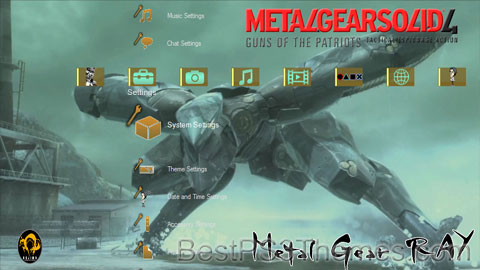
Metal Gear Solid 4: Guns of the Patriots[a] is a 2008 action-adventure stealth video game developed and published by Konami for the PlayStation 3. It is the sixth Metal Gear game directed by Hideo Kojima. Set five years after the events of Metal Gear Solid 2: Sons of Liberty,[b] the story centers around a prematurely aged Solid Snake, now known as Old Snake, as he goes on one last mission to assassinate his nemesis Liquid Snake, who now inhabits the body of his former henchman Revolver Ocelot under the guise of Liquid Ocelot, before he takes control of the Sons of the Patriots, an A.I. system that controls the activities of PMCs worldwide.[1] The game was released on June 12, 2008.[2][3]
Guns of the Patriots received universal acclaim, with praise for its gameplay, graphics, characters, and emotional weight, while criticism centered on its plot as convoluted and its emphasis on cutscenes. The game garnered Game of the Year awards from several major gaming publications. It is one of the most significant titles for the seventh generation of video game consoles, as its release caused a boost in sales of the PlayStation 3, and had sold six million copies worldwide by 2014.
In Guns of the Patriots, players assume the role of an aged Solid Snake (colloquially referred to as Old Snake), using stealth, close-quarters combat, and traditional Metal Gear combat. The overhead third-person view camera of earlier games has been replaced by a streamlined view and over-the-shoulder camera for aiming a weapon, with an optional first-person view like a first-person shooter at the toggle of a button.
A further addition to gameplay mechanics is the Psyche Meter. Psyche is decreased by non-lethal attacks and is influenced by battlefield psychology. Stressors (including temperature extremes, foul smells, and being hunted by the enemy) increase Snake's stress gauge, eventually depleting his Psyche. Adverse effects include difficulty in aiming, more frequent back pain and the possibility of Snake passing out upon receiving damage. If Snake kills too many enemies in a short amount of time, he will have a vision of Liquid and vomit, greatly reducing his Psyche. Among the available methods of restoring Psyche are eating, drinking, smoking, and reading an adult magazine.[4]
Snake has a few gadgets to aid him in battle. The OctoCamo suit mimics the appearance and texture of any surface in a similar fashion to an octopus, decreasing the probability of Snake being noticed. Additionally, FaceCamo is made available to players after they defeat Laughing Octopus. FaceCamo can be worn by Solid Snake on his face and it can be set to either work in tandem with the Octocamo or instead mimic the face of other in-game characters. To get access to these unique FaceCamos, players have to complete certain in-game requirements first. When the FaceCamo is worn with OctoCamo, under ideal conditions, Snake's stealth quotient can reach 100%. The Solid Eye device highlights items and enemies and can operate in a night vision and a binocular mode. It also offers a baseline map, which indicates the location of nearby units.[5] The latter function is also performed by the Threat Ring, a visualization of Snake's senses that deforms based on nearby unit proximity and relays them to the player.
Metal Gear Mk.II (later replaced with Mk.III), is a small support robot that always tags along with Snake, offers codec functionality and a means to the in-game menu for a large part of Snake's mission. It can be remotely controlled to stun enemies, provide reconnaissance and interact with the environment.[6] Its design is based on the namesake robot from Snatcher, a game designed by Hideo Kojima. It is also controlled during the beginning of each separate "Act", although the player is not able to utilize its capabilities during this time.
Whenever the Drebin menu is available, weapons, attachments, and ammunition can be purchased via Drebin Points (DPs), awarded for on-site procurement of weapons already in the inventory and by initiating specific scripted events or destroying Unmanned Vehicles. The conversion rate between weapons and DPs depends on current battlefield conditions, with more-intense fighting yielding higher prices. Drebin would also purchase items from the player at a discounted price, especially at certain points in the story and certain days in real life. The game may also be finished without killing anyone, using non-lethal weapons.
The Virtual Range, similar to the Virtual Reality training of previous titles, functions as a test facility for weapon performance and gameplay controls.[4]
Guns of the Patriots is set within an alternate history timeline in which the Cold War continued into the 1990s before ending before the turn of the century. The events themselves take place in 2014, five years after Sons of Liberty,[7] and form the final chapter in the storyline covering the character of Solid Snake, providing conclusions to the events that led up to Guns of the Patriots.
The world's economy relies on continuous civil wars fought by private military companies (PMCs), which outnumber government military forces. Soldiers are equipped with nanomachines that monitor and enhance their performance on the battlefield, controlled by a vast network known as the Sons of the Patriots (SOP) system. Revolver Ocelot, missing since the events of Sons of Liberty, is possessed by the will of Liquid Snake and re-emerges from hiding to launch an insurrection against the Patriots, a secret cabal that manipulates global affairs from the shadows.
In the meantime, Solid Snake is experiencing accelerated aging and has about a year left to live. He is living on board the airplane Nomad with Dr. Hal Emmerich, nicknamed Otacon, and Olga Gurlukovich's daughter, Sunny, a child prodigy in computer programming. Since the aftermath of the Big Shell incident, Raiden has drifted away from Rose, who had apparently suffered a miscarriage with their child and gone to live with Snake's former commander, Colonel Roy Campbell, and has become a cyborg ninja fighting against the Patriots. Meryl Silverburgh commands a PMC inspection unit in the U.S. military, which includes Johnny Sasaki.
After learning that he has only a year to live due to Werner syndrome-like symptoms, Snake is tasked by Campbell, now working with the United Nations Security Council, to assassinate Liquid Ocelot. In a Middle-Eastern war zone occupied by one of Liquid's PMCs, Snake meets Drebin, an arms dealer who injects Snake with nanomachines to use the latest weaponry, and Meryl. Snake reaches Liquid, but the latter transmits a signal that incapacitates those nearby with nanomachines. Snake sees Dr. Naomi Hunter, who departs with Liquid.
In South America, Snake locates Naomi, herself a captive of Liquid. She explains that Liquid plans to use the biometrics of Big Boss to access and take command of the Patriots' firearms control system. Snake learns his accelerated aging is due to intentional genetic mutations as a human clone, and that the FOXDIE virus inside him will also mutate within months, spreading to the general populace and causing a deadly pandemic. Liquid's PMC soldiers kidnap Naomi, but Snake rescues her, assisted by Drebin and Raiden, and they escape, though Raiden is injured by Vamp.
Snake locates an Eastern-European resistance group, which happens to possess the comatose body of Big Boss, in order to heal Raiden. Its leader EVA reveals she was the surrogate mother to Snake and Liquid through the cloning process. They move Big Boss' body by boat while Liquid's PMC soldiers attack decoys. Liquid captures the body and obtains the biometrics, intending to infiltrate the Patriots' system by using the repaired artificial intelligence (AI) core, GW, as a trojan. U.S. soldiers arrive to arrest Liquid, but he kills them after disabling their firearms. Big Boss' body is incinerated, and Snake saves EVA from the fire when she tries to save the body, but both are badly injured in the process. Naomi leaves with Liquid, but Otacon tracks them. EVA dies from her injuries.
Snake and Otacon learn that Liquid aims to destroy the Patriots' master AI with a nuclear strike, allowing GW to take control. A non-ID-tagged warhead is required from Metal Gear REX at Shadow Moses in Alaska. There, Snake is ambushed by Vamp, accompanied by Naomi; but Vamp is killed when his self-healing nanomachines are disabled via injection. Naomi reveals she has terminal cancer; and, overcome with guilt for her mistakes, she disables the nanomachines keeping her alive and dies. Snake and Raiden use REX to escape and fend off Liquid piloting a Metal Gear RAY. Liquid reveals Outer Haven, a modified Arsenal Gear. Raiden saves Snake from being crushed before the USS Missouri, captained by Mei Ling, arrives and forces Haven to retreat.
Snake, Meryl, and Johnny board Haven when it surfaces in order to launch the nuke. At the core, Snake installs a computer virus coded by Naomi and Sunny into Liquid's trojan, which destroys both the core AI as well as the entire Patriot network controlling global affairs, leaving the necessities for civilization to survive. Atop Haven, Liquid explains to Snake that he allowed the virus' installation in order to destroy the Patriots. The two fight, with Snake victorious and Liquid becoming Ocelot again before dying. Meryl reconciles with her father, Campbell, and marries Johnny. Raiden reunites with Rose after learning their child was not miscarried and that her marriage to Campbell was a ruse to protect them from the Patriots. Snake visits the grave of The Boss at Arlington National Cemetery. Snake, feeling that he has no further purpose and must prevent an epidemic from his FOXDIE, attempts suicide, but hesitates at the last moment.
Snake is then met by Big Boss with a vegetative Zero, with Big Boss explaining that the body burned in Europe was Solidus Snake. He then reveals that the Patriots were founded by himself, Zero, EVA, Ocelot, Sigint, and Para-Medic to realize the will of the Boss, Big Boss' mentor. Differing interpretations split the group into two factions: Zero's, which stood for government control of society to prevent conflict, and Big Boss', where soldiers fought for personal beliefs, unrestrained by governments. Zero consigned control to AI networks, the Patriots. After Big Boss' downfall in Zanzibar, the Patriots placed him in an induced coma, and later initiated the war economy, a vision far from the Boss' will. Ocelot and EVA planned to restore Big Boss by destroying the Patriots, with the possession of Ocelot through Liquid being a ruse to draw the Patriots' attention. Big Boss then kills Zero by cutting off his life support.
He informs Snake that the nanomachines from Drebin contained FOXDIE, engineered by the Patriots to kill EVA, Ocelot, and Big Boss. With the new strain supplanting the mutated strain, Snake poses no risk of becoming a biological weapon unless he lives long enough for it to mutate. After understanding his mentor's will and telling Snake to find a new reason to keep living, Big Boss dies beside the Boss' grave. Snake decides to live the time he has left peacefully with Otacon and Sunny.
Metal Gear Solid 4 started development due to fan demand. Series creator Hideo Kojima had previously directed the prequel Metal Gear Solid 3: Snake Eater, which was meant to end the series. People's demand to have a sequel to Metal Gear Solid 2: Sons of Liberty and clear the mysteries Kojima wanted to leave to the players' interpretations resulted in the making of Metal Gear Solid 4.[8] Kojima announced that he would be retiring as director of the Metal Gear series after Snake Eater, and would leave his position open to another person for Metal Gear Solid 4. As a joke, the new director was announced as Alan Smithee; in R, a 400-page book bundled with Metal Gear Solid 3's Japanese Premium Package, the director was revealed to be Shuyo Murata, co-writer of Snake Eater and director of Zone of the Enders: The 2nd Runner. He also contributed easter eggs to Sons of Liberty and Metal Gear: Ghost Babel. It was announced that Kojima would be co-directing the game with Murata after substantial negative fan reaction, including death threats.[9]
Kojima wished to implement a new style of gameplay which was set in a full-scale war zone. Kojima wanted to also retain the stealth elements from previous entries in the series, which made the team abandon the original "No Place to Hide" concept. The only announced war zone before release was the Middle East. Using several locations emphasized Kojima's original intention to present the world in full-scale armed conflict. Solid Snake was physically aged to portray to the player the games' overarching theme, SENSE, and to assign them to a character whose task was to pass moral values to future generations.[8] Kojima's initial ending for the Guns of the Patriots would entail Snake and Otacon turning themselves in for breaking the law, and subsequently convicted and executed. This was avoided after negative feedback from the development team. Snake's experience across the series made the creation of new enemies challenging and encouraged staff to create groups of non-human enemies to rival Snake.[10]
During development, the game's exclusivity was continuously questioned, even after Kojima officially confirmed the exclusivity several times. The exclusivity of the game was still in doubt from non-PlayStation 3 owners for a long period after the initial release,[11][12] with the company confirming that the 25th Anniversary edition of the game released in late 2012 was still a PlayStation 3 exclusive.[13] Upon the release of Metal Gear Solid: The Legacy Collection, Kojima had once again firmly denied chances of the game's release on any other console, stating that an "Xbox 360 version [will not be] released, because an Xbox 360 version of MGS4 hasn't gone on sale" and that "the amount of data in MGS4 is just too enormous".[14]
The game was publicly announced first at E3 2005, by means of a humorous and slightly abstract gag machinima using characters from Snake Eater, under the slogan of "No Place to Hide". The title was described as "essentially finished" by January 2008 and went through extensive beta testing.[15] At Destination PlayStation on February 26, 2008, Sony announced that the game would be released worldwide on June 12, 2008, along with the special Guns of the Patriots-themed PlayStation 3 bundle.[16] It was announced that Guns of the Patriots is the first PlayStation 3 game that uses a 50GB dual layer Blu-ray Disc,[17] even with the use of file compression.
The budget for the game has been estimated to be between US$ 50-70 million.[18][19] Kenichiro Imaizumi from Kojima Productions denied this stating if it had cost this much, the game would have been for multiple platforms.[20] One of the main objectives of the budget was research of environments the game would feature.[21]
The score to Metal Gear Solid 4 was led by Harry Gregson-Williams, his third Metal Gear Solid soundtrack,[22] and Nobuko Toda, who provided music for Metal Gear Acid and Metal Gear Acid 2.[23] Other contributors are Konami employees Shuichi Kobori, Kazuma Jinnouchi, Akihiro Honda, and Sota Fujimori.[24] Directed by Norihiko Hibino, GEM Impact employees Yoshitaka Suzuki and Takahiro Izutani also made compositions late in the game's production.[25] It was revealed in an interview with Norihiko Hibino that the team, in fact, wrote 90 minutes of music for the game's cutscenes, only 15 minutes of which made its way onto the official soundtrack.[26]
There are two vocal themes for the game. The opening theme, "Love Theme", is sung by Jackie Presti and composed by Nobuko Toda. The ending theme, "Here's to You", is sung by Lisbeth Scott. Before the release of the game, "MGS4 – Theme of Love – Smash Bros. Brawl Version" was provided for Super Smash Bros. Brawl in the Shadow Moses Island level.[27] The "Metal Gear Solid Main Theme", composed by Tappi "Tappy" Iwase, was notably omitted from the soundtrack, and the soundtrack of Metal Gear Solid: Portable Ops. In an interview with Electronic Gaming Monthly, Norihiko Hibino stated that the company had difficulties with "Russian composers who said we stole their music", referring to an occasion when a group of Russian games journalists presented Hideo Kojima with a composition by Georgy Sviridov and claimed this had been plagiarised to create the theme. Hibino states that "they didn't actually" but the company was "too sensitive about the situation" and elected to drop the theme.[28]
The official soundtrack was released on May 28, 2008, by Konami Digital Entertainment under the catalog number GFCA-98/9.[29] It consists of two discs of music and 47 tracks. A soundtrack album was also packaged with Metal Gear Solid 4: Guns of the Patriots Limited Edition.[30]
In August 2009, when asked if there would be a patch to add PlayStation Network Trophies to the game, Kojima Productions' Sean Eyestone asked people to "stay patient". This led to speculation that an updated version of the game in the vein of Substance or Subsistence would be released alongside a Trophy patch.[31] In November 2010, an updated Greatest Hits box art of the game was released, which in the top right-hand corner boasted the addition of Trophies to the game. This was later reported as a typo, and removed from later printings.[32] False reports of an "incoming Trophy Patch" often appeared, usually on internet forums and on April Fools' Day, some even going to the extent of a mock-up Trophy listing.[33] In July 2012, a patch was announced that would include Trophies for the game, which would later be released on August 6, 2012.[34] In addition to the support for Trophies, the patch also allowed a full install of the game onto the hard drive to remove the installs between acts.
At a press conference on May 13, 2008, Hideo Kojima announced a marketing campaign and agreements with several companies to promote the game. Apple computers and monitors feature in the game and an Apple iPod is an in-game item that Snake can use to change the background music, listen to in-game podcasts and collect hidden songs scattered throughout the game. ReGain Energy Drinks are used in the game as a Psyche gauge booster, and mobile phones from Sony Ericsson are used, specifically by Naomi and Vamp.[35] In addition, the motorcycles featured in the game are a Triumph Bonneville and Speed Triple. Konami and Ubisoft put an unlockable costume in the game for Snake, Altaïr from the Ubisoft stealth game Assassin's Creed. Initially revealed on April Fool's Day 2008, Kojima later announced that it would actually be in the game, unlockable by doing "something special". To obtain the attire, the player must acquire the Assassin Emblema nod to the game's title—or input a password in the Extras section).[36]
Konami had originally planned to organize grand launch events in Tokyo, but some of them were canceled with the "safety of participants in mind" in light of the Akihabara massacre on June 8, 2008.[37][38] On June 15, 2009, a year after its release, Konami re-released Guns of the Patriots as a part of Sony Greatest Hits collection.[39]
Metal Gear Solid 4 includes the Starter Pack for Metal Gear Online 2 (MGO2). MGO2 features up to 16 player online tactical battles and incorporates several gameplay elements from Metal Gear Solid 4, including the SOP system that allows players to have a visual confirmation of their teammates' position and battle status.[40] MGO also allows fully customizable characters. The Starter Pack allows players to engage in sneaking missions, where Old Snake and Metal Gear Mk.II acquire dog tags from other human contestants, along with standard Deathmatch, Team Deathmatch, and several special modes.[41] Expansions packs, offering more maps and playable special characters (Mei Ling, Meryl, Akiba, Liquid Ocelot, Raiden, and Vamp), can be purchased via the MGO menu item "MGO Shop (PlayStation Network)", or via MGO or Konami's shop. The PlayStation Wallet is used for the first option and a credit card for the latter two.[42] Metal Gear Online 2 was completely shut down on June 13, 2012.
On June 19, 2008, Konami released the Metal Gear Solid 4 Database onto the PlayStation Store in North America and Japan,[43] and one week later on the European store. The Database is a downloadable application for PlayStation 3 that catalogs every piece of Metal Gear lore from all the canonical entries in the series released up to Metal Gear Solid 4 in the form of an encyclopedia (browsable by alphabet and category), a timeline, and character relationship diagrams. Highlighted words in each article link to related articles, and it keeps track of which ones the use Unreal Tournament 3 0.93 theme by Kruzitu Download: UnrealTournament3_0.93.p3t P3T Unpacker v0.12 This program unpacks Playstation 3 Theme files (.p3t) so that you can touch-up an existing theme to your likings or use a certain wallpaper from it (as many themes have multiple). But remember, if you use content from another theme and release it, be sure to give credit! Download for Windows: p3textractor.zip Instructions: Download p3textractor.zip from above. Extract the files to a folder with a program such as WinZip or WinRAR. Now there are multiple ways to extract the theme. The first way is to simply open the p3t file with p3textractor.exe. If you don’t know how to do this, right click the p3t file and select Open With. Alternatively, open the p3t file and it will ask you to select a program to open with. Click Browse and find p3textractor.exe from where you previously extracted it to. It will open CMD and extract the theme to extracted.[filename]. After that, all you need to do for any future p3t files is open them and it will extract. The second way is very simple. Just drag the p3t file to p3textractor.exe. It will open CMD and extract the theme to extracted.[filename]. For the third way, first put the p3t file you want to extract into the same folder as p3textractor.exe. Open CMD and browse to the folder with p3extractor.exe. Enter the following:Mix

(10 backgrounds)
Audio and music[edit]
Albums[edit]
Computing[edit]
Radio and television[edit]
People[edit]
Places[edit]
Science[edit]
Other[edit]
See also[edit]
Resistance: Chimera

(1 background)
Copyright (c) 2007. Anoop Menon
p3textractor filename.p3t [destination path]Replace filename with the name of the p3t file, and replace [destination path] with the name of the folder you want the files to be extracted to. A destination path is not required. By default it will extract to extracted.filename.Kat Von D

(8 backgrounds)
![]()
Born
March 8, 1982Occupations Spouses Children 1 Website katvond Early life[edit]
Career[edit]

Personal life[edit]
Views[edit]
Religious beliefs[edit]
Relationships[edit]
Media[edit]
Selected filmography[edit]
Year
Title
Notes
2004
Pimp My Ride[80]
2005
Miami Ink[80]
2007
LA Ink
April 5, 2008
MADtv[81]
2008
Bam Margera Presents: Where the ♯$&% Is Santa?
2008
I Love the New Millennium
2009
The Bleeding[82]
As Vanya
2009
Tony Hawk: Ride[83]
Video Game; unlockable skater
2010
Lemmy
2013
I Love Jenni[84]
February 11, 2016
Life in Pieces[85]
2018
Dominion[86]
Narration
2022
The Lincoln Lawyer
Poker Dealer
Discography[edit]
Studio albums[edit]
Year
Title
2021
Love Made Me Do It[87]
EPs[edit]
Year
Title
2021
Exorcisms
Singles[edit]
Year
Title
2021
Exorcism
I Am Nothing
Enough
Fear You
2022
Fotos y Recuerdos
Lovesong
2023
Vampire Love
Other releases[edit]
Year
Music Title
Note
2013
Rosary Blue
The 69 Eyes feat. Kat Von D
2017
Black Leather
Prayers feat. Kat
2018
Stardust
IAMX feat. Kat Von D
Stalker
IAMX feat. Kat Von D
The Power and the Glory
IAMX feat. Kat Von D
2019
The Boy Inside the Skeleton
Heaven Process feat. Kat Von D, Prayers
Creatures (Out of Tune)
Heaven Process feat. Mark Burgess, Kat Von D, Prayers, Chelsey Boy
Time Stands Stil
Heaven Process feat. Kat Von D
Heaven Below (Descending)
Heaven Process feat. Kat Von D
2020
Black Blood Red Kiss
Gunship with Kat Von D
2023
This Murder Takes Two
The 69 Eyes feat Kat Von D
References[edit]
Katherine Von Drachenberg, who was born in Montemorelos, Nuevo León, Mexico, and grew up in Colton, California, began tattooing friends at age 14
Portrait of my father: Black-and-gray portrait of my father, Rene Von Drachenberg, in a high-school photo taken in Argentina in the 1960s.
Note: Kat Von D's official biography gives father's name as simply "René Drachenberg": "Her father René Drachenberg and her mother Silvia Galeano were both born in Argentina, though René's family origins were German and Silvia's Spanish-Italian."
The first person who ever held me was my grandfather, Carlos Von Drachenberg. He was the doctor who delivered me in March 1982, in Montemorelos, Nuevo León, Mexico. I come from a long line of doctors. When I was born, my grandpa was teaching medicine in Mexico as a missionary for the Seventh-day Adventist Church Church while my father finished his schooling in the medical field. My family came from Argentina, but until I was four, we lived in Mexico.
rev LCARS

(1 background)
Copyright (c) 2007. Anoop Menon
p3textractor filename.p3t [destination path]Replace filename with the name of the p3t file, and replace [destination path] with the name of the folder you want the files to be extracted to. A destination path is not required. By default it will extract to extracted.filename.Laughing Man

(2 backgrounds)
Evolution

(2 backgrounds)
Part of the Biology series on Evolution 
Mechanisms and processes
Research and history
Evolutionary biology fields
Heredity[edit]

Sources of variation[edit]
Mutation[edit]

Sex and recombination[edit]

Gene flow[edit]
Epigenetics[edit]
Evolutionary forces[edit]

Natural selection[edit]
Simple Thing Almost Pro Version

(10 backgrounds)
Copyright (c) 2007. Anoop Menon
p3textractor filename.p3t [destination path]Replace filename with the name of the p3t file, and replace [destination path] with the name of the folder you want the files to be extracted to. A destination path is not required. By default it will extract to extracted.filename.Metal Gear Solid 4: Guns of the Patriots

(7 backgrounds)
Metal Gear Solid 4:
Guns of the Patriots![]()
Developer(s) Konami Digital Entertainment Publisher(s) Konami Director(s) Hideo Kojima Producer(s) Designer(s) Hideo Kojima Programmer(s) Yuji Korekado Artist(s) Yoji Shinkawa Writer(s) Composer(s) Series Metal Gear Platform(s) PlayStation 3 Release June 12, 2008 Genre(s) Action-adventure, stealth Mode(s) Single-player Gameplay[edit]

Synopsis[edit]
Fictional chronology
in Metal Gear
Setting[edit]
Plot[edit]
Development[edit]

Music[edit]
Trophy support[edit]
Marketing[edit]
Release[edit]
Unreal Tournament 3 0.93

(10 backgrounds)
Copyright (c) 2007. Anoop Menon
p3textractor filename.p3t [destination path]Replace filename with the name of the p3t file, and replace [destination path] with the name of the folder you want the files to be extracted to. A destination path is not required. By default it will extract to extracted.filename.