RahXephon (Japanese: ラーゼフォン, Hepburn: Rāzefon) is a Japanese anime television series created and directed by Yutaka Izubuchi. The series follows 17-year-old Ayato Kamina, his ability to control a mecha known as the RahXephon, and his inner journey to find a place in the world. His life as a student and artist in Tokyo is suddenly interrupted by a mysterious stalker, strange planes invading the city and strange machines fighting back.
The series was animated by Bones and it aired on Fuji TV for twenty-six episodes from January to September 2002. It was produced by Fuji TV, Bones, Media Factory and Victor Entertainment. The series received critical acclaim and was subsequently translated, released on the DVD and aired in several other countries, including the United States. A 2003 movie adaptation RahXephon: Pluralitas Concentio was directed by Tomoki Kyoda, with plot changes and new scenes. The series was also spun into novels, an extra OVA episode, an audio drama, a video game, illustration books and an altered manga adaptation by Takeaki Momose.
Director Izubuchi said RahXephon was his attempt to set a new standard for mecha anime, as well as to bring back aspects of 1970s mecha shows like Reideen The Brave.
The backstory of RahXephon is a fight against multi-dimensional invaders known as Mulians (known as Mu (ムー, Mū)). The Mu are visually indistinguishable from humans, however they carry a genetic marker called the "Mu phase" which turns their blood blue and causes some memory loss when they mature.
The story reveals that two Mu floating cities appeared above Tokyo and Sendai around the end of 2012. The ensuing conflict between Mu and humans escalated into nuclear warfare, and the Mu enveloped Tokyo and the outlying suburbs within a spherical barrier resembling Jupiter, referred by outsiders as "Tokyo Jupiter" ("Tōkyō Jupita"). The barrier has a time dilating effect, which causes time inside Tokyo Jupiter to slow down to one-fifth compared to the outside time, and allowed the Mu to secretly take control of Tokyo, using the area as their base of operations. The goal of the human forces outside of Tokyo Jupiter is to build up their strength to penetrate through and invade Tokyo Jupiter and stop the Mu while surviving their attacks.
Although RahXephon is part of the mecha genre of anime, its "mechas" are not mechanical. The mechas, used by the Mu and called Dolems, are made out of clay, like golems. Each is bound to a certain Mulian; however, some are also bound to certain human hosts, called "sub-Mulians".
The dominant theme of RahXephon is the music changing the world. The Dolems are animated by a mystical force connected to music; most of the controlling Mulians appear to be singing. A Dolem attacks while singing, and sometimes the attack is the song itself. The RahXephon can also attack by having its pilot—the "instrumentalist"—sing a note. This unleashes force waves that cause massive destruction. Each Mulian Dolem has an Italian name referring to musical notations, such as, Allegretto, Falsetto, or Vivace. The ultimate goal of the RahXephon is to "tune the world." Izubuchi says the name RahXephon lacked a real meaning, but that he now explains it as composed of Rah as the origin of Ra according to Churchward, X as the unknown variable or X factor, and -ephon as a suffix for instrument from "-phone".[3]
The most important plot line of the series is the unusual relationship between Ayato Kamina and Haruka Shitow. Although Haruka appears to be a stranger to Ayato at first, the series reveals that they knew each other from before the beginning of the story.
Ayato is a boy who was unknowingly conceived with the help of the Bähbem Foundation living in Tokyo with his adoptive mother, Maya Kamina. Ayato had met Haruka on a trip outside of Tokyo, and they continued to see each other when they returned to school in Tokyo. At this time, Haruka's family name was Mishima.
However, during what later became known as the Tokyo Jupiter incident, Haruka and her pregnant mother were away on a holiday trip while Ayato was caught inside the city. Years later, after giving birth to Haruka's sister Megumi, Haruka's mother remarried and their family name became Shitow. Meanwhile, Maya modified Ayato's memories to make him forget Haruka. The series makes clear that all of the humans within Tokyo Jupiter are subject to the same kind of mental control, thinking that they are all that's left of mankind after a devastating war. Ayato is haunted by visions of Haruka, which he manifests in his art. Ixtli, RahXephon's soul, also adopts Haruka's appearance and family name (Mishima) to guide Ayato, but takes a different given name—Reika.
The story begins as Tokyo comes under attack by invading aircraft while a mysterious woman, later revealed to be Haruka, stalks Ayato. By this point, Haruka has grown considerably older than Ayato and everyone else who is inside of Tokyo Jupiter because of the time dilation. Because of this and her now having a different last name, Ayato does not recognize Haruka and also initially does not fully trust her, but he gradually re-discovers his love for her as the series progresses, and he learns of everything that has happened. At the end of the series, Ayato's RahXephon merges with Quon's, allowing him to modify the past by "re-tuning the world" to make it so that he and Haruka are never separated. In the final sequence of the series, the adult Ayato is seen with his wife Haruka and their infant daughter Quon.
This section represents the story from the television series and may differ from other works.
TERRA operations and research staff
At the beginning of RahXephon, Ayato Kamina is a modest 17-year-old living in Tokyo. He is an average student, who enjoys painting and spending time with his classmates Hiroko Asahina and Mamoru Torigai. He has affectionate relationship with his mother, strained by her long-hour work.
During the sudden attack on Tokyo, Ayato hears the singing of his classmate Reika Mishima. She leads him to a giant egg containing the RahXephon. Haruka Shitow, an agent of the defense research agency TERRA (acronym for Tereno Empireo Rapidmova Reakcii Armeo, broken Esperanto for Earth Empire Rapid Response Army), brings Ayato and the RahXephon to their headquarters.
Ayato moves in with Haruka's uncle Professor Rikudoh and pilots the RahXephon against the attacking Dolems. Quon Kisaragi, a mysterious girl living with chief researcher Itsuki, seems to share some of Ayato's artistic talent. Ernst von Bähbem of the Bähbem Foundation sponsors TERRA through the Federation, the successor of the United Nations.
While most characters are introduced by the end of episode 7, RahXephon continues to characters development and reveals their mysteries and relationships through heavy use of foreshadowing.
Dolems, or Dorems (ドーレム, Doremu), are enormous mecha-like beings that are used as powerful weapons by the Mulians. The name "Dolem" is derived from "golem".[4] It is also a reference to the first three notes in the C major scale, "Do-Re-Mi", and the Italian word "dolere", meaning "to ache".
In RahXephon Dolems are designated by TERRA as D1. The smaller fighters Dotem (with T instead of L) are designated as D2.
Dolems are made of clay, like golems, but are animated by a quasi-mystical force connected to music, as most of the controlling Mulians appear to be singing. A Dolem attacks while singing, and sometimes the attack is the song itself. Each D1 Dolem is bound to a Mulian who controls it. Some Dolems are also bound to human hosts called "sub-Mulians" or "Dolem hosts" who anchor to the Dolems in the human dimension, making it possible for the Mulian controller to take over the body of the host. These bonds are so strong that destroying a Dolem can kill both the Mulian controlling it and the human host. When destroyed, a Dolem disintegrates into blue blood and clay.
RahXephon was initially produced as a TV series. A manga version, novels, soundtracks and an audio drama were published during the original broadcast. A movie, an OVA episode, art books, and guide books were also created. Characters, mecha and story from RahXephon were featured in three video games.
Yutaka Izubuchi was a successful anime supervisor and designer focusing on costume, character and mechanical design, notably in the Gundam and Patlabor series. His friend and former Sunrise colleague Masahiko Minami, producer and president of Bones, had suggested Izubuchi to direct something.[5]
Izubuchi finally agreed and RahXephon became his first directing job. Izubuchi returned to the classic mecha shows of the 1970s and 1980s and wanted to make a show of that type updated with advances in anime production as well as adding his own personal ideas. He wanted to "set a new standard in the field" of mecha anime[5] to show his "own standard" and capabilities as a creator-showrunner.[6]Media Factory, Fuji TV. and Victor Entertainment joined Bones as production partners. After planning the story and designing characters and locations, a core group was expanded to a full production staff that completed the show, primarily working together — a departure from the trend of outsourcing anime production.[7]
The original music, except for the opening theme, is composed by Ichiko Hashimoto; she was initially approached to compose some of the score and replied that she wanted to compose all of it.[7] She also plays Maya and performs the closing theme together with her sister Mayumi. The opening theme "Hemisphere" is composed by Yoko Kanno and sung by Maaya Sakamoto, who plays Reika.[8] Hashimoto's compositions range from piano sonatas and acoustic chamber music to experimental jazz, hard rock, and ambience that crosses the border into sound design. She also includes more mainstream jazz and orchestral music played with both acoustic and electronic instruments.[8]
A television movie version of RahXephon called Pluralitas Concentio was directed by Tomoki Kyoda, who had directed three episodes of the TV series and acted as assistant director with Soichi Masui. Izubuchi acted as Chief Director on this movie, but was not heavily involved in its production. Most of the staff members involved with the TV series worked on the movie, and it was distributed by Shochiku. The producers were Masahiko Minami, Shiro Sasaki, Maki Horiuchi, Kenji Shimizu, and Tatsuji Yamazaki.
In the manga, characters differ from their anime counterparts in both visual design and characterization.
The movie quickly reveals mysteries that were developed slowly in the TV series[9] and makes changes to the plot. It begins with a prologue showing previously unseen events, followed by a couple of expository scenes. The final 30 minutes contain the most plot changes and new scenes, ending with a new epilogue. The rest of the movie consists mainly of abridged scenes from the original series, sometimes with characters replaced or with different motivations and dialogue. The link between the Kamina and Mishima families and other storylines that were prominent in the original TV series were reduced or removed. One prominent distributor promoted the movie as an "encore"—an extra performance at the end of the series, rather than as a replacement.[10]
The manga was illustrated and written by Takeaki Momose.[6] Momose was one of the candidates for character designer on the series,[11] but Izubuchi wanted Akihiro Yamada to do the original designs,[12] and Hiroki Kanno got the job of adapting them for animation. With the manga Momose got the opportunity to re-design the characters into his own style and make changes in characterization and story,[11] as well as adding "fan service".[13] It was serialized in Shogakukan's seinen manga magazine Monthly Sunday Gene-X from August 18, 2001,[14] to November 19, 2002.[15]
The scenario of the manga adaptation is similar to RahXephon series with some minor and major differences. In the anime series, Reika is a mysterious and distant figure; in the manga Reika is a more comical figure who grew up as Ayato's adoptive sister with a darker origin. The anime series shows Megumi competing with Haruka for Ayato's affections, while this role is taken by Reika in the manga. The rate of time dilation is also different in the manga version, as the year outside Tokyo is 2033 instead of 2027.
The anime series originally aired on stations in the Fuji Television network and its affiliates, except in the Kansai region where independent UHF stations aired it instead.[16] Starting with episode 10, some stations moved the series from the afternoon to after midnight, but other stations moved it from late night to afternoon.[17][18][19]RahXephon thus remained both a "late night anime" and afternoon anime throughout its original run.
According to its distributor, the series "captivated millions in Japan" and "[drew] in viewers by the tens of thousands."[20] The series won the award for best anime television series at the 7th Animation Kobe fair.[21] It was considered popular enough that a TV movie version was commissioned and aired.
Internationally, the series was translated and released on DVD. It was purchased for airing by television stations and made available on video on demand services in several countries. In the United States, the DVDs were released around the theatrical release of another Bones production, Cowboy Bebop: The Movie. The distributor claimed that RahXephon was met with "strong sales and extraordinary critical response in the U.S."[22]
The series was generally well received by English-language reviewers. While some reviewers only judged the show on its own merits, others compared it with varying favor against shows such as Brain Powerd, Megazone 23, and Neon Genesis Evangelion.
Protoculture Addicts editor Claude J. Pelletier chose RahXephon as one of the top 3 anime television series of 2002,[23] and Miyako Matsuda agreed, noting mystery, technology, and romance.[24] Christian Nutt of Anime Jump offered a contrary opinion: "RahXephon's characters fell flat and the grind of its scenario didn't inspire much curiosity, despite some initially awesome ideas".[25] En Hong, on the other hand, found the characters to be skilfully developed and believable as "self-conscious entities and not just parts to be filled for the story to progress",[26] and Charles Solomon called them "engaging".[27]
Mike Toole of Anime Jump was impressed by the music, animation and character design;[28] as was Protoculture's Martin Ouellette.[29] Solomon noted the "strikingly original mecha designs"[27] and Anime Boredom's John Huxley noted the "unusual yet elegant" mecha and the "fluid computer-enhanced"—but not CGI-looking—animation.[30]
RahXephon's "brief but not unwelcome" comic moments went over well with Huxley,[31] and he found the romance "a million miles away from the cheery antics of Love Hina or Ranma ½" and "for the most part thoroughly believable".[30]
Chris Beveridge of Anime on DVD found the final episodes beautiful both in visual style and story, "with the raw emotions coming out of it, in both languages".[32] Huxley also liked the conclusion: "Despite falling short of the mark in a few areas this is a satisfying conclusion to a good series."[30] On the plot resolution he wrote that RahXephon "keeps the audience guessing right up until the final credits and beyond" but that "the clues are all there" for the viewer to piece together.[30]Anime News Network columnist Zac Bertschy called RahXephon a "paragon of responsible storytelling (...) No loose strings are left; we see the conclusion of every character’s storyline." He added that the English voice work "raised the bar across the board."[33]
Transformers is a media franchise produced by American toy company Hasbro and Japanese toy company Takara Tomy. It primarily follows the heroic Autobots and the villainous Decepticons, two alien robot factions at war that can transform into other forms, such as vehicles and animals. The franchise encompasses toys, animation, comic books, video games and films. As of 2011, it generated more than ¥2 trillion ($25 billion) in revenue,[1] making it one of the highest-grossing media franchises of all time.
The franchise began in 1984 with the Transformers toy line, comprising transforming mecha toys from Takara's Diaclone and Micro Change toylines rebranded for Western markets.[2] The term "Generation 1" covers both the animated television series The Transformers and the comic book series of the same name, which are further divided into Japanese, British and Canadian spin-offs, respectively. Sequels followed, such as the Generation 2 comic book and Beast Wars TV series, which became its own mini-universe. Generation 1 characters have been rebooted multiple times in the 21st century in comics from Dreamwave Productions (starting 2001), IDW Publishing (starting in 2005 and again in 2019), and Skybound Entertainment (beginning in 2023). There have been other incarnations of the story based on different toy lines during and after the 20th century. The first was the Robots in Disguise series, followed by three shows (Armada, Energon, and Cybertron) that constitute a single universe called the "Unicron Trilogy".
A live-action film series started in 2007, again distinct from previous incarnations, while the Transformers: Animated series merged concepts from the G1 continuity, the 2007 live-action film and the "Unicron Trilogy". For most of the 2010s, in an attempt to mitigate the wave of reboots, the "Aligned Continuity" was established. In 2018, Transformers: Cyberverse debuted, once again, distinct from the previous incarnations.
Classic Transformers franchise logo used until 2014Spider-Man battles Megatron on the cover of The Transformers #3.
Generation One is a retroactive term for the Transformers characters that appeared between 1984 and 1993. The Transformers began with the 1980s Japanese toy lines Micro Change and Diaclone. They presented robots able to transform into everyday vehicles, electronic items or weapons. Hasbro bought the Micro Change and Diaclone toys, and partnered with Takara.[4]Marvel Comics was hired by Hasbro to create the backstory; editor-in-chief Jim Shooter wrote an overall story, and gave the task of creating the characters to writer Dennis O'Neil.[5] Unhappy with O'Neil's work (although O'Neil created the name "Optimus Prime"), Shooter chose Bob Budiansky to create the characters.[6]
The Transformersmecha were largely designed by Shōji Kawamori, the creator of the Japanese mecha anime franchise Macross (which was adapted into the Robotech franchise in North America).[7] Kawamori came up with the idea of transforming mechs while working on the Diaclone and Macross franchises in the early 1980s (such as the VF-1 Valkyrie in Macross and Robotech), with his Diaclone mechs later providing the basis for Transformers.[8]
The primary concept of Generation One is that the heroic Optimus Prime, the villainous Megatron, and their finest soldiers crash-land on prehistoric Earth in the Ark and the Nemesis before awakening in 1985, Cybertron hurtling through the Neutral zone as an effect of the war. The Marvel comic was originally part of the main Marvel Universe, with appearances from Spider-Man and Nick Fury, plus some cameos,[9] as well as a visit to the Savage Land.[10]
The Transformers TV series began around the same time. Produced by Sunbow Productions and Marvel Productions, later Hasbro Productions, from the start it contradicted Budiansky's backstories. The TV series shows the Autobots looking for new energy sources, and crash landing as the Decepticons attack.[11] Marvel interpreted the Autobots as destroying a rogue asteroid approaching Cybertron.[12]Shockwave is loyal to Megatron on the TV series, keeping Cybertron in a stalemate during his absence,[13] but in the comic book, he attempts to take command of the Decepticons.[14] The TV series would also differ wildly from the origins Budiansky had created for the Dinobots,[15][16] the Decepticon turned Autobot Jetfire[17] (known as Skyfire on TV[18]), the Constructicons (who combine to form Devastator),[19][20] and Omega Supreme.[19][21] The Marvel comic establishes early on that Prime wields the Creation Matrix, which gives life to machines. In the second season, the two-part episode The Key to Vector Sigma introduced the ancient Vector Sigma computer, which served the same original purpose as the Creation Matrix (giving life to Transformers), and its guardian Alpha Trion.
In 1986, the cartoon became the film The Transformers: The Movie, which is set in the year 2005. It introduced the Matrix as the "Autobot Matrix of Leadership", as a fatally wounded Prime gives it to Ultra Magnus; however, as Prime dies he drops the matrix, which is then caught by Hot Rod who subsequently becomes Rodimus Prime later on in the film. Unicron, a Transformer who devours planets, fears its power and re-creates a heavily damaged Megatron as Galvatron, as well as Bombshell or Skywarp becoming Cyclonus, Thundercracker becoming Scourge and two other Insecticons becoming Scourge's huntsmen, the Sweeps. Eventually, Rodimus Prime takes out the Matrix and destroys Unicron.[22] In the United Kingdom, the weekly comic book interspliced original material to keep up with U.S. reprints,[23] and The Movie provided much new material. Writer Simon Furman proceeded to expand the continuity with movie spin-offs involving the time travelling Galvatron.[24][25] The Movie also featured guest voices from Leonard Nimoy as Galvatron, Scatman Crothers as Jazz, Casey Kasem as Cliffjumper, Orson Welles as Unicron and Eric Idle as the leader of the Junkions (Wreck-Gar, though unnamed in the movie). The Transformers theme tune for the film was performed by Lion with "Weird Al" Yankovic adding a song to the soundtrack.
The third season followed up The Movie, with the revelation of the Quintessons having used Cybertron as a factory. Their robots rebel, and in time the workers become the Autobots and the soldiers become the Decepticons. (Note: This appears to contradict background presented in the first two seasons of the series.) It is the Autobots who develop transformation.[26] Due to popular demand,[27] Optimus Prime is resurrected at the conclusion of the third season,[28] and the series ended with a three-episode story arc. However, the Japanese broadcast of the series was supplemented with a newly produced OVA, Scramble City, before creating entirely new series to continue the storyline, ignoring the 1987 end of the American series. The extended Japanese run consisted of The Headmasters, Super-God Masterforce, Victory and Zone, then in illustrated magazine form as Battlestars: Return of Convoy and Operation: Combination. Just as the TV series was wrapping up, Marvel continued to expand its continuity. It follows The Movie's example by killing Prime[29] and Megatron,[30] albeit in the present day. Dinobot leader Grimlock takes over as Autobot leader.[31] There was a G.I. Joe crossover[32] and the limited series The Transformers: Headmasters, which further expanded the scope to the planet Nebulon.[33] It led on to the main title resurrecting Prime as a Powermaster.[34]
In the United Kingdom, the mythology continued to grow. Primus is introduced as the creator of the Transformers, to serve his material body that is planet Cybertron and fight his nemesis Unicron.[35] Female Autobot Arcee also appeared, despite the comic book stating the Transformers had no concept of gender, with her backstory of being built by the Autobots to quell human accusations of sexism.[36]Soundwave, Megatron's second-in-command, also breaks the fourth wall in the letters page, criticising the cartoon continuity as an inaccurate representation of history.[37] The UK also had a crossover in Action Force, the UK counterpart to G.I. Joe.[38] The comic book features a resurrected Megatron,[39] whom Furman retconned to be a clone[40] when he took over the U.S. comic book, which depicted Megatron as still dead.[41] The U.S. comic would last for 80 issues until 1991,[42] and the UK comic lasted 332 issues and several annuals, until it was replaced as Dreamwave Productions, later in the 20th-Century.
In 2009, Shout! Factory released the entire G1 series in a 16-DVD box set called the Matrix of Leadership Edition.[43] They also released the same content as individual seasons.[44]
It was five issues[45] of the G.I. Joe comic in 1993 that would springboard a return for Marvel's Transformers, with the new twelve-issue series Transformers: Generation 2, to market a new toy line.
This story reveals that the Transformers originally breed asexually, though it is stopped by Primus because it produced the evil Swarm.[46] A new empire, neither Autobot nor Decepticon, is bringing it back, however. Though the year-long arc wrapped itself up with an alliance between Optimus Prime and Megatron, the final panel introduces the Liege Maximo, ancestor of the Decepticons.[47] This minor cliffhanger was not resolved until 2001 and 2002's Transforce convention when writer Simon Furman concluded his story in the exclusive novella Alignment.[48]
The story focuses on a small group of Maximals (the new Autobots), led by Optimus Primal, and Predacons, led by Megatron, 300 years after the "Great War". After a dangerous pursuit through transwarp space, both the Maximal and Predacon factions end up crash landing on a primitive, uncivilized planet similar to Earth, but with two moons and a dangerous level of Energon (which is later revealed to be prehistoric Earth with an artificial second moon, taking place sometime during the 4 million year period in which the Autobots and Decepticons were in suspended animation from the first episode of the original Transformers cartoon), which forces them to take organic beast forms in order to function without going into stasis lock.[49] After writing this first episode, Bob Forward and Larry DiTillio learned of the G1 Transformers and began to use elements of it as a historical backstory to their scripts,[50] establishing Beast Wars as a part of the Generation 1 universe through numerous callbacks to both the cartoon and the Marvel comic. By the end of the first season, the second moon and the Energon are revealed to have been constructed by a mysterious alien race known as the Vok.
The destruction of the second moon releases mysterious energies that make some of the characters "transmetal" and the planet is revealed to be prehistoric Earth, leading to the discovery of the Ark. Megatron attempts to kill the original Optimus Prime,[51] but at the beginning of the third season, Primal manages to preserve his spark. In the two-season follow-up series, Beast Machines, Cybertron is revealed to have organic origins, which Megatron attempts to stamp out.
After the first season of Beast Wars (comprising 26 episodes) aired in Japan, the Japanese were faced with a problem. The second Canadian season was only 13 episodes long, not enough to warrant airing on Japanese TV. While they waited for the third Canadian season to be completed (thereby making 26 episodes in total when added to season 2), they produced two exclusive cel-animated series of their own, Beast Wars II (also called Beast Wars Second) and Beast Wars Neo, to fill in the gap. Dreamwave retroactively revealed Beast Wars to be the future of their G1 universe,[52] and the 2006 IDW comic book Beast Wars: The Gathering eventually confirmed the Japanese series to be canon[53] within a story set during Season 3.[54]
Beast Wars contained elements from both the G1 cartoon series and comics. Attributes taken from the cartoon include Transformers that were female, the appearance of Starscream (who mentions being killed off by Galvatron in The Transformers: The Movie), and appearances of the Plasma Energy Chamber and Key to Vector Sigma. The naming of the Transformer ship, the Ark (and reference to 1984, the year the Transformers on board are revived), the character Ravage being shown as intelligent, and Cybertron having an organic core are elements taken from the comics.
In 2011, Shout! Factory released the complete series of Beast Wars on DVD.[55]
In 2001, Dreamwave Productions began a new universe of annual comics adapted from Marvel, but also included elements of the animated. The Dreamwave stories followe the concept of the Autobots defeating the Decepticons on Earth, but their 1997 return journey to Cybertron on the Ark II[56] is destroyed by Shockwave, now ruler of the planet.[57] The story follows on from there and was told in two six-issue limited series, then a ten-issue ongoing series. The series also adds extra complexities such as not all Transformers believing in the existence of Primus,[58] corruption in the Cybertronian government that first led Megatron to begin his war,[59] and Earth having an unknown relevance to Cybertron.[57][60]
Three Transformers: The War Within limited series were also published. These are set at the beginning of the Great War, and identify Prime as once being a clerk named Optronix.[61]Beast Wars was also retroactively stated as the future of this continuity, with the profile series More than Meets the Eye showing the PredaconMegatron looking at historical files detailing Dreamwave's characters and taking his name from the original Megatron.[52] In 2004, this real life universe also inspired three novels[62] and a Dorling Kindersley guide, which focused on Dreamwave as the "true" continuity when discussing in-universe elements of the characters. In a new twist, Primus and Unicron are siblings, formerly a being known as the One. Transformers: Micromasters, set after the Ark's disappearance, was also published. The real life universe was disrupted when Dreamwave went bankrupt in 2005.[63] This left the Generation One story hanging and the third volume of The War Within half finished. Plans for a comic book set between Beast Wars and Beast Machines were also left unrealized.[64]
Throughout the years, the G1 characters have also starred in crossovers with fellow Hasbro property G.I. Joe, but whereas those crossovers published by Marvel were in continuity with their larger storyline, those released by Dreamwave and G.I. Joe publisher Devil's Due Publishing occupy their own separate real life universes. In Devil's Due, the terrorist organization Cobra is responsible for finding and reactivating the Transformers. Dreamwave's version reimagines the familiar G1 and G.I. Joe characters in a World War II setting, and a second limited series was released set in the present day, though Dreamwave's bankruptcy meant it was cancelled after a single issue. Devil's Due had Cobra re-engineer the Transformers to turn into familiar Cobra vehicles, and released further mini-series that sent the characters travelling through time, battling Serpentor and being faced with the combined menace of Cobra-La and Unicron. During this time, Cobra teams up with the Decepticons. IDW Publishing has expressed interest in their own crossover.[65]
The following year, IDW Publishingrebooted the G1 series from scratch within various limited series and one shots. This allowed long-time writer of Marvel and Dreamwave comics, Simon Furman to create his own universe without continuity hindrance, similar to Ultimate Marvel. This new continuity originally consisted of a comic book series titled The Transformers with a companion series known as The Transformers: Spotlight. The main series was broken up into several story arcs. Eventually, with IDW Publishing losing sales, the series was given a soft reboot. Beginning with All Hail Megatron, the series was set in a new direction, discarding the miniseries and Spotlight format with ongoing comics. By 2012 the series had split into three ongoing series; The Transformers: More Than Meets The Eye, The Transformers: Robots in Disguise (which later changed in 2015 to "The Transformers") and The Transformers: Till All Are One. In 2022, it was announced that IDW lost the publishing rights to Transformers.[66]
In January 2006, the Hasbro Transformers Collectors' Club comic wrote a story based on the Transformers Classics toy line, set in the Marvel Comics universe, but excluding the Generation 2 comic. Fifteen years after Megatron crash-lands in the Ark with Ratchet, the war continues with the characters in their Classics bodies.[67]
IDW Publishing introduced The Transformers: Evolutions in 2006, a collection of mini-series that re-imagine and reinterpret the G1 characters in various ways. To date, only one miniseries has been published, Hearts of Steel, placing the characters in an Industrial Revolution-era setting. The series was delayed as Hasbro did not want to confuse newcomers with too many fictional universes before the release of the live-action film.[68]
Transformers: Kiss Players (トランスフォーマー キスぷれ, Toransufōmā Kisu Pure), shortened to Kiss Players (キスぷれ, Kisu Pure), is a Japanese Transformers franchise which began in 2006 to 2007 as was helmed by artist and writer Yuki Ohshima. By virtue of being the only Transformers toyline and fiction released in Japan by Takara between the conclusion of Cybertron and the live-acti
Twiztid released their debut album, Mostasteless, in 1998. Since then, they have released 16 full-length studio albums, 14 extended plays, 17 compilation albums, two mixtapes, and numerous singles. They were signed with Psychopathic Records from 1997 until 2012. Two years later, they formed their own label, Majik Ninja Entertainment.
House of Krazees and signing to Psychopathic Records (1992–1997)[edit]
Prior to Twiztid, Jamie Spaniolo and Paul Methric were members of the hip hop trio House of Krazees alongside Bryan Jones. They performed under the personas of Mr. Bones, Hektic, and The R.O.C. respectively.[2] The group released five albums in the 1990s before Methric and Spaniolo departed in 1997. Jones continued using the House of Krazees name for a few years before turning to a solo career instead.[3]
After the split, Methric and Spaniolo sent a demo tape to Insane Clown Posse member Joseph Bruce (Violent J), which also featured their friend Chris Rouleau (Blaze Ya Dead Homie), under the name ISI (Infamous Superstars Incorporated). The demo contained the tracks "2nd Hand Smoke", "Diemuthafuckadie", and "How Does It Feel?".[3] Bruce was extremely impressed, invited Methric and Spaniolo to perform on The House of Horrors Tour, and signed them to Psychopathic Records. Before the tour kicked off, Bruce, Methric, and Spaniolo decided on a name that they felt would better fit the duo—"Twiztid". They also took the stage names of Monoxide Child (Methric) and Jamie Madrox (Spaniolo).[3]
Mostasteless, side projects, and Freek Show (1998–2001)[edit]
Twiztid's debut album, Mostasteless, was originally released independently by Psychopathic Records in August 1998.[4][5] A few of the tracks were conceived while the duo performed under their old personas of Mr. Bones and Hektic, while the other tracks were finished by Mike E. Clark of Psychopathic Records.[6] When Insane Clown Posse signed with Island Records, they helped get a deal for Twiztid as well.[7] In 1999, Mostasteless was pulled, and re-released on Island with a slightly altered tracklist and new artwork.[7] In his review of the reissued album, AllMusic's Stephen Thomas Erlewine wrote that "[Although] the thought of a group of Insane Clown Posse protégés isn't exactly inspiring", the album "may take you by surprise...Mostasteless actually works better than most ICP records," that "Twiztid often is more convincing than [its] Dark Carnival colleagues," and concluded that "if you don't buy into the whole comic book-horror schtick, Mostasteless...will be irritating, but if you've bought into it, you'll enjoy this record as much, if not more, than most ICP albums".[8] The reissue of Mostasteless peaked at No. 8 on the BillboardTop Heatseekerschart and at No. 149 on the Billboard 200 chart.[9]
After the release of the Mostasteless albums, Twiztid continued to build their fanbase within the juggalo community by performing at numerous shows and being involved with associated projects. Dark Lotus was the first project that emerged, as it consisted of the then-current roster of Psychopathic Records. Although the debut album had been set for 1999 after the release of the single "Echo Side", the album was delayed and the song instead appeared on Insane Clown Posse's album The Amazing Jeckel Brothers. Another project formed was Psychopathic Rydas, which was a supergroup that consisted of Twiztid, Insane Clown Posse, Blaze Ya Dead Homie, and Myzery. The group took a satirical tone in the lyrics and used well-known gangsta rap beats as the backing music. The group's debut album was released in 1999, titled Dumpin'.
Twiztid was a headlining act at the first Gathering of the Juggalos in July 2000. The event was a success and Twiztid's presence continued for over a decade later. The duo also had made their acting debut in the comedy filmBig Money Hustlas. The plot was conceived by Insane Clown Posse and Twiztid. The film was a success as the home video peaked at No. 1 on the BillboardTop Music Videos chart. On October 31, 2000, Twiztid released their second studio album, Freek Show. In his review of the album, AllMusic's Brad Mills wrote that "this kind of music appeals to a small sector of hip-hop listeners and will probably do well within [its] niche market, but the average hip-hop listener will just have to understand that this is a different kind of album".[10] The album peaked at No. 51 on the Billboard 200 chart.[9]Freek Show also featured producer Fritz the Cat for the first time, who the duo would work with on-and-off throughout their career. Twiztid released their first compilation album titled Cryptic Collection on November 13, 2000. It consisted of studio outtakes, cut songs from the original Mostasteless album, and 1990s tracks from the House of Krazees era.[5]
The duo's close friend and labelmate Blaze Ya Dead Homie released his full-length debut in 2001 titled 1 Less G n da Hood. The album was notable since Twiztid was involved with nearly every track in regards to either production or vocals. In 2001, Dark Lotus had released their long-awaited debut album Tales From the Lotus Pod. Alongside Twiztid and Insane Clown Posse, Marz and Blaze Ya Dead Homie had solidified the lineup as well. The album was a success as it peaked at No. 1 on the Billboard Heatseekers chart, No. 6 on the BillboardTop Independent Albums chart, and No. 158 on the Billboard 200 chart. Shortly afterwards, Marz had left the group and was replaced by Anybody Killa, who recorded new vocals for the album's reissue in 2002.
Mirror Mirror and The Green Book (2002–2004)[edit]
In April 2002, Twiztid released their first extended play and third major release, Mirror Mirror. AllMusic reviewer Bradley Torreano praised the EP, writing that "Despite the fact that few outside of the juggalo family will give this a chance, this might be one of the most accurate portrayals of the mood of most unhappy young people in 2002".[11]Mirror Mirror peaked at No. 5 on the Billboard Top Independent Albums chart and at No. 103 on the Billboard 200 chart.[9] The duo then embarked on a national tour to support Mirror Mirror. Footage from the tour was incorporated into a webshow that was hosted by Twiztid titled The Purple Show, which also featured skits and backstage antics. Only four episodes were filmed for The Purple Show before its cancellation; however, it was released on DVD with extra content in early 2003.
For the 2003 version of the nationwide Van's Warped Tour, Twiztid was added to the lineup. Due to the differences in genres at the festival, Twiztid had not received a warm reception overall and they did not return to the festival for over 15 years. On July 1, 2003, Twiztid released their third studio album The Green Book. Madrox referred to the album as a "Juggalo favorite".[12] AllMusic reviewer Rob Theakston panned the album, writing that it "is much, much better than the last ICP card record, but looking at the forest from the trees, that really isn't saying much anymore".[13]The Green Book peaked at No. 2 on the Billboard Top Independent Albums chart and at No. 52 on the Billboard 200 chart.[9] In October 2003, Twiztid created an annual event named Fright Fest for halloween. The event also featured Blaze Ya Dead Homie, Anybody Killa, JD Tha Weed Man, and the duo's former House of Krazees partner The R.O.C. as performers. An exclusive EP titled Fright Fest 2003 was also released to coincide with the event. Also in 2003, Twiztid had formed a short-lived record label on the side named Majik Recordz. Nothing was released on the label due to the duo's falling out with a business partner.
In 2004, Monoxide released his debut solo album Chainsmoker LP. The album charted at No. 191 on the Billboard 200 chart, No. 14 on the Billboard Top Independent Albums chart, and No. 3 on the Billboard Heatseekers chart. It had featured guests such as Blaze Ya Dead Homie, Anybody Killa, Esham, and Madrox.
Man's Myth (Vol. 1) and Mutant (Vol. 2) (2005–2006)[edit]
Twiztid released their fourth full-length album Man's Myth (Vol. 1) on June 28, 2005. Man's Myth (Vol. 1) was the first half of a double album which concluded with the release of Mutant (Vol. 2) one month later.[14] While Man's Myth (Vol. 1) featured a hip hop-oriented sound, Mutant (Vol. 2) featured a rock oriented sound.[12] According to Madrox, "I've always wanted to do a rock album and to date that was the closest thing to it we have ever done, so it holds a special place in my heart."[12]Man's Myth (Vol. 1) peaked at No. 4 on the Billboard Top Independent Albums chart, No. 14 on the BillboardTop Rap Albums chart, and No. 62 on the Billboard 200 chart.[9]Mutant (Vol. 2) peaked at No. 11 on the Billboard Top Independent Albums chart, No. 20 on the Billboard Top Rap Albums chart, and No. 80 on the Billboard 200 chart. Ultimately, Man's Myth (Vol. 1) was commercially and critically more successful than Mutant (Vol. 2).[9]
In 2006, Madrox released his debut solo album Phatso. The album charted at No. 107 on the Billboard 200 chart, No. 3 on the Billboard Top Independent Albums chart, and No. 1 on the Billboard Heatseekers chart. A second version of the album was also released, titled Phatso (The Earth 2 Version), which featured remixes and new skits.
Independents Day, chart success with W.I.C.K.E.D., and Heartbroken & Homicidal (2007–2010)[edit]
On July 4, 2007, Twiztid released their sixth full-length studio album Independents Day. The album featured guest appearances from rappers signed to independent record labels, such as The Dayton Family, Tha Dogg Pound, Hed PE frontman Jared Gomes, Tech N9ne, and Krizz Kaliko. It also notably featured appearances by D12 members Proof and Bizarre. One of the group's members, Eminem, had feuded with Insane Clown Posse since the late 1990s and thus the collaboration was noteworthy.[15] The album peaked at No. 4 on the Billboard Top Independent Albums chart, No. 9 on the Billboard Top Rap Albums chart, and No. 57 on the Billboard 200 chart.[9] In September 2007, the group's Toxic Terror Tour was cancelled after Monoxide suffered a torn anterior cruciate ligament following a car accident, but the tour was booked again in early 2008.[16] A promotional EP titled Toxic Terror was released during the tour as well.
On March 17, 2009, Twiztid released their seventh full-length studio album W.I.C.K.E.D. (short for "Wish I Could Kill Every Day").[17]W.I.C.K.E.D. was Twiztid's highest-charting album, peaking at No. 11 on the Billboard 200 chart, No. 4 on the Billboard Top Rap Albums chart, and No. 1 on the Billboard Top Independent Albums chart.[9]W.I.C.K.E.D. became the third-highest-charting album in Psychopathic Records history, after Insane Clown Posse's The Amazing Jeckel Brothers and Bang! Pow! Boom!, both of which peaked at No. 4 on the Billboard 200 chart. During their End of Days Tour to promote W.I.C.K.E.D., the duo released a promotional EP titled End of Days.
Twiztid released Heartbroken & Homicidal on September 21, 2010. Monoxide had produced or co-produced the vast majority of the songs alongside Brian Kuma and Eric Davie. The album had extensive packaging, such as the 28-page booklet that resembled a notebook, with the liner notes written in invisible ink. The casing included a black pencil which was used to reveal the album's liner notes, which was also visible under a black light.[18] The album peaked at No. 3 on both the Billboard Top Rap Albums and Billboard Top Independent Albums charts.[9]
Abominationz, leaving Psychopathic Records, and A New Nightmare (2011–2013)[edit]
On April 18, 2012, both Madrox and Monoxide were interviewed on Strange Music's BlogTalkRadio. During the interview, they released the new album title, Abominationz. It was eventually released on October 22, 2012. It had charted highly as it peaked at No. 2 on the Billboard Top Rap Albums chart, No. 4 on the Billboard Top Independent Albums chart, and No. 18 on the Billboard 200 chart. The album was mostly produced by Strange Music's in-house producer Seven, which was the beginning of a close musical relationship with the duo. Abominationz was Twiztid's last release under Psychopathic Records, as they left the label in December 2012. Blaze Ya Dead Homie followed soon afterwards. It was noted that there was no animosity, and Twiztid had simply wished to explore new ventures since they had been with Psychopathic Records for 15 years at that point. Besides Insane Clown Posse, Twiztid had the longest tenure on the label, more than any other artist that was signed.
Upon leaving Psychopathic Records, Twiztid had not initially announced any label plans; thus, they stayed as an unsigned act. The duo released A New Nightmare on July 30, 2013. Classified as either a mixtape or EP, it was Twiztid's 11th major studio release overall. The album peaked at No. 17 on the Billboard Top Rap Albums chart. In regards to other Twiztid albums, A New Nightmare had the largest amount of featured performers, such as Blaze Ya Dead Homie, JellyRoll, Wrekonize, Caskey, Johnny Richter, Swollen Members, The R.O.C., and others.
Creation of Majik Ninja Entertainment, The Darkness, and The Continuous Evilution of Life's ?s (2014–2017)[edit]
Twiztid and Blaze Ya Dead Homie reunited with Insane Clown Posse for the Dark Lotus album The Mud, Water, Air & Blood in 2014. It was the supergroup's highest-charting release as it peaked at No. 43 on the Billboard 200 chart. Also in 2014, Twiztid announced that they would form their own record label titled Majik Ninja Entertainment (MNE for short). They had also dubbed their in-house studio as "The Dojo". On October 21, 2014, Blaze Ya Dead Homie released his fifth full-length album titled Gang Rags: Reborn. The album signified the creation of MNE as it was the label's first overall release. Twiztid released their next album The Darkness in early 2015, and it was MNE's second release. The album peaked at No. 3 on the Billboard Top Rap Albums chart and at No. 29 on the Billboard 200 chart.[9] Towards the end of 2015, Twiztid recruited a backing band for their live shows, named The Wickedness. The members consisted of keyboardist Tiffany Lowe (Combichrist), guitarist Rocky Sobon (Ventana), and drummer Sean "Drayven" Davidson (Static-X/Davey Suicide). The Wickedness performed with Twiztid at various dates in 2015 and 2016, but Lowe and Sobon eventually departed from the band. Davidson then continued to be employed as Twiztid's drummer both live and in the studio.[19]
From Twiztid and Blaze Ya Dead Homie's Psychopathic Records departure in 2012 up until 2016, they had continued to perform at the annual Gathering of the Juggalos. The 2016 event featured a prominent presence by MNE, as each artist released an EP at the event; Twiztid with Trapped, Blaze Ya Dead Homie with Dead Vulture, The R.O.C. with The Fucking Prey Lewd, and Lex "The Hex" Master with Mr. Ugly. At the end of 2016, it was revealed that former Psychopathic Records recording artist and in-house producer Young Wicked had joined the MNE label under controversial circumstances. The signing had permanently severed all of Twiztid's ties to Psychopathic Records and Insane Clown Posse, including appearances at the Gathering of the Juggalos, studio collaborations, and tour plans.[20] Shortly afterwards, Twiztid released The Continuous Evilution of Life's ?s. The album peaked at No. 28 on the Billboard 200 chart. Blaze Ya Dead Homie and Twiztid also released an album titled Triple Threat on September 1, 2017. The trio's name stemmed from the song "Triple Threat" off of 2005's Mutant (Vol. 2) album.
Twiztid performing in 2018
Other ventures, Generation Nightmare, unexpected release with Mad Season, and Revelashen (2018–2020)[edit]
In early 2018, Twiztid hosted the first Astronomicon event. Astronomicon was focused on video games, horror films, comic books, and musical acts. Special guests included professional wrestlers such as Booker T, Scott Hall, Eric Bischoff, and Brother Love; horror icons such as Bill Moseley, Kane Hodder, and Tony Moran; comedic actors such as Brian O'Halloran and Jason Mewes; and metal musicians such as Carla Harvey. The event was a success as it was turned into a yearly event afterwards. Twiztid also announced a comic book series titled Haunted High-Ons, written by Dirk Manning. The project was revealed alongside a Kickstarter campaign.
Twiztid was invited to join Van's Warped Tour for the 2018 cycle, 15 years after the duo's last appearance. Due to the more positive reception than their 2003 appearance, they were invited back the following year; however, the 2019 cycle ended up being the final Van's Warped Tour since it was then retired as an entity.
On April 26, 2019, Twiztid released their 12th full-length studio album Generation Nightmare, a more rock-oriented album than most of their previous releases. Generation Nightmare had featured the most variety of producers on a singular Twiztid album to that point, with seven different producers overall. It peaked at No. 3 on the Billboard Top Independent Albums chart and at No. 51 on the Billboard 200 chart.
On April 20, 2020, Twiztid released their 13th full-length studio album Mad Season on their online web store without any prior promotion. A few days later, the album was made available on streaming services. The duo returned to a more horrorcore sound with a hip-hop approach on Mad Season.[21] Due to the lack of promotion, the album had found only minimal success as it peaked at No. 38 on the Billboard Top Independent Albums chart.
On November 23, 2020, Twiztid announced their next album would be titled Revelashen. Similar to Mad Season, it received very little promotion or hype, and it was released merely four days after the announcement. In regards to prior albums, Revelashen was not as successful since it only appeared on one chart, the BillboardTop Current Album Sales chart, peaking at No. 57. Revelashen was more straightforward in its content, with the duo shredding the theatrical storylines and moving away from strictly horror themes.[22]
Unlikely Prescription, Glyph, Welcome to Your Funeral, and future plans (2021–present)[edit]
Twiztid released the promotional EP Electric Lettuce on April 20, 2021, as it coincided with a 4:20livestream event. Twiztid also formed another supergroup in 2021 named East Side Ninjas, which featured the duo, Blaze Ya Dead Homie, and Anybody Killa. Their debut album Pact of the 4 was released on June 5, 2021.[23] Also in early 2021, Twiztid released the single "Rose Petal". It appeared on the BillboardMainstream Rock chart for over two months, peaking at No. 32. It was the duo's first appearance on a singles chart. Another single was released in May 2021 as a collaboration with Ice Nine Kills titled "Envy". It was the duo's second appearance on the Billboard Mainstream Rock chart, peaking at No. 32 in October 2021 and staying on the chart for 15 weeks overall.[24] The song (and the aforementioned "Rose Petal" single) later appeared on Unlikely Prescription, their rock-oriented album that was released on September 10, 2021. Unlikely Prescription peaked at No. 14 on the Billboard Top Current Album Sales chart and, because of the duo's venture into the rock genre, at No. 20 on the BillboardTop Hard Rock Albums chart, which was their first appearance on the chart.
On November 28, 2022, Twiztid surprise-released an album entitled Glyph. It was exclusively released through their webstore on physical CD with no prior notice. It was added onto streaming services two months later, although Glyph ultimately became the first Twiztid album to not appear on any Billboard chart.[25][26]
Monoxide released his second solo album on February 29, 2024, titled Chainsmoker II. It arrived nearly 20 years after his previous solo album, 2004's Chainsmoker, and also became the first solo album from Twiztid in 18 years (since Madrox's Phatso in 2006).[27] At 2024's Astronomicon, Twiztid confirmed that their rock-oriented album with producer Zeuss (who has worked with Rob Zombie, Earth Crisis, Hatebreed, Chimaira, among other rock/metal artists) was due for release in 2024, entitled Welcome to Your Funeral. A picture disc vinyl was revealed for the album's first single.[28][29]
Jamie Spaniolo described his lyrical style by saying, "Think of it as if there was a Halloween or Friday the 13th on wax and Jason and Michael Myers could actually rap, this is what their vibe would sound like".[30] Twiztid's lyrics draw from themes which include anger, hate,[31] disgust, obsession and infidelity,[32] and include elements of dark humor, including gallows humor.[31]AllMusic writer Bradley Torreano wrote that Twiztid's songs are "teenage anthems that actually have more than a passing similarity" to the songs of Detroit rapper Eminem, and that Twiztid's lyrics "[accurately portray] the mood of most unhappy young people".[33] Spaniolo, a fan of comic books, often references comics in his lyrics; his stage name is taken from the Marvel Comicssuperhero"The Multiple Man" Jamie Madrox, and he has made reference to "The Multiple Man" nickname in Twiztid's songs.[34] Twiztid's style has been described as horrorcore,[17]hip hop,[17]rap rock[32] and rap metal.[35] Starting with their Abominationz album, Twiztid adopted a faster rapping style which allowed the duo to write more lyrics for the album than previous efforts.[31]
Although Jamie Madrox and Monoxide Child are considered the core of Twiztid, various members have been associated with the duo as backing musicians. The first incarnation of their backing band was named The Wickedness.[19]
This program unpacks Playstation 3 Theme files (.p3t) so that you can touch-up an existing theme to your likings or use a certain wallpaper from it (as many themes have multiple). But remember, if you use content from another theme and release it, be sure to give credit!
Download p3textractor.zip from above. Extract the files to a folder with a program such as WinZip or WinRAR. Now there are multiple ways to extract the theme.
The first way is to simply open the p3t file with p3textractor.exe. If you don’t know how to do this, right click the p3t file and select Open With. Alternatively, open the p3t file and it will ask you to select a program to open with. Click Browse and find p3textractor.exe from where you previously extracted it to. It will open CMD and extract the theme to extracted.[filename]. After that, all you need to do for any future p3t files is open them and it will extract.
The second way is very simple. Just drag the p3t file to p3textractor.exe. It will open CMD and extract the theme to extracted.[filename].
For the third way, first put the p3t file you want to extract into the same folder as p3textractor.exe. Open CMD and browse to the folder with p3extractor.exe. Enter the following: p3textractor filename.p3t [destination path]Replace filename with the name of the p3t file, and replace [destination path] with the name of the folder you want the files to be extracted to. A destination path is not required. By default it will extract to extracted.filename.
This disambiguation page lists articles associated with the title Girls Girls Girls. If an internal link led you here, you may wish to change the link to point directly to the intended article.
This program unpacks Playstation 3 Theme files (.p3t) so that you can touch-up an existing theme to your likings or use a certain wallpaper from it (as many themes have multiple). But remember, if you use content from another theme and release it, be sure to give credit!
Download p3textractor.zip from above. Extract the files to a folder with a program such as WinZip or WinRAR. Now there are multiple ways to extract the theme.
The first way is to simply open the p3t file with p3textractor.exe. If you don’t know how to do this, right click the p3t file and select Open With. Alternatively, open the p3t file and it will ask you to select a program to open with. Click Browse and find p3textractor.exe from where you previously extracted it to. It will open CMD and extract the theme to extracted.[filename]. After that, all you need to do for any future p3t files is open them and it will extract.
The second way is very simple. Just drag the p3t file to p3textractor.exe. It will open CMD and extract the theme to extracted.[filename].
For the third way, first put the p3t file you want to extract into the same folder as p3textractor.exe. Open CMD and browse to the folder with p3extractor.exe. Enter the following: p3textractor filename.p3t [destination path]Replace filename with the name of the p3t file, and replace [destination path] with the name of the folder you want the files to be extracted to. A destination path is not required. By default it will extract to extracted.filename.
This program unpacks Playstation 3 Theme files (.p3t) so that you can touch-up an existing theme to your likings or use a certain wallpaper from it (as many themes have multiple). But remember, if you use content from another theme and release it, be sure to give credit!
Download p3textractor.zip from above. Extract the files to a folder with a program such as WinZip or WinRAR. Now there are multiple ways to extract the theme.
The first way is to simply open the p3t file with p3textractor.exe. If you don’t know how to do this, right click the p3t file and select Open With. Alternatively, open the p3t file and it will ask you to select a program to open with. Click Browse and find p3textractor.exe from where you previously extracted it to. It will open CMD and extract the theme to extracted.[filename]. After that, all you need to do for any future p3t files is open them and it will extract.
The second way is very simple. Just drag the p3t file to p3textractor.exe. It will open CMD and extract the theme to extracted.[filename].
For the third way, first put the p3t file you want to extract into the same folder as p3textractor.exe. Open CMD and browse to the folder with p3extractor.exe. Enter the following: p3textractor filename.p3t [destination path]Replace filename with the name of the p3t file, and replace [destination path] with the name of the folder you want the files to be extracted to. A destination path is not required. By default it will extract to extracted.filename.
This program unpacks Playstation 3 Theme files (.p3t) so that you can touch-up an existing theme to your likings or use a certain wallpaper from it (as many themes have multiple). But remember, if you use content from another theme and release it, be sure to give credit!
Download p3textractor.zip from above. Extract the files to a folder with a program such as WinZip or WinRAR. Now there are multiple ways to extract the theme.
The first way is to simply open the p3t file with p3textractor.exe. If you don’t know how to do this, right click the p3t file and select Open With. Alternatively, open the p3t file and it will ask you to select a program to open with. Click Browse and find p3textractor.exe from where you previously extracted it to. It will open CMD and extract the theme to extracted.[filename]. After that, all you need to do for any future p3t files is open them and it will extract.
The second way is very simple. Just drag the p3t file to p3textractor.exe. It will open CMD and extract the theme to extracted.[filename].
For the third way, first put the p3t file you want to extract into the same folder as p3textractor.exe. Open CMD and browse to the folder with p3extractor.exe. Enter the following: p3textractor filename.p3t [destination path]Replace filename with the name of the p3t file, and replace [destination path] with the name of the folder you want the files to be extracted to. A destination path is not required. By default it will extract to extracted.filename.
"I Try" is a song co-written and performed by American musician Macy Gray. Issued as the second single from her debut album, On How Life Is (1999), the song was first released in Japan as a double A-side with "Do Something" on July 23, 1999. Later that year, on September 27, it received its first solo release in the United Kingdom. "I Try" is Gray's most successful single, peaking at number six in the United Kingdom, number five in the United States, number two in Canada, and number one in Australia, Ireland, and New Zealand. At the 2001 Grammy Awards, "I Try" won Best Female Pop Vocal Performance, and was nominated for Record of the Year and Song of the Year.
The music video for the song, directed by American filmmaker Mark Romanek (who had previously directed the video for Gray's "Do Something"),[3] depicts Gray waking up in a hotel room, buying flowers, and traveling through New York City, traveled through by bus and train to meet a man in a park. At the end of the video, Gray is shown to still be in her hotel room. It is implied that she may have been dreaming the entire time and that none of the events in the video actually occurred.[4][original research?]
^I Try (UK CD2 liner notes). Macy Gray. Epic Records, Clean Slate. 1999. 668183 5.{{cite AV media notes}}: CS1 maint: others in cite AV media (notes) (link)
^I Try (UK cassette single sleeve). Macy Gray. Epic Records, Clean Slate. 1999. 668183 4.{{cite AV media notes}}: CS1 maint: others in cite AV media (notes) (link)
^I Try (European CD1 liner notes). Macy Gray. Epic Records, Clean Slate. 1999. EPC 667770 1.{{cite AV media notes}}: CS1 maint: others in cite AV media (notes) (link)
^I Try (European CD2 liner notes). Macy Gray. Epic Records, Clean Slate. 1999. EPC 667770 2.{{cite AV media notes}}: CS1 maint: others in cite AV media (notes) (link)
^I Try (Australian CD single liner notes). Macy Gray. Epic Records, Clean Slate. 1999. 667911 2.{{cite AV media notes}}: CS1 maint: others in cite AV media (notes) (link)
^I Try (Japanese CD single liner notes). Macy Gray. Epic Records. 1999. ESCA-8025.{{cite AV media notes}}: CS1 maint: others in cite AV media (notes) (link)
^On How Life Is (US CD album booklet). Macy Gray. Epic Records, Clean Slate. 1999. EK 69490.{{cite AV media notes}}: CS1 maint: others in cite AV media (notes) (link)




 Franchise logo, 2014–present



 Twiztid in 2013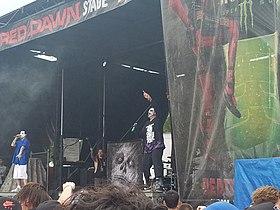

 This disambiguation page lists articles associated with the title Girls Girls Girls.