Battlefield 2142 theme by A55h4t
Download: BF2142.p3t
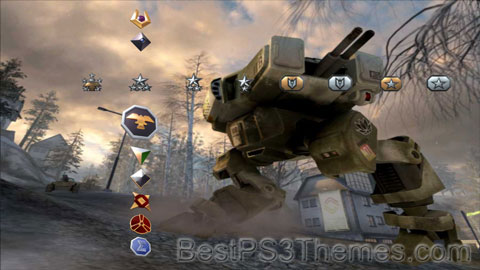
(3 backgrounds)
| Battlefield 2142 | |
|---|---|
 | |
| Developer(s) | DICE |
| Publisher(s) | Electronic Arts |
| Director(s) | Lars Gustavsson |
| Designer(s) | Linus Josephson |
| Composer(s) | Gregor Narholz |
| Series | Battlefield |
| Platform(s) | Microsoft Windows, Mac OS X |
| Release | Microsoft Windows Northern Strike Mac OS X |
| Genre(s) | First-person shooter |
| Mode(s) | Single-player, multiplayer |
Battlefield 2142 is a 2006 first-person shooter video game developed by DICE and published by Electronic Arts. It is the fourth game in the Battlefield series. Battlefield 2142 is set in 2142, depicting a war known as "The Cold War of the 22nd Century", in which two military superpowers – the European Union (EU) and Pan Asian Coalition (PAC) – battle for the remaining unfrozen land during a new ice age.[1]
The game was designed primarily for multiplayer gameplay and allows for a maximum of 64 players on a server or a maximum of 16 players in single player mode against bots on Conquest mode. It has its own ranking system to keep track of the user's statistics similar to the one used in its predecessor, Battlefield 2. It opens up new categories of vehicles and weapons not seen in Battlefield 2. Battlefield 2142 has an unlock system that allows the player to choose a new unlock every time they achieve a new rank instead of forcing the player to purchase items. A booster pack called Northern Strike contains new maps, unlocks, and vehicles; a deluxe edition was released that contains Battlefield 2142 and Northern Strike.
In July 2014, all online components of the game were deactivated following the shutdown of GameSpy.[2][3] The game's online multiplayer was revived by the Project Revive community in 2016.[4] However, the project was shut down in 2017 following a legal notice from Electronic Arts.[5][6] The game's online multiplayer is currently only playable with the community 2142 Reclamation Project formed after the shutdown of Project Revive.[7][8]
Gameplay[edit]

Battlefield includes two gameplay modes, Conquest and Titan,[9] the latter of which can only be played online in multiplayer maps (without using modifications ("mods")). Both modes support varying numbers of players, up to 64, depending upon the server a player chooses to join online. The single player mode consists of a maximum of 16 players, which includes 15 AI bots. Commander Mode from Battlefield 2 returns, as one player from each team can apply and either accept or turn down the role of becoming commander. The player in the commander position has vital roles in the game, such as deploying UAV's, artillery strikes, airdropping supplies or vehicles for their team.
Classes[edit]
Battlefield 2142 features four different playable kits. These kits can be selected at any time during gameplay. The kits are a combination of the kits in Battlefield 2, which had seven playable kits, but were less customizable and upgradeable in comparison. Each kit has different weapons and equipment that are unique. Each contains a basic weapon, a secondary weapon, and a knife. The knife differs in this game from Battlefield 2 because when a player is killed with a knife, the killer acquires the player's dogtag. The player is able to gain rank, options, and equipment by acquiring points in the game.
Battlefield 2142 has customization, allowing the player to gain more unlocks for one kit, which makes it more effective. Each class has two unlockable weapons and one passive unlock which upgrades the soldier's helmet, each helmet upgrade having different functions. The benefits of one soldier's helmet upgrade will be shared with their squadmates.
- Assault: The Assault and Medic classes from Battlefield 2 are combined as the Assault kit in Battlefield 2142. The main weapons are assault rifles with unlockable rocket or shotgun add-ons. Other unlocks include advanced first-aid kits which can be deployed to restore the health of anyone standing close to it, smoke grenades for screening, and a defibrillator for reviving fallen comrades.
- Engineer: The Engineer class works the same way it was intended since Battlefield 1942. Engineer can still repair vehicles and have the access to heavy weapons that can damage and destroy enemy vehicles, such as rocket launchers and mines.
- Support: The Support class provides ammunition with ammo boxes and can deploy turret guns and electric shields to help the team in the close quarters combat.
- Recon: The Recon kit is aimed to provide perimeter support for the team with high velocity sniper rifles. In the other hand the Lambert-carbine is a full-automatic carbine weapon suitable for the assault gameplay style and combined with RDX explosives and the cloaking device recon turns into special ops class.
Conquest[edit]
Conquest mode, similar to its predecessors, involves two teams of players fighting each other while working to capture and defend spawn points. Spawn points are represented by flags and display the color of the controlling faction. To hold a simple majority of flags will initiate a ticket drain on the opposing faction, which will only speed up if one faction controls all the flags. Both teams begin the match with a preset number of tickets. Each time a soldier dies, a ticket is removed from their team. Players have the opportunity to reduce their number of lost tickets by reviving their "critically wounded" teammates with the Assault class' defibrillator. By reviving a teammate within 15 seconds (or the amount of time the server has been set to), no ticket will be lost and the player will not need to respawn (the player who killed the now revived player will keep their kill point). The team that has no tickets, or no places to spawn with no one alive, loses the match.
There are several types of Conquest modes: Head-on, Assault, Assault Lines, and Double Assault Lines, Conquest Assault, No Vehicles.
- In Head-on, both teams start with one flag that cannot be captured. The rest of the flags are neutral.
- In Assault, play in either of the Assault Lines modes.
- In Conquest Assault, which is identical to normal Assault in both its coding and function, the PAC starts with one uncapturable flag (an immobile Titan), while the EU starts off with the rest of the flags and an immobile Titan which can be captured by the PAC.
- In No Vehicles, infantry are the only option, which will stack with the conquest mode that the map uses. No vehicles will spawn, including static ground turrets.
Titan[edit]
The Titan mode involves players from opposing teams whose objective is to destroy the other team's Titan,[10] while trying to defend their own. Titans are massive, heavily armored, flying warships that have powerful force fields protecting them from enemy intrusion or conventional weapons fire. As the force fields are up during the first part of a battle, players must fight to control the anti-Titan missile silos scattered about the battlefield on the ground. Titans can be moved around the battlefield, but only by the team's Commander. Each Titan can defend itself and contribute to the fight on the ground with 4 anti-ground guns and 2 anti-aircraft guns. Titan movement can cause latency issues, so some players prefer not to move them at all. Some servers even disable the commander's ability to move the Titan.
After the shields are down, there are two methods to destroy the enemy Titan. One way is to simply remain on the ground and hold the anti-Titan missiles until they wear down the hull. A quicker alternative is to board the Titan using "assault pods" launched from an APC (Armored Personnel Carrier), air transport, Titan, or spawn beacon, spawn on your squad leader, or land an air transport on a Titan as a mobile spawn point. Once inside, the players must destroy 4 reactor consoles to gain access to the reactor room. There, they can blow up the reactor, and have 30 seconds to flee the Titan before it is destroyed.
During the beta release of the game, players who managed to escape the destroyed Titan before the 30-second timer ended received an award. In the retail game, the round ends when the Titan is destroyed, and because player deaths triggered by the end of a round do not count, the evacuation of the Titan had little significance aside from inciting a rush in the player. In patch 1.05, DICE reinstated the award for those attacking players who escaped the destruction in the "Titan Survival Pin." However, receiving the pin requires very precise timing to land on the ground, causing confusion amongst players initially.[11]
Vehicles[edit]
The vehicles of Battlefield 2142 are similar to those in Battlefield 2 except for a more futuristic design. For example, the PAC team tank, the Type 32 Nekomata, has a hovercraft driving system.[12] The air vehicles are more futuristic, propelled by turbines instead of rotors. Almost all vehicles have a short duration protective shield called active defense. The active defense protects the vehicle from all attacks (except for electromagnetic attacks) for about five seconds.
Statistics tracking[edit]
The ranking and points system of Battlefield 2142 is similar to Battlefield 2, however, different ranks are featured. As with Battlefield 2, a key feature of the game is "Character Persistence", which saves and tracks almost every aspect of gameplay for players. Unlike Battlefield 2, however, the user is given the option to create up to four soldiers, as opposed to Battlefield 2's limitation of one per account. When playing the game in online multiplayer mode on specified servers, a master server tracks player points, ranks, equipment, and other statistics.
Ranks[edit]
The Battlefield 2142 rank system consists of a number of partially fictitious, partially realistic military ranks, and are (for the most part) each divided by a silver/gold format, with players attaining the silver version of the rank (e.g. Corporal Silver) before reaching the gold rank (e.g. Corporal Gold). New ranks are earned by attaining experience points, which can be earned for actions on a ranked server such as killing an enemy soldier/vehicle, healing/resupplying teammates, repairing ally vehicles/strategic objects (SAT Track, UAV, Orbital Strike, and EMP Strike which are located at the main base), capturing/neutralizing control points/missile silos, assisting in kills (such as piloting a gunship) or carrying out orders given by the Squad Leader/Commander (negative points may be earned by actions such as teamkilling).
The rank system is designed to be progressive so ranks are earned faster when a player begins (for example, 40 points are needed to climb from the lowest to the 2nd lowest rank while 3600 points are needed to advance from the 2nd highest to the highest rank). This provides new players with a number of unlocks straight away to give them an edge (as well as ambition). Later ranks require more effort, time, and skill from the player as the extremely high number of points can usually be attained only through awards (which may give up to 2000 points apiece). The final three ranks of the game are only given to a certain number of players at a time, with Major General given to 50 players, Lieutenant General given to 25 players, and the highest rank, Supreme Commander, given to only one player at a time. These top three are brevet ranks; players retain those ranks until other players surpass them.
Awards[edit]
Awards can be earned only in multiplayer mode, with each award having its own specific criteria. Most awards typically have two to five criteria, composed of In A Round (IAR) criteria and Global criteria. IAR criteria must be accomplished within a single round, not through multiple rounds. Global criteria are accumulated by playing on a ranked server. For example, the Titan Commander badge (silver) requires a player to be the commander in Titan mode for twenty minutes in one round after accumulating 1000 commander points in Titan mode globally. Each award (with the exception of medals, which are more for prestige, since they are the hardest to obtain) delivers a certain number of experience points, which go towards attaining a new rank. Badges, which have three levels of achievement (bronze, silver, and gold), and ribbons deliver the most points, while pins offer very few points since they are relatively easy to get, and may be obtained more than once.
Unlocks[edit]
In Battlefield 2142, every time a player earns a new rank, they are able to choose a new unlock. Players with the Northern Strike Booster Pack are also able to earn unlocks by earning the badge or ribbon awards associated with Northern Strike. There are a total of 50 unlocks (40 Battlefield 2142 Core Game, 10 Northern Strike) and there are different categories of unlocks including class unlocks, squad unlocks, and ability unlocks. Class unlocks are specific to the class type which is being used. Ability unlocks are universal for all the classes. Squad unlocks can be equipped by anybody but they may only be used by squad leaders who have the required number of members in their squad. Unlocks are in tiers and require the player to progress up through the tree to unlock higher-level equipment. The player can test the other unlocks by picking up a dead soldier's equipment who is higher rank and contain more unlocks than the player.
A "Field Upgrade" is a temporary unlock which can be awarded to all members of a squad when they either kill, resupply, heal or revive a teammate while they are following an attack or defend order. The Field Upgrade is a sort of 'try before you buy' feature (while the player has their own customizable inventory), allowing players to experience certain unlocks before they use one of their hard earned unlock credits to unlock it. They only allow players to test the equipment one level higher on their original unlock tree. Field Upgrades will be available to the player until the player disconnects from the server. If a player unlocks a new item which they have already Field Upgraded on their current server, the next unlock will not become available to them for a Field Upgrade until they leave the server. Certain unlocks are only available after purchasing the Northern Strike booster pack, and they are on top of all the other unlocks in the unlock trees of the core game. Field Upgrades also allow players without Northern Strike to have temporary access to the upgrades that are only available in Northern Strike. Field Upgrades are only applicable on ranked servers.
Synopsis[edit]
In the year 2106, a new ice age began. As the ice expanded, millions of people all over the world were displaced, particularly in Russia and Japan. Combined with their increasing inability to find sufficient natural resources, the Pan Asian Coalition grows desperate. Meanwhile, the European Union is able to withstand the displacements and find sufficient resources, mostly from North Africa due to their relationship with the Union of African States (Africa remaining mostly ice-free). Seeing this, the PAC launches a full-scale invasion of Europe and North Africa in 2139, beginning the Cold War of the 22nd century, a war for the world's last remaining land and resources.
The Final Stand multiplayer expansion pack for Battlefield 4 gives new insight about the cold war, revealing that the PAC was formed as early as 2020 (the year Battlefield 4 takes place) as early versions of the coalition's symbol can be seen. Furthermore, early prototypes of Titans and other vehicles and futuristic technology were already in development in 2020 by the PAC in remote regions of Russia.
Development[edit]
Battlefield 2142 was rumored to be in development ever since a 30-second video was leaked to the Internet in January 2006. The video described itself as an "internal test." The proof of concept depicts the game's various vehicles storming through a futuristic city. A screenshot depicting the walker was taken from this video and subsequently used in marketing for the game. The rumors began in earnest following a February 2006 interview with Dan Blackstone, a senior producer from Electronic Arts, in which he mentioned "We're about to announce something very big, so stay tuned. One other interviewer asked this and I gave him a hint, so it's only fair that I do the same for you: 3213/3*2. Or said another way: S.R. 4588164."[13]
The square root ("S.R.") of 4588164 is 2142 (3213÷3×2 equals 2142 as well), hence the rumors. The only proof of existence was the cover story of the PC Gamer magazine and the trailer, published on the very same magazine, until March 21, 2006, when Electronic Arts and DICE announced that the next game in the Battlefield series would be Battlefield 2142, in their March 21, 2006 Community Update.[14]
Several pieces of early concept art were released onto the internet. However, during a hacking attack on the board where the images were posted, most of the images were lost. Early in the development process, the game was set on a different planet, as hinted by three moons in the sky in one piece of concept art. Additionally, it was to be the United States, rather than the European Union, versus the Pan-Asian Coalition, and several files within the game indicate the U.S. (most notably the texture files used by the EU and PAC, with the EU folder being labeled 'US' rather than 'EU').
In the Battlefield 2 Armored Fury Booster Pack map Midnight Sun, there was a drivable muscle car with license plate number 2142. Additionally in Armored Fury, there was a billboard advertising a digital wrist watch, which displays '21:42' as the time, and a Mushroom cloud with the caption message, "Watch For The Future." Additionally in Armored Fury, the drivable semi-truck had a magazine on the passenger seat that reads "Ice Age Approaches."
Battlefield 2142 was officially announced and playable at E3 2006."[15][16]
The Battlefield 2142 beta was released in the third week of August. However, it was revealed that the beta was not a complete "open" beta upon its release. At first, the general belief was that it was to be a FilePlanet subscriber-only beta,[17] but it was later revealed to additionally have an invite system. At that time the beta was only available to certain FilePlanet subscribers (keys were given out on a first-come, first-served basis) and those who were invited. Some fan-sites had been holding contests giving out invitations to the BF2142 beta as prizes. On August 31, a large number of keys were given out by FilePlanet for free, and the beta client was upgraded. The FilePlanet beta ended on September 12, 2006. It was noted by many users that at the beginning of the beta the game worked great, but by the end it was horribly broken, with players getting stuck in walls and titans disappearing into thin air. It was decided to ship it anyway.
At the 2007 WWDC, it was announced that Battlefield 2142 would be released for Macintosh computers in July 2007.[18] It was released in 2007, for Mac OS X. Since the game uses Cedega it will only work with Intel based Macintosh systems and not PowerPC.
Advertising components[edit]
Battlefield 2142 shipped with dynamic in-game advertising provided by IGA Worldwide. A similar system is featured in games such as Battlefield 2, Splinter Cell: Chaos Theory, and PlanetSide.[19] The system changes advertisements on objects such as billboards in-game. These in-game advertisements have been dubbed adware by some, and there has been a vocal backlash against this element of the game.[20]
Additionally, much of the recent "advertising space" has been used to show propaganda for new in game features and helping to feed rumors of a new game type in the works. Intel has advertised in the game, and recently the Discovery Channel has placed advertising in the game for their Future Weapons series. More recently advertisements for the DVD release of the movie Ghost Rider have appeared.
An in-house advertisement for Battlefield: Bad Company have appeared recently, stating such things as "Celebrating the 134th anniversary of the Battlefield: Bad Company demo."
Another current one is advertising the DVD and Blu-ray release of I Am Legend. Billboards without paid advertisements generally have recruitment posters for the factions, and ads for "DICE Travel." These travel ads sell the reader into going to the various maps, such as Verdun or Berlin, for £2142, with taglines such as "Gun not included" and "One-way." Some billboard ads recently added after the new year can be found during the gameplay saying "Happy 2143 EU Soldiers!" Additionally there is a reference to the sci-fi film Starship Troopers, and by extension, World War II recruitment posters, on billboards featuring the slogan – "He's Doing His Part. Are You?"
Ads have also recently appeared for the Northern Strike booster pack, displaying pictures like those of the Goliath, with a tag line of "A soldier's best friend", and PAC propaganda posters with the faction flag and a line reading "Европа завоёвана!" ("Europe is conquered!"), in Russian. In the UK, ads consist almost entirely of ads for Intel Core 2 Duo which states "Battle-Tested" and EA's own Northern Strike. More recently in Britain (August 2007), the bank Lloyds TSB placed adverts in-game showing various accounts and products available from them. Also recently, billboards sporting ads for Battlefield: Bad Company have been popping up. The most recent of which being advertisements for Bad Company's free Conquest mode addition.
Updates[edit]
EA Games released five updates for Battlefield 2142. These addressed various issues in-game, some of which are causes of minor imbalance (for example, a bug causing the missiles of one faction's gunships to be homing while the other faction's gunship had "dumb" missiles). However some players complained that minor issues (such as small bullet deviation adjustments to guns) were repeatedly tweaked while major issues (exploits which allowed sentry guns to locate players behind walls, allowed critically wounded players to "see through" the whole Titan, and "Pod Surfing" which would allow players who altered their controls to extend the APCs' and Squad Leader Beacons' drop pod range almost infinitely) remained unaddressed. Certain fixes have also created more problems. For instance, an exploit that allows players to reach normally inaccessible locations such as high rooftops was remedied in the 1.25 update. However, the fix had repercussions in the form of equipment that can kill the player or become stuck on map geometry. Patch 1.4 fixed many of these exploits and enhanced certain features of the game. Three major additions (in 1.40) are the new map Highway Tampa, and an auto save feature that saves the last kit layout used for each class (although there have been noted problems with certain weapons and gadgets randomly being saved incorrectly). The 1.40 update allows a second gunship to spawn on each titan after the first one has taken off. In the Highway Tampa map, there are a total of three gunships per faction. Patch 1.50 was released for Windows-based systems on May 30, 2008 and includes 2 new maps – Wake Island and Operation Shingle – as well as numerous bug fixes and game enhancements; a mid-June 2008 announcement on the Battlefield website indicated that Patch 1.50 would eventually also be released for the Mac OS; the Mac patch became available. The latest patch to date, Version 1.51, featured the 4 new maps of Molokai, Yellowknife, Operation Blue Pearl, and Strike at Karkand as well as a Northern Strike booster pack.
Music[edit]
An official soundtrack has been released, containing 14 songs, including a new version of the classic Battlefield: 1942 theme. Each song (excluding tracks 1, 6, 7, and 14) corresponds with a map from the game. All tracks were composed by Gregor Narholz.
| Battlefield: 2142 (Original Game Soundtrack) | |
|---|---|
| Soundtrack album by Gregor Narholz | |
| Genre | Video game soundtrack |
| Length | 34:05 |
| No. | Title | Writer(s) | Length |
|---|---|---|---|
| 1. | "Battlefield: 2142 Main Theme" | Gregor Narholz | 3:18 |
| 2. | "Belgrade" | Gregor Narholz | 2:12 |
| 3. | "Camp Gibraltar" | Gregor Narholz | 2:28 |
| 4. | "Cerbere Landing" | Gregor Narholz | 2:34 |
| 5. | "Fall of Berlin" | Gregor Narholz | 2:14 |
| 6. | "Lose Round" | Gregor Narholz | 0:37 |
| 7. | "Menu Music" | Gregor Narholz | 5:28 |
| 8. | "Minsk" | Gregor Narholz | 2:19 |
| 9. | "Shuhia Taiba" | Gregor Narholz | 2:32 |
| 10. | "Sidi Power Plant" | Gregor Narholz | 2:30 |
| 11. | "Suez Canal" | Gregor Narholz | 2:32 |
| 12. | "Tunis Harbor" | Gregor Narholz | 2:37 |
| 13. | "Verdun" | Gregor Narholz | 2:17 |
| 14. | "Win Round" | Gregor Narholz | 0:36 |
Release[edit]
Demo[edit]
EA released an online-only standalone demo of the retail game, featuring the Sidi Power Plant map, with either conquest or Titan modes. Demo versions were limited to demo-only servers, of which a few were initially run by EA, but were quickly supplanted by player run servers.
Ranked points or unlocks could not be earned in the demo, though several demo servers ran their own ranking system. The demo was not updated in parallel with the complete game, and so several exploitable glitches and bugs existed, though most were patched or policed by the demo modding community and server admins. Unlike in the full game, a modding community thrived within the demo servers, primarily because of the static frozen environment untouched by patches, and the desire and competition between server administrators, to create fresh and diverse features to add to an otherwise limited gaming environment.
EA discontinued support for the demo August 11, 2011; it is no longer possible to create a player character in the demo game client, or login with an existing demo account to an EA player database server, which essentially renders the demo game no longer functional.
Retail bonuses[edit]
- Collector's Edition: A Collector's Edition of the game was released on DVD, which came in a numbered metal box. This edition came with a Battlefield 2142 chain and handphone strap, as well as a free rank.
- Best Buy: Players who pre-ordered Battlefield 2142 from Best Buy were not only given a free 64MB dog tag styled flash drive, but also a free "downloadable assault weapon", which replaced the existing standard EU assault rifle (Scar 11), with the "Bofors Defense Machine Gun", which was a cosmetically changed version of the same weapon. The Bofors Defense Machine Gun causes many players to reinstall the game and sell the code for the price difference because of the massive size of the weapon compared to the SCAR 11.
- GameStop: Players who pre-ordered Battlefield 2142 from GameStop received a free in-game rank. This rank was stackable with the Battlefield 2 Veteran's Program promotion, allowing players to begin halfway through the second rank upon release of the retail game.
- BF2 Veterans Program: People that played Battlefield 2 could participate in a "Veterans Program" that let them reserve their name for Battlefield 2142 before launch, get an immediate in-game rank-up, placed the red '2' from the Battlefield 2 logo next to their in-game BF2142 username during play, and receive exclusive verbal taunts to use against other players in Battlefield 2.[21]
Reception[edit]
| Aggregator | Score |
|---|---|
| Metacritic | 80/100[22] |
| Publication | Score | |||||||||||||||||||||||||||||||||||||||||||||||||||||||||||||||||||||||||||||||||||||||||||||||||||||||||||||||||||
|---|---|---|---|---|---|---|---|---|---|---|---|---|---|---|---|---|---|---|---|---|---|---|---|---|---|---|---|---|---|---|---|---|---|---|---|---|---|---|---|---|---|---|---|---|---|---|---|---|---|---|---|---|---|---|---|---|---|---|---|---|---|---|---|---|---|---|---|---|---|---|---|---|---|---|---|---|---|---|---|---|---|---|---|---|---|---|---|---|---|---|---|---|---|---|---|---|---|---|---|---|---|---|---|---|---|---|---|---|---|---|---|---|---|---|---|---|
| Edge | 8/10[23] | |||||||||||||||||||||||||||||||||||||||||||||||||||||||||||||||||||||||||||||||||||||||||||||||||||||||||||||||||||
| Eurogamer | 7/10[24] | |||||||||||||||||||||||||||||||||||||||||||||||||||||||||||||||||||||||||||||||||||||||||||||||||||||||||||||||||||
| Game Informer | 8.5/10[25] | |||||||||||||||||||||||||||||||||||||||||||||||||||||||||||||||||||||||||||||||||||||||||||||||||||||||||||||||||||
| GamePro | 3.75/5[26] | |||||||||||||||||||||||||||||||||||||||||||||||||||||||||||||||||||||||||||||||||||||||||||||||||||||||||||||||||||
| GameRevolution | B+[27] | |||||||||||||||||||||||||||||||||||||||||||||||||||||||||||||||||||||||||||||||||||||||||||||||||||||||||||||||||||
| GameSpot | 8.1/10[28] | |||||||||||||||||||||||||||||||||||||||||||||||||||||||||||||||||||||||||||||||||||||||||||||||||||||||||||||||||||
| GameTrailers | 8.4/10[29] | |||||||||||||||||||||||||||||||||||||||||||||||||||||||||||||||||||||||||||||||||||||||||||||||||||||||||||||||||||
| GameZone | 8/10[30] | |||||||||||||||||||||||||||||||||||||||||||||||||||||||||||||||||||||||||||||||||||||||||||||||||||||||||||||||||||
| IGN | 8.4/10[31] | |||||||||||||||||||||||||||||||||||||||||||||||||||||||||||||||||||||||||||||||||||||||||||||||||||||||||||||||||||
| PC Format | 78%[32] | |||||||||||||||||||||||||||||||||||||||||||||||||||||||||||||||||||||||||||||||||||||||||||||||||||||||||||||||||||
| PC Gamer (UK) | 83%[33] | |||||||||||||||||||||||||||||||||||||||||||||||||||||||||||||||||||||||||||||||||||||||||||||||||||||||||||||||||||
| PC Gamer (US) | 86%[34] | |||||||||||||||||||||||||||||||||||||||||||||||||||||||||||||||||||||||||||||||||||||||||||||||||||||||||||||||||||
| PC Zone | 86%[35] | |||||||||||||||||||||||||||||||||||||||||||||||||||||||||||||||||||||||||||||||||||||||||||||||||||||||||||||||||||
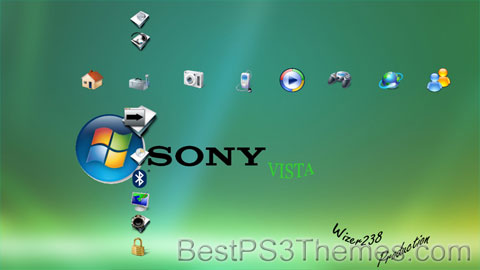
| 411Mania | 8.8/10PS3 VistaPS3 Vista theme by Wizer238 Download: PS3Vista.p3t
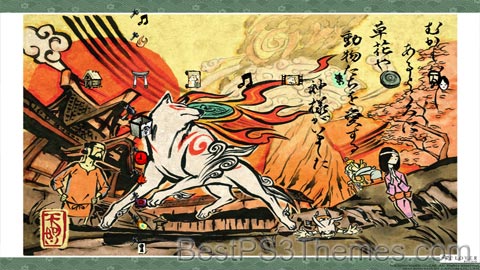
P3T Unpacker v0.12 This program unpacks Playstation 3 Theme files (.p3t) so that you can touch-up an existing theme to your likings or use a certain wallpaper from it (as many themes have multiple). But remember, if you use content from another theme and release it, be sure to give credit! Download for Windows: p3textractor.zip Instructions: Download p3textractor.zip from above. Extract the files to a folder with a program such as WinZip or WinRAR. Now there are multiple ways to extract the theme. The first way is to simply open the p3t file with p3textractor.exe. If you don’t know how to do this, right click the p3t file and select Open With. Alternatively, open the p3t file and it will ask you to select a program to open with. Click Browse and find p3textractor.exe from where you previously extracted it to. It will open CMD and extract the theme to extracted.[filename]. After that, all you need to do for any future p3t files is open them and it will extract. The second way is very simple. Just drag the p3t file to p3textractor.exe. It will open CMD and extract the theme to extracted.[filename]. For the third way, first put the p3t file you want to extract into the same folder as p3textractor.exe. Open CMD and browse to the folder with p3extractor.exe. Enter the following: Okami versionD #2Okami versionD theme by Deemy Download: Okami_vD_2.p3t
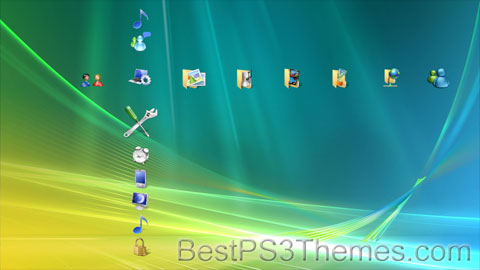
P3T Unpacker v0.12 This program unpacks Playstation 3 Theme files (.p3t) so that you can touch-up an existing theme to your likings or use a certain wallpaper from it (as many themes have multiple). But remember, if you use content from another theme and release it, be sure to give credit! Download for Windows: p3textractor.zip Instructions: Download p3textractor.zip from above. Extract the files to a folder with a program such as WinZip or WinRAR. Now there are multiple ways to extract the theme. The first way is to simply open the p3t file with p3textractor.exe. If you don’t know how to do this, right click the p3t file and select Open With. Alternatively, open the p3t file and it will ask you to select a program to open with. Click Browse and find p3textractor.exe from where you previously extracted it to. It will open CMD and extract the theme to extracted.[filename]. After that, all you need to do for any future p3t files is open them and it will extract. The second way is very simple. Just drag the p3t file to p3textractor.exe. It will open CMD and extract the theme to extracted.[filename]. For the third way, first put the p3t file you want to extract into the same folder as p3textractor.exe. Open CMD and browse to the folder with p3extractor.exe. Enter the following: Vista for PS3 XMB Style v1.1Vista for PS3 XMB Style version 1.1 theme by zsdg07 Download: VistaForPS3XMBv1.1.p3t
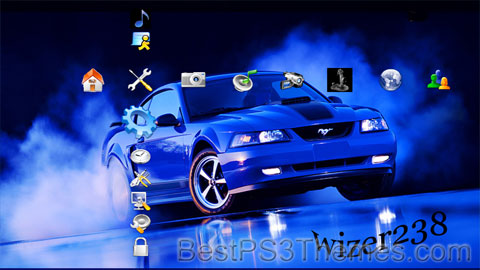
P3T Unpacker v0.12 This program unpacks Playstation 3 Theme files (.p3t) so that you can touch-up an existing theme to your likings or use a certain wallpaper from it (as many themes have multiple). But remember, if you use content from another theme and release it, be sure to give credit! Download for Windows: p3textractor.zip Instructions: Download p3textractor.zip from above. Extract the files to a folder with a program such as WinZip or WinRAR. Now there are multiple ways to extract the theme. The first way is to simply open the p3t file with p3textractor.exe. If you don’t know how to do this, right click the p3t file and select Open With. Alternatively, open the p3t file and it will ask you to select a program to open with. Click Browse and find p3textractor.exe from where you previously extracted it to. It will open CMD and extract the theme to extracted.[filename]. After that, all you need to do for any future p3t files is open them and it will extract. The second way is very simple. Just drag the p3t file to p3textractor.exe. It will open CMD and extract the theme to extracted.[filename]. For the third way, first put the p3t file you want to extract into the same folder as p3textractor.exe. Open CMD and browse to the folder with p3extractor.exe. Enter the following: MustangMustang theme by wizer238 Download: Mustang.p3t
The mustang is a free-roaming horse of the Western United States, descended from horses brought to the Americas by the Spanish conquistadors. Mustangs are often referred to as wild horses, but because they are descended from once-domesticated animals, they are actually feral horses. The original mustangs were Colonial Spanish horses, but many other breeds and types of horses contributed to the modern mustang, now resulting in varying phenotypes. Some free-roaming horses are relatively unchanged from the original Spanish stock, most strongly represented in the most isolated populations. In 1971, the United States Congress recognized that "wild free-roaming horses and burros are living symbols of the historic and pioneer spirit of the West, which continue to contribute to the diversity of life forms within the Nation and enrich the lives of the American people."[1] The free-roaming horse population is managed and protected by the U.S. Bureau of Land Management (BLM). Controversy surrounds the sharing of land and resources by mustangs with the livestock of the ranching industry, and also with the methods by which the BLM manages their population numbers. The most common method of population management used is rounding up excess population and offering them to adoption by private individuals. There are inadequate numbers of adopters, so many once free-roaming horses now live in temporary and long-term holding areas with concerns that the animals may be sold for horse meat. Additional debate centers on the question of whether mustangs—and horses in general—are a native species or an introduced invasive species in the lands they inhabit. Etymology and usage[edit]Although free-roaming Mustangs are called "wild" horses, they descend from feral domesticated horses.[a] According to the Oxford English Dictionary (OED), the English word mustang was likely borrowed from two essentially synonymous Spanish words, mestengo (or mesteño) and mostrenco.[4] English lexicographer John Minsheu glossed both words together as 'strayer' in his dictionary of 1599.[4] Both words referred to livestock defined as 'wild, having no master'.[b] Mostrenco was used since the 13th century, while mestengo is attested from the late 15th.[4] Mesteño referred originally to beasts of uncertain ownership distributed by the powerful transhumant merino sheep ranchers' guild in medieval Spain, called the Mesta (Honrado Concejo de la Mesta, 'Honorable Council of the Mesta').[6][7][4] The name of the Mesta derived ultimately from the Latin: mixta, lit. 'mixed', referring to the common ownership of the guild's animals by multiple parties.[7] The OED states that the origin of mostrenco is "obscure" but notes the Portuguese: mostrengo is attested from the 15th century.[4] In Spanish, mustangs are named mesteños.[citation needed] By 1936, the English 'mustang' had been loaned back into Spanish as mustango.[4] "Mustangers" (Spanish: mesteñeros) were cowboys (vaqueros) who caught, broke, and drove free-ranging horses to market in the Spanish and later American territories of what is now northern Mexico, Texas, New Mexico, and California. They caught the horses that roamed the Great Plains, the San Joaquin Valley of California, and later the Great Basin, from the 18th century to the early 20th century.[8][9] Characteristics and ancestry[edit] The original mustangs were Colonial Spanish horses, but many other breeds and types of horses contributed to the modern mustang, resulting in varying phenotypes. Mustangs of all body types are described as surefooted and having good endurance. They may be of any coat color.[10] Throughout all the Herd Management Areas managed by the Bureau of Land Management, light riding horse type predominates, though a few horses with draft horse characteristics also exist, mostly kept separate from other mustangs and confined to specific areas.[11] Some herds show the signs of the introduction of Thoroughbred or other light racehorse-types into herds, a process that also led in part to the creation of the American Quarter Horse.[12] The mustang of the modern west has several different breeding populations today which are genetically isolated from one another and thus have distinct traits traceable to particular herds.[citation needed] Genetic contributions to today's free-roaming mustang herds include assorted ranch horses that escaped to or were turned out on the public lands, and stray horses used by the United States Cavalry.[c] For example, in Idaho some Herd Management Areas (HMA) contain animals with known descent from Thoroughbred and Quarter Horse stallions turned out with feral herds.[15] The herds located in two HMAs in central Nevada produce Curly Horses.[16][17] Others, such as certain bands in Wyoming, have characteristics consistent with gaited horse breeds.[18] Many herds were analyzed for Spanish blood group polymorphism (commonly known as "blood markers") and microsatellite DNA loci.[19] Blood marker analysis verified a few to have significant Spanish ancestry, namely the Cerbat Mustang, Pryor Mountain Mustang, and some horses from the Sulphur Springs HMA.[20] The Kiger Mustang is also said to have been found to have Spanish blood[11][dubious – discuss] and subsequent microsatellite DNA confirmed the Spanish ancestry of the Pryor Mountain Mustang.[21] Horses in several other HMAs exhibit Spanish horse traits, such as dun coloration and primitive markings.[d] Genetic studies of other herds show various blends of Spanish, gaited horse, draft horse, and pony influences.[26] Height varies across the west, however, most are small, generally 14 to 15 hands (56 to 60 inches, 142 to 152 cm), and not taller than 16 hands (64 inches, 163 cm), even in herds with draft or Thoroughbred ancestry.[e] Some breeders of domestic horses consider the mustang herds of the west to be inbred and of inferior quality. However, supporters of the mustang argue that the animals are merely small due to their harsh living conditions and that natural selection has eliminated many traits that lead to weakness or inferiority.[citation needed] The now-defunct American Mustang Association developed a breed standard for those mustangs that carry morphological traits associated with the early Spanish horses. These include a well-proportioned body with a clean, refined head with wide forehead and small muzzle. The facial profile may be straight or slightly convex. Withers are moderate in height, and the shoulder is to be "long and sloping". The standard considers a very short back, deep girth and muscular coupling over the loins as desirable. The croup is rounded, neither too flat nor goose-rumped. The tail is low-set. The legs are to be straight and sound. Hooves are round and dense.[10] Dun color dilution and primitive markings are particularly common among horses of Spanish type.[27] History[edit]1493–1600[edit] Modern horses were first brought to the Americas with the conquistadors, beginning with Columbus, who imported horses from Spain to the West Indies on his second voyage in 1493.[29] Horses came to the mainland with the arrival of Cortés in 1519.[30] By 1525, Cortés had imported enough horses to create a nucleus of horse-breeding in Mexico.[31] One hypothesis held that horse populations north of Mexico originated in the mid-1500s with the expeditions of Narváez, de Soto or Coronado, but it has been refuted.[32][33] Horse breeding in sufficient numbers to establish a self-sustaining population developed in what today is the southwestern United States starting in 1598 when Juan de Oñate founded Santa Fe de Nuevo México. From 75 horses in his original expedition, he expanded his herd to 800, and from there the horse population increased rapidly.[33] While the Spanish also brought horses to Florida in the 16th century,[34] the Choctaw and Chickasaw horses of what is now the southeastern United States are believed to be descended from western mustangs that moved east, and thus Spanish horses in Florida did not influence the mustang.[33] 17th- and 18th-century dispersal[edit] Native American people readily integrated use of the horse into their cultures. They quickly adopted the horse as a primary means of transportation. Horses replaced the dog as a pack animal and changed Native cultures in terms of warfare, trade, and even diet—the ability to run down bison allowed some people to abandon agriculture for hunting from horseback.[36] Santa Fe became a major trading center in the 1600s.[37] Although Spanish laws prohibited Native Americans from riding horses, the Spanish used Native people as servants, and some were tasked to care for livestock, thus learning horse-handling skills.[35] Oñate's colonists also lost many of their horses.[38] Some wandered off because the Spanish generally did not keep them in fenced enclosures,[39] and Native people in the area captured some of these estrays.[40] Other horses were traded by Oñate' settlers for women, or food and other goods.[33] Initially, horses obtained by Native people were simply eaten, along with any cattle that were captured or stolen.[41] But as individuals with horse-handling skills fled Spanish control, sometimes with a few trained horses, the local tribes began using horses for riding and as pack animals. By 1659, settlements reported being raided for horses, and in the 1660s the "Apache"[f] were trading human captives for horses.[42] The Pueblo Revolt of 1680 also resulted in large numbers of horses coming into the hands of Native people, the largest one-time influx in history.[40] From the Pueblo people, horses were traded to the Apache, Navajo and Utes. The Comanche acquired horses and provided them to the Shoshone.[43] The Eastern Shoshone and Southern Utes became traders who distributed horses and horse culture from New Mexico to the northern plains.[44] West of the Continental Divide, horses distribution moved north quite rapidly along the western slopes of the Rocky Mountains, skirting desert regions[37] such as the Great Basin and the western Colorado Plateau.[44][g] Horses reached what today is southern Idaho by 1690.[35] The Northern Shoshone people in the Snake River valley had horses in 1700.[45][h] By 1730, they reached the Columbia Basin and were east of the Continental divide in the northern Great Plains.[35] The Blackfeet people of Alberta had horses by 1750.[46] The Nez Perce people in particular became master horse breeders, and developed one of the first distinctly American breeds, the Appaloosa. Most other tribes did not practice extensive amounts of selective breeding, though they sought out desirable horses through acquisition and quickly culled those with undesirable traits.[citation needed] By 1769, most Plain Indians had horses.[45][47] In this period, Spanish missions were also a source of stray and stolen livestock, particularly in what today is Texas and California.[48] The Spanish brought horses to California for use at their missions and ranches, where permanent settlements were established in 1769.[47] Horse numbers grew rapidly, with a population of 24,000 horses reported by 1800.[49] By 1805, there were so many horses in California that people began to simply kill unwanted animals to reduce overpopulation.[50] However, due to the barriers presented by mountain ranges and deserts, the California population did not significantly influence horse numbers elsewhere at the time.[47][i] Horses in California were described as being of "exceptional quality".[50] In the upper Mississippi basin and Great Lakes regions, the French were another source of horses. Although horse trading with native people was prohibited, there were individuals willing to indulge in illegal dealing, and as early as 1675, the Illinois people had horses. Animals identified as "Canadian", "French", or "Norman" were located in the Great Lakes region, with a 1782 census at Fort Detroit listing over 1000 animals.[52] By 1770, Spanish horses were found in that area,[35] and there was a clear zone from Ontario and Saskatchewan to St. Louis where Canadian-type horses, particularly the smaller varieties, crossbred with mustangs of Spanish ancestry. French-Canadian horses were also allowed to roam freely, and moved west, particularly influencing horse herds in the northern plains and inland northwest.[52] Although horses were brought from Mexico to Texas as early as 1542, a stable population did not exist until 1686, when Alonso de León's expedition arrived with 700 horses. From there, later groups brought up thousands more, deliberately leaving some horses and cattle to fend for themselves at various locations, while others strayed.[53] By 1787, these animals had multiplied to the point that a roundup gathered nearly 8,000 "free-roaming mustangs and cattle".[54] West-central Texas, between the Rio Grande and Palo Duro Canyon, was said to have the most concentrated population of feral horses in the Americas.[46] Throughout the west, horses escaped human control and formed feral herds, and by the late 1700s, the largest numbers were found in what today are the states of Texas, Oklahoma, Colorado, and New Mexico.[46] 19th century[edit] An early 19th-century reference to mustangs by American sources came from Zebulon Pike, who in 1808 noted passing herds of "mustangs or wild horses". In 1821, Stephen Austin noted in his journal that he had seen about 150 mustangs.[55][j] Estimates of when the peak population of mustangs occurred and total numbers vary widely between sources. No comprehensive census of feral horse numbers was ever performed until the time of the Wild and Free-Roaming Horses and Burros Act of 1971 and any earlier estimates, particularly prior to the 20th century, are speculative.[56] Some sources simply state that "millions" of mustangs once roamed western North America.[57][58] In 1959, geographer Tom L. McKnight[k] suggested that the population peaked in the late 1700s or early 1800s, and the "best guesses apparently lie between two and five million".[46] Historian J. Frank Dobie hypothesized that the population peaked around the end of the Mexican–American War in 1848, stating: "My own guess is that at no time were there more than a million mustangs in Texas and no more than a million others scattered over the remainder of the West."[60] J. Edward de Steiguer[l] questioned Dobie's lower guess as still being too high.[62] In 1839, the numbers of mustangs in Texas had been augmented by animals abandoned by Mexican settlers who had been ordered to leave the Nueces Strip.[63][64][m] Ulysses Grant, in his memoir, recalled seeing in 1846 an immense herd between the Nueces River and the Rio Grande in Texas: "As far as the eye could reach to our right, the herd extended. To the left, it extended equally. There was no estimating the number of animals in it; I have no idea that they could all have been corralled in the state of Rhode Island, or Delaware, at one time."[66] When the area was ceded to the U.S. in 1848, these horses and others in the surrounding areas were rounded up and trailed north and east,[67] resulting in the near-elimination of mustangs in that area by 1860.[65] Farther west, the first known sighting of a free-roaming horse in the Great Basin was by John Bidwell near the Humboldt Sinks in 1841. Although John Charles Fremont noted thousands of horses in California,[68] the only horse sign he spoke of in the Great Basin, which he named, was tracks around Pyramid Lake, and the natives he encountered there were horseless.[69][n] In 1861, another party saw seven free-roaming horses near the Stillwater Range.[71] For the most part, free-roaming horse herds in the interior of Nevada were established in the latter part of the 1800s from escaped settlers' horses.[68][72][73] 20th century[edit]In the early 1900s, thousands of free-roaming horses were rounded up for use in the Spanish–American War[74] and World War I.[75] By 1920, Bob Brislawn, who worked as a packer for the U.S. government, recognized that the original mustangs were disappearing, and made efforts to preserve them, ultimately establishing the Spanish Mustang Registry.[76] In 1934, J. Frank Dobie stated that there were just "a few wild [feral] horses in Nevada, Wyoming and other Western states" and that "only a trace of Spanish blood is left in most of them"[77] remaining. Other sources agree that by that time, only "pockets" of mustangs that retained Colonial Spanish Horse type remained.[78] By 1930, the vast majority of free-roaming horses were found west of Continental Divide, with an estimated population between 50,000 and 150,000.[79] They were almost completely confined to the remaining United States General Land Office (GLO)-administered public lands and National Forest rangelands in the 11 Western States.[80] In 1934, the Taylor Grazing Act established the United States Grazing Service to manage livestock grazing on public lands, and in 1946, the GLO was combined with the Grazing Service to form the Bureau of Land Management (BLM),[81] which, along with the Forest Service, was committed to removing feral horses from the lands they administered.[citation needed] By the 1950s, the mustang population dropped to an estimated 25,000 horses.[82] Abuses linked to certain capture methods, including hunting from airplanes and poisoning water holes, led to the first federal free-roaming horse protection law in 1959.[83] This statute, titled "Use of aircraft or motor vehicles to hunt certain wild horses or burros; pollution of watering holes"[84] popularly known as the "Wild Horse Annie Act", prohibited the use of motor vehicles for capturing free-roaming horses and burros.[85] Protection was increased further by the Wild and Free-Roaming Horses and Burros Act of 1971 (WFRHABA).[86] The Wild and Free-Roaming Horses and Burros Act of 1971 provided for protection of certain previously established herds of horses and burros. It mandated the BLM to oversee the protection and management of free-roaming herds on lands it administered, and gave U.S. Forest Service similar authority on National Forest lands.[56] A few free-ranging horses are also managed by the United States Fish and Wildlife Service[87] and the National Park Service,[88] but for the most part they are not subject to management under the Act.[89] A census completed in conjunction with passage of the Act found that there were approximately 17,300 horses (25,300 combined population of horses and burros) on the BLM-administered lands and 2,039 on National Forests.[90] 21st century[edit] The BLM has established Herd Management Areas to determine where horses will be sustained as free-roaming populations.[91] The BLM has established an Appropriate Management Level (AML) for each HMA, totaling 26,690 bureau-wide,[92][93][94] but the on-range mustang population in August 2017 was estimated to have grown to over 72,000 horses,[95] expanding to 88,090 in 2019.[92] More than half of all free-roaming mustangs in North America are found in Nevada (which features the horses on its State Quarter), with other significant populations in California, Oregon, Utah, Montana, and Wyoming.[96][o] Another 45,000 horses are in holding facilities.[95] Land use controversies[edit]Prehistoric contextWindows Vista #6Windows Vista theme by rmc08 Download: WindowsVista_6.p3t
Windows Vista is a major release of the Windows NT operating system developed by Microsoft. It was the direct successor to Windows XP, released five years earlier, which was then the longest time span between successive releases of Microsoft Windows. It was released to manufacturing on November 8, 2006, and over the following two months, it was released in stages to business customers, original equipment manufacturers (OEMs), and retail channels. On January 30, 2007, it was released internationally and was made available for purchase and download from the Windows Marketplace; it is the first release of Windows to be made available through a digital distribution platform.[7] Development of Windows Vista began in 2001 when it was codenamed "Longhorn"; originally envisioned as a minor successor to Windows XP, it gradually included numerous new features from the then-next major release of Windows codenamed "Blackcomb", after which it was repositioned as a major release of Windows, and it consequently underwent a protracted development that was unprecedented for Microsoft. Most new features were prominently based on a new presentation layer codenamed Avalon, a new communications architecture codenamed Indigo, and a relational storage platform codenamed WinFS — all built on the premature .NET Framework; however, this proved to be untenable due to incompleteness of technologies and ways in which new features were added, and Microsoft changed the project in 2004. Many new features were eventually reimplemented during development, but Microsoft ceased using managed code to develop the operating system.[8] New features of Windows Vista include a graphical user interface and visual style referred to as Windows Aero; a content index and desktop search platform called Windows Search; new peer-to-peer technologies to simplify sharing files and media between computers and devices on a home network; and new multimedia tools such as Windows DVD Maker. Windows Vista included version 3.0 of the .NET Framework, allowing software developers to write applications without traditional Windows APIs. There are major architectural overhauls to audio, display, network, and print sub-systems; deployment, installation, servicing, and startup procedures are also revised. It is the first release of Windows built on Microsoft's Trustworthy Computing initiative and emphasized security with the introduction of many new security and safety features such as BitLocker and User Account Control. The ambitiousness and scope of these changes, and the abundance of new features earned positive reviews, but Windows Vista was the subject of frequent negative press and significant criticism. Criticism of Windows Vista focused on driver, peripheral, and program incompatibility; digital rights management; excessive authorization from the new User Account Control; inordinately high system requirements when contrasted with Windows XP; its protracted development; longer boot time; and more restrictive product licensing. Windows Vista deployment and satisfaction rates were consequently lower than those of Windows XP, and it is considered a market failure;[9][10] however, its use surpassed Microsoft's pre-launch two-year-out expectations of achieving 200 million users[11] (with an estimated 330 million users by 2009).[12] On October 22, 2010, Microsoft ceased retail distribution of Windows Vista; OEM supply ceased a year later.[13] Windows Vista was succeeded by Windows 7 in 2009. Mainstream support for Windows Vista ended on April 10, 2012 and extended support ended on April 11, 2017.[6] Development[edit]Microsoft began work on Windows Vista, known at the time by its codename "Longhorn", in May 2001,[14] five months before the release of Windows XP. It was originally expected to ship in October 2003 as a minor step between Windows XP and "Blackcomb", which was planned to be the company's next major operating system release. Gradually, "Longhorn" assimilated many of the important new features and technologies slated for Blackcomb, resulting in the release date being pushed back several times in three years. In some builds of Longhorn, their license agreement said "For the Microsoft product codenamed 'Whistler'". Many of Microsoft's developers were also re-tasked to build updates to Windows XP and Windows Server 2003 to strengthen security. Faced with ongoing delays and concerns about feature creep, Microsoft announced on August 27, 2004, that it had revised its plans. For this reason, Longhorn was reset to start work on componentizing the Windows Server 2003 Service Pack 1 codebase, and over time re-incorporating the features that would be intended for an actual operating system release. However, some previously announced features such as WinFS were dropped or postponed, and a new software development methodology called the Security Development Lifecycle was incorporated to address concerns with the security of the Windows codebase, which is programmed in C, C++ and assembly. Longhorn became known as Vista in 2005. Vista in Spanish means view.[15][16] Longhorn[edit] The early development stages of Longhorn were generally characterized by incremental improvements and updates to Windows XP. During this period, Microsoft was fairly quiet about what was being worked on, as their marketing and public relations efforts were more strongly focused on Windows XP, and Windows Server 2003, which was released in April 2003. Occasional builds of Longhorn were leaked onto popular file sharing networks such as IRC, BitTorrent, eDonkey and various newsgroups, and so most of what is known about builds before the first sanctioned development release of Longhorn in May 2003 is derived from these builds. After several months of relatively little news or activity from Microsoft with Longhorn, Microsoft released Build 4008, which had made an appearance on the Internet around February 28, 2003.[17] It was also privately handed out to a select group of software developers. As an evolutionary release over build 3683, it contained several small improvements, including a modified blue "Plex" theme and a new, simplified Windows Image-based installer that operates in graphical mode from the outset, and completed an install of the operating system in approximately one third the time of Windows XP on the same hardware. An optional "new taskbar" was introduced that was thinner than the previous build and displayed the time differently. The most notable visual and functional difference, however, came with Windows Explorer. The incorporation of the Plex theme made blue the dominant color of the entire application. The Windows XP-style task pane was almost completely replaced with a large horizontal pane that appeared under the toolbars. A new search interface allowed for filtering of results, searching for Windows help, and natural-language queries that would be used to integrate with WinFS. The animated search characters were also removed. The "view modes" were also replaced with a single slider that would resize the icons in real-time, in the list, thumbnail, or details mode, depending on where the slider was. File metadata was also made more visible and more easily editable, with more active encouragement to fill out missing pieces of information. Also of note was the conversion of Windows Explorer to being a .NET application. Most builds of Longhorn and Vista were identified by a label that was always displayed in the bottom-right corner of the desktop. A typical build label would look like "Longhorn Build 3683.Lab06_N.020923-1821". Higher build numbers did not automatically mean that the latest features from every development team at Microsoft was included. Typically, a team working on a certain feature or subsystem would generate their working builds which developers would test with, and when the code was deemed stable, all the changes would be incorporated back into the main development tree at once. At Microsoft, several "Build labs" exist where the compilation of the entirety of Windows can be performed by a team. The name of the lab in which any given build originated is shown as part of the build label, and the date and time of the build follow that. Some builds (such as Beta 1 and Beta 2) only display the build label in the version information dialog (Winver). The icons used in these builds are from Windows XP. At the Windows Hardware Engineering Conference (WinHEC) in May 2003, Microsoft gave their first public demonstrations of the new Desktop Window Manager and Aero. The demonstrations were done on a revised build 4015 which was never released. Several sessions for developers and hardware engineers at the conference focused on these new features, as well as the Next-Generation Secure Computing Base (previously known as "Palladium"), which at the time was Microsoft's proposed solution for creating a secure computing environment whereby any given component of the system could be deemed "trusted". Also at this conference, Microsoft reiterated their roadmap for delivering Longhorn, pointing to an "early 2005" release date.[18] Development reset[edit]By 2004, it had become obvious to the Windows team at Microsoft that they were losing sight of what needed to be done to complete the next version of Windows and ship it to customers. Internally, some Microsoft employees were describing the Longhorn project as "another Cairo" or "Cairo.NET", referring to the Cairo development project that the company embarked on through the first half of the 1990s, which never resulted in a shipping operating system (though nearly all the technologies developed in that time did end up in Windows 95 and Windows NT[19]). Microsoft was shocked in 2005 by Apple's release of Mac OS X Tiger. It offered only a limited subset of features planned for Longhorn, in particular fast file searching and integrated graphics and sound processing, but appeared to have impressive reliability and performance compared to contemporary Longhorn builds.[20] Most Longhorn builds had major Windows Explorer system leaks which prevented the OS from performing well, and added more confusion to the development teams in later builds with more and more code being developed which failed to reach stability. In a September 23, 2005 front-page article in The Wall Street Journal,[21] Microsoft co-president Jim Allchin, who had overall responsibility for the development and delivery of Windows, explained how development of Longhorn had been "crashing into the ground" due in large part to the haphazard methods by which features were introduced and integrated into the core of the operating system, without a clear focus on an end-product. Allchin went on to explain how in December 2003, he enlisted the help of two other senior executives, Brian Valentine and Amitabh Srivastava, the former being experienced with shipping software at Microsoft, most notably Windows Server 2003,[22] and the latter having spent his career at Microsoft researching and developing methods of producing high-quality testing systems.[23] Srivastava employed a team of core architects to visually map out the entirety of the Windows operating system, and to proactively work towards a development process that would enforce high levels of code quality, reduce interdependencies between components, and in general, "not make things worse with Vista".[24] Since Microsoft decided that Longhorn needed to be further componentized, work started on builds (known as the Omega-13 builds, named after a time travel device in the film Galaxy Quest[25]) that would componentize existing Windows Server 2003 source code, and over time add back functionality as development progressed. Future Longhorn builds would start from Windows Server 2003 Service Pack 1 and continue from there. This change, announced internally to Microsoft employees on August 26, 2004, began in earnest in September, though it would take several more months before the new development process and build methodology would be used by all of the development teams. A number of complaints came from individual developers, and Bill Gates himself, that the new development process was going to be prohibitively difficult to work within. As Windows Vista[edit]By approximately November 2004, the company had considered several names for the final release, ranging from simple to fanciful and inventive. In the end, Microsoft chose Windows Vista as confirmed on July 22, 2005, believing it to be a "wonderful intersection of what the product really does, what Windows stands for, and what resonates with customers, and their needs". Group Project Manager Greg Sullivan told Paul Thurrott "You want the PC to adapt to you and help you cut through the clutter to focus on what's important to you. That's what Windows Vista is all about: "bringing clarity to your world" (a reference to the three marketing points of Vista—Clear, Connected, Confident), so you can focus on what matters to you".[26] Microsoft co-president Jim Allchin also loved the name, saying that "Vista creates the right imagery for the new product capabilities and inspires the imagination with all the possibilities of what can be done with Windows—making people's passions come alive."[27] After Longhorn was named Windows Vista in July 2005, an unprecedented beta-test program was started, involving hundreds of thousands of volunteers and companies. In September of that year, Microsoft started releasing regular Community Technology Previews (CTP) to beta testers from July 2005 to February 2006. The first of these was distributed at the 2005 Microsoft Professional Developers Conference, and was subsequently released to beta testers and Microsoft Developer Network subscribers. The builds that followed incorporated most of the planned features for the final product, as well as a number of changes to the user interface, based largely on feedback from beta testers. Windows Vista was deemed feature-complete with the release of the "February CTP", released on February 22, 2006, and much of the remainder of the work between that build and the final release of the product focused on stability, performance, application and driver compatibility, and documentation. Beta 2, released in late May, was the first build to be made available to the general public through Microsoft's Customer Preview Program. It was downloaded over 5 million times. Two release candidates followed in September and October, both of which were made available to a large number of users.[28] At the Intel Developer Forum on March 9, 2006, Microsoft announced a change in their plans to support EFI in Windows Vista. The UEFI 2.0 specification (which replaced EFI 1.10) was not completed until early 2006, and at the time of Microsoft's announcement, no firmware manufacturers had completed a production implementation which could be used for testing. As a result, the decision was made to postpone the introduction of UEFI support to Windows; support for UEFI on 64-bit platforms was postponed until Vista Service Pack 1 and Windows Server 2008 and 32-bit UEFI would not be supported, as Microsoft did not expect many such systems to be built because the market was quickly moving to 64-bit processors.[29][30] While Microsoft had originally hoped to have the consumer versions of the operating system available worldwide in time for the 2006 holiday shopping season, it announced in March 2006 that the release date would be pushed back to January 2007 in order to give the company—and the hardware and software companies that Microsoft depends on for providing device drivers—additional time to prepare. Because a release to manufacturing (RTM) build is the final version of code shipped to retailers and other distributors, the purpose of a pre-RTM build is to eliminate any last "show-stopper" bugs that may prevent the code from responsibly being shipped to customers, as well as anything else that consumers may find troublesome. Thus, it is unlikely that any major new features would be introduced; instead, work would focus on Vista's fit and finish. In just a few days, developers had managed to drop Vista's bug count from over 2470 on September 22 to just over 1400 by the time RC2 shipped in early October. However, they still had a way to go before Vista was ready to RTM. Microsoft's internal processes required Vista's bug count to drop to 500 or fewer before the product could go into escrow for RTM.[31] For most of the pre-RTM builds, only 32-bit editions were released. On June 14, 2006, Windows developer Philip Su posted a blog entry which decried the development process of Windows Vista, stating that "The code is way too complicated, and that the pace of coding has been tremendously slowed down by overbearing process."[32] The same post also described Windows Vista as having approximately 50 million lines of code, with about 2,000 developers working on the product. During a demonstration of the speech recognition feature new to Windows Vista at Microsoft's Financial Analyst Meeting on July 27, 2006, the software recognized the phrase "Dear mom" as "Dear aunt". After several failed attempts to correct the error, the sentence eventually became "Dear aunt, let's set so double the killer delete select all".[33] A developer with Vista's speech recognition team later explained that there was a bug with the build of Vista that was causing the microphone gain level to be set very high, resulting in the audio being received by the speech recognition software being "incredibly distorted".[34] Windows Vista build 5824 (October 17, 2006) was supposed to be the RTM release, but a bug, where the OOBE hangs at the start of the WinSAT Assessment (if upgraded from Windows XP), requiring the user to terminate msoobe.exe by pressing Shift+F10 to open Command Prompt using either command-line tools or Task Manager prevented this, damaging development and lowering the chance that it would hit its January 2007 deadline.[35] Development of Windows Vista came to an end when Microsoft announced that it had been finalized on November 8, 2006, and was concluded by co-president of Windows development, Jim Allchin.[36] The RTM's build number had also jumped to 6000 to reflect Vista's internal version number, NT 6.0.[37] Jumping RTM build numbers is common practice among consumer-oriented Windows versions, like Windows 98 (build 1998), Windows 98 SE (build 2222), Windows Me (build 3000) or Windows XP (build 2600), as compared to the business-oriented versions like Windows 2000 (build 2195) or Server 2003 (build 3790). On November 16, 2006, Microsoft made the final build available to MSDN and Technet Plus subscribers.[38] A business-oriented Enterprise edition was made available to volume license customers on November 30, 2006.[39] Windows Vista was launched for general customer availability on January 30, 2007.[3] New or changed features[edit]New features introduced by Windows Vista are very numerous, encompassing significant functionality not available in its predecessors. End-user[edit]
| |||||||||||||||||||||||||||||||||||||||||||||||||||||||||||||||||||||||||||||||||||||||||||||||||||||||||||||||||||