Assassin’s Creed theme by Batoutofhell
Download: AssassinsCreed_6.p3t
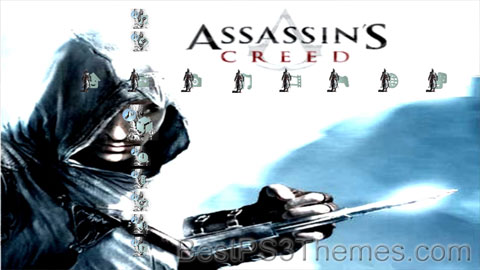
(3 backgrounds, wallpapers SD only)
| Assassin's Creed | |
|---|---|
 | |
| Genre(s) | |
| Developer(s) | |
| Publisher(s) | Ubisoft |
| Creator(s) | |
| First release | Assassin's Creed November 13, 2007 |
| Latest release | Assassin's Creed Nexus VR November 16, 2023 |
Assassin's Creed is a historical action-adventure video game series and media franchise published by Ubisoft and developed mainly by its studio Ubisoft Montreal using the game engine Anvil and its more advanced derivatives. Created by Patrice Désilets, Jade Raymond, and Corey May, the Assassin's Creed video game series depicts a fictional millennia-old struggle between the Order of Assassins, who fight for peace and free will, and the Knights Templar, who desire peace through order and control. The series features historical fiction, science fiction, and fictional characters intertwined with real-world historical events and historical figures. In most games, players control a historical Assassin while also playing as an Assassin Initiate or someone caught in the Assassin–Templar conflict in the present-day framing story. Considered a spiritual successor to the Prince of Persia series, Assassin's Creed took inspiration from the novel Alamut by the Slovenian writer Vladimir Bartol, based on the historical Hashashin sect of the medieval Middle East.
The first Assassin's Creed game was released in 2007, and the series has featured thirteen main installments in total, the most recent being Assassin's Creed Mirage in 2023. Main games in the Assassin's Creed series are set in an open world and played from the third-person view. Gameplay revolves around combat, stealth, and exploration, including the use of parkour to navigate the environment. The games feature both main and side missions, and some titles also include competitive and cooperative multiplayer game modes.
A new story and occasionally new time periods are introduced in each entry, with the gameplay elements also evolving. There are three overarching story arcs in the series. The first five main games follow Desmond Miles, a descendant of several important Assassins throughout history, who uses a machine called the Animus to relive his ancestors' memories and find powerful artifacts called Pieces of Eden in an attempt to prevent a catastrophic event, referencing the 2012 phenomenon. From Assassin's Creed IV: Black Flag to Assassin's Creed Syndicate, Assassin initiates and employees of Abstergo (a company used as a front by the modern-day Templars) record genetic memories using the Helix software, helping the Templars and Assassins find new Pieces of Eden in the modern world. The next three games, Assassin's Creed Origins, Odyssey, and Valhalla, follow ex-Abstergo employee Layla Hassan on her own quest to save humanity from another disaster.
The main games in the Assassin's Creed franchise have received generally positive reviews for their ambition in visuals, game design, and narratives, with criticism for the yearly release cycle and frequent bugs, as well as the prioritising of role-playing mechanics in later titles. The series has received multiple awards and nominations, including multiple Game of the Year awards. It is commercially successful, selling over 200 million copies as of September 2022[update], becoming Ubisoft's best-selling franchise and one of the highest selling video game franchises of all time. While main titles are produced for major consoles and desktop platforms, multiple spin-off games have been released for consoles, mobiles, and handheld platforms. A series of art books, encyclopedias, comics, and novels have also been published. A live-action film adaptation of the series, titled Assassin's Creed, was released in 2016.
Development history[edit]
While the games in the series have had several narrative arcs, Ubisoft views the series as currently having three periods of development and design philosophy. Until 2015's Assassin's Creed Syndicate, the franchise was structured around single-player content, and while centering on open world spaces and several role-playing elements, were more action-adventure and stealth-oriented. Period two, covering from Assassin's Creed Origins to Assassin's Creed Mirage, brought in more role-playing elements and live-service features to increase player engagement. Period three will launch with Assassin's Creed Shadows, using lessons from the second period of development to make engrossing single-player games similar to the original titles but with features to allow players to share achievements and content with others, all to be backed by the Infinity hub system.[1]
Period one[edit]
The first Assassin's Creed game originated out of ideas for a sequel for Ubisoft's video game Prince of Persia: The Sands of Time, aiming for the seventh generation of video game consoles. The Ubisoft Montreal team decided to take the gameplay from The Sands of Time into an open-world approach, taking advantage of the improved processing power to render larger spaces and crowds. Narratively, the team wanted to move away from the Prince being someone next in line for the throne but to have to work for it; combined with research into secret societies led them to focus on the Order of Assassins, based upon the historical Hashashin sect of Ismaili, who were followers of Shia Islam, heavily borrowing from the novel Alamut.[2][3] Ubisoft developed a narrative where the player would control an Assassin escorting a non-playable Prince, leading them to call this game Prince of Persia: Assassin,[4] or Prince of Persia: Assassins.[5] Ubisoft was apprehensive to a Prince of Persia game without the Prince as the playable character, but this led the marketing division to suggest the name Assassin's Creed, playing off the creed of the Assassins, "nothing is true; everything is permitted". Ubisoft Montreal ran with this in creating a new intellectual property, eliminating the Prince, and basing it around the Assassins and the Knights Templar in the Holy Land during the 12th century. Additionally, in postulating what other assassinations they could account for throughout history, they came onto the idea of genetic memory and created the Animus device and modern storyline elements. This further allowed them to explain certain facets of gameplay, such as accounting for when the player character is killed, similar to The Sands of Time.[5]
After Assassin's Creed was released in 2007, Ubisoft Montreal said they looked to "rework the global structure" in developing the sequel, Assassin's Creed II. They felt that parkour was underutilized in the first game and designed the world in the sequel to feature freerun highways to make it easier to enter into parkour moves, for example using rooftops to escape pursuits.[6] The change in setting meant that the game would feature a new cast of characters, including a new protagonist, Ezio Auditore da Firenze. Assassin's Creed II also brought in more use of crowds to hide in plain sight that the developers had seen used in Hitman: Blood Money, adding more to the concept of social stealth as a gameplay option.[6] Finally, Ubisoft Montreal completely reworked the repetitive mission structure from the first game through numerous side activities, collectibles, and secrets. These additions became a central part of the series going forward as well as other Ubisoft games like Watch Dogs, Far Cry, and Tom Clancy's Ghost Recon.[6] Assassin's Creed II was followed by two sequels, Assassin's Creed: Brotherhood and Assassin's Creed: Revelations, which also featured Ezio as the main protagonist and introduced the ability for players to recruit NPCs as Assassins and manage them in missions.[6]
Assassin's Creed III originated from both Ubisoft Montreal, who wanted to progress the series' narrative forward in time, and to an unattached project that had been developed at Ubisoft Singapore and featured naval ship combat. As the main team had settled into the American Revolution period for the game, they found the ship-to-ship combat system fitted with the story and redesigned the setting to incorporate it further. Another major change in Assassin's Creed III was transitioning the parkour and freerun systems to work in the natural woodlands of 18th-century Massachusetts and New York. This further allowed the adding of trees and other vegetation within the city areas themselves, not just as part of the parkour systems, but to add more varied environments, which would continue as part of the series' ongoing design.[6]
For Assassin's Creed III's sequel, Assassin's Creed IV: Black Flag, the Ubisoft team built upon the foundation of its predecessor, particularly with regards to the naval gameplay, merging it seamlessly with the land-based gameplay.[6] The team also used the game as a chance to address aspects of the series' storyline. Choosing to focus on an outsider's perspective to the Assassin–Templar conflict, they set the game around the Golden Age of Piracy, with the protagonist, Edward Kenway, starting out as a pirate who initially becomes involved in the conflict with the prospect of wealth. Similarly, after the conclusion of Desmond Miles' story arc in Assassin's Creed III, the modern-day segments put players in the role of a nameless individual controlled from a first-person perspective. The team chose this approach because they believed it allowed players to more easily identify themselves in their character.[6] This trend would continue in the series until Assassin's Creed Syndicate.[6]
Development of Assassin's Creed Unity began shortly after the completion of Brotherhood in 2010,[7] with the core development team splitting off during the early stages of development on Assassin's Creed III.[8] As the first game in the series to be released exclusively for the eighth generation of video game consoles, Unity featured a graphical and gameplay overhaul. The setting chosen for the game was Paris during the early years of the French Revolution, with players taking control of a new Assassin named Arno Dorian.[7][8] After Unity, Ubisoft released Assassin's Creed Syndicate in 2015.[6]
Period two[edit]
After Syndicate, Ubisoft decided that the series needed a major reinvention across both gameplay and narrative. It was decided to make the next game, Assassin's Creed Origins, closer to a role-playing video game than a stealth-action game, which would also bring a game with many more hours of play than previous titles. Some long-standing features of the series were eliminated for this purpose, such as the social stealth mechanic. This changed how missions were presented — rather than being linearly directed through the Animus, the player character could meet various quest givers in the game's world to receive missions.[6] From the narrative side, Ubisoft placed the game before the formation of the Assassin Brotherhood in Ancient Egypt to make the player character, Bayek of Siwa, a medjay that people would respect and seek the help of.[6] The modern-day storyline also shifted back to a single character, Layla Hassan. The developers limited the number of playable sequences for her character compared to previous games but gave them more meaning, such as allowing the player to explore Layla's laptop with background information on the game's universe.[6]
Origins was followed in 2018 by Assassin's Creed Odyssey, which shifted the setting to Classical Greece and followed a similar approach to its predecessor but with more emphasis on the role-playing elements.[6] 2020's Assassin's Creed Valhalla, set in Medieval England and Norway during the Viking Age, continued the same style as Origins and Odyssey. The developers recognized feedback from the previous two games and brought back the social stealth elements, as well as the concept of a customizable home base that was first introduced in Assassin's Creed II.[6]
In 2023, Ubisoft released Assassin's Creed Mirage, a smaller title which sought to pay tribute to the franchise's earlier installments by focusing on stealth and assassinations over its predecessors' role-playing elements. The game started development as an expansion for Valhalla before being turned into a standalone release, and was set in 9th-century Baghdad during the Islamic Golden Age, a decade before the events of Valhalla, to which it served as a prequel.[9][10]
Future[edit]
In 2022, Ubisoft announced several additional games for the series. Assassin's Creed Infinity has been described by its executive producer, Marc-Alexis Côté, as a "new design philosophy" for the series,[1][11] as well as a hub that will provide the releases of future games.[12] The first two games to be included in Infinity will be Assassin's Creed Shadows, set in Japan during the Sengoku period,[9] and Assassin's Creed: Codename Hexe, rumoured to be set in Central Europe during the 16th century.[13]
Gameplay[edit]

The Assassin's Creed games are centered around one or more fictional members of the Order of the Assassins. Their memories are experienced by an in-game character in the modern-day period through a device called the Animus and its derivations. The Animus allows the user to explore these memories passed down via genetics. Within the context of the game, this provides a diegetic interface to the real-world player of the game, showing them elements like health bars, a mini-map, and target objectives as if presented by the Animus. Additionally, should the player cause the historical character to die or fail a mission, this is rectified as desynchronization of the genetic memory, allowing the player to try the mission again. Through the Animus interface, the player can retry any past mission already completed; for example, in Assassin's Creed: Brotherhood, the player achieves better synchronization results by performing the mission in a specific manner, such as by only killing the mission's target. The Animus also imparts special abilities to the modern-day character that helps them to see their target in a crowd or other unique points of interest.[14][15]
While playing as the Assassin characters, the games are generally presented from a third-person view in an open world environment, focusing on stealth and parkour. The games use a mission structure to follow the main story, assigning the player to complete an assassination of public figureheads or a covert mission. Alternatively, several side missions are available, such as mapping out the expansive cities from a high perch followed by performing a leap of faith into a haystack below, collecting treasures hidden across the cities, exploring ruins for relics, building a brotherhood of assassins to perform other tasks, or funding the rebuilding of a city through purchasing and upgrading of shops and other features. At times, the player is in direct control of the modern-day character who, by nature of the Animus use, has learned Assassin techniques through the bleeding effect, as well as their genetic ability of Eagle Vision, which separates friend, foe, and assassination targets by illuminating people in different colors.[16][17]
The games use the concept of active versus passive moves, with active moves, such as running, climbing the sides of buildings, or jumping between rooftops, more likely to alert the attention of nearby guards. When the guards become alerted, the player must either fight them or break their line of sight and locate a hiding place, such as a haystack or a well, and wait until the guards' alert is reduced. The combat system allows for a number of unique weapons, armor, and moves, including the use of a hidden blade set in a bracer on the Assassin's arm, which can be used to perform surreptitious assassinations.[18]
Storyline[edit]

Premise[edit]
The Assassin's Creed games primarily revolve around the rivalry and conflict between two ancient secret societies: the Order of Assassins, who represent freedom, and the Knights Templar, who represent order. Versions of these societies have existed for centuries, with the Assassins seeking to stop the Templars from gaining control of Pieces of Eden, artifacts that can override free will to control people.[19]
These artifacts are remnants of an ancient species pre-dating humanity called the Isu, or Precursors, which created humanity to live in peace alongside them. The Isu ensured humans could not rise against them by creating the Pieces of Eden to control them. When the first hybrid Isu-human beings emerged, named Adam and Eve, they were immune to the effects of the Pieces of Eden. They stole the Pieces of Eden, which led to a great war that ended when a massive solar flare devastated the surface of the Earth. The Isu began to die out while humanity thrived. Three Isu—Minerva, Juno, and Jupiter—attempted to prepare humanity for a solar flare they knew would come centuries later. Minerva and Jupiter prepared vaults from which humanity could activate a protective shield around Earth with the Pieces of Eden and the Eye, a means to communicate how to find and use these vaults; however, Juno saw humanity as a threat and attempted to sabotage Minerva and Jupiter's plan. Minerva and Jupiter were forced to destroy Juno, unaware she had hidden her consciousness to wake upon activation of the Eye. All that remained of the Isu were the traces of their memories in the world's mythologies, and religions, while the Pieces of Eden were lost to time.[19]
The series takes place in the modern era, in which the Templars have established the mega-corporation Abstergo Industries. Abstergo has developed a device, the Animus, whose user can relive the memories of their ancestors through their genetic material. Abstergo has kidnapped people who are descendants of past Assassins to locate the missing Pieces of Eden via the Animus.[19] A user of the Animus can move about in simulated memories as their ancestor, but performing actions outside the bounds of what their ancestor did can lead to desynchronization of the memory.[14][15] Extended use of the Animus creates a bleeding effect that gives users some of the skills and capabilities they experienced with their ancestor.[20]
Story arcs[edit]
The first five main games in the series focus on Desmond Miles, a bartender who learns he is a descendant of several important Assassins throughout history, including Altaïr Ibn-LaʼAhad from the Middle East during the Third Crusade; Ezio Auditore da Firenze from the Italian Renaissance during the late 15th and early 16th centuries; and Ratonhnhaké:ton (better known as Connor), a half-Mohawk, half-British Assassin during the American Revolution. Desmond is used by Abstergo to find Pieces of Eden but is freed by Lucy Stillman, an undercover agent for the Assassins. Lucy takes Desmond to meet Shaun Hastings and Rebecca Crane, two other members of the modern-day Assassins. The group is joined later by William Miles, Desmond's father. They continue to explore Desmond's memories and eventually discover the Eye and Minerva's warning of another possible solar flare. They also inadvertently free Juno, who then kills Lucy, revealed to be a double agent for the Templars. The group continues to find the vaults across the globe via Desmond's memories, and Desmond ultimately activates them in time to block the solar flare, at the cost of his own life.[19]
Starting with Assassin's Creed IV: Black Flag, William goes into exile, while Shaun and Rebecca continue to monitor Abstergo by posing as employees of one of their spin-off companies, Abstergo Entertainment. Abstergo has refined the Animus technology to allow anyone to experience genetic memories from the DNA material of another person, allowing Abstergo to continue their search for the Pieces of Eden under the guise of creating entertainment products. In Black Flag, the player assumes the role of an unnamed Abstergo employee tasked with scanning the memories of Edward Kenway, a privateer-turned-pirate during the Golden Age of Piracy and Connor's grandfather. During their investigation, the player is blackmailed into helping a fellow employee, John Standish, recover sensitive information and deliver it to the Assassins. John is later revealed to be a Sage, a human reincarnation of Juno's husband Aita, who is trying to resurrect her, though he is killed by Abstergo before his plan can come to fruition.[19] In Assassin's Creed Rogue, the player controls another Abstergo employee who is recruited by the Templars to clean their servers after the Assassins breach them and recover data on the life of Shay Patrick Cormac, an Assassin-turned-Templar from the 18th century. The Assassins are ultimately forced to go underground once more, and the player character is invited to join the Templars.[19]
By the time of Assassin's Creed Unity, Abstergo distributes its Animus product via a video game console named Helix, tapping into an extensive, unaware player base to help them locate more Pieces of Eden and determine the fates of various Sages as part of the Phoenix Project, an attempt to recreate the genetic structure of the Isu. The game's opening has players control an unnamed Templar during the downfall of the Templar Order, while the different "time anomalies" take them to Paris during the Belle Époque, World War II, and the Hundred Years' War. The Assassins locate select players and bring them in as Initiates to help their cause. In Unity, the player character is contacted by an Assassin named Bishop and asked to experience the memories of Arno Dorian, an Assassin active during the French Revolution, so that the modern-day Assassins can locate the body of a Sage and hide it from Abstergo.[19] Despite the Assassins' efforts, Abstergo collects enough samples of other Sages by the start of Assassin's Creed Syndicate to move forward with the Phoenix Project. Again, Bishop contacts the Initiate and asks them to explore the memories of Jacob and Evie Frye, twin Assassins from Victorian England, to locate a Piece of Eden known as the Shroud, which Abstergo needs to complete the process of recreating the Isu genetic structure. Although the Initiate manages to locate the Shroud, the Templars beat the Assassins to it.[19]
A new storyline is introduced in Assassin's Creed Origins focusing on Abstergo researcher Layla Hassan. Initially tasked with locating historical artifacts in Egypt, Layla stumbles upon the mummified corpses of the medjay Bayek and his wife Aya, co-founders of the Hidden Ones, the precursor organizati
Final Fantasy VII Advent Children #2
Final Fantasy VII Advent Children theme by Amras
Download: FFVIIAdventChildren_2.p3t
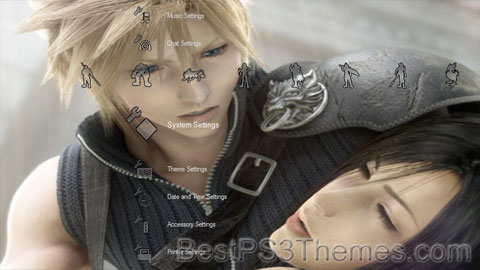
(16 backgrounds)
Redirect to:
- From a modification: This is a redirect from a modification of the target's title or a closely related title. For example, the words may be rearranged.
- Please note that there are many more specific templates. Please use {{R from alternative spelling}}, {{R from alternative hyphenation}}, {{R from alternative punctuation}}, {{R from alternative spacing}} and {{R from misquotation}} where relevant; see subcategories of Category:Redirects from modifications for other options (capitals, abbreviations, diacritics, plurals, stylizations, transliteration, ligatures, different parts of speech, etc.). If you are unsure which to use, this template is fine; someone will make it more specific later if necessary.
- In cases of modification from distinctly longer or shorter names, please use {{R from long name}} or {{R from short name}}, respectively. An abbreviation should be tagged with {{R from initialism}} or, if it can be spoken like a word such as NASA and RADAR, use {{R from acronym}}.
- Use this rcat instead of {{R from other capitalisation}} and {{R from plural}} in namespaces other than mainspace for those types of modification. This may also apply to several other subcategories of modification; please check those templates' output before saving if using outside of mainspace.
Final Fantasy VII Advent Children
Final Fantasy VII Advent Children theme by Rigell
Download: FFVIIAdventChildren.p3t
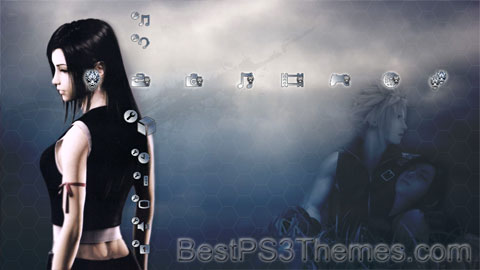
(1 background)
Redirect to:
- From a modification: This is a redirect from a modification of the target's title or a closely related title. For example, the words may be rearranged.
- Please note that there are many more specific templates. Please use {{R from alternative spelling}}, {{R from alternative hyphenation}}, {{R from alternative punctuation}}, {{R from alternative spacing}} and {{R from misquotation}} where relevant; see subcategories of Category:Redirects from modifications for other options (capitals, abbreviations, diacritics, plurals, stylizations, transliteration, ligatures, different parts of speech, etc.). If you are unsure which to use, this template is fine; someone will make it more specific later if necessary.
- In cases of modification from distinctly longer or shorter names, please use {{R from long name}} or {{R from short name}}, respectively. An abbreviation should be tagged with {{R from initialism}} or, if it can be spoken like a word such as NASA and RADAR, use {{R from acronym}}.
- Use this rcat instead of {{R from other capitalisation}} and {{R from plural}} in namespaces other than mainspace for those types of modification. This may also apply to several other subcategories of modification; please check those templates' output before saving if using outside of mainspace.
Cast Metal
Cast Metal theme by The Method
Download: CastMetal.p3t

(3 backgrounds)
P3T Unpacker v0.12
Copyright (c) 2007. Anoop Menon
This program unpacks Playstation 3 Theme files (.p3t) so that you can touch-up an existing theme to your likings or use a certain wallpaper from it (as many themes have multiple). But remember, if you use content from another theme and release it, be sure to give credit!
Download for Windows: p3textractor.zip
Instructions:
Download p3textractor.zip from above. Extract the files to a folder with a program such as WinZip or WinRAR. Now there are multiple ways to extract the theme.
The first way is to simply open the p3t file with p3textractor.exe. If you don’t know how to do this, right click the p3t file and select Open With. Alternatively, open the p3t file and it will ask you to select a program to open with. Click Browse and find p3textractor.exe from where you previously extracted it to. It will open CMD and extract the theme to extracted.[filename]. After that, all you need to do for any future p3t files is open them and it will extract.
The second way is very simple. Just drag the p3t file to p3textractor.exe. It will open CMD and extract the theme to extracted.[filename].
For the third way, first put the p3t file you want to extract into the same folder as p3textractor.exe. Open CMD and browse to the folder with p3extractor.exe. Enter the following:
p3textractor filename.p3t [destination path]Replace filename with the name of the p3t file, and replace [destination path] with the name of the folder you want the files to be extracted to. A destination path is not required. By default it will extract to extracted.filename.
Dirge of Cerberus: Final Fantasy VII
Dirge of Cerberus: Final Fantasy VII theme by Viper32
Download: DocFFVII.p3t
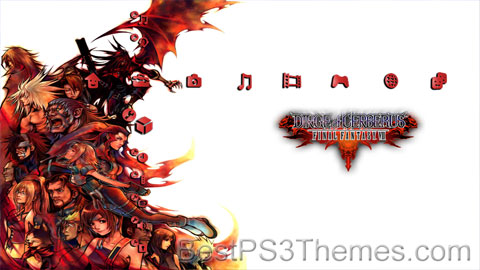
(5 backgrounds)
| Dirge of Cerberus: Final Fantasy VII | |
|---|---|
 North American box art featuring the protagonist Vincent Valentine | |
| Developer(s) | Square Enix[a] |
| Publisher(s) | Square Enix |
| Director(s) | Takayoshi Nakazato |
| Producer(s) | Yoshinori Kitase |
| Programmer(s) | Yoshiki Kashitani |
| Artist(s) | Yukio Nakatani |
| Writer(s) | Hiroki Chiba |
| Composer(s) | Masashi Hamauzu |
| Series | Compilation of Final Fantasy VII Final Fantasy |
| Platform(s) | PlayStation 2 |
| Release | International
|
| Genre(s) | Action role-playing, third-person shooter |
| Mode(s) | Single-player |
Dirge of Cerberus: Final Fantasy VII[b] is a 2006 action role-playing third-person shooter video game developed and published by Square Enix for the PlayStation 2.[1] It is part of the Compilation of Final Fantasy VII metaseries, a multimedia collection set within the universe of Final Fantasy VII. The game is set three years after the events of the original game and focuses on one of the game's playable characters, Vincent Valentine. In the story, Vincent is targeted by Deepground, a mysterious organization that plans to awaken a creature known as Omega, with the ability to destroy the Planet.
As the first shooter game in the Final Fantasy series, the game's staff had various problems during development, and producer Yoshinori Kitase found the experience challenging. The team added role-playing elements in order to make the game more entertaining for traditional fans of the main series.[2] When Dirge of Cerberus was released outside Japan, several aspects of the gameplay were modified in order to make it more appealing. In 2008, Square republished the game in Japan with the updates made for the Western versions. The game received mixed critical reaction.
Gameplay[edit]

Dirge of Cerberus is an action role-playing third-person shooter featuring real-time battles, with the HUD displaying information such as Vincent's hit points and magic points, the currently selected item and its quantity, and a cross-hair to aid in targeting enemies. The action is viewed from an over-the-shoulder perspective similar to Resident Evil 4, although players have the option to switch to a first-person perspective.[3] Defeating enemies yields EXP, and at the end of each stage, the player can either use EXP to level up, increasing Vincent's stats, or convert it to Gil, the in-game currency which can be used to purchase items and equipment upgrades.
Unlike Final Fantasy VII, where a character could equip three types of equipment, weapon, armor, and accessory, Vincent's equipment consists solely of his weapon, which can contribute to his armor rating and enhance his stats through customization. Vincent has three basic gun frames available to him; a three-barrel handgun called Cerberus, a rifle called Hydra, and a machine gun called Griffon. There are also several different barrels available throughout the game; short, regular, and long, with longer barrels allowing easier long-range targeting, but reducing Vincent's movement speed due to their weight. Accessories, which can be attached to the weapons, include a sniper scope, charms that can increase Vincent's defense and decrease the weight of the gun, and materia, which enables magic shots with special properties that consume Vincent's magic points.[4] Ammunition capacity can also be increased through upgrades.
Vincent's Limit Breaks return from the original Final Fantasy VII, with two forms being available. The first is Galian Beast, in which Vincent transforms into a large creature with enhanced speed and strength, which lasts for 30 seconds. The second is Chaos, Vincent's most powerful form, which is only available in the final stages of the game.
Plot[edit]
Background[edit]

Dirge of Cerberus centers on Vincent Valentine, who is the main playable character, although Cait Sith is playable for a single level. The game's main antagonists are the members of the organization Deepground, who plan to use the creature Omega to destroy the Planet's life. Their highest-ranking members are known as the Tsviets, and their leader is Weiss the Immaculate. The second highest-ranking member is Weiss' brother, Nero the Sable, who leads Deepground in the field. Other members of the Tsviets include Rosso the Crimson, Shelke the Transparent and Azul the Cerulean.[5]
The online mode of the game, which is only available in the Japanese version, also introduces a group called the Restrictors, who were the former leaders of Deepground before Weiss took over. The Restrictors' leader implanted microchips into the brainstems of all Deepground soldiers to ensure they never turn against the group. However, Weiss was able to overcome this control method, and the Tsviets wrenched control from the Restrictors. Although Weiss was successful in overthrowing the Restrictors, the leader of the Restrictors was able to implant a virus into Weiss' bloodstream.
Story[edit]
| Final Fantasy VII chronology |
|---|
The game begins during the climax of Final Fantasy VII. As Vincent and Yuffie Kisaragi help to evacuate Midgar, which is about to be destroyed by Sephiroth's Meteor spell, Vincent finds the body of Professor Hojo slumped at the controls of the Sister Ray cannon. After a flash of lightning, Hojo's body seemingly disappears, and before Vincent can investigate, the cannon explodes, forcing Vincent to escape with Yuffie.
Three years later, Vincent is in the town of Kalm when it is attacked by a group of mysterious soldiers. Vincent, with help from his former comrade, Reeve Tuesti of the World Regenesis Organization (WRO), an organization dedicated to helping the planet recover from the events of Final Fantasy VII,[6] fights the soldiers and forces them to retreat, but many citizens are captured or killed.[7]
Reeve explains to Vincent that the soldiers were members of Deepground, a military organization created as part of a covert Shinra operation to create genetically enhanced super soldiers.[8] Vincent soon learns that he is one of Deepground's primary targets, as he is unknowingly in possession of "Protomateria". It is a substance which he uses to control the "Chaos" gene within him, and which Deepground claims they need to control "Omega".[9] According to ancient tablets discovered years ago, Chaos and Omega have an unknown but important relationship, with Chaos described as being "Omega's squire to the lofty heavens". The Chaos gene was injected into Vincent over thirty years ago by the scientist Lucrecia Crescent, Hojo's research assistant, whom Vincent was in love with.[10][11]
In an effort to find answers, Vincent goes to the town of Nibelheim, where Lucrecia studied Omega and Chaos.[12] While at Lucrecia's research lab, Vincent is ambushed by Rosso the Crimson, who steals the Protomateria[13] but is prevented from killing Vincent by the arrival of Yuffie.[14] As they return to the WRO headquarters, they find that Deepground has launched an assault on the base. However, Deepground member Shelke the Transparent has been captured by the WRO, and reveals that she is synaptically interconnected to Lucrecia's memories, allowing the WRO to complete Lucrecia's research on Omega.[15] Shelke's sister, Shalua Rui, a high-ranking scientist in the WRO, soon discovers that Omega is a WEAPON, which activates when the Planet senses that it is in mortal danger. Omega's function is to absorb the Lifestream from the Planet and then move to another planet, leaving the inhabitants behind to die. Deepground plans to slaughter a huge number of people at once so as to 'trick' the planet into activating Omega prematurely.[16]
Vincent and the WRO launch a full-scale assault on Deepground's headquarters in Midgar.[17] While Reeve's team battles the Deepground soldiers and attempt to destroy the Mako reactors which serve as a means to revive Omega, Vincent heads to Deepground's center of operations to confront Weiss.[18] He is surprised to find Weiss slumped in his chair, dead.[19] However, as Omega begins to manifest itself, Weiss seemingly revives and confronts Vincent.[20] It is revealed that Weiss is possessed by Hojo; before Hojo was killed in the Mako Cannon three years earlier, he uploaded his consciousness into the Worldwide Network, then took possession of Weiss's body while he was online attempting to find a cure for the virus the Restrictors had infected him with.[21] Hojo/Weiss and Vincent battle to a standstill. However Nero, who had been defeated earlier by Vincent, emerges from the Lifestream and destroys Hojo. Nero then merges with Weiss to help him fuse with Omega, just as Vincent is fused with Chaos.[22]
While the WRO continues to fight the remnants of Deepground, Vincent transforms into Chaos in a desperate attempt to defeat Omega Weiss.[23] Shelke dives inside Omega to find Lucrecia's Protomateria, and upon finding it, she gives it to Vincent, telling him that his survival made Lucrecia happy.[24][25] Vincent then takes control of Chaos and battles Omega.[26] Omega sprouts wings and tries to ascend from the planet, but Vincent manages to destroy it, disappearing in the process. A week later, he is seen visiting Lucrecia's crystalline tomb in the Crystal Cave. He states that both Chaos and Omega have returned to the Planet, and thanks Lucrecia for being the reason he survived. He is then found by Shelke outside the cave, and she tells him that everyone else is waiting for him.[27]
In the secret ending of the game, "G", a legendary warrior with unexplained connections to Deepground,[28] awakes beneath the ruins of Midgar. He finds Weiss's body and picks it up, telling him "It is not yet time for slumber. We still have much work to do... My brother". He then sprouts a large black wing and flies into the night, carrying Weiss with him. Crisis Core Ultimania explains that "G" (Genesis) returned from his three-year slumber to protect the Planet.
Development[edit]
When Final Fantasy VII: Advent Children began development, the Square Enix staff agreed that one title from Compilation of Final Fantasy VII was not enough to cover the entire world, and so Before Crisis, Dirge of Cerberus and Crisis Core were conceived so as to embrace more aspects.[29] With no official word from Square on the genre of the game, many publications and gamers speculated that it would be an action game similar to the Devil May Cry series. In 2004, however, character designer Tetsuya Nomura denied this, and said that the genre would surprise gamers.[30] Producer Yoshinori Kitase decided the title to be a shooting game based on his love for first-person shooters and the challenge provided for the developers that would eventually improve their skills. He said that role-playing elements were added as the design work on pure action games was less appealing to developers.[2][31] Monolith Soft assisted on development.[32]
Vincent was chosen as the game's protagonist due to the scope for expanding his backstory, which was left very vague in Final Fantasy VII. The fact that his main weapon was a gun also worked into the team's desire to create a more action-oriented game. Prior to the solidification of the Compilation of Final Fantasy VII, the development team originally considered using other gunfighter characters from the Final Fantasy series, such as Final Fantasy VII's Barret Wallace, VIII's Irvine Kinneas or X-2's Yuna, but after the release of Before Crisis and Advent Children, and with the expansion of the Final Fantasy VII mythos, they settled on Vincent.[33]
The main character designer for the game, Tetsuya Nomura, had also worked on both Final Fantasy VII and Advent Children. The Tsviets were designed with the idea of creating a sense of balance for the warriors with which players would already be familiar; primarily Vincent, Cloud Strife and Sephiroth. Nomura initially had doubts when designing Shelke's ordinary clothes for the end of the game, but he felt it was important for her to appear out of uniform so as to indicate she was truly free from Deepground. The character of G was based on the Japanese singer and actor Gackt, who wrote and performed the two theme songs of the game, and voiced G in the Japanese-language version of the game.[33] Hideki Imaizumi, the producer of Crisis Core, liked the mysterious role of G so much, he decided to expand his character in that game.[34] The character of Lucrecia Crescent, who features briefly in an optional quest in the original game, was redesigned so as to give her a similar appearance to her son, Sephiroth, based on portraits from guidebooks and in fan-art. Reeve Tuesti was also redesigned, as he only appears briefly in the original game as himself rather than through Cait Sith.[33]
Dirge of Cerberus was first announced in September 2004, and was scheduled for release in Japan in 2005.[35] The game's official site went online in April 2005.[36] In May, Nomura said that several snippets from the game would be revealed during that year's E3,[37] but no demo was shown at E3, as the staff were still trying to fix some issues with the controls in the game.[2] In September, the beta test program was postponed indefinitely. Listed as 60% complete, the company stated if the beta test started with the game's current state, they would not be able to fully utilize the beta testers.[38]
The North American and European releases of Dirge of Cerberus received a major overhaul as the developers were not completely satisfied with the final Japanese version of the game. They also wanted to make the game more single-player oriented, and as such, they removed Online Multiplayer support, primarily due to the lack of popularity of PlayOnline outside Japan, and lack of PS2 HDD support in the U.S. Missions from the Multiplayer Mode were reworked into unlockable secret missions in the English-language versions of the game, although none of the additional storyline presented in the Japanese Multiplayer Mode featured in the English versions.[39] The Easy Mode, which was originally featured in the Japanese version to assist gamers not overly familiar with shooter games, was also removed.[33][39] On September 11, 2008, the English-language version was released in Japan as Dirge of Cerberus: Final Fantasy VII International[c], as part of Square's Ultimate Hits lineup.[40]
Audio[edit]
The soundtrack for the game was composed by Masashi Hamauzu. Japanese singer and actor Gackt wrote and performed the two theme songs, "Longing" and "Redemption". For the game's ending theme, "Redemption", the staff originally planned for it to be a ballad, but Gackt decided to make it a rock song instead. Upon hearing Gackt's ideas, the staff were pleased with the direction in which he had gone.[33] The CD soundtrack, Dirge of Cerberus: Final Fantasy VII Original Soundtrack, was released on February 15, 2006 in Japan. Consisting of two CDs, the soundtrack spanned 53 tracks. A limited edition of the soundtrack includes a "Cerberus Complete Case" deluxe box designed to hold the soundtrack along with the Dirge of Cerberus: Final Fantasy VII PS2 game and the limited edition of Gackt's single for the game, "Redemption".[41] This single was released on January 25, 2006. A limited edition was also released featuring two "Redemption" video clips; Gackt's promotional music video, and an alternate video using clips from the game.[42]
A supplemental soundtrack was released through the Japanese iTunes service and the Square-Enix Music Download page on August 22, 2006. Titled Dirge of Cerberus: Final Fantasy VII Multiplayer Mode Original Sound Collections, this album consists of 27 tracks, including several songs from the single player game which were not included in the official soundtrack, as well as all of the original music composed for the multiplayer mode, and two new songs composed by Ryo Yamazaki for the North American release of the game.[43]
Reception[edit]
| Aggregator | Score |
|---|---|
| GameRankings | 60%[44] |
| Metacritic | 57/100[45] |
| Publication | Score |
|---|---|
| 1Up.com | D+[46] |
| Electronic Gaming Monthly | C[47] |
| Eurogamer | 5/10[48] |
| Famitsu | 28/40[49] |
| GameSpot | 6.0/10[4] |
| GameSpy |   [50] [50] |
| GameTrailers | 7.2/10[51] |
| IGN | 7.0/10[52] |
| X-Play | [53] |
| Dengeki PS2 | 313/400[54] |
Dirge of Cerberus received mixed reviews from critics. At GameRankings, the game holds a score of 60%.[44] The combined score from Metacritic is 57 out of 100 based on 51 reviews.[45]
GameSpot stated that the game "does have a few interesting and even entertaining moments, but will ultimately leave action game fans and Final Fantasy fans feeling unfulfilled".[4] Despite stating that it is not "the best use of the Final Fantasy VII universe", IGN called it "a decent game with a strong story and occasionally-engaging rifle blasting".[55] 1UP.com criticized the enemies' artificial intelligence and weak scenarios, and labeling the story "boring".[46] Reviewer from Electronic Gaming Monthly's Shane Bettenhausen opined that he found all of the titles (As of 2006[update]) in the Compilation of Final Fantasy VII to be unappealing.[47] Eurogamer found that Dirge of Cerberus was a "risky gamble" by Square Enix, as their first shooter, and he criticized the fact that most of the main characters in the game were either optional in Final Fantasy VII or had only small roles.[48] GameSpy called its gameplay and plot "interesting", but found other aspects generic.[50] GameTrailers praised the game's storyline, calling it "convoluted, but incredibly impressive in its scope". They also praised the changes Square had made to the Western versions but found the game to be very similar to Devil May Cry, and felt that it didn't make good enough use of Vincent's abilities. While the CGI cutscenes and designs also received positive comments, the lack of variety in enemy types was criticized.[51] G4's game review show, X-Play, responded negatively, citing poor level design, weak gameplay, too many cutscenes, and bad AI.[53]
Sales[edit]
Dirge of Cerberus: Final Fantasy VII shipped 392,000 units in its first week.[56] As of August 2008, 460,000 units were sold in North America and 270,000 units in Europe.
Military #2
Military theme by 1_BAD_SOLDIER
Download: Military_2.p3t

(5 backgrounds)
 | This article needs additional citations for verification. (August 2008) |

A military, also known collectively as an armed forces, are a heavily armed, highly organized force primarily intended for warfare. Militaries are typically authorized and maintained by a sovereign state, with their members identifiable by a distinct military uniform. They may consist of one or more military branches such as an army, navy, air force, space force, marines, or coast guard. The main task of a military is usually defined as defence of their state and its interests against external armed threats.
In broad usage, the terms "armed forces" and "military" are often synonymous, although in technical usage a distinction is sometimes made in which a country's armed forces may include other paramilitary forces such as armed police.

A nation's military may function as a discrete social subculture, with dedicated infrastructure such as military housing, schools, utilities, logistics, hospitals, legal services, food production, finance, and banking services. Beyond warfare, the military may be employed in additional sanctioned and non-sanctioned functions within the state, including internal security threats, crowd control, promotion of political agendas, emergency services and reconstruction, protecting corporate economic interests, social ceremonies, and national honour guards.[1]
The profession of soldiering is older than recorded history.[2] Some images of classical antiquity portray the power and feats of military leaders. The Battle of Kadesh in 1274 BC from the reign of Ramses II, features in bas-relief monuments. The first Emperor of a unified China, Qin Shi Huang, created the Terracotta Army to represent his military might.[3] The Ancient Romans wrote many treatises and writings on warfare, as well as many decorated triumphal arches and victory columns.
| Part of a series on | ||||||||||||||||||||||||||||||
| War Outline | ||||||||||||||||||||||||||||||
|---|---|---|---|---|---|---|---|---|---|---|---|---|---|---|---|---|---|---|---|---|---|---|---|---|---|---|---|---|---|---|
.jpg) | ||||||||||||||||||||||||||||||
|
DeAndre Cortez Way (born July 28, 1990), known professionally as Soulja Boy (formerly Soulja Boy Tell 'Em), is an American rapper and record producer from Atlanta, Georgia. He rose to prominence after his self-released 2007 debut single, "Crank That (Soulja Boy)" peaked the Billboard Hot 100 for seven non-consecutive weeks.[4] After its commercial re-release by Collipark Music, an imprint of Interscope Records, the song and its follow-up, "Soulja Girl" led to the release of his debut studio album, Souljaboytellem.com (2007). Despite unfavorable critical reception, it peaked at number four on the Billboard 200 and spawned the single "Yahhh!." His second album, iSouljaBoyTellem (2008)—supported by the Billboard Hot 100-top 20 singles "Turn My Swag On" and "Kiss Me thru the Phone" (featuring Sammie)—was met with moderate commercial reception and a further decline in critical reception. Way was listed at number 18 on the Forbes list of Hip-Hop Cash Kings of 2010, as he earned US$7 million that year.[5] His third album, The DeAndre Way (2010)—supported by the top 40 single "Pretty Boy Swag"—saw a steeper decline in commercial reception before he parted ways with Interscope in favor of an independent career. Way has become notable for his pioneering use of grassroots social media and digital marketing strategies during his mainstream popularity.[6] Outside of recording, he has pursued side ventures including video game development, record production for other artists, and his record label Stacks on Deck Entertainment, through which he has signed rappers including Lil B and Riff Raff. He has received a Grammy Award nomination, as well as three BET Award and four Teen Choice Award nominations.[7] Early life[edit]Way was born in Chicago and at age six moved to Atlanta,[8] where he became interested in rap music.[9] At age 14, he moved to Batesville, Mississippi, with his father.[10] Musical career[edit]2004–2007: Early recordings and building an Internet following[edit]Way's father provided a recording studio for Way to explore his musical ambitions.[8] In early 2005, he was a frequent poster on the website Newgrounds,[11][12] and in November that same year, Way posted on the music website SoundClick. Following positive reviews on the site, he established accounts on YouTube and Myspace.[13][14] In March 2007, he released his first independent album, Unsigned & Still Major: Da Album Before da Album. 2007–2011: Souljaboytellem.com, iSouljaBoyTellem, and The DeAndre Way[edit] Also in March 2007, Way recorded "Crank That (Soulja Boy)", followed by a low-budget video demonstrating the "Crank That" dance. On May 2, "Crank That" was released as a single; by month's end, it had received its first airplay, and Way met with Mr. Collipark to sign a recording contract with his record label Collipark Music, which later entered a joint venture with Interscope Records shortly after.[15] On August 12, "Crank That" was used on the television series Entourage, and on September 1 it topped the US Billboard Hot 100 and Hot RingMasters charts.[16] During the 50th Annual Grammy Awards, "Crank That (Soulja Boy)" was nominated for Best Rap Song, losing to Kanye West's and T-Pain's "Good Life". Way's major label debut album, Souljaboytellem.com, was released in the United States on October 2,[17] peaking at number four on both the Billboard 200 and Top R&B/Hip-Hop Albums charts.[18] The album was reportedly recorded using just the demo version of FL Studio.[19][20] Souljaboytellem.com received a favorable review from Allmusic[17] but mainly negative reviews from other sources, such as Entertainment Weekly.[21] Several reviewers credited Soulja Boy with spearheading a new trend in hip-hop, while speculating that he would be a one-hit wonder.[22][23][24] The follow-up to Souljaboytellem.com, iSouljaBoyTellem, was released on December 16, 2008, to negative critical reception.[25] The first single from the album, "Bird Walk", peaked at number 40 on the Billboard Hot R&B/Hip-Hop Songs chart and the top 20 on the Hot Rap Tracks chart. It was performed on YouTube Live on November 22, 2008, with an introduction from MC Hammer.[26] "Kiss Me Thru the Phone" (featuring Sammie) followed, peaking at number three on the Hot 100 and number one on the Hot Rap Tracks charts.[27] Chris Brown was Way's first choice to sing the hook, but respectfully turned down the offer. Way then tried to do it on his own with Auto-Tune but found it unacceptable.[28] The song sold over 2 million digital copies in the U.S., becoming Way's second to reach two million downloads.[29][30] On January 26, 2009, Way released the third single, "Turn My Swag On". It topped the U.S. rap charts and peaked at number 19 on the Billboard Hot 100. As of August 23, 2009[update], it has sold more than 1 million digital downloads in the U.S.[30]  Way said his third studio album, The DeAndre Way,[31] was intended to be his most personal and successful album thus far. He said he wished to collaborate with artists such as Jay-Z, Lil Wayne, Kanye West[32] and Eminem.[33] The album's lead single, "POW", was released in January 2009 but failed to garner success and was dubbed a promo single. On October 30, 2009, Way released three mixtapes: Paranormal Activity, Dat Piff and Cortez.[34] It was announced on February 18, 2010, that the first single from the album was going to be "All Black Everything", but the single was canceled and the track was put on another promotional mixtape, Legendary.[35] The album's title was changed to Dre in an early 2010 commercial with a video snippet for "Do It Big" as the first single, but this was also canceled.[36] The album title reverted to The DeAndre Way in July 2010. On June 8, 2010, the album's official lead single was "Pretty Boy Swag". It reached number 34 on the Billboard Hot 100, number six on the Hot R&B/Hip-Hop Songs chart and number five on the Rap Songs chart.[37] The album's second single was due to be "Digital", which was instead used on his promotional mixtape Best Rapper.[38] Then it was announced that "Speakers Going Hammer" was going to be the second single, but "Blowing Me Kisses" was released on August 31, 2010, as the second single instead.[39] On October 13, Way performed "Pretty Boy Swag" and a snippet of "Speakers Going Hammer". On October 19, 2010, he released "Speakers Going Hammer" on iTunes; it peaked at number 48 on the Billboard Hot R&B/Hip Hop Songs.[40] Way backed out of the Summerbeatz tour in Australia in November 2010, where he was to have performed alongside Flo Rida, Jay Sean and Travie McCoy,[41] in order to embark on his "Who They Want" tour in support of his upcoming album. The DeAndre Way was released on November 30, 2010, and has so far[when?] sold only 70,000 copies, making it Way's lowest-selling album. 2011–2018: Mixtapes, EPs, independent albums, and Loyalty[edit]In 2011, Way released a series of mixtapes. The first, on January 22, was titled Smooky and had cartoon cover art of Way doing a 360 on a bicycle.[42] On March 17, Way released the mixtape 1UP which had cover art based on the Naruto anime, with Way stating: "If I was in a video game, this mixtape would advance me to the next level with an extra life. Power up with the new offering."[43] On April 20, Way released his mixtape Juice with cover art based on the film of the same name. Way said he would also release a mini-movie of his own to go along with the mixtape, and that he was headed to greatness with the mixtape.[44] On July 15, Way released his EP mixtape titled Bernaurd Arnault EP (Limited Edition).[45] Then on August 1, Way released another ep mixtape titled 21: EP.[46] On August 31, Way released the mixtape The Last Crown, the cover of the mixtape is based on the artwork the Flammarion Engraving.[47][48] In September 2011, Way confirmed that he is working on a new album, Promise, which would be released in October.[49] Way also released the cover and title of his second independent album via Twitter, titled Skate Boy, with a notice that it would be available in stores on November 1.[50][51] On September 19, Way released the mixtape Supreme.[52] On October 30, Skate Boy (Deluxe Edition) was released as a mixtape, rather than an album.[53][54] On December 30, 2011, Way released another mixtape titled Gold On Deck.[55] In 2012, Way released additional mixtapes while his album continued to be delayed. On January 9, Way released a mixtape for the beginning of the year, titled 50/13, with the cover based on that of ASAP Rocky's mixtape Live. Love. ASAP.[56] On January 24, Way released a collaboration mixtape with his artist Young L titled Mario & Domo vs. the World with cover art based on the video game Super Mario Bros.[57] On March 23, Way released a mixtape titled OBEY which featured the promotional single "Too Faded".[58][59][60] On June 3, 2012, Way talked about his upcoming album Promise and said he has released so many mixtapes in the last two years because he feels he has to put out a lot of music and be as creative as possible.[61] On June 11, Way released another collaboration mixtape with rapper Vinny Chase titled Double Cup City.[62] On September 4, Way released the sequel mixtape Juice II, in which Way returned to his old production style with the beginning lines "Soulja Boy Tell 'Em". It is Way's most-downloaded mixtape.[63] His mixtape titled Young & Flexin was released on November 6.[64] On December 25, 2012, Way released LOUD, which was his first mixtape distributed on iTunes.[65][66] 2013 was marked by further album delays while Way's record deal expired, and he continued to release mixtapes. On February 22, Way released his first mixtape of the year, titled Foreign.[67] In March, it was rumored that Way was signing to Cash Money Records after getting a face tattoo saying "Rich Gang" the same weekend he was seen with his manager and Cash Money artists Birdman and Bow Wow.[68] This continued after he added "Rich Gang" or "YMCMB" to his social media platforms. Way had earlier reported that he was no longer with Interscope Records after his record deal ended in February.[69] Way also announced that his album Promise had been retitled USA DRE. On March 15, he released the first single from the album, titled "Handsome".[70][71] Following that, on March 25, he released the EP, All Black.[72] On April 24, Way released his mixtape Foreign 2.[73] Three days later, Way revealed the cover art to his next mixtape titled King Soulja which was released on May 5.[74] On May 26, Way released his second EP titled Cuban Link.[75][76] On June 13, Way announced another album title change, to Life After Fame, and that it would be released to stores on July 30, 2013.[77] On June 25, Way released his first single from the album titled "Ridin Round" to iTunes, but it was later dubbed a promotional single.[78][79] On June 30, Way released Life After Fame as a mixtape instead of an album.[80] On September 24, Way released his mixtape titled 23.[81][82] On November 30, Way released his mixtape The King.[83][84] On December 28, 2013, rapper/singer Drake collaborated and remixed Way's intro track "We Made It" from his mixtape The King.[85][86] In 2014, Way continued work on his fourth studio album while collaborating with other artists and releasing additional mixtapes. On March 18, Way released his first mixtape of the year titled King Soulja 2.[87][88][89] On April 20, Way released his first digital album Super Dope, featuring an appearance from rapper Busta Rhymes.[90] On May 19, Way produced, co-wrote and was featured on Nicki Minaj's promotional single "Yasss Bish", which received positive reviews from music critics.[91][92] On June 8, Way announced that he was currently working on his new mixtape project King Soulja 3, which would feature appearances from Lil Wayne, Drake, Migos, Young Thug and Wiz Khalifa.[93] On June 29, Way released King Soulja 3 as his second digital album via iTunes, featuring appearances from Gudda Gudda and Rich The Kid.[94] On October 31, Way released his mixtape Young Millionaire, featuring appearances from Sean Kingston, Cap.1 and Rich The Kid.[95][96][97] On November 17, Way announced via his Instagram that he had signed a new label deal with Universal Music Group and also revealed the title, cover art and release date for his fourth studio album, Loyalty, originally scheduled for release on December 2, 2014, but pushed back to February 3, 2015.[98] In 2015, following the release of his fourth studio album, Loyalty, Way released additional singles, mixtapes and a digital album. For this upcoming digital album, King Soulja 4, Way released the single "Whippin My Wrist (Too Rich)" on February 27; it charted on the Billboard Trending 140 at number 48.[99][100] On May 16, Way released his mixtape Swag The Mixtape featuring appearances from Migos, Peewee Longway, Troy Ave, Johnny Cinco, Chief Keef, Pack Strong, Paul Allen, Chella H, Calico Jonez and Kyle Massey.[101][102] On May 26, fellow Atlanta, Georgia artist Rich The Kid announced that he and Way would be releasing a collaboration album titled Get Rich.[103] On June 3, via Twitter, Way revealed the title, cover art and release date to his upcoming fifth studio album, Blessed, which was scheduled for release on July 28, 2015, but experienced several delays.[104] On June 30, Way released a mixtape titled 25 The Movie.[105] On July 17, Way released a new single titled "Actavis" featuring Migos, taken from his fourth digital album King Soulja 4.[106] On July 23, Way released his mixtape titled M & M: Money and Music.[107][108] On July 30, through his independent label Stacks on Deck Entertainment, Way released his fourth digital album, King Soulja 4, featuring appearances from Migos, ReeseMoneyBagz, Dae Dot and Sean Kingston.[109][110] On September 1, Way released the single "Diddy Bop".[111] On September 24, Way released a single titled "Gratata" along with an accompanying music video.[112][113] On September 28, Way released the mixtape Plug Talk.[114] On November 9, Way premiered a single titled "Make It Rain".[115] On November 24, Way released a mixtape titled S. Beezy.[116][117][118][119] In 2016, Way released his fifth and sixth digital albums and various mixtapes, singles and videos. On January 14, he released the single "Drop The Top"; on January 24, he premiered its video.[120][121][122] On January 24, he released the standalone single "Stephen Curry", named for the NBA player, and on February 6, he released a video for the song.[123][124][125] On February 10, he released another mixtape, Finesse EP.[126] On February 14, he released the mixtape King Soulja 5, the fifth installment in his King Soulja mixtape/album series.[127][128] On March 15, through his independent label, he released his fifth digital album, Stacks On Deck, featuring Agoff, King Reefa, Lil Yachty and Rich The Kid.[129][130][131][132] On May 12, he released the single "Day One".[133] On June 9, through his label Stacks on Deck Entertainment, he released his sixth digital album, Better Late Than Never, featuring Lil Twist and Lil Yachty.[134][135][136] On July 23, he released the single "Rockstar".[137] On July 31, he released the mixtape Rockstar.[138][139][140] On August 23, he released the sequel mixtape S. Beezy 2.[139][141][142] On September 14, he released the single "Max Payne".[143] On September 24, he released the single "Hit Them Folks".[144] On September 26, he released the single "I'm Up Now" featuring Chief Keef.[145] On September 29, he released the mixtape King Soulja 6, the sixth installment in his King Soulja mixtape/album series.[146][147][148] On October 25, 2016, Way and Bow Wow released a joint retail mixtape, Ignorant Shit.[149][150][151] 2018–present: Breakfast Club interview and How Can You Blame Me?[edit] In late 2018, Way went on Instagram Live and responded to fan comments suggesting Tyga had the biggest comeback of any artist in 2018. Way angrily claimed he had had the biggest comeback, with a snippet of the video going viral that same day.[152] Later in early 2019, Way made an appearance on the radio show The Breakfast Club, where he defended his statements. A snippet of Way responding to a question about fellow musician Drake became a viral meme following the interview.[153] Way continued to release singles and two mix-tapes throughout 2019, releasing the first mix-tape, Fuego, on January 10,[154] and the second mix-tape, Tell Ya, on March 25.[155] Way announced on January 18, 2019, he was working on his fifth studio album titled How Can You Blame Me?,[156] (originally titled Blessed), with the album set to be released on July 28. The album was delayed for unknown reasons following Way's 2019 incarceration.[157] On July 28, 2020, following his rising success as a Twitch streamer,[158] Way released the mixtape King Soulja 9,[159] followed by several singles throughout 2020. In late November 2020, Way released the mixtape Swag 3, and continued to release several singles such as Pandemic and CEO at the start of 2021.[160][161] On February 1, 2021, Way released the mixtape Soulja World, which features frequent collaborator Lil B.[162] In April 2021, Soulja Boy signed a record deal with Virgin Music.[163] Musical style[edit]Speaking on his rudimentary rapping technique and vacuous lyrical style, in a November 2010 interview with XXL Magazine, while Way was explaining how he has grown as an emcee he stated:
On December 5, 2010, Way clarified this statement that Lupe Fiasco was too "lyrical", explaining that he wanted to keep the rudimentary music style he developed and justified why he doesn't keep a lyrically based flow and more substantially profound lyrical subject matter on every song.[164] According to Way:
Way further clarified there was no animosity between him and Fiasco and that the two had planned to record a song together.[165] Other ventures[edit]Stacks on Deck Entertainment[edit]Divi-ChanDivi-Chan theme by Fudce Download: Divi-Chan.p3t
P3T Unpacker v0.12 This program unpacks Playstation 3 Theme files (.p3t) so that you can touch-up an existing theme to your likings or use a certain wallpaper from it (as many themes have multiple). But remember, if you use content from another theme and release it, be sure to give credit! Download for Windows: p3textractor.zip Instructions: Download p3textractor.zip from above. Extract the files to a folder with a program such as WinZip or WinRAR. Now there are multiple ways to extract the theme. The first way is to simply open the p3t file with p3textractor.exe. If you don’t know how to do this, right click the p3t file and select Open With. Alternatively, open the p3t file and it will ask you to select a program to open with. Click Browse and find p3textractor.exe from where you previously extracted it to. It will open CMD and extract the theme to extracted.[filename]. After that, all you need to do for any future p3t files is open them and it will extract. The second way is very simple. Just drag the p3t file to p3textractor.exe. It will open CMD and extract the theme to extracted.[filename]. For the third way, first put the p3t file you want to extract into the same folder as p3textractor.exe. Open CMD and browse to the folder with p3extractor.exe. Enter the following: PSYPSY theme by ACdeadpool Download: PSY.p3t
Redirect to:
The Unknown Abstract ThemeThe Unknown Abstract Theme by Fluffy_Penguin Download: UnknownAbstract.p3t
P3T Unpacker v0.12 This program unpacks Playstation 3 Theme files (.p3t) so that you can touch-up an existing theme to your likings or use a certain wallpaper from it (as many themes have multiple). But remember, if you use content from another theme and release it, be sure to give credit! Download for Windows: p3textractor.zip Instructions: Download p3textractor.zip from above. Extract the files to a folder with a program such as WinZip or WinRAR. Now there are multiple ways to extract the theme. The first way is to simply open the p3t file with p3textractor.exe. If you don’t know how to do this, right click the p3t file and select Open With. Alternatively, open the p3t file and it will ask you to select a program to open with. Click Browse and find p3textractor.exe from where you previously extracted it to. It will open CMD and extract the theme to extracted.[filename]. After that, all you need to do for any future p3t files is open them and it will extract. The second way is very simple. Just drag the p3t file to p3textractor.exe. It will open CMD and extract the theme to extracted.[filename]. For the third way, first put the p3t file you want to extract into the same folder as p3textractor.exe. Open CMD and browse to the folder with p3extractor.exe. Enter the following: | ||||||||||||||||||||||||||||||