Valentine’s Day theme by 1_BAD_SOLDIER
Download: ValentinesDay.p3t

(3 backgrounds)
| Valentine's Day | |
|---|---|
 A Valentine's card, c. 1909 | |
| Also called | Saint Valentine's Day or the Feast of Saint Valentine |
| Observed by |
|
| Type | Christian, romantic, cultural, commercial observance |
| Significance | Feast day of Saint Valentine; the celebration of love and affection |
| Observances | Sending greeting cards and gifts, dating, church services, novenas |
| Date |
|
| Frequency | Annual |
| Part of a series on |
| Love |
|---|
 |

Valentine's Day, also called Saint Valentine's Day or the Feast of Saint Valentine,[1] is celebrated annually on February 14.[2] It originated as a Christian feast day honoring a martyr named Valentine, and through later folk traditions it has also become a significant cultural, religious and commercial celebration of romance and love in many regions of the world.[3][4]
There are a number of martyrdom stories associated with various Saint Valentines connected to February 14,[5] including an account of the imprisonment of Saint Valentine of Rome for ministering to Christians persecuted under the Roman Empire in the third century.[6][7] According to an early tradition, Saint Valentine restored sight to the blind daughter of his jailer.[8] Numerous later additions to the legend have better related it to the theme of love: tradition maintains that Saint Valentine performed weddings for Christian soldiers who were forbidden to marry by the Roman emperor;[7] an 18th-century embellishment to the legend claims he wrote the jailer's daughter a letter signed "Your Valentine" as a farewell before his execution.[9]
The 8th-century Gelasian Sacramentary recorded the celebration of the Feast of Saint Valentine on February 14.[10][11] The day became associated with romantic love in the 14th and 15th centuries, when notions of courtly love flourished, apparently by association with the "lovebirds" of early spring. In 18th-century England, it grew into an occasion for couples to express their love for each other by presenting flowers, offering confectionery, and sending greeting cards (known as "valentines"). Valentine's Day symbols that are used today include the heart-shaped outline, doves, and the figure of the winged Cupid. In the 19th century, handmade cards gave way to mass-produced greetings.[12] In Italy, Saint Valentine's keys are given to lovers "as a romantic symbol and an invitation to unlock the giver's heart", as well as to children to ward off epilepsy (called Saint Valentine's Malady).[13]
Saint Valentine's Day is not a public holiday in any country, although it is an official feast day in the Anglican Communion[14] and the Lutheran Church.[15] Many parts of the Eastern Orthodox Church also celebrate Saint Valentine's Day on July 6 in honor of Roman presbyter Saint Valentine, and on July 30 in honor of Hieromartyr Valentine, the Bishop of Interamna (modern Terni).[16]
Saint Valentine[edit]
History[edit]

Numerous early Christian martyrs were named Valentine.[17] The Valentines honored on February 14 are Valentine of Rome (Valentinus presb. m. Romae) and Valentine of Terni (Valentinus ep. Interamnensis m. Romae).[18] Valentine of Rome was a priest in Rome who was martyred in 269 and was buried on the Via Flaminia. The relics of Saint Valentine were kept in the Church and Catacombs of San Valentino in Rome, which "remained an important pilgrim site throughout the Middle Ages until the relics of Saint Valentine were transferred to the church of Santa Prassede during the pontificate of Nicholas IV [1288–1292]".[19][20] The flower-crowned skull of Saint Valentine is exhibited in the Basilica of Santa Maria in Cosmedin, Rome. Other relics are found at Whitefriar Street Carmelite Church in Dublin, Ireland.[21]
Valentine of Terni became bishop of Interamna (now Terni, in central Italy) and is said to have been martyred during the persecution under Emperor Aurelian in 273. He is buried on the Via Flaminia, but in a different location from Valentine of Rome. His relics are at the Basilica of Saint Valentine in Terni (Basilica di San Valentino). Professor Jack B. Oruch of the University of Kansas notes that "abstracts of the acts of the two saints were in nearly every church and monastery of Europe."[22] A relic claimed to be Saint Valentine of Terni's head was preserved in the abbey of New Minster, Winchester, and venerated.[23]
The Catholic Encyclopedia speaks of a third saint named Valentine who was mentioned in early martyrologies under date of February 14. He was martyred in Africa with a number of companions, but nothing more is known about him.[24]
February 14 is celebrated as Saint Valentine's Day in various Christian denominations; it has, for example, the rank of "commemoration" in the calendar of saints in the Anglican Communion.[14] The feast day of Saint Valentine is given in the calendar of saints of the Lutheran Church.[15] In the 1969 revision of the Roman Catholic Calendar of Saints, the feast day of Saint Valentine on February 14 was relegated from the General Roman Calendar to particular (local or even national) calendars for the following reason: "Though the memorial of Saint Valentine is ancient, it is left to particular calendars, since, apart from his name, nothing is known of Saint Valentine except that he was buried on the Via Flaminia on February 14."[25] Therefore, as he remains within the Roman Martyrology, he may be recognised optionally during mass outside of Christmastide and Eastertide.[26]
The feast day is still celebrated in Balzan (Malta), where relics of the saint are claimed to be found, and also throughout the world by Traditionalist Catholics who follow the older, pre-Second Vatican Council calendar (see General Roman Calendar of 1960).
In the Eastern Orthodox Church, Saint Valentine is recognized on July 6, on which Saint Valentine, the Roman presbyter, is honoured; in addition, the Eastern Orthodox Church observes the feast of Hieromartyr Valentine, Bishop of Interamna, on July 30.[27][28][29]
Legends[edit]

J.C. Cooper, in The Dictionary of Christianity, writes that Saint Valentine was "a priest of Rome who was imprisoned for succouring persecuted Christians."[30] Contemporary records of Saint Valentine were most probably destroyed during this Diocletianic Persecution in the early 4th century.[31] In the 5th or 6th century, a work called Passio Marii et Marthae published a story of martyrdom for Saint Valentine of Rome, perhaps by borrowing tortures that happened to other saints, as was usual in the literature of that period.[31][32]
The same events are found in Bede's Martyrology, which was compiled in the 8th century.[31][32] It states that Saint Valentine was persecuted as a Christian and interrogated by Roman Emperor Claudius II in person. Claudius was impressed by Valentine and had a discussion with him, attempting to get him to convert to Roman paganism in order to save his life. Valentine refused and tried to convert Claudius to Christianity instead. Because of this, he was executed. Before his execution, he is reported to have performed a miracle by healing Julia, the blind daughter of his jailer Asterius. The jailer's daughter and his forty-six member household, family members and servants, came to believe in Jesus and were baptized.[33][31]
A later Passio repeated the legend, adding that Pope Julius I built a church over his sepulchre (it is a confusion with a 4th-century tribune called Valentino, who donated land to build a church at a time when Julius was a Pope).[32] The legend was picked up as fact by later martyrologies, starting with Bede's martyrology in the 8th century.[32] It was repeated in the 13th century, in The Golden Legend.[34]
There is an additional embellishment to The Golden Legend, which according to Henry Ansgar Kelly, was added in the 18th century and widely repeated.[35] On the evening before Valentine was to be executed, he is supposed to have written the first "valentine" card himself, addressed to the daughter of his jailer Asterius, who was no longer blind, signing as "Your Valentine."[35] The expression "From your Valentine" was later adopted by modern Valentine letters.[36] This legend has been published by both American Greetings and The History Channel.[37]

John Foxe, a 16th-century English historian, and the Order of Carmelites state that Saint Valentine was buried in the Church of Saint Praxedes in Rome, located near the cemetery of Saint Hippolytus. This order says that according to legend, "Julia herself planted a pink-blossomed almond tree near his grave. Today, the almond tree remains a symbol of abiding love and friendship."[38][39]
Another embellishment suggests that Saint Valentine performed clandestine Christian weddings for soldiers who were forbidden to marry.[40] The Roman Emperor Claudius II supposedly forbade this in order to grow his army, believing that married men did not make for good soldiers.[40][41] However, George Monger writes that this marriage ban was never issued and that Claudius II told his soldiers to take two or three women for themselves after his victory over the Goths.[42]
According to legend, in order "to remind these men of their vows and God's love, Saint Valentine is said to have cut hearts from parchment", giving them to these soldiers and persecuted Christians, a possible origin of the widespread use of hearts on Saint Valentine's Day.[43]
Saint Valentine supposedly wore a purple amethyst ring, customarily worn on the hands of Christian bishops with an image of Cupid engraved in it, a recognizable symbol associated with love that was legal under the Roman Empire;[41][44] Roman soldiers would recognize the ring and ask him to perform marriage for them.[41] Probably due to the association with Saint Valentine, amethyst has become the birthstone of February, which is thought to attract love.[45]
Folk traditions[edit]
While the European folk traditions connected with Saint Valentine and Saint Valentine's Day have become marginalized by modern customs connecting the day with romantic love, there are still some connections with the advent of spring.
While the custom of sending cards, flowers, chocolates and other gifts originated in the UK, Valentine's Day still remains connected with various regional customs in England. In Norfolk, a character called "Jack" Valentine knocks on the rear door of houses, leaving sweets and presents for children. Although he was leaving treats, many children were scared of this mystical person.[46][47]
In Slovenia, Saint Valentine or Zdravko was one of the saints of spring, the saint of good health and the patron of beekeepers and pilgrims.[48] A proverb says that "Saint Valentine brings the keys of roots". Plants and flowers start to grow on this day. It has been celebrated as the day when the first work in the vineyards and in the fields commences. It is also said that birds propose to each other or marry on that day. Another proverb says "Valentin – prvi spomladin" ("Valentine – the first spring saint"), as in some places (especially White Carniola), Saint Valentine marks the beginning of spring.[49] Valentine's Day has only recently been celebrated as the day of love. The day of love was traditionally March 12, Saint Gregory's day, or February 22, Saint Vincent's Day. The patron of love was Saint Anthony, whose day has been celebrated on June 13.[48]
Connection with romantic love[edit]
Possible ancient origins[edit]
The "Feast" (Latin: "in natali", lit.: on the birthday) of Saint Valentine originated in Christendom and has been marked by the Western Church of Christendom in honour of one of the Christian martyrs named Valentine, as recorded in the 8th-century Gelasian Sacramentary.[22][11] In Ancient Rome, Lupercalia was observed February 13–15 on behalf of Pan and Juno, pagan gods of love, marriage and fertility. It was a rite connected to purification and health, and had only slight connection to fertility (as a part of health) and none to love. The celebration of Saint Valentine is not known to have had any romantic connotations until Chaucer's poetry about "Valentine's Day" in the 14th century, some seven hundred years after celebration of Lupercalia is believed to have ceased.[31]
Lupercalia was a festival local to the city of Rome. The more general Festival of Juno Februa, meaning "Juno the purifier" or "the chaste Juno", was celebrated on February 13–14. Although the Pope Gelasius I (492–496) article in the Catholic Encyclopedia says that he abolished Lupercalia, theologian and Methodist minister Bruce Forbes wrote that "no evidence" has been demonstrated to link Saint Valentine's Day and the rites of the ancient Roman purification festival of Lupercalia, despite claims by many authors to the contrary.[notes 2][23][50][51]
Some researchers have theorized that Gelasius I replaced Lupercalia with the celebration of the Purification of the Blessed Virgin Mary and claim a connection to the 14th century's connotations of romantic love, but there is no historical indication that he ever intended such a thing.[notes 3][51][52] Also, the dates do not fit because at the time of Gelasius I, the feast was only celebrated in Jerusalem, and it was on February 14 only because Jerusalem placed the Nativity of Jesus (Christmas) on January 6.[notes 4] Although it was called "Purification of the Blessed Virgin Mary", it also dealt with the presentation of Jesus at the temple.[53] Jerusalem's Purification of the Blessed Virgin Mary on February 14 became the Presentation of Jesus at the Temple on February 2 as it was introduced to Rome and other places in the sixth century, after Gelasius I's time.[53]
Alban Butler in his The Lives of the Fathers, Martyrs, and Other Principal Saints (1756–1759) claimed without proof that boys and girls in Lupercalia drew names from a jar to make couples, and that modern Valentine's letters originated from this custom. In reality, this practice originated in the Middle Ages, with no link to Lupercalia, with boys drawing the names of girls at random to couple with them. This custom was combated by priests, for example by
Pirates of the Caribbean theme by Amras Download: PiratesoftheCaribbean.p3t
Pirates of the Caribbean is a Disney media franchise encompassing numerous theme park rides, a series of films, and spin-off novels, as well as a number of related video games and other media publications. The franchise originated with Walt Disney's theme park ride of the same name, which opened at Disneyland in 1967 and was one of the last Disneyland attractions overseen by Walt Disney. Disney based the ride on pirate legends, folklore and novels, such as those by Italian writer Emilio Salgari.
Pirates of the Caribbean became a media franchise in the 2000s with the release of The Curse of the Black Pearl in 2003; it was followed by four sequels. Produced by Jerry Bruckheimer and originally written by screenwriters Ted Elliott and Terry Rossio, the films have grossed over $4.5 billion worldwide by 2019,[1] putting the film franchise 16th in the list of all-time highest-grossing franchises and film series. The rides can be found at five Disney theme park resorts.
Pirates of the Caribbean is a dark ride at Disneyland, Walt Disney World's Magic Kingdom, Tokyo Disneyland, and Disneyland Park at Disneyland Paris. Opening on March 18, 1967, the Disneyland version of Pirates of the Caribbean was the last ride that Walt Disney himself participated in designing, debuting three months after his death.[2] The ride gave rise to the song "Yo Ho (A Pirate's Life for Me)" written by George Bruns and Xavier Atencio, and performed on the ride's recording by The Mellomen.[3]
Pirate's Lair on Tom Sawyer Island is a rebranding of Tom Sawyer Island, an artificial island surrounded by the Rivers of America at Disneyland, Magic Kingdom and Tokyo Disneyland. It contains structures and caves with references to Mark Twain characters from the novel The Adventures of Tom Sawyer, and provides interactive, climbing, and scenic opportunities. At Disneyland in 2007, Disney added references to the Pirates of the Caribbean film series.
Pirates of the Caribbean: Battle for the Sunken Treasure is a magnetic powered dark ride at Shanghai Disneyland. It uses a storyline based on the Pirates of the Caribbean film series. It blends digital large-screen projection technology with traditional set pieces and audio animatronics. Walt Disney Imagineering designed the ride and Industrial Light & Magic created the computer-generated visual effects.[4]
Two series of young reader books have been released as prequels to the first film:
In addition there is a novel taking place between the two series:
Novelizations
Further fictional books
Reference books
German novelizations
The Pirates of the Caribbean comic series by Joe Books Ltd:
Comic book adaptions:
Comics have also been published in the Disney Adventures and Pirati dei Caraibi magazines.
Several additional works have been derived from the franchise:
Bugatti theme by DeftoneUK Download: Bugatti.p3t
Automobiles Ettore Bugatti was a German then French manufacturer of high-performance automobiles. The company was founded in 1909 in the then-German city of Molsheim, Alsace, by the Italian-born industrial designer Ettore Bugatti. The cars were known for their design beauty and numerous race victories. Famous Bugatti automobiles include the Type 35 Grand Prix cars, the Type 41 "Royale", the Type 57 "Atlantic" and the Type 55 sports car.
The death of Ettore Bugatti in 1947 proved to be a severe blow to the marque, and the death of his son Jean in 1939 meant that there was no successor to lead the factory with no more than about 8,000 cars made. The company struggled financially, and it released one last model in the 1950s before eventually being purchased for its airplane parts business in 1963.
In 1987, an Italian entrepreneur bought the brand name and revived it as Bugatti Automobili S.p.A.[2]
The founder Ettore Bugatti was born in Milan, Italy, and the automobile company that bears his name was founded in 1909 in Molsheim located in the Alsace region which was part of the German Empire from 1871 to 1919. The company was known both for the level of detail of its engineering in its automobiles, and for the artistic manner in which the designs were executed, given the artistic nature of Ettore's family (his father, Carlo Bugatti (1856–1940), was an important Art Nouveau furniture and jewelry designer).
During the war Ettore Bugatti was sent away, initially to Milan and later to Paris, but as soon as hostilities had been concluded he returned to his factory at Molsheim.[3] Less than four months after the Versailles Treaty formalised the transfer of Alsace from Germany to France, Bugatti was able to obtain, at the last minute, a stand at the 15th Paris motor show in October 1919.[3] He exhibited three light cars, all of them closely based on their pre-war equivalents, and each fitted with the same overhead camshaft 4-cylinder 1,368cc engine with four valves per cylinder.[3] Smallest of the three was a "Type 13" with a racing body (constructed by the Bugatti themselves) and using a chassis with a 2,000 mm (78.7 in) wheelbase.[3] The others were a "Type 22" and a "Type 23" with wheelbases of 2,250 and 2,400 mm (88.6 and 94.5 in) respectively.[3]
The company also enjoyed great success in early Grand Prix motor racing: in 1929, a privately entered Bugatti won the first ever Monaco Grand Prix. Bugatti's racing success culminated with driver Jean-Pierre Wimille winning the 24 hours of Le Mans twice (in 1937 with Robert Benoist and in 1939 with Pierre Veyron).
Bugatti cars were extremely successful in racing. The little Bugatti Type 10 swept the top four positions at its first race. The 1924 Bugatti Type 35 is one of the most successful racing cars - developed by Bugatti with master engineer and racing driver Jean Chassagne who also drove it in the car's first ever Grand Prix in 1924 Lyon.[4] Bugattis swept to victory in the Targa Florio for five years straight from 1925 through 1929. Louis Chiron held the most podiums in Bugatti cars, and the modern marque revival Bugatti Automobiles S.A.S. named the 1999 Bugatti 18/3 Chiron concept car in his honour. But it was the final racing success at Le Mans that is most remembered—Jean-Pierre Wimille and Pierre Veyron won the 1939 race with just one car and meagre resources. In the 1930s, Ettore Bugatti got involved in the creation of a racer airplane, hoping to beat the Germans in the Deutsch de la Meurthe prize. This would be the Bugatti 100P,[5][6] which never flew. It was designed by Belgian engineer Louis de Monge who had already applied Bugatti Brescia engines in his "Type 7.5" lifting body.
Ettore Bugatti also designed a successful motorised railcar, the Autorail Bugatti.[7]
The death of Ettore Bugatti's son, Jean Bugatti, on 11 August 1939 marked a turning point in the company's fortunes as he died while testing a Type 57 tank-bodied race car near the Molsheim factory.[8] World War II left the Molsheim factory in ruins and the company lost control of the property. During the war, Bugatti planned a new factory at Levallois, a northwestern suburb of Paris. After the war, Bugatti designed and planned to build a series of new cars, including the Type 73 road car and Type 73C single seat racing car, but in all Bugatti built only five Type 73 cars.
Development of a 375 cc supercharged car was stopped when Ettore Bugatti died on 21 August 1947. Following his death, the business declined further and made its last appearance as a business in its own right at a Paris Motor Show in October 1952.[9]
After a long decline, the original incarnation of Bugatti ceased operations in 1952. Bugatti models are known to focus on design.[10] Engine blocks were hand scraped to ensure that the surfaces were flat so that gaskets were not required for sealing, and many of the exposed surfaces of the engine compartment featured guilloché finishes on them. Safety wires were threaded through most fasteners in intricately laced patterns. Rather than bolt the springs to the axles as most manufacturers did, Bugatti's axles were forged such that the spring passed through an opening in the axle, a much more elegant solution requiring fewer parts. Bugatti himself described his competitor Bentley's cars as "the world's fastest lorries" for focusing on durability. According to Bugatti, "weight was the enemy".[11]
Relatives of Harold Carr found a rare 1937 Bugatti Type 57S Atalante when cataloguing the doctor's belongings after his death in 2009. Carr's Type 57S is notable because it was originally owned by British race car driver Earl Howe. Because much of the car's original equipment is intact, it can be restored without relying on replacement parts.[13]
On 10 July 2009, a 1925 Bugatti Brescia Type 22 which had lain at the bottom of Lake Maggiore on the border of Switzerland and Italy for 75 years was recovered from the lake. The Mullin Museum in Oxnard, California bought it at auction for $351,343 at Bonham's Rétromobile sale in Paris in 2010.
The company attempted a comeback under Roland Bugatti in the mid-1950s with the mid-engined Type 251 race car. Designed with help from Gioacchino Colombo, the car failed to perform to expectations and the company's attempts at automobile production were halted.
In the 1960s, Virgil Exner designed a Bugatti as part of his "Revival Cars" project. A show version of this car was actually built by Ghia using the last Bugatti Type 101 chassis, and was shown at the 1965 Turin Motor Show. Finance was not forthcoming, and Exner then turned his attention to a revival of Stutz.
Bugatti continued manufacturing airplane parts and was sold to Hispano-Suiza, also a former auto maker turned aircraft supplier, in 1963.[1] Snecma took over Hispano-Suiza in 1968. After acquiring Messier, Snecma merged Messier and Bugatti into Messier-Bugatti in 1977.
Italian entrepreneur Romano Artioli acquired the Bugatti brand in 1987, and established Bugatti Automobili S.p.A.. Artioli commissioned architect Giampaolo Benedini to design the factory which was built in Campogalliano, Modena, Italy. Construction of the plant began in 1988, alongside the development of the first model, and it was inaugurated two years later—in 1990.[14] By 1989, the plans for the new Bugatti revival were presented by Paolo Stanzani and Marcello Gandini, designers of the Lamborghini Miura and Lamborghini Countach.
The first production vehicle was the Bugatti EB110 GT which featured a 3.5-litre, 5-valve per cylinder, quad-turbocharged 60° V12 engine, a six-speed gearbox, and four-wheel drive. Stanzani proposed an aluminium honeycomb chassis, which was used for all early prototypes. He and president Artioli clashed over engineering decisions so Stanzani left the project and Artioli sought Nicola Materazzi to replace him in June 1990. Materazzi, who had been the chief designer for the Ferrari 288 GTO and Ferrari F40 replaced the aluminium chassis with a carbon fibre one manufactured by Aerospatiale and also altered the torque distribution of the car from 40:60 to 27:73. He remained Director until late 1992.[15][16]
Racing car designer Mauro Forghieri served as Bugatti's technical director from 1993 through 1994.[17] On 27 August 1993, through his holding company, ACBN Holdings S.A. of Luxembourg, Romano Artioli purchased Lotus Cars from General Motors. Plans were made to list Bugatti shares on international stock exchanges.
Bugatti presented a prototype large saloon called the EB112 in 1993.
Perhaps the most famous Bugatti EB110 owner was seven-time Formula One World Champion racing driver Michael Schumacher who purchased an EB110 in 1994. Schumacher sold his EB110, which had been repaired after a severe 1994 crash, to Modena Motorsport, a Ferrari service and race preparation garage in Germany.
By the time the EB110 came to market, the North American and European economies were in recession. Poor economic conditions caused the company to fail and operations ceased in September 1995. A model specific to the US market called the "Bugatti America" was in the preparatory stages when the company ceased operations.
Bugatti's liquidators sold Lotus Cars to Proton of Malaysia. German firm Dauer Racing purchased the EB110 licence and remaining parts stock in 1997 in order to produce five more EB110 SS vehicles. These five SS versions of the EB110 were greatly refined by Dauer. The Campogalliano factory was sold to a furniture-making company, which became defunct prior to moving in, leaving the building unoccupied.[18] After Dauer stopped producing cars in 2011, Toscana-Motors GmbH of Germany purchased the remaining parts stock from Dauer.
Ex vice-president Jean-Marc Borel and ex-employees Federico Trombi, Gianni Sighinolfi and Nicola Materazzi established the B Engineering company and designed and built the Edonis using the chassis and engine from the Bugatti EB110 SS, but simplifying the turbocharging system and driveline (from 4WD to 2WD).[19]
Volkswagen Group acquired the Bugatti brand in 1998. Bugatti Automobiles S.A.S. commissioned Giorgetto Giugiaro of ItalDesign to produce Bugatti Automobiles's first concept vehicle, the EB118, a coupé that debuted at the 1998 Paris Auto Show. The EB118 concept featured a 408-kilowatt (555 PS; 547 bhp), W-18 engine. After its Paris debut, the EB118 concept was shown again in 1999 at the Geneva Auto Show and the Tokyo Motor Show. Bugatti introduced its next concepts, the EB 218 at the 1999 Geneva Motor Show and the 18/3 Chiron at the 1999 Frankfurt Motor Show (IAA).
Bugatti Automobiles S.A.S. began assembling its first regular-production vehicle, the Bugatti Veyron 16.4 (the 1001 PS super car with an 8-litre W-16 engine with four turbochargers) in September 2005 at the Bugatti Molsheim, France assembly "studio".[20][21] On 23 February 2015, Bugatti sold its last Veyron Grand Sport Vitesse, which was named La Finale.[22]
Germany theme by Elliott Download: Germany.p3t
– in Europe (light green & dark grey) Germany,[e] officially the Federal Republic of Germany (FRG),[f] is a country in Central Europe. It is the most populous member state of the European Union. Germany lies between the Baltic and North Sea to the north and the Alps to the south. Its 16 constituent states have a total population of over 84 million in an area of 357,600 km2 (138,100 sq mi). It borders Denmark to the north, Poland and Czechia to the east, Austria and Switzerland to the south, and France, Luxembourg, Belgium, and the Netherlands to the west. The nation's capital and most populous city is Berlin and its main financial centre is Frankfurt; the largest urban area is the Ruhr.
Settlement in what is now Germany began in the Lower Paleolithic, with various tribes inhabiting it from the Neolithic onward, chiefly the Celts. Various Germanic tribes have inhabited the northern parts of modern Germany since classical antiquity. A region named Germania was documented before AD 100. In 962, the Kingdom of Germany formed the bulk of the Holy Roman Empire. During the 16th century, northern German regions became the centre of the Protestant Reformation. Following the Napoleonic Wars and the dissolution of the Holy Roman Empire in 1806, the German Confederation was formed in 1815.
Formal unification of Germany into the modern nation-state commenced on 18 August 1866 with the North German Confederation Treaty establishing the Prussia-led North German Confederation later transformed in 1871 into the German Empire. After World War I and the German Revolution of 1918–1919, the Empire was in turn transformed into the Weimar Republic. The Nazi seizure of power in 1933 led to the establishment of a totalitarian dictatorship, World War II, and the Holocaust. After the end of World War II in Europe and a period of Allied occupation, in 1949, Germany as a whole was organized into two separate polities with limited sovereignty: the Federal Republic of Germany, generally known as West Germany, and the German Democratic Republic, known as East Germany, while Berlin continued its de jure Four Power status. The Federal Republic of Germany was a founding member of the European Economic Community and the European Union, while the German Democratic Republic was a communist Eastern Bloc state and member of the Warsaw Pact. After the fall of the communist led-government in East Germany, German reunification saw the former East German states join the Federal Republic of Germany on 3 October 1990.
Germany has been described as a great power with a strong economy; it has the largest economy in Europe. As a global power in industrial, scientific and technological sectors, it is both the world's third-largest exporter and importer. As a developed country it offers social security, a universal health care system, and tuition-free university education. Germany is a member of the United Nations, Council of Europe, NATO, OECD and a founding member of the European Union, G7, and G20. It has the third-greatest number of UNESCO World Heritage Sites.
The English word Germany derives from the Latin Germania, which came into use after Julius Caesar adopted it for the peoples east of the Rhine.[13] The German term Deutschland, originally diutisciu land ('the German lands') is derived from deutsch (cf. Dutch), descended from Old High German diutisc 'of the people' (from diot or diota 'people'), originally used to distinguish the language of the common people from Latin and its Romance descendants. This in turn descends from Proto-Germanic *þiudiskaz 'of the people' (see also the Latinised form Theodiscus), derived from *þeudō, descended from Proto-Indo-European *tewtéh₂- 'people', from which the word Teutons also originates.[14]
Pre-human ancestors, the Danuvius guggenmosi, who were present in Germany over 11 million years ago, are theorized to be among the earliest ones to walk on two legs.[15] Ancient humans were present in Germany at least 600,000 years ago.[16] The first non-modern human fossil (the Neanderthal) was discovered in the Neander Valley.[17] Similarly dated evidence of modern humans has been found in the Swabian Jura, including 42,000-year-old flutes which are the oldest musical instruments ever found,[18] the 40,000-year-old Lion Man,[19] and the 41,000-year-old Venus of Hohle Fels.[20][21] The Nebra sky disk, created during the European Bronze Age, has been attributed to a German site.[22]
The Germanic peoples are thought to date from the Nordic Bronze Age, early Iron Age, or the Jastorf culture.[23][24] From southern Scandinavia and northern Germany, they expanded south, east, and west, coming into contact with the Celtic, Iranian, Baltic, and Slavic tribes.[25]
Under Augustus, the Roman Empire began to invade lands inhabited by the Germanic tribes, creating a short-lived Roman province of Germania between the Rhine and Elbe rivers. In 9 AD, three Roman legions were defeated by Arminius in the Battle of the Teutoburg Forest.[26] The outcome of this battle dissuaded the Romans from their ambition of conquering Germania, and is thus considered one of the most important events in European history.[27] By 100 AD, when Tacitus wrote Germania, Germanic tribes had settled along the Rhine and the Danube (the Limes Germanicus), occupying most of modern Germany. However, Baden-Württemberg, southern Bavaria, southern Hesse and the western Rhineland had been incorporated into Roman provinces.[28][29][30]
Around 260, Germanic peoples broke into Roman-controlled lands.[31] After the invasion of the Huns in 375, and with the decline of Rome from 395, Germanic tribes moved farther southwest: the Franks established the Frankish Kingdom and pushed east to subjugate Saxony and Bavaria, and areas of what is today eastern Germany were inhabited by Western Slavic tribes.[28]
Pirates of the Caribbean
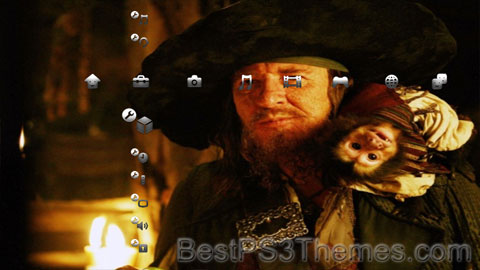
(14 backgrounds)
Pirates of the Caribbean 
Created by
Original work Pirates of the Caribbean (1967) Owner The Walt Disney Company Years 1967–present Print publications Novel(s) See Books Comics See Comic books Films and television Film(s) List
(2003)
(2006)
(2007)
(2011)
(2017)Games Video game(s) List of video games Miscellaneous Theme park attraction(s)
(since 1967)
(since 2016)
(2012–14)a Crossover work where characters and settings from this franchise appear. Rides and attractions[edit]
Pirates of the Caribbean[edit]
Pirate's Lair on Tom Sawyer Island[edit]
Pirates of the Caribbean: Battle for the Sunken Treasure[edit]
Film series[edit]
Video games[edit]
Books[edit]
Code Guidelines: A Booke for Those Who Desire to Keep to the Code and Live a Pirate's Life written under the pseudonym of Joshamee Gibbs (2017)Comic books[edit]
Adaptations[edit]
Characters[edit]
See also[edit]
References[edit]
External links[edit]

 Media related to Pirates of the Caribbean at Wikimedia Commons
Bugatti
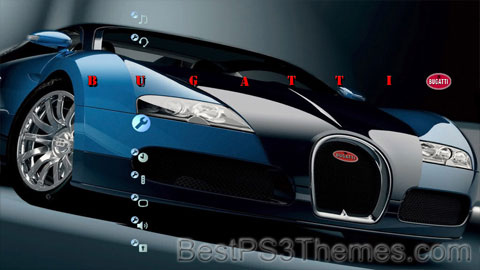
(8 backgrounds)


Company type Private Industry Automotive Founded 1909 Founder Ettore Bugatti Defunct 1963 Fate Sold to Hispano-Suiza (1963)[1] Headquarters Products Automobiles Under Ettore Bugatti[edit]

World War I and its aftermath[edit]

Racing successes[edit]


Aeroplane racing[edit]

Railcar[edit]
Family tragedy[edit]

After World War II[edit]

Design[edit]
Notable models[edit]
Prototypes
Racing cars
Road cars
Gallery[edit]


Notable finds in the modern era[edit]
Attempts at revival[edit]
Modern revivals[edit]
Bugatti Automobili S.p.A. (1987–1995)[edit]


Bugatti Automobiles S.A.S. (1998–present)[edit]
Pre-Veyron[edit]

Veyron era (2005–2015)[edit]
Chiron era (2016–present)[edit]
Multi-Theme
Germany
(1 background)
Anthem: "Das Lied der Deutschen"[a]
("The Song of the Germans")

– in the European Union (light green)Capital Berlin[b]
52°31′N 13°23′E / 52.517°N 13.383°EOfficial languages German[c] Demonym(s) German Government Federal parliamentary republic[4] Frank-Walter Steinmeier Olaf Scholz Legislature Bundestag, Bundesrat[d] Area 357,600 km2 (138,100 sq mi)[5] (63rd) 1.27[6] Population  84,669,326[7] (19th) 82,719,540[8]
236/km2 (611.2/sq mi) (58th) GDP (PPP) 2024 estimate  $5.687 trillion[9] (5th) $67,245[9] (18th)
GDP (nominal) 2024 estimate $4.591 trillion[9] (3rd) $54,291[9] (19th)Gini (2022)  28.8[10]
lowHDI (2022) 0.950[11]
very high (7th)Currency Euro (€) (EUR) Time zone UTC+1 (CET) UTC+2 (CEST) Date format Driving side right Calling code +49 ISO 3166 code DE Internet TLD .de Etymology[edit]
History[edit]
Prehistory[edit]
Germanic tribes, Roman frontier and the Frankish Empire[edit]

East Francia and the Holy Roman Empire[edit]

Sporting Lisbon