Indiana Jones IV theme by Telekill
Download: IndianaJonesIV.p3t
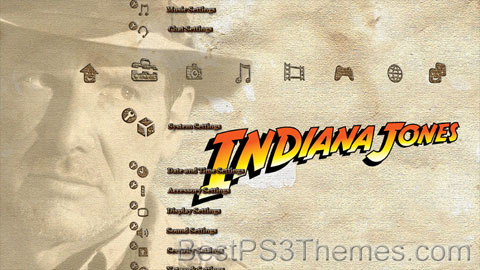
(1 background)

The #1 spot for Playstation themes!
Tom Raider theme by Telekill
Download: TombRaider_2.p3t
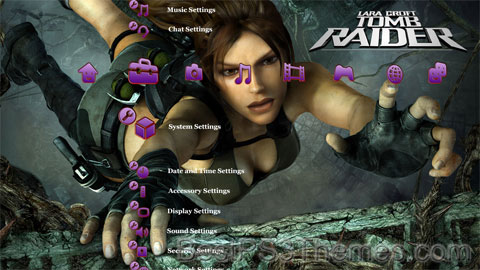
(1 background)
| Tomb Raider | |
|---|---|
 The Tomb Raider logo from 2022 onwards | |
| Genre(s) | Action-adventure |
| Developer(s) |
|
| Publisher(s) |
|
| Platform(s) |
|
| First release | Tomb Raider 25 October 1996 |
| Latest release | Tomb Raider I–III Remastered 14 February 2024 |
Tomb Raider, known as Lara Croft: Tomb Raider from 2001 to 2008, is a media franchise that originated with an action-adventure video game series created by British video game developer Core Design. The franchise is currently owned by CDE Entertainment; it was formerly owned by Eidos Interactive, then by Square Enix Europe after Square Enix's acquisition of Eidos in 2009 until Embracer Group purchased the intellectual property alongside Eidos in 2022. The franchise focuses on the fictional British archaeologist Lara Croft, who travels around the world searching for lost artefacts and infiltrating dangerous tombs and ruins. Gameplay generally focuses on exploration, solving puzzles, navigating hostile environments filled with traps, and fighting enemies. Additional media has been developed for the franchise in the form of film adaptations, comics and novels.
Development of the first Tomb Raider began in 1994; it was released two years later. Its critical and commercial success prompted Core Design to develop a new game annually for the next four years, which put a strain on staff. The sixth game, Tomb Raider: The Angel of Darkness, faced difficulties during development and was considered a failure at release. This prompted Eidos to switch development duties to Crystal Dynamics, which has been the series' primary developer since. Other developers have contributed to spin-off titles and ports of mainline entries.
Tomb Raider games have sold over 95 million copies worldwide by 2022.[1] while the entire franchise generated close to $1.2 billion in revenue by 2002.[2] The series has received generally positive reviews from critics, and Lara Croft has become one of the most recognisable video game protagonists, winning accolades and earning places on the Walk of Game and Guinness World Records.

| 1996 | Tomb Raider |
|---|---|
| 1997 | Tomb Raider II |
| 1998 | Tomb Raider III |
| 1999 | Tomb Raider: The Last Revelation |
| 2000 | Tomb Raider |
| Tomb Raider: Chronicles | |
| 2001 | Tomb Raider: Curse of the Sword |
| 2002 | Tomb Raider: The Prophecy |
| 2003 | Tomb Raider: The Angel of Darkness |
| 2004–2005 | |
| 2006 | Tomb Raider: Legend |
| 2007 | Tomb Raider: Anniversary |
| 2008 | Tomb Raider: Underworld |
| 2009 | |
| 2010 | Lara Croft and the Guardian of Light |
| 2011–2012 | |
| 2013 | Tomb Raider |
| 2014 | Lara Croft and the Temple of Osiris |
| 2015 | Lara Croft: Relic Run |
| Lara Croft Go | |
| Rise of the Tomb Raider | |
| 2016–2017 | |
| 2018 | Shadow of the Tomb Raider |
| 2019–2022 | |
| 2023 | Tomb Raider Reloaded |
| The Lara Croft Collection | |
| 2024 | Tomb Raider I–III Remastered |
The first six Tomb Raider games were developed by Core Design, a British video game development company owned by Eidos Interactive. After the sixth game in the series was released to a mixed reception in 2003, development was transferred to American studio Crystal Dynamics, who have handled the main series since.[3] Since 2001, other developers have contributed either to ports of mainline games or with the development of spin-off titles.[3][4][5][6][7][8]
The first entry in the series Tomb Raider was released in 1996 for personal computers (PC), PlayStation and Sega Saturn consoles.[9][10] The Saturn and PlayStation versions were released in Japan in 1997.[11][12] Its sequel, Tomb Raider II, launched in 1997, again for Microsoft Windows and PlayStation. A month before release, Eidos finalised a deal with Sony Computer Entertainment to keep the console version of Tomb Raider II and future games exclusive to PlayStation until the year 2000.[9][10] The PlayStation version was released in Japan in 1998.[13] Tomb Raider III launched in 1998.[10] As with Tomb Raider II, the PlayStation version released in Japan the following year.[14] The fourth consecutive title in the series, Tomb Raider: The Last Revelation, released in 1999. In 2000, with the end of the PlayStation exclusivity deal, the game also released on the Dreamcast.[9][15] In Japan, both console versions released the following year.[16][17] Tomb Raider: Chronicles released in 2000 on the same platforms as The Last Revelation, with the PlayStation version's Japanese release as before coming the following year.[9][15][18]
After a three-year gap, Tomb Raider: The Angel of Darkness was released on Microsoft Windows and PlayStation 2 (PS2) in 2003. The PlayStation 2 version was released in Japan that same year.[15][19] The next entry, Tomb Raider: Legend, was released worldwide in 2006 for the Microsoft Windows, PlayStation 2, Xbox, Xbox 360, PlayStation Portable (PSP), GameCube, Game Boy Advance (GBA) and Nintendo DS.[8][20][21] The Xbox 360, PlayStation 2 and PlayStation Portable versions were released in Japan the same year.[22] A year later, a remake of the first game titled Tomb Raider: Anniversary was released worldwide in 2007 for Microsoft Windows, PlayStation 2, PlayStation Portable, Xbox 360 and the Wii.[23] The next entry, Tomb Raider: Underworld, was released in 2008 on Microsoft Windows, PlayStation 3 (PS3), PlayStation 2, Xbox 360, Wii and DS.[24][25][26] The PlayStation 3, PlayStation 2, Xbox 360 and Wii versions were released in Japan in 2009.[27][28][29][30]
In 2011, The Tomb Raider Trilogy was released for PlayStation 3 as a compilation release that included Anniversary and Legend remastered in HD resolution, along with the PlayStation 3 version of Underworld. The disc includes avatars for PlayStation Home, a Theme Pack, new Trophies, Developer's Diary videos for the three games, and trailers for Lara Croft and the Guardian of Light as bonus content.
A reboot of the series, titled Tomb Raider, was released worldwide in 2013 for Microsoft Windows, PlayStation 3 and Xbox 360.[31][32] Its sequel, Rise of the Tomb Raider, was released in 2015 on the Xbox 360 and Xbox One.[33][34] The game was part of a timed exclusivity deal with Microsoft.[35] Versions for the PlayStation 4 and Microsoft Windows were released in 2016.[36] Another sequel, Shadow of the Tomb Raider,[37] was released worldwide on PlayStation 4, Xbox One, and Microsoft Windows in 2018.[38] An arcade game based on this incarnation was released by Bandai Namco Amusement in Europe in 2018.[39]
Core Design developed two Game Boy Colour titles in the early 2000s. The first, a side-scrolling game simply titled Tomb Raider was released in 2000.[7][40] The second, its sequel, Tomb Raider: Curse of the Sword, was released in 2001.[7][41] A Game Boy Advance title called Tomb Raider: The Prophecy, was released in 2002. Unlike the first two Game Boy titles, this was developed by Ubi Soft Milan and published by Ubi Soft, adopting an isometric perspective and moving away from the side-scrolling platform-based gameplay.[7][42]
From 2010 to 2015, a subseries simply titled Lara Croft was in development at Crystal Dynamics, with different gameplay than the main series and existing in its own continuity.[43][44] The first game, Lara Croft and the Guardian of Light, was released in 2010 as a downloadable title for PC, PS3 and Xbox 360.[43] It was followed by Lara Croft and the Temple of Osiris, released for retail and download in 2014 for PC, PS4 and Xbox One.[45] Both titles were released in a compilation entitled The Lara Croft Collection for Nintendo Switch in 2023.[46] An entry for mobile devices, an endless runner platformer titled Lara Croft: Relic Run, was released in 2015.[44] Square Enix Montreal also released a platform-puzzler for mobile devices, Lara Croft Go in 2015.[47]
In 2003, four Tomb Raider titles for mobile phones were released.[48] Developed by Emerald City Games for iOS and Android devices, Tomb Raider Reloaded is an action arcade and free-to-play game released by CDE Entertainment in 2022.[49]
After the release of The Angel of Darkness in 2003, Core Design continued working on the franchise for another three years, but both of the projects under development in that period were cancelled. A sequel titled The Lost Dominion was undergoing preliminary development that year, but the negative reception of The Angel of Darkness caused it and a wider trilogy to be scrapped.[9][50] With Eidos's approval, Core Design then began development of an updated edition of the first game for the PSP called Tomb Raider: 10th Anniversary in late 2005, with a projected release date of Christmas 2006. Development continued while other Core Design staff were working on the platformer Free Running. When Core Design was sold to Rebellion Developments in June 2006,[51] Eidos requested the project's cancellation. It was suggested by staff that Eidos did not want to let outside developers handle the franchise.[52][53] An Indiana Jones "reskin" of the game was never completed, and Free Running was ultimately the studio's final title in 2007. Core Design—by then named Rebellion Derby—shut down in 2010. A January 2006 build of 10th Anniversary was leaked online in 2020, and remains available on the Internet Archive.[54][55][56]

Lara Croft is the main protagonist and playable character of the video game series. She travels around the world in search of many forgotten artefacts and locations, frequently connected to supernatural powers.[59][60][61] While her biography has changed throughout the series, her shared traits are her origins as the only daughter and heir of the aristocratic Croft family.[59][62][63] She is portrayed as intelligent, athletic, elegant, fluent in multiple languages, and determined to fulfil her own goals at any cost. She has brown eyes and brown hair worn in a braid or ponytail. The character's classic outfit consists of a turquoise singlet, light brown shorts, calf-high boots, and tall white socks. Recurring accessories include fingerless gloves, a backpack, a utility belt with holsters on either side, and twin pistols. Later games have multiple new outfits for her.[58][64][65][66]
Lara Croft has been voiced by five actresses in the video game series: Shelley Blond, Judith Gibbins, Jonell Elliott, Keeley Hawes, and Camilla Luddington. In other media, Croft was also voiced by Minnie Driver in the animated series and portrayed by Angelina Jolie and Alicia Vikander in feature films. Multiple models and body doubles have portrayed Croft in promotional material until the reboot in 2013. Eight different real-life models have portrayed her at promotional events.[67][68]
In January 2023, The Hollywood Reporter reported that Phoebe Waller-Bridge was set to write a TV show adaptation[69] of the video game franchise for Amazon. It was also reported that this would involve a tie-in video game and film in an interconnected universe, likened to the Marvel Cinematic Universe.[70]
The circumstances of her first adventures, along with the drive behind her adventures, differ depending on the continuity. In the original continuities, she is on a plane that crashes in the Himalayas: her journey back to civilization against the odds help to begin her journey towards her adult life as an adventuress and treasure hunter.[59][62] In the original continuity, after her ordeal in the Himalayas, she left behind her privileged life and made a living writing about her exploits as an adventurer, mercenary, and cat burglar. Shortly after these books she was disowned by her family.[71][72] In The Last Revelation, Lara was caught in a collapsing pyramid at the game's end, leaving her fate unknown: this was because the staff, exhausted from four years of non-stop development, wanted to move on from the character.[67] Chronicles was told through a series of flashbacks at a wake for Lara, while The Angel of Darkness was set an unspecified time after The Last Revelation, with Lara revealed to have survived. The circumstances of her survival were originally part of the game but were cut due to time constraints and the pushing of the publisher Eidos.[67][73]
In the Legend continuity, her mother Amelia was involved in the crash, and she is partially driven by the need to discover the truth behind her mother's disappearance and vindicate her father's theories about Amelia's disappearance.[74] This obsession with the truth is present in Anniversary, and ends up bringing the world to the brink of destruction during the events of Underworld.[75][76] Her father is referred to as Lord Henshingly Croft in the original games and Lord Richard Croft in the Legend continuity.[59][62] The Lara Croft subseries take place within their own separate continuity, devoting itself to adventures similar to earlier games while the main series goes in a different stylistic direction.[44]
In the 2013 reboot continuity, Lara's mother vanished at an early age, and her father became obsessed with finding the secrets of immortality, eventually resulting in an apparent suicide. Lara distanced herself from her father's memory, believing like many others that his obsession had caused him to go mad. After studying at university, Lara gets an opportunity to work on an archaeology program, in the search for the mythic kingdom of Yamatai. The voyage to find the kingdom results in a shipwreck on an island, which is later discovered to be Yamatai, but the island is also home to savage bandits, who were victims of previous wrecks. Lara's attempts to find a way off the island lead her to discover that the island itself is stopping them from leaving, which she discovered is linked to the still-living soul of the Sun Queen Himiko. Lara tries to find a way to banish the spirit of the sun queen in order to get home. The aftermath of the events of the game causes Lara to see that her father was right, and that she had needlessly distanced herself from him. She decides to finish his work, and uncover the mysteries of the world. The game's sequels portray Lara Croft in conflict with an ancient organization Trinity, in their quest to obtain supernatural items for their world domination.

The gameplay of Tomb Raider is primarily based around an action-adventure framework, with Lara navigating environments and solving mechanical and environmental puzzles, in addition to fighting enemies and avoiding traps. These puzzles, primarily set within ancient tombs and temples, can extend across multiple rooms and areas within a level. Lara can swim through water, a rarity in games at the time that has continued through the series.[20][67][77][78] According to original software engineer and later studio manager Gavin Rummery, the original set-up of interlinking rooms was inspired by Egyptian multi-roomed tombs, particularly the tomb of Tutankhamun.[67] The feel of the gameplay was intended to evoke that of the 1989 video game Prince of Persia.[79] In the original games, Lara utilised a "bulldozer" steering set-up, with two buttons pushing her forward and back and two buttons steering her left and right, and in combat Lara automatically locked onto enemies when they came within range. The camera automatically adjusts depending on Lara's action, but defaults to a third-person perspective in most instances. This basic formula remained unchanged through the first series of games. Angel of Darkness added stealth elements.[77][78][80][81]
For Legend, the control scheme and character movement was redesigned to provide a smooth and fluid experience. One of the key elements present was how buttons for different actions cleanly transitioned into different actions, along with these moves being incorporated into combat to create effects such as stunning or knocking down enemies. Quick-time events were added into certain segments within each level, and many of the puzzles were based around sophisticated in-game physics.[20][67][82][83] Anniversary, while going through the same locales of the original game, was rebuilt using the gameplay and environmental puzzles of Legend.[84] For Underworld, the gameplay was redesigned around a phrase the staff had put to themselves: "What Could Lara Do?". Using this set-up, they created a greater variety of moves and greater interaction with the environment, along with expanding and improving combat.[85]
The gameplay underwent another major change for the 2013 reboot. Gameplay altered from progression through linear levels to navigating an open world, with hunting for supplies and upgrading equipment and weapons becoming a key part of gameplay, yet tombs were mostly optional, and platforming was less present in comparison to combat. The combat was redesigned to be similar to the Uncharted series: the previous reticle-based lock-on mechanics were replaced by a free-roaming aim.[86] Rise of the Tomb Raider built on the 2013 reboot's foundation, adding dynamic weather systems, reintroducing swimming, and increasing the prevalence of non-optional tombs with more platforming elements.[87]

The concept for Tomb Raider originated in 1994 at Core Design, a British game development studio.[88] One of the people involved in its creation was Toby Gard, who was mostly responsible for creating the character of Lara Croft. Gard originally envisioned the character as a man: company co-founder Jeremy Heath-Smith was worried the character would be seen as derivative of Indiana Jones, so Gard changed the character's gender. Her design underwent mult
The Gentlemen’s Theme by Sixx. Icons by Jewad Alnabi
Download: GentlemensTheme.p3t
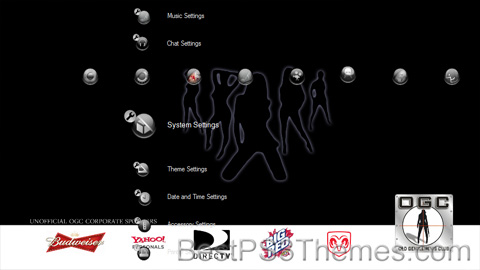
(1 background, wallpaper HD only)
P3T Unpacker v0.12
Copyright (c) 2007. Anoop Menon
This program unpacks Playstation 3 Theme files (.p3t) so that you can touch-up an existing theme to your likings or use a certain wallpaper from it (as many themes have multiple). But remember, if you use content from another theme and release it, be sure to give credit!
Download for Windows: p3textractor.zip
Instructions:
Download p3textractor.zip from above. Extract the files to a folder with a program such as WinZip or WinRAR. Now there are multiple ways to extract the theme.
The first way is to simply open the p3t file with p3textractor.exe. If you don’t know how to do this, right click the p3t file and select Open With. Alternatively, open the p3t file and it will ask you to select a program to open with. Click Browse and find p3textractor.exe from where you previously extracted it to. It will open CMD and extract the theme to extracted.[filename]. After that, all you need to do for any future p3t files is open them and it will extract.
The second way is very simple. Just drag the p3t file to p3textractor.exe. It will open CMD and extract the theme to extracted.[filename].
For the third way, first put the p3t file you want to extract into the same folder as p3textractor.exe. Open CMD and browse to the folder with p3extractor.exe. Enter the following:
p3textractor filename.p3t [destination path]Replace filename with the name of the p3t file, and replace [destination path] with the name of the folder you want the files to be extracted to. A destination path is not required. By default it will extract to extracted.filename.
Halle Berry HD theme by limeyluke
Download: HalleBerryHD.p3t

(16 backgrounds)
P3T Unpacker v0.12
Copyright (c) 2007. Anoop Menon
This program unpacks Playstation 3 Theme files (.p3t) so that you can touch-up an existing theme to your likings or use a certain wallpaper from it (as many themes have multiple). But remember, if you use content from another theme and release it, be sure to give credit!
Download for Windows: p3textractor.zip
Instructions:
Download p3textractor.zip from above. Extract the files to a folder with a program such as WinZip or WinRAR. Now there are multiple ways to extract the theme.
The first way is to simply open the p3t file with p3textractor.exe. If you don’t know how to do this, right click the p3t file and select Open With. Alternatively, open the p3t file and it will ask you to select a program to open with. Click Browse and find p3textractor.exe from where you previously extracted it to. It will open CMD and extract the theme to extracted.[filename]. After that, all you need to do for any future p3t files is open them and it will extract.
The second way is very simple. Just drag the p3t file to p3textractor.exe. It will open CMD and extract the theme to extracted.[filename].
For the third way, first put the p3t file you want to extract into the same folder as p3textractor.exe. Open CMD and browse to the folder with p3extractor.exe. Enter the following:
p3textractor filename.p3t [destination path]Replace filename with the name of the p3t file, and replace [destination path] with the name of the folder you want the files to be extracted to. A destination path is not required. By default it will extract to extracted.filename.
The Wire theme by original_copycat
Download: TheWire.p3t
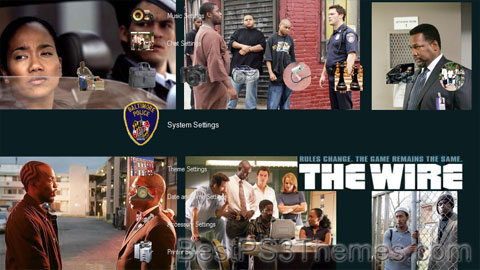
(5 backgrounds)
The Wire is an American crime drama television series created and primarily written by American author and former police reporter David Simon. The series was broadcast by the cable network HBO in the United States. The Wire premiered on June 2, 2002, and ended on March 9, 2008, comprising 60 episodes over five seasons. The idea for the show started out as a police drama loosely based on the experiences of Simon's writing partner Ed Burns, a former homicide detective and public school teacher.[4]
Set and produced in Baltimore, Maryland, The Wire introduces a different institution of the city and its relationship to law enforcement in each season while retaining characters and advancing storylines from previous seasons. The five subjects are, in chronological order; the illegal drug trade, the port system, the city government and bureaucracy, education and schools, and the print news medium. Simon chose to set the show in Baltimore because of his familiarity with the city.[4]
When the series first aired, the large cast consisted mainly of actors who were unknown to television audiences, as well as numerous real-life Baltimore and Maryland figures in guest and recurring roles. Simon has said that despite its framing as a crime drama, the show is "really about the American city, and about how we live together. It's about how institutions have an effect on individuals. Whether one is a cop, a longshoreman, a drug dealer, a politician, a judge or a lawyer, all are ultimately compromised and must contend with whatever institution to which they are committed."[5]
The Wire is lauded for its literary themes, its uncommonly accurate exploration of society and politics, and its realistic portrayal of urban life. During its original run, the series received only average ratings and never won any major television awards, but it is now often cited as one of the greatest shows in the history of television.[6]
Simon has stated that he originally set out to create a police drama loosely based on the experiences of his writing partner Ed Burns, a former homicide detective and public school teacher who had worked with Simon on projects including The Corner (2000). Burns, when working on protracted investigations of violent drug dealers using surveillance technology, had often been frustrated by the bureaucracy of the Baltimore Police Department; Simon saw similarities with his own ordeals as a police reporter for The Baltimore Sun.
Simon chose to set the show in Baltimore because of his familiarity with the city. During his time as a writer and producer for the NBC program Homicide: Life on the Street, based on his book Homicide: A Year on the Killing Streets (1991), also set in Baltimore, Simon had come into conflict with NBC network executives who were displeased by the show's pessimism. Simon wanted to avoid a repeat of these conflicts and chose to take The Wire to HBO, because of their working relationship from the miniseries The Corner. HBO was initially doubtful about including a police drama in its lineup but agreed to produce the pilot episode.[7][8] Simon approached the mayor of Baltimore, telling him that he wanted to give a bleak portrayal of certain aspects of the city; Simon was welcomed to work there again. He hoped the show would change the opinions of some viewers but said that it was unlikely to affect the issues it portrays.[7]
The casting of the show has been praised for avoiding big-name stars and using character actors who appear natural in their roles.[9] The looks of the cast as a whole have been described as defying TV expectations by presenting a true range of humanity on screen.[10] Many of the cast are black, consistent with the demographics of Baltimore.
Wendell Pierce, who plays Detective Bunk Moreland, was the first actor to be cast. Dominic West, who won the ostensible lead role of Detective Jimmy McNulty, sent in a tape he recorded the night before the audition's deadline of his playing out a scene by himself.[11] Lance Reddick received the role of Cedric Daniels after auditioning for the roles of Bunk and heroin addict Bubbles.[12] Michael K. Williams got the part of Omar Little after only a single audition.[13] Williams himself recommended Felicia Pearson for the role of Snoop after meeting her at a local Baltimore bar, shortly after she had served prison time for a second degree murder conviction.[14]
Several prominent real-life Baltimore figures, including former Maryland Governor Robert L. Ehrlich Jr.; Rev. Frank M. Reid III; radio personality Marc Steiner; former police chief and radio personality Ed Norris; Baltimore Sun reporter and editor David Ettlin; Howard County Executive Ken Ulman; and former mayor Kurt Schmoke have appeared in minor roles despite not being professional actors.[15][16]
"Little Melvin" Williams, a Baltimore drug lord arrested in the 1980s by an investigation that Burns had been part of, had a recurring role as a deacon beginning in the third season. Jay Landsman, a longtime police officer who inspired the character of the same name,[17] played Lieutenant Dennis Mello.[18] Baltimore police commander Gary D'Addario served as the series' technical advisor for the first two seasons[19][20] and had a recurring role as prosecutor Gary DiPasquale.[21] Simon shadowed D'Addario's shift when researching his book Homicide: A Year on the Killing Streets and both D'Addario and Landsman are subjects of the book.[22]
More than a dozen cast members previously appeared on HBO's first hour-long drama Oz. J. D. Williams, Seth Gilliam, Lance Reddick, and Reg E. Cathey were featured in very prominent roles on Oz, while a number of other notable stars of The Wire, including Wood Harris, Frankie Faison, John Doman, Clarke Peters, Domenick Lombardozzi, Michael Hyatt, Michael Potts, and Method Man, appeared in at least one episode of Oz.[23] Cast members Erik Dellums, Peter Gerety, Clark Johnson, Clayton LeBouef, Toni Lewis and Callie Thorne also appeared on Homicide: Life on the Street, the earlier and award-winning network television series also based on Simon's book; Lewis appeared on Oz as well. A number of cast members, as well as crew members, also appeared in the preceding HBO miniseries The Corner including Clarke Peters, Reg E. Cathey, Lance Reddick, Corey Parker Robinson, Robert F. Chew, Delaney Williams, and Benay Berger.
Alongside Simon, the show's creator, head writer, showrunner, and executive producer, much of the creative team behind The Wire were alumni of Homicide and Primetime Emmy Award-winning miniseries The Corner. The Corner veteran, Robert F. Colesberry, was executive producer for the first two seasons and directed the season 2 finale before dying from complications from heart surgery in 2004. He is credited by the rest of the creative team as having a large creative role as a producer, and Simon credits him for achieving the show's realistic visual feel.[5] He also had a small recurring role as Detective Ray Cole.[24] Colesberry's wife Karen L. Thorson joined him on the production staff.[19] A third producer on The Corner, Nina Kostroff Noble also stayed with the production staff for The Wire rounding out the initial four-person team.[19] Following Colesberry's death, she became the show's second executive producer alongside Simon.[25]
Stories for the show were often co-written by Burns, who also became a producer in the show's fourth season.[26] Other writers include three acclaimed crime fiction writers from outside of Baltimore: George Pelecanos from Washington, Richard Price from the Bronx and Dennis Lehane from Boston.[27] Reviewers drew comparisons between Price's works (particularly Clockers) and The Wire even before he joined.[28] In addition to writing, Pelecanos served as a producer for the third season.[29] Pelecanos has commented that he was attracted to the project because of the opportunity to work with Simon.[29]
Staff writer Rafael Alvarez penned several episodes' scripts, as well as the series guidebook The Wire: Truth Be Told. Alvarez is a colleague of Simon's from The Baltimore Sun and a Baltimore native with working experience in the port area.[30] Another city native and independent filmmaker, Joy Lusco, also wrote for the show in each of its first three seasons.[31] Baltimore Sun writer and political journalist William F. Zorzi joined the writing staff in the third season and brought a wealth of experience to the show's examination of Baltimore politics.[30]
Playwright and television writer/producer Eric Overmyer joined the crew of The Wire in the show's fourth season as a consulting producer and writer.[26] He had also previously worked on Homicide. Overmyer was brought into the full-time production staff to replace Pelecanos who scaled back his involvement to concentrate on his next book and worked on the fourth season solely as a writer.[32] Primetime Emmy Award winner, Homicide and The Corner, writer and college friend of Simon, David Mills also joined the writing staff in the fourth season.[26]
Directors include Homicide alumnus Clark Johnson,[33] who directed several acclaimed episodes of The Shield,[34] and Tim Van Patten, a Primetime Emmy Award winner who has worked on every season of The Sopranos. The directing has been praised for its uncomplicated and subtle style.[9] Following the death of Colesberry, director Joe Chappelle joined the production staff as a co-executive producer and continued to regularly direct episodes.[35]
 |
Each episode begins with a cold open that seldom contains a dramatic juncture. The screen then fades or cuts to black while the intro music fades in. The show's opening title sequence then plays; a series of shots, mainly close-ups, concerning the show's subject matter that changes from season to season, separated by fast cutting (a technique rarely used in the show itself). The opening credits are superimposed on the sequence, and consist only of actors' names without identifying which actors play which roles. In addition, actors' faces are rarely seen in the title sequence.
At the end of the sequence, a quotation (epigraph) is shown on-screen that is spoken by a character during the episode. The three exceptions were the first season finale which uses the phrase "All in the game", attributed to "Traditional West Baltimore", a phrase used frequently throughout all five seasons including that episode; the fourth season finale which uses the words "If animal trapped call 410-844-6286" written on boarded up vacant homes attributed to "Baltimore, traditional" and the series finale, which started with a quote from H. L. Mencken that is shown on a wall at The Baltimore Sun in one scene, neither quote being spoken by a character. Progressive story arcs often unfold in different locations at the same time. Episodes rarely end with a cliffhanger, and close with a fade or cut to black with the closing music fading in.
When broadcast on HBO and on some international networks, the episodes are preceded by a recap of events that have a bearing upon the upcoming narrative, using clips from previous episodes.
Rather than overlaying songs on the soundtrack, or employing a score, The Wire primarily uses pieces of music that emanate from a source within the scene, such as a jukebox or car radio. This kind of music is known as diegetic or source cue. This practice is rarely breached, notably for the end-of-season montages and occasionally with a brief overlap of the closing theme and the final shot.[36]
The opening theme is "Way Down in the Hole," a gospel-and-blues-inspired song, written by Tom Waits for his 1987 album Franks Wild Years. Each season uses a different recording and a different opening sequence, with the theme being performed by The Blind Boys of Alabama, Waits, The Neville Brothers, DoMaJe and Steve Earle. The season four version of "Way Down in the Hole" was arranged and recorded for the show and is performed by five Baltimore teenagers: Ivan Ashford, Markel Steele, Cameron Brown, Tariq Al-Sabir and Avery Bargasse.[37] Earle, who performed the fifth season version, is also a member of the cast, playing the recovering drug addict Walon.[38] The closing theme is "The Fall," composed by Blake Leyh, who is also the music supervisor of the show.
During season finales, a song is played before the closing scene in a montage showing the lives of the protagonists in the aftermath of the narrative. The first season montage is played over "Step by Step" by Jesse Winchester, the second "I Feel Alright" by Steve Earle, the third "Fast Train" written by Van Morrison and performed by Solomon Burke, the fourth "I Walk on Gilded Splinters" written by Dr. John and performed by Paul Weller and the fifth uses an extended version of "Way Down In The Hole" by the Blind Boys of Alabama, the same version of the song used as the opening theme for the first season.[28]
While the songs reflect the mood of the sequence, their lyrics are usually only loosely tied to the visual shots. In the commentary track to episode 37, "Mission Accomplished", executive producer David Simon said: "I hate it when somebody purposely tries to have the lyrics match the visual. It brutalizes the visual in a way to have the lyrics dead on point. ... Yet at the same time it can't be totally off point. It has to glance at what you're trying to say."[28]
Two soundtrack albums, called The Wire: And All the Pieces Matter—Five Years of Music from The Wire and Beyond Hamsterdam, were released on January 8, 2008, on Nonesuch Records.[39] The former features music from all five seasons of the series and the latter includes local Baltimore artists exclusively.[39]
The writers strove to create a realistic vision of an American city based on their own experiences.[40] Simon, originally a reporter for The Baltimore Sun, spent a year researching a Baltimore homicide detective unit for his book Homicide: A Year on the Killing Streets, where he met Burns. Burns served in the Baltimore Police Department for 20 years and later became a teacher in an inner-city school. The two of them spent a year researching the drug culture and poverty in Baltimore for their book The Corner: A Year in the Life of an Inner-City Neighborhood. Their combined experiences were used in many storylines of The Wire.
Central to the show's aim for realism was the creation of truthful characters. Simon has stated that most of them are composites of real-life Baltimore figures.[41] For instance, Donnie Andrews served as the main inspiration of Omar Little.[42] Martin O'Malley served as "one of the inspirations" for Tommy Carcetti.[43] The show often cast non-professional actors in minor roles, distinguishing itself from other television series by showing the "faces and voices of the real city" it depicts.[3] The writing also uses contemporary slang to enhance the immersive viewing experience.[3]
In distinguishing the police characters from other television detectives, Simon makes the point that even the best police of The Wire are motivated not by a desire to protect and serve, but by the intellectual vanity of believing they are smarter than the criminals they are chasing. While many of the police do exhibit altruistic qualities, many officers portrayed on the show are incompetent, brutal, self-aggrandizing, or hamstrung by bureaucracy and politics. The criminals are not always motivated by profit or a desire to harm others; many are trapped in their existence and all have human qualities. Even so, The Wire does not minimize or gloss over the horrific effects of their actions.[5]
The show is realistic in depicting the processes of both police work and criminal activity. There have even been reports of real-life criminals watching the show to learn how to counter police investigation techniques.[44][45] The fifth season portrayed a working newsroom at The Baltimore Sun and was described by Brian Lowry of Variety magazine in 2007 as the most realistic portrayal of the media in film and television.[46]
In a December 2006 Washington Post article, local black students said that the show had "hit a nerve" with the black community and that they themselves knew real-life counterparts of many of the characters. The article expressed great sadness at the toll drugs and violence are taking on the black community.[47]
Many important events occur off-camera and there is no artificial exposition in the form of voice-over or flashbacks, with the exceptions of two flashbacks – one at the end of the pilot episode that replays a moment from earlier in the same episode and one at the end of the fourth season finale that shows a short clip of a character tutoring his younger brother earlier in the season. Thus, the viewer needs to follow every conversation closely to understand the ongoing story arc and the relevance of each character to it. Salon has described the show as novelistic in structure, with a greater depth of writing and plotting than other crime shows.[27]
Each season of The Wire consists of 10 to 13 episodes that form several multi-layered narratives. Simon chose this structure with an eye towards long story arcs that draw in viewers, resulting in a more satisfying payoff. He uses the metaphor of a visual novel in several interviews,[7][48] describing each episode as a chapter, and has also commented that this allows a fuller exploration of the show's themes in time not spent on plot development.[5]

Simon described the second season as "a meditation on the death of work and the betrayal of the American working class ... it is a deliberate argument that unencumbered capitalism is not a substitute for social policy; that on its own, without a social compact, raw capitalism is destined to serve the few at the expense of the many."[41] He added that season 3 "reflects on the nature of reform and reformers, and whether there is any possibility that political processes, long calcified, can mitigate against the forces currently arrayed against individuals." The third season is also an allegory that draws explicit parallels between the Iraq War and drug prohibition,[41] which in Simon's view has failed in its aims[45] and has become a war against America's underclass.[49] This is portrayed by Major Colvin, imparting to Carver his view that policing has been allowed to become a war and thus will never succeed in its aims.[citation needed]
Writer Ed Burns, who worked as a public school teacher after retiring from the Baltimore police force shortly before going to work with Simon, has called education the theme of the fourth season. Rather than focusing solely on the school system, the fourth season looks at schools as a porous part of the community that are affected by problems outside of their boundaries. Burns states that education comes from many sources other than schools and that children can be educated by other means, including contact with the drug dealers they work for.[50] Burns and Simon see the theme as an opportunity to explore how individuals end up like the show's criminal characters and to dramatize the notion that hard work is not always justly rewarded.[51]
Happy theme by original_copycat
Download: Happy.p3t

(1 background)
Redirect to:
This page is a redirect. The following categories are used to track and monitor this redirect:
|
Screaming Mantis theme by cypher31
Download: ScreamingMantis.p3t
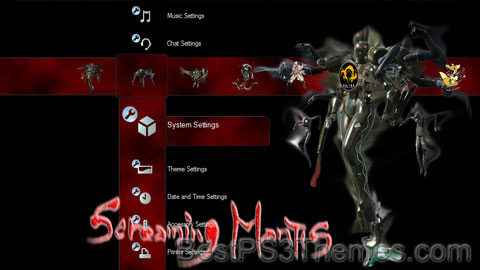
(1 background)
P3T Unpacker v0.12
Copyright (c) 2007. Anoop Menon
This program unpacks Playstation 3 Theme files (.p3t) so that you can touch-up an existing theme to your likings or use a certain wallpaper from it (as many themes have multiple). But remember, if you use content from another theme and release it, be sure to give credit!
Download for Windows: p3textractor.zip
Instructions:
Download p3textractor.zip from above. Extract the files to a folder with a program such as WinZip or WinRAR. Now there are multiple ways to extract the theme.
The first way is to simply open the p3t file with p3textractor.exe. If you don’t know how to do this, right click the p3t file and select Open With. Alternatively, open the p3t file and it will ask you to select a program to open with. Click Browse and find p3textractor.exe from where you previously extracted it to. It will open CMD and extract the theme to extracted.[filename]. After that, all you need to do for any future p3t files is open them and it will extract.
The second way is very simple. Just drag the p3t file to p3textractor.exe. It will open CMD and extract the theme to extracted.[filename].
For the third way, first put the p3t file you want to extract into the same folder as p3textractor.exe. Open CMD and browse to the folder with p3extractor.exe. Enter the following:
p3textractor filename.p3t [destination path]Replace filename with the name of the p3t file, and replace [destination path] with the name of the folder you want the files to be extracted to. A destination path is not required. By default it will extract to extracted.filename.
Metal Gear Solid theme by cypher31
Download: MGS_3_Updated.p3t

(1 background)
Redirect to:
XMB3YOND theme by P.D. Latour
Download: XMB3YOND.p3t

(5 backgrounds)
P3T Unpacker v0.12
Copyright (c) 2007. Anoop Menon
This program unpacks Playstation 3 Theme files (.p3t) so that you can touch-up an existing theme to your likings or use a certain wallpaper from it (as many themes have multiple). But remember, if you use content from another theme and release it, be sure to give credit!
Download for Windows: p3textractor.zip
Instructions:
Download p3textractor.zip from above. Extract the files to a folder with a program such as WinZip or WinRAR. Now there are multiple ways to extract the theme.
The first way is to simply open the p3t file with p3textractor.exe. If you don’t know how to do this, right click the p3t file and select Open With. Alternatively, open the p3t file and it will ask you to select a program to open with. Click Browse and find p3textractor.exe from where you previously extracted it to. It will open CMD and extract the theme to extracted.[filename]. After that, all you need to do for any future p3t files is open them and it will extract.
The second way is very simple. Just drag the p3t file to p3textractor.exe. It will open CMD and extract the theme to extracted.[filename].
For the third way, first put the p3t file you want to extract into the same folder as p3textractor.exe. Open CMD and browse to the folder with p3extractor.exe. Enter the following:
p3textractor filename.p3t [destination path]Replace filename with the name of the p3t file, and replace [destination path] with the name of the folder you want the files to be extracted to. A destination path is not required. By default it will extract to extracted.filename.
Evangeline Lilly theme by swebarb
Download: EvangelineLilly_2.p3t

(1 background)
Evangeline Lilly | |
|---|---|
.jpg) Lilly at the 2014 San Diego Comic Con | |
| Born | Nicole Evangeline Lilly 3 August 1979 Fort Saskatchewan, Alberta, Canada |
| Alma mater | University of British Columbia |
| Occupations |
|
| Years active | 2002–2024 |
| Spouse |
Murray Hone
(m. 2003; div. 2004) |
| Partners |
|
| Children | 2 |
Nicole Evangeline Lilly (born 3 August 1979)[1][2] is a Canadian author and retired actress. She gained popularity for her first leading role as Kate Austen in the ABC drama series Lost (2004–2010), which garnered her six nominations for the Saturn Award for Best Actress on Television and a nomination for the Golden Globe Award for Best Actress in a Drama Series.
Lilly has also appeared in the war film The Hurt Locker (2008) and sports drama Real Steel (2011), and has starred as Tauriel in Peter Jackson's The Hobbit film series, appearing in The Desolation of Smaug (2013) and The Battle of the Five Armies (2014). She has portrayed Hope van Dyne / Wasp in the Marvel Cinematic Universe (MCU), beginning with Ant-Man (2015). Lilly is also the author of a children's book series The Squickerwonkers.
Lilly was born in Fort Saskatchewan, Alberta, on 3 August 1979. She was raised in British Columbia by her mother, a daycare center owner, and her father, a home economics teacher. She has an older sister and a younger sister. Lilly was raised Baptist and Mennonite.[1][3][4]
Lilly graduated from W. J. Mouat Secondary School in Abbotsford, British Columbia, with a 4.3 GPA; she was captain of the soccer team and vice president of the student council.[5] In university, she was a waitress, did "oil changes and grease jobs on big rig trucks", and was a flight attendant for Royal Airlines to pay for her tuition.[6][7] Her interest in humanitarian causes and world development led her to major in international relations at the University of British Columbia.[8]
Lilly's acting career began when she was discovered by a Ford Modelling Agency agent while passing the time in Kelowna, British Columbia.[9] She took the agent's business card but did not immediately pursue acting. She eventually called and the agency landed her several roles in commercials and non-speaking parts in the TV shows Smallville and Kingdom Hospital.[8][10][11] She was also on a video game news and review show on the gaming television channel G4TV.[12]

In late 2003, Lilly was encouraged by a friend to audition for ABC's Lost, but did not expect to be cast.[13] The secrecy campaign meant auditioning actors could not see the full script, could read only short scenes, and knew only the basic premise of people surviving a plane crash on a tropical island.[13] It reminded Lilly of The Blue Lagoon, and she thought Lost would "at best be a mediocre TV show".[13] Around 75 women auditioned for the part of Kate Austen. Writer and co-creator Damon Lindelof said that he and executive producer and co-creator J. J. Abrams "...were fast-forwarding through a tape and he saw her and said: 'That's the girl!'"[14][15] The character almost had to be recast, as Lilly had trouble acquiring a work visa to enter the United States.[16] Her application was finally accepted after nearly 20 tries; she arrived in Hawaii for filming one day late.[16]
Lost ran for six seasons, from 2004 to 2010.[17] It was one of ABC's top primetime shows, winning one Golden Globe Award and ten Primetime Emmy Awards, including Outstanding Drama Series in 2005, and was ranked the top-rated TV show of the decade by IMDb.[18] Lilly was between 24 and 30 years of age during the show's run, appearing in 108 of 121 episodes, as her character, Kate Austen, was the show's female lead. In 2006 she was nominated for a Golden Globe Award for Best Actress – Television Series Drama.[19][20] Robert Bianco of USA Today praised Lilly's performance in the episode named "Eggtown", saying it was almost worthy of a Primetime Emmy Award for Outstanding Lead Actress in a Drama Series nomination.[21] After shooting the final episode of Lost, Lilly said she was considering taking a break from acting to focus on her charity and humanitarian efforts.[22] She told Vulture: "I consider acting a day job—it's not my dream; it's not my be-all, end-all."[23] She says she uses her high-profile roles to further her humanitarian efforts, not to achieve stardom.[24]
_(cropped).jpg)
In 2008, Lilly appeared in the film The Hurt Locker, directed by Kathryn Bigelow.[25] The film received widespread acclaim and went on to be nominated in nine categories at the 82nd Academy Awards, winning six of these including Best Picture.[26] Lilly and the cast won the Gotham Independent Film Award for Best Ensemble Cast and the Washington D.C. Area Film Critics Association Award for Best Ensemble.[27][28] That same year, Lilly had a leading role in the psychological thriller film Afterwards.[29][30][31][32]
In May 2010, Lilly announced on The View that being a mother was her top priority, but that she liked acting as a "day job" and would continue it when possible.[33] She took a short hiatus that year and was not in contact with Hollywood.[34]
In 2011, despite turning down a number of film offers, Lilly appeared as Bailey Tallet, a boxing gym owner, in Real Steel alongside Hugh Jackman.[35] She accepted the role after director Shawn Levy sent her the script.[36] Levy noted that Lilly was "magnificent to look" and that he "needed someone who you believed had grown up in a man's world; Bailey needed to have a strength and a toughness that was not at the expense of her being womanly".[37] Real Steel went on to be nominated for Best Visual Effects at the 84th Academy Awards.[38][39] During promotion for the film, Lilly turned down a role in the X-Men franchise from Jackman, noting that she "wasn't into superhero movies" at the time.[40]
In 2012, Lilly was cast as the Mirkwood elf Tauriel in Peter Jackson's three-part adaptation of J. R. R. Tolkien's The Hobbit.[41][42] The character, which does not appear in the original book by Tolkien, was created by Peter Jackson and Fran Walsh as the head of the Elven guard.[43] For the role, Lilly underwent training for swordplay, archery and speaking the Elvish language.[43][44] Lilly described Tauriel as a nonconformist, noting that she tends to "rebel against the established social order of the Elves".[45] Lilly appeared as the character in The Hobbit: The Desolation of Smaug (2013) and its sequel, The Hobbit: The Battle of the Five Armies (2014).[46]
.jpg)
In 2015, Lilly played Hope van Dyne, the daughter of Hank Pym and Janet van Dyne, in the superhero film Ant-Man as a part of the Marvel Cinematic Universe (MCU).[47] Lilly described her character as "capable, strong, and kick-ass", but said that being raised by two superheroes resulted in Hope being "a pretty screwed up human being [...] and the clear message sent by my name is that I'm not a big fan of my father and so I took my mother's name."[48] Lilly also signed a multi-film contract with Marvel.[49] The film received generally positive reviews.[50]
In 2017, Lilly starred in the Netflix horror film Little Evil alongside Adam Scott.[51] In 2018, she reprised her role as Van Dyne in Ant-Man and the Wasp (2018), donning the superhero mantle of the Wasp which had been teased in the first film during an end credits scene.[52][53] The film received generally positive reviews with Lilly's performance being praised.[54][55] The Wasp became the first superheroine to be a titular character in an MCU film.[56] Lilly also reprised her role in Avengers: Endgame (2019).[57] That same year, Lilly was set to star in a film titled Happy Place alongside Ike Barinholtz.[a][58]
In 2021, she starred with Armie Hammer and Gary Oldman in Crisis, directed by Nicholas Jarecki.[59] That same year, she also starred in South of Heaven alongside Jason Sudeikis and Mike Colter.[60][61] The latter won her Best Actress at the AFIN International Film Festival.[62] Lilly also voiced an alternate version of the Wasp in the Disney+ animated series What If...? (2021).[63] She voiced Van Dyne in the episode "What If... Zombies?!", and received positive reviews.[64]
In February 2023, Lilly reprised her role as Hope van Dyne / Wasp in Ant-Man and the Wasp: Quantumania, released as the first film of Phase Five of the MCU.[65][66] That same month, it was announced that Lilly would voice a character in the English version of the animated historic epic Israeli film, Legend of Destruction, which was originally released in 2021 in Hebrew.[67] Lilly voiced the "last Jewish queen, Berenice of Cilicia, who did her best to protect her people [...] even at the cost of her life", in which Lilly noted was "really brutal and sad, but it's true".[68]
In June 2024, Lilly announced that she was "stepping away" from acting.[69] She noted that "I might return to Hollywood one day, but for now this is where I belong".[69]

After gaining recognition for her role as Kate Austen in Lost, Lilly began to appear in the media and was regularly included in "Most Beautiful" lists.[70] Entertainment Weekly voted Lilly one of its "Breakout Stars of 2004".[71] That same year, Lilly was voted one of People's "50 Most Beautiful People".[72] In 2007, her portrayal of Austen was voted the number one "Sexiest Woman on Television" by TV Guide and made FHM's Top Sexiest.[73]
Lilly is noted for playing "strong, tragic, and even a bit snarky" characters.[74] Lilly's roles in The Hobbit film series and the Marvel Cinematic Universe as Tauriel and Hope van Dyne / Wasp respectively, have received critical acclaim.[75] [76][77] For her performance as Tauriel, Lilly was nominated for the Saturn Award for Best Supporting Actress,[78] the Broadcast Film Critics Association Award for Best Actress in an Action Movie,[79] the Empire Award for Best Supporting Actress,[80] and a Kid's Choice Award for Favorite Female Buttkicker.[81]
Lilly works with non-profits such as the GO Campaign.[22] In 2009, Lilly auctioned off custom lingerie in support of Task Brasil, "a non-profit organization dedicated to helping the lost street children of Brazil by providing them secure housing".[82] In 2010, she auctioned off three lunches in Vancouver, Honolulu, and Los Angeles to help widows and orphans in Rwanda, a country she has made numerous trips to as part of her charity work.[83] In 2012, Lilly auctioned off a Hawaiian hike to raise money for the Sierra Club.[84]

On set of Lost in 2006, Lilly noted in an interview that she wanted to be a writer.[85] On July 18, 2013, Lilly debuted her book series, titled The Squickerwonkers at the San Diego Comic-Con centred around a young girl who joins a group of characters described as a "family" who are all "strange outcasts" and have "very particular vices".[86][87][88]
In 2014, Titan Books released the first title of The Squickerwonkers titled The Squickerwonkers: The Prequel (2014) with the foreword written by Peter Jackson.[86][89][90] Three main titles titled The Squickerwonkers, Act 1: The Demise of Selma the Spoiled (2018), The Squickerwonkers, Act 2: The Demise of Lorna the Lazy (2018) and The Squickerwonkers, Act 3: The Demise of Andy the Arrogant (2019) were self-published by Quiet Cocoon Productions with Rodrigo Bastos Didier taking over as illustrator.[91][92][93] Lilly has stated that her literary inspirations are Roald Dahl and Edward Gorey.[94][95]
Lilly was raised Baptist and Mennonite and described herself as "very devout and evangelical". She has been involved in humanitarian work for 13 years in Rwanda where she runs a NGO.[96][97]
Lilly was married to hockey player Murray Hone from 2003 to 2004.[98] She was in a relationship with English actor and Lost costar Dominic Monaghan from 2004 to 2007.[99] In 2010, Lilly began a relationship with Norman Kali. She gave birth to a son, in 2011.[100] Their second son was born in October 2015.[101]
On 20 December 2006, an electrical problem set fire to Lilly's house in Kailua, Hawaii, destroying the house and all of her possessions while she was on the set of Lost.[102] Though she lost all of her belongings, she said that the fire was "almost liberating" and that she was "in no hurry to clutter up [her] life again".[103]
On 16 March 2020, Lilly received mixed responses when she refused to self-quarantine during the COVID-19 pandemic, said it was "business as usual" on Instagram, and claimed that she values "freedom over [her] life".[104] On 26 March, she apologized for her comments and called them "dismissive, arrogant, and cryptic".[105] On 27 January 2022, she posted a photo on Instagram showing that she had taken part in a march against COVID-19 vaccine mandates in Washington, D.C. and said that "nobody should ever be forced to inject their body with anything, against their will".[106][107] On 18 February, amidst the Canada convoy protest against federal COVID-19 mandates, she urged Canadian Prime Minister Justin Trudeau to meet with the protestors.[108][109]
| † | Denotes productions that have not yet been released |
| Year | Title | Role | Notes | Ref. |
|---|---|---|---|---|
| 2003 | The Lizzie McGuire Movie | Police Officer | Uncredited | [110] |
| Freddy vs. Jason | School Student Next to Locker | [110] | ||
| 2004 | White Chicks | Party Guest | [111] | |
| 2005 | The Long Weekend | Simone | [112] | |
| 2008 | The Hurt Locker | Connie James | [113] | |
| Afterwards | Claire | [114] | ||
| 2011 | Real Steel | Bailey Tallet | [113] | |
| 2013 | The Hobbit: The Desolation of Smaug | Tauriel | [46] | |
| 2014 | The Hobbit: The Battle of the Five Armies | [46] | ||
| 2015 | Ant-Man | Hope van Dyne | [34] | |
| 2017 | Little Evil | Samantha Bloom | [51] | |
| 2018 | Ant-Man and the Wasp | Hope van Dyne / Wasp | [115] | |
| 2019 | Avengers: Endgame | [116] | ||
| 2021 | Crisis | Claire Reimann | [117] | |
| Legend of Destruction | Queen Berenice | Voice; English dub | [67] | |
| South of Heaven | Annie Ray | [118] | ||
| 2023 | Ant-Man and the Wasp: Quantumania | Hope van Dyne / Wasp | Final film role | [119] |
