This program unpacks Playstation 3 Theme files (.p3t) so that you can touch-up an existing theme to your likings or use a certain wallpaper from it (as many themes have multiple). But remember, if you use content from another theme and release it, be sure to give credit!
Download p3textractor.zip from above. Extract the files to a folder with a program such as WinZip or WinRAR. Now there are multiple ways to extract the theme.
The first way is to simply open the p3t file with p3textractor.exe. If you don’t know how to do this, right click the p3t file and select Open With. Alternatively, open the p3t file and it will ask you to select a program to open with. Click Browse and find p3textractor.exe from where you previously extracted it to. It will open CMD and extract the theme to extracted.[filename]. After that, all you need to do for any future p3t files is open them and it will extract.
The second way is very simple. Just drag the p3t file to p3textractor.exe. It will open CMD and extract the theme to extracted.[filename].
For the third way, first put the p3t file you want to extract into the same folder as p3textractor.exe. Open CMD and browse to the folder with p3extractor.exe. Enter the following: p3textractor filename.p3t [destination path]Replace filename with the name of the p3t file, and replace [destination path] with the name of the folder you want the files to be extracted to. A destination path is not required. By default it will extract to extracted.filename.
This program unpacks Playstation 3 Theme files (.p3t) so that you can touch-up an existing theme to your likings or use a certain wallpaper from it (as many themes have multiple). But remember, if you use content from another theme and release it, be sure to give credit!
Download p3textractor.zip from above. Extract the files to a folder with a program such as WinZip or WinRAR. Now there are multiple ways to extract the theme.
The first way is to simply open the p3t file with p3textractor.exe. If you don’t know how to do this, right click the p3t file and select Open With. Alternatively, open the p3t file and it will ask you to select a program to open with. Click Browse and find p3textractor.exe from where you previously extracted it to. It will open CMD and extract the theme to extracted.[filename]. After that, all you need to do for any future p3t files is open them and it will extract.
The second way is very simple. Just drag the p3t file to p3textractor.exe. It will open CMD and extract the theme to extracted.[filename].
For the third way, first put the p3t file you want to extract into the same folder as p3textractor.exe. Open CMD and browse to the folder with p3extractor.exe. Enter the following: p3textractor filename.p3t [destination path]Replace filename with the name of the p3t file, and replace [destination path] with the name of the folder you want the files to be extracted to. A destination path is not required. By default it will extract to extracted.filename.
Fresh lava from Fagradalsfjall volcano eruption in Iceland, 2023
Lava is molten or partially molten rock (magma) that has been expelled from the interior of a terrestrial planet (such as Earth) or a moon onto its surface. Lava may be erupted at a volcano or through a fracture in the crust, on land or underwater, usually at temperatures from 800 to 1,200 °C (1,470 to 2,190 °F). The volcanic rock resulting from subsequent cooling is also often called lava.
A lava flow is an outpouring of lava during an effusive eruption. (An explosive eruption, by contrast, produces a mixture of volcanic ash and other fragments called tephra, not lava flows.) The viscosity of most lava is about that of ketchup, roughly 10,000 to 100,000 times that of water. Even so, lava can flow great distances before cooling causes it to solidify, because lava exposed to air quickly develops a solid crust that insulates the remaining liquid lava, helping to keep it hot and inviscid enough to continue flowing.[1]
The word lava comes from Italian and is probably derived from the Latin word labes, which means a fall or slide.[2][3] An early use of the word in connection with extrusion of magma from below the surface is found in a short account of the 1737 eruption of Vesuvius, written by Francesco Serao, who described "a flow of fiery lava" as an analogy to the flow of water and mud down the flanks of the volcano (a lahar) after heavy rain.[4][5]
The silica component dominates the physical behavior of silicate magmas. Silicon ions in lava strongly bind to four oxygen ions in a tetrahedral arrangement. If an oxygen ion is bound to two silicon ions in the melt, it is described as a bridging oxygen, and lava with many clumps or chains of silicon ions connected by bridging oxygen ions is described as partially polymerized. Aluminium in combination with alkali metal oxides (sodium and potassium) also tends to polymerize the lava.[10] Other cations, such as ferrous iron, calcium, and magnesium, bond much more weakly to oxygen and reduce the tendency to polymerize.[11] Partial polymerization makes the lava viscous, so lava high in silica is much more viscous than lava low in silica.[10]
Because of the role of silica in determining viscosity and because many other properties of a lava (such as its temperature) are observed to correlate with silica content, silicate lavas are divided into four chemical types based on silica content: felsic, intermediate, mafic, and ultramafic.[12]
Felsic or silicic lavas have a silica content greater than 63%. They include rhyolite and dacite lavas. With such a high silica content, these lavas are extremely viscous, ranging from 108cP (105 Pa⋅s) for hot rhyolite lava at 1,200 °C (2,190 °F) to 1011 cP (108 Pa⋅s) for cool rhyolite lava at 800 °C (1,470 °F).[13] For comparison, water has a viscosity of about 1 cP (0.001 Pa⋅s). Because of this very high viscosity, felsic lavas usually erupt explosively to produce pyroclastic (fragmental) deposits. However, rhyolite lavas occasionally erupt effusively to form lava spines, lava domes or "coulees" (which are thick, short lava flows).[14] The lavas typically fragment as they extrude, producing block lava flows. These often contain obsidian.[15]
Felsic magmas can erupt at temperatures as low as 800 °C (1,470 °F).[16] Unusually hot (>950 °C; >1,740 °F) rhyolite lavas, however, may flow for distances of many tens of kilometres, such as in the Snake River Plain of the northwestern United States.[17]
Intermediate or andesitic lavas contain 52% to 63% silica, and are lower in aluminium and usually somewhat richer in magnesium and iron than felsic lavas. Intermediate lavas form andesite domes and block lavas and may occur on steep composite volcanoes, such as in the Andes.[18] They are also commonly hotter than felsic lavas, in the range of 850 to 1,100 °C (1,560 to 2,010 °F). Because of their lower silica content and higher eruptive temperatures, they tend to be much less viscous, with a typical viscosity of 3.5 × 10⁶ cP (3,500 Pa⋅s) at 1,200 °C (2,190 °F). This is slightly greater than the viscosity of smooth peanut butter.[19] Intermediate lavas show a greater tendency to form phenocrysts.[20] Higher iron and magnesium tends to manifest as a darker groundmass, including amphibole or pyroxene phenocrysts.[21]
Mafic or basaltic lavas are typified by relatively high magnesium oxide and iron oxide content (whose molecular formulas provide the consonants in mafic) and have a silica content limited to a range of 52% to 45%. They generally erupt at temperatures of 1,100 to 1,200 °C (2,010 to 2,190 °F) and at relatively low viscosities, around 104 to 105 cP (10 to 100 Pa⋅s). This is similar to the viscosity of ketchup,[22] although it is still many orders of magnitude higher than that of water. Mafic lavas tend to produce low-profile shield volcanoes or flood basalts, because the less viscous lava can flow for long distances from the vent. The thickness of a solidified basaltic lava flow, particularly on a low slope, may be much greater than the thickness of the moving molten lava flow at any one time, because basaltic lavas may "inflate" by a continued supply of lava and its pressure on a solidified crust.[23] Most basaltic lavas are of ʻaʻā or pāhoehoe types, rather than block lavas. Underwater, they can form pillow lavas, which are rather similar to entrail-type pahoehoe lavas on land.[24]
Ultramafic lavas, such as komatiite and highly magnesian magmas that form boninite, take the composition and temperatures of eruptions to the extreme. All have a silica content under 45%. Komatiites contain over 18% magnesium oxide and are thought to have erupted at temperatures of 1,600 °C (2,910 °F). At this temperature there is practically no polymerization of the mineral compounds, creating a highly mobile liquid.[25] Viscosities of komatiite magmas are thought to have been as low as 100 to 1000 cP (0.1 to 1 Pa⋅s), similar to that of light motor oil.[13] Most ultramafic lavas are no younger than the Proterozoic, with a few ultramafic magmas known from the Phanerozoic in Central America that are attributed to a hot mantle plume. No modern komatiite lavas are known, as the Earth's mantle has cooled too much to produce highly magnesian magmas.[26]
Some silicate lavas have an elevated content of alkali metal oxides (sodium and potassium), particularly in regions of continental rifting, areas overlying deeply subductedplates, or at intraplate hotspots.[27] Their silica content can range from ultramafic (nephelinites, basanites and tephrites) to felsic (trachytes). They are more likely to be generated at greater depths in the mantle than subalkaline magmas.[28] Olivine nephelinite lavas are both ultramafic and highly alkaline, and are thought to have come from much deeper in the mantle of the Earth than other lavas.[29]
Some lavas of unusual composition have erupted onto the surface of the Earth. These include:
Carbonatite and natrocarbonatite lavas are known from Ol Doinyo Lengai volcano in Tanzania, which is the sole example of an active carbonatite volcano.[31] Carbonatites in the geologic record are typically 75% carbonate minerals, with lesser amounts of silica-undersaturated silicate minerals (such as micas and olivine), apatite, magnetite, and pyrochlore. This may not reflect the original composition of the lava, which may have included sodium carbonate that was subsequently removed by hydrothermal activity, though laboratory experiments show that a calcite-rich magma is possible. Carbonatite lavas show stable isotope ratios indicating they are derived from the highly alkaline silicic lavas with which they are always associated, probably by separation of an immiscible phase.[32] Natrocarbonatite lavas of Ol Doinyo Lengai are composed mostly of sodium carbonate, with about half as much calcium carbonate and half again as much potassium carbonate, and minor amounts of halides, fluorides, and sulphates. The lavas are extremely fluid, with viscosities only slightly greater than water, and are very cool, with measured temperatures of 491 to 544 °C (916 to 1,011 °F).[33]
Iron oxide lavas are thought to be the source of the iron ore at Kiruna, Sweden which formed during the Proterozoic.[8] Iron oxide lavas of Pliocene age occur at the El Laco volcanic complex on the Chile-Argentina border.[7] Iron oxide lavas are thought to be the result of immiscible separation of iron oxide magma from a parental magma of calc-alkaline or alkaline composition.[8]
Sulfur lava flows up to 250 metres (820 feet) long and 10 metres (33 feet) wide occur at Lastarria volcano, Chile. They were formed by the melting of sulfur deposits at temperatures as low as 113 °C (235 °F).[7]
The lava's viscosity mostly determines the behavior of lava flows. While the temperature of common silicate lava ranges from about 800 °C (1,470 °F) for felsic lavas to 1,200 °C (2,190 °F) for mafic lavas,[16] its viscosity ranges over seven orders of magnitude, from 1011 cP (108 Pa⋅s) for felsic lavas to 104 cP (10 Pa⋅s) for mafic lavas.[16] Lava viscosity is mostly determined by composition but also depends on temperature[13] and shear rate.[35]
Lava viscosity determines the kind of volcanic activity that takes place when the lava is erupted. The greater the viscosity, the greater the tendency for eruptions to be explosive rather than effusive. As a result, most lava flows on Earth, Mars, and Venus are composed of basalt lava.[36] On Earth, 90% of lava flows are mafic or ultramafic, with intermediate lava making up 8% of flows and felsic lava making up just 2% of flows.[37] Viscosity also determines the aspect (thickness relative to lateral extent) of flows, the speed with which flows move, and the surface character of the flows.[13][38]
When highly viscous lavas erupt effusively rather than in their more common explosive form, they almost always erupt as high-aspect flows or domes. These flows take the form of block lava rather than ʻaʻā or pāhoehoe. Obsidian flows are common.[39] Intermediate lavas tend to form steep stratovolcanoes, with alternating beds of lava from effusive eruptions and tephra from explosive eruptions.[40] Mafic lavas form relatively thin flows that can move great distances, forming shield volcanoes with gentle slopes.[41]
In addition to melted rock, most lavas contain solid crystals of various minerals, fragments of exotic rocks known as xenoliths, and fragments of previously solidified lava. The crystal content of most lavas gives them thixotropic and shear thinning properties.[42] In other words, most lavas do not behave like Newtonian fluids, in which the rate of flow is proportional to the shear stress. Instead, a typical lava is a Bingham fluid, which shows considerable resistance to flow until a stress threshold, called the yield stress, is crossed.[43] This results in plug flow of partially crystalline lava. A familiar example of plug flow is toothpaste squeezed out of a toothpaste tube. The toothpaste comes out as a semisolid plug, because shear is concentrated in a thin layer in the toothpaste next to the tube and only there does the toothpaste behave as a fluid. Thixotropic behavior also hinders crystals from settling out of the lava.[44] Once the crystal content reaches about 60%, the lava ceases to behave like a fluid and begins to behave like a solid. Such a mixture of crystals with melted rock is sometimes described as crystal mush.[45]
Lava flow speeds vary based primarily on viscosity and slope. In general, lava flows slowly, with typical speeds for Hawaiian basaltic flows of 0.40 km/h (0.25 mph) and maximum speeds of 10 to 48 km/h (6 to 30 mph) on steep slopes.[37] An exceptional speed of 32 to 97 km/h (20 to 60 mph) was recorded following the collapse of a lava lake at Mount Nyiragongo.[37] The scaling relationship for lavas is that the average speed of a flow scales as the square of its thickness divided by its viscosity.[46] This implies that a rhyolite flow would have to be about a thousand times thicker than a basalt flow to flow at a similar speed.
The temperature of most types of molten lava ranges from about 800 °C (1,470 °F) to 1,200 °C (2,190 °F) [16] depending on the lava's chemical composition. This temperature range is similar to the hottest temperatures achievable with a forced air charcoal forge.[47] Lava is most fluid when first erupted, becoming much more viscous as its temperature drops.[13]
Lava flows quickly develop an insulating crust of solid rock as a result of radiative loss of heat. Thereafter, the lava cools by a very slow conduction of heat through the rocky crust. For instance, geologists of the United States Geological Survey regularly drilled into the Kilauea Iki lava lake, formed in an eruption in 1959. After three years, the solid surface crust, whose base was at a temperature of 1,065 °C (1,949 °F), was still only 14 m (46 ft) thick, even though the lake was about 100 m (330 ft) deep. Residual liquid was still present at depths of around 80 m (260 ft) nineteen years after the eruption.[16]
A cooling lava flow shrinks, and this fractures the flow. Basalt flows show a characteristic pattern of fractures. The uppermost parts of the flow show irregular downward-splaying fractures, while the lower part of the flow shows a very regular pattern of fractures that
The Saints were among the NFL's least successful franchises in their first several decades, where they went 20 consecutive seasons without a winning record or qualifying for the playoffs. They earned their first winning record and postseason berth in 1987, while their first playoff win would not occur until 2000, their 34th season. The team's fortunes improved in the 21st century, especially during the late 2000s and 2010s, which saw them become more consistent postseason contenders. Their greatest success to date came in the 2009 season, when they won Super Bowl XLIV over the favored Indianapolis Colts, the team's first and only Super Bowl appearance so far.[12] The Saints, along with the New York Jets, are one of two NFL franchises to win their sole Super Bowl appearance.
Parts of this article (those related to events from 2016 onwards) need to be updated. Please help update this article to reflect recent events or newly available information.(June 2021)
Local sports entrepreneur Dave Dixon and a local civic group had been seeking an NFL franchise for over five years and had hosted record crowds for NFL exhibition games. To seal the NFL-AFL merger, NFL Commissioner Pete Rozelle arrived in New Orleans within a week, and announced on November 1, 1966, that the NFL officially had awarded the city of New Orleans an expansion franchise.[10][11] The team was named for "When the Saints Go Marching In", the classic jazz standard associated with New Orleans. When the deal was reached a week earlier, Dixon strongly suggested to Rozelle that the announcement be delayed until November 1, to coincide with All Saints' Day. Dixon cleared the name with New Orleans' Archbishop Philip M. Hannan, who "thought it would be a good idea," according to Dixon. "He had an idea the team was going to need all the help it could get."[13]
Boggs' Congressional committee in turn quickly approved the NFL merger. John W. Mecom Jr., a young oilman from Houston, became the team's first majority stockholder. The team's colors, black and gold, symbolized both Mecom's and New Orleans' strong ties to the oil industry. Trumpeter Al Hirt was part owner of the team.[14]
Archie Manning, pictured attempting a pass in 1980, was one of the first players to be inducted into the Saints' Ring of Honor.
The inaugural game on September 17, 1967, started with Saints receiver John Gilliam returning the opening kickoff 94-yards for a touchdown, in a losing effort, 27–13, to the Los Angeles Rams at Tulane Stadium, with over 80,000 in attendance.[15] It was one of the few highlights of a 3–11 season, which set an NFL record for most wins by an expansion team.
For most of their first 20 years, the Saints finished third or fourth in their division until 1979. Until 1987, the 1979 and 1983 teams were the only ones to finish at .500.
One of the franchise's early bright moments came on November 8, 1970, when Tom Dempsey kicked an NFL record-breaking 63-yard field goal at Tulane Stadium to defeat the Detroit Lions 19–17 in the final seconds of the game; the previous record was seven yards less, set in 1953.[16][17] Dempsey's record was not broken until 2013 by Matt Prater of the Denver Broncos, who kicked one yard farther.
In 1980, the Saints lost their first 14 games, prompting local sportscaster Bernard "Buddy D" Diliberto to advise Saints supporters to wear paper bags over their heads at the team's home games; many bags rendered the club's name as the "'Aints" rather than the "Saints."[18]
Tom Benson, a successful automobile dealership owner and banker, acquired the franchise in 1985, and hired Jim Finks as general manager and Jim Mora as head coach. That combination provided the Saints with their first-ever winning record and playoff appearance, going 12–3 in 1987, which had one fewer game than normal due to a players' strike. Another playoff berth would follow during the 1990 season, and the club's first division title came in 1991. During Mora's tenure, the Saints made the playoffs four times, with teams marked by strong defenses led by the "Dome Patrol" linebacking corps, but they were never able to win a playoff game. Mora coached the Saints until the middle of the 1996 season, when he stepped down halfway through the 3–13 season. His 93 wins were three more than the Saints won in their entire history prior to his arrival, and would remain the most for any Saints coach until 2016.
After the end of the 1996 season, ironically as Diliberto had suggested before Mora's resignation, former Chicago Bears coach Mike Ditka was hired to replace Mora. Although this initially generated a lot of excitement among Saints fans, Ditka's tenure ended up being a failure. The Saints went 6–10 in their first two seasons under Ditka (1997 and 1998). During the 1999 NFL Draft, Ditka traded all of his picks for that season, as well as the first-round and third-round picks for the following season, to the Washington Redskins in order to draft University of TexasHeisman Trophy running back Ricky Williams in the first round. Ditka and Williams had a mock wedding picture taken to commemorate the occasion. However, Ditka, most of his coaching staff, and general manager Bill Kuharich were fired at the end of the 1999 season due to the club's 3–13 record.
Jim Haslett held the post from 2000 to 2005. In his first year, he took the team to the 2000 playoffs and defeated the defending Super Bowl champion St. Louis Rams for the team's first-ever playoff win. The team lost the following week to the Minnesota Vikings. After winning the 2000 NFL Executive of the Year Award, General Manager Randy Mueller was fired between the 2001 and 2002 seasons without explanation by Benson. The Saints failed to make the playoffs in 2001 and 2002, although in the latter year they had the distinction of beating the eventual Super Bowl XXXVII champion Tampa Bay Buccaneers in both of their regular-season meetings, only the second team to do so in NFL history.
In 2003, the Saints again missed the playoffs after finishing 8–8. The 2004 season started poorly for the Saints, as they went 2–4 through their first six games and 4–8 through their first twelve games. At that point Haslett's job appeared to be in jeopardy; however, he managed to win the three straight games leading up to the season finale, leaving the Saints in playoff contention in the final week of the season. In week 17, the Saints defeated division rivals Carolina; however, the Saints needed other results to break their way and when the St. Louis Rams beat the New York Jets the Saints were eliminated despite having beaten the Rams, who finished with the same record. The Rams, Saints, and Vikings all were 8–8, with the Rams having a 7–5 conference record, Saints 6–6, and the Vikings 5–7. The Rams received the number 1 wild-card due to having the best conference record out of the three, followed by the Vikings due to the 38–31 loss handed to the Saints in Week 6. Haslett was fired after the 2005 season, in which the Saints finished 3–13 and did not play any regular-season games in New Orleans due to Hurricane Katrina.
On January 17, 2006, the Saints hired Sean Payton as their new head coach and, on March 14, signed former San Diego Chargers quarterback Drew Brees to a six-year, $60 million deal.[19]
On March 23, the Saints announced that the team's two 2006 preseason games were to be played at Shreveport, Louisiana, and Jackson, Mississippi. After a $185 million renovation of the historic stadium, on April 6 the Saints released their 2006 schedule, with all home games scheduled to be played at the Superdome. On September 19, Saints owner Tom Benson announced that the team had sold out the Louisiana Superdome for the entire season with season tickets alone (68,354 seats), a first in franchise history.[20]
The September 25, home opener, the first home game in New Orleans after Hurricane Katrina, was won by the Saints 23–3 against the Atlanta Falcons, who were undefeated in the 2006 season at that time. The attendance for the game was a sellout crowd of 70,003. Meanwhile, the broadcast of the game was ESPN's highest-ever rated program to date, with an 11.8 rating, and viewership by 10.85 million homes. It was the most-watched program for the night, broadcast or cable, and was the second-highest rated cable program of all time at the time. Green Day and U2 performed "Wake Me Up When September Ends" and "The Saints Are Coming", respectively, before the game. The game received a 2007 ESPY award for "Best Moment in Sports." The game is remembered by Saints fans for Steve Gleason's blocked punt on the opening series that resulted in a touchdown for New Orleans.
On December 17, the Saints clinched their third division title and their first NFC South title in franchise history. For the first time in Saints' history, they clinched their NFC South title on their home field. Sean Payton became the second consecutive Saints coach to win a division title in his first season. After the Philadelphia Eagles beat the Dallas Cowboys 23–7 on Christmas Day 2006, the Saints clinched a first-round playoff bye for the first time in franchise history, finishing the regular season with a record of 10–6.
Sean Payton was the head coach of the team from 2006 to 2021.
After the first-round bye, the Saints beat the Philadelphia Eagles 27–24 in the Superdome in the 2006 Divisional Playoffs. No team had ever had such a poor record in the prior year (3–13) and then gone on to a league or conference championship game since the 1999 St. Louis Rams who advanced to win their first Super Bowl after being 4–12 the season before. Since the Saints' only previous playoff win was in the wild card round, this was the farthest the Saints had ever advanced at the time. The victory was only the second playoff win in team history. The season ended on January 21, 2007, when the Saints lost 39–14 to the Chicago Bears in the NFC Championship game.
The Saints announced that for the second year in a row, the Louisiana Superdome had sold out every ticket for the season.[21]
The first game of the season was against the defending Super Bowl XLI champion Indianapolis Colts. The Saints lost this game, 41–10, and lost their next three games. In one of these three games, against the Tennessee Titans, the Saints lost running back Deuce McAllister for the season with his second career (second time in three seasons) ACL tear. After winning their first game, against the Seattle Seahawks, two weeks later, the team went on a four-game winning streak to bring their record to an even 4–4. After reaching 7–7, the Saints lost their final two games to finish 7–9.
Following a disappointing 7–9 record in the 2007 season, the Saints ended the 2008 season 8–8. Failing to qualify for the post-season for the second straight year, the Saints found themselves struggling on defense. However, the Saints would match the explosive offense they had in the 2006 season. Drew Brees ended the 2008 season just 16 yards short of beating Dan Marino's single-season record of 5084 total passing yards, and receiver Lance Moore came 72 yards short of his first 1000-yard season.
Disgaea (魔界戦記ディスガイア, Makai Senki Disugaia, lit. "Hell Chronicles Disgaea") is a series of tactical role-playingvideo games created and developed by Nippon Ichi. The series debuted in Japan on January 30, 2003, with Disgaea: Hour of Darkness, later re-released as Disgaea: Afternoon of Darkness and Disgaea DS. One of Nippon Ichi's most popular franchises, it has branched off into both a manga and anime series. The Disgaea games are known for complex gameplay, extremely high maximum stats and humorous dialogue. The Disgaea series has shipped 5 million copies as of 2021.[1]
Each Disgaea game consists of a number of missions that the player undertakes from a central hub. In the hub, the player can manage equipment and team members, heal their party, and other functions. When the player is prepared, they can then travel to the next available mission as well as replay any mission they have already completed. Missions are usually arranged in a number of chapters with cutscenes before and after to advance the plot.
Each mission requires the player to complete an objective, all missions can be completed by defeating all the enemy forces. The mission takes place on an isometric grid-based board with spaces at various heights. The player and the computer alternate turns. During the player's turn, they can summon members of their party from a starting point, up to ten. Each character, once on the board, can move and then perform an action, including melee attacks and special abilities. Once a character has performed an action, they may no longer move that turn unless they attack before moving. The player can move as many characters as desired and plan their actions at a time, then issuing an "Execute" command to carry out those actions. If the player has characters that can still move and perform actions at this time, they can do so, otherwise, they will end their turn. The computer opponents then perform their actions. When the player successfully completes a mission, they are given bonus items based on their overall bonus score, which is earned through combo attacks, special attacks, and other features of the game.
The player can arrange to have allies next to each other to fight a foe with a chance to launch a combo attack, which can do more damage and boost the mission's scoring meter. Players can also have characters lift and throw other characters or objects on the level for various effects: for example, a character can throw another character to an empty space as to allow that second character to move farther than if on foot, or certain monsters called Prinnies can be thrown at others to cause explosive damage. It is possible for characters to pick up a character that is already carrying another character, and so forth, allowing for one character to move within a single turn to the far side of the map. However, any character that is still carrying another character at the end of the turn will take damage. While a character is holding others they can attack, when this is done each character adds to the damage.
Across some boards are glowing colored spaces which are either red, green, blue, yellow, purple, cyan, and special objects called "Geo Symbols" which are either null, red, green, blue, yellow, purple. When these are placed on a colored field, they impart a bonus or penalty to all battle participants on the same colored field; such bonuses can also stack if multiple Geo Symbols are on the same field. A character can destroy a Geo Symbol which will cause all the field spaces it affects to cause some damage to the characters on them as they turn to another color determined by the destroyed Geo Symbol. It is possible to arrange a chain of these effects, each chain increasing the amount of damaged earned and increasing the bonus score for the mission. As with characters, Geo Symbols can also be lifted and thrown as to affect the board's bonuses.
In addition to maintaining their party at the central hub, the player can create new characters to the party based on experience each character earned in battle, or, with enough experience, attempt to alter the features of the central hub, such as having better weapon or armor at the stores. This itself involves convincing the Dark Assembly to agree to such changes, and it is possible to initiate combat in the same manner as the missions to convince the creature to see otherwise. There is also an Item World gateway; here, the player can select any item in the party's inventory and enter it. The Item World for an item is randomly generated but depends on a number of factors based on the item itself such as its rarity or power. By descending through the Item World, each level similar to one of the main missions featuring a random map and a number of creatures as well as an exit portal to the next level, the player can improve the abilities of the item as well as free Guardians that live in the item. These Guardians impart certain benefits to the item, such as increased in attack or defense values, and once they are freed, they can be moved between items freely.
The game can be played through multiple times, as each game features multiple endings. However, each time, the player's party, with all characters, items, and abilities, are carried over. This New Game Plus allows the player to develop extremely powerful characters, approaching the maximum character level of 9999 and 186,000 combined levels in reincarnation through repeated playthroughs.
The series exists for the moment only in Japanese, English and French languages.
All Disgaea games take place mostly in the "Netherworld", a parallel universe inhabited by demons where moral values are reversed from those of humans. Multiple Netherworlds exist, each with their own Overlord. Other areas include the human world, shown to possess a futuristic level of technology in Hour of Darkness, and "Celestia", a heavenly realm inhabited by angels. Rather than being purely good or purely evil, inhabitants of the Netherworld and Celestia possess human-like qualities, but are swayed far more towards either moral extreme. It is shown in Disgaea 4 that both the Netherworld and Celestia are dependent on energy from the human world for survival, and that if humans begin to fear themselves, more than
they would fear demons and monsters, the Netherworld will fall apart.
Baal, the most powerful enemy in the Disgaea series, is a legendary overlord that appears as a recurring boss throughout the different games. Known as the Lord of Terror, he is a collection of evil souls that can transfer into other bodies when defeated. He often appears in a towering, monstrous form, though he is forced into more diminutive ones after being defeated.
The Prism Rangers are a troupe of gag characters heavily inspired by the protagonists of the Super Sentai/Power Rangers universes. Each of the members are named after the colors of the rainbow with the word Prism preceding it, with their leader being "Prism Red". The Prism Rangers tend to be portrayed as weak, having been taken down in one shot or being unable to do the slightest bit of damage to their opponent.
Asagi is a character meant to be the main character in a development hell Nippon Ichi title, Makai Wars. She constantly attempts to become the star of other games.
Pleinair Allaprima (プレネール・アラプリマ, Purenēru Arapurima) is a mascot character for the artist and character designer of the series, Takehito Harada. She makes various appearances throughout the series. She is typically portrayed as a petite, blue-haired girl with red eyes, wearing a red ribbon, a white dress, white stockings, and sometimes glasses. She is also known for being mute, with characters at times referencing her refusal (or perhaps inability) to speak; This can be used to comical effect such as when she is a co-anchor, despite herself, for a Netherworld news show that plays between chapters in Disgaea 2. She is often accompanied by a stuffed rabbit named "Usagi-san" and a stuffed shark named "Same-san".
Prinnies (プリニー, Purini) are common servants, and one of the protagonists as well as enemies in the series. They resemble small pouch-wearing penguins with disproportionately small bat wings and two peg legs for feet. Their personalities are upbeat, and they are required to use the word "dood" at the end of their sentences to signify their status ("-ssu" in the Japanese dialogue). While Prinnies use machetes as their primary weapons, they are also able to use "Prinny Bombs" from their pouch and fire a laser called the "Pringer Beam". They are created when a human who has led a worthless life or committed a mortal sin in life dies, leading to the soul being sewn into the body of a Prinny. After being reborn, they serve as maids and domestic servants in Celestia, where their good deeds lead to their reincarnation, or as servants and slaves (and sometimes cannon fodder) in the Netherworld, where they obtain money towards their reincarnation, often under lords who treat them horribly for little pay.
Prinnies explode when thrown due to the human soul being unstable, and thus, a jostling, such as being tossed, will cause them to do as such.[2] Prinnies are also mass-produced with demon souls, which leaves them stable. During a certain time of the year a red moon appears in the sky of the Underworld; when this happens, all the Prinnies meet together and Prinnies who have earned enough money are allowed to reincarnate.
The first two Disgaea installments were released for the PlayStation 2. The series debuted in Japan with Disgaea: Hour of Darkness in 2003 on the PlayStation 2 and has since been re-released on the PlayStation Portable as Disgaea: Afternoon of Darkness, Nintendo DS as Disgaea DS and the PlayStation 4 and Nintendo Switch as Disgaea 1 complete with new content. It was known for many uncommon elements previously unseen in the strategy RPG genre, such as complex gameplay, extremely high maximum stats and a maximum level of 9999, and humorous dialogue. Disgaea 2: Cursed Memories, released for the PlayStation 2 in 2006 in Japan, has been re-released on the PlayStation Portable under the title Disgaea 2: Dark Hero Days with new content. Both of these games were later ported to the PC as Disgaea PC in 2016, and Disgaea 2 PC in 2017 respectively. Both are based on the PlayStation Portable versions, with additional content and redone graphics. The series then moved on to the PlayStation 3 for Disgaea 3: Absence of Justice, released in Japan in 2008, and was re-released on the PlayStation Vita as Disgaea 3: Absence of Detention in 2012. Disgaea 4: A Promise Unforgotten was released in Japan in 2011 and re-released on the PlayStation Vita as Disgaea 4: A Promise Revisited in 2014. A direct sequel to the first game, Disgaea D2: A Brighter Darkness was released for the PlayStation 3 in 2013. Disgaea 5: Alliance of Vengeance was released in 2015, moving the series to the PlayStation 4, and was ported to the Nintendo Switch as Disgaea 5 Complete in 2017. The next game, Disgaea 6: Defiance of Destiny, was announced on September 17, 2020 and both were released on the PlayStation 4 and Nintendo Switch and most notably, 3D models are now used for the characters, which is a first in the series and the standard maximum level of 9999 increased to 99,999,999. [3]Disgaea 6 Complete was released for PlayStation 4, PlayStation 5, and PC through Steam in June 2022. Disgaea 7: Vows of the Virtueless was announced in August 2022, and was released in Japan on January 26, 2023 for PlayStation 4, PlayStation 5, and Nintendo Switch.[4]
Re-released Disgaea titles have the tradition of featuring an alternate story-line to freshen up gameplay. In the first two re-releases, Etna Mode in Disgaea: Afternoon of Darkness and Axel Mode in Disgaea 2: Dark Hero Days, feature alternate story-lines with new main characters.
Disgaea has also spawned several spin-off titles. The first such spin-off, Mugen Keitai Disgaea was released in 2004 as a Japanese mobile game.[5]Makai Kingdom: Chronicles of the Sacred Tome in 2005, released on the PlayStation 2, starred Lord Zetta as an overlord of an alternate Netherworld with gameplay similar to the original Disgaea series. The Prinnies were then featured in the side-scrolling adventure game, Prinny: Can I Really Be the Hero? in 2008 and Prinny 2: Dawn of Operation Panties, Dood! in 2010, for the PlayStation Portable. The first Android-based game, Disgaea: Netherworld Unbound, was released in 2011 as a free-to-play game with optional paid-content available.
The PlayStation Portable title, Disgaea Infinite, is a visual novel in the same setting as Disgaea: Hour of Darkness, and the story-line of a Prinny being ordered to investigate the attempted assassination of Laharl. Gameplay is very simple compared to other Disgaea titles, with the primary interactive element being the ability to switch characters in order to solve a mystery.
Makai Senki Disgaea is an anime series based on the video game Disgaea: Hour of Darkness. Makai Senki Disgaea follows the same general plot as the game, but with several alterations to character roles and the chronology of events.
While not necessarily canon, a Disgaea manga, Makai Senki Disgaea, illustrated by Arashi Shindo, follows the basic storyline. Many events in the manga, while similar, have been altered completely and the humor is more offbeat (e.g. Laharl, Etna, and Flonne believe that Mid Boss may be a pedophile due to his recurring presence among the three). Many characters also appear to have different personalities (e.g. on occasion, Lamington will be seen baking a cake). The art style is also very different as many of the characters appear somewhat more mature and the art is very shōjo-like. Broccoli Books released the manga in September 2006. Makai Senki Disgaea 2 ran from 2006–07 in Japan, and Makai Senki Disgaea 3: School of Devils has been ongoing in Japan since 2009.
Nippon Ichi Software's online store sells various merchandise such as several different Prinny plushies,[6][7] and in Japan Nippon Ichi has released several pieces of Prinny merchandise and has used kigurumi of the characters to promote the release of Prinny: Can I Really be the Hero? in Akihabara.[8][9] Additionally four Prinny avatars for the PlayStation 3's PlayStation Home were also released for sale, modeled after the different unique Prinnies in the original Disgaea.[10]
A set of novels written by Sow Kamishiro and illustrated by Chou Niku (although they were aided by Takehito Harada in the beginning). These novels begin with a novelization of the first game and then continue the story ten years later. The novels introduce many new characters including Laharl's relatives, Flonne's family, and Gordon and Jennifer's daughter. The novels take place in a separate canon from the mainline games, and are unlikely to be revisited by Nippon-Ichi due to the ending of their contract with Kadokawa books. There are 22 Disgaea-related novels:
Disgaea: Enter the Maoh - Retelling of the first Disgaea
Disgaea: Revelations - Original story about Laharl's extended family
Disgaea: Returned - Original story primarily about Flonne's extended family
Disgaea: On Love (Parts 1 & 2) - Original story about Etna & Flonne time travelling to meet Laharl's mother in the past
Disgaea: Battle of Maohs - Original story involving the casts of Disgaea and Makai Kingdom
Disgaea 2: Mask of the Maoh (Parts 1 & 2) - Retelling of Disgaea 2
Disgaea: Heart of the Maoh - Original story involving Laharl's mother
Disgaea: School of the Maoh - Original story involving the characters from multiple games attending a school for demons
Disgaea 3: Brave and the Maoh (Parts 1 & 2) - Retelling of Disgaea 3
Disgaea: Three Dash! - Original story involving the casts of Disgaea 1, 3, and Makai Kingdom
Disgaea: War of Prinny - Retelling of Prinny: Can I Really Be the Hero, Dood?
Disgaea 4: Power of Iwashi - Retelling of Disgaea 4
Disgaea: Maoh of the Dead - Original story involving Laharl, Etna, and Flonne filming a zombie movie
Disgaea D2: Revisit - Retelling of Disgaea D2
Phantom Brave: A Small Wish, Sulphur's Counterattack, & Return of the Brave - 3-part Retelling of Phantom Brave
Phantom Kingdom: Tales of the Universe's Strongest Overlords - Retelling of Makai Kingdom
Puppet Princess of Marl Kingdom: An Angel's Song of Love - Retelling of Rhapsody: A Musical Adventure
This section needs expansion. You can help by adding to it. (November 2008)
The gameplay mechanic of throwing characters was developed as a "strong and unique" aspect of gameplay that would attract players. New gameplay ideas were added to each game until the "majority of staffers" were "not sure" whether they were necessary, hence its complexity.[11]
This section needs expansion. You can help by adding to it. (November 2008)
The Disgaea series has been received positively by reviewers, particularly praising the amount of content, solid battle system and humor while criticizing the large learning curve and dated graphics. The highest score was received by Disgaea: Afternoon of Darkness for PSP, at a score of 87% at Gamerankings and Metacritic. Disgaea 6: Defiance of Destiny for PlayStation 5 received the lowest average score of the series, at around 68% at Metacritic, with reviewers saying that while its accessibility is among the highest for any Disgaea title, that is the only main factor in its limited success. It has sold rather poorly in its first week by the standards of the series.
Prinnies have been described as some of the most notable characters in the Disgaea series,[35] and the mascots of the series.[36] In a preview of the upcoming game starring the character in PlayStation: The Official Magazine, Chris Hudak asked "What better sign that you've warmed the cold hearts of videogamers worldwide than to have your own beloved, signature character?", additionally comparing in great detail the Prinny to fellow video game mascots Mario, Sonic the Hedgehog, and Dragon Quest's Slime.[37] PSX Extreme described them as "one of the most recognizable – and curiously lovable – characters" in the Disgaea series.[38] They are featured strongly in Nippon Ichi's marketing, such as the annual Tipsy Prinny press events.[39] The third event, held in the Zebulon Bar San Francisco on June 5, 2008, featured green prinnies suspended from every banister and light fitting.[40]
Halo 3 is a 2007 first-person shootervideo game developed by Bungie for the Xbox 360 console. The third installment in the Halo franchise following Halo: Combat Evolved (2001) and Halo 2 (2004), the game's story centers on the interstellar war between 26th-century humanity, a collection of alien races known as the Covenant, and the alien parasite known as the Flood. The player assumes the role of the Master Chief, a cybernetically enhanced supersoldier, as he battles the Covenant and the Flood. In cooperative play, other human players assume the role of allied alien soldiers. The game features vehicles, weapons, and gameplay elements familiar and new to the series, as well as the addition of saved gameplay films, file sharing, and the Forge map editor—a utility which allows the player to perform modifications to multiplayer levels.
Halo 2 had originally been intended to wrap up the story begun with Combat Evolved, but development difficulties led to a cliffhanger ending. Bungie began developing Halo 3 shortly after Halo 2 shipped. The game was officially announced at E3 2006, and its release was preceded by a multiplayer beta open to select players who purchased the Xbox 360 game Crackdown. Microsoft spent $40million on marketing the game, in an effort to sell more game consoles and broaden the appeal of the game beyond the established Halo fanbase. Marketing included cross-promotions and an alternate reality game.
Halo 3 was released on September 25 and grossed US$170million on its first day of release, rising to $300million in its first week. The game sold in excess of 14.5 million copies and was the best-selling video game of 2007 in the United States. More than one million people played Halo 3 on Xbox Live in the first twenty hours. Overall, the game was well received by critics, with the Forge and multiplayer offerings singled out as strong features; however, some reviewers criticized single-player aspects, especially the plot and campaign layout. Halo 3 is frequently listed as one of the greatest video games of all time. A sequel, Halo 4, released in November 2012, was developed by 343 Industries. Halo 3 was re-released as part of Halo: The Master Chief Collection for the Xbox One in November 2014 and for Microsoft Windows on July 14, 2020.[1]
Master Chief aims his assault rifle at a group of Covenant Grunts. A piece of activated equipment, called the bubble shield, is shown.
Halo 3 is a shooter game where players primarily experience gameplay from a first-person perspective. Much of the gameplay takes place on foot, but also includes segments focused on vehicular combat. Gameplay focuses on the "Golden Triangle of Halo": players utilize weapons, grenades, and melee attacks, which are available to a player in most situations. Players may dual-wield some weapons for additional firepower, forgoing the use of grenades and melee attacks. Unlike previous installments, the player's secondary weapon is visible on their player model, holstered or slung across the player's back.[2]Halo 3 introduces support weapons, cumbersome two-handed weapons that slow the player when carried, but offer greatly increased firepower in return.[3]
In addition to weapons, Halo 3 contains a new class of gear called equipment;[4] these items have various effects, ranging from defensive screens to shield regeneration and flares. Only one piece of equipment can be carried at a time.[5] The game's vehicular component has been expanded with new drivable and AI-only vehicles.[6][7]
Halo 3 contains non-gameplay additions, such as Forge, a map-editing tool. Forge enables players to insert and remove game objects, such as weapons, crates and vehicles into existing multiplayer maps.[7] Almost all weapons, vehicles, and interactive objects can be placed and moved on maps with Forge.[8] Players can enter Forge games and edit and manipulate objects in real time. A budget limits the number of objects that can be placed.[9] Players may also save up to 100 films of gameplay to their Xbox 360's hard drive,[10][11] viewing the action from any angle and at different speeds.[12]Halo 3 offers a form of file sharing, where items such as saved films, screenshots, and custom variants can all be uploaded to Bungie's official website. Anyone can browse user created content that has been uploaded to Bungie's website and tag it to automatically download to their console next time they sign into Xbox Live on Halo 3.[5][13]
Halo 3's story or campaign mode can be played alone or cooperatively with up to three other players via Xbox Live or System Link. Instead of each player being an identical character in cooperative play, as in previous Halo games, the first player plays as Master Chief, the second player as the Arbiter, and the final two players controlling the Covenant Elites N'tho 'Sraom and Usze 'Taham. Each player has identical abilities, although their starting weapons vary.[14] Hidden skulls found on each level cause changes to the gameplay when enabled, such as giving the enemies extra health, changing in-game dialogue, or modifying AI behavior.[15] These skulls, as well as the difficulty level and the speed at which the level is completed, provide multipliers to the total score.[5] Players are awarded gamerscore points for unlocking Achievements by reaching a certain score in each level.[16]
Local area network or Xbox Live supports up to sixteen players in multiplayer matches, with game modes including variations of deathmatch and Capture the Flag. Players must actively seek out other players through their Xbox Live Friends list, using the party invite system, or the LAN search feature to play multiplayer matches with their own custom rules and customized maps. If they are connected to Xbox Live however, a player can choose to have the game decide for them the exact rules and map to play on, as well as finding additional people to play against or with, using the "Matchmaking" system (the automated grouping of players of similar skill). A player will decide from a selection of developer designed "playlists" which each contain a certain way to experience the game.[17]
Like other multiplayer Xbox 360 titles, Halo 3 uses a customized version of TrueSkill ranking system for its matchmaking on a per-playlist basis. A linear measure of a player's experience with the matchmade portion of the game and each particular playlist is also tracked (denoted as EXP).[18] To help players have an enjoyable time online, several peace-of-mind features are implemented within easy reach, such as avoid/feedback options on a player's service record, as well as voice chat mute straight from the in-game scoreboard.[19] Like Halo 2, Halo 3 supports downloadable content and updates.[20] The online services for the original Xbox 360 version of the game went offline in January 2022.[21]
Halo 3 is set in a science fiction setting during the years 2552 and 2553. Humanity is at war with a genocidal alliance of alien races known as the Covenant. After years of conflict, a Covenant fleet discovers Earth during Halo 2.[9] "Halos" are massive ringworlds, ranging from thousands to tens of thousands of kilometers in diameter, scattered across the galaxy. These rings were constructed thousands of years ago by a race known as the Forerunners as weapons of last resort against the parasitic alien species known as the Flood. When activated, the Halos would destroy all sentient life in the galaxy, depriving the Flood of its food. The Forerunners disappeared after they activated the rings. In Halo: Combat Evolved, whilst fleeing the Covenant, the UNSC ship Pillar of Autumn stumbled upon one of these ringworlds, Installation 04. Against the wishes of the ring's artificial intelligence (AI) caretaker, 343 Guilty Spark, the human supersoldier Master Chief destroyed the ring to stop the threat from Halo and the Flood. The Covenant, unaware of the destructive nature of the rings, attempt to fire another ring, Installation 05, during Halo 2 in order to fulfill their religious prophecy. One race in the Covenant, the Elites, learn the truth about the rings, and join forces with humanity in order to stop the installation's firing. Though they are successful, the unexpected shutdown triggers a fail-safe protocol, priming all the rings for firing from one location, referred to as the Ark. Still oblivious to the true nature of the rings, the Covenant High Prophet of Truth and the remaining loyalist Covenant proceed to head to Earth, where they believe the Ark is buried.
Halo 3's protagonist is Master Chief Petty Officer John-117, an enhanced supersoldier known as a "Spartan". Master Chief fights alongside the Arbiter, a disgraced Covenant Elite commander. Two other Elite characters, N'tho 'Sraom and Usze 'Taham, appear as the third and fourth players in cooperative play.[14] Supporting characters from previous games return, including human soldiers Avery Johnson and Miranda Keyes.[9] Also playing a role in the story is the Flood leader known as the "Gravemind". In Halo 2, the Gravemind escapes from confinement, invades the Covenant mobile capital city of High Charity, and captures the human AI Cortana.[9]
After the events of the comic tie-in Halo: Uprising,[22] the Master Chief arrives on Earth in east Africa, where he is found by Johnson and the Arbiter. The Chief and company return to a UNSC outpost where Keyes and Lord Hood plan a final effort to stop the Covenant leader, the High Prophet of Truth, from activating a Forerunner artifact the Covenant have excavated. The Chief clears anti-air Covenant defenses so Hood can lead the last of Earth's ships against the Prophet, but Truth activates the buried artifact, creating a slipspace portal which he and his followers enter. A Flood-infested ship crash-lands nearby; Elite forces arrive and vitrify the Flood-infected areas of Earth, stopping the threat. Following a message Cortana left aboard the Flood ship, the Chief, Arbiter, Elites, Johnson, Keyes and their troops follow Truth through the portal. Joining them is 343 Guilty Spark, who aids the Chief as he has no function to fulfill after the destruction of his ringworld.
Traveling through the portal, the humans and Elites discover an immense artificial structure known as the Ark, far beyond the edges of the Milky Way galaxy. Here, Truth can remotely activate all the Halos. The Flood arrive aboard High Charity in full force, beginning to infest the installation. Truth captures Johnson, as he needs a human to use Forerunner technology. Keyes is killed attempting a rescue, and Johnson is forced to activate the rings. Gravemind forges a truce with the Chief and Arbiter to stop Truth and defeat the remainder of his army, rescuing Johnson and halting the installations' activation. After the Arbiter kills Truth, Gravemind turns on the Chief and Arbiter.
The Chief, Arbiter and Guilty Spark discover that the Ark is constructing another Halo to replace the one that the Chief previously destroyed. The Chief decides to activate this Halo; the ringworld would eliminate the Flood infestation on the Ark while sparing the galaxy at large from destruction. To activate the ring, the Chief rescues Cortana, who has the Activation Index of the destroyed Halo, from High Charity and destroys the city. Arriving on the new Halo, Cortana warns that Gravemind is trying to rebuild itself on the ring. The Chief, Arbiter, and Johnson travel to Halo's control room to activate the ring. Guilty Spark explains that because the ring is not yet complete, a premature activation will destroy it and the Ark. When Johnson ignores his warning, Guilty Spark fatally wounds him to protect "his" ring. Although the Chief destroys Guilty Spark, Johnson soon dies of his injuries. Chief activates the ring, and escapes the ring's self-destruction on the UNSC frigateForward Unto Dawn. However, the force of Halo's blast causes the slipspace portal to collapse, resulting in only the front half of Forward Unto Dawn, carrying the Arbiter, making it back to Earth.
A memorial service is held on Earth for the fallen heroes of the Human-Covenant war, during which the Arbiter and Lord Hood briefly exchange words regarding the fallen Master Chief. After the memorial service, the Arbiter and his Elite brethren depart for their home planet. Meanwhile, the rear half of the Forward Unto Dawn drifts in unknown space. Cortana drops a distress beacon, but acknowledges it may be many years before they are rescued. As the Master Chief enters cryonic sleep, Cortana confides to him that she will miss him, but he comforts her by telling her "wake me when you need me." If the game is completed at the Legendary difficulty level, the scene continues to show the piece of Forward Unto Dawn drifting towards an unknown planet, setting up the events of Halo 4.
Halo 2 was a critical and commercial success, but its development had taken a toll on Bungie. The game's development was fraught and rushed, resulting in the final act of the game's campaign being cut.[23] Bungie was openly critical of the game's shortcomings,[24] and viewed a third Halo game as a chance to do right by fans for Halo 2's problems, as well as the final Halo game the studio would make before moving onto other projects. Lingering dissatisfaction with Bungie's acquisition by Microsoft in 2000 and a desire for more favorable profit-sharing on Halo 3 led to an agreement where Bungie would become an independent studio after shipping a set number of new Halo games.[23]
After Halo 2 shipped, Bungie cofounder Jason Jones went on sabbatical, leaving the Halo 3 team with little direction or leadership; different staff members wrestled over who would take on creative positions for the new game, and no clear creative direction was decided upon. Story writer Joseph Staten took a vacation after coming into conflict with other staff members, meaning there was no clear person who was responsible for the game's story for a portion of development. The story was drafted by a committee, then presented to senior Bungie members. Composer Martin O'Donnell recalled he did not feel the draft would work, as it left out previous characters and plot threads. Having recently seen the film Serenity, he insisted that characters should die to increase the stakes. Staten returned to do edits after the plot had been established.[23]
Halo 2 had popularized online multiplayer matchmaking and social features like player parties and voice chat. The Xbox 360 integrated many similar features into Xbox Live, but changed the underlying system. Designer Max Hoberman recalled that instead of creating new features, he spent a year fixing broken features to get back to parity with Halo 2.[23]
Compared to the harried pace of Halo 2's development which necessitated painful cuts to ship the game on time, Bungie staffers recalled Halo 3's development as much more smooth, with more time to add features like Forge mode.[23]
Bungie remained quiet as to what their new project was, leaving comments in their weekly update alluding to a "new project".[25] The game was officially announced with a real-timecinematictrailer at E3 2006.[26]
In comparison with Halo 2's tight-lipped development, Bungie was more transparent about the process for Halo 3.[23] Bungie kept the public informed on game development via weekly updates on their web site. During development, the game was divided into single player and multiplayer builds; this made debugging and testing the much smaller multiplayer files quicker.[27] While details of Halo 3's multiplayer were widely disseminated in the sixteen months leading up to the release,[28] the single-player aspect of the storyline was kept relatively secret throughout much of the development to build up interest. The first campaign screenshots did not appear until a year after the announcement trailer, on July 5, 2007, as a "tease" for the planned pace of marketing.[29]
A public beta test of the game's online multiplayer features, as well as saved films and file share, took place four months before the full release.[30] Players required a Crackdown disc to play the beta.[31]
AI behavior was enhanced and improved; the behavior of enemy Brutes the player faces was modified, giving them a "pack mentality" that causes the aliens to perform similar actions at the same time and altering gameplay.[4][32]
Halo 3 utilizes a proprietary, in-house graphics engine.[33] It employs graphics technologies such as high dynamic range, global lighting, and depth of field effects within cutscenes.[34]Motion blurring was absent from the beta, but was added to the final game.[35] Most dynamic objects in the game cast real-time shadows on themselves and the environment around them, including the game's plant life. Halo 3 uses normal, bump, and parallax mapping to give surfaces more detail without dramatically increasing the number of polygons. Players can see distances of up to ten miles (16 km) away, all fully three-dimensional.[36] The engine is capable of real-time reflections, but are often unused as Bungie considered it a waste of resources.[37]Halo 3 uses two frame buffers instead of the usual single buffer, allowing Bungie to preserve as much of dynamic range as possible for the game's lighting without adversely affecting the frame rate. As a consequence, the game natively renders at 1152×640 resolution instead of 720p. The image can be upscaled to 1080p by the Xbox 360.[38][39]Halo 3 has also been enhanced for Xbox One X, rendering at 1920p upscaled to 2160p in HDR at a solid 30fps.[40]
As with all titles on the Xbox 360, Halo 3 fully supports 5.1 surround sound audio.[41] In the game, there are over 50,000 pieces of audio, with nearly 40,000 of those being NPC dialogue.[5] This is far more than in either of the preceding Halo titles; Halo 2 had over 15,000 pieces of dialogue. The AI controlling this dialogue is designed to ensure the exchanges flow naturally and convincingly.[36] Separate recordings were made for nearby and distant gunfire to make for a more believable sound experience in the public beta,[42] and the finished game uses Waves Audio plugins to modify dialog and other audio in-game depending on conditions.[43] Distant gunfire sounds, which may first seem like pre-recorded ambient sound, may often be the result of an actual firefight happening elsewhere in the game.[44]
Marty O'Donnell again composed the original score for the game. Some pieces of the game's music are produced with a much larger real orchestra than any pieces in the prior two games. For example, the music for the announcement trailer was recorded with a 60-piece orchestra and a 24-piece choir.[26]Halo 3 is the first game in the series to feature custom soundtracks, allowing players to replace in-game music with their own choices.[45] The Halo 3 Original Soundtrack was released on November 20, 2007.[46] Included on the soundtrack is an original composition submitted by fans and judged by Nile Rodgers, Michael Ostin, and Marty O'Donnell.[47]
Microsoft spent more than $40million marketing Halo 3. The goal of the campaign was to sell more Xbox 360 consoles and widen the appeal of the game beyond the "Halo faithful" to casual as well as hardcore gamers. Marketing took the form of stages, including trailers of the game, real-time cinematics, recorded gameplay sequences, pre-rendered CGI, and live action film.[50] On September 12, 2007, the "Believe" Halo 3 ad campaign, focused on the epic nature of the story and heroism told through dioramas and third party accounts of Master Chief's service, began with the video "Museum" and continued on past the game's release.[51]
Throughout the course of development Bungie released four "developer documentaries" that explained the processes behind creating parts of the game. A large-scale multiplayer beta test was played on Xbox Live with more than 800,000 members of the public being able to take part and experience the game for themselves.[50] Beginning in June 2007, an alternate reality game called Iris involved players in slowly revealing background information for the game.[50] The actual release was met with worldwide launch parties.[52]
Halo 3 also had marketing tie-ins and promotions. PepsiCo announced a new line of soft drink, a variant of Mountain Dew named Game Fuel, branded with the Halo 3 logo and the Master Chief.[53] Much of the advertising focused on appealing to the general public, rather than just hardcore fans of the game; for example, some 7-Eleven stores advertised Halo 3 and sold specialty cups and copies of the game.[54]Gamestation stores in the UK offered a limited edition Master Chief figurine to the first 1000 preorders.[55]
The game's final testing copy before its gold release—codenamed "Epsilon" and confirmed by Bungie to be almost complete[13]—was leaked to the Internet months before the game's release date. Microsoft reacted to this leak by having the Xbox Live accounts of gamers caught playing the leaked copy banned until the year 9999.[56] Retail copies of the game, complete with photographs of the open game box, started to appear on the internet auction site eBay weeks before release,[57] followed by UK catalog retailer Argos accidentally releasing some of their copies a week early. Microsoft's Entertainment and Devices division were quoted as being "disappointed" that the Argos leak happened, but stated they had no intention for punishing them for an "honest mistake".[58] The retail copy was also leaked online over a week before release, with the 6.14 gigabyte file of the game ripped from a disc and downloaded by thousands of people within 24 hours. Videos of the ending of Halo 3, obtained from the leaked copy, were captured and posted on video sharing sites.[59]
Halo 3 was released on September 25, 2007, in three separate retail versions: "Standard", "Limited", and "Legendary". The Standard Edition contains the game disc, manual, and a small poster with the game's control-map and artwork. The Limited Edition, contained in a metal case, contains the game disc, manual, poster, Xbox 360 bonus disc with featurettes, and a hardcover-bound "Bestiarum", a collection of information and art covering the species, cultures, and civilizations of Halo 3. The Legendary Edition contains the game disc, manual, poster, interactive bonus disc, the Bestiarum on a DVD, Legendary DVD containing exclusive content, and a scale replica of the Master Chief's helmet as a case for the three discs. The slip-cover packaging unfolds into a large heavy-stock poster of Master Chief.[60] Some of the Limited Edition versions of Halo 3 were found to have a defect in the hub that kept the discs in place, which could lead to scratched discs. Microsoft introduced a disc replacement program in response.[61][62]
On the day before its official release, 4.2 million units of Halo 3 were in retail outlets.[63]
Halo 3 was made a free download for Xbox Live Gold subscribers through the "Games with Gold" program in October 2013.[64] It became playable on the Xbox One via backwards compatibility in 2017.[65] An Xbox One-native version of the game, presenting the graphics at 1080p and 60 frames per second, was included as part of Halo: The Master Chief Collection for the Xbox One in 2014. Halo 3 was re-released again as part of the Windows version of The Master Chief Collection in 2020.[66]
Halo 3 supports multiplayer map downloadable content as well as game updates via Xbox Live.[67] The first three post-release multiplayer maps, "Standoff", "Rat's Nest", and "Foundry", were released as a pack on December 11, 2007, collectively known as the "Heroic Map Pack".[68] A second group of three maps including a remake of Halo 2 map "Lockout", titled "Blackout", a new map "Ghost Town" and a remake of Halo: Combat Evolved map "Sidewinder", titled "Avalanche" were bundled as the "Legendary Map Pack", on April 15, 2008.[69] These maps introduced visual filters to the Forge pallet, which change the way the maps look.[70] A remake of the Halo: Combat Evolved map "Chill Out", titled "Cold Storage", was released as a free download on "Bungie Day", July 7, 2008.[71] The third multiplayer map pack, titled the "Mythic Map Pack" and consisting of the maps "Orbital", "Assembly", and "Sandbox", was included with the Limited Collectors Edition of Halo Wars.[72] The map pack was released over the Xbox Live Marketplace on April 9, 2009.[73] The fourth and final multiplayer map pack, "Mythic II Map Pack", was released on February 2, 2010. The map pack includes the three new maps from Halo 3: ODST
This program unpacks Playstation 3 Theme files (.p3t) so that you can touch-up an existing theme to your likings or use a certain wallpaper from it (as many themes have multiple). But remember, if you use content from another theme and release it, be sure to give credit!
Download p3textractor.zip from above. Extract the files to a folder with a program such as WinZip or WinRAR. Now there are multiple ways to extract the theme.
The first way is to simply open the p3t file with p3textractor.exe. If you don’t know how to do this, right click the p3t file and select Open With. Alternatively, open the p3t file and it will ask you to select a program to open with. Click Browse and find p3textractor.exe from where you previously extracted it to. It will open CMD and extract the theme to extracted.[filename]. After that, all you need to do for any future p3t files is open them and it will extract.
The second way is very simple. Just drag the p3t file to p3textractor.exe. It will open CMD and extract the theme to extracted.[filename].
For the third way, first put the p3t file you want to extract into the same folder as p3textractor.exe. Open CMD and browse to the folder with p3extractor.exe. Enter the following: p3textractor filename.p3t [destination path]Replace filename with the name of the p3t file, and replace [destination path] with the name of the folder you want the files to be extracted to. A destination path is not required. By default it will extract to extracted.filename.
This program unpacks Playstation 3 Theme files (.p3t) so that you can touch-up an existing theme to your likings or use a certain wallpaper from it (as many themes have multiple). But remember, if you use content from another theme and release it, be sure to give credit!
Download p3textractor.zip from above. Extract the files to a folder with a program such as WinZip or WinRAR. Now there are multiple ways to extract the theme.
The first way is to simply open the p3t file with p3textractor.exe. If you don’t know how to do this, right click the p3t file and select Open With. Alternatively, open the p3t file and it will ask you to select a program to open with. Click Browse and find p3textractor.exe from where you previously extracted it to. It will open CMD and extract the theme to extracted.[filename]. After that, all you need to do for any future p3t files is open them and it will extract.
The second way is very simple. Just drag the p3t file to p3textractor.exe. It will open CMD and extract the theme to extracted.[filename].
For the third way, first put the p3t file you want to extract into the same folder as p3textractor.exe. Open CMD and browse to the folder with p3extractor.exe. Enter the following: p3textractor filename.p3t [destination path]Replace filename with the name of the p3t file, and replace [destination path] with the name of the folder you want the files to be extracted to. A destination path is not required. By default it will extract to extracted.filename.
The Ferrari Enzo (Type F140), officially marketed as Enzo Ferrari, is a mid-enginesports car manufactured by Italian automobile manufacturer Ferrari and named after the company's founder, Enzo Ferrari.[4] It was developed in 2002 using Formula One technology, such as a carbon-fibre body, F1-style automated-shift manual transmission, and carbon fibre-reinforced silicon carbide (C/SiC) ceramic composite disc brakes, as well as technologies not allowed in F1, such as active aerodynamics. The Enzo generates substantial amounts of downforce through its front underbody flaps, small adjustable rear spoiler and rear diffuser, which work in conjunction to produce 343 kilograms (756 lb) of downforce at 200 km/h (124 mph) and 775 kilograms (1,709 lb) of downforce at 300 km/h (186 mph), before decreasing to 585 kilograms (1,290 lb) at top speed.[6]
The Enzo's F140 B V12 engine was the first of a new generation for Ferrari.
The Enzo was designed by Ken Okuyama, the then Pininfarina head of design, and initially announced at the 2002 Paris Motor Show with a limited production run of 399 units. The company sent invitations to existing customers, specifically, those who had previously bought the F40 and F50. In 2004, the 400th production car was built and donated to the Vatican for charity, which was later sold at a Sotheby's auction for US$1.1 million.[7][8] A total of 498 units were built.[9]
Three development mules were built: M1, M2, and M3. Each mule utilised the bodywork of a 348, a model which had been succeeded by two generations of mid-engined V8 sports cars—the F355 and the 360 Modena—by the time the mules were built. The third mule was offered for auction alongside the 400th Enzo in June 2005, selling for €195,500 (US$236,300).[10]
The Ferrari Enzo used the F1 transmission and had a gear shift indicator on the steering wheel telling the driver when to change gears.
The Enzo has an automated manual transmission (known as the F1 gearbox) using paddle-shifters to control an automatically actuated electrohydraulic clutch and shifting mechanism,[13] with LED lights on the steering wheel telling the driver when to change gears.[14][15] The gearbox has a shift time of 150 milliseconds and was built by Graziano Trasmissioni. The transmission was a first-generation "clutchless" design from the late 1990s, and there have been complaints about its abrupt shifting.
The Enzo has four-wheel independent suspension with push-rod-actuated shock absorbers, which can be adjusted from the cabin, complemented with anti-roll bars at the front and rear.[16]
The Ferrari Enzo used carbon-ceramic brake discs, a first for a Ferrari road car.
The Enzo uses 19-inch (482.6 mm) wheels and has 15-inch (381.0 mm) Brembo disc brakes. The wheels are held by a single lug nut and fitted with Bridgestone Potenza Scuderia RE050A tyres.[17]
One-way downhill with 1-foot rollout the Enzo can accelerate to 97 km/h (60 mph) in 3.14 seconds[18] and can reach 161 km/h (100 mph) in 6.6 seconds.[19] The ¼-mile (~400 m) time is about 11 seconds,[20] on skidpad it has reached 1.05g,[21] and the top speed has been recorded to be as high as 355 km/h (221 mph).[22] It is rated at 34 litres per 100 kilometres (6.9 mpg‑US) in the city, 20 L/100 km (12 mpg‑US) on the highway and 29 L/100 km (8.1 mpg‑US) combined.[23]
Evo tested the Enzo on the famed Nordschleife Circuit and ran a 7:25.21 lap time. The Enzo in the test had a broken electronic damper. They also tested it at Bedford Autodrome West circuit, where it recorded a 1:21.3 lap time, which is 1.1 seconds slower than the Porsche Carrera GT, but faster than the Litchfield Type-25.[24]
However, the Ferrari Enzo was described as one of the "Fifty Ugliest Cars of the Past 50 Years", as Bloomberg Businessweek cited its superfluous curves and angles as too flashy, particularly the V-shaped hood, scooped-out doors, and bulbous windshield.[25]
Before being unveiled at the Paris Motor Show, the show car was flown from Italy to the U.S. to be filmed in Charlie's Angels: Full Throttle. It was driven on a beach by actress Demi Moore. After filming was complete, the Enzo was flown to France to be at the Motor Show.[26]
Ferrari decided to use some of the technology developed for the Enzo in a small-scale program to get more feedback from certain customers for use in future car design as well as their racing program. The core of this program is the Ferrari FXX, introduced in 2005. It was loosely based on the Enzo's design with a highly tuned 6.3-liter version of the Enzo's engine generating a power output of approximately 800 PS (588 kW; 789 hp). The gearbox is specially developed for the car as well as the tires (custom-designed for this car by Bridgestone) along with the brakes (developed by Brembo). In addition, the car is fitted with extensive data-recording and telemetry systems to allow Ferrari to record the car's behavior. This information is used by Ferrari to develop their future sports cars. The FXX can do 0 to 97 km/h (0 to 60 mph) in 2.8 seconds.[27]
Like the Enzo, the car was sold to specially selected existing clients of Ferrari only. The initial price was €1.3 million. Unlike the Enzo, the clients did not take delivery of the car themselves. Rather, it is maintained and kept by Ferrari and available for the client's use on various circuits as arranged by Ferrari and also during private track sessions. A famous example of this is when Ferrari allowed Top Gear to send it around their test track in 2009.[28] However, as Ben Collins (then portraying The Stig) wasn't a specially selected client, Michael Schumacher was selected to wear the white race suit. In the FXX, he set a then new lap record of 1:10.7, a record which was then immediately taken off as the car is not expected to be suitable for road use.
The Ferrari FXX program was continued until 2009 with the Ferrari FXX Evoluzione.
Italian design studio Pininfarina had wanted to make a special one-off sports car based on the Enzo Ferrari flagship and was looking for a backer. After sending out feelers to its clients, American Ferrari collector James Glickenhaus eventually agreed to back the project by commissioning his car as a modern homage to great Ferrari sports racing cars such as the 330 P3/4, 512 S, 312 P, and 333 SP on the last unregistered U.S.-spec Enzo chassis.[29] The car was named the Ferrari P4/5 by Pininfarina,[30] and retains the Enzo's drivetrain and vehicle identification number.[31] The car was unveiled at the 2006 Pebble Beach Concours d'Elegance and appeared in the September issue of Car and Driver. After its unveiling at Pebble Beach, the P4/5 returned to Europe for high-speed testing, press days, and an appearance at the Paris Auto Show in September 2006.
Upon seeing the P4/5, the president of Ferrari Luca di Montezemolo felt that the car deserved to be officially badged as a Ferrari and along with Andrea Pininfarina and James Glickenhaus agreed that its official name would be "Ferrari P 4/5 by Pininfarina". Ted West wrote an article in Car and Driver about how this came to be: "The Beast of Turin".[29]
The Maserati MC12 is a two-seat mid-engine sports car that is a derivative of the Enzo Ferrari developed by Maserati while under the control of Ferrari. It was developed specifically to be homologated for racing in the FIA GT Championship, with a minimum requirement of 25 road versions to be produced before the car could be allowed to compete. Maserati built 50 units, all of which were presold to selected customers. A track-only variation, the MC12 Corsa was later developed, similar to the Ferrari FXX.
The Maserati MC12 has the same engine, chassis, and gearbox as the Enzo but the only externally visible component from the Enzo is the windshield.[32][33] Due to this, the Maserati MC12 is sometimes nicknamed the "Second Generation Ferrari Enzo".[citation needed] The MC12 is slower in acceleration (0–100 km/h or 0–62 mph being achieved in 3.8 seconds), has a lower top speed of 330 km/h (205 mph) due to engine tuning and less drag coefficient (due to a sharper nose and smoother curves) than the Enzo Ferrari.[34] However, the MC12 has lapped race tracks faster than the Enzo before, specifically on the UK motoring show Top Gear, and the Nurbürgring Nordschleife (at colder outside temperatures). However, this could be attributed to the MC12's Pirelli P-Zero Corsa tires which have more grip than the Enzo's Bridgestone Scuderia tires.[35]
The Maserati Birdcage 75th is a concept car created by automobile manufacturer Maserati and designed by Pininfarina, as a celebration of Pininfarina's 75th anniversary, and was introduced at the 2005 Geneva Auto Show. It is an evolution of the MC12 and draws inspiration from the Maserati Tipo Birdcages of the 1960s.[36] There were rumors that Maserati was going to produce the car as the MC13, for which Maserati confirmed to have plans, but they were cancelled due to problems with Pininfarina giving Maserati total control over the design of the car.
The Maserati MC12 Versione Corse is a variant of the MC12 intended for racetrack use. In contrast to the race version of the MC12, of which street-legal versions were produced for homologation purposes, the MC12 Versione Corse is intended for private use, albeit restricted to the track, as the Versione Corse's modifications make it illegal to drive on the road.[37]
The Versione Corse was developed directly from the MC12 GT1, which won the 2005 FIA GT Manufacturers Cup.[38] The car was released in mid-2006, "in response to the customer demand to own the MC12 racing car and fueled by the growth in track days, where owners can drive their cars at high speeds in the safety of a race track", as stated by Edward Butler, General Manager for Maserati in Australia and New Zealand.[38][39] In similar fashion to the Ferrari FXX, although the owners are private individuals, Maserati is responsible for the storage, upkeep, and maintenance of the cars, and they are only driven on specially organized track days. Unlike the FXX, the MC12 Corsa is not intended for research and development, and is used only for entertainment.[40] A single MC12 Versione Corse has been modified by its owner to make it street-legal the conversion was carried out by German tuning firm Edo Competition.[38]
Only twelve MC12 Versione Corses were sold to selected customers, each of whom paid €1 million (US$1.47 million) for the privilege. Another three vehicles were produced for testing and publicity purposes.[39][41] The Versione Corse shares its engine with the MC12 GT1; the power plant produces 755 PS (555 kW; 745 hp) at 8,000 rpm, 122 PS (90 kW; 120 hp) more than the road-legal MC12.[42] The MC12 Versione Corse shares the GT1's shortened nose, which was a requirement for entry into the American Le Mans Series. The car was available in a single standard colour, named "Blue Victory", though the car's paint could be customized upon request.[39] The MC12 Versione Corse possesses steel/carbon racing brakes, but is not fitted with an anti-lock braking system.[38]
Millechili, Italian for one thousand (mille) kilograms (chili), is the code name for a prototype sports car to be manufactured by Ferrari. It was a lightweight version of the Enzo Ferrari that would borrow features from Formula One race cars, using the F430's aluminium space frame on a 104.3-inch (2,650 mm) wheelbase. The hybrid power train utilising a V10 engine used in the car would exceed 610 PS (449 kW; 602 hp). The car was mainly a technological concept with no intention of production.[43]
The Millechili was developed in collaboration with the University of Modena and Reggio Emilia, faculty of Mechanical Engineering. Millechili Lab is a cross-project in which students are working on light-weight car design.
The Ferrari FXX program continued until 2009. The car continued to be improved under the Evoluzione kit, which continually adjusts specifics to generate more power and quicker gear changes, along with reducing the car's aerodynamic drag. The V12 engine under the Evoluzione kit generates 860 PS (633 kW; 848 hp) at 9,500 rpm[44] and enables the car to accelerate from 0 to 100 km/h (0 to 62 mph) in 2.5 seconds.[45] Certain changes were made to the gearbox in order to reduce the shift time to 60 milliseconds per shift, a reduction of 20 milliseconds over the original FXX. The car also underwent aerodynamic changes and improvements to the traction control system were made in order to make the car more responsive around the track.[46] The modifications also allow the Evoluzione to reach a top speed of 365 km/h (227 mph).[47]





.jpg)





![[icon]](https://en.wikipedia.org/wiki/File:Wiki_letter_w_cropped.svg)



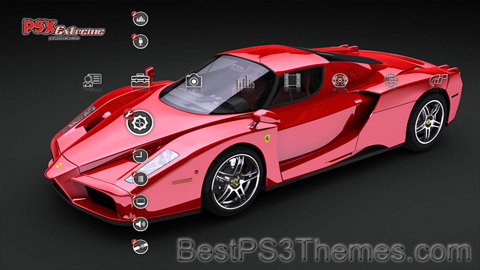
.jpg)
.jpg)


.jpg)
_(2).jpg)
.jpg)


.jpg)

_(cropped).jpg)


