Devil May Cry 4 theme by lalilelelomgs
Download: DevilMayCry4.p3t

(1 background, DMC background HD only)

Devil May Cry 4[a] is a 2008 action-adventure game developed and published by Capcom. It was released for the PlayStation 3, Xbox 360, and Microsoft Windows platforms. It is the fourth installment in the Devil May Cry series and is written by Bingo Morihashi and directed by Hideaki Itsuno. The story follows Nero, a young man possessing demonic powers who is on a mission to stop the series' main character, Dante, after he assassinates the leader of the Order of the Sword. The player assumes the role of both Nero and Dante as they fight enemies using their demonic powers and a variety of weapons.
Devil May Cry 4 is the first entry in the series to be released simultaneously for multiple consoles. During its development, Capcom focused on each version achieving the same visual quality using the MT Framework game engine. Around eighty people formed the team that created the game. Nero was introduced to attract the new gamers. Dante's popularity with gamers proved challenging because the developers needed to use him as a supporting character in the story.
Critical reception to Devil May Cry 4 was positive. It was praised for its challenging difficulty, its visuals and Nero's characterization as a new protagonist. However, it was criticized for its backtracking in Dante's stages and a troublesome camera. The game sold over three million units worldwide, becoming the series' best-selling title before the release of its sequel. Bingo Morihashi adapted it into a two-volume light novel.
It was released on iOS as Devil May Cry 4: Refrain in February 2011. A remastered version of the game was released in June 2015 as Devil May Cry 4: Special Edition which adds both English and Japanese voice tracks, improved visual effects and textures, in-game re-balancing, additional costumes, and three bonus playable characters: Vergil, Lady and Trish. A sequel, Devil May Cry 5, was released on March 8, 2019.
Gameplay[edit]
Gameplay in Devil May Cry 4 is like previous games in the series. The player must fight through levels called "missions", occasionally solving puzzles or gathering items. Performance in a mission is graded from "D", the lowest grade, to "A" then "S", "SS", and "SSS", the highest grade. Grades are based on items used, Red Orbs gathered, time taken, and the number of Style Points accumulated. Each Style Point grade has its own tag-word. The stylish grade shows up on the side of the screen and begins at "Deadly" (D); progresses through "Carnage" (C), "Brutal" (B), and "Atomic" (A); then, advances through one last bar of grades containing the phrases "Smokin'" (S), "Smokin' Style" (SS), and lastly "Smokin' Sick Style" (SSS). Stylish combat is the focus of the game, conveyed through unbroken combos of varied attacks while avoiding damage. The player must avoid enemy attacks to continue performing combos, often by memorizing attack patterns.[2] The Devil Trigger is a super state that enables the player to become more powerful adding a slow but steady health regeneration, with increased damage done. Devil Trigger can be activated by pressing the button to trigger it when the gauge is filled.[2]
Some changes introduced in Devil May Cry 4 are the presence of two playable characters, Dante and Nero, and a slight modification to the shop system. A new currency, Proud Souls, is used to buy new abilities while Red Orbs are used to buy items. Proud Souls are rewarded at the end of missions; the amount varies depending on how well the player performed. The cost of abilities increases with the purchase of other abilities, though all abilities can be sold back for their original price.[2]

The player plays as Nero throughout most of the game. He is equipped with the Red Queen sword, Blue Rose revolver, and the powers of his Devil Bringer. The Red Queen features an Exceed Gauge that can be charged up to the 3 stages, allowing for subsequent attacks that are more powerful than regular slashes, until the gauge empties. Nero also has the powers of his Devil Bringer and can use it to pull himself towards enemies or vice versa. The Devil Bringer may also be used for context-sensitive throw attacks, leading to high damage and various effects depending on the enemy. Nero's Devil Bringer also gains new abilities during the game, including being able to detect secret missions or caches of Red Orbs. Nero eventually gains the ability to use Devil Trigger after getting the katana known as Yamato. This increases his Devil Bringer's power changing its attacks into more powerful versions with different animations.[2]
The player plays as Dante through seven missions, taking over halfway through the game. His gameplay is like that in Devil May Cry 3. He has access to multiple melee and ranged weapons which he gains after boss battles. He is able to cycle through them freely in combat and is no longer limited to equipping two weapons of each type as he was in the previous game. Dante also begins with his four styles, each of which grants him different abilities. But, unlike in Devil May Cry 3, he may now switch them at will with buttons or pads on the controller.[3] He also gains the Dark Slayer style near the end of his appearance, which only has one style level. Styles do not level up through experience as in the previous game, but instead must be upgraded like other skills in the shop screen in between missions or at statues. Dante can also enter Devil Trigger where he gains most of the benefits that Nero's Devil Trigger has. Since he does not have the Devil Bringer, he gets animation and property changes on some of his normal attacks instead.[2]
Plot[edit]
Nero is a young demon hunter who lives on the isolated island of Fortuna and is also a member of the Order of the Sword: a religious sect of knights who worship the Legendary Dark Knight Sparda as a God. Dante arrives, and murders The Order's leader, the High Priest Sanctus, in front of the entire congregation. At the same time, an army of demons invade the city, putting everyone, including Nero's love interest Kyrie, in danger. Tasked with stopping Dante by Kyrie's brother Credo,[4] the Captain of the Holy Knights, Nero's journey leads him to discover that he is in fact a descendant of Sparda himself, and Dante is not his enemy.[5] Under orders from Sanctus, Agnus, has been siphoning the power of the long lost Devil Arm Yamato, the sword of Dante's brother Vergil, to create a demonic army, and imbue high-ranking members of the Order with demonic power.[6] To Agnus' shock, the shattered Yamato restores itself in Nero's presence, and flies to Nero's aid.[7] With The Order's plans revealed, Agnus flees to inform the newly resurrected Sanctus.
As Nero sets his sights on The Order, he discovers to his dismay that Credo is part of the conspiracy, until he ends up being deceived as well when they witness Kyrie being kidnapped by Sanctus. He intends to use a creature known as Savior to defeat the demon army he's created, as a means of strengthening the people's worship of Sparda. With the Sparda Sword already in his possession, and needing the blood of a descendant of Sparda along with the Yamato, Sanctus captures Nero to power The Savior's core.[8] Dante arrives, with Trish, who was revealed to be a spy within The Order, and makes a promise to the dying Credo to save Nero and Kyrie.[9] Splitting up, Trish evacuates Fortuna's human residents, while Dante destroys all the Hell Gates scattered over Fortuna, and defeats Agnus, reclaiming the Yamato sword for the last time. Confronting the Savior in a sky battle above Fortuna, Dante drives the Yamato through The Savior's chest,[10] where Nero recovers it inside, freeing himself and Kyrie, and defeating Sanctus.
Nero is able to make peace with the power it has given him to protect those he cares about. Before Dante leaves, he decides to entrust Nero with the Yamato,[11] and Kyrie and Nero share their first kiss in the ruins of Fortuna.[12] Back at Dante's office, Lady arrives. As previously revealed in the game, it was Lady who sent Dante and Trish to Fortuna in the first place as The Order had begun butting in on some of her jobs, which was why Trish immediately went undercover to expose The Order's true colors. As Trish and Lady bicker over the small reward, Dante gets a phone call from a customer and the trio moves out of the office for a new mission.
Development[edit]

Development of Devil May Cry 4 began shortly after its predecessor was a success.[13] A total of eighty people formed the development team.[14] The first teaser was that of Dante on a snowy peak shown at E3 2005,[15] while the Tokyo Game Show 2005 trailer showed Dante doing multiple moves in front of a camera,[16] both containing elements that were not included in the finished product. Capcom only made the E3 2005 video to confirm their staff had begun work on the game.[17] Since they had just finished Devil May Cry 3 and Devil May Cry 3: Special Edition, the developers initially were confused in regards to what they had to do in order to innovate the gameplay mechanics they developed previously.[18] The team wanted to introduce new gameplay elements and a new character allowed them to do this. This was the first Devil May Cry not to be released for PlayStation 2, because it was designed for the next generation of hardware. This allowed the team to try new play mechanics and expand the series' plot.[19] While not intending to send a religious message, members from the Capcom team did research in Vatican City and Istanbul.[20]
On September 6, 2006, Japanese video game magazine Famitsu reported that the previous games' main character, Dante, would not be the protagonist in Devil May Cry 4. Instead, a new character named Nero, voiced and motion captured by Johnny Yong Bosch, took the lead.[21] The use of a new protagonist was discussed many times at Capcom but was not approved until producer Hiroyuki Kobayashi said that the Dante character had to be in the game.[18] Fearing negative feedback, as happened when Konami's stealth game Metal Gear Solid 2: Sons of Liberty introduced a new character, replacing protagonist Solid Snake with newcomer Raiden, producer Kobayashi said Capcom aimed to make Nero fun to play like Dante and intended to make him stronger at some point.[22]
Two of the game's PC exclusive features are Turbo Mode (previously used only in Devil May Cry 3: Special Edition) giving the game a twenty percent speed boost, and a new difficulty mode called Legendary Dark Knight Mode which can display over 100 enemies in some missions at once.[23] Both features returned in the Devil May Cry 4: Special Edition release.[24]
The PC version also has both DirectX 9 and DirectX 10 mode. It is labeled Games for Windows and runs on Windows XP, Vista, and Windows 7.[23] It assumes a Gamepad is present and only uses the mouse in the menus, providing the same interface as the Xbox 360 version.
Engine[edit]
Hiroyuki Kobayashi noted the production team began working with the game using a PC-based engine. He said that this was the first PlayStation 3 game developed by Capcom, and making this transition was a "hard step", particularly because no member of the production team was familiar with the console's capabilities.[25] Capcom justified the game's multi-platform crossover by emphasizing the Xbox 360's success in the North American and European markets, labeling the move as "natural". The final version of Devil May Cry 4 uses Capcom's internally developed MT Framework engine.[25] In a thread questioning the move on the official Capcom message board, the company's senior director of strategic planning and research, Christian Svensson, responded by saying that they were moved by people's strong feelings about the decision, but that it was the best decision for the company and consumers.[26] He also claimed that the contents would be identical, except that "the feel of the controller" may cause a slight difference.[27] Despite Capcom having already used the MT Framework to create two Xbox 360 games-Dead Rising and Lost Planet, the team found difficulties with this engine.[17] The developers first showed a demo of the game at Tokyo Game Show 2006 where Dante fought the boss character Berial. [28] The visuals satisfied the Capcom staff to the point where they called them a "miracle".[20]
Itsuno said in the Famitsu article that the visuals attempt to deliver a satisfying feel of being in the air. The actions of Nero's Devil Bringer could not be done on second generation consoles, but they could be done on the new generation of consoles such as the PlayStation 3.[21] Kobayashi said the Xbox 360 and PlayStation 3 versions would be identical, although he did not comment on the PC version.[29] Kobayashi confirmed the PC version "would be great, because the same team is working on both".[27] The PlayStation 3 version requires the user to install 5GB of game data which takes 20 minutes and shortens the length of the loading screens throughout the game.[30]
During production, new gameplay options were implemented to "keep up with fresh action games"; among these is the Devil Bringer's ability to bring enemies towards the characters.[31] Unlike Dante's progress in Devil May Cry 3, Nero was designed to become stronger by upgrading his Devil Bringer ability instead of receiving new weapons after defeating boss characters. During development the production team decided that Nero would be one of two main characters and that Dante was not going to be the only character from previous entries to appear in the series.[32] Producer Hiroyuki Kobashi noted before the game's release they wanted to make Dante seem significantly more powerful than Nero. This was done to create an obvious difference between the strength of a "veteran" when compared to a "rookie".[33] Unlike Devil May Cry 3, the game's difficulty would be the same in both the Japanese and European versions as the version released in North America.[32]
Scenario and cast[edit]
For the first time in the series Bingo Morihashi was the game's writer. He collaborated with film director Yuji Shimomura who worked on the earlier games. Morihashi had many issues with the making of the game to the point he quit Capcom. However, after Itsuno's asked him to return, he did so. He finished writing the game's events, which took a year. Morihashi had difficulties with the characterization of Nero, the new protagonist. Dante returned as a supporting character.[13][34] Itsuno was responsible for most of Kyrie's elements. She was envisioned as an "ordinary, cute heroine" who had a big impact on Nero despite not being a fighter. Her role was to motivate Nero and the player as the story progresses.[34]
The writings of late manga artist Ramo Nakajima in the series Amagasaki City inspired Morihashi to write Nero's story; "I love you, so I protect the city you love." Love is the focus of the Devil May Cry series; Devil May Cry 4 focuses on Nero's love for Kyrie. While Devil May Cry 4 is a simple story similar to Hollywood movies involving a damsel in distress, the staff were satisfied with it because it also carried Morihashi's ideas well.[35] The Capcom staff created Nero as a new protagonist who would develop across the Devil May Cry series because Dante had become stronger with each game. Nero was created as a weaker character who develops new powers as the story progresses until he reaches Dante's level. This was done mostly through his "Devil Bringer" ability, which makes him stand out. Another reason for Nero's introduction was to attract new gamers to the franchise.[36]
Before commencing the designs for the characters in Devil May Cry 4, character designer Tatsuya Yoshikawa consulted with several members of the staff who had worked on the series before to become familiar with previous elements. The characters were designed to emphasize their moves, which made the staff controlling their motions vital to the design.[33] Some of the antagonist's demonic forms in Devil May Cry 4 resemble angels. These characters were designed to be attractive to the game's audience while providing a contrast when compared to other demons in the game.[33] Yoshikawa noted that several of the boss characters presented some difficulty when creating them. He said that Nero's design was one of the biggest challenges he had experienced in his career, because the character had to be accepted by the public and fit in the series' universe.[33] Yoshikawa liked the interactions between Nero and Dante because of the balance the two playable characters make.[37]
Yoshikawa also created another devil transformation, the Devil Trigger, for Nero. Unlike Dante's transformation that makes him look like a devil, Nero's Devil Trigger generates a creature situated behind his back. One that did not appear in the game turned Nero into a demon like Dante. Nero's hood covers one eye as a symbol whose interpretation is left up to the fans. Yoshikawa wanted to incorporate this into the game and hoped to make it into a figurine, but this was not possible.[38]
Both main voice actors motion capture actors, Reuben Langdon and Bosch, expressed pleasure working as Dante and Nero, respectively with the former noting he made Dante like his younger Devil May Cry 3 persona but more mature. Langdon's inspiration for the character was Roy Focker of the anime series The Super Dimension Fortress Macross.[39][40]
Music[edit]
The soundtrack for Devil May Cry 4 was composed by Tetsuya Shibata, Shusaku Uchiyama, Kento Hasegawa, Akihiko Narita, Kota Suzuki, Rei Kondoh, Masayoshi "Chamy" Ishi, Masami Ueda and Shinichiro Sato.[41] Shibata said that since the release of Devil May Cry 3 he had wanted to emphasized lyrics in the fourth title.[42] The game is noted for its use of heavy metal songs.[43]
Devil May Cry 4 Original Soundtrack is a three-disc, 104 track soundtrack. It was released in Japan on February 27, 2008.[44] [45] Female vocals are handled by Aubrey Ashburn (1-02) while male vocals are handled by Shawn "Shootie HG" McPherson of Hostile Groove (1-20 and 3-03) and Jason "ShyBoy" Arnold of Hypnogaja (1-13 and 3-38). Tetsuya Shibata is credited as the primary composer, with tracks composed by Shusaku Uchiyama, Kota Suzuki, Akihiko Narita, Rei Kondoh, Chamy Ishikawa and Shinichiro Satoh. The soundtrack was released in the US on November 25, 2008, with new artwork.[46]
Marketing and release[edit]
The first teaser trailer was shown at E3 2005, depicting Dante traveling through a snow-covered environment.[47] A more substantial trailer was released at that year's Tokyo Game Show, with a more rugged and older Dante in a city-like setting.[48] Both teasers show very little detail of the game itself. At the 2006 Tokyo Game Show, a more complete trailer debuted, along with a playable demo, featuring the character Nero.[49]
A fourth trailer, released on December 17, 2007, revealed more gameplay and story detail, as well as information on new songs for the game. These included a new version of "Lock and Load", Dante's theme music from the first Devil May Cry, with new lyrics written and performed by Shawn "Shootie HG" McPherson, the lyricist and lead vocalist on the soundtrack of Devil May Cry 3: Dante's Awakening. Released with the Japanese version of the game is Japanese rock band, L'Arc-en-Ciel, and their new single, "Drink It Down", which is used as the Japanese opening for the game.[50] The company presented the game's first demo at an event titled "Capcom's Gamer's Day", where Kobayashi highlighted several of the game's features.[51] With the team focused on completing the game, a new demo was not produced in time for the 2007 E3 Media and Business Summit.[32]
Collector's Edition[edit]
A collector's edition of the game was released at the same time as the regular version. The North American version features a bonus disc containing the making of Devil May Cry 4, and an additional disc of the first four episodes of Devil May Cry: The Animated Series,[52] while the European and Australian versions include a signed artbook instead, titled Art of the Devil[53][54][55][56] A very small number of Collector's Edition packages were signed by the game's producer, Hiroyuki Kobayashi, on the back of the metal tin on Dante's left shoulder. This number was reported to be as low as only 100 signed copies for each console, for a total of 200 signed copies. Both versions were packaged in a steelbook case.[57]
An iOS version called Devil May Cry 4: Refrain was announced January 11, 2011. It was released on February 3, 2011.[58]
Reception[edit]
Critical reception[edit]
| Aggregator | Score |
|---|---|
| Metacritic | PS3: 84/100[59] X360: 84/100[60] PC: 78/100[61] |
| Publication | Score |
|---|---|
| 1Up.com | A−[62] |
| Edge | 8/10[63] |
| Famitsu | 35/40[64] |
| Game Informer | 9/10[65] |
| GameSpot | 8/10[66] |
| GameSpy |   [67] [67] |
| GameTrailers | 8.6/10[68] |
| GameZone | 9/10[69] |
| Hardcore Gamer | 4.25/5[70] |
| IGN | 8.7/10[71] |
Devil May Cry 4 received favorable reviews, according to review aggregator Metacritic.[59][60][61] Japanese gaming magazine Famitsu gave the game a "Platinum" rank as part of its review. It praised the difficulty balance and gameplay options.[64]
Devil May Cry 4 received praise for its hack and slash mechanics.[64][66][62][72][73] Xbox World Australia called it "the most solid of all of the Devil May Cry games" citing its responsive controls despite being the first game in the series to be released for the Xbox 360 and PlayStation 3.[72] PSM3 rated the game's degree of difficulty positively based on how the system ranks the player and the challenges the game offers.[73] 1UP.com praised the gameplay and "predictably slick" looks. However, sites often criticized the game's backtracking elements, a big issue found within the level design. Some criticized the theme songs.[62][72] The use of boss fights and the approach to the action's style was well received by GameSpot. They felt it would attract and appeal to gamers despite the backtracking issues.[66]
As to the presentation, GameTrailers praised the voice acting, fight scenes, but criticized the corny dialogue.[68][66] GameSpy said the game succeeds thanks to its gameplay and visuals.[67] The introduction of Nero as new protagonist was well received.[65][71][66][67] Bosch's voice acting in the English-language version was also praised by GameZone and GameSpot.[74][66] Despite the similarities between Nero and Dante, IGN still found the new protagonist appealing based on how different his gameplay is from the returning hero's.[71] IGN agreed, finding Nero's story appealing.[71] The GameSpy review also praised the Nero character for "[bringing] something fresh to the franchise" and being "as diverse as DMC3 SE's Vergil".[67] When it came to the console version, IGN said fans would enjoy the video game, but might be disappointed that Dante had fewer weapons and missions than he did in Devil May Cry 3.[71] GameSpy also said that "it cheapens things a little to see that the team has opted to recycle assets in lieu of showing us more of this rich world". They did not find the soundtrack appealing.[67] Hyper's Dirk Watch commended the game for "looking great, combos galore and being more fun than Devil May Cry 3". However, he criticized it for "still playing like Devil May Cry 2" and for its "choppy pacing and level design".[75]
The PC version received mixed reviews. 1UP.com appreciated the port's exclusive Legendary Dark Knight mode where the character is cornered by multiple enemies in a single battle. However, they felt that Capcom could have made a more comfortable controller as it had similar issues as the one from Resident Evil 4. They expected the developers to have put in more features.[76] While also appreciating Dark Knight and the Turbo mode that increased the game's speed, IGN said this port was only for hardcore fans of the series since it was not too different from the original console versions.
Audi R8 theme by TKSLAM Download: AudiR8.p3t The Audi R8 is a mid-engine, 2-seater sports car,[2][3] which uses Audi's trademark quattro permanent all-wheel drive system.[2] It was introduced by the German car manufacturer Audi AG in 2006. Production ended in the first quarter of 2024.
The car is exclusively designed, developed, and manufactured by Audi AG's private subsidiary company manufacturing high performance automotive parts, Audi Sport GmbH (formerly quattro GmbH),[4] and is based on the Lamborghini Gallardo and presently the Huracán platform.[5] The fundamental construction of the R8 is based on the Audi Space Frame,[2] and uses an aluminium monocoque which is built using space frame principles. The car is built by Audi Sport GmbH in a newly renovated factory at Audi's 'aluminium site' at Neckarsulm in Germany.[2] At the time it was introduced in 2006, the R8 became the first production car with full-LED headlamps.[6]
The Audi R8, based on the Audi Le Mans quattro concept car (designed by Frank Lamberty and Julian Hoenig) first appeared at the 2003 International Geneva Motor Show and the 2003 Frankfurt International Motor Show. The R8 road car was officially launched at the Paris Auto Show on 30 September 2006. There was some confusion with the name, which the car shares with the 24 Hours of Le Mans winning R8 Le Mans Prototype (LMP). Initial models included the R8 4.2 FSI coupé (with a V8 engine) and R8 5.2 FSI coupé (with a V10 engine). Convertible models, called the Spyder by the manufacturer, were introduced in 2008, followed by the high-performance GT model introduced in 2011. The Motorsport variants of the R8 were also subsequently introduced from 2008 onwards. An all-electric version called the e-Tron started development but would only reach production stage when the second generation model would be introduced.
6-time 24 Hours of Le Mans winner Jacky Ickx described the R8 as "the best handling road car today".[7][8][9]
The car received a facelift in 2012 and a new model called the V10 Plus was now added to the range. Production of the Type 42 ended in August 2015.[10][11][12]
The second generation of the R8 (model code: Type 4S) was unveiled at the 2015 Geneva Motor Show and is based on the Modular Sports System platform shared with the Lamborghini Huracan. The development of the Type 4S commenced in late 2013 and was completed in late 2014 (2015 model year in Europe, 2017 model year in the US). Initial models included the all-electric e-Tron and the V10 5.2 FSI along with the V10 plus. Unlike its predecessor, there was no manual transmission available and the entry-level V8 trim was also dropped.[13][14] In 2016, the convertible (Spyder) variant was added to the line up which was initially available in the base V10 trim. In mid-2017, the high performance V10 plus Spyder was added to the range. A rear-wheel-drive model called the R8 RWS was introduced.
In 2018 (2020 model year in the US), the R8 received a mid-cycle refresh with mechanical and exterior changes. The newer and more aggressive design language carried over from famous Audi models of the past and its appearance is slightly more angular up front. The refreshed model had substantial performance improvements over its predecessor.[15] The base R8 gets a power boost from 532 hp to 562 hp, while the V10 Plus was renamed V10 Performance Quattro and the engine saw a power increase by 10 hp (7 kW), now up to 612 hp.[16] 2023 R8 GT is last R8 with 620hp limited to 333 units.
The Audi R8 e-tron (2015) was an all-electric version of the second-generation R8. Unlike the earlier 2010 prototype based on the first-generation R8, it actually entered production, but only on a small scale, with less than 100 units sold. It featured a 92-kWh battery.
To produce the R8 at Audi Sport GmbH, 70 workers fit 5,000 different parts by hand. The factory at Neckarsulm, redeveloped at a cost of €28 million, usually produces between eight and fifteen cars a day, up to a maximum daily output of 29 cars.[2] Ninety-five lasers inspect the entire car in five seconds to ensure that over 220 measurements are within 0.1 millimetres of the programmed plans.[17]
The R8 became the personal vehicle for Tony Stark (played by Robert Downey Jr.) throughout six films in the Marvel Cinematic Universe. Type 42 models were used in the Iron Man Trilogy with a V8 in Iron Man,[31] a V10 Spyder in Iron Man 2,[32] and an e-tron prototype in Iron Man 3.[33][34] Type 4S models appeared in later Marvel Studios movies with 2016 V10 Plus models in Avengers: Age of Ultron[35] and Captain America: Civil War[36] and a Spyder model in Spider-Man: Homecoming.[37]
Lil Stewie theme by zee Download: LilStewie.p3t P3T Unpacker v0.12 This program unpacks Playstation 3 Theme files (.p3t) so that you can touch-up an existing theme to your likings or use a certain wallpaper from it (as many themes have multiple). But remember, if you use content from another theme and release it, be sure to give credit! Download for Windows: p3textractor.zip Instructions: Download p3textractor.zip from above. Extract the files to a folder with a program such as WinZip or WinRAR. Now there are multiple ways to extract the theme. The first way is to simply open the p3t file with p3textractor.exe. If you don’t know how to do this, right click the p3t file and select Open With. Alternatively, open the p3t file and it will ask you to select a program to open with. Click Browse and find p3textractor.exe from where you previously extracted it to. It will open CMD and extract the theme to extracted.[filename]. After that, all you need to do for any future p3t files is open them and it will extract. The second way is very simple. Just drag the p3t file to p3textractor.exe. It will open CMD and extract the theme to extracted.[filename]. For the third way, first put the p3t file you want to extract into the same folder as p3textractor.exe. Open CMD and browse to the folder with p3extractor.exe. Enter the following: Unreal Tournament III theme by GhostViperGTX Download: UnrealTournament3_5.p3t Redirect to: Patriots theme by 1_BAD_SOLDIER Download: Patriots_2.p3t Redirect to: Tifa Lockhart theme by zee Download: TifaLockhart.p3t
Tifa Lockhart (Japanese: ティファ・ロックハート, Hepburn: Tifa Rokkuhāto) is a character who debuted in Square's (now Square Enix) 1997 role-playing video game Final Fantasy VII. She was created as a foil to her teammate Aerith Gainsborough by members of the development team, including director Yoshinori Kitase and writers Kazushige Nojima and Tetsuya Nomura, who also contributed to her visual design. She has since appeared as a playable fighter in Ehrgeiz and the Dissidia Final Fantasy series and made cameo appearances in several other titles, such as Kingdom Hearts II and Itadaki Street. Beginning in 2005, she has been featured in sequels and spin-offs as part of the Compilation of Final Fantasy VII series, including the animated film Advent Children and Final Fantasy VII Remake.
Tifa is the childhood friend of Cloud Strife, the protagonist of Final Fantasy VII. She is the owner of the 7th Heaven bar in the slums of Midgar and a member of the eco-terrorist group AVALANCHE. She convinces Cloud to join the group to keep him close and safe, and later assists him in saving the Planet from the game's villain, Sephiroth. Titles in the Compilation of Final Fantasy VII later expanded upon her character, such as in Advent Children, where she attempts to convince Cloud to let go of his self-imposed guilt and move on with his life after Sephiroth's defeat.
Tifa has been named the pin-up girl of the "cyber generation" by The New York Times, and has been compared to Lara Croft as an example of a strong, independent and attractive female character in video games. Media have repeatedly praised her strength and appearance and described her as one of the best female characters in gaming. The heavy emphasis on sex appeal in her reception has also seen frequent discussion, though has also received some criticism for overshadowing other aspects of her character.
Tifa was designed by Tetsuya Nomura, and was not present in early versions of Final Fantasy VII, as initially, the game was to have only three playable characters; the protagonist Cloud Strife, Aerith Gainsborough and Barret Wallace. However, during a phone call to project director Yoshinori Kitase, it was suggested that at some point in the game, one of the main characters should die and after much discussion as to whether it should be Barret or Aerith, the producers chose Aerith.[7] Nomura later joked that this was his idea, so as to enable him to introduce Tifa into the game.[1] The notion of having two concurrent heroines and having the hero waver between them was something Kitase liked, describing it as something new in the Final Fantasy series.[8] Tifa was designed to use the "monk" character class that appeared in previous games in the series.[9]
In a change from previous entries in the Final Fantasy series, the development team worked off of Nomura's character designs, while series Yoshitaka Amano contributed his own artwork, wanting to depict the characters in futuristic clothing.[2][10] Tifa has long, black hair in a style resembling a dolphin's tail at the tip,[11] and wears a white crop top and a black miniskirt held up by a pair of narrow black suspenders. She also wears red boots and gloves, with black sleeves extending from wrist to elbow; a metal guard covers her left elbow. She stands about 5 feet 6 inches (167 cm) tall.[6][12]
Unlike most other characters for Final Fantasy VII, Nomura wrote down her bust/waist/hip measurements in his concept art for her, defined as 36-24-35" (92-60-88 cm).[13] Nomura wanted each character to have one striking feature, and in Tifa's case it was her large breasts.[14] Internally in the game, the development team jokingly referred to her as "Boing-chan", an allusion to her bust.[15] In an interview with Japanese magazine Jugemu they discussed her character design, with composer Nobuo Uematsu commenting that her breasts were "a bit...overly ample." Cutscene director Motonari Sakakibara countered that the rest of the team insisted he not reduce their size. Nomura himself added "at the end of the day we all like them. [...] If I made them smaller, everyone would get angry at me."[14]
Initially, Nomura had difficulty deciding whether to go with a miniskirt or long pants. Seeking input, he passed his sketches around Square's offices and the majority of the staff members approved of the miniskirt design.[1] This additionally served as a contrast to Aerith, whose "long skirt" was her trademark.[16] The attire was explained as giving her freedom of movement, due to her hand-to-hand combat specialty and the skirt, referred to as "quite short [...] giving a considerable degree of exposure",[6] was kept as a staple of her alternate costumes.[17] The developers noted that due to her figure, her otherwise plain garments took on a pleasant appearance.[6] The development team later clarified in an issue of V-Jump that the miniskirt was more akin to a skort instead of bare underwear, to keep her from being exposed during combat.[18]
When producing Final Fantasy VII: Advent Children, co-director Takeshi Nozue had difficulty developing a framework for Tifa's body that was "balanced, yet showed off her feminine qualities". Her outfit was redesigned with emphasis on expressing those qualities, while still being pleasing to the eye.[19] Nomura describes Tifa's character in Advent Children as having several dimensions, calling her "like a mother, a sweetheart and a close ally in battle" and "remarkably strong, not only emotionally, but physically as well".[20] In the film, she wears a white tank top with a black zipped up vest, a pink ribbon around her left bicep, and boots. She also wears a black buttoned-up skirt that covers her thighs and wears shorts beneath it, with a piece of cloth similar to a coattail extending from the back of the skirt's waistband and ending at her ankles. She no longer uses suspenders to hold up her skirt and she wears her gloves during the film's fight scenes. Her hairstyle was changed to end at the middle of her back, with the removal of the dolphin tail from her original design.[21] This alteration was because of the difficulty of animating her original length of hair, as well as problems that arose due to its black color and lighting.[11]
For the Final Fantasy VII Remake series, the development team worked heavily with Nomura to refine her design, adding details like charms around her wrists and going through twenty different hair colors before settling on ashen brown.[22] The development team wanted to avoid favoring either Tifa or Aerith so they deliberately tried to give them equal screen time, as they wanted both to be positioned as heroines,[23] and emphasized Eastern aesthetics and the cuteness of her face to contrast with Aerith's Western aesthetics.[24] They additionally wanted to emphasize her athletic physique, so they gave her visibly defined abdominal muscles.[25] In an interview with Weekly Famitsu Square revealed they modified Tifa's outfit at the request of their Ethics Department, giving her a black sports bra and longer shorts, mainly "tightening" her chest so "as not to get unnatural during all the intense action",[26] with main character modeler Dan Suzuki considering the shorts an improvement to her design.[3] This information led to North American fans voicing concern that her breast size had been reduced, but sources such as gameindustry.biz confirmed through multiple translators this was not the case.[27] The development team later illustrated that when creating her character model, a padded Japanese G70 cup size (95 cm) bra was used on a real-life model to portray her bust accurately.[28]
Artist Roberto Ferrari meanwhile created the multiple outfit options included in Remake for Tifa, aiming for designs that would be easier on the animation team but would also homage outfits she had in the original game. Various ideas were thrown around during development for clothing options, including a maid outfit and a bikini modelled after a chocobo, one of the Final Fantasy series' mascosts. They ultimately settled on a black cheongsam with her hair worn in pigtail buns, as well as a black kimono, both of which are worn with stockings. Ferrari commented that the latter was particularly difficult to create, as several of his design submissions were rejected during the process.[3] In Final Fantasy VII Rebirth, the followup game to Remake, two swimsuit options were added for the character, consisting of a blue tied up shirt and short shorts with her hair in a bun adorned with a flower, and a white and blue frilled bikini with a similar hairstyle and the frills on the lower half forming a makeshift miniskirt.[29]
Nomura noted that he liked Ayumi Ito as an actress and wished to work with her on Advent Children. With Aerith's voice actor already decided, Nomura asked Ito to voice Tifa, feeling her "husky voice" would offer a good contrast to Maaya Sakamoto's soft-spoken Aerith.[30] Although Tifa's updated design had already been finalized, Ito's casting motivated them to blend many traits from the voice actress into the character's appearance.[31] Cloud's voice actor Takahiro Sakurai said that while he recorded most of his work individually, he performed alongside Ito for a few scenes. These recordings left him feeling "deflated", as the "exchanges he has with Tifa [could] be pretty painful".[32] Ayaka Mitsumoto voiced Tifa in the flashback from the remake where a teenage Tifa interacts with Cloud.[33] Finding a voice suitable for the young Tifa made Nomura and the staff worried in the recording of the title.[34]
English voice actress Rachael Leigh Cook stated in an interview for Kingdom Hearts II that she enjoys playing Tifa and described her as "very strong physical and emotionally, but also very sensitive" and "very multi-dimensional".[35] In voicing the character, Cook listened to Ito's recording as a guide to how the character sounds. Following Advent Children, Cook thanked Nomura for the film he created as she enjoyed it.[36] Britt Baron voiced Tifa in Final Fantasy VII Remake and Final Fantasy VII Rebirth,[37] and Tifa as a child is voiced by Glory Curda.[38]
Tifa is introduced in Final Fantasy VII as the childhood friend of Cloud Strife and owner of the 7th Heaven bar in the slums of Midgar, a technologically advanced metropolis owned by the Shinra Electric Power Company. She is also a member of the eco-terrorist organization AVALANCHE, who opposes Shinra's extraction and use of Mako, the planet's spiritual energy, as a power source. She convinces Cloud to join the group to keep a closer eye on him after noticing his personality has changed, and follows him in pursuit of the game's antagonist, Sephiroth. While she is unable to keep him from being manipulated by Sephiroth, she helps him recover after his mind becomes fractured and they realize their mutual feelings for one another, working together to defeat Sephiroth.[17]
When they were children, Tifa and Cloud followed a path to a mountain near their hometown of Nibelheim. However, they were both injured and Tifa was in a coma for a week, with her father holding Cloud responsible for the incident.[7] Cloud eventually left to join Shinra's SOLDIER program to become stronger, but it is later revealed that he did it primarily to attract her attention.[39] In response, she requested if she were ever in danger, he would return to save her.[40] Years later, during Sephiroth's rampage in Nibelheim, Cloud rescued Tifa after she was wounded by Sephiroth. Tifa was taken to safety by her martial arts instructor and eventually arrived in Midgar, meeting AVALANCHE's leader, Barret Wallace. She joined AVALANCHE to get revenge for the destruction of her home. Shortly before the beginning of Final Fantasy VII, she encountered an incoherent Cloud at the city's train station and convinced him to work for Barret, to keep him close and watch over him.[41]
Her character changed significantly during development, with an early relationship chart during the planning phase intending her to be Sephiroth's sibling.[42] In early drafts of Final Fantasy VII, Tifa was a background character, with role in AVALANCHE was to add support behind the scenes and to cheer everyone up after missions, as well as having a particular fondness for Cloud. She was supposed to have a large scar on her back caused by Cloud, and partial amnesia from the incident when she had received it.[9] A scene intended to imply she and Cloud had sex was proposed by Masato Kato, one of the event planners, but it was replaced with a toned-down version by Kitase in which a risqué line is followed by a fade to black. In an interview, Nojima stated that none of the staff thought the scene would become an issue at the time.[8] When developing the International edition of Final Fantasy VII, an additional cutscene was added to showcase an enemy in the game, Ultima Weapon, and featured Tifa in it due to how popular her character had become.[43]
Tifa appears in the 2005 film Final Fantasy VII: Advent Children, which is set two years after the events of the game. She tries to give emotional support to Cloud, urging him to come to terms with the unwarranted guilt he places upon himself. She also takes care of Barret's adopted daughter Marlene and an orphan, Denzel. During the film, she duels against Loz and she battles the summoned creature Bahamut SIN alongside the team. Script writer Kazushige Nojima described her role in the film as "very much like any woman who's been left behind by a man", stating that while they did not want her to appear clingy, they wanted to portray that she was emotionally hurt by Cloud's departure.[20] In the film's initial draft, she was intended to have a more central role in the then-short film, which only featured herself, Cloud and several children, with the story revolving around a note being delivered to him.[45]
Tifa is also featured in the prequel games Before Crisis and Crisis Core, as well as the OVA Last Order, which each show different perspectives on the destruction of Nibelheim.[17] The novella "Case of Tifa", written as part of the On the Way to a Smile series, is a story set between the original game and Advent Children that is told from her point of view. The story details how she creates a new 7th Heaven bar in the city of Edge and attempts to hold onto the concept of a normal family with herself and Cloud, despite him beginning to isolate himself from others.[45] Tifa also appears in the game Dirge of Cerberus, which is set one year after the events of Advent Children, in which she helps the protagonist Vincent Valentine defend the planet against the monster Omega WEAPON; in the game's epilogue, she discuss Vincent's disappearance.[17]
Tifa is featured prominently as a playable character in Final Fantasy VII Remake, which covers the Midgar portion of the original game. By focusing solely on Midgar, the development team was able to include additional scenes that developed the relationship between Tifa and Aerith.[46] Trace of Two Pasts, a tie-in novel to the remake, depicts the childhoods of Tifa and Aerith.[47] Tifa's section details her upbringing in Nibelheim, her meeting and tutelage under her martial arts master, and her life in the slums of Midgar following her near-death experience during the Nibelheim incident.[48]
Outside of the Compilation of Final Fantasy VII, Tifa is featured in the fighting game Ehrgeiz as an unlockable character and an optional boss.[49] She is a playable character in the electronic board games Itadaki Street Special and Itadaki Street Portable.[50][51] In Kingdom Hearts II, she appears in her Advent Children attire, searching for Cloud and later fighting various Heartless.[52] She was originally planned to appear in the Final Mix version of the original Kingdom Hearts, but due to time constraints the staff members chose to incorporate Sephiroth instead.[53] Whereas in the game Cloud goes missing after a battle with Sephiroth, in the manga adaptation, Tifa finds him in Hollow Bastion.[54] In 2015, she was added to the mobile game Final Fantasy: Record Keeper as a playable character.[55]
Tifa is one of the playable characters in the fighting game Dissidia 012 Final Fantasy, which features characters from various Final Fantasy games.[56] She is featured in her Final Fantasy VII outfit, but the player has access to her Advent Children form and a third costume that is shown during her appearances in Nibelheim.[57][58] The first print run of the game features another form based on artwork by Yoshitaka Amano.[59] In LittleBigPlanet 2, Tifa is featured as a downloadable character model, and as a Mii costume and Spirit in Super Smash Bros. Ultimate.[60][61]
Since her introduction critics and fans reacted positively to Tifa, often appearing near the top of fan polls.[62] The New York Times featured her as the pin-up girl of for the "cyber generation",[63] while The Beaumont Enterprise cited Tifa as an example of a strong female character in video games in the wake of Lara Croft from the Tomb Raider series.[64] Holly Bonson of Polygon described Tifa as defined by her "brittle confidence and supportiveness", further stating her belief that in the context of Final Fantasy VII she represents forcefulness and sexuality.[65] Den of Geek's Matthew Byrd cited her popularity a result of her character's warmth, strength, and the ability to act both supportive and as a leader depending on when the situation called for it in VII's storyline, but also noted her vulnerability and how it made her a well-rounded character "who is more than worthy of her fan-favorite status".[66] Jenni Lada of Siliconera called her an iconic heroine, echoing the sentiments of the other critiques, while praising how future installments such as Remake built upon her character.[67]
Tifa has often been compared and contrasted with the other female protagonist of Final Fantasy VII, Aerith. Gus Turner of Complex described her as standing out as "one of gaming's most independent and empowered females ever", and further described her as a feminine foil to the more "girlish" Aerith, further praising her appearance.[68] In a retrospective, journalist Leigh Alexander argued that Tifa is the heroine of VII's story, there since the beginning and being indispensable during the course of events, calling her "a partner for a grown-up player" and questioned how many of them didn't properly appreciate her on their first playthrough of the game may do so now.[69] Fans of the series meanwhile have heavily debated which character was a better relationship for Cloud since the initial game's release, comparing the pros and cons of each.[70]
RPGamer editor Marie Freed found that when examining Tifa as a character, she came to appreciate her more than fellow character Aerith in the years since VII's release. Emphasizing that Aerith represented more of an ideal of a character, Tifa being portrayed as someone who was "insecure, lonely, and hides her true emotions" may have led to her being perceived negatively by fans, but in Freed's eyes made her the most human of the pair. Freed further expressed that as a symbol of the series, critics often perceived her as a "slut" due to her attire and breasts, and felt it was reasonable for her to be portrayed as insecure in light of such hostility. But further though as a character she saw Tifa's loyalty and love for Cloud even in the light of having to relive her own traumas as admirable, and a welcome contrast to the "destined" romance seen in previous title Final Fantasy IV. She closed by stating that while people had aspects of both characters in them, Tifa ultimately represented "reality" over the "ideal".[71]
On the other hand Patrick Holleman in his book Reverse Design: Final Fantasy VII described Tifa as having "the most typical story of a near-death experience and the loss of a world she belonged to" of the game's cast, despite how atypical Cloud was by comparison. Cloud in turn represented her only living connection to her past, and to this end Holleman felt she ignores the discrepancies in how he remembers events bordering on psychosis not as a matter of romance but as a means to hold onto what she lost. He added that while Tifa does care about Cloud, her desire was more of a selfish one in turn, one that does her more harm than good in Holleman's eyes. However, he also praised a particular moment for her character later in the game where when confronting the character Scarlet. Despite the scene appearing to lead into a boss battle against Scarlet, Tifa instead engages in a slap fight with her, something he felt subverted player's expectations well.[72]
A significant part of Tifa's reception has focused on her sex appeal,[73] with some third-party merchandise leaning heavily into this aspect.[74] Electronic Gaming Monthly awarded her the "Hottest Game Babe" of 1997, calling her "as well-proportioned as they come" and heavily praising her sexual attributes, but also noting her physical and emotional strength as a character.[75] UGO.com shared similar sentiments, complimenting her outfit as well and describing her as a "bona-fide sex symbol", while further noting that she was a rarity among female characters in video games at the time of VII' release.[76] IGN's Phil Pirrello attributed a significant part of her popularity to her large breasts, nothing that she was an example of how series tried to add real sex appeal with Final Fantasy VII, and while her model in the original game was primitive by today's standards, he suggested it had a significant impact on the teenage demographic at its time.[77] Fellow contributor Dave Smith suggested similar, stating it was hard to sing her praises "without sounding just a little teeny-weeny bit sexist", but further added that she helped define "tough, independent" roleplaying game heroines that came after her too due to her character.[78]
The character has also been a frequent subject of fan-made pornography, cited in particular as a frequent search topic on Pornhub.[79][80] Meanwhile, a study of such content on Rule 34 websites such as Rule 34.xxx and Sankaku Channel additionally cited her as the most frequent subject of such content by a wide margin across multiple franchises.[81] In January 2022, a Zoom videoconference meeting done in the Italian Senate was interrupted by a user displaying 3D rendered pornography featuring Tifa engaging in sexual intercourse. The user was quickly removed, but due to the conference being televised, knowledge of the event quickly went viral.[82] While Tifa's use in it was coincidental, it led to a surge in the character's popularity. Jade King of TheGamer noted however that while much reaction to it revolved around fan art of a sexual nature, it also resulted in a large amount of what they saw as "wholesome" art celebrating the character and the humor of the situation, usually portraying her in an awkward or comedic manner in association with the event or the country itself. King attributed it in part to Remake's recent release, but also the enduring nature of the character, calling it wholesome and an "aspect of Tifa's character that will now be ingrained into her history, and there's something brilliant about that".[83]
Other articles however examined that the emphasis on her sex appeal sometimes overshadowed her other aspects. In another article for IGN the staff noted that while her design was meant to emphasize physical beauty, er "awe-inspiring strength, complex background, strong will and her attachment to Cloud" defined her as more than "just an eye-catching woman", further calling her a legendary heroine in the series.[84] The book The Legend of Final Fantasy VII noted that while Tifa has many attributes of a seductive woman, specifically emphasizing her large breasts, she "thwarts the stereotypes associated with her appearance", due to being an independent and strong character, further calling her often the most "leveled headed" and pragmatic character in the game's cast.[85] Philip Bloom of RPGamer felt that fans and critics alike both overemphasized the size of her breasts, to the point she set a perceived standard for other attractive roleplaying game female protagonists to be compared to, she "isn't that absurd of figure" and was instead "quite strong as far as female heroes go, often saving the day. But you wouldn't know it to listen to talks about her."[86]
Motorstorm theme by ajefferism Download: Motorstorm_3.p3t Redirect to: The Ring theme by blindedcoon Download: TheRing.p3t The Ring may refer to:
Stormwatch theme by ShadowOfaSolja Download: Stormwatch.p3t Stormwatch may refer to:
Audi R8
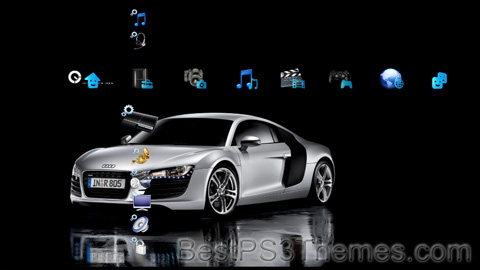
(3 backgrounds)
Audi R8 
Overview Manufacturer Audi (Audi Sport GmbH)[1] Production 2006–March 2024 Model years 2007–2024 Body and chassis Class Sports car (S) Body style 2-door coupé
2-door convertible (spyder)Layout Longitudinal mid-engine, rear-wheel-drive / all-wheel-drive[2] First generation (2006; Type 42)[edit]


Second generation (2015; Type 4S)[edit]


Production, available markets and sales[edit]
Year
World
US
Europe
Canada
2005
6[18]
2006
164[18]
80[19]
2007
4,125[20]
240[21]
2,035[19]
34 [22]
2008
5,656[23]
900[21]
2,935[19]
155[22]
2009
2,101[24]
699[21]
1,656[19]
152[22]
2010
3,485[25]
799[21]
1,632[19]
137[22]
2011
3,551[12]
1,145[21]
1,278[19]
147[22]
2012
2,241[12]
802[21]
1,046[19]
116[22]
2013
2,500[12]
813[21]
1,021[19]
111[22]
2014
2,214[26]
735[21]
859[19]
116[22]
2015
2,074[26]
495[21]
1,108[19]
89[22]
2016
3,688[27]
736[21]
1,428[19]
158[22]
2017
3,179[27]
772[28]
225[22] (Jan–Nov)
2018
1,764[29]
2019
2,121[29]
Total
38,869
(2005–2019)
8,136
(2007–2017)
15,078[19]
(2006–2016)
1,436
(2007–Nov 2017)
Marketing[edit]
Marvel Cinematic Universe[edit]
See also[edit]
References[edit]
{{cite web}}: CS1 maint: archived copy as title (link)
{{cite web}}: CS1 maint: archived copy as title (link)
Lil Stewie
(1 background)
Copyright (c) 2007. Anoop Menon
p3textractor filename.p3t [destination path]Replace filename with the name of the p3t file, and replace [destination path] with the name of the folder you want the files to be extracted to. A destination path is not required. By default it will extract to extracted.filename.Unreal Tournament III #5
(4 backgrounds)
Patriots #2
(3 backgrounds)
[[link]]s). However, do not replace these redirected links with a simpler link unless the page is updated for another reason (see WP:NOTBROKEN).Tifa Lockhart
(1 background)
Tifa Lockhart Final Fantasy character 
First game Final Fantasy VII (1997) Created by Tetsuya Nomura[1] Designed by Tetsuya Nomura[2]
Dan Suzuki (Remake)[3]
Roberto Ferrari (Remake)[3]Voiced by Motion capture Haruka Shibai (Remake)[5] In-universe information Weapon Gloves Home Nibelheim Conception and design[edit]

Post-Final Fantasy VII[edit]
Casting[edit]
Appearances[edit]
Final Fantasy VII[edit]
Compilation of Final Fantasy VII[edit]

Other appearances[edit]
Critical reception[edit]
As a sex symbol[edit]
References[edit]
Motorstorm #3
(7 backgrounds)
The Ring
(1 background)
Arts and entertainment[edit]
Literature[edit]
Film[edit]
Television[edit]
Music[edit]
Other uses[edit]
See also[edit]

If an internal link led you here, you may wish to change the link to point directly to the intended article.Xbox 3Shitty
Stormwatch

(1 background)
See also[edit]
If an internal link led you here, you may wish to change the link to point directly to the intended article.
