Spiderman theme by Fabbio
Download: Spiderman_3.p3t
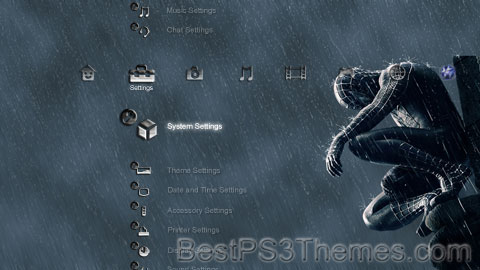
(1 background)
Redirect to:
This page is a redirect. The following categories are used to track and monitor this redirect:
|
The #1 spot for Playstation themes!
Spiderman theme by Fabbio
Download: Spiderman_3.p3t
(1 background)
Redirect to:
This page is a redirect. The following categories are used to track and monitor this redirect:
|
Spiderman theme by noyeswhyme
Download: Spiderman_2.p3t

(1 background)
Redirect to:
This page is a redirect. The following categories are used to track and monitor this redirect:
|
Halo 3 theme by Final Doom
Download: Halo3.p3t
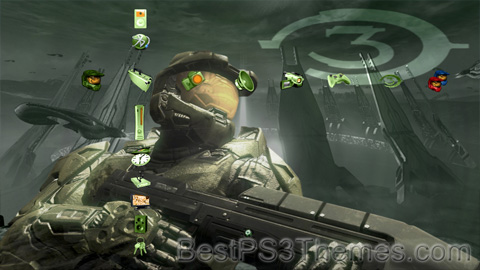
(3 backgrounds)
| Halo 3 | |
|---|---|
 | |
| Developer(s) | Bungie |
| Publisher(s) | Microsoft Game Studios |
| Producer(s) |
|
| Designer(s) |
|
| Programmer(s) |
|
| Artist(s) | Marcus Lehto |
| Writer(s) |
|
| Composer(s) | |
| Series | Halo |
| Platform(s) | Xbox 360 |
| Release | |
| Genre(s) | First-person shooter |
| Mode(s) | Single-player, multiplayer |
Halo 3 is a 2007 first-person shooter video game developed by Bungie for the Xbox 360 console. The third installment in the Halo franchise following Halo: Combat Evolved (2001) and Halo 2 (2004), the game's story centers on the interstellar war between 26th-century humanity, a collection of alien races known as the Covenant, and the alien parasite known as the Flood. The player assumes the role of the Master Chief, a cybernetically enhanced supersoldier, as he battles the Covenant and the Flood. In cooperative play, other human players assume the role of allied alien soldiers. The game features vehicles, weapons, and gameplay elements familiar and new to the series, as well as the addition of saved gameplay films, file sharing, and the Forge map editor—a utility which allows the player to perform modifications to multiplayer levels.
Halo 2 had originally been intended to wrap up the story begun with Combat Evolved, but development difficulties led to a cliffhanger ending. Bungie began developing Halo 3 shortly after Halo 2 shipped. The game was officially announced at E3 2006, and its release was preceded by a multiplayer beta open to select players who purchased the Xbox 360 game Crackdown. Microsoft spent $40 million on marketing the game, in an effort to sell more game consoles and broaden the appeal of the game beyond the established Halo fanbase. Marketing included cross-promotions and an alternate reality game.
Halo 3 was released on September 25 and grossed US$170 million on its first day of release, rising to $300 million in its first week. The game sold in excess of 14.5 million copies and was the best-selling video game of 2007 in the United States. More than one million people played Halo 3 on Xbox Live in the first twenty hours. Overall, the game was well received by critics, with the Forge and multiplayer offerings singled out as strong features; however, some reviewers criticized single-player aspects, especially the plot and campaign layout. Halo 3 is frequently listed as one of the greatest video games of all time. A sequel, Halo 4, released in November 2012, was developed by 343 Industries. Halo 3 was re-released as part of Halo: The Master Chief Collection for the Xbox One in November 2014 and for Microsoft Windows on July 14, 2020.[1]

Halo 3 is a shooter game where players primarily experience gameplay from a first-person perspective. Much of the gameplay takes place on foot, but also includes segments focused on vehicular combat. Gameplay focuses on the "Golden Triangle of Halo": players utilize weapons, grenades, and melee attacks, which are available to a player in most situations. Players may dual-wield some weapons for additional firepower, forgoing the use of grenades and melee attacks. Unlike previous installments, the player's secondary weapon is visible on their player model, holstered or slung across the player's back.[2] Halo 3 introduces support weapons, cumbersome two-handed weapons that slow the player when carried, but offer greatly increased firepower in return.[3]
In addition to weapons, Halo 3 contains a new class of gear called equipment;[4] these items have various effects, ranging from defensive screens to shield regeneration and flares. Only one piece of equipment can be carried at a time.[5] The game's vehicular component has been expanded with new drivable and AI-only vehicles.[6][7]
Halo 3 contains non-gameplay additions, such as Forge, a map-editing tool. Forge enables players to insert and remove game objects, such as weapons, crates and vehicles into existing multiplayer maps.[7] Almost all weapons, vehicles, and interactive objects can be placed and moved on maps with Forge.[8] Players can enter Forge games and edit and manipulate objects in real time. A budget limits the number of objects that can be placed.[9] Players may also save up to 100 films of gameplay to their Xbox 360's hard drive,[10][11] viewing the action from any angle and at different speeds.[12] Halo 3 offers a form of file sharing, where items such as saved films, screenshots, and custom variants can all be uploaded to Bungie's official website. Anyone can browse user created content that has been uploaded to Bungie's website and tag it to automatically download to their console next time they sign into Xbox Live on Halo 3.[5][13]
Halo 3's story or campaign mode can be played alone or cooperatively with up to three other players via Xbox Live or System Link. Instead of each player being an identical character in cooperative play, as in previous Halo games, the first player plays as Master Chief, the second player as the Arbiter, and the final two players controlling the Covenant Elites N'tho 'Sraom and Usze 'Taham. Each player has identical abilities, although their starting weapons vary.[14] Hidden skulls found on each level cause changes to the gameplay when enabled, such as giving the enemies extra health, changing in-game dialogue, or modifying AI behavior.[15] These skulls, as well as the difficulty level and the speed at which the level is completed, provide multipliers to the total score.[5] Players are awarded gamerscore points for unlocking Achievements by reaching a certain score in each level.[16]
Local area network or Xbox Live supports up to sixteen players in multiplayer matches, with game modes including variations of deathmatch and Capture the Flag. Players must actively seek out other players through their Xbox Live Friends list, using the party invite system, or the LAN search feature to play multiplayer matches with their own custom rules and customized maps. If they are connected to Xbox Live however, a player can choose to have the game decide for them the exact rules and map to play on, as well as finding additional people to play against or with, using the "Matchmaking" system (the automated grouping of players of similar skill). A player will decide from a selection of developer designed "playlists" which each contain a certain way to experience the game.[17]
Like other multiplayer Xbox 360 titles, Halo 3 uses a customized version of TrueSkill ranking system for its matchmaking on a per-playlist basis. A linear measure of a player's experience with the matchmade portion of the game and each particular playlist is also tracked (denoted as EXP).[18] To help players have an enjoyable time online, several peace-of-mind features are implemented within easy reach, such as avoid/feedback options on a player's service record, as well as voice chat mute straight from the in-game scoreboard.[19] Like Halo 2, Halo 3 supports downloadable content and updates.[20] The online services for the original Xbox 360 version of the game went offline in January 2022.[21]
Halo 3 is set in a science fiction setting during the years 2552 and 2553. Humanity is at war with a genocidal alliance of alien races known as the Covenant. After years of conflict, a Covenant fleet discovers Earth during Halo 2.[9] "Halos" are massive ringworlds, ranging from thousands to tens of thousands of kilometers in diameter, scattered across the galaxy. These rings were constructed thousands of years ago by a race known as the Forerunners as weapons of last resort against the parasitic alien species known as the Flood. When activated, the Halos would destroy all sentient life in the galaxy, depriving the Flood of its food. The Forerunners disappeared after they activated the rings. In Halo: Combat Evolved, whilst fleeing the Covenant, the UNSC ship Pillar of Autumn stumbled upon one of these ringworlds, Installation 04. Against the wishes of the ring's artificial intelligence (AI) caretaker, 343 Guilty Spark, the human supersoldier Master Chief destroyed the ring to stop the threat from Halo and the Flood. The Covenant, unaware of the destructive nature of the rings, attempt to fire another ring, Installation 05, during Halo 2 in order to fulfill their religious prophecy. One race in the Covenant, the Elites, learn the truth about the rings, and join forces with humanity in order to stop the installation's firing. Though they are successful, the unexpected shutdown triggers a fail-safe protocol, priming all the rings for firing from one location, referred to as the Ark. Still oblivious to the true nature of the rings, the Covenant High Prophet of Truth and the remaining loyalist Covenant proceed to head to Earth, where they believe the Ark is buried.
Halo 3's protagonist is Master Chief Petty Officer John-117, an enhanced supersoldier known as a "Spartan". Master Chief fights alongside the Arbiter, a disgraced Covenant Elite commander. Two other Elite characters, N'tho 'Sraom and Usze 'Taham, appear as the third and fourth players in cooperative play.[14] Supporting characters from previous games return, including human soldiers Avery Johnson and Miranda Keyes.[9] Also playing a role in the story is the Flood leader known as the "Gravemind". In Halo 2, the Gravemind escapes from confinement, invades the Covenant mobile capital city of High Charity, and captures the human AI Cortana.[9]
After the events of the comic tie-in Halo: Uprising,[22] the Master Chief arrives on Earth in east Africa, where he is found by Johnson and the Arbiter. The Chief and company return to a UNSC outpost where Keyes and Lord Hood plan a final effort to stop the Covenant leader, the High Prophet of Truth, from activating a Forerunner artifact the Covenant have excavated. The Chief clears anti-air Covenant defenses so Hood can lead the last of Earth's ships against the Prophet, but Truth activates the buried artifact, creating a slipspace portal which he and his followers enter. A Flood-infested ship crash-lands nearby; Elite forces arrive and vitrify the Flood-infected areas of Earth, stopping the threat. Following a message Cortana left aboard the Flood ship, the Chief, Arbiter, Elites, Johnson, Keyes and their troops follow Truth through the portal. Joining them is 343 Guilty Spark, who aids the Chief as he has no function to fulfill after the destruction of his ringworld.
Traveling through the portal, the humans and Elites discover an immense artificial structure known as the Ark, far beyond the edges of the Milky Way galaxy. Here, Truth can remotely activate all the Halos. The Flood arrive aboard High Charity in full force, beginning to infest the installation. Truth captures Johnson, as he needs a human to use Forerunner technology. Keyes is killed attempting a rescue, and Johnson is forced to activate the rings. Gravemind forges a truce with the Chief and Arbiter to stop Truth and defeat the remainder of his army, rescuing Johnson and halting the installations' activation. After the Arbiter kills Truth, Gravemind turns on the Chief and Arbiter.
The Chief, Arbiter and Guilty Spark discover that the Ark is constructing another Halo to replace the one that the Chief previously destroyed. The Chief decides to activate this Halo; the ringworld would eliminate the Flood infestation on the Ark while sparing the galaxy at large from destruction. To activate the ring, the Chief rescues Cortana, who has the Activation Index of the destroyed Halo, from High Charity and destroys the city. Arriving on the new Halo, Cortana warns that Gravemind is trying to rebuild itself on the ring. The Chief, Arbiter, and Johnson travel to Halo's control room to activate the ring. Guilty Spark explains that because the ring is not yet complete, a premature activation will destroy it and the Ark. When Johnson ignores his warning, Guilty Spark fatally wounds him to protect "his" ring. Although the Chief destroys Guilty Spark, Johnson soon dies of his injuries. Chief activates the ring, and escapes the ring's self-destruction on the UNSC frigate Forward Unto Dawn. However, the force of Halo's blast causes the slipspace portal to collapse, resulting in only the front half of Forward Unto Dawn, carrying the Arbiter, making it back to Earth.
A memorial service is held on Earth for the fallen heroes of the Human-Covenant war, during which the Arbiter and Lord Hood briefly exchange words regarding the fallen Master Chief. After the memorial service, the Arbiter and his Elite brethren depart for their home planet. Meanwhile, the rear half of the Forward Unto Dawn drifts in unknown space. Cortana drops a distress beacon, but acknowledges it may be many years before they are rescued. As the Master Chief enters cryonic sleep, Cortana confides to him that she will miss him, but he comforts her by telling her "wake me when you need me." If the game is completed at the Legendary difficulty level, the scene continues to show the piece of Forward Unto Dawn drifting towards an unknown planet, setting up the events of Halo 4.
Halo 2 was a critical and commercial success, but its development had taken a toll on Bungie. The game's development was fraught and rushed, resulting in the final act of the game's campaign being cut.[23] Bungie was openly critical of the game's shortcomings,[24] and viewed a third Halo game as a chance to do right by fans for Halo 2's problems, as well as the final Halo game the studio would make before moving onto other projects. Lingering dissatisfaction with Bungie's acquisition by Microsoft in 2000 and a desire for more favorable profit-sharing on Halo 3 led to an agreement where Bungie would become an independent studio after shipping a set number of new Halo games.[23]
After Halo 2 shipped, Bungie cofounder Jason Jones went on sabbatical, leaving the Halo 3 team with little direction or leadership; different staff members wrestled over who would take on creative positions for the new game, and no clear creative direction was decided upon. Story writer Joseph Staten took a vacation after coming into conflict with other staff members, meaning there was no clear person who was responsible for the game's story for a portion of development. The story was drafted by a committee, then presented to senior Bungie members. Composer Martin O'Donnell recalled he did not feel the draft would work, as it left out previous characters and plot threads. Having recently seen the film Serenity, he insisted that characters should die to increase the stakes. Staten returned to do edits after the plot had been established.[23]
Halo 2 had popularized online multiplayer matchmaking and social features like player parties and voice chat. The Xbox 360 integrated many similar features into Xbox Live, but changed the underlying system. Designer Max Hoberman recalled that instead of creating new features, he spent a year fixing broken features to get back to parity with Halo 2.[23]
Compared to the harried pace of Halo 2's development which necessitated painful cuts to ship the game on time, Bungie staffers recalled Halo 3's development as much more smooth, with more time to add features like Forge mode.[23]
Bungie remained quiet as to what their new project was, leaving comments in their weekly update alluding to a "new project".[25] The game was officially announced with a real-time cinematic trailer at E3 2006.[26]
In comparison with Halo 2's tight-lipped development, Bungie was more transparent about the process for Halo 3.[23] Bungie kept the public informed on game development via weekly updates on their web site. During development, the game was divided into single player and multiplayer builds; this made debugging and testing the much smaller multiplayer files quicker.[27] While details of Halo 3's multiplayer were widely disseminated in the sixteen months leading up to the release,[28] the single-player aspect of the storyline was kept relatively secret throughout much of the development to build up interest. The first campaign screenshots did not appear until a year after the announcement trailer, on July 5, 2007, as a "tease" for the planned pace of marketing.[29]
A public beta test of the game's online multiplayer features, as well as saved films and file share, took place four months before the full release.[30] Players required a Crackdown disc to play the beta.[31]
AI behavior was enhanced and improved; the behavior of enemy Brutes the player faces was modified, giving them a "pack mentality" that causes the aliens to perform similar actions at the same time and altering gameplay.[4][32]
Halo 3 utilizes a proprietary, in-house graphics engine.[33] It employs graphics technologies such as high dynamic range, global lighting, and depth of field effects within cutscenes.[34] Motion blurring was absent from the beta, but was added to the final game.[35] Most dynamic objects in the game cast real-time shadows on themselves and the environment around them, including the game's plant life. Halo 3 uses normal, bump, and parallax mapping to give surfaces more detail without dramatically increasing the number of polygons. Players can see distances of up to ten miles (16 km) away, all fully three-dimensional.[36] The engine is capable of real-time reflections, but are often unused as Bungie considered it a waste of resources.[37] Halo 3 uses two frame buffers instead of the usual single buffer, allowing Bungie to preserve as much of dynamic range as possible for the game's lighting without adversely affecting the frame rate. As a consequence, the game natively renders at 1152×640 resolution instead of 720p. The image can be upscaled to 1080p by the Xbox 360.[38][39] Halo 3 has also been enhanced for Xbox One X, rendering at 1920p upscaled to 2160p in HDR at a solid 30fps.[40]
As with all titles on the Xbox 360, Halo 3 fully supports 5.1 surround sound audio.[41] In the game, there are over 50,000 pieces of audio, with nearly 40,000 of those being NPC dialogue.[5] This is far more than in either of the preceding Halo titles; Halo 2 had over 15,000 pieces of dialogue. The AI controlling this dialogue is designed to ensure the exchanges flow naturally and convincingly.[36] Separate recordings were made for nearby and distant gunfire to make for a more believable sound experience in the public beta,[42] and the finished game uses Waves Audio plugins to modify dialog and other audio in-game depending on conditions.[43] Distant gunfire sounds, which may first seem like pre-recorded ambient sound, may often be the result of an actual firefight happening elsewhere in the game.[44]
Marty O'Donnell again composed the original score for the game. Some pieces of the game's music are produced with a much larger real orchestra than any pieces in the prior two games. For example, the music for the announcement trailer was recorded with a 60-piece orchestra and a 24-piece choir.[26] Halo 3 is the first game in the series to feature custom soundtracks, allowing players to replace in-game music with their own choices.[45] The Halo 3 Original Soundtrack was released on November 20, 2007.[46] Included on the soundtrack is an original composition submitted by fans and judged by Nile Rodgers, Michael Ostin, and Marty O'Donnell.[47]
Voice actors returning to reprise their roles in Halo 3 include Jen Taylor as Cortana, David Scully as Sergeant Johnson and the Elites, Keith David as the Arbiter, Tim Dadabo as 343 Guilty Spark, Ron Perlman as Lord Hood, Robert Davi as Rtas 'Vadum, and Steve Downes as the voice of Master Chief. The game also features new voices, with Terence Stamp and Justis Bolding replacing Halo 2 voice actors Michael Wincott and Julie Benz as the Prophet of Truth and Miranda Keyes respectively.[48] Additional voices include celebrity presenter Jonathan Ross,[49] Nathan Fillion, Adam Baldwin, Alan Tudyk, Katee Sackhoff, and John DiMaggio.[48] Members of the Halo machinima Red vs. Blue (Burnie Burns, Gus Sorola, Matt Hullum, Jason Saldaña, Geoff Ramsey, and Joel Heyman) have cameo roles.[9]

Microsoft spent more than $40 million marketing Halo 3. The goal of the campaign was to sell more Xbox 360 consoles and widen the appeal of the game beyond the "Halo faithful" to casual as well as hardcore gamers. Marketing took the form of stages, including trailers of the game, real-time cinematics, recorded gameplay sequences, pre-rendered CGI, and live action film.[50] On September 12, 2007, the "Believe" Halo 3 ad campaign, focused on the epic nature of the story and heroism told through dioramas and third party accounts of Master Chief's service, began with the video "Museum" and continued on past the game's release.[51]
Throughout the course of development Bungie released four "developer documentaries" that explained the processes behind creating parts of the game. A large-scale multiplayer beta test was played on Xbox Live with more than 800,000 members of the public being able to take part and experience the game for themselves.[50] Beginning in June 2007, an alternate reality game called Iris involved players in slowly revealing background information for the game.[50] The actual release was met with worldwide launch parties.[52]
Halo 3 also had marketing tie-ins and promotions. PepsiCo announced a new line of soft drink, a variant of Mountain Dew named Game Fuel, branded with the Halo 3 logo and the Master Chief.[53] Much of the advertising focused on appealing to the general public, rather than just hardcore fans of the game; for example, some 7-Eleven stores advertised Halo 3 and sold specialty cups and copies of the game.[54] Gamestation stores in the UK offered a limited edition Master Chief figurine to the first 1000 preorders.[55]
The game's final testing copy before its gold release—codenamed "Epsilon" and confirmed by Bungie to be almost complete[13]—was leaked to the Internet months before the game's release date. Microsoft reacted to this leak by having the Xbox Live accounts of gamers caught playing the leaked copy banned until the year 9999.[56] Retail copies of the game, complete with photographs of the open game box, started to appear on the internet auction site eBay weeks before release,[57] followed by UK catalog retailer Argos accidentally releasing some of their copies a week early. Microsoft's Entertainment and Devices division were quoted as being "disappointed" that the Argos leak happened, but stated they had no intention for punishing them for an "honest mistake".[58] The retail copy was also leaked online over a week before release, with the 6.14 gigabyte file of the game ripped from a disc and downloaded by thousands of people within 24 hours. Videos of the ending of Halo 3, obtained from the leaked copy, were captured and posted on video sharing sites.[59]
Halo 3 was released on September 25, 2007, in three separate retail versions: "Standard", "Limited", and "Legendary". The Standard Edition contains the game disc, manual, and a small poster with the game's control-map and artwork. The Limited Edition, contained in a metal case, contains the game disc, manual, poster, Xbox 360 bonus disc with featurettes, and a hardcover-bound "Bestiarum", a collection of information and art covering the species, cultures, and civilizations of Halo 3. The Legendary Edition contains the game disc, manual, poster, interactive bonus disc, the Bestiarum on a DVD, Legendary DVD containing exclusive content, and a scale replica of the Master Chief's helmet as a case for the three discs. The slip-cover packaging unfolds into a large heavy-stock poster of Master Chief.[60] Some of the Limited Edition versions of Halo 3 were found to have a defect in the hub that kept the discs in place, which could lead to scratched discs. Microsoft introduced a disc replacement program in response.[61][62]
On the day before its official release, 4.2 million units of Halo 3 were in retail outlets.[63]
Halo 3 was made a free download for Xbox Live Gold subscribers through the "Games with Gold" program in October 2013.[64] It became playable on the Xbox One via backwards compatibility in 2017.[65] An Xbox One-native version of the game, presenting the graphics at 1080p and 60 frames per second, was included as part of Halo: The Master Chief Collection for the Xbox One in 2014. Halo 3 was re-released again as part of the Windows version of The Master Chief Collection in 2020.[66]
Halo 3 supports multiplayer map downloadable content as well as game updates via Xbox Live.[67] The first three post-release multiplayer maps, "Standoff", "Rat's Nest", and "Foundry", were released as a pack on December 11, 2007, collectively known as the "Heroic Map Pack".[68] A second group of three maps including a remake of Halo 2 map "Lockout", titled "Blackout", a new map "Ghost Town" and a remake of Halo: Combat Evolved map "Sidewinder", titled "Avalanche" were bundled as the "Legendary Map Pack", on April 15, 2008.[69] These maps introduced visual filters to the Forge pallet, which change the way the maps look.[70] A remake of the Halo: Combat Evolved map "Chill Out", titled "Cold Storage", was released as a free download on "Bungie Day", July 7, 2008.[71] The third multiplayer map pack, titled the "Mythic Map Pack" and consisting of the maps "Orbital", "Assembly", and "Sandbox", was included with the Limited Collectors Edition of Halo Wars.[72] The map pack was released over the Xbox Live Marketplace on April 9, 2009.[73] The fourth and final multiplayer map pack, "Mythic II Map Pack", was released on February 2, 2010. The map pack includes the three new maps from Halo 3: ODST
Octavarium – Dream Theater theme by Sora
Download: Octavarium.p3t
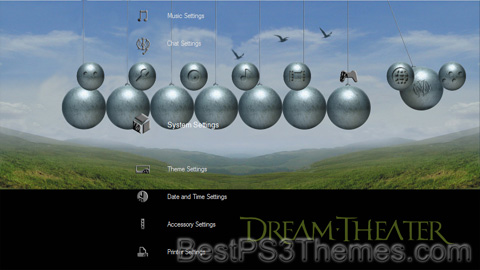
(2 backgrounds)
P3T Unpacker v0.12
Copyright (c) 2007. Anoop Menon
This program unpacks Playstation 3 Theme files (.p3t) so that you can touch-up an existing theme to your likings or use a certain wallpaper from it (as many themes have multiple). But remember, if you use content from another theme and release it, be sure to give credit!
Download for Windows: p3textractor.zip
Instructions:
Download p3textractor.zip from above. Extract the files to a folder with a program such as WinZip or WinRAR. Now there are multiple ways to extract the theme.
The first way is to simply open the p3t file with p3textractor.exe. If you don’t know how to do this, right click the p3t file and select Open With. Alternatively, open the p3t file and it will ask you to select a program to open with. Click Browse and find p3textractor.exe from where you previously extracted it to. It will open CMD and extract the theme to extracted.[filename]. After that, all you need to do for any future p3t files is open them and it will extract.
The second way is very simple. Just drag the p3t file to p3textractor.exe. It will open CMD and extract the theme to extracted.[filename].
For the third way, first put the p3t file you want to extract into the same folder as p3textractor.exe. Open CMD and browse to the folder with p3extractor.exe. Enter the following:
p3textractor filename.p3t [destination path]Replace filename with the name of the p3t file, and replace [destination path] with the name of the folder you want the files to be extracted to. A destination path is not required. By default it will extract to extracted.filename.
Queens Ryche theme created by SaltyDogNL (JB)
Download: QueensRyche.p3t
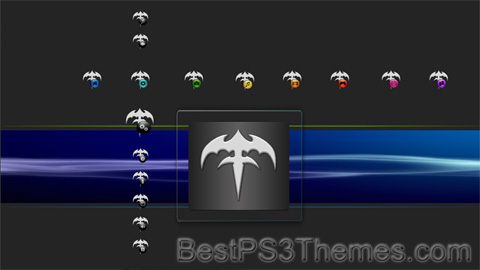
(1 background, different for HD and SD)
P3T Unpacker v0.12
Copyright (c) 2007. Anoop Menon
This program unpacks Playstation 3 Theme files (.p3t) so that you can touch-up an existing theme to your likings or use a certain wallpaper from it (as many themes have multiple). But remember, if you use content from another theme and release it, be sure to give credit!
Download for Windows: p3textractor.zip
Instructions:
Download p3textractor.zip from above. Extract the files to a folder with a program such as WinZip or WinRAR. Now there are multiple ways to extract the theme.
The first way is to simply open the p3t file with p3textractor.exe. If you don’t know how to do this, right click the p3t file and select Open With. Alternatively, open the p3t file and it will ask you to select a program to open with. Click Browse and find p3textractor.exe from where you previously extracted it to. It will open CMD and extract the theme to extracted.[filename]. After that, all you need to do for any future p3t files is open them and it will extract.
The second way is very simple. Just drag the p3t file to p3textractor.exe. It will open CMD and extract the theme to extracted.[filename].
For the third way, first put the p3t file you want to extract into the same folder as p3textractor.exe. Open CMD and browse to the folder with p3extractor.exe. Enter the following:
p3textractor filename.p3t [destination path]Replace filename with the name of the p3t file, and replace [destination path] with the name of the folder you want the files to be extracted to. A destination path is not required. By default it will extract to extracted.filename.
Killzone 2 theme by TRuFLiP
Download: Killzone2_2.p3t
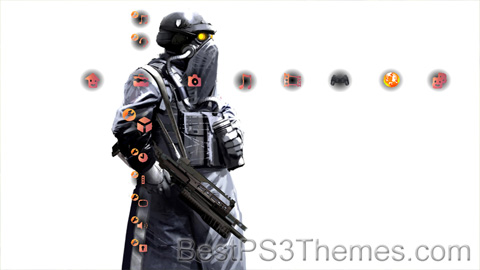
(1 background)
| Killzone 2 | |
|---|---|
 | |
| Developer(s) | Guerrilla Games |
| Publisher(s) | Sony Computer Entertainment |
| Director(s) | Mathijs de Jonge |
| Designer(s) | Neil Alphonso |
| Programmer(s) | Michiel van der Leeuw |
| Artist(s) | Jan-Bart van Beek Bas Uterwijk |
| Composer(s) | Joris de Man |
| Series | Killzone |
| Platform(s) | PlayStation 3 |
| Release | |
| Genre(s) | First-person shooter |
| Mode(s) | Single-player, multiplayer |
Killzone 2 is a 2009 first-person shooter developed by Guerrilla Games and published by Sony Computer Entertainment for the PlayStation 3. It is the second main installment in the Killzone series, following 2004's Killzone.
Similar to its predecessor, Killzone 2 takes place in the 24th century and chronicles the war between two human factions; the Vektans, and the Helghast. The game takes place two years after the events of Killzone and follows protagonist Tomas "Sev" Sevchenko as he and his unit battle the Helghast as the Vektans invade Helghan. The protagonist of Killzone and Killzone: Liberation, Cpt./Col. Jan Templar, returns in a supporting role, along with Rico Velasquez. Killzone 2 is played from a first-person view and allows the player to use a variety of weapons. It was released worldwide in February 2009.
Killzone 2 was widely anticipated prior to its release. It was critically acclaimed by critics and fans, who praised it as a superior title to the original Killzone. Additional praise was given to the game's visuals, action, multiplayer modes, soundtrack and atmosphere, although criticism was directed at the narrative. The game's critical and commercial success led to a sequel, Killzone 3, which was released in February 2011.
The official servers for Killzone 2 and Killzone 3 were shut down in March 2018. However, in 2021, a game preservation group called PSONE restored most of the game's online capability on their own set of servers.

The game is presented almost entirely from a first person perspective, aside from vehicular combat. Killzone 2 features a "lean and peek" cover system which allows the player to take cover behind an object and then pop out to fire at enemies. The "lean and peek" mechanic stays in first-person view at all times. It is also possible for the player to pilot vehicles at two points in the game: a tank and an exoskeleton. Many classic weapons and vehicles from previous Killzone installments return, such as the M82-G and the StA-52 LAR.[citation needed] The Sixaxis motion control feature is also utilized in performing certain actions such as turning a valve, arming an explosive charge and sniping.
Warzone, the title of the online multiplayer component of Killzone 2 has been developed by Guerrilla Games in conjunction with the game's single-player campaign.[citation needed] The online multiplayer gameplay is class-based, meaning the player can choose a class of character which is specialized for a specific role to better suit the player's needs in battle. There are 7 classes in total, in which the player can mix and match a main and sub ability according to their playing style, and can switch abilities upon death. There are 15 weapons available to the player, most of which cannot be used until the player reaches a certain rank. Two of these weapons are secondary firearms, and a further two weapons, the Boltgun and Flamethrower, are exclusive to the downloadable maps "Suljeva Cliffside" and "Arctower Landing".
Players play as either the ISA or Helghast, with a few gameplay differences. The character model and respawn points, and the "lean and peek" cover systems were removed. Each class levels up with experience gained from killing enemies or completing mission objectives. With enough experience, players unlock new weapons and skills, as well as a new class. Each class has two badges, the Primary badge selects the class and their specified skill. The secondary badge has an extra skill for the specified class but can be swapped to create own custom class.
Warzone plays out through dynamic matches where multiple game types are played in a single round. The game does not reset between game types, instead flowing between them, with the winning team determined by who wins the most modes. The game ships with five different game types including Assassination, Search & Retrieve, Search & Destroy, Bodycount and Capture & Hold.[1] Online matches can connect 2 to 32 players, and they can group into six squads of up to four players. If an online match does not have a full 32 players, computer-generated "bots" can be added in to create bigger teams (but only in an unranked match). Killzone 2 also offers a clan system, which allows clans of up to 64 players to compete for "Valor Points", an in-game currency that clans can use to bet on tournaments.
Players can also play offline against AIs with Skirmish mode and unranked online multiplayer, but there is no offline multiplayer mode for splitscreen players.
Eight multiplayer maps are included on disc at release,[2] but Guerrilla has released more maps as downloadable content. 6 more maps have been added to multiplayer since release via downloadable content purchasable from the PlayStation Store.
Two years after the attempted Helghast invasion of Vekta, an ISA fleet led by Colonel Jan Templar is sent to attack Pyrrhus, the capital city of Helghan, with the goal of deposing and arresting Emperor Scolar Visari on charges of war crimes. Among the ISA units taking part in the attack is Alpha Squad, led by Jan's old comrade Ricardo "Rico" Velasquez. Sergeant Tomas "Sev" Sevchenko, a veteran of the ISA "Legion" battalion, is assigned to serve as his second-in-command.
Tasked with securing Pyrrhus against the fierce resistance of the Helghan Second Army, the team quickly discovers that the Helghast are well prepared for an invasion. Using Helghan's harsh environment to their advantage, they have developed new weapons and equipment, none of which the ISA has ever seen before. Furthermore, the planet's fog-like atmosphere, gritty deserts, and constant storms pose almost as much of a threat to the invaders as the enemy themselves.
Led by Jan's flagship, the New Sun, the ISA bombard Pyrrhus as cover for a massive ground assault on the city. Despite stiff resistance from well-armed Helghast divisions, they steadily advance towards the Imperial Palace, ultimately capturing both Visari Square and the Helghan Military Academy. Just as the main convoy is set to attack the palace, Colonel Mael Radec, commander of the Second Army, activates a network of arc towers hidden beneath Pyrrhus, killing hundreds of ISA soldiers and breaking their momentum.
Dante Garza, a member of Alpha Squad and close friend of Tomas's, retrieves a piece of a destroyed tower and sends it to ISA researcher Evelyn Batton, who learns that the towers are powered by Petrusite, a mineral capable of generating and channeling electricity. She also identifies an old mining outpost on the outskirts of Pyrrhus where the Helghast have been secretly extracting it for military use.
While working to restore the outpost's communication antenna, Tomas and Rico are separated from the rest of Alpha Squad, allowing Radec's men to capture them. The two fight their way through the refinery where the captives were taken, stumbling upon an interrogation overseen by Radec himself. Oddly enough, he demands that Evelyn give him the launch codes to a set of stolen nuclear warheads in Helghast custody. Rico loses his temper and surprises Radec, saving the captives but leaving Garza mortally wounded when one of Radec's men Rico kills discharges his weapon and Garza is shot in the process. Blaming him for his friend's death, Tomas and the squad return to the New Sun.
Before Garza can be properly mourned, an elite Helghast battalion led by Radec mounts a surprise attack on the fleet, boarding or destroying several ships including the Sun. The ship's crew manages to evacuate, but Radec reaches the bridge, mortally wounds Jan and executes Evelyn, downloading the codes before they can be deleted. With the last of his strength and before succumbing to his wounds, Jan maneuvers the ship to crash into the center of Helghan's Petrusite distribution grid, causing it to explode and disrupt the arc network.
Seizing the opportunity, the survivors attempt to regroup, only to witness Visari detonate the warheads over Pyrrhus, destroying it and killing both the entire population and most of the remaining ISA forces.
With ISA captain Jason Narville leading an offensive on the remnants of the Second Army, Alpha Squad breaches the palace, where they encounter Radec and the imperial guard. After a pitched battle, the wounded commander and his men commit mass suicide out of disgrace, clearing the way to Visari's throne room.
As Tomas moves to arrest him, Visari gloats that he has still won, as the Helghast are now united against the ISA, and without him, they cannot be stopped. Overcome with guilt and wanting revenge for Templar and Garza's deaths, Rico kills him on the spot.
Weary from fighting, Tomas exits the palace and sits on the steps. Above him, a large armada belonging to the Helghan First Army begins its attack on what is left of the ISA invasion force.
At E3 2005, Killzone 2 was debuted with a trailer depicting soldiers landing in a hostile war-zone on Helghan and fighting Helghast forces. Critics in the media argued that the trailer shown at the trade show did not show actual gameplay footage, as its high level of visual detail has been argued to be impossible to render in real-time on the PlayStation 3 and the audio mix of the trailer was slightly delayed. SCEA's Vice President, Jack Tretton, stated that the footage of Killzone 2, that was believed to be pre-rendered, "is real gameplay everybody's seeing out there".[3] Several days later, Phil Harrison, SCE Europe's Vice President of Development, stated in an interview that all of the footage of PlayStation 3 games at E3 2005 were "running off video" which was "done to PS3 spec".[4] Further interviews eventually revealed the trailer was indeed a "target render", a prerendered video showing the developer's goals for the finished product.[5]
At the Game Developers Conference in 2007, a Killzone 2 teaser was shown behind closed doors, and was never released to the public. It featured various battles, destructible environments, and lighting effects among others.[6] Killzone 2 was shown to a panel of journalists at a special pre-E3 2007 event in Culver City, California, and then the next day to the public at Sony's E3 press conference.[7] An in-game trailer showing real-time gameplay of Killzone 2 was also released,[8] along with several videos of extended gameplay.[9] A number of media outlets since E3, such as the BBC, have referred to Killzone 2 as being "one of the most cinematic and immersive games ever produced on a console".[10] At the Leipzig Games Convention in 2007, Killzone 2 was presented in playable form to the media. It was the same demo level as shown at E3 2007, although journalists were allowed to play it hands-on.[11] At Sony's PlayStation Day 2008, the first level in Killzone 2's single-player campaign was presented, named "Corinth River".[12]
Michal Valient, a Senior Programmer at Guerrilla Games, presented details of their Killzone 2 proprietary game engine at a Developers Conference in July 2007.[13] As with many other titles published by SCE, including LittleBigPlanet and Infamous, Killzone 2 uses a deferred shading engine which enables far greater control over the game's characteristic lighting palette, while maximising processor throughput and limiting shader complexity. Other games to use similar approaches include Rockstar Games' Grand Theft Auto IV and GSC Game World's S.T.A.L.K.E.R.: Shadow of Chernobyl. However, this approach does create some additional problems, notably with respect to anti-aliasing and transparencies. The former was solved using a MSAA Quincunx (multisample anti-aliasing) solution, and the latter by the addition of a standard forward rendering path. The game's graphics were universally praised by critics.[14]
The animation was done in Maya 8.5 with some motion capture animations tweaked in MotionBuilder. 3D artists, animators and level designers used Maya as their production environment, which is unusual considering that most 3D games are produced using 3ds max. A large library of custom Maya tools and scripts was created to support these different disciplines.[15] Tools like "Hyperion", a lightmap rendering software, were used in place of Maya's viewport rendering software. In-game animation was assisted with another tool they created called "AnimationBlender" and particle effects were edited using a tool called "Particle Editor". They also created a tool called "ColorTweaker", which gave them the possibility to do color correction on the PS3 in real-time.[15]
Most of the animation was done using motion capture with some animations, reload animations for example, done by hand. Facial animation was done using blendshapes with bones for the jaw and the eyes. Lead tech artist, Paulus Bannink, explains that "The main reason for going with blendshapes was the relative ease with which they can be transferred to different faces, it would also provide a more artist friendly way of editing the facial animation rig.".[15] The cut scene facial animation was done using marker motion capture. In game dialog was done generically using MotionBuilder after audio files were plugged in. The game was developed not only by artists in Amsterdam, but also by people living in New Zealand, Australia, Japan, Korea, the UK and the US. The data files, gigabytes in size, were sent over the internet.[15]
Killzone 2's budget was originally US$20 million but rose to US$40–45 million at the end of the development, with a team of 120.[16][17][18][19]
| Killzone 2 (Original Soundtrack from the Video Game) | |
|---|---|
| Soundtrack album by | |
| Released | October 19, 2009 |
| Genre | Orchestral, Video game soundtrack |
| Length | 1:14:22 |
The score to Killzone 2 was composed by Joris de Man, who scored 60 minutes of in-game music and 30-minutes of live orchestral score for the game, recorded at Abbey Road Studios in London, with the Nimrod Studio Orchestra.[20] The score was produced and mixed by Rich Aitken, regular mix partner for Joris de Man and Marc Canham, at Nimrod Productions.
| No. | Title | Writer(s) | Length |
|---|---|---|---|
| 1. | "Opening - Birth of War (Retribution)" | Joris de Man | 3:40 |
| 2. | "The Second Helghan March (Helghan Forever)" | Joris de Man | 2:21 |
| 3. | "Battle Preparations" | Joris de Man | 1:33 |
| 4. | "Bridge is Down" | Joris de Man | 1:47 |
| 5. | "Ambush" | Joris de Man | 2:23 |
| 6. | "Protecting the Convoy" | Joris de Man | 3:14 |
| 7. | "Flight into Blood Meridian" | Joris de Man | 0:45 |
| 8. | "Fight Your Way Through" | Joris de Man | 3:21 |
| 9. | "Heavy Resistance" | Joris de Man | 1:32 |
| 10. | "An Unexpected Guest" | Joris de Man | 0:58 |
| 11. | "The Police Station" | Joris de Man | 2:33 |
| 12. | "Resistance on the Bridge" | Joris de Man | 0:53 |
| 13. | "Taking the Bridge" | Joris de Man | 3:03 |
| 14. | "Petrusite Revealed" | Joris de Man | 0:56 |
| 15. | "The Academy" | Joris de Man | 3:21 |
| 16. | "Fight the A.T.A.C." | Joris de Man | 1:59 |
| 17. | "A Day of Mourning" | Joris de Man | 2:36 |
| 18. | "Suljeva" | Joris de Man | 3:12 |
| 19. | "Next Stop Tharsis Refinery" | Joris de Man | 2:26 |
| 20. | "Question Time with Radec" | Joris de Man | 1:18 |
| 21. | "Dante Garza RIP" | Joris de Man | 1:58 |
| 22. | "Going Up" | Joris de Man | 2:07 |
| 23. | "Templar's Last Stand" | Joris de Man | 3:45 |
| 24. | "The Exoskeleton" | Joris de Man | 3:38 |
| 25. | "Nuked" | Joris de Man | 1:53 |
| 26. | "Radec's Personal Guards" | Joris de Man | 3:10 |
| 27. | "Visari's Lament" | Joris de Man | 4:41 |
| 28. | "End Credits Suite" | Joris de Man | 8:07 |
| 29. | "Fight the A.T.A.C. (Remix)" | Joris de Man | 1:12 |
Beta access was given to a select number of North American and European PlayStation Network subscribers. The beta consisted of three online multiplayer maps; "Blood Gracht" (small), "Radec Academy" (medium) and "Salamun Market" (large), with unlockable ranks and character classes ("badges"). Beta testers had their own statistics and have the ability to enter clan competitions. Beta access was private and thus could not be shared with other PlayStation Network accounts. Also, beta testers are tied with Sony Computer Entertainment Inc. by a non-disclosure agreement; therefore they were not allowed to reveal contents of the beta experience. A technical demo of one of Killzone 2's TV commercials, known as the "Bullet" trailer, was released on the PlayStation Store on April 2, 2009.[21] The demo features the commercial itself, the ability to shift camera angles and film speed, and several commentaries from key development staff at Guerrilla Games.
On February 5, 2009, SCEE released a single player demo of Killzone 2 on the European/Oceanic PlayStation Store.[22] The demo includes the first two sections of 'Corinth River' (the first level of the game) as well as the tutorial sequence from the final game.[23] A demo card, granting access to a Killzone 2 demo was also offered to US gamers who pre-ordered the game at GameStop. The US demo was also made available to those customers on February 5. In the North American version of PlayStation Home, if users found an avatar dressed in a Helghast costume, the avatar with the Helghast costume would give that user a code for the demo. This occurred on February 16.[24] On February 26, the demo was made available for download from the PlayStation Store in North America.
The servers for Killzone 2 and Killzone 3 were shut down on March 29, 2018. They have since been offline and can no longer be played online.[25]
In the North American version of PlayStation Home, if users pre-ordered Killzone 2 from Amazon.com, users received free male and female I.S.A. and Helghast uniforms for their avatar.[26] In the European version of PlayStation Home, if users participated in the "Killzone AM" event that took place on Saturday March 28, 2009, at 11 am CET for one full round, the Home Managers gave the participants a code for the Killzone 2 uniforms. Requirement was that users had to have a United Kingdom PSN account.[27] For a limited time in Japanese Home, users received an I.S.A. uniform for watching the Killzone 2 trailer and answering a questionnaire. To get the Helghast uniform in Japan, users had to do a pre-order. In Home's shopping complex, there are fourteen — seven for male and seven for female — Killzone 2 themed shirts available for purchase as well as the Helghast Tactician uniform. A costume for Radec was released on March 4, 2010, to the European Home and has been released in the North American.
Guerrilla Games have released a Killzone 2 themed apartment called the "Visari Throne Room" for Home. The Visari Throne Room apartment is based on the throne room inside Visari's Palace from the final mission of Killzone 2. For the Visari Throne Room, there are five pieces of furniture based on actual palace furnishings from Killzone 2: two types of Visari-style chairs, an administrative desk, a plant container with authentic Helghan vegetation, and a freestanding painting which portrays an important moment in the colonial history of the Helghast. The Visari Throne Room and matching furniture were made available to the European Home on July 2, 2009,[28] the North American on August 27, 2009,[29] and the Asian[30] and Japanese Home on October 9, 2009.[31]
On April 10, 2009[32] Hermen Hulst, Managing Director from Guerrilla Games announced on GameTrailers TV[citation needed] that Killzone 2 would get a DLC map pack named "Steel & Titanium" which would contain two new maps called Wasteland Bullet and Vekta Cruiser. With new gameplay elements and strategic twists.[33][34] The first DLC map pack was released on Thursday, April 30.[34][35] Hulst stated that the next Killzone 2 DLC map pack that they were releasing would have a 'Retro Vibe' to it.[citation needed]
The second map pack was officially announced on May 20, 2009 as "Flash and Thunder", and features two maps previously seen in Killzone called "Beach Head" and "The Southern Hills". Both maps followed the first map pack by bringing new gameplay elements and strategic twists; Beach Head, the wide open battlefield, with rain-filled trenches, and Southern Hills with its intermittent nuke explosion. It was released on June 11, 2009.[36] Both map packs have twelve trophies that go along with them, six for each map.
On July 10 the third map pack was officially announced, even though Sony stated that there were no plans for a third pack. The DLC "Napalm and Cordite" was released on July 23, 2009, it contained two new maps "Suljeva Cliffside" and "Arctower Landing", in addition to the maps the Flamethrower and the Boltgun both from singleplayer made their debut in multiplayer.[37] The Flamethrower is found in the Suljeva Cliffside map and the Boltgun is found in the Arctower Landing map. A multiplayer map pack bundle was also released to coincide with the release of Napalm and Cordite, containing all six maps from the DLC packs, for the price of four maps.[38] The downloadable content pack three has eight trophies that go along with it, four for each map which are for the new weapons. With the fifth anniversary of the original Killzone taking place, the map pack "Flash & Thunder" was reduced in price in North America and Europe.
| Aggregator | Score |
|---|---|
| Metacritic | 91/100[39] |
| Publication | Score | |||||||||||||||||||||||||||||||||||||||||||||||||||||||||||||||||||
|---|---|---|---|---|---|---|---|---|---|---|---|---|---|---|---|---|---|---|---|---|---|---|---|---|---|---|---|---|---|---|---|---|---|---|---|---|---|---|---|---|---|---|---|---|---|---|---|---|---|---|---|---|---|---|---|---|---|---|---|---|---|---|---|---|---|---|---|---|
| Destructoid | 9.5/10[40] | |||||||||||||||||||||||||||||||||||||||||||||||||||||||||||||||||||
| Edge | 7/10[41] | |||||||||||||||||||||||||||||||||||||||||||||||||||||||||||||||||||
| Eurogamer | 9/10[42] | |||||||||||||||||||||||||||||||||||||||||||||||||||||||||||||||||||
| Famitsu | 32/40[43] | |||||||||||||||||||||||||||||||||||||||||||||||||||||||||||||||||||
| Game Informer | 8.75/10[44] | |||||||||||||||||||||||||||||||||||||||||||||||||||||||||||||||||||
| GamePro |  [45] [45] | |||||||||||||||||||||||||||||||||||||||||||||||||||||||||||||||||||
| GameRevolution | A−[46] | |||||||||||||||||||||||||||||||||||||||||||||||||||||||||||||||||||
| GameSpot | 9/10[14] | |||||||||||||||||||||||||||||||||||||||||||||||||||||||||||||||||||
| GameSpy |  [47] [47] | |||||||||||||||||||||||||||||||||||||||||||||||||||||||||||||||||||
| GameTrailers | 9.2/10[48] | |||||||||||||||||||||||||||||||||||||||||||||||||||||||||||||||||||
| GameZone | 9.4/10[49] | |||||||||||||||||||||||||||||||||||||||||||||||||||||||||||||||||||
| Giant Bomb |
Modern NatureModern Nature theme by kriptex Download: ModernNature.p3t
Modern Nature is the 12th studio album by British rock band the Charlatans. It was released through BMG on 26 January 2015. After the release of the band's 11th studio album Who We Touch (2010), drummer Jon Brookes was diagnosed with brain cancer, and subsequently died in mid-2013. In early 2014, the band met up at their studio Big Mushroom with Jim Spencer, and began working on a new album. The sessions lasted seven months, and featured recordings from the drummers of the Verve, New Order, and Factory Floor. Described as a pop album, Modern Nature featured contributions from the High Llamas frontman Sean O'Hagan, as well as gospel vocals from Melanie Marshall and Sandra Marvin. Preceded by the release of the singles "Talking in Tones" and "So Oh" in September and December 2014, respectively, Modern Nature was released with varying bonus tracks. The band promoted it with radio appearances, and in-store performances. To coincide with the release of the single "Come Home Baby" in February 2015, the band embarked on a UK headlining tour, their first since 2010. Over the course of the next year and a half, the band toured Japan, Europe, the United States, the UK, Australia, and at various UK festivals. Modern Nature received generally positive reviews from music critics, some of whom commented on the album's throwback sound. The album charted at number 7 in the UK, and number 25 in Ireland. Background and production[edit]Following the release of the Charlatans' 11th studio album Who We Touch (2010), drummer Jon Brookes was diagnosed with brain cancer while on tour in the United States; he was temporarily replaced by the Verve member Pete Salisbury, at the recommendation.[1][2][3] Brookes later re-joined the band towards the end of the year.[4] In February 2011, the band held a discussion for their next album, which they were aiming to release at some point in 2012.[5] Later in 2011, vocalist Tim Burgess started his own record label O Genesis; him and guitarist Mark Collins went on an acoustic tour; and Burgess worked on a solo album.[6][7] In mid-2012, the celebrated the 15th anniversary of their fifth studio album Tellin' Stories (1997) with two full-album performances, and a live album from one of the shows.[6] Brookes suffered from a relapse in September that same year.[4] The band attempted to make an album, at the insistence of Brookes, however the effort was fruitless.[7] In July 2013, keyboardist Tony Rogers said the band were anticipating going into the studio to work on new songs.[8] In spite of Brookes receiving surgery that same month, Burgess announced Brookes' death in August.[4] A benefit show was held for him two months later.[9] Burgess and guitarist Mark Collins held a writing session Hastings, which resulted in several songs.[10] The band congregated at a beach house in Rye where the recorded ideas using a portable studio and drums courtesy of a mobile app.[11][12] The band reconvened in early 2014 at their own studio Big Mushroom, and spurred on by the memories of Brookes, the band began recording in January that year.[13][3] The members intentionally wanted to make an uplifting record; some songs were worked on between Burgess and Collins, bassist Mark Blunt and Rogers, or the whole band.[14] Jim Spencer, who worked with them previously on their 2001–2008 albums, co-produced the proceedings.[9] Drummers from different bands participated in the recording sessions: Salisbury, New Order member Stephen Morris, and Factory Floor member Gabriel Gurnsey.[15] Morris and Gurnsey went into the studio to see how the band was progressing, only then to be asked to play on the recordings. Burgess expected the sessions to last three months, when in reality, they lasted seven.[3] Composition[edit]Musically, the sound of Modern Nature has been described as pop,[16] with elements of disco, funk, and soul.[17] Discussing the title, Burgess said he was visiting the band Grumbling Fur as they were recording song. They were in the middle of song when a book fell of a shelf and hit Burgess on the head.[3] The book turned out to be Derek Jarman's diaries, entitled Modern Nature.[7] Up to this point, they had already planned on calling it Nature as they had several songs with that as the working title.[18] Some of the upbeat songs, such as "So Oh" and "Let the Good Times Be Never Ending", were reminiscent of the pop nature of the band's seventh studio album Wonderland (2001).[19] Similarly, "So Oh" and "Come Home Baby" channel the band's early Madchester sound.[1] The High Llamas frontman Sean O'Hagan contributed orchestration throughout the album, alongside gospel vocal harmonies from Melanie Marshall and Sandra Marvin.[9][15] O'Hagan previously worked with Burgess for his solo album; Burgess made a mental note that if the Charlatans required strings, to ask O'Hagan.[3] The opening track "Talking in Tones" initially begins as a soundscape of glitch and electronica percussion loops, before shifting into 1960s beat music, with its chorus section being reminiscent of I'm a Man" (1967) by the Spencer Davis Group.[9][15] It was the result of a jam session between Collins, who was playing drums, and Burgess, who was playing guitar.[2] Burgess came up with the title while walking from Barclays bank on Upper Street, Islington to Flashback Records on Old Street.[18] The track discusses telepathic communication, and reminded Burgess of the Tellin' Stories opening song "With No Shoes".[3][2] Collins said "So Oh" was influenced by a Barry White song, while its bassline recalled the band's stand-alone single "The Only One I Know" (1990).[20][21] Burgess wrote the song's lyrics about being in a location, figuring out how you get there, and included a reference to David Bowie.[22][23] "Come Home Baby" utilizes a gospel choir.[24] Rogers had the verse music for it for sometime, until Burgess had a melody part for it, which he dubbed "Baby Huey" after the person of the same name.[25] The soul track "Keep Enough" talks about mourning for an absent friend.[26][27] It was the first song the band wrote after becoming a four-piece.[2] "In the Tall Grass", alongside "Let the Good Times Be Never Ending", saw the band move into disco territory.[1] The keyboard parts in the former were compared to those played by the Doors member Ray Manzarek.[9] The song's overall sparse arrangement channelled the sound of the band's sixth studio album Us and Us Only (1999).[20] Rogers wrote the music for the song while he was in Ireland.[28] The vocals and plucked guitar parts in "Emilie" was compared to In Rainbows (2007)-era Radiohead.[29] "Let the Good Times Be Never Ending" is a cross between the music of the Doors and the 5th Dimension, with brass parts from Dexys Midnight Runners member Jim Paterson.[2][26] The song was influenced by Little Anthony and the Imperials, and was initially scrapped on three occasions.[30][31] The first idea for the song was a six-minute-long bass part that Rogers turned into two iterations, one with a Rhodes piano, and the second with a Hammond organ. Burgess, Collins and Blunt liked both versions that Rogers made.[30] The final version was made after six months' worth of attempts, with a variety of additional instrumentation, such as drum machines and Chic-esque guitar playing.[32] "I Need You to Know", alongside "Lean In", use an organ sound in the style of Noel Gallagher's High Flying Birds.[33] "Lean In" features jangly guitarwork backing vocal harmonies recalled those hard in "Strawberry Wine" (1987) by My Bloody Valentine.[9] It was the last song written for the album, with Burgess, Collins and Blunt working on the guitar parts of it until the early hours of the morning.[34] The piano-driven baggy song "Trouble Understanding" features several different dynamics and mood changes throughout it. Halfway through the song, a guitar line is heard, which builds towards a choral section.[2][33] It was initially titled "Nature #1", and was written by Burgess with Lou Reed in mind.[35] The closing track "Lot to Say" also evoked their Madchester sound, while incorporating elements of Motown.[15] Burgess purposely wanted to end the album with a quiet track; he wrote it after moving to Norfolk when his son was born.[36] "Walk with Me" was written by Brookes while laying in a hospital bed; it incorporates a back choir, which consisted of children from that that Brookes used to teach at.[2][37] Brookes had dictated the song's lyrics three weeks prior to his death.[7] "Honesty" is an acoustic instrumental rendition of "Emilie", with a string section, while "Marauder" is a drum and keyboard-based instrumental.[37] Release[edit]The Charlatans' manager sent some songs out, which received attention from several labels.[7] One of the labels, BMG, was interested in the band. Their staff member Thomas was ecstatic about the four tracks he had been shown and asked for more.[3] The music video for "Talking in Tones" was released on 23 September 2014, directed by Nik Colk Void.[38] The track was released as a single six days later; the 7" vinyl version included a remix of the same song.[39][40] On 20 October, Modern Nature was scheduled for release later in December that year.[41] The music video for "So Oh" was released on 10 November, and was filmed in Santa Marinella, Italy.[42][43] The track was released a single on 1 December; the 7" vinyl version included a Brian Jonestown Massacre remix of the same song as the B-side.[44][45] The music video for "Come Home Baby" was released on 15 January 2015.[46] Modern Nature was made available through The Guardian's website on 21 January 2015, and eventually released through BMG five days later.[47][48] The physical deluxe edition included a bonus disc which contained "We Sleep on Borrowed Time", "Walk with Me", "As Long as You Stick by Me", and the demo "I Will Never Leave You".[49] The digital deluxe edition featured "We Sleep on Borrowed Time", "Walk with Me", alongside "Honesty" and "Marauder" as bonus tracks.[50] The Japanese edition included all of the bonus track from the physical and digital deluxe editions, alongside remixes.[51] Some vinyl versions featured the physical deluxe edition bonus tracks, while other versions featured remixes.[52][53] The artwork sees the band on a beach with the sun in the background.[54] The album was promoted with appearances on various radio stations, and performances at record stores.[39] "Come Home Baby" was released as a single on 2 February 2015, and featured a Simon Fisher Turner remix of the same song.[55] Later that month, the band played a show at the Brooklyn Bowl to coincide with the 2015 Brit Awards.[56] The following month, the band embarked on a UK tour with Salisbury acting as their drummer. The stint marked the band's first full tour of the UK since 2010.[41] Later in the month, Modern Nature was released in the US on 24 March.[54] In April 2015, they toured across Japan; footage from the trek was later compiled into the music video for "Let the Good Times Be Never Ending", directed by Libby Burke Wilde.[57] On 28 April, the band performed "Let the Good Times Be Never Ending" on Later... with Jools Holland.[58] In June and July, the band performed at the Latitude, Isle of Wight, Truck and Glastonbury Festivals, and played at Castlefield Bowl.[59] In September, they toured Europe, before going on a US in November, with support from the Eyelids.[60] In December, the band toured the UK again; around this trek, Modern Nature was re-issued on vinyl.[61][62] In March 2016, the band went on a tour of Australia.[63] Norman Cook remixes of "Trouble Understanding" were released on a 12" vinyl single as part of Record Store Day 2016.[64] Reception[edit]
Modern Nature was met with generally positive reviews from music critics. At Metacritic, the album received an average score of 80, based on 16 reviews.[66] Similarly, at AnyDecentMusic?, the album had an average rating of 7.6, based on 18 reviews.[65] musicOMH contributor Graeme Marsh found Modern Nature "[q]uite simply stunning", calling it "a must-have." He added, it was "[w]holly unexpected and majestic," with "repeated plays" that "will reward tenfold".[2] AllMusic reviewer Stephen Thomas Erlewine praised the album's "soulful undercurrents," making it sound "more unified than Who We Touch and also contemplative". He said, a lot of the record's "haziness derives from the shimmering production".[1] The Guardian writer Lanre Bakare said that, "[f]rom the saddest of starting points, the Charlatans have made a joyful eulogy – and possibly the best album of their career."[26] Drowned in Sound's Dom Gourlay wrote that the album "fuses elements of the band's past glories with a vision firmly ensconced in the future." It acted as "another prized addition to The Charlatans' already wealthy canon."[9] Hayley Scott of Loud and Quiet referred to it as "fragile, danceable and never void of idiosyncrasies."[69] London Evening Standard critic David Smyth wrote that the record "wears its sorrows lightly .. [with] no sense that the band are tossing out one more album for old time’s sake. Despite more troubles than most, they sound rejuvenated."[27] Daily Express writer Martin Townsend said the band "return with a record that has all the vibrancy of a debut."[67] Writing for Exclaim!, Lisa Sookraj described the album as "a fluid release, a chilled-out, soulful take on the Charlatans' psychedelic sound complemented by muted horns and jazzy keys."[29] Clash's Mat Smith found that "much of this album seems to hark back to the 1970s", while in other parts of it, "the addition of dense production," plant the tracks "in an era that only now seems to be appreciated for what it produced."[15] Modern Nature reached number 7 in the UK; their highest in 14 years since Wonderland, which reached number 2.[70] It also reached number 25 in Ireland.[71] Track listing[edit] Look up BCS in Wiktionary, the free dictionary. BCS, or bcs, may refer to: American football[edit]
Education[edit]
Organisation[edit]
Publications[edit]
Science[edit]
Codes[edit]
Other[edit]
See also[edit] This disambiguation page lists articles associated with the title BCS.
If an internal link led you here, you may wish to change the link to point directly to the intended article. Newcastle United FCNewcastle United FC theme by Lampy Download: NewcastleUnitedFC.p3t
Redirect to:
| |||||||||||||||||||||||||||||||||||||||||||||||||||||||||||||||||||