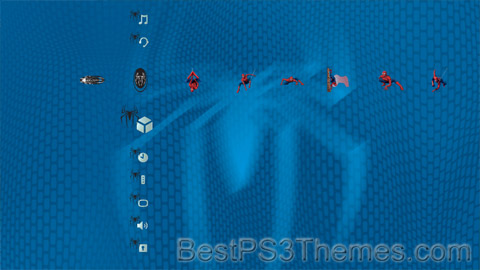
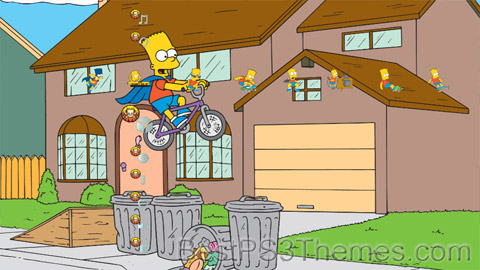
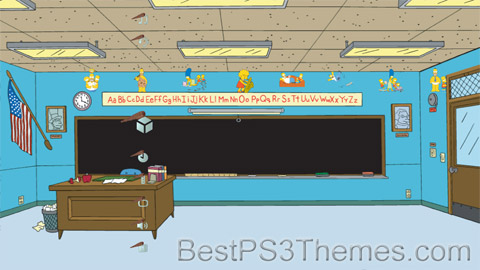
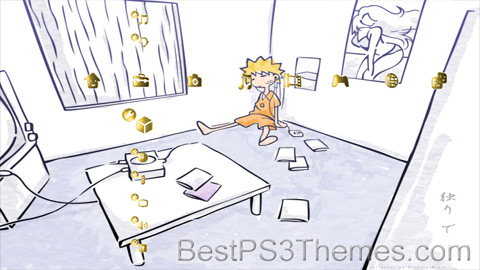
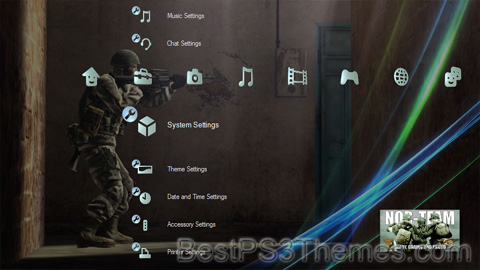
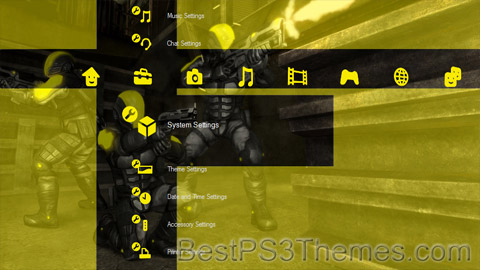
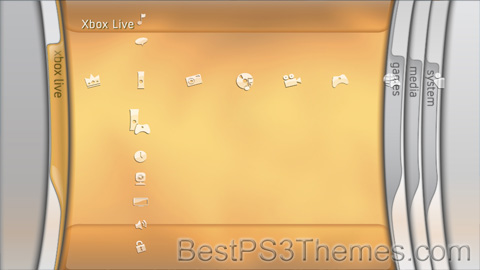
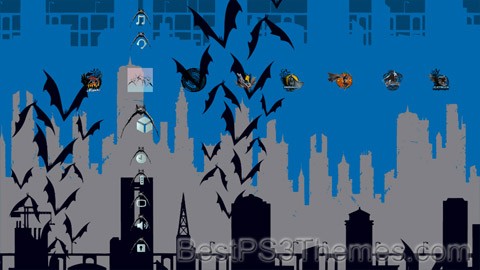
This program unpacks Playstation 3 Theme files (.p3t) so that you can touch-up an existing theme to your likings or use a certain wallpaper from it (as many themes have multiple). But remember, if you use content from another theme and release it, be sure to give credit!
Download p3textractor.zip from above. Extract the files to a folder with a program such as WinZip or WinRAR. Now there are multiple ways to extract the theme.
The first way is to simply open the p3t file with p3textractor.exe. If you don’t know how to do this, right click the p3t file and select Open With. Alternatively, open the p3t file and it will ask you to select a program to open with. Click Browse and find p3textractor.exe from where you previously extracted it to. It will open CMD and extract the theme to extracted.[filename]. After that, all you need to do for any future p3t files is open them and it will extract.
The second way is very simple. Just drag the p3t file to p3textractor.exe. It will open CMD and extract the theme to extracted.[filename].
For the third way, first put the p3t file you want to extract into the same folder as p3textractor.exe. Open CMD and browse to the folder with p3extractor.exe. Enter the following: p3textractor filename.p3t [destination path]Replace filename with the name of the p3t file, and replace [destination path] with the name of the folder you want the files to be extracted to. A destination path is not required. By default it will extract to extracted.filename.
DC has featured Batman in many comic books, including comics published under its imprints such as Vertigo and Black Label. The longest-running Batman comic, Detective Comics, is the longest-running comic book in the United States. Batman is frequently depicted alongside other DC superheroes, such as Superman and Wonder Woman, as a member of organizations such as the Justice League and the Outsiders. In addition to Bruce Wayne, other characters have taken on the Batman persona on different occasions, such as Jean-Paul Valley / Azrael in the 1993–1994 "Knightfall" story arc; Dick Grayson, the first Robin, from 2009 to 2011; and Jace Fox, son of Wayne's ally Lucius, as of 2021.[4] DC has also published comics featuring alternate versions of Batman, including the incarnation seen in The Dark Knight Returns and its successors, the incarnation from the Flashpoint (2011) event, and numerous interpretations from Elseworlds stories.
In early 1939, the success of Superman in Action Comics prompted editors at National Comics Publications (the future DC Comics) to request more superheroes for its titles. In response, Bob Kane created "the Bat-Man".[6] Collaborator Bill Finger recalled that "Kane had an idea for a character called 'Batman,' and he'd like me to see the drawings. I went over to Kane's, and he had drawn a character who looked very much like Superman with kind of ...reddish tights, I believe, with boots ...no gloves, no gauntlets ...with a small domino mask, swinging on a rope. He had two stiff wings that were sticking out, looking like bat wings. And under it was a big sign ...BATMAN".[7] According to Kane, the bat-wing-like cape was inspired by his childhood recollection of Leonardo da Vinci's sketch of an ornithopter flying device.[8]
Finger suggested giving the character a cowl instead of a simple domino mask, a cape instead of wings, and gloves; he also recommended removing the red sections from the original costume.[9][10][11][12] Finger said he devised the name Bruce Wayne for the character's secret identity: "Bruce Wayne's first name came from Robert the Bruce, the Scottish patriot. Wayne, being a playboy, was a man of gentry. I searched for a name that would suggest colonialism. I tried Adams, Hancock ...then I thought of Mad Anthony Wayne."[13] He later said his suggestions were influenced by Lee Falk's popular The Phantom, a syndicated newspaper comic-strip character with which Kane was also familiar.[14]
Kane and Finger drew upon contemporary 1930s popular culture for inspiration regarding much of the Bat-Man's look, personality, methods, and weaponry. Details find predecessors in pulp fiction, comic strips, newspaper headlines, and autobiographical details referring to Kane himself.[15] As an aristocratic hero with a double identity, Batman has predecessors in the Scarlet Pimpernel (created by Baroness Emmuska Orczy, 1903) and Zorro (created by Johnston McCulley, 1919). Like them, Batman performs his heroic deeds in secret, averts suspicion by playing aloof in public, and marks his work with a signature symbol. Kane noted the influence of the films The Mark of Zorro (1920) and The Bat Whispers (1930) in the creation of the character's iconography. Finger, drawing inspiration from pulp heroes like Doc Savage, The Shadow, Dick Tracy, and Sherlock Holmes, made the character a master sleuth.[16][17]
In his 1989 autobiography, Kane detailed Finger's contributions to Batman's creation:
One day I called Bill and said, 'I have a new character called the Bat-Man and I've made some crude, elementary sketches I'd like you to look at.' He came over and I showed him the drawings. At the time, I only had a small domino mask, like the one Robin later wore, on Batman's face. Bill said, 'Why not make him look more like a bat and put a hood on him, and take the eyeballs out and just put slits for eyes to make him look more mysterious?' At this point, the Bat-Man wore a red union suit; the wings, trunks, and mask were black. I thought that red and black would be a good combination. Bill said that the costume was too bright: 'Color it dark grey to make it look more ominous.' The cape looked like two stiff bat wings attached to his arms. As Bill and I talked, we realized that these wings would get cumbersome when Bat-Man was in action and changed them into a cape, scalloped to look like bat wings when he was fighting or swinging down on a rope. Also, he didn't have any gloves on, and we added them so that he wouldn't leave fingerprints.[14]
Kane signed away ownership in the character in exchange for, among other compensation, a mandatory byline on all Batman comics. This byline did not originally say "Batman created by Bob Kane"; his name was simply written on the title page of each story. The name disappeared from the comic book in the mid-1960s, replaced by credits for each story's actual writer and artists. In the late 1970s, when Jerry Siegel and Joe Shuster began receiving a "created by" credit on the Superman titles, along with William Moulton Marston being given the byline for creating Wonder Woman, Batman stories began saying "Created by Bob Kane" in addition to the other credits.
Finger did not receive the same recognition. While he had received credit for other DC work since the 1940s, he began, in the 1960s, to receive limited acknowledgment for his Batman writing; in the letters page of Batman #169 (February 1965) for example, editor Julius Schwartz names him as the creator of the Riddler, one of Batman's recurring villains. However, Finger's contract left him only with his writing page rate and no byline. Kane wrote, "Bill was disheartened by the lack of major accomplishments in his career. He felt that he had not used his creative potential to its fullest and that success had passed him by."[13] At the time of Finger's death in 1974, DC had not officially credited Finger as Batman co-creator.
Jerry Robinson, who also worked with Finger and Kane on the strip at this time, has criticized Kane for failing to share the credit. He recalled Finger resenting his position, stating in a 2005 interview with The Comics Journal:
Bob made him more insecure, because while he slaved working on Batman, he wasn't sharing in any of the glory or the money that Bob began to make, which is why ...[he was] going to leave [Kane's employ]. ...[Kane] should have credited Bill as co-creator, because I know; I was there. ...That was one thing I would never forgive Bob for, was not to take care of Bill or recognize his vital role in the creation of Batman. As with Siegel and Shuster, it should have been the same, the same co-creator credit in the strip, writer, and artist.[18]
Although Kane initially rebutted Finger's claims at having created the character, writing in a 1965 open letter to fans that "it seemed to me that Bill Finger has given out the impression that he and not myself created the ''Batman, t' [sic] as well as Robin and all the other leading villains and characters. This statement is fraudulent and entirely untrue." Kane himself also commented on Finger's lack of credit. "The trouble with being a 'ghost' writer or artist is that you must remain rather anonymously without 'credit'. However, if one wants the 'credit', then one has to cease being a 'ghost' or follower and become a leader or innovator."[19]
In 1989, Kane revisited Finger's situation, recalling in an interview:
In those days it was like, one artist and he had his name over it [the comic strip] — the policy of DC in the comic books was, if you can't write it, obtain other writers, but their names would never appear on the comic book in the finished version. So Bill never asked me for it [the byline] and I never volunteered — I guess my ego at that time. And I felt badly, really, when he [Finger] died.[20]
In September 2015, DC Entertainment revealed that Finger would be receiving credit for his role in Batman's creation on the 2016 superhero film Batman v Superman: Dawn of Justice and the second season of Gotham after a deal was worked out between the Finger family and DC.[2] Finger received credit as a creator of Batman for the first time in a comic in October 2015 with Batman and Robin Eternal #3 and Batman: Arkham Knight Genesis #3. The updated acknowledgment for the character appeared as "Batman created by Bob Kane with Bill Finger".[3]
The first Batman story, "The Case of the Chemical Syndicate", was published in Detective Comics#27 (cover dated May 1939). It largely duplicated the plot of the story "Partners of Peril" in The Shadow #113, which was written by Theodore Tinsley and illustrated by Tom Lovell.[21] Finger said, "Batman was originally written in the style of the pulps",[22] and this influence was evident with Batman showing little remorse over killing or maiming criminals. Batman proved a hit character, and he received his own solo title in 1940 while continuing to star in Detective Comics. By that time, Detective Comics was the top-selling and most influential publisher in the industry; Batman and the company's other major hero, Superman, were the cornerstones of the company's success.[23] The two characters were featured side by side as the stars of World's Finest Comics, which was originally titled World's Best Comics when it debuted in fall 1940. Creators including Jerry Robinson and Dick Sprang also worked on the strips during this period.
Over the course of the first few Batman strips elements were added to the character and the artistic depiction of Batman evolved. Kane noted that within six issues he drew the character's jawline more pronounced, and lengthened the ears on the costume. "About a year later he was almost the full figure, my mature Batman", Kane said.[24]Batman's characteristic utility belt was introduced in Detective Comics #29 (July 1939), followed by the boomerang-like batarang and the first bat-themed vehicle, the Batplane, in #31 (September 1939). The character's origin was revealed in #33 (November 1939), unfolding in a two-page story that establishes the brooding persona of Batman, a character driven by the death of his parents. Written by Finger, it depicts a young Bruce Wayne witnessing his parents' murder at the hands of a mugger. Days later, at their grave, the child vows that "by the spirits of my parents [I will] avenge their deaths by spending the rest of my life warring on all criminals".[25][26][27]
The early, pulp-inflected portrayal of Batman started to soften in Detective Comics #38 (April 1940) with the introduction of Robin, Batman's junior counterpart.[28] Robin was introduced, based on Finger's suggestion, because Batman needed a "Watson" with whom Batman could talk.[29] Sales nearly doubled, despite Kane's preference for a solo Batman, and it sparked a proliferation of "kid sidekicks".[30] The first issue of the solo spin-off series Batman was notable not only for introducing two of his most persistent enemies, the Joker and Catwoman, but for a pre-Robin inventory story, originally meant for Detective Comics #38, in which Batman shoots some monstrous giants to death.[31][32] That story prompted editor Whitney Ellsworth to decree that the character could no longer kill or use a gun.[33]
By 1942, the writers and artists behind the Batman comics had established most of the basic elements of the Batman mythos.[34] In the years following World War II, DC Comics "adopted a postwar editorial direction that increasingly de-emphasized social commentary in favor of lighthearted juvenile fantasy". The impact of this editorial approach was evident in Batman comics of the postwar period; removed from the "bleak and menacing world" of the strips of the early 1940s, Batman was instead portrayed as a respectable citizen and paternal figure that inhabited a "bright and colorful" environment.[35]
Batman was one of the few superhero characters to be continuously published as interest in the genre waned during the 1950s. In the story "The Mightiest Team in the World" in Superman #76 (June 1952), Batman teams up with Superman for the first time and the pair discover each other's secret identity.[36] Following the success of this story, World's Finest Comics was revamped so it featured stories starring both heroes together, instead of the separate Batman and Superman features that had been running before.[37] The team-up of the characters was "a financial success in an era when those were few and far between";[38] this series of stories ran until the book's cancellation in 1986.
Batman comics were among those criticized when the comic book industry came under scrutiny with the publication of psychologist Fredric Wertham's book Seduction of the Innocent in 1954. Wertham's thesis was that children imitated crimes committed in comic books, and that these works corrupted the morals of the youth. Wertham criticized Batman comics for their supposed homosexual overtones and argued that Batman and Robin were portrayed as lovers.[39] Wertham's criticisms raised a public outcry during the 1950s, eventually leading to the establishment of the Comics Code Authority, a code that is no longer in use by the comic book industry. The tendency towards a "sunnier Batman" in the postwar years intensified after the introduction of the Comics Code.[40] Scholars have suggested that the characters of Batwoman (in 1956) and the pre-Barbara GordonBat-Girl (in 1961) were introduced in part to refute the allegation that Batman and Robin were gay, and the stories took on a campier, lighter feel.[41]
In the late 1950s, Batman stories gradually became more science fiction-oriented, an attempt at mimicking the success of other DC characters that had dabbled in the genre.[42] New characters such as Batwoman, the original Bat-Girl, Ace the Bat-Hound, and Bat-Mite were introduced. Batman's adventures often involved odd transformations or bizarre space aliens. In 1960, Batman debuted as a member of the Justice League of America in The Brave and the Bold #28 (February 1960), and went on to appear in several Justice League comic book series starting later that same year.
By 1964, sales of Batman titles had fallen drastically. Bob Kane noted that, as a result, DC was "planning to kill Batman off altogether".[43] In response to this, editor Julius Schwartz was assigned to the Batman titles. He presided over drastic changes, beginning with 1964's Detective Comics #327 (May 1964), which was cover-billed as the "New Look". Schwartz introduced changes designed to make Batman more contemporary, and to return him to more detective-oriented stories. He brought in artist Carmine Infantino to help overhaul the character. The Batmobile was redesigned, and Batman's costume was modified to incorporate a yellow ellipse behind the bat-insignia. The space aliens, time travel, and characters of the 1950s such as Batwoman, Ace the Bat-Hound, and Bat-Mite were retired. Bruce Wayne's butler Alfred was killed off (though his death was quickly reversed) while a new female relative for the Wayne family, Aunt Harriet Cooper, came to live with Bruce Wayne and Dick Grayson.[44]
The debut of the Batman television series in 1966 had a profound influence on the character. The success of the series increased sales throughout the comic book industry, and Batman reached a circulation of close to 900,000 copies.[45] Elements such as the character of Batgirl and the show's campy nature were introduced into the comics; the series also initiated the return of Alfred. Although both the comics and TV show were successful for a time, the camp approach eventually wore thin and the show was canceled in 1968. In the aftermath, the Batman comics themselves lost popularity once again. As Julius Schwartz noted, "When the television show was a success, I was asked to be campy, and of course when the show faded, so did the comic books."[46]
Cover of Batman#227 (November 1970) returning Batman to the darker roots of the original publications. Art by Neal Adams.
Starting in 1969, writer Dennis O'Neil and artist Neal Adams made a deliberate effort to distance Batman from the campy portrayal of the 1960s TV series and to return the character to his roots as a "grim avenger of the night".[47] O'Neil said his idea was "simply to take it back to where it started. I went to the DC library and read some of the early stories. I tried to get a sense of what Kane and Finger were after."[48]
O'Neil and Adams first collaborated on the story "The Secret of the Waiting Graves" in Detective Comics #395 (January 1970). Few stories were true collaborations between O'Neil, Adams, Schwartz, and inker Dick Giordano, and in actuality these men were mixed and matched with various other creators during the 1970s; nevertheless the influence of their work was "tremendous".[49] Giordano said: "We went back to a grimmer, darker Batman, and I think that's why these stories did so well ..."[50] While the work of O'Neil and Adams was popular with fans, the acclaim did little to improve declining sales; the same held true with a similarly acclaimed run by writer Steve Englehart and penciler Marshall Rogers in Detective Comics #471–476 (August 1977 – April 1978), which went on to influence the 1989 movie Batman and be adapted for Batman: The Animated Series, which debuted in 1992.[51] Regardless, circulation continued to drop through the 1970s and 1980s, hitting an all-time low in 1985.[52]
Frank Miller's limited series The Dark Knight Returns (February–June 1986) returned the character to his darker roots, both in atmosphere and tone. The comic book, which tells the story of a 55-year-old Batman coming out of retirement in a possible future, reinvigorated interest in the character. The Dark Knight Returns was a financial success and has since become one of the medium's most noted touchstones.[53] The series also sparked a major resurgence in the character's popularity.[54]
That year Dennis O'Neil took over as editor of the Batman titles and set the template for the portrayal of Batman following DC's status quo-altering 12-issue miniseries Crisis on Infinite Earths. O'Neil operated under the assumption that he was hired to revamp the character and as a result tried to instill a different tone in the books than had gone before.[55] One outcome of this new approach was the "Year One" storyline in Batman #404–407 (February–May 1987), in which Frank Miller and artist David Mazzucchelli redefined the character's origins.[56] Writer Alan Moore and artist Brian Bolland continued this dark trend with 1988's 48-page one-shot issueBatman: The Killing Joke, in which the Joker, attempting to drive Commissioner Gordon insane, cripples Gordon's daughter Barbara, and then kidnaps and tortures the commissioner, physically and psychologically.[57]
The Batman comics garnered major attention in 1988 when DC Comics created a 900 number for readers to call to vote on whether Jason Todd, the second Robin, lived or died. Voters decided in favor of Jason's death by a narrow margin of 28 votes (see Batman: A Death in the Family).[56]
The 1993 "Knightfall" story arc introduced a new villain, Bane, who critically injures Batman after pushing him to the limits of his endurance. Jean-Paul Valley, known as Azrael, is called upon to wear the Batsuit during Bruce Wayne's convalescence. Writers Doug Moench,
This redirect is made available to aid searches. Pages that use this link should be updated to link directly to the target without the use of a piped link that hides the correct details.
Bartholomew Jojo "Bart" Simpson[1][2] is a fictional character in the American animated television series The Simpsons and part of the Simpson family. He is voiced by Nancy Cartwright and first appeared on television in The Tracey Ullman Showshort "Good Night" on April 19, 1987. Cartoonist Matt Groening created and designed Bart while waiting in the lobby of James L. Brooks' office. Groening had been called to pitch a series of shorts based on his comic strip, Life in Hell, but instead decided to create a new set of characters. While the rest of the characters were named after Groening's family members, Bart's name is an anagram of the word brat. After appearing on The Tracey Ullman Show for two years, the Simpson family received its own series on Fox, which debuted December 17, 1989. Bart has appeared in every Simpsons episode except "Four Great Women and a Manicure".
At ten years old, Bart is the eldest child and only son of Homer and Marge, and the brother of Lisa and Maggie. Bart's most prominent and popular character traits are his mischievousness, rebelliousness and disrespect for authority. Hallmarks of the character include his chalkboard gags in the opening sequence; his prank calls to Moe; and his catchphrases "Eat my shorts", "¡Ay, caramba!", "Don't have a cow, man!", and "I'm Bart Simpson. Who the hell are you?". However, with the exception of "¡Ay, caramba!", these hallmarks have been retired or are not often used. Bart has appeared in other media relating to The Simpsons – including video games, The Simpsons Movie, The Simpsons Ride, commercials, and comic books – and inspired an entire line of merchandise.
In casting, Cartwright originally planned to audition for the role of Lisa, while Yeardley Smith tried out for Bart. Smith's voice was considered too high for a boy, so she was given the role of Lisa. Likewise, Cartwright found Lisa uninteresting, so she instead auditioned for Bart, which she thought was a better role.[3]
During the first two seasons of The Simpsons, Bart was the show's protagonist and "Bartmania" ensued, spawning Bart Simpson-themed merchandise touting his rebellious attitude and pride at underachieving, which caused many parents and educators to cast him as a bad role model for children.[4] Around the third season, the role of the protagonist was taken over by his father, and series started to focus more on the family as a whole, though Bart still remains a prominent breakout character. Time named Bart one of the 100 most important people of the 20th century, and he was named "entertainer of the year" in 1990 by Entertainment Weekly. Cartwright has won several awards for voicing Bart, including a Primetime Emmy Award in 1992 and an Annie Award in 1995. In 2000, Bart, along with the rest of his family, was awarded a star on the Hollywood Walk of Fame. In episode 13 of Season 21, it is revealed that he is 1/64th black.[5]
The Simpsons uses a floating timeline in which the characters do not age or age very little, and as such, the show is always assumed to be set in the current year. In several episodes, events have been linked to specific times, though sometimes this timeline has been contradicted in subsequent episodes. Bart's year of birth was stated in "I Married Marge" (season three, 1991) as being in the early 1980s.[6] In "Simpsorama" (season 26, 2014) Bart states his birthday as February 23.[7] In The Bart Book, a book by Simpsons' creator Matt Groening, Bart's birthday is said to be April 1.[2] He lived with his parents in the Lower East Side of Springfield until the Simpsons bought their first house. When Lisa was born, Bart was at first jealous of the attention she received, but he soon warmed to her when he discovered that "Bart" was her first word.[8] Bart's first day of school was in the early 1990s. His initial enthusiasm was crushed by an uncaring teacher and Marge became worried that something was truly wrong with Bart. One day during recess, Bart met Milhouse and started entertaining him and other students with various gestures and rude words. Principal Skinner told him "you've just started school, and the path you choose now may be the one you follow for the rest of your life! Now, what do you say?" In his moment of truth, Bart responded, "eat my shorts".[9] The episode "That '90s Show" (season nineteen, 2008) contradicted much of the backstory's time frame; for example, it was revealed that Homer and Marge were childless in the early 1990s.[10]
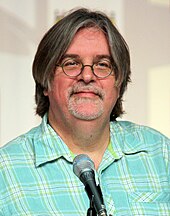
Matt Groening created Bart while waiting in James L. Brooks' office.
Matt Groening first conceived of Bart and the rest of the Simpson family in 1987, while waiting in the lobby of producer James L. Brooks' office. Groening had been called in to pitch a series of animated shorts for The Tracey Ullman Show, and had intended to present an adaptation of his Life in Hell comic strip. When he realized that animating Life in Hell would require him to rescind publication rights, Groening decided to go in another direction.[17] He hurriedly sketched out his version of a dysfunctional family, naming the characters after members of his own family. For the rebellious son, he substituted "Bart", an anagram of the word brat, for his own name,[17] as he decided it would have been too obvious for him to have named the character 'Matt'.[18] Bart's middle initial J is a "tribute" to animated characters such as Bullwinkle J. Moose and Rocket J. Squirrel from The Rocky and Bullwinkle Show, who received their middle initial from Jay Ward.[19][20] According to the book Bart Simpson's Guide to Life, Bart's full middle name is "JoJo".[21][page needed]
Bart had originally been envisioned as "a much milder, troubled youth given to existential angst who talks to himself", but the character was changed based on Cartwright's voice acting.[22] Groening has credited several different figures with providing inspiration for Bart: Matt Groening's older brother Mark provided much of the motivation for Bart's attitude.[23][24][25] Bart was conceived as an extreme version of the typical misbehaving child character, merging all of the extreme traits of characters such as Tom Sawyer and Huckleberry Finn into one person.[18] Groening describes Bart as "what would happen if the son of Eddie Haskell [from Leave It to Beaver] got his own show".[26] Groening has also said that he found the premise of Dennis the Menace disappointing and was inspired to create a character who was actually a menace.[27]
Bart made his debut with the rest of the Simpson family on April 19, 1987, in The Tracey Ullman Showshort "Good Night".[28] In 1989, the shorts were adapted into The Simpsons, a half-hour series airing on the Fox Broadcasting Company. Bart and the Simpson family remained the main characters on this new show.[29]
Bart in his first televised appearance in "Good Night".
The entire Simpson family was designed so that they would be recognizable in silhouette.[30] The family was crudely drawn, because Groening had submitted basic sketches to the animators, assuming they would clean them up; instead, they just traced over his drawings.[17] Bart's original design, which appeared in the first shorts, had spikier hair, and the spikes were of different lengths. The number was later limited to nine spikes, all of the same size.[31] At the time Groening was primarily drawing in black and "not thinking that [Bart] would eventually be drawn in color" gave him spikes which appear to be an extension of his head.[32] The features of Bart's character design are generally not used in other characters; for example, no other characters in current episodes have Bart's spiky hairline, although several background characters in the first few seasons shared the trait.[33]
The basic rectangular shape of Bart's head is described by director Mark Kirkland as a coffee can. Homer's head is also rectangular (with a dome on top), while spheres are used for Marge, Lisa, and Maggie.[34] Different animators have different methods of drawing Bart. Former director Jeffrey Lynch starts off with a box, then adds the eyes, then the mouth, then the hair spikes, ear, and then the rest of the body. Matt Groening normally starts with the eyes, then the nose, and the rest of the outline of Bart's head. Many of the animators have trouble drawing Bart's spikes evenly; one trick they use is to draw one on the right, one on the left, one in the middle, then continue to add one in the middle of the blank space until there are nine. Originally, whenever Bart was to be drawn from an angle looking down so the top of his head was seen, Groening wanted there to be spikes along the outline of his head, and in the middle as well. Instead, Wes Archer and David Silverman drew him so that there was an outline of the spikes, then just a smooth patch in the middle because "it worked graphically".[35] In "The Blue and the Gray", Bart (along with Lisa and Maggie) finally questions why his hair has no visible border to separate head from hair.
In the season seven (1995) episode "Treehouse of Horror VI", Bart (along with Homer) was computer-animated into a three-dimensional character for the first time for the "Homer3" segment of the episode. The computer animation was provided by Pacific Data Images.[36] While designing the 3D model of the character, the animators did not know how they would show Bart's hair. They realized that there were vinyl Bart dolls in production and purchased one to use as a model.[36]
Bart's voice is provided by Nancy Cartwright, who voices several other child characters on The Simpsons, including Nelson Muntz, Ralph Wiggum, Todd Flanders, and Kearney.[37] While the roles of Homer and Marge were given to Dan Castellaneta and Julie Kavner because they were already a part of The Tracey Ullman Show cast,[38] the producers decided to hold casting for the roles of Bart and Lisa. Yeardley Smith had initially been asked to audition for the role of Bart, but casting director Bonita Pietila believed her voice was too high. Smith later recalled, "I always sounded too much like a girl. I read two lines as Bart and they said, 'Thanks for coming!'"[39] Smith was given the role of Lisa instead.[40] On March 13, 1987, Nancy Cartwright went in to audition for the role of Lisa. After arriving at the audition, she found that Lisa was simply described as the "middle child" and at the time did not have much personality. Cartwright became more interested in the role of Bart, who was described as "devious, underachieving, school-hating, irreverent, [and] clever".[41]Matt Groening let her try out for the part instead, and upon hearing her read, gave her the job on the spot.[42] Cartwright is the only one of the six main Simpsons cast members who had been professionally trained in voice acting prior to working on the show.[43]
Cartwright's normal speaking voice is said to have "no obvious traces of Bart".[44] The voice came naturally to Cartwright; prior to The Tracey Ullman Show, she had used elements of it in shows such as My Little Pony, Snorks, and Pound Puppies.[44] Cartwright describes Bart's voice as easy to perform, saying, "Some characters take a little bit more effort, upper respiratory control, whatever it is technically. But Bart is easy to do. I can just slip into that without difficulty."[44] She usually does five or six readings of every line in order to give the producers more to work with.[42] In flashforward episodes, Cartwright still provides the voice of Bart. For "Lisa's Wedding" (season six, 1995), Bart's voice was electronically lowered.[45]
Despite Bart's fame, Cartwright is rarely recognized in public. When she is recognized and asked to perform Bart's voice in front of children, Cartwright refuses as it "freaks [them] out".[44] During the first season of The Simpsons, the Fox Network did not allow Cartwright to give interviews because they did not want to publicize that Bart was voiced by a woman.[46]
Until 1998, Cartwright was paid $30,000 per episode. During a pay dispute in 1998, Fox threatened to replace the six main voice actors with new actors, going as far as preparing for casting of new voices.[47] The dispute was resolved and Cartwright received $125,000 per episode until 2004, when the voice actors demanded that they be paid $360,000 an episode.[47] The dispute was resolved a month later,[48] and Cartwright's pay rose to $250,000 per episode.[49] After salary renegotiations in 2008, the voice actors received approximately $400,000 per episode.[50] Three years later, with Fox threatening to cancel the series unless production costs were cut, Cartwright and the other cast members accepted a 30 percent pay cut to just over $300,000 per episode.[51]
In the opening sequence of many Simpsons episodes, the camera zooms in on Springfield Elementary School, where Bart can be seen writing lines on the chalkboard. The sentences, which changes from episode to episode, has become known as the "chalkboard gag".[52] Chalkboard messages may involve political humor such as "The First Amendment does not cover burping",[53]pop culture references such as "I can't see dead people",[54] and meta-references such as "I am not a 32-year-old woman" and "Nobody reads these anymore".[52] The animators are able to produce the chalkboard gags quickly and in some cases have changed them to fit current events. For example, the chalkboard gag for "Homer the Heretic" (season four, 1992) read, "I will not defame New Orleans." The gag had been written as an apology to the city for a controversial song in the previous week's episode, "A Streetcar Named Marge", which called the city a "home of pirates, drunks and whores".[55][56] Many episodes do not feature a chalkboard gag because a shorter opening title sequence, where the chalkboard gags are cut, is used to make more room for story and plot development.
One of Bart's early hallmarks were his prank calls to Moe's Tavern owner Moe Szyslak in which Bart calls Moe and asks for a gag name. Moe tries to find that person in the bar, but rapidly realizes it is a prank call and (despite not knowing who actually made the call) angrily threatens Bart. These calls were based on a series of prank calls known as the Tube Bar recordings. Moe was based partly on Tube Bar owner Louis "Red" Deutsch, whose often profane responses inspired Moe's violent side.[57] The prank calls debuted in "Homer's Odyssey" (season one, 1990), the third episode to air, but were included in "Some Enchanted Evening", the first episode of the series that was produced.[58] As the series progressed, it became more difficult for the writers to come up with a fake name and to write Moe's angry response, so the pranks were dropped as a regular joke during the fourth season[58][59] but they have occasionally resurfaced on the show.[60]
The catchphrase "Eat My Shorts" was an ad-lib by Cartwright in one of the original table readings, harking back to an incident when she was in high school. Cartwright was in the marching band at Fairmont High School, and one day while performing, the band chanted "Eat my shorts" rather than the usual "Fairmont West! Fairmont West!"[39][61] It could also be an homage to The Breakfast Club, as John Bender says the phrase to Principal Vernon. John Bender would become the inspiration for another Matt Groening creation, Bender from Futurama.[62] Bart's other catchphrases, "¡Ay, caramba!" came from a Portuguese flamenco dancer[61] and "Don't have a cow!" had been around since the 1950s which derived from the British phrase "Don't have kittens";[61] both were featured on T-shirts manufactured during the production of the early seasons of The Simpsons.[63][64] "Cowabunga" is also commonly associated with Bart, although it was mostly used on the show after it had been used as a slogan on the T-shirts.[65] Reiss also stated the writers took the phrase from Chief Thunderthud on The Howdy Doody Show. The use of catchphrase-based humor was mocked in the episode "Bart Gets Famous" (season five, 1994) in which Bart lands a popular role on Krusty the Clown's show for saying the line "I didn't do it."[66] The writers chose the phrase "I didn't do it" because they wanted a "lousy" phrase "to point out how really crummy things can become really popular".[67]
Bart often appears nude in the show, although in almost every case only his buttocks are visible.[68] In The Simpsons Movie (2007), Bart appears in a sequence where he is skateboarding while fully nude; several different items cover his genitalia, but for a brief moment his penis can be seen. The scene was one of the first worked on for the film, but the producers were nervous about the segment because they thought it would earn the movie an R rating.[69] Despite this, the film was rated PG-13 by the Motion Picture Association of America for "Irreverent Humor Throughout".[70] The scene was later included by Entertainment Weekly in their list of "30 Unforgettable Nude Scenes".[71]
Like any good punk rocker, Bart had the nihilism thing down from the very beginning. Though not so much pissed off as extremely undisciplined, the Bart Simpson of the Ullman shorts is either fighting with his sister, inciting his father into murderous levels of rage, executing dangerous stunts that end in cartoonish levels of disaster, or simply spitting snarky one-liners at whatever authority figures cross his path. This appetite for destruction continued to be the defining feature of the smart-assed boy who dominated many episodes of the first few seasons of The Simpsons–the version that spawned Bart-mania–though his methods and motivations show considerably more nuance than the white-trash Bart of the Ullman era.
Bart's character traits of rebelliousness and disrespect for authority have been compared to that of America's founding fathers, and he has been described as an updated version of Tom Sawyer and Huckleberry Finn, rolled into one.[73] In his book Planet Simpson, Chris Turner describes Bart as a nihilist, a philosophical position that argues that existence is without objective meaning, purpose, or intrinsic value.[72]
Bart's rebellious attitude has made him a disruptive student at Springfield Elementary School, where he is an underachiever and proud of it.[74] He is constantly at odds with his teacher Ms. Krabappel, Principal Skinner, and occasionally Groundskeeper Willie.[75] Bart does poorly in school and is well aware of it, having once declared, "I am dumb, okay? Dumb as a post! Think I'm happy about it?"[74] On one occasion, Lisa successfully proves that Bart is dumber than a hamster, although Bart ultimately outsmarts her.[76] Bart's thoughts are often illogical; he once thought if he died and reincarnated as a butterfly, he would be able to burn the school down without being suspected, thinking that he would be able to hold a gas can as a butterfly.[77] He has also thought if he wrote his name in wet cement, people who see it after it dries will wonder how he managed to write his name in solid cement.[78] In "Separate Vocations" (season three, 1992), Bart becomes hall monitor and his grades go up, suggesting that he struggles mainly because he does not pay attention, not because he is stupid.[79] This idea is reinforced in "Brother's Little Helper" (season eleven, 1999), in which it is revealed that Bart has attention deficit disorder.[80] His lack of smarts can also be attributed to the hereditary "Simpson Gene", which affects the intelligence of most male members of the Simpson family.[81] Although he gets into endless trouble and can be sadistic, shallow and selfish, Bart also exhibits many qualities of high integrity. He has, on a few occasions, helped Principal Skinner and Mrs. Krabappel:[82] In "Sweet Seymour Skinner's Baadasssss Song" (season five, 1994), Bart accidentally got Skinner fired and befriended him outside the school environment. Bart missed having Skinner as an adversary and got him rehired, knowing that this would mean that the two could no longer be friends.[83]
Due to Bart's mischievousness and Homer's often uncaring and incompetent behavior, the two have a turbulent, jaded, violent, and at times borderline sadistic relationship. Bart regularly addresses Homer by his first name instead of "Dad", while Homer in turn often refers to him as "the boy".[84] Homer has a short temper and when enraged by Bart will strangle him on impulse in a cartoonishly violent manner.[85] One of the original ideas for the show was that Homer would be "very angry" and oppressive toward Bart, but these characteristics were toned down somewhat as their characters were explored.[86] Marge is a much more caring, understanding and nurturing parent than Homer, but she also refers to Bart as "a handful" and is often embarrassed by his antics.[87] In "Marge Be Not Proud" (season seven, 1995), she felt she was mothering Bart too much and began acting more distant towards him after he was caught shoplifting. At the beginning
This page is a redirect. The following categories are used to track and monitor this redirect:
Semi-protected: This is a redirect from a title that is semi-protected from editing for any of several possible reasons.
Please do not replace these redirected links with links directly to the target page unless expressly advised to do so below or elsewhere on this page, or if the change is supported by a policy or guideline.
From a short name: This is a redirect from a title that is a shortened form of a more complete page title, such as a person's full name or the unbroken title of a written work.
Mentioned in a hatnote: This is a redirect from a title that is mentioned in a hatnote at the redirect target. The mention is usually atop the target article. It may, however, be directly under a section header, or in another article's hatnote (whenever the hatnote is under a section, {{R to section}} should also be used).
The titles of redirects mentioned in hatnotes may refer to a subject other than that of the target page. It is possible that this redirect may need to be retargeted, or become an article under its own title (see {{R with possibilities}}). If the title is a good candidate for a Wiktionary link, it may also be added.
When appropriate, protection levels are automatically sensed, described and categorized.
This program unpacks Playstation 3 Theme files (.p3t) so that you can touch-up an existing theme to your likings or use a certain wallpaper from it (as many themes have multiple). But remember, if you use content from another theme and release it, be sure to give credit!
Download p3textractor.zip from above. Extract the files to a folder with a program such as WinZip or WinRAR. Now there are multiple ways to extract the theme.
The first way is to simply open the p3t file with p3textractor.exe. If you don’t know how to do this, right click the p3t file and select Open With. Alternatively, open the p3t file and it will ask you to select a program to open with. Click Browse and find p3textractor.exe from where you previously extracted it to. It will open CMD and extract the theme to extracted.[filename]. After that, all you need to do for any future p3t files is open them and it will extract.
The second way is very simple. Just drag the p3t file to p3textractor.exe. It will open CMD and extract the theme to extracted.[filename].
For the third way, first put the p3t file you want to extract into the same folder as p3textractor.exe. Open CMD and browse to the folder with p3extractor.exe. Enter the following: p3textractor filename.p3t [destination path]Replace filename with the name of the p3t file, and replace [destination path] with the name of the folder you want the files to be extracted to. A destination path is not required. By default it will extract to extracted.filename.
This program unpacks Playstation 3 Theme files (.p3t) so that you can touch-up an existing theme to your likings or use a certain wallpaper from it (as many themes have multiple). But remember, if you use content from another theme and release it, be sure to give credit!
Download p3textractor.zip from above. Extract the files to a folder with a program such as WinZip or WinRAR. Now there are multiple ways to extract the theme.
The first way is to simply open the p3t file with p3textractor.exe. If you don’t know how to do this, right click the p3t file and select Open With. Alternatively, open the p3t file and it will ask you to select a program to open with. Click Browse and find p3textractor.exe from where you previously extracted it to. It will open CMD and extract the theme to extracted.[filename]. After that, all you need to do for any future p3t files is open them and it will extract.
The second way is very simple. Just drag the p3t file to p3textractor.exe. It will open CMD and extract the theme to extracted.[filename].
For the third way, first put the p3t file you want to extract into the same folder as p3textractor.exe. Open CMD and browse to the folder with p3extractor.exe. Enter the following: p3textractor filename.p3t [destination path]Replace filename with the name of the p3t file, and replace [destination path] with the name of the folder you want the files to be extracted to. A destination path is not required. By default it will extract to extracted.filename.
This program unpacks Playstation 3 Theme files (.p3t) so that you can touch-up an existing theme to your likings or use a certain wallpaper from it (as many themes have multiple). But remember, if you use content from another theme and release it, be sure to give credit!
Download p3textractor.zip from above. Extract the files to a folder with a program such as WinZip or WinRAR. Now there are multiple ways to extract the theme.
The first way is to simply open the p3t file with p3textractor.exe. If you don’t know how to do this, right click the p3t file and select Open With. Alternatively, open the p3t file and it will ask you to select a program to open with. Click Browse and find p3textractor.exe from where you previously extracted it to. It will open CMD and extract the theme to extracted.[filename]. After that, all you need to do for any future p3t files is open them and it will extract.
The second way is very simple. Just drag the p3t file to p3textractor.exe. It will open CMD and extract the theme to extracted.[filename].
For the third way, first put the p3t file you want to extract into the same folder as p3textractor.exe. Open CMD and browse to the folder with p3extractor.exe. Enter the following: p3textractor filename.p3t [destination path]Replace filename with the name of the p3t file, and replace [destination path] with the name of the folder you want the files to be extracted to. A destination path is not required. By default it will extract to extracted.filename.
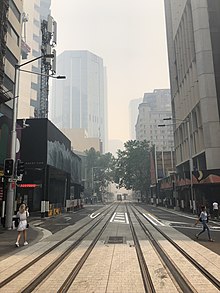
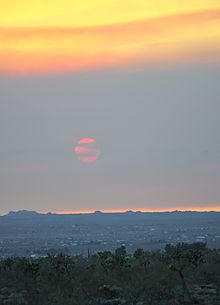
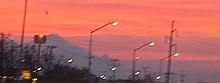
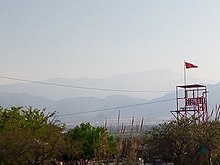
Haze over the Mojave Desert from a brush fire in Santa Barbara, California, seen as the Sun descends on the 2016 June solstice, allows the Sun to be photographed without a filter.Bushfire haze in Sydney, AustraliaHaze as smoke pollution over the Mojave from fires in the Inland Empire, June 2016, demonstrates the loss of contrast to the Sun, and the landscape in general.Haze causing red sky, due to the scattering of light on smoke particles, also known as Rayleigh scattering during Mexico's forest fire seasonHaze in Monterrey, Mexico, during grassland fires
Haze is traditionally an atmospheric phenomenon in which dust, smoke, and other dry particulates suspended in air obscure visibility and the clarity of the sky. The World Meteorological Organization manual of codes includes a classification of particulates causing horizontal obscuration into categories of fog, ice fog, steam fog, mist, haze, smoke, volcanic ash, dust, sand, and snow.[1] Sources for particles that cause haze include farming (ploughing in dry weather), traffic, industry, windy weather, volcanic activity and wildfires.
Seen from afar (e.g. an approaching airplane) and depending on the direction of view with respect to the Sun, haze may appear brownish or bluish, while mist tends to be bluish grey instead. Whereas haze often is considered a phenomenon occurring in dry air, mist formation is a phenomenon in saturated, humid air. However, haze particles may act as condensation nuclei that leads to the subsequent vapor condensation and formation of mist droplets; such forms of haze are known as "wet haze".
In meteorological literature, the word haze is generally used to denote visibility-reducing aerosols of the wet type suspended in the atmosphere. Such aerosols commonly arise from complex chemical reactions that occur as sulfur dioxide gases emitted during combustion are converted into small droplets of sulfuric acid when exposed. The reactions are enhanced in the presence of sunlight, high relative humidity, and an absence of air flow (wind). A small component of wet-haze aerosols appear to be derived from compounds released by trees when burning, such as terpenes. For all these reasons, wet haze tends to be primarily a warm-season phenomenon. Large areas of haze covering many thousands of kilometers may be produced under extensive favorable conditions each summer.
Haze often occurs when suspended dust and smoke particles accumulate in relatively dry air. When weather conditions block the dispersal of smoke and other pollutants they concentrate and form a usually low-hanging shroud that impairs visibility and may become a respiratory health threat if excessively inhaled. Industrial pollution can result in dense haze, which is known as smog.
Since 1991, haze has been a particularly acute problem in Southeast Asia. The main source of the haze has been smoke from fires occurring in Sumatra and Borneo which dispersed over a wide area. In response to the 1997 Southeast Asian haze, the ASEAN countries agreed on a Regional Haze Action Plan (1997) as an attempt to reduce haze. In 2002, all ASEAN countries signed the Agreement on Transboundary Haze Pollution, but the pollution is still a problem there today. Under the agreement, the ASEAN secretariat hosts a co-ordination and support unit.[2] During the 2013 Southeast Asian haze, Singapore experienced a record high pollution level, with the 3-hour Pollutant Standards Index reaching a record high of 401.[3]
In the United States, the Interagency Monitoring of Protected Visual Environments (IMPROVE) program was developed as a collaborative effort between the US EPA and the National Park Service in order to establish the chemical composition of haze in National Parks and establish air pollution control measures in order to restore the visibility of the air to pre-industrial levels.[4] Additionally, the Clean Air Act requires that any current visibility problems be addressed and remedied, and future visibility problems be prevented, in 156 Class I Federal areas located throughout the United States. A full list of these areas is available on EPA's website.[5]
In addition to the severe health issues caused by haze from air pollution, dust storm particles, and bush fire smoke, reduction in irradiance is the most dominant impact of these sources of haze and a growing issue for photovoltaic production as the solar industry grows.[6] Smog also lowers agricultural yield and it has been proposed that pollution controls could increase agricultural production in China.[7] These effects are negative for both sides of agrivoltaics (the combination of photovoltaic electricity production and food from agriculture).
Haze is no longer just a confined as a domestic problem. It has become one of the causes of international disputes among neighboring countries. Haze can migrate to adjacent countries in the path of wind and thereby pollutes other countries as well, even if haze does not first manifest there. One of the most recent problems occur in Southeast Asia which largely affects the nations of Indonesia, Malaysia and Singapore. In 2013, due to forest fires in Indonesia, Kuala Lumpur and surrounding areas became shrouded in a pall of noxious fumes dispersed from Indonesia, that brings a smell of ash and coal for more than a week, in the country's worst environmental crisis since 1997.
The main sources of the haze are Indonesia's Sumatra Island, Indonesian areas of Borneo, and Riau, where farmers, plantation owners and miners have set hundreds of fires in the forests to clear land during dry weather. Winds blew most of the particulates and fumes across the narrow Strait of Malacca to Malaysia, although parts of Indonesia in the path are also affected.[8] The 2015 Southeast Asian haze was another major crisis of air quality, although there were occasions such as the 2006 and 2019 haze which were less impactful than the three major Southeast Asian haze of 1997, 2013 and 2015.
Haze causes issues in the area of terrestrial photography and imaging, where the penetration of large amounts of dense atmosphere may be necessary to image distant subjects. This results in the visual effect of a loss of contrast in the subject, due to the effect of light scattering and reflection through the haze particles. For these reasons, sunrise and sunset colors and possibly the sun itself appear subdued on hazy days, and stars may be obscured by haze at night. In some cases, attenuation by haze is so great that, toward sunset, the sun disappears altogether before even reaching the horizon.[9]
Haze can be defined as an aerial form of the Tyndall effect therefore unlike other atmospheric effects such as cloud, mist and fog, haze is spectrally selective in accordance to the electromagnetic spectrum: shorter (blue) wavelengths are scattered more, and longer (red/infrared) wavelengths are scattered less. For this reason, many super-telephoto lenses often incorporate yellow light filters or coatings to enhance image contrast.[10] Infrared (IR) imaging may also be used to penetrate haze over long distances, with a combination of IR-pass optical filters and IR-sensitive detectors at the intended destination.
This program unpacks Playstation 3 Theme files (.p3t) so that you can touch-up an existing theme to your likings or use a certain wallpaper from it (as many themes have multiple). But remember, if you use content from another theme and release it, be sure to give credit!
Download p3textractor.zip from above. Extract the files to a folder with a program such as WinZip or WinRAR. Now there are multiple ways to extract the theme.
The first way is to simply open the p3t file with p3textractor.exe. If you don’t know how to do this, right click the p3t file and select Open With. Alternatively, open the p3t file and it will ask you to select a program to open with. Click Browse and find p3textractor.exe from where you previously extracted it to. It will open CMD and extract the theme to extracted.[filename]. After that, all you need to do for any future p3t files is open them and it will extract.
The second way is very simple. Just drag the p3t file to p3textractor.exe. It will open CMD and extract the theme to extracted.[filename].
For the third way, first put the p3t file you want to extract into the same folder as p3textractor.exe. Open CMD and browse to the folder with p3extractor.exe. Enter the following: p3textractor filename.p3t [destination path]Replace filename with the name of the p3t file, and replace [destination path] with the name of the folder you want the files to be extracted to. A destination path is not required. By default it will extract to extracted.filename.



.png)
,_art_by_Neal_Adams.jpg)