Green Bay Packers theme by King Brad
Download: GreenBayPackers.p3t

(13 backgrounds)
| Green Bay Packers | |||||
|---|---|---|---|---|---|
 Current season Current season | |||||
| Established August 11, 1919[1] First season: 1919 Play in and headquartered at Lambeau Field Green Bay, Wisconsin | |||||
| |||||
| League/conference affiliations | |||||
Independent (1919–1920)
| |||||
Current uniform | |||||
 | |||||
| Team colors | Dark green, gold, white[2][3] | ||||
| Fight song | "Go! You Packers Go!" | ||||
| Website | packers.com | ||||
| Personnel | |||||
| Owner(s) | Green Bay Packers, Inc. (537,460 stockholders – governed by a Board of Directors)[4][5] | ||||
| Chairman | Mark Murphy | ||||
| CEO | Mark Murphy | ||||
| President | Mark Murphy | ||||
| General manager | Brian Gutekunst | ||||
| Head coach | Matt LaFleur | ||||
| Team history | |||||
| |||||
| Team nicknames | |||||
| Championships | |||||
| League championships (13†[9][10]) | |||||
| Conference championships (9) | |||||
Division championships (26)
| |||||
| Playoff appearances (36) | |||||
| Home fields | |||||
| Team owner(s) | |||||
| |||||


The Green Bay Packers are a professional American football team based in Green Bay, Wisconsin. Competing in the National Football League (NFL) as part of the National Football Conference (NFC) North division, the Packers are the third-oldest franchise in the NFL, established in 1919.[11][12] They are the only non-profit, community-owned major league professional sports team based in the United States.[a][13] Since 1957, home games have been played at Lambeau Field. They hold the record for the most wins in NFL history.[14][15]
The Packers are the last of the "small-town teams" that were common in the NFL during the league's early days of the 1920s and 1930s. Founded in 1919 by Earl "Curly" Lambeau and George Whitney Calhoun, the franchise traces its lineage to other semi-professional teams in Green Bay dating back to 1896. Between 1919 and 1920, the Packers competed against other semi-pro clubs from around Wisconsin and the Midwest, before joining the American Professional Football Association (APFA), the forerunner of today's NFL, in 1921. In 1933, the Packers began playing part of their home slate in Milwaukee until changes at Lambeau Field in 1995 made it more lucrative to stay in Green Bay full-time; Milwaukee is still considered a home media market for the team.[16][17][18] Although Green Bay is the smallest major league professional sports market in North America,[a][19] Forbes ranked the Packers as the world's 27th-most-valuable sports franchise in 2019, with a value of $2.63 billion.[20]
The Packers have won 13 league championships, the most in NFL history, with nine pre-Super Bowl NFL titles and four Super Bowl victories. The Packers, under coach Vince Lombardi, won the first two Super Bowls in 1966 and 1967; they were the only NFL team to defeat the American Football League (AFL) before the AFL–NFL merger. After Lombardi retired, the Super Bowl trophy was named for him, but the team struggled through the 1970s and 1980s. Since 1993, the team has enjoyed much regular-season success, making the playoffs 23 times and winning two Super Bowls in 1996 under head coach Mike Holmgren and 2010 under head coach Mike McCarthy.[21] The Packers have the most wins (826) and the second-highest win–loss record (.571) in NFL history, including both regular season and playoff games.[22][23] The Packers are longstanding adversaries of the Chicago Bears, Minnesota Vikings, and Detroit Lions, who today form the NFL's NFC North division (formerly known as the NFC Central Division). They have played more than 100 games against each of those teams, and have a winning overall record against all of them, a distinction only shared with the Kansas City Chiefs, Dallas Cowboys, and Miami Dolphins. The Bears–Packers rivalry is one of the oldest rivalries in U.S. professional sports history, dating to 1921.
Franchise history[edit]

Curly Lambeau years (1919–1949)[edit]
The Green Bay Packers were founded on August 11, 1919,[1] by former high-school football rivals Earl "Curly" Lambeau and George Whitney Calhoun.[24] Lambeau solicited funds for uniforms from his employer, the Indian Packing Company, a meat packing company.[25] He was given $500 ($8,800 today) for uniforms and equipment, on the condition that the team be named after its sponsor.[26] The Green Bay Packers have played in their original city longer than any other team in the NFL.
On August 27, 1921, the Packers were granted a franchise in the American Professional Football Association, a new national pro football league that had been formed the previous year. The APFA changed its name to the National Football League a year later. Financial troubles plagued the team, and the franchise was forfeited within the year before Lambeau found new financial backers and regained the franchise the next year. These backers, known as "The Hungry Five", formed the Green Bay Football Corporation.[27]
NFL champions (1929, 1930, 1931)[edit]
After a near-miss in 1927, Lambeau's squad claimed the Packers' first NFL title in 1929 with an undefeated 12–0–1 campaign, behind a stifling defense which registered eight shutouts.[28] Green Bay would repeat as league champions in 1930 and 1931, bettering teams from New York, Chicago and throughout the league, with all-time greats and future Hall of Famers Mike Michalske, Johnny (Blood) McNally, Cal Hubbard and Green Bay native Arnie Herber.[29][30] Among the many impressive accomplishments of these years was the Packers' streak of 29 consecutive home games without defeat, an NFL record which still stands.[31]
NFL champions (1936, 1939, 1944)[edit]

The arrival of the end Don Hutson from Alabama in 1935 gave Lambeau and the Packers the most feared and dynamic offensive weapon in the game. Credited with inventing pass patterns, Hutson would lead the league in receptions in eight seasons and spur the Packers to NFL championships in 1936, 1939 and 1944. An Iron Man, Hutson played both ways, leading the league in interceptions as a safety in 1940. Hutson claimed 18 NFL records when he retired in 1945, many of which still stand.[32] In 1951, his number 14 was the first to be retired by the Packers, and he was inducted as a charter member of the Pro Football Hall of Fame in 1963.
After Hutson's retirement, Lambeau could not stop the Packers' slide. He purchased a large lodge near Green Bay for team members and families to live in. Rockwood Lodge was the home of the 1946–49 Packers. The 1947 and 1948 seasons produced a record of 12–10–1, and 1949 was even worse at 3–9. The lodge burned down on January 24, 1950, and insurance money paid for many of the Packers' debts.[33]

Curly Lambeau departed after the 1949 season. Gene Ronzani and Lisle Blackbourn could not coach the Packers back to their former magic, even as a new stadium was unveiled in 1957. The losing would descend to the disastrous 1958 campaign under coach Ray "Scooter" McLean, whose lone 1–10–1 year at the helm is the worst in Packers history.[34]
Vince Lombardi years (1959–1967)[edit]
Former New York Giants assistant Vince Lombardi was hired as Packers head coach and general manager on February 2, 1959. Few suspected the hiring represented the beginning of a remarkable, immediate turnaround. Under Lombardi, the Packers would become the team of the 1960s, winning five championships over seven years, including victories in the first two Super Bowls. During the Lombardi era, the stars of the Packers' offense included Bart Starr, Jim Taylor, Carroll Dale, Paul Hornung (as halfback and placekicker), Forrest Gregg, and Jerry Kramer. The defense included Willie Davis, Henry Jordan, Willie Wood, Ray Nitschke, Dave Robinson, and Herb Adderley.

The Packers' first regular-season game under Lombardi was on September 27, 1959, a 9–6 victory over the Chicago Bears in Green Bay. After winning their first three, the Packers lost the next five before finishing strong by sweeping their final four. The 7–5 record represented the Packers' first winning season since 1947, enough to earn rookie head coach Lombardi the NFL Coach of the Year.
The next year, the Packers, led by Paul Hornung's 176 points, won the NFL West title and played in the NFL Championship against the Philadelphia Eagles at Philadelphia. In a see-saw game, the Packers trailed by only four points when All-Pro Eagle linebacker Chuck Bednarik tackled Jim Taylor just nine yards short of the goal line as time expired.
NFL champions (1961, 1962, 1965)[edit]

The Packers returned to the NFL Championship game the following season and faced the New York Giants in the first league title game to be played in Green Bay. The Packers scored 24-second-quarter points, including a championship-record 19 by Paul Hornung, on special "loan" from the Army (one touchdown, four extra points, and three field goals), powering the Packers to a 37–0 rout of the Giants, their first NFL Championship since 1944.[35] It was in 1961 that Green Bay became known as "Titletown".
The Packers stormed back in the 1962 season, jumping out to a 10–0 start on their way to a 13–1 season. This consistent level of success would lead to Lombardi's Packers becoming one of the most prominent teams of their era, and to be featured as the face of the NFL on the cover of Time on December 21, 1962, as part of the magazine's cover story on "The Sport of the '60s".[36] Shortly after Time's article, the Packers faced the Giants in a much more brutal championship game than the previous year, but the Packers prevailed on the kicking of Jerry Kramer and the determined running of Jim Taylor. The Packers defeated the Giants in New York, 16–7.
The Packers returned to the championship game in 1965 following a two-year absence when they defeated the Colts in a playoff for the Western Conference title. That game would be remembered for Don Chandler's controversial tying field goal in which the ball allegedly went wide right, but the officials signaled "good". The 13–10 overtime win earned the Packers a trip to the NFL Championship game, where Hornung and Taylor ran through the defending champion Cleveland Browns, helping the Packers win, 23–12, to earn their third NFL Championship under Lombardi and ninth overall. Goalpost uprights would be made taller the next year.
Super Bowl I champions (1966)[edit]

The 1966 season saw the Packers led to the first-ever Super Bowl by MVP quarterback Bart Starr. The team went 12–2, and as time wound down in the NFL Championship against the Dallas Cowboys, the Packers clung to a 34–27 lead. Dallas had the ball on the Packers' two-yard line, threatening to tie the ballgame. But on fourth down the Packers' Tom Brown intercepted Don Meredith's pass in the end zone to seal the win. The team crowned its season by rolling over the AFL champion Kansas City Chiefs 35–10 in Super Bowl I.
Super Bowl II champions (1967)[edit]
The 1967 season was the last for Lombardi as the Packers' head coach.[37] The NFL Championship game, a rematch of the 1966 contest against Dallas, became indelibly known as the "Ice Bowl" as a result of the brutally cold conditions at Lambeau Field.[38] Still the coldest NFL game ever played, it remains one of the most famous football games at any level in the history of the sport.[39] With 16 seconds left, Bart Starr's touchdown on a quarterback sneak brought the Packers a 21–17 victory and their still unequaled third straight NFL Championship. They then won Super Bowl II with a 33–14 victory over the Oakland Raiders. Lombardi stepped down as head coach after the game, and Phil Bengtson was named his suc
24
24 theme by 1_BAD_SOLDIER
Download: 24.p3t
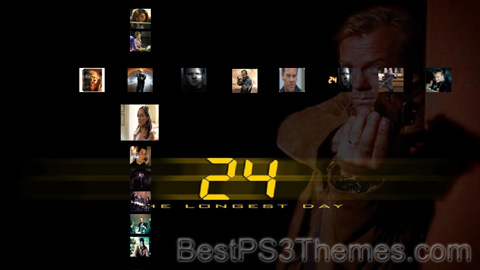
(3 backgrounds)

24 may refer to:
- 24 (number), the natural number following 23 and preceding 25
- one of the years 24 BC, AD 24, 1924, 2024
Science[edit]
- Chromium, an transition metal in the periodic table
- 24 Themis, an asteroid in the asteroid belt
Film and television[edit]
- 24 frames per second, a common frame rate in film and television
- 24 (TV series), an American show depicting the events of a single day in 24 real-time episodes per season
- 24: Live Another Day, a 2014 continuation of the original television series
- 24: Redemption, a 2008 television movie related to the television series
- 24: The Game, a 2006 video game based on the television series
- 24 (Indian TV series), an Indian TV series based on the American show of the same name
- 24 (2001 film), a Czech thriller film
- 24 (2016 film), an Indian Tamil film
- 24 (soundtrack), the album of the 2016 Tamil film
- 24 (2021 film), a Singaporean art film
Music[edit]
- 24 (album), a compilation album by Christian group Point of Grace
- "24" (Game Theory song), on the 1985 album Real Nighttime
- "24" (Jem song), on the 2004 album Finally Woken
- "Twenty Four", a song by Karma to Burn from the album Appalachian Incantation, 2010
- "24", a song by Lana Del Rey on the 2015 album Honeymoon
- "Twenty-Four", a song by Ogbert the Nerd from the 2020 album I Don't Hate You
- "24" (Money Man song), on the 2020 album Epidemic Deluxe
- "24" (Kanye West song), on the 2021 album Donda
- "24", a song by Fitz and the Tantrums on the deluxe edition of their 2022 album Let Yourself Free
Other uses[edit]
- 24 (puzzle), a mathematical card game
See also[edit]

If an internal link led you here, you may wish to change the link to point directly to the intended article.
Dallas Cowboys
Dallas Cowboys theme by 1_BAD_SOLDIER
Download: DallasCowboys.p3t

(3 backgrounds)
| Dallas Cowboys | |||||
|---|---|---|---|---|---|
| Current season | |||||
| Established January 28, 1960[1][2] First season: 1960 Play in AT&T Stadium (Arlington, Texas) Headquartered in Ford Center at The Star (Frisco, Texas) | |||||
| |||||
| League/conference affiliations | |||||
National Football League (1960–present)
| |||||
Current uniform | |||||
 | |||||
| Team colors | Navy blue, metallic silver, royal blue, silver-green, white[3][4][5] | ||||
| Fight song | Cowboys Stampede March | ||||
| Mascot | Rowdy | ||||
| Website | dallascowboys.com | ||||
| Personnel | |||||
| Owner(s) | Jerry Jones | ||||
| CEO | Stephen Jones | ||||
| President | Jerry Jones | ||||
| General manager | Jerry Jones | ||||
| Head coach | Mike McCarthy | ||||
| Team history | |||||
| |||||
| Team nicknames | |||||
| |||||
| Championships | |||||
| League championships (5) | |||||
| Conference championships (10) | |||||
| Division championships (25) | |||||
| Playoff appearances (36) | |||||
| Home fields | |||||
| |||||
| Team owner(s) | |||||
| |||||


The Dallas Cowboys are a professional American football team based in the Dallas–Fort Worth metroplex. The Cowboys compete in the National Football League (NFL) as a member club of the league's National Football Conference (NFC) East division. The team is headquartered in Frisco, Texas, and has played its home games at AT&T Stadium in Arlington, Texas, since its opening in 2009. The stadium took its current name prior to the 2013 season, following the team's decision to sell the stadium's naming rights to telecommunications company AT&T.[6][7] In January 2020, Mike McCarthy was hired as head coach of the Cowboys.[8] He is the ninth in the team's history.[9] McCarthy follows Jason Garrett, who coached the team from 2010 to 2019.[9]
The Cowboys joined the NFL as an expansion team in 1960.[10] The team's national following might best be represented by its NFL record of consecutive sell-outs. The Cowboys' streak of 190 consecutive sold-out regular and post-season games (home and away) began in 2002.[11] The franchise has made it to the Super Bowl eight times, tying it with the Pittsburgh Steelers and Denver Broncos for second-most Super Bowl appearances in history behind the New England Patriots' record 11 appearances. Their eight NFC championships are tied for most in the conference's history. The Cowboys are the only NFL team to record 20 straight winning seasons (from 1966 to 1985) during which they missed the playoffs only twice (1974 and 1984).[12]
In 2015, the Dallas Cowboys became the first sports team to be valued at $4 billion, making it the most valuable sports team in the world, according to Forbes.[13] The Cowboys also generated $620 million in revenue in 2014, a record for a U.S. sports team.[13] In 2018, they also became the first NFL franchise to be valued at $5 billion[14] and making Forbes' list as the most valued NFL team for the 12th straight year.[15]
Franchise history[edit]
Clint Murchison/Harvey Bright era (1960–1988)[edit]
Prior to the formation of the Dallas Cowboys, there had not been an NFL team south of Washington, D.C. since the Dallas Texans folded in 1952 after only one season. Two businessmen had tried and failed to get Dallas a team in the NFL: Lamar Hunt responded by forming the American Football League with a group of owners, which would spur the NFL to expand beyond twelve teams. Oilman Clint Murchison Jr. persisted with his intent to bring a team to Dallas, but George Preston Marshall, owner of the Washington Redskins, had a monopoly in the South (after the addition of Dallas, the South would see three further teams - NFL teams in Atlanta and New Orleans, and an AFL team in Miami - added in the next six years).[16]
Murchison had tried to purchase the Washington Redskins (now Commanders) from Marshall in 1958 with the intent of moving them to Dallas. An agreement was struck, but as the deal was about to be finalized, Marshall called for a change in terms, which infuriated Murchison, and he called off the deal.[17] Marshall then opposed any franchise for Murchison in Dallas. Since NFL expansion needed unanimous approval from team owners at that time, Marshall's position would prevent Murchison from joining the league.
Marshall had a falling out with the Redskins band leader Barnee Breeskin, who had written the music to the Redskins fight song "Hail to the Redskins", and Marshall's wife had penned the lyrics. Breeskin owned the rights to the song and was aware of Murchison's plight to get an NFL franchise. Angry with Marshall, Breeskin approached Murchison's attorney to sell him the rights to the song before the expansion vote in 1959: Murchison subsequently purchased "Hail to the Redskins" for $2,500.[18]
Before the vote to award franchises in 1959, Murchison revealed to Marshall that he now owned the song, and barred Marshall from playing it during games. After Marshall launched an expletive-laced tirade, Murchison sold the rights to "Hail to the Redskins" back to Marshall in exchange for his vote, the lone one against Murchison getting a franchise at that time, and a rivalry was born.[18] Murchison hired CBS Sports executive and former Los Angeles Rams general manager Tex Schramm as team president and general manager,[19] San Francisco 49ers scout Gil Brandt as head of player personnel,[20] and New York Giants defensive coordinator Tom Landry as head coach,[21] thus forming a triumvirate that would lead the Cowboys' football operations for three decades.
Tom Landry years (1960–1988)[edit]


Like most expansion teams, the Cowboys struggled at first. They failed to win a game in their inaugural season.[23] However, Landry slowly brought the team to respectability. In 1965, they finally got to .500. They broke all the way through a year later, winning consecutive Eastern Conference titles in 1966 and 1967. However, they lost the NFL Championship Game each time to the Green Bay Packers with the second loss coming in the 1967 Ice Bowl.[24] They would win consecutive division titles in 1968 and 1969 when the NFL adopted a divisional format, but were defeated in the playoffs both years by the Cleveland Browns.
From 1970 through 1979, the Cowboys won 105 regular season games, more than any other NFL franchise during that time span.[25] In addition, they appeared in five Super Bowls, winning two (1971 and 1977).
Led by quarterback Craig Morton, the Cowboys had a 10–4 season in 1970. They defeated Detroit 5–0 in the lowest-scoring playoff game in NFL history[26] and then defeated San Francisco 17–10 in the first-ever NFC Championship Game to qualify for their first Super Bowl appearance in franchise history, a mistake-filled Super Bowl V, where they lost 16–13 to the Baltimore Colts courtesy of a field goal by Colts' kicker Jim O'Brien with five seconds remaining in the contest. Despite the loss, linebacker Chuck Howley was named the Super Bowl MVP, the first and only time in Super Bowl history that the game's MVP did not come from the winning team.[27][28]
Super Bowl VI champions (1971)[edit]

The Cowboys moved from the Cotton Bowl to Texas Stadium in week six of the 1971 season. Landry named Staubach as the permanent starting quarterback to start the second half of the season, and Dallas was off and running. The Cowboys won their last seven regular season games (finishing 11–3) before dispatching the Minnesota Vikings and San Francisco 49ers in the playoffs to return to the Super Bowl. In Super Bowl VI, behind an MVP performance from Staubach and a then Super Bowl record 252 yards rushing,[29] the Cowboys crushed the upstart Miami Dolphins, 24–3, to finally bury the "Next Year's Champions" stigma.
After missing the playoffs in 1974, the team drafted well the following year, adding defensive lineman Randy White (a future Hall of Fame member) and linebacker Thomas "Hollywood" Henderson. The fresh influx of talent helped the Cowboys back to the playoffs in 1975 as a wild card, losing to the Pittsburgh Steelers, 21–17, in Super Bowl X.[30]
Super Bowl XII champions (1977)[edit]

Dallas began the 1977 season 8–0, finishing 12–2. In the postseason, the Cowboys routed the Chicago Bears 37–7 and Minnesota Vikings 23–6 before defeating the Denver Broncos 27–10 in Super Bowl XII in New Orleans.[31] As a testament to Doomsday's dominance in the hard-hitting game, defensive linemen Randy White and Harvey Martin were named co-Super Bowl MVPs, the first and only time multiple players have received the award. Dallas returned to the Super Bowl, following the 1978 season, losing to Pittsburgh 35–31. Bob Ryan, an NFL Films editor, dubbed the Cowboys "America's Team" following the Super Bowl loss, a nickname that has earned derision from non-Cowboys fans but has stuck through both good times and bad.[32] Danny White became the Cowboys' starting quarterback in 1980 after quarterback Roger Staubach retired. Despite going 12–4 in 1980, the Cowboys came into the playoffs as a Wild Card team. In the opening round of the 1980–81 NFL playoffs they avenged their elimination from the prior year's playoffs by defeating the Rams. In the Divisional Round they squeaked by the Atlanta Falcons 30–27. For the NFC Championship they were pitted against division rival Philadelphia Eagles, the team that won the division during the regular season. The Eagles captured their first conference championship and Super Bowl berth by winning 20–7.
1981 brought another division championship for the Cowboys. They entered the 1981–82 NFL playoffs as the number 2 seed. Their first postseason saw them blow out Tampa Bay in a 38–0 shutout. The Cowboys then advanced to the NFC Championship Game against the San Francisco 49ers, the number 1 seed. Despite having a late 4th quarter 27–21 lead, they would lose to the 49ers 28–27. 49ers quarterback Joe Montana led his team on an 89-yard game-winning touchdown drive, connecting with Dwight Clark in a play known as The Catch.[33]
The 1982 season was shortened after a player strike. With a 6–3 record Dallas made it to the playoffs for the 8th consecutive season. As the number 2 seed for the 1982–83 NFL playoffs they eliminated the Buccaneers 30–17 in the Wild Card round and dispatched the Packers 37–26 in the Divisional round to advance to their 3rd consecutive Conference championship game. However, the third time was not the charm for the Cowboys as they fell 31–17 to their division rival and eventual Super Bowl XVII champions, the Washington Redskins.
Although it was not apparent at the time, the loss in the 1982 NFC title game marked the end of an era. For the 1983 season the Cowboys went 12–4 and made it once again to the playoffs but were upset at home in the Wild Card by the Rams 24–17. However, 1983 was a missed opportunity as prior to their playoff defeat, the Cowboys had a chance to clinch the NFC East and home-field advantage throughout the playoffs against Washington in the penultimate week of the regular season, but were defeated soundly 31–10 at home, and conceded control of the division to the Redskins in which they would not relinquish a week later. Prior to the 1984 season, Murchison sold the Cowboys to another Texas oil magnate, H.R. "Bum" Bright and his ten partners.[34] Dallas posted a 9–7 record that season but missed the playoffs for the first time in 10 seasons and only the second time in 18 years. After going 10–6 in 1985 and winning a division title, the Cowboys were shut out 20–0 by the Rams in the Divisional round in Los Angeles.
Hard times came for the organization as they went 7–9 in 1986, 7–8 in 1987, and 3–13 in 1988. During this time period, Bright became disenchanted with the team. During an embarrassing home loss to Atlanta in 1987, Bright told the media that he was "horrified" at Landry's play calling. During the savings and loan crisis, Bright's savings and loan was taken over by the FSLIC. With most of the rest of his money tied up in the Cowboys, Bright was forced to sell the team to Jerry Jones on February 25, 1989, for $150 million.[35]
Jerry Jones era (1989–present)[edit]
Jimmy Johnson years (1989–1993)[edit]

Jones immediately fired Tom Landry, the only head coach in franchise history, replacing him with University of Miami head coach Jimmy Johnson, who was also Jones' teammate at the University of Arkansas as a fellow defensive lineman.[36] The hiring of Johnson also reunited Johnson with second-year wide receiver Michael Irvin, who had played collegiately at Miami. With the first pick in the draft, the Cowboys selected UCLA quarterback Troy Aikman. Later that same year, they would trade veteran running back Herschel Walker to the Minnesota Vikings for five veteran players and eight draft choices. Although the Cowboys finished the 1989 season with a 1–15 record, their worst in almost 30 years, "The Trade" later allowed Dallas to draft a number of impact players to rebuild the team.[37]
Johnson quickly returned the Cowboys to the NFL's elite. Skillful drafts added fullback
Elisha Cuthbert theme by Punisherv20 Download: ElishaCuthbert.p3t
Elisha Ann Cuthbert (/əˈliːʃə/; born November 30, 1982)[1] is a Canadian actress. As a child actress, she made her first televised appearance as an extra in the horror-themed series for children Are You Afraid of the Dark? and co-hosted Popular Mechanics for Kids. She made her feature-film debut in the 1997 Canadian family drama Dancing on the Moon. Her first major lead role came in the 1998 drama film Airspeed (No Control) alongside Joe Mantegna. In 2001, she starred in the movie Lucky Girl, for which she received her first award, the Gemini Awards.
After moving to Hollywood in 2001, she was cast as Kim Bauer in the series 24, her first big role in an American production, alongside Kiefer Sutherland. For this role, she was nominated for Screen Actors Guild Awards twice. In 2003, she played Darcie Goldberg in the college comedy Old School and Carol-Anne in Love Actually. Cuthbert received wide recognition for her breakout role as Danielle in the 2004 teen comedy film The Girl Next Door, being nominated for Best Breakthrough Performance at the 2005 MTV Movie Awards, and for her next role as Carly Jones in the 2005 House of Wax, for which she received two nominations for the Teen Choice Awards, including Best Actress: Action/Adventure/Thriller. Subsequently, Cuthbert appeared in the lead role in the drama The Quiet (2005) and the horror Captivity (2007). This role, along with Are You Afraid of the Dark?, 24 series and House of Wax, established her as a scream queen.[2][3]
From 2011 to 2013, Cuthbert starred as Alex Kerkovich in the three seasons of the ABC comedy Happy Endings. From 2016 to 2020, she had a recurring role as Abby Phillips on the Netflix series The Ranch, before becoming a main cast member in the series' second season.[4] She received praise for her performance on the Canadian comedy series Jann (2020), being nominated for the Canadian Screen Awards for Best Performance in a guest role.
Cuthbert has appeared in numerous magazines, such as Maxim, Complex, and FHM. In 2013, Maxim magazine named her "TV's most beautiful woman".[5]
Elisha Cuthbert was born in Calgary, Alberta, the daughter of Kevin, an automotive design engineer and Patricia, a housewife.[citation needed] She grew up in Greenfield Park, Quebec. In 2000, she graduated from Centennial Regional High School and moved to Los Angeles at the age of 17.[6] As a child, she participated in Girl Guide programs as a member of Girl Guides of Canada.[7]
When she was nine, Cuthbert began modeling children's clothing while appearing as a foot model.[8] She made her first televised appearance as an extra in Are You Afraid of the Dark?, a horror-themed series for children; she later became a regular on the show. Cuthbert co-hosted Popular Mechanics for Kids with Jay Baruchel, filmed in Montreal. Her reporting captured the attention of Hillary Clinton, who invited her to the White House.[9]
Cuthbert landed a role in a feature film in the family drama Dancing on the Moon (1997). She appeared in other Canadian family films and in an airplane thriller, Airspeed. In 2000, Cuthbert co-starred in Believe, a Canadian film with Ricky Mabe. The following year she starred in the Canadian television movie, Lucky Girl, and was awarded a Gemini Award for her performance.[10]
Soon after moving to Hollywood, she was cast as Kim Bauer, daughter of federal agent Jack Bauer, in the television series 24. She appeared in the show's first three seasons, but not in its fourth; she guest-starred in two episodes in the fifth season. She also reprised her role as Kim Bauer in 24: The Game and again guest-starred in five episodes of the seventh season and in two episodes of the eighth season.
She began her Hollywood film career with small roles in Old School, which grossed $87 million. Cuthbert next appeared in Love Actually, which earned $246.4 million worldwide.[11]
Her first break in a major film role was in 2004, The Girl Next Door. She played an ex–porn star, Danielle, opposite Emile Hirsch. She had reservations about taking the part, but director Luke Greenfield persuaded her to accept the role. Cuthbert did research for the film speaking to adult actresses from Wicked Pictures and Vivid Entertainment.[12] The film was compared to Risky Business[13][14] although Cuthbert said her character was not directly based on Rebecca De Mornay's. Critics were divided; some praised the film for boldness, while others, notably Roger Ebert, called it gimmicky and exploitative.[15][16] Ebert wrote that he saw Cuthbert's character as "quite the most unpleasant character I have seen in some time."[17]
The View London said: "Cuthbert is surprisingly good, too – aside from being drop dead gorgeous, she also proves herself a capable comic actress in the Cameron Diaz mould".[18] Cuthbert won two nominations for the MTV Movie Awards for Best Kiss and Best Breakthrough Performance.
In her next film, Cuthbert starred with Paris Hilton and Chad Michael Murray in the 2005 remake of the horror film House of Wax. In one scene, her character attempted to open her mouth while her lips were sealed with glue. For realism, she used Superglue over prosthetics.[19] House of Wax was largely panned, critics citing a range of flaws. It was called "notable for having some of the most moronic protagonists ever to populate a horror film," though of those characters, critics tended to think Cuthbert "did the best". Though it received negative reviews the film was a box office success, which grossed $70 million worldwide.[20] The Houston Chronicle cited Cuthbert as an exception.[21] Mick LaSalle of the San Francisco Chronicle said of the film, "Elisha Cuthbert's matter-of-fact, likable quality helps. Seeing her turn into wax would be as bad as seeing that happen to Glenda Farrell (the star of the 1933 version)."[22] The Movie said: "The performances are always professional and understated in their believable cogency, particularly Cuthbert, a talented, beautiful young actress who has proven time and again just what a multilayered and promising future she has ahead of her. Cuthbert digs into the role of Carly with strength, determination, and horrified realism; you believe as you watch her that she is going through these things and forget all about the actor playing the part, which is the biggest compliment of all.[23] Brian Orndorf of Filmjerk.com said: "[Paris] Hilton ... only plays her known personality in the film. She's overshadowed by the strong work from the rest of the cast, notably Chad Michael Murray and especially Elisha Cuthbert, who gives the film a strong dose of enthusiasm with her Jamie Lee Curtis-esque performance."[24] Cuthbert was nominated at Teen Choice Awards in two categories Choice Movie: Actress – Action / Adventure / Thriller and Choice Movie: Rumble.
Cuthbert's next film was the indie film The Quiet. She was a co-star and co-producer. She played Nina, a 17-year-old cheerleader who is sexually abused by her father. Cuthbert looked to her younger cousin as her inspiration in portraying a teenager.[25] The Quiet, distributed by Sony Pictures Classics, premiered at the 2005 Toronto International Film Festival and received a limited release in Los Angeles and New York City on 25 August 2006[26] before expanding regionally in the US on September 1. Cuthbert initially wanted to play the part of the silent Dot, but director Jamie Babbit cast Camilla Belle in the role instead[27] after Thora Birch pulled out.[28] Babbit reasoned "To me, Dot has to be someone you could believe would be invisible in high school. You look at Elisha, this beautiful woman with the most perfect body you've ever seen, and you think, there's no high school in America where this girl could be invisible. No matter how much hair and makeup I do, it's not going to happen." The Daily Californian conceded that "Despite the plot's failings, Cuthbert does a convincing job in her role, exuding an outer shell so tough that when her inner, softer layers emerge, it's a natural change of character.[29] Empire Movies agreed, commenting "this is Elisha Cuthbert's best film performance to date. Cuthbert's Nina has the majority of the most graphic and disturbing dialogue in the film, especially during one particular lunchroom scene where the camera is close up on Cuthbert and Belle's faces."
Cuthbert appeared in the music video for Weezer's "Perfect Situation" in early 2006, playing the group's fictional original singer who threw a tantrum that led to Rivers Cuomo, the roadie, becoming the band's frontman.[30] She also had a small role in Paris Hilton's music video for the song "Nothing in This World".[31]
In 2007, Cuthbert appeared in Captivity, a thriller centered on a fashion model taunted by a psychopath who imprisons her in a cellar.[32][33] She was nominated for a Razzie award as Worst Actress[34] and Teen Choice Awards for Choice Movie Actress: Horror/Thriller for the movie.[35] The film grossed $10.9 million at the box office.[36] The critic Stephen Whitty of the Newark Star-Ledger said, "When, in the last few minutes, Cuthbert finally slipped her bonds and began looking for her tormentors, I knew exactly how she felt."[37] The View London said: "The worst Cuthbert struggles to make her character sympathetic because the script doesn't give her anything to work with, while Daniel Gillies is too creepy-looking to convince as a potential love interest."[38]
In He Was a Quiet Man, Cuthbert played Vanessa, a quadriplegic; she starred alongside Christian Slater. The film was in limited release in 2007, and it was released on DVD in early 2008.[39] The critic Peter Bradshaw in his review for The Guardian praised Cuthbert's performance, writing that she "is very good".[40] In 2008, Cuthbert appeared in My Sassy Girl, a remake of a Korean film, starring with Jesse Bradford. Nikhat Kazmi of The Times of India said the "Elisha is cute and their zany affair keeps the reels rolling in an unusual love story with the usual heartbreak and happy home-comings".[41] Although Lacey Mical (Callahan) Walker of Christian Spotlight on Entertainment was not impressed by Bradford performance, she praised Cuthbert's, saying, "Elisha Cuthbert's talent rises above the character she was given to play, and she almost saves the bitter first half with a stellar performance".[42]
Her next film was the family comedy, The Six Wives of Henry Lefay with Tim Allen, in which she played his daughter. She starred in the Canadian miniseries Guns. She was a judge in season two, episode two of Project Runway Canada. Designers were challenged to create a "party dress" for her.[43] Cuthbert reprised her character Kim Bauer in the seventh season of 24 for five episodes.[44] She was to star in the CBS drama pilot Ny-Lon, playing a New York literacy teacher/record-store clerk who embarks on a transatlantic romance with a London stockbroker. The project, based on a British series starring Rashida Jones and Stephen Moyer, was cancelled.[45]
In December 2009, ABC said Cuthbert had joined the cast of The Forgotten in a recurring role as Maxine Denver, a Chicago professional.[46] It was expected for Cuthbert to play the role of Trixie in sports action- comedy film Speed Racer (2008), but Christina Ricci was eventually chosen.[47]
From April 2011 to May 2013, Cuthbert starred as Alex Kerkovich for three seasons on the ABC ensemble comedy Happy Endings alongside Eliza Coupe, Zachary Knighton, Adam Pally, Damon Wayans Jr., and Casey Wilson.[48] Despite critical acclaim and having a cult following, the show was canceled by ABC after the conclusion of its third season on 3 May 2013. Cuthbert was nominated for the Online Film & Television Association Award in 2012 and 2013 in the category of "Best Cast in a Comedy Series"[49] and TV Guide Awards for Favorite Cast. The series was also nominated for 28 other awards including the Satellite Awards for Best Series comedy television or music. Cuthbert's performance received positive reviews from critics. In 2013, she was regarded as a promising contender for an Emmy Award in the Outstanding Supporting Actress in a Comedy Series category,[50][51][52][53] however she was not nominated.
In 2012, Cuthbert was host of the American Music Awards.[54] In October 2012, she appeared in The Gaslight Anthem's music video "Here Comes My Man", playing the girlfriend of a man who mistreats her until she imagines a romantic relationship with a character in a film and chooses to end her real relationship.[55]
In 2013, she appeared on the cover of Maxim, which named her TV's Most Beautiful Woman.[56]
In February 2014, Cuthbert signed to play the female lead role in Liz Feldman and Ellen DeGeneres' NBC sitcom pilot One Big Happy. Cuthbert stars as Lizzy, a lesbian who gets pregnant just as her straight male best friend Luke (played by Nick Zano) meets and marries the love of his life, Prudence.[57] Six episodes of the show were ordered on 9 May 2014, and it debuted mid-season in early 2015. The series was canceled after one season.[citation needed]
In 2015, Cuthbert joined Seann William Scott in a sequel to the 2011 comedy Goon. Goon: Last of the Enforcers began production in June in Toronto. Liev Schreiber and Alison Pill reprised their roles from the first film.[58]
In 2016, Cuthbert joined the cast of Netflix's The Ranch, a comedy series.[59]
In 2020, she started the film Eat Wheaties!.[60]
She is set to star the horror movie The Cellar,[61] Bandit and the comedy Friday Afternoon in the Universe.[62][63] For her performance in the comedy series Jann (2020), she was nominated for the Canadian Screen Awards for Best Guest Performance.[64]
Since she began playing Kim Bauer, she has frequently been named to the magazines FHM and Maxim's annual lists of "hottest women". Her highest ranking was No. 4 in the 2008 UK Edition of FHM's 100 Sexiest Women in the World list. She was ranked No. 14 in 2003, No. 10 in 2004,[65] No. 5 in 2005,[66] No. 22 in 2006, No. 10 in 2007,[67] and No. 7 in 2009.[68] The U.S. Edition ranked her No. 53 in 2003, No. 63 in 2004, and No. 54 in 2006.
Cuthbert was ranked No. 10 by AskMen.com readers in the list "Top 99 Women of 2007."[69] In Maxim's Hot 100 list, she was ranked No. 84 in 2002,[70] No. 9 in 2003,[71] No. 21 in 2004,[72] No. 92 in 2006, No. 25 in 2007, No. 6 in 2008, No. 43 in 2009, No. 65 in 2011,[73] No. 34 in 2012,[74] and No. 10 in 2013.[75] The magazine also featured her in its Girls of Maxim Gallery. In 2013, the magazine named her the Most Beautiful Woman in Television.[76] BuddyTV ranked her No. 33 on its TV's 100 Sexiest Women of 2011 list,[77] No. 13 in 2012,[78] and No. 30 in 2015.[79] She was included in the list of The 15 Best Comedy Supporting Actresses of the 2011–2012 TV Season[80] and 2012–2013 TV Season.[81] The Canadian Business named her one of the most powerful Canadians in Hollywood,[82] and The New York Daily News listed her as one of the Sexiest Canadian celebrities of 2016.[83][84]
Complex has ranked her in The 25 Hottest Canadian Women,[85] The 100 Hottest Women of the 2000s,[86] The 25 Hottest Blonde Bombshell Actresses,[87] and The 50 Hottest Celebrity Sports Fans.[88] In 2013, GQ magazine listed her among The 100 Hottest Women of the 21st Century[89] and The 100 Sexiest Women of Millennium.[90]
Cuthbert has two younger siblings and enjoys painting.[91] She is also an ice hockey fan. In 2005, she maintained a blog on the NHL website, though she did not post for most of the season.[92][93]
Cuthbert and ice hockey player Dion Phaneuf, then the captain of the Toronto Maple Leafs, announced their engagement in September 2012[94][95] and married 6 July 2013 at St. James Catholic Church in Summerfield, Prince Edward Island.[96] Living in Ottawa during the ice hockey season, Cuthbert and Phaneuf spend their summers at their waterfront estate outside New London, Prince Edward Island, his parents' home province.[96][97][98] The couple have two children, a daughter born in 2017 and a son in 2022.[99][100]
LittleBigPlanet theme by Eli Brown (Echoic) Download: LittleBigPlanet_7.p3t
LittleBigPlanet (LBP - stylised as LittleBIGPlanet) is a puzzle platform video game series created and produced by British developer Media Molecule and published by Sony Interactive Entertainment. Most games in the series put a strong emphasis on user-generated content and are based on the series' tagline "Play, Create, Share". The tagline represents the three core elements of the series: playing alone or with others locally (on the same console) or online, creating new content using the in-game creation tools, and sharing creations and discoveries online with other players.
Tarsier Studios, Fireproof Games and Supermassive Games also contribute to the development of the PlayStation 3 games, creating in-game assets (downloadable content) including costumes, backgrounds, objects, and stickers. Some of these assets will also provide the player more tools and gadgets to use in the level editor.[1]
The series comprises six games across five gaming platforms. The series was launched in 2008 with the PlayStation 3 game LittleBigPlanet, which was followed in 2009 by a PlayStation Portable version of the same name, initially developed by Studio Liverpool[2] and later handed to SCE Studio Cambridge. The sequel to the PlayStation 3 version, LittleBigPlanet 2, was released in January 2011 alongside a smaller spin-off title called Sackboy's Prehistoric Moves. LittleBigPlanet PS Vita was developed by Tarsier Studios and Double Eleven, released in September 2012 for the PlayStation Vita. At E3 2014, Sony announced LittleBigPlanet 3, a PlayStation 4 instalment that was developed by Sumo Digital and released in November 2014.[3] The games are all published by Sony Computer Entertainment. The latest instalment for the LittleBigPlanet franchise titled Sackboy: A Big Adventure was revealed during the PS5 live event and released on the PlayStation 4 and PlayStation 5 in November 2020. A Windows version was released on 27 October 2022.[4]
On 17 January 2015, it was announced that all LittleBigPlanet servers in Japan would shut down on 31 July, along with the PlayStation Portable version and LittleBigPlanet Karting in late August in all regions. Due to attacks on the online servers, all LittleBigPlanet servers were taken down in May 2021 (the Vita version had remained closed since March).[5] The servers for the PS4 version of LittleBigPlanet 3 were brought back up on 13 September 2021, however, in the same announcement, it mentioned that the servers for LittleBigPlanet, LittleBigPlanet 2, LittleBigPlanet PS Vita and the PS3 version of LittleBigPlanet 3 will remain closed permanently.[6] On 8 January, 2024, it was announced that, presumably due to more attacks on the online servers, the servers for the PS4 version of LittleBigPlanet 3 were being temporarily closed while they investigate them.[7][8][9]
On 19 April 2024, the servers for the PlayStation 4 version of LittleBigPlanet 3 were permanently shut down due to ongoing technical issues.[10]
The core mechanics of the series revolve around its tagline, "Play, Create, Share".[11]
In the first two instalments of the series, gameplay consist primarily of traditional two-dimensional look in a three-dimensional style platforming like jumping and avoiding obstacles to successfully navigate to the end of a level to win.[12] Since LittleBigPlanet 2, the series has included mini-games, including ones that do not follow the platformer genre. Most LittleBigPlanet games involve a player playing solo or co-operatively with friends to navigate through a level whilst collecting various "bubbles" along the way, which can take the form of either points or collectibles. In-game collectibles can be used in level creation or to customize Sackboy, the player character. There are also numerous co-operative parts of levels whereby certain prize bubbles can be earned. In LittleBigPlanet 3 and Sackboy: A Big Adventure, Collectables are also present, being used in various shops to purchase more costumes.
The Create component primarily refers to level creation in the game, along with other features like character customisation. Players can create their own levels with the built-in level creator. Many items that are collected while playing through the story mode and from LittleBigPlanet's community can be used to help with level creation.[13] These levels can remain as the original LittleBigPlanet platforming gameplay, or they can include other game types, such as racing, fighting, shooting and sports.[12] The player can also make non-gaming creations such as music and films (commonly known in-game as cut-scenes).[14] In LittleBigPlanet 2, Sackbots were introduced to give players more control over non-player characters in their levels as well as make the levels in their entirety more intelligent. The creation technique introduced on the game gave the possibility for logic, and it gave the ability to build sets of machines and complex contraptions.[14]
Lastly, the Share component relates to sharing creations with the game's community by uploading levels to the PlayStation Network. To-date there were an excess of ten million user-created levels available to play on the LittleBigPlanet server in the PlayStation 3 games.[15] After the release of LittleBigPlanet 2 and the LBP.me community website, the Share component also had a strong emphasis sharing discoveries. Players were encouraged to share levels they found with other players by writing reviews and comments in-game and by sharing links to creations' LBP.me pages via social networks.
The series takes place in a world known as LittleBigPlanet. Each curator is in charge of a part of LittleBigPlanet and they govern them independently. LittleBigPlanet has geography inspired by the real-life Earth. All games in the series follow the main protagonist Sackboy, a small anthropomorphic creature made of brown fabric with a zip fastener and button eyes. He can be customized to the player's liking using costumes that are either unlocked in the game or bought as downloadable content from the PlayStation Store. The player can control Sackboy's four emotions; happiness, sadness, worry and anger, each of which has three levels of intensity. The English language version of each game is narrated by Stephen Fry and in all formats Fry's scripts are written by Dean Wilkinson.
The first game in the series was released on the PlayStation 3 platform in 2008 and was the first title developed by Media Molecule, under the name The Next Big Thing. The player controls Sackboy as he travels around the titular LittleBigPlanet, helping the eight creator curators of LittleBigPlanet with their problems in their own respective realms. Throughout the story, Sackboy tries to stop The Collector, one of the eight creator curators who has gone rogue, kidnapping the creations of LittleBigPlanet.[16] The game received widespread acclaim for its design, gameplay, and customization afforded to the player, particularly the built-in level editor. After its release, it received numerous industry awards.[17]
The second game in the series is a direct sequel to the first LittleBigPlanet and was developed by Media Molecule for the PlayStation 3 for a release in 2011. The sequel saw a major shift in the direction of the series, going from a primarily traditional platform game in the first two entries to a more varied style of gameplay called a "platform for games". The second game gave players a wider variety of options when it came to level design, which saw the creation of levels other than platforming such as racing, puzzles, and fighting games.[18] Following the events of the first two entries in the series, the game takes place when an antagonist known as the Negativitron invades LittleBigPlanet and begins to suck up all its inhabitants. Sackboy must team up with a secret organization known as "The Alliance", led by Larry Da Vinci, to save LittleBigPlanet from the Negativitron.[19] The game also supported the PlayStation Move, with an update post-launch.
LittleBigPlanet 3 is a game for the PlayStation 3[20][21][22] and PlayStation 4. Announced at E3 2014, it was developed by Sumo Digital and was released in November 2014. In the game, Sackboy is transported to another world, Bunkum, where he has to awaken its three missing heroes, OddSock, Toggle and Swoop, who are new playable characters. Sackboy travels through different worlds in order to free the 3 new characters and stop Newton.[23]
A portable entry of the series was developed primarily by SCE Studio Cambridge in association with Media Molecule for the PlayStation Portable. The game, released in 2009, shared the same name as the original game; however, it was not a port of the PlayStation 3 game, but rather a new entry in the series. It has a story-mode with levels and features many of the same mechanics of its PlayStation 3 counterpart, such as customizations, albeit without the multiplayer component of the game. The game takes place after the events of the PlayStation 3 version of LittleBigPlanet, in which The Collector has been defeated. A carnival is being held and Sackboy decides to go around the world to invite the eight curators of LittleBigPlanet to the carnival whilst finding materials for his own carnival float.[24]
The fourth game in the series was developed by Tarsier Studios, Double Eleven, and XDev for the PlayStation Vita handheld and had a 2012 release.[25] The game features the same core mechanics from LittleBigPlanet 2, with the focus being on a "platform for games" rather than a platformer like previous entries in the series before LittleBigPlanet 2. The game utilizes the unique controls of the PlayStation Vita by using its multi-touch touchscreen and its rear touchpad to navigate through various obstacles in stages as well as for level creation by users.[26] The game supports cross-buy of DLC costume packs between LittleBigPlanet 2, as well as LittleBigPlanet Karting.
LittleBigPlanet Karting is a kart racing game developed by United Front and San Diego Studio in conjunction with series creator Media Molecule for the PlayStation 3.[27] In its story mode, the player ventures through worlds including: LittleBigPlanet, Monster Islands, Victoria's Laboratory, The Progress Emporium, Eve's Asylum, The Space Bass, and Hoard, Sweet Hoard, to put an end to the Hoard racers, who snatch many pieces of the different planets to stash them in the Garage at the End of the Universe. Sony Entertainment America shut down the North American LittleBigPlanet Karting online servers on 31 August 2016.[28]
The game was developed by XDev as a spin-off from the LittleBigPlanet series utilizing the PlayStation Move on the PlayStation 3. It was released in December 2010, as a downloadable title from the PlayStation Store and was later bundled with LittleBigPlanet 2. The game was described as a "demo" and featured 10 prehistoric inspired story levels. In the game, Sackboy must save Little Big Planet from the T-Rex. Unlike the main games, which can be played as a single-player experience, the game required a minimum of two players to work.[29] This was due to the main mechanics of the spin-off whereby one player would control Sackboy traditionally using the gamepad for platforming while a second player had to use a PlayStation Move similar to a pointer to move obstacles and objects out of the way in order to successfully navigate a level.[30]
Run Sackboy! Run! is a free-to-play endless running game developed by Firesprite and published by PlayStation Mobile that was released on iOS on 30 October 2014,[31] Android on 17 December 2014[32] and PlayStation Vita on 31 March 2015.[33] The game has no real plot, except for Sackboy running through Craftworld from the Negativitron. The game awarded players with exclusive costumes for LittleBigPlanet 3 (which was released at a similar time) by reaching point goals and collecting stickers.[34]
LittleBigPlanet Hub is an unreleased free-to-play game for the PlayStation 3.[35] It was planned to be a downloadable title from the PlayStation Store which would have allowed players to create levels and play a curated selection of community levels from LittleBigPlanet and LittleBigPlanet 2 as well as 16 levels from the games' story modes. LittleBigPlanet Hub would also have contained weekly challenges, not found in other LittleBigPlanet games. Downloadable content purchased in other games were to be compatible with LittleBigPlanet Hub, and users were rumoured to be also able to access additional content from the PlayStation Store.[citation needed]
Since its announcement in August 2013, no further details about LittleBigPlanet Hub were revealed.[36] In February 2024, a beta tester posted a video showing gameplay from a beta build onto YouTube, and shortly afterwards, with assistance, dumped it online for download. This makes the build playable through unofficial means, such as emulations like RPCS3 or PlayStation 3 homebrew.[37]
Sackboy: A Big Adventure is a 2020 platform game developed by Sumo Digital and published by Sony Interactive Entertainment for the PlayStation 5 and the PlayStation 4. It was announced at the PlayStation 5 reveal event on June 11, 2020, and was released on November 12, 2020; a version for Windows was released on October 27, 2022, marking the series's first release on PCs. Unlike previous LittleBigPlanet entries with 2.5D platforming, A Big Adventure features a range of perspectives and 3D movement.
Ultimate Sackboy is a free-to-play endless running game developed by Exient Entertainment and released on mobile on 21 February 2023. It is the first LittleBigPlanet game to feature limited-time paid subscriptions known as "Marathons." In contrast to Run Sackboy! Run!, it adopts the style from Sackboy: A Big Adventure and is played in 3D.
Most of the games in the series have been well received by critics with the LittleBigPlanet on PlayStation 3 and PlayStation Portable gaining Metacritic scores of 95/100[38] and 87/100[39] respectively. LittleBigPlanet 2 garnered nearly as much acclaim as the first game, with an average score of 91/100.[48] LittleBigPlanet PS Vita also received very positive reviews and was the highest-ranked PS Vita game at the time of its release with an average score of 88/100.[49] However, the release of LittleBigPlanet 3 did not receive critical acclaim, garnering a mostly positive average of 79/100.[50]
Critically, LittleBigPlanet Karting is the worst-performing major game in the series so far but still gained a "mixed or average" Metacritic score of 74/100.[51] However, the mobile game Run Sackboy! Run! performed worse, with a Metacritic score of 65/100.[52] Additionally, the character of Sackboy is often seen as a PlayStation mascot.[53] In 2011, readers of Guinness World Records Gamer's Edition voted Sackboy as the 50th-top video game character of all time.[54]
LittleBigPlanet theme by MadMonday Download: LittleBigPlanet_6.p3t
LittleBigPlanet (LBP - stylised as LittleBIGPlanet) is a puzzle platform video game series created and produced by British developer Media Molecule and published by Sony Interactive Entertainment. Most games in the series put a strong emphasis on user-generated content and are based on the series' tagline "Play, Create, Share". The tagline represents the three core elements of the series: playing alone or with others locally (on the same console) or online, creating new content using the in-game creation tools, and sharing creations and discoveries online with other players.
Tarsier Studios, Fireproof Games and Supermassive Games also contribute to the development of the PlayStation 3 games, creating in-game assets (downloadable content) including costumes, backgrounds, objects, and stickers. Some of these assets will also provide the player more tools and gadgets to use in the level editor.[1]
The series comprises six games across five gaming platforms. The series was launched in 2008 with the PlayStation 3 game LittleBigPlanet, which was followed in 2009 by a PlayStation Portable version of the same name, initially developed by Studio Liverpool[2] and later handed to SCE Studio Cambridge. The sequel to the PlayStation 3 version, LittleBigPlanet 2, was released in January 2011 alongside a smaller spin-off title called Sackboy's Prehistoric Moves. LittleBigPlanet PS Vita was developed by Tarsier Studios and Double Eleven, released in September 2012 for the PlayStation Vita. At E3 2014, Sony announced LittleBigPlanet 3, a PlayStation 4 instalment that was developed by Sumo Digital and released in November 2014.[3] The games are all published by Sony Computer Entertainment. The latest instalment for the LittleBigPlanet franchise titled Sackboy: A Big Adventure was revealed during the PS5 live event and released on the PlayStation 4 and PlayStation 5 in November 2020. A Windows version was released on 27 October 2022.[4]
On 17 January 2015, it was announced that all LittleBigPlanet servers in Japan would shut down on 31 July, along with the PlayStation Portable version and LittleBigPlanet Karting in late August in all regions. Due to attacks on the online servers, all LittleBigPlanet servers were taken down in May 2021 (the Vita version had remained closed since March).[5] The servers for the PS4 version of LittleBigPlanet 3 were brought back up on 13 September 2021, however, in the same announcement, it mentioned that the servers for LittleBigPlanet, LittleBigPlanet 2, LittleBigPlanet PS Vita and the PS3 version of LittleBigPlanet 3 will remain closed permanently.[6] On 8 January, 2024, it was announced that, presumably due to more attacks on the online servers, the servers for the PS4 version of LittleBigPlanet 3 were being temporarily closed while they investigate them.[7][8][9]
On 19 April 2024, the servers for the PlayStation 4 version of LittleBigPlanet 3 were permanently shut down due to ongoing technical issues.[10]
The core mechanics of the series revolve around its tagline, "Play, Create, Share".[11]
In the first two instalments of the series, gameplay consist primarily of traditional two-dimensional look in a three-dimensional style platforming like jumping and avoiding obstacles to successfully navigate to the end of a level to win.[12] Since LittleBigPlanet 2, the series has included mini-games, including ones that do not follow the platformer genre. Most LittleBigPlanet games involve a player playing solo or co-operatively with friends to navigate through a level whilst collecting various "bubbles" along the way, which can take the form of either points or collectibles. In-game collectibles can be used in level creation or to customize Sackboy, the player character. There are also numerous co-operative parts of levels whereby certain prize bubbles can be earned. In LittleBigPlanet 3 and Sackboy: A Big Adventure, Collectables are also present, being used in various shops to purchase more costumes.
The Create component primarily refers to level creation in the game, along with other features like character customisation. Players can create their own levels with the built-in level creator. Many items that are collected while playing through the story mode and from LittleBigPlanet's community can be used to help with level creation.[13] These levels can remain as the original LittleBigPlanet platforming gameplay, or they can include other game types, such as racing, fighting, shooting and sports.[12] The player can also make non-gaming creations such as music and films (commonly known in-game as cut-scenes).[14] In LittleBigPlanet 2, Sackbots were introduced to give players more control over non-player characters in their levels as well as make the levels in their entirety more intelligent. The creation technique introduced on the game gave the possibility for logic, and it gave the ability to build sets of machines and complex contraptions.[14]
Lastly, the Share component relates to sharing creations with the game's community by uploading levels to the PlayStation Network. To-date there were an excess of ten million user-created levels available to play on the LittleBigPlanet server in the PlayStation 3 games.[15] After the release of LittleBigPlanet 2 and the LBP.me community website, the Share component also had a strong emphasis sharing discoveries. Players were encouraged to share levels they found with other players by writing reviews and comments in-game and by sharing links to creations' LBP.me pages via social networks.
The series takes place in a world known as LittleBigPlanet. Each curator is in charge of a part of LittleBigPlanet and they govern them independently. LittleBigPlanet has geography inspired by the real-life Earth. All games in the series follow the main protagonist Sackboy, a small anthropomorphic creature made of brown fabric with a zip fastener and button eyes. He can be customized to the player's liking using costumes that are either unlocked in the game or bought as downloadable content from the PlayStation Store. The player can control Sackboy's four emotions; happiness, sadness, worry and anger, each of which has three levels of intensity. The English language version of each game is narrated by Stephen Fry and in all formats Fry's scripts are written by Dean Wilkinson.
The first game in the series was released on the PlayStation 3 platform in 2008 and was the first title developed by Media Molecule, under the name The Next Big Thing. The player controls Sackboy as he travels around the titular LittleBigPlanet, helping the eight creator curators of LittleBigPlanet with their problems in their own respective realms. Throughout the story, Sackboy tries to stop The Collector, one of the eight creator curators who has gone rogue, kidnapping the creations of LittleBigPlanet.[16] The game received widespread acclaim for its design, gameplay, and customization afforded to the player, particularly the built-in level editor. After its release, it received numerous industry awards.[17]
The second game in the series is a direct sequel to the first LittleBigPlanet and was developed by Media Molecule for the PlayStation 3 for a release in 2011. The sequel saw a major shift in the direction of the series, going from a primarily traditional platform game in the first two entries to a more varied style of gameplay called a "platform for games". The second game gave players a wider variety of options when it came to level design, which saw the creation of levels other than platforming such as racing, puzzles, and fighting games.[18] Following the events of the first two entries in the series, the game takes place when an antagonist known as the Negativitron invades LittleBigPlanet and begins to suck up all its inhabitants. Sackboy must team up with a secret organization known as "The Alliance", led by Larry Da Vinci, to save LittleBigPlanet from the Negativitron.[19] The game also supported the PlayStation Move, with an update post-launch.
LittleBigPlanet 3 is a game for the PlayStation 3[20][21][22] and PlayStation 4. Announced at E3 2014, it was developed by Sumo Digital and was released in November 2014. In the game, Sackboy is transported to another world, Bunkum, where he has to awaken its three missing heroes, OddSock, Toggle and Swoop, who are new playable characters. Sackboy travels through different worlds in order to free the 3 new characters and stop Newton.[23]
A portable entry of the series was developed primarily by SCE Studio Cambridge in association with Media Molecule for the PlayStation Portable. The game, released in 2009, shared the same name as the original game; however, it was not a port of the PlayStation 3 game, but rather a new entry in the series. It has a story-mode with levels and features many of the same mechanics of its PlayStation 3 counterpart, such as customizations, albeit without the multiplayer component of the game. The game takes place after the events of the PlayStation 3 version of LittleBigPlanet, in which The Collector has been defeated. A carnival is being held and Sackboy decides to go around the world to invite the eight curators of LittleBigPlanet to the carnival whilst finding materials for his own carnival float.[24]
The fourth game in the series was developed by Tarsier Studios, Double Eleven, and XDev for the PlayStation Vita handheld and had a 2012 release.[25] The game features the same core mechanics from LittleBigPlanet 2, with the focus being on a "platform for games" rather than a platformer like previous entries in the series before LittleBigPlanet 2. The game utilizes the unique controls of the PlayStation Vita by using its multi-touch touchscreen and its rear touchpad to navigate through various obstacles in stages as well as for level creation by users.[26] The game supports cross-buy of DLC costume packs between LittleBigPlanet 2, as well as LittleBigPlanet Karting.
LittleBigPlanet Karting is a kart racing game developed by United Front and San Diego Studio in conjunction with series creator Media Molecule for the PlayStation 3.[27] In its story mode, the player ventures through worlds including: LittleBigPlanet, Monster Islands, Victoria's Laboratory, The Progress Emporium, Eve's Asylum, The Space Bass, and Hoard, Sweet Hoard, to put an end to the Hoard racers, who snatch many pieces of the different planets to stash them in the Garage at the End of the Universe. Sony Entertainment America shut down the North American LittleBigPlanet Karting online servers on 31 August 2016.[28]
The game was developed by XDev as a spin-off from the LittleBigPlanet series utilizing the PlayStation Move on the PlayStation 3. It was released in December 2010, as a downloadable title from the PlayStation Store and was later bundled with LittleBigPlanet 2. The game was described as a "demo" and featured 10 prehistoric inspired story levels. In the game, Sackboy must save Little Big Planet from the T-Rex. Unlike the main games, which can be played as a single-player experience, the game required a minimum of two players to work.[29] This was due to the main mechanics of the spin-off whereby one player would control Sackboy traditionally using the gamepad for platforming while a second player had to use a PlayStation Move similar to a pointer to move obstacles and objects out of the way in order to successfully navigate a level.[30]
Run Sackboy! Run! is a free-to-play endless running game developed by Firesprite and published by PlayStation Mobile that was released on iOS on 30 October 2014,[31] Android on 17 December 2014[32] and PlayStation Vita on 31 March 2015.[33] The game has no real plot, except for Sackboy running through Craftworld from the Negativitron. The game awarded players with exclusive costumes for LittleBigPlanet 3 (which was released at a similar time) by reaching point goals and collecting stickers.[34]
LittleBigPlanet Hub is an unreleased free-to-play game for the PlayStation 3.[35] It was planned to be a downloadable title from the PlayStation Store which would have allowed players to create levels and play a curated selection of community levels from LittleBigPlanet and LittleBigPlanet 2 as well as 16 levels from the games' story modes. LittleBigPlanet Hub would also have contained weekly challenges, not found in other LittleBigPlanet games. Downloadable content purchased in other games were to be compatible with LittleBigPlanet Hub, and users were rumoured to be also able to access additional content from the PlayStation Store.[citation needed]
Since its announcement in August 2013, no further details about LittleBigPlanet Hub were revealed.[36] In February 2024, a beta tester posted a video showing gameplay from a beta build onto YouTube, and shortly afterwards, with assistance, dumped it online for download. This makes the build playable through unofficial means, such as emulations like RPCS3 or PlayStation 3 homebrew.[37]
Sackboy: A Big Adventure is a 2020 platform game developed by Sumo Digital and published by Sony Interactive Entertainment for the PlayStation 5 and the PlayStation 4. It was announced at the PlayStation 5 reveal event on June 11, 2020, and was released on November 12, 2020; a version for Windows was released on October 27, 2022, marking the series's first release on PCs. Unlike previous LittleBigPlanet entries with 2.5D platforming, A Big Adventure features a range of perspectives and 3D movement.
Ultimate Sackboy is a free-to-play endless running game developed by Exient Entertainment and released on mobile on 21 February 2023. It is the first LittleBigPlanet game to feature limited-time paid subscriptions known as "Marathons." In contrast to Run Sackboy! Run!, it adopts the style from Sackboy: A Big Adventure and is played in 3D.
Most of the games in the series have been well received by critics with the LittleBigPlanet on PlayStation 3 and PlayStation Portable gaining Metacritic scores of 95/100[38] and 87/100[39] respectively. LittleBigPlanet 2 garnered nearly as much acclaim as the first game, with an average score of 91/100.[48] LittleBigPlanet PS Vita also received very positive reviews and was the highest-ranked PS Vita game at the time of its release with an average score of 88/100.[49] However, the release of LittleBigPlanet 3 did not receive critical acclaim, garnering a mostly positive average of 79/100.[50]
Critically, LittleBigPlanet Karting is the worst-performing major game in the series so far but still gained a "mixed or average" Metacritic score of 74/100.[51] However, the mobile game Run Sackboy! Run! performed worse, with a Metacritic score of 65/100.[52] Additionally, the character of Sackboy is often seen as a PlayStation mascot.[53] In 2011, readers of Guinness World Records Gamer's Edition voted Sackboy as the 50th-top video game character of all time.[54]
Nexthacks Ghost theme by CWHI Download: NexthacksGhost.p3t P3T Unpacker v0.12 This program unpacks Playstation 3 Theme files (.p3t) so that you can touch-up an existing theme to your likings or use a certain wallpaper from it (as many themes have multiple). But remember, if you use content from another theme and release it, be sure to give credit! Download for Windows: p3textractor.zip Instructions: Download p3textractor.zip from above. Extract the files to a folder with a program such as WinZip or WinRAR. Now there are multiple ways to extract the theme. The first way is to simply open the p3t file with p3textractor.exe. If you don’t know how to do this, right click the p3t file and select Open With. Alternatively, open the p3t file and it will ask you to select a program to open with. Click Browse and find p3textractor.exe from where you previously extracted it to. It will open CMD and extract the theme to extracted.[filename]. After that, all you need to do for any future p3t files is open them and it will extract. The second way is very simple. Just drag the p3t file to p3textractor.exe. It will open CMD and extract the theme to extracted.[filename]. For the third way, first put the p3t file you want to extract into the same folder as p3textractor.exe. Open CMD and browse to the folder with p3extractor.exe. Enter the following: Ferrari theme by Junior_FatPup Download: Ferrari.p3t
Ferrari S.p.A. (/fəˈrɑːri/; Italian: [ferˈraːri]) is an Italian luxury sports car manufacturer based in Maranello. Founded in 1939 by Enzo Ferrari (1898–1988), the company built its first car in 1940, adopted its current name in 1945, and began to produce its current line of road cars in 1947. Ferrari became a public company in 1960, and from 1963 to 2014 it was a subsidiary of Fiat S.p.A. It was spun off from Fiat's successor entity, Fiat Chrysler Automobiles, in 2016. In 2024, the Wall Street Journal described the company as having been "synonymous with opulence, meticulous craftsmanship and ridiculously fast cars for nearly a century".[6]
The company currently offers a large model range which includes several supercars, grand tourers, and one SUV. Many early Ferraris, dating to the 1950s and 1960s, count among the most expensive cars ever sold at auction. Owing to a combination of its cars, enthusiast culture, and successful licensing deals, in 2019 Ferrari was labelled the world's strongest brand by the financial consultancy Brand Finance.[7] As of May 2023, Ferrari is also one of the largest car manufacturers by market capitalisation, with a value of approximately US$52 billion.[8]
Throughout its history, the company has been noted for its continued participation in racing, especially in Formula One, where its team, Scuderia Ferrari, is the series' single oldest and most successful. Scuderia Ferrari has raced since 1929, first in Grand Prix events and later in Formula One, where since 1952 it has fielded fifteen champion drivers, won sixteen Constructors' Championships, and accumulated more race victories, 1–2 finishes, podiums, pole positions, fastest laps and points than any other team in F1 history.[9][10] Historically, Ferrari was also highly active in sports car racing, where its cars took many wins in races such as the Mille Miglia, Targa Florio and 24 Hours of Le Mans, as well as several overall victories in the World Sportscar Championship. Scuderia Ferrari fans, commonly called tifosi, are known for their passion and loyalty to the team.
Enzo Ferrari, formerly a salesman and racing driver for Alfa Romeo, founded Scuderia Ferrari, a racing team, in 1929. Originally intended to service gentleman drivers and other amateur racers, Alfa Romeo's withdrawal from racing in 1933, combined with Enzo's connections within the company, turned Scuderia Ferrari into its unofficial representative on the track.[11] Alfa Romeo supplied racing cars to Ferrari, who eventually amassed some of the best drivers of the 1930s and won many races before the team's liquidation in 1937.[11][12]: 43
Late in 1937, Scuderia Ferrari was liquidated and absorbed into Alfa Romeo,[11] but Enzo's disagreements with upper management caused him to leave in 1939. He used his settlement to found his own company, where he intended to produce his own cars. He called the company "Auto Avio Costruzioni", and headquartered it in the facilities of the old Scuderia Ferrari;[1] due to a noncompete agreement with Alfa Romeo, the company could not use the Ferrari name for another four years. The company produced a single car, the Auto Avio Costruzioni 815, which participated in only one race before the outbreak of World War II. During the war, Enzo's company produced aircraft engines and machine tools for the Italian military; the contracts for these goods were lucrative, and provided the new company with a great deal of capital. In 1943, under threat of Allied bombing raids, the company's factory was moved to Maranello. Though the new facility was nonetheless bombed twice, Ferrari remains in Maranello to this day.[1][12]: 45–47 [13]
In 1945, Ferrari adopted its current name. Work started promptly on a new V12 engine that would power the 125 S, which was the marque's first car, and many subsequent Ferraris. The company saw success in motorsport almost as soon as it began racing: the 125 S won many races in 1947,[16][17] and several early victories, including the 1949 24 Hours of Le Mans and 1951 Carrera Panamericana, helped build Ferrari's reputation as a high-quality automaker.[18][19] Ferrari won several more races in the coming years,[9][20] and early in the 1950s its road cars were already a favourite of the international elite.[21] Ferrari produced many families of interrelated cars, including the America, Monza, and 250 series, and the company's first series-produced car was the 250 GT Coupé, beginning in 1958.[22]
In 1960, Ferrari was reorganized as a public company. It soon began searching for a business partner to handle its manufacturing operations: it first approached Ford in 1963, though negotiations fell through; later talks with Fiat, who bought 50% of Ferrari's shares in 1969, were more successful.[23][24] In the second half of the decade, Ferrari also produced two cars that upended its more traditional models: the 1967 Dino 206 GT, which was its first mass-produced mid-engined road car,[a] and the 1968 365 GTB/4, which possessed streamlined styling that modernised Ferrari's design language.[27][28] The Dino in particular was a decisive movement away from the company's conservative engineering approach, where every road-going Ferrari featured a V12 engine placed in the front of the car, and it presaged Ferrari's full embrace of mid-engine architecture, as well as V6 and V8 engines, in the 1970s and 1980s.[27]
Enzo Ferrari died in 1988, an event that saw Fiat expand its stake to 90%.[29] The last car that he personally approved—the F40—expanded on the flagship supercar approach first tried by the 288 GTO four years earlier.[30] Enzo was replaced in 1991 by Luca Cordero di Montezemolo, under whose 23-year-long chairmanship the company greatly expanded. Between 1991 and 2014, he increased the profitability of Ferrari's road cars nearly tenfold, both by increasing the range of cars offered and through limiting the total number produced. Montezemolo's chairmanship also saw an expansion in licensing deals, a drastic improvement in Ferrari's Formula One performance (not least through the hiring of Michael Schumacher and Jean Todt), and the production of three more flagship cars: the F50, the Enzo, and the LaFerrari. In addition to his leadership of Ferrari, Montezemolo was also the chairman of Fiat proper between 2004 and 2010.[31]
After Montezemolo resigned, he was replaced in quick succession by many new chairmen and CEOs. He was succeeded first by Sergio Marchionne,[31] who would oversee Ferrari's initial public offering and subsequent spin-off from Fiat Chrysler Automobiles,[32][33] and then by Louis Camilleri as CEO and John Elkann as chairman.[34] Beginning in 2021, Camilleri was replaced as CEO by Benedetto Vigna, who has announced plans to develop Ferrari's first fully electric model.[35] During this period, Ferrari has expanded its production, owing to a global increase in wealth, while becoming more selective with its licensing deals.[36][37]
Since the company's beginnings, Ferrari has been involved in motorsport. Through its works team, Scuderia Ferrari, it has competed in a range of categories including Formula One and sports car racing, though the company has also worked in partnership with other teams.
The earliest Ferrari entity, Scuderia Ferrari, was created in 1929—ten years before the founding of Ferrari proper—as a Grand Prix racing team. It was affiliated with automaker Alfa Romeo, for whom Enzo had worked in the 1920s. Alfa Romeo supplied racing cars to Ferrari, which the team then tuned and adjusted to their desired specifications. Scuderia Ferrari was highly successful in the 1930s: between 1929 and 1937 the team fielded such top drivers as Antonio Ascari, Giuseppe Campari, and Tazio Nuvolari, and won 144 out of its 225 races.[12][11]
Ferrari returned to Grand Prix racing in 1947, which was at that point metamorphosing into modern-day Formula One. The team's first homebuilt Grand Prix car, the 125 F1, was first raced at the 1948 Italian Grand Prix, where its encouraging performance convinced Enzo to continue the company's costly Grand Prix racing programme.[38]: 9 Ferrari's first victory in an F1 series was at the 1951 British Grand Prix, heralding its strong performance during the 1950s and early 1960s: between 1952 and 1964, the team took home six World Drivers' Championships and one Constructors' Championship. Notable Ferrari drivers from this era include Alberto Ascari, Juan Manuel Fangio, Phil Hill, and John Surtees.[9]
Ferrari's initial fortunes ran dry after 1964, and its began to receive its titles in isolated sprees.[10] Ferrari first started to slip in the late 1960s, when it was outclassed by teams using the inexpensive, well-engineered Cosworth DFV engine.[39][40] The team's performance improved markedly in the mid-1970s thanks to Niki Lauda, whose skill behind the wheel granted Ferrari a drivers' title in 1975 and 1977; similar success was accomplished in following years by the likes of Jody Scheckter and Gilles Villeneuve.[10][41] The team also won the Constructors' Championship in 1982 and 1983.[9][42]
Following another drought in the 1980s and 1990s, Ferrari saw a long winning streak in the 2000s, largely through the work of Michael Schumacher. After signing onto the team in 1996, Schumacher gave Ferrari five consecutive drivers' titles between 2000 and 2004; this was accompanied by six consecutive constructors' titles, beginning in 1999. Ferrari was especially dominant in the 2004 season, where it lost only three races.[9] After Schumacher's departure, Ferrari won one more drivers' title—given in 2007 to Kimi Räikkönen—and two constructors' titles in 2007 and 2008. These are the team's most recent titles to date; as of late, Ferrari has struggled to outdo recently ascendant teams such as Red Bull and Mercedes-Benz.[9][10]
Ferrari's junior driver programme is the Ferrari Driver Academy. Begun in 2009, the initiative follows the team's successful grooming of Felipe Massa between 2003 and 2006. Drivers who are accepted into the Academy learn the rules and history of formula racing as they compete, with Ferrari's support, in feeder classes such as Formula Three and Formula 4.[43][44][45] As of 2019, 5 out of 18 programme inductees had graduated and become F1 drivers: one of these drivers, Charles Leclerc, came to race for Scuderia Ferrari, while the other four signed to other teams. Non-graduate drivers have participated in racing development, filled consultant roles, or left the Academy to continue racing in lower-tier formulae.[45]
Aside from an abortive effort in 1940, Ferrari began racing sports cars in 1947, when the 125 S won six out of the ten races it participated in. [16] Ferrari continued to see similar luck in the years to follow: by 1957, just ten years after beginning to compete, Ferrari had won three World Sportscar Championships, seven victories in the Mille Miglia, and two victories at the 24 Hours of Le Mans, among many other races[20] These races were ideal environments for the development and promotion of Ferrari's earlier road cars, which were broadly similar to their racing counterparts.[46]
This luck continued into the first half of the 1960s, when Ferrari won the WSC's 2000GT class three consecutive times and finished first at Le Mans for six consecutive years.[47][48] Its winning streak at Le Mans was broken by Ford in 1966,[48] and though Ferrari would win two more WSC titles—one in 1967 and another in 1972[49][50]—poor revenue allocation, combined with languishing performance in Formula One, led the company to cease competing in sports car events in 1973.[24]: 621 From that point onward, Ferrari would help prepare sports racing cars for privateer teams, but would not race them itself.[51]
In 2023, Ferrari reentered sports car racing. For the 2023 FIA World Endurance Championship, Ferrari, in partnership with AF Corse, fielded two 499P sports prototypes. To commemorate the company's return to the discipline, one of the cars was numbered "50", referencing the fifty years that had elapsed since a works Ferrari competed in an endurance race.[52][53] The 499P finished first at the 2023 24 Hours of Le Mans, ending Toyota Gazoo Racing's six-year winning streak there and becoming the first Ferrari in 58 years to win the race.[54]At the 2024 24 Hours of Le Mans, Ferrari achieved its eleventh victory, second consecutive at Le Mans since 1965 with the No. 50 499P driven by Antonio Fuoco, Miguel Molina and Nicklas Nielsen. While the Ferrari No. 51 499P driven by Alessandro Pier Guidi, James Calado, a Kill Bill theme by Oliver Rix Download: KillBill.p3t Redirect to:Cool Alien
Elisha Cuthbert

(13 backgrounds)

Born
November 30, 1982Occupation Actress Years active 1996–present Spouse
Children 2 Signature 
Early life[edit]
Career[edit]
Early work[edit]
2000s[edit]


2010s[edit]
2020s[edit]
Public image[edit]

Personal life[edit]
Marriage[edit]
Filmography[edit]
Film[edit]
Year
Title
Role
1997
Dancing on the Moon
Sarah
Nico the Unicorn
Carolyn Price
1998
Airspeed
Nicole Stone
1999
Believe
Katherine Winslowe
Time at the Top
Susan Shawson
2000
Who Gets the House?
Emily Reece
2003
Love Actually
American Goddess Carol
Old School
Darcie Goldberg
2004
The Girl Next Door
Danielle
2005
House of Wax
Carly Jones
The Quiet
Nina Deer
2007
Captivity
Jennifer Tree
He Was a Quiet Man
Vanessa
2008
My Sassy Girl
Jordan Roark
Guns
Frances Dett
2009
The Six Wives of Henry Lefay
Barbara "Barby" Lefay
2014
Just Before I Go
Penny Morgan
2017
Goon: Last of the Enforcers
Mary
2020
Eat Wheaties!
Janet Berry-Straw
2022
The Cellar
Keira Woods
Bandit
Andrea
Friday Afternoon in the Universe
Eleanor
Television[edit]
Year
Title
Role
Notes
1997–2000
Popular Mechanics for Kids
Herself
Host
1999–2000
Are You Afraid of the Dark?
Megan
Main role, 24 episodes
2000
Mail to the Chief
Madison Osgood
Television movie
2001
Largo Winch
Abby
Episode: "Dear Abby"
Lucky Girl
Katlin Palmerson
Television movie; also known as My Daughter's Secret Life
2001–2010
24
Kim Bauer
Main role (season 1-3), Recurring role (season 5, 7-8); 79 episodes
2004
MADtv
Herself / Kim Bauer
1 episode: 24 parody
2008
Tim and Eric Awesome Show, Great Job!
Herself
Episode: "Jim and Derrick"
NY-LON
Edie
Failed television pilot[101]
Family Guy
<
LittleBigPlanet #7
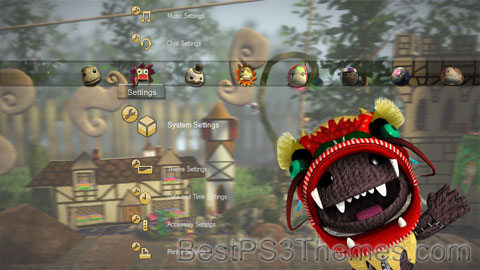
(1 background)
LittleBigPlanet 
Genre(s) Platform, endless running Developer(s) Media Molecule (2008-2014)
SCE Studio Cambridge (2009)
Supermassive Games (2010)
XDev (2010-2012)
Double Eleven (2012)
Tarsier Studios (2012)
United Front Games (2012)
San Diego Studio (2012)
Firesprite (2014)
Sumo Digital (2014-2020)
Exient Entertainment (2023)Publisher(s) Sony Interactive Entertainment
PlayStation Mobile (2014)Platform(s) PlayStation 3
PlayStation Portable
PlayStation Vita
PlayStation 4
PlayStation 5
WindowsFirst release LittleBigPlanet
27 October 2008Latest release Ultimate Sackboy
March 3, 2023Gameplay[edit]
Play[edit]
Create[edit]
[edit]
Overview[edit]
Games[edit]
2008 LittleBigPlanet 2009 LittleBigPlanet (PSP) 2010 Sackboy's Prehistoric Moves 2011 LittleBigPlanet 2 2012 LittleBigPlanet PS Vita LittleBigPlanet Karting 2013 2014 Run Sackboy! Run! LittleBigPlanet 3 2015 2016 2017 2018 2019 2020 Sackboy: A Big Adventure 2021 2022 2023 Ultimate Sackboy Main series[edit]
LittleBigPlanet[edit]
LittleBigPlanet 2[edit]
LittleBigPlanet 3[edit]
Handheld[edit]
LittleBigPlanet (PlayStation Portable)[edit]
LittleBigPlanet PS Vita[edit]
Spinoff games[edit]
LittleBigPlanet Karting[edit]
Sackboy's Prehistoric Moves[edit]
Run Sackboy! Run![edit]
LittleBigPlanet Hub[edit]
Sackboy: A Big Adventure[edit]
Ultimate Sackboy[edit]
Reception[edit]
Game
Metacritic
LittleBigPlanet (PlayStation 3)
95/100[38]
LittleBigPlanet (PlayStation Portable)
87/100[39]
Sackboy's Prehistoric Moves
66/100[40]
LittleBigPlanet 2
91/100[41]
LittleBigPlanet PS Vita
88/100[42]
LittleBigPlanet Karting
74/100[43]
LittleBigPlanet 3
79/100[44]
Run Sackboy! Run!
65/100[45]
Sackboy: A Big Adventure
80/100[46]
Ultimate Sackboy
57/100[47]
References[edit]
LittleBigPlanet #6
(1 background, different for HD and SD)
LittleBigPlanet Genre(s) Platform, endless running Developer(s) Media Molecule (2008-2014)
SCE Studio Cambridge (2009)
Supermassive Games (2010)
XDev (2010-2012)
Double Eleven (2012)
Tarsier Studios (2012)
United Front Games (2012)
San Diego Studio (2012)
Firesprite (2014)
Sumo Digital (2014-2020)
Exient Entertainment (2023)Publisher(s) Sony Interactive Entertainment
PlayStation Mobile (2014)Platform(s) PlayStation 3
PlayStation Portable
PlayStation Vita
PlayStation 4
PlayStation 5
WindowsFirst release LittleBigPlanet
27 October 2008Latest release Ultimate Sackboy
March 3, 2023Gameplay[edit]
Play[edit]
Create[edit]
[edit]
Overview[edit]
Games[edit]
2008 LittleBigPlanet 2009 LittleBigPlanet (PSP) 2010 Sackboy's Prehistoric Moves 2011 LittleBigPlanet 2 2012 LittleBigPlanet PS Vita LittleBigPlanet Karting 2013 2014 Run Sackboy! Run! LittleBigPlanet 3 2015 2016 2017 2018 2019 2020 Sackboy: A Big Adventure 2021 2022 2023 Ultimate Sackboy Main series[edit]
LittleBigPlanet[edit]
LittleBigPlanet 2[edit]
LittleBigPlanet 3[edit]
Handheld[edit]
LittleBigPlanet (PlayStation Portable)[edit]
LittleBigPlanet PS Vita[edit]
Spinoff games[edit]
LittleBigPlanet Karting[edit]
Sackboy's Prehistoric Moves[edit]
Run Sackboy! Run![edit]
LittleBigPlanet Hub[edit]
Sackboy: A Big Adventure[edit]
Ultimate Sackboy[edit]
Reception[edit]
Game
Metacritic
LittleBigPlanet (PlayStation 3)
95/100[38]
LittleBigPlanet (PlayStation Portable)
87/100[39]
Sackboy's Prehistoric Moves
66/100[40]
LittleBigPlanet 2
91/100[41]
LittleBigPlanet PS Vita
88/100[42]
LittleBigPlanet Karting
74/100[43]
LittleBigPlanet 3
79/100[44]
Run Sackboy! Run!
65/100[45]
Sackboy: A Big Adventure
80/100[46]
Ultimate Sackboy
57/100[47]
References[edit]
Nexthacks Ghost

(1 backgrounds)
Copyright (c) 2007. Anoop Menon
p3textractor filename.p3t [destination path]Replace filename with the name of the p3t file, and replace [destination path] with the name of the folder you want the files to be extracted to. A destination path is not required. By default it will extract to extracted.filename.Ferrari
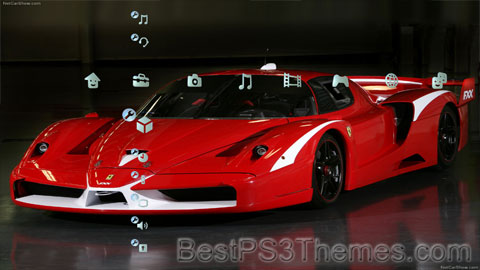
(3 backgrounds)

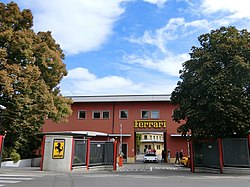
Company type Public (S.p.A.) ISIN NL0011585146 
Industry Automotive Founded 13 September 1939 in Modena, Italy (as Auto Avio Costruzioni)[1] Founder Enzo Ferrari Headquarters
Modena, Emilia-Romagna, Italy (seat)
44°31′57″N 10°51′51″E / 44.532447°N 10.864137°EWorldwide
(Executive Chairman)
(Vice Chairman)
(CEO)Products Sports cars, luxury cars  13,663 units shipped (2023)[3]
Revenue €5.970 billion (2023)[3] €1.617 billion (2023)[3] € 1.257 billion (2023)[3]Total assets € 8.05 billion (2023)[3]Total equity € 3.07 billion (2023)[3]Owners 4,988 (2023)[3]Divisions Scuderia Ferrari Website www Footnotes / references
[3]
[4][5]History[edit]
Early history[edit]

Under Enzo Ferrari[edit]

Contemporary[edit]
Motorsport[edit]
Grand Prix and Formula One racing[edit]

Ferrari Driver Academy[edit]
Sports car racing[edit]
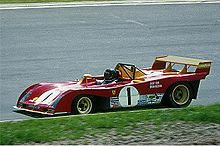

Kill Bill

(1 background)
