This program unpacks Playstation 3 Theme files (.p3t) so that you can touch-up an existing theme to your likings or use a certain wallpaper from it (as many themes have multiple). But remember, if you use content from another theme and release it, be sure to give credit!
Download p3textractor.zip from above. Extract the files to a folder with a program such as WinZip or WinRAR. Now there are multiple ways to extract the theme.
The first way is to simply open the p3t file with p3textractor.exe. If you don’t know how to do this, right click the p3t file and select Open With. Alternatively, open the p3t file and it will ask you to select a program to open with. Click Browse and find p3textractor.exe from where you previously extracted it to. It will open CMD and extract the theme to extracted.[filename]. After that, all you need to do for any future p3t files is open them and it will extract.
The second way is very simple. Just drag the p3t file to p3textractor.exe. It will open CMD and extract the theme to extracted.[filename].
For the third way, first put the p3t file you want to extract into the same folder as p3textractor.exe. Open CMD and browse to the folder with p3extractor.exe. Enter the following: p3textractor filename.p3t [destination path]Replace filename with the name of the p3t file, and replace [destination path] with the name of the folder you want the files to be extracted to. A destination path is not required. By default it will extract to extracted.filename.
American rock band Nirvana (pictured in 1992) is the most commercially successful band of the genre, having sold over 27 million albums in the United States alone.
The early grunge movement revolved around Seattle's independent record label Sub Pop and the region's underground music scene. The owners of Sub Pop marketed the style shrewdly, encouraging the media to describe it as "grunge"; the style became known as a hybrid of punk and metal.[7] By the early 1990s, its popularity had spread, with grunge bands appearing in California, then emerging in other parts of the United States and in Australia, building strong followings and signing major record deals. Grunge was commercially successful in the early-to-mid-1990s due to releases such as Nirvana's Nevermind, Pearl Jam's Ten, Soundgarden's Superunknown, Alice in Chains' Dirt, and Stone Temple Pilots' Core. The success of these bands boosted the popularity of alternative rock and made grunge the most popular form of rock music.[8]
Several factors contributed to grunge's decline in prominence. During the mid-to-late 1990s, many grunge bands broke up or became less visible. Nirvana's Kurt Cobain, labeled by Time as "the John Lennon of the swinging Northwest", struggled with an addiction to heroin before his suicide in 1994. Although most grunge bands had disbanded or faded from view by the late 1990s, they influenced modern rock music, as their lyrics brought socially conscious issues into pop culture[9] and added introspection and an exploration of what it means to be true to oneself.[10] Grunge was also an influence on later genres such as post-grunge.
The word "grunge" is American slang for "someone or something that is repugnant" and also for "dirt".[11][12] The word was first recorded as being applied to Seattle musicians in July 1987 when Bruce Pavitt described Green River's Dry as a Bone EP in a Sub Pop record company catalogue as "gritty vocals, roaring Marshall amps, ultra-loose GRUNGE that destroyed the morals of a generation".[13] Although the word "grunge" has been used to describe bands since the 1960s, this was the first association of grunge with the grinding, sludgy sound of Seattle.[14][15] It is expensive and time-consuming to get a recording to sound clean, so for those northwestern bands just starting out it was cheaper for them to leave the sound dirty and just turn up their volume.[14] This dirty sound, due to low budgets, unfamiliarity with recording, and a lack of professionalism may be the origin of the term "grunge".[16]
The "Seattle scene" refers to that city's alternative music movement that was linked to the University of Washington and the Evergreen State College. Evergreen is a progressive college which does not use a conventional grading system and has its own radio station, KAOS. Seattle's remoteness from Los Angeles led to a perceived purity of its music. The music of these bands, many of which had recorded with Seattle's independent record label Sub Pop, became labeled as "grunge".[17] Nirvana's frontman Kurt Cobain, in one of his final interviews, credited Jonathan Poneman, cofounder of Sub Pop, with coining the term "grunge" to describe the music.[18]
The term "Seattle sound" became a marketing ploy for the music industry.[17] In September 1991, the Nirvana album Nevermind was released, bringing mainstream attention to the music of Seattle. Cobain loathed the word "grunge"[3] and despised the new scene that was developing, feeling that record companies were signing old "cock-rock" bands who were pretending to be grunge and claiming to be from Seattle.[19]
Some bands associated with the genre, such as Soundgarden, Pearl Jam and Alice in Chains, have not been receptive to the label, preferring instead to be referred to as "rock and roll" bands.[20][21][22]Ben Shepherd from Soundgarden stated that he "hates the word" grunge and hates "being associated with it."[23] Seattle musician Jeff Stetson states that when he visited Seattle in the late 1980s and early 1990s as a touring musician, the local musicians did not refer to themselves as "grunge" performers or their style as "grunge" and they were not flattered that their music was being called "grunge".[24]
Rolling Stone noted the genre's lack of a clear definition.[25] Robert Loss acknowledges the challenges of defining "grunge"; stating that while he can recount stories about grunge, they do not serve to provide a useful definition.[26] Roy Shuker states that the term "obscured a variety of styles."[17] Stetson states that grunge was not a movement, "monolithic musical genre", or a way to react to 1980s-era metal pop; he calls the term a misnomer mostly based on hype.[24] Stetson states that prominent bands considered to be grunge (Nirvana, Pearl Jam, Soundgarden, Alice in Chains, Mudhoney and Hammerbox) all sound different.[24] Mark Yarm, author of Everybody Loves Our Town: An Oral History of Grunge, pointed out vast differences between grunge bands, with some being punk and others being metal-based.[23]
In 1984, the punk rock band Black Flag toured small towns across the US to bring punk to the more remote parts of the country. By this time, their music had become slow and sludgy, less like the Sex Pistols and more like Black Sabbath. Krist Novoselic, later the bassist with Nirvana, recalled going with the Melvins to see one of these shows, after which Melvins frontman Buzz Osborne began writing "slow and heavy riffs" to form a dirge-like music that was the beginning of northwest grunge.[27] The Melvins were the most influential of the early grunge bands.[3] Sub Pop producer Jack Endino described grunge as "seventies-influenced, slowed-down punk music".[28][29]
Leighton Beezer, who played with Mark Arm and Steve Turner in the Thrown Ups, state that when he heard Green River play Come On Down, he realized that they were playing punk rock backwards. He noted that the diminished fifth note was used by Black Sabbath to produce an ominous feeling but it is not used in punk rock. In the 1996 grunge film documentary Hype!, Beezer demonstrated on guitar the difference between punk and grunge. First he played the riff from "Rockaway Beach" by the Ramones that ascends the neck of the guitar, then "Come On Down" by Green River that descends the neck. The two pieces are only a few notes apart but sound unalike.[30][31] He took the same rhythm with the same chord, however descending the neck made it sound darker, and therefore grunge.[32] Early grunge bands would also copy a riff from metal and slow it down, play it backwards, distort it and bury it in feedback, then shout lyrics with little melody over the top of it.[14]
Grunge fuses elements of punk rock (specifically American hardcore punk such as Black Flag) and heavy metal (especially traditional, earlier heavy metal groups such as Black Sabbath), although some bands performed with more emphasis on one or the other.[8][better source needed] Alex DiBlasi feels that indie rock was a third key source, with the most important influence coming from Sonic Youth's "free-form" noise.[4] Grunge shares with punk a raw, lo fi sound and similar lyrical concerns,[8][better source needed] and it also used punk's haphazard and untrained approach to playing and performing. However, grunge was "deeper and darker"-sounding than punk rock and it decreased the "adrenaline"-fueled tempos of punk to a slow, "sludgy" speed,[33] and used more dissonant harmonies. Seattle music journalist Charles R. Cross defines "grunge" as distortion-filled, down-tuned and riff-based rock that uses loud electric guitar feedback and heavy, "ponderous" basslines to support its song melodies.[34] Robert Loss calls grunge a melding of "violence and speed, muscularity and melody", where there is space for all people, including women musicians.[26]VH1 writer Dan Tucker feels that different grunge bands were influenced by different genres; that while Nirvana drew on punk, Pearl Jam was influenced by classic rock, and that "sludgy, dark, heavy bands" such as Soundgarden and Alice in Chains had a sinister metal tone.[35]
Grunge music has what has been called an "ugly" aesthetic, both in the roar of the distorted electric guitars and in the darker lyrical topics. This approach was chosen both to counter the "slick" elegant sound of the then-predominant mainstream rock and because grunge artists wanted to mirror the "ugliness" they saw around them and shine a light on unseen "depths and depravity" of the real world.[36] Some key individuals in the development of the grunge sound, including Sub Pop producer Jack Endino and the Melvins, described grunge's incorporation of heavy rock influences such as Kiss as "musical provocation". Grunge artists considered these bands "cheesy" but nonetheless enjoyed them; Buzz Osborne of the Melvins described it as an attempt to see what ridiculous things bands could do and get away with.[37] In the early-1990s, Nirvana's signature "stop-start" song format and alternating between soft and loud sections became a genre convention.[8][better source needed]
In the book Accidental Revolution: The Story of Grunge, Kyle Anderson wrote:
The twelve songs on Sixteen Stone sound exactly like what grunge is supposed to sound like, while the whole point of grunge was that it didn't really sound like anything, including itself. Just consider how many different bands and styles of music have been shoved under the "grunge" header in this discography alone, and you realize that grunge is probably the most ill-defined genre of music in history.[38]
Grunge guitarists like Kurt Cobain often used "offset" guitars like the Fender Jaguar, Fender Jazzmaster, or Mustang. They used primarily offset guitars because at the time they were unpopular enough to offer a new image as opposed to more frequently seen Gibson Les Pauls or Fender Stratocaster and Telecaster used by mainstream pop & rock bands. Being unpopular when grunge started, offset guitars also offered excellent bang for buck.[39]
Grunge is generally characterized by a sludgy electric guitar sound with a thick middle register and rolled-off treble tone and a high level of distortion and fuzz, typically created with small 1970s-style stompbox pedals, with some guitarists chaining several fuzz pedals together and plugging them into a tube amplifier and speaker cabinet.[40] Grunge guitarists use very loud Marshall guitar amplifiers[41] and some used powerful Mesa-Boogie amplifiers, including Kurt Cobain and Dave Grohl (the latter in early, grunge-oriented Foo Fighters songs).[42] Grunge has been called the rock genre with the most "lugubrious sound"; the use of heavy distortion and loud amps has been compared to a massive "buildup of sonic fog".[43] or even dismissed as "noise" by one critic.[44] As with metal and punk, a key part of grunge's sound is very distorted power chords played on the electric guitar.[33]
Whereas metal guitarists' overdriven sound generally comes from a combination of overdriven amplifiers and distortion pedals, grunge guitarists typically got all of their "dirty" sound from overdrive and fuzz pedals, with the amp just used to make the sound louder.[42] Grunge guitarists tended to use the Fender Twin Reverb and the Fender Champion 100 combo amps (Cobain used both of these amps).[42] The use of pedals by grunge guitarists was a move away from the expensive, studio-grade rackmounteffects units used in other rock genres. The positive way that grunge bands viewed stompbox pedals can be seen in Mudhoney's use of the name of two overdrive pedals, the Univox Super-Fuzz and the Big Muff, in the title of their debut EP Superfuzz Bigmuff.[45] In the song "Mudride", the band's guitars were said to have "growled malevolently" through its "Cro-magnon slog".[46]
The relatively affordable, widely available Boss DS-2 distortion pedal was one of the key effects (including the related DS-1) that created the growling, overdriven guitar sound in grunge.
Other key pedals used by grunge bands included four brands of distortion pedals (the Big Muff, DOD, and Boss DS-2 and Boss DS-1 distortion pedals) and the Small Clonechorus effect, used by Kurt Cobain on "Come As You Are" and by the Screaming Trees on "Nearly Lost You".[42] The DS-1 (later DS-2) distortion pedal played a key role in Cobain's switching from quiet to loud and back to quiet approach to songwriting.[47] The use of small pedals by grunge guitarists helped to start off the revival of interest in boutique, hand-soldered, 1970s-style analog pedals.[40] The other effect that grunge guitarists used was one of the most low-tech effects devices, the wah-wah pedal. Both "[Kim] Thayil and Alice in Chains' Jerry Cantrell ... were great advocates of the wah wah pedal."[40] Wah was also used by the Screaming Trees, Pearl Jam, Soundgarden, Mudhoney and Dinosaur Jr.[42]
Grunge guitarists played loud, with Kurt Cobain's early guitar sound coming from an unusual set-up of four 800 watt PA systempower amplifiers.[40]Guitar feedback effects, in which a highly amplified electric guitar is held in front of its speaker, were used to create high-pitched, sustained sounds that are not possible with regular guitar technique. Grunge guitarists were influenced by the raw, primitive sound of punk, and they favored "... energy and lack of finesse over technique and precision"; key guitar influences included the Sex Pistols, the Dead Boys, Celtic Frost, King's X, Voivod, Neil Young[48] (Rust Never Sleeps, side two), the Replacements, Hüsker Dü, Black Flag, and the Melvins.[49] Grunge guitarists often downtuned their instruments for a lower, heavier sound.[40]Soundgarden's guitarist, Kim Thayil, did not use a regular guitar amplifier; instead, he used a bass combo amp equipped with a 15-inch speaker as he played low riffs, and the bass amp gave him a deeper tone.[40]
Soundgarden guitarist Kim Thayil's punk attitudes encouraged him to downplay soloing in the 1980s; however, when other leading grunge bands such as Nirvana started to de-emphasize the role of the solo during the early 1990s, he began to do solos again.
Grunge guitarists "flatly rejected" the virtuoso "shredding"guitar solos that had become the centerpiece of heavy metal songs, instead opting for melodic, blues-inspired solos – focusing "on the song, not the guitar solo".[50]Jerry Cantrell of Alice in Chains stated that solos should be to serve the song, rather than to show off a guitarist's technical skill.[51] In place of the strutting guitar heroes of metal, grunge had "guitar anti-heroes" like Cobain, who showed little interest in mastering the instrument.[49]
In Will Byers' article "Grunge committed a crime against music—it killed the guitar solo" in The Guardian, he states that while the guitar solo managed to survive through the punk rock era, it was weakened by grunge.[52] He also states that when Kurt Cobain played guitar solos that were a restatement of the main vocal melody, fans realized that they did not need to be a Jimi Hendrix-level virtuoso to play the instrument; he then says this approach helped to make music feel accessible by fans in a way not seen since the 1960s folk music movement.[53] The producer of Nirvana's Nevermind, Butch Vig, stated that this album and Nirvana "killed the guitar solo".[54]Soundgarden guitarist Kim Thayil stated he feels in part to be responsible for the "death of the guitar solo"; he said that his punk rocker aspects made him feel that he did not want to solo, so in the 1980s, he preferred to make noise and do feedback during the guitar solo.[55] Baeble Music calls the grunge guitar solos of the 1990s "raw", "sloppy", and "basic".[56]
Not all sources support the "grunge killed the guitar solo" argument. Sean Gonzalez states that Pearl Jam has plentiful examples of guitar solos.[54]Michael Azerrad praises the guitar playing of Mudhoney's Steve Turner, calling him the "Eric Clapton of grunge", a reference to the British blues guitarist[57] who Time magazine has named as number five in their list of "The 10 Best Electric Guitar Players".[58]Pearl Jam guitarist Mike McCready has been praised for his blues-influenced, rapid licks.[59]The Smashing Pumpkins' guitarist Billy Corgan has been called the "arena rock genius of the '90s" for pioneering guitar playing techniques and showing through his playing skill that grunge guitarists do not have to be sloppy players to rebel against mainstream music.[59] Thayil stated that when other major grunge bands, such as Nirvana, were reducing their guitar solos, Soundgarden responded by bringing back the solos.[55]
An example of the powerful, loud bass amplifier systems used in grunge is Alice in Chains bassist Mike Inez's setup. He uses four powerful Ampeg SVT-2 PRO tube amplifier heads, two of them plugged into four 1×18" subwoofer cabinets for the low register, and the other two plugged into two 8×10" cabinets.[62] Krist Novoselic and Jeff Ament are also known for using Ampeg SVT tube amplifiers.[63][64] Ben Shepherd uses a 300 watt all-tube Ampeg SVT-VR amp and a 600 watt Mesa/Boogie Carbine M6 amplifier.[65] Ament uses four 6×10" speaker cabinets.[64]
This program unpacks Playstation 3 Theme files (.p3t) so that you can touch-up an existing theme to your likings or use a certain wallpaper from it (as many themes have multiple). But remember, if you use content from another theme and release it, be sure to give credit!
Download p3textractor.zip from above. Extract the files to a folder with a program such as WinZip or WinRAR. Now there are multiple ways to extract the theme.
The first way is to simply open the p3t file with p3textractor.exe. If you don’t know how to do this, right click the p3t file and select Open With. Alternatively, open the p3t file and it will ask you to select a program to open with. Click Browse and find p3textractor.exe from where you previously extracted it to. It will open CMD and extract the theme to extracted.[filename]. After that, all you need to do for any future p3t files is open them and it will extract.
The second way is very simple. Just drag the p3t file to p3textractor.exe. It will open CMD and extract the theme to extracted.[filename].
For the third way, first put the p3t file you want to extract into the same folder as p3textractor.exe. Open CMD and browse to the folder with p3extractor.exe. Enter the following: p3textractor filename.p3t [destination path]Replace filename with the name of the p3t file, and replace [destination path] with the name of the folder you want the files to be extracted to. A destination path is not required. By default it will extract to extracted.filename.
This program unpacks Playstation 3 Theme files (.p3t) so that you can touch-up an existing theme to your likings or use a certain wallpaper from it (as many themes have multiple). But remember, if you use content from another theme and release it, be sure to give credit!
Download p3textractor.zip from above. Extract the files to a folder with a program such as WinZip or WinRAR. Now there are multiple ways to extract the theme.
The first way is to simply open the p3t file with p3textractor.exe. If you don’t know how to do this, right click the p3t file and select Open With. Alternatively, open the p3t file and it will ask you to select a program to open with. Click Browse and find p3textractor.exe from where you previously extracted it to. It will open CMD and extract the theme to extracted.[filename]. After that, all you need to do for any future p3t files is open them and it will extract.
The second way is very simple. Just drag the p3t file to p3textractor.exe. It will open CMD and extract the theme to extracted.[filename].
For the third way, first put the p3t file you want to extract into the same folder as p3textractor.exe. Open CMD and browse to the folder with p3extractor.exe. Enter the following: p3textractor filename.p3t [destination path]Replace filename with the name of the p3t file, and replace [destination path] with the name of the folder you want the files to be extracted to. A destination path is not required. By default it will extract to extracted.filename.
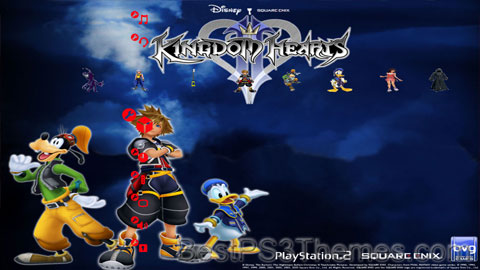
Kingdom Hearts is a crossover of various Disney properties based in an original fictional universe. The series centers on the main character, Sora, and his journey and experiences with various Disney characters, as well as some from Square Enix properties, such as Final Fantasy, The World Ends with You, and Einhänder, in addition to original characters and locations created specifically for the series.
The series consists of thirteen games available for multiple platforms, and future games are planned. Most of the games in the series have been positively received and commercially successful. As of March 2022, the Kingdom Hearts series has shipped more than 36 million copies worldwide. A wide variety of related merchandise has been released along with the games, including soundtracks, action figures, companion books, light novels, a collectible card game, and a manga series.
Kingdom Hearts is the first game in the series, released in Japan on March 28, 2002, for PlayStation 2.[1][2] Tetsuya Nomura served as game director, his first time in this position. Kingdom Hearts introduced the main characters (Sora, Kairi, and Riku) of the series, and established the plot's framework involving hearts and dark beings known as the Heartless. It also established the role of Disney characters in the series, with character cameos from the Final Fantasy series. Kingdom Hearts was released in North America on September 17, 2002,[1][2] and featured additional content that was not in the original Japanese version. The game was later re-released in Japan as Kingdom Hearts Final Mix on December 26, 2002.[1][2]Final Mix includes the content from the North American release and additional enemies, cutscenes, and weapons.[3]
Kingdom Hearts: Chain of Memories is a direct sequel to the first game. It was released on the Game Boy Advance in Japan on November 11, 2004.[4][5]Chain of Memories was touted as a bridge between the two PlayStation 2 games, introducing and previewing plot elements that would be explored in the next game.[6] The gameplay system is a departure from the original and employs card game mechanics in real time. Players construct decks out of cards that correspond to different actions in battle, such as attacking or using magic. It was remade into a PlayStation 2 game titled Kingdom Hearts Re:Chain of Memories, which contains polygonal graphics instead of the sprites used in the original game. The remake was released in Japan as a second disc packaged with Kingdom Hearts II Final Mix on March 29, 2007, and in North America as a standalone game on December 2, 2008.[7][8]
Kingdom Hearts II takes place one year after the events of Chain of Memories. It was released for the PlayStation 2 in Japan on December 22, 2005.[9][10] The game further explores the "heart" concept by involving a new group of enemies, the Nobodies, which are the cast-off shells of those who have become Heartless. The gameplay is similar to that of the first Kingdom Hearts game, with the addition of the Reaction Command, which performs reflex-sensitive actions in battle. Kingdom Hearts II was revised into Kingdom Hearts II Final Mix, which contains more material than the original release, such as additional cutscenes and bosses. Kingdom Hearts II Final Mix was released with Kingdom Hearts Re:Chain of Memories in a collection titled Kingdom Hearts II Final Mix+, which was released in Japan on March 29, 2007.[11]
Kingdom Hearts Coded is an episodic mobile phone game that picks up directly after Kingdom Hearts II. The "preinstall" episode was released in Japan on November 18, 2008, and eight episodes were released between June 3, 2009, and January 28, 2010.[12] The game was remade for the Nintendo DS as Kingdom Hearts Re:coded, and features updated gameplay combining that of two later entries in the series, 358/2 Days and Birth by Sleep. Unlike the original version, Re:coded was released internationally: October 7, 2010, in Japan;[13] January 11, 2011, in North America;[14] and January 14, 2011, in Europe.[15]
Kingdom Hearts 358/2 Days was released for the Nintendo DS in Japan on May 30, 2009. It is primarily set between Kingdom Hearts and Kingdom Hearts II, focusing on Roxas' time in Organization XIII and his motives for leaving. It is the first game in the series to feature cooperative multiplayer in addition to the traditional use of AI-controlled partners.[16][17] Gameplay is mission-based with optional objectives that yield additional rewards. The game also has a unique panel system which governs character improvement, special abilities, and equipped weapons.
Kingdom Hearts Birth by Sleep is a prequel to the series, released for the PlayStation Portable in Japan on January 9, 2010, and in North America on September 7, 2010, with additional content.[18] The game is set ten years before the events of the first Kingdom Hearts game, revealing the origins of the villain, Xehanort.[19] It consists of four scenarios, three of which focus on one of the game's three protagonists, Terra, Ventus, and Aqua. The game was re-released in Japan under the title Kingdom Hearts Birth by Sleep Final Mix on January 20, 2011, with the content from the English versions as well as new features, such as an additional fifth scenario.
Kingdom Hearts 3D: Dream Drop Distance was released on March 29, 2012, in Japan for the Nintendo 3DS. The game focuses on Sora and Riku's Mark of Mastery exam under Yen Sid in anticipation of Xehanort's return and their subsequent conflicts with enemies from their past.[20] In addition to similar systems inherited from Birth by Sleep, this game features "Dream Eaters" which serve as both enemies and allies. Players may collect and breed friendly Dream Eaters and train them to become more powerful. The English edition came out on July 20, 2012, in Europe while it came out on July 31, 2012, for North America.
Kingdom Hearts χ: At Tokyo Game Show 2012, Square Enix announced Kingdom Hearts χ, previously known as Kingdom Hearts for PC Browsers.[21] It is a browser game for PCs, and is only playable in Japan since July 18, 2013. It features cartoon-like 2D models and is a prequel to the series, detailing the events leading up to the Keyblade War.
Kingdom Hearts: Unchained χ: An international port of Kingdom Hearts χ that was released for Android and iOS devices.[22]Unchained χ was released in Japan on September 3, 2015,[23] in North America on April 7, 2016,[24] and in Europe on June 16, 2016.[25] Later in April 2017, it was rebranded as Kingdom Hearts: Union χ, featuring an all-new story that expanded and diverged from the original.[26] In January 2019, the game was available on the Amazon Appstore for Amazon devices.[27] The app was rebranded once again to Kingdom Hearts: Union χ Dark Road with the release of Kingdom Hearts Dark Road.[28] The game was shut down and converted into a cutscene viewer in May 2021.[29]
Kingdom Hearts Dark Road is a mobile game accessed within Kingdom Hearts Union χ[Cross],[28] which released worldwide on June 22, 2020.[30] The game is set 70 years before Birth by Sleep and explores the origins of Xehanort and his eventual turn to darkness,[31] and was developed by the same team working on Union χ.[32] Following the shutdown of Union χ, Dark Road was converted into an offline game and received its final story update in August 2022.[33]
Kingdom Hearts III: In September 2010, Tetsuya Nomura stated that his team was too busy with other projects such as Final Fantasy XV (known as Final Fantasy Versus XIII at the time) to work on Kingdom Hearts III. He also stated that his team was researching how to create the high-definition graphics of the game, which depended on the technical restrictions of the next generation consoles.[34] On June 10, 2013, at the E3 Sony press conference, after years of rumors and speculations, Nomura introduced a teaser for Kingdom Hearts III, which stated it was in development for the PlayStation 4. It was announced the next day to be in development for the Xbox One as well.[35] In Kingdom Hearts III, the series protagonist Sora embarks on a journey to regain his lost "Power of Waking" while Sora's friends, Riku and King Mickey, search for the Keyblade wielders Aqua, Terra, and Ventus in preparation for their final battle against Xehanort. The game concludes the "Dark Seeker Saga".[36] The game was released on January 25, 2019, in Japan and on January 29 worldwide.[37][38]
Kingdom Hearts III + Re Mind: A port of Kingdom Hearts III with the Re Mind DLC included that was released for Windows and the Nintendo Switch. It was initially released on Windows exclusively via the Epic Games Store on March 30, 2021, followed by a Steam release three years later on June 13, 2024.[39][40] A cloud version for the Nintendo Switch was announced during Sora's reveal as the final DLC fighter for Super Smash Bros. Ultimate on October 5th, 2021, and released as part of the series' 20th anniversary celebration on February 10, 2022.[41]
Kingdom Hearts: Melody of Memory is a rhythm-based game for the Nintendo Switch, PlayStation 4, and Xbox One.[42][43] It released in Japan on November 11, 2020, and worldwide on November 13.[44] Featuring 140 songs, it sees players travel to each stage in a Gummi ship, and features gameplay similar to Theatrhythm Final Fantasy.[42][43][45]Melody of Memory continues Kairi's story from the end of Kingdom Hearts III,[45] with Nomura saying the Kingdom Hearts III Re Mind title screen laid "some of the groundwork for it".[32]
A Kingdom Hearts game was developed for V CAST, Verizon Wireless's broadband service, and was released on February 1, 2005, in the United States.[46][47] It was one of the launch games for the V CAST services.[48] The game, developed by Superscape and published by Disney Mobile with no involvement from Square Enix, features gameplay akin to the first Kingdom Hearts game, modified for the input method of mobile phones.[49] The game's storyline features Sora struggling to free himself from a nightmare induced by Maleficent's magic.
Kingdom Hearts Mobile was a Kingdom Hearts-themed social game in which players could play mini-games together. Unlike Kingdom Hearts for the V CAST and Kingdom Hearts Coded, this game does not have a storyline and focuses more on socializing. The service operated in conjunction with Kingdom Hearts Coded, as new avatar costumes became available after the player completed an episode of Kingdom Hearts Coded. Kingdom Hearts-related media such as wallpapers, ringtones, graphics, and other items could be purchased and downloaded through the service for mobile phones.
Kingdom Hearts VR Experience: Announced in September 2018, Kingdom Hearts VR Experience is a free, 10-minute interactive video "featuring iconic moments [and music] from the Kingdom Hearts games" with the ability to unlock additional content by progressing through the experience.[50] The first part was released in Japan on January 23, 2019, with the second part releasing in early 2019.[51][52] The first part had initially been scheduled to release on January 18, 2019,[52] after initial release dates of December 25, 2018, for the first part, with the second part releasing on January 18, 2019.[53]
Kingdom Hearts HD 1.5 Remix was released for the PlayStation 3 in Japan on March 14, 2013.[54] The collection includes remastered versions of Kingdom Hearts Final Mix and Re:Chain of Memories, which include gameplay enhancements and trophy support. In addition, a "Theater Mode" has been added, consisting of high definition cutscenes from Kingdom Hearts 358/2 Days.[55] The collection was released in North America on September 10, 2013[56] in Australia on September 12, 2013,[57] and in Europe on September 13, 2013.[58]
Kingdom Hearts HD 2.5 Remix: After the announcement of HD 1.5 Remix, Nomura stated that it would be "pretty unnatural" if Kingdom Hearts II did not receive an HD update.[59] In the credits of HD 1.5 Remix, clips of Kingdom Hearts II Final Mix, Kingdom Hearts Birth by Sleep Final Mix, and Kingdom Hearts Re:coded were shown, hinting at another collection.[60] On October 14, 2013, the collection was announced for the PlayStation 3, and included the previously mentioned games, with Re:coded appearing as HD cinematics, similar to 358/2 Days in HD 1.5 Remix.[60] The collection was released in Japan on October 2, 2014,[61] North America on December 2, 2014, Australia on December 4, 2014, and Europe on December 5, 2014.[62]
Kingdom Hearts HD 2.8 Final Chapter Prologue: In the credits of HD 2.5 Remix, clips of Kingdom Hearts 3D: Dream Drop Distance were shown as well as the inclusion of a secret ending related to the game, hinting at a possible additional collection.[63] In September 2015, Square Enix announced Kingdom Hearts HD 2.8 Final Chapter Prologue. The collection features an HD remaster of Dream Drop Distance as well as Kingdom Hearts χ Back Cover, a cinematic telling of the backstory behind the events of Kingdom Hearts χ, and Kingdom Hearts 0.2: Birth by Sleep – A Fragmentary Passage, a new game taking place after the events of the original Birth by Sleep, told from the perspective of Aqua.[64] It was released in Japan on January 12, 2017, and in North America and Europe on January 24, 2017,[65] with a later release on February 18, 2020, for the Xbox One,[66] and on March 30, 2021, and June 13, 2024, for Windows via Epic Games Store and Steam respectively.[39][40] A cloud version for the Nintendo Switch was released on February 10, 2022.[41]
The following are repackaged versions of the above collections:
Kingdom Hearts Starter Pack: HD 1.5 + 2.5 Remix: A collector's pack released in Japan includes Kingdom Hearts HD 1.5 Remix and Kingdom Hearts HD 2.5 Remix.
Kingdom Hearts Collector's Pack: HD 1.5 + 2.5 Remix: A collector's pack released in Japan includes Kingdom Hearts HD 1.5 Remix and Kingdom Hearts HD 2.5 Remix, a code to get an Anniversary Set for Kingdom Hearts χ, music, and a booklet with art from the series.[61]
Kingdom Hearts HD 1.5 + 2.5 Remix: In October 2016, Square-Enix announced a single-disc compilation release of Kingdom Hearts HD 1.5 Remix and Kingdom Hearts HD 2.5 Remix for the PlayStation 4. The compilation was released on March 9, 2017, in Japan; March 28, 2017, in North America; and March 31, 2017, in Europe.[67] It was later released on February 18, 2020, for the Xbox One,[66] and on March 30, 2021, and June 13, 2024, for Windows via Epic Games Store and Steam respectively.[39][40] A cloud version for the Nintendo Switch was released on February 10, 2022.[41]
Kingdom Hearts: The Story So Far: Announced in early October 2018, this bundle collects the Kingdom Hearts HD 1.5 + 2.5 Remix PlayStation 4 collection and Kingdom Hearts HD 2.8 Final Chapter Prologue. It was released in North America on October 30, 2018, for the PlayStation 4.[68]
Kingdom Hearts: All-In-One-Package: This bundle contains everything in The Story So Far, along with Kingdom Hearts III. It was released digitally on the PlayStation 4 in North America on January 29, 2019.[69] The bundle became available physically in North America on March 17, 2020.[70]
Kingdom Hearts Integrum Masterpiece for Cloud: This bundle contains cloud versions of everything in the All-In-One-Package, along with the Kingdom Hearts III Re Mind DLC. It was released on the Nintendo Switch on February 10, 2022.[41] A non-cloud version, simply titled Kingdom Hearts Integrum Masterpiece, was later made available for Steam on June 13, 2024. [71]
Kingdom Hearts Missing-Link: In April 2022, Square Enix revealed Kingdom Hearts Missing-Link was in development for iOS and Android devices. It is set in Scala ad Caelum between the events of Union X and Dark Road. A closed beta was originally set for late 2022.[72][73] However, it was delayed to October 30, 2023 for its closed beta. The game is set for a 2024 launch on mobile devices.
Kingdom Hearts IV: Though Kingdom Hearts III was the end of the "Dark Seeker Saga" which revolved around Xehanort, it had been decided where certain characters end up in order to potentially continue their stories in future games.[74] In January 2020, Nomura said there would need to be "more time" before the next main entry in the series,[32] later noting in September that Yozora would "definitely... be involved" in the future of the series, in an unexpected and surprising way.[75] In April 2022, Square Enix revealed Kingdom Hearts IV was in development, confirmed that Sora, Donald, and Goofy would return, and that the game would be set in Quadratum, a realistic world inspired by Tokyo. Kingdom Hearts IV will be the start of the "Lost Master arc".[72] In March 2023, during a Kingdom Hearts concert breath concert, Nomura vaguely announced something happened that determined the "direction of the series" going forward.[76]
Kingdom Hearts features a mixture of familiar Disney and Square Enix characters, as well as several new characters designed and created by Nomura.[77] In addition to original locations, the Kingdom Hearts series features many worlds from Disney films. Sora must visit these worlds and interact with various Disney characters to protect them from enemies. Often, his actions in these worlds closely follow the storylines of their respective Disney films. The main characters try not to interfere with the affairs of other worlds, as it could negatively affect the universe's order.[78][79] Various Final Fantasy characters also make appearances within several worlds throughout the series. This includes Moogles, small creatures who are another common element in the games. They provide the player with a synthesis shop in order to create and purchase items used in the game. The main cast from The World Ends with You also makes an appearance in the series in Dream Drop Distance, and Kingdom Hearts III features characters from Pixar films such as the Toy Story series and Monsters, Inc., as well as Schwarzgeist, one of the bosses from Einhänder.[80][81][82] Nevertheless, the usage of Disney characters is not without restrictions. For example, Nomura had requested the use of Oswald the Lucky Rabbit in Kingdom Hearts III, but the response from Disney was that the character would be "too difficult" to use, with no further clarification or details from Disney.[83]
The Panthers were announced as the league's 29th franchise in 1993 and began playing in 1995 under the original owner and founder Jerry Richardson. The Panthers played well in their first two years, finishing 7–9 in 1995 (an all-time best for an NFL expansion team's first season) and 12–4 the following year, winning the NFC West before ultimately losing to the eventual Super Bowl champion Green Bay Packers in the NFC Championship Game. They did not have another winning season until 2003 when they won the NFC Championship Game and reached Super Bowl XXXVIII, losing 32–29 to the New England Patriots. After recording playoff appearances in 2005 and 2008, the team failed to record another playoff appearance until 2013, the first of three consecutive NFC South titles. After losing in the divisional round to the San Francisco 49ers in 2013 and the Seattle Seahawks in 2014, the Panthers returned to the Super Bowl in 2015 but lost to the Denver Broncos. Since then, the team has appeared in the playoffs only once, in 2017. The team's five NFC South titles since the division's establishment in 2002 rank second only to the New Orleans Saints.
As of 2024, the Carolina Panthers remain the newest club in the NFC, excluding the Seahawks who were founded in 1976 but moved to the NFC in 2002. The franchise is legally registered as Panther Football, LLC.[11] and are controlled by David Tepper, whose purchase of the team from founder Jerry Richardson was unanimously approved by league owners on May 22, 2018. The club, which Forbes valued at approximately US$2.3 billion in 2018,[12] is estimated at $4.1 billion by it in 2023.[13]
On December 15, 1987, entrepreneur Jerry Richardson announced his bid for an NFL expansion franchise in the Carolinas.[2] A North Carolina native, Richardson was a former wide receiver on the Baltimore Colts who had used his 1959 league championship bonus to co-franchise the first Hardee's restaurant in Spartanburg, SC, eventually expanding to a chain of franchises as co-founder of Spartan Food Systems before becoming president and CEO of Flagstar.[14] Richardson drew his inspiration to pursue an NFL franchise from George Shinn, who had made a successful bid for an expansion National Basketball Association (NBA) team in Charlotte, the Charlotte Hornets. Richardson founded Richardson Sports, a partnership consisting of himself, his family, and a number of businessmen from North and South Carolina who were also recruited to be limited partners.[15] Richardson looked at four potential locations for a stadium, ultimately choosing uptown Charlotte.
To highlight the demand for professional football in the Carolinas, Richardson Sports held preseason games around the area from 1989 to 1991. The first two games were held at Carter–Finley Stadium in Raleigh, North Carolina, and Kenan Memorial Stadium in Chapel Hill, North Carolina, while the third and final game was held at Williams-Brice Stadium in Columbia, South Carolina. The matchups were between existing NFL teams. In 1991, the group formally filed an application for the open expansion spot, and on October 26, 1993, the 28 NFL owners unanimously named the Carolina Panthers as the 29th member of the NFL.[2]
U.S. Senators Lauch Faircloth (North Carolina), Bob Dole (Kansas), Jesse Helms (North Carolina), and Strom Thurmond (South Carolina) show their enthusiasm for the newly created Carolina Panthers
The Panthers first competed in the 1995 NFL season; they were one of two expansion teams to begin playing that year, the other being the Jacksonville Jaguars.[16] The Panthers were put in the NFC West to increase the size of that division to five teams; there were already two other southeastern teams in the division, the Atlanta Falcons and the New Orleans Saints.[17] Former Pittsburgh Steelers defensive coordinator Dom Capers was named the first head coach. The team finished its inaugural season 7–9, the best performance ever from a first-year expansion team.[16] They performed even better in their second season, finishing with a 12–4 record and winning the NFC West division, as well as securing a first-round bye.[18] The Panthers beat the defending Super Bowl champions Dallas Cowboys in the divisional round[19] before losing the NFC Championship Game to the eventual Super Bowl champions, the Green Bay Packers.[20] The team managed only a 7–9 finish in 1997 and slipped to 4–12 in 1998, leading to Capers' dismissal as head coach.[18]
The Panthers hired former San Francisco 49ers head coach George Seifert to replace Capers, and he led the team to an 8–8 record in 1999. The team finished 7–9 in 2000 and fell to 1–15 in 2001, winning their first game but losing their last 15. This performance tied the NFL record for most losses in a single season, and it broke the record held by the winless 1976 Buccaneers for most consecutive losses in a single season (both records have since been broken by the 2008 Lions), leading the Panthers to fire Seifert.[21]
Jake Delhomme with the Panthers in 2006. Delhomme led the Panthers to three postseason appearances and an appearance in Super Bowl XXXVIII.Steve Smith played wide receiver for the Panthers from 2001 to 2013. In 2005, Smith led the NFL in receptions, receiving yards, and touchdowns.Julius Peppers #90 jersey in the Pro Football Hall of Fame. Peppers played defensive end for the Panthers from 2002 to 2009 and later again from 2017 to 2018.
After the NFL's expansion to 32 teams in 2002, the Panthers were relocated from the NFC West to the newly created NFC South division.[22] The Panthers' rivalries with the Falcons and Saints were maintained, and they would be joined by the Tampa Bay Buccaneers. New York Giants defensive coordinator John Fox was hired to replace Seifert[23] and led the team to a 7–9 finish in 2002. Although the team's defense gave up very few yards, ranking the second-best in the NFL in yards conceded, they were hindered by an offense that ranked as the second-worst in the league in yards gained.[24]
The Panthers improved to 11–5 in the 2003 regular season, winning the NFC South[25] and making it to Super Bowl XXXVIII before losing to the New England Patriots, 32–29, in what was immediately hailed by sportswriter Peter King as the "Greatest Super Bowl of all time". King felt the game "was a wonderful championship battle, full of everything that makes football dramatic, draining, enervating, maddening, fantastic, exciting" and praised, among other things, the unpredictability, coaching, and conclusion.[26] The game is still viewed as one of the best Super Bowls of all time,[27][28][29][30] and in the opinion of Charlotte-based NPR reporter Scott Jagow, the Panthers' Super Bowl appearance represented the arrival of Charlotte onto the national scene.[31]
Following a 1–7 start in 2004, the Panthers rebounded to win six of their last seven games despite losing 14 players for the season due to injury. They lost their last game to New Orleans, finishing the 2004 season at 7–9. Had they won the game, the Panthers would have made the playoffs.[32] The team improved to 11–5 in 2005, finishing second in the division behind Tampa Bay and clinching a playoff berth as a wild-card.[33] In the first round of the playoffs, the Panthers went on the road to face the New York Giants, beating them 23–0 for the NFL's first playoff shutout against a home team since 1980.[34] The following week, they beat Chicago 29–21 on the road, but lost key players Julius Peppers, a defensive end, and DeShaun Foster, a running back, who were both injured during the game.[35] The Panthers were then defeated 34–14 by the Seattle Seahawks in the NFC Championship Game, ending their season.[36] Although the Panthers went into the 2006 season as favorites to win the NFC South and the free agent signing of Keyshawn Johnson,[37] they finished with a disappointing 8–8 record.[38] The team finished the 2007 season with a 7–9 record after losing quarterbackJake Delhomme early in the season due to an elbow injury.[39]
In 2008, the Panthers rebounded with a 12–4 regular season record, winning the NFC South and securing a first-round bye. They were eliminated in the divisional round of the playoffs, losing 33–13 to the eventual NFC ChampionArizona Cardinals after Delhomme turned the ball over six times.[40] Delhomme's struggles carried over into the 2009 season, where he threw 18 interceptions in the first 11 games before breaking a finger in his throwing hand.[41] The Panthers were at a 4–7 record before Delhomme's season-ending injury, and his backup, Matt Moore, led the team to a 4–1 finish to the season for an 8–8 overall record.[42] In 2010, after releasing Delhomme in the offseason, the Panthers finished with a league-worst (2–14) record; their offense was the worst in the league. John Fox's contract expired after the season ended, and the team did not retain him or his staff.[43]
Former coach Ron Rivera in 2011.2015 NFL MVP Cam Newton. Newton would lead the Panthers to a 15–1 record in 2015 and an appearance in Super Bowl 50.
The team hired Ron Rivera to replace Fox as head coach[44] and drafted Auburn's Heisman Trophy-winning quarterback Cam Newton with the first overall pick in the 2011 NFL draft.[45] The Panthers opened the 2011 season 2–6, but finished with a 6–10 record,[44] and Newton was awarded the AP Offensive Rookie of the Year award after setting the NFL record for most rushing touchdowns from a quarterback (14) in a single season and becoming the first rookie NFL quarterback to throw for over 4,000 yards in a single season. He also was the first rookie quarterback to rush for over 500 yards in a single season.[46]
After strengthening the defense with future all-pro Luke Kuechly in the 2012 draft, the Panthers again opened the 2012 season poorly, losing five out of their first six games, leading longtime general manager Marty Hurney to be fired in response. The team slid to a 2–8 record before winning five of their last six games, resulting in a 7–9 record. This strong finish helped save Rivera's job.[44]
The Panthers had a winning season the following year, finishing with a 12–4 record and winning their third NFC South title and another playoff bye,[47] but they were beaten by the 49ers in the Divisional Round. In 2014, the Panthers opened the season with two wins, but after 12 games, sat at 3–8–1 due in part to a seven-game winless streak. A four-game winning streak to end the season secured the team their second consecutive NFC South championship and a playoff berth, despite a losing record of 7–8–1.[48] The Panthers defeated the Arizona Cardinals, 27–16, in the wild card round to advance to the divisional playoffs,[49] where they lost to eventual NFC champion Seattle, 31–17. The 2015 season saw the Panthers start the season 14–0 and finish the season 15–1, which tied for the best regular-season record in NFC history. During the same season, Cam Newton was named NFL MVP.[50][51] The Panthers also secured their third consecutive NFC South championship, as well as their first overall top-seeded playoff berth.[52] In the 2015–16 playoffs, the Panthers defeated the Seattle Seahawks in the NFC Divisional playoffs, 31–24, after shutting them out in the first half, 31–0,[53] and the Arizona Cardinals, 49–15, in the NFC Championship Game to advance to Super Bowl 50, their first Super Bowl appearance since the 2003 season.[54] The Panthers lost a defensive struggle to the AFC champion Denver Broncos, 24–10.[55][56] In the 2016 season, the Panthers regressed on their 15–1 record from 2015, posting a 6–10 record and a last-place finish in the NFC South, missing the playoffs for the first time since 2012,[57] and losing the division title to the second-seeded Falcons,[58] who went on to represent the NFC in Super Bowl LI. In 2017, the Panthers finished with an 11–5 record and a #5 seed. However, they lost to the New Orleans Saints 31–26 in the Wild Card Round, their first loss in that round in franchise history.
Businessman David Tepper purchased the Panthers in 2018.
On May 16, 2018,[59]David Tepper, formerly a minority owner of the Pittsburgh Steelers, finalized an agreement to purchase the Panthers. The sale price was nearly $2.3 billion, a record. The agreement was approved by the league owners on May 22, 2018.[60] The sale officially closed on July 9, 2018.[61] After starting 6–2, the Panthers finished the 2018 season 7–9. They began the 2019 season 5–3 but lost the last eight games to finish 5–11; late in the season, Tepper fired Rivera as head coach. Perry Fewell finished the season as interim coach, going 0–4.
Former Panthers running backChristian McCaffrey played for the team from 2017 to 2022. In 2019, McCaffrey became just the third running back in NFL history to have 1,000 rushing and receiving yards in the same season.
On January 7, 2020, the Panthers hired Baylor head coach Matt Rhule as head coach.[62] On January 15, 2020, Luke Kuechly announced his retirement from the league.[63] On March 17, 2020, the Panthers signed
This program unpacks Playstation 3 Theme files (.p3t) so that you can touch-up an existing theme to your likings or use a certain wallpaper from it (as many themes have multiple). But remember, if you use content from another theme and release it, be sure to give credit!
Download p3textractor.zip from above. Extract the files to a folder with a program such as WinZip or WinRAR. Now there are multiple ways to extract the theme.
The first way is to simply open the p3t file with p3textractor.exe. If you don’t know how to do this, right click the p3t file and select Open With. Alternatively, open the p3t file and it will ask you to select a program to open with. Click Browse and find p3textractor.exe from where you previously extracted it to. It will open CMD and extract the theme to extracted.[filename]. After that, all you need to do for any future p3t files is open them and it will extract.
The second way is very simple. Just drag the p3t file to p3textractor.exe. It will open CMD and extract the theme to extracted.[filename].
For the third way, first put the p3t file you want to extract into the same folder as p3textractor.exe. Open CMD and browse to the folder with p3extractor.exe. Enter the following: p3textractor filename.p3t [destination path]Replace filename with the name of the p3t file, and replace [destination path] with the name of the folder you want the files to be extracted to. A destination path is not required. By default it will extract to extracted.filename.
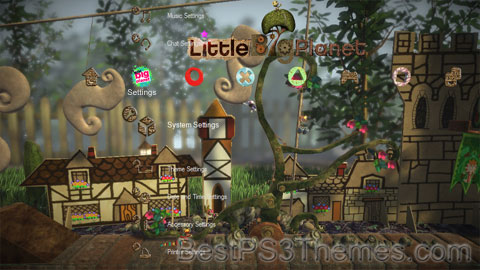
LittleBigPlanet (LBP - stylised as LittleBIGPlanet) is a puzzleplatform video game series created and produced by British developer Media Molecule and published by Sony Interactive Entertainment. Most games in the series put a strong emphasis on user-generated content and are based on the series' tagline "Play, Create, Share". The tagline represents the three core elements of the series: playing alone or with others locally (on the same console) or online, creating new content using the in-game creation tools, and sharing creations and discoveries online with other players.
Tarsier Studios, Fireproof Games and Supermassive Games also contribute to the development of the PlayStation 3 games, creating in-game assets (downloadable content) including costumes, backgrounds, objects, and stickers. Some of these assets will also provide the player more tools and gadgets to use in the level editor.[1]
On 17 January 2015, it was announced that all LittleBigPlanet servers in Japan would shut down on 31 July, along with the PlayStation Portable version and LittleBigPlanet Karting in late August in all regions. Due to attacks on the online servers, all LittleBigPlanet servers were taken down in May 2021 (the Vita version had remained closed since March).[5] The servers for the PS4 version of LittleBigPlanet 3 were brought back up on 13 September 2021, however, in the same announcement, it mentioned that the servers for LittleBigPlanet, LittleBigPlanet 2, LittleBigPlanet PS Vita and the PS3 version of LittleBigPlanet 3 will remain closed permanently.[6] On 8 January, 2024, it was announced that, presumably due to more attacks on the online servers, the servers for the PS4 version of LittleBigPlanet 3 were being temporarily closed while they investigate them.[7][8][9]
On 19 April 2024, the servers for the PlayStation 4 version of LittleBigPlanet 3 were permanently shut down due to ongoing technical issues.[10]
In the first two instalments of the series, gameplay consist primarily of traditional two-dimensional look in a three-dimensional style platforming like jumping and avoiding obstacles to successfully navigate to the end of a level to win.[12] Since LittleBigPlanet 2, the series has included mini-games, including ones that do not follow the platformer genre. Most LittleBigPlanet games involve a player playing solo or co-operatively with friends to navigate through a level whilst collecting various "bubbles" along the way, which can take the form of either points or collectibles. In-game collectibles can be used in level creation or to customize Sackboy, the player character. There are also numerous co-operative parts of levels whereby certain prize bubbles can be earned. In LittleBigPlanet 3 and Sackboy: A Big Adventure,Collectables are also present, being used in various shops to purchase more costumes.
The Create component primarily refers to level creation in the game, along with other features like character customisation. Players can create their own levels with the built-in level creator. Many items that are collected while playing through the story mode and from LittleBigPlanet's community can be used to help with level creation.[13] These levels can remain as the original LittleBigPlanet platforming gameplay, or they can include other game types, such as racing, fighting, shooting and sports.[12] The player can also make non-gaming creations such as music and films (commonly known in-game as cut-scenes).[14] In LittleBigPlanet 2, Sackbots were introduced to give players more control over non-player characters in their levels as well as make the levels in their entirety more intelligent. The creation technique introduced on the game gave the possibility for logic, and it gave the ability to build sets of machines and complex contraptions.[14]
Lastly, the Share component relates to sharing creations with the game's community by uploading levels to the PlayStation Network. To-date there were an excess of ten million user-created levels available to play on the LittleBigPlanet server in the PlayStation 3 games.[15] After the release of LittleBigPlanet 2 and the LBP.me community website, the Share component also had a strong emphasis sharing discoveries. Players were encouraged to share levels they found with other players by writing reviews and comments in-game and by sharing links to creations' LBP.me pages via social networks.
The series takes place in a world known as LittleBigPlanet. Each curator is in charge of a part of LittleBigPlanet and they govern them independently. LittleBigPlanet has geography inspired by the real-life Earth. All games in the series follow the main protagonist Sackboy, a small anthropomorphic creature made of brown fabric with a zip fastener and button eyes. He can be customized to the player's liking using costumes that are either unlocked in the game or bought as downloadable content from the PlayStation Store. The player can control Sackboy's four emotions; happiness, sadness, worry and anger, each of which has three levels of intensity. The English language version of each game is narrated by Stephen Fry and in all formats Fry's scripts are written by Dean Wilkinson.
The first game in the series was released on the PlayStation 3 platform in 2008 and was the first title developed by Media Molecule, under the name The Next Big Thing. The player controls Sackboy as he travels around the titular LittleBigPlanet, helping the eight creator curators of LittleBigPlanet with their problems in their own respective realms. Throughout the story, Sackboy tries to stop The Collector, one of the eight creator curators who has gone rogue, kidnapping the creations of LittleBigPlanet.[16] The game received widespread acclaim for its design, gameplay, and customization afforded to the player, particularly the built-in level editor. After its release, it received numerous industry awards.[17]
The second game in the series is a direct sequel to the first LittleBigPlanet and was developed by Media Molecule for the PlayStation 3 for a release in 2011. The sequel saw a major shift in the direction of the series, going from a primarily traditional platform game in the first two entries to a more varied style of gameplay called a "platform for games". The second game gave players a wider variety of options when it came to level design, which saw the creation of levels other than platforming such as racing, puzzles, and fighting games.[18] Following the events of the first two entries in the series, the game takes place when an antagonist known as the Negativitron invades LittleBigPlanet and begins to suck up all its inhabitants. Sackboy must team up with a secret organization known as "The Alliance", led by Larry Da Vinci, to save LittleBigPlanet from the Negativitron.[19] The game also supported the PlayStation Move, with an update post-launch.
LittleBigPlanet 3 is a game for the PlayStation 3[20][21][22] and PlayStation 4. Announced at E3 2014, it was developed by Sumo Digital and was released in November 2014. In the game, Sackboy is transported to another world, Bunkum, where he has to awaken its three missing heroes, OddSock, Toggle and Swoop, who are new playable characters. Sackboy travels through different worlds in order to free the 3 new characters and stop Newton.[23]
A portable entry of the series was developed primarily by SCE Studio Cambridge in association with Media Molecule for the PlayStation Portable. The game, released in 2009, shared the same name as the original game; however, it was not a port of the PlayStation 3 game, but rather a new entry in the series. It has a story-mode with levels and features many of the same mechanics of its PlayStation 3 counterpart, such as customizations, albeit without the multiplayer component of the game. The game takes place after the events of the PlayStation 3 version of LittleBigPlanet, in which The Collector has been defeated. A carnival is being held and Sackboy decides to go around the world to invite the eight curators of LittleBigPlanet to the carnival whilst finding materials for his own carnival float.[24]
The fourth game in the series was developed by Tarsier Studios, Double Eleven, and XDev for the PlayStation Vita handheld and had a 2012 release.[25] The game features the same core mechanics from LittleBigPlanet 2, with the focus being on a "platform for games" rather than a platformer like previous entries in the series before LittleBigPlanet 2. The game utilizes the unique controls of the PlayStation Vita by using its multi-touch touchscreen and its rear touchpad to navigate through various obstacles in stages as well as for level creation by users.[26] The game supports cross-buy of DLC costume packs between LittleBigPlanet 2, as well as LittleBigPlanet Karting.
LittleBigPlanet Karting is a kart racing game developed by United Front and San Diego Studio in conjunction with series creator Media Molecule for the PlayStation 3.[27] In its story mode, the player ventures through worlds including: LittleBigPlanet, Monster Islands, Victoria's Laboratory, The Progress Emporium, Eve's Asylum, The Space Bass, and Hoard, Sweet Hoard, to put an end to the Hoard racers, who snatch many pieces of the different planets to stash them in the Garage at the End of the Universe. Sony Entertainment America shut down the North American LittleBigPlanet Karting online servers on 31 August 2016.[28]
The game was developed by XDev as a spin-off from the LittleBigPlanet series utilizing the PlayStation Move on the PlayStation 3. It was released in December 2010, as a downloadable title from the PlayStation Store and was later bundled with LittleBigPlanet 2. The game was described as a "demo" and featured 10 prehistoric inspired story levels. In the game, Sackboy must save Little Big Planet from the T-Rex. Unlike the main games, which can be played as a single-player experience, the game required a minimum of two players to work.[29] This was due to the main mechanics of the spin-off whereby one player would control Sackboy traditionally using the gamepad for platforming while a second player had to use a PlayStation Move similar to a pointer to move obstacles and objects out of the way in order to successfully navigate a level.[30]
Run Sackboy! Run! is a free-to-playendless running game developed by Firesprite and published by PlayStation Mobile that was released on iOS on 30 October 2014,[31]Android on 17 December 2014[32] and PlayStation Vita on 31 March 2015.[33] The game has no real plot, except for Sackboy running through Craftworld from the Negativitron. The game awarded players with exclusive costumes for LittleBigPlanet 3 (which was released at a similar time) by reaching point goals and collecting stickers.[34]
LittleBigPlanet Hub is an unreleased free-to-play game for the PlayStation 3.[35] It was planned to be a downloadable title from the PlayStation Store which would have allowed players to create levels and play a curated selection of community levels from LittleBigPlanet and LittleBigPlanet 2 as well as 16 levels from the games' story modes. LittleBigPlanet Hub would also have contained weekly challenges, not found in other LittleBigPlanet games. Downloadable content purchased in other games were to be compatible with LittleBigPlanet Hub, and users were rumoured to be also able to access additional content from the PlayStation Store.[citation needed]
Since its announcement in August 2013, no further details about LittleBigPlanet Hub were revealed.[36] In February 2024, a beta tester posted a video showing gameplay from a beta build onto YouTube, and shortly afterwards, with assistance, dumped it online for download. This makes the build playable through unofficial means, such as emulations like RPCS3 or PlayStation 3 homebrew.[37]
Sackboy: A Big Adventure is a 2020 platform game developed by Sumo Digital and published by Sony Interactive Entertainment for the PlayStation 5 and the PlayStation 4. It was announced at the PlayStation 5 reveal event on June 11, 2020, and was released on November 12, 2020; a version for Windows was released on October 27, 2022, marking the series's first release on PCs. Unlike previous LittleBigPlanet entries with 2.5D platforming, A Big Adventure features a range of perspectives and 3D movement.
Ultimate Sackboy is a free-to-playendless running game developed by Exient Entertainment and released on mobile on 21 February 2023. It is the first LittleBigPlanet game to feature limited-time paid subscriptions known as "Marathons." In contrast to Run Sackboy! Run!, it adopts the style from Sackboy: A Big Adventure and is played in 3D.
Most of the games in the series have been well received by critics with the LittleBigPlanet on PlayStation 3 and PlayStation Portable gaining Metacritic scores of 95/100[38] and 87/100[39] respectively. LittleBigPlanet 2 garnered nearly as much acclaim as the first game, with an average score of 91/100.[48]LittleBigPlanet PS Vita also received very positive reviews and was the highest-ranked PS Vita game at the time of its release with an average score of 88/100.[49] However, the release of LittleBigPlanet 3 did not receive critical acclaim, garnering a mostly positive average of 79/100.[50]
Critically, LittleBigPlanet Karting is the worst-performing major game in the series so far but still gained a "mixed or average" Metacritic score of 74/100.[51] However, the mobile game Run Sackboy! Run! performed worse, with a Metacritic score of 65/100.[52] Additionally, the character of Sackboy is often seen as a PlayStation mascot.[53] In 2011, readers of Guinness World Records Gamer's Edition voted Sackboy as the 50th-top video game character of all time.[54]
This program unpacks Playstation 3 Theme files (.p3t) so that you can touch-up an existing theme to your likings or use a certain wallpaper from it (as many themes have multiple). But remember, if you use content from another theme and release it, be sure to give credit!
Download p3textractor.zip from above. Extract the files to a folder with a program such as WinZip or WinRAR. Now there are multiple ways to extract the theme.
The first way is to simply open the p3t file with p3textractor.exe. If you don’t know how to do this, right click the p3t file and select Open With. Alternatively, open the p3t file and it will ask you to select a program to open with. Click Browse and find p3textractor.exe from where you previously extracted it to. It will open CMD and extract the theme to extracted.[filename]. After that, all you need to do for any future p3t files is open them and it will extract.
The second way is very simple. Just drag the p3t file to p3textractor.exe. It will open CMD and extract the theme to extracted.[filename].
For the third way, first put the p3t file you want to extract into the same folder as p3textractor.exe. Open CMD and browse to the folder with p3extractor.exe. Enter the following: p3textractor filename.p3t [destination path]Replace filename with the name of the p3t file, and replace [destination path] with the name of the folder you want the files to be extracted to. A destination path is not required. By default it will extract to extracted.filename.



.jpg)