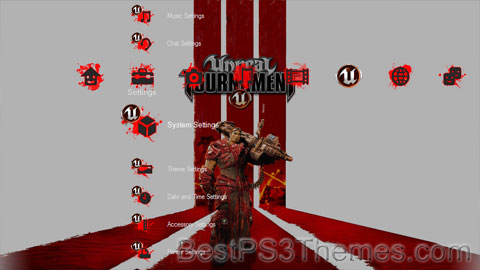
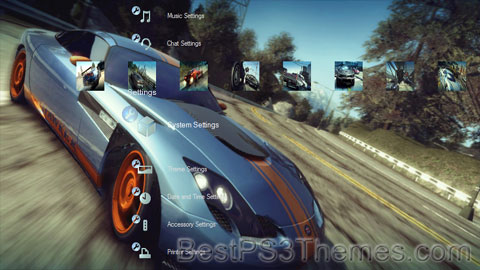
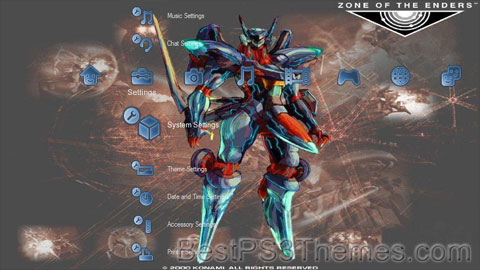
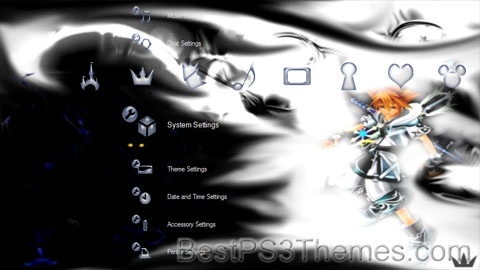
This program unpacks Playstation 3 Theme files (.p3t) so that you can touch-up an existing theme to your likings or use a certain wallpaper from it (as many themes have multiple). But remember, if you use content from another theme and release it, be sure to give credit!
Download p3textractor.zip from above. Extract the files to a folder with a program such as WinZip or WinRAR. Now there are multiple ways to extract the theme.
The first way is to simply open the p3t file with p3textractor.exe. If you don’t know how to do this, right click the p3t file and select Open With. Alternatively, open the p3t file and it will ask you to select a program to open with. Click Browse and find p3textractor.exe from where you previously extracted it to. It will open CMD and extract the theme to extracted.[filename]. After that, all you need to do for any future p3t files is open them and it will extract.
The second way is very simple. Just drag the p3t file to p3textractor.exe. It will open CMD and extract the theme to extracted.[filename].
For the third way, first put the p3t file you want to extract into the same folder as p3textractor.exe. Open CMD and browse to the folder with p3extractor.exe. Enter the following: p3textractor filename.p3t [destination path]Replace filename with the name of the p3t file, and replace [destination path] with the name of the folder you want the files to be extracted to. A destination path is not required. By default it will extract to extracted.filename.
Paradise's gameplay is set in the fictional "Paradise City", an open world in which players can compete in several types of races. Players can also compete online, which includes additional game modes, such as "Cops and Robbers". Several free game updates introduce new features such as a time-of-day cycle and motorcycles. The game also features paid downloadable content in the form of new cars and the fictional "Big Surf Island".
The game was very well received upon release, with aggregate score sites GameRankings reporting an average score of 88% and Metacritic reporting an average score of 88 out of 100. The game won several awards in 2008, with Spike TV, GameTrailers and GameSpot all awarding it Best Driving Game. Reviewers felt the game had an excellent sense of speed, and praised the open world gameplay, a first for the Burnout series. Burnout Paradise is considered by some to be one of the greatest video games ever made.
A remastered version, titled Burnout Paradise Remastered, which includes all downloadable content (except the Time Savers Pack) and support for higher-resolution displays, was released on 16 March 2018 for PlayStation 4 and Xbox One, and on 21 August for Windows via EA's Origin platform. The online service for the original version of the game was permanently discontinued in August 2019.[4] The remastered version for Nintendo Switch with refreshed online servers was released on 19 June 2020.[5][6]
Burnout Paradise is set in an open-world environment.[7] Players have the opportunity to progress at their own pace and level; the game, unlike others, is not actually set to a rigid gameplay framework.[8] According to Alex Ward, creative director of the game at developer Criterion Games, this game is a "complete reinvention" of the Burnout series. He also said that "to create truly next-generation gameplay, they needed to create a truly next-generation game from the ground up".[9] Initially day and night cycles were not included in the game but a software update entitled "Davis" added this element to the game. For the first time in the series, records are now kept on a player's drivers license, including statistics such as fastest time and biggest crash for every street in the game. Completing events raises the driver rank, which unlocks access to new cars.[10]
In previous Burnout games, "Crash Mode" was a dedicated mode in which players were given multiple scenarios in which to cause the biggest crash. In Burnout Paradise, "Crash Mode", now called "Showtime", can be initiated at any time and place in the game. Showtime does differ from the previous incarnation of Crash Mode being that instead of crashing into a busy intersection and watching a crash play out, Showtime has bouncing the vehicle around for as long as possible to gain points. During a race players may now take any route to get to the destination.[11] Races and other events are started by simply stopping at any of the traffic lights and applying the accelerator and brake at the same time. The game features the ability to customize race settings, such as traffic, race routes, and including/excluding cars based on their boost types.[11][12]
Paradise's damage system has also been reworked. There are now two different types of crashes based on the car's condition after the crash.[13] If the player's car manages to retain all four wheels and does not break its chassis, the player can drive out of the crash and continue playing; this is called a "driveaway". If a player's car loses any wheels, the engine is damaged too much from an impact, the car lands on its side or roof or lands outside of the game's map, the car is in a "wrecked" state and the player will have to wait until their car is reset. Cars dynamically compress and deform around objects they crash into.
Cars now have manufacturer and model names, which are loosely based on real-world cars. Cars may not be "tuned up" or customized apart from color changes, which may be done in real-time by driving through the forecourt of a paint shop, or by selecting the color during vehicle selection.[14] Other real-time changes include driving through the forecourt of a gas station to automatically refill the vehicle's boost meter, and driving through the forecourt of a repair shop to automatically repair the vehicle.[15]
The online lobby system used by most video games has been replaced by a streamlined system known as "Easy Drive". While driving, players simply hit right on the D-pad and the 'Easy Drive' menu appears in the corner of their screen. From there, players are able to invite other players from their friends list. Once friends have joined the game, the host can select the event to play. A "Mugshots" camera feature is available for the PC via webcam, PlayStation 3 via a PS3-compatible webcam, Xbox 360 via Xbox Live Vision,[16] PlayStation 4 via PlayStation Camera, and Xbox One via Kinect. When a player is taken down, their photo, or 'Mugshot', is shown to the aggressor, and vice versa. These photos can then be saved to the PC or console's storage device.[17]
The concept of Burnout Paradise came from director Alex Ward's experience playing open world games, specifically Crackdown, Test Drive Unlimited and Mercenaries: Playground of Destruction. Ward found that with a title like Mercenaries the game's world provided more entertainment than the developers likely planned and gave him a sense of freedom in playing around with inconsequential elements of the game. He wanted to take this idea into Burnout Paradise: "My philosophy was that if me and you both played it for three hours, we'd both do different things".[18] By focusing on discovery and exploration, the game ended up being a racing game without any defined tracks, a novel element at the time, which has since influenced several other racing game developers in their approaches.[18] Ward also wanted to develop the game as a social platform, leading to some of its design choices for multiplayer formats.[18]
Ward, in an interview in 2018, noted the difficulty he had in convincing Electronic Arts to follow his vision. The Burnout series at the time was already seen as a less lucrative property compared to the Need for Speed series by EA, and further, Ward found that EA was not amendable to the open world idea he presented.[18] Ward took steps that he could to make Burnout Paradise a desirable game prior to its release to show his superiors that his ideas were sound, which proved out when the game sold more than one million copies within the first three months of release.[18]
Paradise was updated to add time-of-day as well as motorcycles.
Burnout Paradise has undergone significant changes since its initial release. These have been implemented through several free patches and downloadable packs. In 2008, the first major update, codenamed "Bogart", fixed several glitches and was scheduled to be released on 24 April.[19] It was made available to Xbox 360 users on 18 April and to PlayStation 3 users on the originally scheduled date of 24 April, but this prevented store exclusive cars from being obtainable.
The "Cagney" update was released on schedule on 10 July for PlayStation 3 and on 4 August for the Xbox 360. The update introduced three new Freeburn multiplayer modes: Online Stunt Run, Marked Man and Road Rage. Online Stunt Run involves up to 8 players who simultaneously compete for the highest stunt score within 2 minutes. Road Rage features two teams; one must race to a checkpoint while the other tries to stop them through takedowns. Marked Man is like a game of tag, with one player as the Marked Man who cannot see the other players and has no boost. In addition there are 70 new online challenges. These new challenges are different from Free Burn challenges, being timed. Timed challenges start once all players gather at a point of interest. The players then must all complete an objective within a certain time, such as jumping a ramp. "Cagney" also brought custom soundtracks and 1080i support to the PlayStation 3 version.[20]
An update in which involved motorbikes and night-day cycles appear in the Bikes Pack (originally codenamed the "Davis" update), along with tailored locations, challenges and game modes.[21] The update featured a new dynamic weather system, two starter bikes in the player's junkyard, 70 new bike-only challenges, and special "Midnight Rides" challenges that appear only at night.[22] The Bikes pack was released on 18 September on both the PlayStation 3 and Xbox 360.
On 25 September another update was made available which introduced support for the PlayStation 3 trophies system. Criterion Games originally stated that the trophies could be awarded retroactively to players who had already made certain achievements, but when the update was released they said that this had proved to be impossible and that users would have to start a new game in order to achieve some of the goals.[23] Later on February 5, 2009, Criterion released the free 1.6 update, which included the addition of an in-game browser for the PC and PlayStation 3 versions, which gave users access to the Criterion Games Network. An in-game store was also added to all versions which allowed users to purchase content from within the game. Tweaks were also made to the vehicles (not including the freeburn exclusives) to steer the game more toward beginners and casual players. The stats of all of the cars were lowered, and the beginning cars were changed specifically to make them control better, and harder to crash. Events were also made easier to compensate for the vehicle changes.[24]
Burnout Paradise is the first game in the Burnout series to be released for the PC. Criterion made use of existing graphics technology and introduced enhanced visuals and the ability to play the game across multiple monitors to enhance widescreen playing. Players can link three 4:3 monitors to play in a Polyvision aspect ratio. PC users are also able to download a trial version of the game for free. It includes the entire map and three cars but will expire after thirty minutes. All saved data will be carried over if the user decides to purchase the full game.[25]
A demo was made available on 13 December 2007 for both PlayStation 3 via PlayStation Store and Xbox 360 via Xbox Live Marketplace.[26][27] From January 4 through 14, Criterion raised the maximum number of players for the online Freeburn in the Paradise demo to 8 players (online play for the demo has since been shut down completely). With it, a total of 13 new Freeburn challenges were made available for players to play.[28] In 2008, Paradise was made available for download on the PlayStation Store.[29] Upon installation and first execution, all updates are downloaded and installed, which allows the player to have the latest version of Burnout Paradise.
The Xbox 360 version of Burnout Paradise was made available for backward compatibility with the Xbox One in November 2016.[31] On 16 December, it was made available to Xbox Live Gold members for free until 31 December.[32]
Criterion has disabled the optional online features for the original releases in August 2019.[33]
A remastered version of Burnout Paradise was released for PlayStation 4 and Xbox One consoles on 16 March 2018; a version for Windows was released for Origin Access subscribers on 16 August and was fully released on 21 August via Origin platform.[34]
The remaster contains all the previously released downloadable content, except for the Time Savers Pack (a DLC pack that unlocks all vehicles in the game without the need to progress through single-player), and support for higher-resolution monitors (up to 4K resolutions) with 60 frames per second support.[3] A version for Nintendo Switch was released on 19 June 2020.[5][35] Unlike the original, the Remastered version does not have real life in-game advertisements and are instead replaced by fictional ones.
In addition to the free updates, Criterion has released several optional, premium packs that add content like new cars, areas and modes. The first update was the "Burnout Party Pack" and launched on 5 February 2009 in North America and the United Kingdom.[36] It focuses on hotseat multiplayer gameplay, which offers a Freeburn Challenge-like setting but for players on the same console, who pass a single controller between players to complete challenges. The challenges are split into 'Speed', 'Stunt' and 'Skill' with up to 8 rounds and up to 8 players can play at once. Criterion also announced the combo pack Burnout Paradise: The Ultimate Box that launched around the same time which contains the original game, plus the Cagney, Bikes, Party pack and Update pack all in the same package which contained "a mountain of new refinements".[37]
The first premium content pack called "Legendary Cars" featured four cars inspired by famous vehicles from film and television:[38] the Jansen P12 88 Special (based on the DeLorean time machine from the Back to the Future films), the Hunter Manhattan Spirit (based on the Ecto-1 from the Ghostbusters films), the Carson GT Nighthawk (based on KITT from the television series, Knight Rider), and the Hunter Cavalry Bootlegger (based on The General Lee from the TV series The Dukes of Hazzard).[39] The Legendary Cars pack was released on 19 February 2009 for the PlayStation 3 and the Xbox 360, and later in 2009 for the PC.[40]
The second one is "Toy Cars" pack. It features a collection of new vehicles designed with a "toy car" aesthetic, although modelled as full-size cars. The Toy Cars pack has been released in three packs. The full pack offers all toy cars along with the Nakamura Firehawk, a toy motorcycle, while the others split the content into two parts, minus the Firehawk.[41]
On 12 March 2009, the "Boost Specials" pack was released. It featured two cars: the Carson Extreme Hotrod and the Montgomery Hawker Mech. The Carson was described as the fastest car in the game and featured a 'locked' boost; the car continues to boost until it is brought to a stop in any manner. The vehicle dynamics system were rewired so that the Carson performs more realistically than any other car in the game. The Montgomery Hawker Mech also featured a unique boost system, which allows the player to willingly switch between the three different boost types at the touch of a button.[42]
In 2009, Criterion released "Cops & Robbers" on 30 April for PlayStation 3 and Xbox 360.[43] The content does not involve AI Police patrol cars but instead borrows from the Pursuit modes of older Burnout games, notably Burnout 2: Point of Impact. Players are split into teams, the Cops and the Robbers. Teams attempt to return gold bars to their respective bases to score points.[44] Every Paradise car (except Carbon and Premium DLC cars) receives a Police livery with the content.[45]
Originally announced as the "Eastwood pack coming in Fall 2008",[46] the expansion known as "Big Surf Island" was released on 11 June 2009.[47] Design for the island was guided by the principle of "if you can see it, you can drive it".[48][49] The island puts emphasis on the playground aspect of Burnout. The developers mentioned that in their telemetry they noticed that players congregate in areas of Paradise City that lend themselves to stunt-driving, and so the idea was to create an entire island to accommodate player desire. Big Surf Island also features new vehicles, which includes the Carson Dust Storm buggy, a car tailor-made for stunts. In addition to the Dust Storm buggy two specially featured cars, the Hunter Olympus "Governor" and the Carson Annihilator Street Rod are also included. The unlockable cars also include toy versions of all four "Legendary Cars" pack vehicles and a special Jansen P12 Diamond awarded once all 500 freeburn challenges were completed.[50] It features several new events, billboards, smash gates, and mega jumps. New Trophies and Achievements were also added along with a new 'Big Surf Island License' to obtain.[51]
Reviewers praised the game's open world, stating "Burnout Paradise is an amazing open-world racing game that stays true to the Burnout legacy", but that the large world may "feel a little daunting at first".[69] New gameplay mechanics such as gas stations and body repair shops were also praised which "mitigate potential frustration when the heat is on".[59]Hyper's Daniel Wilks commends the game for its "great sense of speed and things that go boom".[70]IGN's Chris Roper praised the vehicle unlock system, which gives the player a new vehicle with each license, and also gives the player the opportunity to "take down" certain vehicles, which earns the player a reward if completed.[61] He further lauded the game as "controlled chaos".[61]The Guardian's Keith Stuart added that the game "feels incredibly good to drive".[71]
However, some reviewers were disappointed that there was no option to restart a race or event.[61] Instead the player had to either fail the event, or cancel the race by bringing the vehicle to a stop for a few seconds, and then return to the specific place on the map to try that particular race or event again. Criterion responded to this criticism by stating that they don't feel that this is a problem and that adding a "retry" option would introduce loading screens, which they "hate with a passion".[72] Despite this, the option to restart an event was later added to the game via a free software update.[24]Eurogamer found DJ Atomika, the game's guide, to be "instantly dislikeable".[59]
The Remastered release was met with similarly positive reviews, albeit slightly less than the original release. Metacritic gave the PlayStation 4 version a score of 82 out of 100, and the Xbox One version a score of 79 out of 100.
The game has been the subject of several academic papers investigating a range of fields, often connected to the title's intensity and need for fast reaction time. These include studies on gamer cardiology,[74]phenomenological correspondence and control abstraction[75] and computer game pedagogy.[76]
This program unpacks Playstation 3 Theme files (.p3t) so that you can touch-up an existing theme to your likings or use a certain wallpaper from it (as many themes have multiple). But remember, if you use content from another theme and release it, be sure to give credit!
Download p3textractor.zip from above. Extract the files to a folder with a program such as WinZip or WinRAR. Now there are multiple ways to extract the theme.
The first way is to simply open the p3t file with p3textractor.exe. If you don’t know how to do this, right click the p3t file and select Open With. Alternatively, open the p3t file and it will ask you to select a program to open with. Click Browse and find p3textractor.exe from where you previously extracted it to. It will open CMD and extract the theme to extracted.[filename]. After that, all you need to do for any future p3t files is open them and it will extract.
The second way is very simple. Just drag the p3t file to p3textractor.exe. It will open CMD and extract the theme to extracted.[filename].
For the third way, first put the p3t file you want to extract into the same folder as p3textractor.exe. Open CMD and browse to the folder with p3extractor.exe. Enter the following: p3textractor filename.p3t [destination path]Replace filename with the name of the p3t file, and replace [destination path] with the name of the folder you want the files to be extracted to. A destination path is not required. By default it will extract to extracted.filename.
This program unpacks Playstation 3 Theme files (.p3t) so that you can touch-up an existing theme to your likings or use a certain wallpaper from it (as many themes have multiple). But remember, if you use content from another theme and release it, be sure to give credit!
Download p3textractor.zip from above. Extract the files to a folder with a program such as WinZip or WinRAR. Now there are multiple ways to extract the theme.
The first way is to simply open the p3t file with p3textractor.exe. If you don’t know how to do this, right click the p3t file and select Open With. Alternatively, open the p3t file and it will ask you to select a program to open with. Click Browse and find p3textractor.exe from where you previously extracted it to. It will open CMD and extract the theme to extracted.[filename]. After that, all you need to do for any future p3t files is open them and it will extract.
The second way is very simple. Just drag the p3t file to p3textractor.exe. It will open CMD and extract the theme to extracted.[filename].
For the third way, first put the p3t file you want to extract into the same folder as p3textractor.exe. Open CMD and browse to the folder with p3extractor.exe. Enter the following: p3textractor filename.p3t [destination path]Replace filename with the name of the p3t file, and replace [destination path] with the name of the folder you want the files to be extracted to. A destination path is not required. By default it will extract to extracted.filename.
This program unpacks Playstation 3 Theme files (.p3t) so that you can touch-up an existing theme to your likings or use a certain wallpaper from it (as many themes have multiple). But remember, if you use content from another theme and release it, be sure to give credit!
Download p3textractor.zip from above. Extract the files to a folder with a program such as WinZip or WinRAR. Now there are multiple ways to extract the theme.
The first way is to simply open the p3t file with p3textractor.exe. If you don’t know how to do this, right click the p3t file and select Open With. Alternatively, open the p3t file and it will ask you to select a program to open with. Click Browse and find p3textractor.exe from where you previously extracted it to. It will open CMD and extract the theme to extracted.[filename]. After that, all you need to do for any future p3t files is open them and it will extract.
The second way is very simple. Just drag the p3t file to p3textractor.exe. It will open CMD and extract the theme to extracted.[filename].
For the third way, first put the p3t file you want to extract into the same folder as p3textractor.exe. Open CMD and browse to the folder with p3extractor.exe. Enter the following: p3textractor filename.p3t [destination path]Replace filename with the name of the p3t file, and replace [destination path] with the name of the folder you want the files to be extracted to. A destination path is not required. By default it will extract to extracted.filename.
This program unpacks Playstation 3 Theme files (.p3t) so that you can touch-up an existing theme to your likings or use a certain wallpaper from it (as many themes have multiple). But remember, if you use content from another theme and release it, be sure to give credit!
Download p3textractor.zip from above. Extract the files to a folder with a program such as WinZip or WinRAR. Now there are multiple ways to extract the theme.
The first way is to simply open the p3t file with p3textractor.exe. If you don’t know how to do this, right click the p3t file and select Open With. Alternatively, open the p3t file and it will ask you to select a program to open with. Click Browse and find p3textractor.exe from where you previously extracted it to. It will open CMD and extract the theme to extracted.[filename]. After that, all you need to do for any future p3t files is open them and it will extract.
The second way is very simple. Just drag the p3t file to p3textractor.exe. It will open CMD and extract the theme to extracted.[filename].
For the third way, first put the p3t file you want to extract into the same folder as p3textractor.exe. Open CMD and browse to the folder with p3extractor.exe. Enter the following: p3textractor filename.p3t [destination path]Replace filename with the name of the p3t file, and replace [destination path] with the name of the folder you want the files to be extracted to. A destination path is not required. By default it will extract to extracted.filename.
This program unpacks Playstation 3 Theme files (.p3t) so that you can touch-up an existing theme to your likings or use a certain wallpaper from it (as many themes have multiple). But remember, if you use content from another theme and release it, be sure to give credit!
Download p3textractor.zip from above. Extract the files to a folder with a program such as WinZip or WinRAR. Now there are multiple ways to extract the theme.
The first way is to simply open the p3t file with p3textractor.exe. If you don’t know how to do this, right click the p3t file and select Open With. Alternatively, open the p3t file and it will ask you to select a program to open with. Click Browse and find p3textractor.exe from where you previously extracted it to. It will open CMD and extract the theme to extracted.[filename]. After that, all you need to do for any future p3t files is open them and it will extract.
The second way is very simple. Just drag the p3t file to p3textractor.exe. It will open CMD and extract the theme to extracted.[filename].
For the third way, first put the p3t file you want to extract into the same folder as p3textractor.exe. Open CMD and browse to the folder with p3extractor.exe. Enter the following: p3textractor filename.p3t [destination path]Replace filename with the name of the p3t file, and replace [destination path] with the name of the folder you want the files to be extracted to. A destination path is not required. By default it will extract to extracted.filename.
Kingdom Hearts is a crossover of various Disney properties based in an original fictional universe. The series centers on the main character, Sora, and his journey and experiences with various Disney characters, as well as some from Square Enix properties, such as Final Fantasy, The World Ends with You, and Einhänder, in addition to original characters and locations created specifically for the series.
The series consists of thirteen games available for multiple platforms, and future games are planned. Most of the games in the series have been positively received and commercially successful. As of March 2022, the Kingdom Hearts series has shipped more than 36 million copies worldwide. A wide variety of related merchandise has been released along with the games, including soundtracks, action figures, companion books, light novels, a collectible card game, and a manga series.
Kingdom Hearts is the first game in the series, released in Japan on March 28, 2002, for PlayStation 2.[1][2] Tetsuya Nomura served as game director, his first time in this position. Kingdom Hearts introduced the main characters (Sora, Kairi, and Riku) of the series, and established the plot's framework involving hearts and dark beings known as the Heartless. It also established the role of Disney characters in the series, with character cameos from the Final Fantasy series. Kingdom Hearts was released in North America on September 17, 2002,[1][2] and featured additional content that was not in the original Japanese version. The game was later re-released in Japan as Kingdom Hearts Final Mix on December 26, 2002.[1][2]Final Mix includes the content from the North American release and additional enemies, cutscenes, and weapons.[3]
Kingdom Hearts: Chain of Memories is a direct sequel to the first game. It was released on the Game Boy Advance in Japan on November 11, 2004.[4][5]Chain of Memories was touted as a bridge between the two PlayStation 2 games, introducing and previewing plot elements that would be explored in the next game.[6] The gameplay system is a departure from the original and employs card game mechanics in real time. Players construct decks out of cards that correspond to different actions in battle, such as attacking or using magic. It was remade into a PlayStation 2 game titled Kingdom Hearts Re:Chain of Memories, which contains polygonal graphics instead of the sprites used in the original game. The remake was released in Japan as a second disc packaged with Kingdom Hearts II Final Mix on March 29, 2007, and in North America as a standalone game on December 2, 2008.[7][8]
Kingdom Hearts II takes place one year after the events of Chain of Memories. It was released for the PlayStation 2 in Japan on December 22, 2005.[9][10] The game further explores the "heart" concept by involving a new group of enemies, the Nobodies, which are the cast-off shells of those who have become Heartless. The gameplay is similar to that of the first Kingdom Hearts game, with the addition of the Reaction Command, which performs reflex-sensitive actions in battle. Kingdom Hearts II was revised into Kingdom Hearts II Final Mix, which contains more material than the original release, such as additional cutscenes and bosses. Kingdom Hearts II Final Mix was released with Kingdom Hearts Re:Chain of Memories in a collection titled Kingdom Hearts II Final Mix+, which was released in Japan on March 29, 2007.[11]
Kingdom Hearts Coded is an episodic mobile phone game that picks up directly after Kingdom Hearts II. The "preinstall" episode was released in Japan on November 18, 2008, and eight episodes were released between June 3, 2009, and January 28, 2010.[12] The game was remade for the Nintendo DS as Kingdom Hearts Re:coded, and features updated gameplay combining that of two later entries in the series, 358/2 Days and Birth by Sleep. Unlike the original version, Re:coded was released internationally: October 7, 2010, in Japan;[13] January 11, 2011, in North America;[14] and January 14, 2011, in Europe.[15]
Kingdom Hearts 358/2 Days was released for the Nintendo DS in Japan on May 30, 2009. It is primarily set between Kingdom Hearts and Kingdom Hearts II, focusing on Roxas' time in Organization XIII and his motives for leaving. It is the first game in the series to feature cooperative multiplayer in addition to the traditional use of AI-controlled partners.[16][17] Gameplay is mission-based with optional objectives that yield additional rewards. The game also has a unique panel system which governs character improvement, special abilities, and equipped weapons.
Kingdom Hearts Birth by Sleep is a prequel to the series, released for the PlayStation Portable in Japan on January 9, 2010, and in North America on September 7, 2010, with additional content.[18] The game is set ten years before the events of the first Kingdom Hearts game, revealing the origins of the villain, Xehanort.[19] It consists of four scenarios, three of which focus on one of the game's three protagonists, Terra, Ventus, and Aqua. The game was re-released in Japan under the title Kingdom Hearts Birth by Sleep Final Mix on January 20, 2011, with the content from the English versions as well as new features, such as an additional fifth scenario.
Kingdom Hearts 3D: Dream Drop Distance was released on March 29, 2012, in Japan for the Nintendo 3DS. The game focuses on Sora and Riku's Mark of Mastery exam under Yen Sid in anticipation of Xehanort's return and their subsequent conflicts with enemies from their past.[20] In addition to similar systems inherited from Birth by Sleep, this game features "Dream Eaters" which serve as both enemies and allies. Players may collect and breed friendly Dream Eaters and train them to become more powerful. The English edition came out on July 20, 2012, in Europe while it came out on July 31, 2012, for North America.
Kingdom Hearts χ: At Tokyo Game Show 2012, Square Enix announced Kingdom Hearts χ, previously known as Kingdom Hearts for PC Browsers.[21] It is a browser game for PCs, and is only playable in Japan since July 18, 2013. It features cartoon-like 2D models and is a prequel to the series, detailing the events leading up to the Keyblade War.
Kingdom Hearts: Unchained χ: An international port of Kingdom Hearts χ that was released for Android and iOS devices.[22]Unchained χ was released in Japan on September 3, 2015,[23] in North America on April 7, 2016,[24] and in Europe on June 16, 2016.[25] Later in April 2017, it was rebranded as Kingdom Hearts: Union χ, featuring an all-new story that expanded and diverged from the original.[26] In January 2019, the game was available on the Amazon Appstore for Amazon devices.[27] The app was rebranded once again to Kingdom Hearts: Union χ Dark Road with the release of Kingdom Hearts Dark Road.[28] The game was shut down and converted into a cutscene viewer in May 2021.[29]
Kingdom Hearts Dark Road is a mobile game accessed within Kingdom Hearts Union χ[Cross],[28] which released worldwide on June 22, 2020.[30] The game is set 70 years before Birth by Sleep and explores the origins of Xehanort and his eventual turn to darkness,[31] and was developed by the same team working on Union χ.[32] Following the shutdown of Union χ, Dark Road was converted into an offline game and received its final story update in August 2022.[33]
Kingdom Hearts III: In September 2010, Tetsuya Nomura stated that his team was too busy with other projects such as Final Fantasy XV (known as Final Fantasy Versus XIII at the time) to work on Kingdom Hearts III. He also stated that his team was researching how to create the high-definition graphics of the game, which depended on the technical restrictions of the next generation consoles.[34] On June 10, 2013, at the E3 Sony press conference, after years of rumors and speculations, Nomura introduced a teaser for Kingdom Hearts III, which stated it was in development for the PlayStation 4. It was announced the next day to be in development for the Xbox One as well.[35] In Kingdom Hearts III, the series protagonist Sora embarks on a journey to regain his lost "Power of Waking" while Sora's friends, Riku and King Mickey, search for the Keyblade wielders Aqua, Terra, and Ventus in preparation for their final battle against Xehanort. The game concludes the "Dark Seeker Saga".[36] The game was released on January 25, 2019, in Japan and on January 29 worldwide.[37][38]
Kingdom Hearts III + Re Mind: A port of Kingdom Hearts III with the Re Mind DLC included that was released for Windows and the Nintendo Switch. It was initially released on Windows exclusively via the Epic Games Store on March 30, 2021, followed by a Steam release three years later on June 13, 2024.[39][40] A cloud version for the Nintendo Switch was announced during Sora's reveal as the final DLC fighter for Super Smash Bros. Ultimate on October 5th, 2021, and released as part of the series' 20th anniversary celebration on February 10, 2022.[41]
Kingdom Hearts: Melody of Memory is a rhythm-based game for the Nintendo Switch, PlayStation 4, and Xbox One.[42][43] It released in Japan on November 11, 2020, and worldwide on November 13.[44] Featuring 140 songs, it sees players travel to each stage in a Gummi ship, and features gameplay similar to Theatrhythm Final Fantasy.[42][43][45]Melody of Memory continues Kairi's story from the end of Kingdom Hearts III,[45] with Nomura saying the Kingdom Hearts III Re Mind title screen laid "some of the groundwork for it".[32]
A Kingdom Hearts game was developed for V CAST, Verizon Wireless's broadband service, and was released on February 1, 2005, in the United States.[46][47] It was one of the launch games for the V CAST services.[48] The game, developed by Superscape and published by Disney Mobile with no involvement from Square Enix, features gameplay akin to the first Kingdom Hearts game, modified for the input method of mobile phones.[49] The game's storyline features Sora struggling to free himself from a nightmare induced by Maleficent's magic.
Kingdom Hearts Mobile was a Kingdom Hearts-themed social game in which players could play mini-games together. Unlike Kingdom Hearts for the V CAST and Kingdom Hearts Coded, this game does not have a storyline and focuses more on socializing. The service operated in conjunction with Kingdom Hearts Coded, as new avatar costumes became available after the player completed an episode of Kingdom Hearts Coded. Kingdom Hearts-related media such as wallpapers, ringtones, graphics, and other items could be purchased and downloaded through the service for mobile phones.
Kingdom Hearts VR Experience: Announced in September 2018, Kingdom Hearts VR Experience is a free, 10-minute interactive video "featuring iconic moments [and music] from the Kingdom Hearts games" with the ability to unlock additional content by progressing through the experience.[50] The first part was released in Japan on January 23, 2019, with the second part releasing in early 2019.[51][52] The first part had initially been scheduled to release on January 18, 2019,[52] after initial release dates of December 25, 2018, for the first part, with the second part releasing on January 18, 2019.[53]
Kingdom Hearts HD 1.5 Remix was released for the PlayStation 3 in Japan on March 14, 2013.[54] The collection includes remastered versions of Kingdom Hearts Final Mix and Re:Chain of Memories, which include gameplay enhancements and trophy support. In addition, a "Theater Mode" has been added, consisting of high definition cutscenes from Kingdom Hearts 358/2 Days.[55] The collection was released in North America on September 10, 2013[56] in Australia on September 12, 2013,[57] and in Europe on September 13, 2013.[58]
Kingdom Hearts HD 2.5 Remix: After the announcement of HD 1.5 Remix, Nomura stated that it would be "pretty unnatural" if Kingdom Hearts II did not receive an HD update.[59] In the credits of HD 1.5 Remix, clips of Kingdom Hearts II Final Mix, Kingdom Hearts Birth by Sleep Final Mix, and Kingdom Hearts Re:coded were shown, hinting at another collection.[60] On October 14, 2013, the collection was announced for the PlayStation 3, and included the previously mentioned games, with Re:coded appearing as HD cinematics, similar to 358/2 Days in HD 1.5 Remix.[60] The collection was released in Japan on October 2, 2014,[61] North America on December 2, 2014, Australia on December 4, 2014, and Europe on December 5, 2014.[62]
Kingdom Hearts HD 2.8 Final Chapter Prologue: In the credits of HD 2.5 Remix, clips of Kingdom Hearts 3D: Dream Drop Distance were shown as well as the inclusion of a secret ending related to the game, hinting at a possible additional collection.[63] In September 2015, Square Enix announced Kingdom Hearts HD 2.8 Final Chapter Prologue. The collection features an HD remaster of Dream Drop Distance as well as Kingdom Hearts χ Back Cover, a cinematic telling of the backstory behind the events of Kingdom Hearts χ, and Kingdom Hearts 0.2: Birth by Sleep – A Fragmentary Passage, a new game taking place after the events of the original Birth by Sleep, told from the perspective of Aqua.[64] It was released in Japan on January 12, 2017, and in North America and Europe on January 24, 2017,[65] with a later release on February 18, 2020, for the Xbox One,[66] and on March 30, 2021, and June 13, 2024, for Windows via Epic Games Store and Steam respectively.[39][40] A cloud version for the Nintendo Switch was released on February 10, 2022.[41]
The following are repackaged versions of the above collections:
Kingdom Hearts Starter Pack: HD 1.5 + 2.5 Remix: A collector's pack released in Japan includes Kingdom Hearts HD 1.5 Remix and Kingdom Hearts HD 2.5 Remix.
Kingdom Hearts Collector's Pack: HD 1.5 + 2.5 Remix: A collector's pack released in Japan includes Kingdom Hearts HD 1.5 Remix and Kingdom Hearts HD 2.5 Remix, a code to get an Anniversary Set for Kingdom Hearts χ, music, and a booklet with art from the series.[61]
Kingdom Hearts HD 1.5 + 2.5 Remix: In October 2016, Square-Enix announced a single-disc compilation release of Kingdom Hearts HD 1.5 Remix and Kingdom Hearts HD 2.5 Remix for the PlayStation 4. The compilation was released on March 9, 2017, in Japan; March 28, 2017, in North America; and March 31, 2017, in Europe.[67] It was later released on February 18, 2020, for the Xbox One,[66] and on March 30, 2021, and June 13, 2024, for Windows via Epic Games Store and Steam respectively.[39][40] A cloud version for the Nintendo Switch was released on February 10, 2022.[41]
Kingdom Hearts: The Story So Far: Announced in early October 2018, this bundle collects the Kingdom Hearts HD 1.5 + 2.5 Remix PlayStation 4 collection and Kingdom Hearts HD 2.8 Final Chapter Prologue. It was released in North America on October 30, 2018, for the PlayStation 4.[68]
Kingdom Hearts: All-In-One-Package: This bundle contains everything in The Story So Far, along with Kingdom Hearts III. It was released digitally on the PlayStation 4 in North America on January 29, 2019.[69] The bundle became available physically in North America on March 17, 2020.[70]
Kingdom Hearts Integrum Masterpiece for Cloud: This bundle contains cloud versions of everything in the All-In-One-Package, along with the Kingdom Hearts III Re Mind DLC. It was released on the Nintendo Switch on February 10, 2022.[41] A non-cloud version, simply titled Kingdom Hearts Integrum Masterpiece, was later made available for Steam on June 13, 2024. [71]
Kingdom Hearts Missing-Link: In April 2022, Square Enix revealed Kingdom Hearts Missing-Link was in development for iOS and Android devices. It is set in Scala ad Caelum between the events of Union X and Dark Road. A closed beta was originally set for late 2022.[72][73] However, it was delayed to October 30, 2023 for its closed beta. The game is set for a 2024 launch on mobile devices.
Kingdom Hearts IV: Though Kingdom Hearts III was the end of the "Dark Seeker Saga" which revolved around Xehanort, it had been decided where certain characters end up in order to potentially continue their stories in future games.[74] In January 2020, Nomura said there would need to be "more time" before the next main entry in the series,[32] later noting in September that Yozora would "definitely... be involved" in the future of the series, in an unexpected and surprising way.[75] In April 2022, Square Enix revealed Kingdom Hearts IV was in development, confirmed that Sora, Donald, and Goofy would return, and that the game would be set in Quadratum, a realistic world inspired by Tokyo. Kingdom Hearts IV will be the start of the "Lost Master arc".[72] In March 2023, during a Kingdom Hearts concert breath concert, Nomura vaguely announced something happened that determined the "direction of the series" going forward.[76]
Kingdom Hearts features a mixture of familiar Disney and Square Enix characters, as well as several new characters designed and created by Nomura.[77] In addition to original locations, the Kingdom Hearts series features many worlds from Disney films. Sora must visit these worlds and interact with various Disney characters to protect them from enemies. Often, his actions in these worlds closely follow the storylines of their respective Disney films. The main characters try not to interfere with the affairs of other worlds, as it could negatively affect the universe's order.[78][79] Various Final Fantasy characters also make appearances within several worlds throughout the series. This includes Moogles, small creatures who are another common element in the games. They provide the player with a synthesis shop in order to create and purchase items used in the game. The main cast from The World Ends with You also makes an appearance in the series in Dream Drop Distance, and Kingdom Hearts III features characters from Pixar films such as the Toy Story series and Monsters, Inc., as well as Schwarzgeist, one of the bosses from Einhänder.[80][81][82] Nevertheless, the usage of Disney characters is not without restrictions. For example, Nomura had requested the use of Oswald the Lucky Rabbit in Kingdom Hearts III, but the response from Disney was that the character would be "too difficult" to use, with no further clarification or details from Disney.[83]