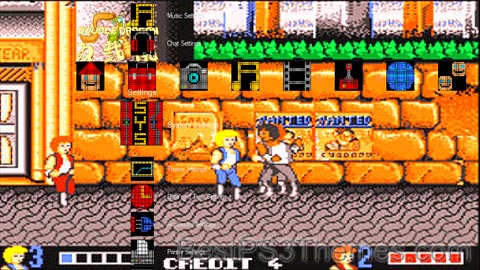
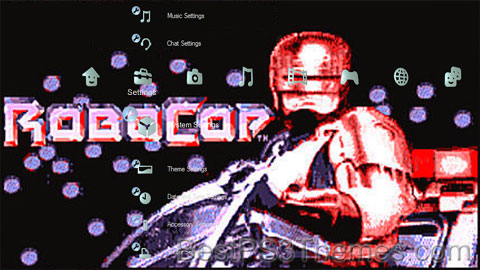
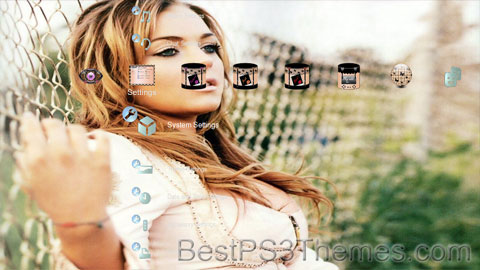
Killzone 2 theme by Megarules
Download: Killzone2_6.p3t
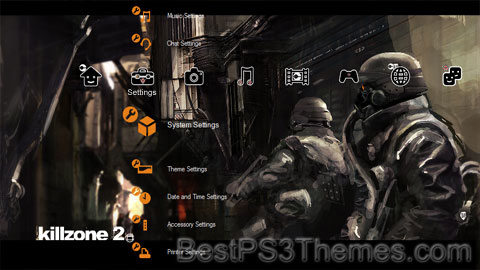
(1 background)
| Killzone 2 | |
|---|---|
| Developer(s) | Guerrilla Games |
| Publisher(s) | Sony Computer Entertainment |
| Director(s) | Mathijs de Jonge |
| Designer(s) | Neil Alphonso |
| Programmer(s) | Michiel van der Leeuw |
| Artist(s) | Jan-Bart van Beek Bas Uterwijk |
| Composer(s) | Joris de Man |
| Series | Killzone |
| Platform(s) | PlayStation 3 |
| Release | |
| Genre(s) | First-person shooter |
| Mode(s) | Single-player, multiplayer |
Killzone 2 is a 2009 first-person shooter developed by Guerrilla Games and published by Sony Computer Entertainment for the PlayStation 3. It is the second main installment in the Killzone series, following 2004's Killzone.
Similar to its predecessor, Killzone 2 takes place in the 24th century and chronicles the war between two human factions; the Vektans, and the Helghast. The game takes place two years after the events of Killzone and follows protagonist Tomas "Sev" Sevchenko as he and his unit battle the Helghast as the Vektans invade Helghan. The protagonist of Killzone and Killzone: Liberation, Cpt./Col. Jan Templar, returns in a supporting role, along with Rico Velasquez. Killzone 2 is played from a first-person view and allows the player to use a variety of weapons. It was released worldwide in February 2009.
Killzone 2 was widely anticipated prior to its release. It was critically acclaimed by critics and fans, who praised it as a superior title to the original Killzone. Additional praise was given to the game's visuals, action, multiplayer modes, soundtrack and atmosphere, although criticism was directed at the narrative. The game's critical and commercial success led to a sequel, Killzone 3, which was released in February 2011.
The official servers for Killzone 2 and Killzone 3 were shut down in March 2018. However, in 2021, a game preservation group called PSONE restored most of the game's online capability on their own set of servers.
Gameplay[edit]
Campaign[edit]

The game is presented almost entirely from a first person perspective, aside from vehicular combat. Killzone 2 features a "lean and peek" cover system which allows the player to take cover behind an object and then pop out to fire at enemies. The "lean and peek" mechanic stays in first-person view at all times. It is also possible for the player to pilot vehicles at two points in the game: a tank and an exoskeleton. Many classic weapons and vehicles from previous Killzone installments return, such as the M82-G and the StA-52 LAR.[citation needed] The Sixaxis motion control feature is also utilized in performing certain actions such as turning a valve, arming an explosive charge and sniping.
Multiplayer[edit]
Warzone, the title of the online multiplayer component of Killzone 2 has been developed by Guerrilla Games in conjunction with the game's single-player campaign.[citation needed] The online multiplayer gameplay is class-based, meaning the player can choose a class of character which is specialized for a specific role to better suit the player's needs in battle. There are 7 classes in total, in which the player can mix and match a main and sub ability according to their playing style, and can switch abilities upon death. There are 15 weapons available to the player, most of which cannot be used until the player reaches a certain rank. Two of these weapons are secondary firearms, and a further two weapons, the Boltgun and Flamethrower, are exclusive to the downloadable maps "Suljeva Cliffside" and "Arctower Landing".
Players play as either the ISA or Helghast, with a few gameplay differences. The character model and respawn points, and the "lean and peek" cover systems were removed. Each class levels up with experience gained from killing enemies or completing mission objectives. With enough experience, players unlock new weapons and skills, as well as a new class. Each class has two badges, the Primary badge selects the class and their specified skill. The secondary badge has an extra skill for the specified class but can be swapped to create own custom class.
Warzone plays out through dynamic matches where multiple game types are played in a single round. The game does not reset between game types, instead flowing between them, with the winning team determined by who wins the most modes. The game ships with five different game types including Assassination, Search & Retrieve, Search & Destroy, Bodycount and Capture & Hold.[1] Online matches can connect 2 to 32 players, and they can group into six squads of up to four players. If an online match does not have a full 32 players, computer-generated "bots" can be added in to create bigger teams (but only in an unranked match). Killzone 2 also offers a clan system, which allows clans of up to 64 players to compete for "Valor Points", an in-game currency that clans can use to bet on tournaments.
Players can also play offline against AIs with Skirmish mode and unranked online multiplayer, but there is no offline multiplayer mode for splitscreen players.
Eight multiplayer maps are included on disc at release,[2] but Guerrilla has released more maps as downloadable content. 6 more maps have been added to multiplayer since release via downloadable content purchasable from the PlayStation Store.
Plot[edit]
Two years after the attempted Helghast invasion of Vekta, an ISA fleet led by Colonel Jan Templar is sent to attack Pyrrhus, the capital city of Helghan, with the goal of deposing and arresting Emperor Scolar Visari on charges of war crimes. Among the ISA units taking part in the attack is Alpha Squad, led by Jan's old comrade Ricardo "Rico" Velasquez. Sergeant Tomas "Sev" Sevchenko, a veteran of the ISA "Legion" battalion, is assigned to serve as his second-in-command.
Tasked with securing Pyrrhus against the fierce resistance of the Helghan Second Army, the team quickly discovers that the Helghast are well prepared for an invasion. Using Helghan's harsh environment to their advantage, they have developed new weapons and equipment, none of which the ISA has ever seen before. Furthermore, the planet's fog-like atmosphere, gritty deserts, and constant storms pose almost as much of a threat to the invaders as the enemy themselves.
Story[edit]
Led by Jan's flagship, the New Sun, the ISA bombard Pyrrhus as cover for a massive ground assault on the city. Despite stiff resistance from well-armed Helghast divisions, they steadily advance towards the Imperial Palace, ultimately capturing both Visari Square and the Helghan Military Academy. Just as the main convoy is set to attack the palace, Colonel Mael Radec, commander of the Second Army, activates a network of arc towers hidden beneath Pyrrhus, killing hundreds of ISA soldiers and breaking their momentum.
Dante Garza, a member of Alpha Squad and close friend of Tomas's, retrieves a piece of a destroyed tower and sends it to ISA researcher Evelyn Batton, who learns that the towers are powered by Petrusite, a mineral capable of generating and channeling electricity. She also identifies an old mining outpost on the outskirts of Pyrrhus where the Helghast have been secretly extracting it for military use.
While working to restore the outpost's communication antenna, Tomas and Rico are separated from the rest of Alpha Squad, allowing Radec's men to capture them. The two fight their way through the refinery where the captives were taken, stumbling upon an interrogation overseen by Radec himself. Oddly enough, he demands that Evelyn give him the launch codes to a set of stolen nuclear warheads in Helghast custody. Rico loses his temper and surprises Radec, saving the captives but leaving Garza mortally wounded when one of Radec's men Rico kills discharges his weapon and Garza is shot in the process. Blaming him for his friend's death, Tomas and the squad return to the New Sun.
Before Garza can be properly mourned, an elite Helghast battalion led by Radec mounts a surprise attack on the fleet, boarding or destroying several ships including the Sun. The ship's crew manages to evacuate, but Radec reaches the bridge, mortally wounds Jan and executes Evelyn, downloading the codes before they can be deleted. With the last of his strength and before succumbing to his wounds, Jan maneuvers the ship to crash into the center of Helghan's Petrusite distribution grid, causing it to explode and disrupt the arc network.
Seizing the opportunity, the survivors attempt to regroup, only to witness Visari detonate the warheads over Pyrrhus, destroying it and killing both the entire population and most of the remaining ISA forces.
With ISA captain Jason Narville leading an offensive on the remnants of the Second Army, Alpha Squad breaches the palace, where they encounter Radec and the imperial guard. After a pitched battle, the wounded commander and his men commit mass suicide out of disgrace, clearing the way to Visari's throne room.
As Tomas moves to arrest him, Visari gloats that he has still won, as the Helghast are now united against the ISA, and without him, they cannot be stopped. Overcome with guilt and wanting revenge for Templar and Garza's deaths, Rico kills him on the spot.
Weary from fighting, Tomas exits the palace and sits on the steps. Above him, a large armada belonging to the Helghan First Army begins its attack on what is left of the ISA invasion force.
Development[edit]
At E3 2005, Killzone 2 was debuted with a trailer depicting soldiers landing in a hostile war-zone on Helghan and fighting Helghast forces. Critics in the media argued that the trailer shown at the trade show did not show actual gameplay footage, as its high level of visual detail has been argued to be impossible to render in real-time on the PlayStation 3 and the audio mix of the trailer was slightly delayed. SCEA's Vice President, Jack Tretton, stated that the footage of Killzone 2, that was believed to be pre-rendered, "is real gameplay everybody's seeing out there".[3] Several days later, Phil Harrison, SCE Europe's Vice President of Development, stated in an interview that all of the footage of PlayStation 3 games at E3 2005 were "running off video" which was "done to PS3 spec".[4] Further interviews eventually revealed the trailer was indeed a "target render", a prerendered video showing the developer's goals for the finished product.[5]
At the Game Developers Conference in 2007, a Killzone 2 teaser was shown behind closed doors, and was never released to the public. It featured various battles, destructible environments, and lighting effects among others.[6] Killzone 2 was shown to a panel of journalists at a special pre-E3 2007 event in Culver City, California, and then the next day to the public at Sony's E3 press conference.[7] An in-game trailer showing real-time gameplay of Killzone 2 was also released,[8] along with several videos of extended gameplay.[9] A number of media outlets since E3, such as the BBC, have referred to Killzone 2 as being "one of the most cinematic and immersive games ever produced on a console".[10] At the Leipzig Games Convention in 2007, Killzone 2 was presented in playable form to the media. It was the same demo level as shown at E3 2007, although journalists were allowed to play it hands-on.[11] At Sony's PlayStation Day 2008, the first level in Killzone 2's single-player campaign was presented, named "Corinth River".[12]
Michal Valient, a Senior Programmer at Guerrilla Games, presented details of their Killzone 2 proprietary game engine at a Developers Conference in July 2007.[13] As with many other titles published by SCE, including LittleBigPlanet and Infamous, Killzone 2 uses a deferred shading engine which enables far greater control over the game's characteristic lighting palette, while maximising processor throughput and limiting shader complexity. Other games to use similar approaches include Rockstar Games' Grand Theft Auto IV and GSC Game World's S.T.A.L.K.E.R.: Shadow of Chernobyl. However, this approach does create some additional problems, notably with respect to anti-aliasing and transparencies. The former was solved using a MSAA Quincunx (multisample anti-aliasing) solution, and the latter by the addition of a standard forward rendering path. The game's graphics were universally praised by critics.[14]
The animation was done in Maya 8.5 with some motion capture animations tweaked in MotionBuilder. 3D artists, animators and level designers used Maya as their production environment, which is unusual considering that most 3D games are produced using 3ds max. A large library of custom Maya tools and scripts was created to support these different disciplines.[15] Tools like "Hyperion", a lightmap rendering software, were used in place of Maya's viewport rendering software. In-game animation was assisted with another tool they created called "AnimationBlender" and particle effects were edited using a tool called "Particle Editor". They also created a tool called "ColorTweaker", which gave them the possibility to do color correction on the PS3 in real-time.[15]
Most of the animation was done using motion capture with some animations, reload animations for example, done by hand. Facial animation was done using blendshapes with bones for the jaw and the eyes. Lead tech artist, Paulus Bannink, explains that "The main reason for going with blendshapes was the relative ease with which they can be transferred to different faces, it would also provide a more artist friendly way of editing the facial animation rig.".[15] The cut scene facial animation was done using marker motion capture. In game dialog was done generically using MotionBuilder after audio files were plugged in. The game was developed not only by artists in Amsterdam, but also by people living in New Zealand, Australia, Japan, Korea, the UK and the US. The data files, gigabytes in size, were sent over the internet.[15]
Killzone 2's budget was originally US$20 million but rose to US$40–45 million at the end of the development, with a team of 120.[16][17][18][19]
Soundtrack[edit]
| Killzone 2 (Original Soundtrack from the Video Game) | |
|---|---|
| Soundtrack album by | |
| Released | October 19, 2009 |
| Genre | Orchestral, Video game soundtrack |
| Length | 1:14:22 |
The score to Killzone 2 was composed by Joris de Man, who scored 60 minutes of in-game music and 30-minutes of live orchestral score for the game, recorded at Abbey Road Studios in London, with the Nimrod Studio Orchestra.[20] The score was produced and mixed by Rich Aitken, regular mix partner for Joris de Man and Marc Canham, at Nimrod Productions.
| No. | Title | Writer(s) | Length |
|---|---|---|---|
| 1. | "Opening - Birth of War (Retribution)" | Joris de Man | 3:40 |
| 2. | "The Second Helghan March (Helghan Forever)" | Joris de Man | 2:21 |
| 3. | "Battle Preparations" | Joris de Man | 1:33 |
| 4. | "Bridge is Down" | Joris de Man | 1:47 |
| 5. | "Ambush" | Joris de Man | 2:23 |
| 6. | "Protecting the Convoy" | Joris de Man | 3:14 |
| 7. | "Flight into Blood Meridian" | Joris de Man | 0:45 |
| 8. | "Fight Your Way Through" | Joris de Man | 3:21 |
| 9. | "Heavy Resistance" | Joris de Man | 1:32 |
| 10. | "An Unexpected Guest" | Joris de Man | 0:58 |
| 11. | "The Police Station" | Joris de Man | 2:33 |
| 12. | "Resistance on the Bridge" | Joris de Man | 0:53 |
| 13. | "Taking the Bridge" | Joris de Man | 3:03 |
| 14. | "Petrusite Revealed" | Joris de Man | 0:56 |
| 15. | "The Academy" | Joris de Man | 3:21 |
| 16. | "Fight the A.T.A.C." | Joris de Man | 1:59 |
| 17. | "A Day of Mourning" | Joris de Man | 2:36 |
| 18. | "Suljeva" | Joris de Man | 3:12 |
| 19. | "Next Stop Tharsis Refinery" | Joris de Man | 2:26 |
| 20. | "Question Time with Radec" | Joris de Man | 1:18 |
| 21. | "Dante Garza RIP" | Joris de Man | 1:58 |
| 22. | "Going Up" | Joris de Man | 2:07 |
| 23. | "Templar's Last Stand" | Joris de Man | 3:45 |
| 24. | "The Exoskeleton" | Joris de Man | 3:38 |
| 25. | "Nuked" | Joris de Man | 1:53 |
| 26. | "Radec's Personal Guards" | Joris de Man | 3:10 |
| 27. | "Visari's Lament" | Joris de Man | 4:41 |
| 28. | "End Credits Suite" | Joris de Man | 8:07 |
| 29. | "Fight the A.T.A.C. (Remix)" | Joris de Man | 1:12 |
Release[edit]
Beta access was given to a select number of North American and European PlayStation Network subscribers. The beta consisted of three online multiplayer maps; "Blood Gracht" (small), "Radec Academy" (medium) and "Salamun Market" (large), with unlockable ranks and character classes ("badges"). Beta testers had their own statistics and have the ability to enter clan competitions. Beta access was private and thus could not be shared with other PlayStation Network accounts. Also, beta testers are tied with Sony Computer Entertainment Inc. by a non-disclosure agreement; therefore they were not allowed to reveal contents of the beta experience. A technical demo of one of Killzone 2's TV commercials, known as the "Bullet" trailer, was released on the PlayStation Store on April 2, 2009.[21] The demo features the commercial itself, the ability to shift camera angles and film speed, and several commentaries from key development staff at Guerrilla Games.
On February 5, 2009, SCEE released a single player demo of Killzone 2 on the European/Oceanic PlayStation Store.[22] The demo includes the first two sections of 'Corinth River' (the first level of the game) as well as the tutorial sequence from the final game.[23] A demo card, granting access to a Killzone 2 demo was also offered to US gamers who pre-ordered the game at GameStop. The US demo was also made available to those customers on February 5. In the North American version of PlayStation Home, if users found an avatar dressed in a Helghast costume, the avatar with the Helghast costume would give that user a code for the demo. This occurred on February 16.[24] On February 26, the demo was made available for download from the PlayStation Store in North America.
The servers for Killzone 2 and Killzone 3 were shut down on March 29, 2018. They have since been offline and can no longer be played online.[25]
PlayStation Home[edit]
In the North American version of PlayStation Home, if users pre-ordered Killzone 2 from Amazon.com, users received free male and female I.S.A. and Helghast uniforms for their avatar.[26] In the European version of PlayStation Home, if users participated in the "Killzone AM" event that took place on Saturday March 28, 2009, at 11 am CET for one full round, the Home Managers gave the participants a code for the Killzone 2 uniforms. Requirement was that users had to have a United Kingdom PSN account.[27] For a limited time in Japanese Home, users received an I.S.A. uniform for watching the Killzone 2 trailer and answering a questionnaire. To get the Helghast uniform in Japan, users had to do a pre-order. In Home's shopping complex, there are fourteen — seven for male and seven for female — Killzone 2 themed shirts available for purchase as well as the Helghast Tactician uniform. A costume for Radec was released on March 4, 2010, to the European Home and has been released in the North American.
Guerrilla Games have released a Killzone 2 themed apartment called the "Visari Throne Room" for Home. The Visari Throne Room apartment is based on the throne room inside Visari's Palace from the final mission of Killzone 2. For the Visari Throne Room, there are five pieces of furniture based on actual palace furnishings from Killzone 2: two types of Visari-style chairs, an administrative desk, a plant container with authentic Helghan vegetation, and a freestanding painting which portrays an important moment in the colonial history of the Helghast. The Visari Throne Room and matching furniture were made available to the European Home on July 2, 2009,[28] the North American on August 27, 2009,[29] and the Asian[30] and Japanese Home on October 9, 2009.[31]
Downloadable content[edit]
On April 10, 2009[32] Hermen Hulst, Managing Director from Guerrilla Games announced on GameTrailers TV[citation needed] that Killzone 2 would get a DLC map pack named "Steel & Titanium" which would contain two new maps called Wasteland Bullet and Vekta Cruiser. With new gameplay elements and strategic twists.[33][34] The first DLC map pack was released on Thursday, April 30.[34][35] Hulst stated that the next Killzone 2 DLC map pack that they were releasing would have a 'Retro Vibe' to it.[citation needed]
The second map pack was officially announced on May 20, 2009 as "Flash and Thunder", and features two maps previously seen in Killzone called "Beach Head" and "The Southern Hills". Both maps followed the first map pack by bringing new gameplay elements and strategic twists; Beach Head, the wide open battlefield, with rain-filled trenches, and Southern Hills with its intermittent nuke explosion. It was released on June 11, 2009.[36] Both map packs have twelve trophies that go along with them, six for each map.
On July 10 the third map pack was officially announced, even though Sony stated that there were no plans for a third pack. The DLC "Napalm and Cordite" was released on July 23, 2009, it contained two new maps "Suljeva Cliffside" and "Arctower Landing", in addition to the maps the Flamethrower and the Boltgun both from singleplayer made their debut in multiplayer.[37] The Flamethrower is found in the Suljeva Cliffside map and the Boltgun is found in the Arctower Landing map. A multiplayer map pack bundle was also released to coincide with the release of Napalm and Cordite, containing all six maps from the DLC packs, for the price of four maps.[38] The downloadable content pack three has eight trophies that go along with it, four for each map which are for the new weapons. With the fifth anniversary of the original Killzone taking place, the map pack "Flash & Thunder" was reduced in price in North America and Europe.
Reception[edit]
| Aggregator | Score |
|---|---|
| Metacritic | 91/100[39] |
| Publication | Score | ||||||||||||||||||||||||||||||||||||||||||||
|---|---|---|---|---|---|---|---|---|---|---|---|---|---|---|---|---|---|---|---|---|---|---|---|---|---|---|---|---|---|---|---|---|---|---|---|---|---|---|---|---|---|---|---|---|---|
| Destructoid | 9.5/10[40] | ||||||||||||||||||||||||||||||||||||||||||||
| Edge | 7/10[41] | ||||||||||||||||||||||||||||||||||||||||||||
| Eurogamer | 9/10[42] | ||||||||||||||||||||||||||||||||||||||||||||
| Famitsu | 32/40[43] | ||||||||||||||||||||||||||||||||||||||||||||
| Game Informer | 8.75/10[44] | ||||||||||||||||||||||||||||||||||||||||||||
| GamePro | |||||||||||||||||||||||||||||||||||||||||||||
| GameRevolution | A−[46] | ||||||||||||||||||||||||||||||||||||||||||||
| GameSpot | 9/10[14] | ||||||||||||||||||||||||||||||||||||||||||||
| GameSpy | |||||||||||||||||||||||||||||||||||||||||||||
| GameTrailers | 9.2/10[48] | ||||||||||||||||||||||||||||||||||||||||||||
| GameZone | 9.4/10[49] | ||||||||||||||||||||||||||||||||||||||||||||
| Giant Bomb | GTA An ChicksGTA An Chicks theme by Dj Download: GTAAnChicks.p3t
P3T Unpacker v0.12 This program unpacks Playstation 3 Theme files (.p3t) so that you can touch-up an existing theme to your likings or use a certain wallpaper from it (as many themes have multiple). But remember, if you use content from another theme and release it, be sure to give credit! Download for Windows: p3textractor.zip Instructions: Download p3textractor.zip from above. Extract the files to a folder with a program such as WinZip or WinRAR. Now there are multiple ways to extract the theme. The first way is to simply open the p3t file with p3textractor.exe. If you don’t know how to do this, right click the p3t file and select Open With. Alternatively, open the p3t file and it will ask you to select a program to open with. Click Browse and find p3textractor.exe from where you previously extracted it to. It will open CMD and extract the theme to extracted.[filename]. After that, all you need to do for any future p3t files is open them and it will extract. The second way is very simple. Just drag the p3t file to p3textractor.exe. It will open CMD and extract the theme to extracted.[filename]. For the third way, first put the p3t file you want to extract into the same folder as p3textractor.exe. Open CMD and browse to the folder with p3extractor.exe. Enter the following: Rolling StonesRolling Stones theme by lucas Download: RollingStones.p3t
Redirect to:
The Venture BrothersGlasgow CelticJames Bond 007HaifaHaifa theme by Tony (gaara1978) Download: Haifa.p3t
Haifa (/ˈhaɪfə/ HY-fə; Hebrew: חֵיפָה, romanized: Ḥēyfā, IPA: [ˈχajfa]; Arabic: حَيْفَا, romanized: Ḥayfā)[2] is the third-largest city in Israel—after Jerusalem and Tel Aviv—with a population of 290,306 in 2022. The city of Haifa forms part of the Haifa metropolitan area, the third-most populous metropolitan area in Israel.[3] It is home to the Baháʼí Faith's Baháʼí World Centre, and is a UNESCO World Heritage Site and a destination for Baháʼí pilgrimage.[4] Built on the slopes of Mount Carmel, the settlement has a history spanning more than 3,000 years. The earliest known settlement in the vicinity was Tell Abu Hawam, a small port city established in the Late Bronze Age (14th century BCE).[5] In the 3rd century CE, Haifa was known as a dye-making center. Over the millennia, the Haifa area has changed hands: being conquered and ruled by the Canaanites, Israelites, Phoenicians, Assyrians, Babylonians, Persians, Hasmoneans, Romans, Byzantines, Arabs, Crusaders, Ottomans, and the British. During the Battle of Haifa in the 1948 Palestine war, most of the city's predominantly Arab population fled or were expelled. That year, the city became part of the then-newly-established state of Israel. As of 2016[update], the city is a major seaport located on Israel's Mediterranean coastline in the Bay of Haifa covering 63.7 km2 (24.6 sq mi). It lies about 90 km (56 mi) north of Tel Aviv and is the major regional center of northern Israel. Two respected academic institutions, the University of Haifa and the Technion – Israel Institute of Technology the oldest and top ranked university in both Israel and the Middle East, are located in Haifa, in addition to the largest K–12 school in Israel, the Hebrew Reali School. The city plays an important role in Israel's economy. It is home to Matam, one of the oldest and largest high-tech parks in the country; and prior to the opening of Tel Aviv Light Rail, Haifa is the only city with underground rapid transit system in Israel known as the Carmelit.[6][7] Haifa Bay is a center of heavy industry, petroleum refining and chemical processing. Haifa formerly functioned as the western terminus of an oil pipeline from Iraq via Jordan.[8] It is one of Israel's mixed cities, with an Arab-Israeli population of c.10%. Etymology[edit]The ultimate origin of the name Haifa remains unclear. One theory holds it derives from the name of the high priest Caiaphas.[citation needed] Some Christians believe it was named for Saint Peter, whose Aramaic name was Keipha.[citation needed] Another theory holds it could be derived from the Hebrew verb root חפה (hafa), from H-f-h root (ח-פ-ה), meaning to cover or shield, i.e. Mount Carmel covers Haifa;[9] others point to a possible origin in the Hebrew word חוֹף (hof), meaning "shore", or חוֹף יָפֶה (hof yafe), meaning "beautiful shore".[9][10] Other spellings in English included Caipha, Kaipha, Caiffa, Kaiffa and Khaifa.[11] Locations and names[edit]Sycaminum and Efa[edit]The earliest named settlement within the area of modern-day Haifa was a city known as Sycaminum.[12] The remains of the ancient town can be found in a coastal tell, or archaeological mound, known in Hebrew as Tel Shikmona,[13] meaning "mound of the Ficus sycomorus", and in Arabic as Tell el-Semak or Tell es-Samak, meaning "mound of the sumak trees", names that preserved and transformed the ancient name, by which the town is mentioned once in the Mishnah (composed c. 200 CE) for the wild fruits that grow around it.[13][14] The name Efa first appears during Roman rule, some time after the end of the 1st century, when a Roman fortress and small Jewish settlement were established not far from Tel Shikmona.[12][13] Haifa is also mentioned more than 100 times in the Talmud, a work central to Judaism.[13] Hefa or Hepha in Eusebius of Caesarea's 4th-century work, Onomasticon (Onom. 108, 31), is said to be another name for Sycaminus.[15] This synonymizing of the names is explained by Moshe Sharon, who writes that the twin ancient settlements, which he calls Haifa-Sycaminon, gradually expanded into one another, becoming a twin city known by the Greek names Sycaminon or Sycaminos Polis.[13] References to this city end with the Byzantine period.[5] Porphyreon[edit]Around the 6th century, Porphyreon or Porphyrea is mentioned in the writings of William of Tyre,[dubious – discuss] and while it lies within the area covered by modern Haifa, it was a settlement situated south of Haifa-Sycaminon.[5][13] Early Muslim Haifa[edit]Following the Arab conquest in the 7th century, Haifa was used to refer to a site established on Tel Shikmona upon what were already the ruins of Sycaminon (Shiqmona).[13] Haifa (or Haifah) is mentioned by the mid-11th-century Persian chronicler Nasir Khusraw, and the 12th- and 13th-century Arab chroniclers, Muhammad al-Idrisi and Yaqut al-Hamawi.[16] Nasir-i-Khusrau visited in 1047; he noted that "Haifa lies on the seashore, and there are here palm-gardens and trees in numbers. There are in this town shipbuilders, who build very large craft."[17] Crusader Caiphas[edit]The Crusaders, who captured Haifa briefly in the 12th century, call it Caiphas,[12] and believe its name related to Cephas, the Aramaic name of Simon Peter.[14] Eusebius is also said to have referred to Hefa as Caiaphas civitas,[18] and Benjamin of Tudela, the 12th-century Jewish traveller and chronicler, is said to have attributed the city's founding to Caiaphas, the Jewish high priest at the time of Jesus.[14] Late Ottoman "Old Haifa"[edit]Haifa al-'Atiqa (Arabic: "Ancient Haifa") is another name used by some locals to refer to Tell es-Samak, when it was the site of Haifa while a hamlet of 250 residents, before it was moved in 1764–5 to the site from which the modern city emerged.[19] Haifa al-Jadida (New Haifa) and modern Haifa[edit]In 1764-5 Zahir al-Umar moved the village to a new site 1.5 mi (2.4 km) to the east, which he also fortified.[19] The new village, the nucleus of modern Haifa, was first called al-imara al-jadida (Arabic: "the new construction") by some, but others residing there called it Haifa al-Jadida (Arabic: "New Haifa") at first, and then simply Haifa.[2] In the early 20th century, Haifa al 'Atiqa was repopulated with many Arab Christians in an overall neighborhood in which many Middle Eastern Jews were established inhabitants, as Haifa expanded outward from its new location.[20] History[edit]Bronze Age: Tell Abu Hawam[edit]A town known today as Tell Abu Hawam was established during the Late Bronze Age (14th century BCE).[5] It was a port and fishing village. In the Hebrew Bible[edit]Mount Carmel and the Kishon River are mentioned in the Hebrew Bible.[21][22] A grotto on the top of Mount Carmel is known as the "Cave of Elijah",[23] traditionally linked to the Prophet Elijah and his apprentice, Elisha.[21] In Arabic, the highest peak of the Carmel range is called the Muhraka, or "place of burning", harking back to the burnt offerings and sacrifices there in Canaanite and early Israelite times.[24] Persian and Hellenistic period: near Shikmona[edit]In the 6th century BCE, during the Persian period, Greek geographer Scylax wrote of a city "between the bay and the Promontory of Zeus" (i.e., the Carmel), which may be a reference to Shikmona, a locality in the Haifa area.[5] By Hellenistic times, the city had moved to a new site south of what is now the Bat Galim neighborhood of modern Haifa because the old port's harbour had become blocked with sand.[5] A Greek-speaking population living along the coast at this time was engaged in commerce.[25] Shikmona[edit]Haifa was located near the town of Shikmona, a center for making the traditional Tekhelet dye used in the garments of the high priests in the Temple. The archaeological site of Shikmona is southwest of Bat Galim.[26] Early Haifa is believed to have occupied the area which extends from the present-day Rambam Hospital to the Jewish Cemetery on Yafo Street. The inhabitants engaged in fishing and agriculture.[27] Roman period[edit]In about the 3rd century CE, Haifa was first mentioned in Talmudic literature, as a Jewish fishing village and the home of Rabbi Avdimi and other Jewish scholars. According to the Talmud, fishermen caught Murex, sea snails which yielded purple dye used to make tallit (Jewish prayer shawls) from Haifa to the Ladder of the Tyrians. Tombs dating from the Roman era, including Jewish burial caves, have been found in the area.[5][28][29] Byzantine period[edit]Under Byzantine rule, Haifa continued to grow but did not assume major importance.[30] A kinah speaks of the destruction of the Jewish community of Haifa along with other communities when the Byzantines reconquered the country from the
Retrogames-3 theme by OPTIMUS Download: Retrogames-3.p3t P3T Unpacker v0.12 This program unpacks Playstation 3 Theme files (.p3t) so that you can touch-up an existing theme to your likings or use a certain wallpaper from it (as many themes have multiple). But remember, if you use content from another theme and release it, be sure to give credit! Download for Windows: p3textractor.zip Instructions: Download p3textractor.zip from above. Extract the files to a folder with a program such as WinZip or WinRAR. Now there are multiple ways to extract the theme. The first way is to simply open the p3t file with p3textractor.exe. If you don’t know how to do this, right click the p3t file and select Open With. Alternatively, open the p3t file and it will ask you to select a program to open with. Click Browse and find p3textractor.exe from where you previously extracted it to. It will open CMD and extract the theme to extracted.[filename]. After that, all you need to do for any future p3t files is open them and it will extract. The second way is very simple. Just drag the p3t file to p3textractor.exe. It will open CMD and extract the theme to extracted.[filename]. For the third way, first put the p3t file you want to extract into the same folder as p3textractor.exe. Open CMD and browse to the folder with p3extractor.exe. Enter the following: Retrogames-2 theme by OPTIMUS Download: Retrogames-2.p3t P3T Unpacker v0.12 This program unpacks Playstation 3 Theme files (.p3t) so that you can touch-up an existing theme to your likings or use a certain wallpaper from it (as many themes have multiple). But remember, if you use content from another theme and release it, be sure to give credit! Download for Windows: p3textractor.zip Instructions: Download p3textractor.zip from above. Extract the files to a folder with a program such as WinZip or WinRAR. Now there are multiple ways to extract the theme. The first way is to simply open the p3t file with p3textractor.exe. If you don’t know how to do this, right click the p3t file and select Open With. Alternatively, open the p3t file and it will ask you to select a program to open with. Click Browse and find p3textractor.exe from where you previously extracted it to. It will open CMD and extract the theme to extracted.[filename]. After that, all you need to do for any future p3t files is open them and it will extract. The second way is very simple. Just drag the p3t file to p3textractor.exe. It will open CMD and extract the theme to extracted.[filename]. For the third way, first put the p3t file you want to extract into the same folder as p3textractor.exe. Open CMD and browse to the folder with p3extractor.exe. Enter the following: Might They Be Sexy theme by SlickSaint Download: MightTheyBeSexy.p3t P3T Unpacker v0.12 This program unpacks Playstation 3 Theme files (.p3t) so that you can touch-up an existing theme to your likings or use a certain wallpaper from it (as many themes have multiple). But remember, if you use content from another theme and release it, be sure to give credit! Download for Windows: p3textractor.zip Instructions: Download p3textractor.zip from above. Extract the files to a folder with a program such as WinZip or WinRAR. Now there are multiple ways to extract the theme. The first way is to simply open the p3t file with p3textractor.exe. If you don’t know how to do this, right click the p3t file and select Open With. Alternatively, open the p3t file and it will ask you to select a program to open with. Click Browse and find p3textractor.exe from where you previously extracted it to. It will open CMD and extract the theme to extracted.[filename]. After that, all you need to do for any future p3t files is open them and it will extract. The second way is very simple. Just drag the p3t file to p3textractor.exe. It will open CMD and extract the theme to extracted.[filename]. For the third way, first put the p3t file you want to extract into the same folder as p3textractor.exe. Open CMD and browse to the folder with p3extractor.exe. Enter the following: | ||||||||||||||||||||||||||||||||||||||||||||