Aria Giovanni (born November 3, 1977) is an American former erotic actress and model who was Penthouse magazine's Pet for the month of September 2000. She has modelled in a range of photographic styles including amateur, artistic nude, pinup, fetish, and glamour,[3] and has also had roles in films and television shows.
Aria Giovanni was born November 3, 1977, in Long Beach, California, the middle of three children. She has an older sister and a younger brother.[1] Giovanni grew up in Orange County, California.[4] She attended a junior college in San Diego, majoring in biochemistry.[5] During an October 30, 2002 appearance on The Howard Stern Show, Giovanni revealed that her father left the family at age 10, and that she got into trouble as a child because she was frequently left to her own devices.[6] At age 12, her mother sent her to drug rehabilitation[6][7] after discovering her unconscious in her own vomit. She says that she physically developed early, and was about a C cup by the age of 12, and a DD by the time she was 14.[6] Giovanni has stated that she was not popular in school. She characterizes herself as having grown up an "ugly duckling", and was never asked out on dates in high school.[5]
Giovanni was attending a junior college to major in Biology and waitressing five nights a week when she began modeling, having attained 17.5 credits by the semester when she was discovered.[5][6] She began modeling at the end of 1999, initially to pay for college. About six months into modeling, she was made Penthouse magazine's Pet for the month of September 2000. Her pictorial was shot by Suze Randall. Around this time she was accepted to University of California, San Diego as a junior transfer student with a major in biochemistry and a minor in English writing. However, she decided not to complete college.[3][5]
In 2001, Giovanni played Monica Snatch in the movie Survivors Exposed, a parody of the Survivor television series. She also appeared on the November 16, 2001, episode of the TV dating show Shipmates. The following year, she starred in Justine, which was recommended by AskMen as one of nine pornographic movies that women can enjoy.[8]
Giovanni was Playboy's Model of the Day for June 6, 2007.[9]
In October 2008, Giovanni appeared in the first episode of James Gunn's short-form web video series, James Gunn's PG Porn, playing a role opposite Nathan Fillion.[10] Giovanni stars on the 2010 Nerdcore Horror Calendar.[11]
In May 2010 Giovanni was included in Complex magazine's list of The 50 Prettiest Porn Stars of All Time.[7]
During her October 30, 2002 appearance on The Howard Stern Show, Giovanni stated that on November 3, 1998, her 21st birthday, she married her boyfriend of five years. During the same appearance, she revealed that she had been living with guitarist John 5 for the past five months and that this was the first time she dated someone in the entertainment industry.[6] Giovanni and John 5 married in 2005, but they later divorced.[13]
Carmen Electra[3] (born Tara Leigh Patrick, April 20, 1972) is an American actress, model, singer, and media personality. She began her career as a singer after moving to Minneapolis where she met Prince who produced her self-titled debut studio album, released in 1993. Electra began glamour modeling in 1996 with appearances in Playboy magazine, before relocating to Los Angeles, where she had her breakthrough portraying Lani McKenzie in the action drama series Baywatch (1997–1998).
Electra is often spotlighted for her looks and has been considered a "sex symbol".[5][6] She was named No. 18 in FHM's 100 Sexiest Women in the World in 2005 and is the oldest cover girl in the publication history of FHM.[7]
Electra was born Tara Leigh Patrick on April 20, 1972, in Sharonville, Ohio (a Cincinnati suburb),[8] to Harry Patrick, a guitarist and entertainer, and his wife Patricia (d. 1998), a singer.[9] Electra attended Ann Weigel Elementary School and studied dance under Gloria J. Simpson at Dance Artists studio in Western Hills until age nine, when she enrolled in the School for Creative and Performing Arts (SCPA), a magnet arts school in the Cincinnati Public School District.[10] There, she was an older classmate of Nick Lachey, with whom she appeared in a production of Peter Pan.[11][12]
Electra, who told People in 1997 that she had "wanted to dance on Broadway," graduated from Princeton High School in Sharonville in 1990, having transferred there from SCPA two years prior.[13][14] Additionally, Electra attended and graduated from Barbizon Modeling and Acting School in Cincinnati.[15]
Electra is of Cherokee, German, and Irish descent,[16] and was very close to her family. She said of her mother, "My mom was my rock," and described her older sister Debbie as being "like a second mother to me".[17] After Debbie moved to Illinois, Electra said her life "revolved around my mom. She was my best friend, in my life 24/7 whether I wanted her there or not."[17]
Electra started her professional career in 1990 as a dancer at Kings Island in Mason, Ohio, performing in the show "It's Magic", one of the more popular shows in the park's history.[18] In 1991, she moved to Minneapolis, Minnesota, where she met singer and songwriter Prince.[19] Soon after, Electra signed a recording contract with Prince's Paisley Park Records and made her singing debut with her self-titled debut studio album in 1993,[20] and would be her only album release.[21] During her time at Paisley Park Records, she officially became known as Carmen Electra.
In May 1996, she was featured in a nude pictorial in Playboy magazine, the first of several. Electra was featured in Playboy four more times: June 1997, December 2000, April 2003, and the January 2009 anniversary issue. She was on the cover of the last three of these issues.[22]
Electra moved to Los Angeles, where she made her acting debut in the independentcomedy horror film American Vampire (1997). In 1997 she was cast as Lani McKenzie in the American drama series Baywatch, for which she achieved her breakthrough. The role lasted a year and helped to establish her as a sex symbol,[16] which has lasted since the late 1990s and the 2000s. In the same year, she began hosting MTV's Singled Out.
Electra doing an infomercial for the "Thigh Styler"
In 2005, Electra starred in the family comedy film Cheaper by the Dozen 2, which received negative reviews from critics, although it was a moderate box-office success and Electra's performance was praised, with Andrea Gronvall of The Chicago Reader writing that she was "the most winning performer of the bunch".[29] Also in 2005, she appeared in an episode of House in which she portrayed herself as an injured golfer and farmer. That same year, she joined the voice cast of the animated series Tripping the Rift, replacing Gina Gershon as the voice of the android "Six".
In 2007, she became a published author with the release of her book, How to Be Sexy.[30] Electra continued to appear in parody films, most notably Epic Movie in 2007, and Meet the Spartans and Disaster Movie in 2008. She was featured in some video spoofs of lonelygirl15 that advertised Epic Movie.[31] Aside from Epic Movie, all of these films were commercial successes.
In 2012, Electra joined Britain's Got Talent as a guest judge for the auditions staged in London. She acted as a replacement for Amanda Holden, who was absent due to complications following child birth.
Electra organized a fundraiser for Head to Hollywood, a non-profit organization which offers support to brain tumor survivors.[36] Other charities which she supports include Elevate Hope,[37] a charity which supports abused and abandoned children, and the HollyRod Foundation, which provides medical, physical, and emotional support to those suffering from debilitating life circumstances, especially Parkinson's disease.[38]
She has modeled for the covers of the comic books Razor and the Ladies of London Night by London Night Studios.[39] In 1997, Electra appeared as the face and spokesperson for Max Factor cosmetics in their television and print ads.[40] From 2004 to 2005, she appeared in commercials for Maxim Men's Hair Color products.
In 2006, Electra signed on as the spokesmodel for Ritz Camera Centers, appearing in their television and print ads with CEO David Ritz. She is the oldest cover girl in the publication history of FHM Magazine.[44]
In 2010, she released a line of romance toys. To promote them, Electra appeared on an episode of the reality television show The Spin Crowd and enlisted the help of Command PR, the public relations firm the program followed.[45]
In 2019, The Golden Banana, a strip club which is located in Peabody, Massachusetts, used Electra's likeness on social media without her consent,[46] which led her, among other celebrities whose likenesses were also used without their permission, to launch a legal battle against the establishment.[47]
In 2020, after Electra appeared on the critically acclaimed sportsdocumentary miniseries The Last Dance,[48] where she discussed her short-lived relationship with Dennis Rodman. Pornographic video site Pornhub reported that her name was searched on the site more than 1.7 million times, much more opposed to the 150,000 average searches her name received previously.[49][50]
In 2022, Electra created an OnlyFans account, stating "I, for once, have this opportunity to be my own boss and have my own creative vision to share with my fans without someone standing over me".[51]
In August 1998, Electra's mother died of brain cancer, and two weeks later, her older sister, Debbie, died of a heart attack.[11][19]
At that time, Electra had been dating NBA sportsman Dennis Rodman. She and Rodman wed in November 1998 at Little Chapel of the Flowers in Las Vegas, Nevada.[52][53] Nine days later, Rodman filed for annulment, claiming he was of "unsound mind" when the pair wed.[54][55] Electra explained, "It's easy to get caught up in a moment. You think it's romantic, but then you realize, God, we did it in Vegas? It's like getting a cheeseburger at a fast-food restaurant."[13] The couple reconciled and celebrated New Year's Eve together, but four months later they mutually agreed to end their marriage in April 1999 under "amicable circumstances".[13][56] In November 1999, Electra and Rodman were arrested for misdemeanor battery after police were notified of a domestic dispute at a Miami Beach hotel.[57] They were released on $2,500 bail each and ordered to stay away from each other.[58] The charges were eventually dropped.[59]
Five years later, Electra gave an interview to Glamour in which she admitted that she married Rodman in 1998 in direct response to the numbing emotional pain of having lost both her mother and sister: "I was just going through the motions. I was completely numb. At the time, I was dating Dennis Rodman. He was such a fun person to be around, and we went out every night. I remember thinking, this is my out. I'm just going to have fun, and I'm not going to worry about anything. Right after my mom and sister died, I flew to Las Vegas and Dennis and I got married. I guess I was trying to cling to whatever I had. I'd lost my mom and my sister; I didn't want to lose anyone else."[17]
On November 22, 2003, Electra married Dave Navarro, lead guitarist for the rock band Jane's Addiction. The couple documented their courtship and marriage in an MTV reality television show called 'Til Death Do Us Part: Carmen and Dave.[60] On July 17, 2006, she and Navarro announced their separation, and Electra filed for divorce on August 10, 2006; it was finalized on February 20, 2007.[61][62]
In April 2008, Electra's representative confirmed that she was engaged to Rob Patterson, a member of the nu metal band Otep and hard rock band Filter.[63] Despite remaining engaged for several years,[64] the couple did not wed and in 2012, she appeared as one of the celebrity bachelorettes on the TV dating show The Choice.[65]
In February 2024, Electra's petition to change her legal name, Tara Leigh Patrick, into her stage name was granted by a Los Angeles Superior Court.[3]
This program unpacks Playstation 3 Theme files (.p3t) so that you can touch-up an existing theme to your likings or use a certain wallpaper from it (as many themes have multiple). But remember, if you use content from another theme and release it, be sure to give credit!
Download p3textractor.zip from above. Extract the files to a folder with a program such as WinZip or WinRAR. Now there are multiple ways to extract the theme.
The first way is to simply open the p3t file with p3textractor.exe. If you don’t know how to do this, right click the p3t file and select Open With. Alternatively, open the p3t file and it will ask you to select a program to open with. Click Browse and find p3textractor.exe from where you previously extracted it to. It will open CMD and extract the theme to extracted.[filename]. After that, all you need to do for any future p3t files is open them and it will extract.
The second way is very simple. Just drag the p3t file to p3textractor.exe. It will open CMD and extract the theme to extracted.[filename].
For the third way, first put the p3t file you want to extract into the same folder as p3textractor.exe. Open CMD and browse to the folder with p3extractor.exe. Enter the following: p3textractor filename.p3t [destination path]Replace filename with the name of the p3t file, and replace [destination path] with the name of the folder you want the files to be extracted to. A destination path is not required. By default it will extract to extracted.filename.
This program unpacks Playstation 3 Theme files (.p3t) so that you can touch-up an existing theme to your likings or use a certain wallpaper from it (as many themes have multiple). But remember, if you use content from another theme and release it, be sure to give credit!
Download p3textractor.zip from above. Extract the files to a folder with a program such as WinZip or WinRAR. Now there are multiple ways to extract the theme.
The first way is to simply open the p3t file with p3textractor.exe. If you don’t know how to do this, right click the p3t file and select Open With. Alternatively, open the p3t file and it will ask you to select a program to open with. Click Browse and find p3textractor.exe from where you previously extracted it to. It will open CMD and extract the theme to extracted.[filename]. After that, all you need to do for any future p3t files is open them and it will extract.
The second way is very simple. Just drag the p3t file to p3textractor.exe. It will open CMD and extract the theme to extracted.[filename].
For the third way, first put the p3t file you want to extract into the same folder as p3textractor.exe. Open CMD and browse to the folder with p3extractor.exe. Enter the following: p3textractor filename.p3t [destination path]Replace filename with the name of the p3t file, and replace [destination path] with the name of the folder you want the files to be extracted to. A destination path is not required. By default it will extract to extracted.filename.
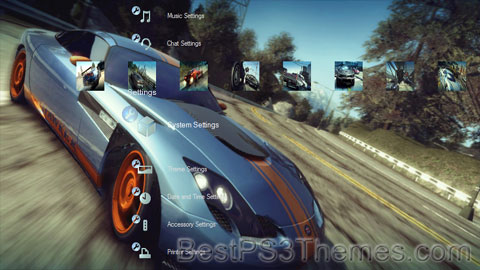
Paradise's gameplay is set in the fictional "Paradise City", an open world in which players can compete in several types of races. Players can also compete online, which includes additional game modes, such as "Cops and Robbers". Several free game updates introduce new features such as a time-of-day cycle and motorcycles. The game also features paid downloadable content in the form of new cars and the fictional "Big Surf Island".
The game was very well received upon release, with aggregate score sites GameRankings reporting an average score of 88% and Metacritic reporting an average score of 88 out of 100. The game won several awards in 2008, with Spike TV, GameTrailers and GameSpot all awarding it Best Driving Game. Reviewers felt the game had an excellent sense of speed, and praised the open world gameplay, a first for the Burnout series. Burnout Paradise is considered by some to be one of the greatest video games ever made.
A remastered version, titled Burnout Paradise Remastered, which includes all downloadable content (except the Time Savers Pack) and support for higher-resolution displays, was released on 16 March 2018 for PlayStation 4 and Xbox One, and on 21 August for Windows via EA's Origin platform. The online service for the original version of the game was permanently discontinued in August 2019.[4] The remastered version for Nintendo Switch with refreshed online servers was released on 19 June 2020.[5][6]
Burnout Paradise is set in an open-world environment.[7] Players have the opportunity to progress at their own pace and level; the game, unlike others, is not actually set to a rigid gameplay framework.[8] According to Alex Ward, creative director of the game at developer Criterion Games, this game is a "complete reinvention" of the Burnout series. He also said that "to create truly next-generation gameplay, they needed to create a truly next-generation game from the ground up".[9] Initially day and night cycles were not included in the game but a software update entitled "Davis" added this element to the game. For the first time in the series, records are now kept on a player's drivers license, including statistics such as fastest time and biggest crash for every street in the game. Completing events raises the driver rank, which unlocks access to new cars.[10]
In previous Burnout games, "Crash Mode" was a dedicated mode in which players were given multiple scenarios in which to cause the biggest crash. In Burnout Paradise, "Crash Mode", now called "Showtime", can be initiated at any time and place in the game. Showtime does differ from the previous incarnation of Crash Mode being that instead of crashing into a busy intersection and watching a crash play out, Showtime has bouncing the vehicle around for as long as possible to gain points. During a race players may now take any route to get to the destination.[11] Races and other events are started by simply stopping at any of the traffic lights and applying the accelerator and brake at the same time. The game features the ability to customize race settings, such as traffic, race routes, and including/excluding cars based on their boost types.[11][12]
Paradise's damage system has also been reworked. There are now two different types of crashes based on the car's condition after the crash.[13] If the player's car manages to retain all four wheels and does not break its chassis, the player can drive out of the crash and continue playing; this is called a "driveaway". If a player's car loses any wheels, the engine is damaged too much from an impact, the car lands on its side or roof or lands outside of the game's map, the car is in a "wrecked" state and the player will have to wait until their car is reset. Cars dynamically compress and deform around objects they crash into.
Cars now have manufacturer and model names, which are loosely based on real-world cars. Cars may not be "tuned up" or customized apart from color changes, which may be done in real-time by driving through the forecourt of a paint shop, or by selecting the color during vehicle selection.[14] Other real-time changes include driving through the forecourt of a gas station to automatically refill the vehicle's boost meter, and driving through the forecourt of a repair shop to automatically repair the vehicle.[15]
The online lobby system used by most video games has been replaced by a streamlined system known as "Easy Drive". While driving, players simply hit right on the D-pad and the 'Easy Drive' menu appears in the corner of their screen. From there, players are able to invite other players from their friends list. Once friends have joined the game, the host can select the event to play. A "Mugshots" camera feature is available for the PC via webcam, PlayStation 3 via a PS3-compatible webcam, Xbox 360 via Xbox Live Vision,[16] PlayStation 4 via PlayStation Camera, and Xbox One via Kinect. When a player is taken down, their photo, or 'Mugshot', is shown to the aggressor, and vice versa. These photos can then be saved to the PC or console's storage device.[17]
The concept of Burnout Paradise came from director Alex Ward's experience playing open world games, specifically Crackdown, Test Drive Unlimited and Mercenaries: Playground of Destruction. Ward found that with a title like Mercenaries the game's world provided more entertainment than the developers likely planned and gave him a sense of freedom in playing around with inconsequential elements of the game. He wanted to take this idea into Burnout Paradise: "My philosophy was that if me and you both played it for three hours, we'd both do different things".[18] By focusing on discovery and exploration, the game ended up being a racing game without any defined tracks, a novel element at the time, which has since influenced several other racing game developers in their approaches.[18] Ward also wanted to develop the game as a social platform, leading to some of its design choices for multiplayer formats.[18]
Ward, in an interview in 2018, noted the difficulty he had in convincing Electronic Arts to follow his vision. The Burnout series at the time was already seen as a less lucrative property compared to the Need for Speed series by EA, and further, Ward found that EA was not amendable to the open world idea he presented.[18] Ward took steps that he could to make Burnout Paradise a desirable game prior to its release to show his superiors that his ideas were sound, which proved out when the game sold more than one million copies within the first three months of release.[18]
Paradise was updated to add time-of-day as well as motorcycles.
Burnout Paradise has undergone significant changes since its initial release. These have been implemented through several free patches and downloadable packs. In 2008, the first major update, codenamed "Bogart", fixed several glitches and was scheduled to be released on 24 April.[19] It was made available to Xbox 360 users on 18 April and to PlayStation 3 users on the originally scheduled date of 24 April, but this prevented store exclusive cars from being obtainable.
The "Cagney" update was released on schedule on 10 July for PlayStation 3 and on 4 August for the Xbox 360. The update introduced three new Freeburn multiplayer modes: Online Stunt Run, Marked Man and Road Rage. Online Stunt Run involves up to 8 players who simultaneously compete for the highest stunt score within 2 minutes. Road Rage features two teams; one must race to a checkpoint while the other tries to stop them through takedowns. Marked Man is like a game of tag, with one player as the Marked Man who cannot see the other players and has no boost. In addition there are 70 new online challenges. These new challenges are different from Free Burn challenges, being timed. Timed challenges start once all players gather at a point of interest. The players then must all complete an objective within a certain time, such as jumping a ramp. "Cagney" also brought custom soundtracks and 1080i support to the PlayStation 3 version.[20]
An update in which involved motorbikes and night-day cycles appear in the Bikes Pack (originally codenamed the "Davis" update), along with tailored locations, challenges and game modes.[21] The update featured a new dynamic weather system, two starter bikes in the player's junkyard, 70 new bike-only challenges, and special "Midnight Rides" challenges that appear only at night.[22] The Bikes pack was released on 18 September on both the PlayStation 3 and Xbox 360.
On 25 September another update was made available which introduced support for the PlayStation 3 trophies system. Criterion Games originally stated that the trophies could be awarded retroactively to players who had already made certain achievements, but when the update was released they said that this had proved to be impossible and that users would have to start a new game in order to achieve some of the goals.[23] Later on February 5, 2009, Criterion released the free 1.6 update, which included the addition of an in-game browser for the PC and PlayStation 3 versions, which gave users access to the Criterion Games Network. An in-game store was also added to all versions which allowed users to purchase content from within the game. Tweaks were also made to the vehicles (not including the freeburn exclusives) to steer the game more toward beginners and casual players. The stats of all of the cars were lowered, and the beginning cars were changed specifically to make them control better, and harder to crash. Events were also made easier to compensate for the vehicle changes.[24]
Burnout Paradise is the first game in the Burnout series to be released for the PC. Criterion made use of existing graphics technology and introduced enhanced visuals and the ability to play the game across multiple monitors to enhance widescreen playing. Players can link three 4:3 monitors to play in a Polyvision aspect ratio. PC users are also able to download a trial version of the game for free. It includes the entire map and three cars but will expire after thirty minutes. All saved data will be carried over if the user decides to purchase the full game.[25]
A demo was made available on 13 December 2007 for both PlayStation 3 via PlayStation Store and Xbox 360 via Xbox Live Marketplace.[26][27] From January 4 through 14, Criterion raised the maximum number of players for the online Freeburn in the Paradise demo to 8 players (online play for the demo has since been shut down completely). With it, a total of 13 new Freeburn challenges were made available for players to play.[28] In 2008, Paradise was made available for download on the PlayStation Store.[29] Upon installation and first execution, all updates are downloaded and installed, which allows the player to have the latest version of Burnout Paradise.
The Xbox 360 version of Burnout Paradise was made available for backward compatibility with the Xbox One in November 2016.[31] On 16 December, it was made available to Xbox Live Gold members for free until 31 December.[32]
Criterion has disabled the optional online features for the original releases in August 2019.[33]
A remastered version of Burnout Paradise was released for PlayStation 4 and Xbox One consoles on 16 March 2018; a version for Windows was released for Origin Access subscribers on 16 August and was fully released on 21 August via Origin platform.[34]
The remaster contains all the previously released downloadable content, except for the Time Savers Pack (a DLC pack that unlocks all vehicles in the game without the need to progress through single-player), and support for higher-resolution monitors (up to 4K resolutions) with 60 frames per second support.[3] A version for Nintendo Switch was released on 19 June 2020.[5][35] Unlike the original, the Remastered version does not have real life in-game advertisements and are instead replaced by fictional ones.
In addition to the free updates, Criterion has released several optional, premium packs that add content like new cars, areas and modes. The first update was the "Burnout Party Pack" and launched on 5 February 2009 in North America and the United Kingdom.[36] It focuses on hotseat multiplayer gameplay, which offers a Freeburn Challenge-like setting but for players on the same console, who pass a single controller between players to complete challenges. The challenges are split into 'Speed', 'Stunt' and 'Skill' with up to 8 rounds and up to 8 players can play at once. Criterion also announced the combo pack Burnout Paradise: The Ultimate Box that launched around the same time which contains the original game, plus the Cagney, Bikes, Party pack and Update pack all in the same package which contained "a mountain of new refinements".[37]
The first premium content pack called "Legendary Cars" featured four cars inspired by famous vehicles from film and television:[38] the Jansen P12 88 Special (based on the DeLorean time machine from the Back to the Future films), the Hunter Manhattan Spirit (based on the Ecto-1 from the Ghostbusters films), the Carson GT Nighthawk (based on KITT from the television series, Knight Rider), and the Hunter Cavalry Bootlegger (based on The General Lee from the TV series The Dukes of Hazzard).[39] The Legendary Cars pack was released on 19 February 2009 for the PlayStation 3 and the Xbox 360, and later in 2009 for the PC.[40]
The second one is "Toy Cars" pack. It features a collection of new vehicles designed with a "toy car" aesthetic, although modelled as full-size cars. The Toy Cars pack has been released in three packs. The full pack offers all toy cars along with the Nakamura Firehawk, a toy motorcycle, while the others split the content into two parts, minus the Firehawk.[41]
On 12 March 2009, the "Boost Specials" pack was released. It featured two cars: the Carson Extreme Hotrod and the Montgomery Hawker Mech. The Carson was described as the fastest car in the game and featured a 'locked' boost; the car continues to boost until it is brought to a stop in any manner. The vehicle dynamics system were rewired so that the Carson performs more realistically than any other car in the game. The Montgomery Hawker Mech also featured a unique boost system, which allows the player to willingly switch between the three different boost types at the touch of a button.[42]
In 2009, Criterion released "Cops & Robbers" on 30 April for PlayStation 3 and Xbox 360.[43] The content does not involve AI Police patrol cars but instead borrows from the Pursuit modes of older Burnout games, notably Burnout 2: Point of Impact. Players are split into teams, the Cops and the Robbers. Teams attempt to return gold bars to their respective bases to score points.[44] Every Paradise car (except Carbon and Premium DLC cars) receives a Police livery with the content.[45]
Originally announced as the "Eastwood pack coming in Fall 2008",[46] the expansion known as "Big Surf Island" was released on 11 June 2009.[47] Design for the island was guided by the principle of "if you can see it, you can drive it".[48][49] The island puts emphasis on the playground aspect of Burnout. The developers mentioned that in their telemetry they noticed that players congregate in areas of Paradise City that lend themselves to stunt-driving, and so the idea was to create an entire island to accommodate player desire. Big Surf Island also features new vehicles, which includes the Carson Dust Storm buggy, a car tailor-made for stunts. In addition to the Dust Storm buggy two specially featured cars, the Hunter Olympus "Governor" and the Carson Annihilator Street Rod are also included. The unlockable cars also include toy versions of all four "Legendary Cars" pack vehicles and a special Jansen P12 Diamond awarded once all 500 freeburn challenges were completed.[50] It features several new events, billboards, smash gates, and mega jumps. New Trophies and Achievements were also added along with a new 'Big Surf Island License' to obtain.[51]
Reviewers praised the game's open world, stating "Burnout Paradise is an amazing open-world racing game that stays true to the Burnout legacy", but that the large world may "feel a little daunting at first".[69] New gameplay mechanics such as gas stations and body repair shops were also praised which "mitigate potential frustration when the heat is on".[59]Hyper's Daniel Wilks commends the game for its "great sense of speed and things that go boom".[70]IGN's Chris Roper praised the vehicle unlock system, which gives the player a new vehicle with each license, and also gives the player the opportunity to "take down" certain vehicles, which earns the player a reward if completed.[61] He further lauded the game as "controlled chaos".[61]The Guardian's Keith Stuart added that the game "feels incredibly good to drive".[71]
However, some reviewers were disappointed that there was no option to restart a race or event.[61] Instead the player had to either fail the event, or cancel the race by bringing the vehicle to a stop for a few seconds, and then return to the specific place on the map to try that particular race or event again. Criterion responded to this criticism by stating that they don't feel that this is a problem and that adding a "retry" option would introduce loading screens, which they "hate with a passion".[72] Despite this, the option to restart an event was later added to the game via a free software update.[24]Eurogamer found DJ Atomika, the game's guide, to be "instantly dislikeable".[59]
The Remastered release was met with similarly positive reviews, albeit slightly less than the original release. Metacritic gave the PlayStation 4 version a score of 82 out of 100, and the Xbox One version a score of 79 out of 100.
The game has been the subject of several academic papers investigating a range of fields, often connected to the title's intensity and need for fast reaction time. These include studies on gamer cardiology,[74]phenomenological correspondence and control abstraction[75] and computer game pedagogy.[76]
Superman is a superhero who appears in American comic books published by DC Comics. The character was created by writer Jerry Siegel and artist Joe Shuster, and debuted in the comic book Action Comics#1 (cover-dated June 1938 and published April 18, 1938).[1] Superman has been adapted to a number of other media, which includes radio serials, novels, films, television shows, theater, and video games.
Superman was born on the fictional planet Krypton with the birth name of Kal-El. As a baby, his parents sent him to Earth in a small spaceship shortly before Krypton was destroyed in a natural cataclysm. His ship landed in the American countryside near the fictional town of Smallville, Kansas. He was found and adopted by farmers Jonathan and Martha Kent, who named him Clark Kent. Clark began developing various superhuman abilities, such as incredible strength and impervious skin. His adoptive parents advised him to use his powers for the benefit of humanity, and he decided to fight crime as a vigilante. To protect his personal life, he changes into a colorful costume and uses the alias "Superman" when fighting crime. Clark resides in the fictional American city of Metropolis, where he works as a journalist for the Daily Planet. Superman's supporting characters include his love interest and fellow journalist Lois Lane, Daily Planet photographer Jimmy Olsen, and editor-in-chief Perry White, and his enemies include Brainiac, General Zod, and archenemy Lex Luthor.
Superman is the archetype of the superhero: he wears an outlandish costume, uses a codename, and fights evil with the aid of extraordinary abilities. Although there are earlier characters who arguably fit this definition, it was Superman who popularized the superhero genre and established its conventions. He was the best-selling superhero in American comic books up until the 1980s.[2]
Jerry Siegel and Joe Shuster met in 1932 while attending Glenville High School in Cleveland and bonded over their admiration of fiction. Siegel aspired to become a writer and Shuster aspired to become an illustrator. Siegel wrote amateur science fiction stories, which he self-published as a magazine called Science Fiction: The Advance Guard of Future Civilization. His friend Shuster often provided illustrations for his work.[3] In January 1933, Siegel published a short story in his magazine titled "The Reign of the Superman". The titular character is a homeless man named Bill Dunn who is tricked by an evil scientist into consuming an experimental drug. The drug gives Dunn the powers of mind-reading, mind-control, and clairvoyance. He uses these powers maliciously for profit and amusement, but then the drug wears off, leaving him a powerless vagrant again. Shuster provided illustrations, depicting Dunn as a bald man.[4]
Siegel and Shuster shifted to making comic strips, with a focus on adventure and comedy. They wanted to become syndicated newspaper strip authors, so they showed their ideas to various newspaper editors. However, the newspaper editors told them that their ideas were insufficiently sensational. If they wanted to make a successful comic strip, it had to be something more sensational than anything else on the market. This prompted Siegel to revisit Superman as a comic strip character.[5][6] Siegel modified Superman's powers to make him even more sensational: Like Bill Dunn, the second prototype of Superman is given powers against his will by an unscrupulous scientist, but instead of psychic abilities, he acquires superhuman strength and bullet-proof skin.[7][8] Additionally, this new Superman was a crime-fighting hero instead of a villain, because Siegel noted that comic strips with heroic protagonists tended to be more successful.[9] In later years, Siegel once recalled that this Superman wore a "bat-like" cape in some panels, but typically he and Shuster agreed there was no costume yet, and there is none apparent in the surviving artwork.[10][11]
Siegel and Shuster showed this second concept of Superman to Consolidated Book Publishers, based in Chicago.[12][a] In May 1933, Consolidated had published a proto-comic book titled Detective Dan: Secret Operative 48.[13] It contained all-original stories as opposed to reprints of newspaper strips, which was a novelty at the time.[14] Siegel and Shuster put together a comic book in a similar format called The Superman. A delegation from Consolidated visited Cleveland that summer on a business trip and Siegel and Shuster took the opportunity to present their work in person.[15][16] Although Consolidated expressed interest, they later pulled out of the comics business without ever offering a book deal because the sales of Detective Dan were disappointing.[17][18]
Cover of an unpublished comic book, 1933
Siegel believed publishers kept rejecting them because he and Shuster were young and unknown, so he looked for an established artist to replace Shuster.[19] When Siegel told Shuster what he was doing, Shuster reacted by burning their rejected Superman comic, sparing only the cover. They continued collaborating on other projects, but for the time being Shuster was through with Superman.[20]
Siegel wrote to numerous artists.[19] The first response came in July 1933 from Leo O'Mealia, who drew the Fu Manchu strip for the Bell Syndicate.[21][22] In the script that Siegel sent to O'Mealia, Superman's origin story changes: He is a "scientist-adventurer" from the far future when humanity has naturally evolved "superpowers". Just before the Earth explodes, he escapes in a time-machine to the modern era, whereupon he immediately begins using his superpowers to fight crime.[23] O'Mealia produced a few strips and showed them to his newspaper syndicate, but they were rejected. O'Mealia did not send to Siegel any copies of his strips, and they have been lost.[24]
In June 1934, Siegel found another partner: an artist in Chicago named Russell Keaton.[25][26] Keaton drew the Buck Rogers and Skyroads comic strips. In the script that Siegel sent Keaton in June, Superman's origin story further evolved: In the distant future, when Earth is on the verge of exploding due to "giant cataclysms", the last surviving man sends his three-year-old son back in time to the year 1935. The time-machine appears on a road where it is discovered by motorists Sam and Molly Kent. They leave the boy in an orphanage, but the staff struggle to control him because he has superhuman strength and impenetrable skin. The Kents adopt the boy and name him Clark, and teach him that he must use his fantastic natural gifts for the benefit of humanity. In November, Siegel sent Keaton an extension of his script: an adventure where Superman foils a conspiracy to kidnap a star football player. The extended script mentions that Clark puts on a special "uniform" when assuming the identity of Superman, but it is not described.[27] Keaton produced two weeks' worth of strips based on Siegel's script. In November, Keaton showed his strips to a newspaper syndicate, but they too were rejected, and he abandoned the project.[28][29]
Siegel and Shuster reconciled and resumed developing Superman together. The character became an alien from the planet Krypton. Shuster designed the now-familiar costume: tights with an "S" on the chest, over-shorts, and a cape.[30][31][32] They made Clark Kent a journalist who pretends to be timid, and conceived his colleague Lois Lane, who is attracted to the bold and mighty Superman but does not realize that he and Kent are the same person.[33]
Concept art c. 1934/1935. Note the laced sandals, based on those of strongmen and classical heroes.[34]
In June 1935 Siegel and Shuster finally found work with National Allied Publications, a comic magazine publishing company in New York owned by Malcolm Wheeler-Nicholson.[35] Wheeler-Nicholson published two of their strips in New Fun Comics #6 (1935): "Henri Duval" and "Doctor Occult".[36] Siegel and Shuster also showed him Superman and asked him to market Superman to the newspapers on their behalf.[37] In October, Wheeler-Nicholson offered to publish Superman in one of his own magazines.[38] Siegel and Shuster refused his offer because Wheeler-Nicholson had demonstrated himself to be an irresponsible businessman. He had been slow to respond to their letters and had not paid them for their work in New Fun Comics #6. They chose to keep marketing Superman to newspaper syndicates themselves.[39][40] Despite the erratic pay, Siegel and Shuster kept working for Wheeler-Nicholson because he was the only publisher who was buying their work, and over the years they produced other adventure strips for his magazines.[41]
Wheeler-Nicholson's financial difficulties continued to mount. In 1936, he formed a joint corporation with Harry Donenfeld and Jack Liebowitz called Detective Comics, Inc. in order to release his third magazine, which was titled Detective Comics. Siegel and Shuster produced stories for Detective Comics too, such as "Slam Bradley". Wheeler-Nicholson fell into deep debt to Donenfeld and Liebowitz, and in early January 1938, Donenfeld and Liebowitz petitioned Wheeler-Nicholson's company into bankruptcy and seized it.[3][42]
In early December 1937, Siegel visited Liebowitz in New York, and Liebowitz asked Siegel to produce some comics for an upcoming comic anthology magazine called Action Comics.[43][44] Siegel proposed some new stories, but not Superman. Siegel and Shuster were, at the time, negotiating a deal with the McClure Newspaper Syndicate for Superman. In early January 1938, Siegel had a three-way telephone conversation with Liebowitz and an employee of McClure named Max Gaines. Gaines informed Siegel that McClure had rejected Superman, and asked if he could forward their Superman strips to Liebowitz so that Liebowitz could consider them for Action Comics. Siegel agreed.[45] Liebowitz and his colleagues were impressed by the strips, and they asked Siegel and Shuster to develop the strips into 13 pages for Action Comics.[46] Having grown tired of rejections, Siegel and Shuster accepted the offer. At least now they would see Superman published.[47][48] Siegel and Shuster submitted their work in late February and were paid $130 (equivalent to $2,814 in 2023) for their work ($10 per page).[49] In early March they signed a contract at Liebowitz's request in which they gave away the copyright for Superman to Detective Comics, Inc. This was normal practice in the business, and Siegel and Shuster had given away the copyrights to their previous works as well.[50]
Superman's debut
The duo's revised version of Superman appeared in the first issue of Action Comics, which was published on April 18, 1938. The issue was a huge success thanks to Superman's feature.[1][51][52]
Siegel and Shuster read pulp science-fiction and adventure magazines, and many stories featured characters with fantastical abilities such as telepathy, clairvoyance, and superhuman strength. One character in particular was John Carter of Mars from the novels by Edgar Rice Burroughs. John Carter is a human who is transported to Mars, where the lower gravity makes him stronger than the natives and allows him to leap great distances.[53][54] Another influence was Philip Wylie's 1930 novel Gladiator, featuring a protagonist named Hugo Danner who had similar powers.[55][56]
Clark Kent's harmless facade and dual identity were inspired by the protagonists of such movies as Don Diego de la Vega in The Mark of Zorro and Sir Percy Blakeney in The Scarlet Pimpernel. Siegel thought this would make for interesting dramatic contrast and good humor.[59][60] Another inspiration was slapstick comedian Harold Lloyd. The archetypal Lloyd character was a mild-mannered man who finds himself abused by bullies but later in the story snaps and fights back furiously.[61]
Kent is a journalist because Siegel often imagined himself becoming one after leaving school. The love triangle between Lois Lane, Clark, and Superman was inspired by Siegel's own awkwardness with girls.[62]
The pair collected comic strips in their youth, with a favorite being Winsor McCay's fantastical Little Nemo.[58] Shuster remarked on the artists who played an important part in the development of his own style: "Alex Raymond and Burne Hogarth were my idols – also Milt Caniff, Hal Foster, and Roy Crane."[58] Shuster taught himself to draw by tracing over the art in the strips and magazines they collected.[3]
As a boy, Shuster was interested in fitness culture[63] and a fan of strongmen such as Siegmund Breitbart and Joseph Greenstein. He collected fitness magazines and manuals and used their photographs as visual references for his art.[3]
The visual design of Superman came from multiple influences. The tight-fitting suit and shorts were inspired by the costumes of wrestlers, boxers, and strongmen. In early concept art, Shuster gave Superman laced sandals like those of strongmen and classical heroes, but these were eventually changed to red boots.[34] The costumes of Douglas Fairbanks were also an influence.[64] The emblem on his chest was inspired by heraldic crests.[65] Many pulp action heroes such as swashbucklers wore capes. Superman's face was based on Johnny Weissmuller with touches derived from the comic-strip character Dick Tracy and from the work of cartoonist Roy Crane.[66]
The word "superman" was commonly used in the 1920s and 1930s to describe men of great ability, most often athletes and politicians.[67] It occasionally appeared in pulp fiction stories as well, such as "The Superman of Dr. Jukes".[68] It is unclear whether Siegel and Shuster were influenced by Friedrich Nietzsche's concept of the Übermensch; they never acknowledged as much.[69]
The cover of Superman #6 (Sept. 1940) by Joe Shuster, the original artist and co-creator
Since 1938, Superman stories have been regularly published in periodical comic books published by DC Comics. The first and oldest of these is Action Comics, which began in April 1938.[1]Action Comics was initially an anthology magazine, but it eventually became dedicated to Superman stories. The second oldest periodical is Superman, which began in June 1939. Action Comics and Superman have been published without interruption (ignoring changes to the title and numbering scheme).[71][72] A number of other shorter-lived Superman periodicals have been published over the years.[73] Superman is part of the DC Universe, which is a shared setting of superhero characters owned by DC Comics, and consequently he frequently appears in stories alongside the likes of Batman, Wonder Woman, and others.
Superman has sold more comic books over his publication history than any other American superhero character.[74] Exact sales figures for the early decades of Superman comic books are hard to find because, like most publishers at the time, DC Comics concealed this data from its competitors and thereby the general public as well, but given the general market trends at the time, sales of Action Comics and Superman probably peaked in the mid-1940s and thereafter steadily declined.[75] Sales data first became public in 1960, and showed that Superman was the best-selling comic book character of the 1960s and 1970s.[2][76][77] Sales rose again starting in 1987. Superman #75 (Nov 1992) sold over 23 million copies,[78] making it the best-selling issue of a comic book of all time, thanks to a media sensation over the supposedly permanent death of the character in that issue.[79] Sales declined from that point on. In March 2018, Action Comics sold just 51,534 copies, although such low figures are normal for superhero comic books in general (for comparison, Amazing Spider-Man #797 sold only 128,189 copies).[80] The comic books are today considered a niche aspect of the Superman franchise due to low readership,[81] though they remain influential as creative engines for the movies and television shows. Comic book stories can be produced quickly and cheaply, and are thus an ideal medium for experimentation.[82]
Whereas comic books in the 1950s were read by children, since the 1990s the average reader has been an adult.[83] A major reason for this shift was DC Comics' decision in the 1970s to sell its comic books to specialty stores instead of traditional magazine retailers (supermarkets, newsstands, etc.) — a model called "direct distribution". This made comic books less accessible to children.[84]
Beginning in January 1939, a Superman daily comic strip appeared in newspapers, syndicated through the McClure Syndicate. A color Sunday version was added that November. Jerry Siegel wrote most of the strips until he was conscripted in 1943. The Sunday strips had a narrative continuity separate from the daily strips, possibly because Siegel had to delegate the Sunday strips to ghostwriters.[85] By 1941, the newspaper strips had an estimated readership of 20 million.[86] Joe Shuster drew the early strips, then passed the job to Wayne Boring.[87] From 1949 to 1956, the newspaper strips were drawn by Win Mortimer.[88] The strip ended in May 1966, but was revived from 1977 to 1983 to coincide with a series of movies released by Warner Bros.[89]
Initially, Siegel was allowed to write Superman more or less as he saw fit because nobody had anticipated the success and rapid expansion of the franchise.[90][91] But soon Siegel and Shuster's work was put under careful oversight for fear of trouble with censors.[92] Siegel was forced to tone down the violence and social crusading that characterized his early stories.[93] Editor Whitney Ellsworth, hired in 1940, dictated that Superman not kill.[94] Sexuality was banned, and colorfully outlandish villains such as Ultra-Humanite and Toyman were thought to be less nightmarish for young readers.[95]
Mort Weisinger was the editor on Superman comics from 1941 to 1970, his tenure briefly interrupted by military service. Siegel and his fellow writers had developed the character with little thought of building a coherent mythology, but as the number of Superman titles and the pool of writers grew, Weisinger demanded a more disciplined approach.[96] Weisinger assigned story ideas, and the logic of Superman's powers, his origin, the locales, and his relationships with his growing cast of supporting characters were carefully planned. Elements such as Bizarro, his cousin Supergirl, the Phantom Zone, the Fortress of Solitude, alternate varieties of kryptonite, robot doppelgangers, and Krypto were introduced during this era. The complicated universe built under Weisinger was beguiling to devoted readers but alienating to casuals.[97] Weisinger favored lighthearted stories over serious drama, and avoided sensitive subjects such as the Vietnam War and the American civil rights movement because he feared his right-wing views would alienate his left-leaning writers and readers.[98] Weisinger also introduced letters columns in 1958 to encourage feedback and build intimacy with readers.[99]
Weisinger retired in 1970 and Julius Schwartz took over. By his own admission, Weisinger had grown out of touch with newer readers.[100] Starting with The Sandman Saga, Schwartz updated Superman by making Clark Kent a television anchor, and he retired overused plot elements such as kryptonite and robot doppelgangers.[101] Schwartz also scaled Superman's powers down to a level closer to Siegel's original. These changes would eventually be reversed by later writers. Schwartz allowed stories with serious drama such as "For the Man Who Has Everything" (Superman Annual #11), in which the villain Mongul torments Superman with an illusion of happy family life on a living Krypton.
Schwartz retired from DC Comics in 1986 and was succeeded by Mike Carlin as an editor on Superman comics. His retirement coincided with DC Comics' decision to reboot the DC Universe with the companywide-crossover storyline "Crisis on Infinite Earths". In The Man of Steel writer John Byrne rewrote the Superman mythos, again reducing Superman's powers, which writers had slowly re-strengthened, and revised many supporting characters, such as making Lex Luthor a billionaire industrialist rather than a mad scientist, and making Supergirl an artificial shapeshifting organism because DC wanted Superman to be the sole surviving Kryptonian.
Carlin was promoted to Executive Editor for the DC Universe books in 1996, a position he held until 2002. K.C. Carlson took his place as editor of the Superman comics.
This program unpacks Playstation 3 Theme files (.p3t) so that you can touch-up an existing theme to your likings or use a certain wallpaper from it (as many themes have multiple). But remember, if you use content from another theme and release it, be sure to give credit!
Download p3textractor.zip from above. Extract the files to a folder with a program such as WinZip or WinRAR. Now there are multiple ways to extract the theme.
The first way is to simply open the p3t file with p3textractor.exe. If you don’t know how to do this, right click the p3t file and select Open With. Alternatively, open the p3t file and it will ask you to select a program to open with. Click Browse and find p3textractor.exe from where you previously extracted it to. It will open CMD and extract the theme to extracted.[filename]. After that, all you need to do for any future p3t files is open them and it will extract.
The second way is very simple. Just drag the p3t file to p3textractor.exe. It will open CMD and extract the theme to extracted.[filename].
For the third way, first put the p3t file you want to extract into the same folder as p3textractor.exe. Open CMD and browse to the folder with p3extractor.exe. Enter the following: p3textractor filename.p3t [destination path]Replace filename with the name of the p3t file, and replace [destination path] with the name of the folder you want the files to be extracted to. A destination path is not required. By default it will extract to extracted.filename.
This program unpacks Playstation 3 Theme files (.p3t) so that you can touch-up an existing theme to your likings or use a certain wallpaper from it (as many themes have multiple). But remember, if you use content from another theme and release it, be sure to give credit!
Download p3textractor.zip from above. Extract the files to a folder with a program such as WinZip or WinRAR. Now there are multiple ways to extract the theme.
The first way is to simply open the p3t file with p3textractor.exe. If you don’t know how to do this, right click the p3t file and select Open With. Alternatively, open the p3t file and it will ask you to select a program to open with. Click Browse and find p3textractor.exe from where you previously extracted it to. It will open CMD and extract the theme to extracted.[filename]. After that, all you need to do for any future p3t files is open them and it will extract.
The second way is very simple. Just drag the p3t file to p3textractor.exe. It will open CMD and extract the theme to extracted.[filename].
For the third way, first put the p3t file you want to extract into the same folder as p3textractor.exe. Open CMD and browse to the folder with p3extractor.exe. Enter the following: p3textractor filename.p3t [destination path]Replace filename with the name of the p3t file, and replace [destination path] with the name of the folder you want the files to be extracted to. A destination path is not required. By default it will extract to extracted.filename.
This program unpacks Playstation 3 Theme files (.p3t) so that you can touch-up an existing theme to your likings or use a certain wallpaper from it (as many themes have multiple). But remember, if you use content from another theme and release it, be sure to give credit!
Download p3textractor.zip from above. Extract the files to a folder with a program such as WinZip or WinRAR. Now there are multiple ways to extract the theme.
The first way is to simply open the p3t file with p3textractor.exe. If you don’t know how to do this, right click the p3t file and select Open With. Alternatively, open the p3t file and it will ask you to select a program to open with. Click Browse and find p3textractor.exe from where you previously extracted it to. It will open CMD and extract the theme to extracted.[filename]. After that, all you need to do for any future p3t files is open them and it will extract.
The second way is very simple. Just drag the p3t file to p3textractor.exe. It will open CMD and extract the theme to extracted.[filename].
For the third way, first put the p3t file you want to extract into the same folder as p3textractor.exe. Open CMD and browse to the folder with p3extractor.exe. Enter the following: p3textractor filename.p3t [destination path]Replace filename with the name of the p3t file, and replace [destination path] with the name of the folder you want the files to be extracted to. A destination path is not required. By default it will extract to extracted.filename.
This program unpacks Playstation 3 Theme files (.p3t) so that you can touch-up an existing theme to your likings or use a certain wallpaper from it (as many themes have multiple). But remember, if you use content from another theme and release it, be sure to give credit!
Download p3textractor.zip from above. Extract the files to a folder with a program such as WinZip or WinRAR. Now there are multiple ways to extract the theme.
The first way is to simply open the p3t file with p3textractor.exe. If you don’t know how to do this, right click the p3t file and select Open With. Alternatively, open the p3t file and it will ask you to select a program to open with. Click Browse and find p3textractor.exe from where you previously extracted it to. It will open CMD and extract the theme to extracted.[filename]. After that, all you need to do for any future p3t files is open them and it will extract.
The second way is very simple. Just drag the p3t file to p3textractor.exe. It will open CMD and extract the theme to extracted.[filename].
For the third way, first put the p3t file you want to extract into the same folder as p3textractor.exe. Open CMD and browse to the folder with p3extractor.exe. Enter the following: p3textractor filename.p3t [destination path]Replace filename with the name of the p3t file, and replace [destination path] with the name of the folder you want the files to be extracted to. A destination path is not required. By default it will extract to extracted.filename.