With possibilities: This is a redirect from a title that potentially could be expanded into a new article or other type of associated page such as a new template. The topic described by this title may be more detailed than is currently provided on the target page or in a section of that page.
When the target page becomes too large, or for any reason a new page would be an improvement, this redirect may be replaced with an article, template or other project page that is carved out of the target page. See also {{R to section}} and use together with this rcat when appropriate.
If the topic of the redirect is not susceptible to expansion, then use other rcats such as {{R to section}} or {{R to list entry}}when appropriate.
Since a new page may be created, links to this redirect should not be replaced with a direct link to the target page. To make redirects to this page, use {{R avoided double redirect}}.
{{R printworthy}} should be used together with this template when applied to a redirect in mainspace.
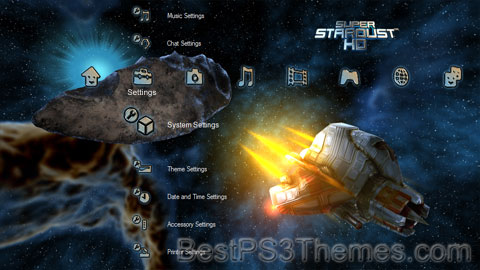
The game combines the mechanics of Asteroids and Robotron: 2084 with a level of action found typically in modern games such as Geometry Wars. The game is an enhanced version of Super Stardust for the Amiga. Super Stardust HD was one of the games given for free by Sony as part of their 'Welcome Back' package due to the PlayStation Network outage in 2011. Super Stardust HD was the first title with trophy support on the PlayStation 3.[1]
A version for PlayStation Portable titled Super Stardust Portable (Star Strike Portable in Asia) was released in November 2008, and a PlayStation Vita game building on Super Stardust HD, called Super Stardust Delta(Star Strike Delta in Asia) was released in 2012.
In Super Stardust HD, the player controls a space fighter craft that can move in any direction on a spherical shield surrounding a planet, while simultaneously firing in any direction independent of its movement. The primary threats against the player are three types of asteroids and various enemy spacecraft, which appear on the playfield at certain time intervals. The ship is equipped with three upgradeable weapons, a limited arsenal of bombs, and a boost capability that grants temporary invincibility and recharges after use. Each weapon is more effective against certain types of asteroid and enemies than others. Items include weapon upgrades and a shield that absorbs one fatal hit against the player's ship.
Super Stardust HD provides several modes of play, each with their own online leaderboards. The default game mode, Arcade, takes the player through a series of five planets, each consisting of five main phases, the last of which is a boss battle. Planet Mode allows the player to play any one of five planets in the same way, ending the game after the planet is complete. Both of these modes support both single-player and two-player cooperative play.
The Solo add-on pack (released in April 2008 and available for download via the PlayStation Store) adds several extra gameplay modes. Endless Mode pits the player against a continuous onslaught of rocks and enemies, gradually speeding up the action over time. Survival Mode challenges the player to last as long as possible while the playfield is filled with indestructible objects. Bomber Mode challenges players to score as many points as they can using only bombs and a single life – primary weapons and the boost ability are disabled. Time Attack mode challenges the player to complete a planet's worth of rocks and enemies in the shortest time possible – losing a life in this mode incurs a 3-minute penalty. The PSP version also received its own version of the Solo add-on pack, with only the Endless, Survival and Bomber modes, along with two new soundtracks. The Japanese version of the PSP game already comes with this pack.
With the release of game update version 2.40 on July 2, 2008, PlayStation trophy support was added to the title. This made Super Stardust HD the first title with trophy support on the PlayStation 3. A total of 17 trophies are available for the game.[1]
The Team Pack was also released the same day, which includes split-screen co-op and player versus player modes. The pack also offers an additional orchestral soundtrack in 5.1 surround and the ability to customize the player ship's appearance. The Team Pack was available for purchase from within the game and via the PlayStation Store before being removed with the 2.40 firmware. It was soon reinstated on July 15, in a store update after Sony's E3 press conference.
Stereoscopic 3D support was demonstrated at the 2010 Consumer Electronics Show and released in June in the same year. Super Stardust HD is the first 3D game for the PS3 that runs at 720p resolution at 60 frames per second for each eye (120 frames per second).[2] The original 2D version supports full 1080p resolution at 60 frames per second.[3]
Impact Mode, released in April 2011 on the PlayStation Store,[4] introduces much higher score multipliers. With weapons disabled in Impact Mode, the primary mode of attack is a modified version of the ship's boost capability, which remains active as long as there are targets to attack nearby.
The HD edition of Super Stardust received "favorable" reviews, while the Portable, Ultra, and its VR version received "average" reviews, according to the review aggregation website Metacritic.[24][25][26][27] In Japan, where the Ultra version was ported for release on March 12, 2015, Famitsu gave it a score of one eight, one seven, one nine, and one eight for a total of 32 out of 40.[9]
In 2013, the game entered IGN's Top 25 PlayStation Network Games list in the 4th position.[28]
Super Stardust HD has sold approximately 400,000 units for the PS3 as of September 2010.[29]
A follow-up, Super Stardust Ultra (known in Asia as Star Strike Ultra), was released in North America and the PAL region in February 2015 for PlayStation 4.[30] It was essentially an enhanced version of Super Stardust HD, without being a direct port.[31] It adds an exclusive mode called Interactive Streaming, which is an endless mode where the game is streamed live over the Internet, and viewers are allowed to help or hinder the player. A port of Super Stardust Ultra titled Super Stardust Ultra VR, offering a unique perspective from within the cockpit, was released as a launch title for the PlayStation VR.[32] The title was developed by UK based company D3T Ltd.[33]
In 2022, Super Stardust Portable was added to the premium collection of PlayStation Plus.
^Croft, Liam (February 27, 2015). "Super Stardust Ultra Review". The Digital Fix. Poisonous Monkey. Archived from the original on March 17, 2015. Retrieved December 5, 2018.
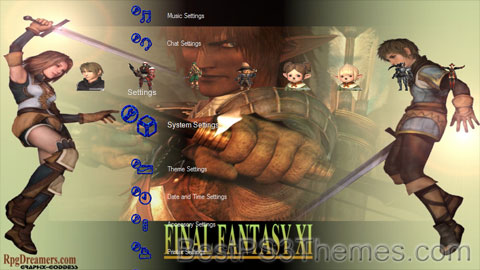
The story is set in the fantasy world of Vana'diel, where player-created avatars can both compete and cooperate in a variety of objectives to develop an assortment of jobs, skills, and earn in-game item rewards. Players can undertake an array of quests and progress through the in-game hierarchy and through the major plot of the game. Since its debut in 2002, five expansion packs have been released[4] along with six add-on scenarios. Each expansion pack and add-on brings a new major storyline to the Final Fantasy XI world, along with numerous areas, quests, events and item rewards.
In 2015, Square Enix released the final main scenario for Final Fantasy XI titled Rhapsodies of Vana'diel.[5]Final Fantasy XI became the final active server on the PlayStation 2 online service. Support for the PlayStation 2 and Xbox 360 versions was ultimately ended on March 31, 2016,[6] leaving only the PC platform playable. A mobile client for the game was under development by Square Enix in collaboration with Korean developer Nexon, using Unreal Engine 4, but was cancelled in late 2020.[7] A spin-off mobile game, Final Fantasy Grandmasters was released on September 30, 2015. A new, episodic story series titled The Voracious Resurgence was added to the game in 2020,[8] concluding in June 2023.[citation needed] In May 2022 rumors had circulated that FFXI may soon be shutting down. Yoji Fujito released a statement noting that this was not the case and users should not worry about the services being shut down any time soon.[9]
Final Fantasy XI is a massively multiplayer online role-playing game (MMORPG), and differs from previous titles in the series in several ways. Unlike the predefined main characters of previous Final Fantasy titles, players are able to customize their characters in limited ways, including selecting from one of five races and choosing their gender, facial style, hair color, body size, job, and nation allegiance. Also diverging from previous games in the series, the game takes place in a fully three-dimensional landscape with enemies freely roaming in it, allowing battles to occur in real time as opposed to the random encounters used in previous games - a trend continued in every numbered Final Fantasy title since.[10]
There are currently 16 public game worlds available for play, down from 32 at the game's height, with approximately 15,000 to 20,000 players in each.[11] A private Test Server was opened to eligible players to aid in feedback of updates in development for the game in mid-2011. The servers are named after summoned monsters from previous Final Fantasy titles, such as Ifrit and Diabolos. Players have the ability to move between servers, though Square Enix charges a "world transfer" fee to do so.[12][13] There are no region-specific or system-specific servers, and unlike most online games, players of different languages play in the same world and can interact through automatic language translation from a library of translated phrases.[14] The game servers are run by Square Enix as part of their PlayOnline network.
A player engages in a dialog sequence to advance the story.
Players have the option of using any combination of a keyboard, mouse, and controller to play Final Fantasy XI. While by default, a player using a PlayStation 2 or an Xbox 360 uses a virtual/in-game keyboard option, the player is able to use an external keyboard that is USB compatible for communication within the game. The head-up display in Final Fantasy XI consists of a log window, menus, and several game information elements. The log window at the bottom of the screen displays system messages, battle messages, and text input by other players. Players may choose to filter what appears in the log window. "Menus" allow the player to access different commands, status windows, and configuration options. The "action command menu" appears just above the log window and gives the player several options to interact with the game world. Several menu options are available through the use of keyboard shortcuts, as well.[15]
Story related gameplay in Final Fantasy XI consists of two major components: missions, through which the main storyline of the game is told, and quests, which do not advance the main storyline, but fill out the game's fantasy world.[16] Completing missions allows a player to advance in rank, which grants access to new areas, several privileges, and various other storylines. At first, a player may only complete missions for their home nation, though they are able to change allegiances later on, allowing access to other nations' storylines. Quests may be undertaken for their various rewards, or to acquire "fame", which allows a character to become well-known and respected by NPCs; a higher fame rating will open up new interactions and quests with NPCs. At release, over one hundred quests were available to play and each expansion pack has added its own set of missions and quests.[17] Players obtain in-game money known as gil by completing missions, quests and defeating Beastmen, though unlike previous Final Fantasy games, these monsters drop only small amounts. Gil can then be exchanged amongst players for goods through the Auction House, or be used to purchase items and rewards from NPCs.
Unlike some MMORPGs, there is very little focus on player versus player (PvP) combat, instead the game revolves around player versus environment (PvE). There are numerous PvE activities and events for players to partake in, including instanced activities and shared spaces activities. Some instanced events include Dynamis, Salvage, Assault and Nyzul Isle, which involve anywhere between 6 and 64 players.[18] These battle grounds give players a series of objectives to overcome or complete and enemies to defeat, generally within a certain time frame. Popular shared spaces activities include hunting Notorious Monsters, fiends that rarely appear and drop precious loot.
The only way to attack other players in PvP is to enter one on one competition activities known as "Conflict".[19] The first form of competition, called Ballista, involves players competing to score points by throwing petras into a castle-like structure known as a Rook.[20][21] The second form is known as "Brenner", and features a capture the flag type system.
From time to time special seasonal festivals and events are held. They last only for a set period of time and offer a variety of fun or useful rewards. Many events have changed over time, adding new features and eliminating old ones. These events are geared towards any level, often restricting players to level 1, so that veterans and novice players alike can join in together. Events celebrated are often thematically based on real life equivalents, for example: Valentione's Day in place of Valentine's Day, the Egg Hunt Egg-stravaganza in place of Easter, and the Starlight Celebration in place of Christmas.
Battles in Final Fantasy XI take place in the world in which players move around, a first in the series, where battle had previously taken place in a separate screen via random encounters. The surprise of the random encounter system is achieved via aggressive monsters, who will attack players based on different factors such as sight and sound. This format would continue in future Final Fantasy games. Monsters within the game operate under a system of "claim" and "enmity". A monster is claimed the moment a player performs any offensive action upon it, whether physical, magical or ability related. With some exceptions, once a monster is claimed it can only be attacked by players in the party or alliance of the player that claimed it. A monster will focus its attention on whoever has built up the most enmity. Players have several means at their disposal, including spells, abilities and items, to build up enmity or shed it to their advantage in battle - a factor that features heavily in group, or "party" play.
To defeat more powerful monsters and gain experience points efficiently, players can join a party. A regular party has room for six members. Like in many other games, a well-balanced party will consist of several archetypes- namely a healer, a tank (the party member with high defense that will be the main target of the monster), and the damage dealer. The enmity system comes into play heavily in parties, as players try to keep the monsters attention off fragile jobs and on the tanks. One of the key aspects of the battle system lies in the extreme flexibility of the party composition: unlike many other games, there are no constraints on the role (or "job" class) of the party members. This feature allows to tackle every fight with a wide array of different strategies, while encouraging the community to share new, creative ways of handling a certain type of enemy.
A party can expand into an alliance, with up to three parties combined, with a total of 18 players. Alliances are necessary to complete more difficult challenges: including missions, quests, nation or territory driven events, and defeating notorious monsters. Much of end-game play consists of alliance forces overcoming these higher level challenges and can even allow several alliances to enter into specific instances owned by a group of players (e.g. Dynamis instances entry is controlled by an hourglass item).
Final Fantasy XI's incarnation of Limit Breaks are "Weapon Skills". Physical damage given and received fills a Tactical Points (TP) bar, to a maximum of 3000. Any amount above 1000 is able to be used up by being channelled into a weapon skill. These skills vary in effect depending on job class, what weapon is equipped, how full the TP bar is, and how proficient the player is with the weapon. If partying with other players, one may use these weapon skills in succession in order to create a "Skillchain". A skillchain creates additional damage after a series of weapon skills are used. Building on this even further, magic used on a skillchain at the right time will receive a boost to its damage; this is called a "Magic Burst". In order to create the best possible skillchains and magic bursts, players must work together, focusing on each other's actions and timing.
Final Fantasy XI uses the concept of changing Jobs in a similar fashion to Final Fantasy III,[22] and currently has twenty-two Jobs as of the latest expansion pack in 2013. There are six "standard Jobs" available to choose from at the start of the game. After one standard Job has reached Level 30, the "extra Jobs" are accessible upon completing certain quests. Players are able to change their jobs any time from inside their house or by speaking with a Nomad Moogle. In June 2010, the long-standing level limit of 75 was incrementally increased to the higher level cap of 99, finishing in the December 2011 version update.
Jobs have a combination of unique "job traits", "job abilities", and magic spells, giving them a specific role within group play due to their area of expertise. Job traits are passive abilities that are always in effect, while job abilities must be activated by the player in order to come into effect. They last a limited time and have a "cooldown" period before they can be used again. Magic spells are available to certain jobs, and in addition to a cooldown period, they often consume MP or some form of item in order to be cast, while at the same time requiring the user to stand still. Additionally, each job has a special one-hour ability that performs an extraordinary function.
The unique system of Final Fantasy XI's job system is the "Support Job".[23] This system allows a player to augment their character with abilities, traits, and spells from another chosen job, at half the level of their current job. For instance, a Level 20 Warrior setting Ninja as their support job would allow them to use all Ninja abilities, traits, and spells up to that of a level 10 Ninja, while still primarily being a Level 20 Warrior. The support job system allows for job-merges never before seen in the Final Fantasy series. However, there are some exceptions to the system. One-hour abilities and other abilities deemed signature to a particular job (such as Call Wyvern for Dragoons) are restricted to being used only on the main job.
The raising, breeding, and racing of Chocobos was a much requested addition to the game.
In addition to completing quests and missions, players can participate in several side-minigames and other activities.[10] One such minigame is fishing, where players can measure their strength against the fish they attempt to catch. Another is clamming, where players collect as many fish or sea creatures as possible without going over their bucket's size limit. Gardening allows players to raise plants in their residence, or "Mog House" as it is known in the game.[24] The raising and breeding of Chocobos was a long-requested activity enabled in the summer 2006 update.[25] Chocobo racing began in March 2007, which allowed for the racing of player-raised Chocobos against non-player characters (NPCs). Winning racers can earn "Chocobucks", which can be used to buy, for example, items that assist Chocobo breeding.[26]
An important part of the game is the accumulation of items, especially rare ones, which allow players to create powerful weapons, armour and food. There are many ways to obtain items, such as harvesting, excavating, logging, mining, defeating monsters, and digging by using Chocobos. Square Enix attempted to increase the opportunity for players to find rare items in order to equalize the game and stop the practice of "gil selling", or exchanging real money for in-game items.[27] The item auction system was shut down temporarily once due to some players exploiting the system.[28] Items can be created by consuming elemental crystals (obtained by fighting monsters) with other ingredients in a process called "synthesis".[29] Recipe results can vary widely based on the player's skill, the quality of the player's equipment worn, and the ingredients used. There is large speculation (though nothing evidently documented yet) about the moon phase, direction the player is facing, in-game day (every day of the week is assigned an element), and even time of day the synthesis is performed to either increase or reduce the results of the recipe.
Final Fantasy XI has a largely player-based economy, with a heavy reliance on auction houses in each of the major cities of Vana'diel. There are certain economic controls in place mainly in the form of fees for putting items up for auction. Transportation, auction house, item storage, and fees do not go to players; these gil sinks effectively remove money from the economy to prevent inflation. The city of Jeuno used to levy a tax on bazaar purchases inside the city, but was removed in a patch in the December 2008 version update.[30]
Square Enix has stated that the trade of items for real currency is officially a violation of the Terms of Service for Final Fantasy XI.[31] In early 2006, Square Enix discovered that a group of players had found a way to generate game currency and exchange it for real currency, which, in turn, drove up prices for all items across the game. In response, 700 accounts were permanently banned and 300 billion gil was removed from circulation.[32] That July, Square Enix banned or suspended over 8,000 other accounts for similar manipulation and commerce.[33] Since 2006, Square Enix has regularly banned accounts found to be in violation of the terms, some of them using third-party tools, effectively removing billions of gil from the in-game economy.
The setting of Final Fantasy XI is the world of Vana'diel, a rich world with diverse climates, ranging from northern glaciers and southern deserts, to ethereal realms and sky landmasses.[34] Vana'diel is divided into a number of regions, which are subdivided into areas known as "zones". These zones are available for exploration and consist of outdoor areas, dungeons, cities, and towns. Players are able to explore a portion of Vana'diel, including the Middle Lands, Near East, and with the release of Seekers of Adoulin, the near west.[35] Six city states exist in the available lands, The Republic of Bastok, The Kingdom of San d'Oria, The Federation of Windurst, The Grand Duchy of Jeuno, The Empire of Aht Urhgan and the Sacred City of Adoulin. While most areas are accessible by walking, various modes of transportation, ranging from the classic Final FantasyChocobo and airships to special spells, facilitate movement across the game world.
Ancient lore states that Vana'diel was created as a playground for the Gods and their children, who themselves were spawned from an enormous and sentient Crystal. Eventually wishing to be one with the Gods, the children constructed a pathway to paradise. They were smote down for their insolence and their cities cast to the bottom of the sea. After seeing the destruction of her children and filled with sadness, the Goddess Altana wept five tears that gave life to the five Enlightened Races of Vana'diel. The God of Twilight, Promathia, condemned her weakness and the life that arose from it. Promathia cursed the five races with eternal conflict amongst themselves by bringing forth their darkest attributes: the apathy of the Humes, the arrogance of the Elvaan, the rage of the Galka, the cowardice of the Tarutaru, and the envy of the Mithra. He created the Beastmen, commanding them to forever fight the people of Vana'diel and occupy their minds, so these children would never have time to group together and construct a pathway like the ones before them.[34] The creation lore's sentient Crystal, Gods, Children, and the truths behind them feature as major plot points in several Final Fantasy XI expansion packs, while the Beastmen are some of the game's main antagonists.
The events of the game are set 20 years after the Crystal War, a devastating war where the Middle Land nations of Bastok, San d'Oria and Windurst fought and defeated the Shadow Lord and his army of Beastmen. Players deal with the aftermath of this conflict in the original story, and may travel back in time to aid in the war effort with the expansion pack Wings of the Goddess. Several parallel worlds are available, such as Dynamis and Abyssea, in which the beastmen won the Crystal War and conquered the land.
Final Fantasy XI features five playable races known as the "Enlightened Races":
The playable races in Final Fantasy XI. From left to right: Galka, Mithra, Hume, Elvaan, and Tarutaru.
Elvaan
A race of proud warriors, the Elvaan's home city is the Kingdom of San d'Oria. Elvaan have an unshakable pride and faith in their beliefs, and many eschew the business world, preferring an austere lifestyle as skilled sword fighters. The Elvaan race possesses high strength and mind, but low MP and intelligence. Elvaan are said to be cursed with the sin of arrogance.
Hume
Originating from the city of Bastok, Humes are the most common race in Vana'diel and are known for their intelligence and high level of skill in numerous areas. Humes have equally balanced abilities, and are said to be cursed with the sin of apathy. They serve as the game's human race.
Galka
A hulking race of powerful warriors, the Galka's capital city was destroyed by war 600 years ago. Many of the surviving Galka settled in Bastok, and are currently used by the city as cheap underclass labour. The Galka do not have a female counterpart, but reproduce through reincarnation. They possess the highest HP and vitality in the game, but also the lowest MP. The Galka are cursed with rage.
Mithra
The Mithra are a race of hunters who live alongside the Tarutaru in Windurst. They are known for their energy, curiosity, and their penchant for causing playful mischief. Due to a gender imbalance in their race males are a rarity, and so only female mithra leave the home, making females the only playable gender. Mithra possess high dexterity and agility, but lower HP and charisma. Mithra are cursed with envy.
Tarutaru
A race of skilled magic users from the Federation of Windurst, the Tarutaru physically resemble children, however their size does not reflect their age. Tarutaru are playful yet cunning. They possess the highest MP and intelligence of all the races, but the lowest HP and strength. Tarutaru are said to be cursed with cowardice.[10]
In addition to the playable races, there are two other non-playable Enlightened Races, known as the Zilart and the Kuluu. These ancient races were thought to be extinct, and are the focus of the first two-game expansions. There is also a large supporting cast of NPCs involved in quests, missions and the game's storylines. The game features several typical Final Fantasy fiends, including Goblins, Sahagins and Tonberries. Several of these races are known as Beastmen, a distinction made between fiends who possess higher than average intelligence, exhibiting self-awareness, emotions, culture, and religion. The complex relationship, bigoted views, and reasons of conflict between the Enlightened Races and Beastmen is a plot point throughout the game.[36]
Final Fantasy XI is represented in the Dissidia game series by Shantotto, a female Tarutaru Black Mage from the Windurst storyline, voiced by famed voice actress Megumi Hayashibara in the Japanese version and Candi Milo in the English version.[37][38] The game's prequel adds Prishe, a female Elvaan from Tavnazia, who is the main character in the Chains of Promathia expansion pack.
The storyline is primarily followed with missions through the governing nations that exist in the base game as well as each expansion that the player is affiliated with. Nation or governing body affiliation is relatively simple, sometimes requiring prerequisite quests being completed and have several stages of progression to achieve higher recognition and reward throughout each story. Some missions are even required to be completed to further progress into the start of the additional storylines of each expansion or specific areas.
Players begin the game as residents of one of the three main countries: San d'Oria, Bastok, and Windurst, and must help band the nations together against the resurrected Shadow Lord.
The expansion Rise of the Zilart reveals that the Crystal War and the resurrection of the Shadow Lord had been masterminded by the Zilart princes Eald'Narche and Kam'lanaut, who survived the extinction of their race. The two Zilarts plan to become Gods by opening the path to paradise, and the player is charged with thwarting their plans.
Chains of Promathia revolves around an Elvaan girl named Prishe and the dead Twilight God Promathia, who had originally cursed the Zilart race, and the attempts of various factions to either complete or stop his resurrection. The wyrmking Bahamut is involved in these events, and intends to destroy Vana'diel to prevent Promathia from absorbing the life of the world.
Treasures of Aht Urhgan concerns the Empire of Aht Urhgan which opens up to the nations of midlands after years of self-imposed isolation. As a new and powerful nation, it is of concern to the nation of the player, who is sent as a representative. The player then becomes embroiled in the intrigues of the Empress's court and the growing fears of war and darkness coming to Aht Urhgan.
Wings of the Goddess primarily occurs in the era of the Crystal War, 20 years in the past from the main Final Fantasy XI setting. The player discovers and crosses mysterious time portals alongside the Hume/Elvaan mix Lilisette, and are led to help the Regal Feline Cait Sith reduce the suffering of the era. However, Lilisette and her partner encounter Lilith, an alternate timeline version of herself who wishes to keep the war going to maintain her time while negating Lilisette's.
Seekers of Adoulin concerns the western continent archipelago of Adoulin, and the Sacred City of Adoulin. The city was a focal point for colonization 200 years before the present game, but when colonization efforts failed in the main continent of Ulbuka, the nation fell in population and shifted to trade as a focus. Now colonization has begun once again, and players are free to explore the region.
Rhapsodies of Vana'diel concerns the conclusion of the previous Final Fantasy XI storylines with the threat posed by the Cloud of Darkness and an alternate timeline version of the player.
The Voracious Resurgence, the follow-up story to Rhapsodies of Vana'diel, concerns the mysterious "world eater eggs" appearing all throughout the land of Vana'diel.
Final Fantasy XI is the most representative title of the Final Fantasy series, according to producer Hiromichi Tanaka.[39]
The idea to develop Final Fantasy XI as an online game was conceived by Hironobu Sakaguchi when establishing Square Pictures headquarters in Hawaii. Impressed by western MMORPGs that he discovered there, such as EverQuest, Sakaguchi convinced Square to begin the development of their own MMORPG and suggested that it be based on the Final Fantasy series.[39] Since MMORPG creation was seen as a "greater cause", Final Fantasy XI was made by a merger of four crews: the Parasite Eve II and Brave Fencer Musashi teams from Osaka, and the Mana and Chrono Cross teams from Tokyo.[40][41] Development began in November 1999. The game was the first developed under Square's new philosophy to develop for "all platforms and media".[42]Hiromichi Tanaka, the producer of the game, said that the title is heavily influenced by Final Fantasy III, especially in its battle and magic systems.[22] According to Tanaka, Square put in Final Fantasy XI what they could not put in the first Final Fantasy titles due to technical limitations, thus making XI the "most [representative] Final Fantasy of all the episodes".[39] The game was developed and ran on the NvidiaGeForce 4 TiGPU, which the President of Square Yoichi Wada described as the most powerful graphics processor available at the time.[43] The game cost two to three billion yen (~$17–25 million) to create along with the PlayOnline Network Service and was assumed to become profitable over a five-year timespan.[44] By creating a unified game world instead of different ones balkanized by language, development costs were cut 66%.[45][46] Since recurring monsters of the series are known by different names in the Japanese and English versions of the other installments, it was decided for Final Fantasy XI to use both Japanese and English names for different varieties of the same monsters.[45]
The PlayStation 2 version of the game came with a 40GB hard drive that required the Network Adaptor to connect to the system.
A simultaneous release on the PlayStation 2 and Microsoft Windows as well as concurrent Japanese and American release was originally considered, but this was later changed.[47] There was also discussion of an Xbox release, but was abandoned mainly because of its small 8 GB hard drive.[11] Originally announced in January 2000 at the Yokohama Millennium Conference, there was a great deal of negative press.[48] There were questions raised about naming the game the eleventh in the series, since it was not clear whether the game would have a structured story, which it ended up having, and the title of Final Fantasy Online was suggested.[49] Following an August 2001 beta test in Japan, a public Japanese beta test was done four months later in December.[50]
Following its PC release, Final Fantasy XI was listed as one of IGN's most anticipated PlayStation 2 games of 2004.[51]Sony launched a multimillion-dollar ad campaign to promote the game along with the PlayStation 2 hard drive add-on which the game required.[52] Having been released on the PlayStation 2 as well as the personal computer, it became the first cross-platform MMORPG ever created.[1] On June 14, 2002, the game server was down for four hours for maintenance to the database servers, bug fixes on the text interface, and a new patch for the game client.[53] This is thought to be the first patch ever released for a console game.[54] Other early issues included complaints by American players that experienced Japanese players had already completed all the quests. Square Enix responded by adding new servers in order to have game worlds with fewer expert players.[17]
Final Fantasy XI is one of the first cross-console video games, and has continued to update its software to allow the game to run on new consoles. In March 2007, a patch was released to enable gameplay in French and German. Square Enix noted that Nintendo's use of "
The first Assassin's Creed game was released in 2007, and the series has featured thirteen main installments in total, the most recent being Assassin's Creed Mirage in 2023. Main games in the Assassin's Creed series are set in an open world and played from the third-person view. Gameplay revolves around combat, stealth, and exploration, including the use of parkour to navigate the environment. The games feature both main and side missions, and some titles also include competitive and cooperative multiplayer game modes.
A new story and occasionally new time periods are introduced in each entry, with the gameplay elements also evolving. There are three overarching story arcs in the series. The first five main games follow Desmond Miles, a descendant of several important Assassins throughout history, who uses a machine called the Animus to relive his ancestors' memories and find powerful artifacts called Pieces of Eden in an attempt to prevent a catastrophic event, referencing the 2012 phenomenon. From Assassin's Creed IV: Black Flag to Assassin's Creed Syndicate, Assassin initiates and employees of Abstergo (a company used as a front by the modern-day Templars) record genetic memories using the Helix software, helping the Templars and Assassins find new Pieces of Eden in the modern world. The next three games, Assassin's Creed Origins, Odyssey, and Valhalla, follow ex-Abstergo employee Layla Hassan on her own quest to save humanity from another disaster.
The main games in the Assassin's Creed franchise have received generally positive reviews for their ambition in visuals, game design, and narratives, with criticism for the yearly release cycle and frequent bugs, as well as the prioritising of role-playing mechanics in later titles. The series has received multiple awards and nominations, including multiple Game of the Year awards. It is commercially successful, selling over 200 million copies as of September 2022[update], becoming Ubisoft's best-selling franchise and one of the highest selling video game franchises of all time. While main titles are produced for major consoles and desktop platforms, multiple spin-off games have been released for consoles, mobiles, and handheld platforms. A series of art books, encyclopedias, comics, and novels have also been published. A live-action film adaptation of the series, titled Assassin's Creed, was released in 2016.
While the games in the series have had several narrative arcs, Ubisoft views the series as currently having three periods of development and design philosophy. Until 2015's Assassin's Creed Syndicate, the franchise was structured around single-player content, and while centering on open world spaces and several role-playing elements, were more action-adventure and stealth-oriented. Period two, covering from Assassin's Creed Origins to Assassin's Creed Mirage, brought in more role-playing elements and live-service features to increase player engagement. Period three will launch with Assassin's Creed Shadows, using lessons from the second period of development to make engrossing single-player games similar to the original titles but with features to allow players to share achievements and content with others, all to be backed by the Infinity hub system.[1]
The first Assassin's Creed game originated out of ideas for a sequel for Ubisoft's video game Prince of Persia: The Sands of Time, aiming for the seventh generation of video game consoles. The Ubisoft Montreal team decided to take the gameplay from The Sands of Time into an open-world approach, taking advantage of the improved processing power to render larger spaces and crowds. Narratively, the team wanted to move away from the Prince being someone next in line for the throne but to have to work for it; combined with research into secret societies led them to focus on the Order of Assassins, based upon the historical Hashashin sect of Ismaili, who were followers of Shia Islam, heavily borrowing from the novel Alamut.[2][3] Ubisoft developed a narrative where the player would control an Assassin escorting a non-playable Prince, leading them to call this game Prince of Persia: Assassin,[4] or Prince of Persia: Assassins.[5] Ubisoft was apprehensive to a Prince of Persia game without the Prince as the playable character, but this led the marketing division to suggest the name Assassin's Creed, playing off the creed of the Assassins, "nothing is true; everything is permitted". Ubisoft Montreal ran with this in creating a new intellectual property, eliminating the Prince, and basing it around the Assassins and the Knights Templar in the Holy Land during the 12th century. Additionally, in postulating what other assassinations they could account for throughout history, they came onto the idea of genetic memory and created the Animus device and modern storyline elements. This further allowed them to explain certain facets of gameplay, such as accounting for when the player character is killed, similar to The Sands of Time.[5]
After Assassin's Creed was released in 2007, Ubisoft Montreal said they looked to "rework the global structure" in developing the sequel, Assassin's Creed II. They felt that parkour was underutilized in the first game and designed the world in the sequel to feature freerun highways to make it easier to enter into parkour moves, for example using rooftops to escape pursuits.[6] The change in setting meant that the game would feature a new cast of characters, including a new protagonist, Ezio Auditore da Firenze. Assassin's Creed II also brought in more use of crowds to hide in plain sight that the developers had seen used in Hitman: Blood Money, adding more to the concept of social stealth as a gameplay option.[6] Finally, Ubisoft Montreal completely reworked the repetitive mission structure from the first game through numerous side activities, collectibles, and secrets. These additions became a central part of the series going forward as well as other Ubisoft games like Watch Dogs, Far Cry, and Tom Clancy's Ghost Recon.[6]Assassin's Creed II was followed by two sequels, Assassin's Creed: Brotherhood and Assassin's Creed: Revelations, which also featured Ezio as the main protagonist and introduced the ability for players to recruit NPCs as Assassins and manage them in missions.[6]
Assassin's Creed III originated from both Ubisoft Montreal, who wanted to progress the series' narrative forward in time, and to an unattached project that had been developed at Ubisoft Singapore and featured naval ship combat. As the main team had settled into the American Revolution period for the game, they found the ship-to-ship combat system fitted with the story and redesigned the setting to incorporate it further. Another major change in Assassin's Creed III was transitioning the parkour and freerun systems to work in the natural woodlands of 18th-century Massachusetts and New York. This further allowed the adding of trees and other vegetation within the city areas themselves, not just as part of the parkour systems, but to add more varied environments, which would continue as part of the series' ongoing design.[6]
For Assassin's Creed III's sequel, Assassin's Creed IV: Black Flag, the Ubisoft team built upon the foundation of its predecessor, particularly with regards to the naval gameplay, merging it seamlessly with the land-based gameplay.[6] The team also used the game as a chance to address aspects of the series' storyline. Choosing to focus on an outsider's perspective to the Assassin–Templar conflict, they set the game around the Golden Age of Piracy, with the protagonist, Edward Kenway, starting out as a pirate who initially becomes involved in the conflict with the prospect of wealth. Similarly, after the conclusion of Desmond Miles' story arc in Assassin's Creed III, the modern-day segments put players in the role of a nameless individual controlled from a first-person perspective. The team chose this approach because they believed it allowed players to more easily identify themselves in their character.[6] This trend would continue in the series until Assassin's Creed Syndicate.[6]
Development of Assassin's Creed Unity began shortly after the completion of Brotherhood in 2010,[7] with the core development team splitting off during the early stages of development on Assassin's Creed III.[8] As the first game in the series to be released exclusively for the eighth generation of video game consoles, Unity featured a graphical and gameplay overhaul. The setting chosen for the game was Paris during the early years of the French Revolution, with players taking control of a new Assassin named Arno Dorian.[7][8] After Unity, Ubisoft released Assassin's Creed Syndicate in 2015.[6]
After Syndicate, Ubisoft decided that the series needed a major reinvention across both gameplay and narrative. It was decided to make the next game, Assassin's Creed Origins, closer to a role-playing video game than a stealth-action game, which would also bring a game with many more hours of play than previous titles. Some long-standing features of the series were eliminated for this purpose, such as the social stealth mechanic. This changed how missions were presented — rather than being linearly directed through the Animus, the player character could meet various quest givers in the game's world to receive missions.[6] From the narrative side, Ubisoft placed the game before the formation of the Assassin Brotherhood in Ancient Egypt to make the player character, Bayek of Siwa, a medjay that people would respect and seek the help of.[6] The modern-day storyline also shifted back to a single character, Layla Hassan. The developers limited the number of playable sequences for her character compared to previous games but gave them more meaning, such as allowing the player to explore Layla's laptop with background information on the game's universe.[6]
Origins was followed in 2018 by Assassin's Creed Odyssey, which shifted the setting to Classical Greece and followed a similar approach to its predecessor but with more emphasis on the role-playing elements.[6] 2020's Assassin's Creed Valhalla, set in Medieval England and Norway during the Viking Age, continued the same style as Origins and Odyssey. The developers recognized feedback from the previous two games and brought back the social stealth elements, as well as the concept of a customizable home base that was first introduced in Assassin's Creed II.[6]
In 2023, Ubisoft released Assassin's Creed Mirage, a smaller title which sought to pay tribute to the franchise's earlier installments by focusing on stealth and assassinations over its predecessors' role-playing elements. The game started development as an expansion for Valhalla before being turned into a standalone release, and was set in 9th-century Baghdad during the Islamic Golden Age, a decade before the events of Valhalla, to which it served as a prequel.[9][10]
In 2022, Ubisoft announced several additional games for the series. Assassin's Creed Infinity has been described by its executive producer, Marc-Alexis Côté, as a "new design philosophy" for the series,[1][11] as well as a hub that will provide the releases of future games.[12] The first two games to be included in Infinity will be Assassin's Creed Shadows, set in Japan during the Sengoku period,[9] and Assassin's Creed: Codename Hexe, rumoured to be set in Central Europe during the 16th century.[13]
The Assassin's Creed games are centered around one or more fictional members of the Order of the Assassins. Their memories are experienced by an in-game character in the modern-day period through a device called the Animus and its derivations. The Animus allows the user to explore these memories passed down via genetics. Within the context of the game, this provides a diegetic interface to the real-world player of the game, showing them elements like health bars, a mini-map, and target objectives as if presented by the Animus. Additionally, should the player cause the historical character to die or fail a mission, this is rectified as desynchronization of the genetic memory, allowing the player to try the mission again. Through the Animus interface, the player can retry any past mission already completed; for example, in Assassin's Creed: Brotherhood, the player achieves better synchronization results by performing the mission in a specific manner, such as by only killing the mission's target. The Animus also imparts special abilities to the modern-day character that helps them to see their target in a crowd or other unique points of interest.[14][15]
While playing as the Assassin characters, the games are generally presented from a third-person view in an open world environment, focusing on stealth and parkour. The games use a mission structure to follow the main story, assigning the player to complete an assassination of public figureheads or a covert mission. Alternatively, several side missions are available, such as mapping out the expansive cities from a high perch followed by performing a leap of faith into a haystack below, collecting treasures hidden across the cities, exploring ruins for relics, building a brotherhood of assassins to perform other tasks, or funding the rebuilding of a city through purchasing and upgrading of shops and other features. At times, the player is in direct control of the modern-day character who, by nature of the Animus use, has learned Assassin techniques through the bleeding effect, as well as their genetic ability of Eagle Vision, which separates friend, foe, and assassination targets by illuminating people in different colors.[16][17]
The games use the concept of active versus passive moves, with active moves, such as running, climbing the sides of buildings, or jumping between rooftops, more likely to alert the attention of nearby guards. When the guards become alerted, the player must either fight them or break their line of sight and locate a hiding place, such as a haystack or a well, and wait until the guards' alert is reduced. The combat system allows for a number of unique weapons, armor, and moves, including the use of a hidden blade set in a bracer on the Assassin's arm, which can be used to perform surreptitious assassinations.[18]
The Assassin's Creed games primarily revolve around the rivalry and conflict between two ancient secret societies: the Order of Assassins, who represent freedom, and the Knights Templar, who represent order. Versions of these societies have existed for centuries, with the Assassins seeking to stop the Templars from gaining control of Pieces of Eden, artifacts that can override free will to control people.[19]
These artifacts are remnants of an ancient species pre-dating humanity called the Isu, or Precursors, which created humanity to live in peace alongside them. The Isu ensured humans could not rise against them by creating the Pieces of Eden to control them. When the first hybrid Isu-human beings emerged, named Adam and Eve, they were immune to the effects of the Pieces of Eden. They stole the Pieces of Eden, which led to a great war that ended when a massive solar flare devastated the surface of the Earth. The Isu began to die out while humanity thrived. Three Isu—Minerva, Juno, and Jupiter—attempted to prepare humanity for a solar flare they knew would come centuries later. Minerva and Jupiter prepared vaults from which humanity could activate a protective shield around Earth with the Pieces of Eden and the Eye, a means to communicate how to find and use these vaults; however, Juno saw humanity as a threat and attempted to sabotage Minerva and Jupiter's plan. Minerva and Jupiter were forced to destroy Juno, unaware she had hidden her consciousness to wake upon activation of the Eye. All that remained of the Isu were the traces of their memories in the world's mythologies, and religions, while the Pieces of Eden were lost to time.[19]
The series takes place in the modern era, in which the Templars have established the mega-corporation Abstergo Industries. Abstergo has developed a device, the Animus, whose user can relive the memories of their ancestors through their genetic material. Abstergo has kidnapped people who are descendants of past Assassins to locate the missing Pieces of Eden via the Animus.[19] A user of the Animus can move about in simulated memories as their ancestor, but performing actions outside the bounds of what their ancestor did can lead to desynchronization of the memory.[14][15] Extended use of the Animus creates a bleeding effect that gives users some of the skills and capabilities they experienced with their ancestor.[20]
The first five main games in the series focus on Desmond Miles, a bartender who learns he is a descendant of several important Assassins throughout history, including Altaïr Ibn-LaʼAhad from the Middle East during the Third Crusade; Ezio Auditore da Firenze from the Italian Renaissance during the late 15th and early 16th centuries; and Ratonhnhaké:ton (better known as Connor), a half-Mohawk, half-British Assassin during the American Revolution. Desmond is used by Abstergo to find Pieces of Eden but is freed by Lucy Stillman, an undercover agent for the Assassins. Lucy takes Desmond to meet Shaun Hastings and Rebecca Crane, two other members of the modern-day Assassins. The group is joined later by William Miles, Desmond's father. They continue to explore Desmond's memories and eventually discover the Eye and Minerva's warning of another possible solar flare. They also inadvertently free Juno, who then kills Lucy, revealed to be a double agent for the Templars. The group continues to find the vaults across the globe via Desmond's memories, and Desmond ultimately activates them in time to block the solar flare, at the cost of his own life.[19]
Starting with Assassin's Creed IV: Black Flag, William goes into exile, while Shaun and Rebecca continue to monitor Abstergo by posing as employees of one of their spin-off companies, Abstergo Entertainment. Abstergo has refined the Animus technology to allow anyone to experience genetic memories from the DNA material of another person, allowing Abstergo to continue their search for the Pieces of Eden under the guise of creating entertainment products. In Black Flag, the player assumes the role of an unnamed Abstergo employee tasked with scanning the memories of Edward Kenway, a privateer-turned-pirate during the Golden Age of Piracy and Connor's grandfather. During their investigation, the player is blackmailed into helping a fellow employee, John Standish, recover sensitive information and deliver it to the Assassins. John is later revealed to be a Sage, a human reincarnation of Juno's husband Aita, who is trying to resurrect her, though he is killed by Abstergo before his plan can come to fruition.[19] In Assassin's Creed Rogue, the player controls another Abstergo employee who is recruited by the Templars to clean their servers after the Assassins breach them and recover data on the life of Shay Patrick Cormac, an Assassin-turned-Templar from the 18th century. The Assassins are ultimately forced to go underground once more, and the player character is invited to join the Templars.[19]
By the time of Assassin's Creed Unity, Abstergo distributes its Animus product via a video game console named Helix, tapping into an extensive, unaware player base to help them locate more Pieces of Eden and determine the fates of various Sages as part of the Phoenix Project, an attempt to recreate the genetic structure of the Isu. The game's opening has players control an unnamed Templar during the downfall of the Templar Order, while the different "time anomalies" take them to Paris during the Belle Époque, World War II, and the Hundred Years' War. The Assassins locate select players and bring them in as Initiates to help their cause. In Unity, the player character is contacted by an Assassin named Bishop and asked to experience the memories of Arno Dorian, an Assassin active during the French Revolution, so that the modern-day Assassins can locate the body of a Sage and hide it from Abstergo.[19] Despite the Assassins' efforts, Abstergo collects enough samples of other Sages by the start of Assassin's Creed Syndicate to move forward with the Phoenix Project. Again, Bishop contacts the Initiate and asks them to explore the memories of Jacob and Evie Frye, twin Assassins from Victorian England, to locate a Piece of Eden known as the Shroud, which Abstergo needs to complete the process of recreating the Isu genetic structure. Although the Initiate manages to locate the Shroud, the Templars beat the Assassins to it.[19]
A new storyline is introduced in Assassin's Creed Origins focusing on Abstergo researcher Layla Hassan. Initially tasked with locating historical artifacts in Egypt, Layla stumbles upon the mummified corpses of the medjay Bayek and his wife Aya, co-founders of the Hidden Ones, the precursor organizati
LittleBigPlanet (LBP - stylised as LittleBIGPlanet) is a puzzleplatform video game series created and produced by British developer Media Molecule and published by Sony Interactive Entertainment. Most games in the series put a strong emphasis on user-generated content and are based on the series' tagline "Play, Create, Share". The tagline represents the three core elements of the series: playing alone or with others locally (on the same console) or online, creating new content using the in-game creation tools, and sharing creations and discoveries online with other players.
Tarsier Studios, Fireproof Games and Supermassive Games also contribute to the development of the PlayStation 3 games, creating in-game assets (downloadable content) including costumes, backgrounds, objects, and stickers. Some of these assets will also provide the player more tools and gadgets to use in the level editor.[1]
On 17 January 2015, it was announced that all LittleBigPlanet servers in Japan would shut down on 31 July, along with the PlayStation Portable version and LittleBigPlanet Karting in late August in all regions. Due to attacks on the online servers, all LittleBigPlanet servers were taken down in May 2021 (the Vita version had remained closed since March).[5] The servers for the PS4 version of LittleBigPlanet 3 were brought back up on 13 September 2021, however, in the same announcement, it mentioned that the servers for LittleBigPlanet, LittleBigPlanet 2, LittleBigPlanet PS Vita and the PS3 version of LittleBigPlanet 3 will remain closed permanently.[6] On 8 January, 2024, it was announced that, presumably due to more attacks on the online servers, the servers for the PS4 version of LittleBigPlanet 3 were being temporarily closed while they investigate them.[7][8][9]
On 19 April 2024, the servers for the PlayStation 4 version of LittleBigPlanet 3 were permanently shut down due to ongoing technical issues.[10]
In the first two instalments of the series, gameplay consist primarily of traditional two-dimensional look in a three-dimensional style platforming like jumping and avoiding obstacles to successfully navigate to the end of a level to win.[12] Since LittleBigPlanet 2, the series has included mini-games, including ones that do not follow the platformer genre. Most LittleBigPlanet games involve a player playing solo or co-operatively with friends to navigate through a level whilst collecting various "bubbles" along the way, which can take the form of either points or collectibles. In-game collectibles can be used in level creation or to customize Sackboy, the player character. There are also numerous co-operative parts of levels whereby certain prize bubbles can be earned. In LittleBigPlanet 3 and Sackboy: A Big Adventure,Collectables are also present, being used in various shops to purchase more costumes.
The Create component primarily refers to level creation in the game, along with other features like character customisation. Players can create their own levels with the built-in level creator. Many items that are collected while playing through the story mode and from LittleBigPlanet's community can be used to help with level creation.[13] These levels can remain as the original LittleBigPlanet platforming gameplay, or they can include other game types, such as racing, fighting, shooting and sports.[12] The player can also make non-gaming creations such as music and films (commonly known in-game as cut-scenes).[14] In LittleBigPlanet 2, Sackbots were introduced to give players more control over non-player characters in their levels as well as make the levels in their entirety more intelligent. The creation technique introduced on the game gave the possibility for logic, and it gave the ability to build sets of machines and complex contraptions.[14]
Lastly, the Share component relates to sharing creations with the game's community by uploading levels to the PlayStation Network. To-date there were an excess of ten million user-created levels available to play on the LittleBigPlanet server in the PlayStation 3 games.[15] After the release of LittleBigPlanet 2 and the LBP.me community website, the Share component also had a strong emphasis sharing discoveries. Players were encouraged to share levels they found with other players by writing reviews and comments in-game and by sharing links to creations' LBP.me pages via social networks.
The series takes place in a world known as LittleBigPlanet. Each curator is in charge of a part of LittleBigPlanet and they govern them independently. LittleBigPlanet has geography inspired by the real-life Earth. All games in the series follow the main protagonist Sackboy, a small anthropomorphic creature made of brown fabric with a zip fastener and button eyes. He can be customized to the player's liking using costumes that are either unlocked in the game or bought as downloadable content from the PlayStation Store. The player can control Sackboy's four emotions; happiness, sadness, worry and anger, each of which has three levels of intensity. The English language version of each game is narrated by Stephen Fry and in all formats Fry's scripts are written by Dean Wilkinson.
The first game in the series was released on the PlayStation 3 platform in 2008 and was the first title developed by Media Molecule, under the name The Next Big Thing. The player controls Sackboy as he travels around the titular LittleBigPlanet, helping the eight creator curators of LittleBigPlanet with their problems in their own respective realms. Throughout the story, Sackboy tries to stop The Collector, one of the eight creator curators who has gone rogue, kidnapping the creations of LittleBigPlanet.[16] The game received widespread acclaim for its design, gameplay, and customization afforded to the player, particularly the built-in level editor. After its release, it received numerous industry awards.[17]
The second game in the series is a direct sequel to the first LittleBigPlanet and was developed by Media Molecule for the PlayStation 3 for a release in 2011. The sequel saw a major shift in the direction of the series, going from a primarily traditional platform game in the first two entries to a more varied style of gameplay called a "platform for games". The second game gave players a wider variety of options when it came to level design, which saw the creation of levels other than platforming such as racing, puzzles, and fighting games.[18] Following the events of the first two entries in the series, the game takes place when an antagonist known as the Negativitron invades LittleBigPlanet and begins to suck up all its inhabitants. Sackboy must team up with a secret organization known as "The Alliance", led by Larry Da Vinci, to save LittleBigPlanet from the Negativitron.[19] The game also supported the PlayStation Move, with an update post-launch.
LittleBigPlanet 3 is a game for the PlayStation 3[20][21][22] and PlayStation 4. Announced at E3 2014, it was developed by Sumo Digital and was released in November 2014. In the game, Sackboy is transported to another world, Bunkum, where he has to awaken its three missing heroes, OddSock, Toggle and Swoop, who are new playable characters. Sackboy travels through different worlds in order to free the 3 new characters and stop Newton.[23]
A portable entry of the series was developed primarily by SCE Studio Cambridge in association with Media Molecule for the PlayStation Portable. The game, released in 2009, shared the same name as the original game; however, it was not a port of the PlayStation 3 game, but rather a new entry in the series. It has a story-mode with levels and features many of the same mechanics of its PlayStation 3 counterpart, such as customizations, albeit without the multiplayer component of the game. The game takes place after the events of the PlayStation 3 version of LittleBigPlanet, in which The Collector has been defeated. A carnival is being held and Sackboy decides to go around the world to invite the eight curators of LittleBigPlanet to the carnival whilst finding materials for his own carnival float.[24]
The fourth game in the series was developed by Tarsier Studios, Double Eleven, and XDev for the PlayStation Vita handheld and had a 2012 release.[25] The game features the same core mechanics from LittleBigPlanet 2, with the focus being on a "platform for games" rather than a platformer like previous entries in the series before LittleBigPlanet 2. The game utilizes the unique controls of the PlayStation Vita by using its multi-touch touchscreen and its rear touchpad to navigate through various obstacles in stages as well as for level creation by users.[26] The game supports cross-buy of DLC costume packs between LittleBigPlanet 2, as well as LittleBigPlanet Karting.
LittleBigPlanet Karting is a kart racing game developed by United Front and San Diego Studio in conjunction with series creator Media Molecule for the PlayStation 3.[27] In its story mode, the player ventures through worlds including: LittleBigPlanet, Monster Islands, Victoria's Laboratory, The Progress Emporium, Eve's Asylum, The Space Bass, and Hoard, Sweet Hoard, to put an end to the Hoard racers, who snatch many pieces of the different planets to stash them in the Garage at the End of the Universe. Sony Entertainment America shut down the North American LittleBigPlanet Karting online servers on 31 August 2016.[28]
The game was developed by XDev as a spin-off from the LittleBigPlanet series utilizing the PlayStation Move on the PlayStation 3. It was released in December 2010, as a downloadable title from the PlayStation Store and was later bundled with LittleBigPlanet 2. The game was described as a "demo" and featured 10 prehistoric inspired story levels. In the game, Sackboy must save Little Big Planet from the T-Rex. Unlike the main games, which can be played as a single-player experience, the game required a minimum of two players to work.[29] This was due to the main mechanics of the spin-off whereby one player would control Sackboy traditionally using the gamepad for platforming while a second player had to use a PlayStation Move similar to a pointer to move obstacles and objects out of the way in order to successfully navigate a level.[30]
Run Sackboy! Run! is a free-to-playendless running game developed by Firesprite and published by PlayStation Mobile that was released on iOS on 30 October 2014,[31]Android on 17 December 2014[32] and PlayStation Vita on 31 March 2015.[33] The game has no real plot, except for Sackboy running through Craftworld from the Negativitron. The game awarded players with exclusive costumes for LittleBigPlanet 3 (which was released at a similar time) by reaching point goals and collecting stickers.[34]
LittleBigPlanet Hub is an unreleased free-to-play game for the PlayStation 3.[35] It was planned to be a downloadable title from the PlayStation Store which would have allowed players to create levels and play a curated selection of community levels from LittleBigPlanet and LittleBigPlanet 2 as well as 16 levels from the games' story modes. LittleBigPlanet Hub would also have contained weekly challenges, not found in other LittleBigPlanet games. Downloadable content purchased in other games were to be compatible with LittleBigPlanet Hub, and users were rumoured to be also able to access additional content from the PlayStation Store.[citation needed]
Since its announcement in August 2013, no further details about LittleBigPlanet Hub were revealed.[36] In February 2024, a beta tester posted a video showing gameplay from a beta build onto YouTube, and shortly afterwards, with assistance, dumped it online for download. This makes the build playable through unofficial means, such as emulations like RPCS3 or PlayStation 3 homebrew.[37]
Sackboy: A Big Adventure is a 2020 platform game developed by Sumo Digital and published by Sony Interactive Entertainment for the PlayStation 5 and the PlayStation 4. It was announced at the PlayStation 5 reveal event on June 11, 2020, and was released on November 12, 2020; a version for Windows was released on October 27, 2022, marking the series's first release on PCs. Unlike previous LittleBigPlanet entries with 2.5D platforming, A Big Adventure features a range of perspectives and 3D movement.
Ultimate Sackboy is a free-to-playendless running game developed by Exient Entertainment and released on mobile on 21 February 2023. It is the first LittleBigPlanet game to feature limited-time paid subscriptions known as "Marathons." In contrast to Run Sackboy! Run!, it adopts the style from Sackboy: A Big Adventure and is played in 3D.
Most of the games in the series have been well received by critics with the LittleBigPlanet on PlayStation 3 and PlayStation Portable gaining Metacritic scores of 95/100[38] and 87/100[39] respectively. LittleBigPlanet 2 garnered nearly as much acclaim as the first game, with an average score of 91/100.[48]LittleBigPlanet PS Vita also received very positive reviews and was the highest-ranked PS Vita game at the time of its release with an average score of 88/100.[49] However, the release of LittleBigPlanet 3 did not receive critical acclaim, garnering a mostly positive average of 79/100.[50]
Critically, LittleBigPlanet Karting is the worst-performing major game in the series so far but still gained a "mixed or average" Metacritic score of 74/100.[51] However, the mobile game Run Sackboy! Run! performed worse, with a Metacritic score of 65/100.[52] Additionally, the character of Sackboy is often seen as a PlayStation mascot.[53] In 2011, readers of Guinness World Records Gamer's Edition voted Sackboy as the 50th-top video game character of all time.[54]
The first Assassin's Creed game was released in 2007, and the series has featured thirteen main installments in total, the most recent being Assassin's Creed Mirage in 2023. Main games in the Assassin's Creed series are set in an open world and played from the third-person view. Gameplay revolves around combat, stealth, and exploration, including the use of parkour to navigate the environment. The games feature both main and side missions, and some titles also include competitive and cooperative multiplayer game modes.
A new story and occasionally new time periods are introduced in each entry, with the gameplay elements also evolving. There are three overarching story arcs in the series. The first five main games follow Desmond Miles, a descendant of several important Assassins throughout history, who uses a machine called the Animus to relive his ancestors' memories and find powerful artifacts called Pieces of Eden in an attempt to prevent a catastrophic event, referencing the 2012 phenomenon. From Assassin's Creed IV: Black Flag to Assassin's Creed Syndicate, Assassin initiates and employees of Abstergo (a company used as a front by the modern-day Templars) record genetic memories using the Helix software, helping the Templars and Assassins find new Pieces of Eden in the modern world. The next three games, Assassin's Creed Origins, Odyssey, and Valhalla, follow ex-Abstergo employee Layla Hassan on her own quest to save humanity from another disaster.
The main games in the Assassin's Creed franchise have received generally positive reviews for their ambition in visuals, game design, and narratives, with criticism for the yearly release cycle and frequent bugs, as well as the prioritising of role-playing mechanics in later titles. The series has received multiple awards and nominations, including multiple Game of the Year awards. It is commercially successful, selling over 200 million copies as of September 2022[update], becoming Ubisoft's best-selling franchise and one of the highest selling video game franchises of all time. While main titles are produced for major consoles and desktop platforms, multiple spin-off games have been released for consoles, mobiles, and handheld platforms. A series of art books, encyclopedias, comics, and novels have also been published. A live-action film adaptation of the series, titled Assassin's Creed, was released in 2016.
While the games in the series have had several narrative arcs, Ubisoft views the series as currently having three periods of development and design philosophy. Until 2015's Assassin's Creed Syndicate, the franchise was structured around single-player content, and while centering on open world spaces and several role-playing elements, were more action-adventure and stealth-oriented. Period two, covering from Assassin's Creed Origins to Assassin's Creed Mirage, brought in more role-playing elements and live-service features to increase player engagement. Period three will launch with Assassin's Creed Shadows, using lessons from the second period of development to make engrossing single-player games similar to the original titles but with features to allow players to share achievements and content with others, all to be backed by the Infinity hub system.[1]
The first Assassin's Creed game originated out of ideas for a sequel for Ubisoft's video game Prince of Persia: The Sands of Time, aiming for the seventh generation of video game consoles. The Ubisoft Montreal team decided to take the gameplay from The Sands of Time into an open-world approach, taking advantage of the improved processing power to render larger spaces and crowds. Narratively, the team wanted to move away from the Prince being someone next in line for the throne but to have to work for it; combined with research into secret societies led them to focus on the Order of Assassins, based upon the historical Hashashin sect of Ismaili, who were followers of Shia Islam, heavily borrowing from the novel Alamut.[2][3] Ubisoft developed a narrative where the player would control an Assassin escorting a non-playable Prince, leading them to call this game Prince of Persia: Assassin,[4] or Prince of Persia: Assassins.[5] Ubisoft was apprehensive to a Prince of Persia game without the Prince as the playable character, but this led the marketing division to suggest the name Assassin's Creed, playing off the creed of the Assassins, "nothing is true; everything is permitted". Ubisoft Montreal ran with this in creating a new intellectual property, eliminating the Prince, and basing it around the Assassins and the Knights Templar in the Holy Land during the 12th century. Additionally, in postulating what other assassinations they could account for throughout history, they came onto the idea of genetic memory and created the Animus device and modern storyline elements. This further allowed them to explain certain facets of gameplay, such as accounting for when the player character is killed, similar to The Sands of Time.[5]
After Assassin's Creed was released in 2007, Ubisoft Montreal said they looked to "rework the global structure" in developing the sequel, Assassin's Creed II. They felt that parkour was underutilized in the first game and designed the world in the sequel to feature freerun highways to make it easier to enter into parkour moves, for example using rooftops to escape pursuits.[6] The change in setting meant that the game would feature a new cast of characters, including a new protagonist, Ezio Auditore da Firenze. Assassin's Creed II also brought in more use of crowds to hide in plain sight that the developers had seen used in Hitman: Blood Money, adding more to the concept of social stealth as a gameplay option.[6] Finally, Ubisoft Montreal completely reworked the repetitive mission structure from the first game through numerous side activities, collectibles, and secrets. These additions became a central part of the series going forward as well as other Ubisoft games like Watch Dogs, Far Cry, and Tom Clancy's Ghost Recon.[6]Assassin's Creed II was followed by two sequels, Assassin's Creed: Brotherhood and Assassin's Creed: Revelations, which also featured Ezio as the main protagonist and introduced the ability for players to recruit NPCs as Assassins and manage them in missions.[6]
Assassin's Creed III originated from both Ubisoft Montreal, who wanted to progress the series' narrative forward in time, and to an unattached project that had been developed at Ubisoft Singapore and featured naval ship combat. As the main team had settled into the American Revolution period for the game, they found the ship-to-ship combat system fitted with the story and redesigned the setting to incorporate it further. Another major change in Assassin's Creed III was transitioning the parkour and freerun systems to work in the natural woodlands of 18th-century Massachusetts and New York. This further allowed the adding of trees and other vegetation within the city areas themselves, not just as part of the parkour systems, but to add more varied environments, which would continue as part of the series' ongoing design.[6]
For Assassin's Creed III's sequel, Assassin's Creed IV: Black Flag, the Ubisoft team built upon the foundation of its predecessor, particularly with regards to the naval gameplay, merging it seamlessly with the land-based gameplay.[6] The team also used the game as a chance to address aspects of the series' storyline. Choosing to focus on an outsider's perspective to the Assassin–Templar conflict, they set the game around the Golden Age of Piracy, with the protagonist, Edward Kenway, starting out as a pirate who initially becomes involved in the conflict with the prospect of wealth. Similarly, after the conclusion of Desmond Miles' story arc in Assassin's Creed III, the modern-day segments put players in the role of a nameless individual controlled from a first-person perspective. The team chose this approach because they believed it allowed players to more easily identify themselves in their character.[6] This trend would continue in the series until Assassin's Creed Syndicate.[6]
Development of Assassin's Creed Unity began shortly after the completion of Brotherhood in 2010,[7] with the core development team splitting off during the early stages of development on Assassin's Creed III.[8] As the first game in the series to be released exclusively for the eighth generation of video game consoles, Unity featured a graphical and gameplay overhaul. The setting chosen for the game was Paris during the early years of the French Revolution, with players taking control of a new Assassin named Arno Dorian.[7][8] After Unity, Ubisoft released Assassin's Creed Syndicate in 2015.[6]
After Syndicate, Ubisoft decided that the series needed a major reinvention across both gameplay and narrative. It was decided to make the next game, Assassin's Creed Origins, closer to a role-playing video game than a stealth-action game, which would also bring a game with many more hours of play than previous titles. Some long-standing features of the series were eliminated for this purpose, such as the social stealth mechanic. This changed how missions were presented — rather than being linearly directed through the Animus, the player character could meet various quest givers in the game's world to receive missions.[6] From the narrative side, Ubisoft placed the game before the formation of the Assassin Brotherhood in Ancient Egypt to make the player character, Bayek of Siwa, a medjay that people would respect and seek the help of.[6] The modern-day storyline also shifted back to a single character, Layla Hassan. The developers limited the number of playable sequences for her character compared to previous games but gave them more meaning, such as allowing the player to explore Layla's laptop with background information on the game's universe.[6]
Origins was followed in 2018 by Assassin's Creed Odyssey, which shifted the setting to Classical Greece and followed a similar approach to its predecessor but with more emphasis on the role-playing elements.[6] 2020's Assassin's Creed Valhalla, set in Medieval England and Norway during the Viking Age, continued the same style as Origins and Odyssey. The developers recognized feedback from the previous two games and brought back the social stealth elements, as well as the concept of a customizable home base that was first introduced in Assassin's Creed II.[6]
In 2023, Ubisoft released Assassin's Creed Mirage, a smaller title which sought to pay tribute to the franchise's earlier installments by focusing on stealth and assassinations over its predecessors' role-playing elements. The game started development as an expansion for Valhalla before being turned into a standalone release, and was set in 9th-century Baghdad during the Islamic Golden Age, a decade before the events of Valhalla, to which it served as a prequel.[9][10]
In 2022, Ubisoft announced several additional games for the series. Assassin's Creed Infinity has been described by its executive producer, Marc-Alexis Côté, as a "new design philosophy" for the series,[1][11] as well as a hub that will provide the releases of future games.[12] The first two games to be included in Infinity will be Assassin's Creed Shadows, set in Japan during the Sengoku period,[9] and Assassin's Creed: Codename Hexe, rumoured to be set in Central Europe during the 16th century.[13]
The Assassin's Creed games are centered around one or more fictional members of the Order of the Assassins. Their memories are experienced by an in-game character in the modern-day period through a device called the Animus and its derivations. The Animus allows the user to explore these memories passed down via genetics. Within the context of the game, this provides a diegetic interface to the real-world player of the game, showing them elements like health bars, a mini-map, and target objectives as if presented by the Animus. Additionally, should the player cause the historical character to die or fail a mission, this is rectified as desynchronization of the genetic memory, allowing the player to try the mission again. Through the Animus interface, the player can retry any past mission already completed; for example, in Assassin's Creed: Brotherhood, the player achieves better synchronization results by performing the mission in a specific manner, such as by only killing the mission's target. The Animus also imparts special abilities to the modern-day character that helps them to see their target in a crowd or other unique points of interest.[14][15]
While playing as the Assassin characters, the games are generally presented from a third-person view in an open world environment, focusing on stealth and parkour. The games use a mission structure to follow the main story, assigning the player to complete an assassination of public figureheads or a covert mission. Alternatively, several side missions are available, such as mapping out the expansive cities from a high perch followed by performing a leap of faith into a haystack below, collecting treasures hidden across the cities, exploring ruins for relics, building a brotherhood of assassins to perform other tasks, or funding the rebuilding of a city through purchasing and upgrading of shops and other features. At times, the player is in direct control of the modern-day character who, by nature of the Animus use, has learned Assassin techniques through the bleeding effect, as well as their genetic ability of Eagle Vision, which separates friend, foe, and assassination targets by illuminating people in different colors.[16][17]
The games use the concept of active versus passive moves, with active moves, such as running, climbing the sides of buildings, or jumping between rooftops, more likely to alert the attention of nearby guards. When the guards become alerted, the player must either fight them or break their line of sight and locate a hiding place, such as a haystack or a well, and wait until the guards' alert is reduced. The combat system allows for a number of unique weapons, armor, and moves, including the use of a hidden blade set in a bracer on the Assassin's arm, which can be used to perform surreptitious assassinations.[18]
The Assassin's Creed games primarily revolve around the rivalry and conflict between two ancient secret societies: the Order of Assassins, who represent freedom, and the Knights Templar, who represent order. Versions of these societies have existed for centuries, with the Assassins seeking to stop the Templars from gaining control of Pieces of Eden, artifacts that can override free will to control people.[19]
These artifacts are remnants of an ancient species pre-dating humanity called the Isu, or Precursors, which created humanity to live in peace alongside them. The Isu ensured humans could not rise against them by creating the Pieces of Eden to control them. When the first hybrid Isu-human beings emerged, named Adam and Eve, they were immune to the effects of the Pieces of Eden. They stole the Pieces of Eden, which led to a great war that ended when a massive solar flare devastated the surface of the Earth. The Isu began to die out while humanity thrived. Three Isu—Minerva, Juno, and Jupiter—attempted to prepare humanity for a solar flare they knew would come centuries later. Minerva and Jupiter prepared vaults from which humanity could activate a protective shield around Earth with the Pieces of Eden and the Eye, a means to communicate how to find and use these vaults; however, Juno saw humanity as a threat and attempted to sabotage Minerva and Jupiter's plan. Minerva and Jupiter were forced to destroy Juno, unaware she had hidden her consciousness to wake upon activation of the Eye. All that remained of the Isu were the traces of their memories in the world's mythologies, and religions, while the Pieces of Eden were lost to time.[19]
The series takes place in the modern era, in which the Templars have established the mega-corporation Abstergo Industries. Abstergo has developed a device, the Animus, whose user can relive the memories of their ancestors through their genetic material. Abstergo has kidnapped people who are descendants of past Assassins to locate the missing Pieces of Eden via the Animus.[19] A user of the Animus can move about in simulated memories as their ancestor, but performing actions outside the bounds of what their ancestor did can lead to desynchronization of the memory.[14][15] Extended use of the Animus creates a bleeding effect that gives users some of the skills and capabilities they experienced with their ancestor.[20]
The first five main games in the series focus on Desmond Miles, a bartender who learns he is a descendant of several important Assassins throughout history, including Altaïr Ibn-LaʼAhad from the Middle East during the Third Crusade; Ezio Auditore da Firenze from the Italian Renaissance during the late 15th and early 16th centuries; and Ratonhnhaké:ton (better known as Connor), a half-Mohawk, half-British Assassin during the American Revolution. Desmond is used by Abstergo to find Pieces of Eden but is freed by Lucy Stillman, an undercover agent for the Assassins. Lucy takes Desmond to meet Shaun Hastings and Rebecca Crane, two other members of the modern-day Assassins. The group is joined later by William Miles, Desmond's father. They continue to explore Desmond's memories and eventually discover the Eye and Minerva's warning of another possible solar flare. They also inadvertently free Juno, who then kills Lucy, revealed to be a double agent for the Templars. The group continues to find the vaults across the globe via Desmond's memories, and Desmond ultimately activates them in time to block the solar flare, at the cost of his own life.[19]
Starting with Assassin's Creed IV: Black Flag, William goes into exile, while Shaun and Rebecca continue to monitor Abstergo by posing as employees of one of their spin-off companies, Abstergo Entertainment. Abstergo has refined the Animus technology to allow anyone to experience genetic memories from the DNA material of another person, allowing Abstergo to continue their search for the Pieces of Eden under the guise of creating entertainment products. In Black Flag, the player assumes the role of an unnamed Abstergo employee tasked with scanning the memories of Edward Kenway, a privateer-turned-pirate during the Golden Age of Piracy and Connor's grandfather. During their investigation, the player is blackmailed into helping a fellow employee, John Standish, recover sensitive information and deliver it to the Assassins. John is later revealed to be a Sage, a human reincarnation of Juno's husband Aita, who is trying to resurrect her, though he is killed by Abstergo before his plan can come to fruition.[19] In Assassin's Creed Rogue, the player controls another Abstergo employee who is recruited by the Templars to clean their servers after the Assassins breach them and recover data on the life of Shay Patrick Cormac, an Assassin-turned-Templar from the 18th century. The Assassins are ultimately forced to go underground once more, and the player character is invited to join the Templars.[19]
By the time of Assassin's Creed Unity, Abstergo distributes its Animus product via a video game console named Helix, tapping into an extensive, unaware player base to help them locate more Pieces of Eden and determine the fates of various Sages as part of the Phoenix Project, an attempt to recreate the genetic structure of the Isu. The game's opening has players control an unnamed Templar during the downfall of the Templar Order, while the different "time anomalies" take them to Paris during the Belle Époque, World War II, and the Hundred Years' War. The Assassins locate select players and bring them in as Initiates to help their cause. In Unity, the player character is contacted by an Assassin named Bishop and asked to experience the memories of Arno Dorian, an Assassin active during the French Revolution, so that the modern-day Assassins can locate the body of a Sage and hide it from Abstergo.[19] Despite the Assassins' efforts, Abstergo collects enough samples of other Sages by the start of Assassin's Creed Syndicate to move forward with the Phoenix Project. Again, Bishop contacts the Initiate and asks them to explore the memories of Jacob and Evie Frye, twin Assassins from Victorian England, to locate a Piece of Eden known as the Shroud, which Abstergo needs to complete the process of recreating the Isu genetic structure. Although the Initiate manages to locate the Shroud, the Templars beat the Assassins to it.[19]
A new storyline is introduced in Assassin's Creed Origins focusing on Abstergo researcher Layla Hassan. Initially tasked with locating historical artifacts in Egypt, Layla stumbles upon the mummified corpses of the medjay Bayek and his wife Aya, co-founders of the Hidden Ones, the precursor organizati
This program unpacks Playstation 3 Theme files (.p3t) so that you can touch-up an existing theme to your likings or use a certain wallpaper from it (as many themes have multiple). But remember, if you use content from another theme and release it, be sure to give credit!
Download p3textractor.zip from above. Extract the files to a folder with a program such as WinZip or WinRAR. Now there are multiple ways to extract the theme.
The first way is to simply open the p3t file with p3textractor.exe. If you don’t know how to do this, right click the p3t file and select Open With. Alternatively, open the p3t file and it will ask you to select a program to open with. Click Browse and find p3textractor.exe from where you previously extracted it to. It will open CMD and extract the theme to extracted.[filename]. After that, all you need to do for any future p3t files is open them and it will extract.
The second way is very simple. Just drag the p3t file to p3textractor.exe. It will open CMD and extract the theme to extracted.[filename].
For the third way, first put the p3t file you want to extract into the same folder as p3textractor.exe. Open CMD and browse to the folder with p3extractor.exe. Enter the following: p3textractor filename.p3t [destination path]Replace filename with the name of the p3t file, and replace [destination path] with the name of the folder you want the files to be extracted to. A destination path is not required. By default it will extract to extracted.filename.
The game is played from a third-person perspective and its world is navigated on foot and by vehicle. Throughout the single-player mode, players control Niko Bellic. An online multiplayer mode is also included with the game, allowing up to 32 players to engage in both cooperative and competitive gameplay in a recreation of the single-player setting.[b] Two expansion packs were later released for the game, The Lost and Damned and The Ballad of Gay Tony, which both feature new plots that are interconnected with the main Grand Theft Auto IV storyline, and follow new protagonists.
Development of Grand Theft Auto IV began soon after the release of San Andreas and was shared between many of Rockstar's studios worldwide. The game introduced a shift to a more realistic and detailed style and tone for the series. Unlike previous entries, Grand Theft Auto IV lacked a strong cinematic influence, as the team attempted an original approach to the story. As part of their research for the open world, the development team conducted extensive field research in New York, capturing over 100,000 photographs and several hours of video. The developers considered the world to be the most important element of the game; though not the largest map in the series, they considered it comparable in scope due to its verticality and level of detail. The budget climbed to over US$100 million, making it one of the most expensive video games to develop.
Grand Theft Auto IV was released for the PlayStation 3 and Xbox 360 consoles in April 2008, and for Windows in December. Upon release, the game received critical acclaim, with praise particularly directed at the narrative and open-world design. Grand Theft Auto IV broke industry sales records and became the fastest-selling entertainment product in history at the time, earning US$310 million in its first day and US$500 million in its first week. Considered one of the most significant titles of the seventh generation of video games, and by many critics as one of the greatest video games of all time, it won year-end accolades, including Game of the Year awards from several gaming publications. It is among the best-selling video games with over 25 million copies sold by 2013. The game generated controversy, with criticism directed at the game's depiction of violence and players' ability to drink-drive. Its successor, Grand Theft Auto V, was released in September 2013.
Grand Theft Auto IV is an action-adventure game played from a third-person perspective.[2] Players complete missions—linear scenarios with set objectives—to progress through the story. It is possible to have several active missions running at one time, as some require players to wait for further instructions or events. Outside of missions, players can freely roam the game's open world and complete optional side missions.[3] Composed of the fictional city of Liberty City, the world is larger in area than most earlier Grand Theft Auto series entries.[4] At the beginning of the game, players can only explore the first island—composed of Dukes and Broker—with all other islands unlocking as the story progresses.[5]
Players use melee attacks, firearms and explosives to fight enemies, and may run, jump, swim or use vehicles to navigate the game's world. There is a first-person perspective option when using vehicles. In combat, auto-aim and a cover system can be used as assistance against enemies. Should players take damage, their health meter can be fully regenerated by consuming food or drinks, using medical kits, or calling for paramedics.[6] If players commit crimes, the game's law enforcement agencies may respond as indicated by a "wanted" meter in the head-up display (HUD). On the meter, the displayed stars indicate the current wanted level (for example, at the maximum six-star level, efforts by law enforcement to incapacitate players become very aggressive). Law enforcement officers will search for players who leave the wanted vicinity. The wanted meter enters a cool-down mode and eventually recedes when players are hidden from the officers' line of sight.[7]
Combat in Grand Theft Auto IV was reworked to include a cover system.[6]
The game's cover system allows players to move between cover, to fire blindly, aim freely, and target a specific enemy. Individual body parts can also be targeted.[8] Melee attacks include additional moves, such as dodging, blocking, disarming an opponent and counter-attacking. Body armour can be used to absorb gunshots and explosive damage, but is used up in the process. When health is entirely depleted, gameplay stops, and players respawn at the nearest hospital.[6]
The single-player mode lets players control an Eastern European war veteran, Niko Bellic. During the story, Niko meets and befriends various new characters. They can then perform favours for Niko whenever he asks; for example, his cousin Roman, who owns a taxi service, can send one of his cabs to take Niko to any destination around the city. Cabs are always available during gameplay for quick travel to a destination. Throughout the course of the game, players are also faced with morality choices, which alter the storyline appropriately depending on the player's choice. While free roaming the game world, players may engage in context-specific activities such as bowling or darts. Other available activities include a vigilante mini-game, and in-game television programming.[9][10][11] Niko has a cell phone for contacting friends and starting activities.[12] The cell phone is also used to access the game's online multiplayer mode, and to enter cheat codes.[13] To access the in-game Internet, which allows Niko to send and receive emails and set up prospective dates with potential girlfriends, Niko can use Internet cafés located around the city.[14] The game also features a subway system, allowing players to quickly traverse through the game's world.[15]
The online multiplayer mode for Grand Theft Auto IV allows up to 32 players[b] to freely roam across the map. Players decide which game mode they wish to play, including deathmatches and street races. Both cooperative and competitive game modes are available, split into ranked and unranked matches.[16] For players to level up through ranks, in-game money has to be earned. The game also features a Free Mode, in which players have the entire map open to explore, with no end goal or mission to complete. Hosts of the game can control many variables, such as police presence, traffic, and weapons.[17] The multiplayer mode was discontinued on Windows in 2020.[18]
Grand Theft Auto IV takes place in 2008, within a redesigned version of Liberty City. The design of the city focuses on a recreation of four of the boroughs of New York City: Broker (based on Brooklyn), Dukes (Queens), Bohan (The Bronx), and Algonquin (Manhattan). The setting also includes the neighbouring state of Alderney (based on New Jersey).[19] Initially, bridges are locked down due to a terrorist threat, and police constantly pursue players if the bridges are crossed. The blockades are lifted as the story progresses, allowing the player to traverse between islands safely.
Grand Theft Auto IV is set in the fictional "HD Universe", which mirrors and parodies the real world. The previous games formed fictional universes of their own,[c] which despite having many similarities with the HD Universe, are considered to be different continuities. Hence, the Liberty City depicted in Grand Theft Auto IV is different from its previous renditions, and the game itself serves as a reboot for the series. The new timeline established by Grand Theft Auto IV would continue with two expansion packs, The Lost and Damned and The Ballad of Gay Tony, and a sequel, Grand Theft Auto V, as well as its online component, Grand Theft Auto Online.[21][22][23] The handheld game Grand Theft Auto: Chinatown Wars is also considered part of the HD Universe, because it features the same map as Grand Theft Auto IV, except for Alderney.[24]
Niko Bellic, an Eastern European ex-soldier,[25] arrives in Liberty City aboard a cargo ship, the Platypus, to escape his criminal past, pursue the American Dream, and search for the man who betrayed his unit to an ambush during a war ten years prior. Reuniting with his cousin Roman, he discovers that his tales of riches were lies concealing his small, dirty apartment, unprofitable taxi company, gambling debts, and disputes with loan sharks. Niko begins assisting Roman with his problems, which leads him to make his first criminal contacts in the city. He befriends Yardies second-in-command Little Jacob and is forced to work for Vlad Glebov, Roman's Russian loan shark, whom Niko eventually kills upon learning he had slept with Roman's girlfriend, Mallorie.
In retaliation, Niko and Roman are kidnapped by Russian mobsters on orders of their boss Mikhail Faustin and his lieutenant, Dimitri Rascalov. Indifferent to Vlad's murder, Faustin releases them and employs Niko as a hitman, eventually ordering him to kill the son of Russian crime lord Kenny Petrović. When Petrović threatens retaliation, Dimitri convinces Niko to assassinate Faustin. However, he then betrays and brings Niko to his former employer, Ray Bulgarin, who accuses Niko of stealing from him during a botched human trafficking job years earlier. Niko denies the allegation and a firefight ensues, allowing Dimitri and Bulgarin to escape.
Dimitri's men burn down Niko and Roman's apartment and taxi company, forcing them to flee to Bohan. While Niko finds work with several local drug lords, Dimitri kidnaps Roman in a failed attempt to lure Niko into a trap. Later, Niko discovers that his romantic interest, a woman named Michelle, is a government agent, who then entraps him into working for her agency. In exchange for the murders of several known or suspected terrorists, the agency clears Niko's criminal record and assists him in searching for the traitor he seeks. Niko and Roman's fortunes improve when the latter receives a large amount of insurance money from his destroyed business, which he uses to rebuild it and buy an apartment in Algonquin. Roman also proposes to Mallorie, who accepts.
While working for the Irish Mob, Niko befriends gangster Patrick "Packie" McReary and helps him and his brothers carry out various jobs, including a major bank robbery. Niko is later hired by Ray Boccino, a caporegime in the Pegorino crime family, to oversee a diamond deal, which goes awry. Boccino repays Niko by helping him find his ex-comrade Florian Cravic, now known as Bernie Crane, who claims he was not the one to betray their unit. Niko concludes that the traitor was Darko Brevic, the only other survivor. Niko continues working for the Mafia in Liberty City and eventually earns the trust of Don Jimmy Pegorino, who orders Niko to kill Boccino after suspecting him of being a police informant. Niko also helps Packie kidnap Don Giovanni Ancelotti's daughter to ransom her for the diamonds, but Bulgarin intercepts the exchange. In the ensuing firefight, the diamonds are lost.
Eventually, the government agents find Darko in Romania and bring him to Liberty City for Niko to decide his fate. Afterwards, Niko is summoned by Pegorino for one final favour: to help with a highly lucrative heroin deal in collusion with Dimitri. Niko must either agree to work with Dimitri or exact revenge on him.[26] If Niko goes through with the deal, Dimitri betrays him again,[27] kills Pegorino,[28] and attempts to kill Niko via an assassin at Roman's wedding, but accidentally kills Roman;[29] Niko retaliates by tracking and murdering Dimitri.[28] If Niko chooses to exact revenge, he kills Dimitri aboard the Platypus,[30] prompting a furious Pegorino to target Niko but accidentally kill Packie's sister Kate, whom Niko had been dating, at Roman's wedding;[29] Niko retaliates by tracking and murdering Pegorino.[31] Later, either Mallorie or Roman tells Niko that Mallorie is pregnant.
Rockstar North's former studio in Edinburgh, Scotland, where Grand Theft Auto IV's development was overseen
Preliminary work on Grand Theft Auto IV began in November 2004,[32] a month after the release of Grand Theft Auto: San Andreas.[33] Rockstar president Sam Houser felt that following up San Andreas was "a nightmare".[34]Rockstar North, the core 220-person team behind the game, co-opted studios owned by parent company Rockstar Games to facilitate development between a full team of over 1,000,[35] including 50 employees at Rockstar NYC, 40 at Rockstar Lincoln, 10 at Rockstar San Diego, and around 600–700 working part-time internally and externally.[36] Some key members of the development team worked 12-hour days during production, often without holidays.[35] The team decided to continue the numbering scheme absent from the previous two main games to represent the same leap in production as Grand Theft Auto 2 (1999) to Grand Theft Auto III (2001).[33] Development of Grand Theft Auto IV ceased by 21 April 2008 when the game was submitted for manufacturing.[37] Producer Leslie Benzies estimated that the budget of the development efforts exceeded US$100 million, making Grand Theft Auto IV one of the most expensive video games ever made.[35]
The game's setting, Liberty City, is based on New York City. The team did not look at the previous renditions of Liberty City as inspiration, wanting it to retain the "general feel" but nothing else.[38] The map is roughly three times the size of Grand Theft Auto III's.[38] The developers originally considered using the entire state of New York, before restricting it to Manhattan, and then expanding it out again. They considered including more suburbs with woods, and would regularly vote on which areas to include.[39] Art director Aaron Garbut said that the team chose the setting because of the detail and variety it provided, describing New York as "an amazing, diverse, vibrant, cinematic city".[40] Writer Dan Houser added that the team "wanted to be somewhere where we had a foothold" due to the amount of research required for the world; Rockstar Games's main headquarters are located in New York.[41] The team consciously avoided a precise recreation of New York City to allow for more enjoyable game design,[32] selecting the areas that they felt "characterised it the best".[40] Garbut wanted to capture a caricature of the city as he felt that most people were familiar with "the highlights" from film or literature but did not need to know the areas precisely.[40] The city was not built with specific missions in mind; the area was created first, and missions implemented later.[42]
To achieve a realistic environment, 60–70 employees from Rockstar North travelled to New York for research: first at the beginning of the project in March or April 2005 for a week and a half,[39] and a smaller trip in 2007.[38] Police officers who previously worked the beat drove the team around Washington Heights.[39] A full-time research team based in New York handled further requests for information, such as the ethnic minority of a neighbourhood or videos of traffic patterns. Videos shot in New York were played on televisions at the Rockstar North offices "so while they worked they could look up and there was New York".[39] Benzies claimed that the team took over 100,000 photographs on location in New York,[35] though Garbut estimates that they took around 250,000.[38] They also studied architectural plans for apartments, used satellite images to determine city block layout, researched sales figures for models of cars, and read books that detailed the city's infrastructure, including its subways, sewers, and garbage disposal.[43] Hove Beach is based on Brighton Beach, which Sam Houser found "pretty incredible" and unusual; the name is based on the English city Brighton and Hove, made up of the former neighbouring towns Brighton and Hove.[44] Houser appreciated that Brighton Beach was home to several Eastern Europeans due to the nature of the game's characters.[44]
Dan Houser described Liberty City as "the biggest character" of the game.[40] The Grand Theft Auto IV rendition of Liberty City is more detailed and larger in size than most earlier entries in the series; although smaller than San Andreas, the setting of the previous main game, the developers considered it comparable in scope due to city's verticality, number of buildings, and level of detail.[45] The team wanted less dead spots and irrelevant spaces, such as the wide open deserts in San Andreas.[32] They wanted the game to be "a more focused experience" than San Andreas, and Dan Houser felt that the limited activities of New York allowed this.[33] The team felt that the addition of Niko's mobile phone added to the immersion of the world and represented society's shifted focus on phones.[33] The in-game brands and products are designed over several years; the billboards were implemented in the game around six months prior to release.[38]
Benzies produced the game. Dan Houser co-wrote the story,[35] while his brother Sam executive-produced the game.[34]
The game's script, written by Dan Houser and Rupert Humphries, is about 1,000 pages.[35] Approximately 660 actors provided voices for the game over 80,000 lines of dialogue.[39] After conceiving the character and setting, Dan Houser spoke with his brother Sam Houser and Leslie Benzies to bounce story ideas before writing a rough synopsis, a six-paged, detailed document. Once the synopsis was reworked, the designers broke it into missions, represented by a large flow document demonstrating each section. The writers then work on the introductions to the missions; the gameplay dialogue comes much later.[41] Unlike previous Grand Theft Auto games, Grand Theft Auto IV does not have cinematic influences. "We were consciously trying to go, well, if video games are going to develop into the next stage, then the thing isn't to try and do a loving tribute or reference other stuff," said Dan Houser.[41] He said that the writers wanted something "fresh and new and not something that was obviously derived from [a] movie".[41] Dan Houser felt that the quality of the writing had to improve alongside the advancements in graphics and technology. He noted that the improvements in facial animation allowed for slower-paced cutscenes.[40] The unique dialogue that plays when a mission is retried was to ensure that the gameplay felt "less canned and less like Groundhog Day".[40]
Dan Houser described Niko Bellic as "a more rounded character" than those in previous games.[40] He felt that his dual personality—often saving innocent people, while also being a "cold-hearted killer"—made him more relatable.[40] He also felt that Niko's unfamiliarity with Liberty City allowed for the player to relate to him more, only driven by his vague past and relationship with Roman. When deciding on Niko's background, the writers felt that being an immigrant could lead to more dangerous situations, and therefore more enjoyable missions; after discussions with criminal experts, Dan Houser found that "the real scary characters are not born in America anymore".[40] He felt that Niko's outsider view of American culture was "fun".[40] The team wanted Niko to be "more of an anti hero than a hero, capable of making positive actions within his criminal world".[46] They wanted his demeanour to reflect the weight of his past and choices.[46]
Niko's design underwent a few changes, but was finalised early in development.[47] His outfit underwent several changes based on Eastern Europeans, particularly photographs of men fighting in winter wars in Yugoslavia and Chechnya. The primary motivation for the design was a face to convey the appropriate emotions and a body that could move nicely with the new animations.[40] The in-game purchasable outfits were also designed to fit with the character.[33] The team ensured that the gameplay choices presented to the player were not too extensive, as they still had to make sense to the character, who is driven by the people around him. Dan Houser felt that the missions in San Andreas had become too linear, and wanted to present choices to the player in Grand Theft Auto IV.[40]
The writers found that Niko needed a motivation to come to America, so they created his cousin, Roman. Dan Houser felt that the two could not be brothers as there would be a deeper level of familiarity than necessary. He described the two as a double act, with Roman's fantasist charm playing off Niko's tough cynicism. The team gave other non-playable characters (NPCs) more definable behaviours and dialogue to make them feel more alive. The writers initially considered having a smaller group of characters, but found that the story became boring and that players were less likely to explore the world. The stranger characters found in the game world were based on the "crazy people" that populate New York, according to Dan Houser, which in previous games were only able to be captured through radio stations or mild pedestrian behaviours.[38] The team based the ethnicities, clothing, and behaviours of the NPCs on the photographs and videos that they captured around New York, divided into different areas;[40] they created mood boards for each location.[38] The NPCs also converse in different languages.[39]
Grand Theft Auto IV sees a shift in the series to a more realistic and detailed style and tone, partly a result of the transition to consoles which offered high-definition graphics and the new and improved capabilities of such consoles. The development team worked to represent the upgrade in quality across all design aspects while maintaining the coherence of the previous games.[32] The team took the game's development as an opportunity to "strip things back and start again", refining the art style without losing the style of the series;[40] they distanced the game from the "cartoon-like style" of its predecessors while creating a new style that was consistent across all aspects of the game.[48] Garbut found the increased demand of detail brought on by the advanced technology daunting.[49] A technique used to make the visuals look real was to avoid harsh edges, instead blending surfaces together to make the world look dirty and lived-in.[50] The props department created multiple variations of different objects to make the world more interesting and unique.[40]G