iKeller 2

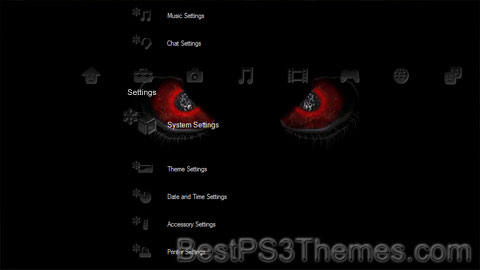
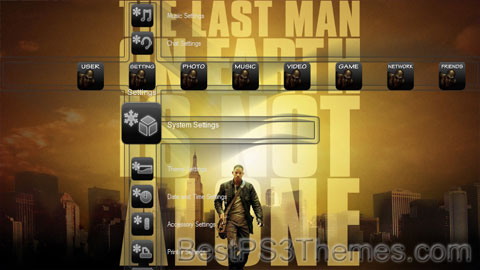
iKeller 2 theme by keller

Download: iKeller2.p3t

iKeller 2 Theme
(6 backgrounds)

P3T Unpacker v0.12
Copyright (c) 2007. Anoop Menon

This program unpacks Playstation 3 Theme files (.p3t) so that you can touch-up an existing theme to your likings or use a certain wallpaper from it (as many themes have multiple). But remember, if you use content from another theme and release it, be sure to give credit!

Download for Windows: p3textractor.zip

Instructions:

Download p3textractor.zip from above. Extract the files to a folder with a program such as WinZip or WinRAR. Now there are multiple ways to extract the theme.

The first way is to simply open the p3t file with p3textractor.exe. If you don’t know how to do this, right click the p3t file and select Open With. Alternatively, open the p3t file and it will ask you to select a program to open with. Click Browse and find p3textractor.exe from where you previously extracted it to. It will open CMD and extract the theme to extracted.[filename]. After that, all you need to do for any future p3t files is open them and it will extract.

The second way is very simple. Just drag the p3t file to p3textractor.exe. It will open CMD and extract the theme to extracted.[filename].

For the third way, first put the p3t file you want to extract into the same folder as p3textractor.exe. Open CMD and browse to the folder with p3extractor.exe. Enter the following:
p3textractor filename.p3t [destination path]Replace filename with the name of the p3t file, and replace [destination path] with the name of the folder you want the files to be extracted to. A destination path is not required. By default it will extract to extracted.filename.

iKeller

iKeller theme by keller

Download: iKeller.p3t

iKeller Theme
(1 background)

P3T Unpacker v0.12
Copyright (c) 2007. Anoop Menon

This program unpacks Playstation 3 Theme files (.p3t) so that you can touch-up an existing theme to your likings or use a certain wallpaper from it (as many themes have multiple). But remember, if you use content from another theme and release it, be sure to give credit!

Download for Windows: p3textractor.zip

Instructions:

Download p3textractor.zip from above. Extract the files to a folder with a program such as WinZip or WinRAR. Now there are multiple ways to extract the theme.

The first way is to simply open the p3t file with p3textractor.exe. If you don’t know how to do this, right click the p3t file and select Open With. Alternatively, open the p3t file and it will ask you to select a program to open with. Click Browse and find p3textractor.exe from where you previously extracted it to. It will open CMD and extract the theme to extracted.[filename]. After that, all you need to do for any future p3t files is open them and it will extract.

The second way is very simple. Just drag the p3t file to p3textractor.exe. It will open CMD and extract the theme to extracted.[filename].

For the third way, first put the p3t file you want to extract into the same folder as p3textractor.exe. Open CMD and browse to the folder with p3extractor.exe. Enter the following:
p3textractor filename.p3t [destination path]Replace filename with the name of the p3t file, and replace [destination path] with the name of the folder you want the files to be extracted to. A destination path is not required. By default it will extract to extracted.filename.

GoWithTheFlow

GoWithTheFlow theme by DriveForSix

Download: GoWithTheFlow.p3t

GoWithTheFlow Theme
(4 backgrounds)

P3T Unpacker v0.12
Copyright (c) 2007. Anoop Menon

This program unpacks Playstation 3 Theme files (.p3t) so that you can touch-up an existing theme to your likings or use a certain wallpaper from it (as many themes have multiple). But remember, if you use content from another theme and release it, be sure to give credit!

Download for Windows: p3textractor.zip

Instructions:

Download p3textractor.zip from above. Extract the files to a folder with a program such as WinZip or WinRAR. Now there are multiple ways to extract the theme.

The first way is to simply open the p3t file with p3textractor.exe. If you don’t know how to do this, right click the p3t file and select Open With. Alternatively, open the p3t file and it will ask you to select a program to open with. Click Browse and find p3textractor.exe from where you previously extracted it to. It will open CMD and extract the theme to extracted.[filename]. After that, all you need to do for any future p3t files is open them and it will extract.

The second way is very simple. Just drag the p3t file to p3textractor.exe. It will open CMD and extract the theme to extracted.[filename].

For the third way, first put the p3t file you want to extract into the same folder as p3textractor.exe. Open CMD and browse to the folder with p3extractor.exe. Enter the following:
p3textractor filename.p3t [destination path]Replace filename with the name of the p3t file, and replace [destination path] with the name of the folder you want the files to be extracted to. A destination path is not required. By default it will extract to extracted.filename.

Eyes Upon

Eyes Upon theme by Jabyaeye

Download: EyesUpon.p3t

Eyes Upon Theme
(1 background)

P3T Unpacker v0.12
Copyright (c) 2007. Anoop Menon

This program unpacks Playstation 3 Theme files (.p3t) so that you can touch-up an existing theme to your likings or use a certain wallpaper from it (as many themes have multiple). But remember, if you use content from another theme and release it, be sure to give credit!

Download for Windows: p3textractor.zip

Instructions:

Download p3textractor.zip from above. Extract the files to a folder with a program such as WinZip or WinRAR. Now there are multiple ways to extract the theme.

The first way is to simply open the p3t file with p3textractor.exe. If you don’t know how to do this, right click the p3t file and select Open With. Alternatively, open the p3t file and it will ask you to select a program to open with. Click Browse and find p3textractor.exe from where you previously extracted it to. It will open CMD and extract the theme to extracted.[filename]. After that, all you need to do for any future p3t files is open them and it will extract.

The second way is very simple. Just drag the p3t file to p3textractor.exe. It will open CMD and extract the theme to extracted.[filename].

For the third way, first put the p3t file you want to extract into the same folder as p3textractor.exe. Open CMD and browse to the folder with p3extractor.exe. Enter the following:
p3textractor filename.p3t [destination path]Replace filename with the name of the p3t file, and replace [destination path] with the name of the folder you want the files to be extracted to. A destination path is not required. By default it will extract to extracted.filename.

Beautiful Nature

Beautiful Nature theme by Jewad Alnabi

Download: BeautifulNature.p3t

Beautiful Nature Theme
(6 backgrounds)

P3T Unpacker v0.12
Copyright (c) 2007. Anoop Menon

This program unpacks Playstation 3 Theme files (.p3t) so that you can touch-up an existing theme to your likings or use a certain wallpaper from it (as many themes have multiple). But remember, if you use content from another theme and release it, be sure to give credit!

Download for Windows: p3textractor.zip

Instructions:

Download p3textractor.zip from above. Extract the files to a folder with a program such as WinZip or WinRAR. Now there are multiple ways to extract the theme.

The first way is to simply open the p3t file with p3textractor.exe. If you don’t know how to do this, right click the p3t file and select Open With. Alternatively, open the p3t file and it will ask you to select a program to open with. Click Browse and find p3textractor.exe from where you previously extracted it to. It will open CMD and extract the theme to extracted.[filename]. After that, all you need to do for any future p3t files is open them and it will extract.

The second way is very simple. Just drag the p3t file to p3textractor.exe. It will open CMD and extract the theme to extracted.[filename].

For the third way, first put the p3t file you want to extract into the same folder as p3textractor.exe. Open CMD and browse to the folder with p3extractor.exe. Enter the following:
p3textractor filename.p3t [destination path]Replace filename with the name of the p3t file, and replace [destination path] with the name of the folder you want the files to be extracted to. A destination path is not required. By default it will extract to extracted.filename.

BioShock

BioShock theme by Kevin Daniel

Download: BioShock.p3t

BioShock Theme
(8 backgrounds)

BioShock
Developer(s)
Publisher(s)2K
Director(s)Ken Levine
Designer(s)Paul Hellquist
Programmer(s)
  • Rowan Wyborn
  • Christopher Kline
Artist(s)Scott Sinclair
Writer(s)Ken Levine
Composer(s)Garry Schyman
SeriesBioShock
EngineUnreal Engine 2.5[4]
Platform(s)
Release
August 21, 2007
  • Windows, Xbox 360
    PlayStation 3
    • PAL: October 17, 2008
    • NA: October 21, 2008[3]
    Mac OS X
    • NA: October 7, 2009
    • EU: October 7, 2009
    iOS
    • WW: August 27, 2014
Genre(s)First-person shooter
Mode(s)Single-player

BioShock is a 2007 first-person shooter game developed by 2K Boston (later Irrational Games) and 2K Australia, and published by 2K. The first game in the BioShock series, it was released for Microsoft Windows and Xbox 360 platforms in August 2007; a PlayStation 3 port by Irrational, 2K Marin, 2K Australia and Digital Extremes was released in October 2008. The game follows player character Jack, who discovers the underwater city of Rapture, built by business magnate Andrew Ryan to be an isolated utopia. The discovery of ADAM, a genetic material which grants superhuman powers, initiated the city's turbulent decline. Jack attempts to escape Rapture, fighting its mutated and mechanical denizens, while engaging with the few sane survivors left and learning of the city's past. The player can defeat foes in several ways by using weapons, utilizing plasmids that give unique powers, and by turning Rapture's defenses against them.

BioShock's concept was developed by Irrational's creative lead, Ken Levine, and incorporates ideas by 20th century dystopian and utopian thinkers such as Ayn Rand, George Orwell, and Aldous Huxley, as well as historical figures such as John D. Rockefeller Jr. and Walt Disney. The game includes role-playing elements, giving the player different approaches in engaging enemies such as by stealth, as well as moral choices of saving or killing characters. Additionally, the game borrows concepts from the survival horror genre, notably the Resident Evil series. BioShock is considered a spiritual successor to the System Shock series, on which many of Irrational's team, including Levine, had worked previously.

BioShock received universal acclaim and was particularly praised by critics for its narrative, themes, visual design, setting, and gameplay. It is considered to be one of the greatest video games ever made and a demonstration of video games as an art form. BioShock was followed by two sequels, BioShock 2 and BioShock Infinite, released in 2010 and 2013, respectively. Ports of BioShock were released for macOS and mobile following its console releases. A remastered version of the game was released on Microsoft Windows, PlayStation 4, Xbox One, and Nintendo Switch as part of BioShock: The Collection.

Synopsis[edit]

Setting[edit]

BioShock takes place in Rapture,[5][6] a large underwater city planned and constructed in the 1940s by individualist business magnate Andrew Ryan, who wanted to create a utopia for society's elite to flourish outside of government control and "petty morality". This philosophy resulted in remarkable advances in the arts and sciences, which included the discovery of "ADAM": a potent gene-altering substance which is created by a species of sea slug on the ocean floor. ADAM led to the creation of "Plasmids", mutagenic serums that grant users super-human powers such as telekinesis and pyrokinesis. To protect and isolate Rapture, Ryan outlawed any contact with the surface world.[7]

As Rapture flourished, wealth disparities grew, and criminal Frank Fontaine used his influence over the disenfranchised working class to establish illegal enterprises and obtain power—enough to rival Ryan. With doctors Brigid Tenenbaum and Yi Suchong, Fontaine created his own company dedicated to researching plasmids and gene tonics. As ADAM became addictive and demand skyrocketed, Fontaine secretly mass-produced ADAM through slugs implanted in the stomachs of orphaned girls, nicknamed "Little Sisters". Fontaine was killed in a shootout with police, and Ryan took the opportunity to seize his assets, including control of the Little Sisters.

In the months that followed, a man amongst the poor named Atlas rose up and began a violent revolution against Ryan, with both sides using plasmid-enhanced humans (known as "Splicers") to wage war on one another. To protect the Little Sisters, Ryan created the "Big Daddies": genetically enhanced humans surgically grafted into gigantic lumbering diving suits designed to escort the sisters as they scavenged ADAM from dead bodies.[5] Tensions came to a head on New Year's Eve of 1958 when Atlas ordered an all-out assault on Ryan and his supporters. The conflict turns Rapture into a war-torn crumbling dystopia, resulting in societal collapse, countless deaths, many Splicers becoming disfigured and insane from ADAM abuse, and the few sane survivors barricading themselves away from the chaos.[8]

Plot[edit]

BioShock's game design drew on art deco for much of its imagery.[9]

In 1960, the protagonist, Jack, is a passenger on a plane that crashes in the Atlantic Ocean.[10][11] The only survivor, Jack makes his way to a nearby lighthouse; inside is a bathysphere that takes him to Rapture.[12] Jack is contacted via radio by Atlas, who helps guide him through the ruined city.

Atlas requests Jack's help in saving his family, who he says are in a docked bathysphere. When Jack first encounters the Little Sisters, Atlas urges him to kill them to harvest their ADAM. Dr. Brigid Tenenbaum intervenes and insists Jack should spare them, providing him with a plasmid that can remove the sea slug from their bodies and free them of their brainwashing.[13] Jack works his way to the bathysphere, but Ryan destroys it before Jack can reach it. Infuriated, Atlas has Jack fight his way through various districts toward Ryan's lair, forcing Jack to contend with Rapture's deranged citizens along the way, such as the surgical doctor J.S. Steinman and artist and musician Sander Cohen.

Jack enters Ryan's office. Ryan reveals the truth of Jack's origins: he is actually Ryan's illegitimate son, sold by Ryan's mistress as an embryo to Fontaine, who had Tenenbaum and Suchong rapidly age Jack into adulthood and turned into an obedient assassin, capable of accessing any of Rapture's systems locked to Ryan's genetic code and thus ensure Fontaine's victory in the war. Jack was smuggled to the surface with false memories of a normal life, waiting to be called back to Rapture when needed. Ryan takes control of Jack's actions by asking, "Would you kindly?"; a phrase that has preceded many of Atlas' commands as a hypnotic trigger, forcing him to follow any orders without question. Jack also realizes he was responsible for the plane crash, having read a letter onboard containing the same trigger phrase.[14]

Ryan chooses to die by his own will and compels Jack to beat him to death with a golf club. Atlas reveals himself to be Fontaine, having faked his death and used "Atlas" as an alias to hide his identity while providing a heroic figure for the poor to rally behind. With Ryan dead, Fontaine takes control of the city and leaves Jack to be killed by hostile security drones. Jack is saved by Dr. Tenenbaum, who helps remove Fontaine's mental conditioning, including one that would have stopped Jack's heart. Jack pursues Fontaine to his lair, where Fontaine transforms himself into a hulking humanoid creature by injecting himself with a large supply of ADAM. The Little Sisters aid Jack in draining the ADAM from Fontaine's body and eventually kill him.

The ending depends on how the player interacts with the Little Sisters:

  • If the player rescues all or all but one of the Little Sisters, Jack takes them back to the surface with him and adopts five of them as his daughters. Tenenbaum happily narrates how they go on to live full lives under his care, eventually surrounding him on his deathbed. This ending is considered canon in BioShock Infinite: Burial at Sea.
  • If the player harvests more than one Little Sister, Jack turns on the Little Sisters to harvest their ADAM.[15] Tenenbaum sadly narrates what occurs, condemning Jack and his actions. A submarine comes across the plane's wreckage and finds itself surrounded by bathyspheres containing Splicers, who attack the crew and take control of it. The submarine is revealed to be carrying nuclear missiles, with Tenenbaum claiming that Jack has "stolen the terrible secrets of the world":[16] The more Little Sisters Jack harvests throughout the game, the harsher and more furious Tenenbaum's narrative becomes.[17]

Gameplay[edit]

A Big Daddy defends a Little Sister (both on the right) from two Splicers, while the player watches.

BioShock is a first-person shooter with role-playing customization and stealth elements, and is similar to System Shock 2. The player takes the role of Jack as he is guided through Rapture towards various objectives. The player collects multiple weapons and plasmids as they work their way through enemy forces. The player can switch between one active weapon and one active plasmid at any time, allowing them to find combination attacks that can be effective against certain enemies, such as first shocking a Splicer then striking them down with a wrench. Weapons are limited by ammunition that the player collects; many weapons have secondary ammo types that can be used instead for additional benefits, such as bullets that inflict fire damage. Plasmid use consumes a serum called EVE which can be restored using EVE syringes collected by the player or by consuming cigarettes and alcohol.[18] The player has a health meter that decreases when they take damage. The player can restore their health with food or medical packs found throughout Rapture. If the player's health is reduced to zero, they will be regenerated at the last Vita-Chamber that they passed with limited amounts of health and EVE. A patch for the game allows the Vita-Chambers to be turned off, requiring players to restart a saved game if the character dies.[19]

The game provides several options to face challenges. In addition to direct combat, the player can use plasmids to lure enemies into traps or to turn enemies against each other, or employ stealth tactics to avoid detection by hostiles including the security systems and turrets.[20] The player can hack into any of Rapture's automated systems; the hacking process is done via a mini-game similar to Pipe Mania where the player must connect two points on opposite sides of a grid with a limited set of piping within a fixed amount of time, with failure to complete in time costing health and potentially sounding alarms.[21][22] Early in the game, the player is given a research camera; by taking photographs of enemies, the player will cumulatively gain knowledge about the individual foes which translates into attack boosts and other benefits when facing that enemy type in the future.[23]

The player collects money by exploring Rapture and from the bodies of defeated foes; this money can be used at vending machines to restock on ammunition, health and EVE, and other items; like security cameras, vending machines can be hacked to reduce the costs of items from it.[22] The player will receive rewards in the form of ADAM from completing some tasks, as well as from either saving or killing the Little Sisters after defeating their Big Daddy guardian. ADAM is used to purchase plasmids from Gatherer's Garden machines scattered around Rapture.[24] In addition to plasmids, the player can collect and buy tonics that provide passive bonuses, such as increasing Jack's strength, using EVE more efficiently, or making Jack more resistant to damage. The player can only have a limited number of plasmids and tonics active at any time, and can swap between the various plasmids and tonics at certain stations located throughout Rapture.[5]

Development[edit]

Game design[edit]

Lead developer Ken Levine had created Irrational Games in 1997 out of former members from Looking Glass Studios.[25][26] Their first game was System Shock 2, a sequel to Looking Glass's System Shock, and was met with critical success, though it did not prove a financial one. Levine had attempted to pitch a sequel to System Shock 2 to Electronic Arts, but the publisher rejected the idea based on the poor performance of the earlier game.[27] Irrational developed other games, including Freedom Force, Tribes: Vengeance, the canceled title Deep Cover, and the completed The Lost which was never released due to legal complications. At this point, Levine wanted to return to a game in the same style as System Shock 2, a more free-form game with strong narrative.[27][28]

In 2002, the team had come up with a core gameplay mechanic idea based on three groups of forces; drones that would carry a desirable resource, protectors that would guard the drones, and harvesters that would attempt to take the resource from the drones; these would eventually bear out as the Little Sisters, Big Daddies, and Splicers in the final game, but at the time of the concept, there was no set theme.[28] They began working on creating a setting as to be able to pitch the idea to publishers.[28] A 2002 demonstration version was based on the Unreal Engine 2 for the Xbox.[27] This demonstration was primarily set aboard a space station overtaken with genetically mutated monsters; the main character was Carlos Cuello, a "cult deprogrammer"—a person charged with rescuing someone from a cult, and mentally and psychologically readjusting that person to a normal life.[27][29] Ken Levine cites an example of what a cult deprogrammer does: "[There are] people who hired people to [for example] deprogram their daughter who had been in a lesbian relationship. They kidnap her and reprogram her, and it was a really dark person, and that was the [kind of] character that you were."[30] This story would have been more political in nature, with the character hired by a Senator.[30] The team collectively agreed that this game was not what they had set out to make, and were having trouble finding a publisher.[27] They considered ending development, but as news about their efforts to create a spiritual successor to System Shock 2 began to appear in gaming magazines and websites, the team opted to continue development, performing a full revamp.[27]

By 2004, 2K Games, a subsidiary of Take-Two Interactive, offered to publish the game primarily based on the drone/protector/harvester concept, giving Irrational the freedom to develop the story and setting.[28][31][32] By this point, the story and setting had changed significantly, taking place in an abandoned World War II-era Nazi laboratory that had been recently unearthed by 21st-century scientists. Over the decades, the genetic experiments within the labs had gradually formed themselves into an ecosystem centered on the three groups.[33] This version included many of the gameplay elements that would remain in the final BioShock, themselves influenced by concepts from System Shock 2. These elements included the use of plasmids and EVE, the need to use stealth or other options to deal with automated security systems, direction through the environment from a non-player character relayed over a radio, and story elements delivered through audio recordings and "ghosts" of deceased characters.[34][35][36]

While the gameplay with the 2004 reveal was similar to what resulted in the released version of BioShock, both design and story changed, consistent with what Levine says was then-Irrational Games' guiding principle of putting game design first.[29] These areas were also issued due to some internal strife and lack of communication between the various teams within Irrational, part of the result of having to expand the team from six to sixty members for the scope of the project.[27] The environment was considered bland, and there were difficulties by the team's artists to come up with a consistent vision to meet the level designer's goals.[27] A critical junction was a short experiment performed by level designer Jean Paul LeBreton and artist Hoagy de la Plante, setting themselves aside to co-develop a level that became part of the "Tea Garden" area in the released game, which Levine used as a prime example of a "great BioShock space", emphasizing the need for departments to work together.[27] Levine found that the cyberpunk theme had been overplayed considering their initial reject from Electronic Arts for System Shock 3, leading towards the underwater setting of Rapture.[27]

The game's lead level designer was Bill Gardner.[37] He cited Capcom's survival horror series Resident Evil as a significant influence on BioShock, stating there are "all these nods and all these little elements that I think you can see where Resident Evil inspired us". The team were particularly influenced by Resident Evil 4, including its approach to the environments, combat, and tools, its game design and tactical elements, its "gameplay fuelled storytelling" and inventory system, and its opening village level in terms of how it "handled the sandbox nature of the combat" and in terms of "the environment".[38]

Story and theme development[edit]

A visit to the GE Building and its statue of Atlas in New York City was the principal idea that led to the art deco stylings of BioShock.

The thematic core of BioShock was born when Levine was walking at Rockefeller Center near the GE Building in New York City. He saw the uniqueness of the art deco styling of the building along with imagery around the building such as the statue of Atlas near it, and recognized that these were spaces that had not been experienced in the first-person shooter genre.[28] The history of the Rockefeller Center also fed into the story concept; Levine noted how the center had started construction prior to the Great Depression; when the primary financiers had pulled out, John D. Rockefeller Jr. backed the remaining construction to complete the project himself, as stated by Edge magazine "a great man building an architectural triumph against all the odds".[28] The history of Rapture and the character of Andrew Ryan is loosely based on Rockefeller's story.[28] He also considered that many of the characters of Rapture were all people who were oppressed once before in their lives and now free of that oppression, have turned around and become the oppressors, a fact he felt resonated throughout human history.[39]

At this point in the development, the backdrop of Rapture had been fleshed out, but they had yet to come on how to represent the drones, protectors, and harvesters from their original game idea. The Big Daddy concept as the protector class was developed early in the process, but the team had yet to reach a satisfying design for the drones, having used several possible designs including bugs and dogs in wheelchairs.[28] The team wanted to have the player care for the drones in some way and create pathos for these characters. The idea of using little girls came out of brainstorming, but was controversial and shocking within the team at first, recognizing that they could easily be killed and make the game more horrific in the style of Night Trap.[28] However, as Levine worked on the story, he started to incorporate the ideas of dystopian and utopian thinkers from the twentieth century, including Ayn Rand, Aldous Huxley, and George Orwell, and considered their ideas "fascinating".[40] He brought in the ideas of Objectivism that Rand primarily outlined in the book Atlas Shrugged, that man should be driven by selfishness and not altruism, and used this to inform the philosophy behind the city of Rapture and Andrew Ryan's work, viewing them as quite ludicrous, and primed to be applied to an antagonist, tied in with his previous observations on Rockefeller and his writings.[28] This was extended to the use of the little girls as drones (now Little Sisters), particularly the question whether the player should try to save the girls or harvest the ADAM for their benefit.[28] 2K Games expressed concern about the initial mechanic of the Little Sisters, where the player would actively prey on the Little Sister, which would have alerted a Big Daddy and set up the fight with the player. This approach did not sit well with Levine, and 2K Games asserted that they would not ship a game "where the player gets punished for doing the right thing".[27] They altered this approach where the Little Sisters would be invulnerable until the player had dealt with their Big Daddy, though LeBreton considered this "a massive kludge" into the game's fiction.[27][28] The idea of creating the Little Sisters and presenting the player with this choice became a critical part of the game's appeal to the broader gaming market, although it was met with criticism from some outlets.[28] Levine desired only to have one ending to the game, something that would have left the fate of the characters "much more ambiguous", but publisher pressure directed them to craft multiple endings depending on the choice of harvesting Little Sisters.[39] Levine also noted that "it was never my intention to do two endings for the game. It sort of came very late and it was something that was requested by somebody up the food chain from me."[41]

Other elements came into the story design. Levine had an interest in "stem cell research and the moral issues that go around [it]".[40] Regarding artistic influences, Levine cited the books Nineteen Eighty-Four and Logan's Run, representing societies that have "really interesting ideas screwed up by the fact that we're people".[42] The idea of the mind control used on Jack was offered by LeBreton, inspired by films like The Manchurian Candidate, as a means to provide a better reason to limit the player's actions as opposed to the traditional use of locked doors to prevent them exploring areas they should not. The team had agreed that Jack's actions would be controlled by a key phrase but struggled with coming up with one that would not reveal Atlas' true nature. Levine happened upon "Would you kindly" after working on marketing materials for the game that asked the reader hypothetical questions such as "Would you kill people, even innocent people, to survive?", later working that phrase into the first script for the game.[27]

Numerous tensions within the team and from publisher 2K Games continued during the development process. According to LeBreton, Levine was distrustful of some of the more egotistical newer hires and was often arguing with them to enforce his vision of BioShock.[27] 2K Games was concerned with the growing budget for the title, and told Levine to market the title more as a first-person shooter rather than the first-person shooter/role playing game hybrid they set out for.[27] Near the targeted release date, Levine ordered the team into round-the-clock development, creating more strife in the team.[27] Paul Hellquist, the game's lead designer, was often omitted from key design meetings, which he later recounted was due to his contrary nature to Levine, questioning several of his choices; he used his frustration to put into the design efforts for the Medical Pavilion level that he was in charge of at that time.[27] Near the anticipated completion date, 2K decided to give Irrational another three months to polish up the game, extending the current crunch time the studio was already under.[27] This left some hard-to-discover bugs and issues in the game undiscovered. One such case was an apparent Easter egg found in the remastered version in 2018, where under certain conditions, the player can end up looking at an object with the description "Paul Hellquist did not do his Job". Both Levine and Chris Kline, the game's lead programmer confirmed the message was a cheeky jab at Hellquist left as a debugging message; Kline and Hellquist were developing the systems to show descriptions of objects to players when looked at, and Hellquist offered to complete all the necessary descriptions in-game; to jokingly help prod Hellquist along, Kline put "Paul Hellquist did not do his Job" as the default message within the executable code. While the code message was changed for the original release, the remastered version likely used a pre-final version of the BioShock code, according to Kline.[43] Hellquist took the revelation in good humor and tweeted that other Easter eggs should have been added to the game to display: "If you are enjoying this, Paul Hellquist did his job."[44]

A critical playtest of the game occurred in January 2007, where initial feedback from the players was mostly negative, including issues of the setting being too dark, having no idea where to go, and distrusting Atlas, who at the time was voiced in a southern drawl, described as a "lecherous Colonel Sanders".[27] The team took this criticism to heart, revamping several elements during those extra months such as improving the lighting, implementing a quest marker, and using an Irish voice for Atlas to make him sound more trustworthy.[27] During another late-stage playtest with the title "ninety-nine percent" complete according to Levine, the playtesters did not like the game at all as they felt no connection to the player-character Jack, and the person overseeing the tests told Levine that the game was likely to be a failure. At this point, BioShock did not have many cutscenes, as Levine was ideologically opposed to them. However, the following day, Levine and the lead group came up with a "cheap" way to correct this, by adding the initial cut scene within the plane and the subsequent plane crash, as this helped to set the time frame, place the player in the role of the character, and alluded to the "would you kindly" line later in the game.[39] Levine likened this approach to the initial aircraft crash at the onset of the television show Lost to quickly establish character and setting.[28]

The game was successfully released in August 2007 with a final budget of about $25 million.[27] In a 2016 interview, Levine felt that the game could have used about six more months of development to improve the gun combat system and fix lagging issues that occurred during the final boss fight.[39] Despite the critical success of the title, many of those on the team would leave Irrational to pursue other projects due to late development strife that occurred.[27]

In an interview in 2018, Levine had come to recognize that BioShock reflected several Jewish themes, though this was not intentional. Levine, who considers himself culturally Jewish but does not follow Judaism, had grown up in New Jersey but spent much of his childhood time with his father who worked in Manhattan's Diamond District and visiting his grandparents in Queens, a neighborhood with a large proportion of Eastern European immigrants. Thus, Levine was exposed to much of the Jewish culture that flourished in the area following World War II and understood some of the anxiety Jewish people faced.[45] In the 2018 interview, Levine recognized several of the characters, including Andrew Ryan (who was inspired by Ayn Rand who was also Jewish), Sander Cohen, and Brigid Tenenbaum, were written all as Jewish, and all seeking to escape a world they felt they did not fit into by going to Rapture; Levine said: "'There's literal displacement and then there's a feeling of not fitting in, of 'I don't really belong here'. I think Jews are always going to feel a little bit like they don't belong wherever they are. There's always that 'what if we have to flee' mentality."[45]

Game engine[edit]

BioShock uses a heavily modified Unreal Engine 2.5 with some of the advanced technologies from Unreal Engine 3.[4] Irrational had previous experience with modifying and expanding on the Unreal Engine in SWAT 4, and continued this advancement of the engine within BioShock. One significant improvement they added was improved water effects, given the nature of the game's setting, hiring a programmer and artist to focus on the water effects.[46] This graphical enhancement has been lauded by critics, with GameSpot saying: "Whether it's standing water on the floor or sea water rushing in after an explosion, it will blow you away every time you see it."[47] BioShock also uses the Havok Physics engine that allows for an enhancement of in-game physics, the integration of ragdoll physics, and allows for more lifelike movement by elements of the environment.[48] The Windows version was built to work in both Direct3D 10 (DirectX 10) and DirectX 9, with the DirectX 10 version supporting additional water and par

SurrealPrjct v -2

SurrealPrjct version -2 theme by R.W.Remow

Download: SurrealPrjctv-2.p3t
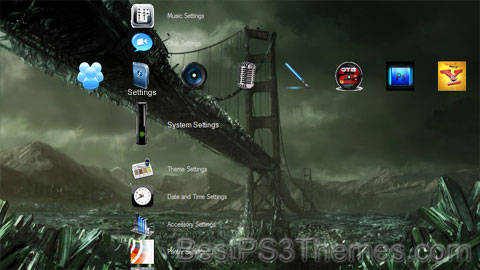
SurrealPrjct v -2 Theme
(1 background)

P3T Unpacker v0.12
Copyright (c) 2007. Anoop Menon

This program unpacks Playstation 3 Theme files (.p3t) so that you can touch-up an existing theme to your likings or use a certain wallpaper from it (as many themes have multiple). But remember, if you use content from another theme and release it, be sure to give credit!

Download for Windows: p3textractor.zip

Instructions:

Download p3textractor.zip from above. Extract the files to a folder with a program such as WinZip or WinRAR. Now there are multiple ways to extract the theme.

The first way is to simply open the p3t file with p3textractor.exe. If you don’t know how to do this, right click the p3t file and select Open With. Alternatively, open the p3t file and it will ask you to select a program to open with. Click Browse and find p3textractor.exe from where you previously extracted it to. It will open CMD and extract the theme to extracted.[filename]. After that, all you need to do for any future p3t files is open them and it will extract.

The second way is very simple. Just drag the p3t file to p3textractor.exe. It will open CMD and extract the theme to extracted.[filename].

For the third way, first put the p3t file you want to extract into the same folder as p3textractor.exe. Open CMD and browse to the folder with p3extractor.exe. Enter the following:
p3textractor filename.p3t [destination path]Replace filename with the name of the p3t file, and replace [destination path] with the name of the folder you want the files to be extracted to. A destination path is not required. By default it will extract to extracted.filename.

Elisha Cuthbert #3

Elisha Cuthbert theme by Bog

Download: ElishaCuthbert_3.p3t
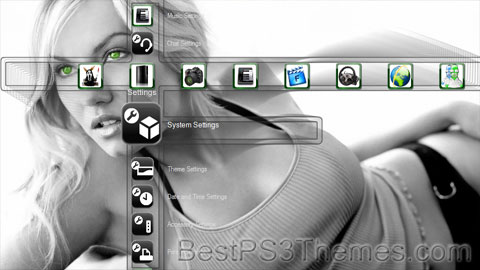
Elisha Cuthbert Theme 3
(3 backgrounds)

Elisha Cuthbert
Cuthbert in 2015
Born
Elisha Ann Cuthbert

(1982-11-30) November 30, 1982 (age 41)
Calgary, Alberta, Canada
OccupationActress
Years active1996–present
Spouse
(m. 2013)
Children2
Signature

Elisha Ann Cuthbert (/əˈlʃə/; born November 30, 1982)[1] is a Canadian actress. As a child actress, she made her first televised appearance as an extra in the horror-themed series for children Are You Afraid of the Dark? and co-hosted Popular Mechanics for Kids. She made her feature-film debut in the 1997 Canadian family drama Dancing on the Moon. Her first major lead role came in the 1998 drama film Airspeed (No Control) alongside Joe Mantegna. In 2001, she starred in the movie Lucky Girl, for which she received her first award, the Gemini Awards.

After moving to Hollywood in 2001, she was cast as Kim Bauer in the series 24, her first big role in an American production, alongside Kiefer Sutherland. For this role, she was nominated for Screen Actors Guild Awards twice. In 2003, she played Darcie Goldberg in the college comedy Old School and Carol-Anne in Love Actually. Cuthbert received wide recognition for her breakout role as Danielle in the 2004 teen comedy film The Girl Next Door, being nominated for Best Breakthrough Performance at the 2005 MTV Movie Awards, and for her next role as Carly Jones in the 2005 House of Wax, for which she received two nominations for the Teen Choice Awards, including Best Actress: Action/Adventure/Thriller. Subsequently, Cuthbert appeared in the lead role in the drama The Quiet (2005) and the horror Captivity (2007). This role, along with Are You Afraid of the Dark?, 24 series and House of Wax, established her as a scream queen.[2][3]

From 2011 to 2013, Cuthbert starred as Alex Kerkovich in the three seasons of the ABC comedy Happy Endings. From 2016 to 2020, she had a recurring role as Abby Phillips on the Netflix series The Ranch, before becoming a main cast member in the series' second season.[4] She received praise for her performance on the Canadian comedy series Jann (2020), being nominated for the Canadian Screen Awards for Best Performance in a guest role.

Cuthbert has appeared in numerous magazines, such as Maxim, Complex, and FHM. In 2013, Maxim magazine named her "TV's most beautiful woman".[5]

Early life[edit]

Elisha Cuthbert was born in Calgary, Alberta, the daughter of Kevin, an automotive design engineer and Patricia, a housewife.[citation needed] She grew up in Greenfield Park, Quebec. In 2000, she graduated from Centennial Regional High School and moved to Los Angeles at the age of 17.[6] As a child, she participated in Girl Guide programs as a member of Girl Guides of Canada.[7]

Career[edit]

Early work[edit]

When she was nine, Cuthbert began modeling children's clothing while appearing as a foot model.[8] She made her first televised appearance as an extra in Are You Afraid of the Dark?, a horror-themed series for children; she later became a regular on the show. Cuthbert co-hosted Popular Mechanics for Kids with Jay Baruchel, filmed in Montreal. Her reporting captured the attention of Hillary Clinton, who invited her to the White House.[9]

Cuthbert landed a role in a feature film in the family drama Dancing on the Moon (1997). She appeared in other Canadian family films and in an airplane thriller, Airspeed. In 2000, Cuthbert co-starred in Believe, a Canadian film with Ricky Mabe. The following year she starred in the Canadian television movie, Lucky Girl, and was awarded a Gemini Award for her performance.[10]

2000s[edit]

Cuthbert with cast of 24 at a screening for the 24 season 7 finale

Soon after moving to Hollywood, she was cast as Kim Bauer, daughter of federal agent Jack Bauer, in the television series 24. She appeared in the show's first three seasons, but not in its fourth; she guest-starred in two episodes in the fifth season. She also reprised her role as Kim Bauer in 24: The Game and again guest-starred in five episodes of the seventh season and in two episodes of the eighth season.

She began her Hollywood film career with small roles in Old School, which grossed $87 million. Cuthbert next appeared in Love Actually, which earned $246.4 million worldwide.[11]

Her first break in a major film role was in 2004, The Girl Next Door. She played an ex–porn star, Danielle, opposite Emile Hirsch. She had reservations about taking the part, but director Luke Greenfield persuaded her to accept the role. Cuthbert did research for the film speaking to adult actresses from Wicked Pictures and Vivid Entertainment.[12] The film was compared to Risky Business[13][14] although Cuthbert said her character was not directly based on Rebecca De Mornay's. Critics were divided; some praised the film for boldness, while others, notably Roger Ebert, called it gimmicky and exploitative.[15][16] Ebert wrote that he saw Cuthbert's character as "quite the most unpleasant character I have seen in some time."[17] The View London said: "Cuthbert is surprisingly good, too – aside from being drop dead gorgeous, she also proves herself a capable comic actress in the Cameron Diaz mould".[18] Cuthbert won two nominations for the MTV Movie Awards for Best Kiss and Best Breakthrough Performance.

In her next film, Cuthbert starred with Paris Hilton and Chad Michael Murray in the 2005 remake of the horror film House of Wax. In one scene, her character attempted to open her mouth while her lips were sealed with glue. For realism, she used Superglue over prosthetics.[19] House of Wax was largely panned, critics citing a range of flaws. It was called "notable for having some of the most moronic protagonists ever to populate a horror film," though of those characters, critics tended to think Cuthbert "did the best". Though it received negative reviews the film was a box office success, which grossed $70 million worldwide.[20] The Houston Chronicle cited Cuthbert as an exception.[21] Mick LaSalle of the San Francisco Chronicle said of the film, "Elisha Cuthbert's matter-of-fact, likable quality helps. Seeing her turn into wax would be as bad as seeing that happen to Glenda Farrell (the star of the 1933 version)."[22] The Movie said: "The performances are always professional and understated in their believable cogency, particularly Cuthbert, a talented, beautiful young actress who has proven time and again just what a multilayered and promising future she has ahead of her. Cuthbert digs into the role of Carly with strength, determination, and horrified realism; you believe as you watch her that she is going through these things and forget all about the actor playing the part, which is the biggest compliment of all.[23] Brian Orndorf of Filmjerk.com said: "[Paris] Hilton ... only plays her known personality in the film. She's overshadowed by the strong work from the rest of the cast, notably Chad Michael Murray and especially Elisha Cuthbert, who gives the film a strong dose of enthusiasm with her Jamie Lee Curtis-esque performance."[24] Cuthbert was nominated at Teen Choice Awards in two categories Choice Movie: Actress – Action / Adventure / Thriller and Choice Movie: Rumble.

Cuthbert promoting 24 in May 2009

Cuthbert's next film was the indie film The Quiet. She was a co-star and co-producer. She played Nina, a 17-year-old cheerleader who is sexually abused by her father. Cuthbert looked to her younger cousin as her inspiration in portraying a teenager.[25] The Quiet, distributed by Sony Pictures Classics, premiered at the 2005 Toronto International Film Festival and received a limited release in Los Angeles and New York City on 25 August 2006[26] before expanding regionally in the US on September 1. Cuthbert initially wanted to play the part of the silent Dot, but director Jamie Babbit cast Camilla Belle in the role instead[27] after Thora Birch pulled out.[28] Babbit reasoned "To me, Dot has to be someone you could believe would be invisible in high school. You look at Elisha, this beautiful woman with the most perfect body you've ever seen, and you think, there's no high school in America where this girl could be invisible. No matter how much hair and makeup I do, it's not going to happen." The Daily Californian conceded that "Despite the plot's failings, Cuthbert does a convincing job in her role, exuding an outer shell so tough that when her inner, softer layers emerge, it's a natural change of character.[29] Empire Movies agreed, commenting "this is Elisha Cuthbert's best film performance to date. Cuthbert's Nina has the majority of the most graphic and disturbing dialogue in the film, especially during one particular lunchroom scene where the camera is close up on Cuthbert and Belle's faces."

Cuthbert appeared in the music video for Weezer's "Perfect Situation" in early 2006, playing the group's fictional original singer who threw a tantrum that led to Rivers Cuomo, the roadie, becoming the band's frontman.[30] She also had a small role in Paris Hilton's music video for the song "Nothing in This World".[31]

In 2007, Cuthbert appeared in Captivity, a thriller centered on a fashion model taunted by a psychopath who imprisons her in a cellar.[32][33] She was nominated for a Razzie award as Worst Actress[34] and Teen Choice Awards for Choice Movie Actress: Horror/Thriller for the movie.[35] The film grossed $10.9 million at the box office.[36] The critic Stephen Whitty of the Newark Star-Ledger said, "When, in the last few minutes, Cuthbert finally slipped her bonds and began looking for her tormentors, I knew exactly how she felt."[37] The View London said: "The worst Cuthbert struggles to make her character sympathetic because the script doesn't give her anything to work with, while Daniel Gillies is too creepy-looking to convince as a potential love interest."[38]

In He Was a Quiet Man, Cuthbert played Vanessa, a quadriplegic; she starred alongside Christian Slater. The film was in limited release in 2007, and it was released on DVD in early 2008.[39] The critic Peter Bradshaw in his review for The Guardian praised Cuthbert's performance, writing that she "is very good".[40] In 2008, Cuthbert appeared in My Sassy Girl, a remake of a Korean film, starring with Jesse Bradford. Nikhat Kazmi of The Times of India said the "Elisha is cute and their zany affair keeps the reels rolling in an unusual love story with the usual heartbreak and happy home-comings".[41] Although Lacey Mical (Callahan) Walker of Christian Spotlight on Entertainment was not impressed by Bradford performance, she praised Cuthbert's, saying, "Elisha Cuthbert's talent rises above the character she was given to play, and she almost saves the bitter first half with a stellar performance".[42]

Her next film was the family comedy, The Six Wives of Henry Lefay with Tim Allen, in which she played his daughter. She starred in the Canadian miniseries Guns. She was a judge in season two, episode two of Project Runway Canada. Designers were challenged to create a "party dress" for her.[43] Cuthbert reprised her character Kim Bauer in the seventh season of 24 for five episodes.[44] She was to star in the CBS drama pilot Ny-Lon, playing a New York literacy teacher/record-store clerk who embarks on a transatlantic romance with a London stockbroker. The project, based on a British series starring Rashida Jones and Stephen Moyer, was cancelled.[45]

In December 2009, ABC said Cuthbert had joined the cast of The Forgotten in a recurring role as Maxine Denver, a Chicago professional.[46] It was expected for Cuthbert to play the role of Trixie in sports action- comedy film Speed Racer (2008), but Christina Ricci was eventually chosen.[47]

2010s[edit]

From April 2011 to May 2013, Cuthbert starred as Alex Kerkovich for three seasons on the ABC ensemble comedy Happy Endings alongside Eliza Coupe, Zachary Knighton, Adam Pally, Damon Wayans Jr., and Casey Wilson.[48] Despite critical acclaim and having a cult following, the show was canceled by ABC after the conclusion of its third season on 3 May 2013. Cuthbert was nominated for the Online Film & Television Association Award in 2012 and 2013 in the category of "Best Cast in a Comedy Series"[49] and TV Guide Awards for Favorite Cast. The series was also nominated for 28 other awards including the Satellite Awards for Best Series comedy television or music. Cuthbert's performance received positive reviews from critics. In 2013, she was regarded as a promising contender for an Emmy Award in the Outstanding Supporting Actress in a Comedy Series category,[50][51][52][53] however she was not nominated.

In 2012, Cuthbert was host of the American Music Awards.[54] In October 2012, she appeared in The Gaslight Anthem's music video "Here Comes My Man", playing the girlfriend of a man who mistreats her until she imagines a romantic relationship with a character in a film and chooses to end her real relationship.[55]

In 2013, she appeared on the cover of Maxim, which named her TV's Most Beautiful Woman.[56]

In February 2014, Cuthbert signed to play the female lead role in Liz Feldman and Ellen DeGeneres' NBC sitcom pilot One Big Happy. Cuthbert stars as Lizzy, a lesbian who gets pregnant just as her straight male best friend Luke (played by Nick Zano) meets and marries the love of his life, Prudence.[57] Six episodes of the show were ordered on 9 May 2014, and it debuted mid-season in early 2015. The series was canceled after one season.[citation needed]

In 2015, Cuthbert joined Seann William Scott in a sequel to the 2011 comedy Goon. Goon: Last of the Enforcers began production in June in Toronto. Liev Schreiber and Alison Pill reprised their roles from the first film.[58]

In 2016, Cuthbert joined the cast of Netflix's The Ranch, a comedy series.[59]

2020s[edit]

In 2020, she started the film Eat Wheaties!.[60]

She is set to star the horror movie The Cellar,[61] Bandit and the comedy Friday Afternoon in the Universe.[62][63] For her performance in the comedy series Jann (2020), she was nominated for the Canadian Screen Awards for Best Guest Performance.[64]

Public image[edit]

Cuthbert at 97th Grey Cup in 2009

Since she began playing Kim Bauer, she has frequently been named to the magazines FHM and Maxim's annual lists of "hottest women". Her highest ranking was No. 4 in the 2008 UK Edition of FHM's 100 Sexiest Women in the World list. She was ranked No. 14 in 2003, No. 10 in 2004,[65] No. 5 in 2005,[66] No. 22 in 2006, No. 10 in 2007,[67] and No. 7 in 2009.[68] The U.S. Edition ranked her No. 53 in 2003, No. 63 in 2004, and No. 54 in 2006.

Cuthbert was ranked No. 10 by AskMen.com readers in the list "Top 99 Women of 2007."[69] In Maxim's Hot 100 list, she was ranked No. 84 in 2002,[70] No. 9 in 2003,[71] No. 21 in 2004,[72] No. 92 in 2006, No. 25 in 2007, No. 6 in 2008, No. 43 in 2009, No. 65 in 2011,[73] No. 34 in 2012,[74] and No. 10 in 2013.[75] The magazine also featured her in its Girls of Maxim Gallery. In 2013, the magazine named her the Most Beautiful Woman in Television.[76] BuddyTV ranked her No. 33 on its TV's 100 Sexiest Women of 2011 list,[77] No. 13 in 2012,[78] and No. 30 in 2015.[79] She was included in the list of The 15 Best Comedy Supporting Actresses of the 2011–2012 TV Season[80] and 2012–2013 TV Season.[81] The Canadian Business named her one of the most powerful Canadians in Hollywood,[82] and The New York Daily News listed her as one of the Sexiest Canadian celebrities of 2016.[83][84]

Complex has ranked her in The 25 Hottest Canadian Women,[85] The 100 Hottest Women of the 2000s,[86] The 25 Hottest Blonde Bombshell Actresses,[87] and The 50 Hottest Celebrity Sports Fans.[88] In 2013, GQ magazine listed her among The 100 Hottest Women of the 21st Century[89] and The 100 Sexiest Women of Millennium.[90]

Personal life[edit]

Cuthbert has two younger siblings and enjoys painting.[91] She is also an ice hockey fan. In 2005, she maintained a blog on the NHL website, though she did not post for most of the season.[92][93]

Marriage[edit]

Cuthbert and ice hockey player Dion Phaneuf, then the captain of the Toronto Maple Leafs, announced their engagement in September 2012[94][95] and married 6 July 2013 at St. James Catholic Church in Summerfield, Prince Edward Island.[96] Living in Ottawa during the ice hockey season, Cuthbert and Phaneuf spend their summers at their waterfront estate outside New London, Prince Edward Island, his parents' home province.[96][97][98] The couple have two children, a daughter born in 2017 and a son in 2022.[99][100]

Filmography[edit]

Film[edit]

Year Title Role
1997 Dancing on the Moon Sarah
Nico the Unicorn Carolyn Price
1998 Airspeed Nicole Stone
1999 Believe Katherine Winslowe
Time at the Top Susan Shawson
2000 Who Gets the House? Emily Reece
2003 Love Actually American Goddess Carol
Old School Darcie Goldberg
2004 The Girl Next Door Danielle
2005 House of Wax Carly Jones
The Quiet Nina Deer
2007 Captivity Jennifer Tree
He Was a Quiet Man Vanessa
2008 My Sassy Girl Jordan Roark
Guns Frances Dett
2009 The Six Wives of Henry Lefay Barbara "Barby" Lefay
2014 Just Before I Go Penny Morgan
2017 Goon: Last of the Enforcers Mary
2020 Eat Wheaties! Janet Berry-Straw
2022 The Cellar Keira Woods
Bandit Andrea
Friday Afternoon in the Universe Eleanor

Television[edit]

<

Alone (I Am Legend)

Alone (I Am Legend) theme by Bog

Download: Alone.p3t

Alone (I Am Legend) Theme
(1 background)

P3T Unpacker v0.12
Copyright (c) 2007. Anoop Menon

This program unpacks Playstation 3 Theme files (.p3t) so that you can touch-up an existing theme to your likings or use a certain wallpaper from it (as many themes have multiple). But remember, if you use content from another theme and release it, be sure to give credit!

Download for Windows: p3textractor.zip

Instructions:

Download p3textractor.zip from above. Extract the files to a folder with a program such as WinZip or WinRAR. Now there are multiple ways to extract the theme.

The first way is to simply open the p3t file with p3textractor.exe. If you don’t know how to do this, right click the p3t file and select Open With. Alternatively, open the p3t file and it will ask you to select a program to open with. Click Browse and find p3textractor.exe from where you previously extracted it to. It will open CMD and extract the theme to extracted.[filename]. After that, all you need to do for any future p3t files is open them and it will extract.

The second way is very simple. Just drag the p3t file to p3textractor.exe. It will open CMD and extract the theme to extracted.[filename].

For the third way, first put the p3t file you want to extract into the same folder as p3textractor.exe. Open CMD and browse to the folder with p3extractor.exe. Enter the following:
p3textractor filename.p3t [destination path]Replace filename with the name of the p3t file, and replace [destination path] with the name of the folder you want the files to be extracted to. A destination path is not required. By default it will extract to extracted.filename.

Year Title Role Notes
1997–2000 Popular Mechanics for Kids Herself Host
1999–2000 Are You Afraid of the Dark? Megan Main role, 24 episodes
2000 Mail to the Chief Madison Osgood Television movie
2001 Largo Winch Abby Episode: "Dear Abby"
Lucky Girl Katlin Palmerson Television movie; also known as My Daughter's Secret Life
2001–2010 24 Kim Bauer Main role (season 1-3), Recurring role (season 5, 7-8); 79 episodes
2004 MADtv Herself / Kim Bauer 1 episode: 24 parody
2008 Tim and Eric Awesome Show, Great Job! Herself Episode: "Jim and Derrick"
NY-LON Edie Failed television pilot[101]
Family Guy