PS3 Cool

PS3 Cool theme by ALMOST 610

Download: PS3Cool.p3t

PS3 Cool Theme
(9 backgrounds)

P3T Unpacker v0.12
Copyright (c) 2007. Anoop Menon

This program unpacks Playstation 3 Theme files (.p3t) so that you can touch-up an existing theme to your likings or use a certain wallpaper from it (as many themes have multiple). But remember, if you use content from another theme and release it, be sure to give credit!

Download for Windows: p3textractor.zip

Instructions:

Download p3textractor.zip from above. Extract the files to a folder with a program such as WinZip or WinRAR. Now there are multiple ways to extract the theme.

The first way is to simply open the p3t file with p3textractor.exe. If you don’t know how to do this, right click the p3t file and select Open With. Alternatively, open the p3t file and it will ask you to select a program to open with. Click Browse and find p3textractor.exe from where you previously extracted it to. It will open CMD and extract the theme to extracted.[filename]. After that, all you need to do for any future p3t files is open them and it will extract.

The second way is very simple. Just drag the p3t file to p3textractor.exe. It will open CMD and extract the theme to extracted.[filename].

For the third way, first put the p3t file you want to extract into the same folder as p3textractor.exe. Open CMD and browse to the folder with p3extractor.exe. Enter the following:
p3textractor filename.p3t [destination path]Replace filename with the name of the p3t file, and replace [destination path] with the name of the folder you want the files to be extracted to. A destination path is not required. By default it will extract to extracted.filename.

Essential

Essential theme by Paja

Download: Essential.p3t

Essential Theme
(1 background)

Essential or essentials may refer to:

Biology[edit]

Groups and organizations[edit]

Albums[edit]

Other uses[edit]

  • Essentialism, the philosophical view that an entity must have certain characteristics in order to belong to a certain defined group
  • Essentials (magazine), a monthly British women's lifestyle magazine

See also[edit]

Tigers 2008

Tigers 2008 theme by jpan5447

Download: Tigers2008.p3t

Tigers 2008 Theme
(5 backgrounds)

P3T Unpacker v0.12
Copyright (c) 2007. Anoop Menon

This program unpacks Playstation 3 Theme files (.p3t) so that you can touch-up an existing theme to your likings or use a certain wallpaper from it (as many themes have multiple). But remember, if you use content from another theme and release it, be sure to give credit!

Download for Windows: p3textractor.zip

Instructions:

Download p3textractor.zip from above. Extract the files to a folder with a program such as WinZip or WinRAR. Now there are multiple ways to extract the theme.

The first way is to simply open the p3t file with p3textractor.exe. If you don’t know how to do this, right click the p3t file and select Open With. Alternatively, open the p3t file and it will ask you to select a program to open with. Click Browse and find p3textractor.exe from where you previously extracted it to. It will open CMD and extract the theme to extracted.[filename]. After that, all you need to do for any future p3t files is open them and it will extract.

The second way is very simple. Just drag the p3t file to p3textractor.exe. It will open CMD and extract the theme to extracted.[filename].

For the third way, first put the p3t file you want to extract into the same folder as p3textractor.exe. Open CMD and browse to the folder with p3extractor.exe. Enter the following:
p3textractor filename.p3t [destination path]Replace filename with the name of the p3t file, and replace [destination path] with the name of the folder you want the files to be extracted to. A destination path is not required. By default it will extract to extracted.filename.

Terminal

Terminal theme by Jeremy Eble

Download: Terminal.p3t

Terminal Theme
(1 background)

Terminal may refer to:

Computing[edit]

Hardware[edit]

Software[edit]

Fonts[edit]

Transportation[edit]

Places[edit]

Media[edit]

Film and TV[edit]

Music[edit]

Literature[edit]

Other uses[edit]

See also[edit]

Extreme Law

Extreme Law theme by VolKaniK

Download: ExtremeLaw.p3t

Extreme Law Theme
(1 background)

P3T Unpacker v0.12
Copyright (c) 2007. Anoop Menon

This program unpacks Playstation 3 Theme files (.p3t) so that you can touch-up an existing theme to your likings or use a certain wallpaper from it (as many themes have multiple). But remember, if you use content from another theme and release it, be sure to give credit!

Download for Windows: p3textractor.zip

Instructions:

Download p3textractor.zip from above. Extract the files to a folder with a program such as WinZip or WinRAR. Now there are multiple ways to extract the theme.

The first way is to simply open the p3t file with p3textractor.exe. If you don’t know how to do this, right click the p3t file and select Open With. Alternatively, open the p3t file and it will ask you to select a program to open with. Click Browse and find p3textractor.exe from where you previously extracted it to. It will open CMD and extract the theme to extracted.[filename]. After that, all you need to do for any future p3t files is open them and it will extract.

The second way is very simple. Just drag the p3t file to p3textractor.exe. It will open CMD and extract the theme to extracted.[filename].

For the third way, first put the p3t file you want to extract into the same folder as p3textractor.exe. Open CMD and browse to the folder with p3extractor.exe. Enter the following:
p3textractor filename.p3t [destination path]Replace filename with the name of the p3t file, and replace [destination path] with the name of the folder you want the files to be extracted to. A destination path is not required. By default it will extract to extracted.filename.

Girls Of G4

Girls Of G4 theme by sLaYeR

Download: GirlsofG4.p3t

Girls Of G4 Theme
(11 backgrounds)

P3T Unpacker v0.12
Copyright (c) 2007. Anoop Menon

This program unpacks Playstation 3 Theme files (.p3t) so that you can touch-up an existing theme to your likings or use a certain wallpaper from it (as many themes have multiple). But remember, if you use content from another theme and release it, be sure to give credit!

Download for Windows: p3textractor.zip

Instructions:

Download p3textractor.zip from above. Extract the files to a folder with a program such as WinZip or WinRAR. Now there are multiple ways to extract the theme.

The first way is to simply open the p3t file with p3textractor.exe. If you don’t know how to do this, right click the p3t file and select Open With. Alternatively, open the p3t file and it will ask you to select a program to open with. Click Browse and find p3textractor.exe from where you previously extracted it to. It will open CMD and extract the theme to extracted.[filename]. After that, all you need to do for any future p3t files is open them and it will extract.

The second way is very simple. Just drag the p3t file to p3textractor.exe. It will open CMD and extract the theme to extracted.[filename].

For the third way, first put the p3t file you want to extract into the same folder as p3textractor.exe. Open CMD and browse to the folder with p3extractor.exe. Enter the following:
p3textractor filename.p3t [destination path]Replace filename with the name of the p3t file, and replace [destination path] with the name of the folder you want the files to be extracted to. A destination path is not required. By default it will extract to extracted.filename.

Chocolate

Chocolate theme by Tim

Download: Chocolate.p3t

Chocolate Theme
(1 background)

Chocolate
Chocolate in its most common forms: powder and bars
Region or stateMesoamerica
Main ingredientsCocoa bean
VariationsChocolate liquor, cocoa butter, cocoa solids, solid chocolate

Chocolate, or cocoa, is a food made from roasted and ground cacao seed kernels that is available as a liquid, solid, or paste, either on its own or as a flavoring agent in other foods. Cacao has been consumed in some form for at least 5,300 years starting with the Mayo-Chinchipe culture in what is present-day Ecuador.[1] Later Mesoamerican civilizations also consumed chocolate beverages before being introduced to Europe in the 16th century.[2]

The seeds of the cacao tree have an intense bitter taste and must be fermented to develop the flavor. After fermentation, the seeds are dried, cleaned, and roasted. The shell is removed to produce cocoa nibs, which are then ground to cocoa mass, unadulterated chocolate in rough form. Once the cocoa mass is liquefied by heating, it is called chocolate liquor. The liquor may also be cooled and processed into its two components: cocoa solids and cocoa butter. Baking chocolate, also called bitter chocolate, contains cocoa solids and cocoa butter in varying proportions without any added sugar. Powdered baking cocoa, which contains more fiber than cocoa butter, can be processed with alkali to produce Dutch cocoa. Much of the chocolate consumed today is in the form of sweet chocolate, a combination of cocoa solids, cocoa butter, or added vegetable oils and sugar. Milk chocolate is sweet chocolate that additionally contains milk powder or condensed milk. White chocolate contains cocoa butter, sugar, and milk, but no cocoa solids.

Chocolate is one of the most popular food types and flavors in the world, and many foodstuffs involving chocolate exist, particularly desserts, including cakes, pudding, mousse, chocolate brownies, and chocolate chip cookies. Many candies are filled with or coated with sweetened chocolate. Chocolate bars, either made of solid chocolate or other ingredients coated in chocolate, are eaten as snacks. Gifts of chocolate molded into different shapes (such as eggs, hearts, and coins) are traditional on certain Western holidays, including Christmas, Easter, Valentine's Day, and Hanukkah. Chocolate is also used in cold and hot beverages, such as chocolate milk and hot chocolate, and in some alcoholic drinks, such as creme de cacao.

Although cocoa originated in the Americas, West African countries, particularly Côte d'Ivoire and Ghana, are the leading producers of cocoa in the 21st century, accounting for some 60% of the world cocoa supply.

With some two million children involved in the farming of cocoa in West Africa, child slavery and trafficking associated with the cocoa trade remain major concerns.[3][4] A 2018 report argued that international attempts to improve conditions for children were doomed to failure because of persistent poverty, the absence of schools, increasing world cocoa demand, more intensive farming of cocoa, and continued exploitation of child labor.[3]

Etymology[edit]

Maya glyph for cocoa

Cocoa, pronounced by the Olmecs as kakawa,[5] dates to 1000 BCE or earlier.[5] The word "chocolate" entered the English language from Spanish in about 1600.[6] The word entered Spanish from the word chocolātl in Nahuatl, the language of the Aztecs. The origin of the Nahuatl word is uncertain, as it does not appear in any early Nahuatl source, where the word for chocolate drink is cacahuatl, "cocoa water". It is possible that the Spaniards coined the word (perhaps in order to avoid caca, a vulgar Spanish word for "faeces") by combining the Yucatec Mayan word chocol, "hot", with the Nahuatl word atl, "water".[7] A widely cited proposal is that the derives from unattested xocolatl meaning "bitter drink" is unsupported; the change from x- to ch- is unexplained, as is the -l-. Another proposed etymology derives it from the word chicolatl, meaning "beaten drink", which may derive from the word for the frothing stick, chicoli.[8] Other scholars reject all these proposals, considering the origin of first element of the name to be unknown.[9] The term "chocolatier", for a chocolate confection maker, is attested from 1888.[10]

History[edit]

South America[edit]

The cocoa bean was first domesticated at least 5,300 years ago, in equatorial South America from the Santa Ana-La Florida (SALF) site in what is present-day southeast Ecuador (Zamora-Chinchipe Province) by the Mayo-Chinchipe culture, before being introduced in Mesoamerica.[1][11]

Mesoamerican usage[edit]

Image from a Maya ceramic depicting a container of frothed chocolate

Chocolate has been prepared as a drink for nearly all of its history. For example, one vessel found at an Olmec archaeological site on the Gulf Coast of Veracruz, Mexico, dates chocolate's preparation by pre-Olmec peoples as early as 1750 BCE.[12] On the Pacific coast of Chiapas, Mexico, a Mokaya archaeological site provides evidence of cocoa beverages dating even earlier to 1900 BCE.[13][12] The residues and the kind of vessel in which they were found indicate the initial use of cocoa was not simply as a beverage; the white pulp around the cocoa beans was likely used as a source of fermentable sugars for an alcoholic drink.[14]

Mexica. Man Carrying a Cacao Pod, 1440–1521. Volcanic stone, traces of red pigment. Brooklyn Museum.

An early Classic-period (460–480 CE) Maya tomb from the site in Rio Azul had vessels with the Maya glyph for cocoa on them with residue of a chocolate drink, which suggests that the Maya were drinking chocolate around 400 CE.[15] Documents in Maya hieroglyphs stated that chocolate was used for ceremonial purposes in addition to everyday life.[16] The Maya grew cacao trees in their backyards[17] and used the cocoa seeds the trees produced to make a frothy, bitter drink.[18]

By the 15th century, the Aztecs had gained control of a large part of Mesoamerica and had adopted cocoa into their culture. They associated chocolate with Quetzalcoatl, who, according to one legend, was cast away by the other gods for sharing chocolate with humans,[19] and identified its extrication from the pod with the removal of the human heart in sacrifice.[20] In contrast to the Maya, who liked their chocolate warm, the Aztecs drank it cold, seasoning it with a broad variety of additives, including the petals of the Cymbopetalum penduliflorum tree, chili pepper, allspice, vanilla, and honey.

The Aztecs were unable to grow cocoa themselves, as their home in the Mexican highlands was unsuitable for it, so chocolate was a luxury imported into the empire.[19] Those who lived in areas ruled by the Aztecs were required to offer cocoa seeds in payment of the tax they deemed "tribute".[19] Cocoa beans were often used as currency.[21] For example, the Aztecs used a system in which one turkey cost 100 cocoa beans[22] and one fresh avocado was worth three beans.[23]

The Maya and Aztecs associated cocoa with human sacrifice, and chocolate drinks specifically with sacrificial human blood.[24][25] The Spanish royal chronicler Gonzalo Fernández de Oviedo y Valdés described a chocolate drink he had seen in Nicaragua in 1528, mixed with achiote: "because those people are fond of drinking human blood, to make this beverage seem like blood, they add a little achiote, so that it then turns red. ... and part of that foam is left on the lips and around the mouth, and when it is red for having achiote, it seems a horrific thing, because it seems like blood itself."[25]

Adaptation outside Mesoamerica[edit]

"Traités nouveaux & curieux du café du thé et du chocolate", by Philippe Sylvestre Dufour, 1685 ("New and curious treatises of coffee, tea and chocolate")

Until the 16th century, no European had ever heard of the popular drink from the Central American peoples.[19] Christopher Columbus and his son Ferdinand encountered the cocoa bean on Columbus's fourth mission to the Americas on 15 August 1502, when he and his crew stole a large native canoe that proved to contain cocoa beans among other goods for trade.[26] Spanish conquistador Hernán Cortés may have been the first European to encounter it, as the frothy drink was part of the after-dinner routine of Montezuma.[15][27] José de Acosta, a Spanish Jesuit missionary who lived in Peru and then Mexico in the later 16th century, wrote of its growing influence on the Spaniards:

Although bananas are more profitable, cocoa is more highly esteemed in Mexico... Cocoa is a smaller fruit than almonds and thicker, which toasted do not taste bad. It is so prized among the Indians and even among Spaniards... because since it is a dried fruit it can be stored for a long time without deterioration, and they brings ships loaded with them from the province of Guatemala... It also serves as currency, because with five cocoas you can buy one thing, with thirty another, and with a hundred something else, without there being contradiction; and they give these cocoas as alms to the poor who beg for them. The principal product of this cocoa is a concoction which they make that they call "chocolate", which is a crazy thing treasured in that land, and those who are not accustomed are disgusted by it, because it has a foam on top and a bubbling like that of feces, which certainly takes a lot to put up with. Anyway, it is the prized beverage which the Indians offer to nobles who come to or pass through their lands; and the Spaniards, especially Spanish women born in those lands die for black chocolate. This aforementioned chocolate is said to be made in various forms and temperaments, hot, cold, and lukewarm. They are wont to use spices and much chili; they also make it into a paste, and it is said that it is a medicine to treat coughs, the stomach, and colds. Whatever may be the case, in fact those who have not been reared on this opinion are not appetized by it.[28]

Chocolate soon became a fashionable drink of the European nobility after the discovery of the Americas. The morning chocolate by Pietro Longhi; Venice, 1775–1780

While Columbus had taken cocoa beans with him back to Spain,[26] chocolate made no impact until Spanish friars introduced it to the Spanish court.[19] Agustín Farfán, a former court physician and Friar in New Spain, in Tratado Breve de Medicina first introduced cocoa, derived from cacao (native to New Spain), to Europe with a medical use (digestion). Through the 17th and 18th centuries, doctors affirmed the healthy effects of chocolate, consequently boosting the import of chocolate and introducing its consumption in the Europe.[29]

After the Spanish conquest of the Aztecs, chocolate was imported to Europe. There, it quickly became a court favorite. It was still served as a beverage, but the Spanish added sugar, as well as honey (the original sweetener used by the Aztecs for chocolate), to counteract the natural bitterness.[22] Vanilla, another indigenous American introduction, was also a popular additive, with pepper and other spices sometimes used to give the illusion of a more potent vanilla flavor. Unfortunately, these spices tended to unsettle the European constitution; the Encyclopédie states, "The pleasant scent and sublime taste it imparts to chocolate have made it highly recommended; but a long experience having shown that it could potentially upset one's stomach", which is why chocolate without vanilla was sometimes referred to as "healthy chocolate".[30] By 1602, chocolate had made its way from Spain to Austria.[31] By 1662, Pope Alexander VII had declared that religious fasts were not broken by consuming chocolate drinks. Within about a hundred years, chocolate established a foothold throughout Europe.[19]

Silver chocolate pot with hinged finial to insert a moulinet or swizzle stick, London 1714–15 (Victoria and Albert Museum)

The new craze for chocolate brought with it a thriving slave market, as between the early 1600s and late 1800s, the laborious and slow processing of the cocoa bean was manual.[19] Cocoa plantations spread, as the English, Dutch, and French colonized and planted. With the depletion of Mesoamerican workers, largely to disease, cocoa production was often the work of poor wage laborers and African slaves. Wind-powered and horse-drawn mills were used to speed production, augmenting human labor. Heating the working areas of the table-mill, an innovation that emerged in France in 1732, also assisted in extraction.[32]

In 1729, the first water-powered machinery to grind cocoa beans was developed by Charles Churchman and his son Walter in Bristol, England.[33] In 1761, Joseph Fry and his partner John Vaughan bought Churchman's premises, founding Fry's.[33] The same year, Fry and Vaughan also acquired their own patent for a water-powered machine that could grind the cocoa beans to a fine powder and thus produce a superior cocoa drink.[34] In 1795, chocolate production entered the Industrial era when Fry's, under the founder's son Joseph Storrs Fry, used a Watt steam engine to ground cocoa beans.[33] The Baker Chocolate Company, which makes Baker's Chocolate, is the oldest producer of chocolate in the United States. Founded by Dr. James Baker and John Hannon in Boston in 1765, the business is still in operation.[35][36]

Solid chocolate[edit]

Despite the drink remaining the traditional form of consumption for a long time, solid chocolate was increasingly consumed since the 18th century.[37][38] Tablets, facilitating the consumption of chocolate under its solid form, have been produced since the early 19th century. Cailler (1819)[39] and Menier (1836)[40] are early examples. In 1830, chocolate is paired with hazelnuts, an innovation due to Kohler.[41]

Dutch chemist Coenraad Johannes van Houten invented "Dutch cocoa" by treating cocoa mass with alkaline salts to reduce the natural bitterness without adding sugar or milk to get usable cocoa powder.

Meanwhile, new processes that sped the production of chocolate emerged early in the Industrial Revolution. In 1815, Dutch chemist Coenraad van Houten introduced alkaline salts to chocolate, which reduced its bitterness.[19] A few years thereafter, in 1828, he created a press to remove about half the natural fat (cocoa butter) from chocolate liquor, which made chocolate both cheaper to produce and more consistent in quality. This innovation introduced the modern era of chocolate, allowing the mass-production of both pure cocoa butter and cocoa powder.[26]

The first mass-produced chocolate bar, Fry's Chocolate Cream, was produced by Fry's in 1866.[42]

Known as "Dutch cocoa", this machine-pressed chocolate was instrumental in the transformation of chocolate to its solid form when, in 1847, English chocolatier Joseph Fry discovered a way to make chocolate more easily moldable when he mixed the ingredients of cocoa powder and sugar with melted cocoa butter.[22][33] Subsequently, in 1866 his chocolate factory, Fry's, launched the first mass-produced chocolate bar, Fry's Chocolate Cream, and they became very popular.[42] Milk had sometimes been used as an addition to chocolate beverages since the mid-17th century, but in 1875 Swiss chocolatier Daniel Peter invented milk chocolate by mixing a powdered milk developed by Henri Nestlé with the liquor.[19][26] In 1879, the texture and taste of chocolate was further improved when Rudolphe Lindt invented the conching machine.[43]

Besides Nestlé, several notable chocolate companies had their start in the late 19th and early 20th centuries. Rowntree's of York set up and began producing chocolate in 1862, after buying out the Tuke family business. Cadbury of Birmingham was manufacturing boxed chocolates in England by 1868.[19] Manufacturing their first Easter egg in 1875, Cadbury created the modern chocolate Easter egg after developing a pure cocoa butter that could easily be molded into smooth shapes.[44] In 1893, Milton S. Hershey purchased chocolate processing equipment at the World's Columbian Exposition in Chicago, and soon began the career of Hershey's chocolates with chocolate-coated caramels.

Types[edit]

Barks made of different varieties of chocolate

Several types of chocolate can be distinguished. Pure, unsweetened chocolate, often called "baking chocolate", contains primarily cocoa solids and cocoa butter in varying proportions. Much of the chocolate consumed today is in the form of sweet chocolate, which combines chocolate with sugar.

Eating chocolate[edit]

The traditional types of chocolate are dark, milk and white. All of them contain cocoa butter, which is the ingredient defining the physical properties of chocolate (consistency and melting temperature). Plain (or dark) chocolate, as it name suggests, is a form of chocolate that is similar to pure cocoa liquor, although is usually made with a slightly higher proportion of cocoa butter.[45] It is simply defined by its cocoa percentage. In milk chocolate, the non-fat cocoa solids are partly or mostly replaced by milk solids.[46] In white chocolate, they are all replaced by milk solids, hence its ivory color.[47]

Other forms of eating chocolate exist, these include raw chocolate (made with unroasted beans) and ruby chocolate. An additional popular form of eating chocolate, gianduja, is made by incorporating nut paste (typically hazelnut) to the chocolate paste.[48]

Other types[edit]

Other types of chocolate are used in baking and confectionery. These include baking chocolate (often unsweetened), couverture chocolate (used for coating), compound chocolate (a lower-cost alternative) and modeling chocolate. Modeling chocolate is a chocolate paste made by melting chocolate and combining it with corn syrup, glucose syrup, or golden syrup.[49]

Production[edit]

Chocolate is created from the cocoa bean. A cacao tree with fruit pods in various stages of ripening.

Roughly two-thirds of the entire world's cocoa is produced in West Africa, with 43% sourced from Côte d'Ivoire,[50] where, as of 2007, child labor is a common practice to obtain the product.[51][52] According to the World Cocoa Foundation, in 2007 some 50 million people around the world depended on cocoa as a source of livelihood.[53] As of 2007 in the UK, most chocolatiers purchase their chocolate from them, to melt, mold and package to their own design.[54] According to the WCF's 2012 report, the Ivory Coast is the largest producer of cocoa in the world.[55] The two main jobs associated with creating chocolate candy are chocolate makers and chocolatiers. Chocolate makers use harvested cocoa beans and other ingredients to produce couverture chocolate (covering). Chocolatiers use the finished couverture to make chocolate candies (bars, truffles, etc.).[56]

Production costs can be decreased by reducing cocoa solids content or by substituting cocoa butter with another fat. Cocoa growers object to allowing the resulting food to be called "chocolate", due to the risk of lower demand for their crops.[53]

Genome[edit]

The sequencing in 2010 of the genome of the cacao tree may allow yields to be improved.[57] Due to concerns about global warming effects on lowland climate in the narrow band of latitudes where cocoa is grown (20 degrees north and south of the equator), the commercial company Mars, Incorporated and the University of California, Berkeley, are conducting genomic research in 2017–18 to improve the survivability of cacao plants in hot climates.[58]

Cacao varieties[edit]

Toasted cocoa bean

Shadow of the Colossus #3

Shadow of the Colossus theme by m0dus

Download: ShadowoftheColossus_3.p3t
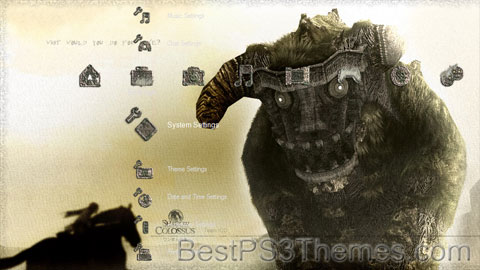
Shadow of the Colossus Theme 3
(1 background)

Shadow of the Colossus
The game cover depicts the protagonist, Wander, who sits atop his horse, Agro, and is about to confront a colossus–a massive creature whose body is composed of minerals and organic matter.
European cover art
Developer(s)Japan Studio (Team Ico)
Publisher(s)Sony Computer Entertainment
Director(s)Fumito Ueda
Producer(s)Kenji Kaido
Writer(s)
  • Junichi Hosono
  • Masashi Kudo
  • Takashi Izutani
Composer(s)Kow Otani
Platform(s)PlayStation 2 PlayStation 3 PlayStation 4
Release
  • NA: October 18, 2005[1]
  • JP: October 27, 2005
  • AU: February 16, 2006
  • EU: February 17, 2006
Genre(s)Action-adventure, puzzle
Mode(s)Single-player

Shadow of the Colossus[a] is a 2005 action-adventure game developed by Japan Studio and Team Ico, and published by Sony Computer Entertainment for the PlayStation 2. It takes place in a fantasy setting and follows Wander, a young man who enters an isolated and abandoned region of the realm seeking the power to revive a girl named Mono. The player assumes the role of Wander as he embarks on a mission that might entail Mono's resurrection: to locate and destroy the colossi, sixteen massive beings spread across the forbidden land, which the protagonist traverses by horseback and on foot.

The game was directed by Fumito Ueda and developed at Sony Computer Entertainment's International Production Studio 1, also known as Team Ico, the same development team responsible for the acclaimed PlayStation 2 title Ico, to which the game is considered a spiritual successor. Сonceived as an online multiplayer game titled NICO directly after Ico's completion, Shadow of the Colossus underwent a lengthy production cycle during which it was redeveloped as a single-player title. The team sought to create an outstanding interactive experience by including a distinct visual design, an unorthodox gameplay template, and non-player characters with sophisticated artificial intelligence such as the colossi and Wander's horse, Agro.

Cited as an influential title in the video game industry and one of the best video games ever made, Shadow of the Colossus is often regarded as an important example of video games as art due to its minimalist landscape designs, immersive gameplay, and emotional weight of the player character's journey. It received wide critical acclaim by the media and was met with strong sales compared to Ico, due in part to a larger marketing campaign. The game won several awards for its audio, design, and overall quality. A remastered version for the PlayStation 3 was released alongside Ico as The Ico & Shadow of the Colossus Collection in September 2011, developed by Bluepoint Games, who later produced a high definition remake of the game for the PlayStation 4 in 2018.

Gameplay[edit]

Described by several commentators as an action-adventure game,[2][3] Shadow of the Colossus takes place from a third-person perspective in a three-dimensional (3D) graphic environment and involves combat-based gameplay sequences, as well as platforming and puzzle game elements.[4] The game's environment is largely presented as a seamless open world.[5] Progression through Shadow of the Colossus occurs in cycles. Beginning at a central point in an expansive landscape, the player seeks out and defeats a colossus, and is then returned to the central point to repeat the process.[2] To find each colossus, Wander may raise his sword while in a sunlit area to reflect beams of light, which will converge when the sword is pointed in the right direction of the next encounter.[6] The player's journey to a colossus seldom follows a direct route: stretches of varied terrain often require that a detour be taken along the way. Most colossi are situated in remote areas, such as atop cliffs or within ancient structures.[2][7]

An image of a small human figure perched on the face of a gigantic, statuesque creature.
Wander climbs the first colossus to stab the sigil on its forehead. The heads-up display shows the character's health and stamina (lower right), as well as the colossus' health (upper left).[8]

Once a colossus is found, the player must discover its weaknesses to defeat it. Each colossus dwells in a unique lair, and in most encounters the player must use some aspects of the current battlefield to advantage, a necessity that becomes more pronounced as the game progresses.[9] The first two battles take place on simple, vast, flat areas of land, wherein the player's only goal is to discover how to scale the colossi and attack their weak points.[6][9] However, the majority of the following fourteen battles require that the player make use of the surrounding environment.[10][11]

Every colossus has at least one weak point, symbolized by a glowing sigil[12] that can be illuminated and identified by the sword's reflected light.[6][13] Each colossus has areas covered with fur or protruding ledges, which Wander may use to grip and scale the colossus while it thrashes about in an attempt to dislodge him.[2] Wander has a limited stamina gauge that decreases as he hangs onto the colossus; the player thus must act quickly when they scale the creature.[4] Aside from the colossi, who are the only enemies of the game, the environment is inhabited by natural animals. Only one species, however, has an effect on gameplay: eating the tail of a certain kind of lizard increases Wander's stamina gauge. Likewise, the player may find fruit that increases Wander's maximum health.[14]

Wander's horse, Agro,[15] plays a large role in the game. Aside from her capacity as a means of transportation, Agro enables the player to fight from horseback, a critical avenue to defeating some of the colossi.[16] However, the game contains many environments that players cannot traverse by horse, and colossi are often found in areas within deep water or beyond large obstacles that must be scaled. Agro cannot travel beyond these, and when separated from Wander by such obstacles, cannot participate in the following battle.[6] While throughout the game, Wander's equipment consists of only a sword and a bow with arrows,[17] in subsequent playthroughs players may access bonus weapons and in-game features after finishing optional Time Attack trials, which allow the battles with the colossi to be replayed with a restricted time limit.[14]

Synopsis[edit]

Setting[edit]

Presented through a minimalistic narrative,[18] Shadow of the Colossus eschews disclosure of detailed information about the backstories and interrelationships of its characters to the player.[2] The game takes place in a fantasy world,[19][20] wherein a vast and unpopulated peninsula, known as the Forbidden Land, serves as the main setting for the game's events. Separated from the outside realm by a distant mountain range to its north and sea to the south and east, the area contains ruins and remnants of ancient structures, an indication that it had formerly been a settlement.[21][22][23]

The only point of entry to the region is a small cleft in the mountains to the north that leads to a massive stone bridge. This bridge spans half the distance of the landscape and terminates at a large temple called the "Shrine of Worship" located at its center. It is, however, forbidden to enter the land,[24] which includes diverse geographical features, such as lakes, plateaus, canyons, caves, and deserts in addition to human-made structures.[2][11]

Characters[edit]

In a brightly lit sanctuary, a young warrior stands beside the body of a maiden lying on altar.
Wander standing near Mono. Long hair served as a foundational aspect of both Wander and Mono's designs, and in the latter's case was meant to provide a visual contrast to Ico character Yorda.[25]

The protagonist of the game is Wander (ワンダ, Wanda, voiced by Kenji Nojima), a young man whose goal is to resurrect a girl named Mono (モノ, voiced by Hitomi Nabatame). The only established fact regarding Mono is that she was a maiden who was sacrificed because she was believed to have a cursed destiny.[26] Assisting Wander in his quest to revive her is his loyal horse, Agro (アグロ, Aguro), who serves as his sole ally in defeating the colossi;[27] the English-language version of the game refers to Agro as a male steed,[28] although director Fumito Ueda said that he saw Wander's horse as female.[29] Wander also receives aid from an entity called Dormin (ドルミン, Dorumin, voiced by Kazuhiro Nakata and Kyōko Hikami). The story revolves around these characters but features a small supporting cast, represented by Lord Emon (エモン, voiced by Naoki Bandō) and his men.

Speaking with two voices at once (one male and one female), Dormin is a mysterious, disembodied entity. According to legends of the game's world, Dormin has the power to revive the dead;[24][27] this premise serves as the driving cause for Wander's entrance upon the forbidden land, as he seeks the being's assistance in reviving Mono. Dormin offers to revive her in exchange for Wander destroying the sixteen colossi.[26] One of the commentators of the game's plot speculated that the name "Dormin", which spells "Nimrod" backwards, serves as a reference to the body of the biblical King Nimrod which was cut up and scattered.[30]

Lord Emon is a shaman who narrates a vision in the game's introduction that vaguely explains the origin of the land to which Wander has come and establishes that entry to this place is forbidden.[24] As portrayed by the game, he possesses vast knowledge about the nature and containment of Dormin, and wields the ability to use powerful magic. He has a small group of warriors at his command, and is pursuing Wander to prevent the use of "the forbidden spell", the rite that involves the destruction of the sixteen colossi and the restoration of Dormin's power.[31]

The colossi are armored, most often enormous creatures with forms ranging from various humanoids to predatory animals, and live in all manner of surroundings and environments, including underwater and flying through the air.[18][32] Their bodies are a fusion of organic and inorganic parts such as rock, earth, and architectural elements,[4] some of which are weathered or fractured. Some colossi are peaceful and will only attack when provoked, whereas others are aggressive and will attack on sight.[2] Inhabiting specific locations in the forbidden land, they do not venture outside their own territory. Once slain they will remain where fallen, as a mound of earth and rock vaguely resembling the original colossus.[33][34] A pillar of light marks the location of each colossus after they are defeated.[35] The Latin names of the colossi, though spread throughout fan related media, are not official and are never referred to within the game.[36][37]

Plot[edit]

As the game begins, Wander enters the forbidden land and travels across a long bridge on his horse, Agro. After they reach the entrance to the Shrine of Worship, Wander, who has carried with him the body of Mono, brings her to an altar in the temple. A moment later, several humanoid shadow creatures appear and approach Wander before he easily dismisses them with a wave of the ancient sword in his possession.

After the shadow creatures are vanquished, the disembodied voice of Dormin manifests within the shrine and expresses surprise at the fact that Wander possesses the weapon. Wander explains the plight that led him to seek the forbidden land and asks that Dormin return Mono's soul to her body. Dormin offers to grant Wander's request under the condition that he completes a rite designed to destroy the sixteen idols lining the temple's hall. To that end, Wander must use his sword to slay each of the idol's physical incarnations–the colossi, whose presence ranges across the vast expanse outside the temple. Although warned by Dormin that he may have to pay a great price to revive Mono, Wander sets out to search the land for the colossi and destroy them.[38]

An aspect of Wander's mission that is unknown to him is that the colossi contain portions of Dormin's own essence, scattered long ago to render the entity powerless.[26][39] As Wander kills each colossus, a released fragment of Dormin enters his body. Over time, the signs of Wander's deterioration from the gathered essence start to appear: his skin becomes paler, his hair darker, and his face is increasingly covered by dark veins. The outcome of the battle with the twelfth colossus leads to a reveal of a group of warriors that has been pursuing Wander, led by Emon. Urged to hurry with his task by Dormin, Wander soon heads off to defeat the sixteenth and final colossus. On the way to this confrontation, he rides horseback across a long bridge which begins to collapse as he is halfway across, but Agro manages to throw Wander over to the other side before falling into the distant river below.

Soon after, Wander goes on to defeat the final colossus as Emon's company arrives in the Shrine of Worship to witness the last temple idol crumble. Wander appears back in the temple soon after, the signs of his corruption readily apparent: his skin is pallid, his eyes glow silver, and a pair of tiny horns have sprouted from his head. Emon recognizes him as a transgressor who, in an event that occurred before Wander's journey to the forbidden land, stole the ancient sword with which he killed the colossi.[31] Emon orders his warriors to kill the "possessed" man as he approaches Mono and finally falls once stabbed through the heart by one of Emon's men.[40] However, a newly whole Dormin takes control of Wander's body and transforms into a shadowy giant.[39][41] While his men flee, Lord Emon casts the ancient sword into a small pool at the back of the temple's hall to evoke a whirlwind of light. The supernatural vortex consumes Dormin and Wander, which seals Dormin within the temple once again. As Emon and his warriors escape, the bridge that leads to the temple collapses behind them, and its destruction forever isolates the forbidden land from the rest of the world. Although he has condemned Wander for his actions prior to their encounter, Emon expresses hope that Wander may be able to atone for his crimes one day should he have survived.[42]

Back in the temple, Mono awakens and finds Agro limping into the temple with an injured hind leg. Mono follows Agro to the pool into which Wander and Dormin were pulled by Emon's spell, where she finds a male infant with tiny horns on his head. Mono takes the child with her, following the horse to higher levels of the Shrine of Worship, and arrives at a secret garden within the shrine as the game ends.

Development[edit]

Origin[edit]

A giant humanoid reptile stands against a backdrop of burning buildings. It breathes a stream of fire at a fighter airplane clutched in its right hand. At the bottom left below the "Godzilla" logo, several people are looking ahead with trepidation. At the bottom right corner, a black-haired man wearing an eyepatch looks askance to his right.
The monster movie genre, of which the original Godzilla film (1954 theatrical poster pictured above) is a famous example, served as a source of inspiration for the concept of Shadow of the Colossus.

Shadow of the Colossus is the second project of Team Ico, a group of staff members within Sony Computer Entertainment's (SCEI) International Production Studio 1 that was led by director Fumito Ueda and producer Kenji Kaido.[32][43][44] The game originated from one of Ueda's concepts that he developed directly after the team submitted their debut title Ico, released in late 2001 for Sony's PlayStation 2 video game console, for publication.[45][46][47] As the basis of Team Ico's subsequent game had not been decided, Ueda examined "a number of old ideas kicking around in my head ... that couldn't be realized under previous circumstances".[48] After a brief review of those avenues, Ueda chose to explore one that aligned with his own preferences as a game player.[47][48] Ueda cited The Legend of Zelda series as an influence, as he grew up wanting to make a game like Zelda and designed the Colossi bosses like "inverted Zelda dungeons."[49][50]

Ueda envisioned a work with an underlying motif of "cruelty as a means of expression".[48] He felt that this theme was widely featured in contemporary titles such as Grand Theft Auto III and wanted to use it in a game that he designed.[48] In a discussion with Kaido, Ueda observed that he had played a variety of video games containing battles with large bosses that the player must shoot from a distance to defeat.[51] Ueda believed that the boss sequences of those games could be streamlined if the player character was able to approach and climb the oversized opponents to kill them with a close range weapon.[51] Accordingly, he chose to base the game around the player character's encounters with enormous fictional creatures,[16] a premise that stemmed from Ueda's childhood fascination with monster movies.[46] This led to an emphasis on the inclusion of a large-scale adventure in the title, an element which Ueda regarded as influential in the shaping of the game's stylistic identity.[48]

Originally, the team considered Ueda's idea alongside another concurrently-developed game.[45][46] According to Ueda, the game was unrelated to his former concept, and the team did not give it a working title or outline its design while it was in development.[45][46] Ueda recognized the finished iteration of Team Ico's second title as, "in many ways, a game for boys and men"; conversely, the separately produced game was fashioned to appeal more to a female audience.[46] Its contents, interface and thematic focus differed significantly from those that would ultimately manifest in the team's next game after Ico.[46] The untitled game did not employ 3D graphics, whereas Team Ico applied them to their published game.[46] The team eventually scrapped their plans for a counterpart title to Ueda's intended game,[46] which was advanced into further development.[45]

Prior to the start of the project, Team Ico assessed the opportunity to establish it as a sequel to their first game.[16] This suggestion was opposed by certain staff members who argued that the story and gameplay of their preceding title were largely self-contained, and that the existence of consumer demand for a new Ico game was questionable.[52] According to Ueda, Team Ico assumed that the creation of levels for a single-player game akin to Ico necessitated the construction of elaborate puzzles, a practice that the staff wanted to eschew.[51] Following lengthy deliberations, they decided not to pursue a sequel to Ico and to produce a standalone game provisionally dubbed NICO (a portmanteau of ni, 2 in Japanese, and "Ico").[16][32] The team initially agreed to develop NICO as an online multiplayer game that, unlike Ico, "wouldn't require complex level design".[51] Their foundational goal, according to Kaido, was to create a technology demo that represented a tentative rendition of the game's fictional world and features.[16] Development commenced immediately after the December 2001 release of Ico's Japanese version.[16][53]

Early prototypes[edit]

An image of the original PlayStation 2 model, supplemented by an attached network-enabled add-on.
Team Ico produced the technology demo for NICO, the initial online multiplayer-focused incarnation of Shadow of the Colossus, using the native graphical capabilities of the PlayStation 2 (shown here with its Network Adaptor attached).

To develop the concept video for NICO, Team Ico formed a small internal group, which was composed of Ueda, one of Ico's designers and a roughly 10-person animation team.[48] Their objective was to deliver "[a] movie with an extremely final form" that could serve as a visual template for the finalized game.[16] The first storyboard that outlined the video was drafted in January 2002, and the actual short film was completed that May.[54] It depicted a group of three masked, horned boys who rode horseback across a vast landscape and attacked a towering being reminiscent of the second boss in Shadow of the Colossus.[35][55][56] The video was visualized in the Ico game engine and was rendered in real-time on the PlayStation 2 hardware.[16] With those techniques, the team aimed to estimate the extent to which the platform's capabilities allowed the realization of their vision.[16]

According to Kaido, the team deemed the resulting video to have attained a very high level of completion, and thus was able to use it as a reference point throughout the game's production.[16] Although they subsequently modified the game's visuals from those of the demonstration reel, its themes of "fighting a giant enemy" and "[exploring] a giant field" carried over into the final game design.[16] The demo indicated elements that were excluded from the released game.[57] Among these was a showcased gameplay mechanism wherein one of the colossus' attackers who had scaled and killed it proceeded to mount his approaching horse by leaping onto its back from the entity's corpse.[57] The video was later exhibited at many trade shows,[43] such as the 2006 D.I.C.E. Summit in Las Vegas where Kaido and Ueda retrospectively discussed the game's development with Lorne Lanning.[55]

In June 2002, a small group of staff at Team Ico started to build a prototype of NICO for testing purposes.[54] In his role as producer, Kaido tasked the team with the inclusion of technological features that he recognized as important milestones of the development.[55] One of the challenges issued by Kaido involved the creation of "organic collision deformation", a term that alluded to his concept of realistic character physics in relation to the movement of the colossi.[55] For instance, if a colossus' limb was currently horizontal, Kaido expected the player to be able to run across the limb as though it were any other flat surface.[55] Ueda and Team Ico programmers spent over six months to produce a working version of this functionality.[54] They began by adding a character to a virtual environment where the figure was enabled to climb a pole-like object.[51] One of the team's priorities at the time was to code a physics-based simulation of scenarios where characters were "being shaken off or narrowly avoided being stomped on".[58]

In May 2003, Team Ico assembled a demonstrational build of NICO and presented it at a production meeting.[54] Full development of the game was sanctioned directly after it was pitched, and commenced in the same month.[54] That year, the NICO technology demo was shown across Sony's foreign offices among a lineup of prospective PlayStation 2 titles, and its exposure excited the spectators.[57] Although the team attempted to work on the game in secrecy, at a certain point images of NICO's horseriding characters were leaked onto the Internet.[32] Their circulation led enthusiasts to speculate about what they perceived as a sequel to Ico.[32] According to Ueda, the team reused elements of Ico's character designs for NICO to expedite the production of the concept video and minimize its costs.[58] He asserted that NICO was not related to Ico despite their stylistic similarities,[58] and that his colleagues did not identify the former game as a sequel.[4] However, contemporary and retrospective sources described Team Ico's second game as both a spiritual successor[32][47][59] and prequel to Ico.[60]

The staff used player feedback to advance the testing of the "organic collision deformation" system by inputting simple objects to experiment its capabilities.[58] Although Team Ico had conducted an elaborate research of the game's technological framework, they did not finish its validation when they entered the production phase.[51] After evaluating the limited number of personnel that was involved with NICO as well as their professional profiles, Team Ico concluded that they were not qualified to deliver an online-only game.[51] They then resolved to abandon that direction and to reformulate NICO into a single-player title.[51] The team discarded Ico's development tools that they had used at the outset of the project and moved to write new programming utilities.

Borderlands #2

Borderlands theme by Ramman

Download: Borderlands_2.p3t
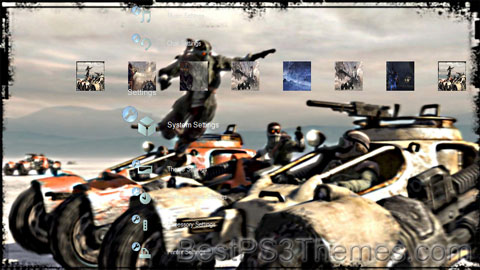
Borderlands Theme 2
(1 background)

Redirect to:

  • From the plural form: This is a redirect from a plural noun to its singular form.
    • This redirect link is used for convenience; it is often preferable to add the plural directly after the link (for example, [[link]]s). However, do not replace these redirected links with a simpler link unless the page is updated for another reason (see WP:NOTBROKEN).
    • Use this rcat to tag only mainspace redirects; when plural forms are found in other namespaces, use {{R from modification}} instead.
  • From an ambiguous term: This is a redirect from an ambiguous page name to a page or list that disambiguates it. These redirects are pointed to by links that should always be disambiguated. Therefore, this template should never appear on a page that has "(disambiguation)" in its title – in that case use {{R to disambiguation page}} instead.